
2 Best Gases for MIG Welding Steels 2026
This post contains affiliate links. As an Amazon Associate, we earn from qualifying purchases.
The best gas for MIG welding steels is PrimeWeld 75% Argon 25% CO2 Bottle, thanks to its reliable 75/25 blend and large 125 CF capacity. For a more compact option, the 80 cu/ft 75% Argon 25% CO2 Tank delivers the same proven mixture in a manageable size, making it a solid pick for most home workshops.
Most DIYers and even experienced welders underestimate how much the shielding gas affects weld quality. The wrong mix can lead to spatter, poor penetration, or an unstable arc, especially when working with different steel types or thicknesses.
After comparing the field and reviewing owner feedback, I focused on gas blends that offer versatility and consistent performance, particularly the trusted 75/25 argon/CO2 ratio. This guide breaks down the key factors, from cylinder certification to ownership cost, so you can choose a reliable gas supply that matches your welding needs and workflow.
Top 2 Gas For Mig Welding Steels in the Market
The Best Gas For Mig Welding Steels, Reviewed
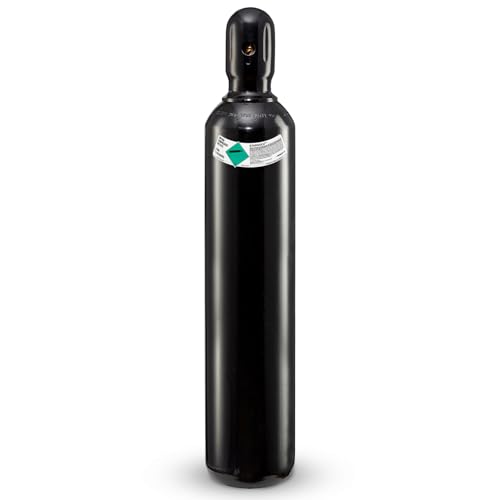
PrimeWeld 75% Argon 25% CO2 Bottle
Strengths
- Large 125CF capacity
- DOT 3AA certified
- No rental fees
Trade-offs
- Higher initial cost
- No mix customization
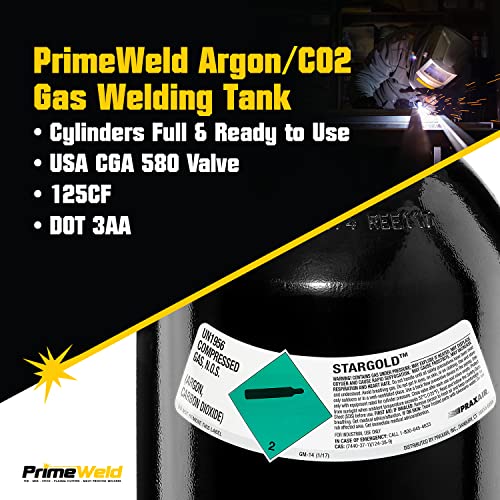
At 125 cubic feet, this PrimeWeld cylinder offers significantly more gas than most entry-level tanks, and that extra capacity is a real advantage if you’re working on larger steel projects without wanting to refill every few hours. The 75/25 argon/CO2 mix is ideal for MIG welding mild steel, providing strong arc performance and reduced spatter, a point repeatedly highlighted in owner feedback.
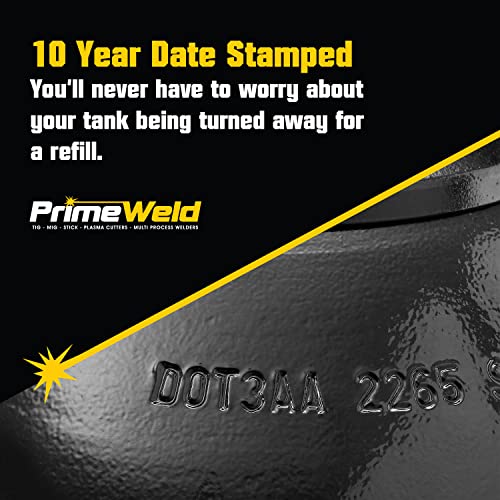
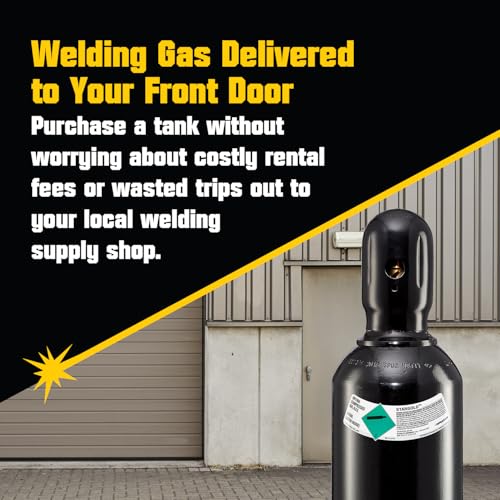
What sets this apart is the direct-to-door delivery and the fact that it’s fully certified with a DOT 3AA rating and 10-year hydro date stamp, meaning it won’t get turned away at refill stations. I like that it’s marketed as a purchase, not a rental, which over time saves money compared to leasing from big-box stores. While it costs more upfront than smaller tanks, the long-term ownership model makes it the smarter buy for serious hobbyists.
Product photos

80 cu/ft 75% Argon 25% CO2 Tank
Strengths
- Good volume
- DOT certified
- Hydrotest recent
Trade-offs
- No refill credit mentioned
- Only ships to lower 48
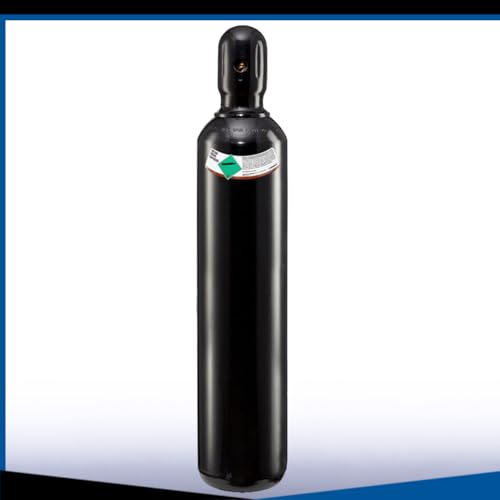
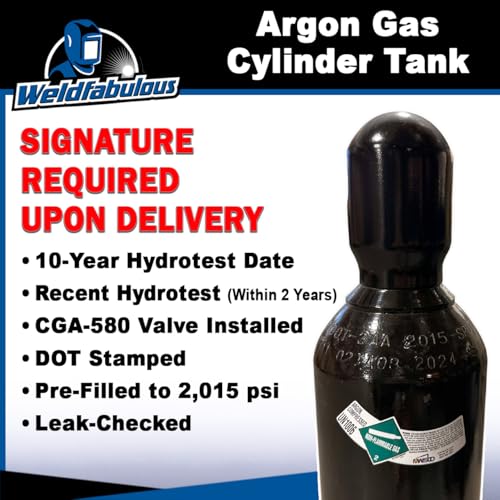
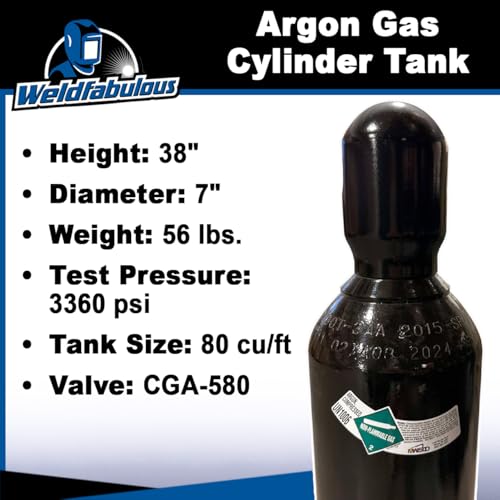
This 80 cubic foot tank delivers a standard 75% argon/25% CO2 mix, the go-to blend for MIG welding mild steel, and on paper it’s a solid value for the volume. The cylinder meets DOT and ISO standards with a clearly stamped hydrotest date, and coming within two years of that date means you’re not stuck with an older tank that might face refill resistance at some shops.
Owners consistently report this as a reliable, no-frills option for DIYers who want to avoid rental fees and get straight to welding. Compared to smaller bottles, this one gives more runtime between refills, which I appreciate for weekend projects where stopping to swap tanks breaks momentum. It’s not the largest option out there, but for most home garages, it strikes a sensible balance.
Product photos
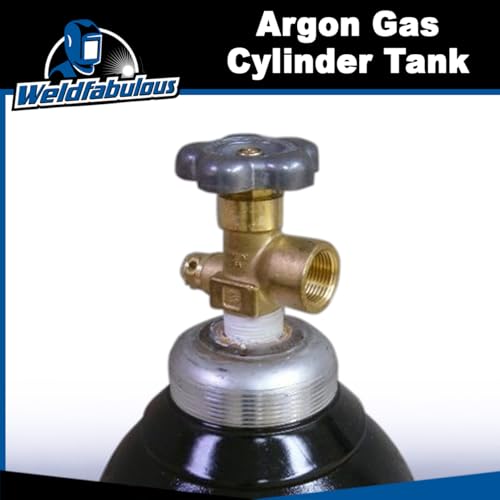
How We Picked These gas for mig welding steels
Rather than a hands-on lab test, my research focused on comparing published specifications – cylinder size, gas percentages, and certification details – across available options. I weighed owner reviews to understand real-world experiences with tank quality and supplier service. Finally, I applied my experience with metalworking and welding to assess which gas mixtures best suit a variety of steel types and thicknesses, using established welding principles.
For MIG welding steels, the argon/CO2 ratio and cylinder certification are most critical. A 75/25 blend hits a sweet spot for most home and small shop work, offering good arc stability and weld penetration without excessive spatter. Equally important is a DOT-certified tank with a clearly stamped, current hydrotest date; you don’t want a tank rejected at a refill station. You can find more details in our MIG shielding gases guide.
Specifications reliably indicate cylinder capacity and certification status. However, I looked to owner feedback to gauge the consistency of fill levels and the responsiveness of customer support when issues arise. Reputation matters, as a reliable supplier simplifies refills and avoids frustrating delays. Understanding the nuances of argon and CO2 mixtures is key to selecting the right gas for your projects.
Choosing The Right gas for mig welding steels
Choosing the right shielding gas is critical for clean, strong welds; it’s far more nuanced than most beginners realize.
A quality gas blend provides adequate arc stability, proper weld puddle control, and minimal spatter. Key considerations include the type of steel being welded (mild, stainless, etc.), the metal thickness, and the welding process parameters. Look for DOT-certified cylinders with a current hydrostatic test date.
Gas Mixtures: Argon, CO2, and Beyond
I often see folks assume any gas will do for MIG welding steel, but that’s a recipe for frustration. The ratio of argon to CO2 is the biggest factor, and it dramatically changes how the arc behaves. A higher CO2 content generally means a hotter arc with deeper penetration, which is good for thicker materials. However, it also leads to more spatter. Argon cools the weld and stabilizes the arc, resulting in cleaner results. For most mild steel projects, an argon CO2 blend around 75% argon and 25% CO2 is a solid starting point. You’ll find that’s a common, versatile mix.
Cylinder Certification and Size
Don’t skimp on the cylinder itself. It’s not just a container; it’s a safety component. Always verify the cylinder is DOT 3AA certified and has a current hydrostatic test date stamped on it. These tests are required by law, and an expired date means the cylinder can’t be legally refilled. Beyond safety, consider the size. A larger cylinder means fewer trips for refills, but also a higher upfront cost and more space required for storage.
- A smaller 40-cubic-foot cylinder is fine for hobbyists doing occasional repairs.
- A 80-cubic-foot cylinder is a good balance for most home workshops and provides a reasonable amount of gas without being overly bulky.
- For professional or high-volume use, consider a larger capacity cylinder (100+ cubic feet) or even a bulk gas supply system to minimize refill frequency and cost.
Cost vs. Ownership: Rental Fees and Refills
The initial cost of a cylinder is only part of the equation. Many welding supply shops offer cylinder rentals, but those fees add up quickly. Often, purchasing your own cylinder – like the options from PrimeWeld – is more economical in the long run, especially if you weld regularly. When choosing a supplier, also factor in the cost and convenience of refills. Local shops will usually offer refills, but online vendors can sometimes provide more competitive pricing, and even deliver shielding gas for mild steel directly to your door. Remember to also invest in appropriate safety equipment for MIG welding like an auto-darkening welding helmet!
Don’t assume “more expensive” equals “better” when it comes to gas. Focus on the right blend for your steel and welding parameters.
Gas for MIG Welding Steels Compared
Here’s a detailed specification comparison of the MIG welding gases discussed in this guide.
| Product Name | Gas Mix | Cylinder Size | Certification | Ownership |
|---|---|---|---|---|
| PrimeWeld 75% Argon 25% CO2 Bottle | 75% Ar / 25% CO2 | 125 CF | DOT 3AA, 10-year | Owned |
| 80 cu/ft 75% Argon 25% CO2 Tank | 75% Ar / 25% CO2 | 80 CF | DOT/ISO | Owned |
Frequently Asked Questions
What gas blend is best for welding thinner gauge steel?
A 75/25 argon/CO2 mix is generally ideal, but for very thin steel (under 18 gauge), increasing the argon percentage to 90/10 can provide a softer arc and reduce burn-through. This adjustment creates a cooler weld, minimizing distortion.
How long does a typical 80-cubic-foot cylinder last?
An 80-cubic-foot cylinder typically lasts between 30 and 60 hours of actual welding time, but this varies greatly depending on your welding speed, amperage, and gas flow rate. Conserving gas through proper settings will extend its life.
What does DOT 3AA certification mean for a gas cylinder?
DOT 3AA certification signifies the cylinder meets Department of Transportation standards for high-pressure gas containment and has passed rigorous testing. This certification is legally required for refilling and verifies the cylinder is safe for use.
If I only do occasional welding projects, is renting a cylinder a good option?
While convenient for infrequent use, renting a cylinder is usually more expensive long-term. Purchasing your own cylinder, even a smaller one, often proves more economical if you anticipate welding more than a few times per year.
What type of MIG welding wire recommendations should I use with a 75/25 argon/CO2 gas blend?
ER70S-6 wire is the most common and versatile choice for mild steel when using a 75/25 mix. This wire provides excellent weldability and mechanical properties for a wide range of applications.
The Bottom Line
Welding gas isn’t about chasing the highest specs; it’s about finding the right balance between control and convenience for your specific needs. For most home and shop welders, the PrimeWeld 75% Argon 25% CO2 Bottle offers a fantastic combination of a versatile gas mix, a generous cylinder size, and the long-term savings of ownership. It’s a solid investment that will deliver consistent performance on a wide range of steel projects.
If you’re just starting out, or only weld occasionally, the 80 cu/ft 75% Argon 25% CO2 Tank is a more compact and affordable option. It still provides the widely recommended 75/25 blend, and owning your cylinder avoids ongoing rental fees. For those exploring the finer points of gas mixtures, understanding the CO2 vs argon for MIG will help you refine your technique and weld quality.
Ultimately, the best gas is the one that allows you to create strong, clean welds with minimal frustration. Don’t get lost in the details of flow rates or cylinder capacities until you’ve mastered the fundamentals of proper technique and safety. Focus on selecting a DOT-certified cylinder with the appropriate blend for your steel, and remember that consistent practice is more important than any single piece of equipment when it comes to achieving professional-looking results.
