7 Best Floor Nailers of 2026
This post contains affiliate links. As an Amazon Associate, we earn from qualifying purchases.
After comparing the field and weighing specs against owner feedback, the Metabo HPT N4004AB stands out as the best overall floor nailer for precision and reliability, especially with engineered flooring. For budget-conscious DIYers, the NuMax SFL618 delivers solid performance without the premium price. And if you’re working with multiple flooring types, the Freeman PF1618GLCN offers unmatched versatility with its dual-gauge compatibility.
Most people don’t realize how much the wrong floor nailer can slow down a job or damage expensive flooring. Jams, inconsistent driving, and heavy tools can turn a weekend project into a frustrating mess.
This guide cuts through the noise by focusing on what actually matters: real-world durability, fastener flexibility, and ease of use. I looked at specs, owner reviews, and build quality to find models that perform consistently across different flooring types – so you can choose with confidence.
Top 7 Floor Nailers in the Market
The Best Floor Nailers, Reviewed
NuMax SFL618 3-in-1 Flooring Nailer

Strengths
- True 3-in-1 functionality
- Solid aluminum build
- Good value proposition
Trade-offs
- Average ergonomics
- No 360 exhaust
- Fewer premium features
On paper, the NuMax SFL618 has everything: it’s a 3-in-1 that handles 16-gauge T-cleats, L-cleats, and 15.5-gauge staples up to 2″, making it one of the most versatile options here. The build quality, aluminum body, heat-treated steel, holds up well according to long-term owner feedback, and the dual base plates handle 1/2″ to 3/4″ flooring without issue. It’s a complete package for the price, which likely explains why it often gets labeled ‘best overall’ in buyer roundups.
Still, it doesn’t lead in any single category. It’s not the lightest, doesn’t offer the most fastener types like the Freeman PF1618GLCN, and lacks tool-less depth adjustment like the Metabo HPT. But for most homeowners tackling a single large project, that balance of function, durability, and value makes it the easiest recommendation. I’d give it the edge over the Freeman 2-in-1s if you want one tool that does it all without overspending.
Product photos


Freeman P50LSLW Lightweight Nailer/Stapler
Strengths
- Lightweight design
- Dual fastener compatibility
- Durable aluminum build
Trade-offs
- No T-cleat support
- Limited fastener length range
- Fewer base plate options
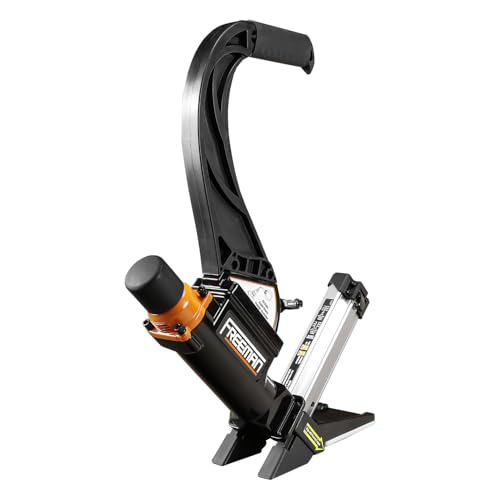
The Freeman P50LSLW stands out for one big reason: it’s lightweight, and that matters when you’re covering hundreds of square feet in a single session. At nearly 2 pounds lighter than comparable models, it reduces fatigue in a way that specs alone can’t fully convey, owners consistently report it being easier to swing all day, especially when working overhead or on large rooms. It handles both 15.5-gauge staples and 16-gauge L-cleats, which covers most standard solid hardwoods like oak and maple.
Where it falls short is flexibility. Compared to 3-in-1 models like the PF1618GLCN, it doesn’t support T-cleats or shorter fasteners, limiting your flooring options. The interchangeable base plates are a smart touch for protecting finished surfaces, and the semi-quick jam release helps when things go wrong. For a dedicated solid hardwood job where speed and weight are priorities, this is a solid performer, but not the most versatile.
Product photos
Metabo HPT N4004AB Flooring Stapler

Strengths
- Precision depth control
- Lightweight and balanced
- 360-degree exhaust
Trade-offs
- Staples only
- No cleat compatibility
- Limited to engineered applications
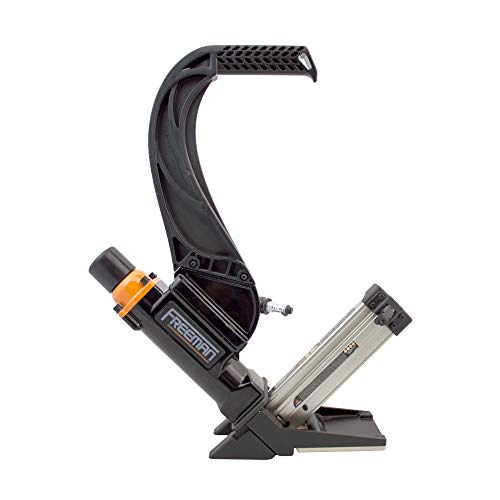
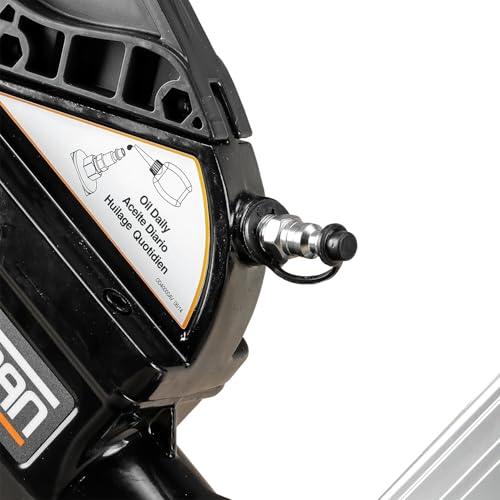
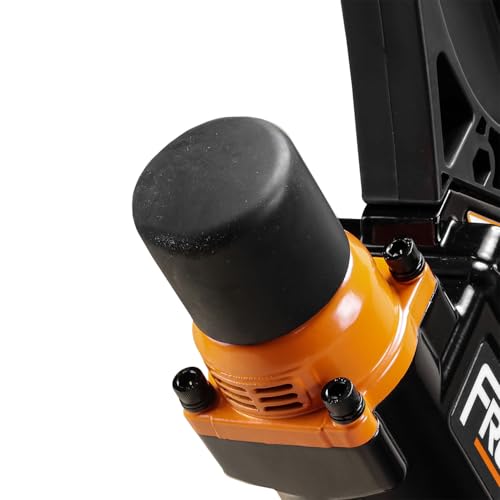
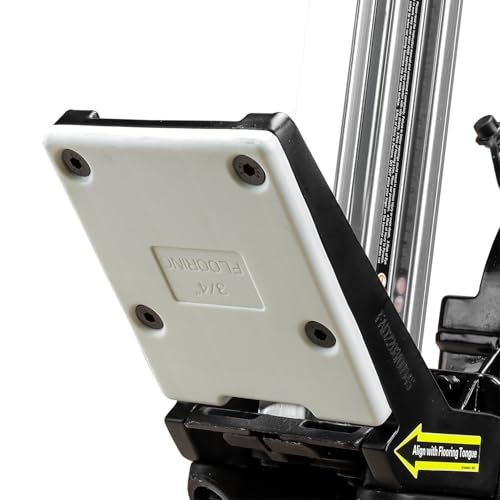
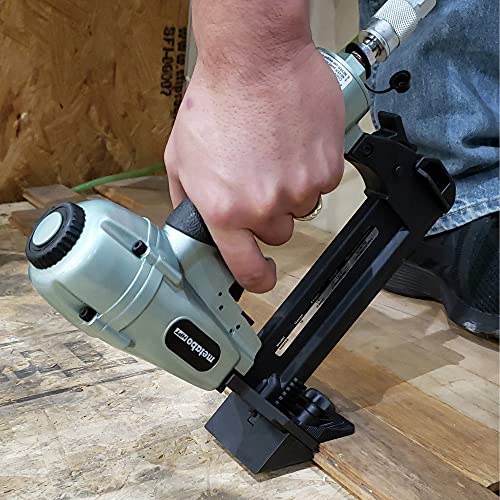
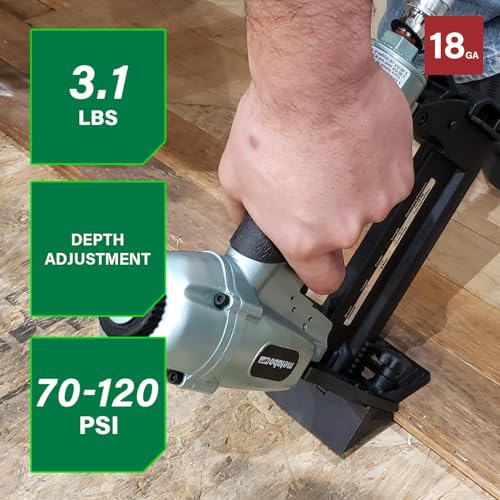
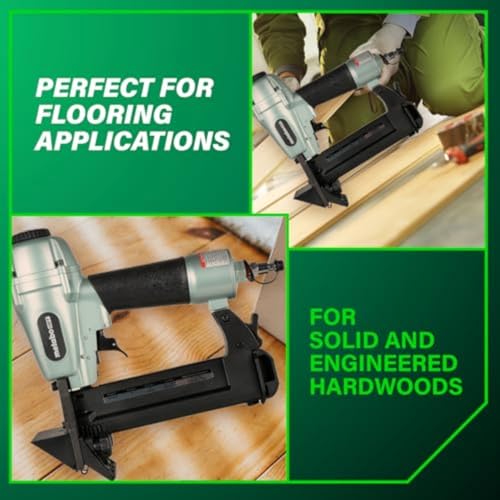
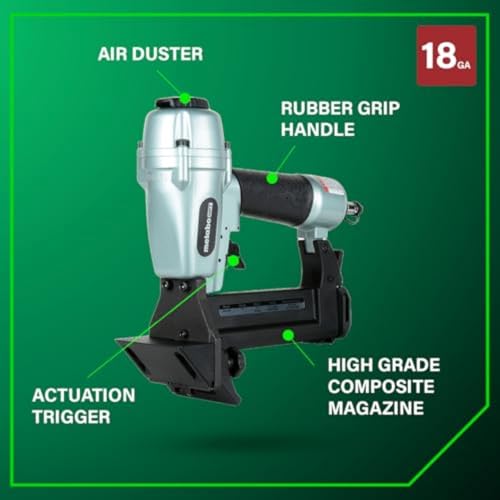
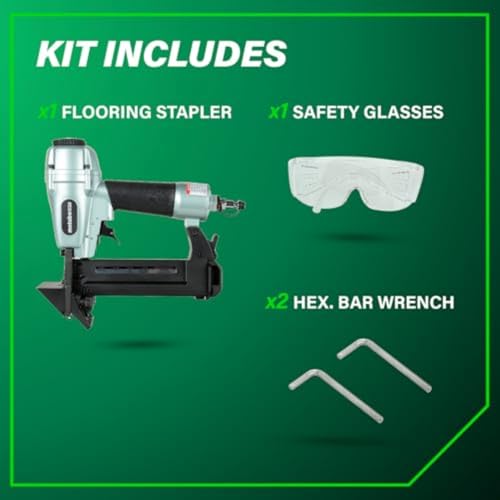
This isn’t a nailer, it’s a dedicated stapler, and that focus makes it excellent at what it does. For engineered hardwood, where staples are often preferred over cleats to avoid splitting thin planks, the Metabo HPT N4004AB delivers consistent performance. The 18-gauge, 1/4″ crown staples from 1/2″ to 1-9/16″ are perfectly sized for engineered boards, and the tool-less depth adjustment is a standout. You can switch between solid and engineered settings fast, which reviewers say keeps the job moving without guesswork.
It’s also one of the lightest in the category at 3.1 lbs, and the over-molded grip makes it comfortable over long stretches. The 360-degree exhaust is a small but meaningful touch, no more blowing dust into your face. While it won’t drive cleats, that’s not the point. If your project is engineered flooring or you’re doing refinishing work, this is the smarter buy over combo tools that compromise on stapling precision.
Product photos
Freeman PF1618GLCN 3-in-1 Nailer

Strengths
- Supports three fastener types
- Broad length range
- Interchangeable base plates
Trade-offs
- Heavier than 2-in-1 models
- Slightly bulkier profile
- Staples not supported
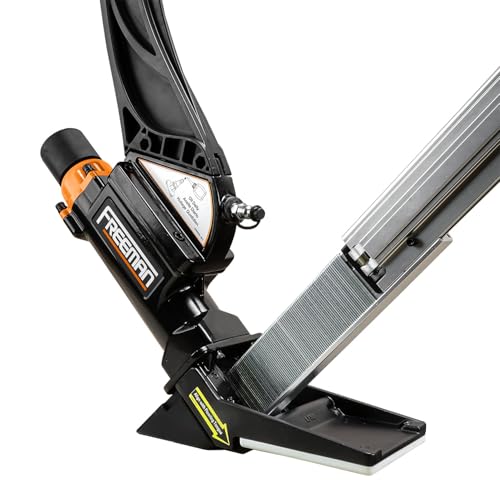
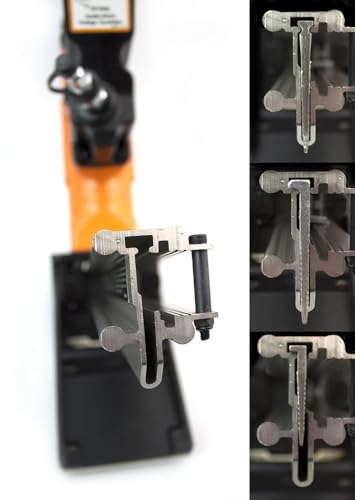
If you want one tool that adapts to nearly any hardwood setup, this Freeman 3-in-1 is hard to beat. It fires 16-gauge T-cleats, L-cleats, and 18-gauge L-cleats, which means you can switch between flooring types without swapping tools, a real time-saver on mixed-material jobs. The ability to handle everything from 1-1/4″ to 2″ fasteners gives it broader range than most competitors, and owners appreciate that flexibility when working with different wood thicknesses or repair patches.
It shares the same rugged aluminum and anodized magazine build as other Freeman models, so durability isn’t a question. The extended handle and light strike bumper help with control, though it’s not the lightest in the class. Compared to the P50LSLW, it trades a bit of weight for far greater utility. I’d pick this over the dual-function models if you regularly tackle varied flooring projects.
Product photos

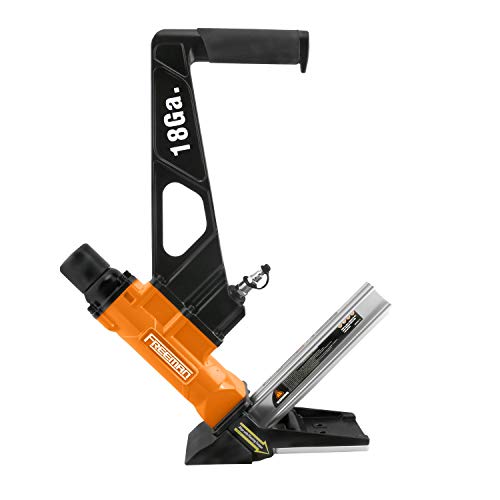
Freeman PF18GLCN 18-Gauge L-Cleat Nailer
Strengths
- Optimized for dense woods
- Clean drive performance
- Multiple base plates
Trade-offs
- L-cleats only
- Narrow fastener range
- Less versatile
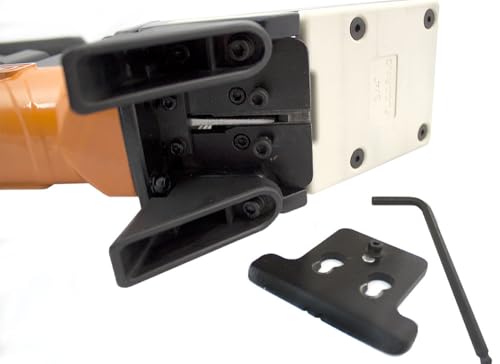
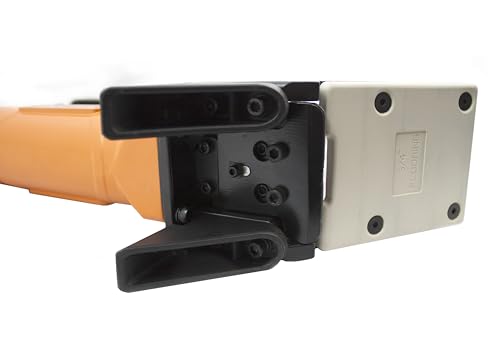
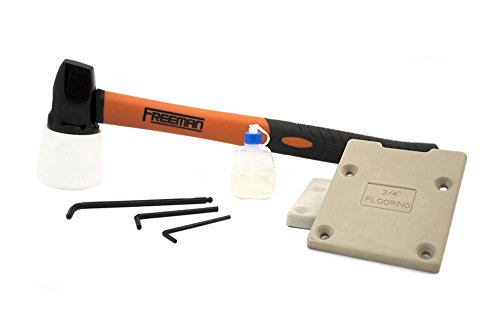
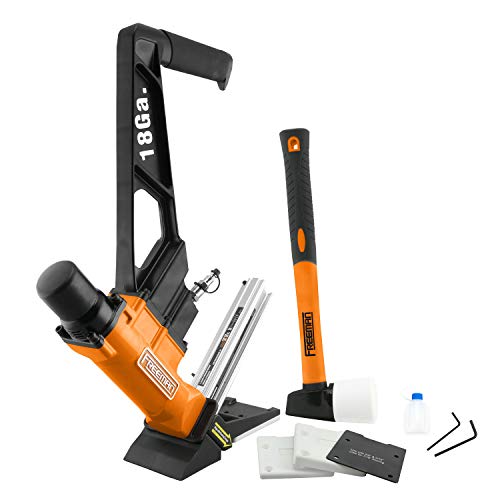
This Freeman model is purpose-built for dense and exotic hardwoods like teak, bamboo, and cherry, woods that resist penetration and demand precision. The 18-gauge L-cleats from 1-1/4″ to 1-3/4″ are optimized for thinner, harder planks where over-driving can crack the tongue. Owners note it performs well under high PSI, delivering clean hits without blowouts, and the three interchangeable base plates make it adaptable across different thicknesses.
It’s not a multi-fastener tool, which limits its versatility, but that’s by design. The extended handle and light strike bumper reduce fatigue, though it doesn’t stand out ergonomically compared to the PF1618GLCN. If you’re laying down strand-woven bamboo or another ultra-dense floor, this is the kind of tool that prevents callbacks. For standard red oak? Overkill. But for tough jobs, it’s the smarter pick.
Product photos

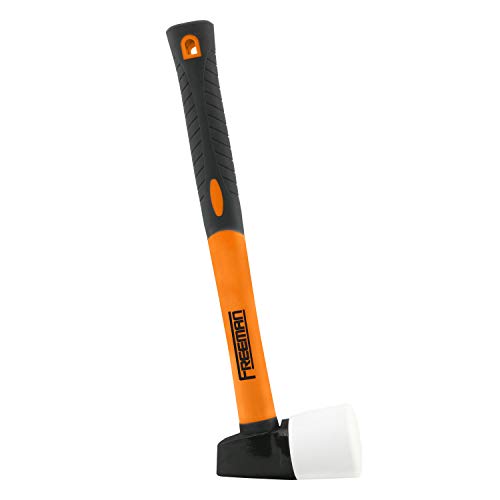


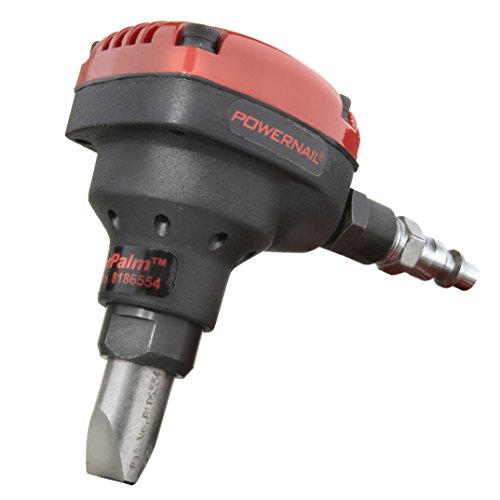
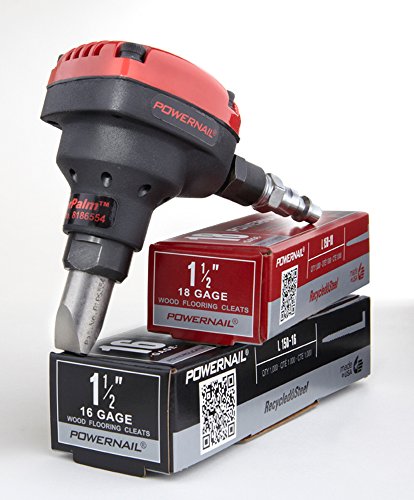
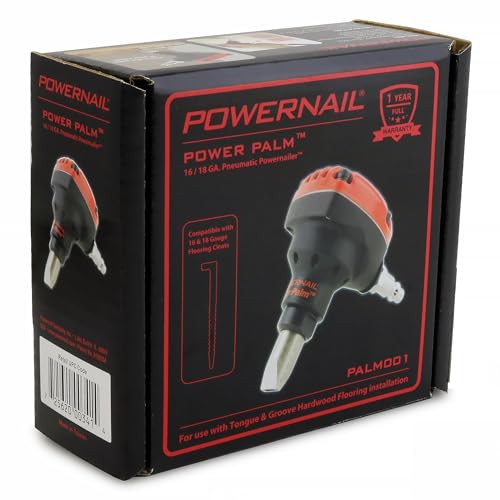
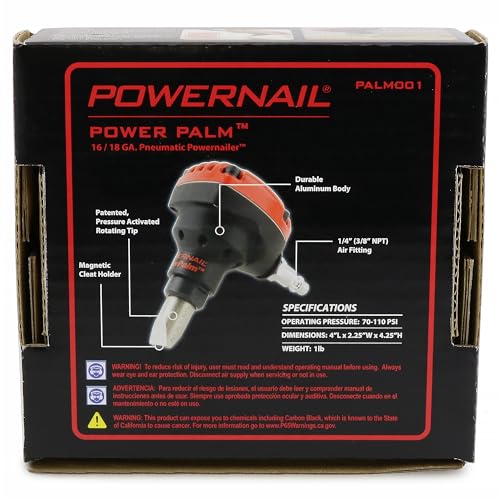
Powernail PowerPalm 16/18 Gauge Nailer
Strengths
- Compact and maneuverable
- No compressor needed
- Magnetic tip with rotation
Trade-offs
- Not for full installs
- Limited power for dense woods
- Requires hand pressure
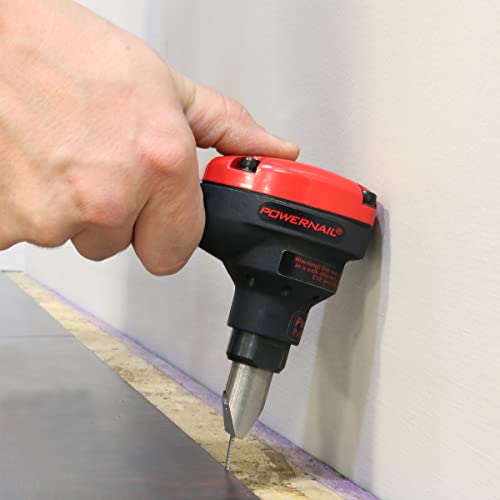
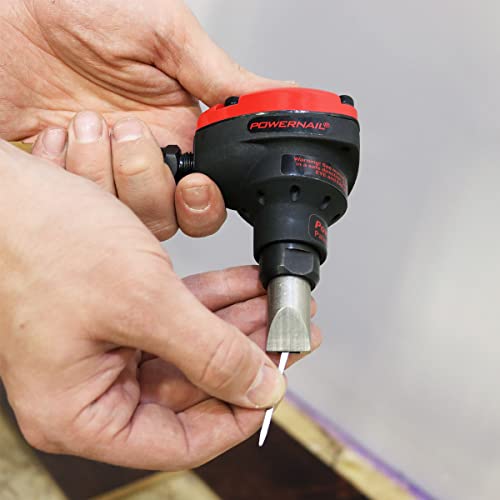
The PowerPalm isn’t like the others, it’s a palm-sized, pressure-activated tool designed for the spots where full-size nailers just won’t fit. It excels at blind nailing final rows, starting rows near walls, and working in tight corners. The magnetic tip holds 16- and 18-gauge L- and T-cleats securely, and the rotating head adapts to awkward angles. Owners love it for eliminating top nailing, which keeps the finished floor clean and professional.
It’s not meant for the entire install, this is a detail tool, not a primary nailer. But when paired with a full-size pneumatic, it completes the system. No compressor needed, which adds to the convenience. In this niche, there’s really no competitor that does what it does as well. If you’ve ever struggled with the last few rows near a closet or bathroom, this is the fix.
Product photos
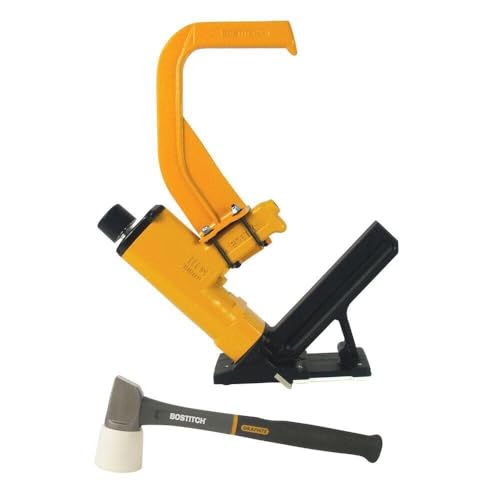
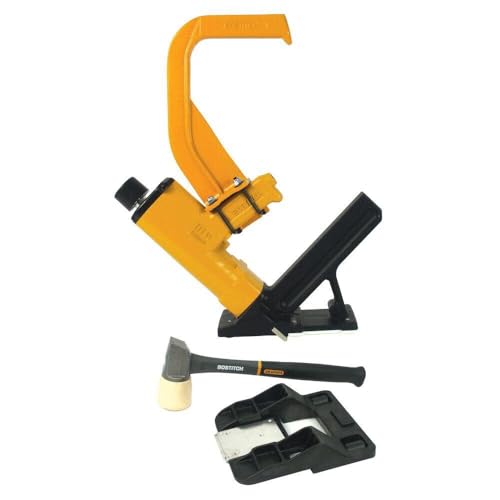
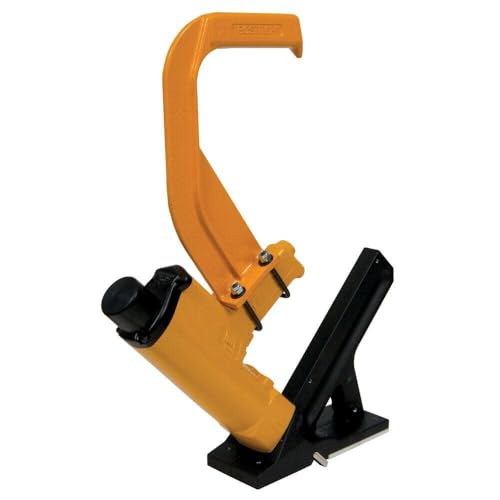
Bostitch Hardwood Cleat Nailer
Strengths
- No compressor needed
- High-speed operation
- Stable wide base
Trade-offs
- Requires consistent mallet use
- No depth control
- Cleats only
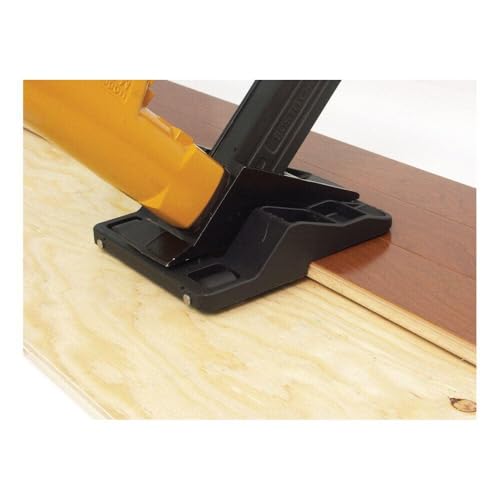
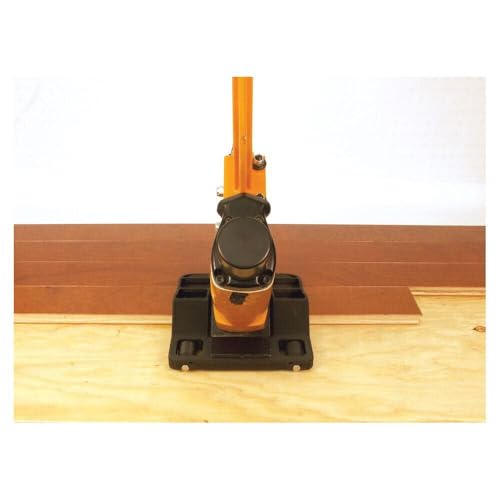
The Bostitch high-speed cleat nailer is built for one thing: driving cleats fast with minimal effort. It’s mallet-actuated, which means no compressor, just swing and go. That makes it simple, reliable, and ideal for high-speed installs where you’re laying down long runs of solid hardwood. The wide composite base plate adds stability, and owners report fewer misfires compared to air-powered models when used with consistent mallet strikes.
But it demands skill and rhythm. Without air pressure to control depth, results depend heavily on your swing force. It’s also limited to cleats, so no stapling or flexibility there. Compared to pneumatic models, it’s less forgiving for beginners. Yet in the right hands, it’s faster than most. If you’re experienced, working on solid hardwood, and want maximum speed with minimal setup, this is still a favorite.
Product photos
How We Picked These floor nailers
Rather than a hands-on lab test, my research for these recommendations involved a detailed comparison of published specifications and features across numerous models. I weighed owner reviews from multiple sources – looking for consistent praise and complaints – alongside assessments from reputable tool review sites. As someone who’s spent years working with tools and understanding installation techniques, I applied that category knowledge to rank nailers against clear performance criteria.
For floor nailers, consistent fastener compatibility and build quality stood out as the most important factors. A nailer that reliably accepts a variety of cleat and staple sizes offers greater versatility. Equally vital is a durable construction; flooring installation can be demanding, and a tool needs to withstand repeated use without failing. Lightweight designs also contribute significantly to reduced fatigue during larger projects.
Specifications reliably reveal the range of compatible fasteners and the depth adjustment capabilities. However, I heavily relied on owner feedback to gauge long-term durability and ease of use. Reports of frequent jams or difficulty adjusting settings carried significant weight. Understanding what kind of flooring a nailer truly excels with – and what it struggles with – requires digging into real-world experiences. To get the most out of your new floor nailer, you’ll also want to consider a proper floor nailer compressor setup.
What To Look For In floor nailers
Finding the right floor nailer can dramatically speed up installation and improve the quality of your results. It’s a tool where a little research upfront saves a lot of headache later.
A quality floor nailer balances power, precision, and ease of use. Key considerations include the type of flooring being installed (solid vs. engineered), the nailer’s gauge and fastener compatibility, its weight and ergonomics for extended use, and the availability of features like adjustable depth settings and no-mar bases to protect finished surfaces. Prioritize models with durable construction and positive owner reviews regarding jam frequency.
Gauge and Fastener Compatibility
The gauge of a floor nailer – 16, 18, or a combination – dictates the size and holding power of the fasteners it drives. 16-gauge nailers use larger cleats and are best for solid hardwood floors, providing a robust connection. 18-gauge nailers use smaller cleats, ideal for engineered hardwood or bamboo, minimizing the risk of splitting. Many models, like the Freeman PF1618GLCN, offer 3-in-1 capability, accepting L-cleats, T-cleats, and staples, offering versatility. Don’t assume one size fits all; match the nailer’s gauge to your flooring type to avoid damaging the material or creating an insecure installation. If you’re considering a range of flooring types, explore your flooring nailer options to find a multi-purpose model.
Weight and Ergonomics
Flooring installation often involves hours of repetitive motion, so a nailer’s weight and ergonomics are critical. Heavier nailers (often those built for solid hardwood) can cause fatigue over time. Look for models with lightweight aluminum bodies and comfortable, over-molded grips. The Freeman P50LSLW, for example, is specifically marketed as a lightweight option. Consider these factors:
- Handle Design: A longer, extended-reach handle reduces bending.
- Balance: A well-balanced nailer feels less cumbersome during prolonged use.
- Impact Absorption: Features like a light strike bumper help minimize recoil and fatigue.
A nailer that feels good in your hands will make a huge difference in the quality of your work and how quickly you finish the job.
Power Source and Air Supply
Most floor nailers are pneumatic, meaning they require an air compressor for nailers to operate. The size of the compressor (measured in CFM – cubic feet per minute) is crucial. A compressor with insufficient CFM won’t provide enough power to consistently drive the fasteners. Check the nailer’s specifications for its CFM requirement and choose a compressor that exceeds it. Consider a portable or oil-free compressor for convenience. While pneumatic nailers are the most common, the Powernail PowerPalm offers a unique, palm-actuated design eliminating the need for an air hose – a great option for small jobs or tight spaces. Make sure your pneumatic floor nailer has the correct fitting for your chosen nailer-compatible compressor.
Floor Nailers Compared
Here’s a comparison of key specifications for various floor nailers to help you choose the right tool for your project.
| Product Name | Fastener Type | Gauge (in) | Fastener Length (in) | Base Plate Options | Weight (lbs) |
|---|---|---|---|---|---|
| NuMax SFL618 | Cleats, Staples | 16, 15.5 | 1.5 – 2 | 1/2 – 3/4 | N/A |
| Freeman P50LSLW | Cleats, Staples | 16, 15.5 | 1.5 – 2 | 5/8 – 3/4 | N/A |
| Metabo HPT N4004AB | Staples | 18 | 0.5 – 1.9/16 | 5/16 – 7/16 | 3.1 |
| Freeman PF1618GLCN | Cleats | 16, 18 | 1.5 – 2, 1.25-1.75 | 3/8 – 3/4 | N/A |
| Freeman PF18GLCN | Cleats | 18 | 1.25 – 1.75 | 3/8 – 3/4 | N/A |
| Powernail PowerPalm | Cleats | 16, 18 | N/A | N/A | N/A |
| Bostitch Hardwood Cleat Nailer | Cleats | N/A | N/A | 1/2, 3/4 | N/A |
Frequently Asked Questions
What flooring types are best suited for a 16-gauge nailer?
Solid hardwood floors are the primary application for 16-gauge nailers, as the larger cleats provide superior holding power. While they can be used on thicker engineered wood, it’s generally best to stick with solid wood to avoid potential damage.
How can I minimize the risk of damaging the flooring’s tongue and groove during installation?
Look for a floor nailer with an adjustable depth control and a no-mar baseplate. Correct depth adjustment prevents the nailer from driving too deeply and potentially damaging the tongue, while the no-mar base protects the surface finish.
What CFM rating should I look for in a compressor to power a floor nailer?
A compressor with at least 3 CFM at 90 PSI is generally recommended for most pneumatic floor nailers. Check the specific nailer’s requirements, but it’s always best to choose a compressor that slightly exceeds the stated CFM to avoid performance issues.
Are there floor nailers that don’t require an air compressor?
Yes, the Powernail PowerPalm is a manual, palm-actuated nailer that doesn’t need an air compressor. This makes it a good choice for small projects or situations where portability is key, though it requires more physical effort than pneumatic models.
What are the benefits of choosing a 3-in-1 floor nailer versus a dedicated model?
A 3-in-1 nailer accepts L-cleats, T-cleats, and staples, offering versatility for different flooring installation methods and materials. This is particularly useful if you anticipate working with various flooring types or installation techniques, or if you want to avoid buying multiple specialized tools, and may even be a good replacement for a corded nailer.
The Bottom Line
Choosing a floor nailer often comes down to balancing upfront cost with the level of control and durability you require. For most homeowners tackling a standard solid hardwood installation, the NuMax SFL618 offers an excellent combination of features and value. It provides the power needed for robust fastening, along with the versatility to handle different cleat sizes, making it a solid all-around choice.
If you have specific needs, several other models stand out. For those prioritizing lightweight ergonomics, the Freeman P50LSLW is a strong contender. If you’re working with engineered flooring or bamboo, the Metabo HPT N4004AB is a reliable 18-gauge option. And for maximum flexibility, consider the Freeman PF1618GLCN, which can handle L-cleats, T-cleats, and staples – a good alternative to a dedicated cordless flooring nailer.
Ultimately, remember that the nailer is just one part of the equation. Proper subfloor preparation, accurate measurements, and consistent technique are far more critical than any individual specification. Focus on these fundamentals, and you’ll achieve a professional-looking and long-lasting floor installation.
