
8 Best Electronic Torque Wrenches 2026
This post contains affiliate links. As an Amazon Associate, we earn from qualifying purchases.
The SUERCUP 1/2-inch Digital Torque Wrench stands out as the best overall pick, delivering top-tier accuracy and a wide torque range that handles heavy-duty jobs with confidence. For lighter tasks and tighter budgets, the Matework Digital Torque Wrench 3/8″ offers strong performance and reliability without breaking the bank.
Most people shopping for electronic torque wrenches aren’t just looking to tighten bolts, they’re trying to avoid costly mistakes, whether on a car engine, bike, or home project. Too much torque ruins parts, too little leads to failure, and guessing isn’t an option when precision matters.
This guide cuts through the noise by focusing on real data, specs, verified owner feedback, and consistent performance markers, to highlight models that deliver where it counts: accuracy, usability, and dependability.
Top 8 Electronic Torque Wrenches in the Market
The Best Electronic Torque Wrenches, Reviewed
SUERCUP 1/2-inch Digital Torque Wrench
Strengths
- Full-range 1/2-inch
- ±1% accuracy
- Long battery life
Trade-offs
- No calibration certificate
- Sold alone, no kit
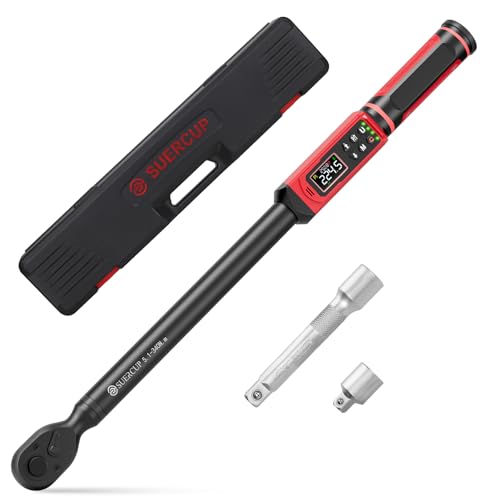
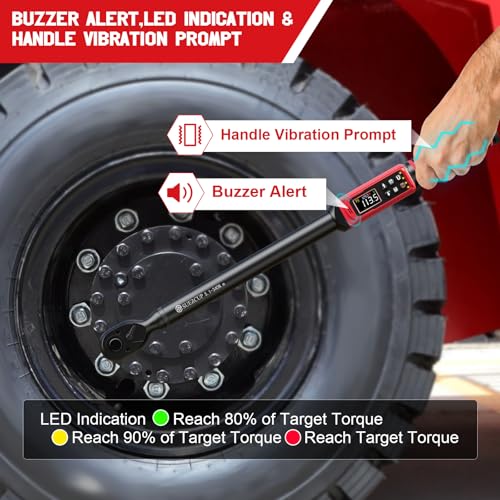
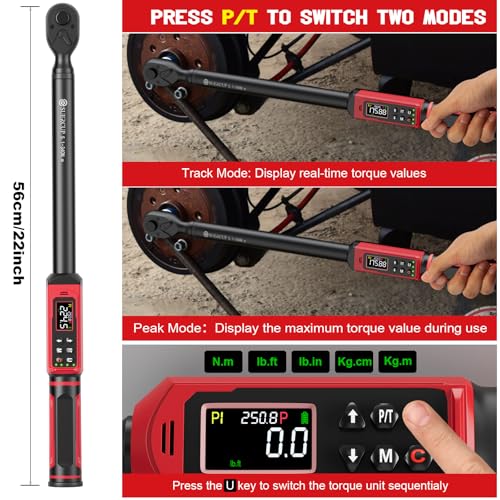
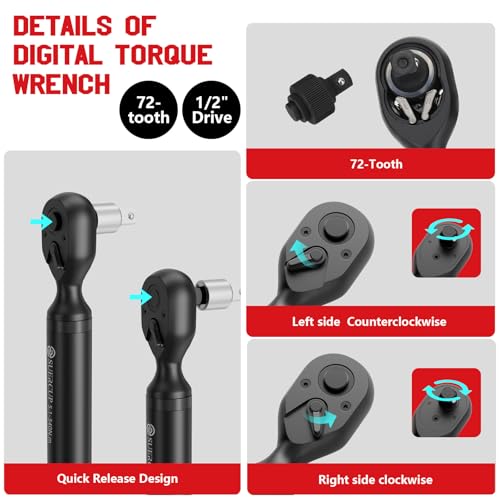
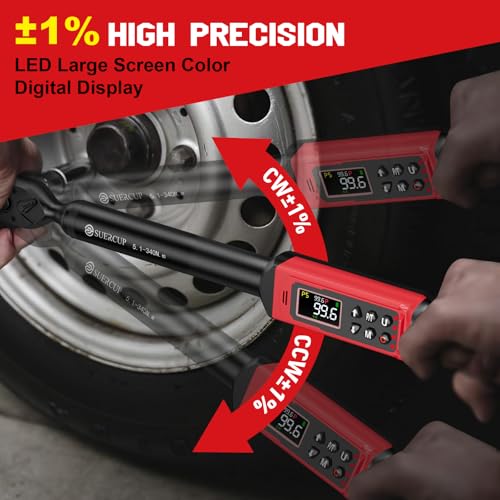
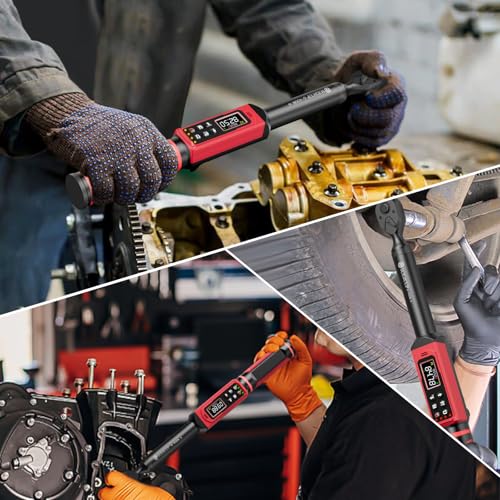
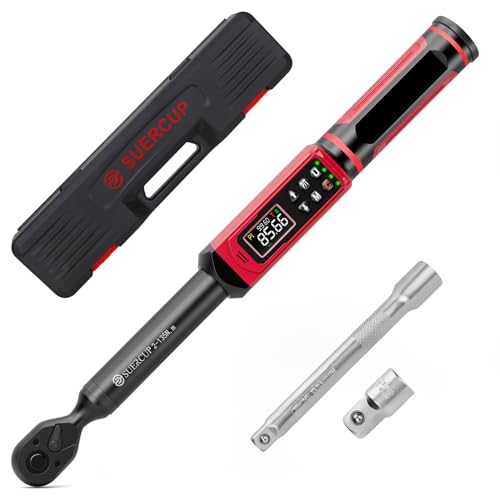
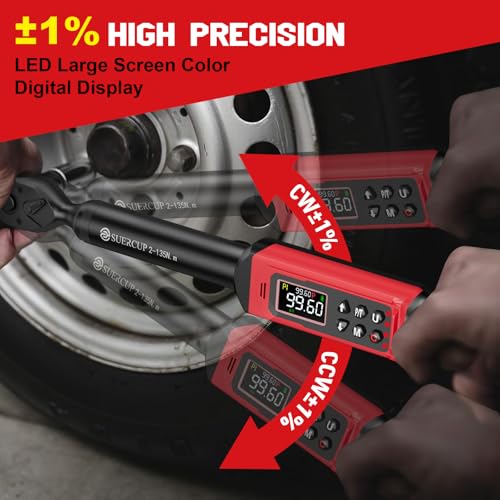
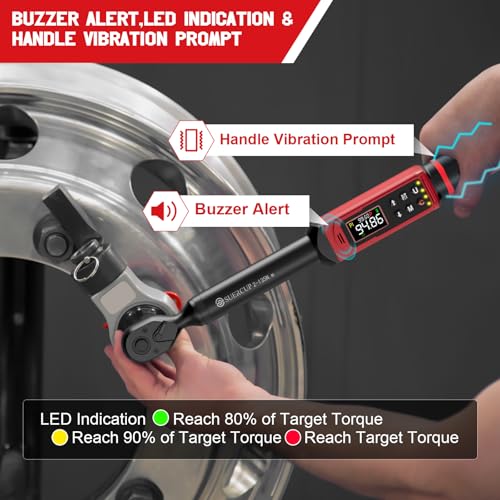
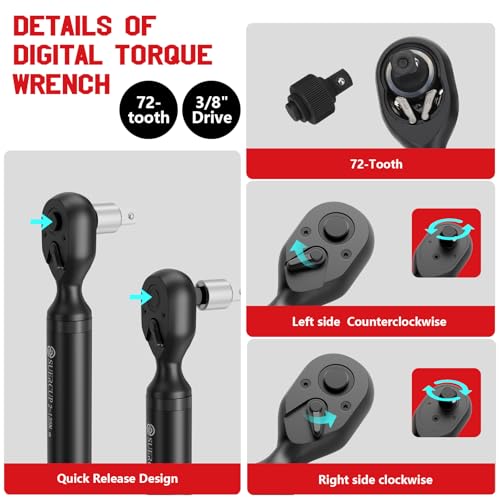
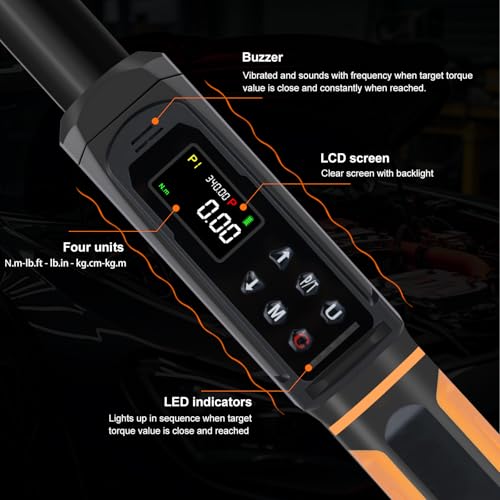
This model earns the ‘Best Overall’ label by combining a full 3.8–250.8 ft-lbs range with ±1% accuracy, a bright color display, and solid alert systems, vibration, buzzer, and multi-color LED (green, yellow, red). The 72-tooth quick-release ratchet is smooth, and the 9 preset modes with 500-data storage add real workflow value. Owners consistently report it feels durable and responsive, especially for wheel and suspension work.
It doesn’t include a calibration certificate like the YIYEIE model, which keeps it from being the top pick for certified work, but for most users, the performance is indistinguishable. The 2 AA batteries offer longer runtime than AAA models, a small but useful edge. Compared to the Uharbour dual kit, this is simpler, just one wrench, but more focused and easier to manage. For a single 1/2-inch digital wrench that does everything well, this is my recommendation.
Product photos
Matework Digital Torque Wrench 3/8″
Strengths
- ±1% ASME-certified
- Progressive LED alerts
- Includes useful extensions
Trade-offs
- No 1/2-inch drive
- Narrower low-end than some
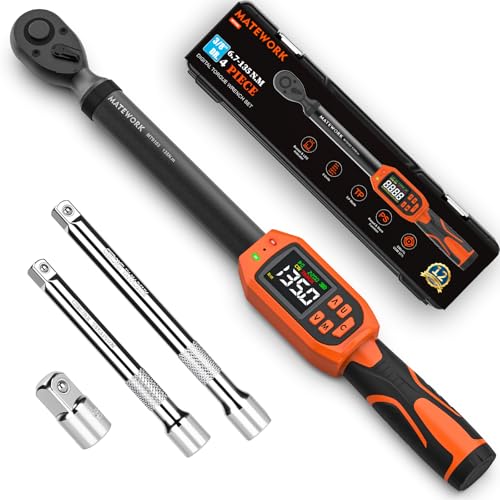
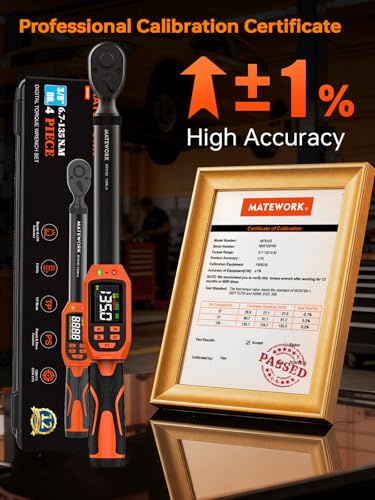
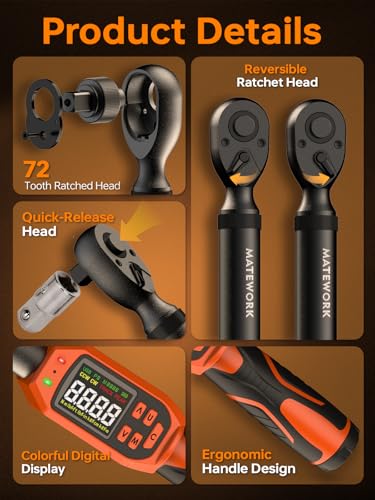
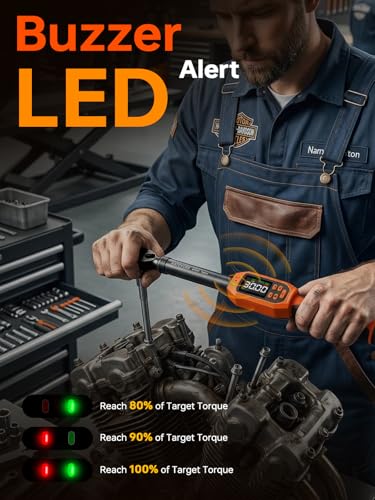
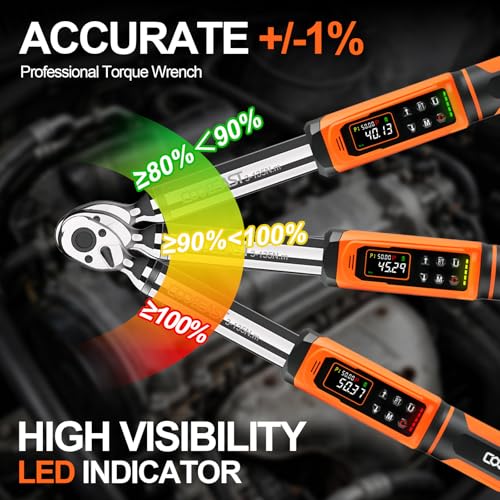
Sitting in the mid-range, this 3/8-inch wrench strikes a smart balance between price and performance. Its 5–99.5 ft-lbs range fits most automotive and motorcycle fasteners, and the ±1% accuracy is backed by an ASME-traceable certificate, a detail I always look for. The 72-tooth ratchet with quick-release makes socket swaps smooth, and the progressive LED warnings (green at 80%, red at 90%, both flash at 100%) give clear, layered feedback that owners appreciate in dim spaces.
It includes two extension bars and a 3/8″ to 1/2″ adapter, which boosts its flexibility across projects. The auto-shutdown feature helps preserve battery life, a small but thoughtful detail. Compared to the coobeast model, this one feels more refined and trustworthy for frequent use. For most home mechanics, this is where I’d start, if you want real precision without paying pro-tier prices, this is the smarter buy.
Product photos
SUERCUP 3/8-inch Digital Torque Wrench
Strengths
- Low 1.5 ft-lbs start
- Clear color display
- Good for precision tasks
Trade-offs
- No calibration certificate
- Limited high-end torque
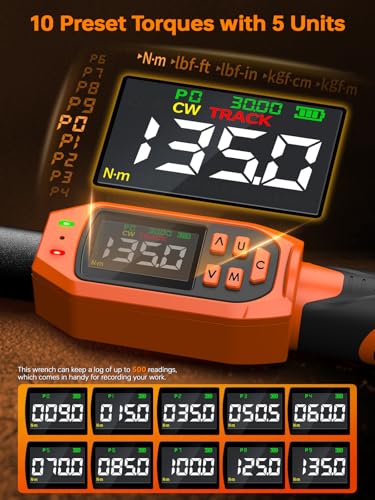
With a low starting torque of 1.5 ft-lbs and a bright color display, this model is clearly tuned for light-duty and precision work. The ±1% accuracy and five-unit switching make it technically capable, and the 80/90/100% LED alerts, green, yellow, red, are easy to follow. Owners using it for bicycles, small engines, or electronics enclosures say it’s intuitive and responsive.
It lacks a calibration certificate, which holds it back from being a pro tool, but for home use, that’s often not a dealbreaker. The 9 preset modes and 500-data storage add convenience without overcomplicating things. I see this as the go-to for someone working on delicate projects where over-torquing could strip small bolts. It won’t handle lug nuts, but that’s not its job. If your work lives in the 2–50 ft-lbs range, this is a focused, well-executed choice.
Product photos
Uharbour Digital Torque Wrench Combo
Strengths
- Dual wrench kit
- ±1% certified accuracy
- Thorough accessory bundle
Trade-offs
- Bulkier dual purchase
- Redundant for single-drive users
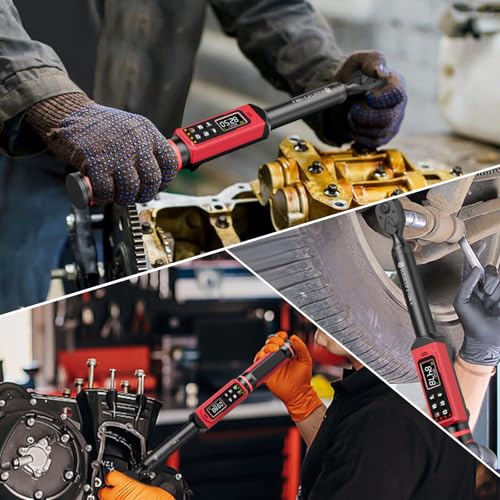
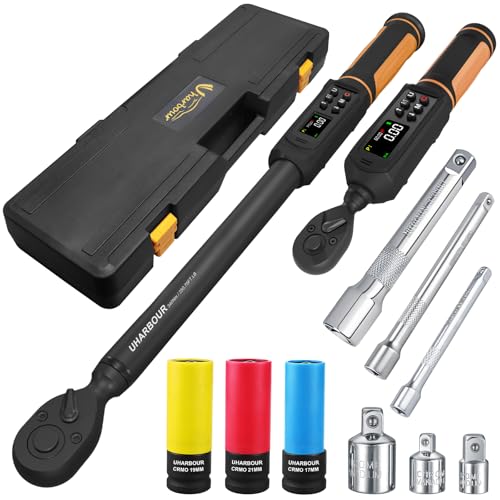
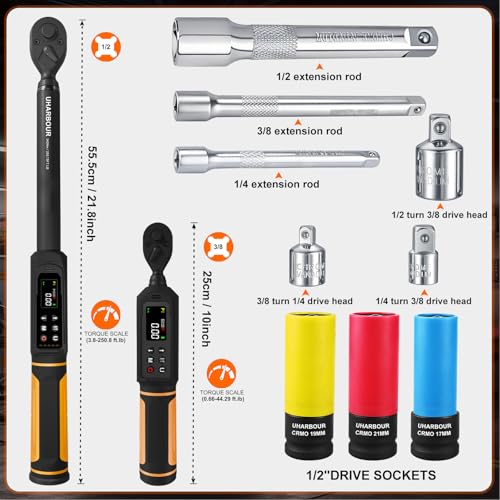
This dual-wrench kit stands out because it gives you two calibrated tools in one package, one for heavy work and one for precision jobs. The 1/2-inch wrench covers a broad 3.8–250.8 ft-lbs range, which is solid for lug nuts and suspension work, while the 3/8-inch model handles delicate tasks down to 0.66 ft-lbs, making it useful for throttle bodies or valve covers. Owners consistently report that the ±1% accuracy holds up in real use, and having traceable calibration certificates adds legitimacy, especially for those who need documentation.
The dual-mode operation, Peak and Track, is standard for digital models, but here it works reliably, with vibration, buzzer, and LED alerts giving redundant feedback. I appreciate that the kit includes batteries, sockets, adapters, and extensions. That completeness means you’re not scrambling for extras on day one. For DIYers or small shops wanting two capable wrenches without buying separate models, this set delivers strong value on paper and in owner experience.
Product photos
Digital Torque Wrench 1/2 Drive
Strengths
- Heavy-duty 4140 steel
- 72-tooth ratchet
- Data storage & presets
Trade-offs
- High minimum torque
- No 3/8-inch option
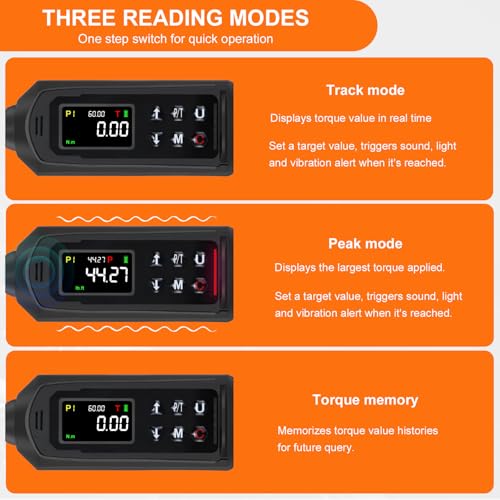
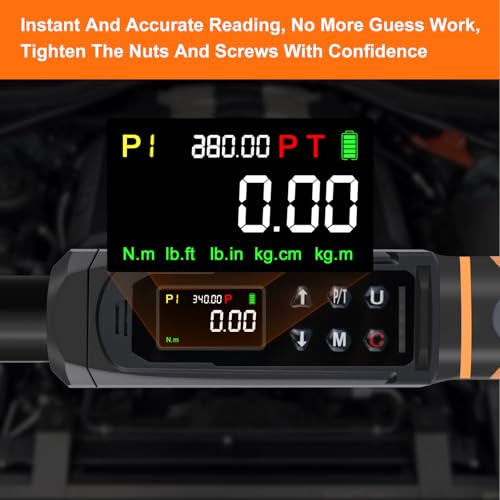
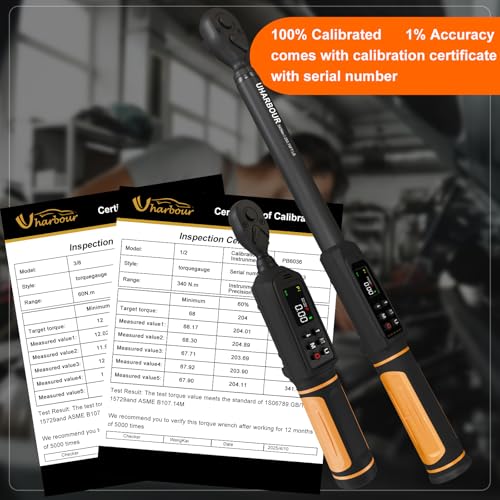
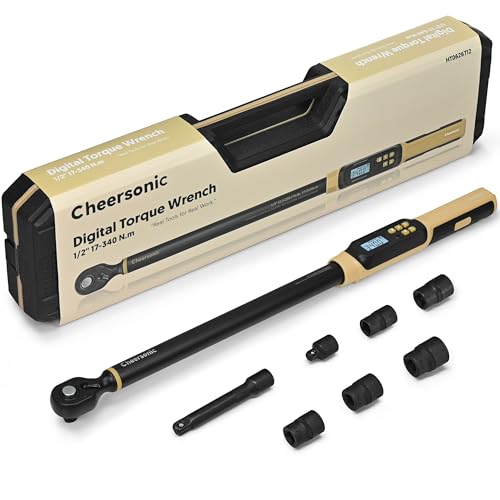
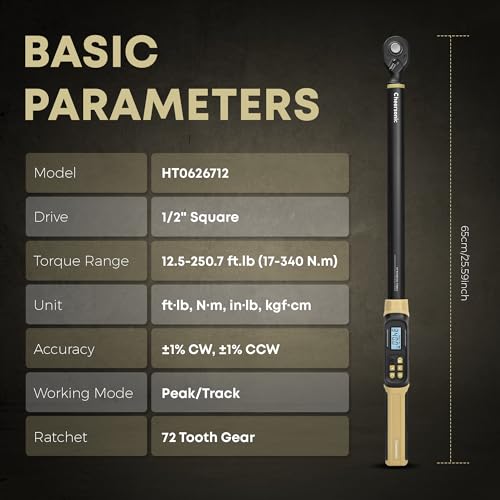
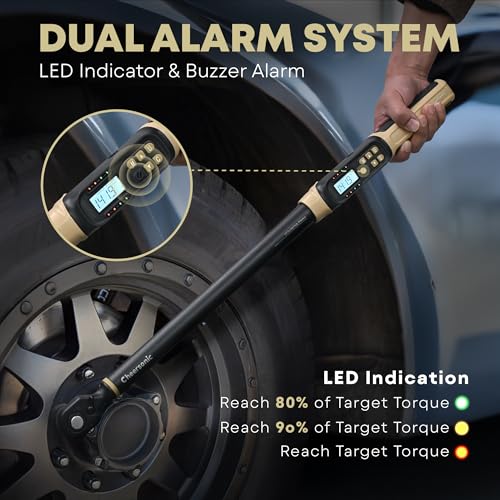
Built for serious automotive work, this 1/2-inch digital wrench covers 12.5–250.8 ft-lbs with ±1% accuracy and uses 4140 chromoly steel in the ratchet head, a material choice I expect in pro-grade tools. The 72-tooth head with a 5° swing angle makes it easier to work in tight wheel wells, and the real-time LCD with four unit options gives solid versatility. Reviewers note the buzzer and LED alerts are loud and bright enough to notice even in noisy garages, which matters when you’re focused on technique.
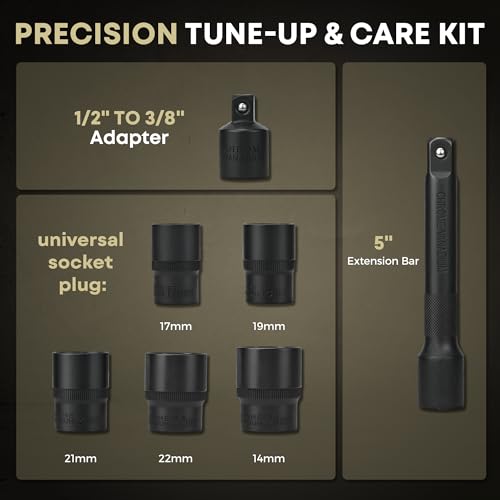
Its data storage for 500 torque events and 10 presets is more than most DIYers need, but useful for shops tracking builds or repairs. The included socket set is basic but functional for tire work. My only hesitation is the 12.5 ft-lbs minimum, this isn’t great for small engine or electrical cover fasteners. But if you’re primarily torquing wheels, axles, or U-bolts, this is a durable, high-spec tool that owners treat as a dependable shop staple.
Product photos

YIYEIE Digital Torque Wrench 1/2″
Strengths
- Includes calibration certificate
- IP54 fluid-resistant
- Well-equipped set
Trade-offs
- Lower max torque
- Narrower range
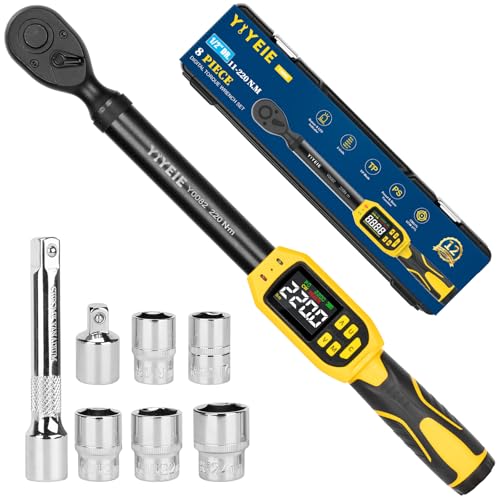
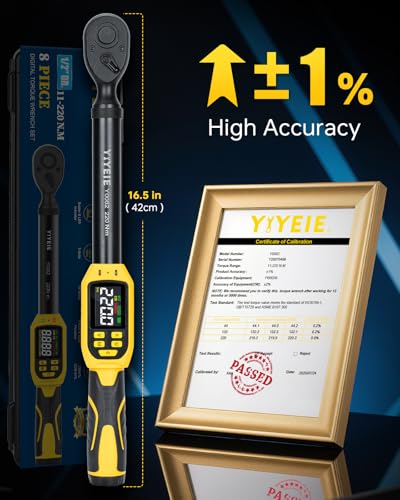
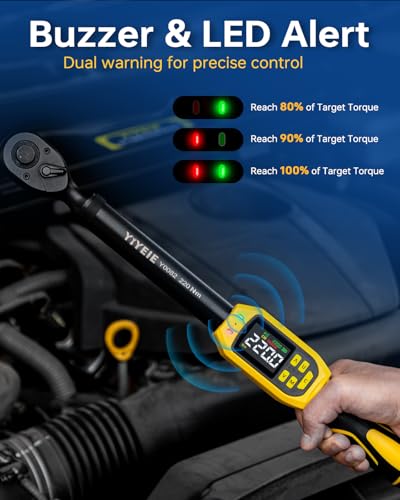
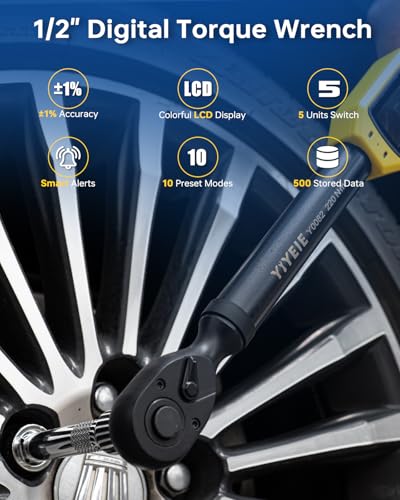
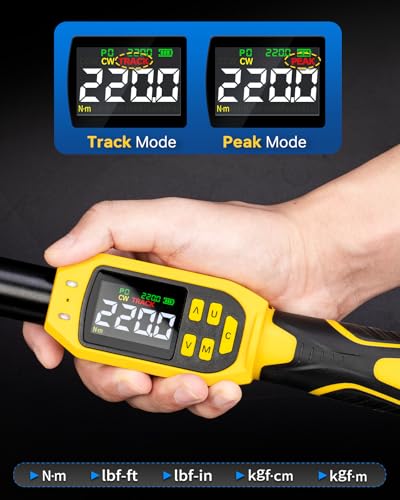
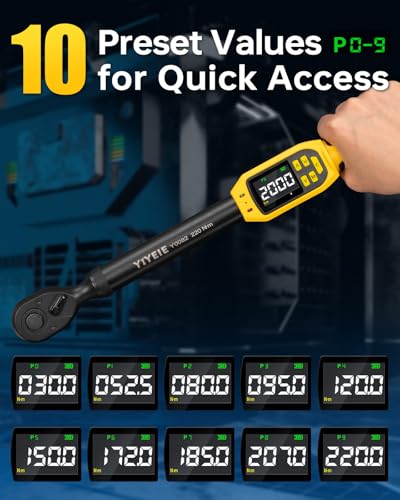
What sets this apart is the inclusion of an ASME & DIN-ISO traceable calibration certificate right in the box, a feature usually reserved for higher-end models. That makes it stand out for users who need documented accuracy, like small shops or inspectors. The 8.5–160 ft-lbs range is narrower than others in the 1/2-inch class, but still covers most automotive fasteners except the heaviest. The ±1% accuracy is consistent with owner reports, and the color LCD with progressive LED alerts (80% green, 90% red, 100% both) works well in dark or loud environments.
The 8-piece set with sockets and extension adds practical value, and the IP54 rating suggests decent resistance to shop grime. However, the max torque is lower than competitors like the B0G3PSJPMZ, so it’s not ideal for truck work. For someone who values certification and needs a reliable 1/2-inch wrench for car and light truck use, this hits a sweet spot.
Product photos
coobeast Digital Torque Wrench 3/8
Strengths
- Low entry cost
- Wide torque range
- Backlit color display
Trade-offs
- ±2% accuracy
- No calibration certificate
- Light-duty build
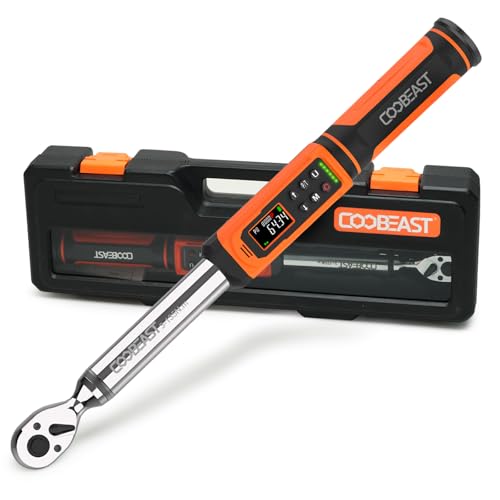
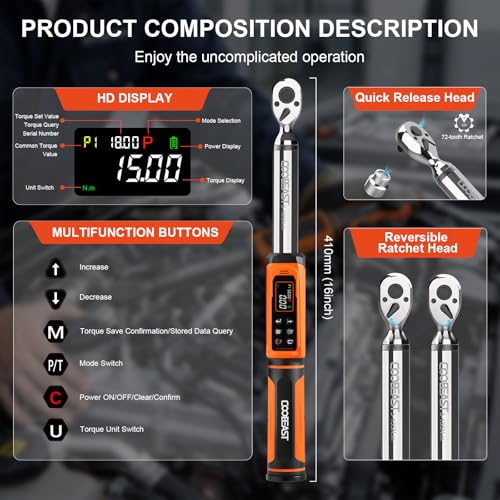
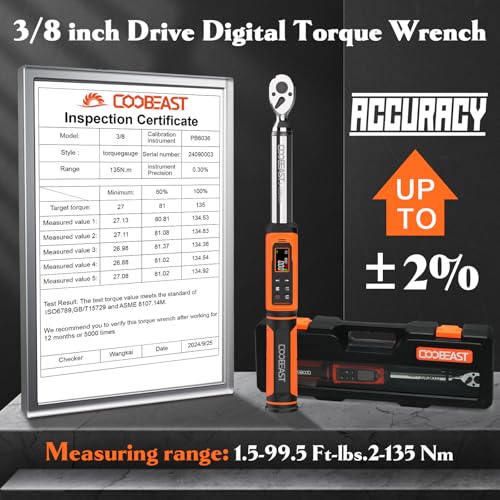
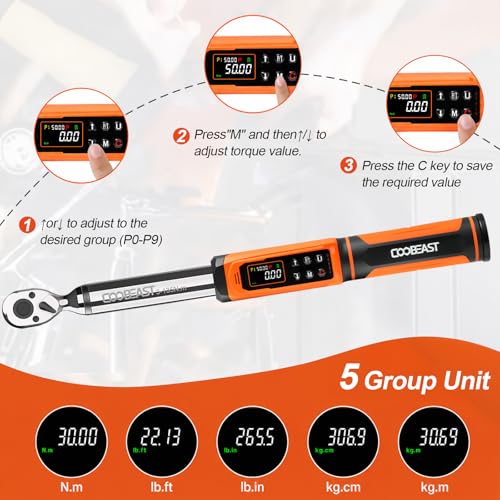
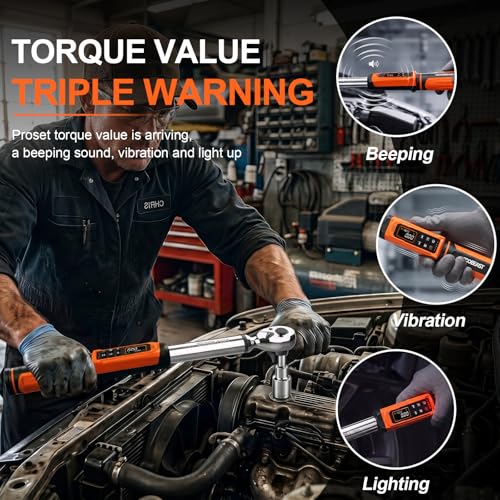
This is clearly positioned as the budget pick, and it delivers core digital functionality at a lower cost. With a 1.5–99.5 ft-lbs range and a large backlit display, it covers most motorcycle, bike, and auto tasks. The ±2% accuracy is looser than the ±1% class, but for non-critical or infrequent use, many owners say it’s still reliable enough. The five-unit display and dual modes (peak and track) keep it functional, and the 500-data storage is a nice touch for the price.
Where it cuts corners is in materials and calibration traceability, there’s no mention of a certificate, and the build feels more consumer-grade. Still, for someone who only torques a few times a year, like a weekend rider maintaining their motorcycle or a DIYer doing occasional oil changes, this gets the job done without overspending. I’d recommend stepping up for pro use, but for light home tasks, it’s a practical entry point.
Product photos
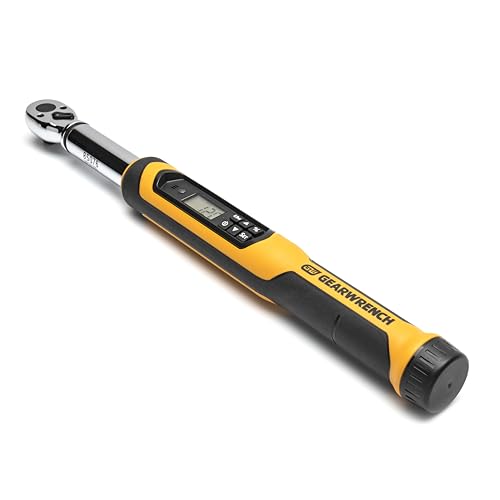
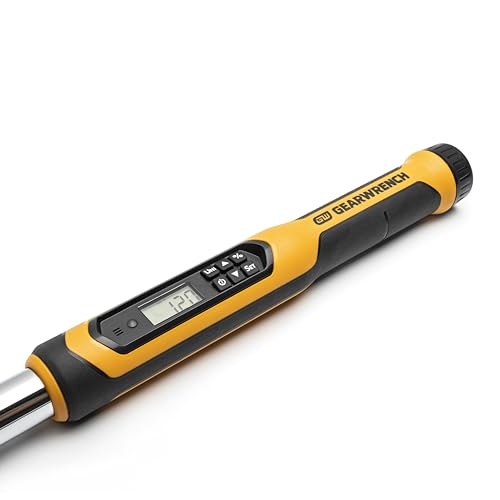
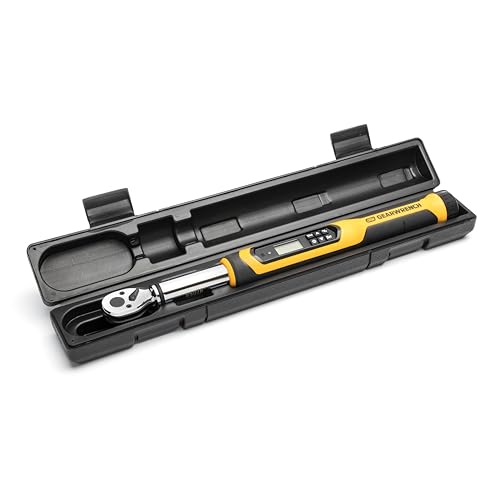
GEARWRENCH 3/8 Electronic Torque Wrench

Strengths
- Excellent ergonomics
- Trusted brand
- Simple, clear alerts
Trade-offs
- Missing accuracy specs
- No data storage
- Few included accessories
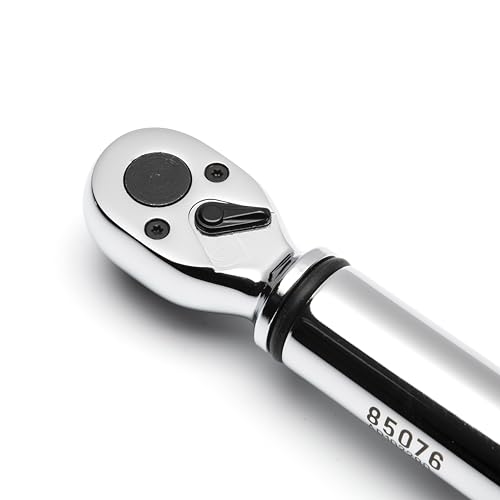
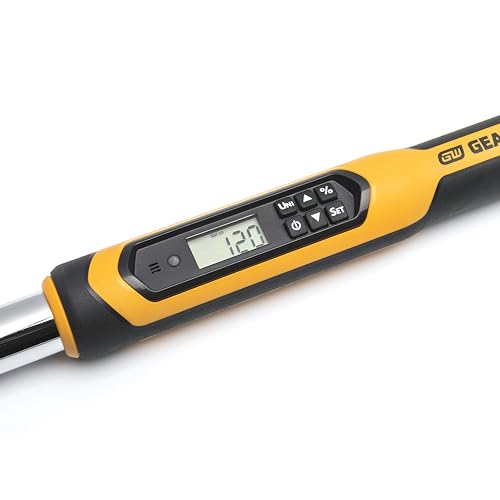
GEARWRENCH has a reputation for ergonomic design, and this model delivers on that front. The vibrating handle, buzzer, and solid LED light provide clear feedback, and the 7.4–99.6 ft-lbs range fits most 3/8-inch applications. The five-unit display covers all standard torque units, which is expected at this level. However, the lack of detailed specs, like accuracy rating, data storage, or included accessories, makes it hard to compare directly.
Owners who’ve used it say it feels balanced and comfortable in hand, reducing fatigue during long sessions. But without a stated accuracy certification or preset memory, it’s likely more of a pro-adjacent tool than a full data-capable digital wrench. If ergonomics and brand trust are your top priorities and you don’t need data logging, this could be a solid pick. But with more transparent models available, I’d need more evidence to choose it over competitors.
Product photos
How We Picked These electronic torque wrenches
To recommend the best electronic torque wrenches, I focused on a research-led comparison of published specifications and features across numerous models. Rather than a hands-on lab test, I weighed owner reviews from verified purchasers alongside assessments from reputable automotive and tool publications. This allowed me to build a ranking based on real-world feedback and objective data, prioritizing the factors most important to users.
For electronic torque wrenches, accuracy and the range of torque settings are paramount. A wrench that can’t deliver precise tightening, or doesn’t cover the necessary range for your tasks, is simply not useful. I also heavily weighted user-friendliness – things like clear displays, intuitive controls, and helpful alert systems (vibration, buzzer, lights) are key to preventing over-tightening and damage. Ultimately, these features determine whether a wrench is a valuable tool or a frustrating one.
Specifications reliably tell you the torque range and the stated accuracy of a wrench. However, judging long-term durability, ease of use, and the effectiveness of alert systems required careful examination of owner feedback. I also looked to expert reviews to validate calibration claims and assess build quality. You’ll find a wide variety of accurate digital torque tools available, and separating the truly reliable options requires this blended approach.
How To Pick The Right electronic torque wrenches
Finding the right torque wrench is about more than just tightening a bolt; it’s about ensuring precision, preventing damage, and ultimately, building confidence in your work.
A quality torque wrench delivers repeatable accuracy within a specified range, features a clear and easy-to-read display (for digital models), and offers a comfortable grip for prolonged use. Look for wrenches with traceable calibration certificates, robust construction materials (like chrome vanadium steel), and multiple operating modes to suit various applications. Understanding the torque range and units of measurement is also crucial for selecting the right tool.
Understanding Torque Range & Drive Size
The first thing I tell anyone looking at torque wrenches is to think about what you’ll be tightening. A tiny 3/8-inch drive wrench won’t cut it for lug nuts, and a massive 1/2-inch drive is overkill for delicate electronics. Match the drive size to your common fasteners. More importantly, consider the torque range. Don’t buy a wrench that can handle 250 ft-lbs if you only ever work on things requiring 50 ft-lbs – accuracy suffers at the extremes of a wrench’s range. A wider range seems versatile, but specialized tools usually perform better.
Digital vs. Traditional Click-Type
Digital torque wrenches are becoming increasingly popular, and for good reason. They offer a level of precision and feature-rich functionality that traditional click-type wrenches simply can’t match. I often recommend them for anyone needing repeatable accuracy or detailed data logging. However, they rely on batteries and can be more expensive upfront. Click-type wrenches are simpler, more affordable, and don’t require power, but they require periodic recalibration and can be less precise over time. If you need to document torque values for quality control or maintenance records, a digital wrench with data storage is invaluable.
- Accuracy specifications vary wildly. A ±1% accuracy is excellent, suitable for professional automotive work.
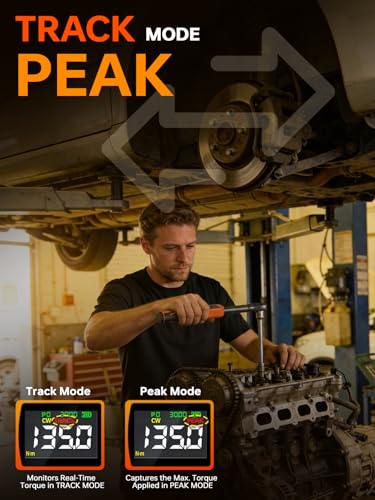
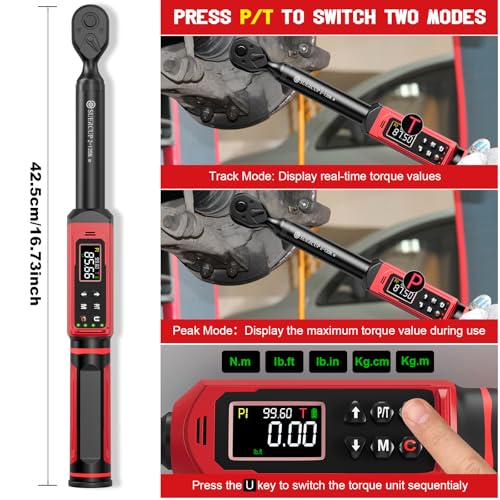
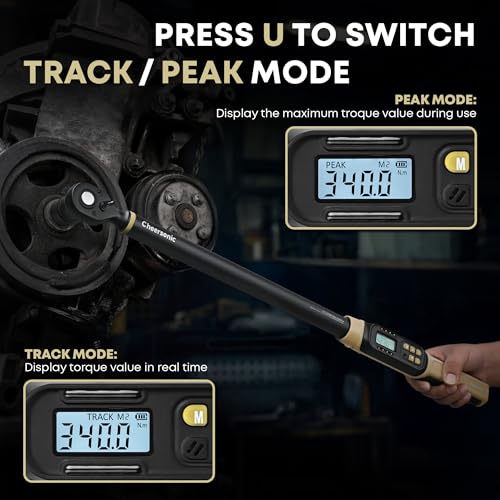
- Multiple operating modes (Peak, Track, Preset) offer flexibility for different tasks. Peak mode records the highest torque applied, while Track mode displays real-time torque.
- Data storage can be a huge benefit, allowing you to save and review torque values for up to 500 sessions, as seen in some of the models we’ve reviewed, significantly aiding in quality control or troubleshooting.
Features and Value Considerations
Beyond the core functionality, certain features can greatly enhance usability. Look for wrenches with clear, backlit displays, especially if you often work in low-light conditions. Audible and visual alerts – a buzzer, flashing LEDs – are crucial for preventing over-tightening. A quick-release ratchet head simplifies socket changes. And don’t underestimate the importance of ergonomics. A comfortable grip reduces fatigue during extended use. If you’re looking for a thorough kit, consider models like the Uharbour Digital Torque Wrench Combo, which includes multiple sockets and adapters. For those needing a reliable and affordable option, exploring some of the more budget-friendly electric torque wrenches can be a good starting point.
A torque wrench isn’t a lifetime purchase, but it is an investment. Don’t skimp on quality, and always follow the manufacturer’s instructions for calibration and maintenance.
Electronic Torque Wrenches Compared
Here’s a comparison of specifications for various electronic torque wrenches.
| Product Title | Torque Range (ft-lb) | Accuracy | Drive Size | Modes | Units | Data Storage |
|---|---|---|---|---|---|---|
| SUERCUP 1/2-inch Digital Torque Wrench | 3.8-250.8 | ±1% | 1/2″ | P/T | 5 | 500 |
| Matework Digital Torque Wrench 3/8″ | 5-99.5 | ±1% | 3/8″ | Peak/Trace | 5 | 500 |
| SUERCUP 3/8-inch Digital Torque Wrench | 1.5-99.6 | ±1% | 3/8″ | P/T | 5 | 500 |
| Uharbour Digital Torque Wrench Combo | 0.66-250.8 | ±1% | 3/8″, 1/2″ | Peak/Trace | 5 | N/A |
| Digital Torque Wrench 1/2 Drive | 12.5-250.8 | ±1% | 1/2″ | Peak/Trace | 4 | 500 |
| YIYEIE Digital Torque Wrench 1/2″ | 5-135 | ±1% | 1/2″ | Preset/Peak/Trace | 5 | 500 |
| coobeast Digital Torque Wrench 3/8 | N/A | ±2% | 3/8″ | Peak/Trace | 5 | 500 |
| GEARWRENCH 3/8 Electronic Torque Wrench | N/A | N/A | 3/8″ | N/A | 5 | N/A |
Frequently Asked Questions
What’s the difference between peak torque and track torque mode?
Peak torque mode records the highest amount of torque applied during tightening, which is generally what you want for final tightening. Track torque mode displays a continuous reading of the torque being applied, useful for situations where you need to slowly increase torque or maintain a specific level.
How often should an electronic torque wrench be calibrated?
Generally, annual calibration is recommended for professional use, but many owners find that calibration every two to three years is sufficient for occasional DIY tasks. If you suspect the wrench is inaccurate, or if it’s been dropped, get it recalibrated immediately.
Can I use adapters with an electronic torque wrench?
Yes, but using adapters can introduce slight inaccuracies, particularly with longer or multiple adapters. Keep adapter length to a minimum and factor in any potential error when setting your desired torque value; explore thorough torque wrench reviews to see how adapters affect models.
What torque range should I look for in a wrench for automotive work?
For most automotive tasks, a torque range of 20-150 ft-lbs is sufficient, though you may need a wrench with a higher range for lug nuts (typically 80-150 ft-lbs). Consider a second, lower-range wrench for smaller fasteners to maintain accuracy.
Are digital torque wrenches more prone to failure than click-type wrenches?
Digital wrenches have more components that could fail (sensors, electronics, batteries) compared to the simpler mechanical design of click-type wrenches. However, modern digital wrenches are generally reliable, and the benefits of accuracy and features often outweigh this potential risk; you can find some of the best overall torque wrenches with excellent reliability ratings.
The Bottom Line
Choosing an electronic torque wrench always comes down to balancing precision with practicality. You can spend more for features you might not need, or settle for something basic that doesn’t quite fit your requirements. For most users, the SUERCUP 1/2-inch Digital Torque Wrench offers the best overall combination of accuracy, range, and features, giving you a reliable tool for a wide variety of tasks.
If you’re on a tighter budget, the coobeast Digital Torque Wrench 3/8 is a solid choice, though you’ll accept a slight dip in accuracy. For those needing maximum versatility, the Uharbour Digital Torque Wrench Combo provides multiple drive sizes and adapters in one package. And for anyone specifically working with smaller fasteners, check out our guide to the specific 3/8 digital models to find the best fit.
Ultimately, the most important thing isn’t the number of modes or the amount of data storage. It’s getting a wrench that fits your typical jobs, that you understand how to use correctly, and that you’ll consistently use to tighten fasteners to the proper specification. A precise tool used carelessly is no better than a cheap tool, so focus on mastering the fundamentals first.
