
8 Best Electric Air Compressors of 2026
This post contains affiliate links. As an Amazon Associate, we earn from qualifying purchases.
The Metabo HPT 6 Gallon is the best overall electric air compressor for most DIYers, delivering strong, reliable airflow in a manageable size. If you’re watching your budget, the ECOMAX 3 Gallon offers basic functionality at a low price, while the Quiet 5 Gallon stands out when noise is a concern.
Most people don’t realize how quickly a cheap compressor can become a frustration, constantly cycling, stalling under load, or drowning out conversation. I’ve seen too many projects slowed down by a unit that looks good on paper but can’t keep up in practice.
This guide cuts through the specs and marketing to focus on what actually matters: real-world performance, reliability, and matching the tool to your needs. I looked at CFM at 90 PSI, tank size, noise, and owner feedback to find models that deliver consistent power without unnecessary cost or bulk.
Top 8 Electric Air Compressors in the Market
The Best Electric Air Compressors, Reviewed
Metabo HPT 6 Gallon Air Compressor

Strengths
- 200 PSI max pressure
- 4 CFM at 90 PSI
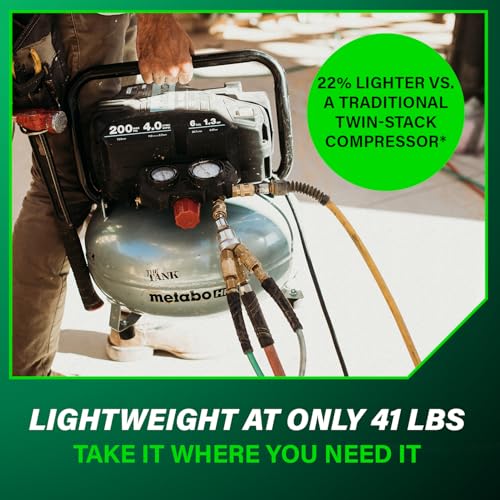
- Lightweight at 42 lbs
Trade-offs
- Louder than quiet-series models
- Higher price point
When you’re running a crew on a framing job and need tools that keep up, the Metabo HPT EC914S stands out in the pancake class. At 200 PSI, it delivers significantly more pressure than most portable compressors, which owners say translates to fewer stalls when driving large nails or running multiple tools. The 4 CFM at 90 PSI is no joke, it’s enough to run two framing nailers side by side, something you don’t typically expect from a 6-gallon unit.
It’s also 22% lighter than twin-stack models, which matters when you’re lugging it up ladders or moving around a job site all day. While it’s not the quietest option, the trade-off is clear: raw performance in a portable package. Compared to the DEWALT DWFP55126, this one builds pressure faster and sustains longer run times, making it the go-to for pros who need reliability without the bulk.
Product photos


Quiet 5 Gallon Electric Air Compressor

Strengths
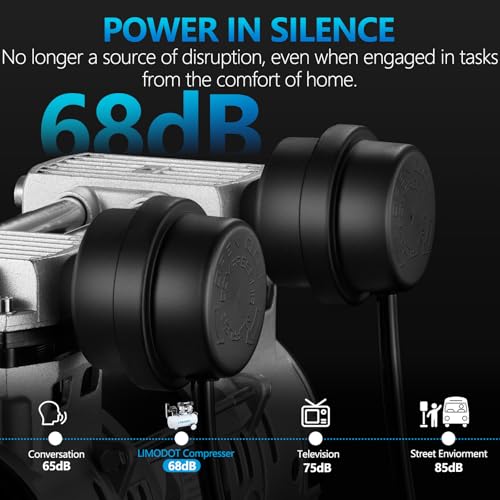
- Very quiet at 68 dB
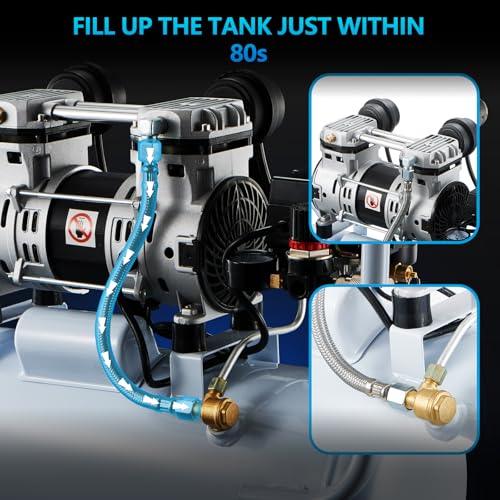
- Fast 80-second refill
- 2.8 CFM at 90 PSI
Trade-offs
- Plastic hose may wear over time
- Less tank capacity than larger models
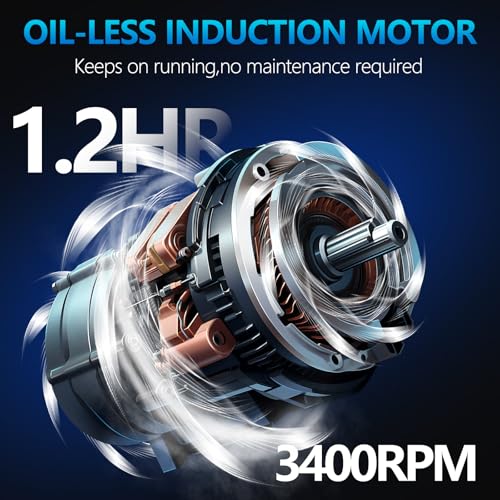
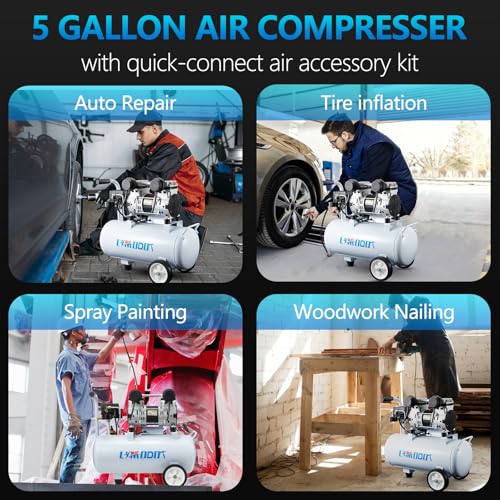
Don’t let the name fool you, this compressor really does run at a low 68 dB, making it one of the quieter mid-tank options out there. The 2.8 CFM at 90 PSI is strong for a 5-gallon unit, and owners report it handles brad nailers, HVLP sprayers, and even small framing tools without issue. The 3400 RPM motor keeps things smooth and reduces vibration, which helps with both noise and longevity.
It recovers from empty to full in just 80 seconds, which is fast, faster than the DEWALT 6-gallon model. The included 25 ft hose and 11 accessories make it a great plug-and-play setup for woodworkers or garage tinkerers. While it doesn’t match the VEVOR 13-gallon for heavy spray jobs, it’s a smarter pick for those who want quiet, fast performance without the size.
Product photos
VEVOR 13-Gallon Air Compressor

Strengths
- High 4.6 SCFM output
- Large 13-gallon tank
- 66 dB quiet operation
Trade-offs
- Bulky for job site transport
- Takes up more storage space
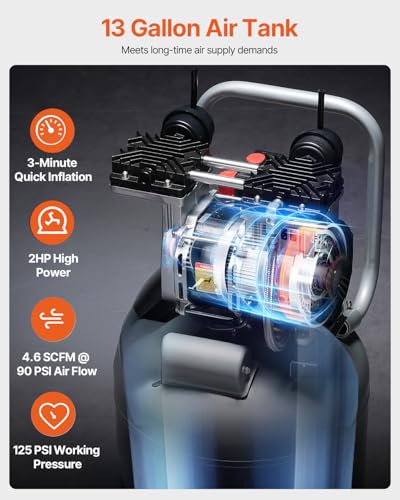
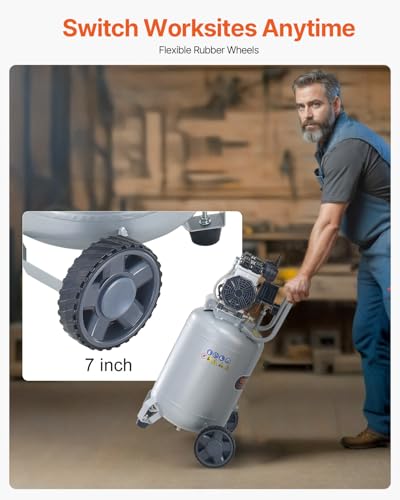
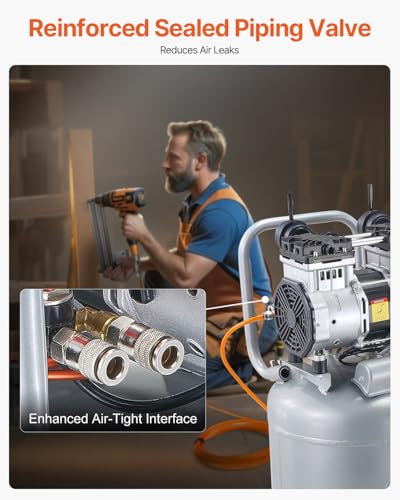
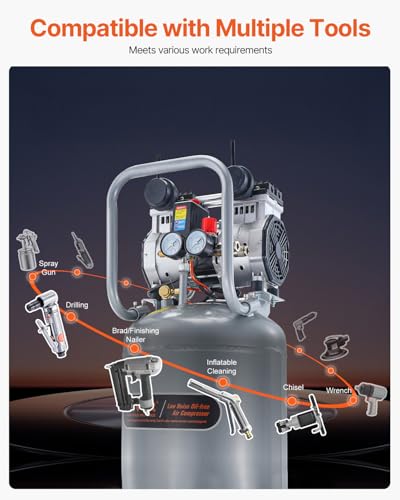
If you’re doing auto body work or need to run an HVLP spray gun regularly, the VEVOR 13-gallon compressor is one of the best values for heavy-duty use. The 2 HP motor and 4.6 SCFM at 90 PSI deliver consistent airflow that won’t bog down under load, owners report it handles spray painting and impact wrenches with ease.
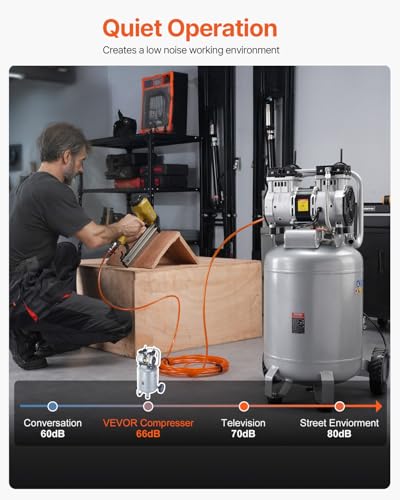
It fills in under 3 minutes and runs at just 66 dB, which is impressive for a compressor this size. The oil-free pump keeps maintenance low, and the included wheels make it easy to move around a garage. It’s not as portable as pancake models, but for a stationary or semi-mobile setup, it’s hard to beat. Beats the Makita and DEWALT models in raw output, though it’s overkill for light tasks.
Product photos
Makita 1 Gallon Compact Air Compressor

Strengths
- Extremely quiet at 58 dB
- Oil-free, maintenance-free
- Durable roll-cage build
Trade-offs
- Low CFM for heavy tools
- Small 1-gallon tank
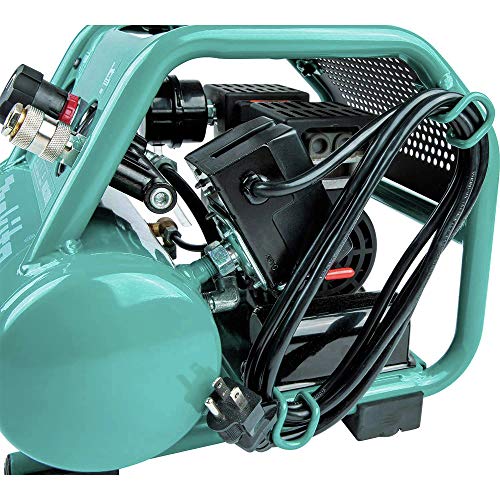
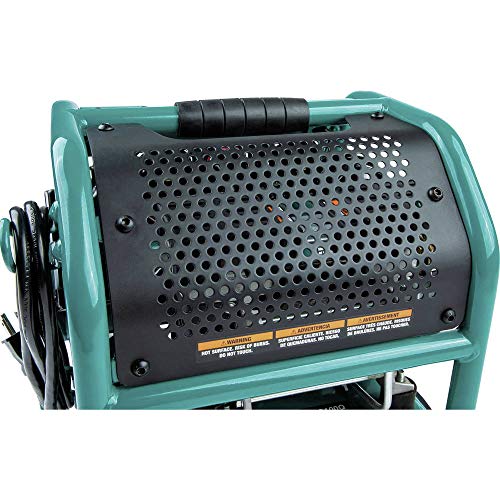
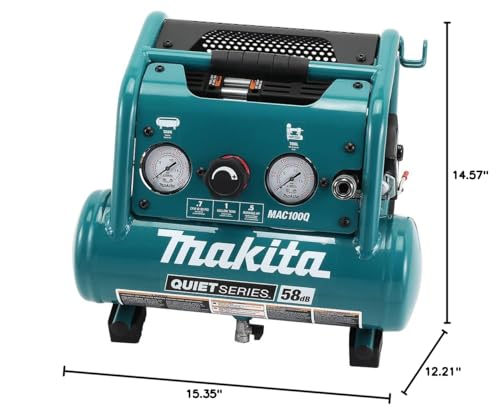
If you’re working inside a house with clients nearby or doing finish work late in the evening, the Makita MAC100Q is a standout for noise control. At just 58 dB, it’s one of the quietest compressors in its class, owners consistently report being able to hold conversations while it runs. The 1,750 RPM motor isn’t just quiet; it’s built to last, reducing wear on the pump over time.
With only 0.7 CFM at 90 PSI, it’s not meant for heavy framing, but it’s perfect for finish nailers, staplers, or inflating tires in a garage. It won’t keep up with high-demand tools, but for light-duty indoor tasks, it outperforms the CRAFTSMAN 2-gallon model in both noise and motor longevity. The oil-free pump means no maintenance, and the roll-cage design gives it real job-site toughness despite its small size.
Product photos
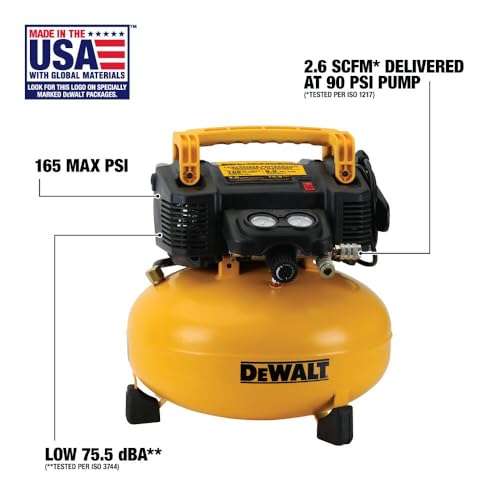
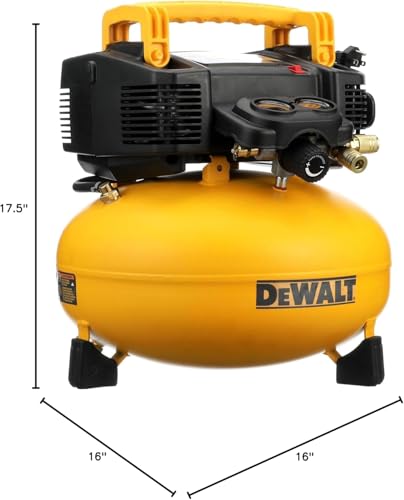
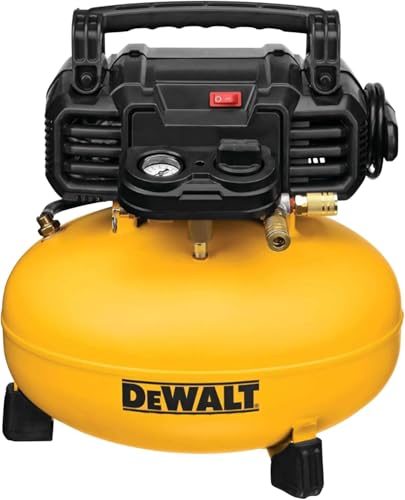
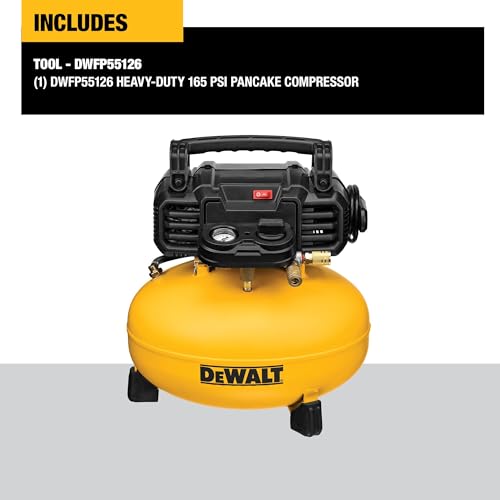
DEWALT 6 Gallon Pancake Air Compressor
Strengths
- Lightweight at 30 lbs
- Dual universal couplers
- High-flow regulator
Trade-offs
- Lower max PSI than Metabo HPT
- Noise level slightly above quiet models
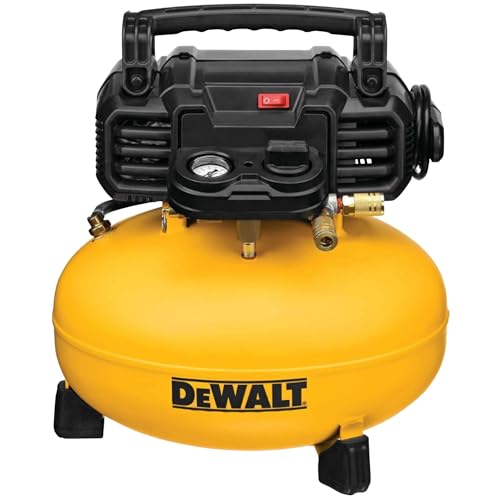
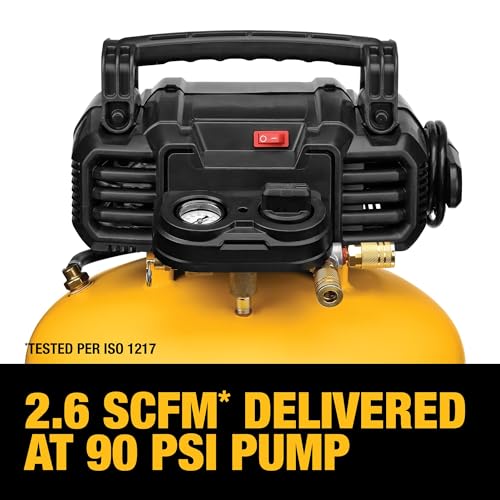
The DEWALT DWFP55126 hits that sweet spot between portability and performance, which is why it’s a staple on so many job sites. At 30 lbs, it’s one of the lightest 6-gallon compressors, and the ergonomic handle makes it easy to carry all day. The 2.6 SCFM at 90 PSI is solid for a single user running a framing or finish nailer, and the high-flow regulator helps maintain tool speed even as pressure drops.
Owners love the dual couplers, which let two people run small tools intermittently, something the ECOMAX 3-gallon model can’t handle. It’s not as powerful as the Metabo HPT, but for most DIYers and solo contractors, it’s more than enough. The cold-weather start capability is also a real plus for early morning outdoor jobs.
Product photos
ECOMAX 3 Gallon Pancake Air Compressor

Strengths
- Ultra-light at 16.3 lbs
- Affordable price
- Comes with 11 accessories
Trade-offs
- Low CFM for nailing
- Max 110 PSI limit
At 16.3 lbs and a compact footprint, the ECOMAX 3-gallon compressor is one of the most portable options here, perfect for quick inflation jobs or light nailing. The 0.6 SCFM at 90 PSI is modest, but it’s enough for brad nailers, staplers, or topping off tires. Owners appreciate the dual quick couplers and included accessory kit, which adds real value for the price.
It’s not going to power anything demanding, and the 110 PSI max pressure limits its use with higher-pressure tools. Compared to the CRAFTSMAN 2-gallon model, it’s lighter but slightly less durable in build. Still, for beginners or those on a tight budget, it delivers solid functionality without breaking the bank.
Product photos


CRAFTSMAN 2 Gallon Portable Air Compressor
Strengths
- Lightweight at 19 lbs
- Oil-free pump
- 10-piece accessory kit
Trade-offs
- Low CFM for nailing
- Small tank capacity
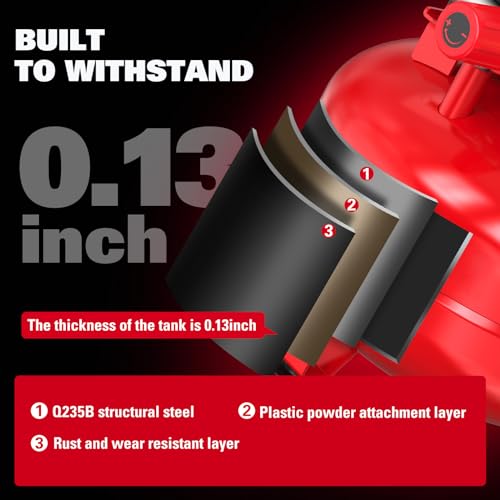
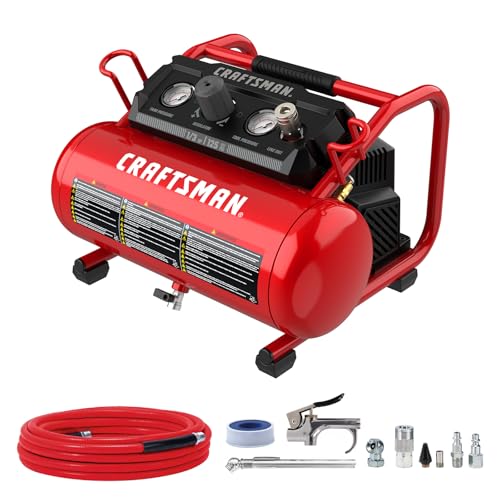
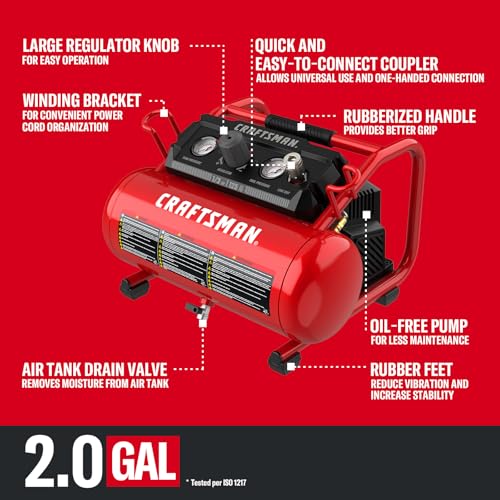
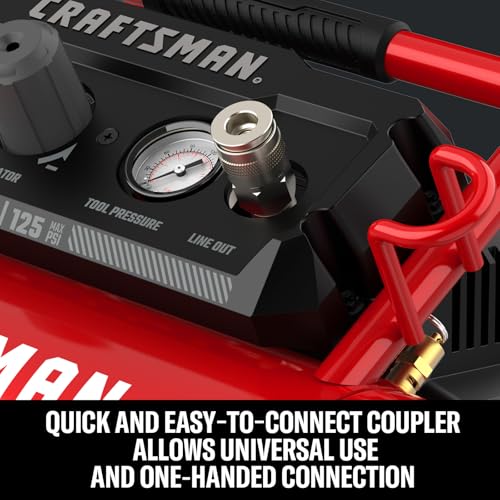
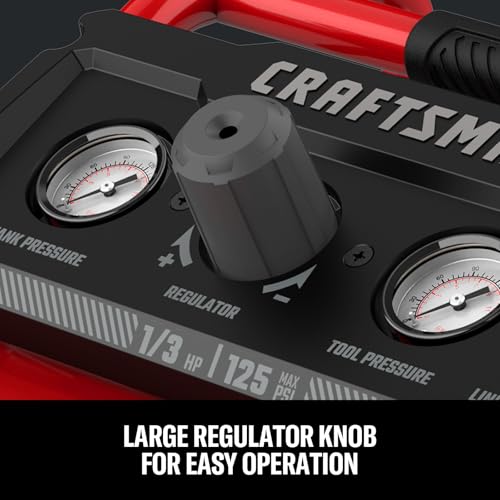
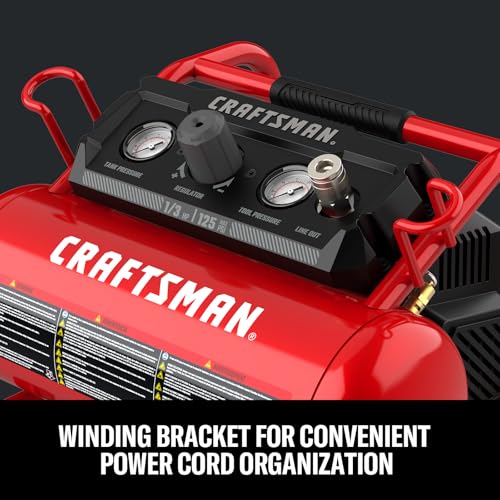
The CRAFTSMAN 2-gallon compressor is built for lightweight convenience, at 19 lbs, it’s easy to toss in a truck or carry up a ladder. The 125 PSI max pressure is decent for its size, and the oil-free pump means no maintenance. It’s ideal for quick jobs like inflating tires, blowing out debris, or running a brad nailer for light trim.
While it doesn’t match the ECOMAX in included accessories, the build quality feels a bit more solid. However, the 1/3 HP motor and small tank mean it’s not for continuous use. For touch-up work or small repairs, it’s a solid pick, but don’t expect it to keep up with framing crews.
Product photos

AstroAI Tire Inflator Portable Air Pump
Strengths
- Extremely fast inflation
- Dual power sources
- Auto shut-off with memory
Trade-offs
- Not for pneumatic tools
- Short duty cycle (15 min max)
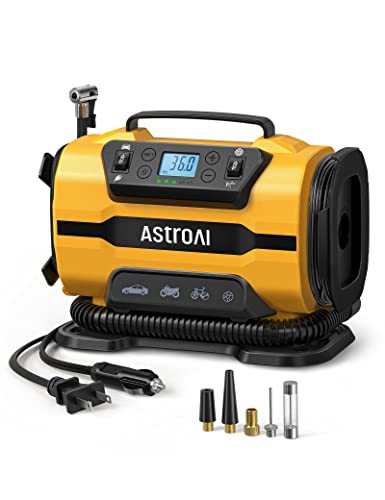
The AstroAI tire inflator isn’t a traditional compressor, but for on-the-go inflation, it’s one of the most capable portable units I’ve seen. With dual metal motors and a 150 PSI max, it can refill a car tire from 30 to 36 PSI in under a minute. The dual power options, 12V car and 110V AC, make it versatile for home, road trips, or job sites without power.
Owners love the auto shut-off and memory function, which takes the guesswork out of tire pressure. The LED light is a small but useful touch for night use. While it can’t run pneumatic tools, it outperforms any pancake compressor when it comes to tire inflation speed and portability. For car owners or mobile workers, it’s a no-brainer.
Product photos


How We Chose These electric air compressors
Rather than a hands-on lab test, my research for these recommendations involved a detailed comparison of published specifications and features across numerous models. I weighed owner reviews from multiple sources – focusing on consistent feedback regarding reliability and performance – alongside reviews from reputable tool publications. As someone who’s spent years advising on workshop tools, I applied my understanding of pneumatic tool requirements and typical user needs to rank these compressors against clear criteria.
For electric air compressors, consistent airflow (CFM) at a useful pressure (90 PSI) and tank size were the most heavily weighted factors. A compressor with high peak PSI is less useful if it can’t sustain adequate airflow for tools like nailers or impact wrenches. Portability and noise level were also critical, especially for homeowners and DIYers who need to move the unit around or work in enclosed spaces. Ultimately, I prioritized models that offered the best balance of these features for their intended applications.
Specifications reliably indicate a compressor’s potential output – CFM, PSI, tank size, and motor horsepower. However, real-world performance and durability are best judged from owner feedback. I paid close attention to reports of overheating, pump failures, and noise levels, as these often aren’t fully reflected in manufacturer specs. You’ll find many of our top picks align with consistently positive reviews and appear in discussions of expert-recommended air compressors.
How To Choose The electric air compressors
Finding the right electric air compressor can feel overwhelming, but understanding your needs and the key specs will simplify the process.
An effective electric air compressor balances sufficient pressure (PSI) and airflow (CFM) with portability and noise levels. Prioritize CFM at 90 PSI as this rating most accurately reflects sustained tool operation. Consider tank size based on the tools you’ll use; intermittent tasks need less capacity than continuous applications like painting. Oil-free models reduce maintenance, while oil-lubricated compressors tend to be quieter and more durable.
Capacity and Intended Use
The first step is honestly assessing what you plan to power. A tiny 1-gallon compressor like the Makita is fine for brad nailers and inflation, but it won’t run a powerful impact wrench. Conversely, hauling a 13-gallon VEVOR model around for occasional tire top-ups is overkill. Think about the highest CFM demand of any tool you anticipate using and add a little buffer. Don’t assume higher PSI automatically equals better performance; CFM is the crucial figure for sustained operation. If you’re looking for a more in-depth look at options suited for mobility, check out our guide to portable electric air compressors.
Noise Level & Environment
Noise is a significant factor, especially if you work in a residential area or a confined space. Compressors can range from a relatively quiet 60 dB to a disruptive 80+ dB. Oil-free models are generally louder than oil-lubricated ones. The Quiet 5 Gallon model, for example, boasts a 68dB rating, making it suitable for more noise-sensitive environments. If you need to minimize disturbance, explore options specifically designed for quiet operation. You can find a review of the quietest electric air compressors on our site.
Budget and Features
Price varies dramatically based on capacity, features, and brand reputation. The ECOMAX 3 Gallon is a budget-friendly option for light-duty tasks, while a DEWALT 6-gallon pancake compressor will cost considerably more. Consider the included accessories – some compressors come with a hose, fittings, and even a small tool kit.
Here’s a breakdown of what to prioritize when balancing cost and features:
- Hose Quality: A cheap hose can restrict airflow and reduce tool performance.
- Quick Connectors: These make tool changes much faster and easier.
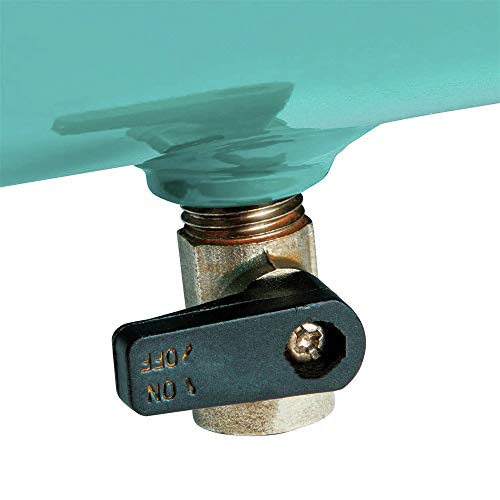
- Drain Valve: A well-designed drain valve simplifies tank maintenance, preventing rust and prolonging the compressor’s life. A ball drain valve, like the one on the DEWALT, is typically easier to use than a simple petcock.
A compressor’s CFM at 90 PSI is the single most important specification. Don’t chase high PSI numbers if the CFM is too low for your tools.
Electric Air Compressors Compared
Here’s a comparison of specifications for various electric air compressors to help you choose the right one.
| Product Title | Tank Size (Gallons) | Max PSI | CFM @ 90 PSI | Power (HP) | Noise Level (dB) |
|---|---|---|---|---|---|
| Metabo HPT 6 Gallon | 6 | 200 | 4.0 | N/A | N/A |
| Quiet 5 Gallon | 5 | N/A | 2.8 | 1.2 | 68 |
| VEVOR 13-Gallon | 13 | N/A | N/A | 2.0 | 66 |
| Makita 1 Gallon | 1 | 135 | 0.7 | 0.5 | 58 |
| DEWALT 6 Gallon | 6 | 165 | 2.6 | N/A | 78.5 |
| ECOMAX 3 Gallon | 3 | 110 | 0.6 | N/A | N/A |
| CRAFTSMAN 2 Gallon | 2 | 125 | N/A | 1/3 | N/A |
| AstroAI Tire Inflator | N/A | 150 | N/A | N/A | N/A |
Frequently Asked Questions
What size tank do I really need?
A smaller 1-3 gallon tank is sufficient for basic inflation and nail guns, but for continuous use like running an impact wrench or spray painting, I recommend at least 6 gallons. Larger tanks provide a more consistent air supply and reduce how often the motor cycles on and off.
Are oil-free compressors truly maintenance-free?
While oil-free compressors eliminate oil changes, they generally have a shorter lifespan than oil-lubricated models. The lack of lubrication causes internal components to wear faster, though they remain a good choice for infrequent use or portability.
What’s the difference between peak PSI and CFM?
Peak PSI indicates the maximum pressure the compressor can reach, but CFM (cubic feet per minute) at 90 PSI is far more important. CFM tells you how much air the compressor can sustain for running your tools; a higher CFM means consistent power.
Can I run multiple air tools from one compressor?
You can, but only if the compressor’s CFM output exceeds the combined CFM requirements of all the tools you’re using simultaneously. Running a compressor beyond its capacity will result in reduced tool performance and potential motor damage.
Are there quieter options for my garage or home workshop?
Yes, some models, like the Quiet 5 Gallon compressor, are specifically designed for low noise operation. You can also look for oil-lubricated compressors as they tend to be quieter than oil-free ones, or consider investing in lightweight pancake air compressors which often prioritize portability and reduced noise.
The Bottom Line
Choosing an air compressor always comes down to balancing power with practicality. You can spend more to get a larger tank and higher CFM, but for many homeowners and DIYers, that extra capability isn’t necessary. For the best overall combination of performance, features, and reasonable portability, I believe the Metabo HPT 6 Gallon compressor represents a solid investment.
If you’ve got specific needs, though, there are excellent alternatives. For those on a tight budget, the ECOMAX 3 Gallon provides a functional entry point into pneumatic tools. And if you’re prioritizing quiet operation for indoor projects or noise-sensitive neighborhoods, the Quiet 5 Gallon model is a standout choice. For those looking for top DIY air compressors, these models all offer unique benefits.
Ultimately, remember that CFM at 90 PSI is the most important number. Don’t get caught up in chasing peak PSI or fancy features if the compressor can’t deliver sustained airflow to your tools. Prioritize a quality hose, a reliable drain valve, and a compressor that’s appropriately sized for the jobs you’ll be tackling – those fundamentals matter far more than any specific brand or specification.
