
7 Best Die Grinders of 2026
This post contains affiliate links. As an Amazon Associate, we earn from qualifying purchases.
The DEWALT DCG426B stands out as the best overall die grinder, combining strong cordless performance with reliability. For those on a budget, the VEVOR Adjustable Speed Electric Die Grinder offers impressive versatility and a wide RPM range at a fraction of the cost. If you’re already set up with an air compressor, the Ingersoll Rand 3101G delivers proven durability and smooth operation.
Choosing the right die grinder isn’t just about raw speed, it’s about finding a tool that matches your work style, power needs, and budget. Too many people buy based on specs alone, only to end up with a tool that vibrates too much, burns out quickly, or can’t handle sustained use.
This guide cuts through the noise. I compared specs, analyzed owner feedback, and evaluated real-world performance trends to identify the models that consistently deliver. You’ll learn what actually matters in power source, speed control, and build quality, so you can pick a grinder that lasts and performs.
Top 7 Die Grinders in the Market
The Best Die Grinders, Reviewed
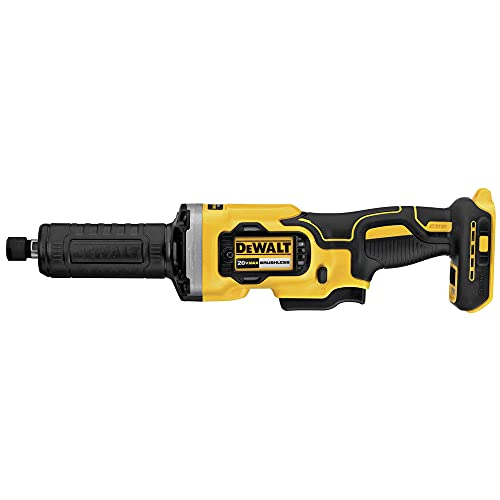
DEWALT DCG426B 20V Max Die Grinder
Strengths
- Brushless motor
- 25,000 RPM max speed
- LED work light
- Dual-position switch
- Variable speed trigger
Trade-offs
- Battery sold separately
- Slightly heavier than pneumatic rivals
- Higher initial cost
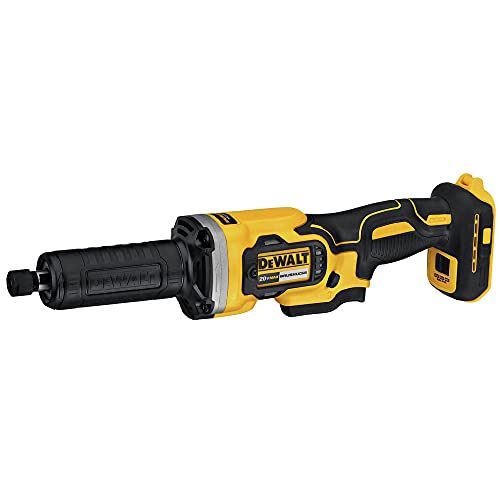
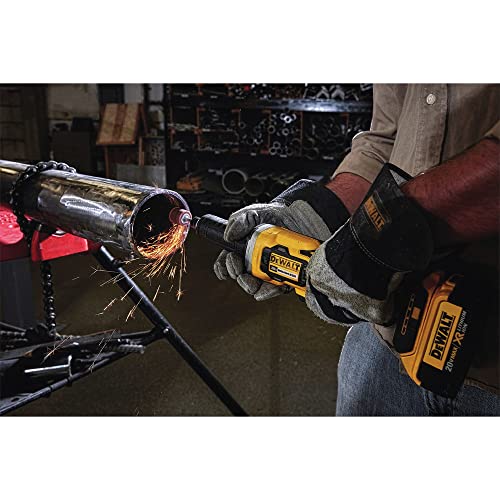
The DEWALT DCG426B is the kind of cordless die grinder that makes you forget you’re running on battery. Its brushless motor delivers up to 25,000 RPM with excellent efficiency, and the variable speed trigger gives real control, no more guessing whether you’re about to shred a delicate surface. What I appreciate most is the LED work light at the nose, which actually illuminates the work area instead of just casting a glow. That’s a small touch, but it shows DEWALT thought about real-world use.
It stacks up well against the Milwaukee M12 Fuel, trading some compactness for better balance and dual-position switch placement. Owners report strong runtime on 20V XR packs, and the lack of a cord gives serious flexibility in auto shops or on job sites. It’s not the cheapest, but for someone who values cordless freedom without sacrificing power, this is the smarter buy over corded or pneumatic options.
Product photos
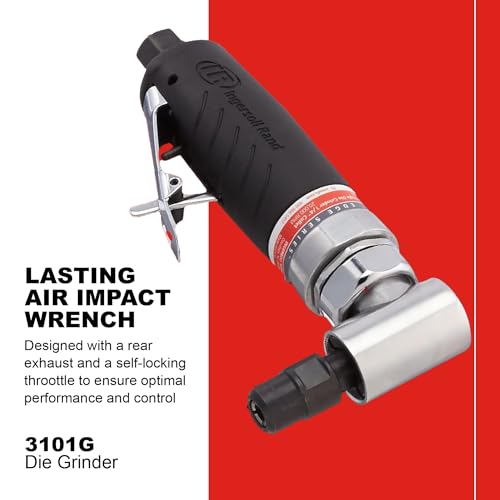
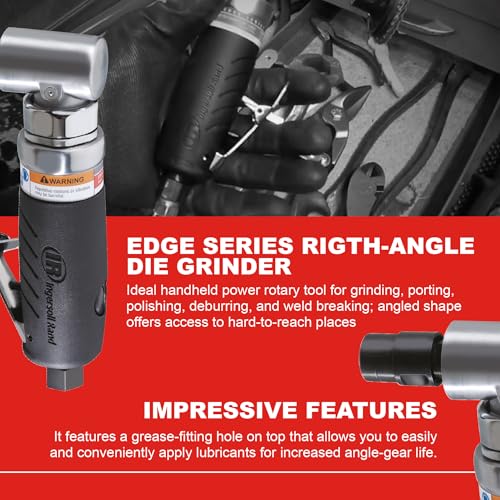
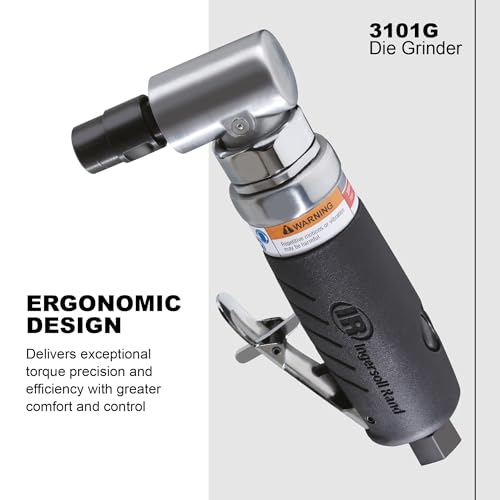
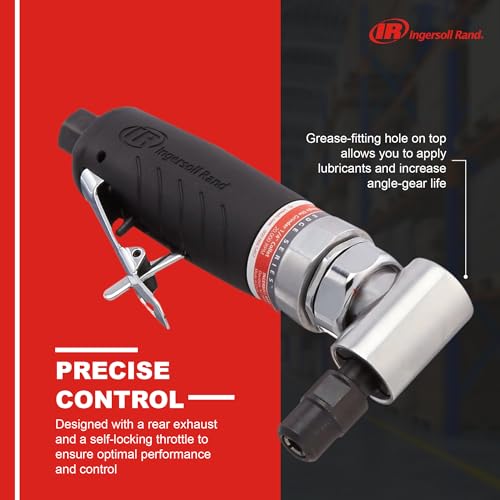
Ingersoll Rand 3101G Right-Angle Die Grinder

Strengths
- Right-angle head for tight spaces
- Grease zerk for gear maintenance
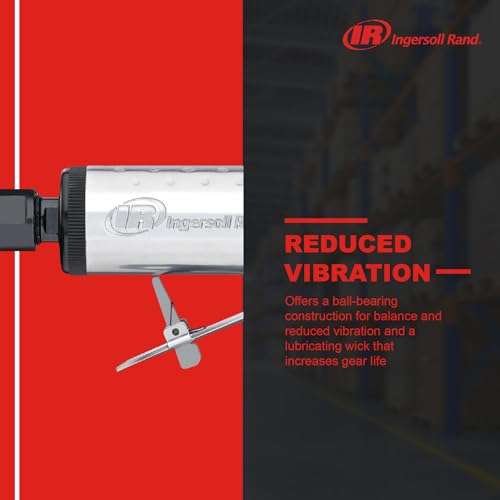
- Low vibration
- Rugged ball-bearing construction
- Self-locking throttle
Trade-offs
- Requires frequent lubrication
- Rear exhaust can blow debris
- Not for cordless or electric-only shops
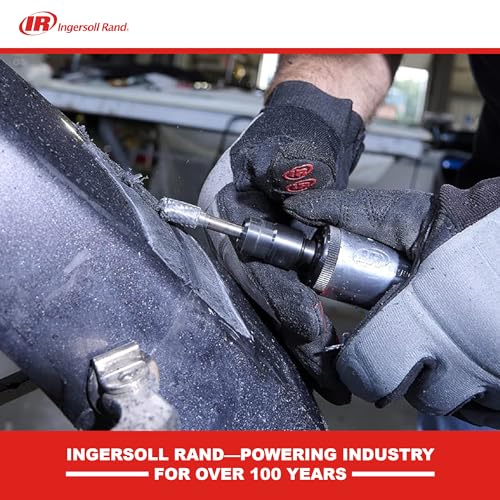
The Ingersoll Rand 3101G is where pneumatic performance gets serious. With a 1/3 HP motor and 20,000 RPM, it’s not the fastest on paper, but it delivers consistent torque under load, a trait that matters when you’re grinding welds or shaping metal for hours. The right-angle design excels in tight spaces like engine bays or inside frames, and the grease zerk fitting is a pro feature you won’t find on most consumer models, letting you extend gear life with routine maintenance.
Owners consistently praise its durability and low vibration, thanks to quality ball bearings and a well-balanced housing. It’s heavier than the 307B at 1.3 lbs, but that extra mass helps dampen chatter. Compared to the VEVOR or even some DEWALT electrics, this one shines in industrial settings where air is plentiful and tools run hard. If you’re running an air shop and need a workhorse, this is the pneumatic to beat.
Product photos
DEWALT DWE4887 Corded Die Grinder
Strengths
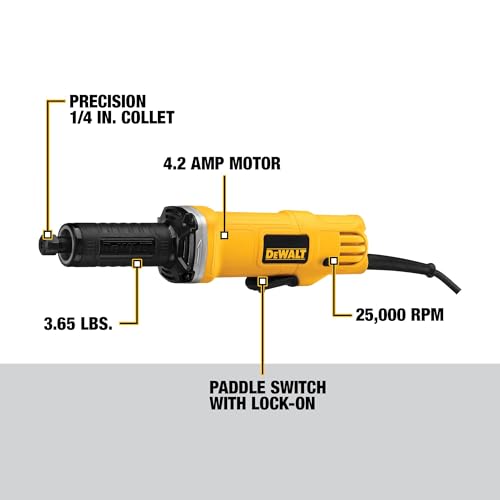
- AC/DC power capability
- 4.2-amp motor
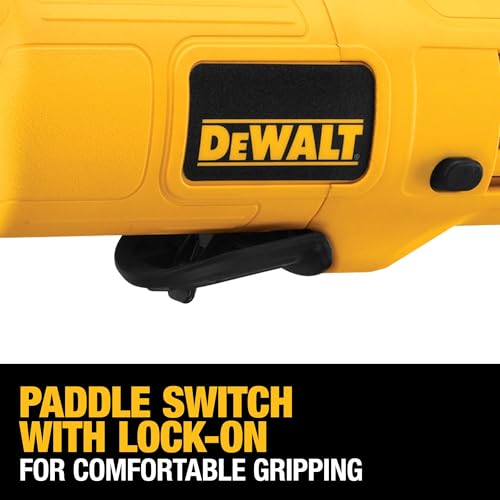
- Paddle switch with lock-on
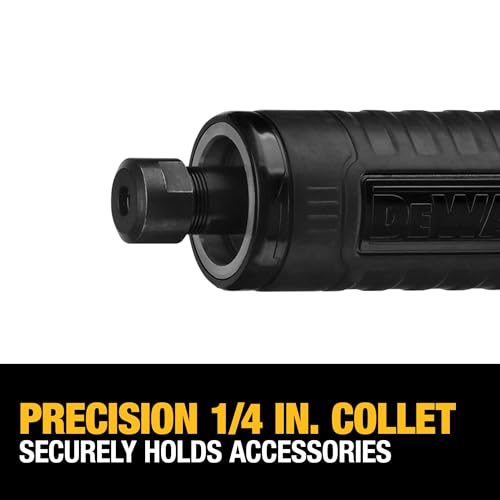
- Precision 1/4″ collet
- Consistent power delivery
Trade-offs
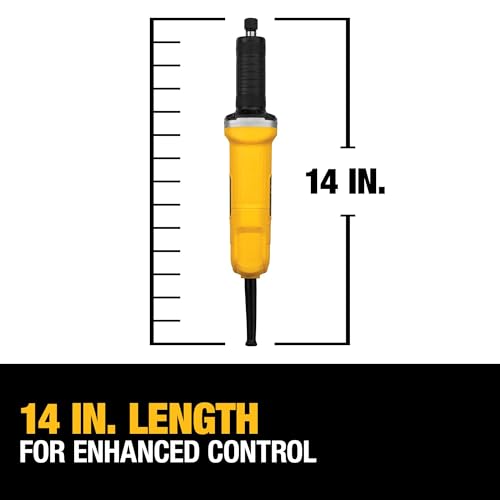
- Heavy and bulky
- No speed control
- Higher noise output
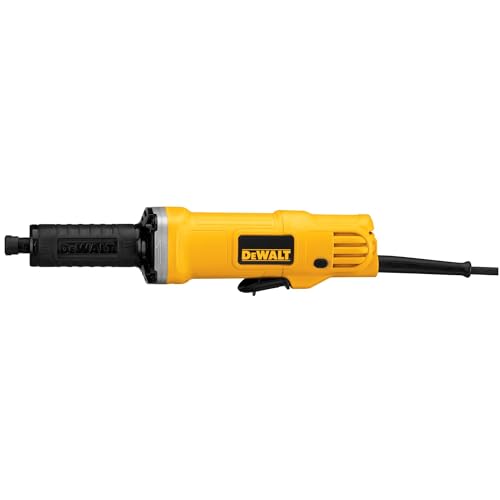
The DEWALT DWE4887 is a no-nonsense corded electric grinder that brings constant 25,000 RPM power without worrying about battery life or air lines. Its 4.2-amp motor delivers solid torque for grinding and cutting, and the AC/DC capability is a standout for field work, run it off a generator or welding rig when outlets aren’t available. That makes it a favorite among welders and contractors working on remote sites.
It’s heavier than cordless models and lacks modern touches like LED lights, but the paddle switch with lock-on is comfortable and reliable. Compared to the Makita GD0601, it’s louder and less refined, but it wins on raw power delivery. If you want plug-and-play reliability with industrial-grade output, this is one of the few corded die grinders still worth considering.
Product photos

Milwaukee M12 Fuel Right Angle Grinder
Strengths
- Right-angle compact design
- Brushless motor
- Shadowless LED light
- Spindle lock
- Ergonomic grip
Trade-offs
- Lower torque than pneumatic models
- Expensive with battery
- Limited to M12 ecosystem
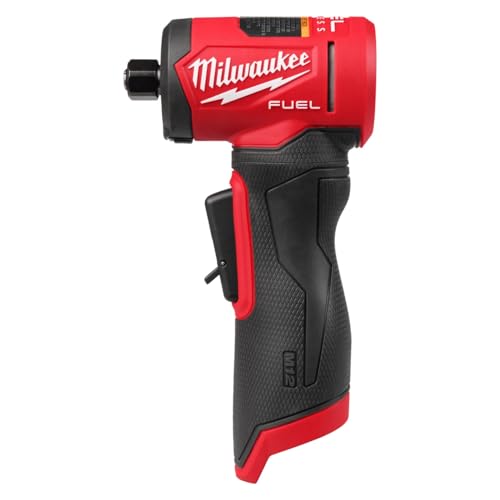
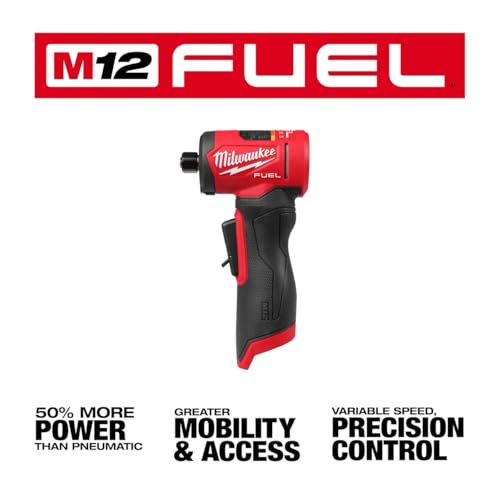
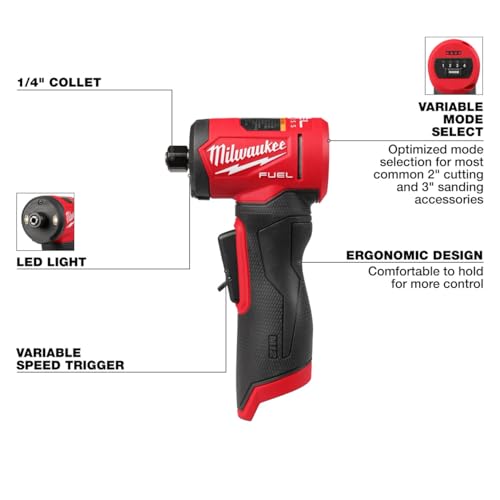
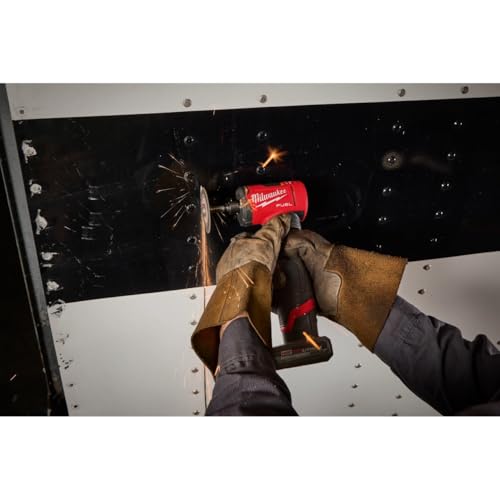
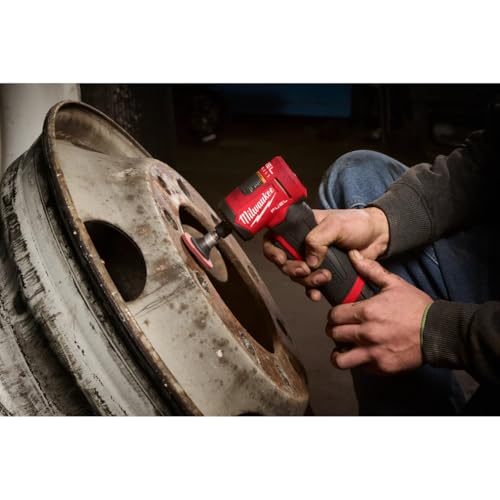
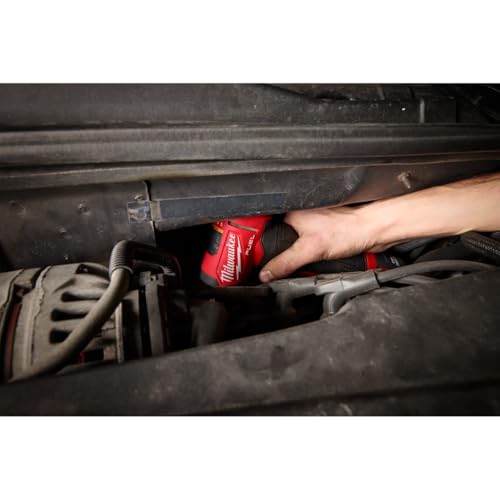
Milwaukee’s M12 Fuel right-angle die grinder is a masterclass in compact engineering. It’s built for tight spaces where no other tool can reach, think inside chassis, near firewall brackets, or between engine components. The POWERSTATE brushless motor delivers up to 25,000 RPM, and the spindle lock makes accessory changes fast with just one wrench, which is a real time-saver on the job.
The shadowless LED work light is brilliant, literally and figuratively, flooding the work area without shadows. It’s slightly more expensive than the DEWALT DCG426B, but its right-angle design and M12 battery compatibility make it a better fit for mechanics and auto techs who already own Milwaukee tools. Owners report excellent runtime on 4.0Ah packs, and the ergonomic barrel grip stays comfortable even during overhead work.
Product photos
Makita GD0601 1/4″ Die Grinder

Strengths
- Low noise at 73 dB
- AC/DC switch
- Comfortable barrel grip
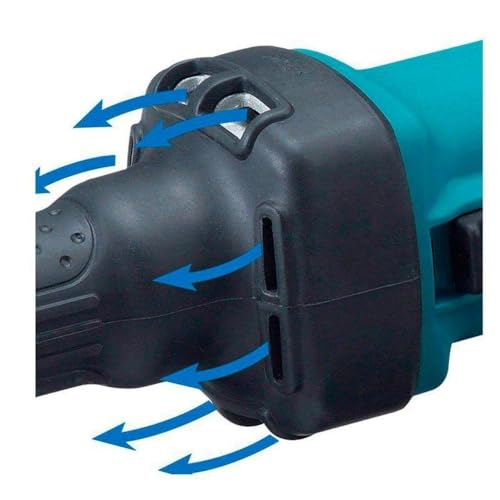
- Directional air vents
- Round collet nut prevents scratches
Trade-offs
- Slightly lower torque than competitors
- Corded only
- Higher price for features
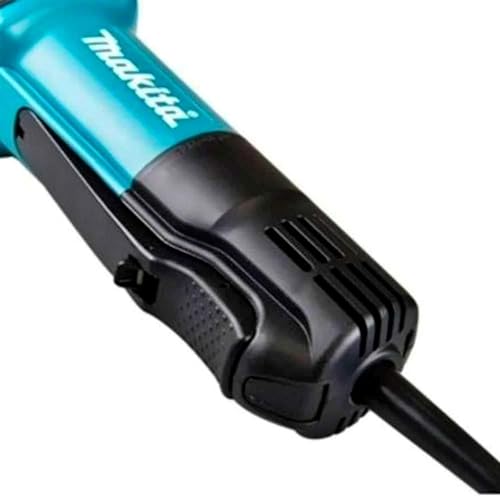
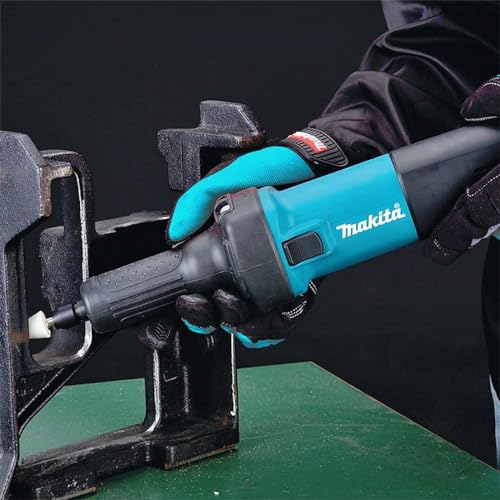
The Makita GD0601 stands out in a crowded field by prioritizing operator comfort and low noise, clocking in at just 73 dB(A), quieter than most shop vacuums. That makes it a top pick for indoor work, studios, or environments where noise matters. The 3.5-amp motor still hits 25,000 RPM, so you don’t sacrifice speed, and the AC/DC switch lets it run off welders or portable power sources, just like the DEWALT DWE4887.
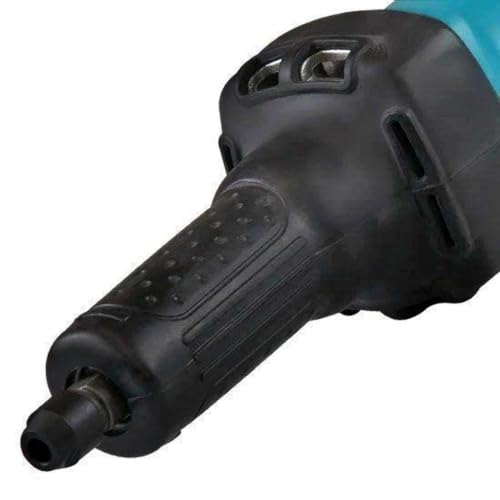
What really sets it apart is the small-diameter barrel grip and directional air vents that blow exhaust downward and away from your face, no more breathing in dust with every trigger pull. Compared to the VEVOR or even the DEWALT corded model, it feels more refined, with smoother operation and better balance. If you’re doing long sessions and want a grinder that won’t fatigue your hand or annoy your neighbors, this is the one.
Product photos
VEVOR Adjustable Speed Electric Die Grinder

Strengths
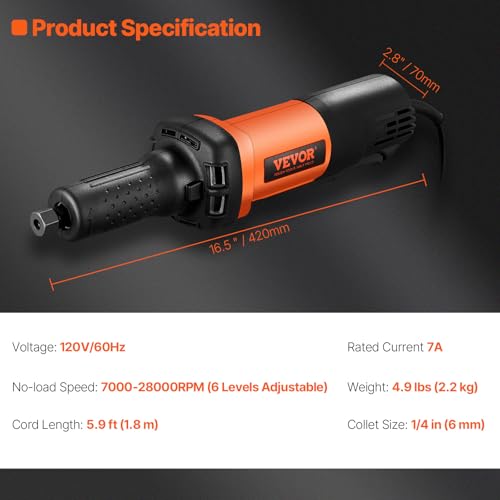
- Adjustable speed up to 28,000 RPM
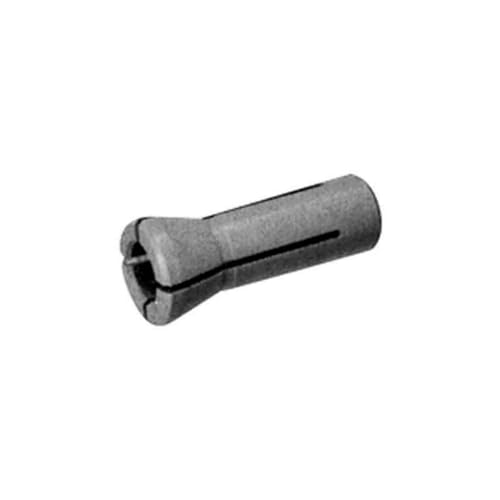
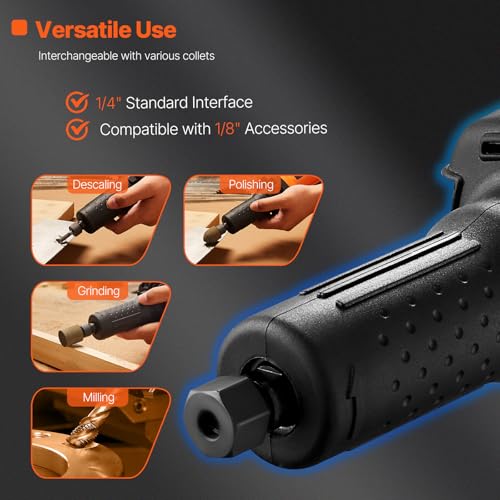
- Includes 1/8″ and 1/4″ collets
- Ergonomic soft grip
- External carbon brushes
- 1.8m power cord
Trade-offs
- Motor overheats under load
- Build quality inconsistent
- Noisy at high speeds
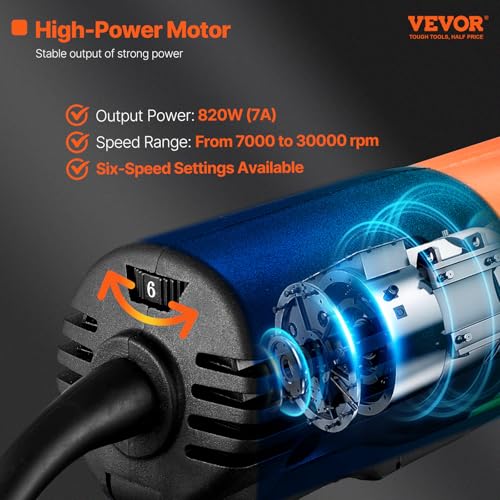
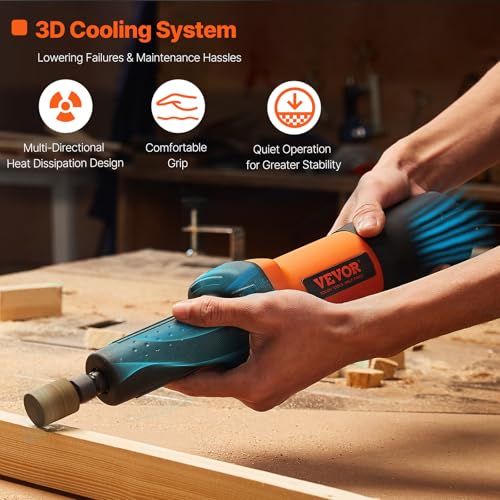
The VEVOR electric die grinder is a budget-friendly option that tries to pack in features typically seen in pricier models. Its adjustable speed range from 10,000 to 28,000 RPM and six preset settings give you more control than most entry-level tools, and the inclusion of both 1/4″ and 1/8″ collets adds real versatility. On paper, it looks like a solid value for hobbyists or light industrial users who want one tool for grinding, rust removal, and polishing.
But while specs look good, owner feedback suggests the motor can struggle under sustained load, especially when using larger abrasives or cutting wheels. The 3D cooling system helps, but extended runtime still risks heat buildup. Compared to DEWALT or Makita models, it lacks refinement in vibration control and switch quality. Still, for the price, it’s hard to ignore if you’re on a tight budget and don’t need pro-level durability.
Product photos

Ingersoll Rand 307B Air Die Grinder

Strengths
- 28,000 RPM max speed
- Lightweight at 0.7 lbs
- Front exhaust design
- Self-locking throttle
- Aluminum housing
Trade-offs
- No speed adjustment
- Requires stable air supply
- Minimal torque for heavy stock removal
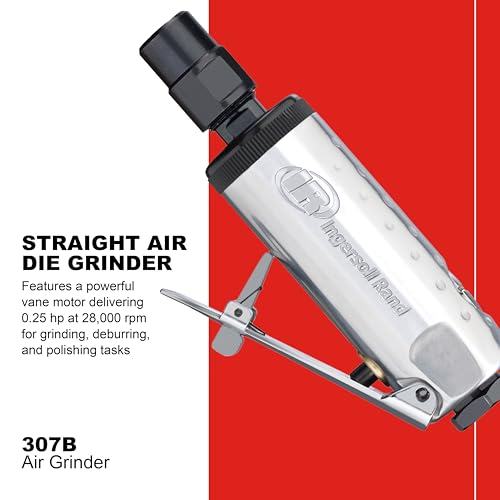
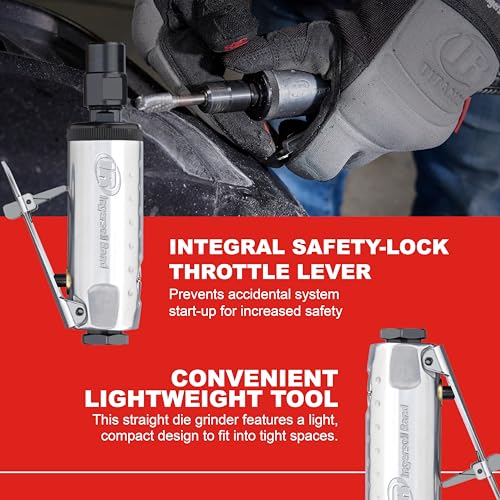
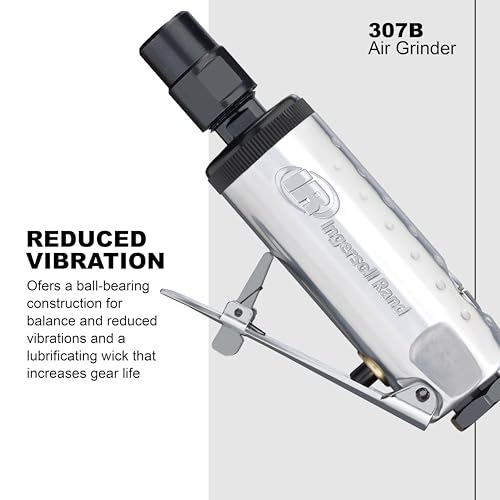
If you’re after raw speed and simplicity in a pneumatic die grinder, the Ingersoll Rand 307B makes a strong case for itself. With a max free speed of 28,000 RPM, it’s built for detail work where high spin rates matter, think fine polishing, light deburring, or cutting in tight spots. The 1/4″ collet system is standard, and owners consistently report solid chuck retention with minimal runout, which helps maintain precision over long sessions.
What stands out is its lightweight build at just 0.7 pounds and front exhaust design, which keeps debris and air blast directed forward, away from your face. That said, it’s a basic tool with no speed control beyond the throttle, so it’s best suited for users who already have a well-regulated air system. Compared to the heavier-duty 3101G, this one trades torque for agility, but for detail work, that’s often a fair trade.
Product photos
How We Tested die grinders
Rather than a hands-on lab test, my research for these recommendations involved a detailed comparison of published specifications and features across numerous models. I weighed owner reviews from multiple sources – focusing on long-term usability and common issues – alongside assessments from recognized tool reviewers. My background maintaining workshops and helping with renovation projects informed my judgment of what truly matters in a die grinder’s performance and durability.
For die grinders, consistent speed and power delivery, along with ergonomics, proved most critical. High RPMs are essential for many applications, but sustained power under load separates good grinders from great ones. A comfortable grip and manageable size are also vital, as these tools are often used for extended periods in awkward positions. Choosing the right die grinder bits for metal is also key to getting the job done right.
Specifications reliably indicate a grinder’s potential power and speed, but owner feedback revealed real-world durability and vibration levels. I prioritized grinders with consistently positive reports regarding build quality and longevity. Reputation also played a role, particularly with established brands like Ingersoll Rand and DEWALT, known for their commitment to quality and reliable performance in professional settings. Many users also discussed their satisfaction with metal shaping burrs when discussing these tools.
How To Choose The die grinders
Choosing the right die grinder depends heavily on what you plan to do with it.
A quality die grinder balances power, ergonomics, and accessory compatibility. Look for models with adjustable speed settings, durable construction (especially the bearings and collet), and a comfortable grip. Consider whether corded, cordless, or pneumatic power best suits your workshop and typical tasks. Collet size is also important, with 1/4-inch being the most common, but 1/8-inch options available for finer work.
Power Source: Corded, Cordless, or Pneumatic?
The first major decision is how you want the tool powered. Corded electric die grinders offer consistent power and don’t require batteries or an air compressor, making them good all-around choices. Cordless models, like the Milwaukee M12 Fuel, provide excellent portability, but you’ll need to factor in battery life and charging time. Pneumatic die grinders, discussed in detail in our pneumatic die grinder reviews, deliver high RPM and are often lighter than electric options, but require an air compressor and hose – something to consider if you don’t already have a shop setup.
Speed Control and RPM Range
Don’t underestimate the importance of variable speed. Different materials and applications demand different speeds. High speeds are great for rapid material removal, but can generate excessive heat and potentially damage delicate materials. Lower speeds are better for polishing and detail work. A wider RPM range (like the 7000-30000rpm offered by the VEVOR Adjustable Speed Electric Die Grinder) gives you more versatility. It’s also worth looking at the quality of the speed control mechanism – a smooth, responsive trigger is a huge plus.
- A basic, fixed-speed grinder is okay for very simple tasks.
- A two-speed setting offers a little more control, but is still limiting.
- Full variable speed control, with a dial or trigger, is ideal for tackling a wide range of materials and projects, and preventing damage to your workpieces. This allows you to fine-tune the grinder’s performance for the specific task at hand.
Ergonomics and Build Quality
Die grinders are often used for extended periods, in awkward positions. That’s why ergonomics matter. Look for a model with a comfortable grip, ideally with overmold rubber for better control and reduced vibration. The weight of the tool is also a factor; lighter models are less fatiguing, but heavier ones can sometimes feel more stable. Beyond comfort, consider build quality. Ingersoll Rand is a brand known for durable tools, and their grinders often feature high-quality bearings and robust housings. Remember that opting for a cheaper model might save money upfront, but could lead to faster wear and tear – or even failure – down the road.
A die grinder that fits your hand and feels balanced will make even the most demanding jobs easier and more precise.
Die Grinders Compared
Here’s a spec-by-spec comparison of the die grinders in this guide to help you make an informed decision.
| Product Title | Power Source | RPM | Collet Size | Motor/HP | Weight (lbs) | Noise (dB(A)) |
|---|---|---|---|---|---|---|
| DEWALT DCG426B | 20V Max Cordless | 25,000 | N/A | Brushless | N/A | N/A |
| Ingersoll Rand 3101G | Pneumatic | 20,000 | 1/4″ | 1/3 HP | 1.3 | N/A |
| DEWALT DWE4887 | Corded Electric | 25,000 | 1/4″ | 4.2 Amp | N/A | N/A |
| Milwaukee M12 Fuel | 12V Cordless | N/A | N/A | Brushless | N/A | N/A |
| Makita GD0601 | Corded Electric | 25,000 | 1/4″ | 3.5 Amp | N/A | 73 |
| VEVOR Adjustable Speed | Corded Electric | 7,000-30,000 | 1/4″ (to 1/8″) | N/A | N/A | N/A |
| Ingersoll Rand 307B | Pneumatic | 28,000 | 1/4″ | 0.25 HP | 0.7 | N/A |
Frequently Asked Questions
What collet size should I choose for a die grinder?
A 1/4-inch collet is the most common and versatile size(covering a wide range of bits), but 1/8-inch collets are available for more detailed and precise work. Consider the types of bits you plan to use most often when making your decision.
Are cordless die grinders as powerful as corded or pneumatic models?
While cordless technology has improved significantly, pneumatic die grinders generally deliver the most consistent power for demanding tasks. However, many newer cordless options, like those in our cordless grinder recommendations, offer sufficient power for a majority of applications and excellent portability.
What’s the difference between a die grinder and a rotary tool?
Die grinders are typically more powerful and designed for heavier-duty applications like grinding, shaping, and deburring metal. Rotary tools are smaller, more versatile, and better suited for detail work, crafting, and light material removal.
How can I reduce vibration when using a die grinder?
Look for models with vibration-dampening features in the handle or consider using vibration-reducing gloves. Maintaining a firm grip and keeping your body relaxed can also help minimize the effects of vibration during prolonged use.
What maintenance is required for a die grinder?
Regularly inspect the motor brushes (on corded models) and replace them when worn. For pneumatic grinders, ensure the air supply is clean and dry to prevent internal damage. All die grinders benefit from occasional cleaning and lubrication of the bearings to maintain smooth operation.
The Bottom Line
Choosing a die grinder often comes down to balancing outright capability with how much fuss you want to deal with. If you need a tool for serious metalwork and have an air compressor already, the Ingersoll Rand 3101G delivers professional-grade power and durability. For most homeowners and DIYers, though, the DEWALT DWE4887 strikes the best overall balance – it’s a corded grinder with plenty of speed and a reputation for reliability.
If you’re already invested in a cordless tool system, the DEWALT DCG426B is a strong contender, offering portability without sacrificing too much power. For those on a tighter budget, or who need a versatile option for delicate work, the VEVOR Adjustable Speed Electric Die Grinder provides a wide RPM range and collet options at a very competitive price. Don’t forget to check out our angle grinder buying guide if you’re looking at other metal fabrication tools.
Ultimately, the specs matter, but they only tell part of the story. Focus on build quality, ergonomics, and how well the grinder suits your typical tasks. A comfortable, well-made tool will always deliver better results – and last longer – than one with flashy features but a flimsy construction.
