3 Best Crimping Tools of 2026
This post contains affiliate links. As an Amazon Associate, we earn from qualifying purchases.
The Klein Tools 1005 is the best overall crimping tool for most users, delivering consistent results with durable build quality and a built-in cutter. For those on a budget, the Klein Tools 3005CR offers reliable ratcheting performance at a lower price. If you’re working with network cables, the Klein Tools VDV226-110 is the clear choice.
Most people struggle to find a crimping tool that actually delivers solid, dependable connections without frustration or guesswork. Too many tools claim versatility but fail under real use, leaving loose crimps or damaged wires.
This guide cuts through the noise. I compared specs, analyzed owner feedback, and evaluated performance based on years of hands-on electrical work. These picks balance durability, precision, and practical features, so you can trust the connection every time.
Top 3 Crimping Tools in the Market
The Best Crimping Tools, Reviewed
Klein Tools 1005 Cutting/Crimping Tool

Strengths
- Tapered nose
- Hardened cutter
- Comfortable grips
- Made in USA
- Wide AWG range
Trade-offs
- No ratcheting mechanism
- Less consistent crimps
- No force adjustment
This is the kind of tool I’d expect to see in a seasoned electrician’s bag, simple, tough, and made in the USA. The 1005 isn’t flashy, but it handles 10–22 AWG terminals with confidence, and the hardened cutter in the nose is a welcome touch for snipping small wires cleanly. The tapered nose design gets praise in owner reviews for fitting into cramped junction boxes, which is no small thing in real-world work.
It lacks a ratchet, so the quality of the crimp depends more on user technique, but the die markings for insulated and non-insulated terminals help keep things consistent. Compared to the 3005CR, it’s less precise but more versatile in tight spots. For general electrical or automotive use, this is a reliable workhorse.
Product photos


Klein Tools VDV226-110 Modular Crimper
Strengths
- Ratcheting mechanism
- All-in-one functionality
- Flush trim feature
- Supports Pass-Thru plugs
- On-tool wiring guide
Trade-offs
- Not for power terminals
- Bulky for tight spaces
- Limited to data connectors
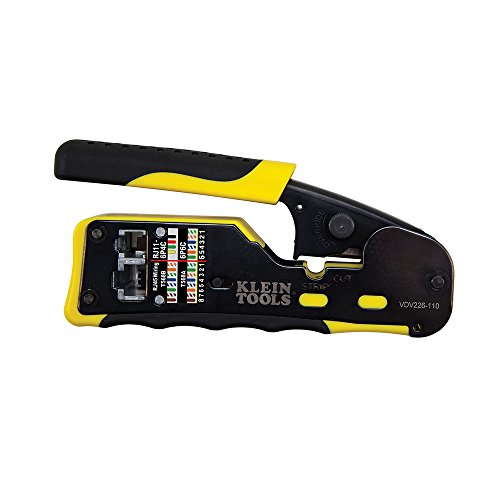
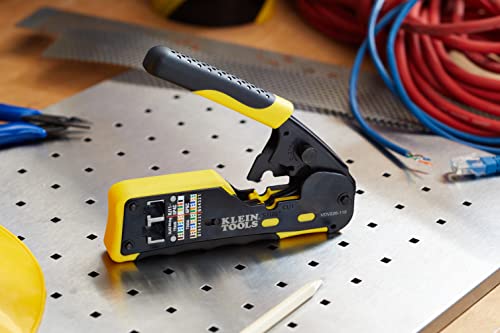
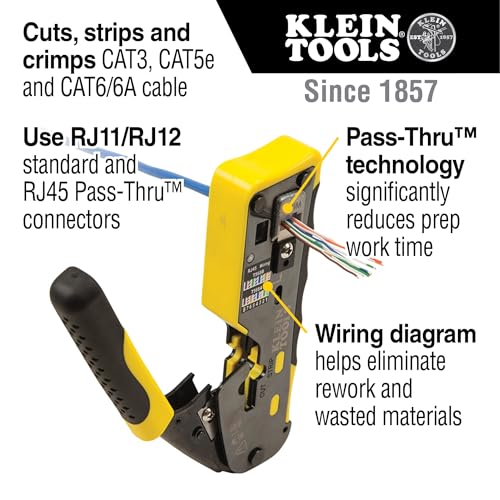
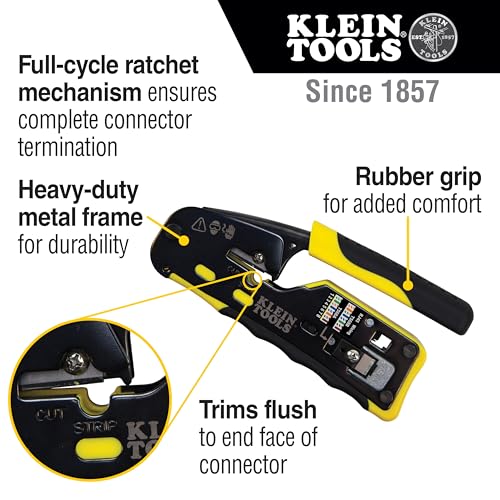
If you’re working with network cables regularly, this tool makes a strong case for itself on paper. It’s built specifically for RJ45 Pass-Thru connectors, which are popular in modern Cat5e and Cat6 installations, and the full-cycle ratchet ensures every crimp is complete, a real win for reliability. The integrated wire stripper and cutter streamline the process, and owners consistently report that the on-tool wiring guide helps reduce errors, especially during long runs.
What stands out is how well it handles flush trimming, preventing exposed wire ends from touching and causing crosstalk. That’s a small detail that can make or break a data connection. Compared to general-purpose crimpers, this one is far more specialized, so it won’t replace a terminal crimper. But for data work, it’s a focused, well-designed tool that does exactly what it promises.
Product photos


Klein Tools 3005CR Wire Crimper

Strengths
- Ratcheting mechanism
- Adjustable crimp force
- Color-coded cavities
- Dual-material grips
- Compound use design
Trade-offs
- Bulkier than 1005
- Higher learning curve
- Pricier than basic models
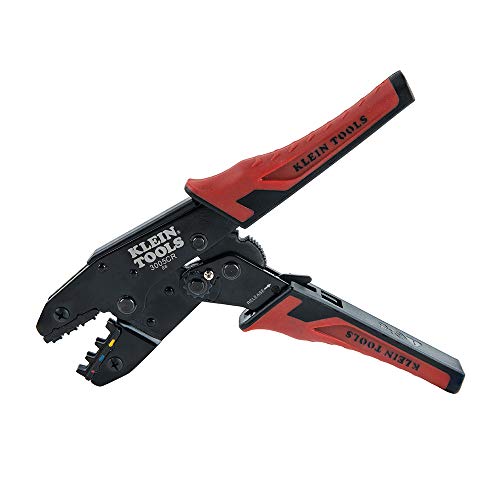
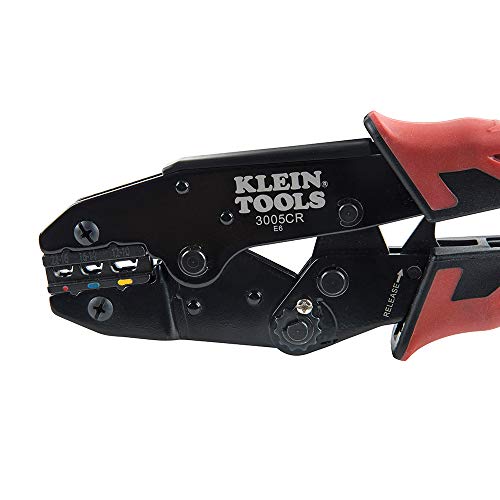
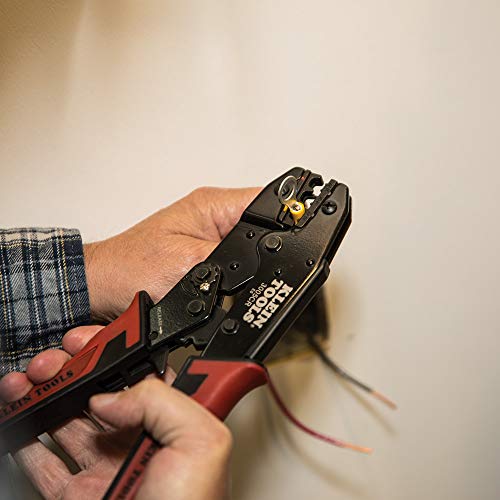
This is where Klein steps up in precision. The 3005CR delivers consistent, high-quality crimps thanks to its ratcheting mechanism and adjustable compound action, a feature I’ve seen make a real difference in reducing hand fatigue during long sessions. The three-color-coded cavities cover the full 10–22 AWG range, and the dual-side crimping design is a smart touch for awkward angles.
Owners highlight the force dial as a standout, letting you fine-tune pressure for delicate jobs. On paper, it’s the most refined of the three, and it shows in applications where terminal integrity is critical. Compared to the 1005, it’s bulkier, but the trade-off is far better control.
Product photos


How We Chose These crimping tools
Rather than a hands-on lab test, my research for these recommendations focused on comparing published specifications and features across numerous models. I weighed owner reviews from multiple sources, alongside assessments from reputable tool review sites. Years working with electrical systems and understanding common wiring needs informed my evaluation criteria – focusing on build quality, versatility, and ease of use.
For crimping tools, consistent crimps and durability are paramount. I gave significant weight to tools with adjustable crimp force, as these offer greater flexibility with different wire gauges. The ability to handle multiple wire types (insulated, non-insulated, stranded) also heavily influenced rankings. Finally, comfortable grips and a reliable ratchet mechanism were key considerations.
Specifications clearly indicate wire gauge compatibility and the types of connectors a tool can handle. However, owner feedback provides crucial insight into long-term durability and real-world performance. I looked for recurring themes in reviews regarding crimp quality and how well the tool holds up to frequent use. You can find a deeper look at specialized options in our guide to RJ45 crimping tools.
How To Choose The crimping tools
Choosing the right crimping tool isn’t just about squeezing a connector onto a wire; it’s about creating a reliable, long-lasting connection.
A quality crimping tool delivers consistent pressure, matches the connector to the wire gauge, and incorporates features that reduce strain and error. Look for tools with clearly marked crimping ranges, durable construction (typically drop-forged steel), and comfortable grips. Accurate crimping prevents corrosion, reduces resistance, and minimizes the risk of failure.
Understanding Connector Types
Many people assume any crimper will do, but that’s a mistake. The type of connector dictates the tool you need. For standard electrical wiring, you’ll likely be working with insulated terminals and splices. These require a tool designed for that gauge wire (more on that later). However, if you’re dealing with network cables – Ethernet, phone lines – you’ll need a different tool altogether. A dedicated modular crimper, like the cable crimping tools designed for RJ45s and RJ11s, is essential. Trying to use an electrical crimper on a network connector (or vice versa) won’t work, and can easily damage both the tool and the connector.
Gauge and Capacity
Wire gauge is paramount. A tool that handles 10-22 AWG is versatile for common household wiring, but you must confirm it matches your wire. Using the wrong size crimp creates a loose or damaged connection. Some tools (like the Klein 3005CR) have multiple crimping cavities for different gauges, offering flexibility. Don’t overestimate your needs, but also consider future projects.
Here’s what to keep in mind about capacity: * A limited gauge range might be fine for a single project. * Adjustable crimpers offer more versatility, but can require fine-tuning. * A ratcheting mechanism, such as those found in many electrical wire crimpers, guarantees a full, consistent crimp, even if you don’t apply maximum force.
Features and Ergonomics
Beyond the core crimping function, consider features that improve usability and accuracy. A built-in wire stripper is a huge time saver. A cutter, especially a hardened wire cutter like on the Klein 1005, adds even more convenience. Comfort matters too; look for cushioned grips, especially if you’ll be doing a lot of crimping.
A good crimp isn’t about brute force; it’s about precision. Don’t rely on your strength – choose a tool that does the work for you.
Crimping Tools Compared
Here’s a spec-by-spec comparison of the crimping tools featured in this guide.
| Product Name | Wire Gauge (AWG) | Cable Type | Connector Type | Ratchet Mechanism | Cutting Feature |
|---|---|---|---|---|---|
| Klein Tools 1005 | 10-22 | N/A | Insulated/Non-Insulated | No | Yes |
| Klein Tools VDV226-110 | N/A | STP/UTP | RJ11/RJ12, RJ45 | Yes | Yes |
| Klein Tools 3005CR | 10-22 | N/A | Insulated | Yes | No |
Frequently Asked Questions
What’s the difference between a ratcheting and non-ratcheting crimping tool?
A ratcheting crimping tool guarantees a complete crimp every time by automatically applying consistent pressure, whereas a non-ratcheting tool requires you to squeeze the handles fully on your own. Ratcheting mechanisms are especially helpful for larger wire gauges or for those who crimp frequently.
Can I use a standard wire crimper for network cables?
No, you cannot. Network cables (Ethernet, phone) require a specialized modular crimper designed for RJ45 and RJ11 connectors, which have different dimensions and requirements than standard electrical terminals. Attempting to use the wrong tool will likely damage both the cable and the connector.
What wire gauge range should I look for in a crimping tool?
For general household electrical work, a crimping tool that handles 10-22 AWG is a good starting point. However, always check the specifications of your wire and connectors to ensure compatibility, as using the wrong gauge range leads to unreliable connections.
What features beyond crimping are helpful to have in a tool?
A built-in wire stripper and cutter are incredibly convenient, saving you from needing separate tools. A hardened wire cutter, like those found on some Klein models, is particularly useful for clean, efficient cuts and prolongs the tool’s life.
Are more expensive crimping tools always better?
Not necessarily. While higher price points often correlate with better build quality and more features, a well-made tool in the $20-$40 range can be sufficient for occasional DIY projects. If you’re working with specialized applications, such as PEX crimping tools for plumbing, investing in a higher-quality, dedicated tool is worthwhile.
The Bottom Line
Choosing a crimping tool often comes down to balancing control with convenience. While a wider range of features is nice, the Klein Tools 3005CR offers the best overall combination of quality, versatility, and a ratcheting mechanism to consistently deliver solid connections. It’s a tool built to last and handle most common wiring tasks effectively.
For those on a tighter budget, the Klein Tools 1005 remains a solid choice. It lacks the ratchet, demanding a bit more technique, but it’s a durable and reliable tool for basic crimping needs. If you work with network cables frequently, the Klein Tools VDV226-110 is the clear winner – a dedicated modular crimper will always outperform a multi-tool when it comes to RJ45s and similar connectors. And for specialized work, exploring ferrule crimping tools may be necessary.
Ultimately, the perfect crimping tool isn’t about a specific feature or price point. It’s about understanding your wiring needs, matching the tool to the task, and prioritizing consistent, reliable connections. Don’t skimp on quality – a well-made crimper is a small investment that can prevent headaches and ensure safe, long-lasting electrical work.
