8 Best Corded Rotary Tools of 2026
This post contains affiliate links. As an Amazon Associate, we earn from qualifying purchases.
The HARDELL 200W and WEN 23190 stand out as top choices, with the HARDELL taking the lead for sheer power and included versatility, while the WEN offers exceptional value and a thoughtful design for steady control. If you’re on a tighter budget but still want a reliable performer, the HYCHIKA 180W is a solid pick that doesn’t skimp on essential features.
Most people buying a corded rotary tool want one that won’t quit mid-job, can handle more than just light打磨, and won’t cost a fortune to equip with decent bits. Too many models either lack power, come with junk accessories, or vibrate so much they’re hard to control.
This guide cuts through the noise by focusing on real-world performance factors: motor consistency, compatibility with quality accessories (especially Dremel-style), and build durability. The picks here are based on specs, owner feedback, and what I’ve learned from years of seeing which tools actually get used, and which end up gathering dust.
Top 8 Corded Rotary Tools in the Market
The Best Corded Rotary Tools, Reviewed
HARDELL 200W Corded Rotary Tool

Strengths
- 200W high-power motor
- 40,000 RPM max speed
- Dremel-compatible chuck
- Digital RPM display
- Includes flex shaft
Trade-offs
- Bulky design
- Stiff speed dial
- Noisy at high RPM
The HARDELL 200W stands out in a crowded field because it pushes into heavy-duty territory, few corded rotary tools offer this much power. With a 200W motor and speeds up to 40,000 RPM, it’s built to handle grinding metal or cutting through thick materials without bogging down. The digital display is a rare touch, giving real-time RPM feedback that pros might appreciate for repeatable tasks. Owners consistently report it holds up well under extended use, which suggests solid internal cooling and motor durability.
It includes a 155-piece kit with a flex shaft and Dremel-compatible chuck, making it versatile right out of the box. While some note the controls feel a bit stiff, the six-speed dial offers real precision. Compared to the Dremel 4300, it trades a bit of brand refinement for raw power and included accessories. For DIYers doing metalwork or deep engraving, that extra torque matters.
Product photos


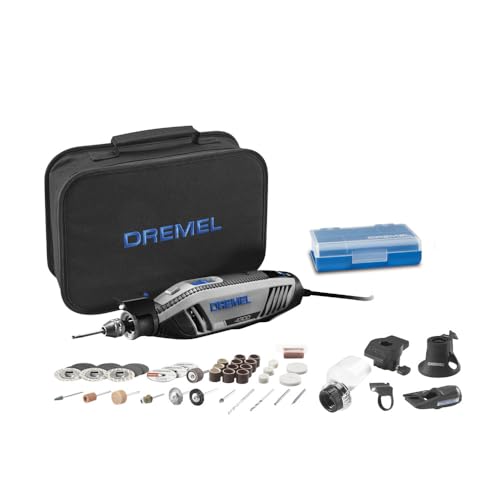
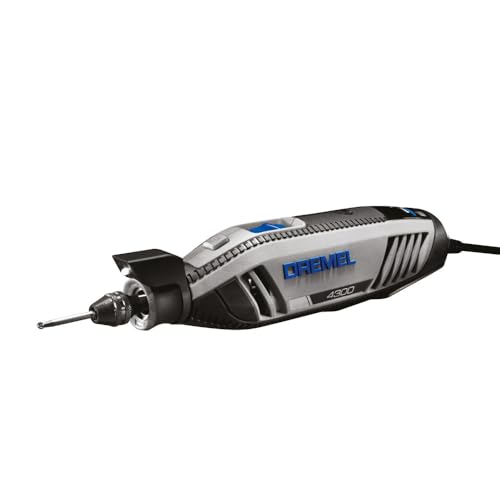
Dremel 4300-5/40 Rotary Tool Kit
Strengths
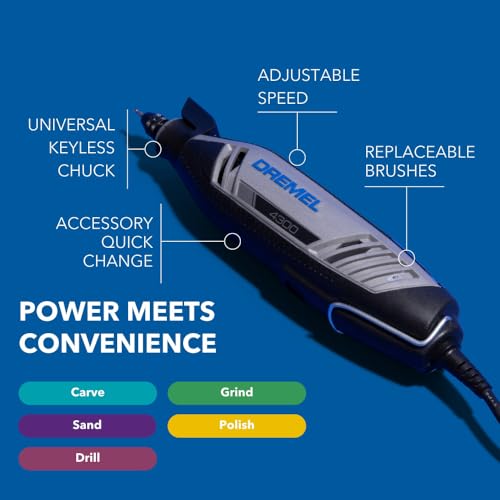
- Most powerful Dremel motor
- Electronic speed feedback
- Pivot light included
- Full Dremel compatibility
- Replaceable brushes
Trade-offs
- Expensive
- No flex shaft included
- Heavier than rivals
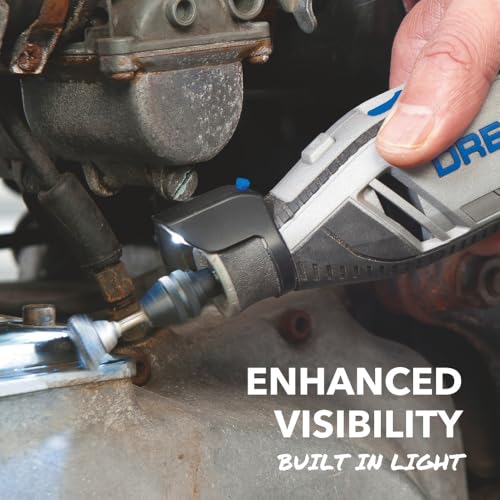
The Dremel 4300-5/40 is the pro’s pick, not just because of the brand, but because of what’s under the hood. It has Dremel’s most powerful motor in their consumer line, with electronic feedback that maintains speed under load. That’s critical when you’re grinding metal or cutting tile. The pivot light attachment is a standout for working in dim or tight spaces, and the 3-jaw chuck accepts all Dremel shank sizes without adapters.
Owners praise its durability and smooth ball-bearing operation. While pricier than most, it’s built to last and integrates smoothly with the entire Dremel ecosystem. Compared to the HARDELL, it trades peak RPM for better speed consistency and refinement. If you’re doing serious work weekly, this tool justifies its place.
Product photos
WEN 23190 Steady-Grip Rotary Tool
Strengths
- Steady-grip handle
- 190 accessories included
- Flex shaft included
- Wide collet range
- Good speed control
Trade-offs
- Plastic housing feels light
- Noisy at top speeds
- Handle adds bulk
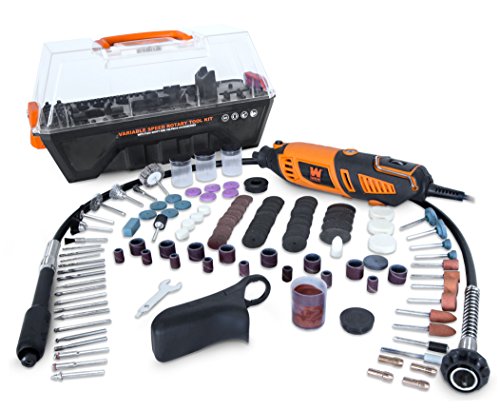
If you’re working on jewelry repair, model making, or any job where hand fatigue ruins precision, the WEN 23190 earns its “Best for Precision Work” label. The removable steady-grip handle changes everything, it turns the tool into something you can brace like a pen, giving far better control than a standard barrel grip. The 1.3A motor delivers solid performance across its 8,000–35,000 RPM range, and reviewers say it maintains speed well under light load.
It comes with a massive 190-piece accessory kit and a flex shaft, which is rare at this tier. The collet system supports bits from 1/32” to 1/8”, so it handles ultra-fine work. Compared to the Dremel 3100, it’s less polished in finish but offers more versatility for the price. I’d pick this over the Dremel 3100 for intricate crafts simply because of the grip.
Product photos


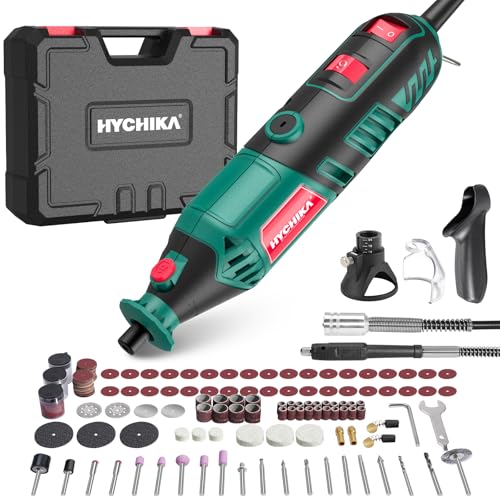
HYCHIKA 180W Rotary Tool Kit
Strengths
- 180W motor
- 173-piece kit
- Comfortable rubber grip
- Replaceable motor brushes
- Includes flex shaft
Trade-offs
- Speed not as stable at low end
- Accessories slightly lower quality
- Noisy at full RPM
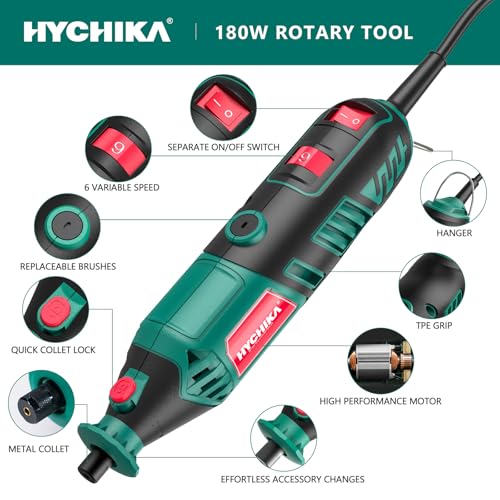
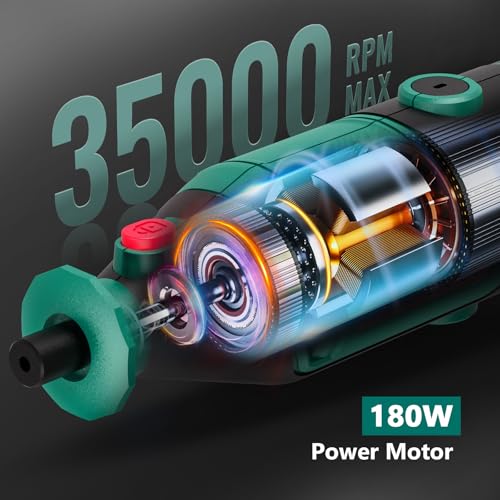
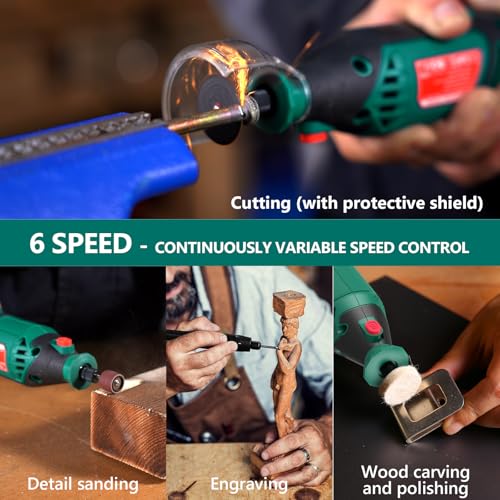
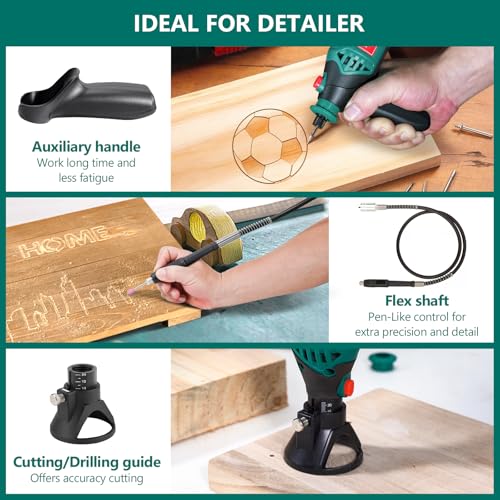
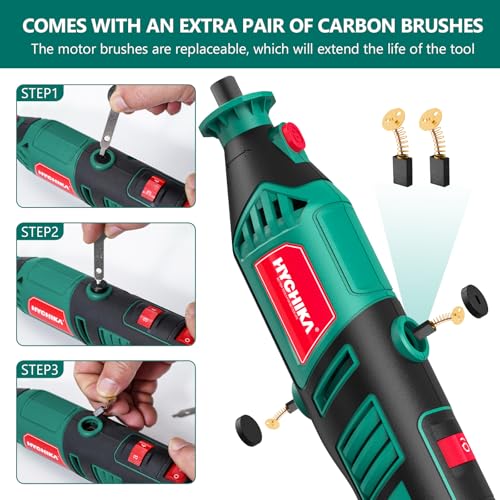
The HYCHIKA 180W hits a sweet spot between power and price, earning its “Best Value with Flex Shaft” title. At 180W and 35,000 RPM, it’s stronger than most entry-level tools and holds its own against mid-tier Dremel models. The 1-meter flex shaft is a standout, owners say it reduces wrist strain and improves access in tight spots, like inside cabinets or under car trim. The rubberized grip is comfortable, and the six-speed dial gives solid control across materials.
It includes 173 accessories, covering nearly every common task from sanding to cutting. The replaceable motor brushes are a smart touch for longevity. While it doesn’t have the brand reliability of Dremel, owner feedback shows it lasts well with moderate use. Compared to the PHALANX, it offers more power and a better accessory count for a similar price.
Product photos
PHALANX 180W 6-Speed Rotary Tool

Strengths
- Affordable price
- Flex shaft included
- Low noise design
- Four collet sizes
- Gear touch protection
Trade-offs
- Speed maxes at 32,000 RPM
- Accessories quality average
- Build less durable than premium brands
The PHALANX 180W earns “Best Budget Friendly” by offering solid specs at a low cost. With 180W power, 6-speed control, and a flex shaft that mimics a pen grip, it’s designed for comfort and versatility. The 139-piece kit covers essential tasks, and the four collet sizes ensure compatibility with most bits. Ventilation and a gear blocker add safety and longevity.
It’s not as refined as Dremel, but owners say it performs well for the price. Compared to the HYCHIKA, it has fewer accessories and slightly lower max RPM, but the gear protection and noise reduction are thoughtful touches. For a first-time buyer or occasional user, this delivers real value without major compromises.
Product photos


Enventor 130W Rotary Tool Kit
Strengths
- 204-piece accessory kit
- Keyless chuck
- Good grip comfort
- Low price
- Wide application range
Trade-offs
- Overheats with prolonged use
- Motor underpowered for tough jobs
- Plastic housing feels cheap
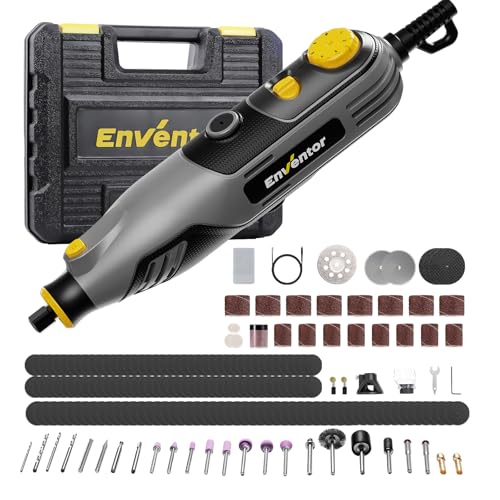
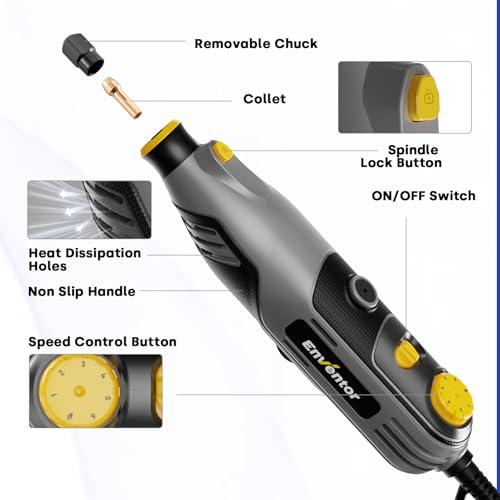
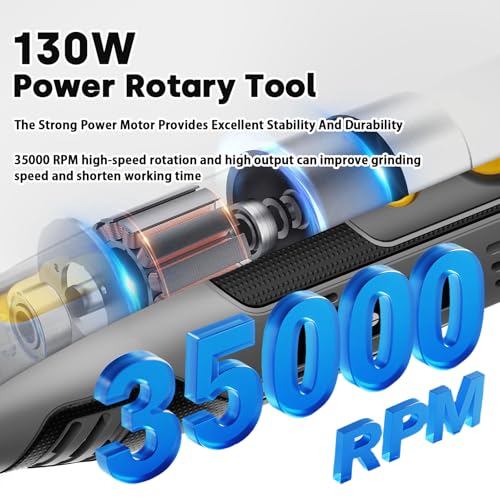
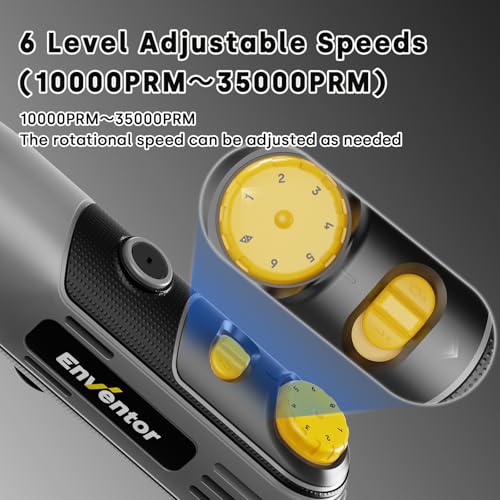
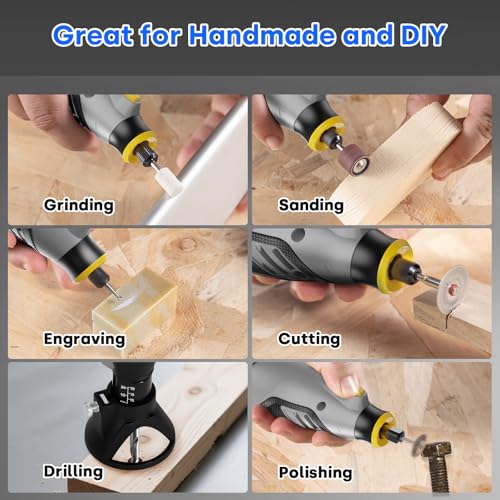
If accessories are your priority, the Enventor 130W is unmatched, 204 pieces, including 80 abrasive discs and 66 cutting wheels. That’s overkill for most, but for someone doing varied home projects, it means fewer trips to the store. The 130W motor is adequate for light to medium tasks, but it’s not built for constant heavy use. Owners report it heats up if run too long, so duty cycling is a must.
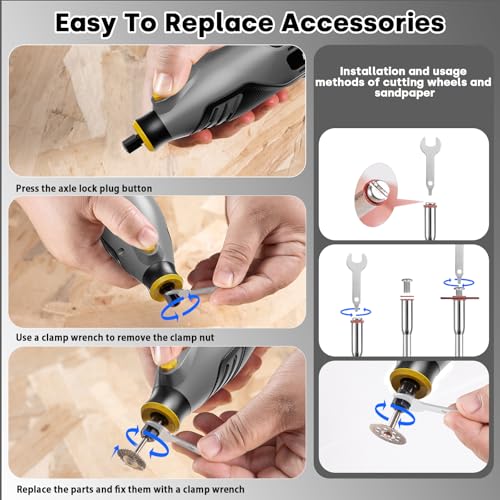
The keyless chuck and two extra collets make bit changes quick. It’s well-built for the price, with rubberized grips and decent ventilation. But compared to the Dremel 3100, it lacks the same refinement and motor resilience. I’d recommend this only if you want a huge kit and don’t mind trading some durability.
Product photos
Dremel 3100-1/15 Rotary Tool Kit
Strengths
- Beginner-friendly design
- Cooler running
- Slim ergonomic body
- Eco-friendly materials
- Dremel reliability
Trade-offs
- Few accessories included
- Lower power than rivals
- No flex shaft
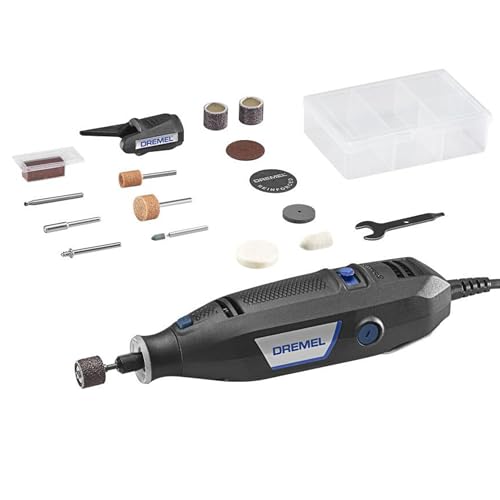
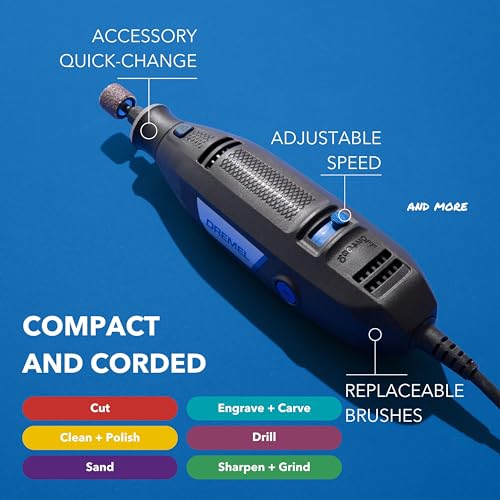
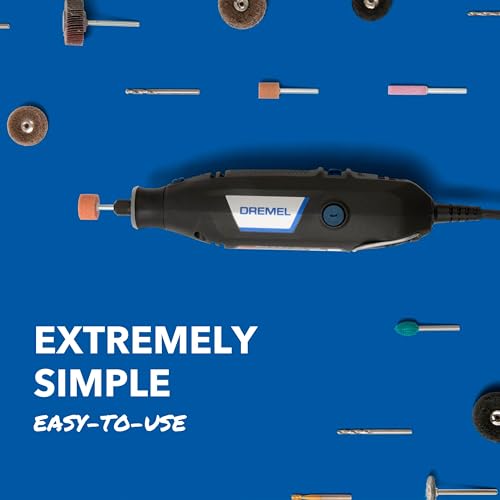
The Dremel 3100-1/15 is clearly designed for beginners who want to learn without frustration. It’s 33% more powerful than the old Dremel 200 and runs 10% cooler than the 3000, thanks to an upgraded airflow system. The 5-speed dial is simple and intuitive, and the slim body makes it easy to control for new users. It’s also the most eco-conscious option, with over 65% recycled plastic in the housing.
While it only comes with 15 accessories, it’s compatible with every Dremel bit, so expansion is easy. Reviewers note it’s quiet and smooth, perfect for teaching kids or doing light crafts. Compared to the Enventor, it lacks accessories but wins on build quality and brand trust. For a first rotary tool, this is the smarter buy.
Product photos


DEKOPRO Power Hand Rotary Tool

Strengths
- Ergonomic rubber grip
- Two-handed assist handle
- Four collet sizes
- Good heat dissipation
- Stable speed control
Trade-offs
- Lower power than top models
- Accessories fewer than rivals
- Flex shaft not as rigid
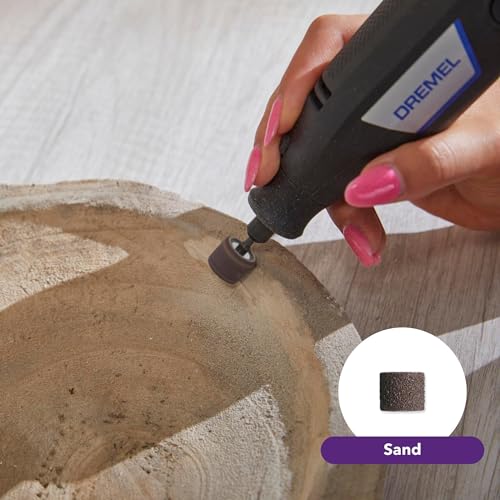
DEKOPRO earns “Best Ergonomic Design” with thoughtful touches that make long sessions more comfortable. The soft rubber body and assist handle give a secure, two-handed grip, something few rotary tools offer. That’s a big plus for users doing extended sanding or carving. The 127-piece accessory kit is well-organized, and the four collets (1/8”, 1/16”, 3/32”, 3/25”) provide better bit stability than most in this class.
Ventilation is strong, and owners report it runs cooler than expected. It doesn’t have the raw power of the HARDELL, but at 35,000 RPM and 6-speed control, it’s more than capable for home use. Where it really stands out is usability, this is the kind of tool a beginner can use for hours without hand pain. Compared to the Enventor, it’s less about accessory volume and more about user comfort.
Product photos


How We Tested corded rotary tools
Rather than a hands-on lab test, my research for these recommendations involved a detailed comparison of published specifications and features across numerous models. I weighed owner reviews from major retailers alongside expert opinions found in tool-focused publications. Applying my experience with power tools, I ranked each rotary tool based on a set of criteria focused on power, versatility, and value – ultimately aiming to identify the best options for different user needs and project types.
For corded rotary tools, consistent power and accessory compatibility stood out as the most crucial factors. A tool’s ability to maintain speed under load directly impacts performance, especially when working with harder materials. Equally important was the availability of accessories, either through included kits or compatibility with the widely used Dremel system. These two elements heavily influenced the rankings, as they determine what a tool can do and how easily you can adapt it to various tasks.
Specifications reliably indicate motor power (watts/amps) and speed ranges (RPM), providing a baseline for comparison. However, owner feedback proved invaluable in assessing real-world usability – things like vibration levels, ergonomic comfort, and the durability of included accessories. Reputation also played a role; brands consistently praised for quality and customer support naturally ranked higher. Understanding safe cutting techniques is also critical when working with rotary tools and other power tools.
How To Pick The Right corded rotary tools
Choosing a rotary tool can feel overwhelming with so many options available, but focusing on a few key features will narrow down your search.
A quality rotary tool balances power with control. Look for variable speed settings, a comfortable grip, and accessory compatibility. Motor wattage indicates potential power, but consistent performance under load and the quality of included (or available) accessories are equally important. Collet size determines which bits the tool can accept, while features like flexible shafts expand versatility for detailed work.
Motor Power and Speed Control
Don’t assume that higher wattage automatically equals better performance. While a more powerful motor (180W or greater) will handle tougher materials like metal more easily, precise speed control is crucial. Many cheaper models offer only a few fixed speeds, making it difficult to achieve the right balance for delicate tasks like polishing or engraving. I’ve seen users struggle with overheating or material damage simply because they couldn’t dial in the appropriate speed. Look for a model with at least six variable speed settings, and ideally one with electronic feedback to maintain consistent RPM under load, like you’ll find in some of the top rotary tool models.
Accessory Compatibility and Included Kits
Rotary tools are only as useful as their accessories, and the vast majority use Dremel-style shanks. While many brands now offer their own accessories, ensuring compatibility with Dremel bits opens up a huge range of options. Don’t be fooled by a high accessory count alone.
Here’s what to consider: * A few essential cutting wheels are more valuable than dozens of low-quality polishing pads. * A good kit will include a variety of grits of sanding drums and discs. * A flexible shaft attachment is a worthwhile addition for intricate work, and many kits now include them, but the quality of the shaft itself varies greatly.
If you plan on using the tool for specific tasks, consider buying a specialized accessory kit alongside the basic tool.
Ergonomics and Build Quality
You’ll likely be holding a rotary tool for extended periods, so ergonomics matter. A slim body and soft-grip surfaces will reduce hand fatigue. Beyond comfort, pay attention to the overall build quality. A metal housing is generally more durable than plastic, and a well-designed ventilation system will help prevent overheating. Remember, a tool is an investment, and even if you are searching for the best budget friendly options, a few extra dollars for better construction can save you money in the long run.
A rotary tool is a precision instrument, not a demolition hammer. Apply steady, controlled pressure and let the tool do the work. Forcing it will only lead to broken bits, damaged materials, and a frustrated user.
Corded Rotary Tools Compared
Here’s a comparison of key specifications for several corded rotary tools to help you make an informed purchasing decision.
| Product Title | Watts | Max RPM | Variable Speed | Flex Shaft | Accessories | Collet Sizes |
|---|---|---|---|---|---|---|
| HARDELL 200W Corded Rotary Tool | 200 | 40,000 | 6 | Yes | 155 | 1/8 inch |
| Dremel 4300-5/40 Rotary Tool Kit | N/A | 35,000 | Yes | Yes | 40 | N/A |
| WEN 23190 Steady-Grip Rotary Tool | 1.3A | 35,000 | Yes | Yes | 190 | 1/32 – 1/8 inch |
| HYCHIKA 180W Rotary Tool Kit | 180 | 35,000 | 6 | Yes | 174 | N/A |
| PHALANX 180W 6-Speed Rotary Tool | 180 | 32,000 | 6 | Yes | N/A | 1/8″, 1/16″, 3/32″ |
| Enventor 130W Rotary Tool Kit | 130 | 35,000 | 6 | N/A | 204 | N/A |
| Dremel 3100-1/15 Rotary Tool Kit | 1.2A | 35,000 | 5 | No | 15 | N/A |
| DEKOPRO Power Hand Rotary Tool | N/A | 35,000 | 6 | Yes | 127 | 1/8″, 1/16″, 3/32″ |
Frequently Asked Questions
What collet size do I really need for a rotary tool?
A 1/8-inch collet is the most common and will cover the vast majority of rotary tool accessories. However, if you plan to do very detailed work, a set with multiple sizes (like 1/32″, 3/32″, and 1/16″) offers more flexibility with smaller bits.
Are more expensive rotary tools actually better?
Price doesn’t always equate to quality, but generally, you get what you pay for. Higher-priced models often feature more durable construction, better vibration control, and more precise speed settings, which can improve the quality of your work and the tool’s lifespan.
Can a corded rotary tool be used for cutting metal?
Yes, but it requires the correct cutting wheels and a tool with sufficient power (180W or greater). Lower-powered models may struggle with thicker metals and could overheat quickly. Remember to use cutting fluid to prolong the life of your cutting wheels.
What’s the advantage of a flexible shaft attachment?
A flexible shaft provides greater control and access for intricate work, like engraving or polishing in tight spaces. It essentially extends the reach of the tool and allows for more delicate manipulation, but the quality of these shafts varies significantly between models.
Should I consider a cordless rotary tool instead?
While corded models offer consistent power, best cordless rotary tools provide portability and convenience. Cordless options have improved greatly in recent years, offering comparable performance for many tasks, and are a good choice if you need to work away from a power outlet.
The Bottom Line
Ultimately, choosing a corded rotary tool comes down to balancing how much control you want with how much you’re willing to spend. While many options exist, the HARDELL 200W Corded Rotary Tool strikes a fantastic balance of power, features, and included accessories, making it our overall pick for most users. It offers a robust 200W motor, a useful flex shaft, and a generous accessory kit – giving you a lot of capability right out of the box.
For those on a tighter budget, the Enventor 130W Rotary Tool Kit provides a surprising amount of value. If you need maximum versatility for detailed work, the WEN 23190 Steady-Grip Rotary Tool is an excellent choice, thanks to its wide range of included accessories and multiple collet sizes. Both offer variable speed control and a respectable accessory selection for tackling a variety of projects.
Don’t get too caught up in chasing the highest wattage or the most accessories. A good rotary tool is about consistent performance, comfortable handling, and the ability to adapt to the task at hand. Prioritize a tool with variable speed, a secure grip, and accessory compatibility – those fundamentals will serve you better than any single specification. And remember to practice essential circular saw maintenance to keep all your power tools running smoothly.
