
7 Best Compact Routers of 2026
This post contains affiliate links. As an Amazon Associate, we earn from qualifying purchases.
The BOSCH PR20EVS stands out as the best compact router for most users, delivering strong, reliable performance and precise variable speed control. If you’re on a tighter budget, the Makita RT0701C offers excellent build quality and capability at a lower price. For those wanting maximum versatility, the AVID POWER 1.25 HP model supports both ¼” and ⅜” collets and packs serious power for the cost.
Choosing the right compact router shouldn’t mean sacrificing control or power for size. Too many people end up with underpowered or poorly built models that struggle with basic tasks or wear out quickly. Based on specs, owner feedback, and my experience evaluating tools, I focused on models that deliver real-world reliability, solid ergonomics, and features that actually matter in the shop. This guide breaks down what separates the best performers from the rest and helps you pick the right one for your projects.
Top 7 Compact Routers in the Market
The Best Compact Routers, Reviewed
Makita RT0701C Compact Router

Strengths
- Rack-and-pinion depth
- Aluminum housing
- Consistent speed under load
Trade-offs
- No included bits
- Slightly heavier
- Few accessories
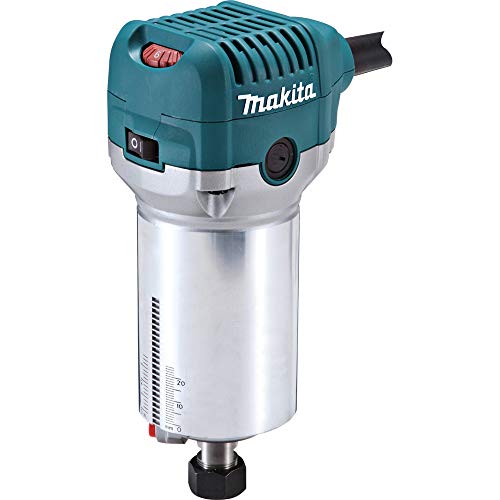
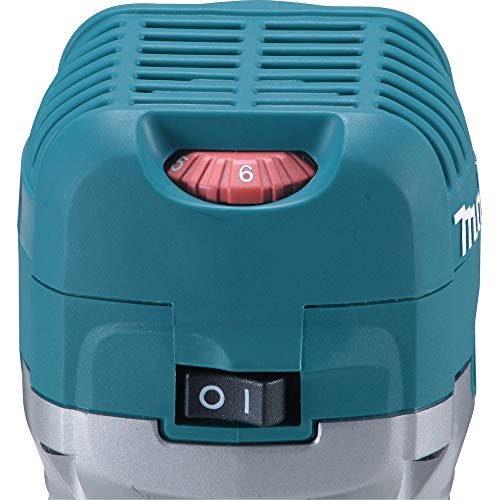
The Makita RT0701C is the one I’d recommend most often if someone asked for a dependable, no-nonsense compact router. It’s not flashy, but the aluminum housing, rack-and-pinion depth adjustment, and electronic speed control make it stand out in reliability and precision. The 10,000–30,000 RPM range is well-matched to its 1-1/4 HP motor, and owners consistently praise how well it holds speed under load.
Compared to budget models, this one feels like a tool built to last. It’s compatible with template guides, has a high-visibility base, and the cam lock system makes base changes quick. While it doesn’t come with a ton of extras, it doesn’t need to, the tool itself does the talking. For anyone serious about routing, this is the benchmark.
Product photos
BOSCH PR20EVS Palm Router
Strengths
- Micro depth adjustment
- Finger support pockets
- Rugged aluminum base
Trade-offs
- Lower horsepower
- No soft start
- Requires two wrenches
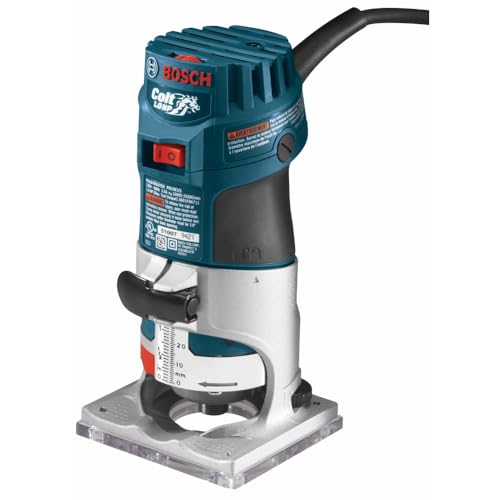
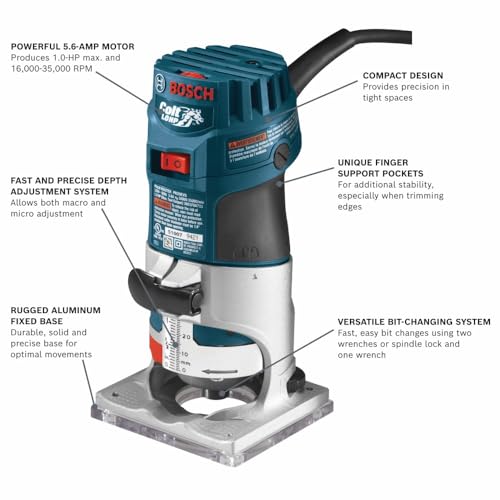
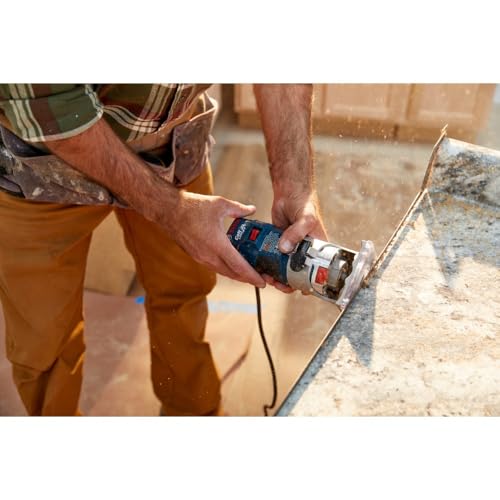
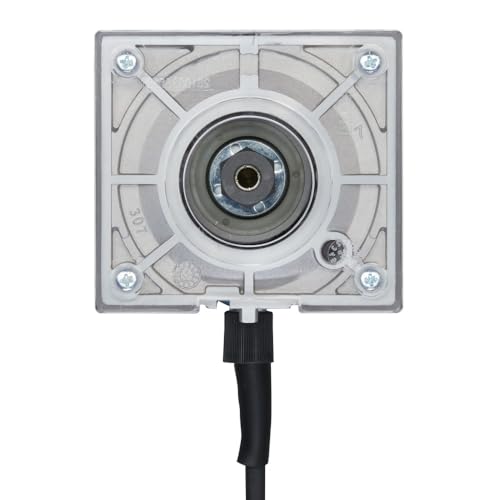
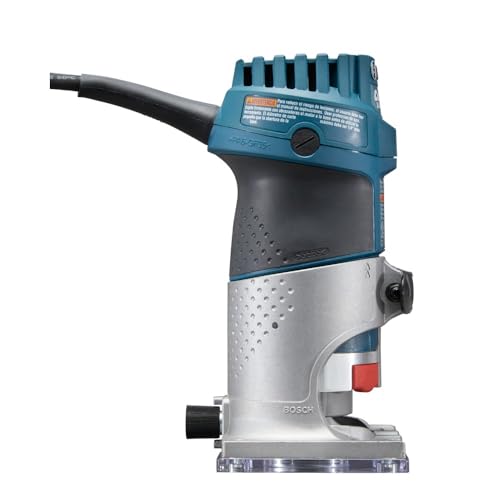
The Bosch PR20EVS stands out for control and ergonomics, this is the router I’d reach for when edge trimming or doing detailed inlay work. The 16,000–35,000 RPM range gives excellent flexibility, and the micro-adjustment depth system is among the best in class. Owners love the finger support pockets and angled cord exit, which make one-handed use actually manageable.
It’s not the most powerful at 1.0 HP, but what it lacks in brute force it makes up for in finesse. The aluminum base is rigid, and the two-wrench bit change system is reliable. Compared to the Makita, it’s more specialized, less of a generalist, more of a scalpel. If precision matters more than power, this is my pick.
Product photos

DEWALT DCW600B Cordless Router

Strengths
- Dual LED lights
- Electronic brake
- Soft start
Trade-offs
- Front-heavy balance
- Speed sag under load
- No included battery
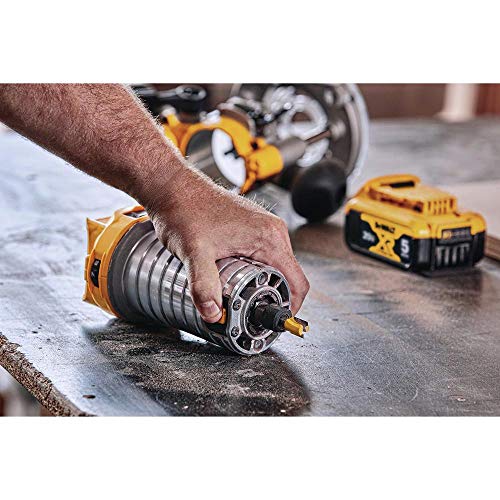
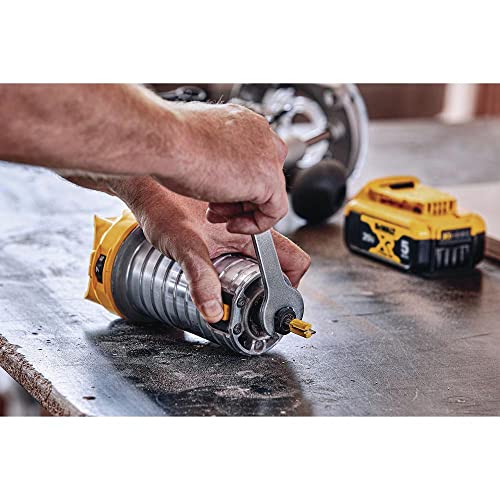
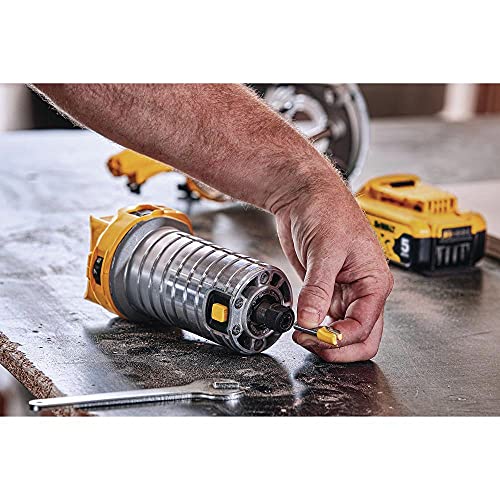
The DEWALT DCW600B is a strong performer in the cordless category, with dual LEDs and an electronic brake that add real usability. The brushless motor helps it keep pace with materials, and the soft start with full-time feedback reduces kickback at startup. Owners appreciate the depth adjustment ring, it’s fast and stays put.
Still, it’s not quite on par with the Makita XTR01Z in motor refinement. Some users report the speed drops more under load, and the balance feels a bit front-heavy. But if you’re already in the DEWALT 20V system, this is a logical add. It’s the smarter buy if you value lighting and quick shutdown over absolute cutting consistency.
Product photos


AVID POWER 1.25 HP Router

Strengths
- Dual LED lights
- Dust hood included
- Good bit and guide selection
Trade-offs
- Bits are basic quality
- LEDs can be too bright
- Slight motor wobble
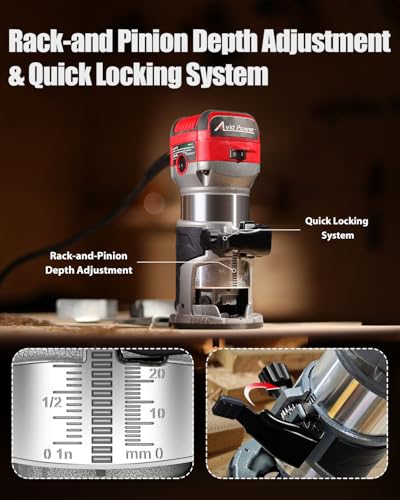
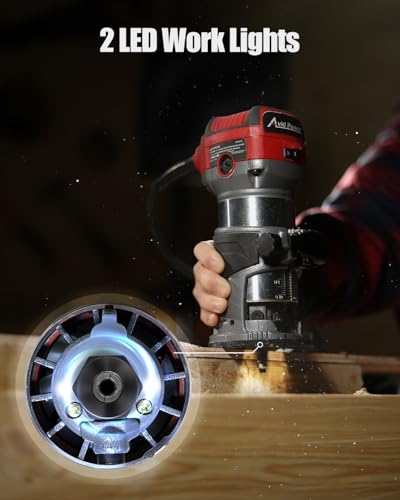
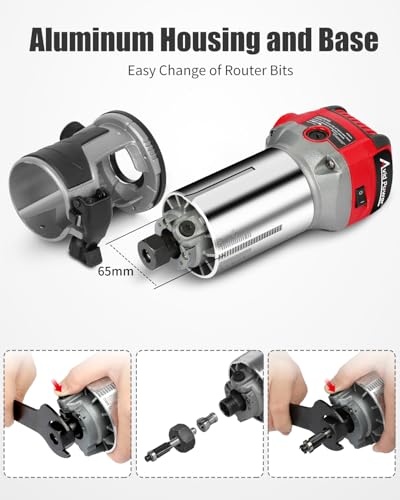
The AVID POWER router doesn’t reinvent the wheel, but it packs a lot into one kit. With dual LED lights, a dust hood, and both 1/4″ and 3/8″ collets, it’s clearly designed for users who want to start routing right away. The rack-and-pinion depth system mirrors the Makita’s, and owners say it holds settings well during use.
It’s not as refined as the Makita RT0701C, but for the price, it’s impressively equipped. The aluminum body helps with durability, and the included guides are actually usable. Compared to the TWOWIN, this one feels more thoughtfully built. If you want a complete package without overspending, this is the smarter buy.
Product photos


TEENO 1.25HP Wood Router
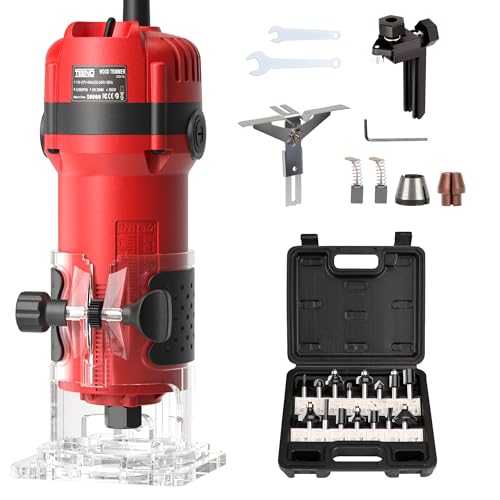
Strengths
- Clear base for visibility
- Low cost
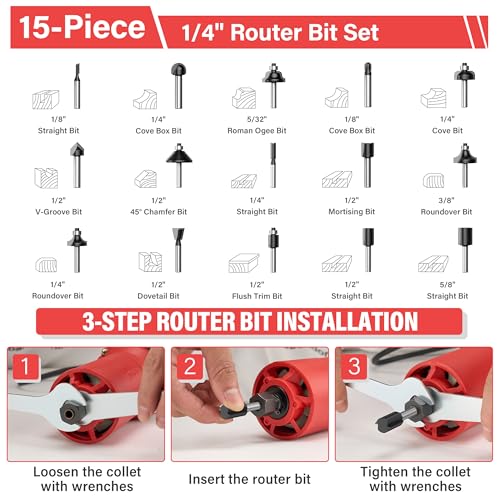
- 15 included bits
Trade-offs
- Plastic base
- Depth adjustment slips
- Inconsistent power
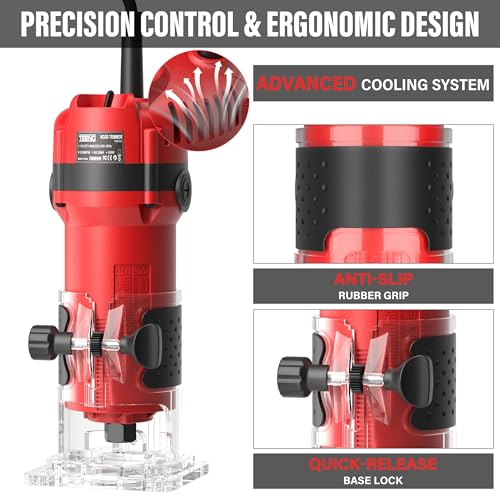
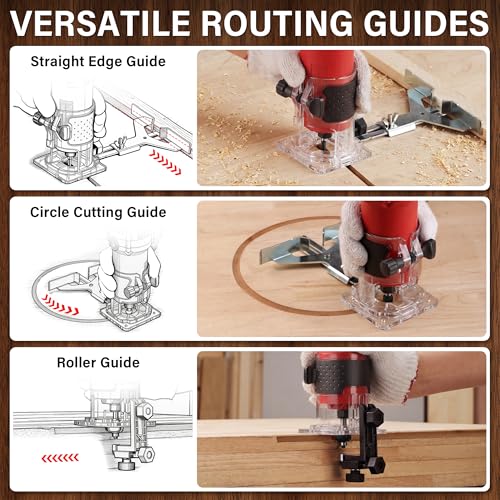
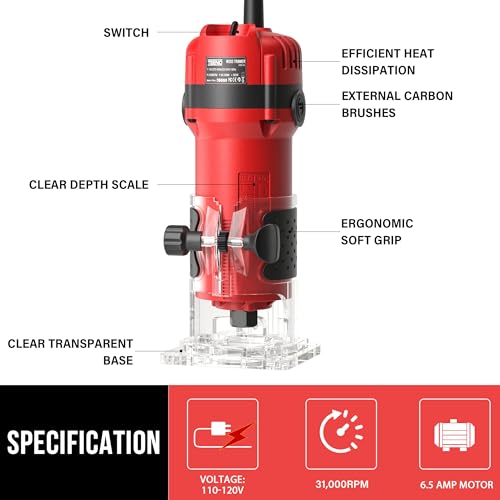
The TEENO router is clearly chasing the budget segment, offering 31,000 RPM and a 15-bit set at a low cost. On paper, the specs look competitive, and some owners confirm it works fine for light edging and laminate trimming. The transparent base is a nice touch, it improves visibility, which helps when doing freehand work.
But like other tools in this price range, the long-term reliability is questionable. Reviewers mention wobble at high speeds and a depth adjustment that slips under pressure. It’s underpowered compared to the Makita or Bosch, and the plastic components don’t inspire confidence. If you’re only doing occasional light jobs, it might suffice, but it’s not one I’d trust for anything demanding.
Product photos

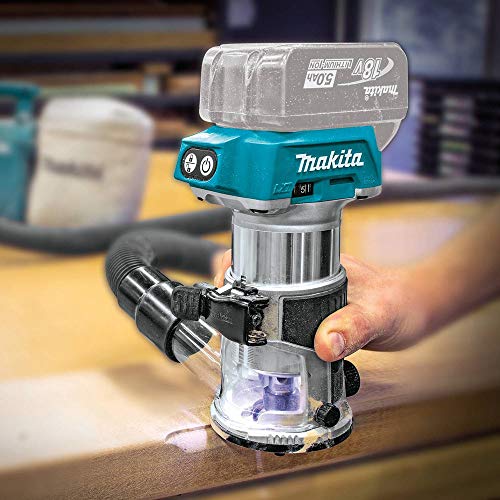
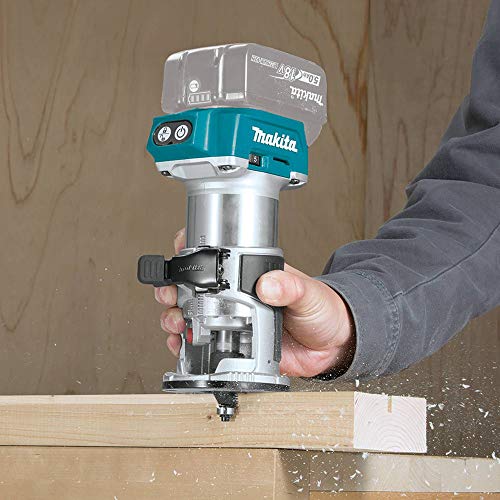
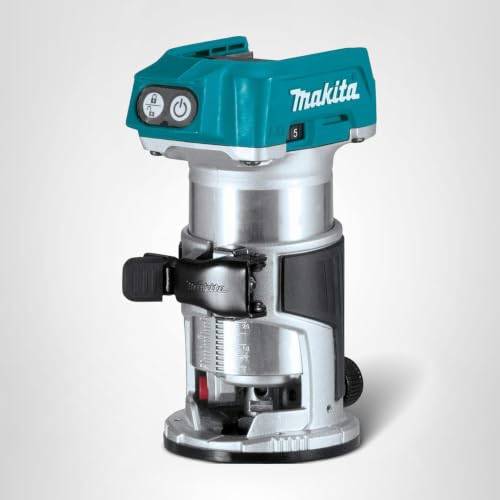
Makita XTR01Z Cordless Router

Strengths
- Brushless motor
- Cordless freedom
- Good speed control
Trade-offs
- Battery sold separately
- Less torque than corded
- Higher cost
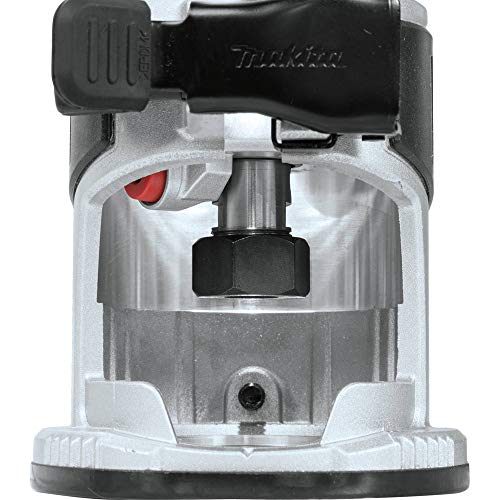
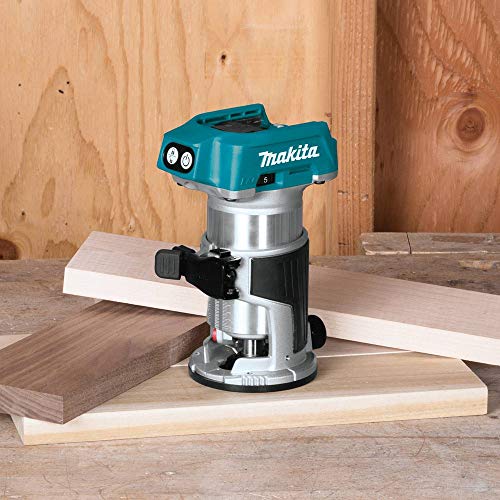
The Makita XTR01Z is the only brushless cordless option here, and that’s a big deal for jobs without reliable power access. The brushless motor delivers better efficiency and longer runtime, and the variable speed dial lets you adapt to different woods without bogging down. Reviewers note it handles 1/4-inch bits well and maintains speed under load, rare for cordless routers.
But cordless means trade-offs. It’s less powerful than corded models, and you’re limited by battery life during long sessions. Still, for cabinet installers or finish carpenters working on-site, the mobility is worth it. When compared to the DEWALT DCW600B, the Makita feels more balanced and has better speed consistency.
Product photos
TWOWIN 1.25 HP Palm Router

Strengths
- 15 included bits
- Soft start
- Good RPM range
Trade-offs
- Plastic housing
- Loose depth adjustment
- Noisy under load
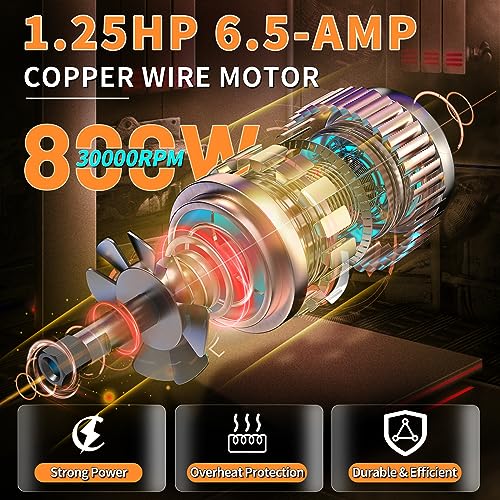
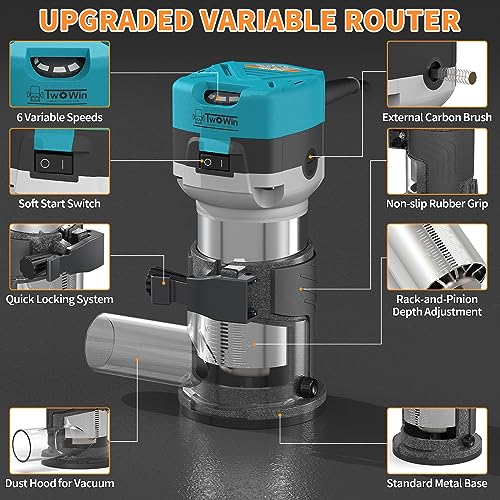
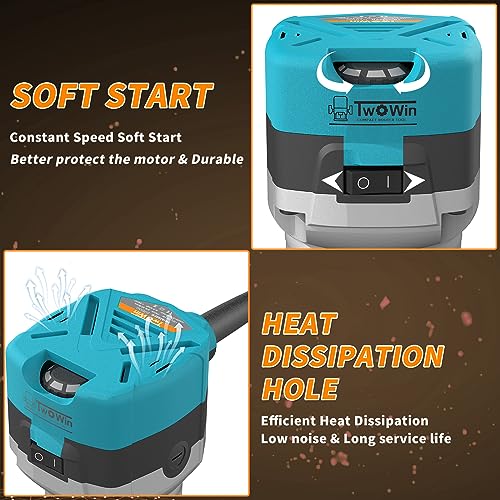
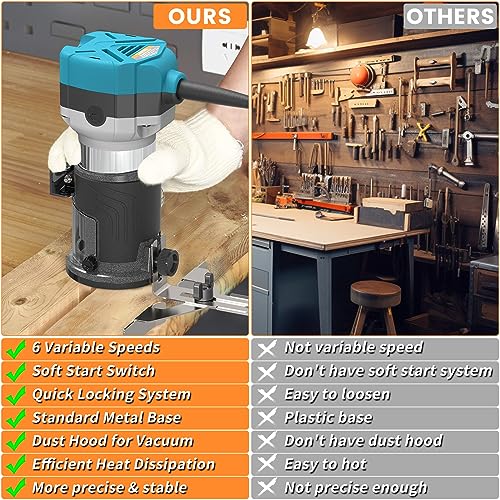
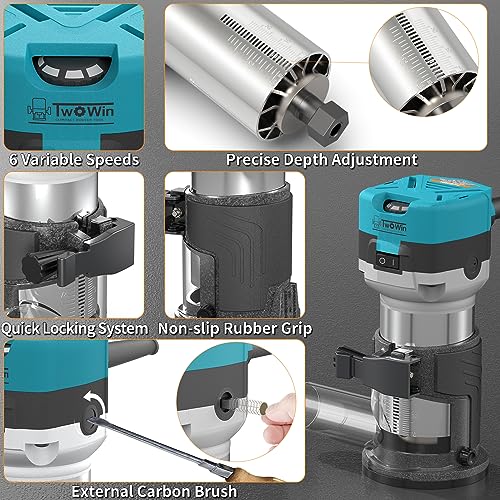
On paper, the TWOWIN 6.5 Amp router looks like a bargain-heavy contender, especially with that 15-piece bit set and a claimed 30,000 RPM motor. Owners consistently report it handles light trimming and edge work without issue, and the variable speed control is appreciated for softer materials. The rubberized grip and soft start are functional touches that help reduce user fatigue during short sessions.
Still, when compared to more refined options like the Makita or Bosch, the build quality feels more consumer-grade. The plastic housing and mixed-metal construction raise durability concerns under prolonged use. Reviewers note the depth adjustment isn’t as precise, and the high speed can be overkill for beginners without much feedback control. It’s a lot of accessories for the price, but some of those bits are best treated as placeholders until you buy better ones.
Product photos
How We Chose These compact routers
Rather than a hands-on lab test, my research for these recommendations involved a detailed comparison of published specifications and features across numerous models. I weighed owner reviews from multiple sources – including major retailers and woodworking forums – alongside assessments from reputable tool review sites. This process allowed me to build a picture of real-world performance and reliability, applying my experience with power tools to identify patterns and prioritize key attributes.
For compact routers, the most important factors quickly became power, control, and versatility. A router needs enough RPM and horsepower to handle a variety of materials without bogging down. Equally crucial is how well the tool feels in hand – ergonomics and features like variable speed control directly impact precision. Finally, the availability of compatible bits and bases expands the range of tasks a router can tackle, adding to its overall value.
Specifications reliably indicate motor power, speed ranges, and collet sizes. However, I placed greater emphasis on owner feedback regarding build quality, ease of use, and long-term durability. Reputation also played a role – brands with a consistent track record of producing quality woodworking tools naturally ranked higher. You’ll find more information on specialized models in our guide to the best trim routers.
How To Choose The compact routers
Picking the right compact router can dramatically improve the quality and efficiency of your woodworking, but there’s a lot to consider beyond just price.
A good compact router balances power with control. Key features include a variable speed motor, precise depth adjustment mechanisms, and a comfortable, ergonomic design. Bit compatibility (typically ¼” or ⅜”) and the availability of accessories like edge guides are also crucial considerations for versatility. Look for models with robust construction and positive owner reviews regarding long-term durability.
Motor Power and Speed Control
The motor is the heart of any router, and with compact models, you’ll find a range from around 5 amps up to just over 6. Don’t automatically equate higher amperage with better performance; a well-designed 5.6 amp router (like the BOSCH PR20EVS) can often outperform a poorly executed higher-amp model. More important than peak wattage is variable speed control. Different materials and bit types require different speeds. Softer woods and larger bits benefit from lower speeds, while hardwoods and smaller bits need higher RPMs to prevent burning or chipping. I always recommend a router with a wide speed range (10,000-30,000 RPM is a good target) and a dial that allows for precise adjustments.
Depth Adjustment and Base Quality
Precision is paramount when routing, and that starts with a robust and accurate depth adjustment system. The rack-and-pinion systems found in many models are generally good, but the quality of the machining and the smoothness of the adjustment matter a lot. Look for models with fine-tuning capabilities – the ability to make very small adjustments is essential for tasks like inlay work or creating consistent rabbets. Similarly, the base material impacts stability. Aluminum bases are far preferable to plastic, offering a more solid platform and reducing vibration. You may also want to consider if you want a fixed or plunge base; a fixed base is ideal for edge work and pattern routing, while a plunge base allows for internal cuts.
Value and Included Accessories
Compact routers are often purchased as a secondary tool, so it’s tempting to go with the cheapest option. However, skimping too much can backfire. Consider what accessories are included. While you can always buy bits separately, a kit that includes a selection of common bits (straight, flush trim, V-groove, etc.) and useful guides (edge guide, pattern following adapter) can save you money and get you up and running faster. * A basic kit with a few bits is a good starting point. * Look for kits that include both ¼” and ⅜” collets for greater bit compatibility, this adds real versatility. * A high-quality edge guide is worth the investment, as it greatly simplifies tasks like trimming laminate or creating consistent edge profiles.
Don’t pay extra for features you won’t use. If you’re primarily doing edge work, a basic fixed-base router with a good selection of bits is often the best value.
If you’re looking to expand your options, exploring top handheld routers can give you a broader understanding of what’s available in this category. And for a more detailed look at specific models, check out our guide to the best small wood routers.
Compact Routers Compared
Here’s a comparison of key specifications for several compact routers to help you find the best fit for your needs.
| Product Name | Power (HP) | RPM Range | Corded/Cordless | Collet (in) | Variable Speed |
|---|---|---|---|---|---|
| Makita RT0701C | 0.6 | 10,000 – 30,000 | Corded | 1/4 | Yes |
| BOSCH PR20EVS | 1.0 | 16,000 – 35,000 | Corded | 1/4 | Yes |
| DEWALT DCW600B | N/A | N/A | Cordless | 1/4 | Yes |
| AVID POWER 1.25 HP | 1.25 | 10,000 – 32,000 | Corded | 1/4 & 3/8 | Yes |
| TEENO 1.25HP | 1.25 | 31,000 | Corded | 1/4 | N/A |
| Makita XTR01Z | N/A | 10,000 – 30,000 | Cordless | 1/4 | Yes |
| TWOWIN 1.25 HP | 1.25 | N/A | Corded | 6/6.35/8mm | Yes |
Frequently Asked Questions
What collet size should I prioritize when buying a compact router?
A ¼” collet is the most common and will cover most routing needs, but if you plan on working with larger bits, look for a model that includes or is compatible with a ⅜” collet. Having both options provides greater flexibility for different projects.
Are cordless compact routers powerful enough for serious woodworking?
Cordless models have improved significantly, but generally, corded compact routers deliver more consistent power for demanding tasks. Battery life and run-time are also considerations when choosing cordless, so check owner feedback on those aspects.
How much does the base material impact a router’s performance?
An aluminum base provides more stability and reduces vibration compared to plastic, which leads to more accurate cuts. While plastic bases are lighter, aluminum is preferable for precision work and durability.
What is the difference between a fixed and a plunge base?
A fixed base is best for edge work and pattern routing where the bit depth stays consistent, whereas a plunge base allows you to lower the bit into the material, ideal for internal cuts and stopped dadoes. Some routers offer interchangeable bases for maximum versatility.
Where can I find more information on even smaller, highly portable routers?
If you need something exceptionally compact for very detailed work, exploring best palm routers can be a good next step. These are ideal for fine trimming and shaping in tight spaces.
The Bottom Line
Choosing a compact router often comes down to balancing absolute control with convenience and price. While numerous options exist, the Makita RT0701C strikes that balance best with its smooth operation, precise adjustments, and reputation for reliability. It’s a tool that will serve a wide range of woodworkers well, from beginners to experienced hobbyists.
For those on a tighter budget, the AVID POWER 1.25 HP router delivers a surprising amount of capability for the money, and the inclusion of both ¼” and ⅜” collets adds significant flexibility. If you prioritize portability and already invest in the 20V MAX platform, exploring portable trim routers like the DEWALT DCW600B is a sensible choice.
Ultimately, specs and features are secondary to the fundamentals. A comfortable grip, a clear view of the bit, and a solid, well-made base will make any project easier and more enjoyable. Don’t chase the highest horsepower or the most accessories; focus on finding a router that feels right in your hand and encourages precision.
