
8 Best CNC Router Bits for Wood 2026
This post contains affiliate links. As an Amazon Associate, we earn from qualifying purchases.
The BINSTAK 1-1/2″ Surfacing Bit stands out as the best overall for clean, efficient material removal in wood, while the HQMaster 10Pcs 1/8″ Upcut Bits offer strong value for detail work and smaller projects. For versatility across softwoods, hardwoods, and sheet goods, the SpeTool 1-1/4″ Compression Bit is a top performer.
If you’ve ever ended up with fuzzy edges, tear-out, or a bit that dulls after one pass, you know how frustrating it is to chase precision with the wrong tool. Even with a well-tuned CNC machine, poor bit selection can ruin hours of work.
This guide cuts through the clutter by focusing on what actually matters, based on specs, real-world feedback, and years of seeing what holds up in woodshops. I looked at shank compatibility, carbide quality, coating effectiveness, and how well each bit handles specific tasks, from surfacing to fine engraving. These picks deliver where it counts.
Top 8 Cnc Router Bits For Woods in the Market
The Best Cnc Router Bits For Woods, Reviewed
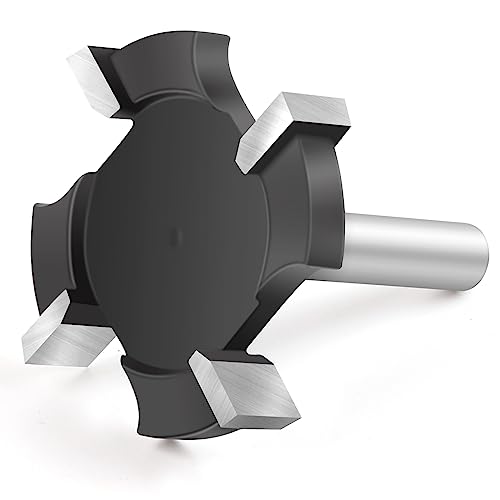
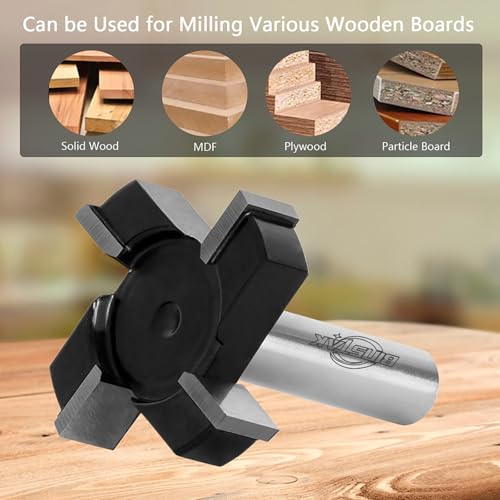
BINSTAK 1-1/2″ Surfacing Router Bit

Strengths
- Large 1-1/2 inch diameter
- Teflon coating reduces gunk
- Effective for slab flattening
Trade-offs
- Limited to surfacing tasks
- Not for fine detail work
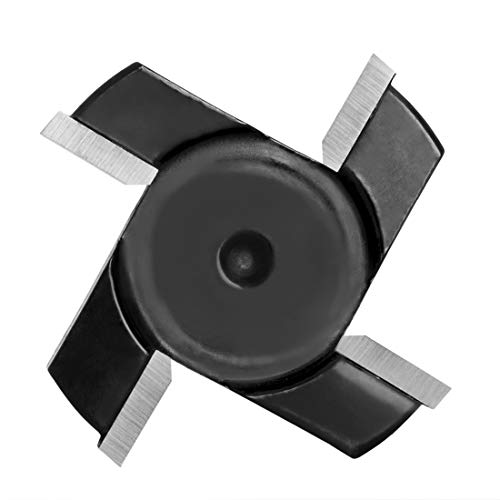
This 1-1/2 inch diameter planing bit is built for a specific job, flattening slabs and spoilboards, and it does it well. The 4-wing carbide design provides aggressive material removal while maintaining balance, and the Teflon coating helps reduce resin buildup, a real pain point when working with sticky softwoods. Owners using it on spoilboard resurfacing consistently praise its smooth performance and minimal chatter.
At 1/4 inch shank, it’s not the most rigid option out there, but for desktop or mid-size CNCs, it holds up under moderate passes. It’s not meant for detail work, but that’s not the point. When compared to smaller surfacing bits, this one cuts fewer passes and delivers a more consistent surface, making it a time-saver. I’d rank it among the best values in its niche.
Product photos


HQMaster 10Pcs 1/8″ Upcut Bits

Strengths
- Low cost for 10 bits
- Good for soft materials
- Smooth upcut performance
Trade-offs
- 1/8 inch shank less rigid
- No wear-resistant coating
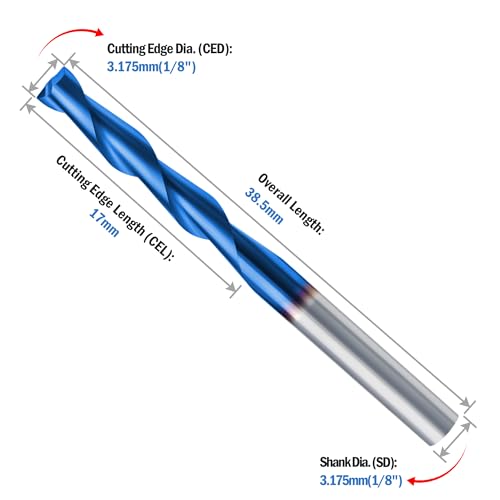
This 10-piece upcut set is a budget-friendly entry point for beginners or hobbyists running smaller CNC machines. The 1/8 inch shank and cutting diameter suit lighter routers, especially common in 3018-style desktop models. The upcut spiral design does a decent job evacuating chips, and owners note smooth, burr-free cuts in MDF and softwoods, exactly what you want for 3D relief work.
It’s not built for longevity under constant load, and the lack of coating shows in edge wear over time. But for the price, the value is solid. Compared to larger shank bits, these are more prone to deflection, so I’d keep cuts shallow and feeds moderate. If you’re just starting out or need a reliable backup set, this one makes sense.
Product photos


HQMaster 5Pcs V-Groove Angle Set
Strengths
- Five angle options
- Sharp tungsten carbide
- Clean V-groove finish
Trade-offs
- Not for deep or fast cuts
- Limited to edge and detail work
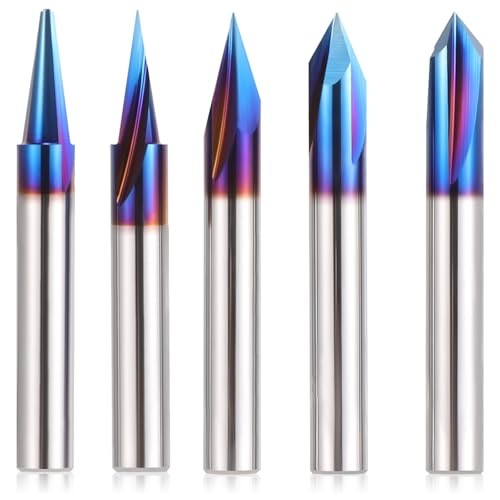
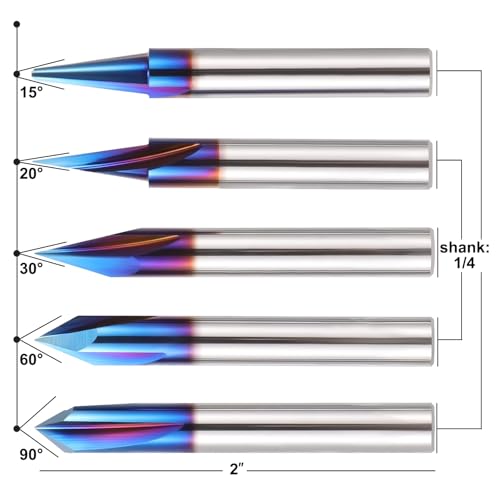
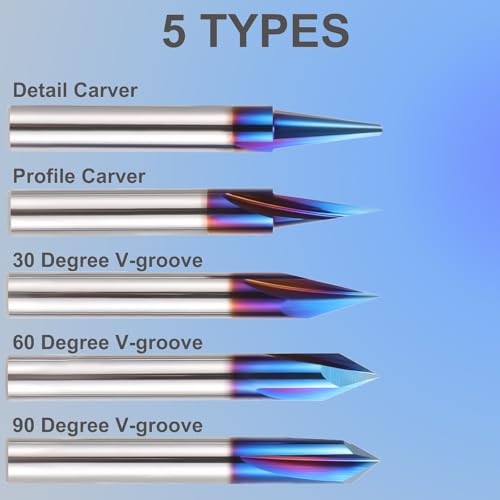
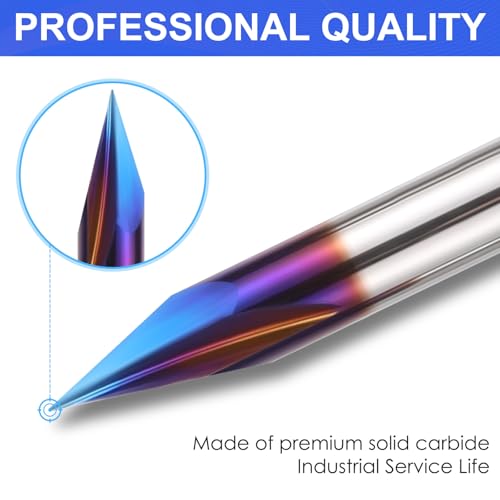
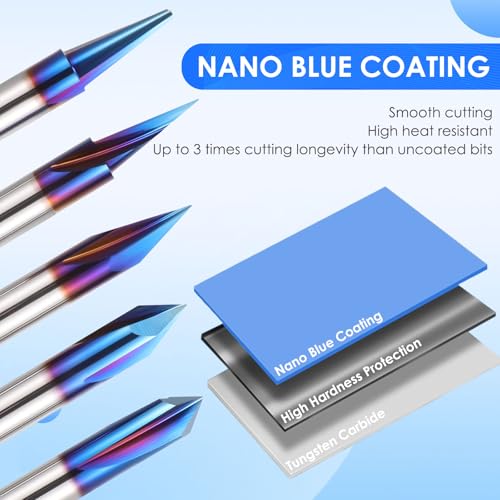
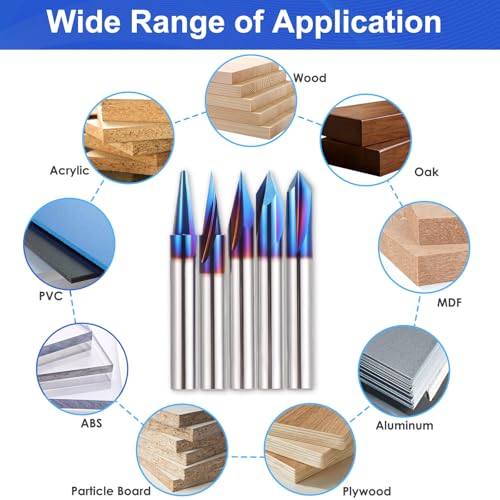
If you’re into detailed woodworking, think sign making, decorative edges, or intricate inlays, this V-groove set from HQMaster is hard to beat. The range of angles from 15° to 90° gives real versatility, letting you switch between fine detailing and bold chamfers without needing multiple kits. The tungsten carbide construction delivers sharp, clean cuts, and owners report minimal chipping even in hardwoods like oak.
These bits shine in precision tasks where control and clarity matter. The 1/4 inch shank ensures compatibility with most CNC setups, and the unique flute design helps maintain a clean groove without wandering. While not for heavy material removal, they outperform generic V-bits in edge quality. For detail work, this is my go-to recommendation over multi-bit budget packs.
Product photos
SpeTool 1-1/4″ Compression Bit

Strengths
- Extra-long cutting length
- TAC wear-resistant coating
- Clean top and bottom cuts
Trade-offs
- Increased flex due to length
- Only one bit in set
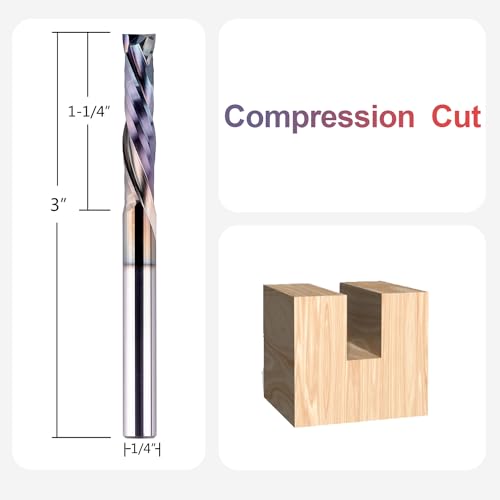
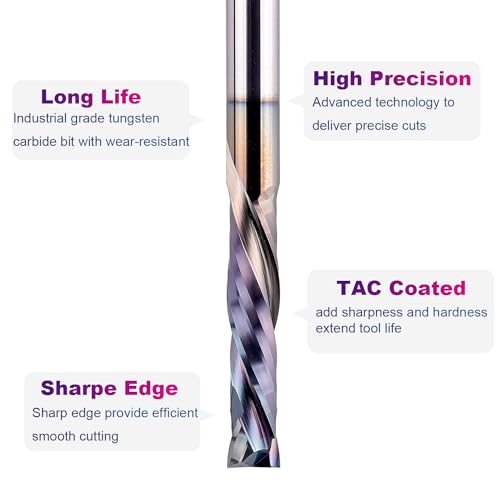
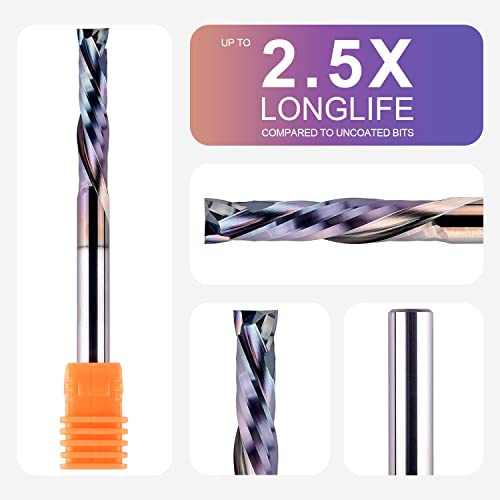
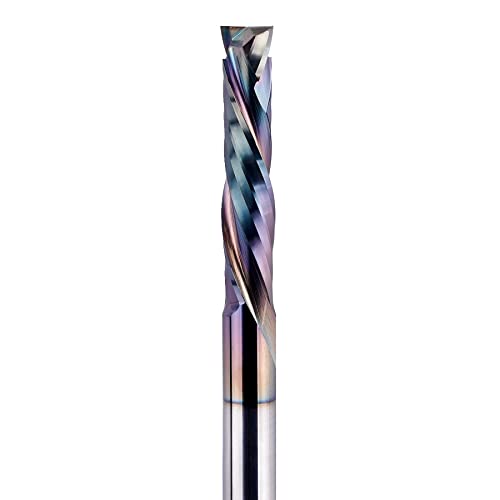
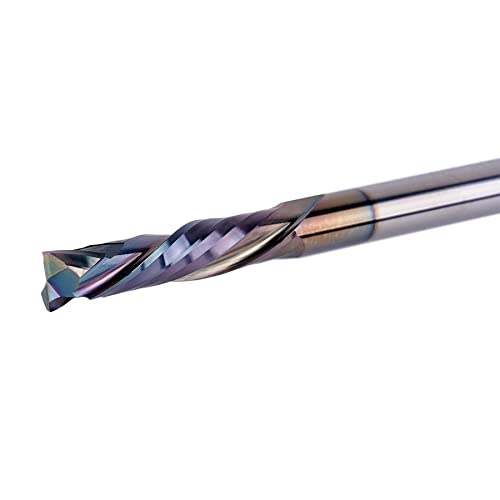
This longer compression bit stands out with its 1-1/4 inch cutting length, unusual in a 1/4 inch shank format, which makes it a solid pick for thicker stock or double-sided machining. The TAC extra-long-life coating is a real differentiator here, with owners noting visibly longer edge retention compared to uncoated equivalents. On paper, that 2.5x lifespan claim seems optimistic, but feedback suggests it’s at least a noticeable step up.
It shares the same up-down flute benefits as the smaller SpeTool set, making it ideal when you need to avoid tear-out on both sides of a workpiece. However, the longer flute length does introduce more flex, so I’d recommend keeping feed rates conservative. It’s a smart upgrade if you’re routinely cutting 3/4 inch or thicker material and need clean results top and bottom.
Product photos
SpeTool 3Pcs Ball Nose Set
Strengths
- Multiple small radii included
- Good for 3D carving
- Sharp spiral flutes
Trade-offs
- Fragile tips on smallest bits
- Short flute length
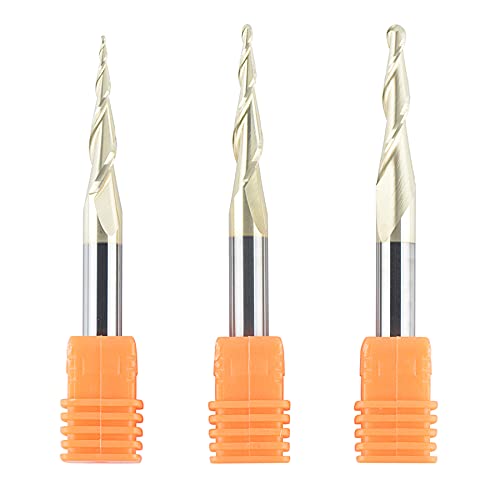
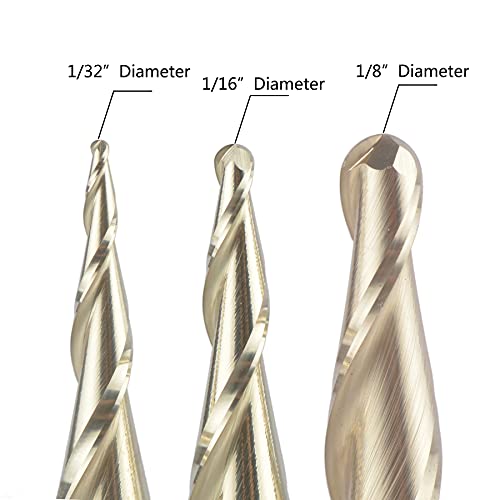
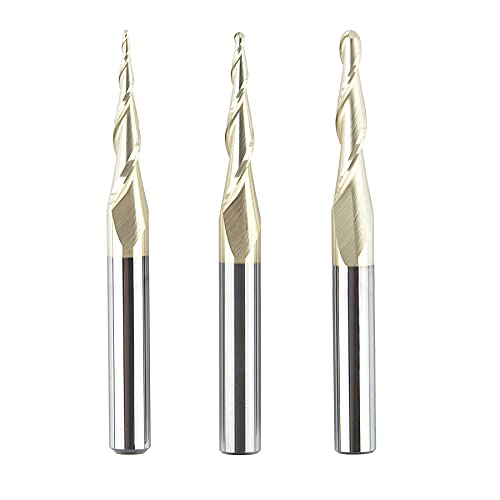
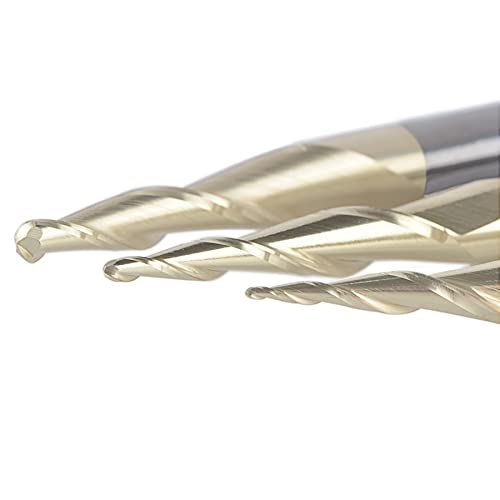
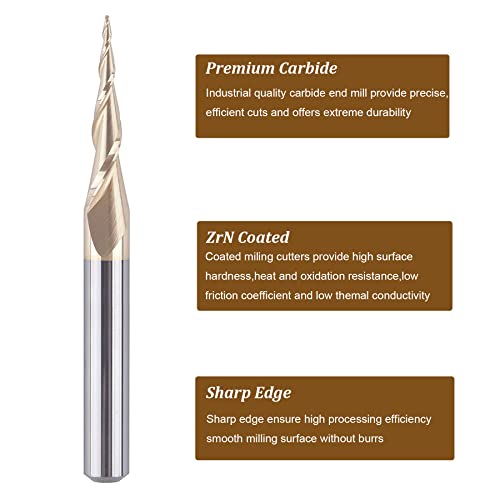
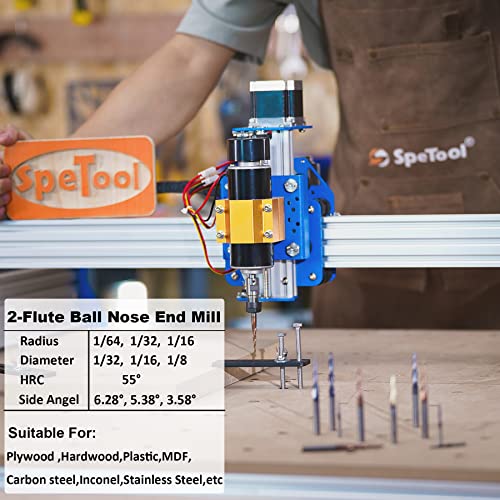
For 3D contouring and organic shaping, ball nose bits are essential, and this SpeTool 3-piece set covers the most useful small radii, 1/64, 1/32, and 1/16 inch. The 2-flute spiral design balances cutting smoothness with chip removal, and owners using them for relief carvings in wood and MDF report clean, detailed results. The small sizes excel in fine textures and intricate molds, where precision matters more than speed.
These bits handle hardwoods reasonably well, though feed rates need to be dialed in carefully to avoid burning or deflection. They’re not the longest-lasting, but for the price, they offer solid performance. Compared to single-bit purchases, this set gives real flexibility for 3D work without breaking the bank.
Product photos
Genmitsu 40Pcs Nano Blue Coated Set

Strengths
- 40 pieces with varied diameters
- Nano and titanium coatings
- Great for mixed applications
Trade-offs
- 1/8 inch shank only
- Some bits very small, fragile
This 40-piece kit is one of the most versatile multi-bit sets on the market, especially for those who want both flat and ball nose options across multiple diameters. The inclusion of nano blue and titanium coatings boosts durability, and owners consistently report longer life compared to uncoated carbide bits. The ultra-fine tungsten alloy feels dense and stable, even during extended runs.
You get a mix of 2-flute flat and ball nose end mills, plus a range of cutting diameters from 0.8mm to 3mm, ideal for scaling detail work. While the 1/8 inch shank limits rigidity, it’s standard for desktop CNC compatibility. For the sheer variety and coated performance, this set outperforms most budget packs. If you’re doing mixed projects, this is the smarter buy over smaller kits.
Product photos


SpeTool 5Pcs Compression Bit Set

Strengths
- 1/4 inch shank
- Up-down compression cut
- Good for plywood and MDF
Trade-offs
- No coating for wear resistance
- Average lifespan under heavy use
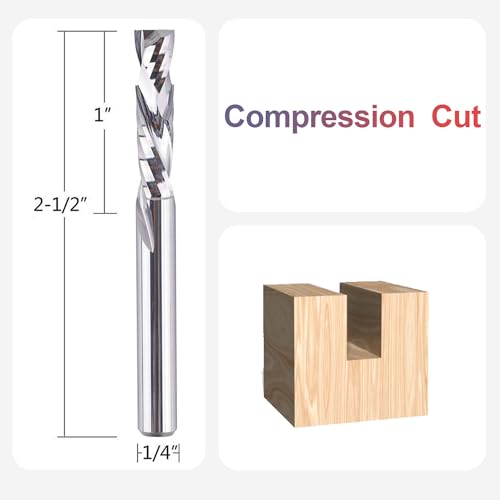
Compression bits are essential when working with sheet goods, and this SpeTool 5-piece set delivers exactly what you’d expect for plywood and MDF work. The up-down flute design effectively reduces chipping on both top and bottom surfaces, which owners consistently report as a major win when cutting layered materials. With a 1/4 inch shank and cutting diameter, these bits are well-matched to standard collets and offer solid rigidity for light to moderate use.
The 2-flute spiral design aids chip ejection, helping maintain a cleaner cut and reducing heat buildup during longer runs. While they don’t have advanced coatings, their carbide construction holds up reasonably well across soft and hardwoods. Compared to pricier sets, these feel like a practical middle ground, better than bargain-bin bits but not quite in the pro-tier longevity class.
Product photos
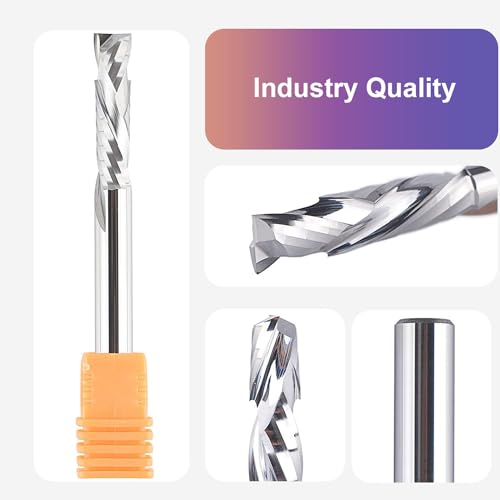
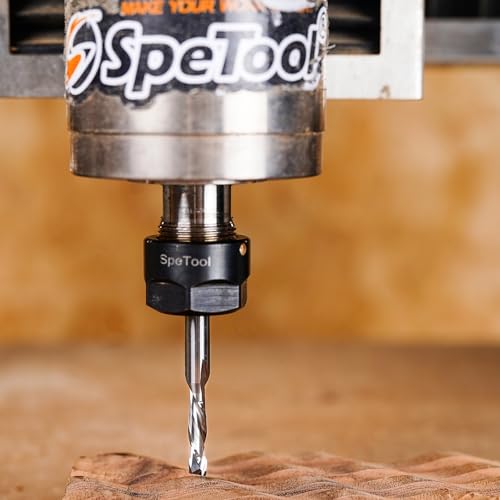
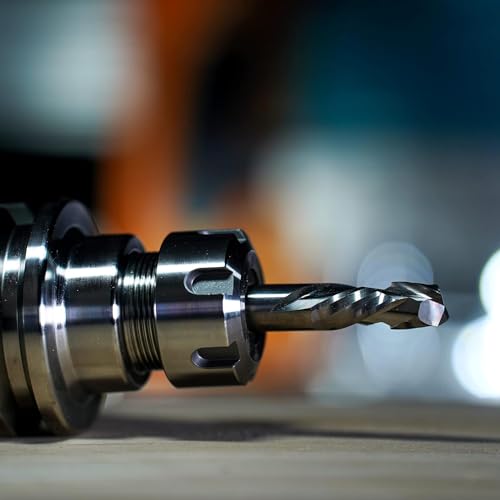
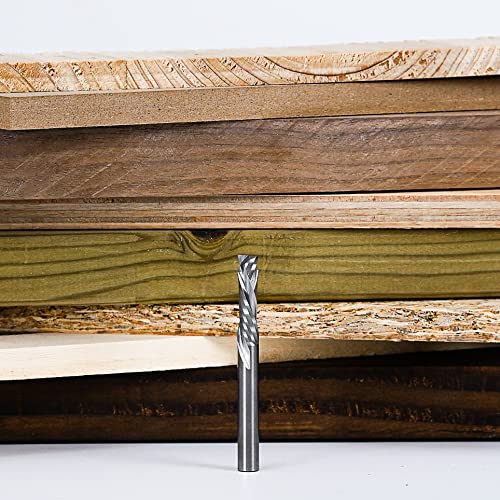
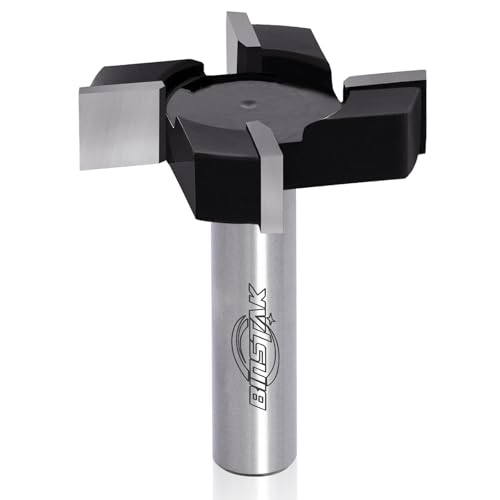
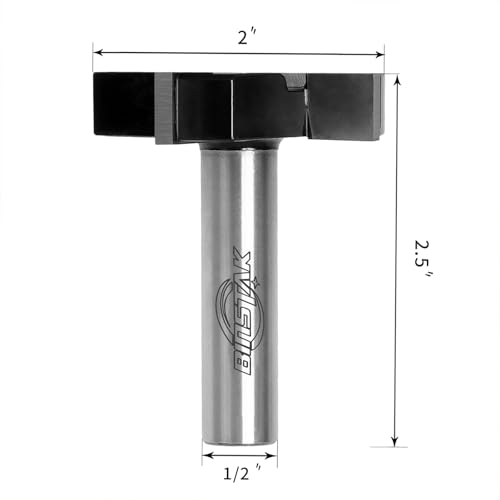
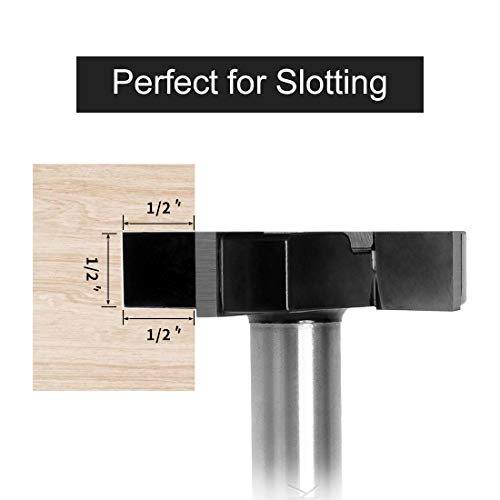
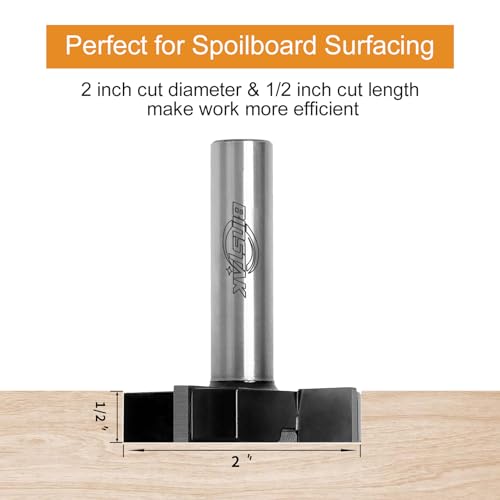
BINSTAK 2″ 1/2″ Shank Surfacing Bit
Strengths
- 2 inch cutting diameter
- 1/2 inch shank for rigidity
- Excellent for heavy surfacing
Trade-offs
- Too large for small routers
- High spindle load required
When you need to remove serious material fast, like leveling a warped spoilboard or flattening a thick slab, this 1/2 inch shank, 2 inch diameter BINSTAK bit is in a different league. The larger shank and 4-wing carbide head provide exceptional stability and balance, minimizing vibration even under aggressive passes. It’s clearly built for heavy-duty CNC use, and owners with larger machines praise its durability and smooth cut.
The Teflon coating helps with resin resistance, and the anti-kickback design adds safety during high-load operation. It’s overkill for small routers, but on a 1000W+ CNC, it’s a standout. Compared to 1/4 inch surfacing bits, it cuts wider and deeper with fewer passes. The included 1/2 to 1/4 inch collet sleeve is a nice bonus for users with multiple machines.
Product photos
How We Chose These cnc router bits for woods
Rather than a hands-on lab test, my research for these recommendations involved a detailed comparison of specifications and features across numerous models. I weighed owner reviews from multiple sources – including major retailers and woodworking forums – against expert opinions published in trade magazines and specialist websites. Ultimately, I ranked each bit based on its suitability for common woodworking tasks and overall value.
For CNC router bits, cutting quality and durability are paramount. I placed significant weight on carbide tip quality and shank diameter, as these directly impact precision and resistance to wear. Beyond that, the ability to minimize tear-out, particularly in delicate woods and plywood, was a key consideration. You’ll find a thorough woodworking router bits guide on my site that explains these factors in greater detail.
Specifications reliably indicate the physical characteristics of a bit – shank size, cutting diameter, and flute length – which are crucial for compatibility with your machine. However, owner feedback provided invaluable insights into real-world performance; things like heat buildup, chip evacuation, and long-term sharpness. Reputation, particularly amongst experienced woodworkers, helped me assess the quality of materials and manufacturing processes beyond what’s listed on a spec sheet.
What To Look For In cnc router bits for woods
Choosing the right CNC router bit can make or break a woodworking project. It’s more nuanced than just grabbing the cheapest set; understanding bit geometry, materials, and applications is key.
A quality CNC router bit delivers clean cuts, resists chipping, and maintains its sharpness through extended use. Look for carbide tips, solid steel bodies, and coatings designed to minimize resin buildup. Shank size compatibility with your router is critical, as is matching the bit’s intended use to the material being cut. Prioritize bits with anti-kickback features for safety and precision.
Shank Size And Collet Compatibility
The first thing to confirm is the shank diameter. Most hobbyist and smaller CNC routers use 1/4″ or 1/8″ shanks, but larger, industrial machines often require 1/2″ shanks. Using an incorrect shank size isn’t just impossible, it’s dangerous. Always double-check your router’s collet size before purchasing bits, and consider investing in a set of collets if you plan to use a variety of bit sizes. A mismatched shank will lead to runout, inaccurate cuts, and potential damage to both the bit and your machine.
Carbide Quality And Coating
The cutting edge is where the money is spent. Carbide quality dramatically impacts a bit’s lifespan and performance. Cheaper bits may use lower-grade carbide or thinner coatings that wear quickly; this is especially noticeable when working with hardwoods or abrasive materials. Look for bits advertised as using micrograin carbide for finer cuts and longer life. Coatings, like titanium nitride or Teflon, reduce friction and heat buildup, preventing resin accumulation and extending the bit’s usable life. If you’re looking for a wider selection, review our guide to the top-rated woodworking router bits.
Application-Specific Designs
Don’t assume one bit does all. Different bit profiles are designed for specific tasks. V-groove bits are excellent for engraving and decorative work, while compression bits are ideal for plywood and MDF, minimizing splintering on both surfaces. Ball nose bits excel at 3D carving, and surfacing bits are essential for flattening stock.
Here’s what to consider when choosing by application:
- Surfacing: A larger diameter (1.5″ or 2″) is faster for flattening, but requires more powerful machinery.
- Detail Carving: Smaller diameter bits (1/8″ or less) provide finer detail, but cut more slowly and may require multiple passes.
- 3D Carving: Ball nose bits with varying radii (the curve of the ball) allow for different levels of detail and smoothness.
A good rule of thumb: always prioritize a bit designed for the material you’re cutting. Trying to force a bit to work on an unsuitable material will result in poor cuts, a damaged bit, and potentially a ruined project.
For those just starting out, it’s worthwhile to explore beginner-friendly router bit sets to gain experience with different profiles and applications.
CNC Router Bits for Woods Compared
Here’s a comparison of key specifications for various CNC router bits designed for working with wood.
| Product Title | Shank Diameter | Cut Diameter | Cut Length | Bit Type | Material Compatibility |
|---|---|---|---|---|---|
| BINSTAK 1-1/2″ Surfacing Bit | 1/4″ | 1-1/2″ | 1/4″ | Surfacing | Woods, MDF, Plywood |
| HQMaster 10Pcs 1/8″ Upcut Bits | 1/8″ (3.175mm) | 1/8″ (3.175mm) | 17mm | Upcut | MDF, Wood, Acrylic |
| HQMaster 5Pcs V-Groove Angle Set | N/A | N/A | N/A | V-Groove | Wood, MDF, Acrylic |
| SpeTool 1-1/4″ Compression Bit | 1/4″ | 1/4″ | 1-1/4″ | Compression | Soft & Hard Woods, Plywood |
| SpeTool 3Pcs Ball Nose Set | N/A | N/A | 15mm | Ball Nose | Wood, Aluminum, Acrylic |
| Genmitsu 40Pcs Nano Blue Coated Set | 3.175mm | 0.8-3.0mm | 17mm | Flat/Ball Nose | Plastics, Aluminum, Wood |
| SpeTool 5Pcs Compression Bit Set | 1/4″ | 1/4″ | 1″ | Compression | Soft & Hard Woods, Plywood |
| BINSTAK 2″ 1/2″ Shank Surfacing Bit | 1/2″ | 2″ | 1/2″ | Surfacing | Woods, MDF, Plywood |
Frequently Asked Questions
What shank size is best for a beginner’s CNC router?
A 1/4″ shank is generally the best choice for beginners. It offers a good balance of strength and compatibility with most hobbyist-level CNC routers, and bits in this size are widely available.
How can I prevent chipping when cutting plywood?
Compression bits are specifically designed to minimize tear-out on both the top and bottom surfaces of plywood. These bits have a shearing action that cleanly cuts the material rather than ripping it.
Are coated bits really worth the extra cost?
Yes, coated bits offer a noticeable improvement in performance and longevity. Coatings like titanium nitride reduce friction and heat, allowing the bit to stay sharper for longer and resist resin buildup.
What’s the difference between upcut and downcut spiral bits?
Upcut bits pull chips upwards and are good for speed, but can leave a rough top edge. Downcut bits push chips downwards, providing a cleaner top surface, though they require more power and can be prone to clogging.
Where can I find specialized bits for joinery?
If you’re looking to create strong and attractive woodworking joints, explore high-performance dovetail router bits to achieve professional-looking results. These bits are designed for precise and clean dovetail cuts.
The Bottom Line
Choosing the right CNC router bits always involves balancing control and convenience. You can spend a lot to get every possible specialized bit, or you can focus on a core set that handles most tasks well. For overall performance and versatility, I recommend the BINSTAK 1-1/2″ Surfacing Bit for getting stock ready, paired with the HQMaster 10Pcs 1/8″ Upcut Bits for detailed work.
If you’re on a tighter budget, the Genmitsu 40Pcs Nano Blue Coated Set provides a surprisingly wide range of profiles for the price. For those prioritizing clean cuts in plywood and hardwoods, the SpeTool 1-1/4″ Compression Bit is a standout. And if you need precise, clean edges, consider exploring precision flush trim router bits to finish your projects.
Ultimately, the specifications on a bit are less important than understanding the wood you’re working with and matching the bit’s geometry to the task. A sharp bit, used at the correct speed and feed rate, will always produce better results than an expensive bit pushed too hard. Focus on those fundamentals, and you’ll be well on your way to creating quality woodworking projects.
