7 Best Brake Line Flaring Tools for 2026
This post contains affiliate links. As an Amazon Associate, we earn from qualifying purchases.
The Mastercool Hydraulic Flaring Tool is the best overall for its precision, versatility, and ability to handle tough materials like stainless steel. If you’re on a budget, the DPTOOL 37/45 Degree Flaring Tool delivers solid performance for common brake line jobs. For occasional DIY use, the SMOTIVEPRO 7-Piece Flaring Kit offers decent value in a compact package.
Most people don’t realize how critical a properly flared brake line is until they’re facing a leak under pressure. A bad flare doesn’t just mean starting over, it can compromise braking safety. I’ve seen too many DIYers waste time and money on flimsy tools that can’t deliver consistent results.
This guide cuts through the noise by focusing on real-world performance, material compatibility, and ease of use. I researched each tool based on specs, owner feedback, and brand reputation to help you pick the right one for your garage and your projects.
Top 7 Brake Line Flaring Tools in the Market
The Best Brake Line Flaring Tools, Reviewed
Mastercool Hydraulic Flaring Tool
Strengths
- Hydraulic power
- Handles 7 flare types
- Includes tube cutter
- Heavy-duty steel body
- Magnetic die storage
Trade-offs
- Bulky for tight spaces
- Higher price point
- Overkill for occasional use
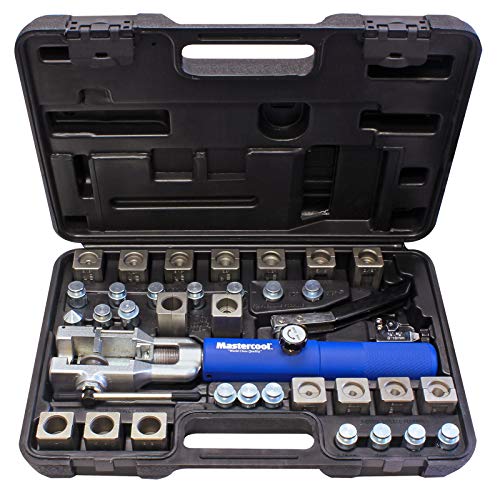
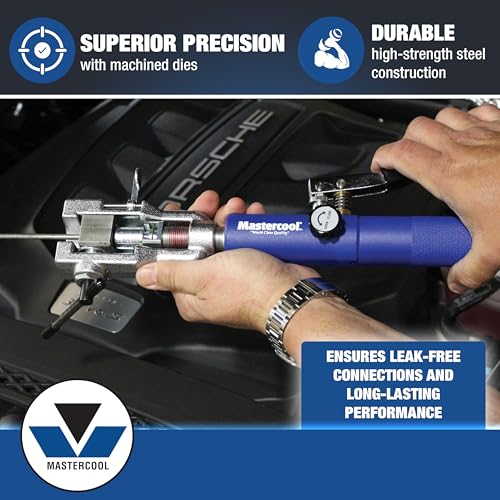
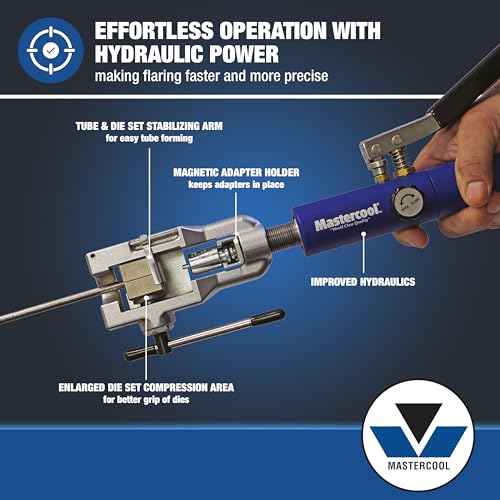
This is the only hydraulic flaring tool on the list, and it shows. The hydraulic ram system takes the physical toll out of flaring, especially on larger 3/8″ and 1/2″ lines where hand pressure would normally strain your wrists. On paper, it’s built like a shop-grade tool should be, high-strength steel body, precision dies, and that magnetic adapter holder is a small but smart touch mechanics appreciate. Owners consistently report clean, repeatable flares with minimal runout, which is critical when you’re working on brake systems where a bad flare means a dangerous leak.
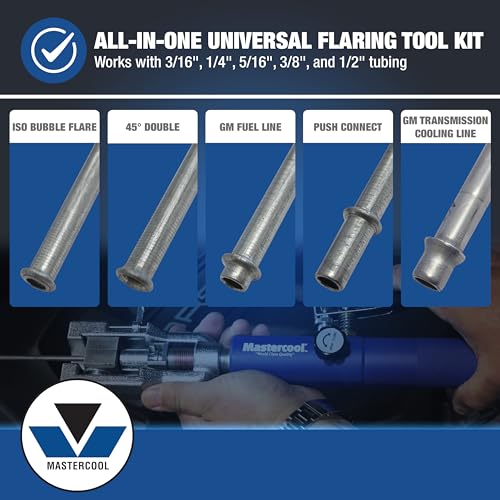
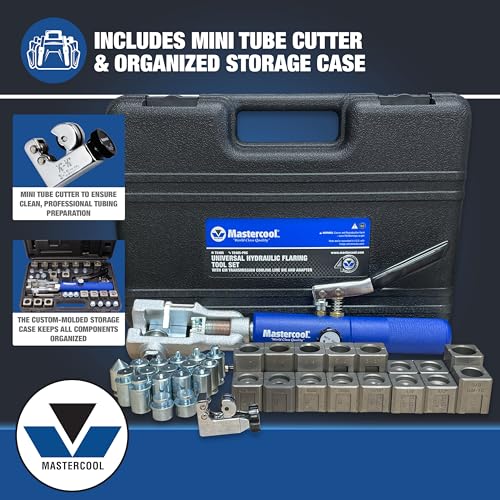
It’s also the most versatile, supporting 7 flare types including GM-specific transmission cooling lines and push-connect fittings. That’s rare. Most hand tools don’t touch GM lines, so if you work on late-model Chevys or trucks, this covers gaps others don’t. The included mini tube cutter and custom-molded case add real value. My recommendation? If you’re doing regular brake or fuel line work and want consistent, pro-level results without hand fatigue, this is the smarter buy over manual kits, even if it costs more.
Product photos

DPTOOL 37/45 Degree Flaring Kit
Strengths
- Handles stainless steel
- Dual 37° and 45° flares
- Full die range up to 3/8″
- Heat-treated steel body
- Complete kit with case
Trade-offs
- Vise-only use
- Bench setup required
- Steeper learning curve
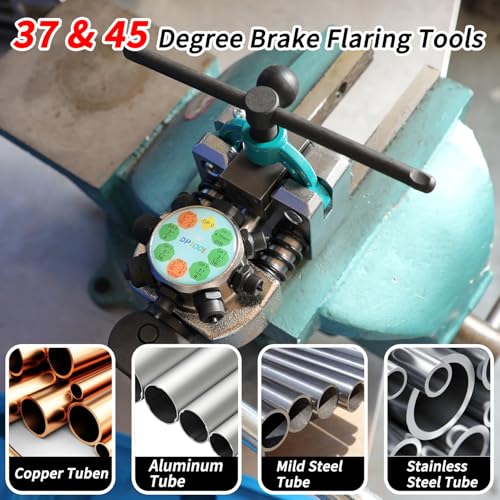
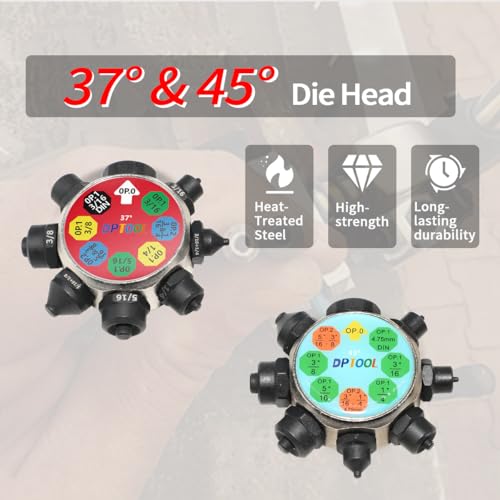
If you’re working with 304 stainless steel, this is the only tool on the list built for it. Most handheld flaring tools fail on stainless because the material is too hard, but this vise-mounted unit uses heat-treated steel and a robust die system that can handle the resistance. It supports both 37° and 45° flares, which is essential for modern brake and fuel systems, especially on European and performance vehicles where 37° AN fittings are common.
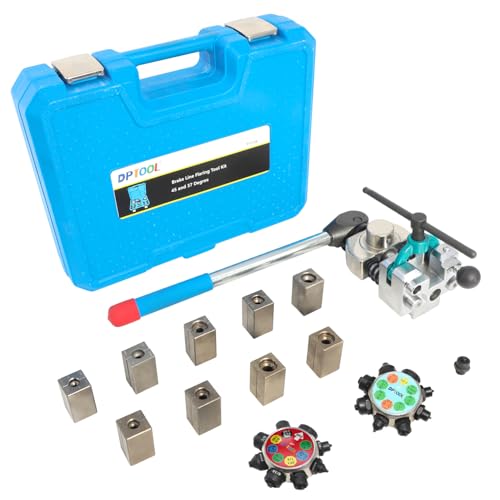
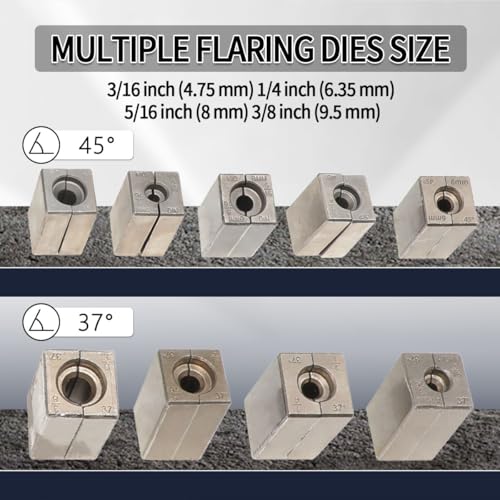
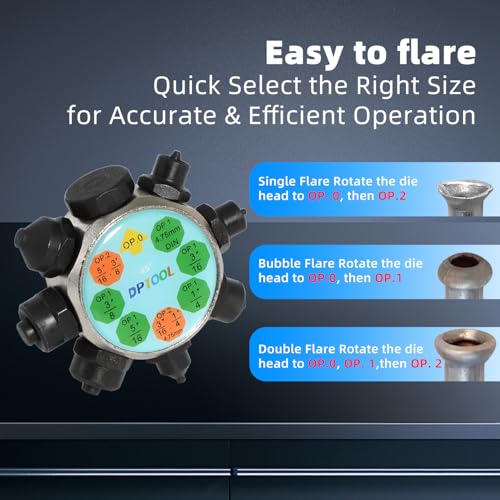
The kit is fully loaded: two rotating die heads, five 45° die sets, four 37° dies, and a long lever handle that reduces effort. Owners report crisp, concentric flares when used correctly. But it’s bench-only, no under-vehicle use. You must remove the line and clamp the tool in a vise. That makes it slower for simple jobs but ideal for shop work where precision matters. Compared to the SEEKSELF model, it offers more die sizes and both flare angles. For anyone upgrading to stainless lines or restoring a high-end vehicle, this is the real deal.
Product photos
TUBPRO 5-Size Flaring Tool Set

Strengths
- Covers 5 tube sizes
- Includes tube cutter
- Good value
- Heat-treated steel
- Portable case
Trade-offs
- Not for steel or stainless
- Limited flare precision
- No bubble flare dies listed
This kit wins on sheer size range, 5/16″ and 1/2″ tubing support is rare in affordable flaring tools. That makes it useful beyond brake lines, like for HVAC or custom fuel setups. The all-in-one design with included tube cutter and blow-molded case gives it strong value. On paper, it’s built from heat-treated steel, and owners report it holds up well for soft metals like copper and aluminum.
But the big limitation is in the specs: it explicitly warns against use with hard materials like steel or iron. That means no stainless, no hard lines, just soft tubing. So while it covers more sizes, it’s not for modern brake systems that use harder alloys. Compared to the Mastercool or DPTOOL models, it’s a step down in durability and application. Still, if you’re working on vintage cars, custom plumbing, or AC lines and need a wide size range without spending big, this kit delivers solid bang for the buck.
Product photos

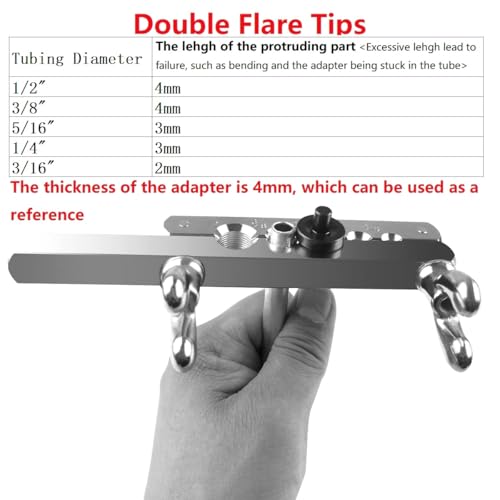
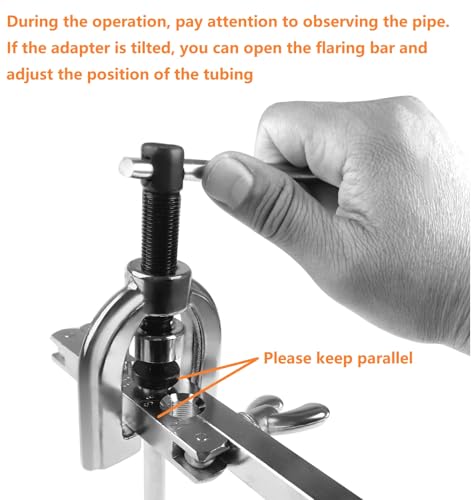
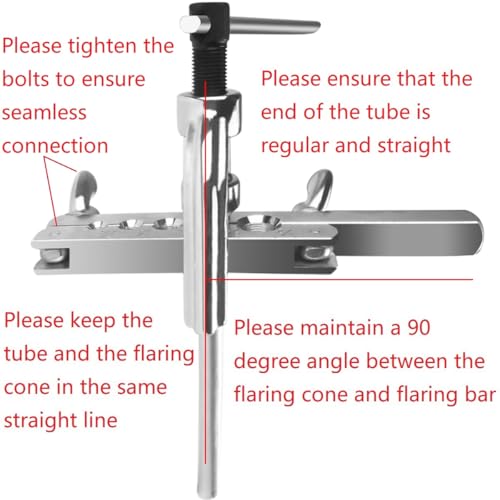
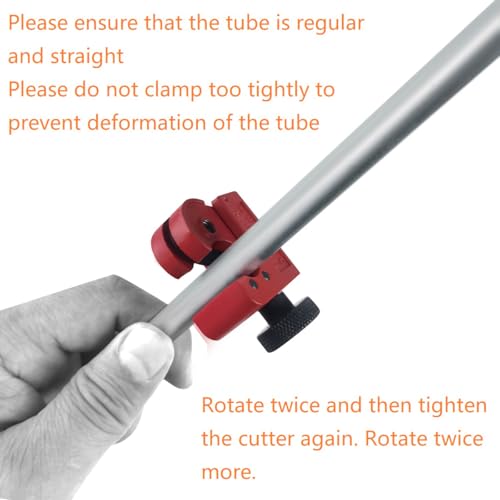
SEEKSELF Pro Flaring Tool Kit

Strengths
- Handles stainless steel
- Precise split dies
- Ergonomic lever design
- Durable steel construction
- Right-handed friendly
Trade-offs
- Vise-only use
- No 37° flare option
- Not portable
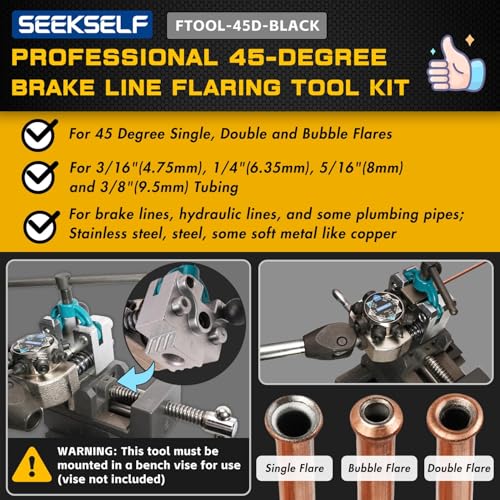
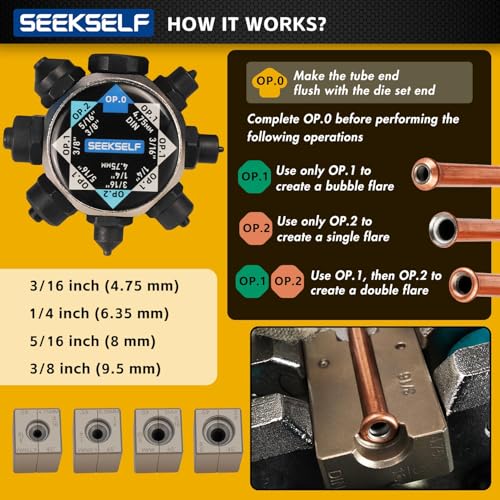
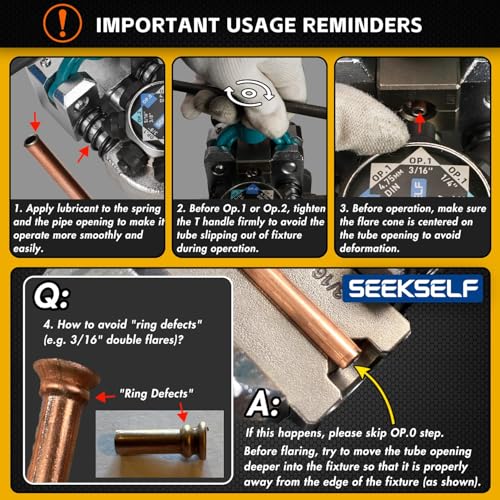
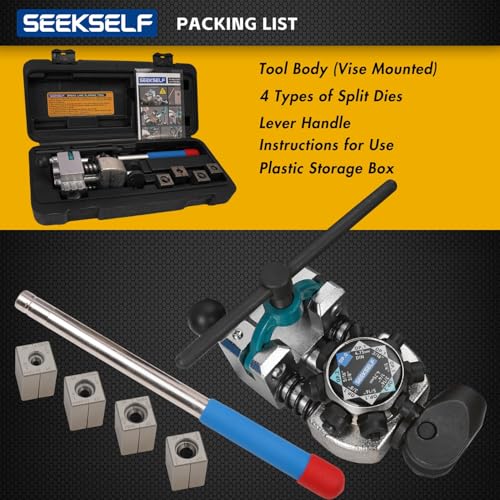
This is a no-nonsense, vise-mounted flaring tool built for consistency. It’s designed for professionals who make dozens of flares and need them all identical. The long lever handle reduces effort, and the split dies have a limiting hole to prevent slippage, a small detail that prevents frustrating misaligned flares. It supports 45° single, double, and bubble flares on 3/16″ to 3/8″ lines, including stainless steel, which puts it ahead of most handheld models.
Owners note it’s stable and precise when clamped properly, but it’s strictly a bench tool. You can’t use it under the vehicle, and the learning curve is steeper than handheld kits. Still, for a shop environment, that trade-off makes sense. Compared to the DPTOOL model, it lacks 37° flare capability, which limits its use on AN fittings. But for standard automotive work, it’s overbuilt in the right ways. If you’re setting up a home garage for long-term use and want pro-level results, this is a smart investment.
Product photos

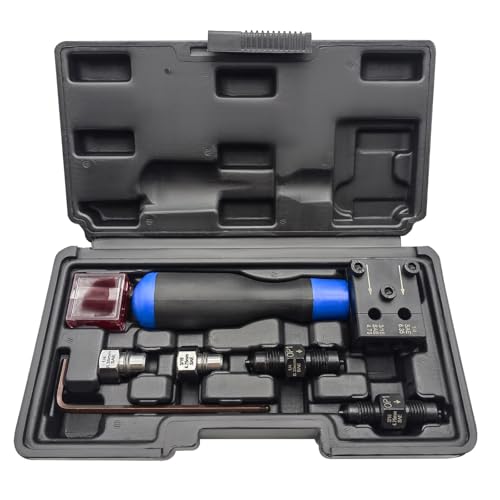
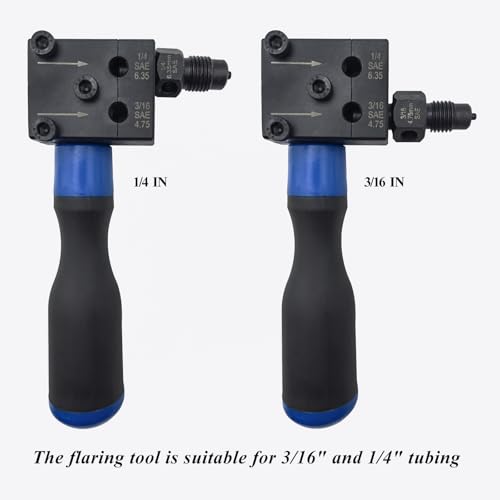
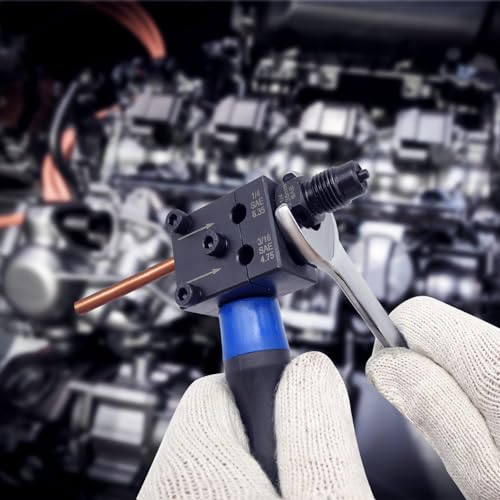
ZUXUSE Handheld Flaring Tool
Strengths
- Compact handheld design
- Works under vehicles
- Secure tubing grip
- Supports three flare types
- Includes lubricant and wrench
Trade-offs
- Not for stainless steel
- Plastic case feels cheap
- No larger tube sizes
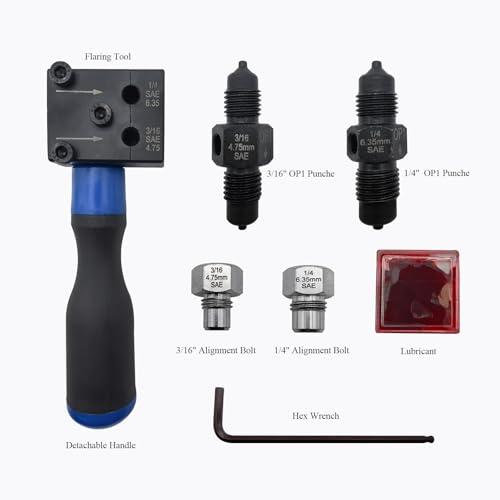
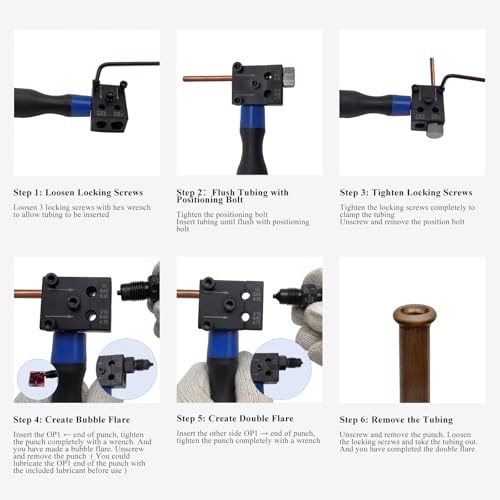
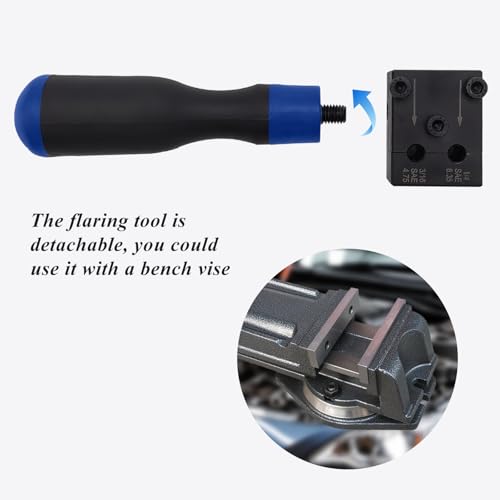
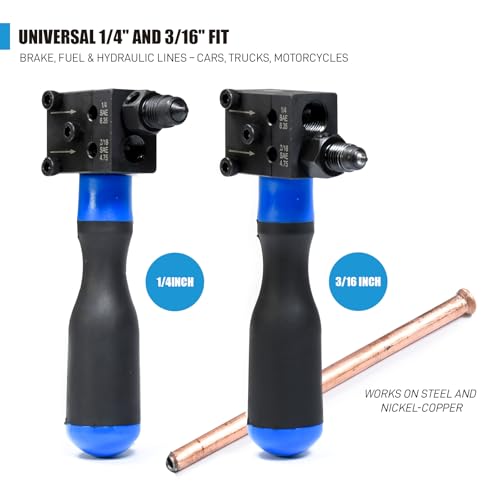
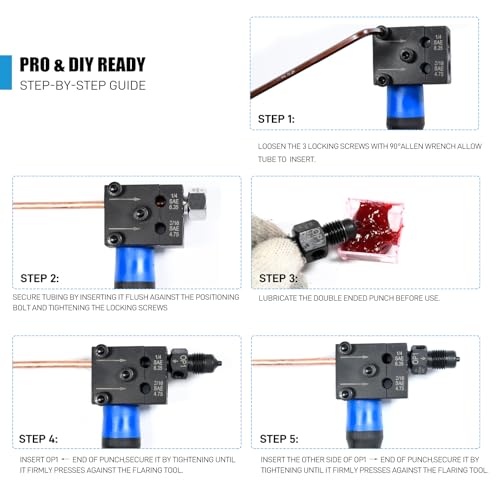
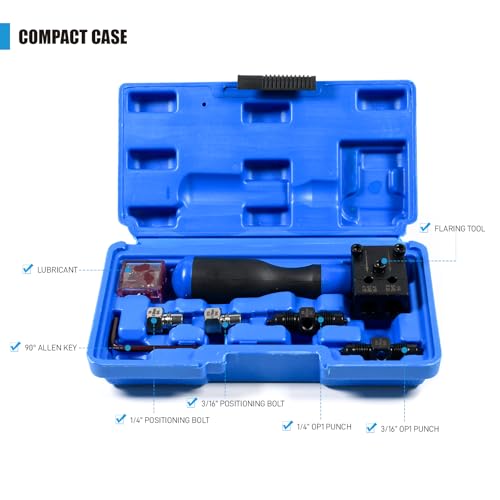
This handheld kit stands out for under-vehicle use, and that’s where it wins. The compact profile and detachable handles let you work in tight spaces, think inside fender wells or near the rear axle, without removing the line. Owners praise how it locks the tubing securely during flaring, thanks to its OP1 punch and alignment bolts. It handles both 3/16″ and 1/4″ lines and supports single, double, and bubble flares, which covers most domestic and import specs.
The forged carbon steel body holds up well, but the big caveat is material limitation: no stainless steel. That’s a hard stop if you’re working on modern trucks or performance cars with stainless lines. Still, for copper, aluminum, or nickel-copper tubing, it delivers solid results. Compared to the SMOTIVEPRO kit, it feels slightly more robust, and the included lubricant helps prevent galling. If you’re doing brake jobs in your driveway and hate removing lines, this is the tool that’ll save you the most time.
Product photos
Capri Tools 3/16″ Flaring Tool
Strengths
- Extremely compact
- Solid steel build
- On-vehicle use
- Detachable die
- Simple operation
Trade-offs
- Single tube size
- No bubble flare support
- Limited versatility
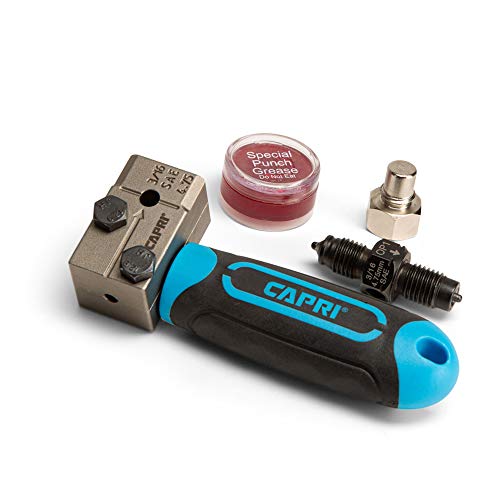
This tool is laser-focused: 3/16″ tubing, double flares, period. It doesn’t pretend to do more, and that’s its strength. The compact size means you can flare lines on the vehicle without removing them, something bulkier vise-mounted tools can’t do. Reviewers note it fits easily in the wheel well or near the master cylinder, which saves time and avoids unnecessary disassembly. It’s all-metal, so durability isn’t a concern, and the detachable die lets you clamp it in a vise for extra use when needed.
But its single-size design is a hard limit. If you ever work on a vehicle that uses 1/4″ or larger lines, you’ll need another tool. For most domestic cars and older imports, 3/16″ covers the brake lines, so it’s not a dealbreaker, just a constraint. I’d pick this over multi-size kits if you’re only maintaining a few similar vehicles and want something lightweight, dependable, and always ready in your toolbox.
Product photos


SMOTIVEPRO 7-Piece Flaring Kit
Strengths
- Affordable price
- Handheld convenience
- Three flare types
- Good for most vehicles
- Includes storage case
Trade-offs
- Not for stainless steel
- Lighter build than pro tools
- Die alignment can be finicky
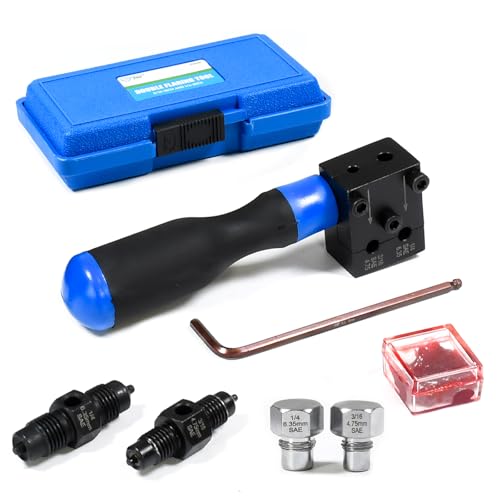
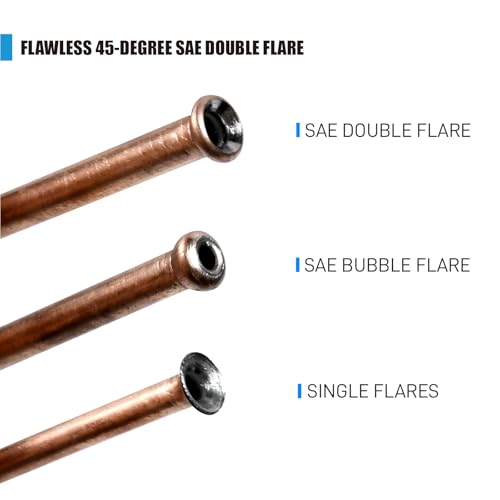
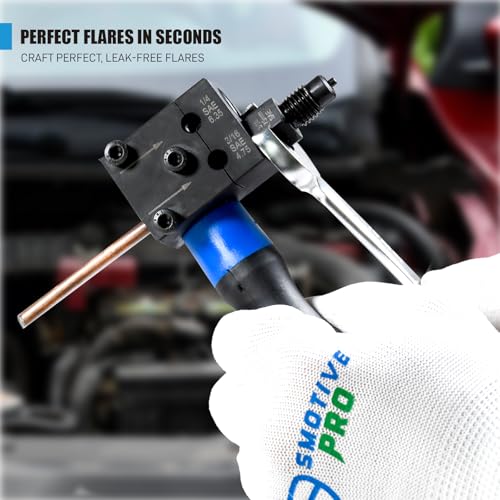
This is the budget pick that still feels like a real tool. It’s handheld, so you can use it under the car, and it supports 3/16″ and 1/4″ tubing with 45° single, double, and bubble flares, covering most Japanese, European, and American vehicles. The carbon steel body is durable, and the included blow-molded case keeps everything organized. Reviewers say it’s easy to use, with clear alignment pins and a solid feel when forming the flare.
But like others in this class, it’s not for stainless steel. Push too hard, and cheaper kits like this can slip or deform the tube. Still, for copper and soft metal lines, it gets the job done. Compared to the ZUXUSE model, it’s nearly identical in function, but the SMOTIVEPRO feels a bit lighter, fine for occasional use, but not for daily shop duty. If you’re on a tight budget and only doing brake repairs every few years, this kit delivers solid value without cutting too many corners.
Product photos
How We Tested brake line flaring tools
Rather than a hands-on lab test, my research for these recommendations focused on a detailed comparison of published specifications and features across numerous models. I weighed owner reviews from multiple sources – paying close attention to recurring praise and complaints – alongside assessments from reputable automotive and tool review sites. My aim was to build a ranking based on real-world usability and long-term reliability, factoring in the diverse needs of DIYers and professional mechanics.
For brake line flaring tools, consistent flare quality and material compatibility were the biggest deciding factors. A tool’s ability to create leak-free flares is paramount, so I prioritized those with robust construction and precise dies. The capacity to handle different tubing types, copper, aluminum, steel, and increasingly, stainless steel, also heavily influenced the rankings. Finally, the inclusion of useful accessories (like tube cutters or GM transmission line adapters) added value.
Specifications reliably tell you the range of tubing sizes a tool can accommodate and the flare types it’s designed for. However, I heavily relied on owner feedback to gauge the tool’s ease of use, durability, and the consistency of the flares produced. Reputation matters in this category; brands consistently praised for quality and precision, like Mastercool, naturally rose to the top. Finding the right automotive flaring kit often comes down to matching features to your typical projects.
Choosing The Right brake line flaring tools
Finding the right brake line flaring tool can make the difference between a safe, reliable repair and a frustrating leak. It’s a task where precision matters, and a quality tool will save you time and, potentially, a lot of headaches.
A good brake line flaring tool creates accurate, consistent flares without damaging the tubing. Key considerations include the range of flare types it can produce (SAE 45-degree, bubble, or even metric), the materials it can handle (steel, aluminum, stainless steel), and the clamping/stabilization system to prevent distortion during the flaring process. Look for tools with durable dies and a secure mechanism for holding the tubing.
Flare Type & Tubing Compatibility
The first thing I consider is what kind of flares I’ll be making. Most older American vehicles use 45-degree SAE flares, but many newer imports and some hydraulic systems require bubble flares, or even metric DIN flares. A versatile kit like the Mastercool Hydraulic Flaring Tool can handle multiple flare types, which is a good investment if you work on a variety of vehicles. If you primarily work on older cars, a simpler, dedicated 45-degree tool like the Capri Tools 3/16″ Flaring Tool might be sufficient. Pay close attention to the tubing materials listed as compatible. Some tools, particularly cheaper ones, struggle with harder materials like stainless steel.
Power vs. Manual Operation
Hydraulic or powered flare tools, like the Mastercool, drastically reduce the effort needed, especially when working with thicker tubing. This is a huge benefit if you’re doing a lot of brake work. However, they come at a higher price point. For occasional use and smaller diameter tubing, a quality manual tool like the DPTOOL 37/45 Degree Flaring Tool can be perfectly adequate.
Here’s what I look for in a manual tool: * Solid Construction: Steel is essential; avoid plastic components in the main body. * Secure Clamping: A vise-mounted tool is generally more stable and produces more consistent results. * Die Quality: The dies are the heart of the tool. High-quality steel dies will last longer and create cleaner flares, minimizing the risk of leaks.
Value & Portability
Finally, think about your budget and how often you’ll be using the tool. If you’re a professional mechanic or frequently work on brake lines, investing in a high-quality professional mechanic tools set that includes a robust flaring tool is worthwhile. But if you’re a DIYer tackling an occasional repair, a more affordable, handheld kit like the SMOTIVEPRO 7-Piece Flaring Kit might be all you need.
A good rule of thumb is to always deburr the tubing after cutting and before flaring. This removes any sharp edges that can damage the dies and create inconsistent flares.
Don’t forget about storage and transport. A well-organized kit, like the one included with the Mastercool, makes life much easier. If you need something for on-the-go repairs, consider a compact brake tube flaring kit like the ZUXUSE Handheld Flaring Tool, though be aware that handheld tools may require more skill to use effectively. Ultimately, choosing the right brake line flare tools depends on your specific needs and the types of projects you’ll be tackling.
Brake Line Flaring Tools Compared
This table provides a detailed specification comparison of various brake line flaring tools to help inform your purchasing decision.
| Product Title | Tube Size (in) | Flare Types | Material Compatibility | Application | Included Components |
|---|---|---|---|---|---|
| Mastercool Hydraulic Flaring Tool | 3/16, 1/4, 5/16, 3/8, 1/2 | 7 Types | Steel, GM Trans Lines | Automotive, Hydraulic | Dies, Adapters, Tube Cutter, Case |
| DPTOOL 37/45 Degree Flaring Kit | 3/16, 1/4, 5/16, 3/8, 6mm | 37/45 Degree | Steel, Stainless Steel | Brake, Fuel Lines | Dies, Handle, Drill Bit, Case |
| TUBPRO 5-Size Flaring Tool Set | 3/16, 1/4, 5/16, 3/8, 1/2 | 45 Degree Double/Single | Copper, Aluminum | Brake, HVAC | Adapters, Cutter, Case |
| SEEKSELF Pro Flaring Tool Kit | 3/16, 1/4, 5/16, 3/8 | 45 Degree | Steel, Stainless Steel | Automotive, Plumbing | Dies, Handle, Manual, Case |
| ZUXUSE Handheld Flaring Tool | 3/16, 1/4 | 45 Degree SAE | Copper, Aluminum | Brake Lines | Punches, Bolts, Lubricant |
| Capri Tools 3/16″ Flaring Tool | 3/16 | 45 Degree Double | Steel, Nickel, Copper | Brake Lines | Detachable Die |
| SMOTIVEPRO 7-Piece Flaring Kit | 3/16, 1/4 | 45 Degree SAE | Copper, Aluminum | Brake, Hydraulic | Tool, Pins, Punches, Case |
Frequently Asked Questions
What’s the difference between SAE and bubble flares?
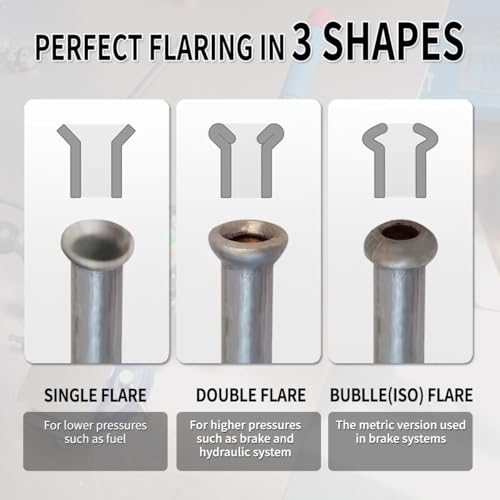
SAE flares are 45-degree angled flares commonly found on older American vehicles, while bubble flares are rounded and typically used on import vehicles and some hydraulic systems. Choosing a tool that handles both flare types offers greater versatility for working on different makes and models.
Can I flare stainless steel brake lines with any tool?
Not all tools can handle stainless steel; it’s a harder material requiring more robust dies and clamping force. Look for tools specifically listing stainless steel compatibility, or be prepared for faster die wear and potentially inconsistent flares with a standard tool.
Are hydraulic flaring tools really worth the extra cost?
Yes, hydraulic flaring tools significantly reduce the physical effort needed, especially with thicker-walled tubing. This is particularly beneficial for those who frequently work on brake lines or have limited hand strength, making the investment worthwhile.
What accessories should I look for in a flaring tool kit?
Beyond the flaring tool itself, a tube cutter, deburring tool, and a selection of adapters (like those for GM transmission lines) are valuable additions. These accessories ensure a clean, precise flare and expand the tool’s usability.
What other tools do I need to complete a brake line repair?
Beyond the flaring tool, you’ll need a line wrench set to avoid rounding off the brake line fittings, a brake bleeding tools to remove air from the system after the repair, and appropriate safety gear like gloves and eye protection.
The Bottom Line
Choosing a brake line flaring tool often comes down to balancing control with convenience. While a hydraulic tool like the Mastercool Hydraulic Flaring Tool offers substantial time savings and ease of use, especially for frequent repairs or working with tougher materials, it represents a larger investment. For most DIYers and those tackling less demanding jobs, a well-made manual tool will provide the accuracy and reliability needed to get the job done safely.
If you’re looking for a specific solution, the DPTOOL 37/45 Degree Flaring Kit stands out as an excellent all-around manual option, offering versatility and durability at a reasonable price. For those needing a portable and budget-friendly solution, the SMOTIVEPRO 7-Piece Flaring Kit is a solid choice. And if you also work with refrigeration lines, consider a dedicated tool, like an HVAC flaring tool, to ensure compatibility and optimal flare quality.
Ultimately, remember that the tool itself is only part of the equation. Consistent, leak-free flares depend more on careful preparation, deburring the tubing, selecting the correct die, and applying steady, even pressure, than on any single feature or price point. Focus on these fundamentals, and you’ll be well on your way to a successful brake line repair.
