
7 Best Flaring Tools of 2026
This post contains affiliate links. As an Amazon Associate, we earn from qualifying purchases.
The Mastercool Hydraulic Flaring Tool is the overall best choice for most users, delivering unmatched versatility and consistent results across multiple flare types and tubing sizes. For those on a budget, the DPTOOL 37/45 Degree Flaring Kit offers solid performance and a wide range of included dies without breaking the bank. If you’re working heavily in HVAC, the CARVALAX 7-Size Eccentric Flaring Tool stands out with its broad size support and rugged build.
Flare quality makes or breaks fluid system reliability. A poor flare can lead to leaks, failed inspections, or even safety hazards – especially with brake lines or refrigerant systems. Too many people buy based on price alone, only to end up with inconsistent results and tools that wear out fast.
This guide cuts through the noise. I focused on real-world performance, matching specs and owner feedback to find tools that deliver accurate, repeatable flares. Whether you’re working on cars, AC units, or plumbing, I’ll help you pick the right tool for the job based on what actually matters: precision, durability, and compatibility with your tubing and flare type.
Top 7 Flaring Tools in the Market
The Best Flaring Tools, Reviewed
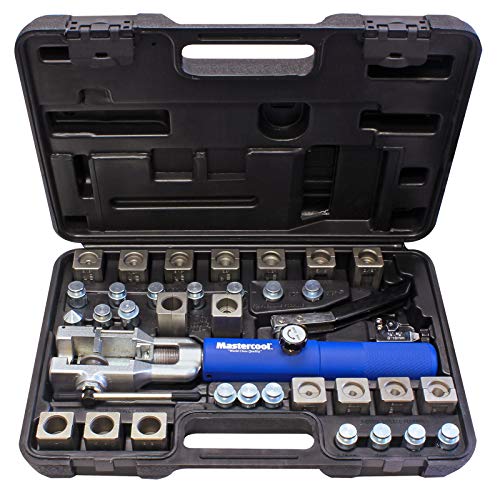
Mastercool Hydraulic Flaring Tool
Strengths
- Hydraulic power
- 7 flare types
- Includes cutter
Trade-offs
- High cost
- Heavy
- Bench use only
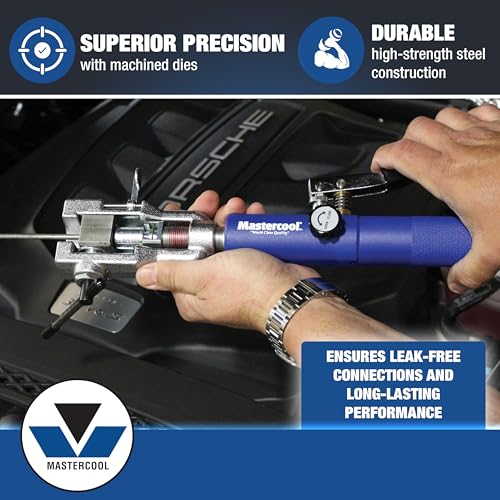
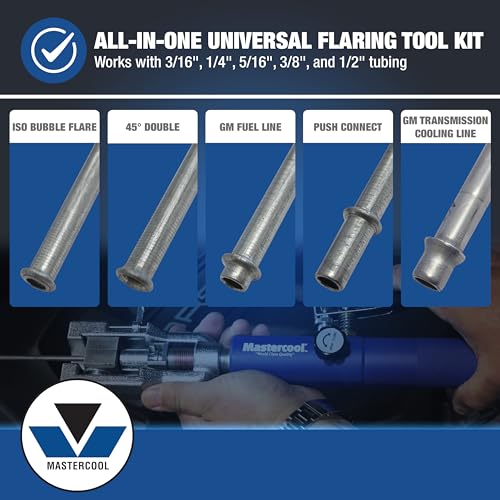
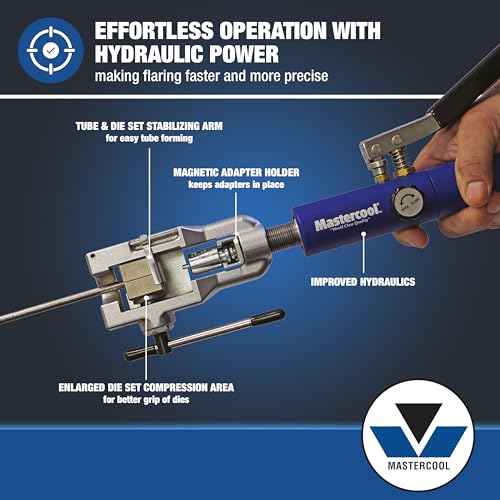
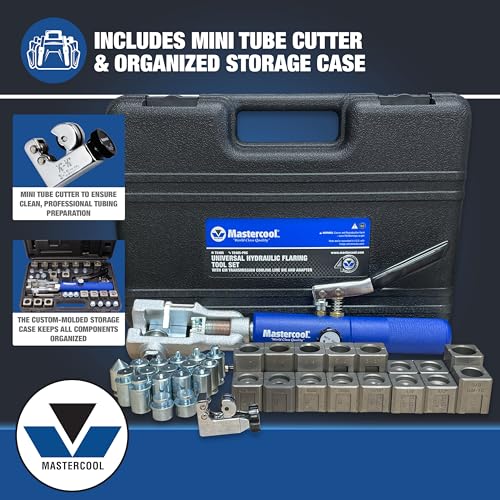
This is the gold standard for a reason. The hydraulic ram system takes all the effort out of flaring, and the range of flare types, 45° double, single, bubble, GM fuel, push connect, makes it the most versatile tool here. It handles 3/16” to 1/2” tubing, and the magnetic adapter holder keeps everything organized. The included mini cutter ensures clean cuts, which is half the battle in leak-free connections.
Owners in auto shops and fleet maintenance rave about its durability and precision. Unlike manual tools, it produces repeatable results with minimal skill required. Yes, it’s heavy and needs a case, but that’s the trade-off for pro-level performance. Compared to anything else on this list, it’s in a different class.
Product photos

NAVAC NEF6LM Power Flaring Tool
Strengths
- Cordless operation
- Fast flaring
- Built-in gauge
Trade-offs
- Expensive
- Single flare only
- Battery dependency
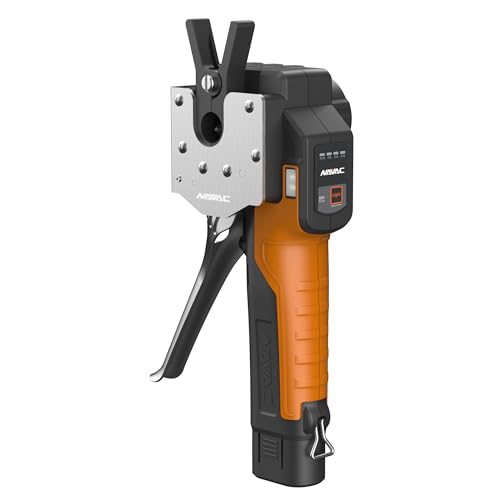
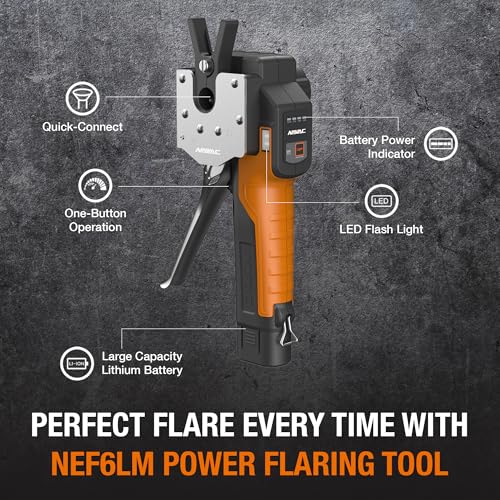
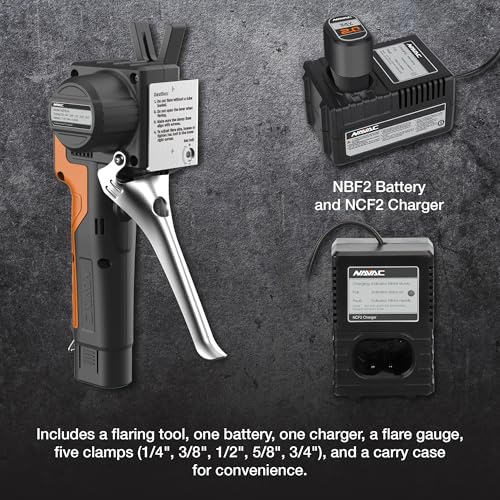
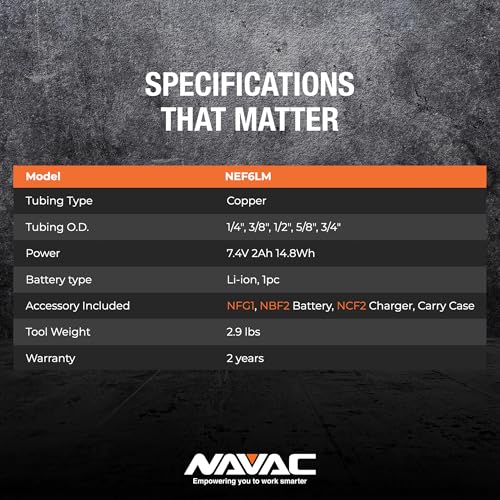
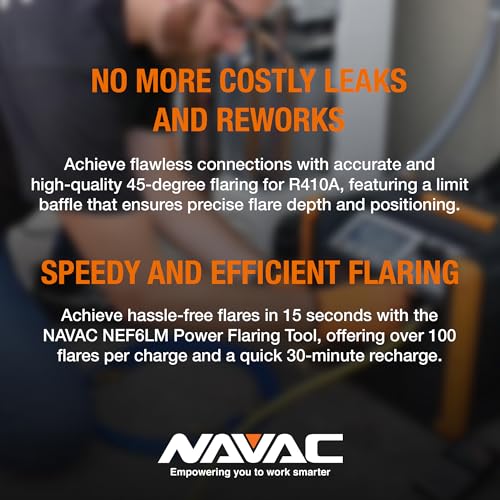
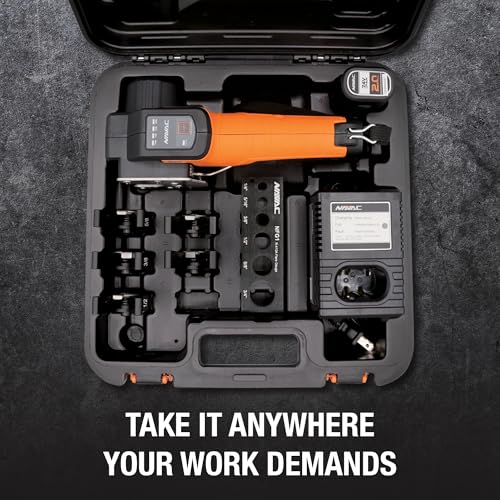
This cordless power flaring tool changes the game if you’re doing high-volume HVAC work. In 15 seconds, it delivers a consistent 45° flare, no hand cranking, no fatigue. The rechargeable battery gets over 100 flares per charge, and the 30-minute quick charge means downtime is minimal. The built-in flare gauge is a thoughtful touch, helping verify flare quality on the spot.
It’s not cheap, but pros who flare dozens of lines a day say it pays for itself in time saved. It only does single flares up to 3/4”, so it’s not for automotive systems. But for split AC installations or refrigerant line sets, it’s hard to beat. Compared to manual kits, the speed and consistency are obvious.
Product photos
DPTOOL 37/45 Degree Flaring Kit
Strengths
- 37° and 45° flares
- Bubble flare capable
- Includes full kit
Trade-offs
- Requires a vise
- Steep learning curve
- Bulkier setup
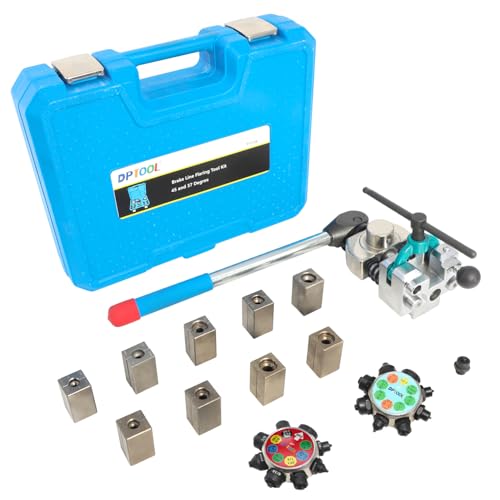
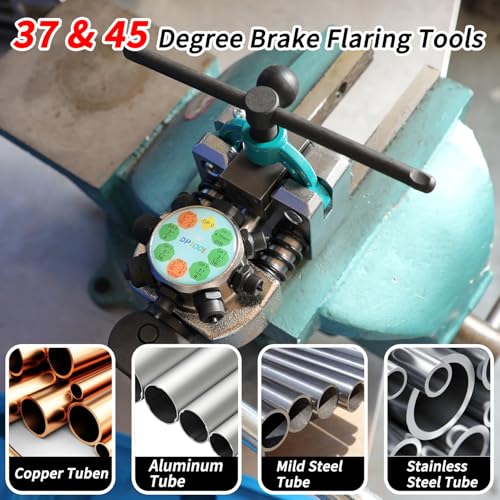
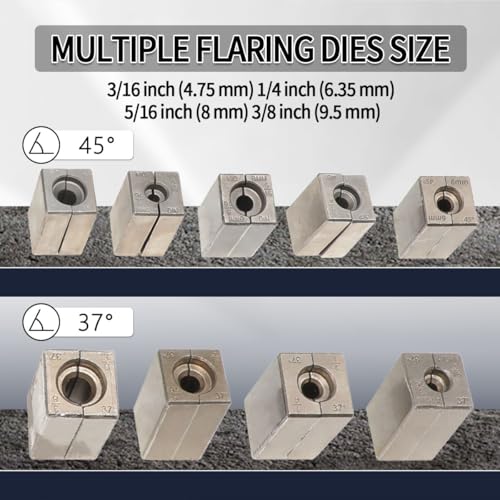
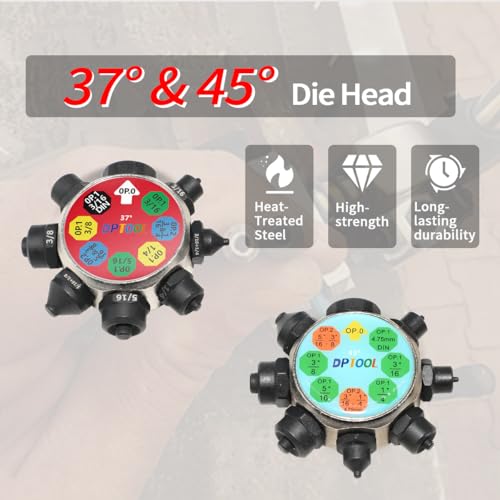
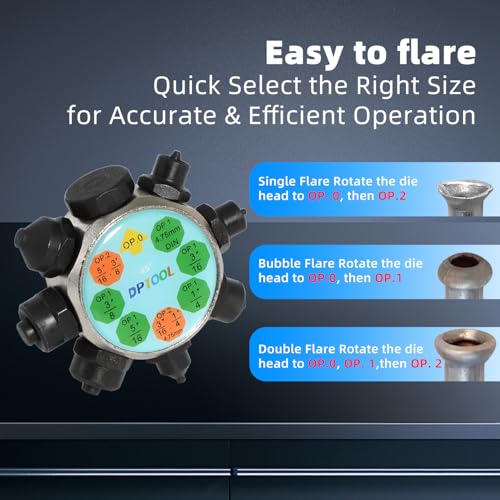
This is one of the few manual tools that handles both 37° and 45° flares, making it a standout for automotive use, especially brake and fuel lines. The dual die heads and split dies for multiple sizes mean you can tackle OEM-style fittings on European and domestic vehicles. It’s bench-mounted, so you’ll need a vise, but that also ensures stability during high-torque flaring.
Owners consistently report clean bubble and double flares on soft steel and stainless lines when deburred and lubricated properly. The instruction manual helps, but there’s a learning curve. Compared to basic 45° tools, this gives you real versatility. If you’re working on cars regularly, it’s the smarter buy over single-angle kits.
Product photos
CARVALAX 7-Size Eccentric Flaring Tool
Strengths
- Forged iron body
- 7 die sizes
- Rust-resistant finish
Trade-offs
- Heavy for its class
- Single flare only
- No case included
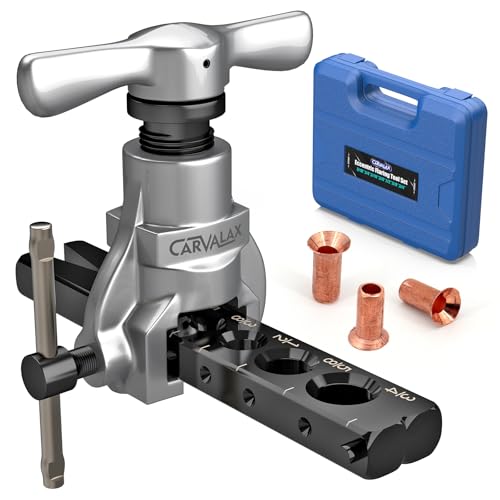
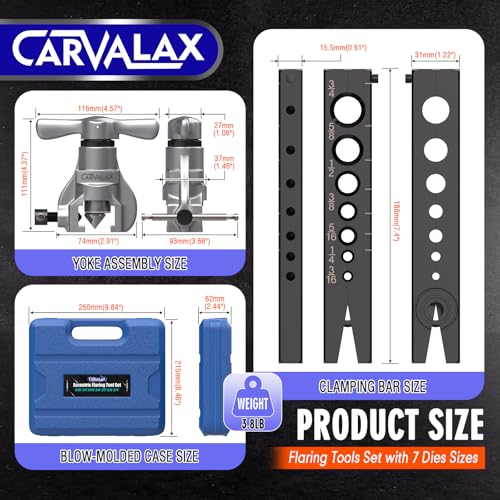
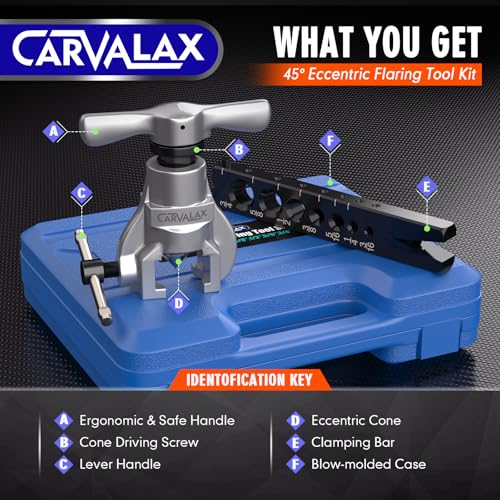
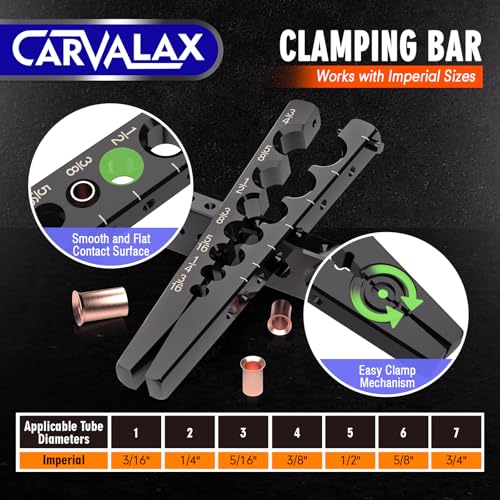
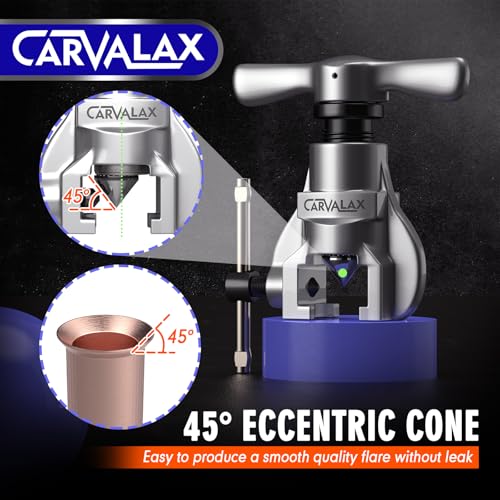
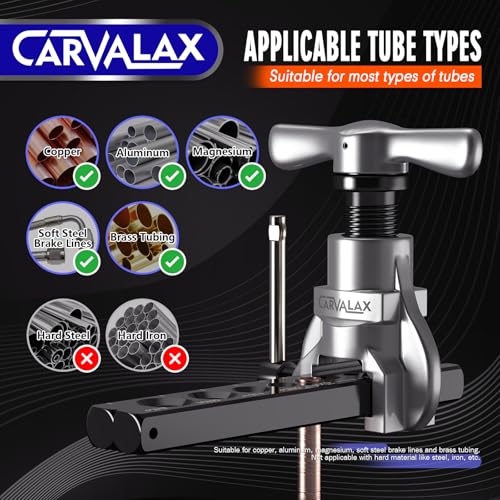
If you’re deep in HVAC or refrigeration work, this CARVALAX kit is built for your world. The forged ductile iron body and hardened steel cone feel like they’ll last, and the black oxide finish helps resist rust in humid conditions, something technicians actually care about in the field. With seven imperial sizes and a focus on precise 45° eccentric flares, it matches the standard for R-410A and other refrigerant lines.
Owners praise the ergonomic handle and the clutch-like feedback when the flare is complete, which helps avoid over-flaring. It only does single flares, but in HVAC, that’s usually all you need. Compared to lighter aluminum models, this one has heft, good for stability, less so for pocket carry.
Product photos
TUBPRO Double & Single Flare Kit

Strengths
- Includes tube cutter
- Affordable
- 5 adapter sizes
Trade-offs
- Not for hard steel
- Basic build quality
- No 37° flare option
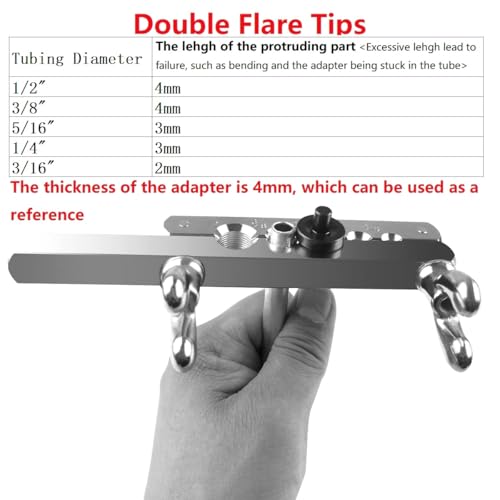
This budget-friendly kit delivers more than you’d expect for the price, especially if you’re tackling basic brake or fuel line repairs. It handles five common sizes and includes a cutter, which is a real plus for a complete starter set. The chrome swivel and heat-treated steel yoke suggest decent durability, and owners say it performs reliably on copper and soft aluminum lines.
That said, it’s strictly for single and double 45° flares, and it’s not built for hardened steel, so don’t expect it to handle high-stress automotive lines beyond light-duty use. It lacks the finesse of pricier kits, but for a DIYer doing occasional work, it gets the job done without breaking the bank.
Product photos

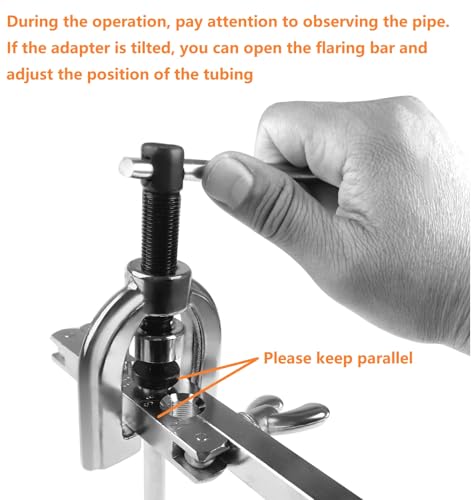
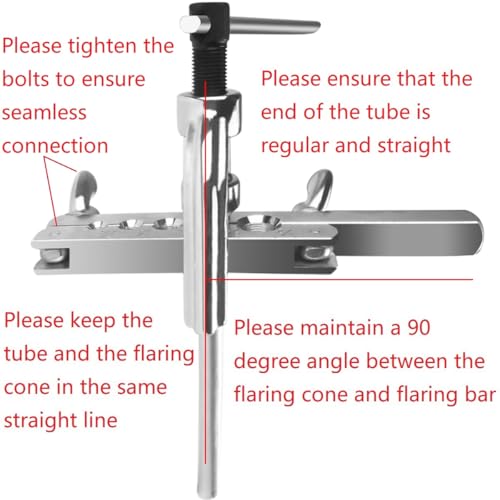
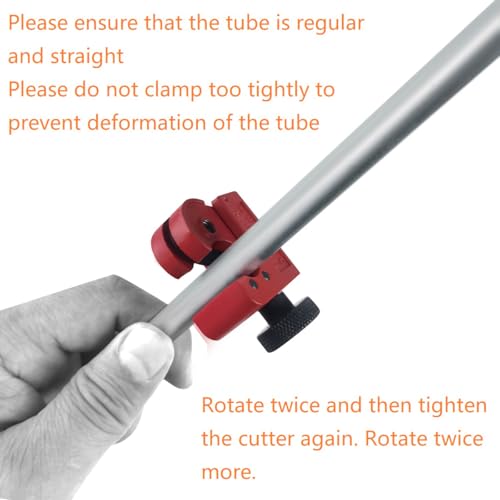
Wostore 7-Die Eccentric Flaring Kit
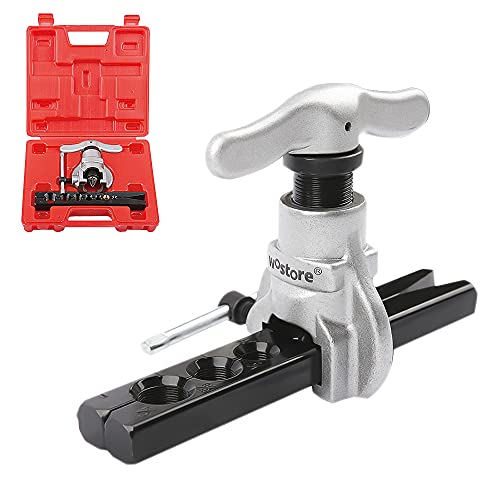
Strengths
- 7 die sizes
- Hardened steel cone
- Compact storage case
Trade-offs
- No double flare capability
- Bulkier design
- Limited to soft metals
This is a solid choice if you’re working with larger copper tubing, especially in HVAC or refrigeration setups where 3/4 inch lines come up. The 7 included dies cover a wide range, and the eccentric cone design should deliver consistent 45° flares without crushing soft tubing. Owners generally report clean, uniform results on copper and aluminum, and the hardened steel cone seems to hold up well over time.
The single clamp screw makes tube setup quick, though some users mention needing extra care to align the tubing properly. The hard plastic case is a nice touch for job site transport, keeping everything together. It’s not the most compact option, but for the size range it covers, it’s a dependable manual tool.
Product photos


Bonvoisin Ultralight Eccentric Flaring Tool

Strengths
- Ultra lightweight
- Auto clutch stop
- Limit piece included
Trade-offs
- Single flare only
- No case
- Limited size range
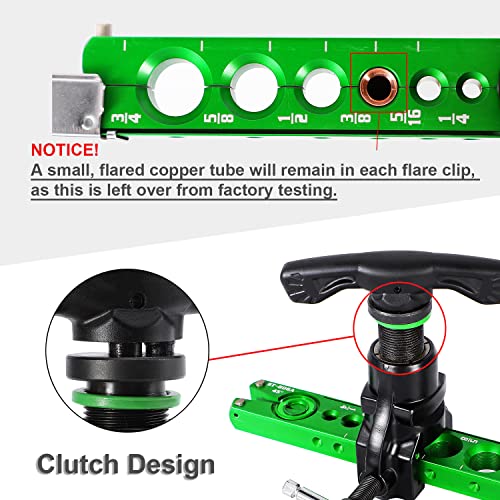
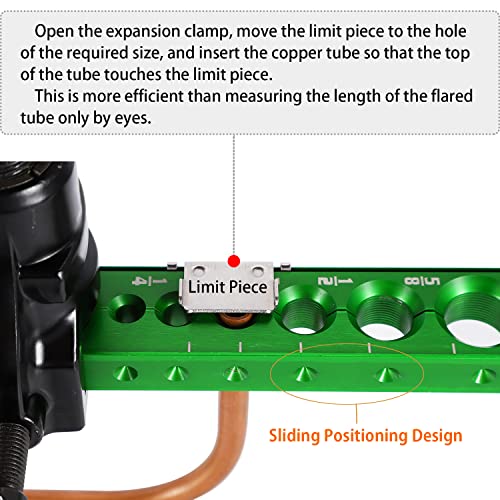
This one’s all about portability and ease of use. At under a kilo and made from aluminum alloy, it’s the lightest option here, ideal for climbing ladders or working in tight HVAC spaces. The clutch mechanism is a standout feature: it disengages automatically when the flare is done, reducing over-compression risk. That, plus the limit piece, makes it faster and more consistent than eyeballing depth.
It only covers 1/4” to 3/4” and does single flares only, so it’s not for automotive work. But for HVAC techs moving fast from unit to unit, the reduced hand fatigue adds up. Owners like the precision on copper and aluminum, though some note it feels a bit flimsy compared to cast-iron models.
Product photos


How We Picked These flaring tools
Rather than a hands-on lab test, this is a research-led comparison of specs and owner feedback. I looked at published specifications – tubing size compatibility, flare types supported, and materials used in construction – for each tool. Then, I weighed owner reviews from multiple sources, along with assessments from reputable automotive and HVAC websites, to get a sense of real-world performance and durability. My goal was to identify tools that consistently delivered accurate, leak-free flares and held up to regular use.
For flaring tools, the ability to create consistent, reliable flares and the range of tubing sizes supported were the most important factors. A tool that produces inaccurate flares is essentially useless, regardless of features. Similarly, a limited size range forces you to buy multiple tools or adaptors, reducing efficiency. Durability also played a key role; a tool that breaks after a few uses doesn’t offer good value, even at a low price point.
Specifications reliably indicate a tool’s potential – the range of tubing sizes it should handle, the types of flares it’s designed to create. However, owner feedback and reputation provided critical insight into how well a tool performs in practice. I paid close attention to comments regarding flare accuracy, ease of use, and long-term reliability. You’ll find that researching HVAC flaring tools is a good way to get a broad overview of what’s available and what other users are saying.
Choosing The Right flaring tools
Finding the right flaring tool can make a huge difference in the quality and reliability of your work, especially when dealing with brake lines or refrigeration systems. It’s a category where cheaping out often leads to leaks and frustration.
A good flaring tool creates consistent, leak-proof connections by accurately forming the tube end without weakening the metal. Key considerations include the flare type it produces (single, double, or specific standards like ISO), the range of tube sizes it accommodates, and the overall build quality for durability and precision. Look for tools with hardened dies and robust construction, and consider whether corded or cordless operation best suits your needs.
Flare Type & Application
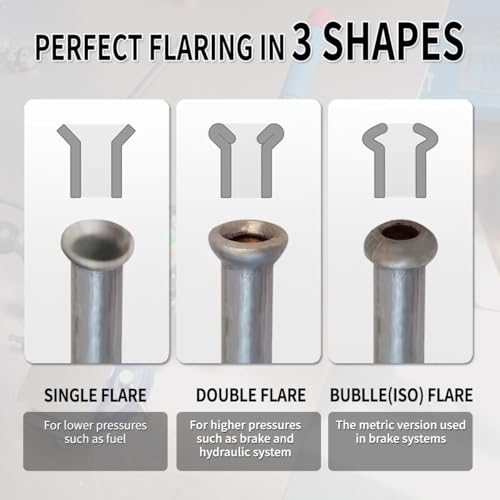
The first thing to nail down is what you’ll be flaring. Automotive brake lines traditionally require double flares (SAE J530 standard) for maximum strength and leak resistance. However, many modern vehicles, especially those with air conditioning systems, use different flare types – like ISO bubble flares or even push-connect fittings. HVAC/refrigeration work almost exclusively uses 45-degree eccentric flares. Don’t assume one tool does it all; a tool specifically designed for automotive flaring tools will be a better bet than a general-purpose kit if you’re working on cars. If you need to work with multiple flare types, you’ll either need a versatile tool like the Mastercool model or multiple dedicated tools.
Power vs. Manual Operation
Historically, flaring was a purely manual process. While manual tools like the DPTOOL kit are still viable – and offer excellent control for experienced users – hydraulic and cordless power flaring tools have become increasingly popular. These tools dramatically reduce the physical effort required, making it easier to create consistent flares, especially when working with larger tubing sizes or in awkward positions. Models like the NAVAC NEF6LM deliver speed and consistent results, but come at a price premium. Consider your typical workload and physical capabilities when deciding between manual and powered options.
- Manual tools are cheaper upfront, but require more strength and skill.
- Hydraulic tools offer consistent pressure and reduced effort, but are less portable.
- Cordless tools provide the best of both worlds (portability and reduced effort), but the battery life and initial cost are factors.
Value & Build Quality
A flaring tool isn’t something you want to replace every year. Look for tools constructed from high-quality materials like hardened steel, with robust dies that can withstand repeated use without wearing down. While the Bonvoisin Ultralight model offers a tempting lightweight design, you should remember that sometimes, a bit more heft translates to greater durability and precision. Don’t be afraid to spend a little more upfront for a tool that will last and produce reliable results. Often, the included extras matter as well – a good kit will include a tube cutter (a necessity for clean cuts) and a storage case to keep everything organized. If you need to create both single and double flare tool connections, ensure the kit includes dies for both.
A properly flared connection should never be a source of leaks. Invest in a tool that creates consistent, high-quality flares, and you’ll save yourself time, money, and frustration in the long run.
Flaring Tools Compared
Here’s a comparison of key specifications for several flaring tools to help you make an informed decision.
| Product Title | Flare Type(s) | Tube Sizes (in) | Material | Weight (approx.) | Cordless | Case Included |
|---|---|---|---|---|---|---|
| Mastercool Hydraulic Flaring Tool | 45°, Double/Single, Push Connect, GM, ISO | 3/16, 1/4, 5/16, 3/8, 1/2 | Steel | N/A | No | Yes |
| NAVAC NEF6LM Power Flaring Tool | 45° | 3/16, 1/4, 5/16, 3/8, 1/2 | N/A | N/A | Yes | N/A |
| DPTOOL 37/45 Degree Flaring Kit | 37°, 45°, Bubble, Single/Double | 3/16, 1/4, 5/16, 3/8, 6mm | Steel | N/A | No | Yes |
| CARVALAX 7-Size Eccentric Flaring Tool | 45° Eccentric | 3/16, 1/4, 5/16, 3/8, 1/2, 5/8, 3/4 | Steel | N/A | No | Yes |
| TUBPRO Double & Single Flare Kit | 45° Single/Double | 3/16, 1/4, 5/16, 3/8, 1/2 | Steel | N/A | No | Yes |
| Wostore 7-Die Eccentric Flaring Kit | 45° Eccentric | 3/16, 1/4, 5/16, 3/8, 1/2, 5/8, 3/4 | Steel | N/A | No | Yes |
| Bonvoisin Ultralight Eccentric Flaring Tool | 45° Single | 1/4, 5/16, 3/8, 1/2, 5/8, 3/4 | Aluminum Alloy | <1kg | No | No |
Frequently Asked Questions
What flare type is most common for automotive brake lines?
Double flares (SAE J530 standard) are the most common for automotive brake lines because they provide the greatest strength and leak resistance. While newer vehicles may use other flare types, double flaring remains a widely applicable skill and connection type.
Can a single flaring tool handle both automotive and HVAC work?
While some tools claim versatility, it’s generally best to have dedicated tools. Automotive work often requires double flares, while HVAC typically uses 45-degree eccentric flares, and a tool optimized for one may not perform reliably for the other.
Are cordless flaring tools really worth the extra cost?
Cordless flaring tools offer significant convenience and reduced physical effort, making them worthwhile if you frequently flare lines or work in tight spaces. The battery life and initial price are higher, but the increased speed and consistency are major benefits.
What should I look for in terms of build quality for a flaring tool?
Look for tools made from hardened steel, as this material will withstand repeated use without wearing down. A robust build ensures accuracy and longevity, and is more important than a lightweight design, especially if you plan to use the tool professionally.
Where can I find more information about tools for other trades?
If you’re looking for broader recommendations, exploring plumber tool recommendations can provide valuable insight into the wider world of professional-grade tools and equipment.
The Bottom Line
Ultimately, choosing a flaring tool comes down to balancing control and convenience. While manual tools offer a more tactile experience and can be perfectly suitable for occasional use, the Mastercool Hydraulic Flaring Tool stands out as the most versatile and reliable option for those who value consistent, professional-grade results across a broad range of applications. It’s an investment, certainly, but one that will pay dividends in leak-free connections and reduced frustration.
For those on a tighter budget or working primarily with one flare type, there are excellent alternatives. The DPTOOL 37/45 Degree Flaring Kit is a standout choice for automotive work, delivering the precision needed for double flares at a reasonable price. If your focus is exclusively HVAC and eccentric flares, the CARVALAX 7-Size Eccentric Flaring Tool offers a wide size range and solid construction.
Don’t get too caught up in chasing the latest features or highest numbers. The most crucial factors are accurate dies, durable construction, and a good understanding of the flare types required for your projects. Investing in a quality tube cutter and taking the time to practice proper technique will make a far bigger difference than any single specification on the tool itself – good flare results depend on good technique and the right tools for essential plumbing tools.
