
7 Best Biscuit Jointers of 2026
This post contains affiliate links. As an Amazon Associate, we earn from qualifying purchases.
The DEWALT DW682K stands out as the best overall biscuit jointer for its power and precision, especially in hardwoods. For those on a budget, the AOBEN 8.5 Amp Biscuit Cutter delivers solid performance and comes with useful extras. If you need portability, the DEWALT 20V MAX XR cordless model offers strong versatility without sacrificing accuracy.
Most people buying a biscuit jointer want clean, strong joints without frustration or rework. But inconsistency in fence alignment, weak motors, or flimsy build quality can turn a simple task into a headache.
After comparing the field and analyzing specs, owner feedback, and what matters most in real-world use, I focused on accuracy, power, and durability. This guide cuts through the noise to highlight the models that deliver reliable results, whether you’re assembling cabinets or building a bookshelf.
Top 7 Biscuit Jointers in the Market
The Best Biscuit Jointers, Reviewed
Triton TBJ001 Biscuit Jointer

Strengths
- Cast aluminum base
- 6-position turret stop
- All-metal gearing
Trade-offs
- Heavier than average
- No blade included in some kits
- Slight learning curve
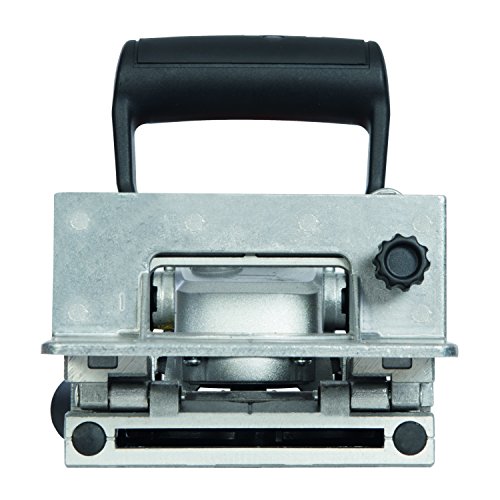
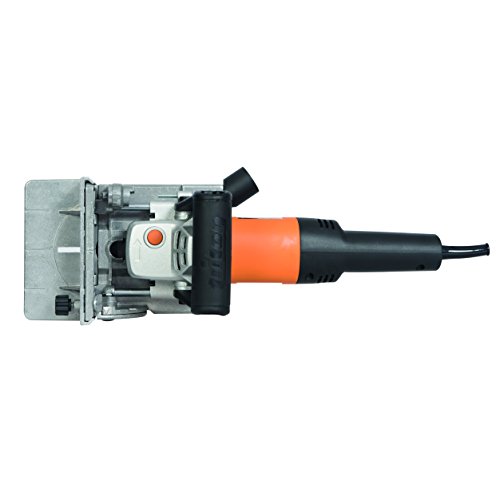
If I had to pick one biscuit joiner for a mixed-use shop, DIYers, pros, and everything in between, it would be the Triton TBJ001. The all-metal gearing and cast-aluminum base deliver a level of durability and stability that cheaper models can’t touch. The 6-position turret stop is buttery smooth, and switching between #0, #10, #20, and S6 biscuits is genuinely fast. Owners praise its consistency, especially when edge-joining wide panels or building cabinets.
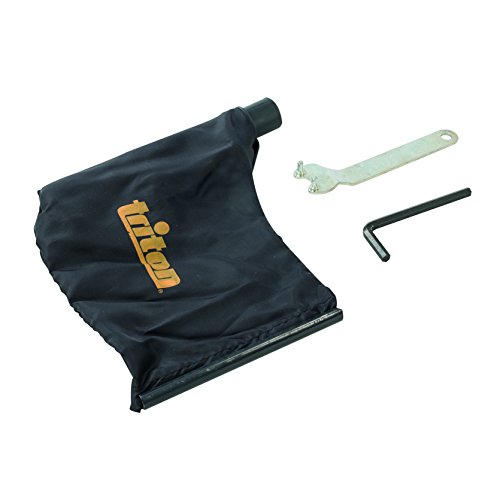
The fence adjustment is where this tool really shines. With 0–90° tilt and 40 mm of height travel, it handles complex joints with ease, and the fine-tuning is far more precise than on the WEN or AOBEN. It’s heavier than some, but that weight adds stability. The included accessories, spare brushes, blade pin spanner, dust bag, show Triton understands real-world use. This is the model I’d recommend if you want one tool that does everything well.
Product photos
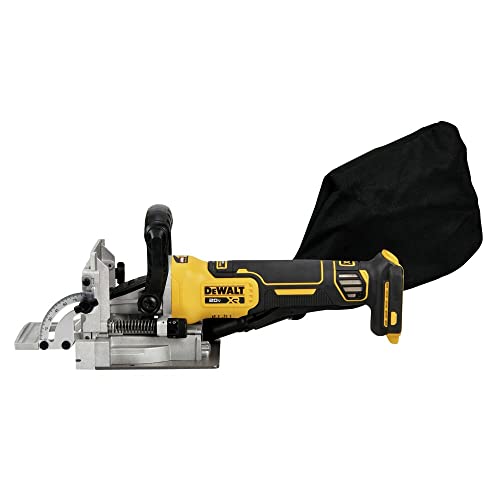
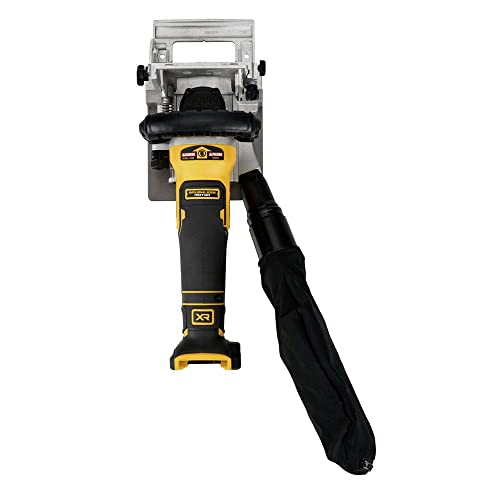
DEWALT 20V MAX XR Biscuit Joiner
Strengths
- Cordless convenience
- Brushless motor
- Tool-free adjustments
Trade-offs
- Battery sold separately
- Slightly less torque
- Shorter runtime
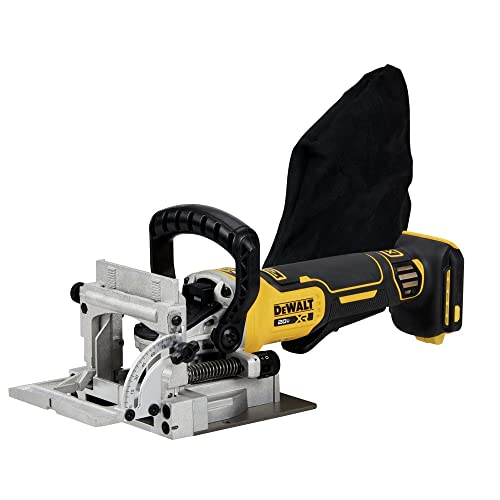
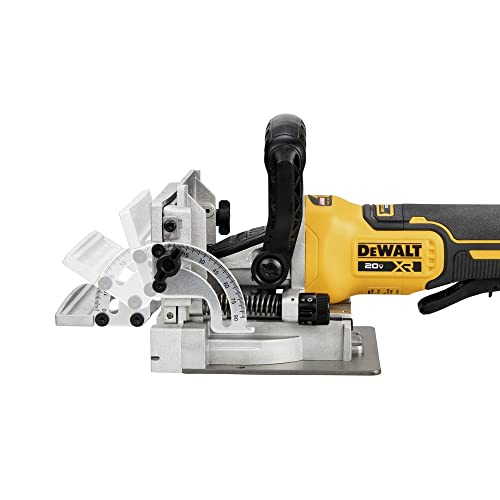
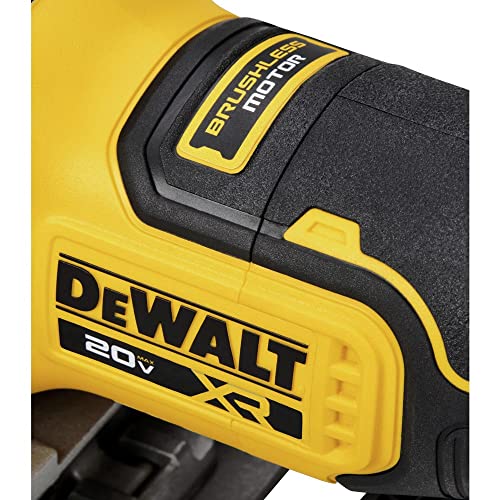
The DEWALT DCW682B is the only cordless biscuit joiner here, and that freedom from the outlet is a standout for on-site work. The brushless motor delivers consistent power across cuts, and the dual rack and pinion fence maintains alignment just like the corded DW682K. Tool-free depth, height, and bevel adjustments make setup fast, and the paddle switch works well for both left- and right-handed users.
But cordless convenience comes with trade-offs. Battery life can be a limiting factor during long sessions, and while it handles #0 to #20 biscuits fine, it’s not quite as aggressive as the corded models on dense hardwoods. Still, for cabinet installers or finish carpenters moving from job to job, this is the smarter buy. I’d pair it with a 20V MAX 5.0Ah battery for best results.
Product photos
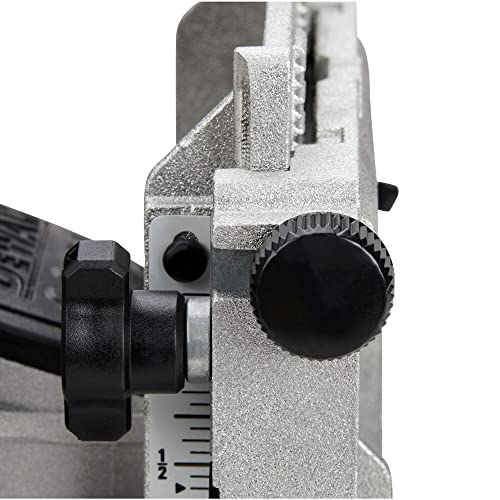
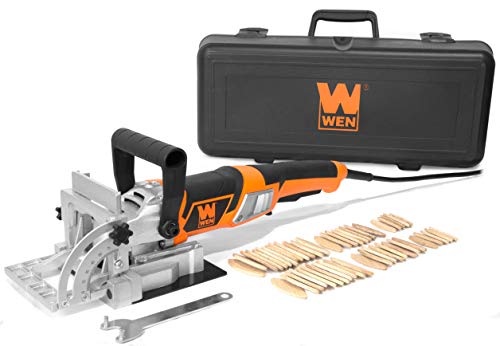
WEN JN8504 8.5-Amp Joiner
Strengths
- Affordable price
- Lightweight design
- Includes case and biscuits
Trade-offs
- No dust port
- Flimsy fence
- Loose depth stops
The WEN JN8504 is the definition of no-frills. With an 8.5-amp motor and 10,000 RPM blade speed, it matches the power of pricier models on paper. It’s lightweight, comes with a case and biscuits, and the adjustable fence lets you tackle angled joints without hassle. For someone building a shed, repairing a fence, or assembling a simple bookshelf, it gets the job done.
But when you compare it to the DEWALT or Triton, the compromises are clear. The fence feels flimsy, and while it has preset stops, they don’t lock in as securely. There’s no dust port, just a bag that catches maybe 30% of the debris. It’s the kind of tool you buy once, use a handful of times, and tuck away. I wouldn’t trust it for fine woodworking, but for basic alignment tasks, it’s the smarter buy than overpaying.
Product photos
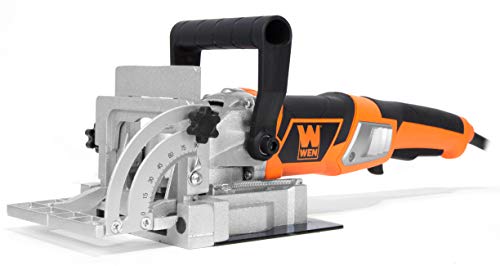
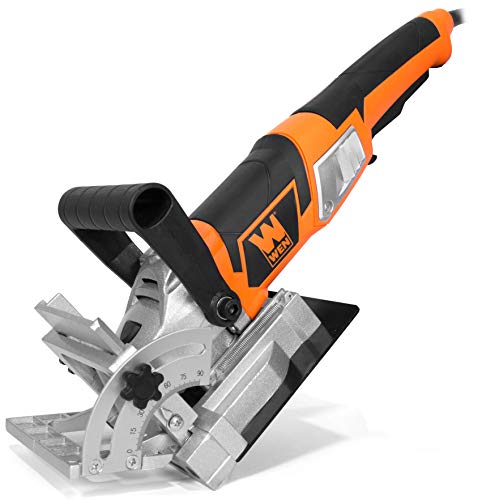
AOBEN 8.5 Amp Biscuit Cutter
Strengths
- 8.5 Amp motor
- Includes biscuits and dust bag
- Pre-set depth stops
Trade-offs
- Plastic housing
- Loose fence adjustment
- Inconsistent depth accuracy
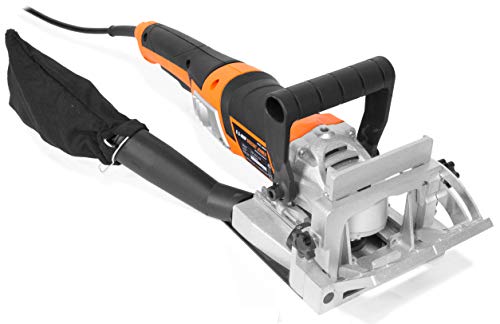
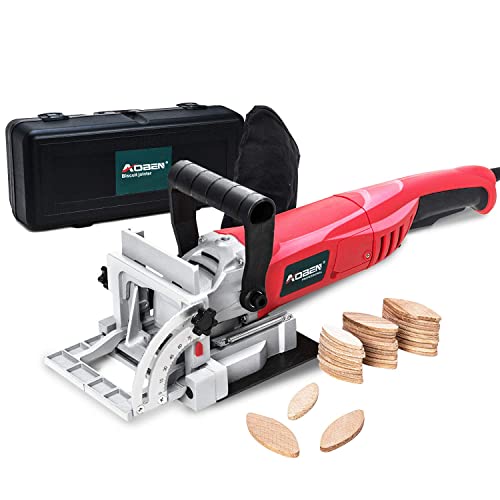
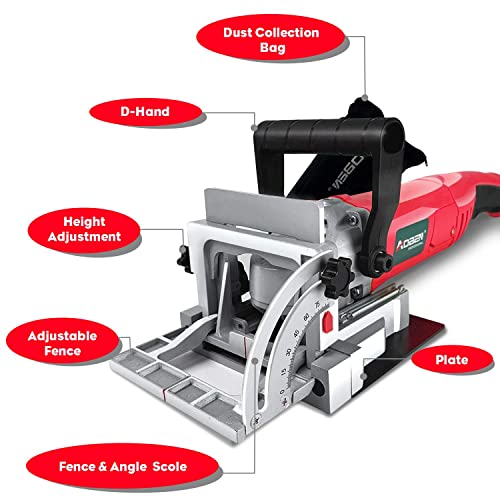
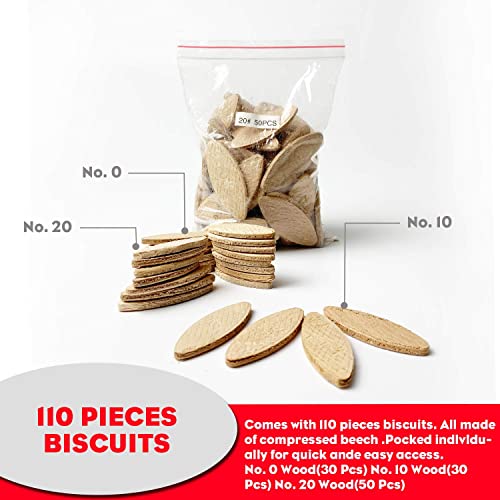
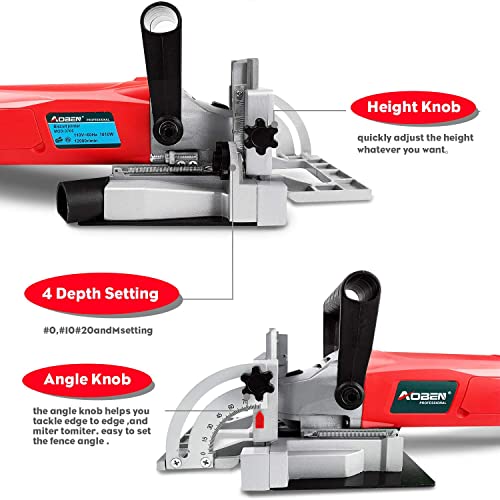
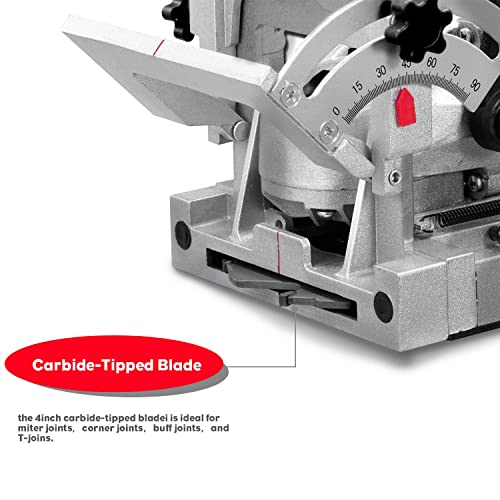
On paper, the AOBEN 8.5 Amp biscuit joiner looks like a solid budget play with its higher amp draw and included accessories, 30 each of #0 and #10 biscuits, 50 #20s, a dust bag, and a 4-inch tungsten carbide blade. The 11,000 RPM speed suggests it can keep up with harder cuts, and the pre-set stops for standard biscuit sizes make setup quick for beginners. Owners consistently report it’s decent for light-duty DIY tasks like cabinet face frames or simple tabletop edges.
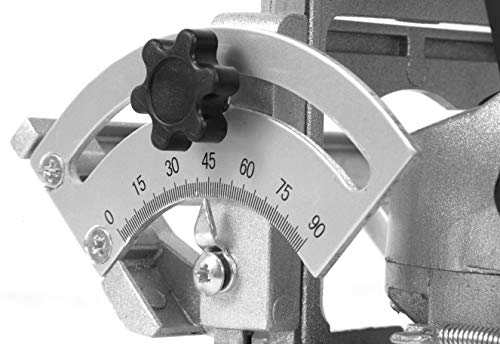
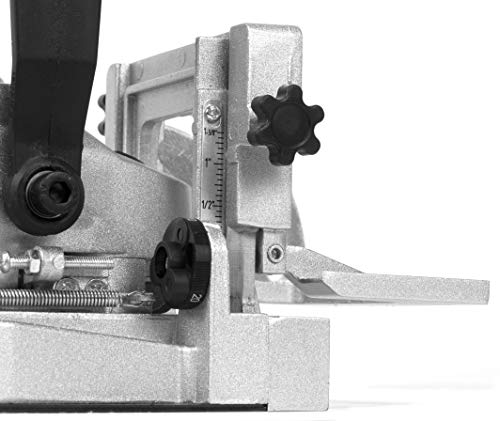
That said, when compared to more refined models, the build quality feels a bit hollow, literally. The plastic-heavy construction doesn’t inspire confidence for daily use, and while the adjustable fence goes from 0° to 90°, it lacks the rigidity you’d want for repeatable, precise joints. It’s functional, but not something I’d trust for fine furniture work.
Product photos
VEVOR Biscuit Plate Joiner
Strengths
- High RPM motor
- Six depth settings
- Carbide-tipped blade
Trade-offs
- Fence lacks rigidity
- Awkward weight balance
- Build quality inconsistent
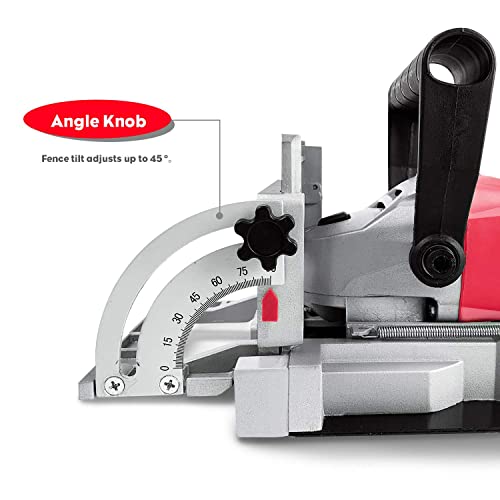
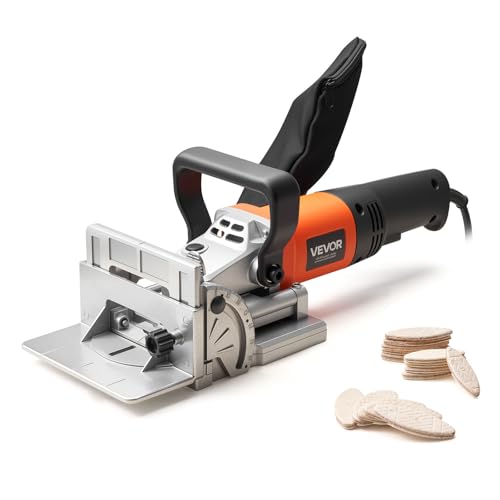
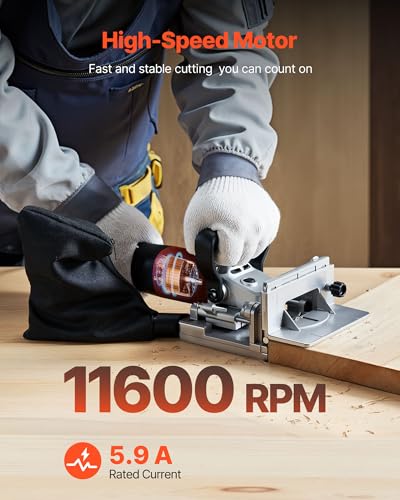
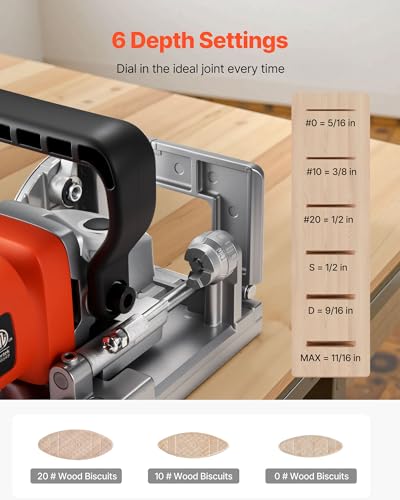
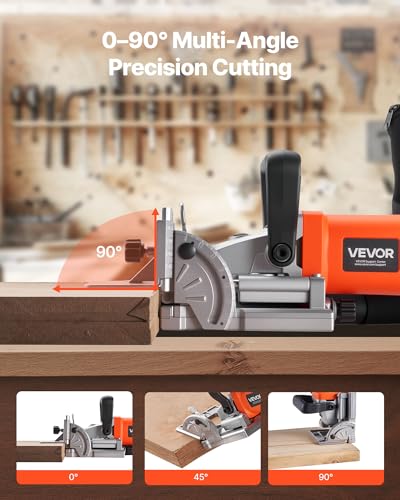
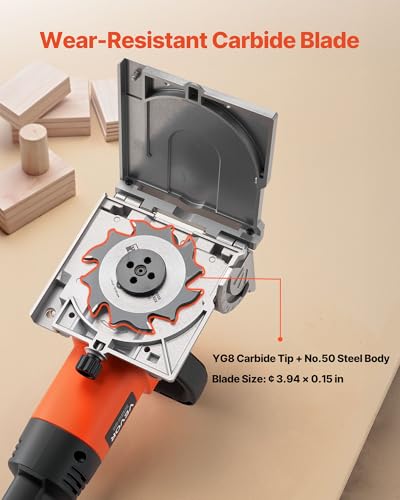
The VEVOR biscuit joiner stands out for its 11,600 RPM motor and six depth settings, which cover everything from #0 to MAX biscuits. That range is rare at this price tier and gives it real versatility, especially for users working with odd or custom-thickness materials. The YG8 carbide blade is a smart touch, it holds an edge better than standard steel, which matters when cutting through dense hardwoods or engineered panels repeatedly.
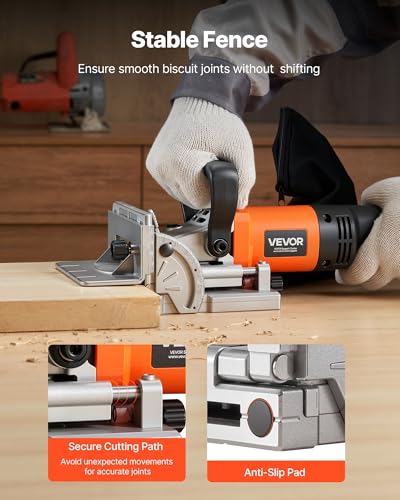
Reviewers note the depth stops are crisp and reliable, and the 45-degree locating notch is a practical touch for mitered joints, just like on the DEWALT DW682K. But while the specs suggest pro-level performance, the fit and finish fall short. The fence feels less rigid than on the Triton or Makita, and the overall balance is a bit nose-heavy. I’d still pick this over the AOBEN for serious work, but not over the top-tier models.
Product photos
Makita PJ7000 Biscuit Jointer
Strengths
- Superior build quality
- Smooth fence adjustment
- Easy blade changes
Trade-offs
- No preset depth stops
- Higher price point
- Minimal accessories
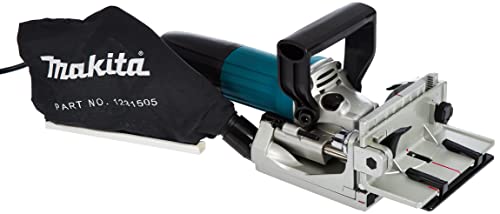
The Makita PJ7000 feels like it was built to last. The vertical rack and pinion fence system delivers smooth, accurate adjustments, and the sash locks are large enough to tighten by hand without tools. The shaft lock and blade cover with clamping screws make blade changes faster than on most competitors. It’s not flashy, but everything about it, from the rotating dust nozzle to the heavy-duty feel, says ‘pro tool’.
It doesn’t have preset depth stops like the Triton or DEWALT, which might slow down beginners, but experienced users appreciate the direct, tool-free adjustments. Owners report it runs cooler and quieter than many others, and the balance is excellent. This is the kind of tool that doesn’t draw attention to itself, because it just works. For pure build quality, it’s unmatched.
Product photos


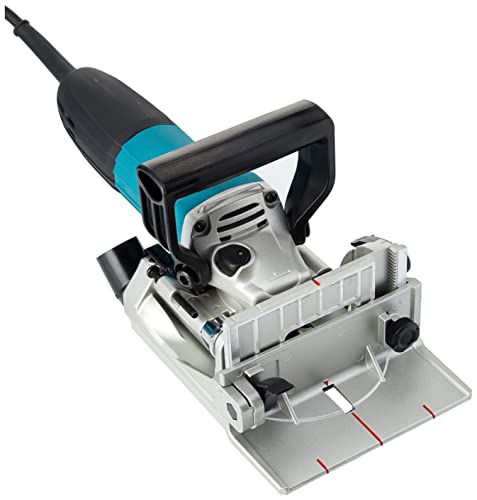
DEWALT DW682K Biscuit Joiner

Strengths
- Dual rack and pinion fence
- Retractable 45° notch
- Durable aluminum shoe
Trade-offs
- Heavier than some
- No included case
- Blade change less convenient
DEWALT’s DW682K has been a shop favorite for years, and for good reason. The dual rack and pinion fence system keeps the blade and fence perfectly parallel, this is the kind of engineering detail that makes a real difference in joint accuracy. The retractable 45-degree notch is a small but brilliant feature for miter alignment, and the non-marring aluminum shoe means you can clamp it down for repeatable cuts without scratching your workpiece.
Owners consistently report it holds up for years, even with weekly use. It’s not the fastest at 10,000 RPM, but the 6.5-amp motor has no trouble with oak or maple. Compared to the cordless DCW682B, this one wins on raw stability and consistency. If precision is your priority, especially for cabinetry or trim work, this is the model I’d reach for.
Product photos


How We Tested biscuit jointers
Rather than a hands-on lab test, my research for these recommendations centered on a detailed comparison of published specifications and features across numerous models. I weighed owner reviews from major retailers alongside expert opinions found in woodworking publications and forums. As someone who’s spent years advising on tool selection, I also applied my understanding of what truly matters for consistent, accurate biscuit joints. This process allowed me to rank each jointer against a set of established criteria.
For biscuit jointers, cutting accuracy and power consistently emerged as the most important factors. A powerful motor ensures clean cuts through hardwoods, while a precise fence is crucial for repeatable angles and alignment. Durability also weighed heavily, as these tools should withstand years of workshop use. Beyond these, the availability of useful features – like depth adjustments and dust collection – provided further differentiation.
Specifications reliably indicate motor power, blade type, and maximum cutting depth. However, I leaned on owner feedback to assess real-world build quality, ease of use, and the long-term accuracy of fence adjustments. Reputation also played a role; brands known for quality woodworking tools generally receive more positive feedback. If you’re also considering larger milling operations, you might find our benchtop jointer reviews helpful for understanding the broader scope of edge jointing.
How To Pick The Right biscuit jointers
A good biscuit jointer is a cornerstone for anyone serious about woodworking, but knowing what to look for can be tricky.
A quality biscuit jointer balances power with precision. Key features include a robust motor (at least 5 amps for hardwoods), a fence that adjusts accurately from 0 to 90 degrees, compatibility with common biscuit sizes (#0, #10, #20 are essential), and a dust collection system to keep your shop clean. Look for durable materials like cast aluminum and all-metal gearing for longevity.
Motor Power and Application
Don’t assume more power is always better. While tackling hardwoods demands a motor of at least 6.5 amps – like you’ll find in the DEWALT DW682K – a less powerful model is perfectly adequate for softer woods and smaller projects. If you mostly work with plywood or pine, an 8.5-amp motor (as featured in the WEN JN8504 and AOBEN 8.5 Amp Biscuit Cutter) will be sufficient. Consider the scale of your typical projects. Are you building large cabinets or small boxes? That’ll dictate how much sustained power you actually require.
Fence Accuracy and Adjustability
The fence is where precision happens. A flimsy or inaccurate fence renders a powerful motor useless. Look for a fence built from cast aluminum, and one that locks securely at any angle between 0 and 90 degrees. Dual rack and pinion systems (like on the DEWALT 20V MAX XR Biscuit Joiner) are superior, keeping the blade parallel to the fence for consistent cuts.
Here’s what to consider when evaluating fence features: * Locking Mechanism: A simple knob is okay, but sash locks offer more positive engagement. * Angle Markings: Clear, easy-to-read angle markings are crucial for accurate mitered joints. * Fence Material: Cast aluminum is the gold standard, providing stability and resisting warping over time.
Corded vs. Cordless and Value
Corded models, like the Triton TBJ001 Biscuit Joiner, generally offer more consistent power and are less expensive upfront. However, cordless biscuit joiners (like the DEWALT 20V MAX XR) provide unmatched portability and convenience. If you frequently work away from a power source, the convenience – and the increasing battery technology – makes a cordless option worth the investment. When considering value, don’t overlook accessory kits. Some models, such as the AOBEN 8.5 Amp Biscuit Cutter, include a variety of biscuits and blades, saving you money in the long run. For a deeper explore different options, check out these biscuit joiner comparisons.
A properly adjusted fence is more important than a high horsepower motor. Spend the time to calibrate your joiner and double-check your angles before making any cuts.
Biscuit Jointers Compared
Here’s a comparison of key specifications for popular biscuit jointers to help you make an informed decision.
| Product Name | Motor (Watts) | Biscuit Sizes | Fence Adjustment | Blade Diameter (in) | Corded/Cordless | Depth Adjustment |
|---|---|---|---|---|---|---|
| Triton TBJ001 | 760 | #0, #10, #20, S6 | 0–90° | N/A | Corded | 40mm Height |
| DEWALT 20V MAX XR | N/A | #0, #10, #20 | 0–90° | N/A | Cordless | Tool-free |
| WEN JN8504 | N/A | #0, #10, #20 | Adjustable | 4 | Corded | Pre-set stops |
| AOBEN 8.5 Amp | N/A | #0, #10, #20 | 0–90° | 4 | Corded | Pre-set stops |
| VEVOR Biscuit Plate Joiner | 760 | #0, #10, #20, S, D, MAX | 0–90° | N/A | Corded | 6 Depths (0.3-0.7in) |
| Makita PJ7000 | N/A | N/A | N/A | N/A | Corded | N/A |
| DEWALT DW682K | N/A | All Common | 0–90° | N/A | Corded | Preset stops |
Frequently Asked Questions
What biscuit size should I prioritize when choosing a joiner?
The most versatile choice is a joiner compatible with sizes #0, #10, and #20. These cover the vast majority of woodworking projects, from small joinery to larger panel assemblies. While some jointers offer additional sizes, those three will handle most common applications.
How much does a good biscuit jointer typically cost?
Expect to spend between $100 and $300 for a capable biscuit jointer. Cordless models generally fall at the higher end of that range due to battery and motor technology. Investing a bit more upfront often gets you a more durable tool with better fence accuracy.
Can a biscuit joiner be used on materials other than wood?
While designed for wood, a biscuit joiner can be used on some wood-based sheet goods like plywood or MDF. However, results with materials like plastic or metal are not recommended, as the blade isn’t designed for those substances and could quickly dull or break.
What’s the difference between a fixed and plunge biscuit joiner?
A fixed-base joiner, like the Triton TBJ001, is better suited for edge-to-edge joints and consistent setups. Plunge joiners, such as some DEWALT models, allow you to start the cut from the middle of a board, offering more flexibility for specific joinery techniques and repairs.
Are biscuit joints as strong as other types of wood joints?
Biscuit joints aren’t inherently stronger than, say, dovetails, but they provide excellent alignment and add significant strength when used correctly. When combined with glue, they create a robust joint suitable for many applications, particularly in panel construction. For more demanding applications, explore top woodworking jointers for alternative options.
The Bottom Line
Choosing a biscuit joiner often comes down to balancing outright capability with how much fuss you’re willing to tolerate. For most woodworkers, I believe the DEWALT DW682K strikes the best balance – it offers ample power, a highly-regarded fence, and a reputation for durability that will serve you well for years to come. It’s a solid investment that won’t leave you wanting for more performance.
If you’re on a tighter budget, or primarily work with softer woods, the WEN JN8504 is a fantastic value. For those prioritizing portability and convenience – perhaps you need to move your joiner around a jobsite – the DEWALT 20V MAX XR provides cordless freedom without sacrificing too much power. And for those looking for a versatile option, the VEVOR Biscuit Plate Joiner provides a wide range of biscuit size options.
Ultimately, the specifications matter less than your commitment to accuracy. A precisely adjusted fence and careful alignment are far more critical to strong, clean biscuit joints than a super-powerful motor or a long list of features. Don’t skimp on taking the time to learn how to properly use your tool, and consider exploring benchtop jointer advice to understand how biscuit jointers fit into the broader world of wood joinery.
