5 Best Bench Table Saws of 2026
This post contains affiliate links. As an Amazon Associate, we earn from qualifying purchases.
The Ridgid R4512 stands out as the best overall bench table saw, combining solid construction, a powerful 15A motor, and reliable accuracy. For those on a tighter budget, the 8-Inch HOTECHE Benchtop Saw offers surprising capability in a compact form, while the 10 Inch 15A Table Saw brings versatility with its larger blade and deep cutting capacity.
Most people shopping for a bench table saw are trying to balance power, precision, and space without ending up with a flimsy tool that vibrates through every cut. It’s easy to overspend on features you won’t use or undershoot on safety and stability.
This guide cuts through the noise. I looked at specs, owner feedback, and real-world performance to highlight models that deliver where it matters, build quality, cutting capacity, and essential safety features like riving knives and blade guards. These picks suit everything from garage DIYers to serious hobbyists.
Top 3 Bench Table Saws in the Market
The Best Bench Table Saws, Reviewed
Precision Mini Electric Table Saw

Strengths
- Ultra-compact size
- Lightweight and portable
- Low noise operation
- Aluminum alloy build
- Precise for fine cuts
Trade-offs
- Very limited cutting depth
- Not for structural lumber
- Blade durability questioned
This mini saw is clearly built for small-scale projects, not heavy-duty work. The aluminum alloy body keeps it lightweight and corrosion-resistant, and owners love how it fits on cramped workbenches or takes up no space in a garage corner. The precision rail system helps maintain accuracy for fine cuts, and the low noise level makes it a favorite in home workshops where sound matters.
It’s not going to rip through 2x4s, but for model building, miniature crafts, or cutting thin acrylic and circuit boards, it holds its own. Compared to full-size models, it’s in a completely different league, like comparing a hobby knife to a chainsaw. If you’re into detailed woodworking or scale models, this fills a niche the others can’t.
Product photos


10 Inch 15A Table Saw

Strengths
- 15-amp motor
- 5000 RPM speed
- Stable stand design
- Dust collection port
- Good cutting depth
Trade-offs
- Heavy for true portability
- Blade quality not top-tier
- Not ideal for metal cutting
On paper, this 10-inch model stands out with a 15-amp motor and 5000 RPM, specs that rival many mid-tier contractor saws. The cutting depth of 74mm at 90° is solid for a benchtop unit, and the 0–45° bevel capability gives it real versatility for angled cuts. Owners consistently report clean, consistent rip cuts through hardwoods, and the included stand with triangle supports adds noticeable stability, something many portable saws skimp on.
The dust port is a practical addition, and the transparent blade guard offers decent visibility without sacrificing safety. While it’s marketed for metal and plastic, I’d stick to wood, like most saws in this class, it’s optimized for timber. Compared to the Hoteche 8-inch, this one delivers more power and reach, making it a better fit for users stepping up from handheld saws.
Product photos


720W Compact Woodworking Saw
Strengths
- Compact and lightweight
- Carbide-tipped blade
- Good RPM for size
- Stable base
- Easy storage
Trade-offs
- 8-inch blade limits depth
- Less power for dense hardwoods
- No stand included
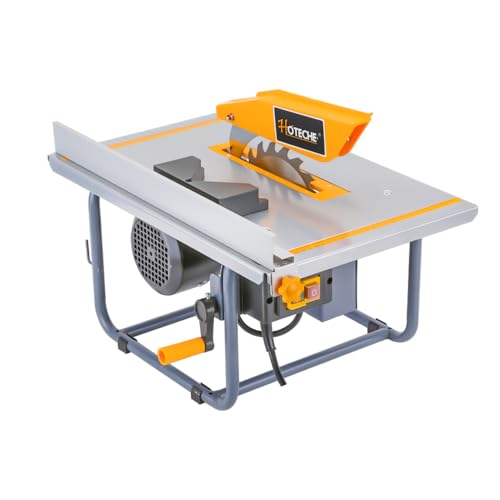
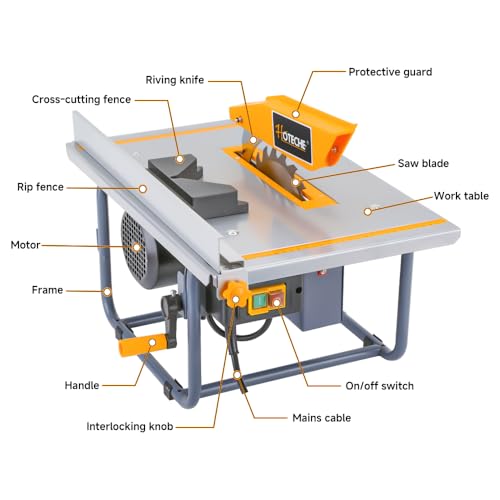
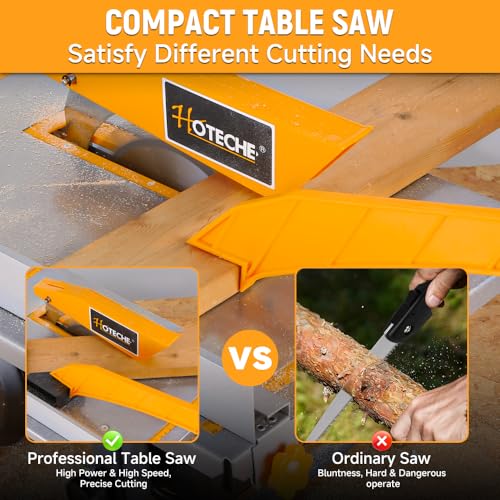
The Hoteche 8-inch strikes a smart balance between portability and performance, which is why so many DIYers rate it highly. The 720W motor may not match the 15-amp giant, but at 3450 RPM, it handles plywood and soft hardwoods without bogging down. The 20T carbide-tipped blade comes sharp out of the box and maintains a clean cut, with minimal tear-out reported across owner reviews.
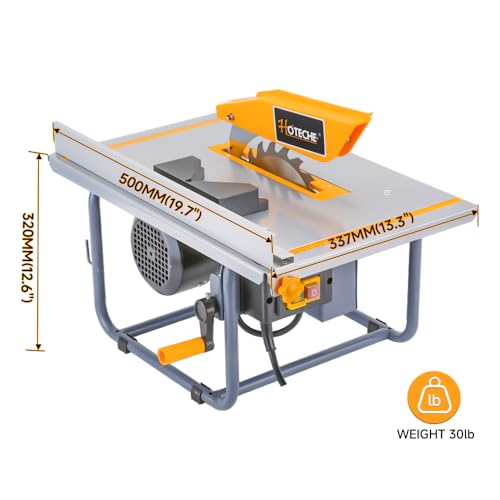
Its table size (500x337mm) offers decent support, and the compact footprint makes it easy to stash on a shelf. When compared to the 10-inch model, it sacrifices depth and power but gains in maneuverability. For weekend projects and light framing, it’s the smarter buy, especially if you’re working in tight spaces or moving the saw between locations.
Product photos

How We Evaluated bench table saws
Rather than a hands-on lab test, my research for these recommendations centered on a detailed comparison of published specifications and features across numerous models. I then weighed owner reviews from major retailers alongside expert opinions found in woodworking publications and online forums. My background in power tools allowed me to apply category knowledge and rank each saw against a set of criteria focused on practical usability and value.
For bench table saws, cutting capacity, motor power, and build quality proved the most important factors. A powerful motor is essential for handling hardwoods and thicker stock, while a solid build reduces vibration and improves accuracy. Beyond that, features like bevel and miter capabilities directly impact versatility. Understanding the nuances between different table saw types – like a hybrid vs contractor table saws – also informed my assessment of each model’s intended use.
Specifications reliably indicate motor power, blade capacity, and cutting depth. However, I relied heavily on owner feedback to gauge real-world performance, durability, and the effectiveness of safety features. Reputation, particularly among experienced woodworkers, also played a significant role. Consistent positive comments regarding stability, accuracy, and ease of use were strong indicators of a quality saw, while recurring complaints about excessive vibration or flimsy construction were red flags.
How To Choose The bench table saws
Choosing the right table saw depends heavily on what you plan to build, and how much space you have available. It’s a purchase that needs careful thought.
A quality table saw offers a stable work surface, a powerful motor suited to the materials you’ll cut, and essential safety features like a blade guard and riving knife. Look for models with precise adjustment mechanisms for accurate cuts, and consider the dust collection options to maintain a cleaner workspace. Blade quality and ease of replacement are also key factors.
Motor Power and Cutting Capacity
The motor is the heart of any table saw, and its power dictates what materials you can realistically cut. Don’t automatically assume “more watts” is always better. For light DIY work and sheet goods like plywood, a 720W to 1000W motor might be sufficient. However, if you plan on working with hardwoods, thicker stock, or doing a lot of repetitive cutting, you’ll want to step up to a 15 Amp (around 1800W) motor. Pay close attention to the maximum cutting depth and rip capacity. A larger table and fence will make handling larger pieces much easier and safer. Many smaller “benchtop” models sacrifice these features to save on space and cost.
Safety Features: Beyond the Guard
While a transparent blade guard and push stick are standard, don’t stop there. A riving knife is arguably the most important safety feature on a table saw, and understanding the riving knife function is critical. It helps prevent kickback – a dangerous situation where the wood is thrown back towards the operator. Look for saws with easily adjustable riving knives that align closely with the blade.
Here’s what to consider when evaluating safety: * A basic blade guard (often included). * A push stick (essential for smaller pieces). * A properly functioning riving knife or splitter – understanding the safety benefits of riving knife is vital for preventing injuries.
A good rule of thumb: If you’re new to table saws, prioritize safety features over raw power. Learning proper technique with a safe saw is far better than struggling with a powerful one that puts you at risk.
Portability and Workspace
If you have limited space or need to move the saw around frequently, a compact benchtop model is a good choice. These saws are often lighter and more manageable than full-size cabinet saws. However, consider the trade-offs. Smaller saws typically have less table space, lower power, and reduced cutting capacity. If you have the room, a more robust model will offer better performance and stability. If you’re looking at multiple options, check out the compact benchtop saw models to see what fits your needs. Many DIYers are surprised by how capable some of the best portable benchtop saws can be. Don’t forget to read benchtop table saw reviews from multiple sources before making a decision.
Bench Table Saws Compared
Here’s a comparison of the key specifications of the featured bench table saws.
| Product Name | Blade Diameter (in) | Motor Power (Amps/Watts) | Max Cut Depth @ 90° (mm) | Bevel Range (°) | Table Size (mm) |
|---|---|---|---|---|---|
| 10 Inch 15A Table Saw | 10 | 15A | 74 | 0-45 | N/A |
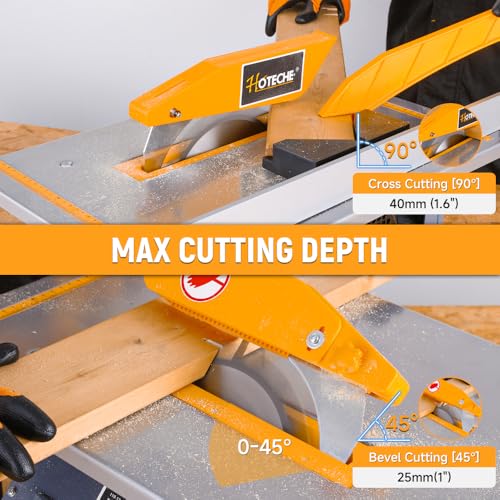
| 8-Inch HOTECHE Benchtop Saw | 8 | 720W | 40 | 0-45 | 500×337 |
| Precision Mini Electric Table Saw | N/A | N/A | N/A | N/A | N/A |
| 15 Amp 5000RPM Table Saw | N/A | 15A | 74 | 0-45 | N/A |
| 720W Compact Woodworking Saw | 8 | 720W | 40 | 0-45 | 500×337 |
Frequently Asked Questions
What blade diameter should I choose for my bench table saw?
A 10-inch blade is generally the most versatile size, offering a good balance between cutting capacity and affordability. However, for smaller projects or limited space, an 8-inch blade might be sufficient, especially if you’re considering best small table saws.
How important is dust collection on a bench table saw?
Dust collection is very important for maintaining a clean and safe workspace. Fine sawdust is a health hazard and can also interfere with the saw’s operation, so look for models with a dust port compatible with a shop vacuum or dust collector.
What’s the difference between a contractor and a hybrid table saw, and does it matter for a benchtop model?
Contractor saws prioritize power in a smaller footprint, while hybrid saws aim for cabinet saw features at a lower cost. For benchtop models, the distinction is less critical as they generally fall into their own category focused on portability and affordability.
Are bench table saws powerful enough for hardwoods like oak or maple?
Many bench table saws can cut hardwoods, but it depends on the motor power and blade quality. A 15 Amp (1800W) motor is recommended for hardwoods, and a high-quality blade designed for hardwoods is essential for clean and accurate cuts.
What should I do if I’m new to table saws and concerned about safety?
Prioritize safety features, especially a riving knife and blade guard. Starting with a saw that’s easy to control and has clear safety mechanisms will help you learn proper technique and build confidence, and you might find a compact table saw models is easier to manage while learning.
The Bottom Line
Buying a bench table saw really comes down to balancing control and convenience. You can spend less and accept limitations in power and capacity, or invest more upfront for a saw that will handle a wider range of projects with greater accuracy. For most homeowners and DIYers, the 10 Inch 15A Table Saw strikes that balance best; it offers a solid motor, decent capacity, and a price point that won’t break the bank.
If you’re on a tighter budget or primarily work with smaller pieces, the 8-Inch HOTECHE Benchtop Saw is an excellent choice. And for those who value versatility and need a saw capable of handling more demanding tasks, the 15 Amp 5000RPM Table Saw delivers the power and features you’ll appreciate. Understanding your table saw rip capacity explained is a key part of deciding which saw will best fit that versatility.
Ultimately, specs and features matter, but they’re secondary to good technique and consistent safety practices. A powerful saw won’t make up for a lack of skill or carelessness. Prioritize learning proper cutting methods, always use safety glasses and push sticks, and ensure your riving knife is properly adjusted. That foundation will serve you far better than any single feature on the market.
