
7 Best Bench Sanders of 2026
This post contains affiliate links. As an Amazon Associate, we earn from qualifying purchases.
The BUCKTOOL Pro 1HP stands out as the best overall bench sander for its strong motor and solid build, making it a reliable workhorse. If you’re watching your budget, the BUCKTOOL 4×36 Belt and 8 in delivers solid performance at a lower price, while the Woodskil Variable Speed offers excellent versatility with adjustable speeds for different materials and tasks.
Most people shopping for a bench sander want something that won’t shake apart at high speed and can handle real work, not just light touch-ups. Too many models cut corners on vibration control and table stability, which kills accuracy and makes sanding more frustrating than it needs to be.
This guide cuts through the marketing noise. Based on specs, owner feedback, and my years evaluating power tools, I’ve focused on models that deliver real-world performance, durability, and smart features like effective dust collection and precise table adjustments.
Top 7 Bench Sanders in the Market
The Best Bench Sanders, Reviewed
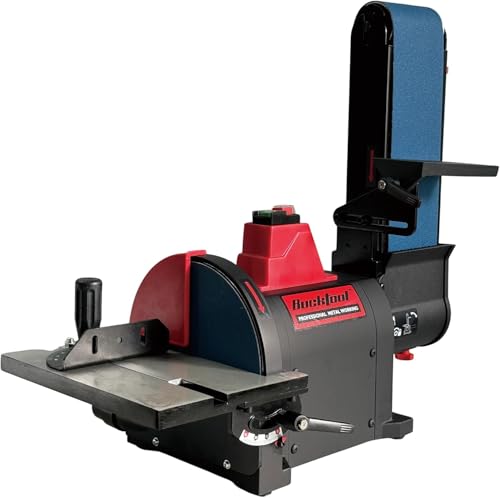
BUCKTOOL Pro 1HP Bench Belt Sander
Strengths
- 1HP direct-drive motor
- Hook-and-loop disc
- Removable dust port
Trade-offs
- Overkill for wood
- Heavy footprint
- Higher price
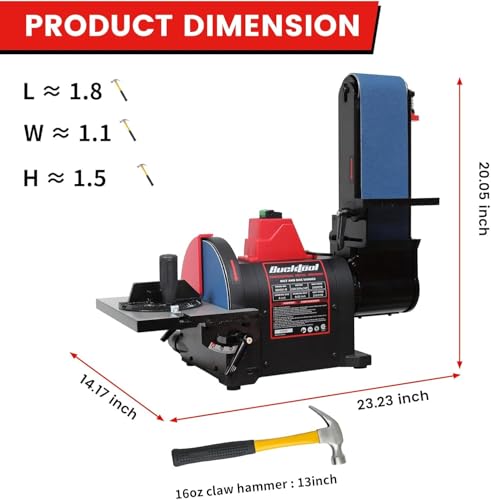
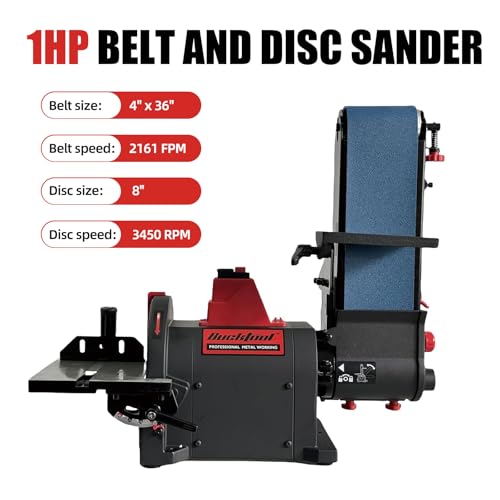
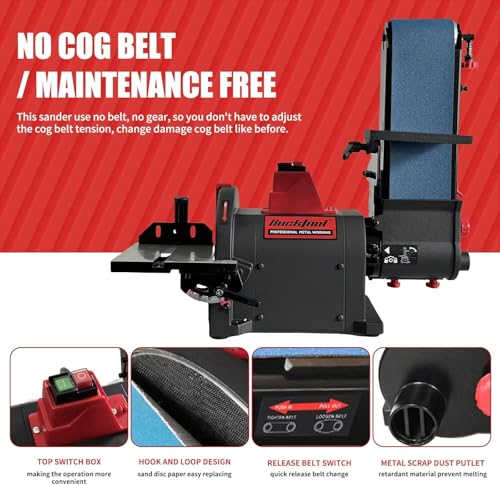
This is the sander I’d pick if I were building a serious metal fabrication corner in my garage. The 1HP direct-drive motor delivers relentless power, and owners using it for knife making, file sharpening, or mild steel prep say it doesn’t bog down. The 8-inch disc with hook-and-loop paper changes makes swapping grits fast, and the removable dust port is a clever touch for long workpieces.
It’s overkill for light woodworking, but that’s not its job. Compared to the VEVOR and other 3/4 HP models, the jump in motor efficiency and thermal resilience is real. The top-mounted switch is a small detail that makes a big difference in daily use. For metal-focused shops, this is the complete package.
Product photos
Woodskil Variable Speed Belt Disc Sander
Strengths
- Variable speed control
- Higher work stop
- 2-year warranty
Trade-offs
- 3A motor less powerful
- No 8-inch disc
- Plastic components
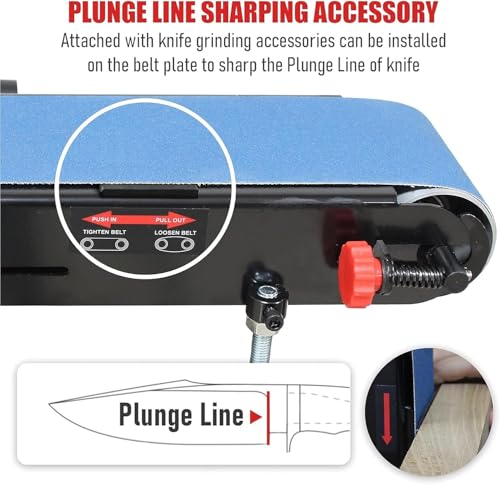
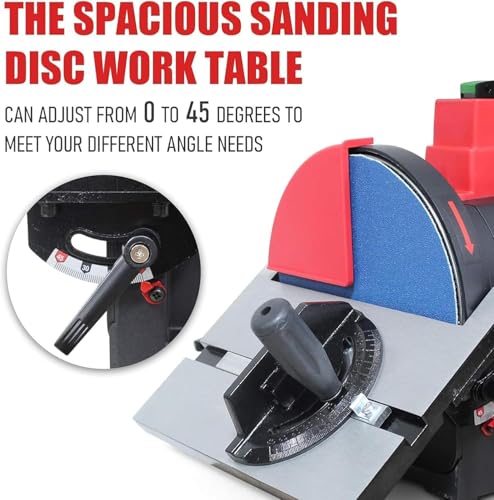
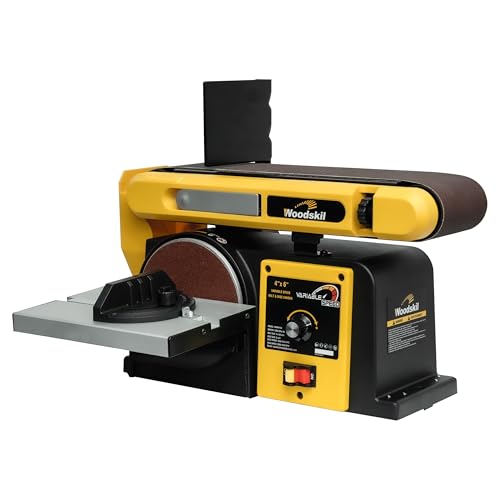
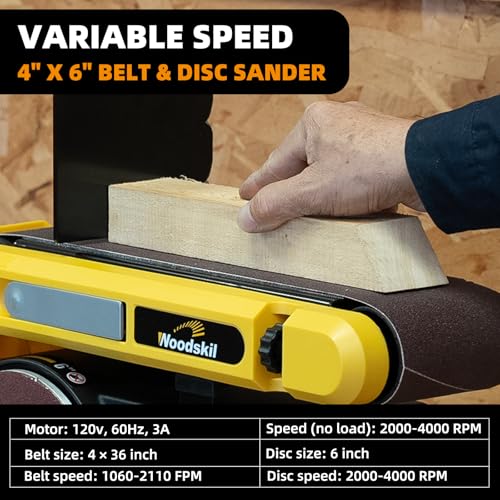
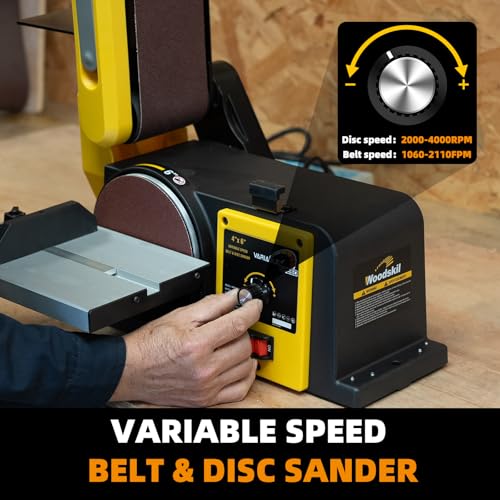
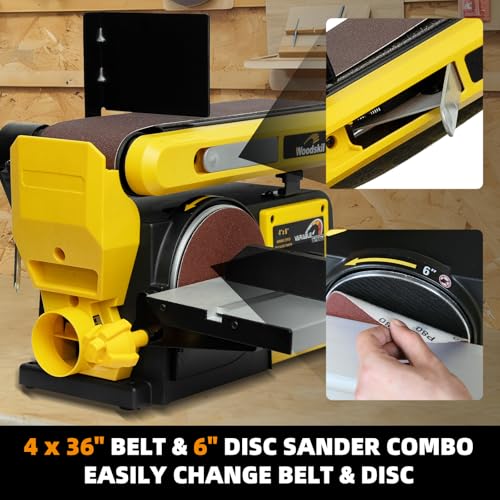
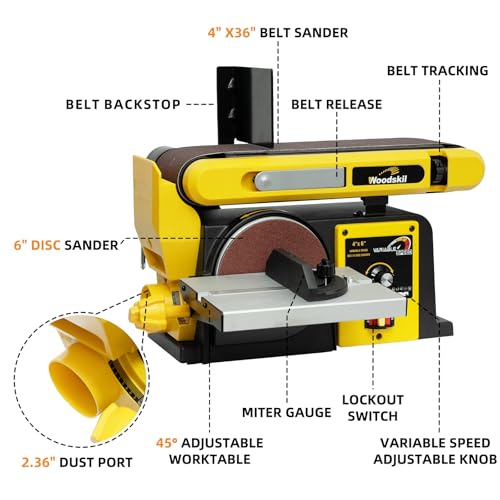
If control matters more than raw power, the Woodskil variable speed model is where I’d lean. The ability to dial in disc speeds from 2000 to 4000 RPM and belt speeds from 1060 to 2110 FPM gives serious flexibility, especially when working with delicate woods or finishing passes. This isn’t just marketing fluff; owners confirm it makes a noticeable difference in surface quality and heat management.
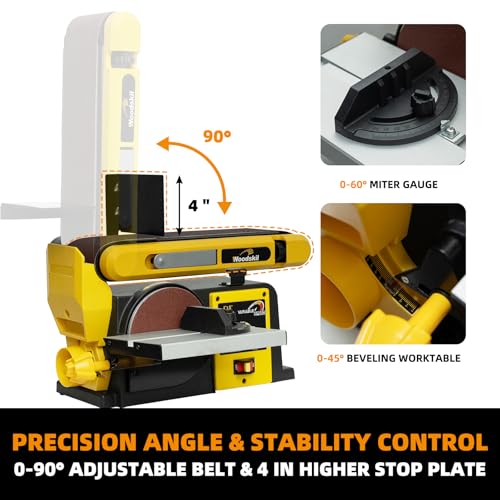
It’s not the heaviest or most aggressive sander here, but for precision tasks like shaping chair legs or smoothing veneers, that’s the point. The higher work stop improves contact consistency, and the 2-year warranty adds confidence. Compared to fixed-speed models, this one earns its keep in detail-focused shops.
Product photos
BUCKTOOL 4×36 Belt and 8 in Disc
Strengths
- 8-inch disc size
- Dual dust ports
- Direct drive motor
Trade-offs
- No variable speed
- 3/4 HP limit
- Rubber feet wear
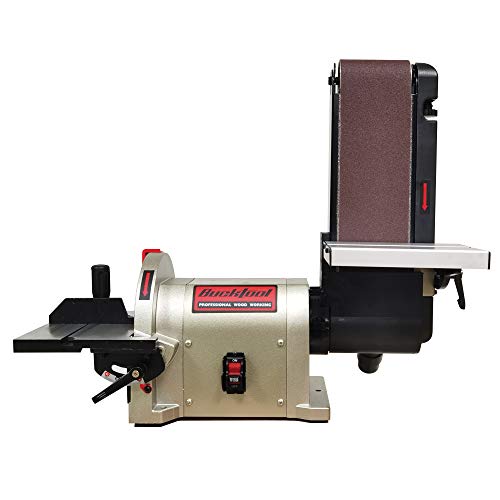
With an 8-inch disc and dual worktables, this BUCKTOOL model is built for users tackling bigger stock or longer workpieces. The 8-inch disc isn’t just for show, it gives you more grinding surface, which matters when flattening wide boards or shaping thick blanks. The direct-drive motor eliminates belt slippage, and owners report it stays cool during extended use.
It’s not as powerful as the 1HP metal-focused version, but for woodworking with large materials, it hits the sweet spot. The two dust ports are a rare plus, helping keep your space cleaner. Compared to the VEVOR model, it feels slightly more refined in table adjustability and overall fit.
Product photos
BUCKTOOL 5.0A Direct-Drive Sander

Strengths
- Direct-drive motor
- Dual worktables
- 3/4 HP power
Trade-offs
- No variable speed
- 6-inch disc limits reach
- Average dust port
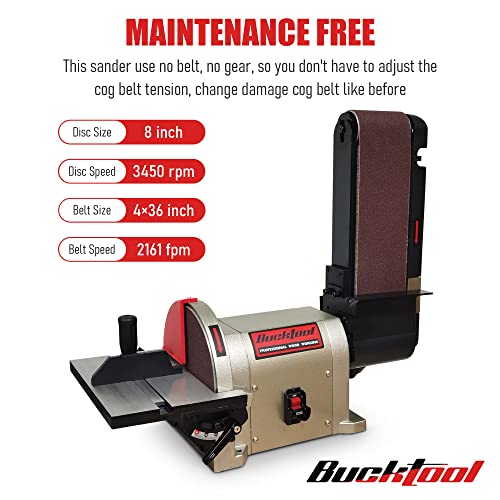
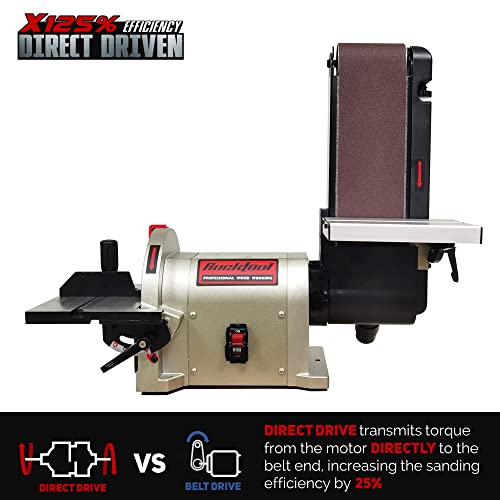
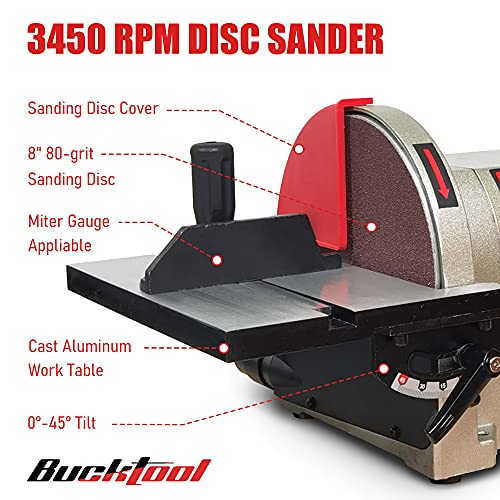
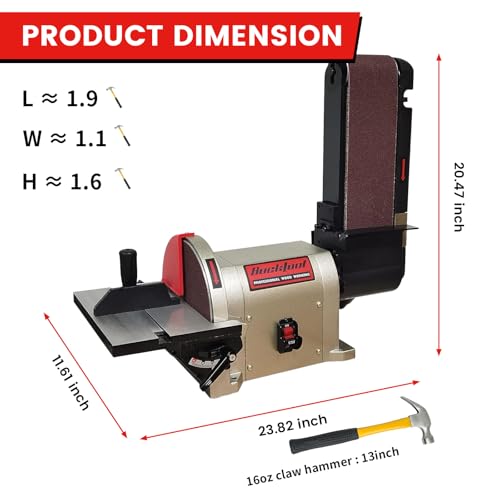
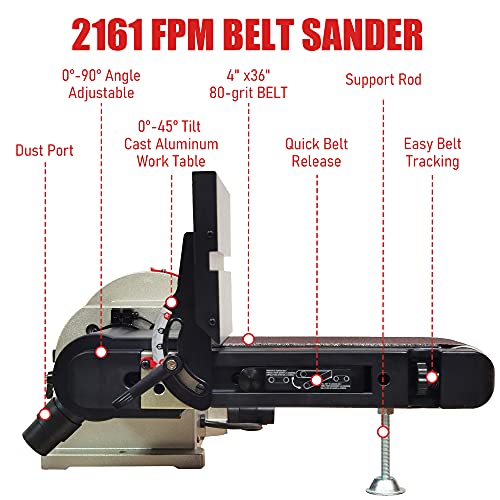
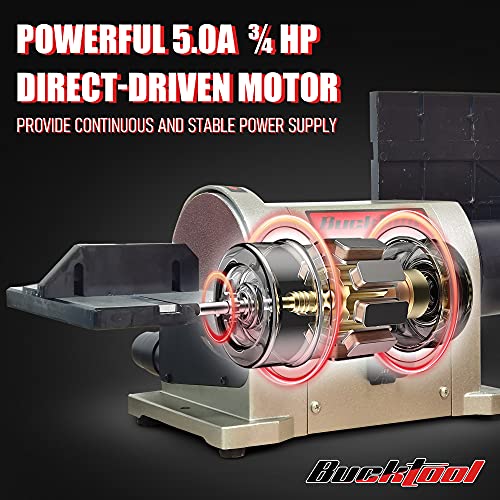
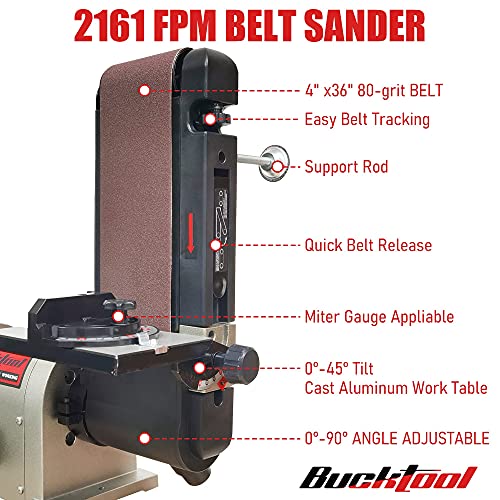
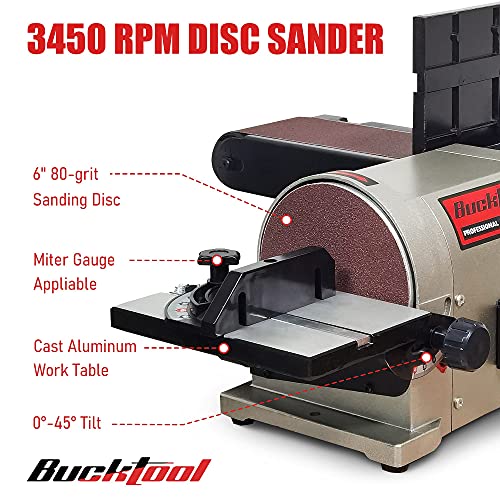
BUCKTOOL’s BD4603 stands out in the mid-tier by ditching the belt-driven system for a direct-drive motor, a real advantage for efficiency and longevity. The 3/4 HP induction motor delivers steady power, and reviewers note it runs quieter than expected while maintaining performance. The dual cast aluminum worktables are a thoughtful touch, giving you solid support whether you’re on the belt or disc side.
It’s not the most powerful in the lineup, but for the balance of cost, build, and usability, it’s a standout. The direct-drive design means less maintenance, and owners appreciate not having to fuss with tension adjustments. Compared to the WEN model, this one feels more like a long-term workshop companion.
Product photos
VEVOR 4×36 Belt and 8 in Disc

Strengths
- 8-inch sanding disc
- 5A induction motor
- Dust collection port
Trade-offs
- Plastic switch housing
- No variable speed
- Heavy for benchtop
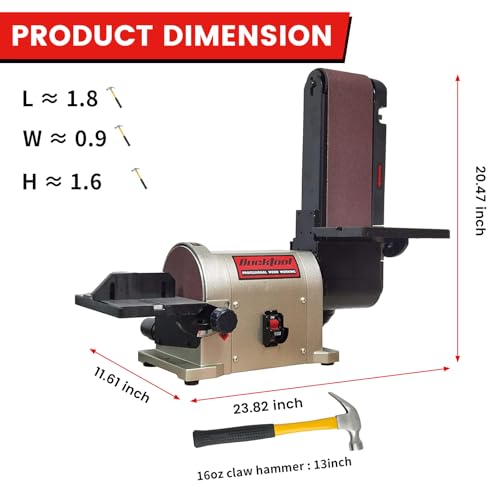
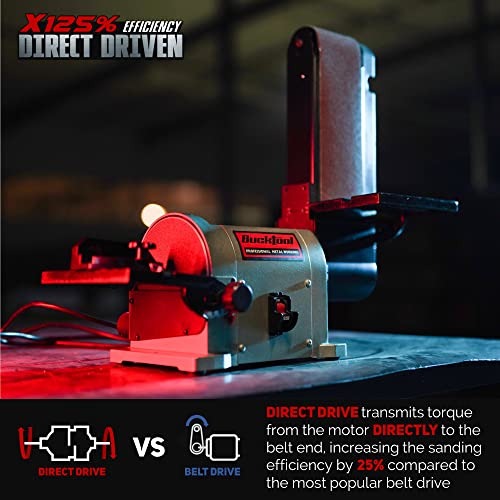
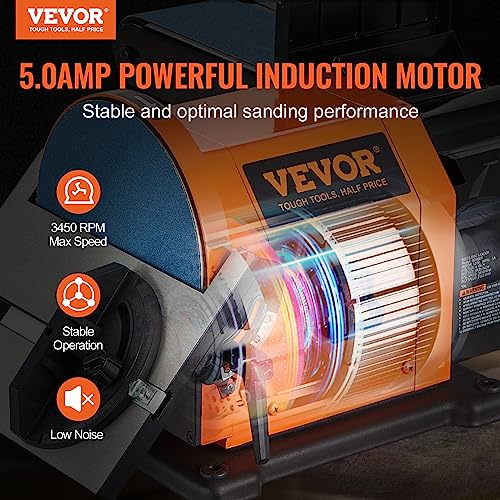
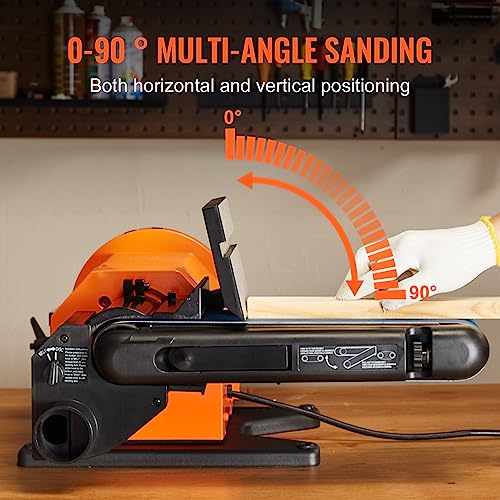
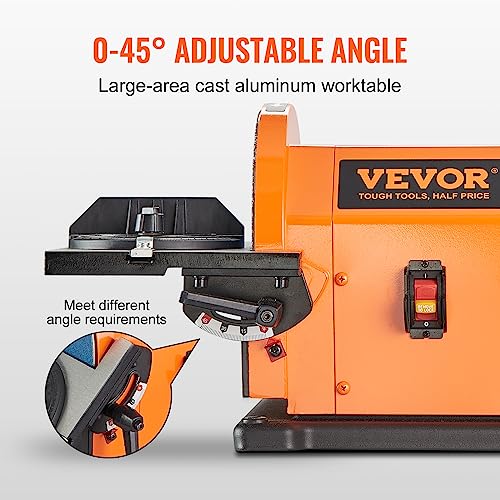
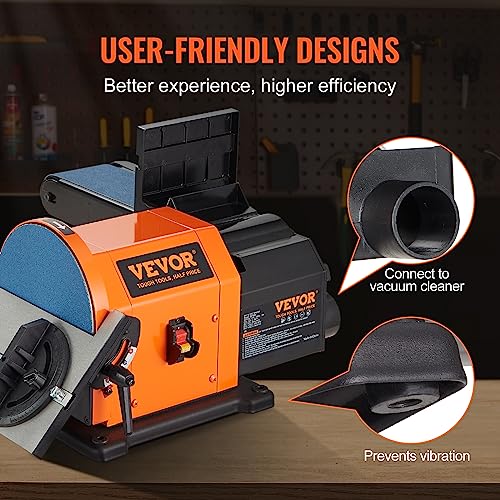
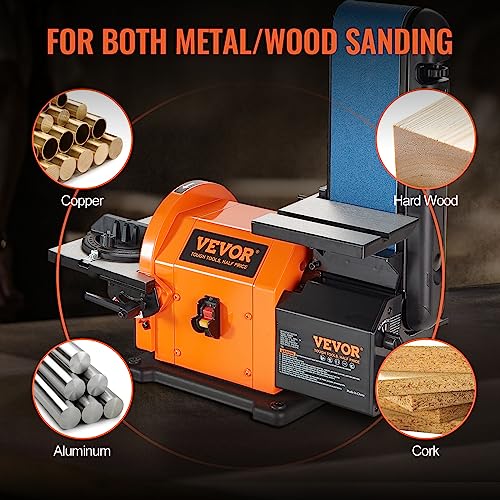
VEVOR brings serious hardware to the table with an 8-inch disc and 5A induction motor, specs that clearly target metalworkers. The larger disc gives more surface area for grinding blades, tools, or welds, and the cast aluminum worktable adds rigidity. Owners using this for knife sharpening or mild steel prep say it holds up well, especially with the dust port hooked to a shop vac.
It’s not the quietest, and the plastic switch housing feels a bit flimsy next to the metal base. But for the power and disc size, it’s a strong contender. Compared to the BUCKTOOL 1HP model, it’s close, but the lack of a true 1HP motor keeps it just shy of top-tier metal grinding performance.
Product photos
Woodskil 4.5-Amp Belt & Disc Sander

Strengths
- 45-degree table tilt
- Miter gauge included
- Direct drive system
Trade-offs
- 6-inch disc smaller
- No speed adjustment
- Dust port weak
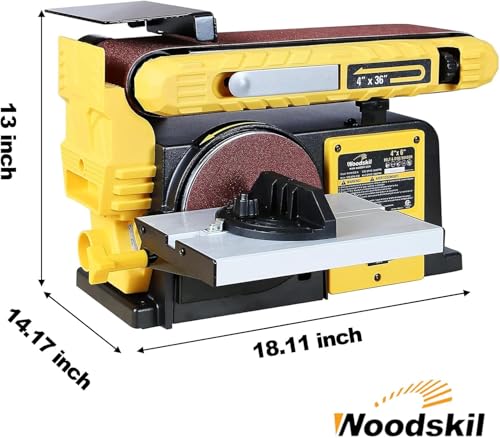
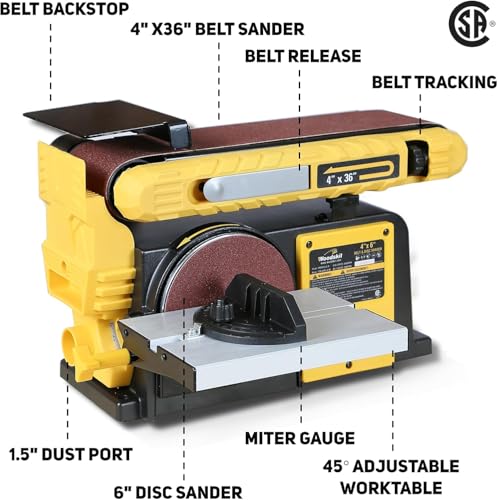
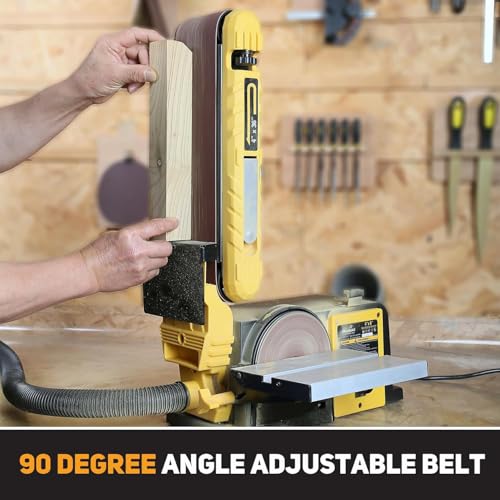
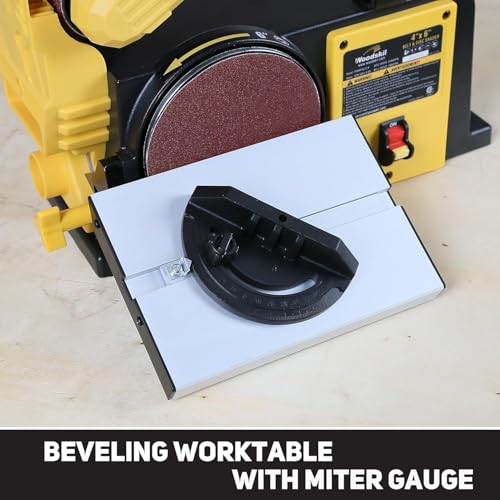
This Woodskil model is built with bevel work in mind, and it shows in the thoughtful design. The table tilts up to 45 degrees with a miter gauge, making it easy to replicate angled edges, a real win for trim work or stair parts. The 3/4 HP motor delivers consistent power, and the direct drive helps maintain belt alignment during long passes.
It shares DNA with other Woodskil models but leans harder into functionality for angled grinding. Owners appreciate the quick belt replacement system, though some note the dust collection could be better. Compared to the variable speed version, this one trades RPM control for bevel precision, a fair trade if that’s your focus.
Product photos

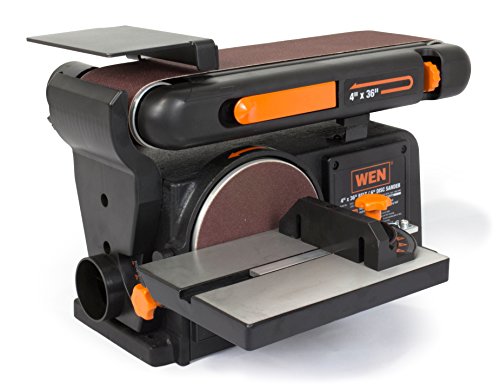
WEN 4×36 Belt and 6 in Disc Sander

Strengths
- Cast iron base
- 4.3 Amp motor
- Tilting belt
Trade-offs
- Basic dust collection
- No variable speed
- Lighter build
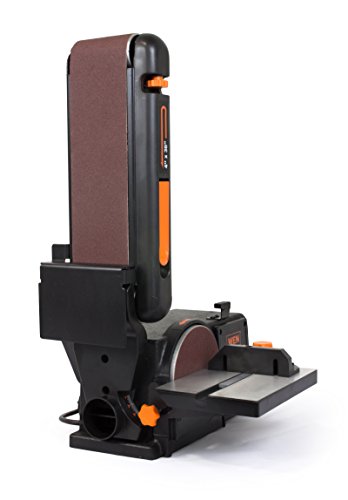
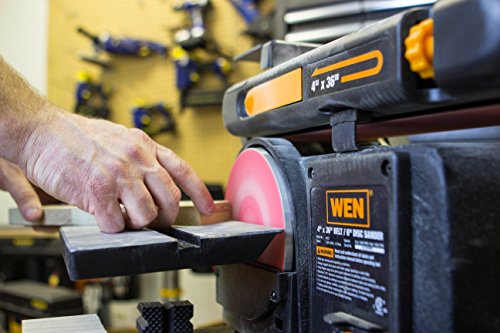
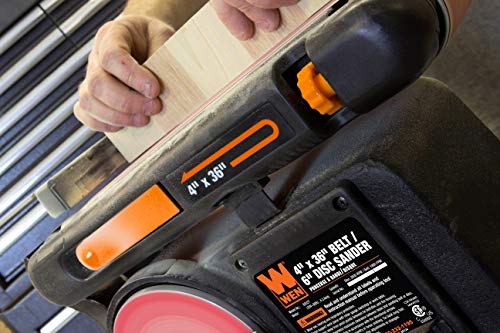
The WEN 6502T is a no-frills, get-the-job-done machine that makes a strong case for itself if you’re watching your budget. On paper, it’s solid: a 4.3 Amp motor, cast iron base for stability, and the ability to tilt the belt from 0 to 90 degrees gives it real versatility for a DIYer. Owners consistently report it handles basic wood shaping and edge smoothing without issue, and at this price point, that’s what matters.
That said, it doesn’t have the refinement of pricier models. The motor isn’t as robust for sustained heavy use, and while the cast iron base helps with vibration, the overall build feels lighter than it should. If you’re doing weekend projects or light garage work, this is a smart starting point. But if you’re grinding metal or working hardwoods regularly, you’ll feel its limits.
Product photos

How We Chose These bench sanders
Rather than a hands-on lab test, my research for these recommendations involved a detailed comparison of published specifications and features across numerous models. I weighed owner reviews from multiple sources – paying close attention to recurring praise and complaints – alongside assessments from reputable tool review sites. My background in woodworking and power tool maintenance informed how I prioritized these factors, ultimately ranking sanders based on their potential to deliver consistent performance and value.
For bench sanders, the most important factors are motor power and build quality. A robust motor is crucial for tackling a variety of materials and maintaining speed under load. Equally important is a stable base and well-engineered table adjustments; vibration significantly impacts precision. Belt and disc size also played a role, as larger surfaces increase efficiency for bigger projects, but aren’t always necessary.
Specifications reliably indicate motor size, belt/disc dimensions, and speed ranges. However, owner feedback proved vital for assessing long-term durability, ease of belt changes, and the effectiveness of dust collection. Reputation, based on brand history and consistent positive reviews, also influenced our ranking. If you’re looking for even more options, be sure to check out our guide to the best bench belt sanders for a broader selection of tabletop belt sander picks.
How To Choose The bench sanders
Choosing the right bench sander can dramatically improve your workshop’s capabilities, but there’s a lot to consider beyond just price.
A quality bench sander delivers consistent results through a powerful motor, accurate table adjustments, and effective dust collection. Key specifications include motor horsepower, belt and disc sizes, adjustability of work surfaces, and the overall build quality of the base and tables. Look for direct-drive systems for efficiency and minimal vibration, and consider the availability of replacement abrasive belts and discs.
Motor Power and Drive System
The motor is the heart of any bench sander, and horsepower matters, especially if you plan on working with harder woods or metals. While smaller 1/3 or 1/2 HP motors are sufficient for light hobby work, I generally recommend at least a 3/4 HP motor for more consistent performance and the ability to tackle larger projects. More importantly than peak horsepower is how that power is delivered. Direct-drive systems, where the motor shaft directly turns the belt or disc, are far superior to belt-driven models. They’re more efficient (less power lost to friction), run quieter, and produce less vibration.
Belt and Disc Configuration
Don’t assume bigger is always better when it comes to belt and disc size. The ideal configuration depends on the types of projects you’ll be doing. A 4×36 inch belt is a common and versatile size, suitable for a wide range of tasks. Disc sizes typically range from 6 to 8 inches. Larger discs offer more surface area for general sanding, but smaller discs can be more precise for detail work. Consider whether you need the ability to tilt both the belt platen and the disc table – this is crucial for bevel sanding and achieving specific angles. If you plan to work with a lot of curved pieces, look for a model with a drum that allows for internal sanding.
Build Quality and Adjustability
A flimsy bench sander will frustrate you quickly. Look for models with cast iron bases and robustly constructed work tables. These materials dampen vibrations and provide a stable platform for accurate work. Beyond the base, pay close attention to the adjustability of the tables. Smooth, precise adjustments are essential for achieving accurate angles and consistent results. The ability to lock the tables securely in place is also critical. Speaking of quality, if you’re looking for a wider selection of benchtop belt sander models, you’ll find a good overview at top benchtop belt sanders.
A well-built bench sander should feel solid and stable. Test the adjustment knobs and levers to ensure they move smoothly and lock securely. Don’t skimp on quality; a durable sander will save you money and headaches in the long run.
Bench Sanders Compared
Here’s a comparison of key specifications for various bench sanders to help you make an informed decision.
| Product Name | Belt Size | Disc Size | Motor HP | Belt Speed (FPM) | Disc Speed (RPM) | Dust Port |
|---|---|---|---|---|---|---|
| BUCKTOOL Pro 1HP | 4 x 36 in | 8 in | 1 | N/A | N/A | Yes |
| Woodskil Variable Speed | 4 x 36 in | 6 in | N/A | 1060-2110 | 2000-4000 | Yes |
| BUCKTOOL 4×36 Belt and 8 in | 4 x 36 in | 8 in | 3/4 | N/A | 3450 | Yes |
| BUCKTOOL 5.0A Direct-Drive | 4 x 36 in | 6 in | 3/4 | N/A | N/A | Yes |
| VEVOR 4×36 Belt and 8 in | 4 x 36 in | 8 in | N/A | 2160 | 3450 | Yes |
| Woodskil 4.5-Amp | 4 x 36 in | 6 in | 3/4 | 1900 | 3590 | Yes |
| WEN 4×36 Belt and 6 in | 4 x 36 in | 6 x 6 in | 4.3 | N/A | 3600 | Yes |
Frequently Asked Questions
What belt speed is best for most bench sander projects?
A speed between 1900 and 2160 feet per minute (FPM) is generally ideal for a wide range of sanding tasks. However, variable-speed models offer greater control, letting you slow down for detail work or increase speed for faster material removal.
Are bench sanders messy, and what can I do about dust?
Yes, bench sanders produce a significant amount of dust. Look for a model with a dust port and connect it to a shop vacuum or dust collection system; this will greatly improve your workspace’s air quality and visibility.
Can a bench sander be used for sharpening tools?
While possible, I don’t recommend using a bench sander as your primary tool sharpening station. The aggressive action can easily overheat and damage tool steel; a dedicated sharpening system provides much more control and precision.
What’s the difference between a 3/4 HP and a 1 HP motor?
A 1 HP motor will generally provide more consistent power, especially when sanding harder materials or applying heavy pressure. For hobbyists, a 3/4 HP motor is often sufficient, but serious woodworkers or metalworkers will benefit from the extra power of a 1 HP model.
Where can I find sanders that combine belt and disc functionality?
If you want a versatile machine, consider combination belt and disc sanders which offer both sanding surfaces in a single unit. These are great for shops with limited space and those who need both types of sanding capabilities.
The Bottom Line
Choosing a bench sander often comes down to balancing control and convenience. Do you prioritize a truly heavy-duty machine for demanding work, or a more affordable option for occasional projects? For overall performance and the ability to handle a wide range of tasks, I believe the WEN 4×36 Belt and 6 in stands out. Its powerful 4.3 Amp motor and generous sanding surfaces will serve most woodworkers and metalworkers well.
If you’re on a tighter budget, the BUCKTOOL Pro 1HP offers excellent value. For those needing maximum versatility, especially if you work with both flat and curved surfaces, the VEVOR 4×36 Belt and 8 in is a strong contender. And if you want to explore even more options and find the best benchtop sanders overall, our other guide provides a deeper look at the market.
Ultimately, the specifications matter less than a solid build and a stable platform. Don’t get hung up on chasing the highest horsepower if it means sacrificing quality in the base or table adjustments. A bench sander should feel secure and precise – that’s what will deliver the best results and make your work more enjoyable.
