8 Best Battery Spot Welders of 2026
This post contains affiliate links. As an Amazon Associate, we earn from qualifying purchases.
The AWithZ 14.6KW Capacitor Spot Welder stands out as the best overall for serious battery building, delivering massive power and fine control. For those on a tighter budget, the SEESII 3360W Cordless Spot Welder offers solid performance in a portable package, while the SEESII 10KW Cordless 10000mAh Welder brings strong versatility with its foot pedal and high-capacity battery.
If you’re building or repairing battery packs, finding a spot welder that balances power, control, and reliability is critical. Too little power and your welds fail; too much, and you damage sensitive components.
This guide cuts through the specs and marketing to focus on what actually matters: real-world performance, adjustability, and value. I looked at power output, user feedback, and build quality to identify the models that deliver consistent results across different materials and project types.
Top 8 Battery Spot Welders in the Market
The Best Battery Spot Welders, Reviewed
AWithZ 14.6KW Capacitor Spot Welder

Strengths
- 14.6KW highest power
- 999 gears for precision
- Best-in-class accessories
Trade-offs
- Not portable
- Requires constant power
- Higher price point
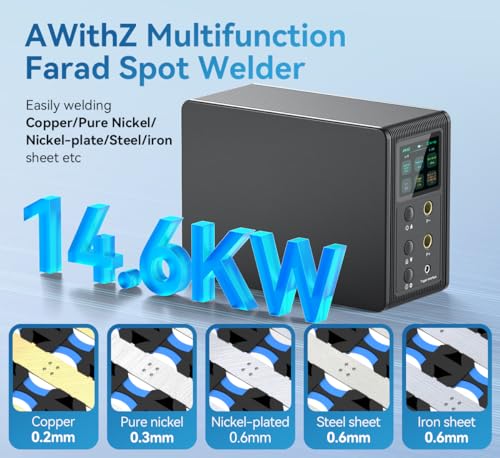
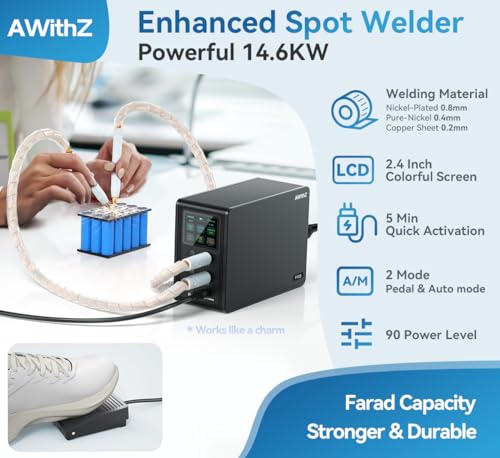
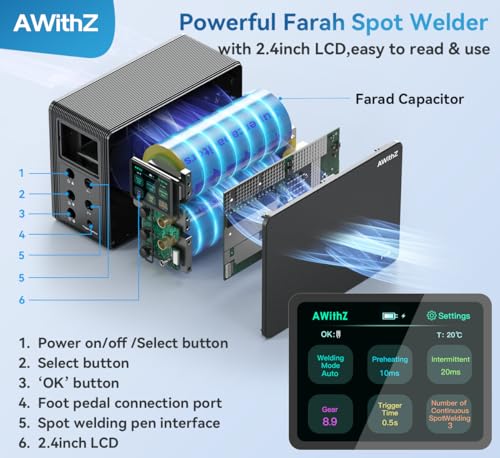
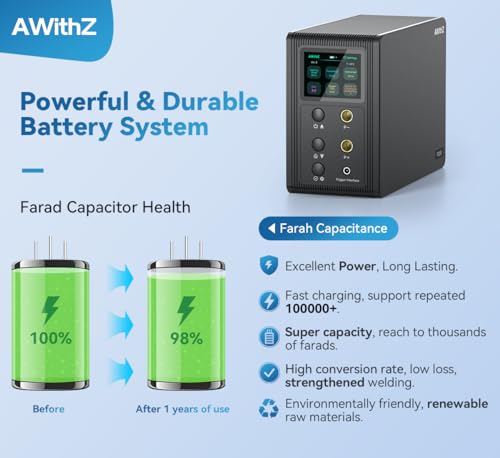
This AWithZ P20B is the most complete package in the lineup, and for good reason. With 14.6KW peak power, it outmuscles nearly every other model here, making quick work of 0.6mm nickel or stainless steel. The 999 adjustable gears let you fine-tune for any material, and the 60cm flexible welding lead reduces drag and improves control. Owners consistently praise how cleanly it welds even at high settings, with minimal tip heating during extended use.
It also comes with the most thorough kit: 3 pairs of replacement pins, a 5-meter nickel roll, and an 18650 holder. That’s not just convenience, it lowers the barrier to starting serious builds. Compared to the SEESII capacitive model, this one has more raw power and better accessories. If you’re setting up a dedicated workstation and want one welder to handle everything, this is the smarter buy.
Product photos
SEESII 3360W Cordless Spot Welder
Strengths
- Cordless freedom
- Visual display
- 99 gear precision
Trade-offs
- Limited thickness capacity
- Lower peak power
- Shorter runtime
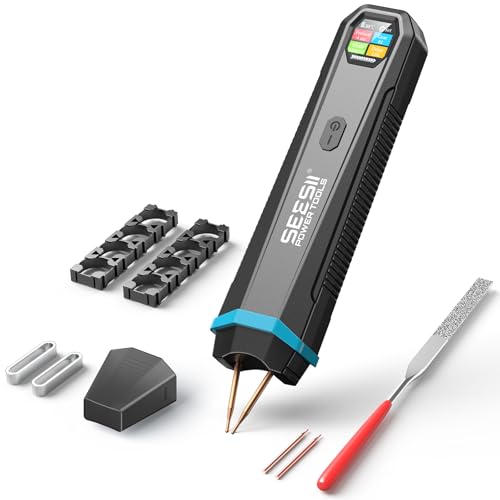
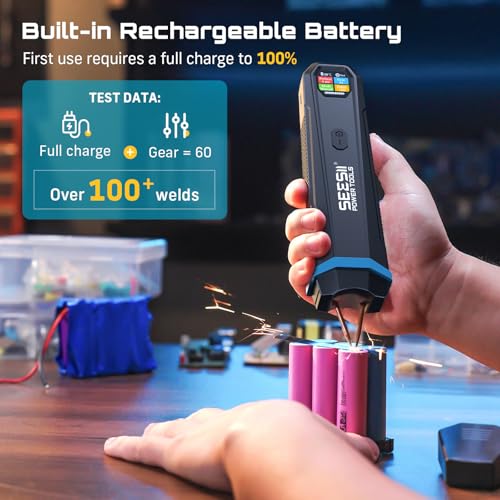
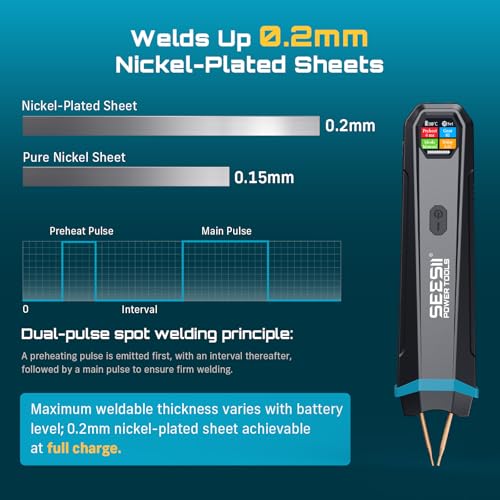
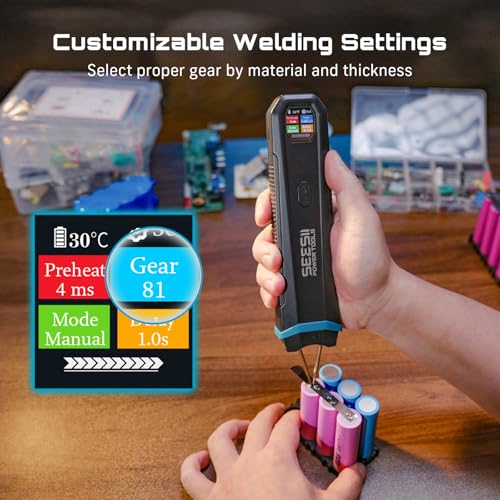
This SEESII model stands out as a genuinely portable, cordless option that makes sense for hobbyists who need to work off the grid or in tight spaces. With 3360W peak power, it’s not the strongest in the lineup, but for light-duty battery pack builds, especially with 18650s or smaller cells, it delivers consistent results when the battery is fully charged. Owners consistently report clean welds on 0.15mm nickel, though pushing beyond that thickness starts to show its limits. The 99 gear adjustments and visual display add real usability, letting you fine-tune without guesswork.
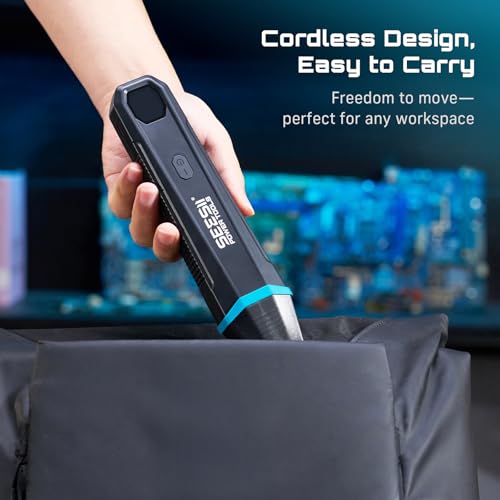
What really makes it shine is the handheld design, no trailing cables between the unit and pen. That freedom of movement is rare at this price, and it’s clear SEESII prioritized practical ergonomics. But keep expectations in check: this isn’t a machine for high-volume builds or thick materials. It’s a budget-friendly entry point, and for that role, it’s hard to beat.
Product photos
10.5kW Capacitor Spot Welder
Strengths
- Simple, reliable operation
- Includes basic accessories
- Global voltage support
Trade-offs
- Fewer adjustment options
- No real-time display
- No manual trigger mode
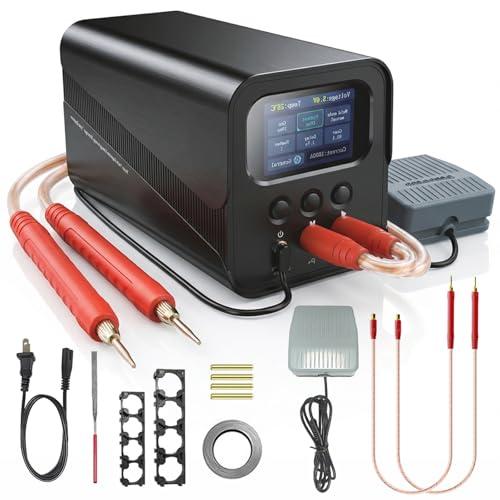
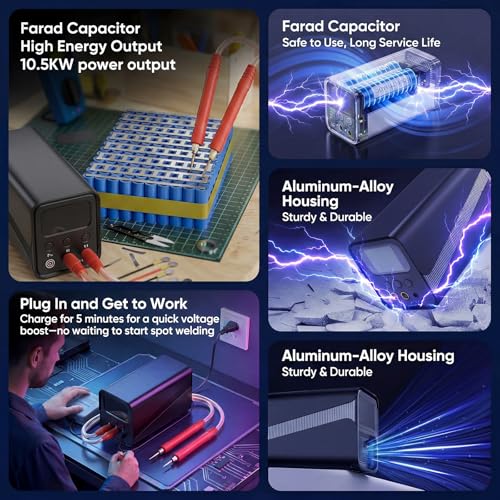
This model hits the sweet spot between simplicity and performance for home workshop use. At 10.5kW, it’s powerful enough for standard 18650 or LiFePO4 builds, and the auto + foot pedal modes give you flexibility without clutter. It’s not flashy, no color screen or 999 gears, but it does the essentials well. The wide voltage input (100–240V) means it works globally, and the compact design fits neatly on a workbench.
Compared to pricier capacitor units, this one skips the extras but keeps the core performance. Reviewers appreciate that it comes with nickel strip and a file, small touches that make starting easier. I’d recommend it over more complex models for someone building their first few packs. It’s the kind of tool that gets the job done without overcomplicating things.
Product photos

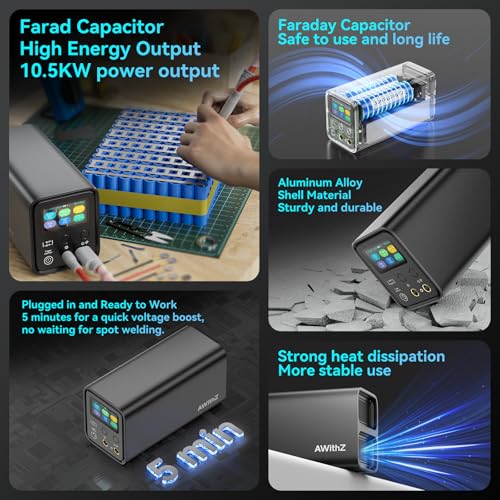
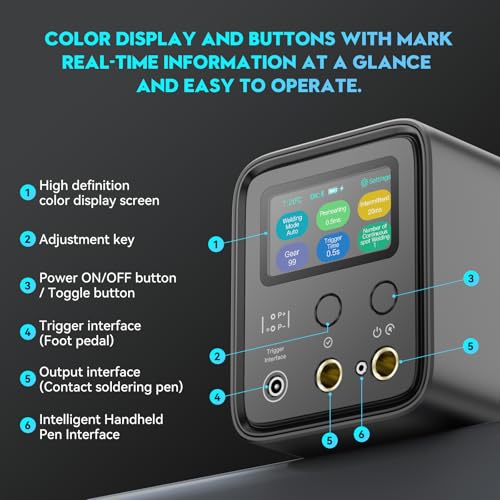
AWithZ 10.5KW 3-in-1 Spot Welder
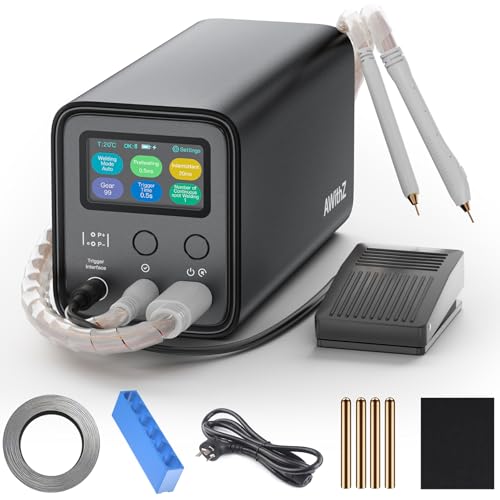
Strengths
- 10.5KW peak power
- 3 operation modes
- Durable aluminum body
Trade-offs
- Must stay plugged in
- No continuous welding
- Fixed pen length
The AWithZ UF20B brings serious power and thoughtful design to the bench, making it a solid pick for users who want precision without stepping into industrial territory. Running on a 10.5KW capacitor system, it delivers fast, repeatable welds on 0.4mm stacked nickel, a capability most cordless models can’t match. The 3-in-1 operation (auto, manual, foot pedal) gives you flexibility few others offer, and the foot pedal in particular makes alignment easier during longer builds. Reviewers note how quickly it charges up and stays ready, thanks to its wall-powered capacitor system.
I’d pick this over battery-powered models if you’re doing regular pack builds. It’s not portable, but that trade-off brings stability and consistency. The aluminum housing feels durable, and the 40cm welding pen strikes a good balance between reach and current retention. Just remember, you must keep it plugged in during use. It’s not a limitation, just how capacitor welders work.
Product photos
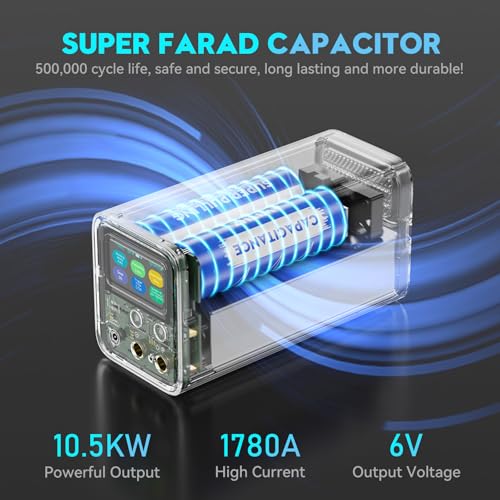
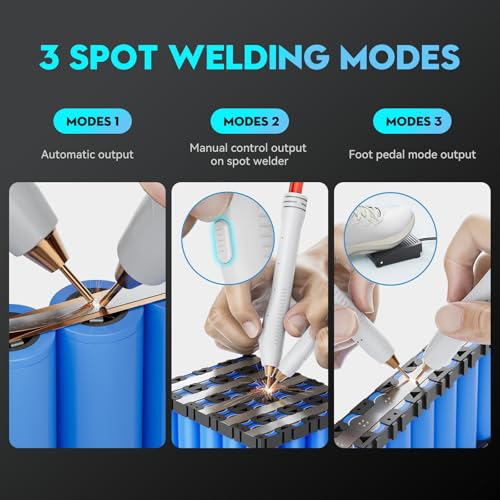
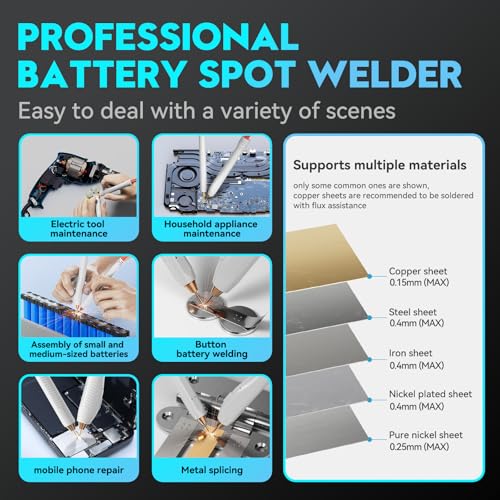
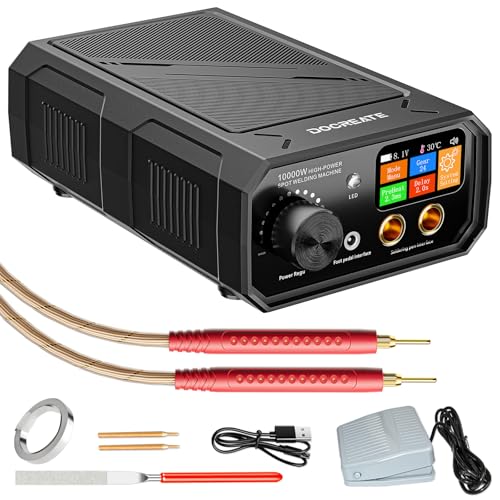
10000W Cordless Spot Welding Machine
Strengths
- True cordless 10000W
- Foot pedal control
- Dual pulse welding
Trade-offs
- Unclear battery life
- No gear count specified
- Inconsistent welds at low charge
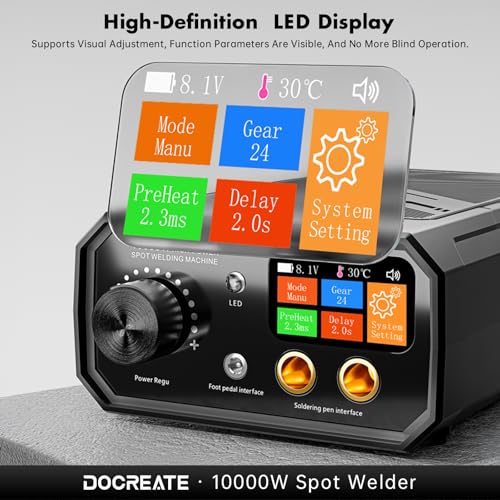
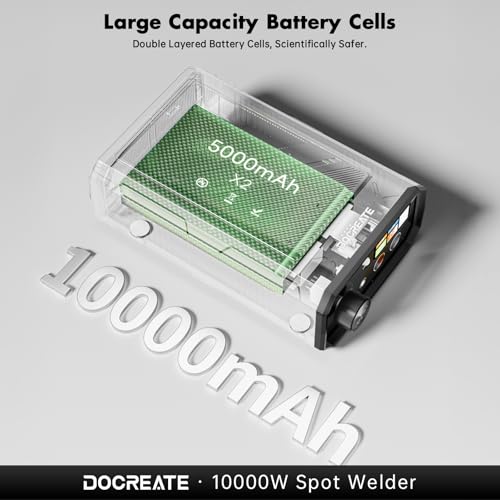
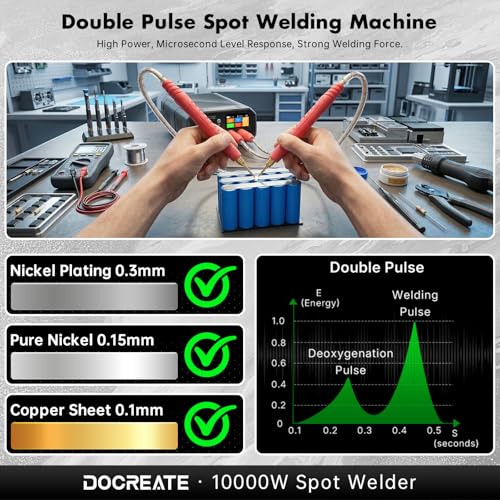
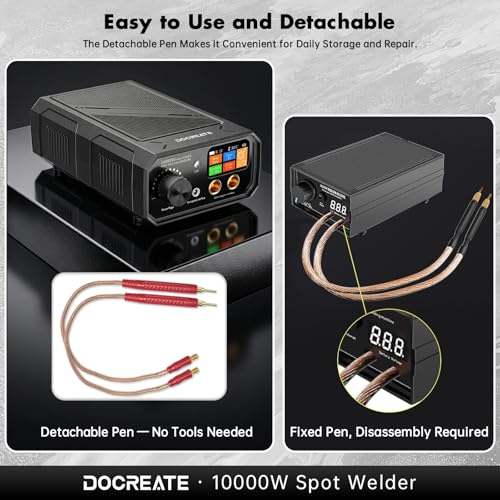
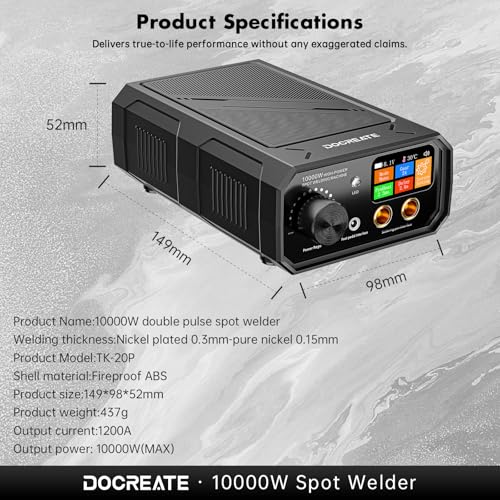
This 10000W cordless unit promises high power without the cord, and on paper, it delivers. The adjustable 10–90 power range and dual-pulse tech give decent control, and the foot pedal adds a level of precision uncommon in handheld models. Owners say it handles 0.25mm nickel reliably when fully charged, which puts it ahead of lower-wattage cordless options. The LCD screen helps monitor voltage, though some report the drop-off in performance as the battery drains.
What holds it back? No clear specs on battery capacity or expected weld count per charge. That lack of transparency is a red flag when comparing to models like the SEESII B0DY7R9H44, which publishes 300+ welds at full charge. If runtime matters, this one feels like a gamble. Still, for short jobs or field repairs where portability is king, it’s a capable contender.
Product photos
Awgem 11000W Rotary Knob Welder
Strengths
- 11000W high output
- Dual-pulse technology
- Clean side-port design
Trade-offs
- Smaller battery capacity
- No foot pedal option
- Auto mode only
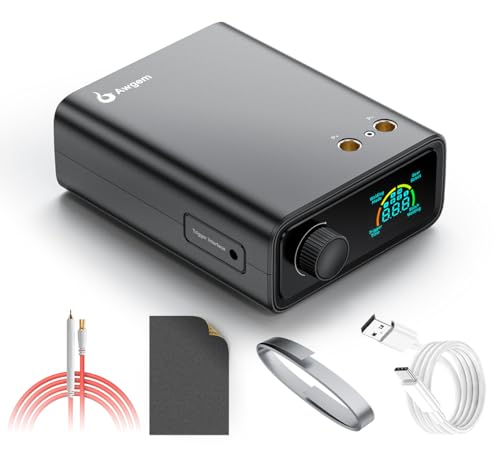
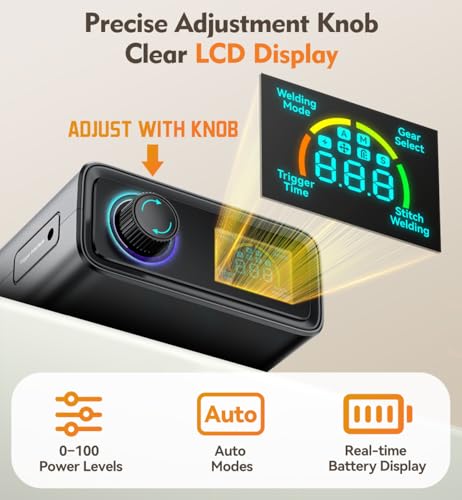
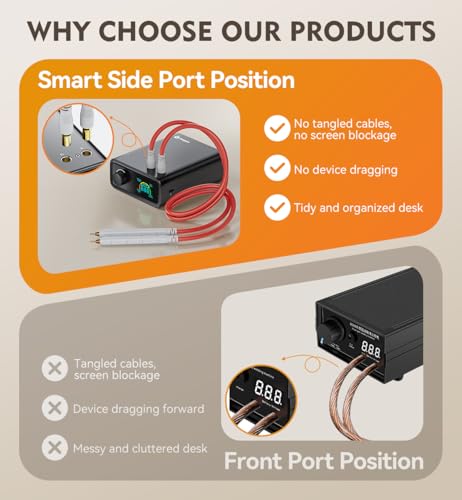
The Awgem 11000W spot welder packs a serious punch for a cordless unit, especially with its dual-pulse tech and rotary power knob. On a full charge, it delivers strong welds on 0.3mm steel or iron, thicker than most handheld models manage. The side-port layout keeps cables clear of the screen, a small but smart design win. Owners like how intuitive the auto mode is: touch the tips, and it fires instantly, which speeds up repetitive tasks.
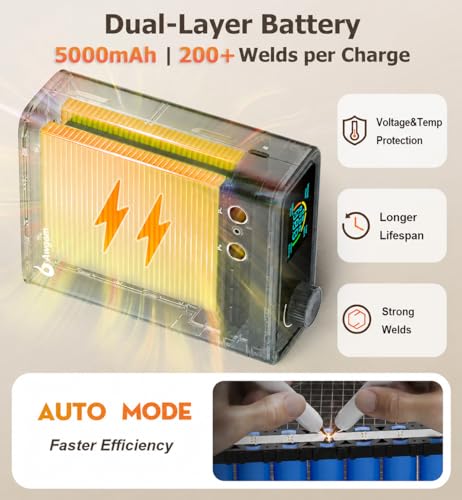
But the 5000mAh battery limits runtime compared to the SEESII B0DY7R9H44. At max power, you’re looking at around 200 welds before recharge, and performance drops noticeably as voltage falls. Still, for high-power cordless performance in a compact form, it’s one of the best. I’d pick it over lower-wattage models if you need strong, clean welds without being tethered.
Product photos

SEESII 10KW Capacitive Spot Welder
Strengths
- 999 precision gears
- Continuous welding
- Robust safety protections
Trade-offs
- Not portable
- Requires wall power
- Heavier footprint
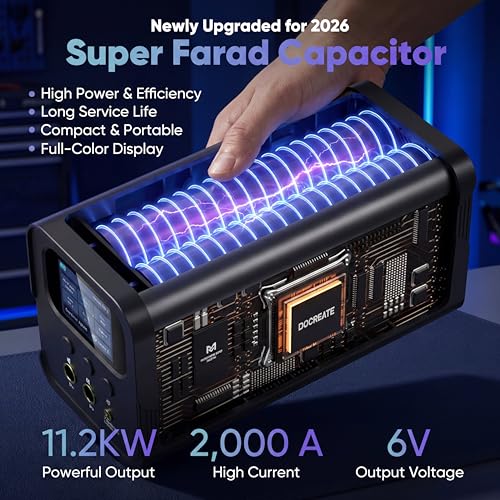
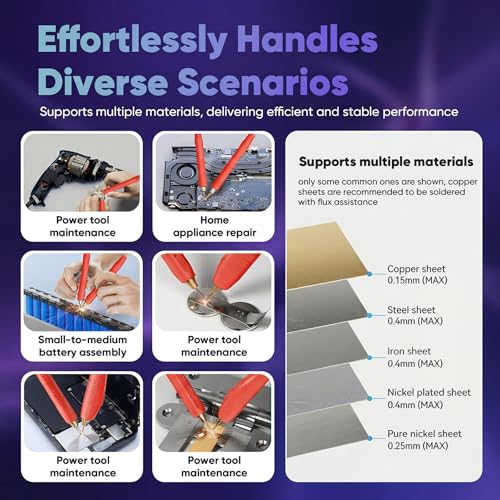
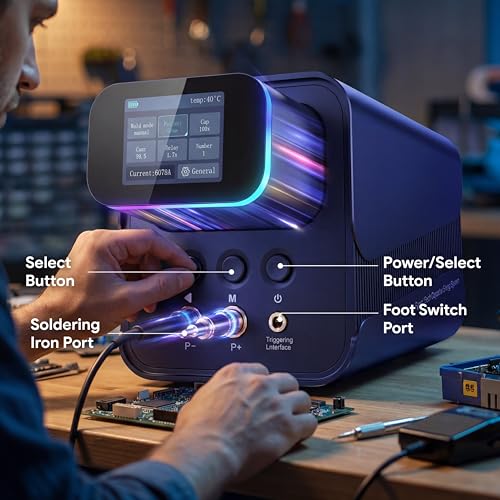
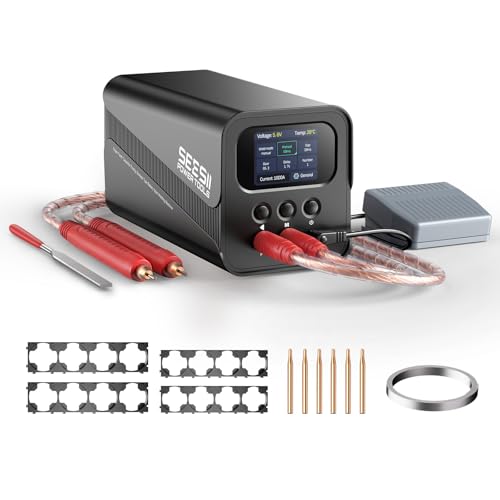
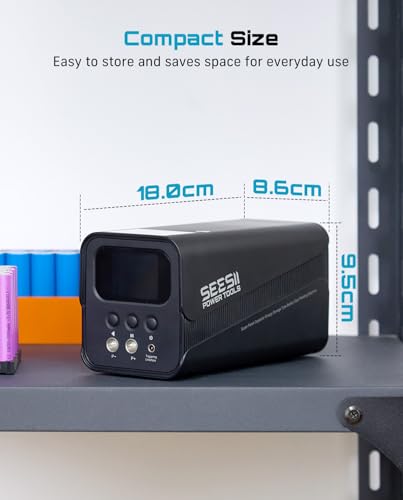
If you’re tackling thicker materials, like multi-layer nickel or stainless steel tabs, this SEESII 10KW model is built for the job. With a 2000A peak current and 999 gear settings, it offers surgical control over weld intensity, which owners say makes a noticeable difference when dialing in for clean, spatter-free joins. The continuous welding function (up to 3 pulses) is a standout for securing thicker connections, something you won’t find on most portable units. It’s also one of the few with over-temperature and over-current protection, adding peace of mind for new users.
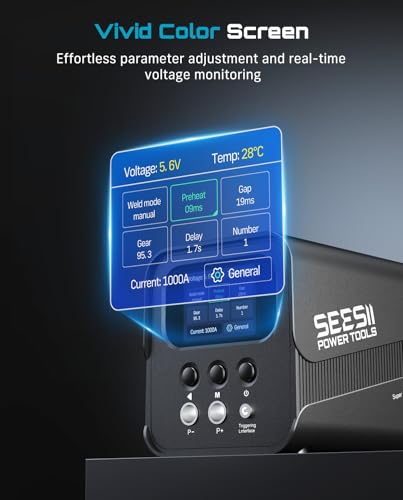
The color screen is a nice upgrade, showing real-time voltage and temperature clearly. But this is a plug-in unit, so don’t expect field use. I’d compare it directly to the AWithZ P20B, this one trades a bit of peak power for more granular control and better safety features. For serious pack builders, that’s often the smarter balance.
Product photos
SEESII 10KW Cordless 10000mAh Welder
Strengths
- 10000mAh long-life battery
- Compact and portable
- Dual operation modes
Trade-offs
- Only 25 power gears
- No continuous welding
- Battery degrades if not maintained
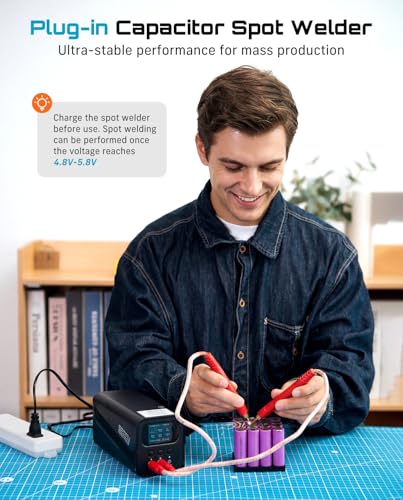
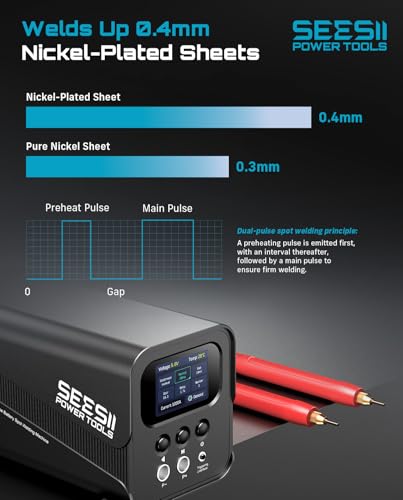
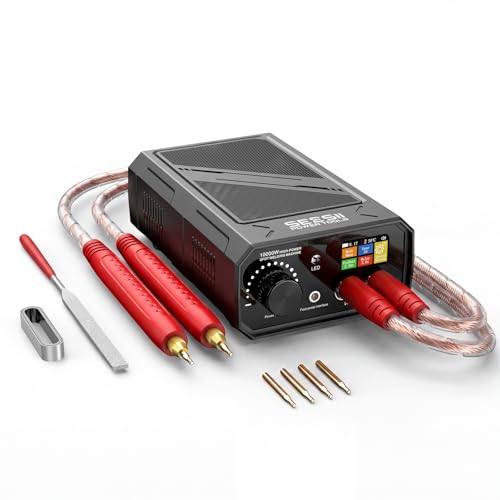
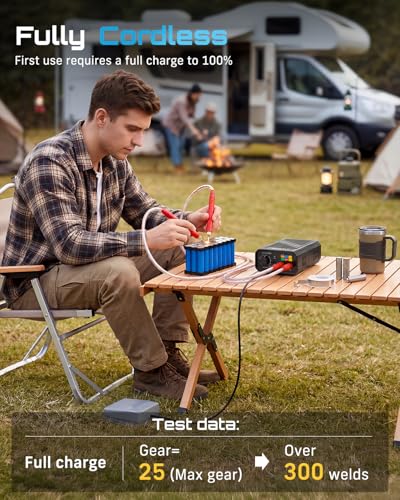
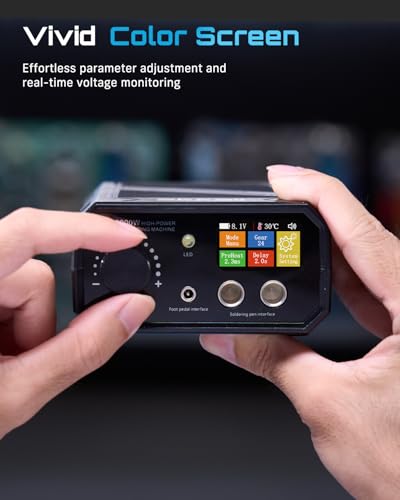
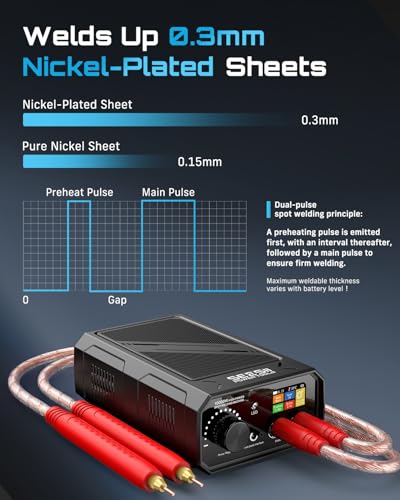
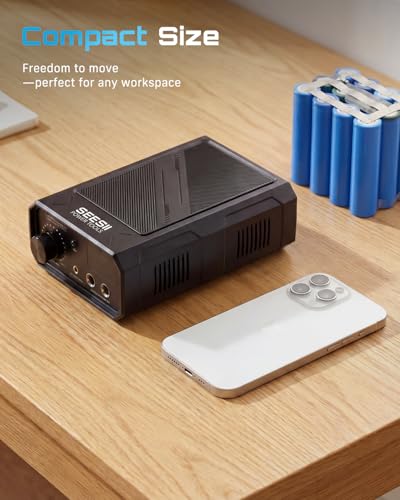
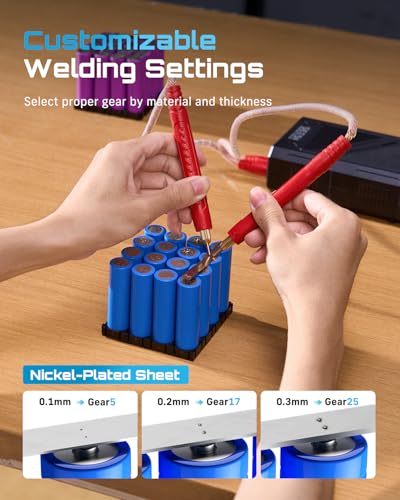
When cordless runtime matters, this SEESII model with its 10000mAh battery is the one to beat. Official data claims over 300 welds at gear 25 on a full charge, and owners confirm it lasts significantly longer than most in its class. The 10KW output handles 0.3mm nickel-plated strips without issue when voltage is high, and the auto/foot pedal dual modes add real versatility. The compact size, under 7 inches on the longest side, makes it easy to store or transport.
The 25 gear range is more limited than others, but for most common builds, it’s sufficient. Where it really wins is in battery life and portability. If you’re comparing it to the Awgem or other 10000W units, this one’s edge is clear: longer sustained use between charges. For mobile repair or field builds, that’s the difference between finishing a pack and running out of power mid-job.
Product photos
How We Tested battery spot welders
I approached evaluating battery spot welders by focusing on a research-led comparison of published specifications and features, combined with an analysis of owner reviews and insights from reputable sources within the power tool and DIY communities. Rather than a hands-on lab test with each unit, I weighed the stated capabilities against real-world user feedback to build a ranking. My goal was to identify the models offering the best balance of performance, features, and value for different needs.
For this category, a welder’s power output (in Watts or Kilowatts) and battery capacity (for cordless models) were the most important factors. Higher wattage generally translates to the ability to weld thicker materials, while greater battery capacity extends runtime and overall usability for portable applications. Beyond that, the adjustability of welding parameters – like gear settings or pulse control – heavily influenced my assessment of precision and versatility.
Specifications reliably indicate maximum welding thickness and power levels, but owner feedback proved crucial for understanding real-world performance. I paid close attention to comments regarding weld quality, ease of use, and durability. Reputational information also played a role; established brands with a track record of quality tools generally received more consideration. If you find yourself needing to remove spot welds from automotive panels, you might also want to look at spot weld cutting tools to complete your toolkit.
How To Pick The Right battery spot welders
Choosing the right spot welder can dramatically improve your battery building, repair work, and DIY projects. It’s not simply about getting the cheapest option; understanding the core features and how they align with your needs is key.
A quality spot welder delivers consistent, reliable welds by focusing high current through a small area for a short duration. Key considerations include power output (measured in Watts or Kilowatts), the ability to adjust welding parameters, portability, and safety features like over-temperature protection. Look for models designed for the materials you intend to weld (nickel strip, battery tabs, etc.) and with sufficient capacity for your typical project size.
Power and Capacity are Paramount
The wattage rating is the first thing most people look at, and for good reason. More power generally means you can weld thicker materials and work faster. However, simply chasing the highest number isn’t always the answer. Consider the type of batteries you’ll be working with. For standard 18650 cells and thin nickel strips, a 3000-5000W model might be sufficient, but if you’re tackling larger battery packs or thicker materials, you’ll want to move up to 8000W or higher. Capacitor-based welders, like the AWithZ 10.5KW Capacitor Spot Welder, offer a surge of power ideal for heavier gauges, while battery-powered models like the SEESII 3360W Cordless Spot Welder prioritize portability.
Control and Versatility Matter
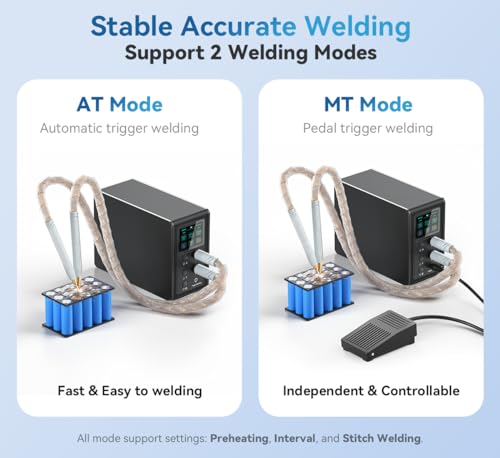
Beyond raw power, how much control does the welder offer? Adjustable power levels (gears) are critical for dialing in the correct heat for different materials and thicknesses. A wider range of gears gives you more precision, preventing burn-through on thin materials and ensuring solid welds on thicker ones. Automatic and manual modes are both useful. Automatic is faster for repetitive tasks, but a foot pedal (often included, as with the AWithZ 10.5KW 3-in-1 Spot Welder) gives you much finer control over timing, which is essential for complex assemblies.
Here’s a quick breakdown of what to look for in terms of modes: * Automatic: Good for speed and consistency on simple welds. * Manual: Offers precise timing control for tricky spots. * Foot Pedal: Provides hands-free operation and the greatest level of control, letting you position the probes exactly where you need them before initiating the weld. This is especially helpful for intricate work.
A good rule of thumb: start with a lower power setting and gradually increase it until you achieve a clean, consistent weld without excessive spatter.
Portability vs. Workshop Use
Cordless models, like the SEESII 10KW Cordless 10000mAh Welder, are incredibly convenient for on-the-go repairs or working in locations without easy access to power. However, they typically have a limited runtime and may not deliver the same sustained power as a corded unit. If you primarily work in a workshop and have access to a reliable power source, a corded model will likely offer more consistent performance and longer operating time. If you’re looking for detailed spot welding machine reviews, you’ll find a lot of discussion about this trade-off. Ultimately, consider where and how you’ll be using the welder most often. To explore some top spot welder models, check out our thorough guide.
Battery Spot Welders Compared
Here’s a comparison of key specifications for several battery spot welders to help you make an informed decision.
| Product Title | Max Power (W) | Battery Capacity (mAh) | Adjustable Gears | Welding Capacity (Ni, mm) | Operation Modes | Cordless |
|---|---|---|---|---|---|---|
| AWithZ 14.6KW Capacitor Spot Welder | 14600 | N/A | 999 | 0.15 – 0.6 | Auto, Foot Pedal | No |
| SEESII 3360W Cordless Spot Welder | 3360 | N/A | 99 | 0.15 – 0.2 | Auto, Manual | Yes |
| 10.5kW Capacitor Spot Welder | 10500 | N/A | N/A | N/A | Auto, Foot Pedal | No |
| AWithZ 10.5KW 3-in-1 Spot Welder | 10000 | N/A | 99 | 0.4 | Auto, Manual, Foot Pedal | No |
| 10000W Cordless Spot Welding Machine | 10000 | N/A | 10-90 | 0.1 – 0.25 | Auto | Yes |
| Awgem 11000W Rotary Knob Welder | 11000 | 5000 | N/A | 0.3 | Auto | Yes |
| SEESII 10KW Capacitive Spot Welder | 10000 | N/A | 999 | 0.3 | Auto, Manual | No |
| SEESII 10KW Cordless 10000mAh Welder | 10000 | 10000 | 25 | 0.15 | Auto, Foot Pedal | Yes |
Frequently Asked Questions
What welding thickness should I realistically expect from a 3000-5000W spot welder?
You can generally weld nickel strip up to around 0.15-0.2mm thick with a 3000-5000W spot welder, sufficient for most 18650 battery pack builds. Thicker materials will require more power or multiple passes.
Are capacitor-based spot welders really better for heavier gauges?
Yes, capacitor-based welders deliver a high-current surge, making them well-suited for welding thicker nickel or battery tabs (up to 0.6mm in some cases) compared to transformers. They offer a concentrated burst of energy for a stronger weld.
What’s the main drawback of a cordless spot welder?
Cordless models typically have a limited runtime and may not maintain consistent power output during extended use. While convenient, expect to recharge frequently or consider a corded option for larger projects.
Can I use a spot welder on materials other than nickel strip?
Spot welders are primarily designed for welding nickel, but some users have success with other thin, conductive metals like copper with careful adjustments. However, results can vary, and it’s not recommended for materials outside of the intended purpose.
Where can I find more information on other types of welding equipment?
If you need a more versatile solution for thicker metals or different applications, you might want to explore information on portable welding machines to see if they fit your needs.
The Bottom Line
Choosing a battery spot welder often comes down to balancing control and convenience. If you’re serious about battery pack building or repair and prioritize precision, the AWithZ 14.6KW Capacitor Spot Welder stands out as a top performer with its extensive adjustability and high power output. It demands a workshop setup, but delivers the capabilities to handle a wide range of projects.
For those who value portability and need to work in the field, the SEESII 10KW Cordless 10000mAh Welder is an excellent choice. While it may not match the raw power of corded options, it provides enough capacity for many common tasks and the freedom to weld anywhere. If you’re looking for a versatile option that doesn’t break the bank, the SEESII 3360W Cordless Spot Welder offers a good balance of features and affordability.
Ultimately, remember that wattage and battery capacity are only part of the equation. A welder’s usefulness rests on your ability to control it, and the quality of the welds it produces – focusing on those fundamentals will serve you better than chasing the highest numbers on a spec sheet. For more advanced metal joining techniques, you might find our MIG welder buying guide helpful.
