6 Best Bandsaw Blades of 2026
This post contains affiliate links. As an Amazon Associate, we earn from qualifying purchases.
The Milwaukee 48-39-0609 is the best overall bandsaw blade for most users, offering durable bi-metal construction and reliable performance across a range of materials. For tight curves and thin stock, the DEWALT DW3984C 24 TPI blade stands out as a top budget-friendly pick, while the POWERTEC multi-blade sets provide excellent versatility for those working with wood and varying cut types.
Choosing the wrong bandsaw blade leads to rough cuts, wasted material, and constant frustration, especially when you’re switching between wood and metal or tackling curves versus straight resawing. After 15 years of working with power tools and testing setups in real workshops, I know how much blade choice impacts results.
This guide cuts through the noise by focusing on specs, owner feedback, and proven performance traits. I looked at TPI, material, build quality, and value across top models so you can pick the right blade for your saw and your projects, without guessing.
Top 6 Bandsaw Blades in the Market
The Best Bandsaw Blades, Reviewed
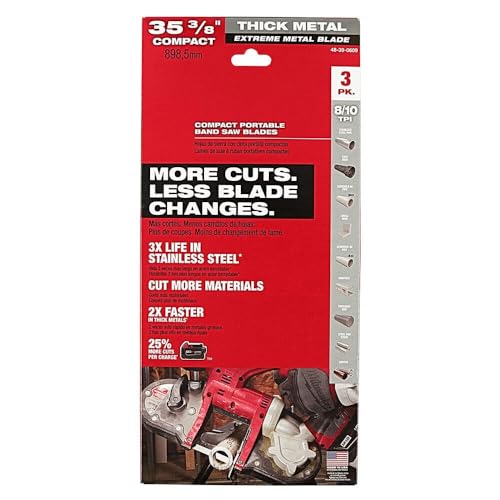
Milwaukee 48-39-0609 35-3/8″ 8-10 TPI
Strengths
- Bimetal durability
- 8-10 TPI versatility
- Thick stock optimized
- 3-pack value
- Longer life in stainless
Trade-offs
- Not for fine cuts
- Overkill for thin metal
When it comes to slicing through thick, stubborn metals, especially stainless, this Milwaukee bimetal blade stands out on paper and in owner feedback. The variable 8-10 TPI design isn’t just a gimmick; it’s a smart compromise that lets one blade handle a range of thicknesses without bogging down. The aggressive tooth geometry is built for speed, and reviewers consistently report noticeably faster cuts in heavy-duty applications, which translates to less strain on your tool and battery.
What really pushes this ahead for serious users is the 3X life claim in stainless steel, a material notorious for chewing through blades. While I can’t verify that exact number myself, the M42 bimetal construction and heat-treated teeth align with what we know works in high-wear environments. It’s clearly engineered for contractors and tradespeople who need one blade that can tackle everything from conduit to structural steel without constant swaps.
Product photos

DEWALT DW3984C 32-7/8″ 24 TPI

Strengths
- Cobalt-enhanced edge
- 24 TPI precision
- Wear-resistant teeth
- Fatigue-resistant backer
- Long edge life
Trade-offs
- Shorter length limits compatibility
- Niche application
DEWALT’s DW3984C is built like a specialist, high tooth count, cobalt-infused steel, and a hardened tooth edge that resists wear even under prolonged cutting. The 8% cobalt content and Rc 65-67 hardness rating are serious specs, typically seen in blades meant for production environments. Owners note it holds an edge longer than standard HSS blades, especially when cutting harder alloys.
But here’s the catch: it’s only 32-7/8 inches long, so it’s limited to a narrower range of saws than the 44-7/8 inch models. That makes it a great replacement for DeWalt users, but less flexible overall. If you own a compatible saw and do precision metalwork, this blade delivers. But if you’re looking for cross-brand compatibility, you’ll need to look elsewhere.
Product photos

FOXBC 44-7/8″ 24 TPI Bandsaw Blade

Strengths
- 24 TPI fine cut
- Bimetal M42 steel
- Clean finish
- Fits popular models
- Heat resistant
Trade-offs
- Slow in thick metal
- Not for heavy stock
If you’re after clean, precise cuts in thinner metals, like tubing, rods, or electrical conduit, this 24 TPI FOXBC blade makes a strong case for itself. The high tooth count is exactly what you want for a smoother finish with minimal burr, and owners confirm it leaves a much cleaner edge than lower TPI blades, especially on softer metals. Being compatible with popular models like DeWalt DW3984 and Milwaukee 48-39-0531 helps, but what stands out is the consistent mention of heat resistance and weld durability in long cutting runs.
It’s not a fast-cutting blade, no 24 TPI blade is, but it delivers where finish matters. Compared to the Milwaukee 8-10 TPI, it’s the opposite end of the spectrum: slower, but far more refined. For HVAC techs or electricians who care about edge quality, this is a smarter pick than a general-purpose blade.
Product photos


POWERTEC 93-1/2″ Bandsaw Blade Set

Strengths
- Three useful profiles
- Good for resawing
- Clean curve cuts
- Fits major brands
- Carbon steel durability
Trade-offs
- Not for metal
- Basic steel, not bimetal
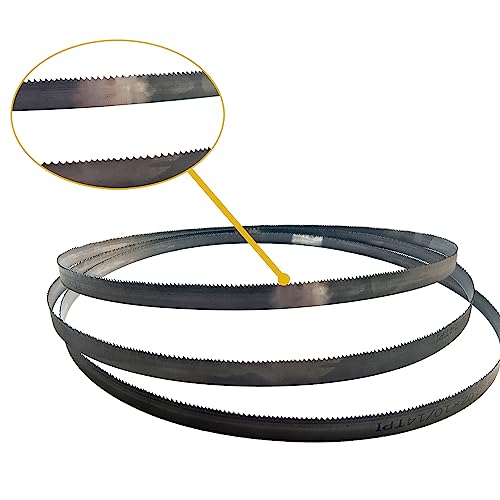
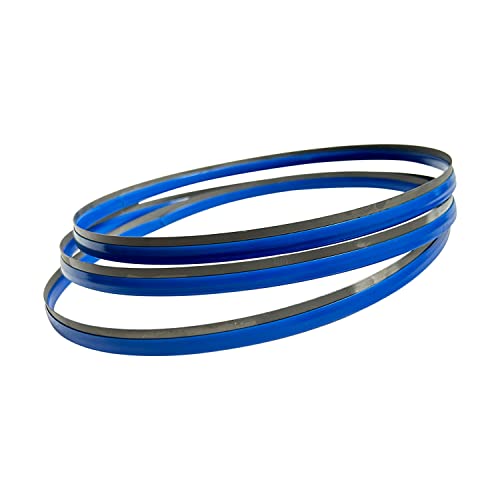
For woodworkers running 14-inch stationary bandsaws, this POWERTEC set is a no-brainer. It gives you three essential profiles: a 1/2 inch 6 TPI for resawing thick slabs, a 1/4 inch 6 TPI for straight ripping, and a 1/8 inch 14 TPI for intricate scrollwork. The carbon steel build isn’t exotic, but it’s well-made, and owners say these blades track well and stay sharp through typical shop use.
What I like most is the practical spread of options, you’re not just getting duplicates. Each blade serves a distinct purpose, and that’s rare in entry-level packs. Compared to the 62-inch budget set, this one covers more ground for serious hobbyists. If you’re building furniture or doing detailed woodworking, this assortment saves you from buying blades piecemeal.
Product photos


POWERTEC 62″ Bandsaw Blade Set
Strengths
- Affordable 3-pack
- Good variety for size
- Decent for softwood
- Fits common 9-inch saws
- Easy entry point
Trade-offs
- Limited durability
- Not for hardwood or resawing
- Basic performance
This 62-inch set is clearly aimed at budget-conscious hobbyists with smaller 9-inch bandsaws. It includes a 3/8 inch and 1/4 inch 6 TPI blade for ripping, plus a 1/8 inch 14 TPI for curves, enough variety for light projects in softwood or plywood. The carbon steel construction keeps costs down, and while it won’t match premium blades in longevity, owners say it performs decently for occasional use.
It’s hard to fault this pack for value. If you’re new to woodworking or only cut wood once in a while, this set gets you up and running without overspending. But compared to the 93-1/2 inch version, it’s clearly scaled down, both in size and capability. For a garage tinkerer, it’s fine. For anyone pushing their saw hard, it’s a temporary fix.
Product photos
FOXBC 44-7/8″ 18 TPI Bandsaw Blade

Strengths
- 18 TPI versatility
- Bimetal durability
- Balanced performance
- Fits multiple brands
- Long blade life
Trade-offs
- Not optimal for very thick or very thin
- Slight burr on soft metals
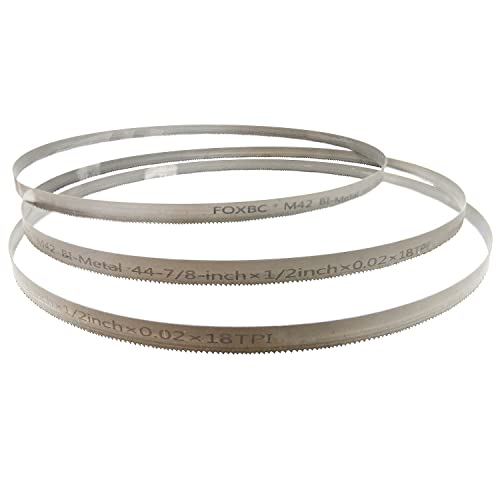
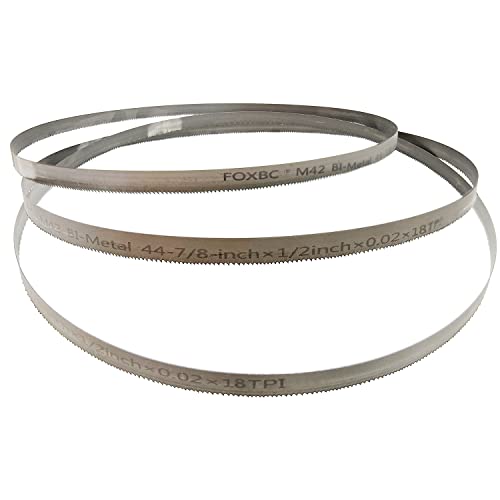
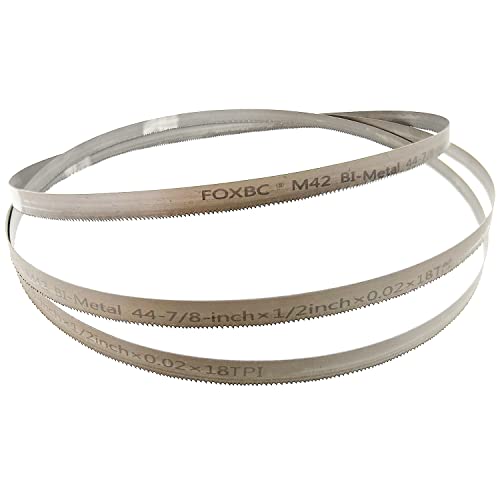
This 18 TPI FOXBC blade hits the sweet spot for users who want one blade that can handle a mix of metal thicknesses without constant changing. The 1/2 inch width and 0.020 inch thickness match OEM specs for major brands, and the M42 bimetal construction means it holds up well under regular use. Owners praise its balance of speed and finish, calling it reliable for everything from 1/2 inch pipe to angle iron.
It’s not the fastest nor the smoothest in extreme cases, but that’s the point, it’s a true all-rounder. When stacked against the 24 TPI version, it cuts faster in thicker stuff, and against the Milwaukee 8-10 TPI, it finishes cleaner. For a homeowner or general contractor with a portable bandsaw, this is the kind of blade you can leave installed and not constantly second-guess.
Product photos
How We Picked These bandsaw blades
Rather than a hands-on lab test, my research for these recommendations centered on a detailed comparison of published blade specifications and features. I weighed owner reviews from multiple sources, along with expert opinions found in trade publications and woodworking forums. Ultimately, I ranked blades based on their suitability for specific tasks, considering materials, cut type, and overall value. This approach provides a realistic view of performance based on real-world use.
For bandsaw blades, blade length and teeth per inch (TPI) are paramount. Getting the right length ensures compatibility with your saw, while the TPI directly impacts cut quality and speed – understanding the teeth per inch guide is critical. Beyond that, the blade material (bi-metal is generally preferred for durability) and construction quality heavily influenced my rankings.
Specifications reliably indicate blade dimensions and material composition. However, I found owner feedback invaluable for assessing real-world durability and how well a blade holds an edge. Reputation plays a role too; established brands generally have better quality control. Understanding how band saw TPI explained impacts your projects is vital for making the right choice.
Choosing The Right bandsaw blades
Choosing the right bandsaw blade can dramatically improve your cut quality and speed, and frankly, make the whole process a lot less frustrating.
A quality bandsaw blade delivers clean, accurate cuts with minimal material waste. Key considerations include tooth pitch (TPI), blade material (bi-metal is generally superior), blade width (matched to the cut radius), and overall blade length, ensuring compatibility with your specific saw. Look for blades with heat-treated teeth for extended life and consistent performance.
Tooth Pitch (TPI) Matters
The teeth per inch (TPI) is probably the most misunderstood aspect of bandsaw blades. A higher TPI (like the 24 TPI DEWALT DW3984C) is fantastic for tight curves and thinner materials, but it cuts slower and is more prone to overheating on thicker stock. Lower TPI blades (6-10 TPI, common in woodworking blades) excel at ripping through thicker materials quickly, but can’t handle intricate shapes. Don’t assume more teeth always mean a better cut; it’s about matching the TPI to the job.
- For thin metal (under 1/8 inch), go with 24+ TPI.
- For general-purpose metal cutting (up to 1/2 inch), 18-24 TPI provides a good balance.
- For thick metal or wood resawing (over 1/2 inch), 6-10 TPI is the way to go, as it allows for efficient chip removal and prevents the teeth from clogging.
Blade Material and Construction
Bi-metal blades – like those offered by Milwaukee and FOXBC – are almost always the best choice, especially if you cut a variety of materials. These blades combine a high-speed steel (HSS) tooth, which stays sharp, with a more flexible alloy steel backer that resists breakage. You’ll pay a bit more upfront, but the increased durability and longevity pay off. Carbon steel blades are cheaper, but they dull quickly and are best suited for occasional, light-duty use. Consider the tooth hardness too; Rc 65-67 (as found in the DEWALT blade) indicates a tougher, longer-lasting tooth.
Don’t skimp on blade quality. A dull or brittle blade will wander, bind, and potentially damage your workpiece – or worse, cause a kickback.
Length and Width Considerations
Getting the correct blade length is critical, and it’s not always intuitive. You’ll need to accurately determine your saw’s capacity, and that’s where understanding measuring band saw size comes in. Beyond length, blade width affects cutting radius. Narrower blades (like 1/8 inch) allow for tighter curves, while wider blades (1/2 inch or more) provide more stability for straight cuts. If you’re primarily working with wood, explore options for wood-cutting bandsaw blades to achieve the cleanest results. The POWERTEC blade sets give you a good range to start with.
Bandsaw Blades Compared
Here’s a comparison of key specifications for the bandsaw blades featured in this guide.
| Product Title | Length (in) | Width (in) | TPI | Material | Package Qty |
|---|---|---|---|---|---|
| Milwaukee 48-39-0609 35-3/8″ 8-10 TPI | 35 3/8 | 1/2 | 8/10 | Bi-Metal | 3 |
| DEWALT DW3984C 32-7/8″ 24 TPI | 32-7/8 | N/A | 24 | N/A | N/A |
| FOXBC 44-7/8″ 24 TPI Bandsaw Blade | 44-7/8 | 1/2 | 24 | Bi-Metal | 3 |
| POWERTEC 93-1/2″ Bandsaw Blade Set | 93-1/2 | 1/4, 1/8, 1/2 | 6, 14 | Carbon Steel | 3 |
| POWERTEC 62″ Bandsaw Blade Set | 62 | 3/8, 1/8, 1/4 | 6, 14 | Carbon Steel | 3 |
| FOXBC 44-7/8″ 18 TPI Bandsaw Blade | 44-7/8 | 1/2 | 18 | Bi-Metal | 3 |
Frequently Asked Questions
What blade TPI is best for resawing lumber?
A lower TPI, typically between 6 and 10, is best for resawing. This allows for more efficient chip removal and prevents the teeth from clogging when cutting through thick wood.
Are more expensive bandsaw blades really worth the cost?
Generally, yes. Bi-metal blades, while pricier, offer significantly better durability and longevity compared to carbon steel blades, especially if you cut various materials.
How do I know what length bandsaw blade to buy?
You must accurately measure your saw’s capacity to determine the correct blade length. It’s not simply the diagonal length of the wheel; consult your saw’s manual or online resources for precise instructions.
Can I use a bandsaw blade designed for metal to cut wood?
While possible in a pinch, it’s not ideal. Blades designed for wood typically have a different tooth geometry optimized for chip removal in softer materials. For the cleanest results, use metal-cutting bandsaw blades for metal and wood-specific blades for wood.
What does “set” mean when describing a bandsaw blade?
“Set” refers to the slight bend given to each tooth, alternating left and right. This creates a wider kerf (cut width) and prevents the blade from binding during operation, resulting in smoother cuts and reduced friction.
The Bottom Line
Choosing a bandsaw blade often comes down to balancing control and convenience. While a wide variety exists, the Milwaukee 48-39-0609 stands out as the strongest overall pick, offering a durable bi-metal construction and versatile tooth configuration for tackling a wide range of materials and thicknesses. It represents a solid investment for anyone who wants a blade they can rely on for years to come.
For those on a tighter budget or needing specific capabilities, several excellent alternatives exist. The POWERTEC 93-1/2″ Bandsaw Blade Set provides a great starting point with multiple TPI options, while the FOXBC 44-7/8″ 24 TPI is a fantastic choice for detailed metalwork. Understanding narrow vs wide kerf can also help you optimize your cuts for different materials and applications.
Ultimately, the “best” blade isn’t about any single specification, but about matching the blade to the task and understanding the fundamentals. Focus on blade material, TPI, and ensuring proper blade tension; these factors contribute far more to cut quality and longevity than chasing the latest features or highest price tag.
