
9 Best Balloon Inflators of 2026
This post contains affiliate links. As an Amazon Associate, we earn from qualifying purchases.
The Keaibuding 4-in-1 Electric is the best overall balloon inflator for its speed and versatility, closely followed by the Wotalk 4-in-1 for handling all balloon types. If you’re watching your budget, the PCFING Electric Dual Nozzle delivers solid performance without the higher price tag.
Blowing up balloons by mouth is a thing of the past, but not all electric inflators are created equal. I’ve seen too many people waste time and money on underpowered or single-use pumps that fail halfway through a party setup. After comparing the field and analyzing owner feedback, I focused on models that deliver real-world speed, handle multiple balloon types, and are built to last. This guide cuts through the noise to highlight the ones that actually perform when you need them most.
Top 9 Balloon Inflators in the Market
The Best Balloon Inflators, Reviewed
Keaibuding 4-in-1 Electric Balloon Pump
Strengths
- Triple inflation ports
- Deflates vacuum bags
- Comes with storage bag
Trade-offs
- Slightly bulkier design
- Nozzle organization could be better
- Motor needs cooldown
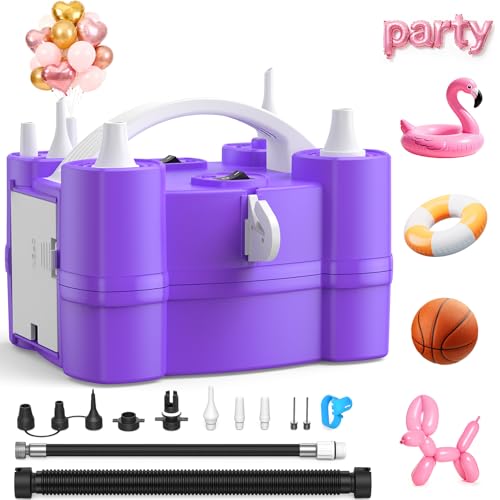
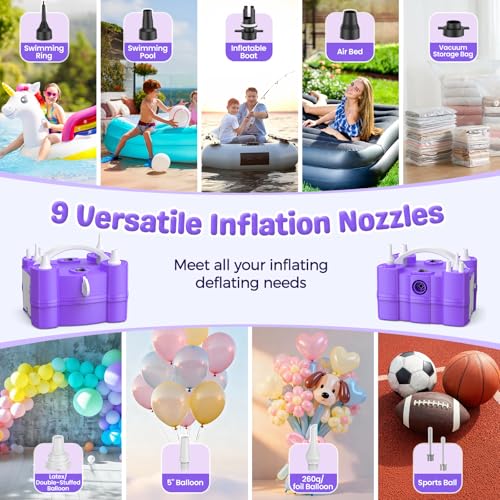
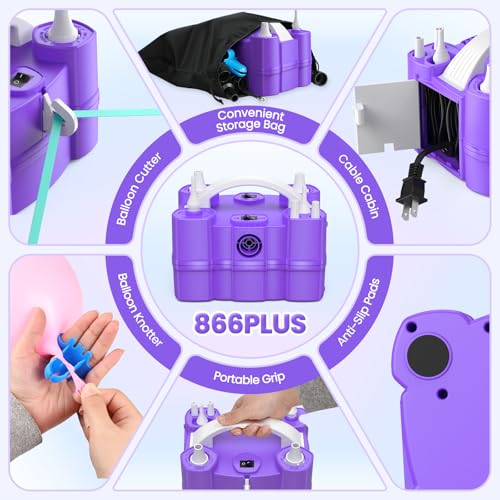
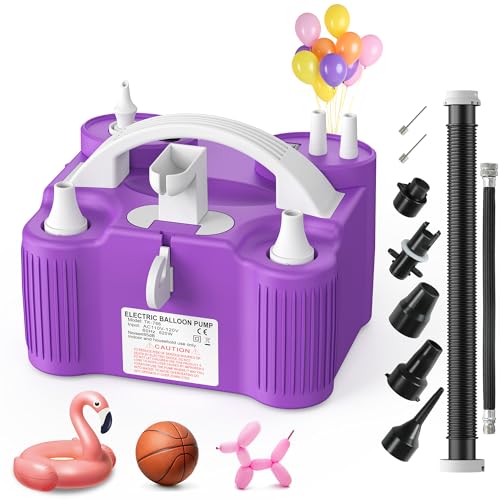
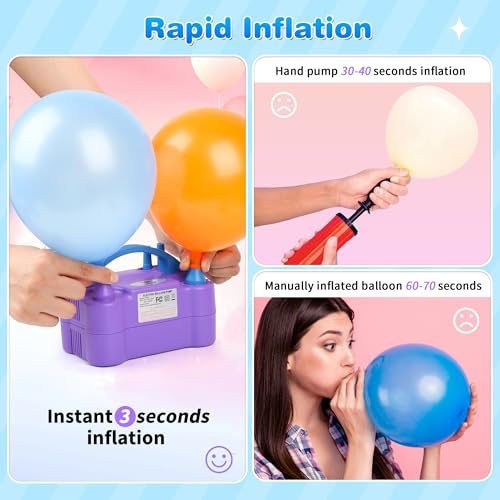
This is the model I’d recommend to most buyers who want one tool to do everything. The Keaibuding 4-in-1 isn’t just a balloon pump, it’s a full inflation workhorse with triple ports, deflation capability, and a full kit of nozzles for sports balls, air mats, and vacuum bags. Its 3-second balloon inflation time matches top performers, and the ability to run all three ports at once is a real time-saver. Owners love the included dust-proof storage bag and the thoughtful touches like the balloon cutter and knotter.
It’s not the lightest, but the build quality feels durable, and the non-slip base keeps it steady during use. Compared to the Wotalk model, it has a similar feature set but slightly better ergonomics. If you’re tired of owning five different pumps, this consolidates them without sacrificing performance.
Product photos
Wotalk 4-in-1 Electric Balloon Pump
Strengths
- Supports 260Q balloons
- Triple specialized ports
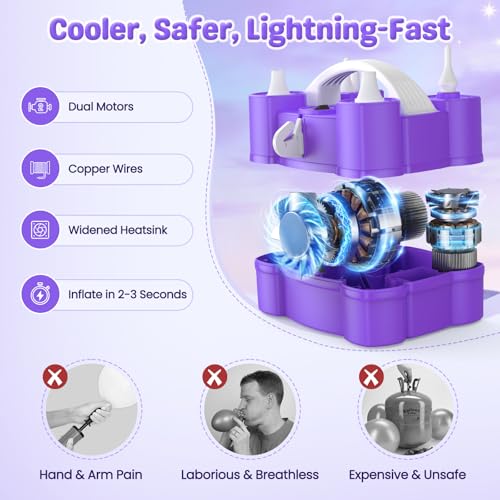
- Auto overheat protection
Trade-offs
- Slightly slower on bulk latex
- Requires port management
- Noisy during long use
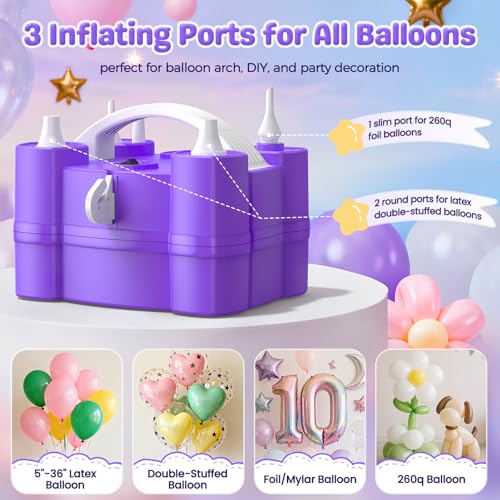
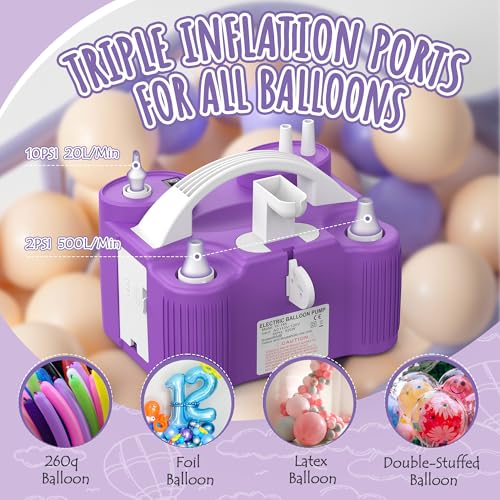
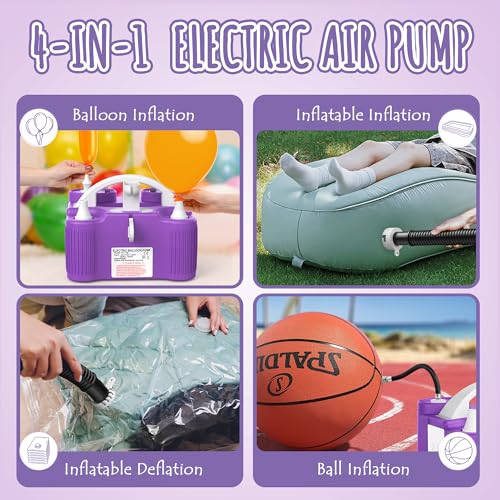
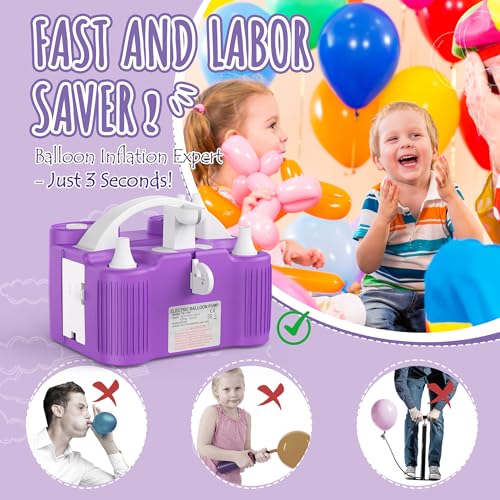
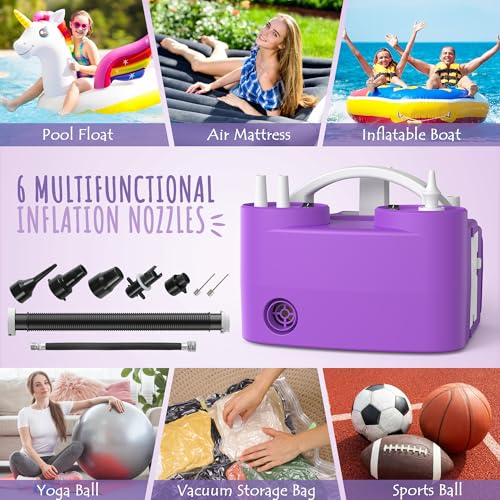
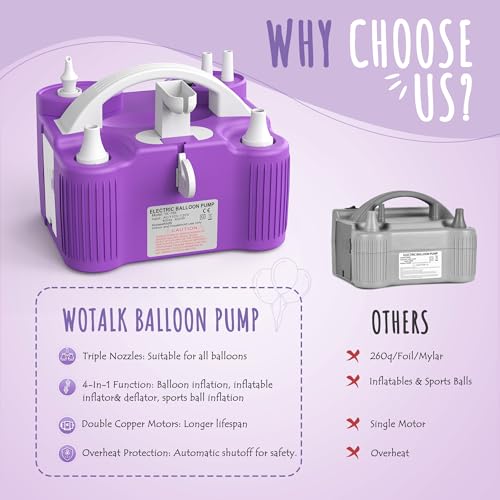
The Wotalk 4-in-1 is the most balloon-inclusive pump in this lineup. Its triple-port design, two round for standard latex and one long for 260Q, mylar, and twisted balloons, means it’s the only model here that truly handles every balloon type out of the box. Owners confirm it’s a favorite among hobbyists and small pros who make balloon animals or arches. The 20L/min pressure on the long nozzle is specifically tuned for narrow balloons that struggle with weaker pumps.
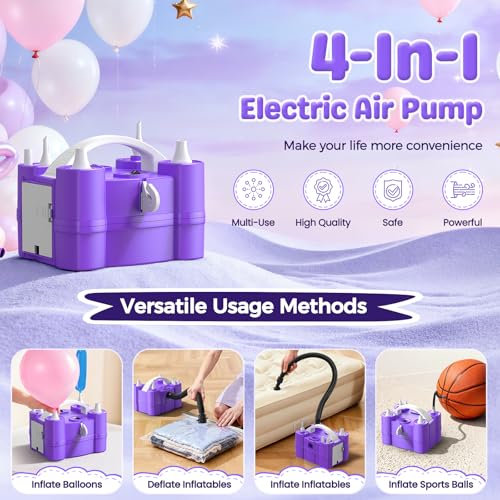
Beyond balloons, it doubles as a sports ball and inflatable pump, and the auto shut-off for overheating adds peace of mind. It’s not the fastest on bulk latex balloons compared to dual-port leaders, but its breadth of compatibility is unmatched. If you work with varied balloon types, this is the one to get.
Product photos
PCFING Electric Balloon Pump Dual Nozzle

Strengths
- Dual nozzle sizes
- Built-in balloon tying tool
- Compact and lightweight
Trade-offs
- Not for 260Q balloons
- No deflation function
- Limited for heavy use
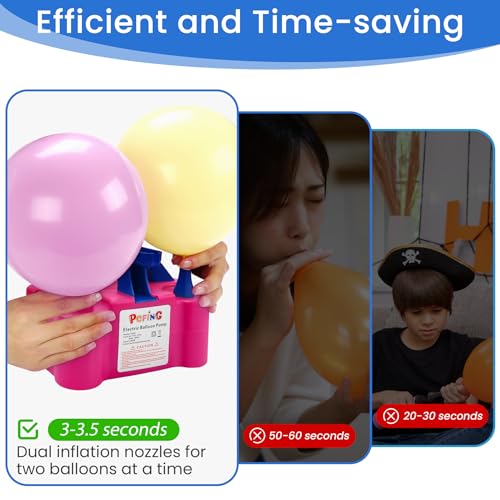
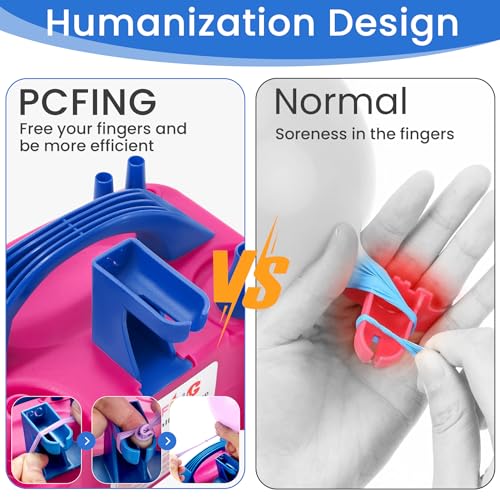
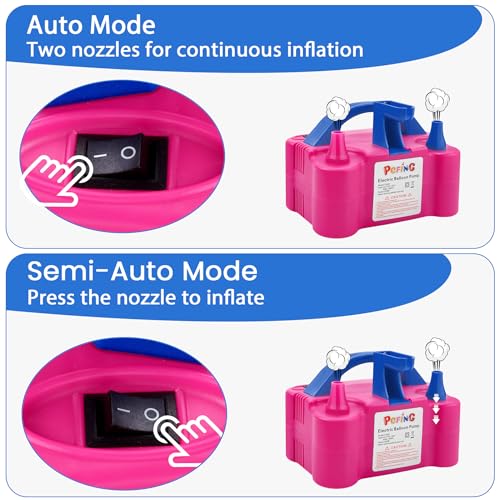
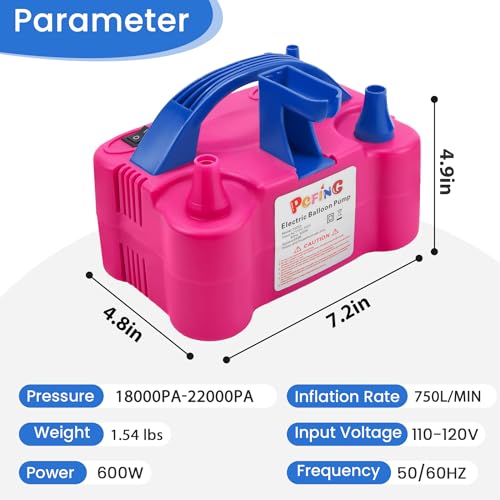
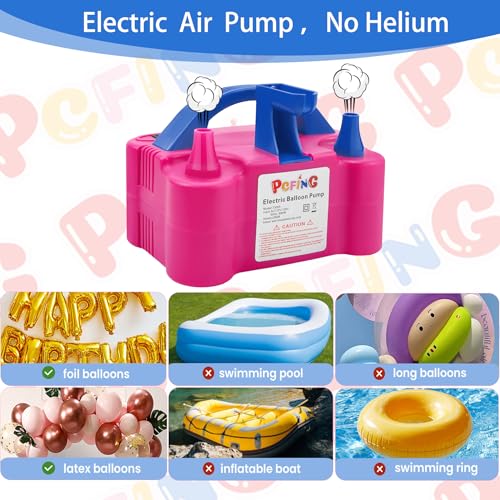
On paper, the PCFING electric balloon inflator looks like a solid budget pick, its 750L/min airflow and 18000–22000Pa pressure suggest it can keep up with mid-tier models, and owners consistently report getting through a dozen or so balloons in under a minute. The built-in tying tool is a standout feature for anyone who’s ever struggled with knotted fingers after a long session of hand-tying, and the dual nozzles mean you’re not constantly swapping parts when switching between standard latex and foil balloons.
Still, it’s clear this unit is built to hit a price point. It lacks the multi-port flexibility of higher-end models, and while it handles basic party setups well, reviewers note it can overheat during marathon use. It’s a no-frills machine that does what it promises, fast air inflation with decent portability, but don’t expect it to keep pace with pros or large-scale events.
Product photos
VOLLYC Electric Balloon Inflator Dual Nozzle
Strengths
- Extremely lightweight
- Simple one-button operation
- Dual nozzle design
Trade-offs
- Not for heavy-duty use
- No deflation function
- Limited accessories
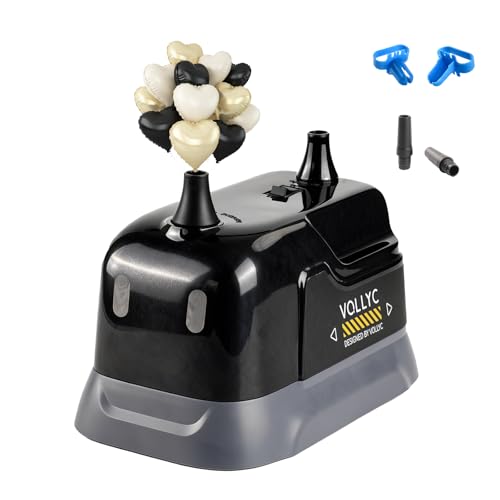
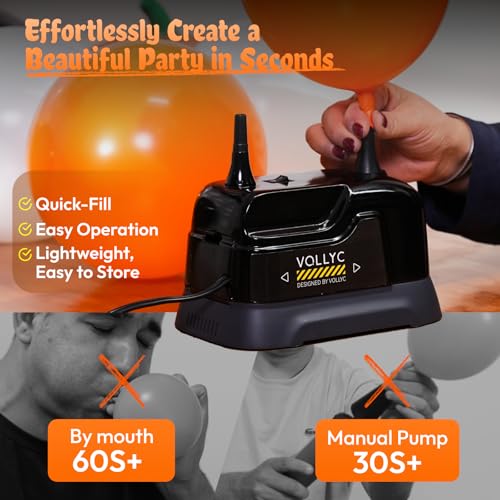
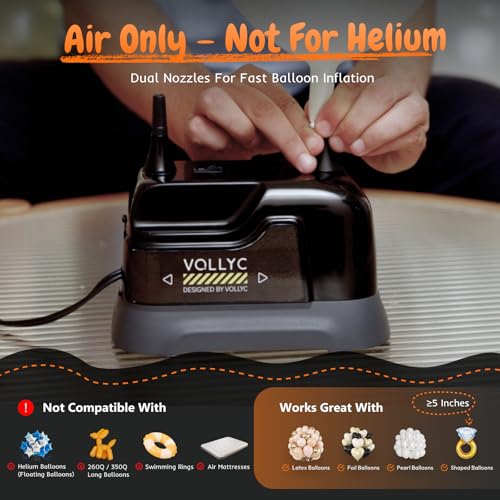
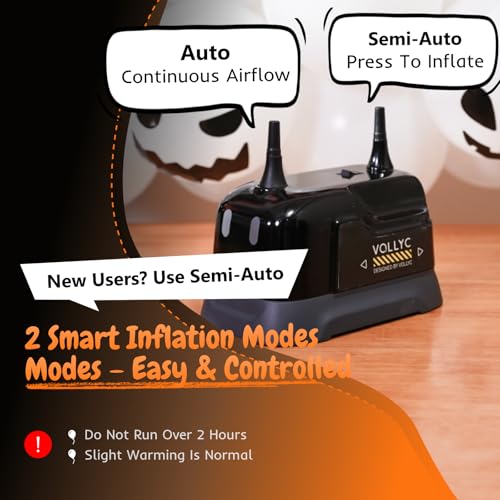
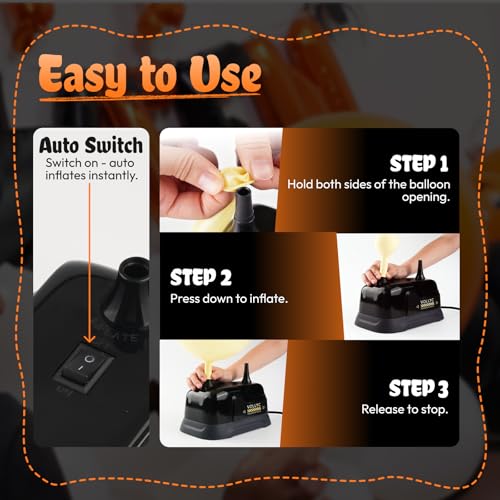
The VOLLYC wins on portability. At just over a pound and with a sleek, compact body, it’s the easiest electric pump to toss in a party bag or car trunk. It delivers solid performance for its size, owners say it handles 30–40 balloons without issue, and the simple two-button operation makes it accessible for kids or seniors. The automatic and semi-auto modes give flexibility, and the dual nozzle setup keeps inflation moving quickly.
But that lightweight design comes with trade-offs. It lacks the multi-function accessories of more versatile models, and while it’s durable for occasional use, it’s not built for marathon sessions. Still, if you’re someone who only throws a few parties a year and values ease of transport, this is a smart, hassle-free pick.
Product photos

Motorenbau Electric Balloon Pump Rose Red
Strengths
- 600W powerful motor
- Two operation modes
- 3-year warranty
Trade-offs
- No multi-function nozzles
- Limited balloon compatibility
- Can get noisy
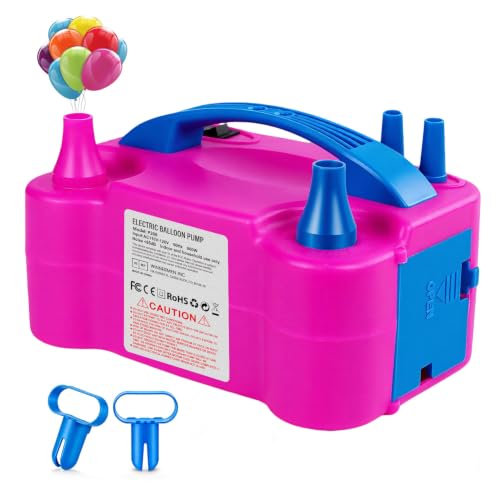
The Motorenbau unit feels like it was built specifically for party rental crews or frequent hosts. At 600W and with two operation modes, touch-on and continuous, it’s powerful enough to handle a full balloon arch setup in one go. Owners appreciate the balance between compact size and sustained performance, and the 3-year warranty signals confidence in durability. The dual nozzles are a practical touch, letting you inflate two balloons at once, though they’re limited to standard sizes.
Where it falls short is versatility. It’s strictly for balloons, with no accessory nozzles for sports balls or inflatables. And while it’s lightweight, the noise level creeps up during extended use, something a few reviewers mention. But if your focus is air-filled party decor and you need something reliable that won’t quit mid-event, this is a strong contender.
Product photos
NuLink Electric Balloon Pump Purple

Strengths
- Dual inflation ports
- Ergonomic handle
- Includes tying tools
Trade-offs
- Not for twist balloons
- No multi-use attachments
- Short duty cycle
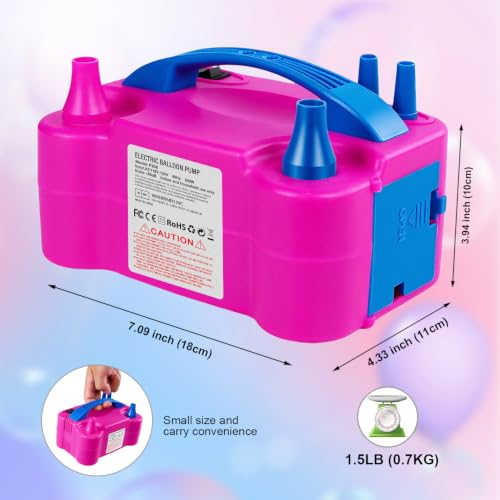
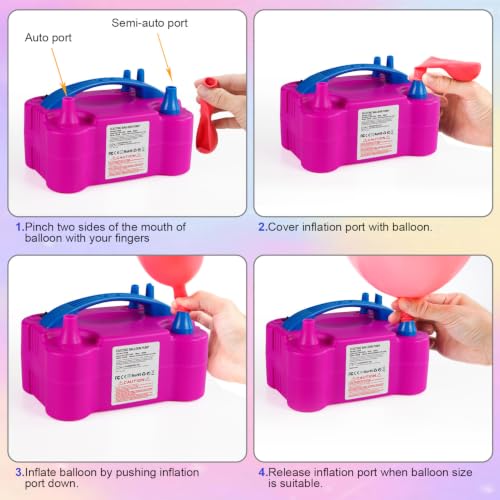
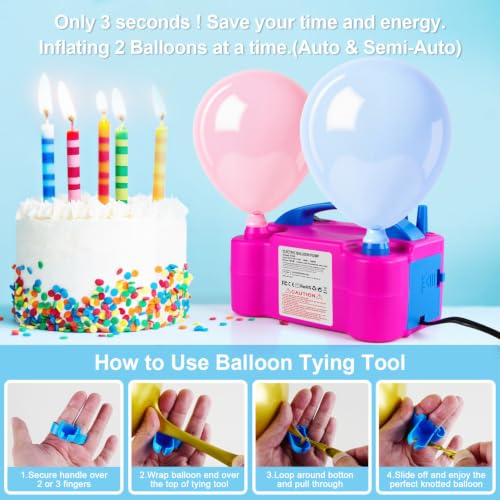
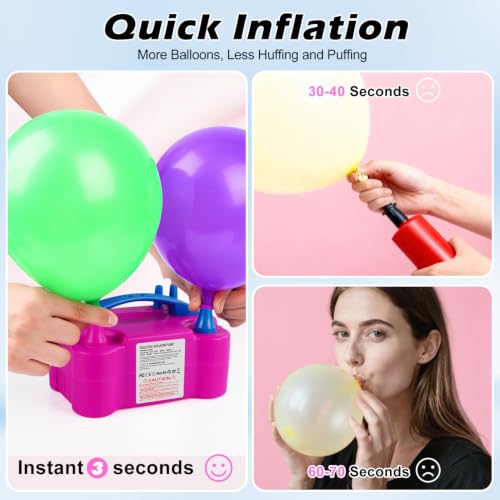
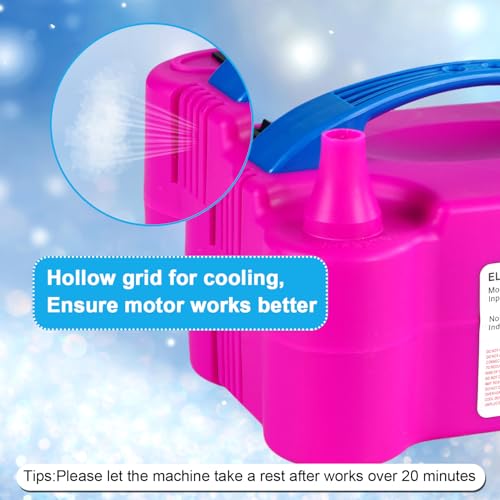
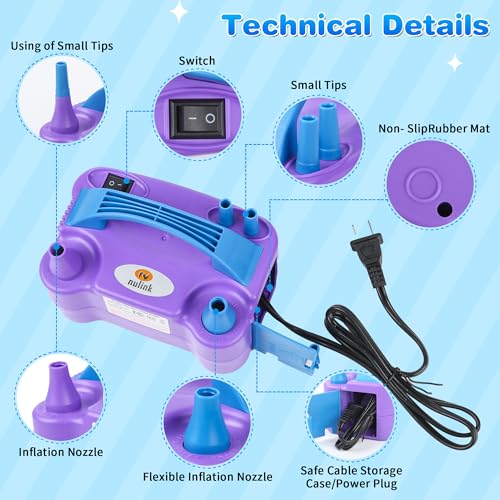
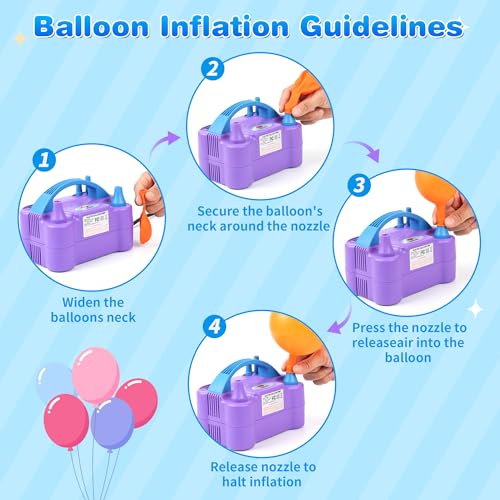
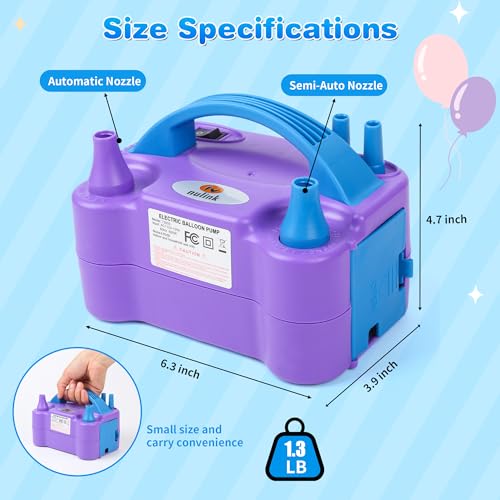
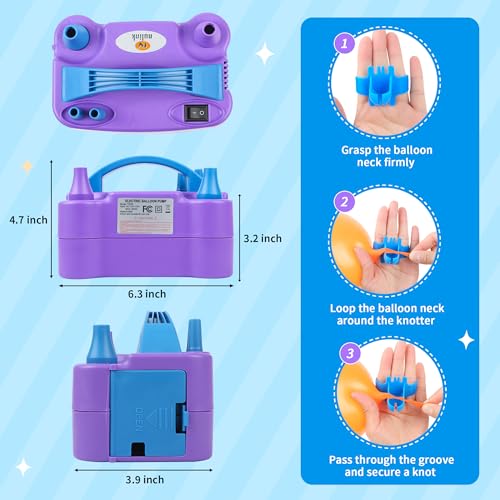
The NuLink shines where it counts, dual-nozzle efficiency. With two active ports, it lets you inflate two balloons at once, which reviewers say cuts setup time in half for large events. The push-down and continuous modes give control over inflation speed, helping prevent overfilling, and the included tying tools are a nice bonus. It’s also one of the more travel-friendly electric models, with an ergonomic handle and compact footprint.
But it’s narrowly focused. It doesn’t support 260Q balloons or inflatables, and the lack of additional nozzles limits its use beyond basic party setups. Compared to the Keaibuding or Wotalk, it’s less versatile, but if your main goal is pumping standard balloons fast, it delivers.
Product photos
ouyili Handheld Dual Action Balloon Pump
Strengths
- Dual-action airflow
- Durable ABS build
- Comfortable grip
Trade-offs
- Manual effort needed
- No electric option
- No balloon tying tool
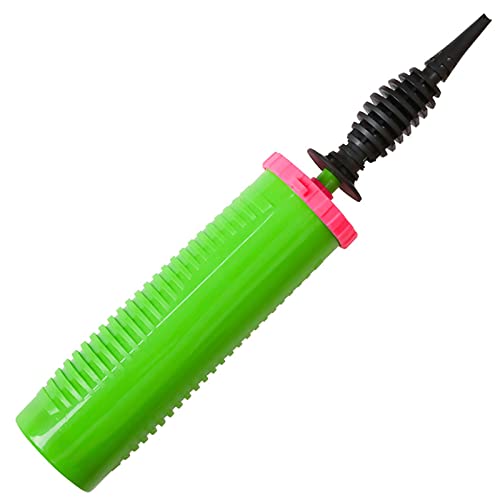
The ouyili hand pump is a well-built manual option that competes closely with the Luszmoax model. Its three-ring internal design boosts airflow, and the dual-action mechanism, pulling air from both ends, means each stroke delivers more volume. The anti-slip grip and angled nozzle make it easier to keep the balloon sealed during inflation, which reduces frustration. Owners note it’s sturdier than most plastic hand pumps, thanks to its high-quality ABS construction.
It won’t replace an electric pump for big jobs, but for small gatherings or emergency inflation, it’s reliable and portable. I’d pick this over cheaper models for its durability and smoother action, especially for younger users or classrooms.
Product photos


Luszmoax Handheld Dual Action Balloon Pump

Strengths
- Dual-action inflation
- Non-slip grip
- Works on inflatables
Trade-offs
- Manual effort required
- Slower than electric
- No balloon tying aid
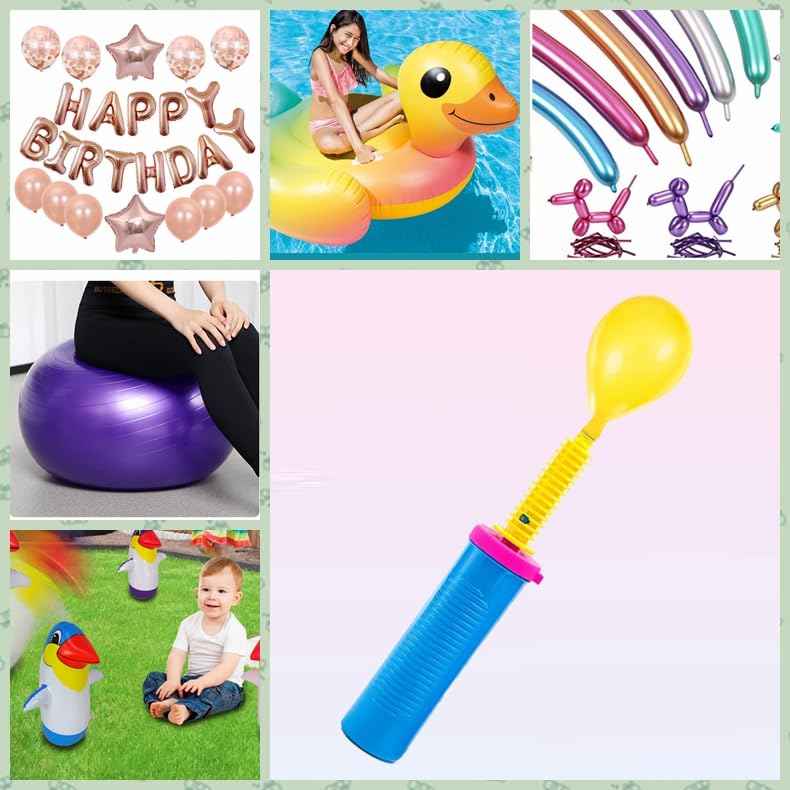
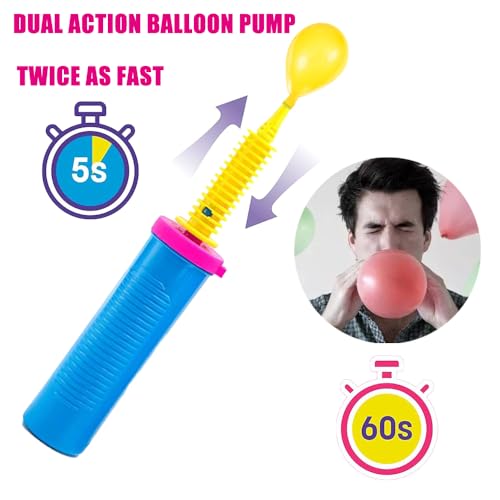
If you’re avoiding electric models or need something reliable without an outlet, the Luszmoax hand pump stands out in the manual category. Its dual-action design, drawing air on both push and pull strokes, gives it real speed advantages over traditional single-action pumps, and owners praise how much less fatigue they feel after inflating even 20–30 balloons. The enlarged cylinder makes a noticeable difference in airflow, and the non-slip grip ensures you’re not fighting to keep control when pressure builds.
It’s not going to beat an electric unit in raw speed, but for a manual tool, it’s impressively efficient. I’d recommend this to parents, teachers, or event volunteers who need dependable performance without cords or noise. It also doubles well for pool floats and air mats, which adds to its value.
Product photos


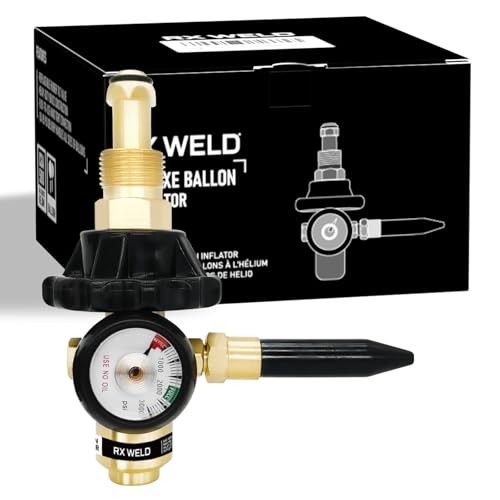
RX WELD Helium Balloon Filler Regulator
Strengths
- Precise pressure control
- Brass construction
- Fits standard helium tanks
Trade-offs
- Requires helium tank
- Not for air balloons
- Single-use function
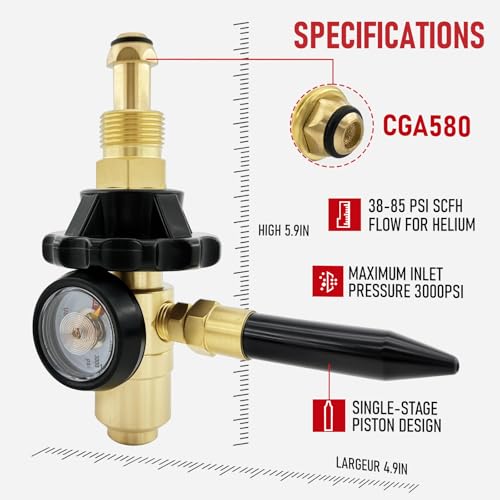
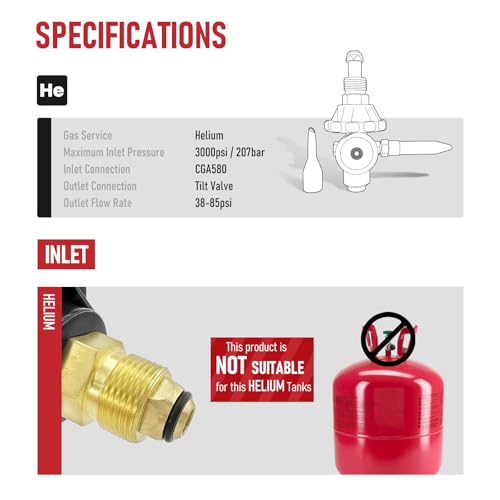
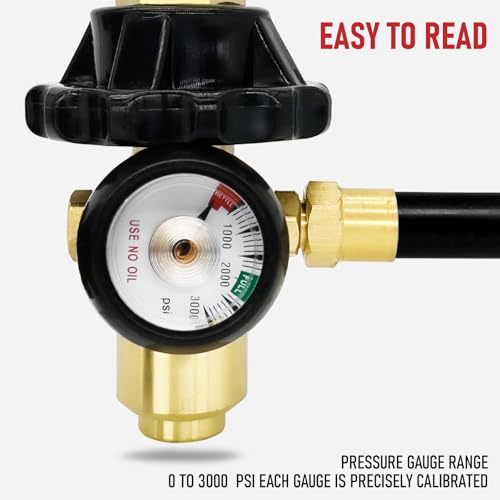
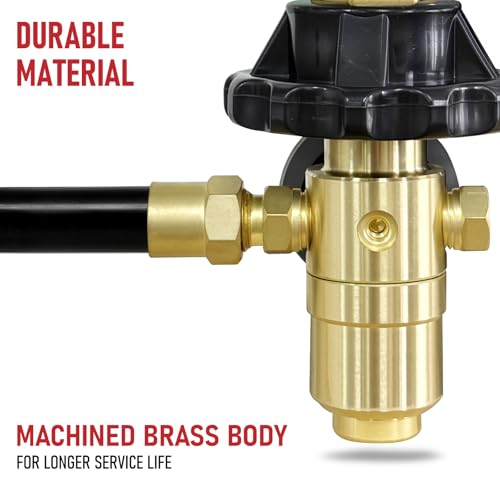
This isn’t a pump, it’s a regulator for helium tanks, and it fills a very specific niche. If you’re using a CGA580 helium cylinder (common for party rentals), the RX WELD unit gives you precise control over fill pressure with its 0–3000 PSI gauge, which helps prevent overinflation and wasted gas. The brass construction feels rugged, and the rubber grip makes it easier to handle during extended use.
But it’s useless without a tank, and it won’t help with air-filled balloons. Owners who run balloon businesses say it’s a reliable, no-frills tool that does one job well. Compared to electric air pumps, it’s in a completely different category, this is for floating displays, not general decor.
Product photos

How We Chose These balloon inflators
Rather than a hands-on lab test, this research-led comparison focused on published specifications and features of numerous balloon inflators available on the market. I weighed owner reviews from major retailers against expert opinions found in online guides and product roundups. My analysis considered the intended use cases (party decorations, event planning, etc.) and ranked models according to their ability to deliver on those promises.
For balloon inflators, speed and versatility were the most important factors. A quick inflation time obviously saves significant effort when preparing for an event. Beyond that, the ability to handle multiple balloon types – latex, foil, and even larger inflatables – adds considerable value. Durability, as indicated by owner feedback regarding motor life and build quality, also played a key role in determining our recommendations.
Product specifications reliably indicate airflow rates (L/min) and pressure (PSI), which provide a baseline for expected performance. However, owner reviews were crucial in judging real-world usability, noise levels, and the longevity of the unit. Reputation – how often a brand appears in reputable “best of” lists – further informed my assessment of overall quality and customer satisfaction, especially when comparing similar models. If you need something for car tires or other applications, consider looking at portable air inflators instead.
How To Choose The balloon inflators
Picking the right balloon inflator can save you a lot of breath – and time. It’s easy to get overwhelmed by the options, but focusing on a few key features will make the process much simpler.
A quality balloon inflator prioritizes speed and versatility. Consider the types of balloons you’ll inflate most often (latex, foil, specialty shapes), the volume you typically handle, and whether you need additional functions like deflation or sports ball inflation. Look for pumps with multiple nozzle options, robust motors, and features designed to prevent overheating or damage to balloons.
Inflation Speed and Capacity
How quickly an inflator works is a huge factor, especially if you’re dealing with a lot of balloons. Don’t just look at the advertised “balloons per minute” – read reviews to see if those claims hold up in real-world use. Pumps with multiple nozzles, like the Keaibuding or Wotalk models, can significantly reduce inflation time, especially when prepping for a party. However, keep in mind that higher speed doesn’t always mean better quality; a pump that’s too powerful can easily burst balloons, so variable speed or automatic shut-off features are valuable.
Balloon Type Compatibility
Not all inflators handle all balloon types equally well. Many excel at standard latex balloons, but foil, mylar, or long twisting balloons (like those used for balloon animals) require specific nozzle sizes and lower pressure. The Wotalk 4-in-1 stands out here, specifically advertising compatibility with a wider range of balloon types. If you plan on working with a variety of balloon materials, look for an inflator that includes multiple nozzle attachments, and pay attention to whether the pump’s pressure settings are adjustable.
- A basic inflator with a single nozzle is fine for small, infrequent use.
- A dual-nozzle pump offers a good balance of speed and affordability for moderate party planning.
- For professional balloon artists or large events, a pump with multiple nozzles and adjustable pressure settings is essential for preventing damage and ensuring consistent results. This is where investing in commercial-grade balloon pumps really pays off.
A little planning goes a long way. Always test a few balloons with the inflator before committing to a large-scale inflation project.
Portability and Power Source
Consider where you’ll be using the inflator. If you need something for on-the-go event setup, a lightweight, compact model like the VOLLYC Electric Balloon Inflator is a good choice. Conversely, if you’re primarily inflating balloons at home, weight and size are less of a concern. Also, think about power. Most electric inflators need to be plugged in, but some models come with longer cords or even offer battery operation for added convenience. If you’re working with helium tanks, you’ll need a regulator designed for that purpose, like the RX WELD Helium Balloon Filler Regulator.
Balloon Inflators Compared
Here’s a comparison of key specifications for various balloon inflators to help you make an informed decision.
| Product Title | Power Source | Nozzle Count | Max Airflow (L/min) | Modes | Best For |
|---|---|---|---|---|---|
| Keaibuding 4-in-1 Electric | Electric | 3 | N/A | Multi | Best Overall |
| Wotalk 4-in-1 Electric | Electric | 3 | 500 | Multi | All Balloon Types |
| PCFING Electric Dual Nozzle | Electric | 2 | 750 | Auto/Semi | Best Budget |
| VOLLYC Electric Dual Nozzle | Electric | 2 | N/A | Auto/Semi | Best Lightweight |
| Motorenbau Electric Balloon | Electric | 2 | 300 | Auto/Cont | Best for Party |
| NuLink Electric Balloon | Electric | 2 | N/A | Auto/Push | Dual Nozzle |
| ouyili Handheld Dual Action | Manual | 1 | N/A | N/A | Best Manual |
| Luszmoax Handheld Dual Action | Manual | 1 | N/A | Dual-Action | Best Ergonomic |
| RX WELD Helium Balloon Filler | Helium Tank | 1 | N/A | Single | Helium Tanks |
Frequently Asked Questions
What’s the difference between single and dual nozzle inflators?
Dual nozzle inflators inflate two balloons at once, significantly reducing the time it takes to prepare for events. Single nozzle models are generally more affordable and suitable for occasional, smaller-scale use.
Can I use a balloon inflator for anything other than latex balloons?
Yes, many electric models can handle foil and mylar balloons, but look for models like the Wotalk 4-in-1 that specifically advertise wider compatibility and adjustable pressure settings to avoid bursting. For larger inflatables, consider a universal air inflator models instead.
Are manual balloon inflators a good option?
Manual inflators are inexpensive and portable, ideal for small jobs or situations without access to electricity. However, they require significantly more effort and time compared to electric models, especially when inflating many balloons.
What airflow rate (L/min) should I look for in an electric inflator?
A higher airflow rate generally means faster inflation, but 300 L/min is usually sufficient for typical party decorations. Models exceeding 500 L/min, like the Wotalk, are better for larger events or frequent use, but can also increase the risk of overinflation.
What’s the best way to prevent balloons from popping while inflating?
Look for inflators with adjustable pressure settings or an auto-stop function. Starting with a lower pressure and gradually increasing it can also help. If you’re using a high-speed model, test a balloon first to find the optimal setting and avoid overinflating.
The Bottom Line
Choosing a balloon inflator often comes down to balancing convenience with control. Do you want something quick and easy, or a pump that offers more precision and versatility? For most people, the Keaibuding 4-in-1 Electric offers the best overall combination of speed, features, and positive owner feedback.
If you’re on a tighter budget, or simply need a reliable pump for occasional parties, the PCFING Electric Dual Nozzle is a fantastic value. For those dealing with a wide variety of balloon types, foil, latex, twisting balloons, the Wotalk 4-in-1 Electric stands out as the most versatile option, offering compatibility across the board. And if you need something for inflating car tires or other applications, consider looking at top portable inflators instead.
Ultimately, the most important factors aren’t the highest airflow rates or the most nozzles. Focus on build quality, adjustable settings (if you need them), and reading owner reviews to get a realistic sense of performance. A well-made pump with thoughtful features will save you frustration and ensure your balloon decorations look their best.
