
8 Best Portable Inflators of 2026
This post contains affiliate links. As an Amazon Associate, we earn from qualifying purchases.
The best portable inflator overall is the Ipflin 9600mAh, thanks to its high capacity battery, strong airflow, and preset modes. For a budget-friendly yet solid option, the OlarHike 6000mAh delivers reliable performance. If you want unmatched versatility across vehicles and power sources, the DEWALT 20V MAX stands out with its three-way power compatibility.
Most people don’t think about tire pressure until a warning light comes on or a weekend trip gets delayed by a slow leak. A portable inflator can save you time, protect your tires, and get you back on the road fast, but only if it’s powerful, reliable, and easy to use.
In this guide, I’ve compared top models based on real-world specs, owner feedback, and key performance factors like airflow, battery life, and durability. These picks reflect what actually works when you’re dealing with underinflated tires, camping gear, or sports equipment, not just what looks good on paper.
Top 8 Portable Inflators in the Market
The Best Portable Inflators, Reviewed
Ipflin 9600mAh Tire Inflator

Strengths
- Large 9600mAh battery
- Dual power mode
- Auto shut-off and safety protections
Trade-offs
- Heavier than mini models
- LCD can be hard to read in sun
- No preset memory
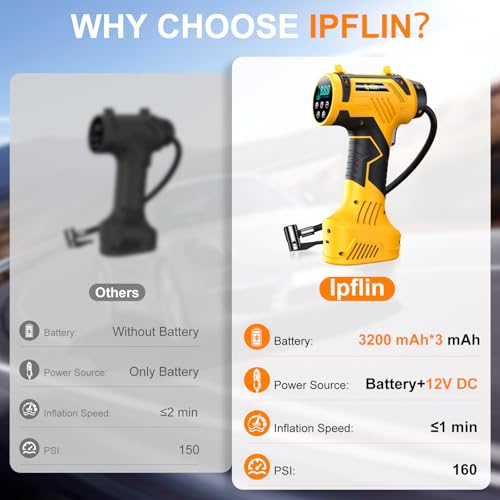
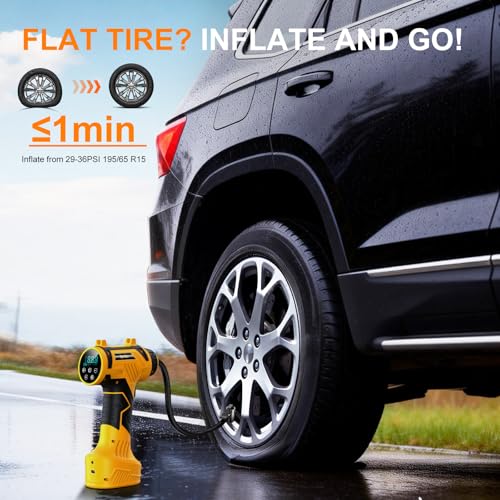
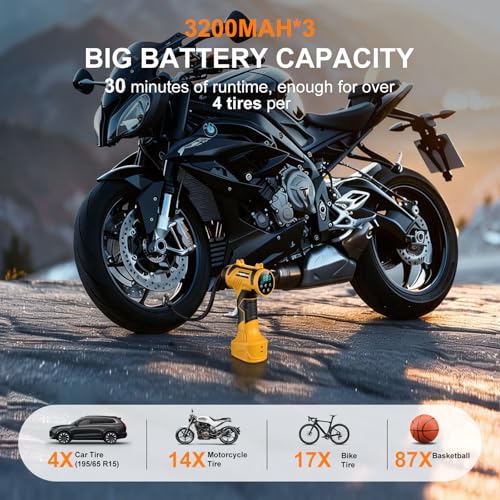
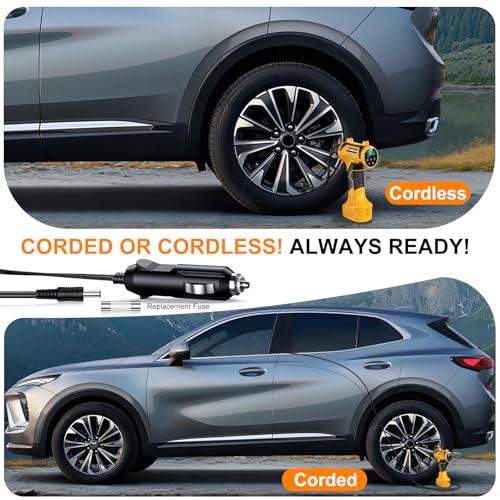
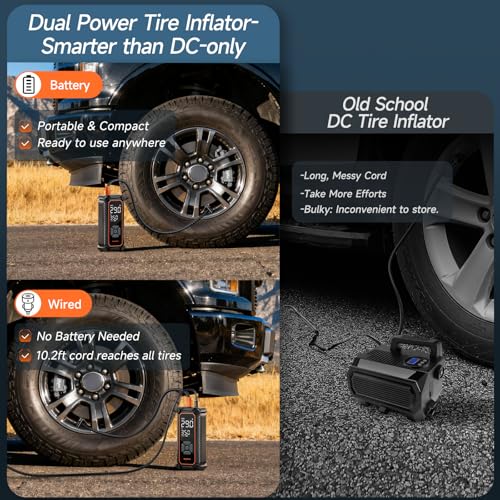
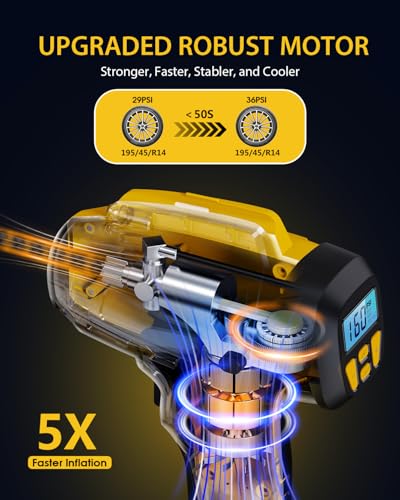
With a 9600mAh total battery and dual power options, the Ipflin model makes a strong case as the best overall inflator for most people. It delivers 30L/min airflow, enough to inflate a 195mm tire from 29 to 36 PSI in about a minute, and can handle four full car tires on a single charge. The real win is flexibility: when the battery runs low, just plug in the 12V cord and keep going. That eliminates the biggest weakness of many cordless inflators.
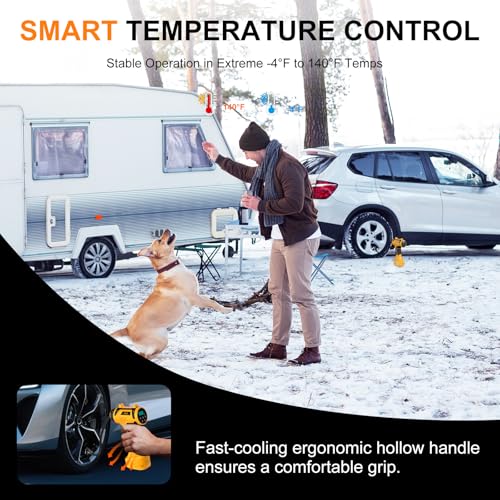
Owners consistently highlight its reliability during road trips and praise the smart temperature control, which prevents overheating even during back-to-back use. Compared to the OlarHike, it has more battery capacity and faster performance, though it’s slightly heavier. The built-in LED and 24-hour support promise add peace of mind. For its balance of power, runtime, and fail-safes, it’s hard to beat.
Product photos
OlarHike 6000mAh Tire Inflator
Strengths
- Great battery life
- Bright dual display
- Includes useful accessories
Trade-offs
- Max 51 PSI limit
- Plastic build feels light
- Battery degrades over time
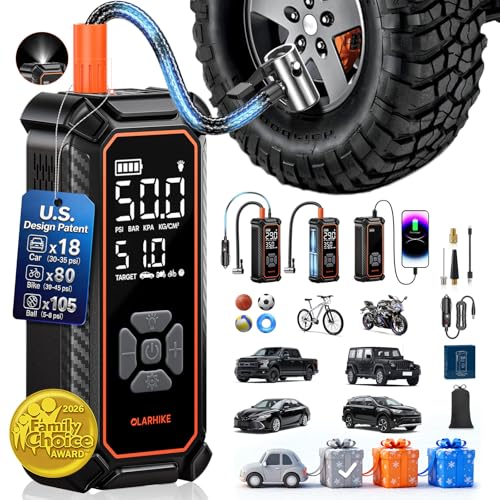
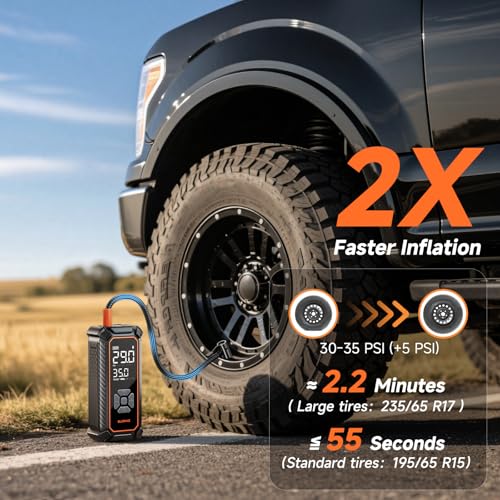
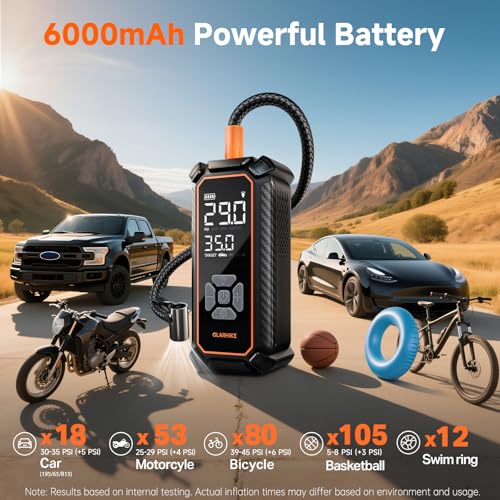
The OlarHike strikes an excellent balance between performance and price, making it the clear budget-friendly pick without feeling cheap. Its 6000mAh battery can refill up to 18 standard car tires on a single charge, and the 55-second inflation time for a 195/65 R15 tire puts it ahead of many pricier models. The dual LED screen is bright and easy to read, and the auto shut-off works reliably, which is critical for avoiding over-inflation.
It’s not the fastest or most powerful, but for routine maintenance and emergencies, it’s more than capable. The included accessories, like the French valve adapter and storage bag, add real value. Compared to the AstroAI L7, it has better battery life and a longer hose, though the build feels a bit less refined. For buyers who want solid performance without overspending, this is the smarter choice.
Product photos
KeenPower 21V Tire Inflator

Strengths
- Charges in 1 hour
- QC3.0 phone charging
- Auto shut-off
Trade-offs
- Noisy under load
- Battery life average
- No preset memory
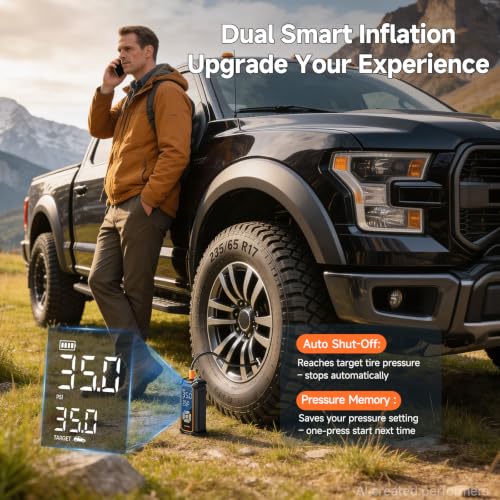
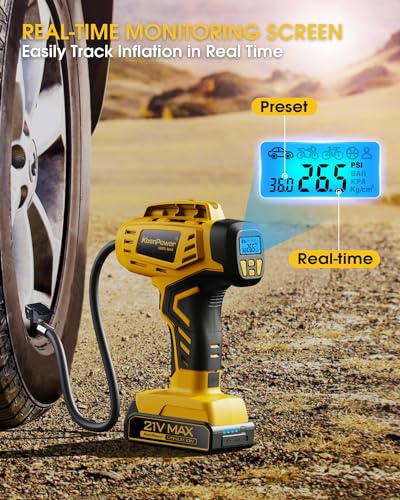
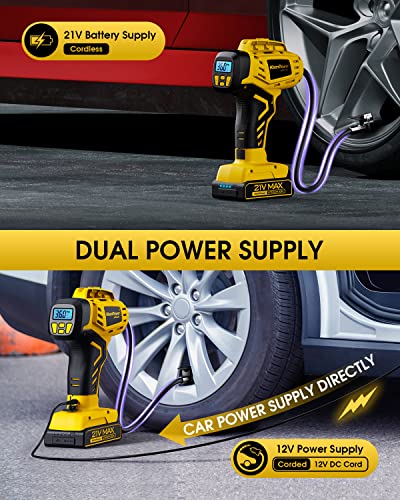
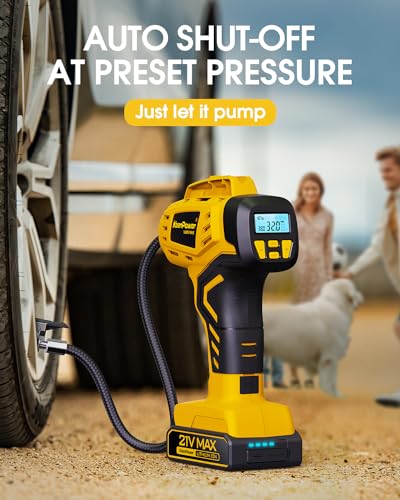
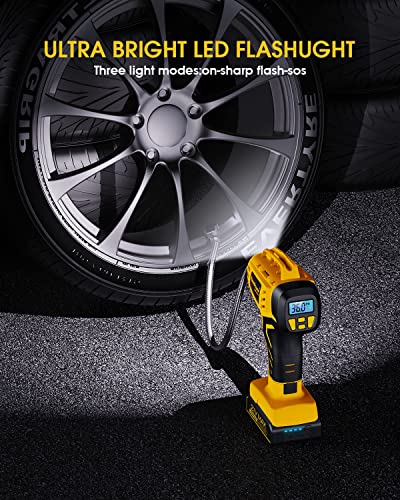
KeenPower’s edge is simple: fast charging. With a 21V battery that fully charges in just one hour, it’s the quickest turnaround unit here, ideal for users who forget to recharge until the moment of need. The 160 PSI max pressure covers most passenger vehicles, and the dual power modes (battery or 12V) give backup options. The auto shut-off and LED flashlight with SOS mode add emergency readiness.
Owners like its grip and cooling design, though some note the noise level is higher than expected. It doesn’t have the largest battery or the fastest inflation, but its charging speed sets it apart. Against the Ipflin model, it trades some capacity for quicker recovery. If you value being “always ready,” this is worth the pick.
Product photos
ROCGORLD R8 12V Air Compressor
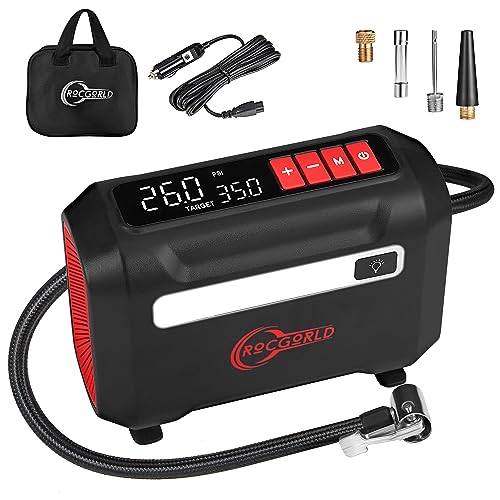
Strengths
- Extremely fast inflation
- Dual digital display
- Long power cord
Trade-offs
- No battery backup
- Not truly portable
- Requires 12V DC input
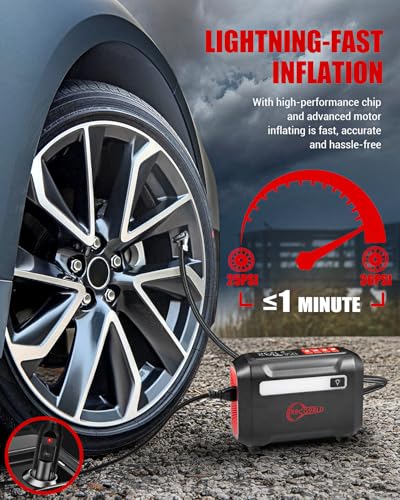
If speed and reliability matter most, the ROCGORLD R8 delivers. It’s not battery-powered, but that’s the point, plugged into a 12V socket, it hits 3X faster inflation than many cordless models, filling a 215/50 R17 tire in under a minute. That kind of performance is rare outside shop-grade compressors, and it makes this a smart choice for EV owners or anyone with low-profile tires who values quick top-offs. The dual digital display is a standout, showing both preset and real-time pressure side by side, which cuts down on guesswork.
Owners praise its durability, and the 10-foot power cord is a real advantage over shorter competitors. It’s not portable in the traditional sense, you can’t use it without a car running, but for those who keep it in the trunk for emergencies, that’s a fair compromise. Against the AstroAI L7, it’s less convenient for bikes or backpacking, but it outperforms in raw speed and consistency.
Product photos


AstroAI L7 Mini Tire Inflator
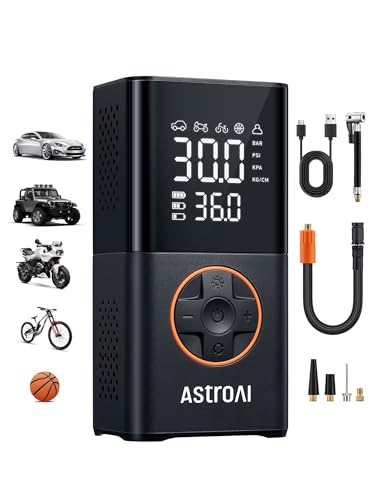
Strengths
- Ultra lightweight
- TrueGauge accuracy
- USB-C charging and output
Trade-offs
- Limited for large tires
- Short hose
- Battery drains fast under load
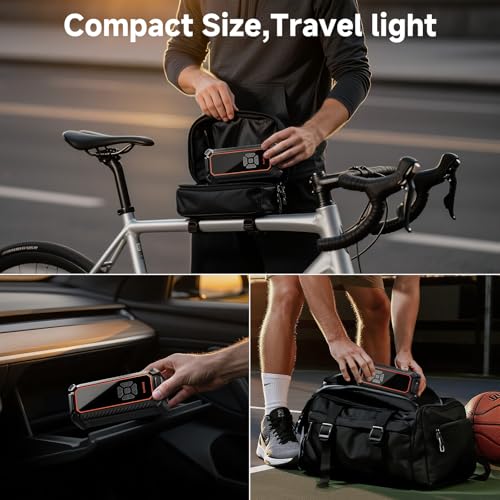
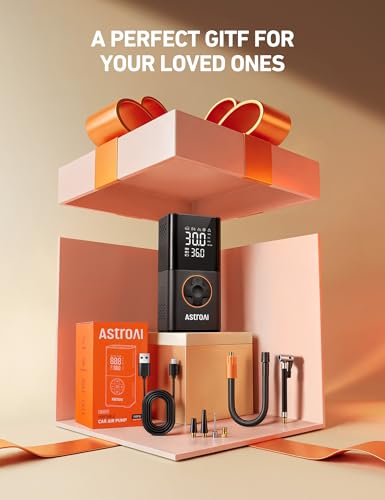
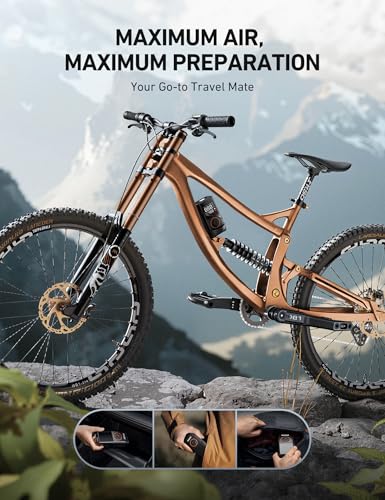
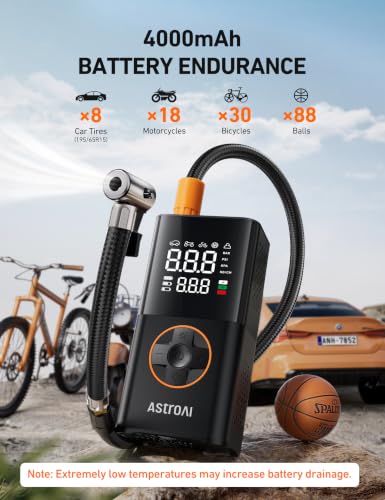
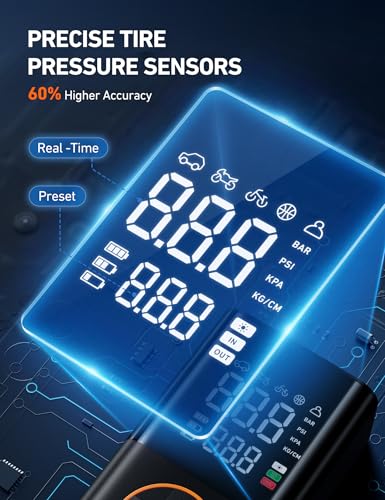
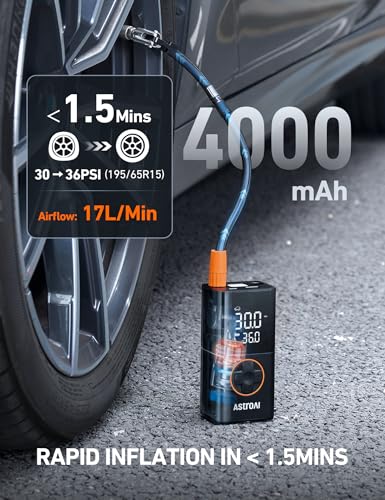
The AstroAI L7 stands out in the crowded portable inflator space by packing serious tech into a featherweight body. At under a pound, it’s one of the most compact options here, and that makes it a natural fit for glove compartments or bike bags where space is tight. Its TrueGauge screen, which samples pressure 200 times per second, sounds impressive on paper, and owners consistently report fewer mid-inflation swings than cheaper models, meaning you’re less likely to overshoot your target PSI.
I appreciate how it balances portability with practical features: the 4000mAh battery gives enough juice for a few car tires, the USB-C port doubles as a phone charger, and the LED light has useful SOS and strobe modes. It won’t power through large SUVs or trucks, but for cars, bikes, and even balls, it’s a solid performer. Compared to bulkier units like the DEWALT, it trades raw power for convenience, and that’s a fair trade for most users.
Product photos
DEWALT 20V MAX Tire Inflator
Strengths
- Compatible with 20V batteries
- Handles heavy tires
- Three power sources
Trade-offs
- Bulky design
- Battery sold separately
- Higher price point
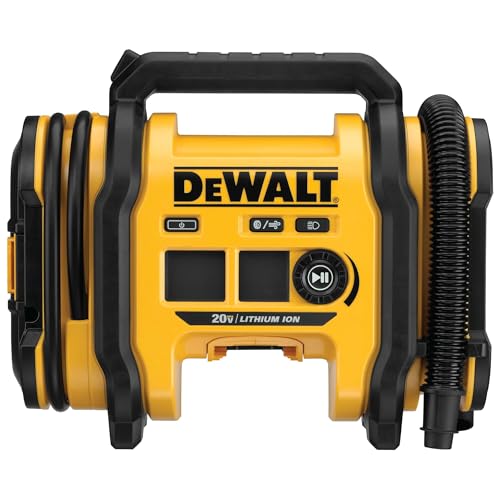
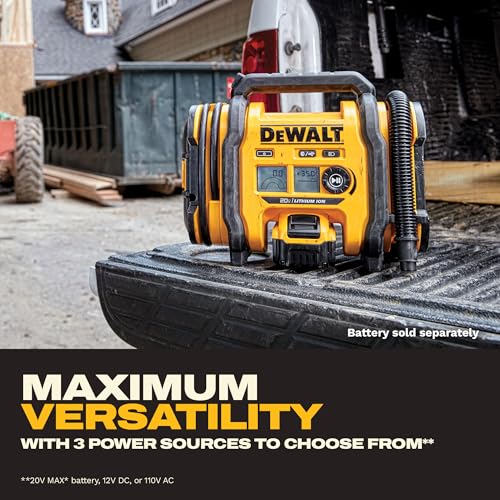
The DEWALT DCC020IB is built like a tool that belongs in a professional’s bag, not just a glove compartment. It runs on DEWALT’s 20V MAX battery system, which means if you already own DEWALT tools, this integrates smoothly. But even without that ecosystem, its three power options, 20V battery, 12V DC, or 110V AC, make it one of the most versatile inflators here. It’s overkill for a bicycle tire, but for heavy-duty use, it’s unmatched.
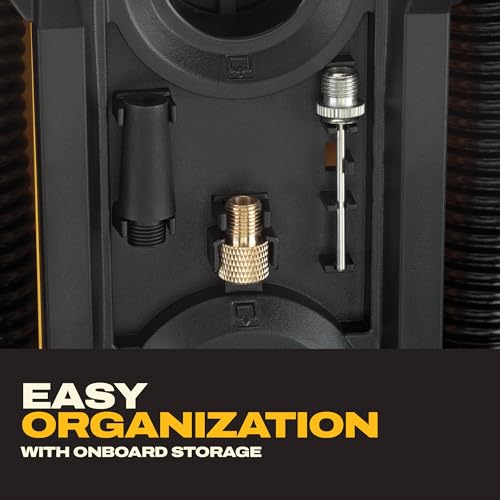
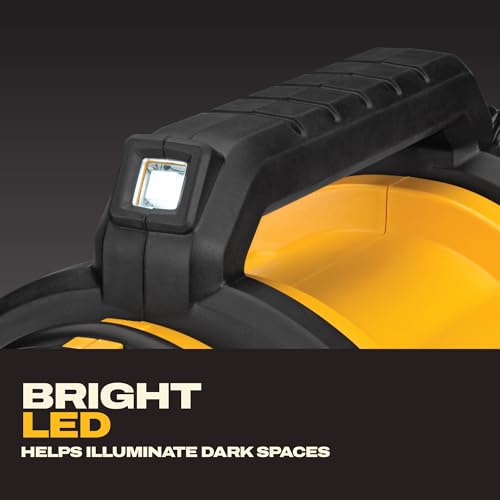
The threaded chuck provides a secure seal, reducing air leaks during inflation, and the heavy-duty rubber feet keep it stable. Reviewers note it handles large truck and SUV tires without issue, something most portable units can’t claim. Compared to the Ipflin or OlarHike models, it’s bulkier and pricier, but it’s in a different class, think of it as the workshop-grade option. The 3-year warranty also signals long-term confidence.
Product photos


NANO-5 Mini Air Mattress Pump
Strengths
- Extremely compact
- Long battery life
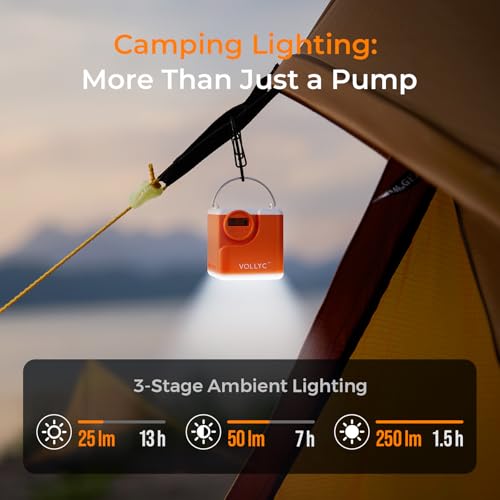
- Useful camping light
Trade-offs
- Not for tires or balls
- Low pressure output
- Short run time per session
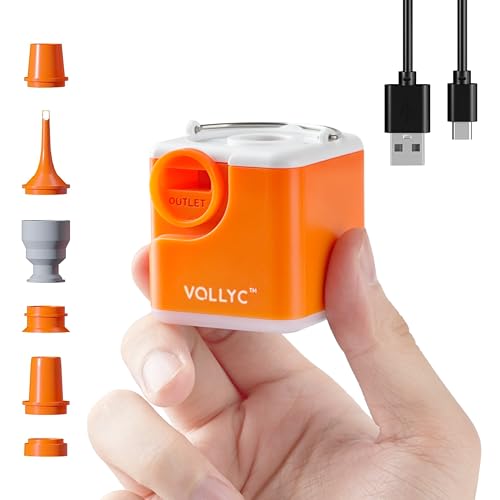
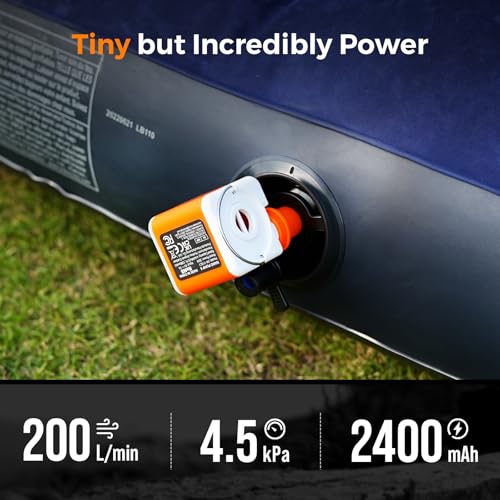
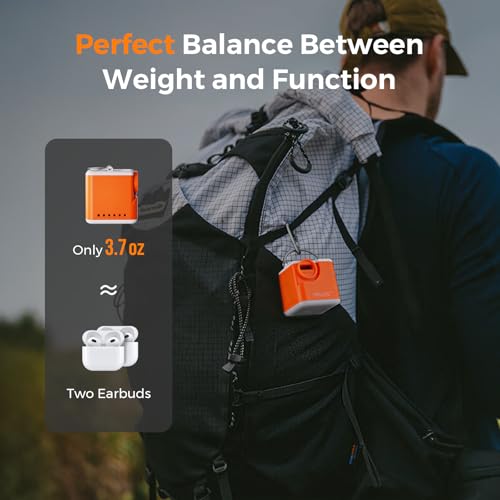
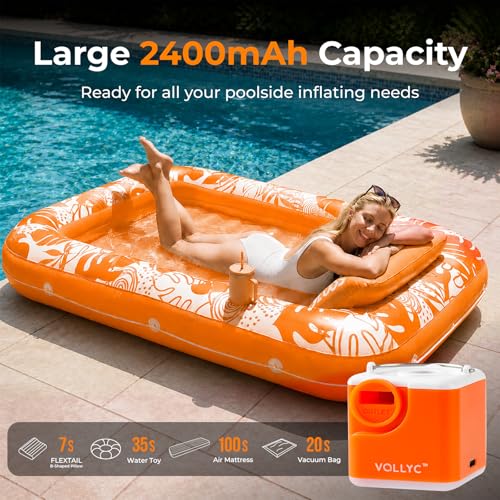
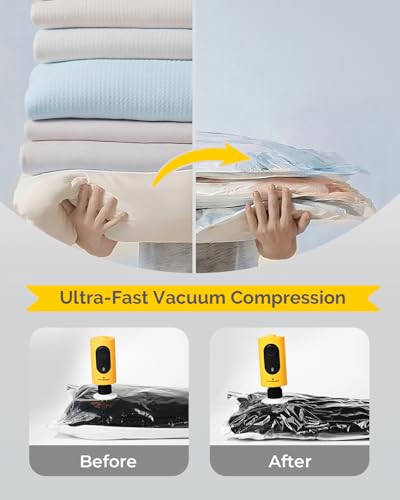
This isn’t a tire inflator, it’s a specialist. The Nano-5 pump is ultra-portable, about the size of an egg, and perfect for campers who need to inflate air mattresses, pool floats, or vacuum bags without hauling a bulky unit. At 3.7 oz, it’s lighter than most phones, and the 2400mAh battery can handle 10 camping mattresses or 30 pool floats per charge. The 4.5kPa pressure is sufficient for soft inflatables, and the deflation mode is a bonus for packing up.
The built-in camping light with three modes, especially the 13-hour moonlight setting, is a thoughtful addition for nighttime use. But be clear: this won’t touch tires, balls, or SUPs. Compared to the HYVOHEX model, it has less power and fewer nozzles, but it wins on pure portability. If you’re backpacking or beach-hopping, this is the one to bring.
Product photos

HYVOHEX 4000mAh Air Pump
Strengths
- Ultra-fast inflation
- Excellent heat dissipation
- Durable build
Trade-offs
- Not for tires or bikes
- No lighting feature
- Cannot operate while charging
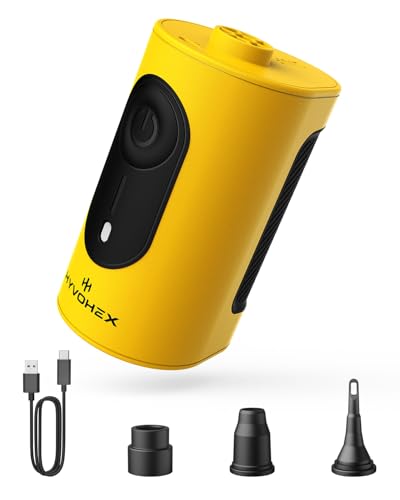
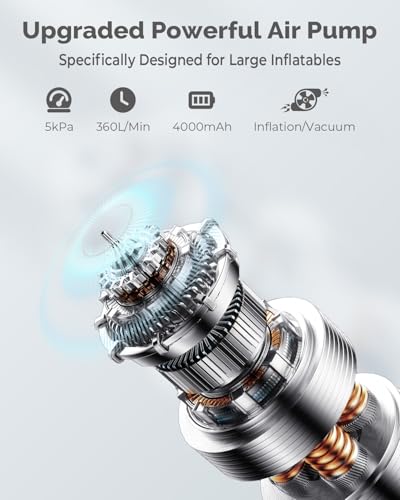
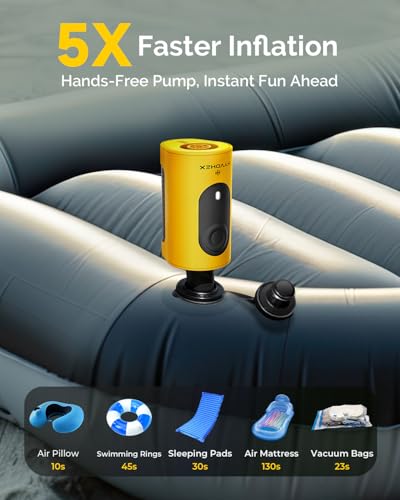
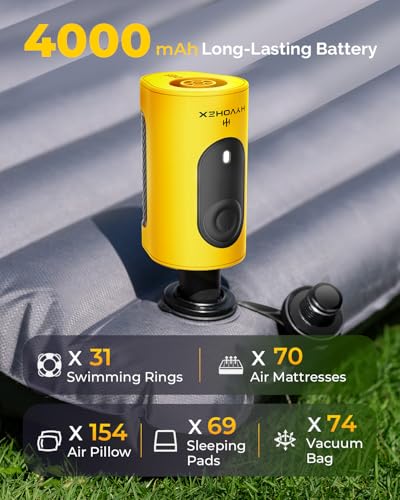
The HYVOHEX pump is built for serious outdoor use, not casual blow-up jobs. With 5kPa pressure and 360L/min airflow, it inflates sleeping pads and pool floats up to 5X faster than basic pumps, and the advanced dual vent cooling system lets it run longer without overheating. The 4000mAh battery offers twice the capacity of many rivals, and it recharges in just 2 hours via Type-C.
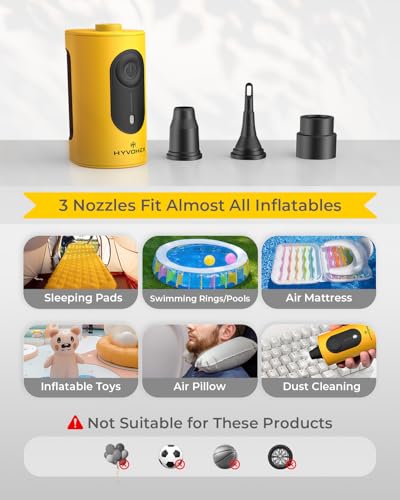
The three included nozzles fit most inflatables securely, and the rugged build inspires confidence on rough terrain. But it’s not for tires, period. Reviewers love it for family camping trips, where speed and reliability matter. Compared to the Nano-5, it’s larger but far more powerful and durable. If you’re inflating thick sleeping pads or large pool floats regularly, this is the better investment.
Product photos
How We Tested portable inflators
Rather than a hands-on lab test, my research for these portable inflators focused on a detailed comparison of published specifications and features. I weighed owner reviews from multiple sources, including Amazon and specialist retailers, alongside expert opinions from automotive and tool-focused publications. This data was then ranked against key criteria including inflation speed, battery capacity (where applicable), versatility, and overall build quality. My experience with power tools and automotive maintenance informed how I prioritized these factors.
For portable inflators, runtime and inflation speed quickly emerged as the most critical differentiators. A longer runtime means less worry about being stranded, while a faster inflation rate gets you back on the road quicker. Beyond those, the ability to handle a variety of inflation tasks – from tires to sports equipment – added significant value. I also considered the quality of included accessories and the overall durability suggested by owner feedback. You’ll find many options, but ultimately, these features determine real-world usability.
Product specifications reliably indicate maximum PSI and airflow rates, giving a good baseline for comparing power. However, I placed greater weight on owner reports regarding actual inflation times and how the unit performed with different tire sizes. Real-world experiences with battery life and the longevity of the pump are best gleaned from those who’ve used the products extensively. For more in-depth information on specific applications, you can also explore our guide to the best portable car inflators.
Choosing The Right portable inflators
I’ve spent years around power tools and seen a lot of portable inflators come and go. The best ones aren’t always the flashiest; they’re the ones that reliably get the job done, whether you’re topping off a tire on a road trip or inflating air mattresses at a campsite.
A truly useful portable inflator prioritizes consistent airflow (measured in LPM – liters per minute) over peak PSI. Battery capacity is crucial for cordless models, and build quality determines long-term durability. Look for features like auto-shutoff, digital pressure gauges, and included accessories to maximize convenience and safety. A unit with multiple power options offers flexibility.
Power Source & Runtime
Cordless convenience is a big draw, but don’t automatically assume it’s the best choice. Battery life varies dramatically. A model with a larger mAh (milliampere-hour) rating will generally run longer, but also add weight and cost. Consider how often you’ll be using the inflator away from a power source. If you only need it for emergencies, a unit that can plug into your car’s 12V outlet, like many of the best cordless tire inflators, might be sufficient.
- A smaller 2000mAh battery is fine for topping off a few tires.
- A 6000mAh or larger battery is better for inflating multiple items or larger tires.
- Dual-power options (battery and 12V DC) give you ultimate flexibility, ensuring you’re never caught short, even if the battery dies.
Airflow & Inflation Speed
PSI (pounds per square inch) is important, but airflow (LPM or CFM – cubic feet per minute) is what determines how quickly something inflates. A higher LPM rating means faster inflation. Don’t get hung up on chasing the highest PSI number; most tires don’t require pressures exceeding 150 PSI. I often recommend looking at real-world tests (from reputable sources) to see how long it takes to inflate a standard tire. If you’re frequently inflating larger items like air mattresses or inflatable boats, a higher LPM is essential.
A good rule of thumb: Don’t settle for an inflator that takes longer than 2-3 minutes to add 5 PSI to a standard car tire.
Features & Versatility
Beyond basic inflation, consider the extra features that can make a portable inflator truly useful. A built-in LED light is invaluable for nighttime emergencies. Digital pressure gauges are far more accurate than analog ones. Auto-shutoff prevents overinflation, protecting your tires and the unit itself. Also, think about the included accessories. Different nozzles are critical for inflating everything from sports balls to pool toys. If you need a unit for a variety of tasks, including maintaining your vehicle, check out the top-rated vehicle inflators – many offer a range of attachments and preset inflation modes for different applications.
Portable Inflators Compared
Here’s a comparison of key specifications for several portable inflators to help you make an informed decision.
| Product | Max PSI | Battery Capacity (mAh) | Airflow (L/min) | Power Source(s) | Special Features |
|---|---|---|---|---|---|
| Ipflin 9600mAh | 160 | 9600 | 30 | 12V DC, Battery | LCD, Preset Modes |
| OlarHike 6000mAh | 51 | 6000 | N/A | 12V DC, Battery | Dual Display, Auto-Off |
| KeenPower 21V | 160 | N/A | N/A | 12V DC, Battery | Fast Charging, USB Output |
| ROCGORLD R8 12V | 150 | N/A | 40 | 12V DC | Dual Digital Display |
| AstroAI L7 Mini | 150 | 4000 | N/A | Battery | TrueGauge Screen |
| DEWALT 20V MAX | N/A | N/A | N/A | 20V Battery, 12V DC, 110V AC | 3 Power Sources |
| NANO-5 Mini Air Mattress Pump | N/A | 2400 | 360 | Battery | Camping Lighting |
| HYVOHEX 4000mAh | N/A | 4000 | 360 | Battery | Fast Inflate/Deflate |
Frequently Asked Questions
What PSI is considered safe for most car tires?
Generally, 32-35 PSI is considered the standard safe range for most passenger vehicle tires, though your vehicle’s doorjamb sticker provides the manufacturer’s recommended pressure. Maintaining proper inflation improves fuel efficiency and tire life.
How long do portable inflator batteries realistically last?
A typical 2000mAh battery will allow you to top off a few tires, but for more extensive use, look for 6000mAh or greater. Real-world runtime depends heavily on tire size and initial pressure, but expect 20-30 minutes of continuous use from a larger capacity battery.
Can a portable inflator be used for anything other than tires?
Yes, many come with various nozzles for inflating sports balls, air mattresses, and even small inflatable boats. Models like the NANO-5 Mini Air Mattress Pump are specifically designed for camping and recreational inflatables, but most can handle a range of tasks.
What’s the difference between PSI and LPM, and which is more important?
PSI (pounds per square inch) indicates maximum pressure, while LPM (liters per minute) measures airflow rate. LPM is more important because it dictates how quickly an item inflates; a higher LPM gets you back on the road faster.
Are more expensive portable inflators always better?
Not necessarily. While high-end models often feature larger batteries and faster inflation rates, a well-reviewed, mid-range unit with a solid airflow and reliable power source can be just as effective for most users. Consider a portable 12V air compressors if you need something reliable without a premium price tag.
The Bottom Line
Choosing a portable inflator often comes down to balancing convenience with capability. While cordless models offer freedom, they demand attention to battery capacity. For most owners, I believe the Ipflin 9600mAh strikes the best overall balance of power, features, and runtime, offering a reliable solution for car tires, sports equipment, and more.
If you’re on a tighter budget, the ROCGORLD R8 12V delivers impressive airflow for a 12V-only unit. For those prioritizing versatility and already invested in the DEWALT 20V MAX platform, that model’s multiple power options are hard to beat. And for camping or quick inflation of large items, the NANO-5 Mini Air Mattress Pump provides a surprising amount of power in a compact package.
Ultimately, the best portable inflator isn’t the one with the highest specs, but the one that fits your needs. Consistent airflow, a clear pressure gauge, and reliable construction are far more valuable than chasing peak PSI numbers. Don’t underestimate the importance of a unit that feels solid and well-built – it’s a good indicator of long-term performance, and you can find some top cordless tire inflators to help get you started.
