
7 Best Air Compressors for Roofing 2026
This post contains affiliate links. As an Amazon Associate, we earn from qualifying purchases.
The Metabo HPT THE TANK 8-Gallon is the best overall air compressor for roofing, delivering strong, consistent airflow and durability for demanding jobs. If you need a budget-friendly option, the DEWALT 6 Gallon Pancake holds up well for smaller jobs. For remote sites without power, the Metabo HPT 8-Gallon Gas Wheeled model offers reliable off-grid performance.
Roofing crews can’t afford downtime caused by an underpowered or unreliable compressor. Too many jobs get slowed down by tools that can’t keep up, especially when multiple nailers are running or power sources are limited.
After comparing the field and analyzing specs, owner feedback, and real-world demands, I focused on models that deliver steady CFM at 90 PSI, survive tough jobsite conditions, and offer practical portability. This guide breaks down what actually matters so you can pick one that won’t leave you stranded mid-run.
Top 7 Air Compressor For Roofings in the Market
The Best Air Compressor For Roofings, Reviewed
Metabo HPT THE TANK 8-Gallon

Strengths
- 225 PSI max pressure
- 5.0 CFM high output
- Trolley mobility
Trade-offs
- Higher price point
- Needs 120V power
- Not for off-grid use
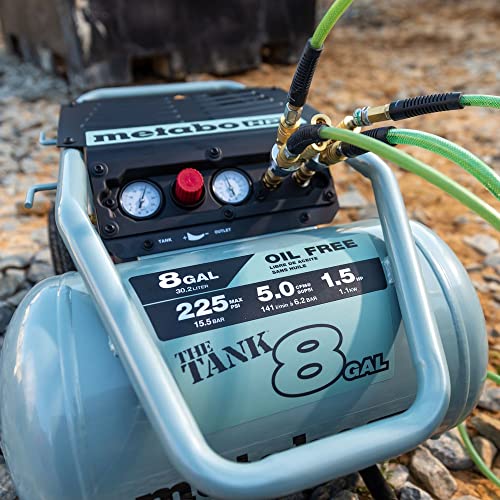
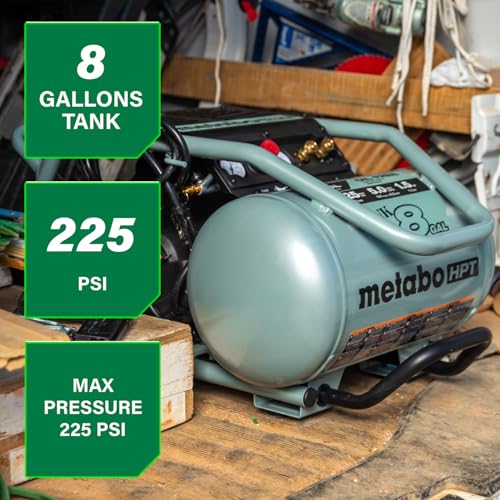
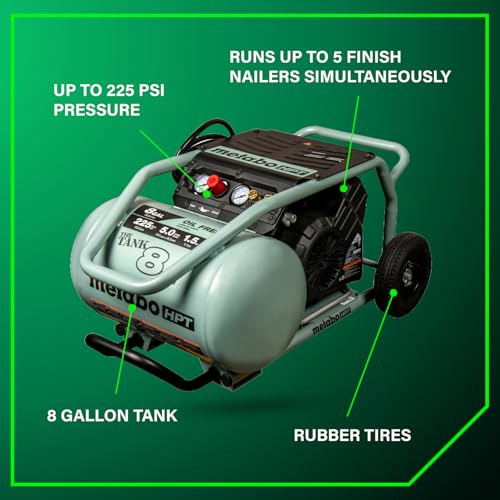
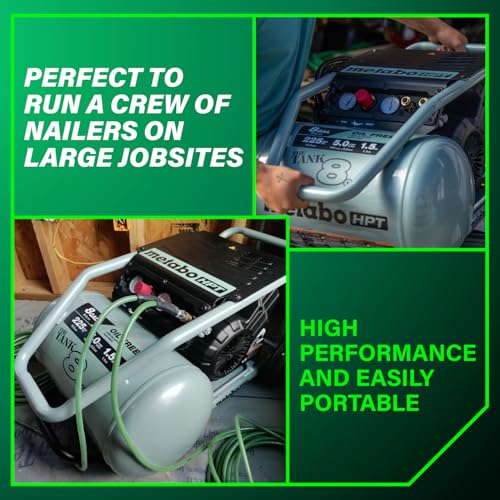
This 8-gallon trolley model earns its ‘Best Overall’ label for good reason. With 225 PSI and 5.0 CFM @ 90 PSI, it delivers more pressure and airflow than nearly every electric compressor in its class. It can run four roofing nailers at once and keep up all day, that’s rare for an electric unit.
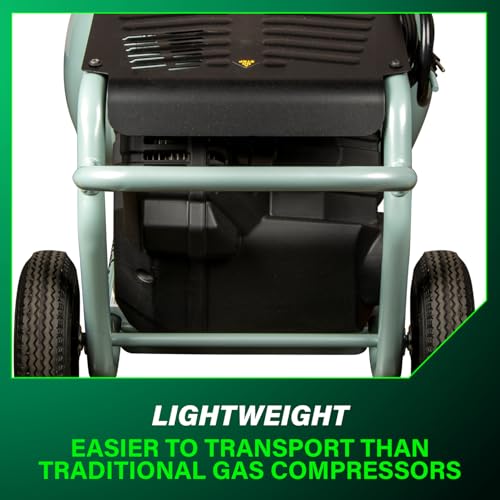
The rubber tires and upright trolley design make it easy to roll across debris-strewn roofs or uneven ground. At 93 lbs, it’s heavier than pancake models, but far lighter than gas units. Owners love that it combines pro-level performance with plug-in convenience. If you want one compressor that does it all without fuel or cords holding you back, this is the pick.
Product photos
Metabo HPT THE TANK XL 9-Gallon
Strengths
- High 9.5 CFM output
- Honda GX200 engine
- Wheelbarrow mobility
Trade-offs
- Expensive
- Heavy at full tank
- Requires fuel maintenance
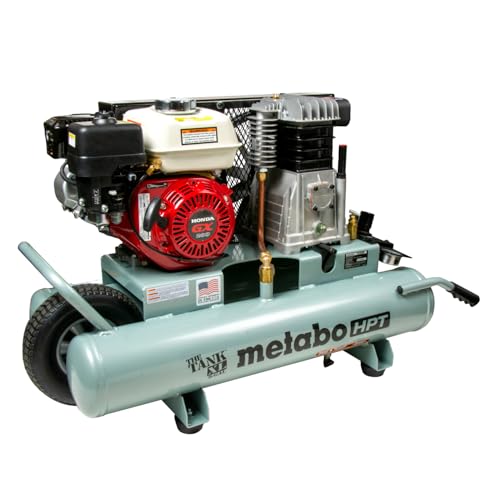
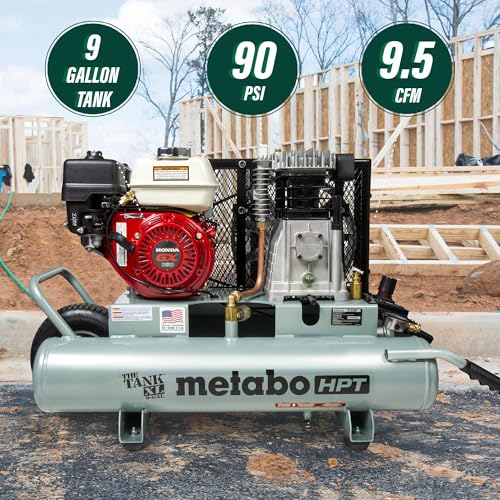
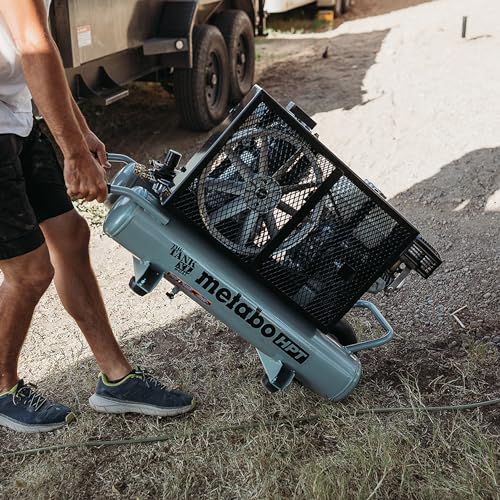
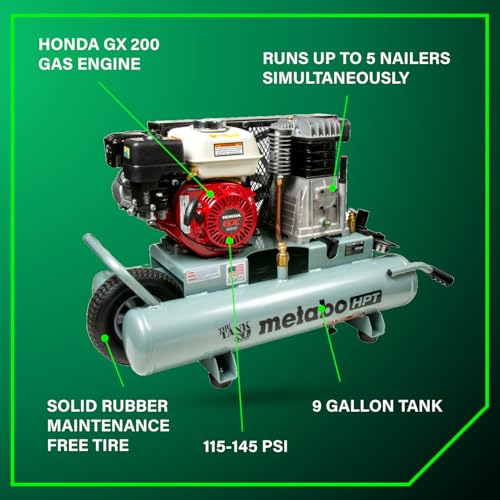
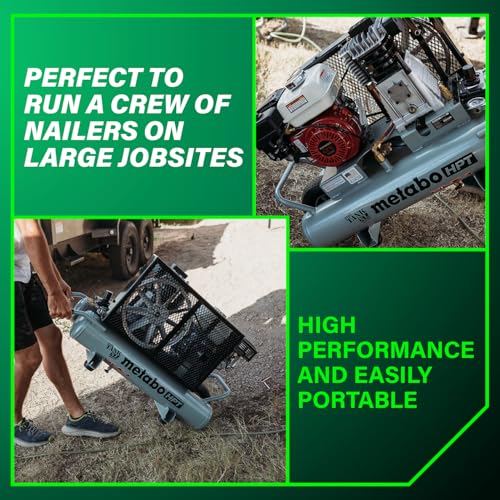
When it comes to serious roofing, this is the machine that stands out. The Honda GX200 engine and 9.5 CFM @ 90 PSI output mean it can run five roofing nailers at once, no lag, no stalling. That’s not overkill if you’re managing a full crew on a steep-slope re-roof.
The wheelbarrow design with solid rubber tires makes it surprisingly easy to move across rough terrain, and the oil-lubricated pump with aftercooler boosts longevity, a big deal when you’re running 10-hour days. Assembled in the USA and built for pros, owners consistently rate it as one of the most dependable gas compressors in the field.
Product photos
DEWALT 6 Gallon Pancake
Strengths
- Ultra-lightweight
- Quiet operation
- Easy cold-weather start
Trade-offs
- Low CFM for heavy tools
- Small tank capacity
- Limited for continuous use
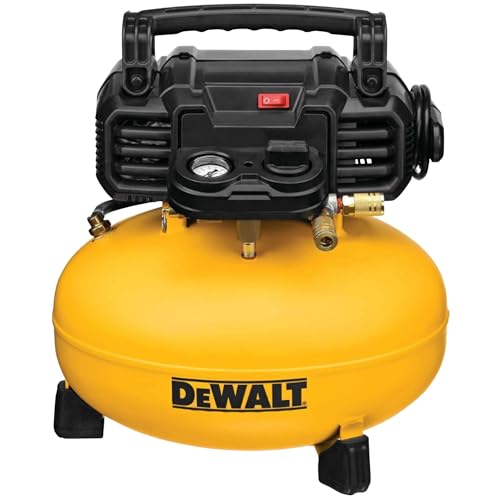
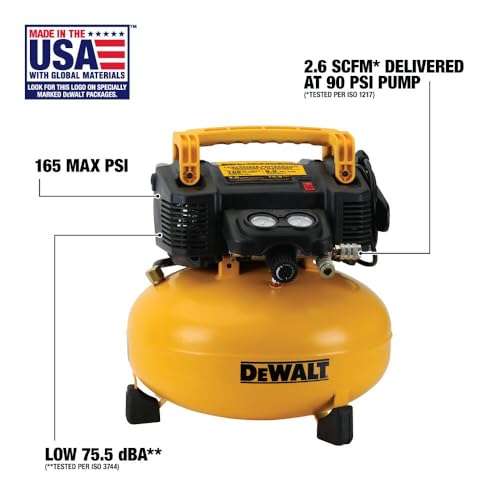
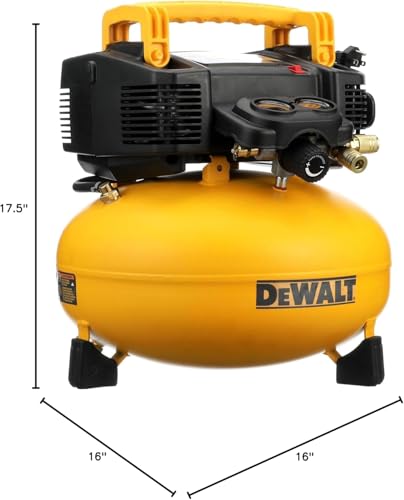
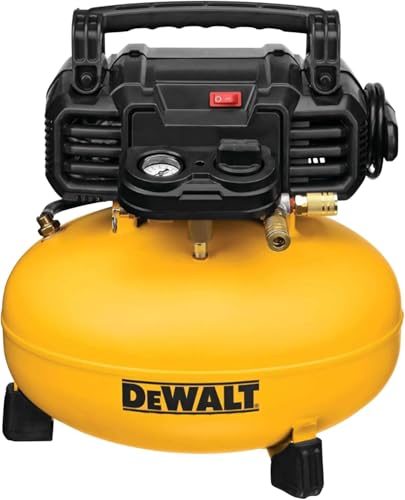
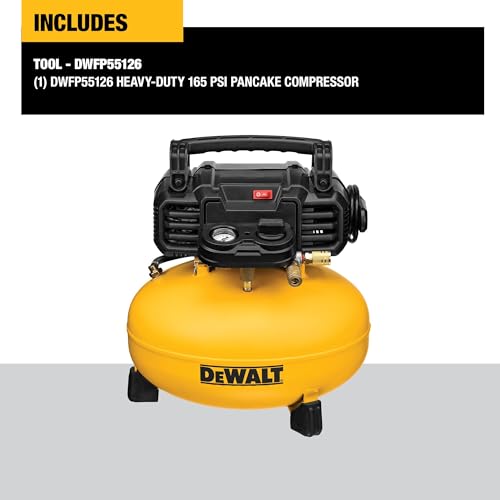
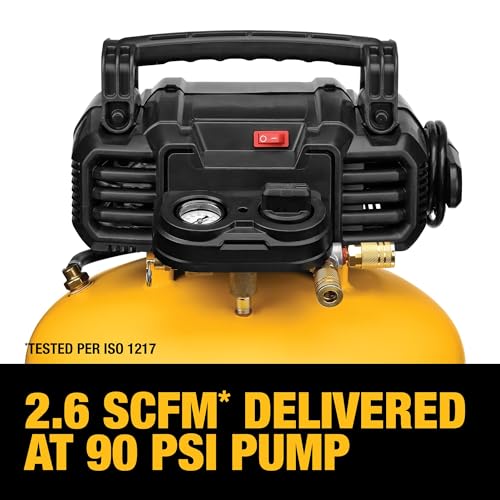
DEWALT’s 6-gallon pancake is a favorite among contractors who value portability and reliability. The 2.6 SCFM @ 90 PSI is modest, but the high-efficiency motor starts easily even on long extension cords, which is a real win on job sites. At only 30 lbs, it’s one of the lightest in its class, and the 78.5 dBA noise level makes it one of the quieter options, helpful when working near homes or in tight spaces.
It’s not built for heavy roofing crews, but for a single roofer doing repairs or small installs, it’s hard to beat. The dual couplers let you switch tools fast, and the ball drain valve is a small touch that makes maintenance easier. Compared to the Bostitch, it’s a bit more refined, same tank size, better build.
Product photos
Metabo HPT THE TANK 6-Gallon

Strengths
- High 200 PSI pressure
- Lightweight and portable
- Excellent airflow for size
Trade-offs
- Limited tank runtime
- Not for dual-tool use
- Smaller tank needs frequent recharge
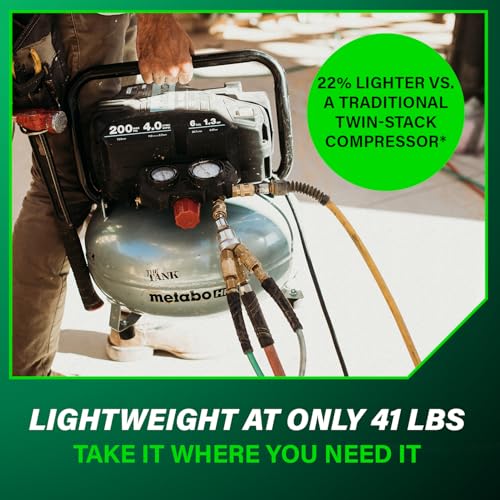
At 200 PSI and 4 CFM @ 90 PSI, this Metabo HPT 6-gallon pancake punches way above its size. Roofing crews will appreciate that extra pressure headroom, it means fewer missed nails and better consistency when driving through dense decking. The 30% higher airflow than standard pancake compressors makes it a rare model that can actually keep up with a roofing nailer during long stretches.
Weighing just 42 lbs, it’s one of the lightest in its class and easy to toss in a truck. Owners praise its reliability and the fact that it’s built to pair smoothly with Metabo HPT’s popular nailers. It’s not for running multiple tools at once, but for a single user on a roof, this is one of the most balanced electric options out there.
Product photos


Metabo HPT 8-Gallon Gas Wheeled
Strengths
- Honda GX engine reliability
- Cast iron cylinder
- No power needed
Trade-offs
- Lower max PSI
- Heavier than electric pancake
- Loud operation
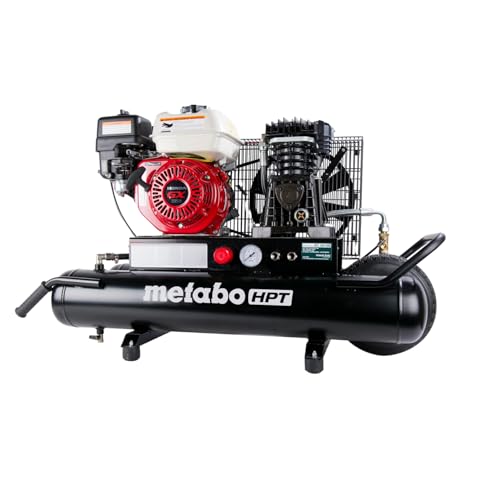
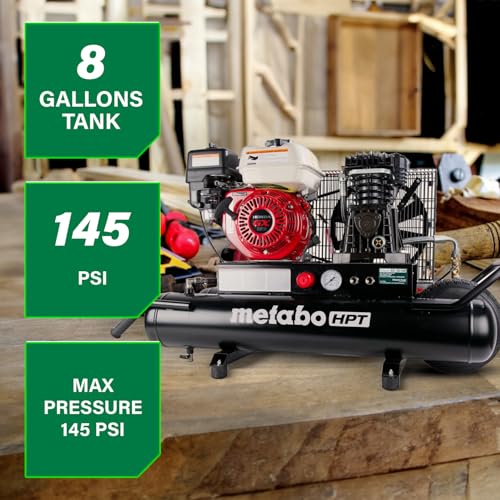
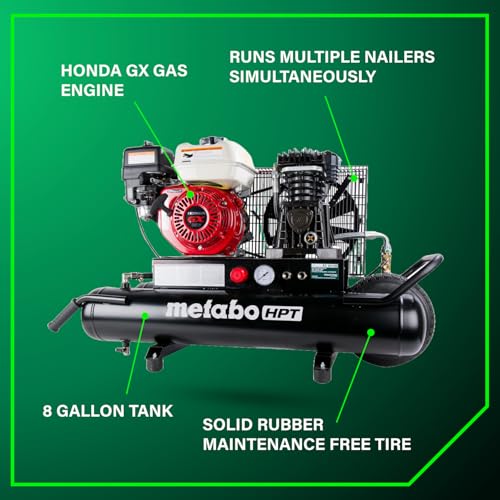
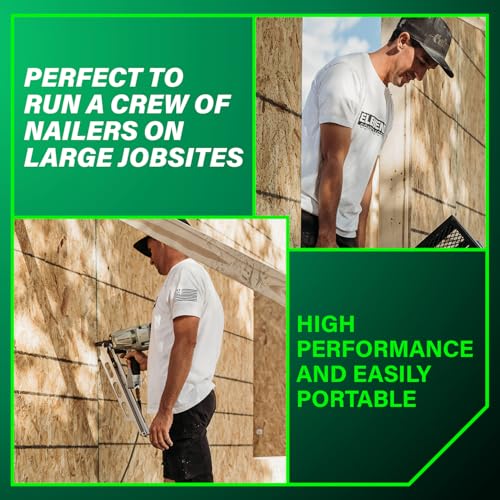
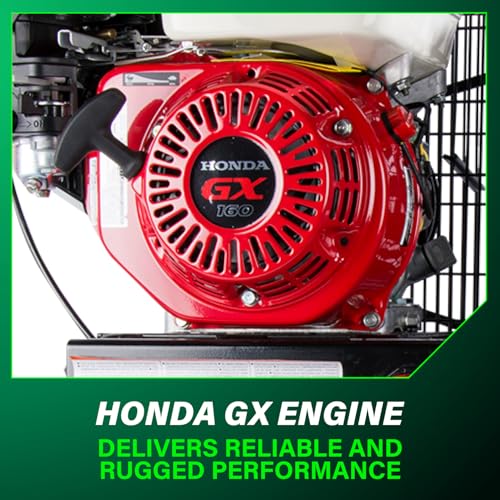
This gas-powered 8-gallon model is built for job sites without reliable power. The Honda GX engine is a proven workhorse, owners report it starts reliably in cold weather and runs for hours without issue. With pressure cycling between 116 and 145 PSI, it’s not the highest output, but it’s stable enough for siding, finish, and light roofing work.
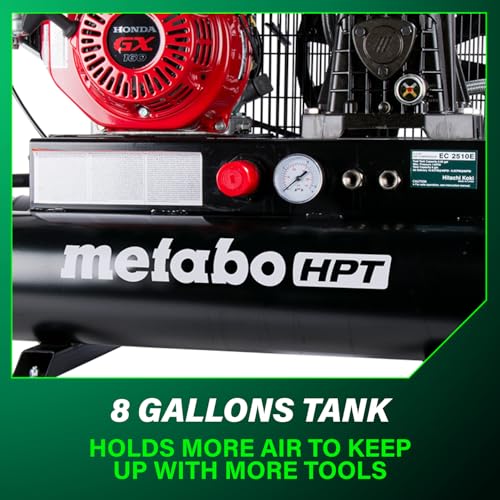
The cast iron cylinder adds durability, and the integrated control panel keeps gauges and regulators protected. It’s not as powerful as the larger THE TANK XL, but it’s more compact and easier to maneuver on uneven ground. If you’re working remote roofs or new builds without electricity, this is a smart middle-ground option.
Product photos
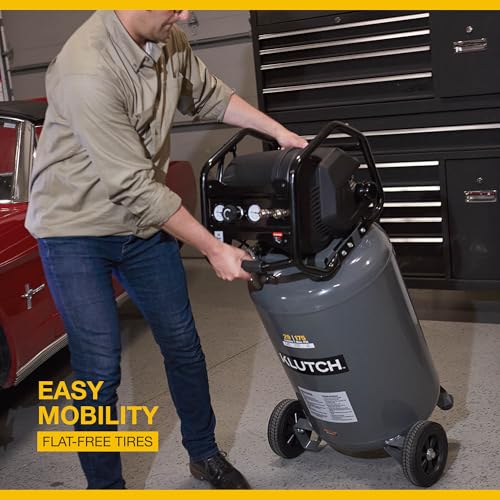
Klutch 29-Gallon 2.5HP
Strengths
- Large tank capacity
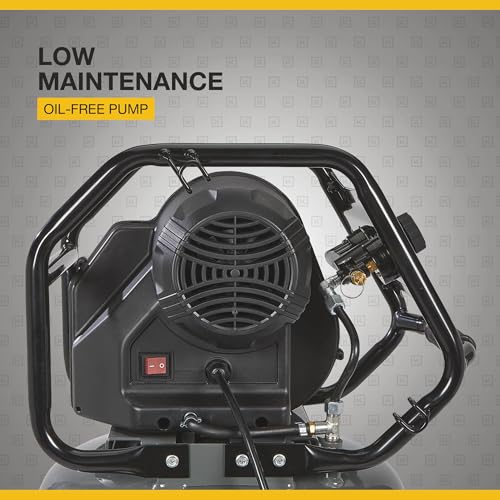
- Oil-free pump
- Quick recovery rate
Trade-offs
- Bulky design
- Limited portability
- Noisy operation
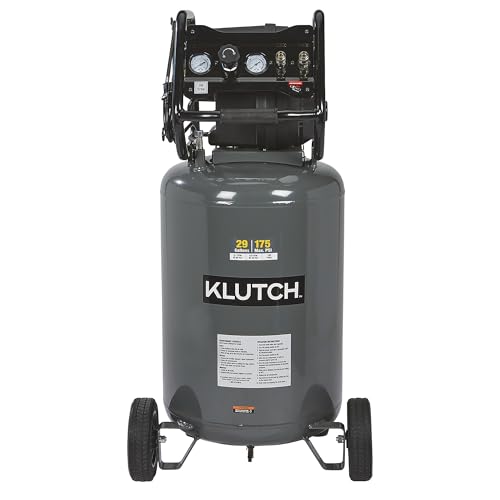
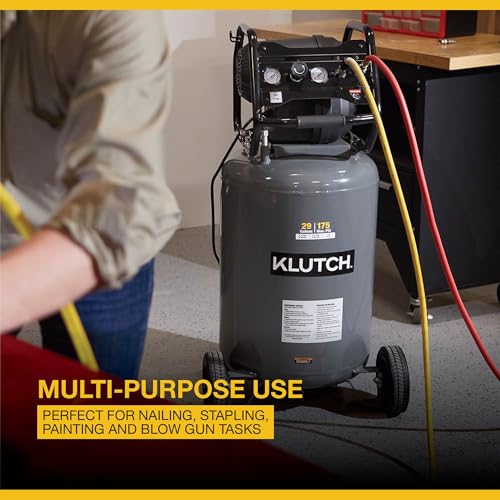
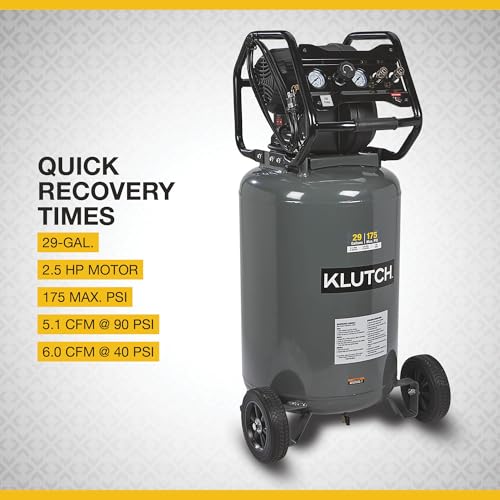
This Klutch model stands out in the electric compressor space mainly for its large 29-gallon tank and solid 2.5 HP motor. On paper, the 5.1 SCFM @ 90 PSI output is decent for continuous use, and the 175 PSI max pressure should handle most roofing nailers without constant cycling. Owners consistently report it keeps up well during back-to-back nailing runs, which matters when you’re running a crew or tackling a full roof.
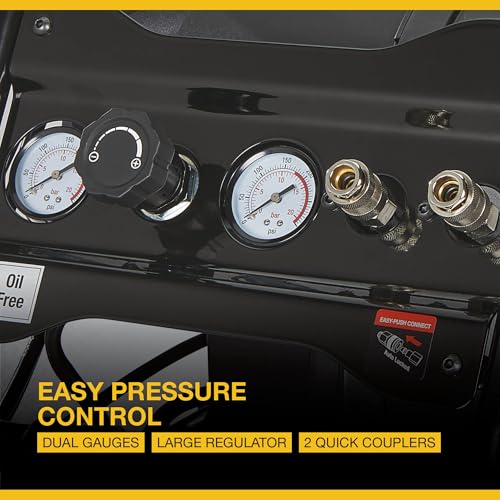
The oil-free pump is a real plus for DIYers and weekend warriors who don’t want to deal with maintenance, and the quick-connect coupler makes switching tools painless. Still, it’s heavy and bulky compared to pancake or trolley models, so mobility is a trade-off. It’s not the loudest compressor out there, but don’t expect quiet operation.
Product photos
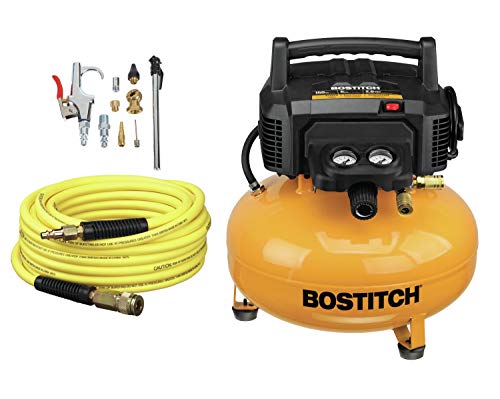
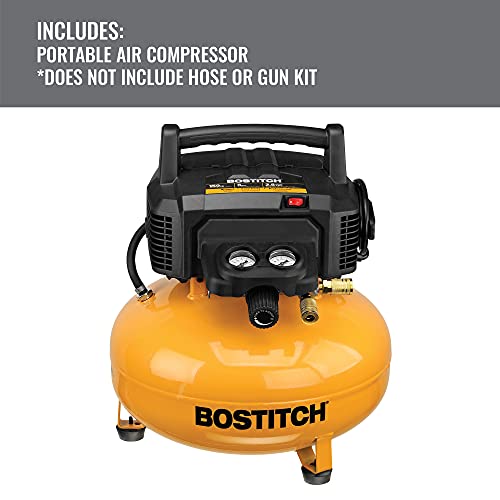
Bostitch 6 Gallon Pancake Kit
Strengths
- Affordable combo kit
- Includes quality hose and tools
- Oil-free pump
Trade-offs
- Low CFM output
- Not for heavy nailing
- Slower recovery
Bostitch delivers a solid entry-level package here, especially for someone just getting into pneumatic tools. The 2.6 CFM @ 90 PSI is on the lower end, but it’s enough for light roofing tasks with a single brad or finish nailer. What really sets this kit apart is the included accessories, that 50’ hose and blow gun combo add real value right out of the box.
I’d pick this for weekend projects or starter crews who need a functional, no-fuss compressor without overspending. It won’t run two framing nailers at once, and recovery time lags behind higher-end models. But for the price, it’s hard to beat the convenience of having everything you need in one box.
Product photos


How We Picked These air compressor for roofings
Rather than a hands-on lab test, my research for these recommendations centered on a detailed comparison of published specifications and features across numerous models. I weighed owner reviews from major retailers alongside expert opinions from sites like Pro Tool Reviews, focusing on real-world performance reports. This was combined with my experience understanding the demands of roofing and related applications to arrive at a ranked list.
For air compressors geared toward roofing, consistent pressure and ample air flow were the most critical factors. Roofing nailers, in particular, require sustained PSI to drive fasteners reliably, especially on larger jobs. Portability and durability also ranked high, as roofers often work in challenging locations and need equipment that can withstand jobsite wear and tear.
Specifications reliably indicate maximum PSI and CFM (cubic feet per minute) at 90 PSI, providing a baseline for capability. However, I relied heavily on owner feedback to gauge real-world consistency, noise levels, and long-term durability. Reputation and brand reliability played a role, as well – those with a history of quality tools often deliver better performance, and finding the right framing gun power solutions is vital.
How To Pick The Right air compressor for roofings
Choosing the right air compressor for roofing isn’t just about getting enough PSI; it’s about balancing power, portability, and how consistently it can supply air to keep you working.
A quality air compressor for roofing needs to deliver consistent CFM at 90 PSI to power nailers effectively. Consider tank size for nail load, portability for maneuvering on the roof, and oil-free vs. oil-lubricated pumps based on maintenance preference. Look for durable construction and reliable engines (if gas-powered) to withstand jobsite conditions.
Tank Size and Capacity
Don’t underestimate the importance of tank size. While a smaller, 6-gallon tank might be sufficient for small repairs, roofing typically demands consistent air supply for multiple nailers. A larger tank – 8, 9, or even 29 gallons – minimizes the compressor’s cycle time, meaning it won’t struggle to keep up with the demands of several roofing nailers running simultaneously. This is especially true if you’re working with a crew. The Metabo HPT THE TANK XL 9-Gallon, for example, offers a good balance for professional use.
Power Source: Gas vs. Electric
The biggest decision you’ll make is whether to go with gas or electric. Electric compressors are quieter and require less maintenance. However, they rely on a consistent power source, which isn’t always available on a roof or at remote job sites. Gas-powered compressors, like the Metabo HPT 8-Gallon Gas Wheeled model, offer freedom from cords and deliver substantial power, but they’re louder, require more maintenance, and produce exhaust fumes. If you frequently work in areas without easy electrical access, gas is probably the better choice.
- Portability is key: a gas compressor gives you freedom from extension cords.
- Maintenance: Oil-free electric compressors require less upkeep, but may not last as long as oiled models.
- Power demands: Heavy-duty roofing work, especially with multiple tools, often necessitates the consistent power of a gas engine.
A good rule of thumb is to add 20% to your estimated CFM requirements to account for hose friction and potential pressure drops.
CFM and PSI: Matching the Compressor to Your Tools
CFM (Cubic Feet per Minute) and PSI (Pounds per Square Inch) are the two critical specs. Roofing nailers generally require 2-4 CFM at 70-90 PSI. However, it’s always best to err on the side of caution and choose a compressor with higher CFM than your tools demand. You don’t want your nailer starving for air mid-shot. Also, consider if you’ll be using other pneumatic tools (like blow guns or impact wrenches) alongside your nailer. If you’re looking for a compressor capable of handling multiple tools, check out models like the Metabo HPT THE TANK, which provides 5.0 CFM at 90 PSI. For finding the right power source for your nailers, consider looking into framing nailer air compressors.
Choosing the right air compressor also means considering how you’ll transport it. For ultimate portability on various job-site air compressor units, a wheeled model is a huge advantage.
Air Compressors for Roofing Compared
Here’s a comparison of key specifications for air compressors suitable for roofing applications.
| Product Name | Tank Size (Gallons) | Max PSI | CFM @ 90 PSI | Power Source | Weight (lbs) |
|---|---|---|---|---|---|
| Metabo HPT THE TANK 8-Gallon | 8 | 225 | 5.0 | Electric | 93 |
| Metabo HPT THE TANK XL 9-Gallon | 9 | N/A | 9.5 | Gas | N/A |
| DEWALT 6 Gallon Pancake | 6 | 165 | 2.6 | Electric | 30 |
| Metabo HPT THE TANK 6-Gallon | 6 | 200 | 4.0 | Electric | 42 |
| Metabo HPT 8-Gallon Gas Wheeled | 8 | 145 | N/A | Gas | N/A |
| Klutch 29-Gallon 2.5HP | 29 | 175 | 5.1 | Electric | N/A |
| Bostitch 6 Gallon Pancake Kit | 6 | 150 | 2.6 | Electric | N/A |
Frequently Asked Questions
What CFM is really needed for roofing work?
Generally, roofing nailers require 2-4 CFM at 90 PSI, but I advise adding 20% to that estimate to account for hose friction and potential pressure drops. Choosing a compressor delivering more CFM than your tools demand prevents frustrating interruptions during operation.
Are oil-free compressors suitable for professional roofing?
Oil-free compressors are convenient due to lower maintenance, but for daily professional use, an oil-lubricated compressor is often more durable. While oil-free models are fine for occasional repairs, the added longevity of oiled versions justifies the upkeep for frequent roofing jobs.
Can I use an air compressor for other tools on the roof?
Yes, many compressors can power more than just roofing nailers. However, you’ll need to consider the CFM requirements of all tools you plan to use simultaneously. For versatility, look at compressors like the Metabo HPT THE TANK 9-Gallon, which offers higher CFM output.
What’s the advantage of a wheeled air compressor?
A wheeled air compressor significantly improves portability, especially on a roof or uneven terrain. Maneuvering a heavy compressor is much easier with wheels, reducing strain and making the job faster.
What should I look for in a compressor if I want nail gun compatible compressors?
Beyond CFM and PSI, check for quick-connect fittings for easy tool attachment and a regulator with a clear gauge to maintain consistent air pressure. Reviewing nail gun air compressor specs will also help you confirm compatibility.
The Bottom Line
Ultimately, choosing an air compressor for roofing comes down to how much you value convenience versus consistent power. While smaller, portable options have their place, the Metabo HPT THE TANK 8-Gallon strikes the best balance for most roofers needing reliable performance without being weighed down. It delivers ample CFM and a useful tank size for sustained use.
For those prioritizing budget or occasional repair work, the DEWALT 6 Gallon Pancake is a solid pick. If you frequently work on larger projects or need to run multiple tools simultaneously, the Klutch 29-Gallon 2.5HP offers the capacity to handle demanding workloads. And for those needing a powerful, untethered solution, take a look at our carpentry air compressor guides to see the Metabo HPT 8-Gallon Gas Wheeled model.
Don’t get too caught up in chasing the highest PSI or the biggest tank. Consistent CFM at 90 PSI, durability, and portability are the factors that truly matter on the job. A well-maintained compressor with sufficient airflow will always outperform a more powerful model that can’t deliver the air your tools need when you need it.
