
2 Best Air Compressors for Framing (2026 Guide)
This post contains affiliate links. As an Amazon Associate, we earn from qualifying purchases.
The Makita MAC2400 is the best air compressor for framing, delivering strong, reliable performance with a durable cast iron pump and ample CFM to keep up with framing nailers. For budget-conscious buyers, the DEWALT 6 Gallon offers solid portability and runtime in a lighter, oil-free design. Both stand out after comparing specs, owner feedback, and job-site demands.
Framing means long days on tough job sites, where an underpowered or flimsy compressor can slow you down or fail when you need it most. You need consistent air delivery, durability, and something you can move easily between floors or worksites.
This guide covers the top models based on CFM output, tank size, pump longevity, and real-world feedback from users who rely on these compressors daily. I looked at what separates a good framing compressor from a frustrating one, so you can choose with confidence.
Top 2 Air Compressor For Framings in the Market
The Best Air Compressor For Framings, Reviewed
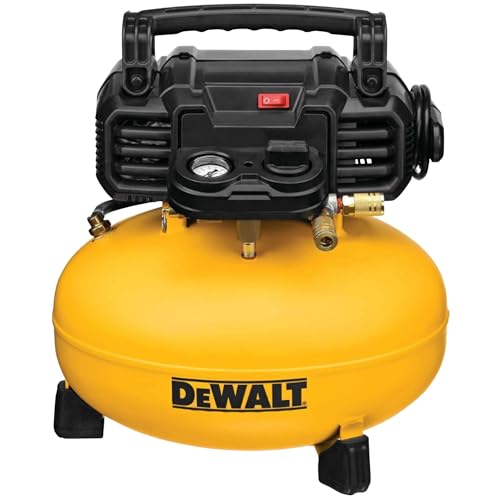
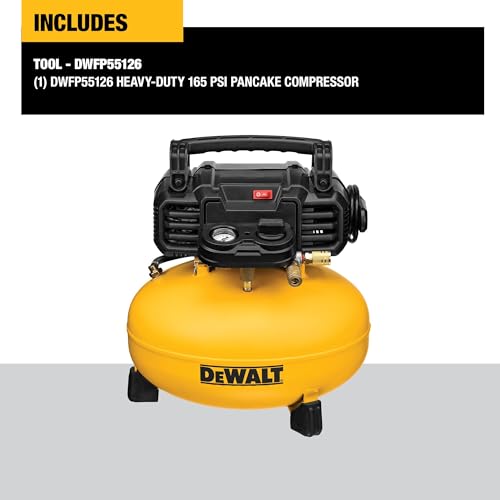
DEWALT 6 Gallon Pancake Air Compressor
Strengths
- 6-gallon tank
- 165 PSI max
- Oil-free pump
- Quiet operation
- Lightweight at 30 lbs
Trade-offs
- Slower recovery than larger units
- Not for continuous nailing
- Limited runtime for crews
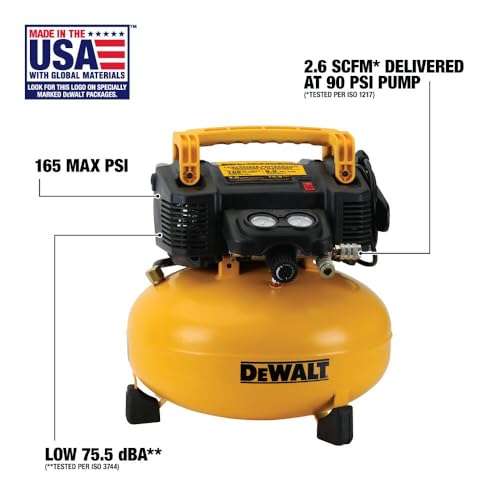
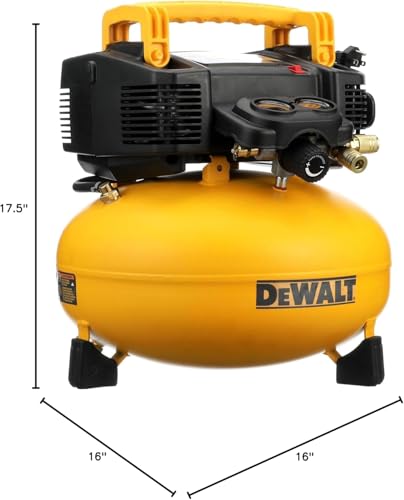
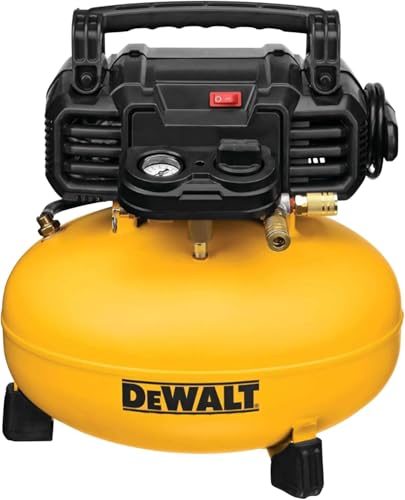
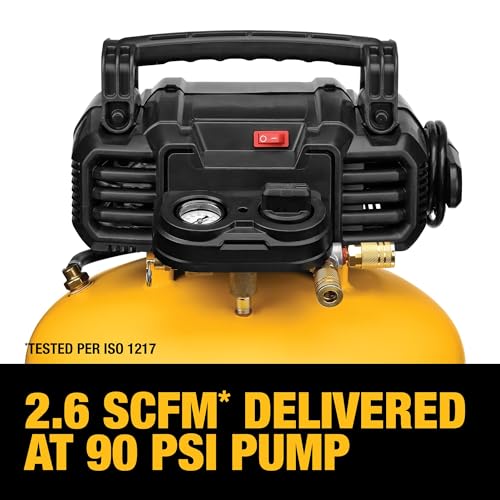
The DEWALT DWFP55126 is a solid pick for DIYers and light contractors who need a reliable, portable compressor for framing jobs. Its 6-gallon tank and 2.6 SCFM at 90 PSI won’t power through back-to-back nail shots like bigger models, but it’s enough for intermittent use with framing nailers, especially when you factor in the quick recovery and quiet 78.5 dBA operation. The oil-free pump is a big plus for users who want maintenance-free performance and don’t want to worry about oil changes or leaks on the job site.
Owners consistently report it’s rugged for its class, with the roll cage and redesigned outlet tube helping avoid snags on the trailer or in tight spaces. While it’s not built for all-day framing crews, it’s one of the most dependable pancake compressors out there. I’d choose this over smaller 2- or 3-gallon models any day when nailing down top plates or sheathing.
Product photos
Makita MAC2400 Big Bore Air Compressor
Strengths
- 4.2 CFM at 90 PSI
- Big Bore pump
- Cast iron durability
- Low noise for class
- Roll-cage protection
Trade-offs
- Oil-lubricated (maintenance needed)
- Heavier and less portable
- Higher initial cost
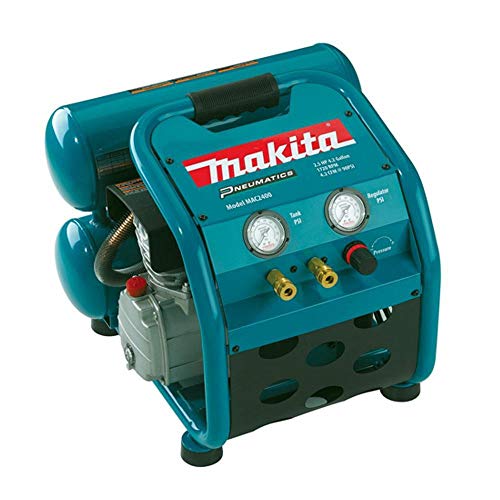
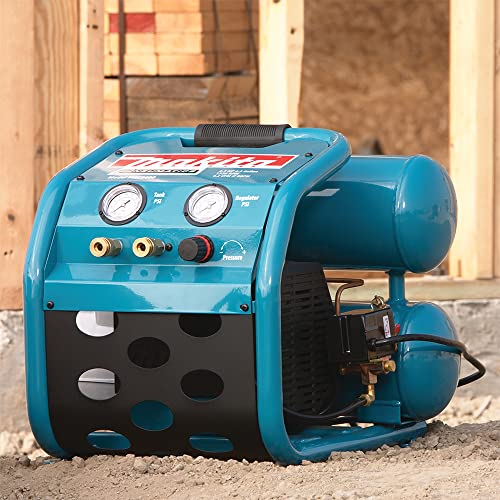
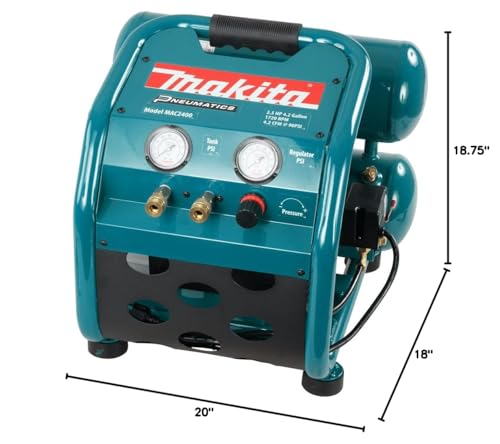
If you’re framing full-time or running a crew, the Makita MAC2400 is the kind of workhorse you’ll appreciate. The Big Bore pump and 4.2 CFM at 90 PSI deliver fast recovery, letting you drive nails in rapid succession without long waits. That’s a standout on framing jobs where downtime means lost momentum. The 2.5 HP 4-pole motor runs at a cooler 1,730 RPM, which Makita says contributes to longer life, and reviewers agree it holds up well under daily abuse.
This is an oil-lubricated unit, which means slightly more maintenance than oil-free models, but the trade-off is cooler operation and less wear over time. The cast iron construction and roll-cage design make it jobsite-tough, and the 79 dB noise level is impressive for a compressor this powerful. Compared to pancake models, it’s bulkier and heavier, but if speed and reliability are your priorities, this is the smarter buy.
Product photos
How We Evaluated air compressor for framings
Rather than a hands-on lab test, my research focused on comparing specifications and features across numerous models. I weighed owner reviews from multiple sources against professional assessments, applying my years of experience with power tools to identify patterns in performance and reliability. This allowed me to rank compressors based on what truly matters for framing work, going beyond marketing descriptions.
For framing, consistent air delivery (CFM) and tank size are paramount, as are durability and portability. A compressor that can’t keep up with nailers or easily move around the jobsite is a hindrance. I heavily favored models with cast iron pumps and robust construction because they tend to last longer under constant use – something vital for professional framers and serious DIYers.
Specifications reveal a compressor’s potential, but owner feedback clarifies real-world performance. I paid close attention to reports on noise levels, oil-free versus oil-lubricated pump longevity, and ease of maintenance. If you also need a reliable unit for smaller tasks, you might consider an air compressor for nail guns to cover multiple bases.
What To Look For In air compressor for framings
Choosing the right air compressor for framing is about more than just CFM ratings. It’s about balancing portability, recovery time, and durability for the demands of a job site.
A quality air compressor for framing should deliver consistent air pressure, maintain a reasonable noise level, and feature robust construction. Look for a unit with a sufficient tank size to minimize compressor cycling, a durable pump capable of withstanding heavy use, and features that enhance portability and ease of maintenance. CFM at 90 PSI is the critical spec, but don’t overlook build quality and long-term reliability.
Tank Size & Portability
For framing, you’ll likely be moving the compressor around quite a bit. A smaller tank, say, 6 to 8 gallons, makes it easier to carry, but you’ll sacrifice runtime between cycles. Larger tanks (10 gallons and up) provide longer run times, which is great for continuous nailing, but they come with a weight penalty. I generally advise leaning towards portability unless you absolutely need to run multiple tools simultaneously or have a very large framing project. Consider whether you’ll need a portable construction air compressor for other job site tasks, too.
Pump Type & CFM Delivery
Oil-free pumps offer convenience (less maintenance) but tend to be louder and have a shorter lifespan than oil-lubricated pumps. For serious framing work, especially if you’re a professional, an oil-lubricated pump is worth the extra upkeep. CFM (cubic feet per minute) at 90 PSI is the key specification. Framing nailers typically need around 2-4 CFM, but it’s always best to overestimate. A compressor with higher CFM delivery will ensure consistent performance and prevent the motor from overheating. Don’t skimp here, underpowering your tools will lead to frustration and potential damage.
- A 1-gallon tank is fine for very light-duty tasks and topping off tires.
- A 6-8 gallon tank is a good compromise for portability and runtime for occasional framing.
- A 10+ gallon tank is ideal for professional framers or those who frequently use air tools for extended periods, providing consistent power for a framing nailer air compressor.
Durability & Noise Level
Job sites are tough on tools. Look for a compressor with a roll-cage or robust exterior to protect the pump and components. Cast iron pumps, like the ones found in the Makita MAC2400, are significantly more durable than aluminum pumps. Noise is another factor. Working all day with a loud compressor can be draining. Lower decibel (dBA) ratings are preferable, though some noise is unavoidable.
A compressor’s longevity is directly tied to its build quality. Don’t assume higher horsepower equals better durability; focus on pump material, overall construction, and owner reports of long-term reliability.
Air Compressors for Framing Compared
Here’s a specification comparison of air compressors suitable for framing work.
| Product | Max PSI | Tank Size (Gallons) | SCFM @ 90 PSI | Motor HP | Oil Type | Weight (lbs) |
|---|---|---|---|---|---|---|
| DEWALT 6 Gallon | 165 | 6.0 | 2.6 | N/A | Oil Free | 30 |
| Makita MAC2400 | N/A | N/A | 4.2 | 2.5 | Oil Lubricated | N/A |
Frequently Asked Questions
What CFM is really enough for framing?
A minimum of 4 CFM at 90 PSI is ideal for most framing nailers, but I recommend aiming for 5-6 CFM to avoid the compressor running constantly and to provide a buffer for longer nailing sequences. Higher CFM also allows for potential use with other air tools simultaneously.
Are oil-free compressors okay for occasional framing work?
Yes, oil-free compressors are suitable for light or occasional framing, but they won’t last as long as oil-lubricated models under frequent, heavy use. Expect reduced longevity and potentially higher noise levels with an oil-free pump.
How important is tank size if I’m only framing small projects?
While a larger tank isn’t essential for small projects, even a 6-gallon tank will significantly reduce the compressor’s runtime and increase how often it cycles on and off. A smaller tank makes the unit easier to move, but expect more frequent interruptions.
What’s the best way to extend the life of my air compressor?
Regularly draining the tank of moisture is vital, as is following the manufacturer’s maintenance schedule for oil changes (if applicable). Keeping the compressor clean and protected from the elements will also contribute to its longevity, and choosing a model with a cast iron pump from the start is a solid investment.
Where can I find more information about choosing a framing gun air compressor for specialized tasks?
My guidance on choosing a compressor for framing gun applications goes into greater detail regarding the specific needs of different nailer types, including pneumatic vs. coil nailers. That article also covers the specific PSI and CFM requirements for various framing applications.
The Bottom Line
Choosing an air compressor for framing often comes down to balancing initial cost with long-term durability and performance. While many options exist, the Makita MAC2400 stands out as the strongest overall pick; its oil-lubricated pump and high CFM delivery offer a blend of power and longevity that’s hard to beat for serious framing tasks.
If you’re on a tighter budget or only need a compressor for occasional use, the DEWALT 6 Gallon is a solid choice. For those who need versatility beyond framing, perhaps wanting a reliable unit for inflation or smaller detail work, the Makita again proves its worth. There are also options if you need a framing nail gun air compressor for more intensive projects.
Ultimately, remember that specs are only part of the story. Consistent air delivery, a durable pump, and a manageable weight are far more crucial than peak PSI or horsepower. Invest in a unit that can reliably power your tools and withstand the rigors of the job site, and you’ll save yourself time, money, and frustration in the long run.
