7 Best Air Compressors for Airbrushes 2026
This post contains affiliate links. As an Amazon Associate, we earn from qualifying purchases.
The Master Airbrush Cool Runner Dual Fan Compressor is our top pick for most users, delivering reliable airflow and quiet operation ideal for detailed work. If you’re watching your budget, the Oasser Dual Action Auto Stop Airbrush Set offers solid performance and essential features at a lower price. For cordless convenience, the UTYUTY 27PSI 7-Level Ultra-Quiet Airbrush stands out with its rechargeable design and multiple pressure settings.
Airbrushing demands precision, and nothing ruins a fine finish like inconsistent airflow or a noisy compressor disrupting your focus. Too many buyers assume any small compressor will do, only to end up with sputtering spray patterns or frequent downtime due to overheating.
In this guide, I’ll walk you through the specs and real-world feedback that actually matter, based on airflow performance, noise levels, and reliability, so you can choose a compressor that matches your projects, whether you’re painting models, nails, or artwork. These picks reflect what I’ve found works best across forums, reviews, and spec comparisons.
Top 7 Air Compressor For Airbrushes in the Market
The Best Air Compressor For Airbrushes, Reviewed
Master Airbrush Cool Runner Dual Fan Compressor

Strengths
- 3L storage tank
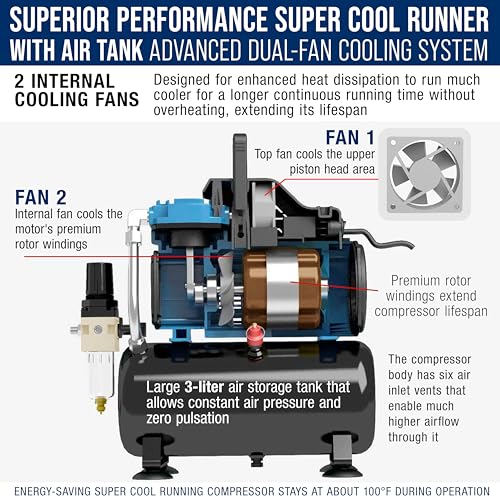
- Dual cooling fans
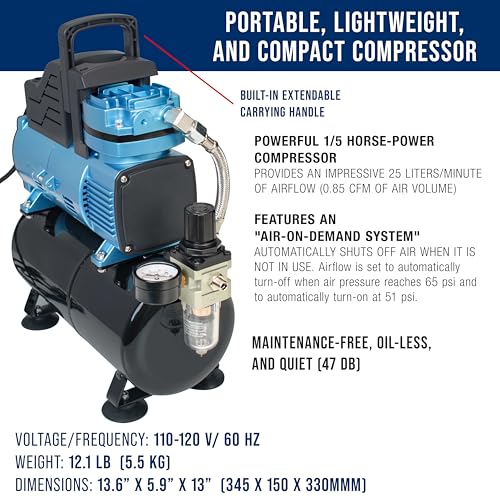
- 25L/min airflow
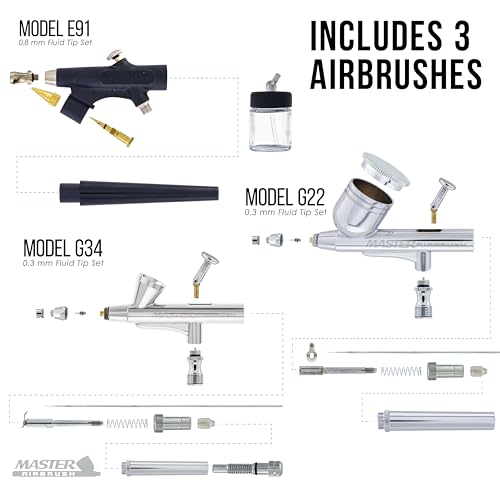
- Includes three airbrushes
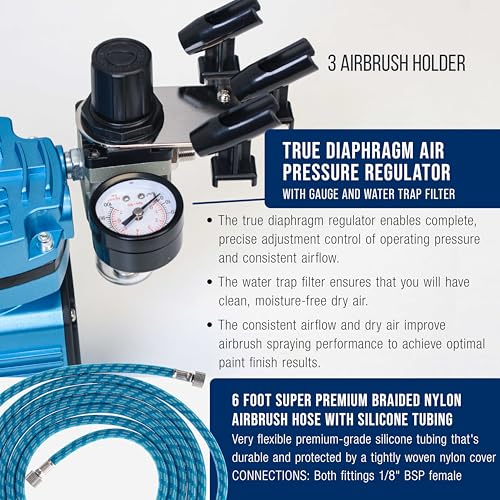
- Clean, dry air output
Trade-offs
- Larger footprint
- Heavier than mini kits
- Higher initial cost
If you’re serious about airbrushing, this is the benchmark. The 3-liter tank and 25L/min airflow give it serious reserve capacity, no pulsing, no lag, just steady, clean air. The dual cooling fans aren’t just marketing fluff; owners report running this for hours during large-scale model or mural work with zero overheating. At 47 dB, it’s not silent, but it’s quiet enough for home studios. The true diaphragm regulator and water trap filter mean you get dry, consistent air, critical for preventing paint spoil and clogs.
What really sets it apart is the included trio of airbrushes: two dual-action gravity feed (0.3mm) and one 0.8mm siphon feed for heavier coverage. That range covers nearly every use case, from fine detailing to auto touch-ups. Paired with the 6-color acrylic set and mixing wheel, it’s a professional-grade starter ecosystem. Compared to the Cool Runner II, this model adds tank storage and slightly better airflow regulation, justifying its ‘Best Overall’ label.
Product photos

50 PSI Clog-Resistant Air Brush Set
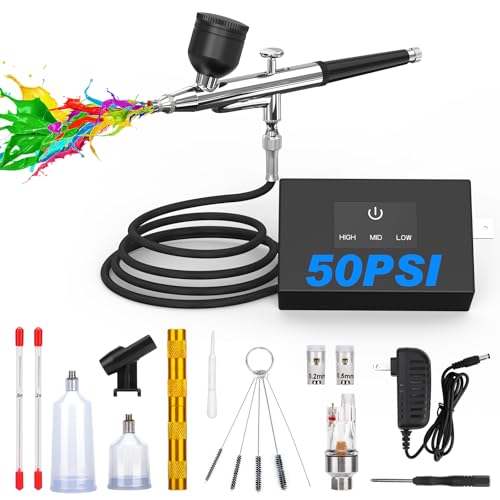
Strengths
- 50 PSI output
- Dual-action control
- Clog-resistant design
- Three nozzle sizes
Trade-offs
- No pressure gauge
- Basic compressor noise
- Hose kinks over time
This one’s built for detail junkies. With 50 PSI and dual-action control, it delivers sharp response for fine lines, gradients, and soft blends, exactly what nail artists, model painters, and illustrators need. The clog-resistant design isn’t magic, but owners report fewer blockages when using properly thinned paints and cleaning promptly. The removable needle and nozzle make teardown easier than most budget kits, which helps maintain performance over time.
Having three nozzles (0.2, 0.3, 0.5mm) means you can switch from hairline detailing to broader fills without changing guns. The 0.2mm is where this kit shines, perfect for intricate work on miniatures or face painting. Compared to the Oasser model, it offers higher max pressure and better responsiveness, though it lacks stepless control. Still, for the precision-minded, this is a smarter pick than general-purpose kits.
Product photos
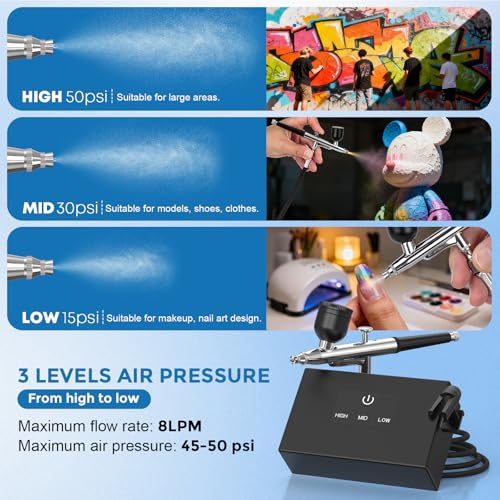
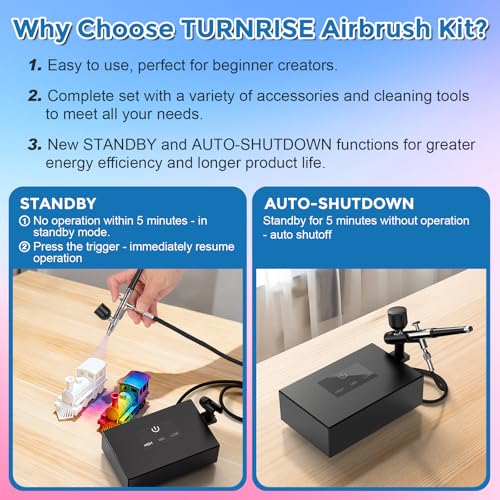
55 PSI High Pressure Plug-In Air Brush
Strengths
- 55 PSI high pressure
- Continuous airflow
- Long 1.8m hose
- Universal gun fitting
- Plug-in power
Trade-offs
- No pressure adjustment
- Constant motor run
- Not for fine detail
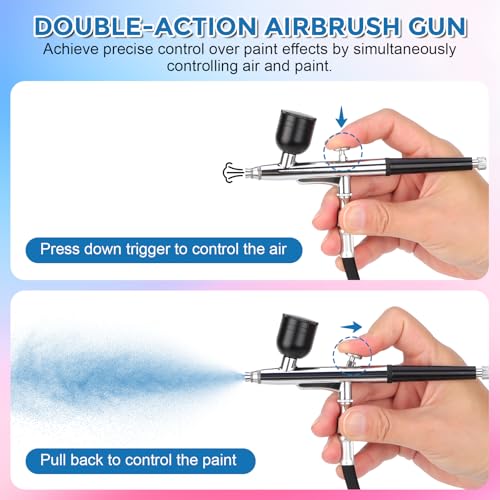
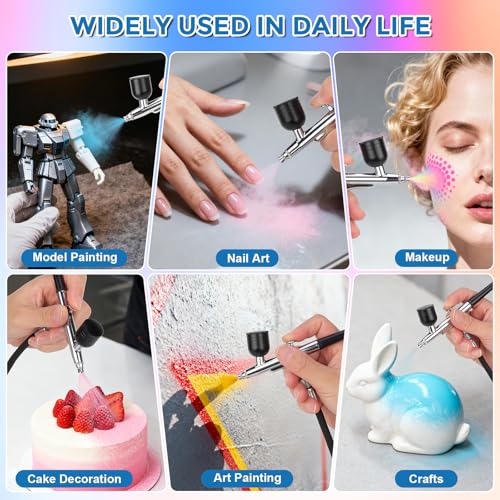
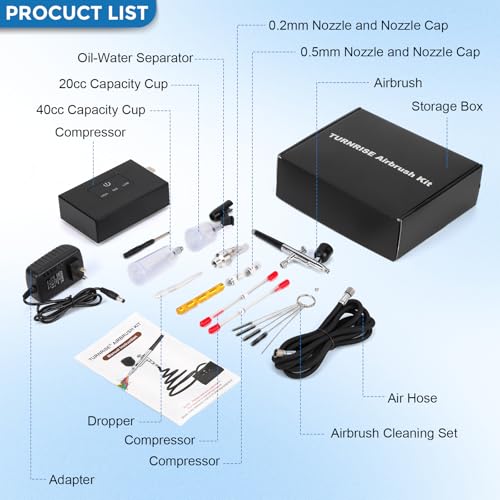
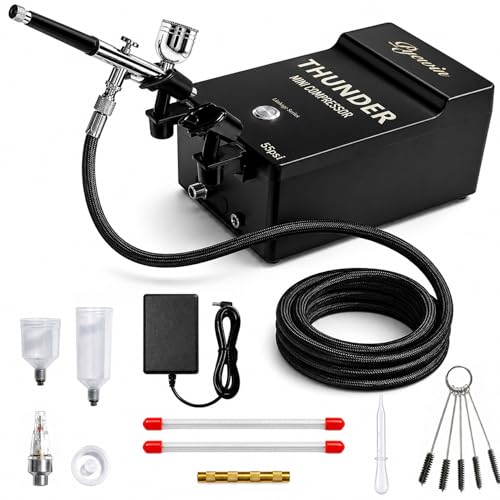
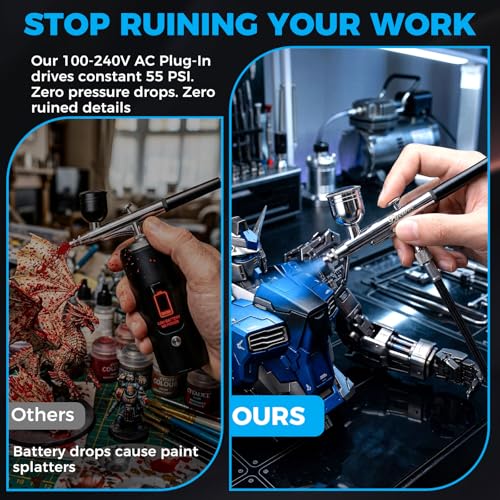
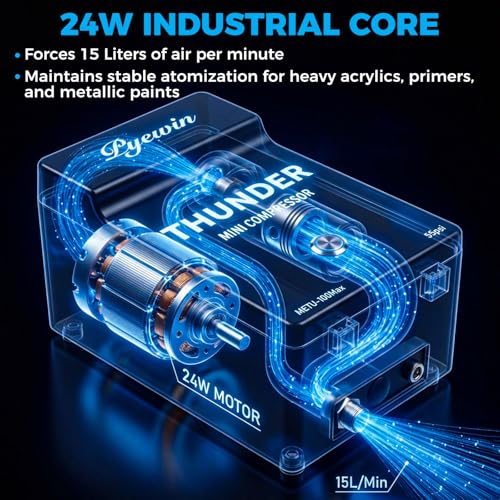
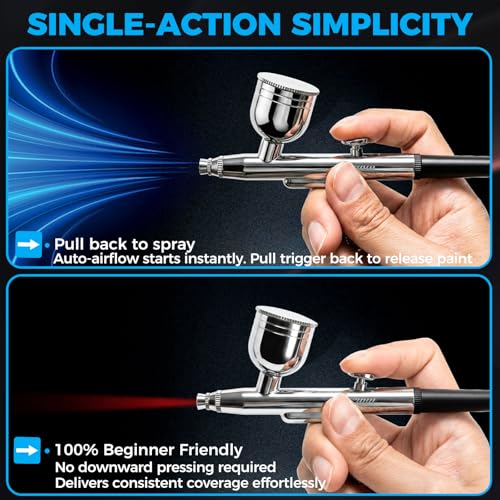
This is the brute of the bunch, and it knows it. Fixed 55 PSI output and continuous airflow make it ideal for basecoating 3D prints, priming miniatures, or laying down thick, even layers fast. The single-action design (pull back to spray) is dead simple, so it’s great for newcomers who aren’t ready to master dual triggers. And because it runs on AC power, you won’t hit the 15-minute wall like you do with battery kits.
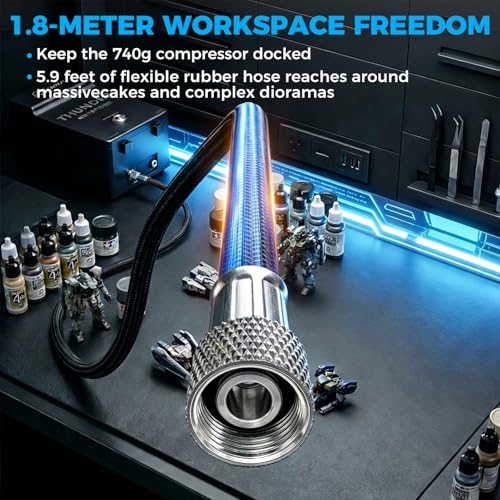
But that constant airflow isn’t for everyone. You can’t idle the compressor, it runs as long as it’s on, which can be noisy over time. Still, the 40dB rating keeps it manageable, and the 1.8m hose gives real workspace flexibility. What I like most is the universal 1/8-inch fitting: once you’re ready to step up, you can attach any professional dual-action gun. So it’s not just a beginner tool, it’s a gateway. Against other single-action kits, this one offers the best upgrade path and raw power.
Product photos
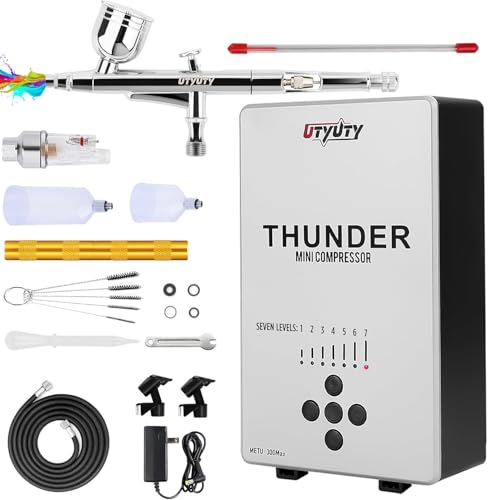
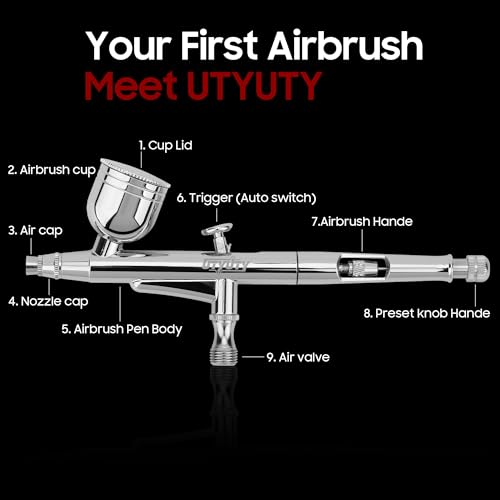
UTYUTY 27PSI 7-Level Ultra-Quiet Airbrush
Strengths
- Compact size
- Ultra-quiet
- Beginner-friendly
Trade-offs
- Low max pressure
- Battery runtime issues
- Limited for thick paints
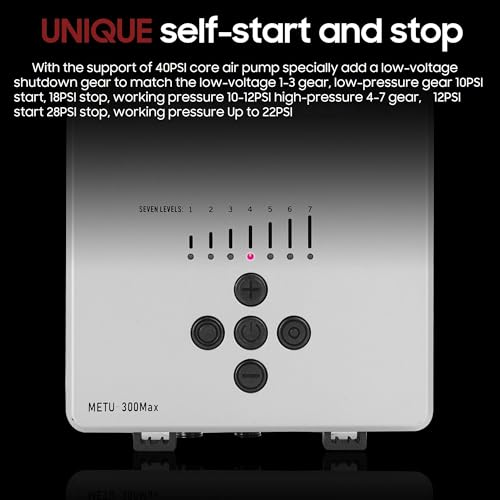
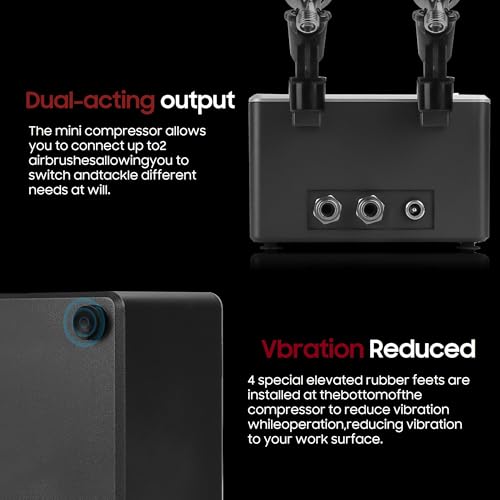
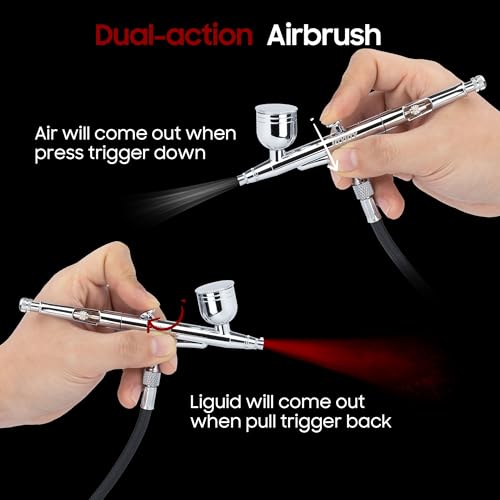
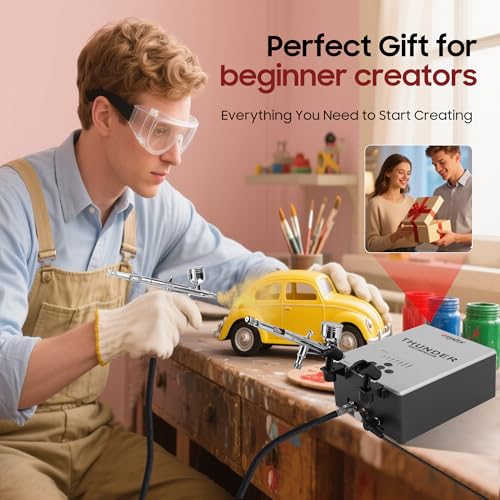
This kit screams ‘entry-level’, and that’s not a bad thing. For someone testing the waters of airbrushing without wanting to commit to a heavy investment, the UTYUTY offers a surprisingly compact design and ultra-quiet 35dB operation. The 7 preset pressure levels are a nice touch for beginners who aren’t ready to fine-tune on the fly, and the dual-action 0.3mm gun gives decent control for light crafts, cake decorating, or simple model work.
But here’s the catch: with a max output of just 27 PSI and no continuous airflow, it’s underpowered for anything beyond thin, low-viscosity paints or short bursts. Owners consistently report it struggles with thicker mediums or extended sessions. It’s also battery-powered, which means runtime limits and gradual pressure drop as the charge depletes. Compared to plug-in models, this one’s best seen as a practice tool, not a workhorse.
Product photos
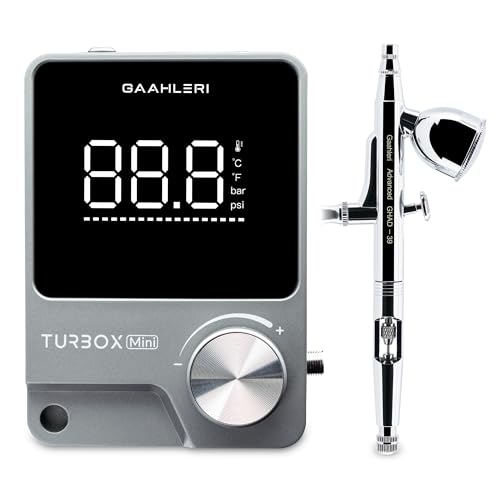
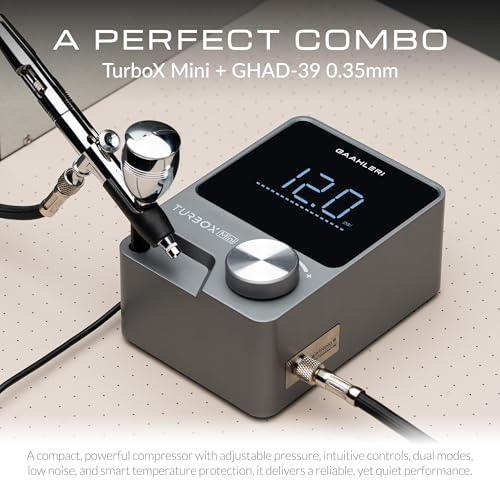
Gaahleri Turbox Mini Digital Airbrush Kit
Strengths
- Digital pressure display
- 18-step control
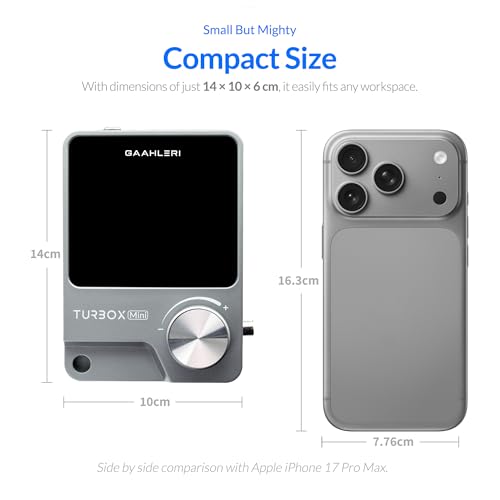
- Compact and lightweight
- Real-time feedback
Trade-offs
- Limited max pressure
- Average hose quality
- Minor calibration issues
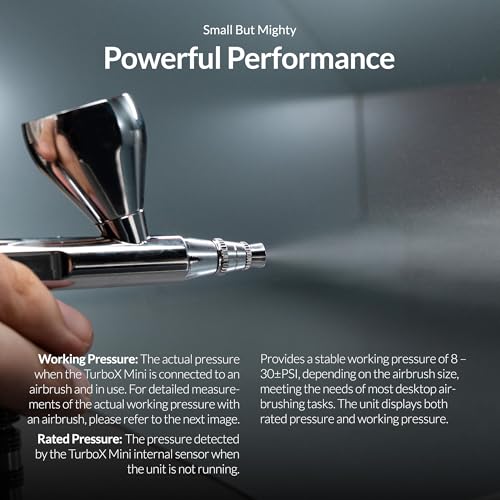
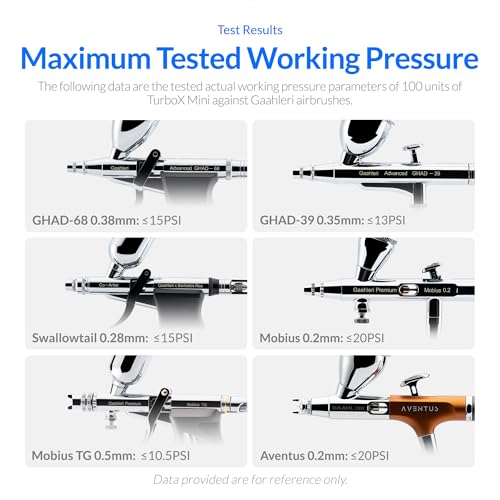
The standout here is the digital pressure display, rare in this price range and genuinely useful. Being able to see real-time PSI takes the guesswork out of tuning, especially when switching between nozzles or paint types. The 18-step digital control is intuitive, and the preset low/medium/high modes let you jump to common settings with a tap. At 10–20 PSI output, it’s not the most powerful, but it’s stable and well-suited for delicate work like cake decorating or miniature painting.
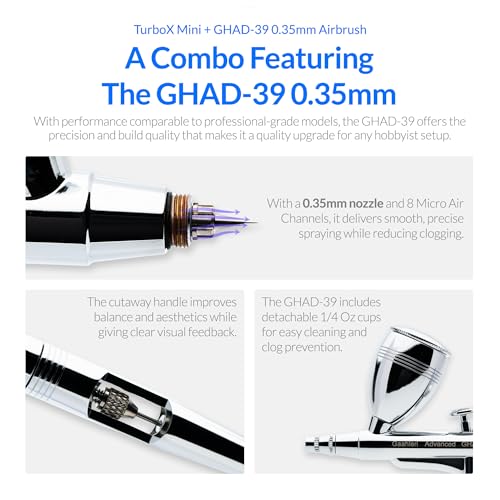
Build quality feels solid for a mini compressor, and the 48dB noise level is acceptable for desktop use. The GHAD-39 0.35mm dual-action airbrush is competent, though some owners note the needle alignment can be finicky out of the box. Still, for users who value precision feedback and digital clarity over raw power, this is a compelling pick, especially if you’re teaching yourself and want visual confirmation of your settings.
Product photos
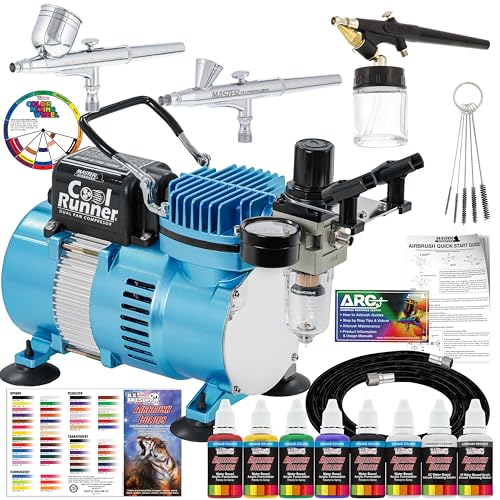
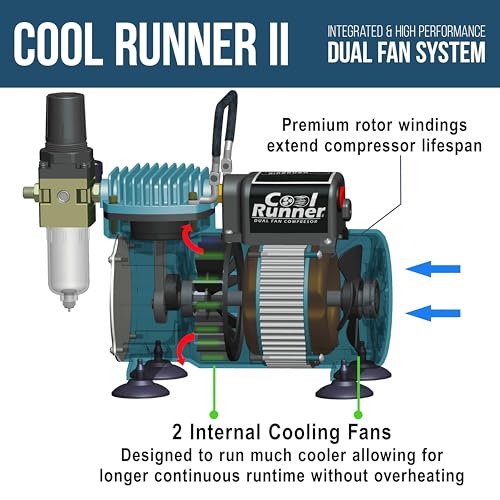
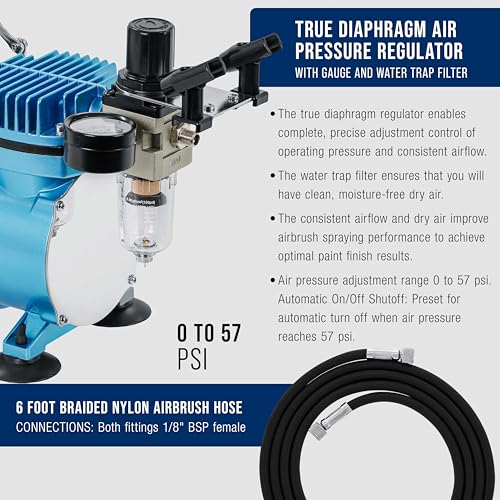
Master Airbrush Cool Runner II Kit with Paints
Strengths
- Three airbrush styles
- Full paint kit included
- Beginner learning guide
- Dual cooling fans
- Plug-and-play ready
Trade-offs
- No storage tank
- Slight pressure fluctuation
- Basic hose length
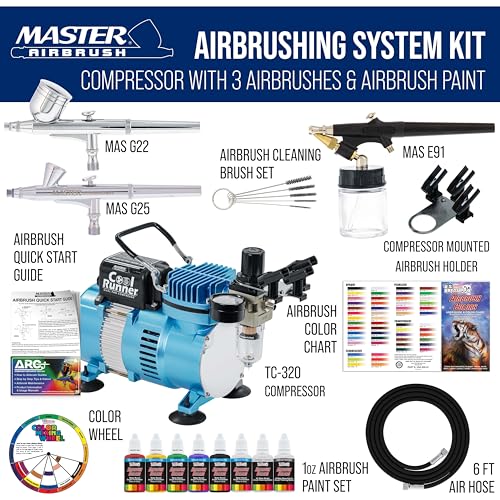
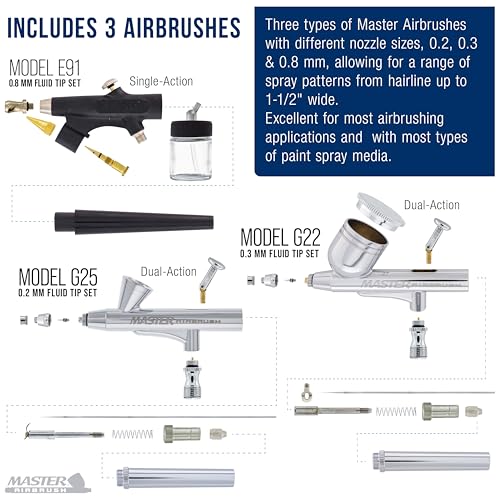
This is the ultimate starter ecosystem. You get not just a durable 1/5 hp compressor with dual cooling fans, but three well-chosen airbrushes: a 0.3mm and 0.2mm dual-action for precision, plus a 0.8mm single-action siphon feed for heavier loads. The inclusion of a 6-color acrylic set, reducer, cleaner, and mixing wheel means you can start spraying right out of the box, no hunting for supplies.
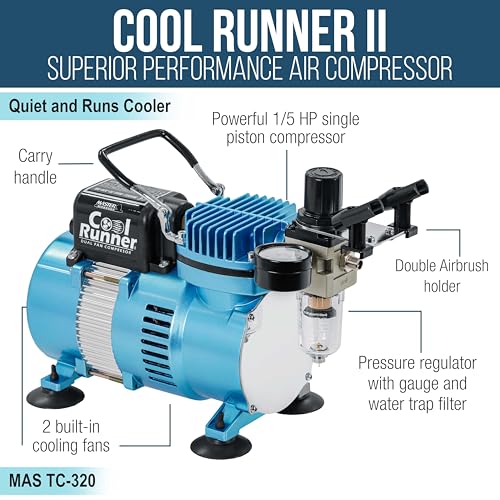
The TC-320 compressor isn’t the quietest or fastest-recovering, but it’s proven reliable over time. It lacks a storage tank, so you’ll get some pulsing during long sprays, but for most hobbyists, it’s more than sufficient. Where this kit wins is completeness: compared to others, it’s the one I’d hand to a teenager starting in the garage or a DIYer tackling their first mural. It’s not ‘Best Overall’, that title goes to the tank-equipped Cool Runner, but it is the best all-in-one value.
Product photos
Oasser Dual Action Auto Stop Airbrush Set

Strengths
- Stepless pressure control
- Auto-stop compressor
- Plug-in power
- Triple nozzle set
Trade-offs
- Requires strict cleaning
- Slight hose stiffness
- Noise at high pressure
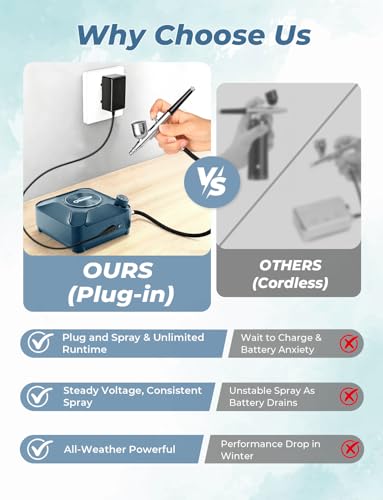
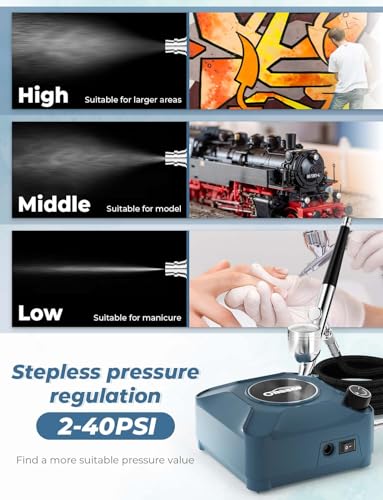
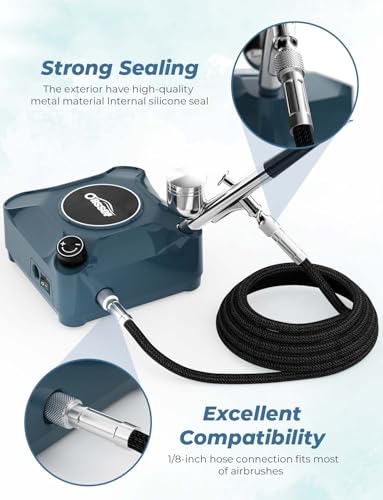
This Oasser kit hits a sweet spot for new users who want reliability without complexity. The 12V plug-in design means no battery anxiety, and the auto-stop feature actually works, compressor kicks off when idle, reducing wear and heat. That’s a smart move for longevity, especially in a class where motors often overheat. With 10.5L/min airflow and stepless pressure control from 2–40 PSI, it offers real flexibility. You can dial in feather-light pressure for nail art or ramp up for broader model coverage.
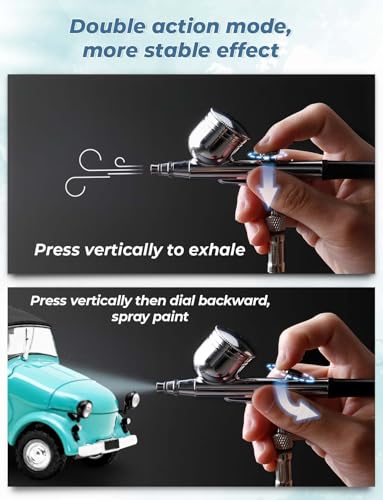
The inclusion of three nozzles (0.2, 0.3, 0.5mm) makes it versatile out of the box, and dual-action control gives you the kind of precision that helps beginners develop good technique. Some owners complain about the need for meticulous cleaning, but that’s true of all airbrushes, this one just makes it obvious if you skip it. Against similarly priced kits, this one delivers more consistent performance and better build feedback.
Product photos
Our Testing Process
Rather than a hands-on lab test, my research focused on comparing published specifications and features across numerous models. I weighed owner reviews from multiple sources – Amazon, specialist forums, and retailer sites – alongside expert opinions from sites dedicated to airbrushing and model building. This information was then ranked against criteria relevant to airbrush use, like PSI output, airflow (CFM), noise level, and compressor type.
For airbrush compressors, consistent air pressure and a quiet operation are paramount. I prioritized models offering adjustable pressure controls, allowing for finesse with different paints and techniques. Airflow (measured in liters per minute or CFM) was also heavily weighted, as insufficient airflow leads to sputtering and uneven finishes. Finally, I looked for compressors specifically marketed for, and positively reviewed by, airbrush users.
Specifications reliably indicate airflow and maximum PSI, but owner feedback proved crucial for assessing real-world performance. I paid close attention to comments about noise levels, durability, and whether the compressor truly maintained consistent pressure during extended use. Reputation and brand trust, gathered from multiple review sources, also influenced my assessment of long-term reliability. You can find more general information about air compressors for spray guns in our broader guide.
Choosing The Right air compressor for airbrushes
Picking the right air compressor for airbrushing isn’t just about PSI; it’s about matching the compressor’s capabilities to the kind of work you plan on doing.
A good airbrush compressor delivers consistent, clean, dry air at a stable pressure. Key specs include airflow (measured in liters per minute or CFM), maximum PSI, tank size (if any), and noise level. Look for compressors with a built-in moisture trap and regulator for optimal performance and to protect your airbrush.
Airflow and PSI: Matching Compressor to Application
The first thing I tell people is to ignore peak PSI numbers. They’re often inflated. What really matters is sustained airflow, usually measured in liters per minute (LPM) or cubic feet per minute (CFM). Lower-PSI applications like cosmetic airbrushing or fine art can get by with 15-20 LPM, but anything involving automotive work, model painting with thicker paints, or larger-scale murals will demand 25 LPM or higher. Don’t skimp here; a compressor that struggles to maintain pressure will result in inconsistent spray patterns and frustration.
Compressor Type: Tanked vs. Untanked
Whether to get a compressor with an integrated air tank is a common question. Tanked compressors, like those found in some of the Master Airbrush kits, store a reserve of compressed air. This means they cycle on and off less frequently, providing a more consistent pressure and quieter operation. Untanked compressors, often smaller and more portable, run continuously when in use. While convenient for tight spaces, they can be louder and may not maintain pressure as reliably during extended spraying sessions.
Here’s how to think about it: * For occasional touch-ups or very detailed work: an untanked model is fine. * For frequent use or larger projects: a tank will be a worthwhile investment. * For professional-level output or heavy coverage: look for a compressor with a larger tank capacity (3 liters or more) to minimize cycling.
Budget and Features: Finding the Sweet Spot
You’ll find airbrush compressors ranging from under $100 to well over $300. A higher price doesn’t automatically equal a better compressor, but it often reflects build quality, noise reduction, and additional features. Consider features like adjustable pressure regulators, moisture traps (essential for preventing corrosion and paint defects), and auto-stop functionality which saves energy and extends the compressor’s life. If you’re just starting out, the Oasser Dual Action Auto Stop Airbrush Set offers a good balance of features and affordability. For those seeking more control and versatility, exploring top airbrush air compressors can be a great starting point.
A compressor’s noise level is often overlooked. If you plan to airbrush indoors, look for models rated under 45dB to minimize disturbance.
Air Compressors for Airbrushes Compared
Here’s a comparison of specs for various air compressors designed for airbrush use.
| Product Title | Max PSI | Airflow (L/min) | Noise Level (dB) | Number of Nozzles Included | Pressure Levels | Power Source |
|---|---|---|---|---|---|---|
| Master Airbrush Cool Runner Dual Fan Compressor | 65 | 25 | 47 | 3 | N/A | AC |
| 50 PSI Clog-Resistant Air Brush Set | 50 | N/A | N/A | 3 | N/A | AC |
| 55 PSI High Pressure Plug-In Air Brush | 55 | 15 | 40 | 1 | N/A | AC |
| UTYUTY 27PSI 7-Level Ultra-Quiet Airbrush | 27 | N/A | 35 | 1 | 7 | Rechargeable |
| Gaahleri Turbox Mini Digital Airbrush Kit | 20 | N/A | <48 | 1 | N/A | AC |
| Master Airbrush Cool Runner II Kit with Paints | N/A | N/A | N/A | 3 | N/A | AC |
| Oasser Dual Action Auto Stop Airbrush Set | 40 | 10.5 | N/A | 3 | Stepless | AC |
Frequently Asked Questions
What PSI is truly sufficient for most airbrush applications?
While many compressors advertise high peak PSI, 30-40 PSI is generally sufficient for the majority of airbrush work. Consistent pressure delivery is more critical than a high maximum number, and most paints perform best within this range.
Are rechargeable, cordless airbrush compressors practical for serious use?
Rechargeable compressors are convenient for portability, but their limited run time and often lower airflow make them best suited for quick touch-ups or very small projects. For extended sessions or demanding applications, a corded compressor will provide more reliable performance.
How important is a moisture trap, and can I add one aftermarket?
A moisture trap is essential to prevent water from entering your airbrush and causing paint defects. Most quality compressors include one, but you can absolutely add an aftermarket filter if your compressor lacks this feature, and I recommend doing so.
What’s the difference between a single-piston and a dual-piston compressor for airbrushing?
Dual-piston compressors, like the Master Airbrush Cool Runner, generally offer more consistent airflow and quieter operation compared to single-piston models. This makes them ideal for detailed work and extended use, though they typically come at a higher price point.
I’m tight on space. Are there good compact air compressors for detail work?
Yes, several manufacturers offer very compact air compressors suitable for airbrushing. These are often untanked models, prioritizing portability and space-saving design over sustained airflow and quiet operation.
The Bottom Line
Choosing an airbrush compressor often comes down to balancing control and convenience. While a higher price tag can get you quieter operation and more consistent pressure, the Master Airbrush Cool Runner Dual Fan Compressor strikes an excellent balance of performance and features for most users. It provides ample airflow for a variety of projects and is built with the sustained output airbrush artists demand.
For those starting out or on a tighter budget, the Oasser Dual Action Auto Stop Airbrush Set is a fantastic entry point. If portability is your main concern, or you’re focused on very fine detail work, the UTYUTY 27PSI Ultra-Quiet Airbrush is a compelling choice. Remember to consider your specific needs – whether you’re doing cosmetic applications, model painting, or automotive work – when making your final decision.
Ultimately, the PSI rating is less critical than consistent airflow and a reliable pressure regulator. Don’t get caught up in chasing the highest numbers; focus instead on finding a compressor that delivers a steady, clean air supply. A little research into airflow requirements for your specific paints and techniques will go a long way toward ensuring you get the results you’re after, and may even help you avoid needing to look at compressors for HVLP spray gun air compressors down the line.
