
6 Best Air Cleaners for Dust (2026 Guide)
This post contains affiliate links. As an Amazon Associate, we earn from qualifying purchases.
The MOOKA H13 HEPA Air Purifier stands out as the best overall air cleaner for dusts, delivering outstanding coverage and quiet operation. For those on a tighter budget, the Levoit Core Mini-P offers solid performance in small spaces, while the KNKA APH4000 brings strong filtration and real-time air quality feedback for larger rooms.
If you’re tired of dust settling on surfaces no matter how much you clean, you’re not alone. Most standard air purifiers barely keep up, especially in workshops, garages, or homes with pets and frequent foot traffic. After comparing the field and analyzing specs, owner feedback, and filtration performance, I focused on models that actually move enough air and use true HEPA filters to make a difference.
This guide cuts through the hype to show you which units deliver real dust removal, based on CADR ratings, filter quality, and long-term usability. I looked at what matters most, filtration efficiency, room size match, noise, and maintenance costs, so you can pick one that fits your space and lifestyle without wasting money on underpowered or overpriced options.
Top 6 Air Cleaners For Dusts in the Market
The Best Air Cleaners For Dusts, Reviewed
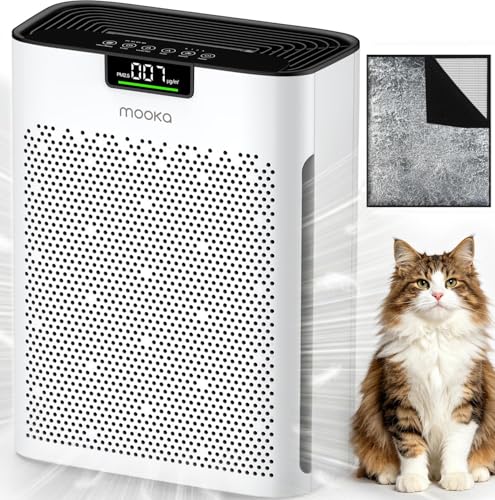
MOOKA H13 HEPA Air Purifier
Strengths
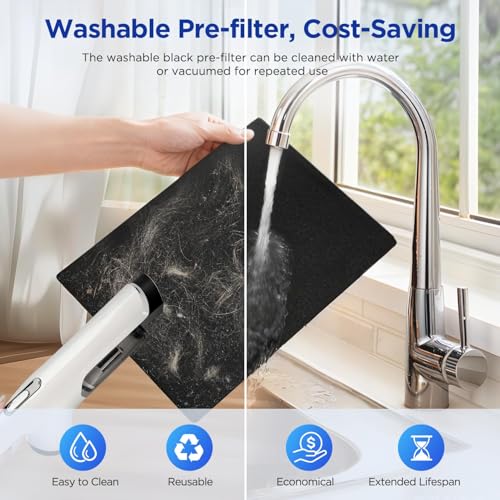
- Washable pre-filter
- Smart auto mode
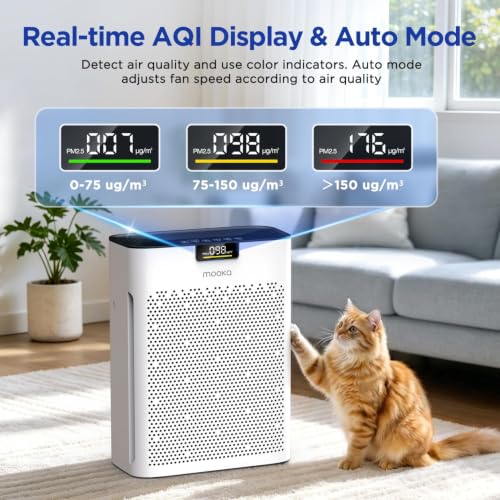
- Real-time AQI display
- Quiet 20dB sleep mode
- Energy efficient
Trade-offs
- Large footprint
- Filter availability concerns
- Plastic build feel
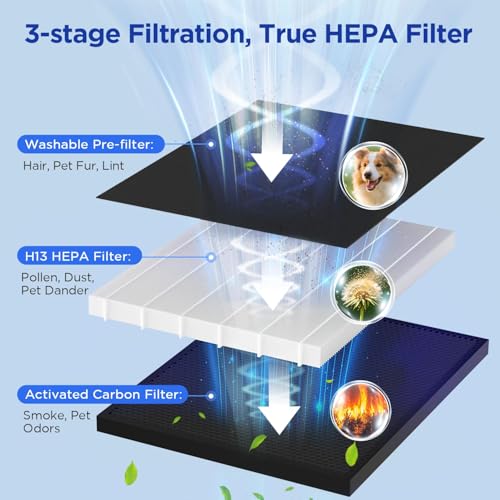
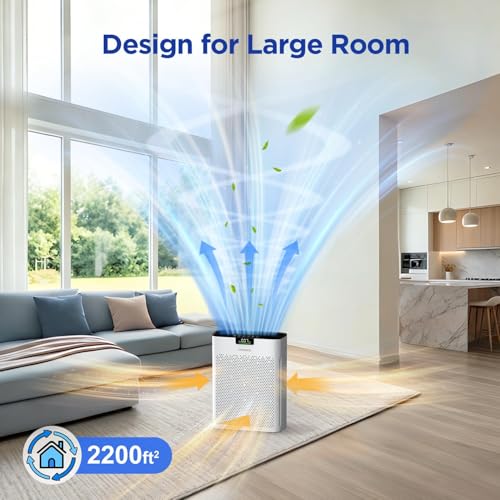
This MOOKA KJ190H is the most balanced pick across performance, features, and value, earning its ‘Best Overall’ label. It covers up to 2200 ft², but more importantly, owners report it refreshes medium-sized rooms quickly, thanks to its wide dual-side air intakes. The real win is the combination of H13 HEPA filtration, washable pre-filter, and activated carbon, this setup handles pet hair, odors, and fine dust without needing constant filter swaps.
The PM2.5 sensor and auto mode work well, adjusting fan speed based on real-time conditions. At 20dB in sleep mode, it’s whisper-quiet, and the dark display doesn’t disrupt sleep. The filter reminder and child lock are thoughtful touches. Compared to the Blueair, it offers similar intelligence at a fraction of the filter cost.
Product photos

BLUEAIR Blue Pure 211i Max
Strengths
- Large room coverage
- HEPASilent filtration
- App-controlled automation
- Quiet operation
- Modern design
Trade-offs
- Expensive filters
- No onboard AQI display
- Higher price point
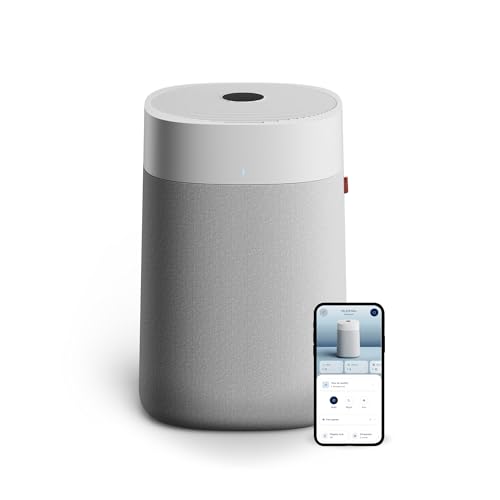
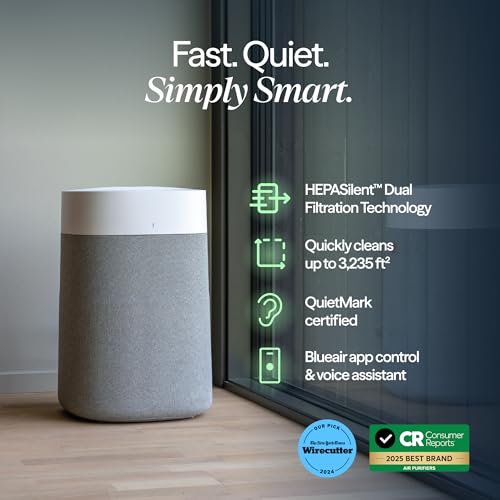
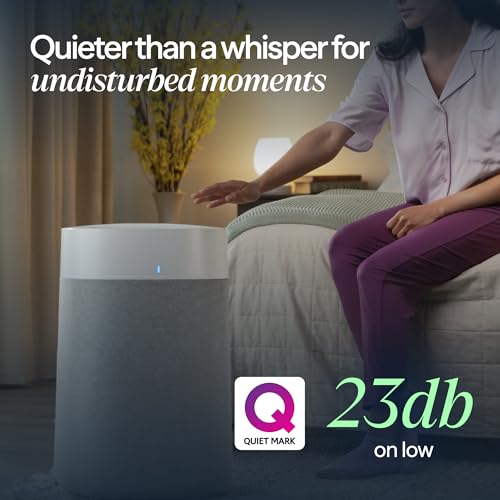
When it comes to sheer coverage, the Blue Pure 211i Max stands out in a crowded field. On paper, its ability to clean air in spaces up to 3,235 sq ft in an hour is impressive, especially for open-concept homes or large living areas where airflow is a challenge. The HEPASilent tech is a known performer, owners consistently report it pulls in dust and pet dander efficiently while running quieter than many competitors at similar output levels.
Smart features like app control and auto mode are well implemented, and reviewers note the real-time air quality adjustments work reliably. The minimalist design isn’t just for looks, it supports 360° intake, which helps it pull in contaminated air from all directions. Still, the filter replacement cost is on the high side, and the lack of an onboard air quality display means you’re reliant on the app to see what’s happening.
Product photos


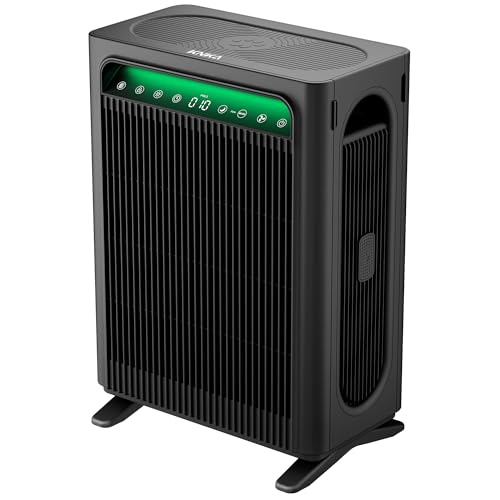
KNKA APH4000 Air Purifier
Strengths
- Real-time AQI display
- AHAM VERIFIDE CADR
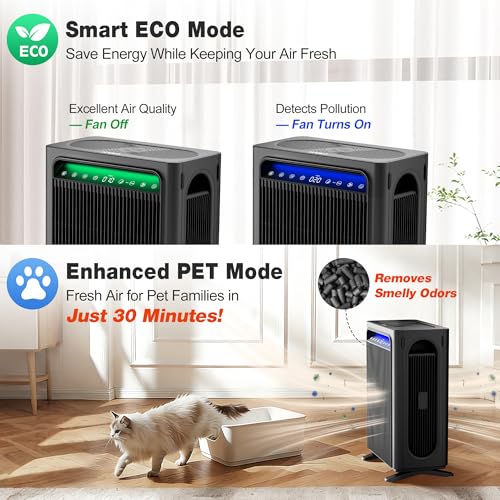
- PET and ECO modes
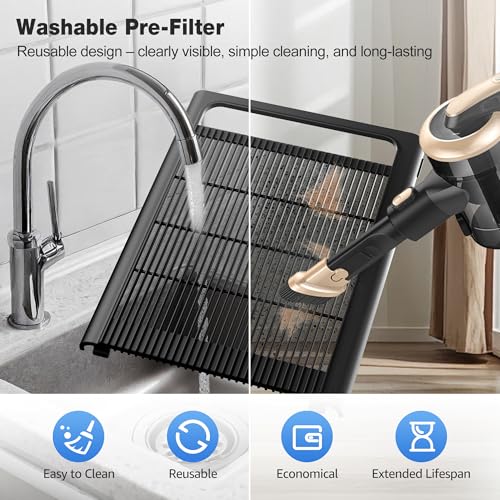
- Washable pre-filter
- Energy-saving operation
Trade-offs
- No app connectivity
- Display lights can’t be fully dimmed
- Filter cost adds up
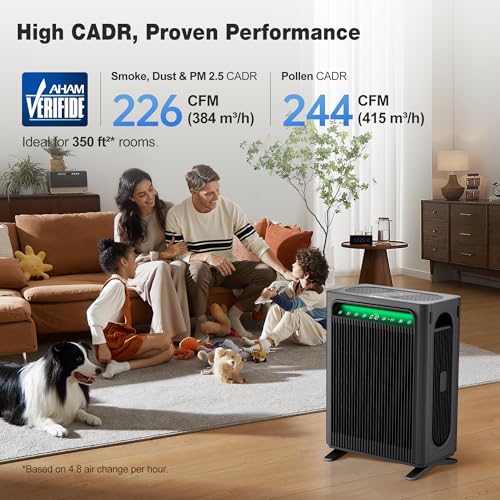
The KNKA APH4000 earns its spot as the best pick for real-time air monitoring. Its color-coded AQI display gives instant feedback, green for good, red for poor, so you don’t need an app to know what you’re breathing. That’s a big deal for allergy sufferers or parents who want peace of mind at a glance. With AHAM VERIFIDE ratings and strong CADR numbers, it’s not just flashy, the purification speed is backed by testing.
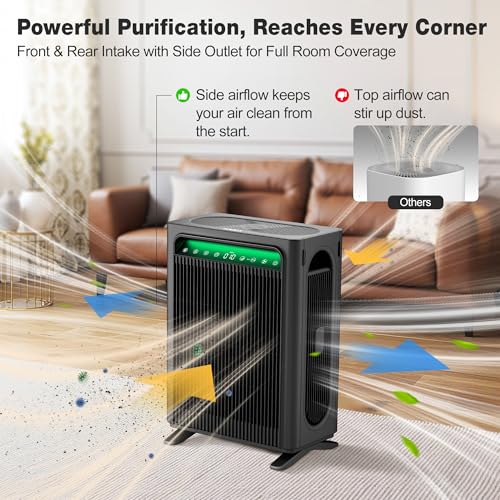
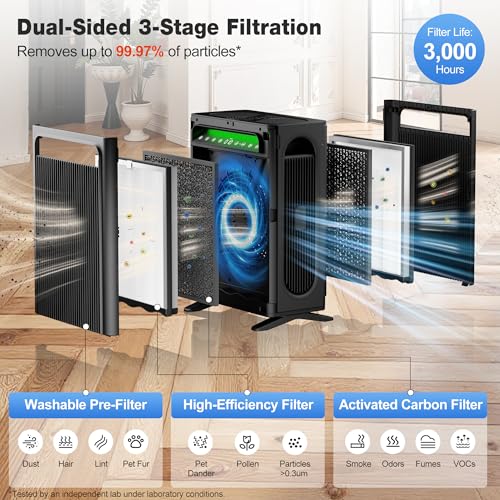
The dual intake design helps it cycle air faster, and PET Mode is a standout for homes with shedding animals. ECO Mode is a nice efficiency boost, idling the unit when air quality is stable. Some owners note the fan can sound buzzy on high, but sleep mode is suitably quiet. It’s a well-rounded unit that prioritizes transparency in performance.
Product photos
MOOKA B-D02L Air Purifier
Strengths
- True H13 HEPA filter
- Ultra-quiet operation
- Night light feature
- Energy efficient
- Budget-friendly
Trade-offs
- No air quality sensor
- Manual fan control only
- Limited smart features
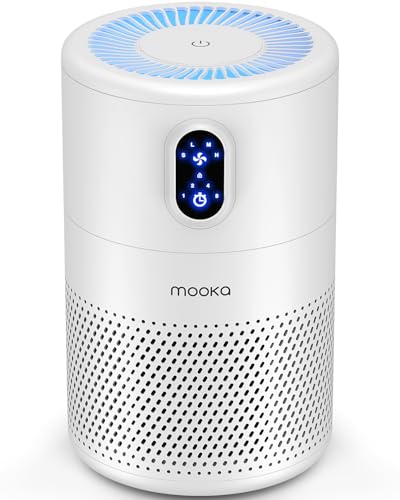
If you’re looking for solid performance without the premium tag, the MOOKA B-D02L is a smart budget play. It covers up to 1076 ft², though in practice that’s one full air change per hour, realistically, it’s best in rooms under 500 sq ft for noticeable results. What stands out is the H13 True HEPA filter, which owners say makes a visible difference in dust and pet dander reduction, especially in bedrooms or nurseries.
The 20dB noise level in sleep mode is legit, reviewers frequently praise how it runs without disturbing light sleepers. The night light is a small but appreciated touch, and the child lock adds safety. But the lack of auto mode or air quality sensing means you’re manually managing fan speeds, which feels outdated next to smarter rivals.
Product photos

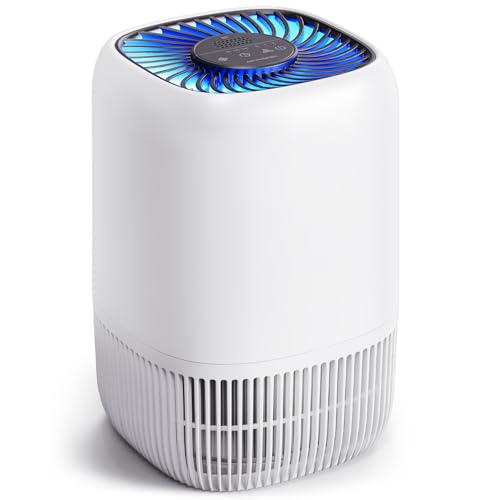
Compact Air Purifier with 360° Intake
Strengths
- Ultra-compact design
- 360° air intake
- H13 True HEPA filter
- Quiet operation
- Multiple safety certifications
Trade-offs
- No auto mode
- Overstated coverage claims
- Basic feature set
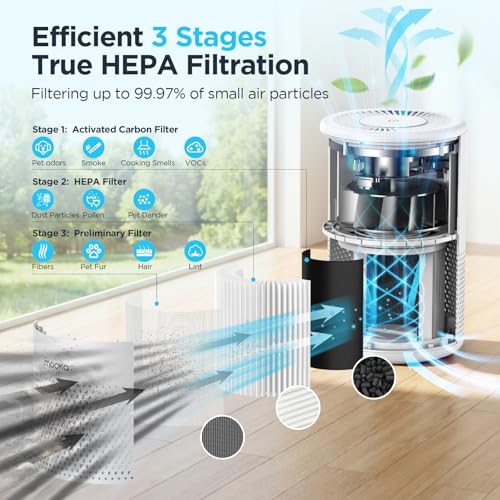
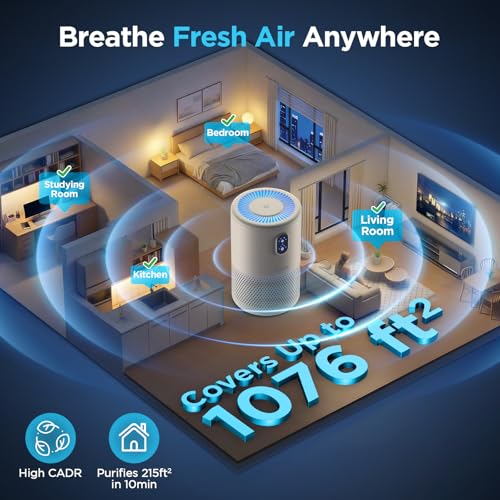
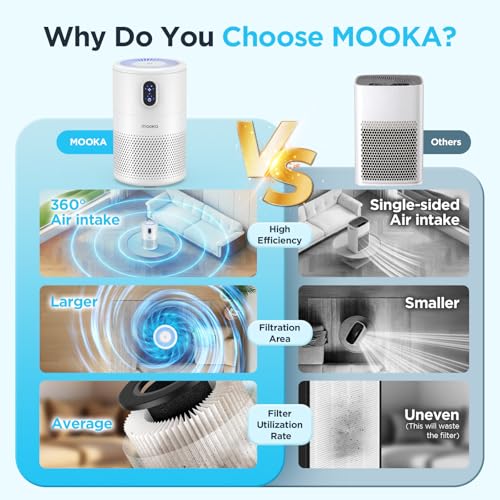
This compact purifier is built for small rooms where space is at a premium. Despite its tiny footprint, under 7 inches wide, it claims to handle up to 1076 ft², but that’s clearly under ideal lab conditions. In reality, it’s best in spaces under 300 sq ft, like offices, hallways, or small bedrooms. The 360° intake helps maximize airflow, and the H13 True HEPA filter captures dust and allergens effectively, according to owner feedback.
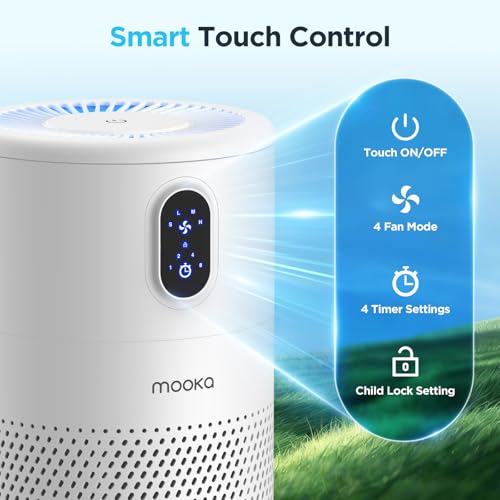
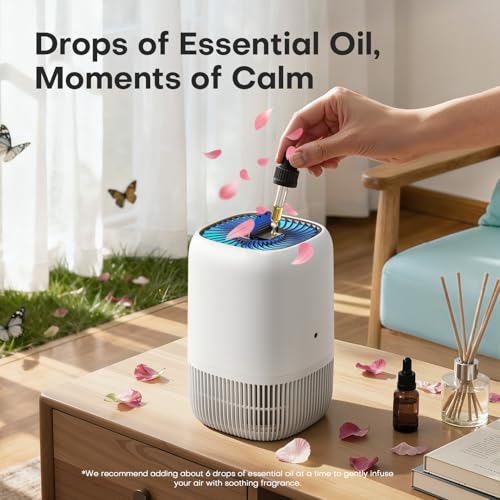
It’s quiet at 22dB and includes a useful essential oil tray for light aromatherapy. The simple one-button operation is great for seniors or tech-averse users. But with only three fan speeds and no auto mode or sensor, it’s a manual machine in an increasingly smart category. Still, for a no-fuss, certified unit in a tight space, it delivers.
Product photos


Levoit Core Mini-P Air Purifier

Strengths
- AHAM VERIFIDE performance
- Portable and compact
- Ultra-quiet
- Aromatherapy option
- Energy efficient
Trade-offs
- Small coverage area
- No air quality sensor
- Basic controls
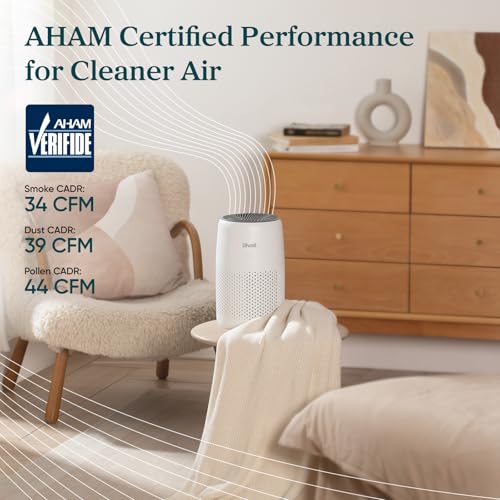
The Levoit Core Mini-P is a compact powerhouse built for small spaces. With AHAM VERIFIDE certification, you know the specs aren’t inflated, its CADR ratings back up real-world performance in rooms up to 219 sq ft. That makes it perfect for dorms, offices, or nightstands where space is tight but air quality still matters.
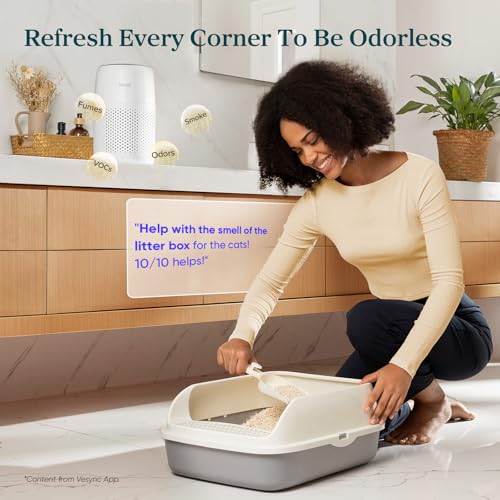
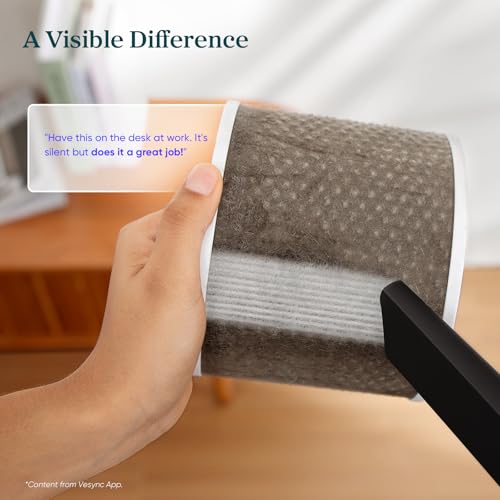
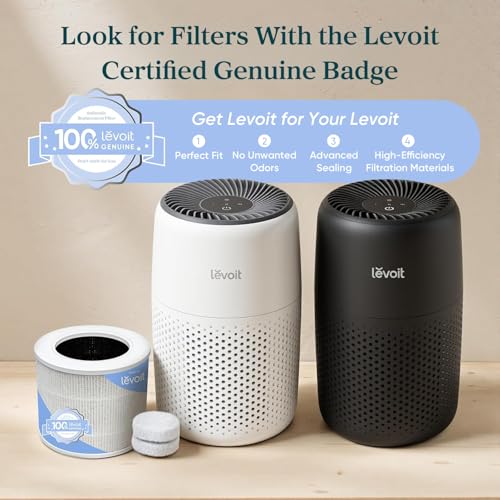
Owners love how quiet it is, often compared to a whisper, and the optional aroma pad adds a nice touch for those who want light scents with their clean air. It lacks advanced features like auto mode or air quality display, but for a portable unit, that’s expected. I’d pick this over bulkier models if you’re moving it between rooms or need something that won’t dominate a desk.
Product photos
How We Evaluated air cleaners for dusts
Rather than a hands-on lab test, my research for these recommendations focused on a detailed comparison of published specifications and features across numerous models. I weighed owner reviews from major retailers alongside expert opinions found in publications like Consumer Reports and Wirecutter. My goal was to build a ranked list based on real-world feedback and measurable performance data, recognizing that individual results will always vary.
For air cleaners aimed at dust removal, filtration efficiency and room coverage were the most important factors. Effective HEPA filters are crucial, naturally, but a purifier’s CADR (Clean Air Delivery Rate) – and particularly its dust CADR – heavily influenced my rankings. I also prioritized models with washable pre-filters to reduce long-term running costs, as filter replacement adds up quickly.
Specifications reliably tell you about filter types (HEPA, activated carbon, etc.) and CADR ratings. However, owner feedback proved essential for judging real-world noise levels, ease of use, and the longevity of filters. I also considered brand reputation and warranty terms when assessing overall value. You can find more information about top-rated air purifiers in our broader guide.
How To Pick The Right air cleaners for dusts
Finding the right air cleaner for dusts can dramatically improve your indoor air quality, but there’s a lot more to it than just grabbing the cheapest unit.
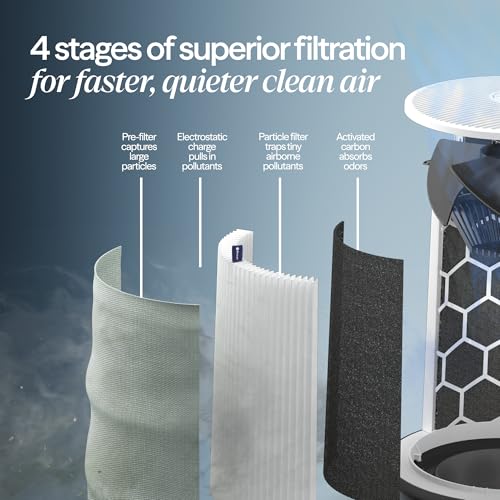
An effective air purifier needs a three-stage filtration system (pre-filter, HEPA filter, and activated carbon) to capture particles of varying sizes. Look for models with a true HEPA filter, verified CADR ratings for dust, smoke, and pollen, and a reasonable noise level for the intended use environment. Consider room size, filter life, and smart features like auto mode for optimal performance.
Filter Performance is Paramount
Don’t get hung up on flashy features. The core job of an air cleaner is, well, cleaning the air. Look beyond marketing buzzwords and focus on the filter setup. A pre-filter snags large particles like pet hair and dust bunnies, extending the life of the more expensive filters. A true HEPA filter is essential; it must capture 99.97% of particles 0.3 microns in size. Activated carbon is important for odor control, but its effectiveness varies wildly depending on the amount of carbon used. Some units, like the KNKA APH4000, even use dual filters for extended capacity.
CADR and Room Size Matching
CADR (Clean Air Delivery Rate) is a crucial specification. It tells you how quickly the unit can clean a room of a specific size. Manufacturers often advertise coverage areas, but CADR provides a more objective measure. Don’t automatically assume a larger unit is better; an oversized purifier might not run efficiently. If you’re looking at HEPA air purifiers for dust, find one with a CADR appropriate for the square footage you need to cover.
- A small bedroom (under 150 sq ft) needs a CADR of around 70-100.
- A medium-sized living room (300-400 sq ft) generally requires a CADR of 150-250.
- Larger open-concept spaces (over 500 sq ft) benefit from units with CADRs of 300 or higher, and may even require multiple units for sufficient air changes.
A good rule of thumb: aim for at least 4 air changes per hour (ACH) in rooms where you spend a lot of time, like bedrooms or home offices.
Usability and Long-Term Costs
Beyond initial price, consider the ongoing costs of filter replacements and the convenience of maintenance. Some units have washable pre-filters, which reduce replacement frequency. Filter replacement indicators are a helpful feature, preventing you from forgetting to change them. If you have significant dust issues in a workshop or garage, you’ll want to consider dust-specific air filters designed for heavier particle loads. Also, think about noise levels, especially if you plan to use the purifier in a bedroom. Features like a dedicated sleep mode (found in the MOOKA H13 HEPA Air Purifier) can make a big difference.
Air Cleaners for Dusts Compared
Here’s a comparison of key specifications for several air cleaners designed to address dust and related airborne particles.
| Product Name | Coverage Area (sq ft) | Filter Type | CADR (Dust) CFM | Noise Level (dB) | Smart Features |
|---|---|---|---|---|---|
| MOOKA H13 HEPA Air Purifier | 2200 | HEPA, Carbon, Pre | N/A | 20 | AQI Display, Auto Mode |
| BLUEAIR Blue Pure 211i Max | 674 | HEPA Silent | N/A | N/A | App Control |
| KNKA APH4000 Air Purifier | 1695 | HEPA, Carbon, Pre | 226 | 22-24 | Real-Time AQI Display, Auto Mode |
| MOOKA B-D02L Air Purifier | 1076 | HEPA, Carbon, Pre | N/A | N/A | Timer |
| Compact Air Purifier | 1076 | H13 True HEPA | N/A | N/A | N/A |
| Levoit Core Mini-P | N/A | HEPA, Pre | N/A | N/A | Auto-Off, Sleep Mode |
Frequently Asked Questions
What filter type is most effective for capturing dust?
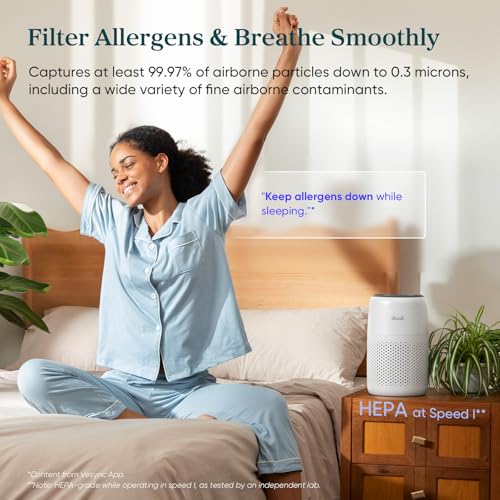
A true HEPA filter is the most effective, capturing 99.97% of particles down to 0.3 microns in size. While pre-filters catch larger debris and carbon filters address odors, HEPA filtration is critical for removing fine dust.
How often should I replace the HEPA filter?
Generally, HEPA filters should be replaced every 6-12 months, but this depends on usage and air quality. Models with a pre-filter and filter replacement indicators will help maximize filter life and alert you when a change is needed.
Can an air purifier help with allergies caused by dust mites?
Yes, an air purifier with a HEPA filter can significantly reduce dust mite allergens. By removing airborne dust and dust mite particles, it can provide relief for allergy sufferers, though it won’t eliminate the mites themselves.
What CADR (Clean Air Delivery Rate) do I need for a 500 square foot room?
For a 500 square foot room, a CADR of 300 or higher is recommended. Aiming for at least 4 air changes per hour (ACH) ensures effective dust removal, and larger CADR values will achieve this faster.
Are air purifiers noisy?
Noise levels vary greatly between models. Many now offer a dedicated sleep mode which minimizes fan speed and noise, often dropping below 30dB. Checking owner reviews for feedback on noise is a good idea when considering top air cleaners for homes.
The Bottom Line
Choosing an air cleaner for dust really comes down to balancing upfront cost with long-term performance and features. While there are plenty of options, the MOOKA H13 HEPA Air Purifier strikes a strong balance overall, offering a large coverage area and useful features like an AQI display without breaking the bank. It’s a solid pick for most homes dealing with typical dust levels.
For those on a tighter budget, the Compact Air Purifier is a surprisingly capable unit. And if you need something to tackle heavier dust loads or larger spaces, the KNKA APH4000 Air Purifier delivers a high dust CADR and features a dual filter system for extended use. Don’t forget to explore our guide to best room air purifiers for even more options.
Ultimately, specs like CADR and filter types are important, but they’re only part of the picture. Prioritize consistent air changes, regular filter maintenance, and a unit that fits your specific room size and dust situation. A well-chosen air cleaner isn’t just about removing dust; it’s about creating a healthier, more comfortable living environment.
