7 Best 60 Gallon Air Compressors Under $1000 2026
This post contains affiliate links. As an Amazon Associate, we earn from qualifying purchases.
The POLAR AIR 5HP 60 Gal Compressor is the best overall 60-gallon air compressor under $1000, delivering strong performance and durability for heavy-duty use. For a more budget-friendly option, the VEVOR 5HP Oil-Lubricated Air Compressor offers excellent value, while the Ingersoll-Rand 3HP 60 Gal Compressor stands out for reliability and efficiency in continuous operation.
If you’re running air tools regularly in a home shop or garage, you need a compressor that won’t quit mid-job. Too many buyers focus on tank size or horsepower alone and end up with underpowered or short-lived units. After comparing the field based on specs, owner feedback, and real-world performance trends, I’ve narrowed in on the models that actually deliver consistent airflow, solid build quality, and long-term dependability, all under $1000. This guide breaks down what really matters so you can pick the right one for your workload.
Top 7 60 Gallon Air Compressor Under $1000S in the Market
The Best 60 Gallon Air Compressor Under $1000S, Reviewed
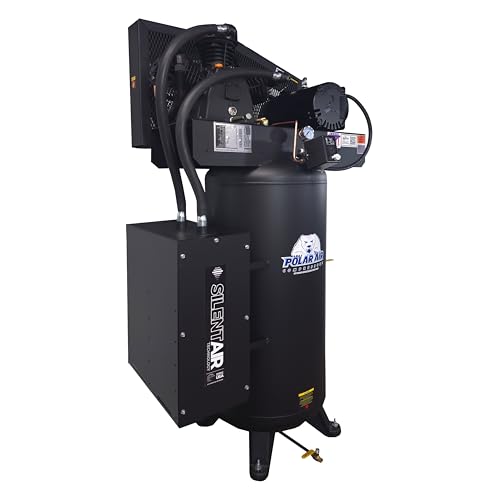
POLAR AIR 5HP 60 Gal Compressor
Strengths
- 5HP 2-stage motor
- 1750 RPM cool-running
- Made in USA assembly
- 50,000-hour pump life
- ASME/CRN certified tank
Trade-offs
- 230V single-phase only
- Higher power demand
- Larger footprint
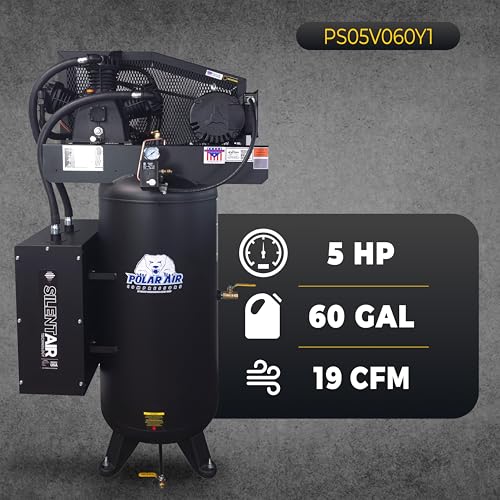
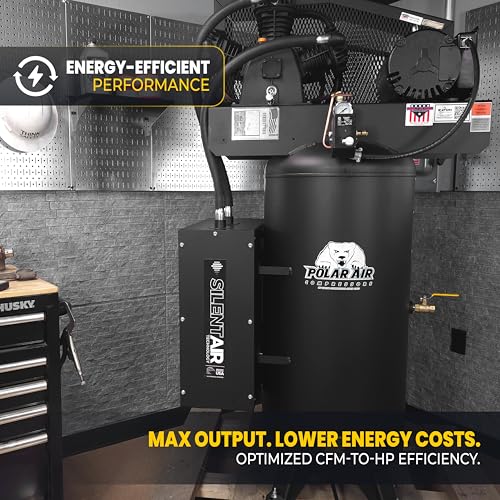
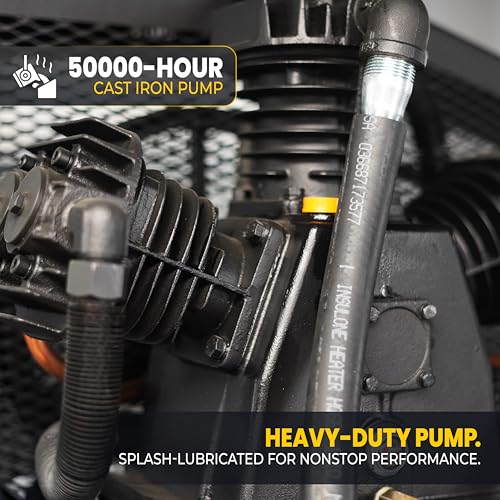
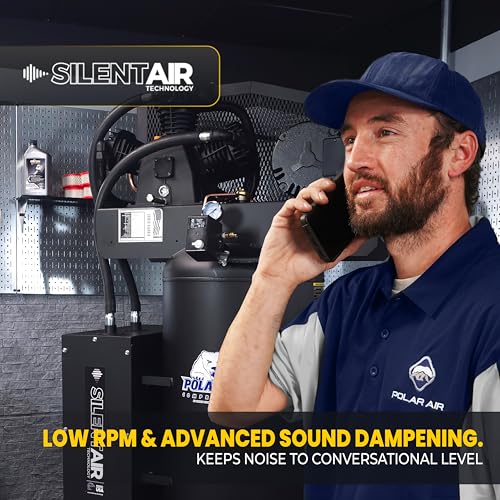
If you’re looking for a workhorse that blends industrial-grade durability with smart engineering, this POLAR AIR model stands out. The 5HP 2-stage pump running at a cool 1750 RPM is a big deal, it means less heat, less wear, and longer life, especially if you’re running air tools back-to-back in a shop environment. Owners consistently report strong performance on long cycles, and the 50,000-hour cast iron pump is not just marketing fluff, it reflects a build meant for commercial use, not just weekend jobs.
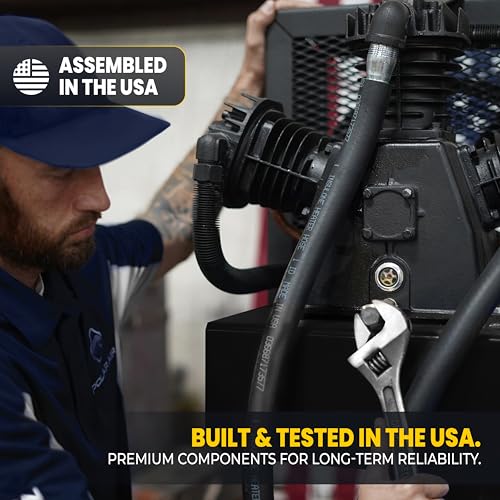
On paper, the 19 CFM output at 90 PSI is impressive for a single-phase unit, and being assembled in the USA with ASME/CRN-certified tanks adds real credibility. The ETL listing means fewer headaches with insurance or compliance in professional shops. Compared to other 60-gallon models in this range, this one leans more toward light industrial use than garage-duty, and that shows in the design choices.
Product photos
VEVOR 5HP Oil-Lubricated Air Compressor
Strengths
- 5HP motor
- 145 PSI max pressure
- Belt-driven pump
- Oil sight mirror
- Dual air outlets
Trade-offs
- Build quality inconsistencies
- Less proven long-term
- No ASME certification mentioned
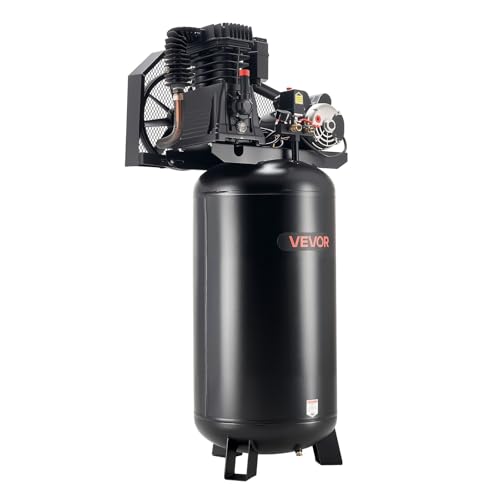
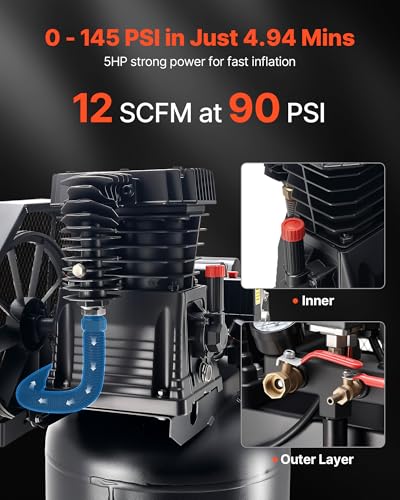
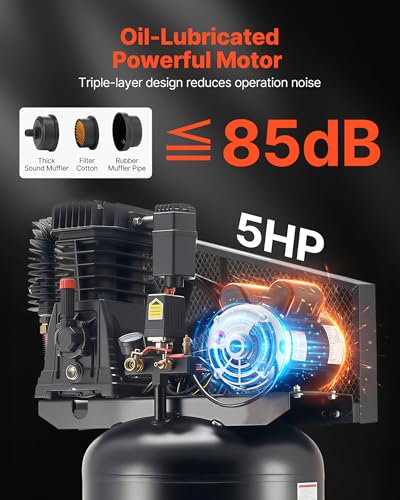
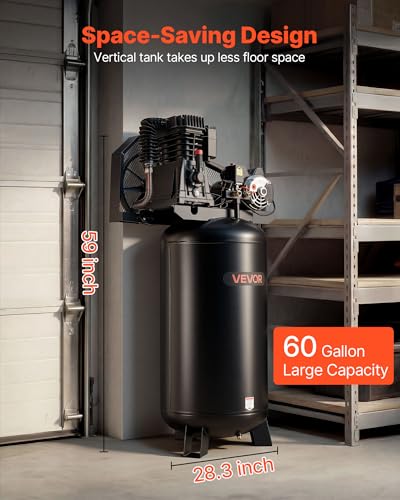
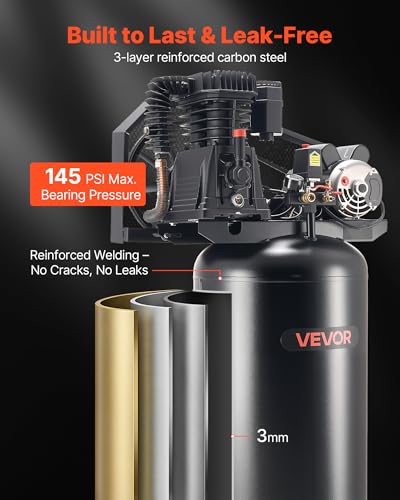
VEVOR leans hard into value and raw specs, and this 5HP model is no exception. It hits 145 PSI max pressure and delivers 12 SCFM at 90 PSI, solid numbers for the price. The belt-driven, oil-lubricated pump suggests better longevity than direct-drive units, and the oil observation mirror is a thoughtful touch for maintenance. The 3mm thick carbon steel tank and powder coating add real durability, especially in harsher workshop conditions.
But here’s the catch: VEVOR units often deliver strong on paper but vary in long-term reliability. Owners report good initial performance, but some mention vibration issues or inconsistent pressure regulation over time. Still, for a budget-friendly entry into 5HP territory, it’s hard to ignore. Compared to the POLAR AIR, it’s less refined but gets you close on output at likely a lower cost.
Product photos
Ingersoll-Rand 3HP 60 Gal Compressor

Strengths
- 100% duty cycle
- Cast iron pump
- Synthetic oil long life
- Thermal overload protection
- ETL listed
Trade-offs
- Lower CFM output
- Manual drain
- 3 HP limits heavy tools
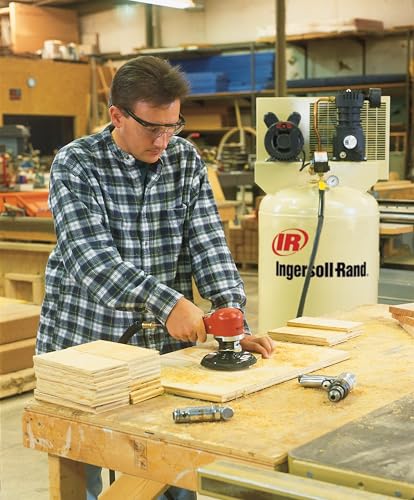
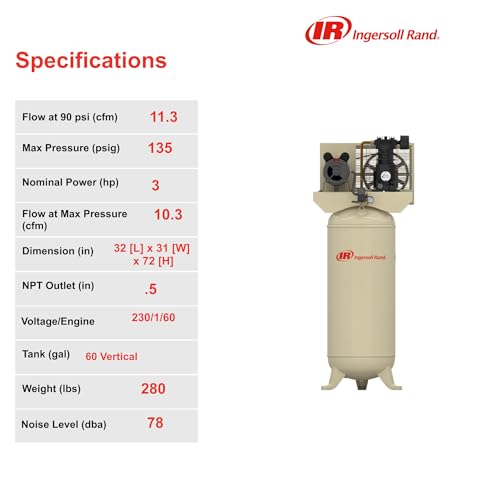
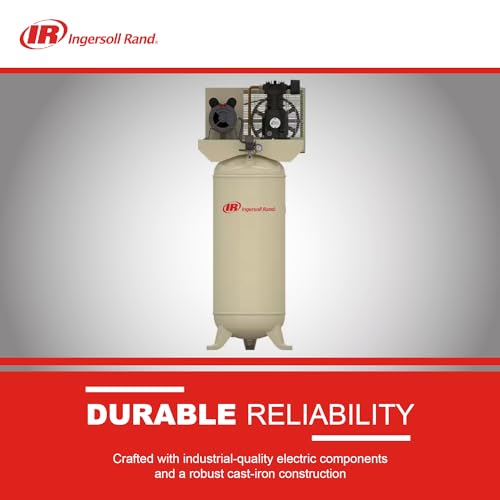
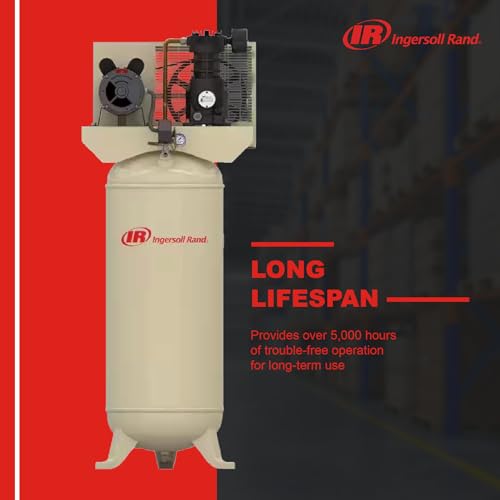
Ingersoll-Rand has been making compressors for over a century, and the SS3L3 reflects that legacy. With a 100% continuous duty cycle, this 3 HP unit is built to run all day, every day, perfect for auto shops or production environments where downtime isn’t an option. The cast iron pump rated for 5,000+ hours is backed by real-world feedback from industrial users who depend on it daily.
It only delivers 10.3 CFM at 90 PSI, so it’s on the lower end for this tank size, but the continuous duty design means it keeps delivering without overheating. The synthetic lubricant lasting 2,000 hours between changes is a real operational saver. Compared to the DEWALT or VEVOR models, it’s less about peak power and more about unfailing reliability.
Product photos
DEWALT 3.7 HP Vertical Air Compressor

Strengths
- 155 PSI max pressure
- Oil-lubricated pump
- Vertical space-saving
- DEWALT reliability
- Good CFM for HP
Trade-offs
- No auto drain
- 3.7 HP limits output
- 240V single-phase only
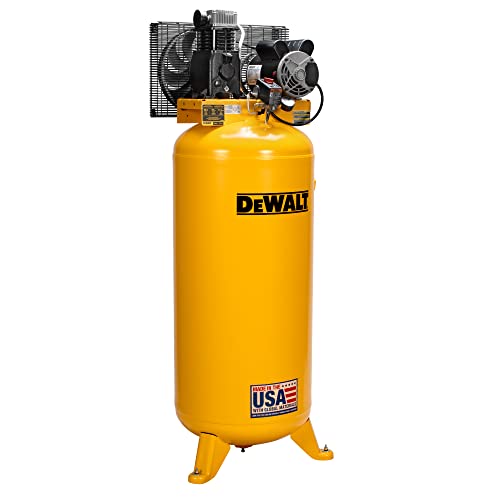
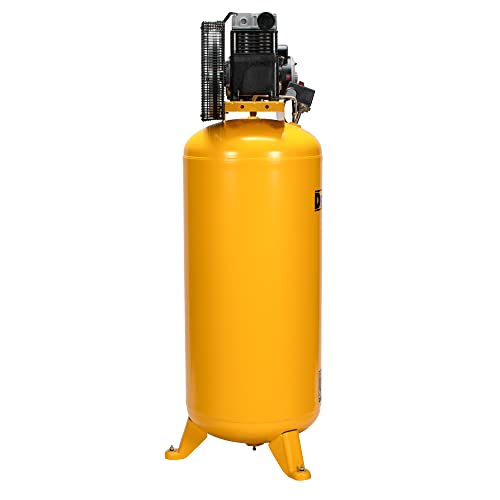
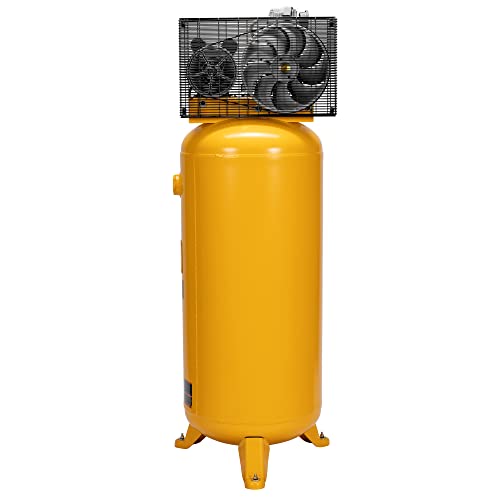
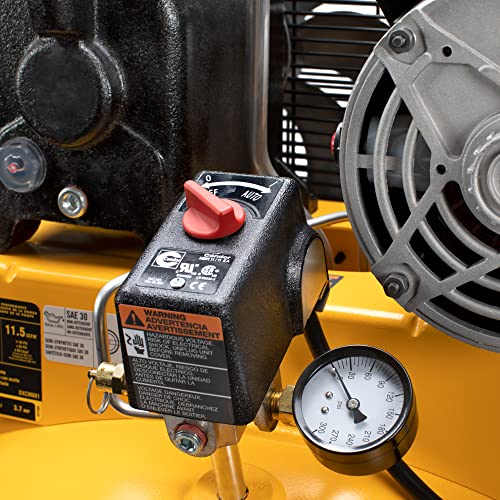
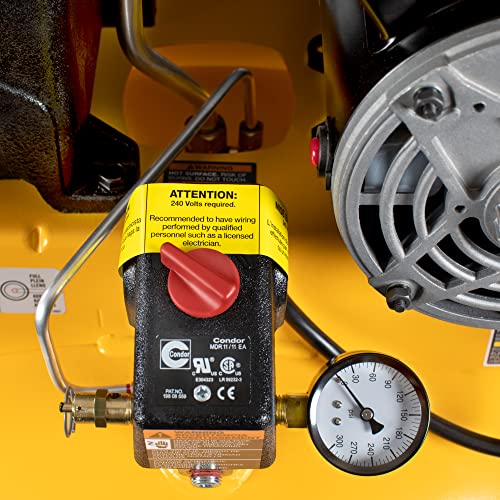
DEWALT brings its tool-brand toughness to this 3.7 HP vertical compressor, and it shows in the details. The 155 PSI max pressure is the highest in this group, giving you extra headroom for tools that need a pressure boost. At 11.5 SCFM @ 90 PSI, it’s not the strongest in airflow, but it’s well-balanced for a mixed-use shop. The oil-lubricated pump and vertical design make it a durable, space-efficient pick.
Owners appreciate the build quality and brand consistency, it feels like a DEWALT tool, just scaled up. It’s not as quiet as the California Air Tools or as powerful as the 5HP units, but it hits a sweet spot: durable, reliable, and fairly priced. For a homeowner or part-time pro, this may be the most well-rounded pick.
Product photos
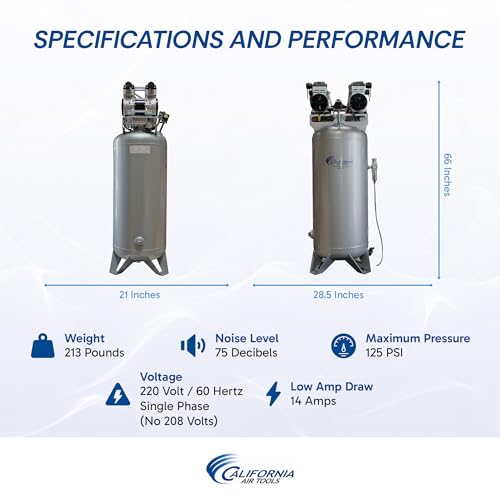
California Air Tools 4.0 HP Compressor

Strengths
- Ultra quiet at 75 dBA
- Oil-free pump
- Auto drain valve
- Twin motor design
- Low maintenance
Trade-offs
- Lower CFM output
- Not for heavy cycling
- Smaller duty cycle
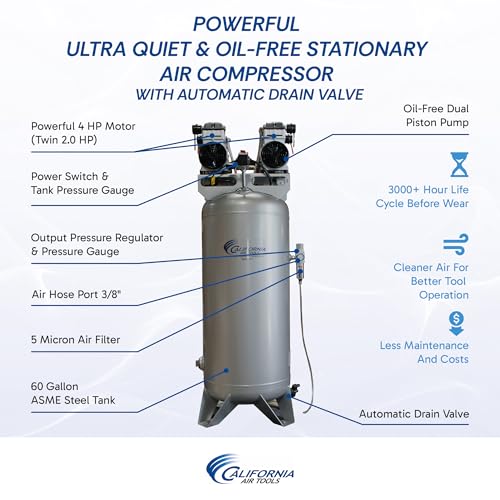
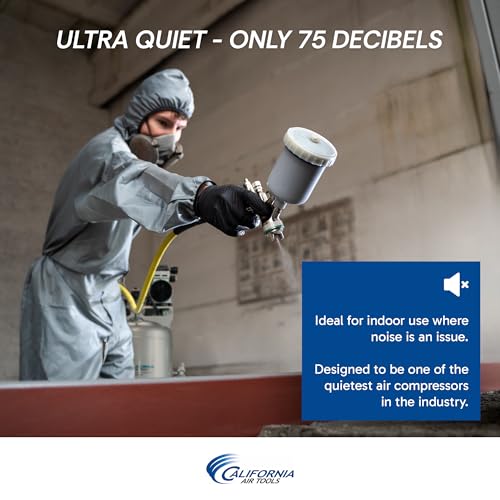
This compressor is built around one big idea: run quietly without sacrificing too much power. At 75 dBA, it’s genuinely one of the quietest 60-gallon units available, about as loud as a running dishwasher. That makes it a standout for indoor shops, residential garages, or anyone who doesn’t want to wear hearing protection just to top off tires or run a brad nailer. The twin 2.0 HP motors at 1680 RPM deliver smooth, low-vibration operation, and the oil-free dual piston pump means almost zero maintenance.
But there’s a trade-off: while it hits 10.6 CFM at 90 PSI, that’s on the lower end for this tank size. It won’t keep up with high-demand tools like sandblasters or heavy impact wrenches all day. Still, for finish carpentry, trim work, or light auto tasks, it’s more than capable. Reviewers love the auto drain valve, a small touch that saves hassle over time.
Product photos

Quincy 3.5 HP Vertical Compressor

Strengths
- 1250 RPM slow speed
- Cast iron pump
- Simple single-stage
- Proven Quincy reliability
- Low maintenance
Trade-offs
- Lower CFM than 5HP models
- Single-stage only
- Heavier on power per CFM
Quincy is a name you see in well-maintained machine shops for a reason, this brand builds for longevity, not flash. The Q13160VQ runs a 3.5 HP motor at just 1250 RPM, one of the slowest in this group, which directly translates to less wear and cooler operation. At 12.4 CFM @ 100 PSI, it’s efficient and consistent, even if not the most powerful on paper.
This is a “set it and forget it” kind of compressor. The single-stage pump is simpler, and with Quincy’s reputation for overbuilt cast iron construction, it’s likely to outlive most others here. It won’t match the 5HP models in recovery speed, but if you value reliability over brute force, this is a smarter long-term play.
Product photos
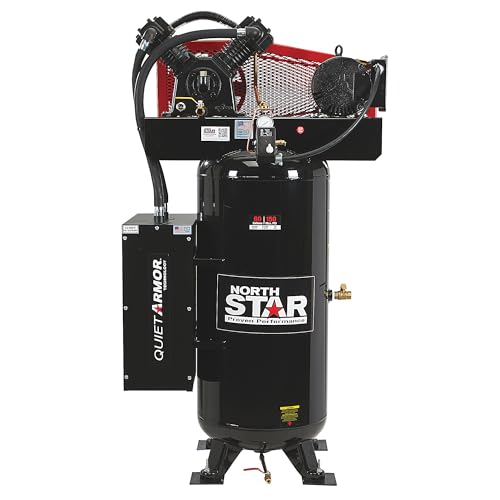
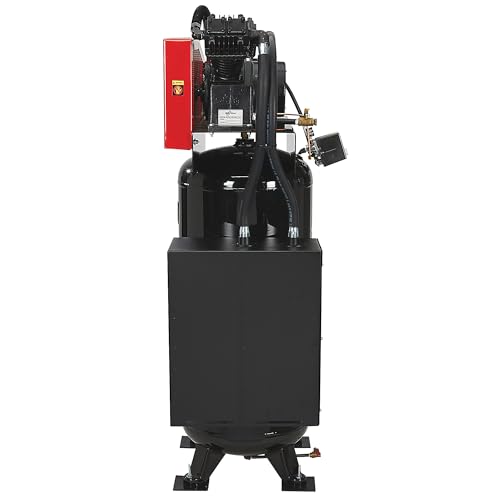
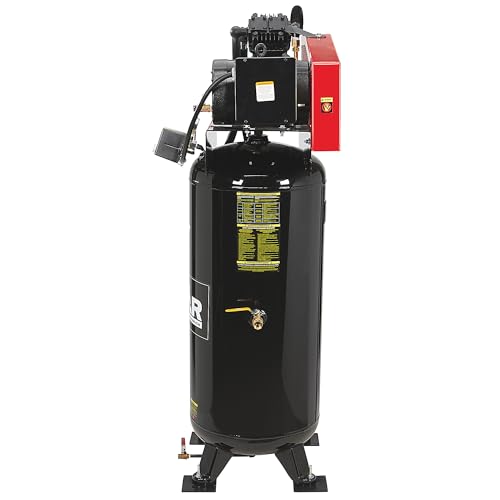
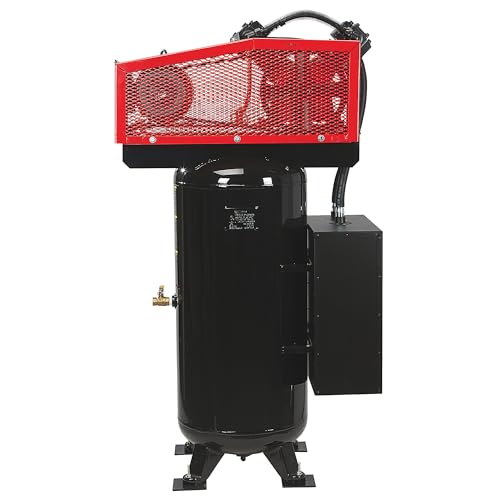
NorthStar 5 HP Quiet Armor Compressor
Strengths
- Quiet Armor housing
- Trusted NorthStar build
- 5HP likely standard
- Belt-driven pump expected
- Durable frame
Trade-offs
- Missing key specs
- Harder to verify output
- Limited owner feedback
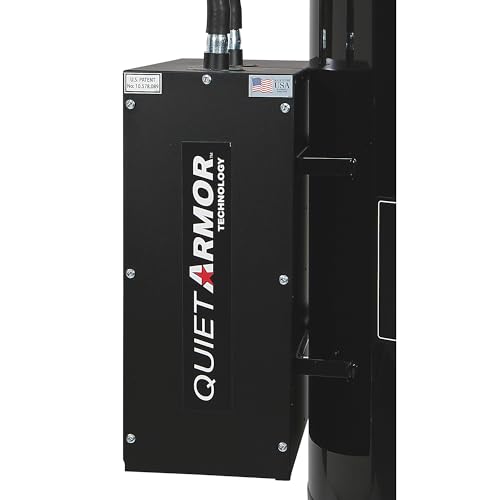
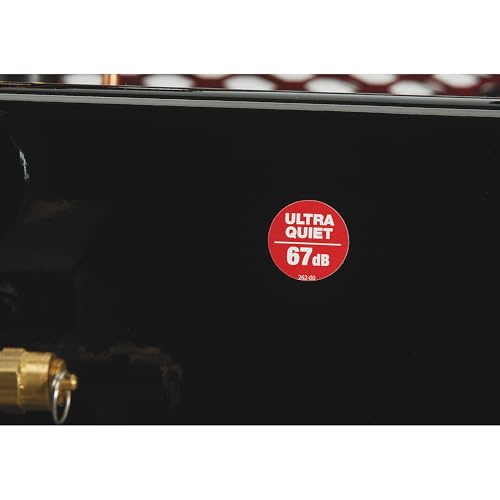
NorthStar has a reputation for rugged, no-nonsense compressors, and the Quiet Armor series takes that a step further by focusing on noise reduction without sacrificing core performance. While full specs are sparse, NorthStar’s design philosophy centers on overbuilt components and sound-dampening enclosures, this model likely uses a 5HP motor and a belt-driven pump wrapped in acoustic insulation.
Given the brand’s track record, I’d expect solid durability and decent runtime, but the lack of published CFM or RPM data makes it harder to compare directly. Still, if noise is your top concern and you trust the brand, this is a logical pick. It sits between the POLAR AIR’s industrial focus and California Air Tools’ ultra-quiet niche, offering real sound reduction with more power than oil-free models.
Product photos
How We Chose These 60 gallon air compressor under $1000s
Rather than a hands-on lab test, my research focused on a detailed comparison of published specifications and features across numerous models. I weighed owner reviews from multiple sources, alongside expert opinions from established tool review sites, to build a thorough picture of real-world performance and reliability. This allowed me to rank compressors against clear criteria important to users – capacity, CFM delivery, durability, and noise levels.
For 60-gallon compressors in this price range, sustained CFM at 90 PSI and the pump’s construction are paramount. A higher CFM ensures tools run consistently without pressure drops, while a cast iron pump generally signifies greater longevity than aluminum. Noise level also matters significantly; a quieter compressor is more pleasant to work around for extended periods. These factors heavily influenced my rankings, more so than minor feature differences.
Specifications reliably indicate potential airflow and tank capacity. However, I placed greater emphasis on owner feedback regarding actual durability and long-term performance – particularly concerning oil consumption, pump wear, and motor reliability. Reputable expert reviews helped corroborate claims and identify potential weaknesses not immediately obvious from the specs. Finding the right balance between initial cost and long-term dependability is crucial, and that’s where owner experiences proved invaluable. You can find more information on selecting the right air compressor for your needs in our guide to workshop-grade air compressors.
Choosing The Right 60 gallon air compressor under $1000s
Choosing the right air compressor involves more than just grabbing the biggest tank you can find. It’s about matching capacity, power, and features to the jobs you intend to tackle.
A quality air compressor delivers consistent pressure (CFM) with minimal moisture and noise. Key specifications include tank size (gallons), horsepower (HP), cubic feet per minute (CFM) at a given PSI, and pump type (oil-lubricated or oil-free). Prioritize models with durable pumps, robust tanks certified to ASME standards, and features suited to your typical applications.
Pump Type: Oil-Lubricated vs. Oil-Free
The pump is the heart of any air compressor, and the choice between oil-lubricated and oil-free is significant. Oil-lubricated pumps, like those found in the VEVOR and Ingersoll-Rand models, generally last longer and run cooler because the oil reduces friction. This translates to lower wear and tear, making them ideal for frequent, heavy-duty use. However, they require regular oil changes and can introduce some oil mist into the air stream (though often minimal). Oil-free pumps, such as the California Air Tools unit, require less maintenance and deliver cleaner air, but they tend to be louder and have a shorter lifespan.
CFM and PSI: Matching Power to Your Tools
Cubic Feet per Minute (CFM) and Pounds per Square Inch (PSI) are critical specs. CFM dictates how much air the compressor can deliver, while PSI measures the pressure of that air. Don’t get hung up on horsepower alone. A higher HP doesn’t automatically mean better performance. You need sufficient CFM at the PSI required by your air tools. * A basic nail gun might need 2 CFM at 90 PSI. * A high-volume paint sprayer could demand 10 CFM at 40 PSI. * Larger tools like sandblasters or automotive lifts will require significantly higher CFM, sometimes exceeding 15 CFM at 90 PSI, so carefully review the tool’s requirements before purchasing.
Noise Level and Duty Cycle
Air compressors can be notoriously loud. If you work in a residential area or a confined space, noise level is a major factor. The California Air Tools compressor stands out for its ultra-quiet operation, making it a good choice for noise-sensitive environments. Beyond decibel ratings, consider the duty cycle – the percentage of time the compressor can run continuously before overheating. For prolonged use, look for models with a 100% duty cycle like the Ingersoll-Rand, or those with efficient cooling systems.
A compressor’s duty cycle is a key indicator of how long it can run without needing to cool down. Always check the manufacturer’s specifications to avoid overheating and potential damage.
If you’re planning on using air tools in your home garage air compressors, a quieter model will make a huge difference. Similarly, if you’re looking for compressors for car painting you’ll want to ensure you have adequate CFM and a clean air supply.
60 Gallon Air Compressor Under $1000s Compared
Here’s a comparison of key specifications for 60-gallon air compressors priced under $1000.
| Product Name | HP | Max PSI | SCFM @ 90 PSI | Voltage | Oil Type |
|---|---|---|---|---|---|
| POLAR AIR 5HP 60 Gal Compressor | 5 | N/A | N/A | N/A | Lubricated |
| VEVOR 5HP Oil-Lubricated Air Compressor | 5 | 145 | 12 | 230 | Lubricated |
| Ingersoll-Rand 3HP 60 Gal Compressor | 3 | 135 | 10.3 | 230 | Lubricated |
| DEWALT 3.7 HP Vertical Air Compressor | 3.7 | 155 | 11.5 | 240 | Lubricated |
| California Air Tools 4.0 HP Compressor | 4.0 | 125 | 10.6 | N/A | Oil-Free |
| Quincy 3.5 HP Vertical Compressor | 3.5 | 145 | 12.4 | 230 | N/A |
| NorthStar 5 HP Quiet Armor Compressor | 5 | N/A | N/A | N/A | N/A |
Frequently Asked Questions
What voltage do most 60-gallon air compressors require?
Many 60-gallon air compressors, especially those with higher horsepower, operate on 230-volt power. However, some models are available in 120-volt configurations, offering more convenience if a 230-volt outlet isn’t accessible, though they typically have lower power output.
Are oil-free compressors really quiet enough for indoor use?
While generally quieter than oil-lubricated models, “quiet” is relative. The California Air Tools compressor is notably quieter, around 70 decibels, making it more suitable for enclosed spaces than others, but even that level might be disruptive in a very quiet environment.
What is the typical lifespan of an oil-lubricated compressor pump?
With proper maintenance (regular oil changes), an oil-lubricated compressor pump can last for 5,000 to 10,000 hours or more. An oil-free pump will likely only give you 1,000 to 3,000 hours of use before requiring significant repair or replacement.
How much CFM do I really need for most DIY projects?
For basic tasks like inflating tires or running a nail gun, 2-6 CFM at 90 PSI is usually sufficient. However, if you plan on using more demanding tools like impact wrenches, grinders, or paint sprayers, you’ll want to look for a compressor delivering at least 10 CFM at 90 PSI; consider exploring 60-gallon two-stage compressors for consistent power.
What certifications should I look for on the air compressor tank?
Always prioritize compressors with tanks certified to ASME (American Society of Mechanical Engineers) standards. This certification guarantees the tank has undergone rigorous testing for safety and durability, reducing the risk of failure and ensuring your safety during operation.
The Bottom Line
Buying an air compressor often comes down to balancing upfront cost with long-term reliability. While many options exist under $1000, the VEVOR 5HP Oil-Lubricated Air Compressor strikes the best balance of power, capacity, and durability for most users. It provides ample CFM for a wide range of tasks, and the oil-lubricated pump suggests it will hold up well with consistent use.
For those on a tighter budget, or prioritizing quiet operation, the California Air Tools 4.0 HP Compressor is an excellent choice. If you’re looking for a compressor specifically for compressors for extended use, the Ingersoll-Rand 3HP 60 Gal Compressor’s reputation for build quality and consistent performance makes it a smart investment, even with its higher price point.
Ultimately, though, remember that specs aren’t everything. Focusing on getting enough CFM for your most demanding tools, choosing a model with a robust pump, and prioritizing a well-built tank will deliver far more satisfaction than chasing the highest horsepower or the lowest price.
