6 Best 3 Point Stump Grinders of 2026
This post contains affiliate links. As an Amazon Associate, we earn from qualifying purchases.
The MechMaxx SG30PRO stands out as the best overall 3 point stump grinder, offering serious cutting depth and rugged build quality for medium to large tractors. If you’re on a tighter budget, the LandHonor WG24 delivers solid performance for smaller jobs. For maximum versatility and precision, the Titan Attachments Pro Series brings hydraulic control into the mix, making it easier to dial in the cut without leaving the seat.
Most people don’t realize how quickly a poorly matched stump grinder can turn a weekend project into a headache. Too little power, shallow cutting depth, or flimsy teeth lead to frustrating passes and half-removed stumps. I’ve seen it happen more times than I can count.
This guide cuts through the noise by focusing on real specs, verified compatibility, and what owners actually report after using these grinders in the field. We looked at cutting depth, tooth durability, tractor match, and long-term value, the things that actually matter when you’re standing behind a tractor, not in a showroom.
Top 6 3 Point Stump Grinders in the Market
The Best 3 Point Stump Grinders, Reviewed
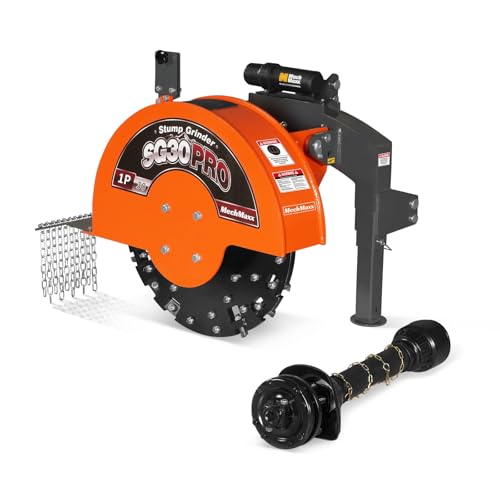
MechMaxx SG30PRO 30″ Stump Grinder
Strengths
- 30-inch flywheel
- 10-inch cutting depth
- 44 carbide teeth
Trade-offs
- Very heavy
- Needs 40+ HP tractor
- No hydraulic angle control
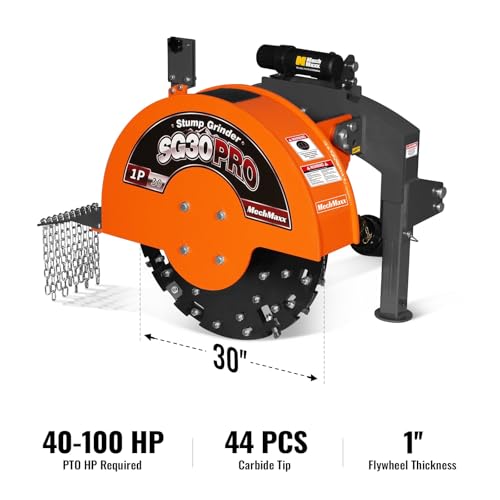
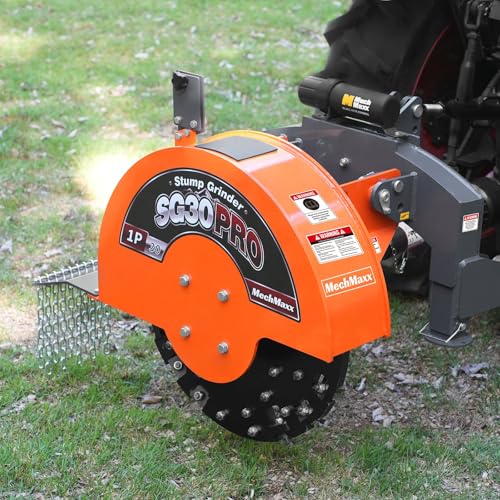
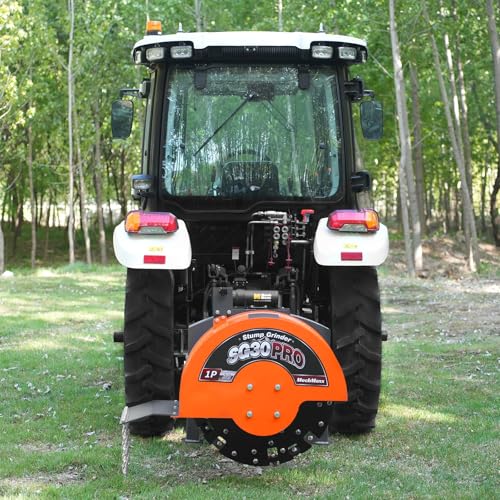
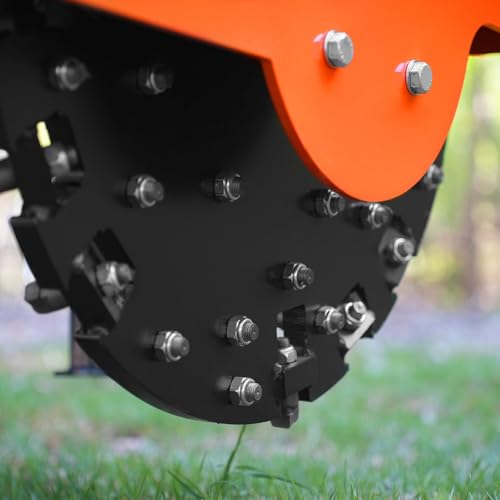
The MechMaxx SG30PRO is the most capable model in this lineup, and it shows in every spec. A 30-inch flywheel, 44 carbide teeth, and a 10-inch cutting depth make it a serious tool for large stumps and heavy root systems. It’s designed for tractors from 40 to 100 HP, so it’s clearly aimed at serious operators with big machines and bigger jobs. Owners report it powers through oak and maple stumps with less vibration than smaller units, likely due to the increased flywheel mass smoothing out the load.
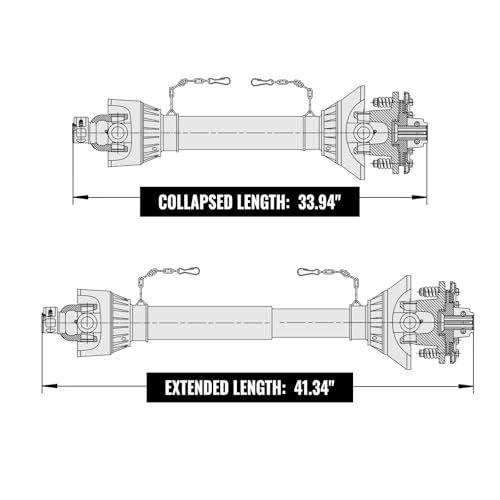
Compared to the 28-inch SG28, the jump to 30 inches may seem small, but in real-world grinding, it means fewer passes and better reach under large stumps. It doesn’t have hydraulic positioning like the Titan Pro, but its sheer size and depth make it the go-to for brute-force removal. The included PTO shaft with slip clutch adds reliability. While not as refined as the Titan, it delivers unmatched value for high-HP tractor owners. This is the one I’d choose if I had a 60+ HP tractor and needed to clear a wooded lot.
Product photos
MechMaxx SG28 28″ PTO Stump Grinder
Strengths
- 28-inch flywheel
- 44 carbide teeth
- Handles 35–80 HP tractors
Trade-offs
- No hydraulic positioning
- Heavier setup
- Requires robust tractor PTO
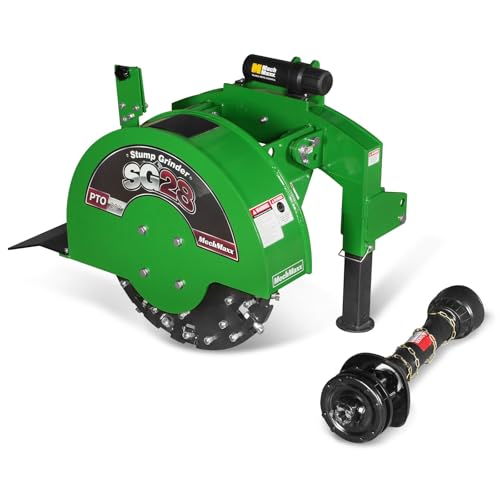
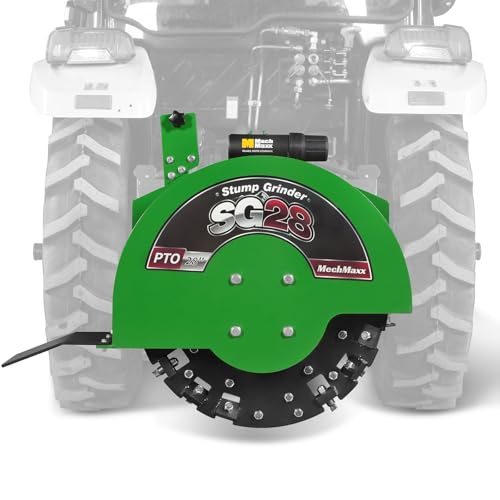
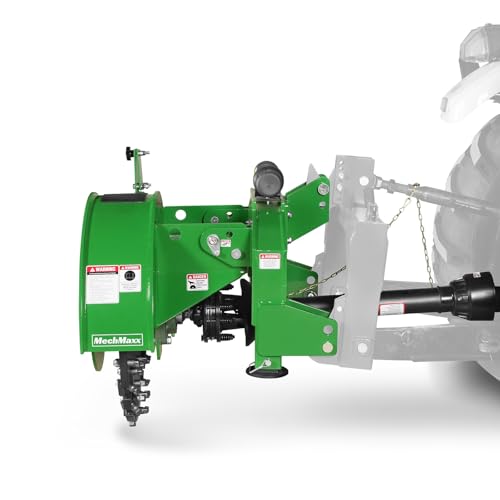
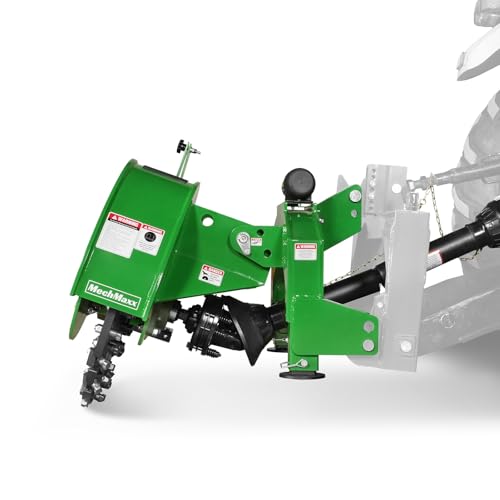
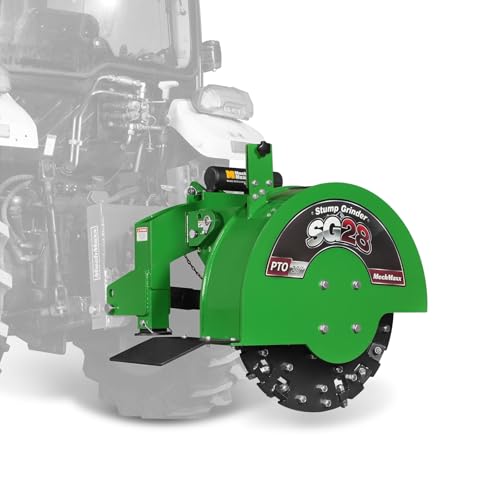
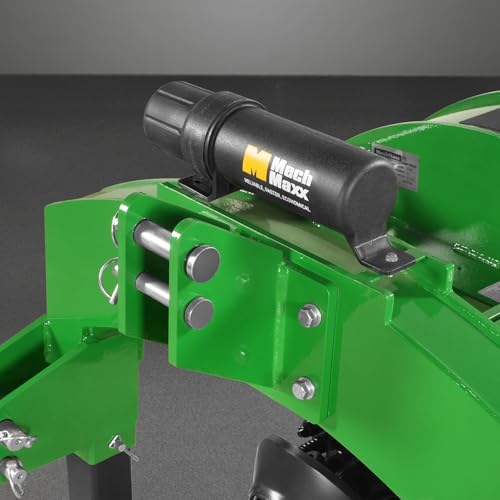
The MechMaxx SG28 is built for users stepping up from small tractors to something with real grinding authority. With a 28-inch flywheel and 44 carbide teeth, it offers more cutting surface and longer tooth life than 24-inch models, which translates to fewer stops for adjustments and more continuous grinding. It’s rated for 35–80 HP tractors, so it bridges a gap many brands ignore, farmers with mid-range compact utility tractors who need more than entry-level performance.
On paper, the 8.5-inch cutting depth is impressive, and reviewers confirm it handles larger stumps with less pass-over work. The PTO-driven system with slip clutch is a reliable setup, though like all models here, it depends heavily on having a transmission-independent PTO for smooth operation. Compared to the Titan Pro, it lacks hydraulic control but makes up for it in raw grinding capacity. For this class, the value is strong, it’s not the cheapest, but it delivers more capability per dollar than most.
Product photos
Titan Attachments Standard 24″ Grinder
Strengths
- Low maintenance PTO design
- Good cutting depth
- Kickstands for storage
Trade-offs
- No hydraulic angle control
- Only 34 teeth
- Limited to Cat 1 tractors
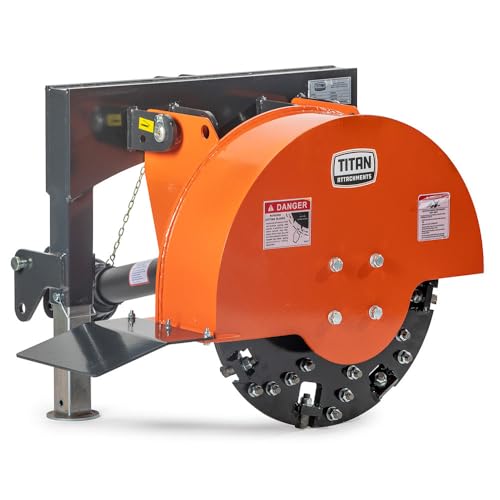
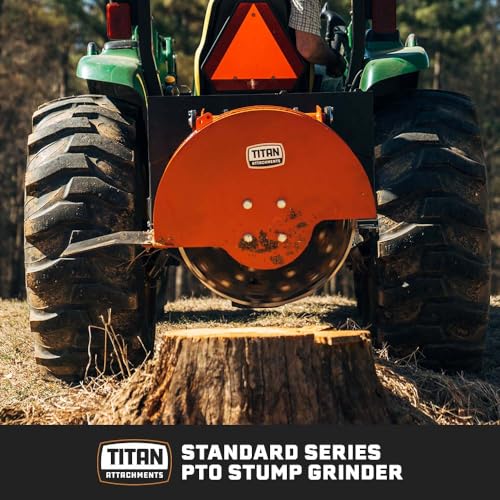
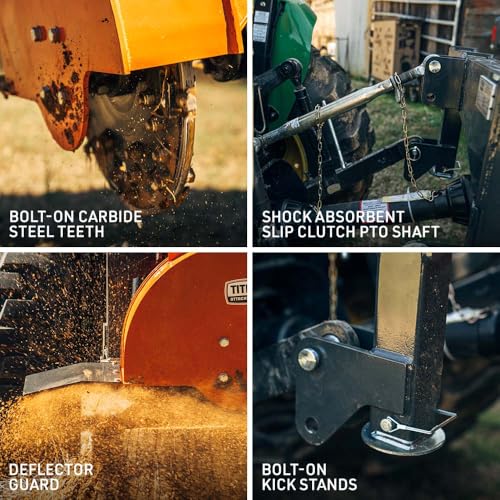
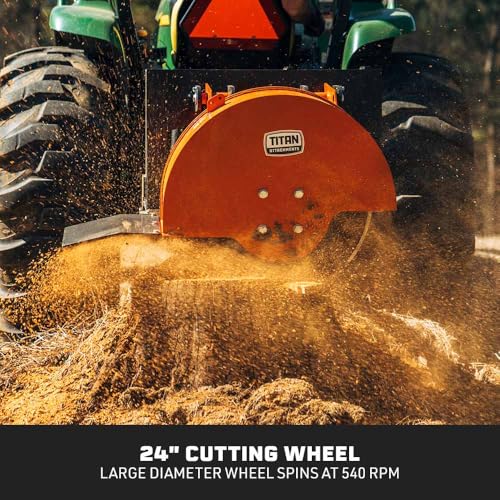
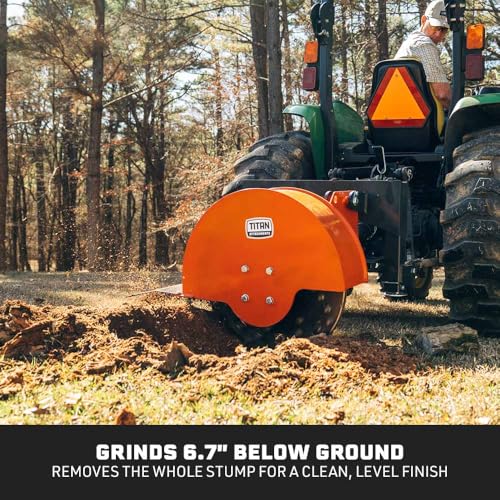
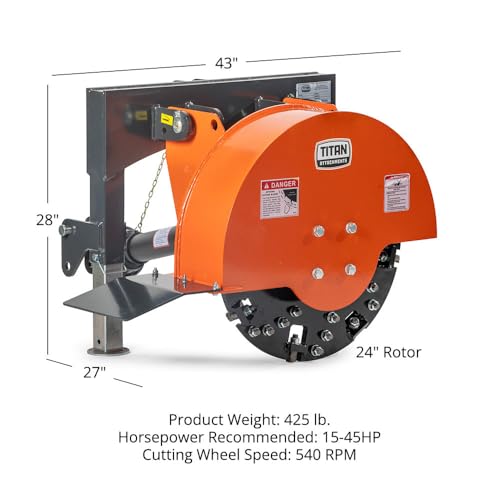
Titan Attachments’ Standard Series hits a sweet spot for homeowners and part-time operators who want reliability without complexity. The PTO-driven design skips hydraulics, which cuts down on maintenance headaches and potential leak points, a big win for users who don’t want to babysit their attachments. The 24-inch wheel spins at 540 RPM and delivers a respectable 6.7-inch cutting depth, slightly better than the LandHonor despite similar specs on paper.
Owners praise the low-profile design that keeps the grinding wheel visible from the operator seat, improving safety and precision. The included kickstands and locking pin make storage and transport noticeably easier than some competitors that skimp on these details. While it doesn’t have the depth or power of the Pro Series, it’s a smarter buy for those who don’t need heavy-duty performance. If you’re grinding small to medium stumps a few times a year, this is the more practical choice over overbuilt models.
Product photos
Titan Attachments Pro Series Grinder

Strengths
- Hydraulic angle control
- 12-inch cutting depth
- 950 RPM speed
Trade-offs
- Requires hydraulic ports
- More complex setup
- Higher price point
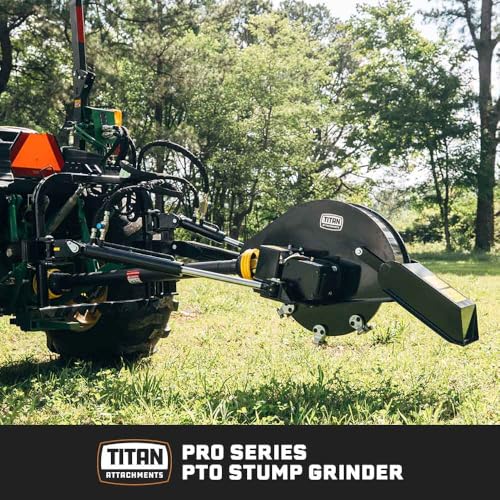
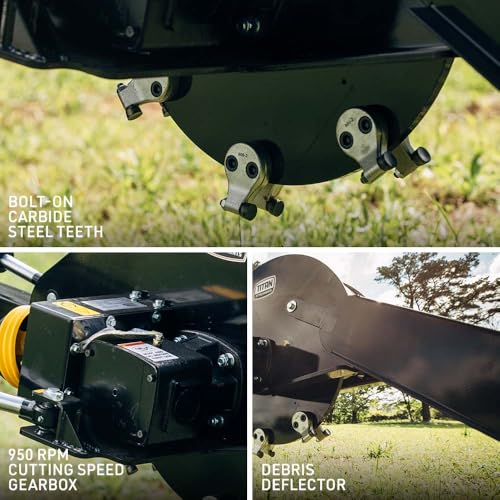
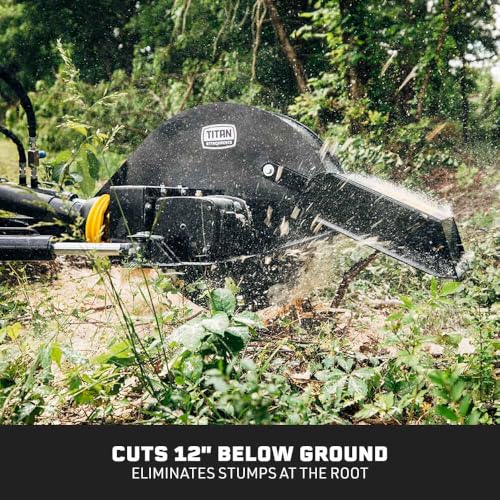
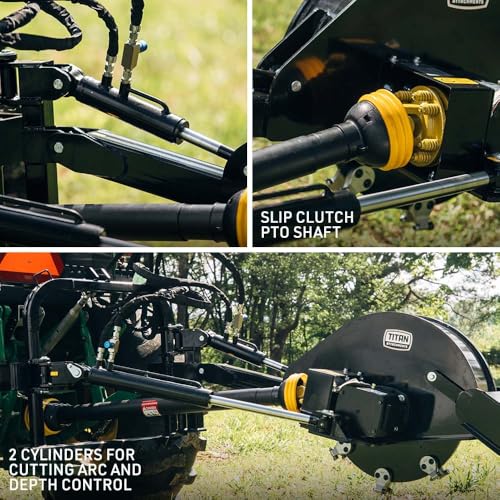
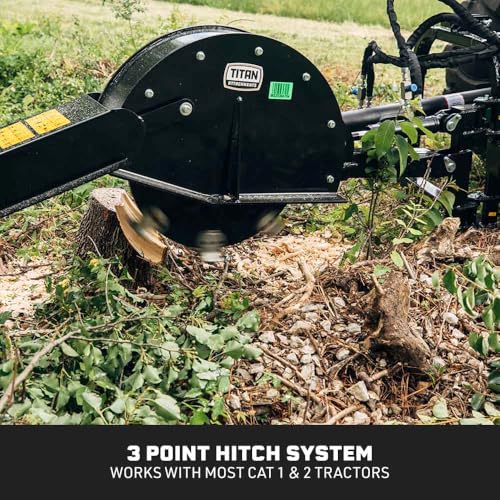
If precision matters more than sheer size, the Titan Pro Series is the one to beat. It’s one of the few models that combines PTO power with dual hydraulic cylinders, giving you full control over the grinding head’s angle from the cab. That means you can tilt left or right to follow stump contours, something the Standard Series and most MechMaxx models can’t do. The 20-degree swing range makes a real difference on uneven ground or off-center stumps.
It spins at a faster 950 RPM and cuts a full 12 inches below grade, which is deep, on par with the hydraulic MechMaxx TSG61. But unlike that model, it retains the simplicity of a PTO-driven system with a slip clutch for protection. The trade-off? It needs two auxiliary hydraulic ports, so your tractor must have them. For users who already do, this is the smarter pick over non-hydraulic models. I’d recommend this over the Standard Series if you’re doing frequent or professional-grade work and want finer control.
Product photos
MechMaxx TSG61 Hydraulic Stump Grinder

Strengths
- Hydraulic positioning
- 12-inch depth
- Stability feet
Trade-offs
- Only 16 teeth
- 24-inch wheel
- Limited to 35–60 HP
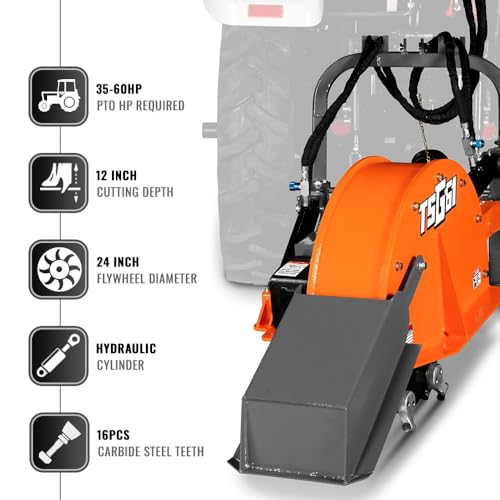
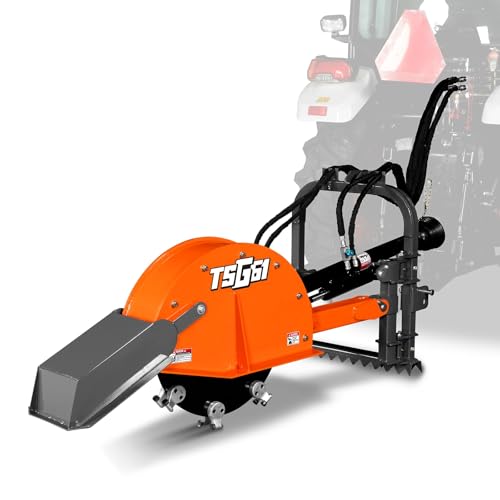
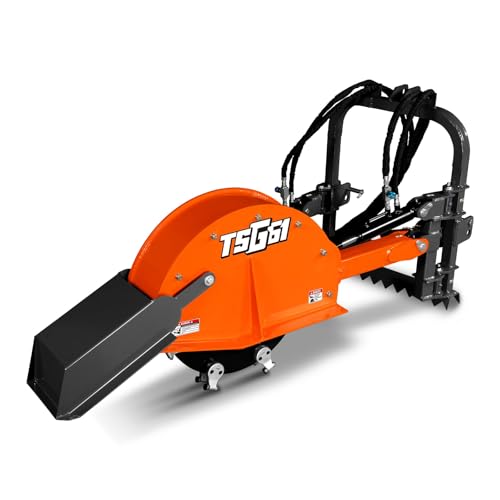
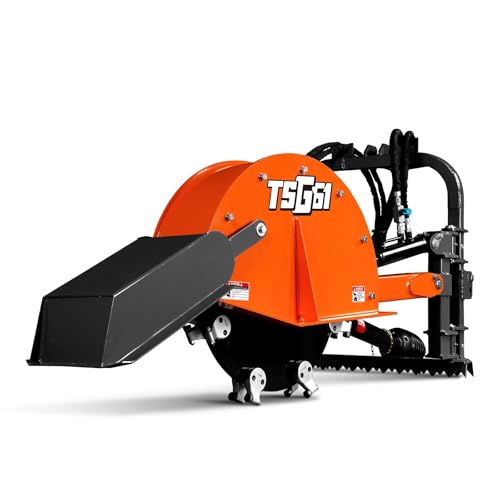
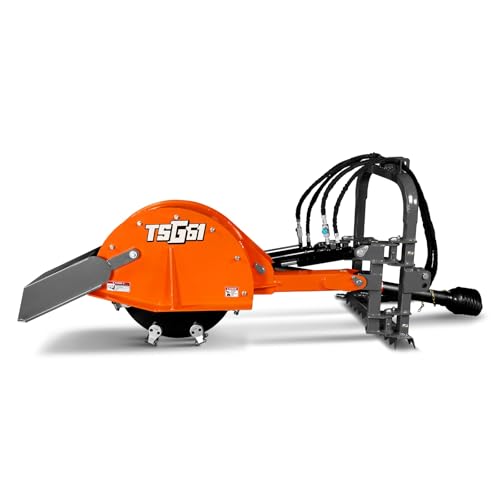
The MechMaxx TSG61 is built for one thing: digging deep. With a claimed 12 inches of below-ground cutting depth and hydraulic cylinders that let you adjust the milling head from the cab, it’s designed for the toughest stumps and most challenging root systems. The 24-inch wheel houses 16 carbide teeth, fewer than other models, but the hydraulic control compensates by letting you angle into the root mass more effectively.
Owners note the stability feet make a big difference in reducing vibration, which helps both the tractor and operator during long sessions. The 18-inch above-ground reach is unique and useful for tall or partially excavated stumps. While the cutting wheel is smaller than the SG30PRO, the hydraulic advantage and depth rating make this the pick for precision deep grinding. It’s not the fastest or largest, but if you’re dealing with old, massive stumps, this gives you the control and reach to finish the job cleanly.
Product photos
LandHonor WG24 PTO Stump Grinder
Strengths
- Solid steel flywheel
- 34 carbide teeth
- 4 spare teeth included
Trade-offs
- Heavy at 450 lbs
- Best with higher HP tractors
- Limited cutting depth vs premium models
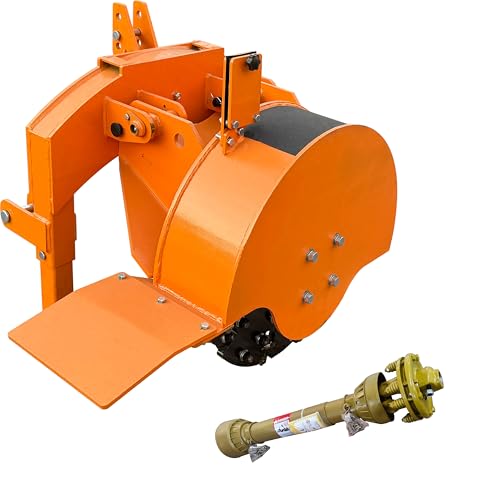
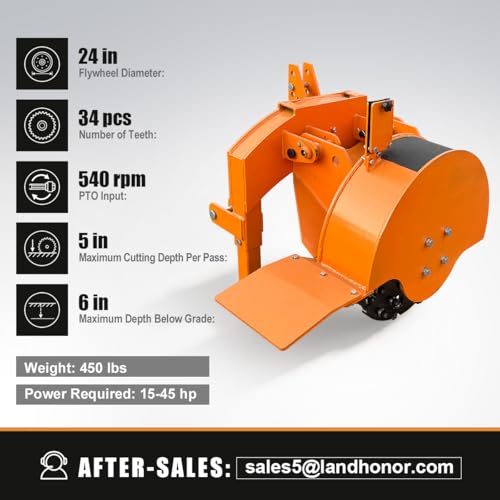
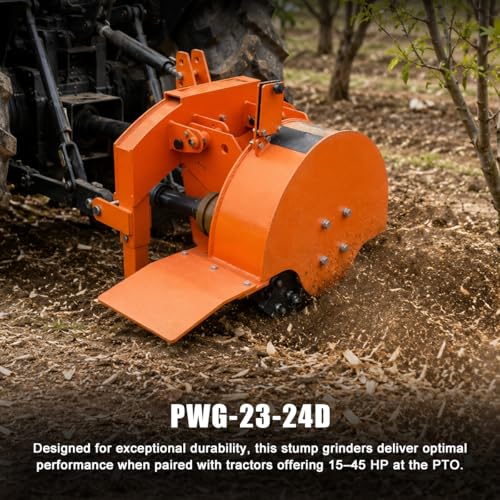
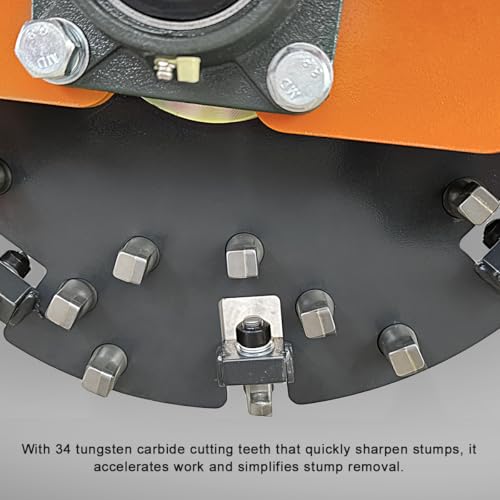
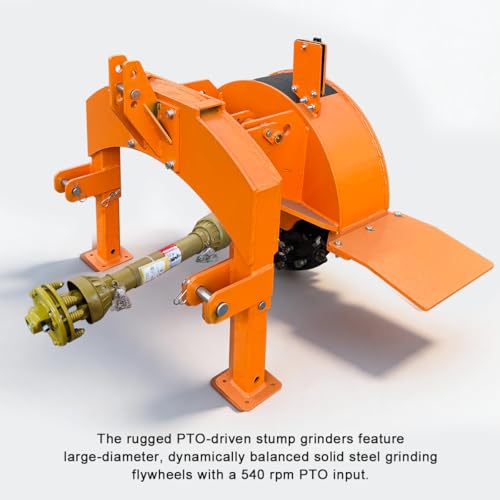
The LandHonor WG24 stands out in the crowded stump grinder market by leaning hard into durability and parts availability. With a 24-inch solid steel flywheel and 34 tungsten carbide teeth, plus four spares included, it’s clearly built for users who expect to grind stumps regularly without constant downtime. The 6-inch cutting depth is solid for mid-range tractors between 15 and 45 HP, and owners consistently report it handles embedded roots without bogging down, especially when paired with a transmission-independent PTO.
Where this unit really earns its keep is in its rugged 450-pound frame. That weight adds stability during operation, reducing chatter, but it also means you’ll want a tractor on the higher end of the HP range for easier handling. Compared to lighter models like the Titan Standard Series, the LandHonor feels more like a workhorse than a weekend tool. I’d pick this over others if you’re running a small land-clearing operation and need something that won’t quit after a few tough jobs.
Product photos
How We Picked These 3 point stump grinders
Rather than a hands-on lab test, my research focused on a detailed comparison of published specifications and features across available 3 point stump grinders. I weighed owner reviews from multiple sources, alongside professional reviews where available, to get a sense of real-world performance and durability. My evaluation also drew on years of experience with tractor implements and a strong understanding of the forces involved in stump grinding. Clear criteria were established based on cutting depth, tractor compatibility, and tooth design.
For this category, horsepower compatibility and cutting depth were the most heavily weighted factors. A stump grinder needs to effectively use the PTO power of the tractor it’s paired with, and a deeper cutting depth means less follow-up work. Durability – specifically the quality of the carbide teeth and the overall build – also played a large role, as frequent repairs quickly negate any initial cost savings. Understanding these elements is key when choosing from available tractor stump grinder attachments.
Specifications reliably indicate the physical capabilities of the grinder – flywheel diameter, number of teeth, maximum cutting depth, and compatible tractor PTO horsepower. However, owner feedback proved crucial for assessing build quality, ease of use, and the longevity of the cutting teeth. Reputation and brand trust factored in as well; established manufacturers often provide better support and replacement parts for their [tractor-mounted stump grinder] units.
What To Look For In 3 point stump grinders
Choosing the right stump grinder isn’t just about horsepower; it’s about matching the machine to your tractor, the size of the stumps you’ll be tackling, and how much control you actually want over the process.
A quality stump grinder connects securely to a tractor’s three-point hitch, uses durable tungsten carbide cutting teeth, and provides sufficient cutting depth below ground for complete stump removal. PTO horsepower compatibility is crucial, as is the ability to independently control tractor speed from PTO speed for optimal grinding. Consider the availability of replacement parts and the overall build quality for long-term value.
Tractor Compatibility is Key
The biggest mistake I see people make is buying a stump grinder that their tractor can’t properly power or physically handle. Don’t assume “three-point hitch” means universal fit. Pay close attention to the tractor’s horsepower (PTO horsepower specifically) and the required hitch category (Category 1 is common, but Category 2 exists). A grinder rated for 40-100 HP isn’t going to work well on a 30 HP tractor, and you risk damaging both machines. Seriously consider the PTO shaft type too; independent PTOs give you much finer control.
Cutting Depth and Wheel Diameter Matter
Don’t underestimate the importance of cutting depth. If you only need to remove a few small stumps, a shallower depth might suffice. However, for larger stumps or areas you intend to re-seed or landscape, you’ll want a grinder that can cut at least 6-8 inches below ground level to remove the majority of the root system. Larger wheel diameters (24” and above) generally offer more aggressive grinding and can handle larger stumps more efficiently, but they also require more horsepower.
Here’s a quick breakdown of what to think about with wheel size: * Smaller wheels (under 20″) are cheaper but struggle with large stumps. * Mid-range wheels (24″) are a good all-around choice for typical homeowner use. * Larger wheels (30″+) are for serious jobs, demanding more powerful tractors and offering faster, more thorough removal – but also a higher price tag.
Hydraulic Control vs. PTO-Driven Simplicity
While most stump grinders are PTO-driven, a growing number offer hydraulic control for the milling head. This allows you to adjust the grinding angle and depth from the tractor cab, offering significantly more precision. However, hydraulic systems add complexity and potential maintenance points. If you’re comfortable with a more manual approach and have a tractor with an independent PTO, a standard PTO-driven model is often a more reliable and cost-effective choice. Remember, as we discuss in our stump grinder comparisons, simplicity can be a huge advantage.
A good rule of thumb: always have a spare set of tungsten carbide teeth on hand. They will wear down, and replacing them is far cheaper than replacing the entire wheel.
3 Point Stump Grinders Compared
The following table provides a specification comparison of available 3 point stump grinders.
| Product Name | Wheel Diameter | Cutting Depth Below Ground | HP Range (PTO) | Teeth Material | Hydraulic Control |
|---|---|---|---|---|---|
| MechMaxx SG30PRO | 30″ | 10″ | 40-100 | Tungsten Carbide | No |
| MechMaxx SG28 | 28″ | 8.5″ | 35-80 | Tungsten Carbide | No |
| Titan Attachments Standard 24″ | 24″ | 6.7″ | N/A | Carbide Steel | No |
| Titan Attachments Pro Series | 24″ | 12″ | N/A | Carbide Steel | Yes |
| MechMaxx TSG61 | 24″ | 12″ | N/A | Carbide Steel | Yes |
| LandHonor WG24 | 24″ | 6″ | 15-45 | Tungsten Carbide | No |
Frequently Asked Questions
What size tractor do I really need to run a 3-point stump grinder?
Generally, you’ll want at least a 30 horsepower tractor for even the smaller models, but 40-50 HP is a much safer bet for consistent performance. Larger grinders with bigger wheels need 50 HP or more to operate efficiently and avoid putting undue strain on your tractor’s transmission.
How long do the tungsten carbide teeth typically last?
Tooth lifespan varies greatly depending on the wood species and the size/number of stumps you grind, but expect to replace them every 20-50 hours of use. Keeping teeth sharp and replacing them promptly prevents the grinder from working harder, ultimately saving you time and money.
Can I grind stumps that are close to buildings or other structures?
While possible, it’s risky. Stump grinders throw wood chips and debris with significant force, so maintaining a safe distance (at least 20 feet) is essential to prevent damage to property or injury. Consider the potential for root damage as well, which could affect nearby foundations.
What’s the difference between carbide steel and tungsten carbide teeth?
Tungsten carbide teeth are significantly harder and more wear-resistant than standard carbide steel, meaning they hold an edge longer and require less frequent sharpening or replacement. While more expensive upfront, tungsten carbide teeth offer a better long-term value for frequent or demanding stump grinding tasks.
Where can I find replacement parts for these stump grinders?
Most manufacturers sell replacement teeth and other parts directly through their websites or through authorized dealers. However, availability can vary, so it’s wise to check parts availability before purchasing a grinder, especially if you anticipate needing replacements quickly. Finding [high-performance cordless grinders] can sometimes be a similar challenge with parts availability.
The Bottom Line
Choosing a stump grinder ultimately comes down to balancing control with convenience, and quality with your budget. For most landowners needing a robust, reliable machine without the added complexity of hydraulics, the MechMaxx SG30PRO stands out as the best overall performer. Its large wheel diameter and generous cutting depth offer significant capability, and it’s built to withstand demanding use.
If you’re on a tighter budget or have a smaller tractor, the LandHonor WG24 is a solid choice. Those looking for more precision and the ability to fine-tune the grinding process will appreciate the Titan Attachments Pro Series, particularly if you already have a hydraulic setup on your tractor. Remember to check out our broader look at tractor PTO stump grinders for even more options.
Beyond the specs, don’t get caught up in chasing the absolute biggest numbers. A solid connection to your three-point hitch, durable cutting teeth, and a good understanding of your tractor’s limits will contribute far more to a successful stump grinding project than any single feature.
