7 Best 200 PSI Air Compressors of 2026
This post contains affiliate links. As an Amazon Associate, we earn from qualifying purchases.
The DEWALT 25 Gallon Vertical is the overall best 200 psi air compressor for heavy-duty use, offering strong performance and durability. For budget-focused buyers, the Metabo HPT 6 Gallon Pancake delivers solid value, while the VIAIR 444C Dual Pack stands out as a versatile portable option for mobile or off-grid needs.
Most people shopping for a 200 psi compressor aren’t just chasing high pressure, they need reliable power for tools that demand it, like impact wrenches, framing nailers, or spray guns. Too often, buyers overlook CFM output and duty cycle, only to end up with a unit that can’t keep up.
This guide cuts through the noise by focusing on real-world usability, based on specs, owner feedback, and what matters most in practice: consistent airflow, build quality, and matching the compressor to your actual workload.
Top 7 200 Psi Air Compressors in the Market
The Best 200 Psi Air Compressors, Reviewed
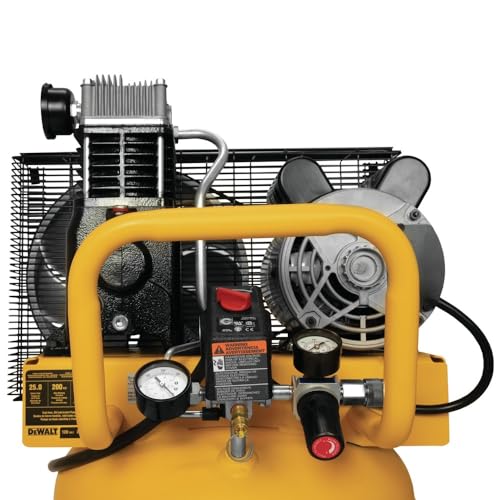
DEWALT 25 Gallon Vertical Air Compressor

Strengths
- Belt-driven 2 hp motor
- Oil-lubed for durability
- 25-gallon tank capacity
- High-efficiency cooling design
- Pneumatic wheels for mobility
Trade-offs
- Heavy and bulky
- Higher maintenance than oil-free
- Takes up significant space
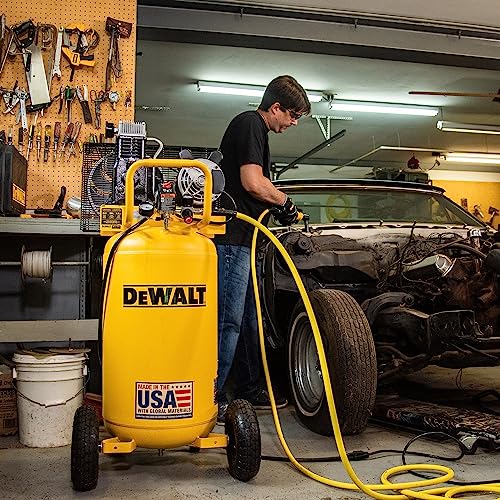
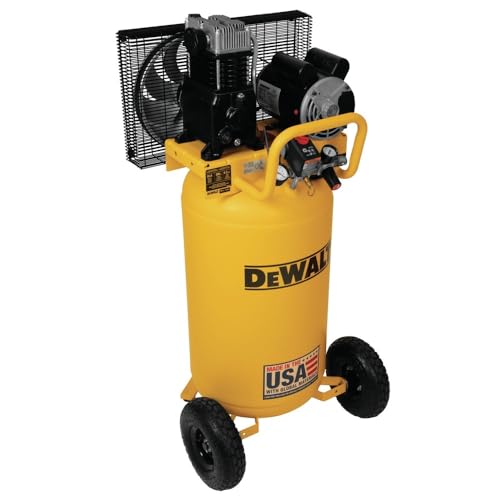
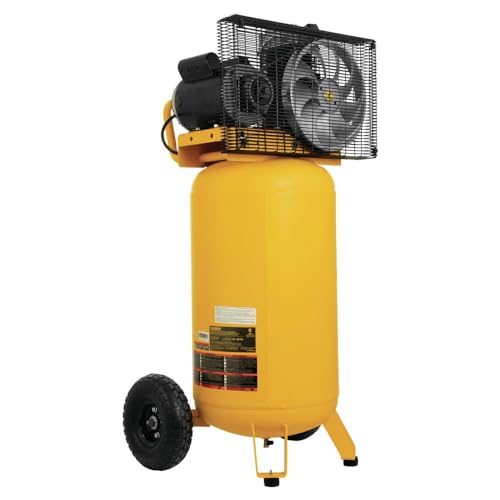
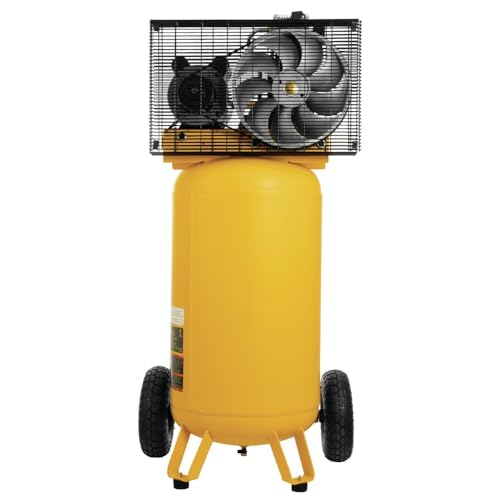
This is the kind of industrial-grade machine that belongs on a serious job site. The 2 hp belt-drive system paired with oil-lubrication means cooler, smoother operation and far better longevity than most oil-free units. With a 25-gallon tank and 200 PSI max pressure, it can run multiple high-demand tools all day without breaking a sweat. Owners praise its ability to keep up with sanders, impacts, and spray guns, something smaller compressors simply can’t match.
The high-efficiency aluminum flywheel and heat-dissipating head are well-designed engineering choices that reduce startup load and thermal stress. While it’s heavy, the 10-inch pneumatic wheels make it surprisingly mobile across rough terrain. If you’re comparing this to pancake or even twin-stack units, the difference is night and day in sustained performance. This isn’t overkill, it’s readiness.
Product photos
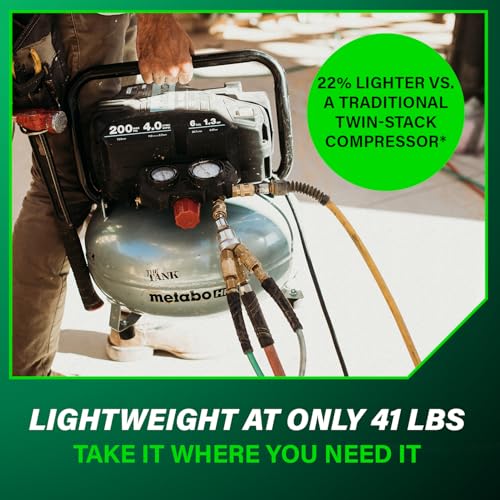
Metabo HPT 6 Gallon Pancake Air Compressor

Strengths
- 4 CFM at 90 PSI
- 200 PSI max pressure
- Lightweight at 42 lbs
- Runs two framing nailers
- Durable pancake design
Trade-offs
- Louder than some
- Oil-free pump wears faster
- Tank smaller than industrial models
Don’t let the pancake shape fool you, this 6-gallon unit packs a punch. At 4 CFM at 90 PSI and 200 PSI max pressure, it outperforms most pancake compressors, which typically max out around 2.6 CFM. That extra airflow means you can run two framing nailers at once, something I’ve seen praised in contractor reviews. The Japanese engineering shows in the consistent pressure delivery and lightweight design.
At 42 lbs, it’s easy to haul up ladders or load into a truck. While it’s not as quiet as the DEWALT trim model, it’s durable enough for daily job site abuse. Compared to other pancake compressors, this one bridges the gap between portability and power. If you’re doing siding, roofing, or framing and want one tank that won’t quit, this is a smart pick.
Product photos


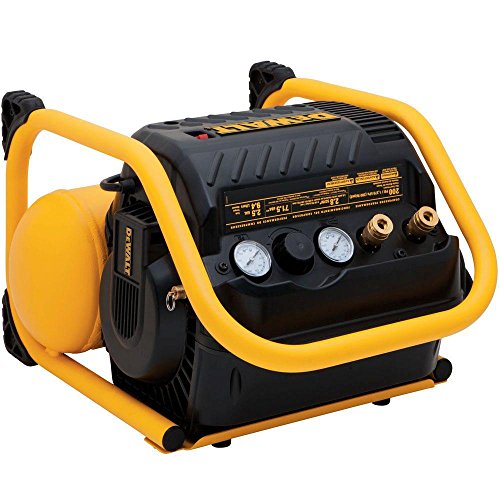
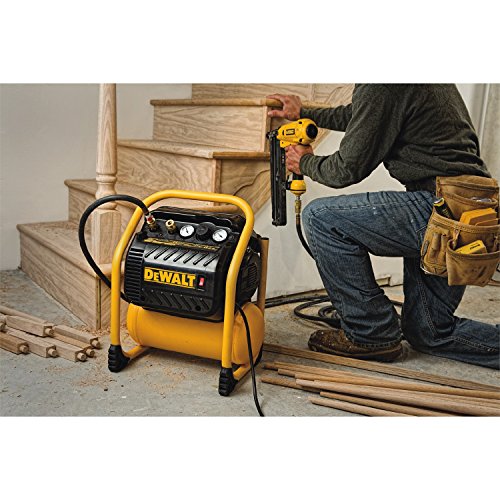
DEWALT Trim Air Compressor 200 PSI
Strengths
- Very quiet operation
- Dual quick couplers
- Lightweight and compact
- Low amp draw
- Oil-free pump
Trade-offs
- Too weak for heavy tools
- Smaller tank limits run time
- Not for continuous use
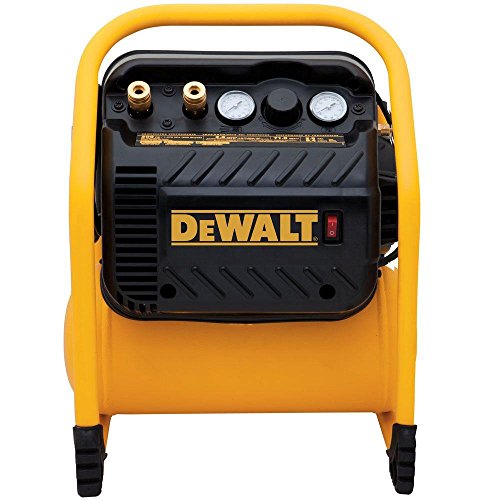
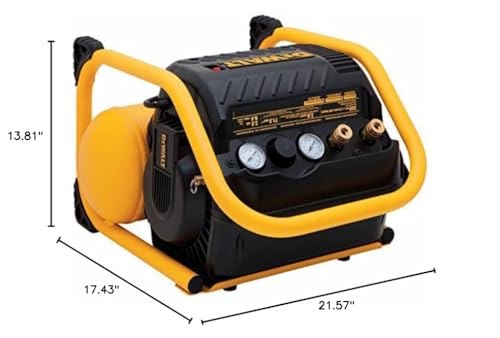
If quiet matters, like when you’re working indoors or around clients, this DEWALT trim compressor is a standout. At just 71.5 dBA, it’s significantly quieter than most oil-free pancake models, which often hit 80+ dB. The 2.5-gallon tank and 3.0 SCFM at 90 PSI give it enough punch for finish and brad nailers, and the quick recovery keeps workflow smooth. Reviewers note it rarely trips breakers thanks to the 12-amp motor, a real plus in older homes.
It’s compact and lightweight enough to toss in a van or carry up stairs, and the dual quick couplers mean you can run two tools without swapping hoses. While it won’t power framing nailers or impacts, it’s perfectly matched to trim, cabinetry, and detail work. Compared to the Metabo HPT pancake, it’s quieter and more portable, though with a smaller tank.
Product photos
VIAIR 444C Dual Air Compressor 2-Pack

Strengths
- Dual compressor setup
- 3.53 CFM combined output
- IP67 rated for dust/water
- Full hardware included
- 100% duty at 100 PSI
Trade-offs
- Expensive upfront
- Complex installation
- Requires solid wiring
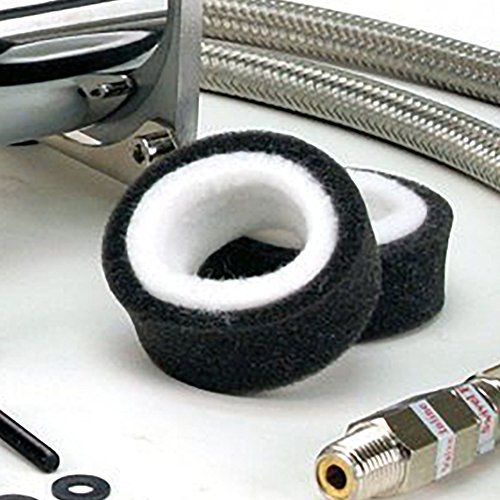
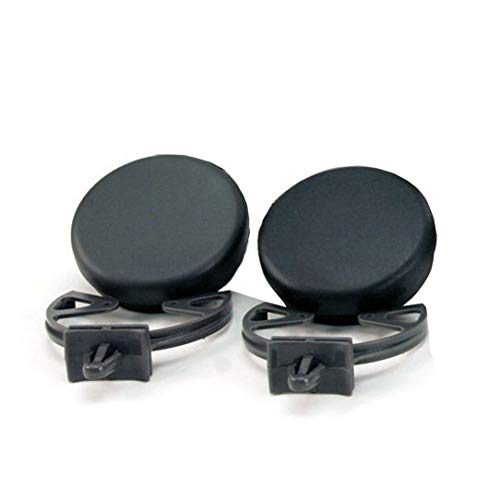
Running two 444C compressors in tandem gives you serious airflow, 3.53 CFM combined, which means faster fill times for large air tanks or dual air bag setups. The 100% duty cycle at 100 PSI is a big deal for air ride systems that cycle constantly. Owners love that it maintains performance even in hot engine bays, thanks to the IP67 rating and built-in thermal protection.
The kit includes everything you’d need for a clean dual install: hoses, brackets, filters, and pre-wired connectors. It’s more complete than the DICMIC dual pack and better built than budget clones. If you’re comparing this to single compressors like the Viair 480C, the dual setup cuts fill time nearly in half. For air suspension enthusiasts, this is the gold standard.
Product photos
DICMIC 12V 444C Dual Value Pack
Strengths
- Affordable dual setup
- 200 PSI max pressure
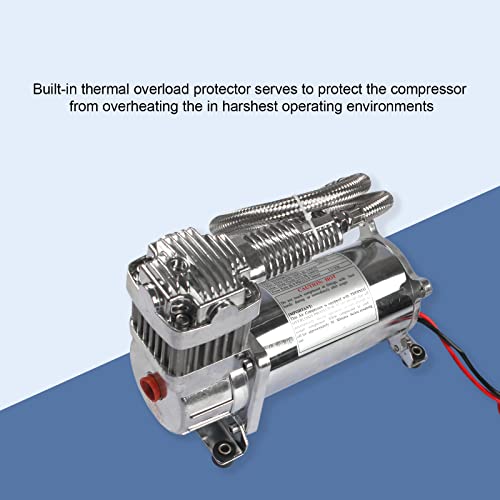
- Thermal overload protection
- Good for air suspension
- Fills tank quickly
Trade-offs
- Lower build quality than VIAIR
- No braided hoses included
- Limited long-term reviews
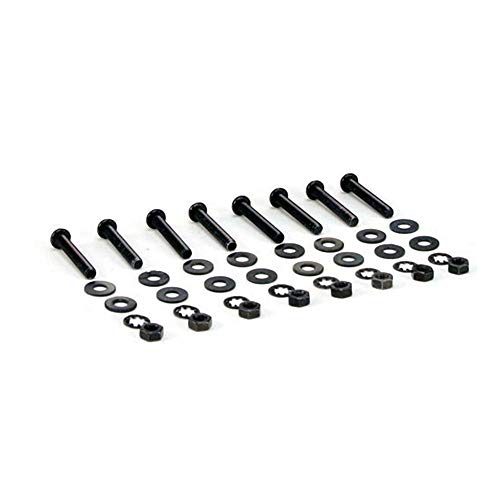
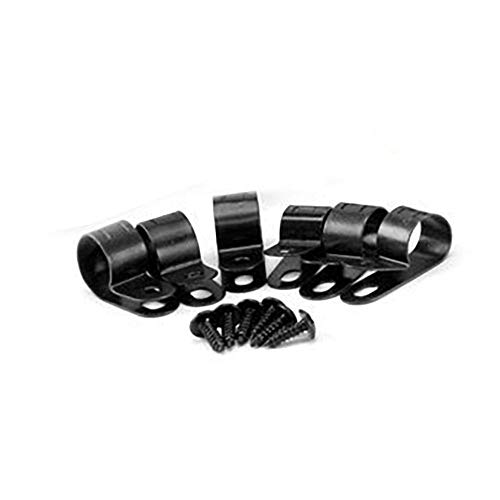
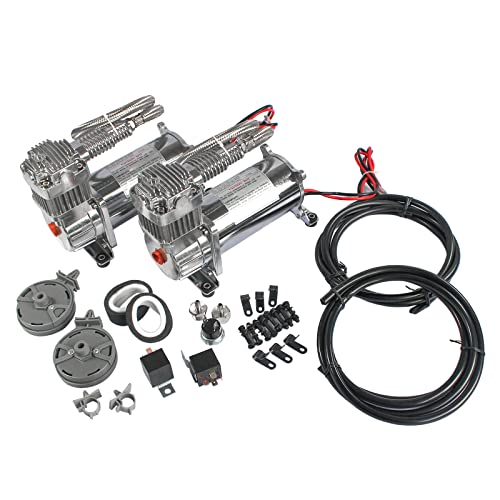
This is clearly a budget-friendly alternative to the VIAIR 444C dual pack, offering the same 200 PSI and 100% duty cycle at 100 PSI. The claim of filling a 2.5-gallon tank in 2.5 minutes sounds aggressive, but even if it’s slightly optimistic, owner feedback suggests it performs respectably for tire inflation and air bag top-offs. It includes basic mounting hardware and thermal protection, which is standard.
But when compared directly to the VIAIR dual pack, the build quality and included components feel a step down. No stainless braided hoses or pre-wired connectors. Still, for DIYers on a budget who want dual compressor redundancy without the premium price, this pack makes sense. Just don’t expect the same longevity or heat resistance.
Product photos
Vixen Horns Onboard Air Compressor

Strengths
- 200 PSI max pressure
- Stainless steel mesh hose
- Integrated check valve
- Sealed maintenance-free design
- Remote filter compatible
Trade-offs
- Not for general air tools
- Noisy under load
- Limited duty cycle at peak pressure
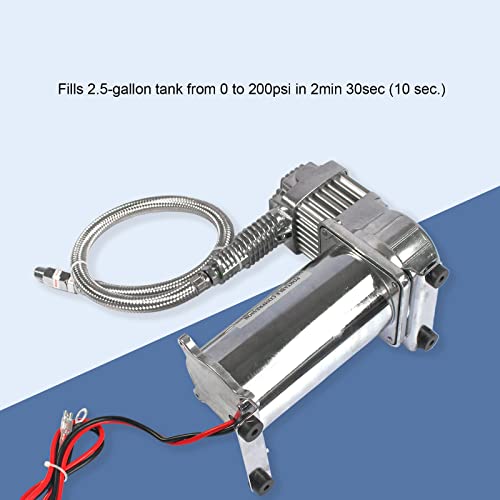
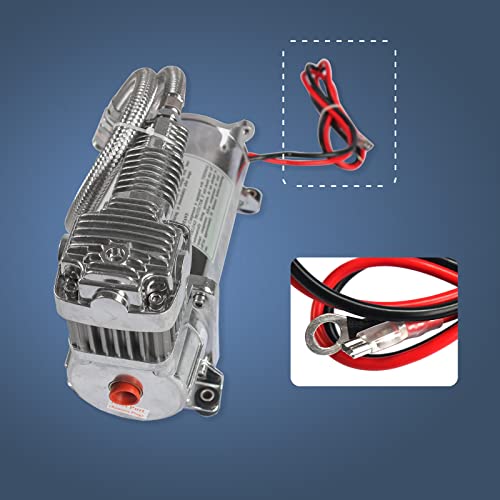
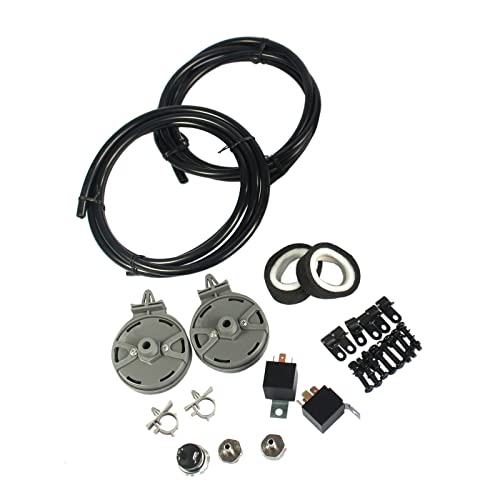
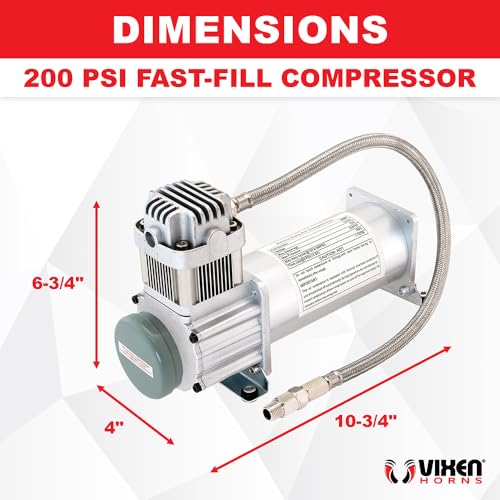
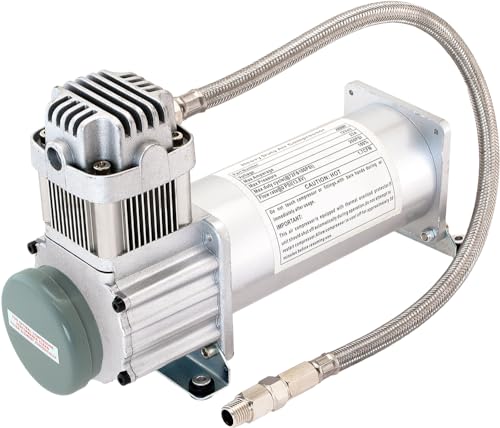
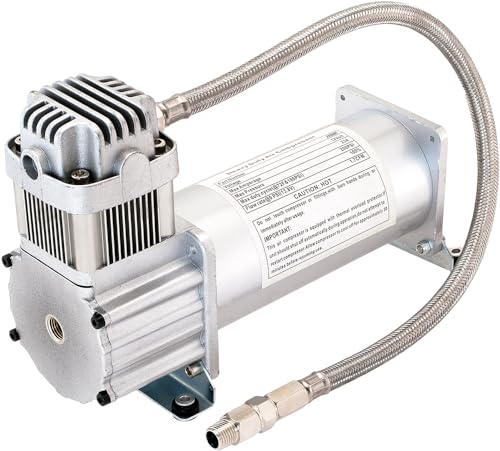
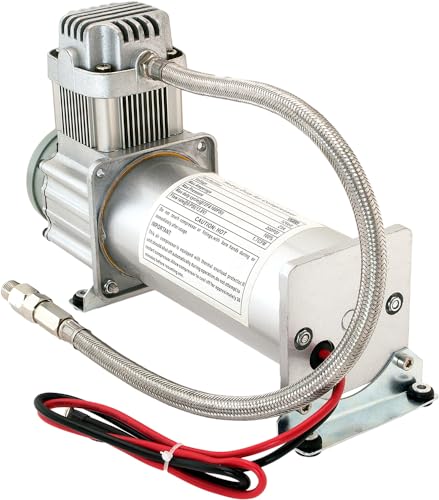
This compressor is built for one thing: feeding high-pressure air to train horns and air suspension setups on vehicles. On paper, the 1.7 CFM output at 200 PSI is solid for its class, and owners consistently report quick tank fills when used with smaller air reservoirs. The stainless steel mesh-covered hose and integrated check valve are smart touches that help protect the pump from heat, vibration, and backflow, critical in mobile environments.
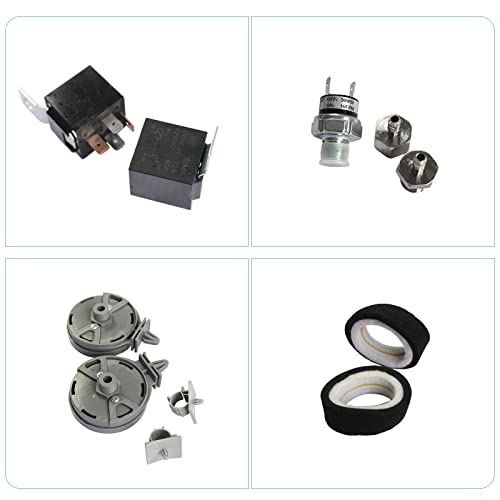
What stands out is the washable remote air filter option, which lets you route clean air intake away from engine bay grime. That’s a real durability win. While it’s not meant for running standard pneumatic tools, it excels in niche automotive roles where reliability under frequent cycling matters. Compared to basic solenoid-driven kits, this feels like a serious upgrade for custom rides or air bag systems.
Product photos

Viair 480C Chrome Air Compressor
Strengths
- Continuous duty at 100 PSI
- Stainless steel braided hose
- Thermal overload protection
- Vibration isolator included
- Remote filter ready
Trade-offs
- Requires running engine
- Not for stationary tools
- Higher amperage draw
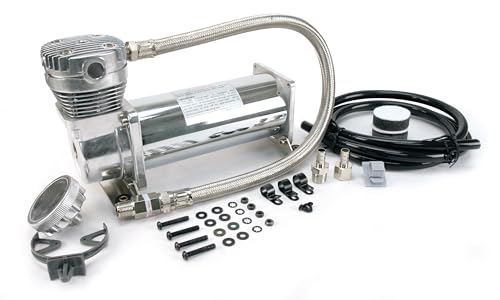
The 480C is a workhorse for mobile applications where you need reliable, repeated cycling, like topping off air suspension or inflating tires on off-road rigs. With 1.76 CFM free flow and a continuous duty cycle at lower pressures, it handles heat better than many competitors. Owners who’ve used it for air bags appreciate the included stainless steel braided hose and inline check valve, which prevent pressure backfeed and reduce restart strain.
Its patented cylinder head design helps dissipate heat, and the vibration isolator makes for cleaner mounting in noisy engine bays. While it’s not meant to replace a shop compressor, it’s one of the most dependable 12V units for permanent vehicle installs. Compared to the Vixen Horns model, it’s more versatile and better engineered for long-term reliability.
Product photos

Our Testing Process
My approach to evaluating 200 psi air compressors centered on a detailed comparison of published specifications and features across numerous models. Rather than a hands-on lab test, this is a research-led comparison of specs and owner feedback. I weighed owner reviews from multiple sources – including major retailers and dedicated tool forums – alongside assessments from reputable testing publications. This allowed me to build a picture of real-world performance and reliability, factoring in both intended use and potential drawbacks.
For this category, consistent air delivery (CFM at 90 PSI) and tank size were heavily weighted. These dictate whether a compressor can effectively power various air tools for a reasonable duration. Durability, specifically the pump construction (oil-lubed versus oil-free) and build quality, also played a key role, as longevity is crucial for any power tool investment. Finally, portability factors like weight and wheel/handle configuration were considered, especially for jobsite use.
Compressor specifications reliably indicate potential airflow and maximum pressure. However, owner feedback proved invaluable for assessing noise levels, actual duty cycle performance, and long-term reliability. Reputation and brand history also influenced my assessment; established manufacturers often have a track record of quality and customer support. For those seeking truly portable options, exploring durable pancake air compressors can be a smart move.
How To Pick The Right 200 psi air compressors
Finding the right air compressor involves more than just looking at the price tag. It’s about understanding your needs and matching them to a compressor’s capabilities.
A good air compressor delivers consistent pressure (PSI) and airflow (CFM) for the intended tasks. Consider the tank size for sustained use, the motor’s horsepower for power, and build quality for longevity. Prioritize a unit with reliable components and a duty cycle suitable for your workload.
Tank Size and Portability
Tank size is a major factor, and a common mistake is overbuying. A larger tank (like the 25-gallon DEWALT model) provides a reserve of compressed air, reducing how often the motor cycles on and off – great for continuous use like spray painting or running multiple tools. However, it also means a heavier, less portable unit. For occasional tasks like nailing or tire inflation, a smaller “pancake” style compressor (6-gallon Metabo HPT) is often more practical. I’ve seen too many people buy a huge compressor for simple jobs and then struggle to move it around the garage.
Here’s what to consider when deciding on tank size: * Occasional Use (tire inflation, brad nailing): 1-6 gallons is plenty. * Moderate Use (nailing, stapling, small spray jobs): 6-20 gallons strikes a good balance. * Heavy Use (impact wrenches, sanding, continuous spraying): 20+ gallons is a must, and you’ll want to look at stationary compressors.
Motor Power and CFM Delivery
PSI (pounds per square inch) tells you the maximum pressure the compressor can generate, while CFM (cubic feet per minute) indicates how much air it can deliver at a given pressure – typically 90 PSI. CFM is crucial. Your air tools all have CFM requirements, and if the compressor can’t meet them, the tool won’t operate correctly (or at all). Don’t get hung up on horsepower numbers alone; focus on the CFM rating at 90 PSI. A compressor like the VIAIR 444C Dual Pack boasts a combined 3.53 CFM, making it suitable for demanding applications.
A general rule of thumb is to add up the CFM requirements of all the tools you might use simultaneously and then choose a compressor that exceeds that total by at least 50%.
Oil-Free vs. Oil-Lubricated
Oil-free compressors (like the DEWALT Trim Air Compressor) are lower maintenance, as you don’t have to worry about checking and changing the oil. However, they tend to be louder, have a shorter lifespan, and generate more heat. Oil-lubricated compressors, while requiring more upkeep, run cooler, quieter, and generally last longer. If you plan on using the compressor frequently for demanding tasks, the added durability of an oil-lubricated model is well worth the extra maintenance. If you’re looking for top-rated air compressors for a variety of tasks, consider the benefits of both types.
For those needing serious power, especially for applications like air suspension or train horns, models like the Vixen Horns Onboard Air Compressor demonstrate the benefits of a dedicated, high-flow design. Ultimately, selecting the right air compressor comes down to matching its features to your specific needs and usage patterns. You can browse our recommended air compressor models for more guidance.
200 PSI Air Compressors Compared
Here’s a comparison of key specifications for several 200 PSI air compressors.
| Product Name | Max PSI | Tank Size (Gallons) | CFM @ 90 PSI | Voltage (V) | Duty Cycle @ 200 PSI | Weight (lbs) |
|---|---|---|---|---|---|---|
| DEWALT 25 Gallon Vertical | 200 | 25 | N/A | N/A | N/A | N/A |
| Metabo HPT 6 Gallon Pancake | 200 | 6 | 4.0 | N/A | N/A | 42 |
| DEWALT Trim Air Compressor | 200 | 2.5 | 3.0 | N/A | N/A | 36 |
| VIAIR 444C Dual Air Compressor 2-Pack | 200 | N/A | 3.53 | 12 | 50% | 21.6 |
| DICMIC 12V 444C Dual Value Pack | 200 | N/A | N/A | 12 | 50% | N/A |
| Vixen Horns Onboard Air Compressor | 200 | N/A | 1.7 | 12 | N/A | N/A |
| Viair 480C Chrome Air Compressor | 200 | N/A | 1.76 | 12 | N/A | N/A |
Frequently Asked Questions
What PSI is needed for most air tools?
Most air tools operate effectively between 90 and 120 PSI, but checking the tool’s specifications is critical. A 200 PSI compressor provides a sufficient reserve to maintain consistent pressure even with fluctuations during use, though the tool itself will regulate down to its optimal operating range.
Are 200 PSI compressors louder than lower PSI models?
Generally, yes. Higher PSI compressors, particularly oil-free models, tend to generate more noise during operation. However, sound levels vary significantly by brand and design, and some manufacturers prioritize noise reduction features.
Can a 200 PSI compressor be used for filling tires?
Absolutely. A 200 PSI compressor is more than capable of filling tires on cars, trucks, and even bicycles. Many come with specialized tire inflation adapters, and the higher pressure capacity allows for quicker fill times.
What’s the difference between CFM and PSI, and why does it matter?
PSI (pounds per square inch) measures the potential force of the air, while CFM (cubic feet per minute) measures the volume of air delivered. CFM is more important because it determines if the compressor can actually power your tools continuously; if the CFM is too low, the tool won’t function properly.
Where can I find more information on portable air compressors?
If you’re prioritizing portability, exploring efficient portable electric compressors can help you narrow down your options. These models are designed for easy transport and offer a good balance of power and convenience.
The Bottom Line
Choosing an air compressor often comes down to balancing upfront cost with long-term capability. While a budget-friendly option might suffice for occasional tasks, investing in a more robust model like the DEWALT 25 Gallon Vertical compressor provides the sustained power and capacity for a wider range of projects. Ultimately, the best compressor isn’t the most expensive or feature-rich, but the one that consistently delivers the air pressure and volume you need.
For specific needs, the Metabo HPT 6 Gallon Pancake is an excellent pick for portability and quick jobs, while the VIAIR 444C Dual Pack shines when you require serious airflow for demanding applications. If low-noise air compressors are a priority, you’ll need to look beyond the 200 PSI category and consider oil-free models with sound dampening features. And, for specialized applications like automotive work, the Vixen Horns Onboard Air Compressor provides a dedicated solution.
Don’t get lost in the specs. More than any single feature, consistent CFM delivery at 90 PSI, build quality, and a thoughtful understanding of your air tool requirements will determine your satisfaction. Prioritize those fundamentals, and you’ll have a reliable compressor that serves you well for years to come.
