6 Best Air Compressors for Blowing Out Sprinklers 2026
This post contains affiliate links. As an Amazon Associate, we earn from qualifying purchases.
The CRAFTSMAN 33 Gallon Air Compressor is the best overall choice for blowing out sprinklers thanks to its strong CFM delivery and large tank, while the DEWALT 6 Gallon Pancake Compressor is a solid, budget-friendly pick for smaller yards. For those in colder climates, the Metabo HPT 6-Gallon stands out with reliable cold-weather starting.
Most homeowners don’t realize how quickly an underpowered compressor can turn a simple winterizing job into a frustrating mess. If the airflow isn’t sufficient, water won’t fully clear from the lines, leaving pipes vulnerable to freezing and damage.
This guide cuts through the confusion by focusing on real-world performance factors like CFM at 90 PSI, tank size, and cold-weather reliability, based on specs, owner feedback, and my years evaluating tools at PowerToolGuide.net. These are the compressors that consistently meet the demands of sprinkler blowouts.
Top 6 Air Compressor For Blowing Out Sprinklers in the Market
The Best Air Compressor For Blowing Out Sprinklers, Reviewed
CRAFTSMAN 33 Gallon Air Compressor

Strengths
- High 5.1 CFM output
- Vertical space-saving design
- Longer run time between cycles
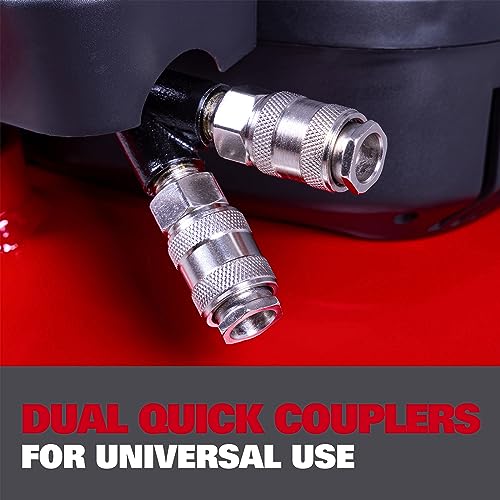
- Dual high-flow couplers
Trade-offs
- Heavy and less portable
- Overbuilt for simple tasks
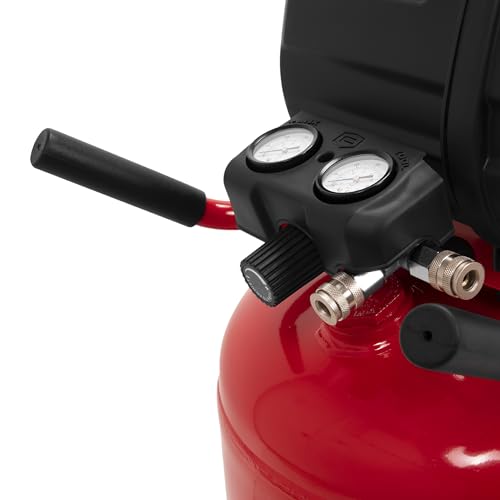
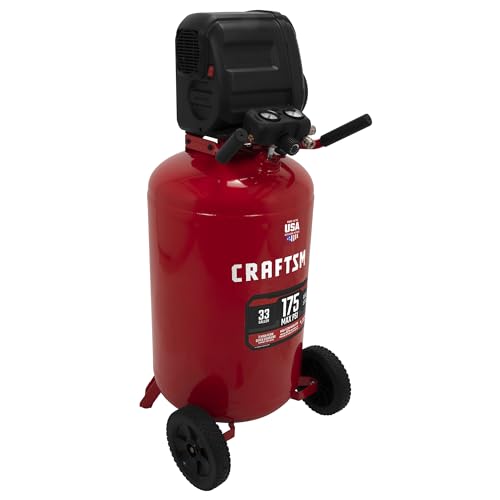
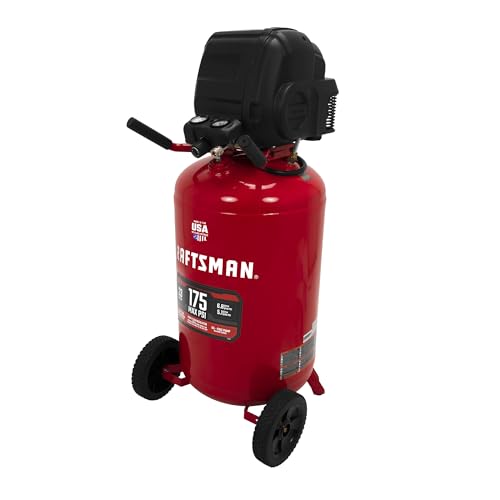
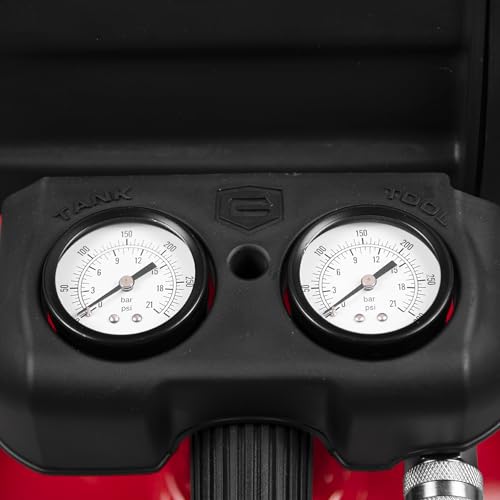
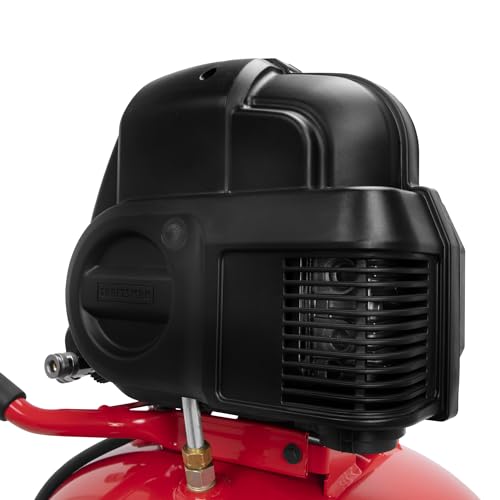
With a 33-gallon vertical tank and 5.1 CFM at 90 PSI, this CRAFTSMAN is built for more than just sprinkler blowouts, it’s overkill for casual users but a smart pick if you’re planning to expand into framing, sanding, or spray painting. The vertical design saves floor space in tighter garages, and owners praise its stability and consistent airflow during longer sessions.
The oil-free pump reduces maintenance, and the claim of 48% higher SCFM than older 26-gallon models checks out against published specs. Two high-flow couplers mean you could technically support two users, though in practice, that’s only viable for intermittent low-CFM tools. I’d recommend this as the best overall pick for serious DIYers who want one compressor to handle both seasonal chores and major projects.
Product photos
DEWALT 6 Gallon Pancake Compressor
Strengths
- Very quiet (78.5 dBA)
- 165 PSI max
- Ball drain valve
Trade-offs
- Slightly heavier than some
- CFM not class-leading
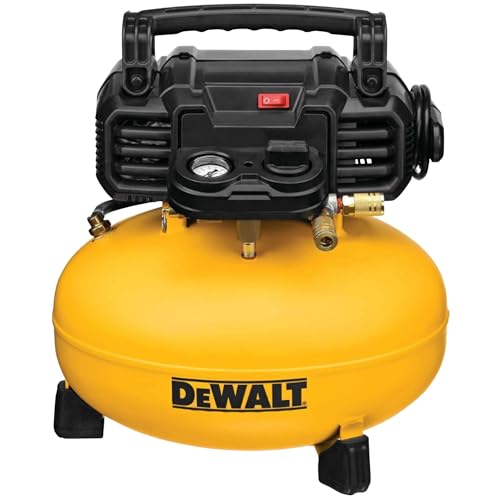
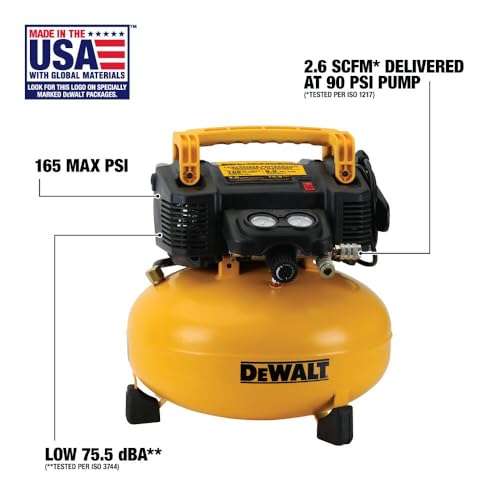
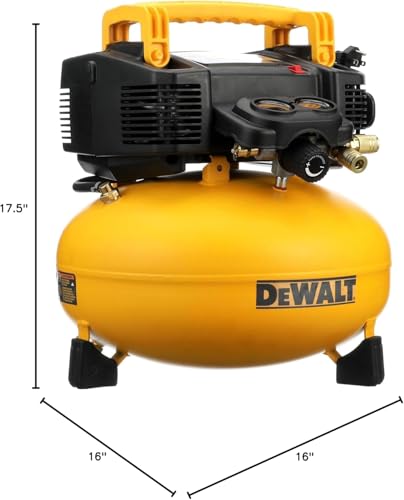
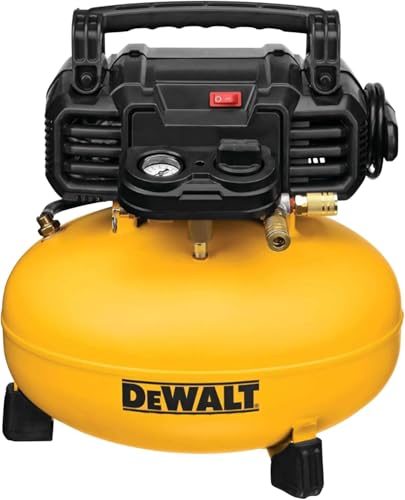
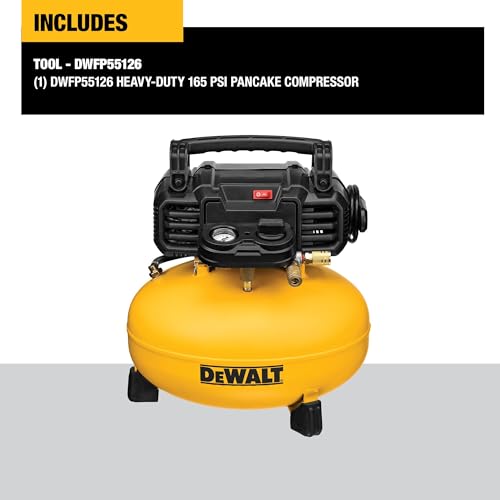
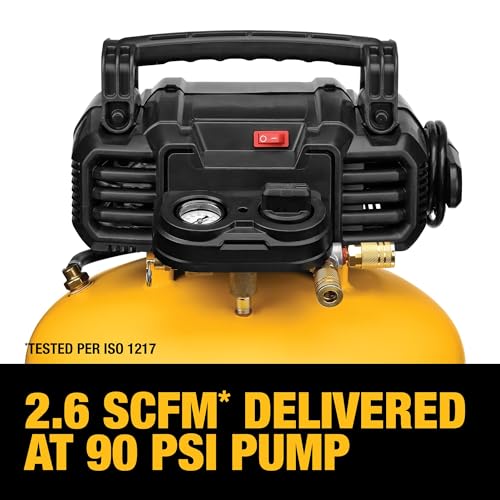
DEWALT’s 6-gallon DWFP55126 earns its ‘quiet operation’ label, 78.5 dBA is among the lowest in the pancake category, and owners consistently note how much less intrusive it feels in residential settings. The 165 PSI max pressure and 2.6 SCFM at 90 PSI put it on par with other premium 6-gallon models, and the high-efficiency motor handles cold starts and long extension cords without issue.
The ball drain valve is a small but appreciated upgrade over standard petcocks, making winterizing faster and more thorough. While it doesn’t offer higher output than the Metabo HPT, its noise performance and DEWALT’s reputation for durability give it an edge for homeowners who value peace and quiet. I’d choose this over louder models if noise is a real concern.
Product photos
Metabo HPT 6-Gallon 165PSI Compressor
Strengths
- 165 PSI max
- Dual quick couplers
- Cold-weather reliable
Trade-offs
- Heavier than similar 6-gal units
- Noise slightly above average
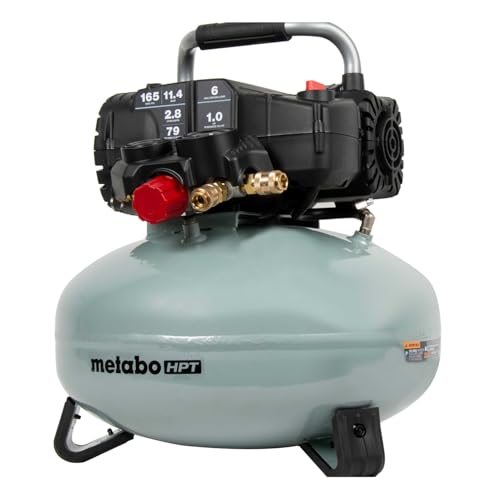
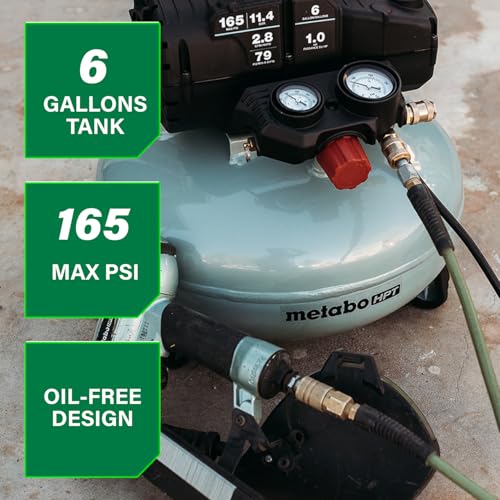
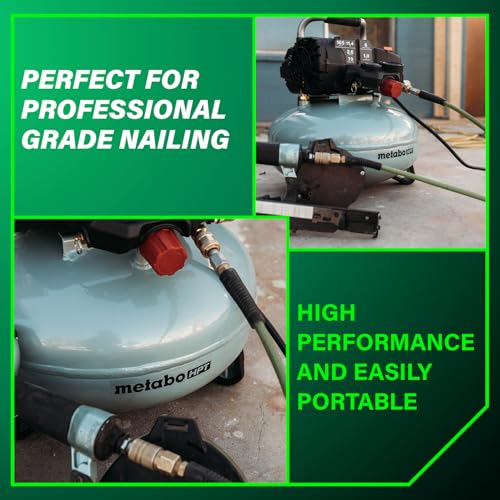
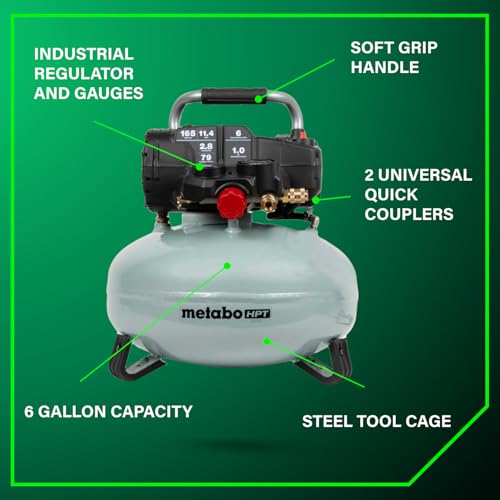
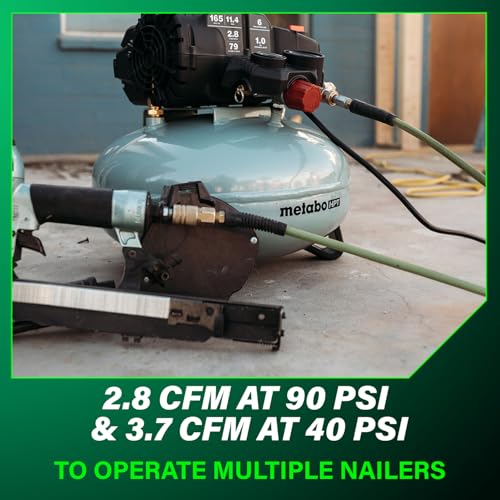
This 6-gallon Metabo HPT unit stands out in cold climates, and owners consistently report reliable starts even in unheated garages, thanks to its oil-free motor and low-voltage startup design. On paper, the 2.8 CFM at 90 PSI isn’t class-leading, but paired with a 165 PSI max pressure, it offers solid runtime between cycles, which matters when you’re blowing out sprinklers across a large yard.
The dual quick couplers are a practical touch, letting you swap tools fast or run two low-demand tools in sequence without frustration. At 73 dB, it’s not the quietest in the lineup, but it’s well under the threshold that’ll annoy neighbors or demand hearing protection. For a pancake design, the 38.5 lb weight is manageable, though not the lightest. I’d pick this over budget models if cold-weather reliability is essential.
Product photos

PORTER-CABLE 6 Gallon Pancake Compressor

Strengths
- Budget-friendly
- Lightweight (30 lbs)
- Simple, clear controls
Trade-offs
- Average noise level
- Limited for heavy tools
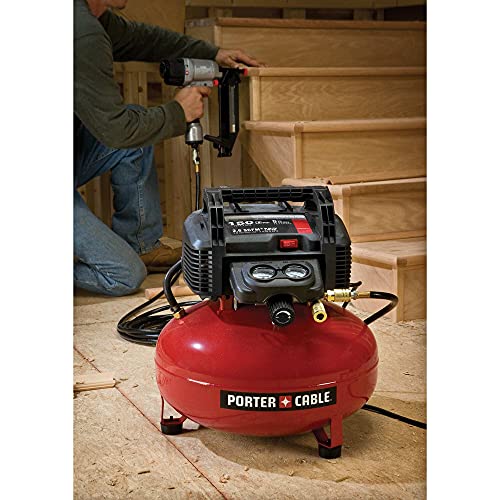
PORTER-CABLE keeps it simple and affordable here. The 6-gallon tank, 2.6 CFM at 90 PSI, and 150 PSI max pressure are identical to several budget competitors, but what sets this apart is the clean regulator and easy-to-read gauges, owners say it’s intuitive for first-time users. At 30 pounds, it’s easy to move, and the oil-free pump means no maintenance hassles.
It won’t outperform pricier models, but for basic home use, like blowing out sprinklers once a year or inflating tires, it’s more than capable. The dual quick couplers are a nice bonus at this price. If you’re outfitting a starter garage and don’t want to overspend, this is my recommendation over flashier brands.
Product photos


VEVOR 1 Gallon Ultra Quiet Compressor
Strengths
- Extremely compact
- Ultra-quiet operation
- Durable steel tank
Trade-offs
- Too small for full sprinkler systems
- Low CFM output
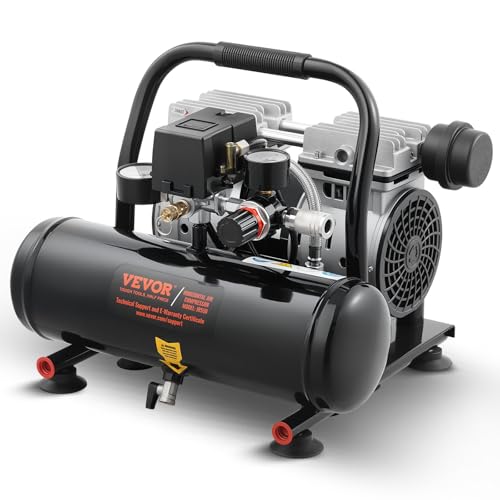
The 1-gallon VEVOR is the most compact option here, and that’s both its strength and limitation. At 1.5 CFM @ 90 PSI, it’s underpowered for blowing out whole sprinkler systems, owners report needing frequent pauses to rebuild pressure, especially on larger yards. But for quick tire touch-ups, small inflations, or light dusting off tools, it’s surprisingly capable.
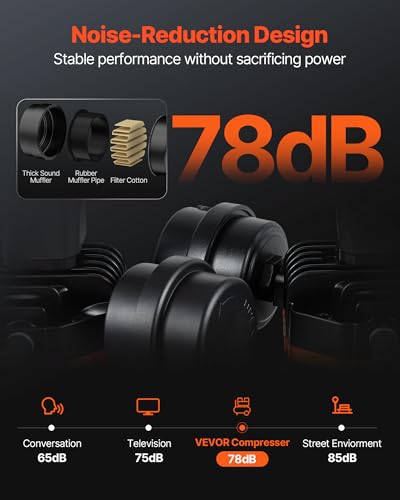
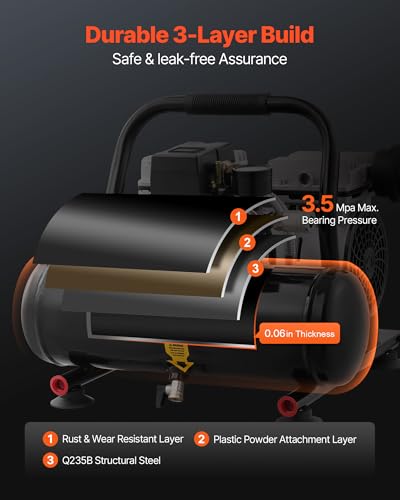
Its 78 dB noise rating matches DEWALT’s quieter model, and the build quality, Q235B steel with triple-layer protection, seems overbuilt for such a small unit. Still, this isn’t a primary compressor. I’d only recommend it as a backup or for ultra-minimalist setups where space is at a premium.
Product photos


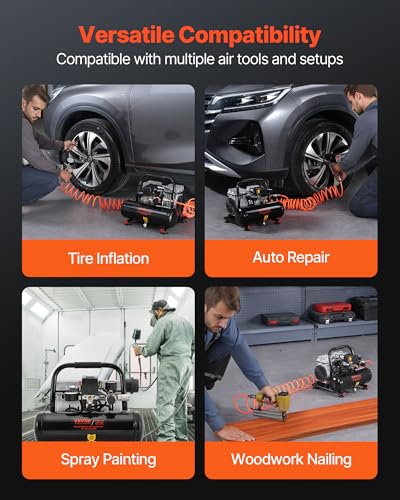
ECOMAX 6 Gallon Portable Compressor

Strengths
- Extremely lightweight
- Sturdy steel construction
- Dual quick couplers
Trade-offs
- Lower max PSI (150)
- Modest CFM for larger systems
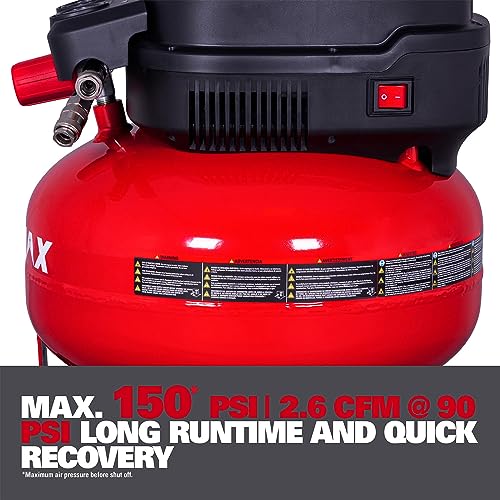
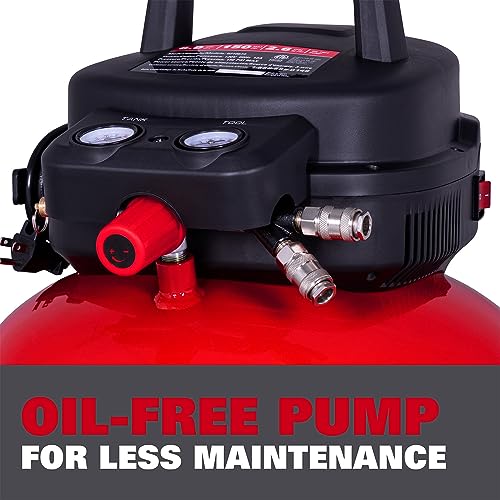
At just 27.6 pounds, this ECOMAX 6-gallon pancake is one of the lightest in its class, and that’s its main selling point. The 2.6 CFM at 90 PSI matches the base level needed for blowing out sprinklers, and owners confirm it recovers fast enough for short bursts across multiple zones. It won’t power continuous-demand tools, but that’s not the goal here.
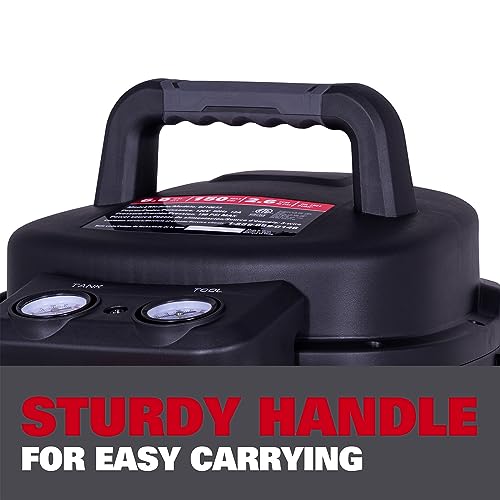
The Q235b steel tank inspires confidence in durability, and the dual couplers add flexibility. However, the 150 PSI max pressure is a step below competitors like Metabo HPT and DEWALT. Still, for someone who stores their compressor in a trunk or needs to carry it across uneven ground, this is the smarter buy over heavier models.
Product photos

How We Chose These air compressor for blowing out sprinklers
Rather than a hands-on lab test, my research for these recommendations was a detailed comparison of published specifications and features across numerous models. I weighed owner reviews from multiple retail sites and incorporated insights from respected tool review publications. As someone who’s spent years advising on power tools at PowerToolGuide.net, I applied my understanding of pneumatic systems and typical homeowner needs to rank these compressors against a set of defined criteria.
For air compressors specifically intended for sprinkler blowout tasks, I prioritized portability, CFM delivery at 90 PSI, and tank size. Consistent airflow is crucial for effectively clearing lines, and a lighter unit makes maneuvering around a property far easier. Tank size factors into how often the compressor needs to cycle while you’re working, and I looked for options that balance capacity with manageable weight.
Specifications reliably indicate a compressor’s potential output (PSI and CFM), but owner feedback provided vital context. I paid close attention to reports regarding cold-weather starting, noise levels, and long-term durability. Reputation matters – brands known for quality pneumatic tools, and those consistently recommended alongside tools like compressed air tools, received more consideration.
How To Pick The Right air compressor for blowing out sprinklers
Choosing the right air compressor for blowing out sprinkler systems requires a bit more thought than just grabbing the cheapest model. It’s about matching the tool to the job to avoid frustration and ensure your lines are properly winterized.
A quality air compressor for this task delivers sufficient CFM (cubic feet per minute) at a suitable PSI (pounds per square inch) for effective sprinkler line clearing. Look for oil-free pumps for reduced maintenance, a tank size appropriate for your yard’s system, and portability to reach all zones. Consider noise levels and cold-weather starting if those are concerns.
CFM and PSI: The Core Performance Metrics
I’ve seen too many people underestimate the CFM requirement for blowing out sprinkler lines. It’s not enough to just have a high PSI; you need consistent airflow to push the water out. For a typical residential system, aim for at least 5 CFM at 90 PSI, but larger systems or those with long runs will benefit from 7 CFM or higher. Don’t fall into the trap of thinking a bigger tank automatically equals more power. The CFM rating is the key indicator. You’ll also want to check the nozzle size on your blow-out adapter(s) – a larger nozzle demands more CFM. Remember, a CFM and PSI for sprinkler winterizing mismatch will leave you with a lot of wasted time and potentially frozen pipes.
Tank Size and Portability
While CFM and PSI are paramount, tank size plays a role, primarily in how consistently you can maintain that airflow. A larger tank (like the 33-gallon CRAFTSMAN) acts as a reservoir, reducing how often the compressor motor has to kick on. However, a larger tank also adds weight and bulk. For most homeowners tackling sprinkler blowouts, a 6-gallon tank is a good balance of capacity and portability. Here’s what I recommend considering regarding tank size:
- Small yards (under 1/4 acre): 1-6 gallon tank is usually sufficient.
- Medium yards (1/4 to 1/2 acre): 6-10 gallon tank provides a good balance.
- Large yards (over 1/2 acre): 10+ gallon tank will minimize motor cycling.
Don’t underestimate the convenience of portability. Dragging a heavy compressor around your yard gets old quickly. Look for models with wheels or a relatively lightweight design.
Oil-Free vs. Oil-Lubricated and Cold Weather Performance
Oil-free compressors, like the DEWALT pancake model, are incredibly popular for homeowner use because they require less maintenance. You don’t have to worry about checking or changing the oil. However, they generally aren’t as durable as oil-lubricated models and can be louder. If you live in a colder climate, prioritizing a compressor with reliable cold-weather starting is key. Some, like the Metabo HPT, are specifically designed to start easily even in unheated garages. >A compressor that won’t start when it’s freezing outside is just an expensive paperweight.
If you’re looking for more detailed information on choosing the right compressor for this specific task, I’ve put together a guide on selecting a compressor for irrigation systems.
Air Compressors for Blowing Out Sprinklers Compared
Here’s a comparison of key specifications for air compressors suitable for blowing out sprinkler systems.
| Product Title | Tank Size (Gallons) | Max PSI | SCFM @ 90 PSI | Noise Level (dBA) | Weight (lbs) |
|---|---|---|---|---|---|
| CRAFTSMAN 33 Gallon Air Compressor | 33 | 175 | 5.1 | N/A | N/A |
| DEWALT 6 Gallon Pancake Compressor | 6 | 165 | 2.6 | 78.5 | 30 |
| Metabo HPT 6-Gallon 165PSI Compressor | 6 | 165 | 2.8 | 73 | 38.5 |
| PORTER-CABLE 6 Gallon Pancake Compressor | 6 | 150 | 2.6 | N/A | 30 |
| VEVOR 1 Gallon Ultra Quiet Compressor | 1 | N/A | 1.5 | 78 | N/A |
| ECOMAX 6 Gallon Portable Compressor | 6 | 150 | 2.6 | N/A | 27.6 |
Frequently Asked Questions
What PSI is needed to blow out sprinkler lines?
Generally, you’ll want at least 90 PSI to effectively clear sprinkler lines, but some systems may benefit from up to 175 PSI. However, remember that consistent CFM (cubic feet per minute) is more critical than simply having high PSI; a higher PSI won’t help if there isn’t enough airflow.
Can I use any air compressor to blow out sprinklers?
You can, but not all compressors are created equal. While a large shop compressor could work, smaller, portable models specifically designed for tasks like sprinkler blowouts – offering at least 5 CFM at 90 PSI – are much more convenient and efficient.
Is an oil-free compressor good enough for sprinkler blowouts?
Yes, an oil-free compressor is perfectly adequate for seasonal sprinkler blowouts. They require less maintenance than oil-lubricated models, which is a major benefit for infrequent use, and are readily available in portable sizes.
What size tank is best for blowing out sprinklers?
A 6-gallon tank strikes a good balance between capacity and portability for most homeowners. If you have a larger property, consider a 10-gallon or larger tank to minimize how often the compressor motor needs to cycle, but be prepared for added weight. You can find recommended sprinkler blowout compressors in a variety of tank sizes.
What should I do if my air compressor won’t start in cold weather?
If you live in a cold climate, look for a compressor specifically designed for cold-weather starting, like the Metabo HPT model. Otherwise, bringing the compressor indoors to warm up before use can help, and ensuring the battery is fully charged is essential for electric models.
The Bottom Line
Choosing an air compressor for sprinkler blowouts often comes down to balancing initial cost with long-term convenience. While a budget-friendly option can get the job done, consistently reliable airflow and ease of use are worth considering. In my experience advising on power tools, the CRAFTSMAN 33 Gallon Air Compressor strikes the best overall balance, offering a large tank for consistent pressure and ample CFM for most residential systems.
For those on a tighter budget or with smaller yards, the DEWALT 6 Gallon Pancake Compressor remains a solid choice. If portability and quiet operation are priorities, perhaps you have close neighbors, the VEVOR 1 Gallon Ultra Quiet Compressor is a surprisingly capable option, though it’s best suited for very small systems. And for those needing a versatile compressor that can handle various tasks beyond just sprinkler blowouts, the Metabo HPT 6-Gallon 165PSI Compressor delivers a good blend of power and features.
Ultimately, remember that specifications tell only part of the story. Focus on getting a compressor that delivers at least 5 CFM at 90 PSI, matches the tank size to your yard’s needs, and consider the convenience of portability. Getting the compressor for winterizing water lines right is less about finding the most expensive model and more about understanding your specific needs and choosing accordingly.
