8 Best Mini Lathes of 2026
This post contains affiliate links. As an Amazon Associate, we earn from qualifying purchases.
The VEVOR 7” x 16” stands out as the best overall mini lathe for its solid 800W motor, cast iron construction, and reliable performance across materials. For beginners or those on a budget, the WEN LA3421 offers surprising capability at a lower price. If precision and advanced features matter most, the AcmeFlare 4-Axis brings CNC-like control to small-scale work.
Picking the right mini lathe isn’t just about specs on a label. Most people struggle with machines that vibrate too much, lack power for consistent cuts, or fall apart after a few months. As Robert A. Bennett from PowerToolGuide.net, I’ve seen how the wrong choice leads to frustration and wasted money.
This guide cuts through the noise. I compared motor strength, build quality, and real-world feedback to highlight models that actually deliver. You’ll learn what matters most, like rigidity and speed control, and how to match a lathe to your projects, whether you’re working metal, wood, or plastic.
Top 8 Mini Lathes in the Market
The Best Mini Lathes, Reviewed
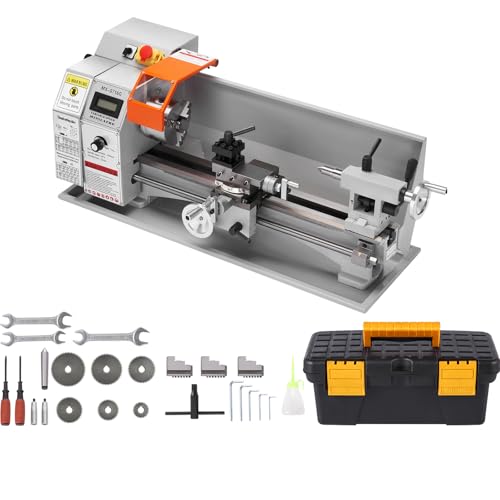
VEVOR 7” x 16” Metal Lathe
Strengths
- Brushless direct drive
- Extended bed length
- Multiple safety switches
Trade-offs
- Heavier than most mini lathes
- Higher power draw
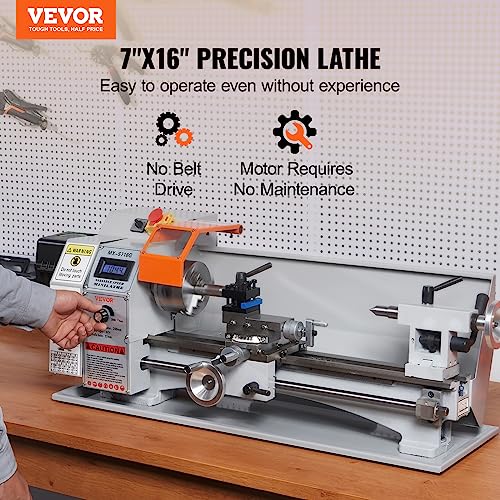
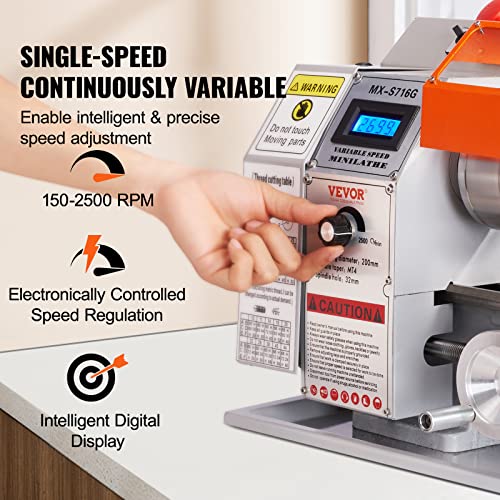
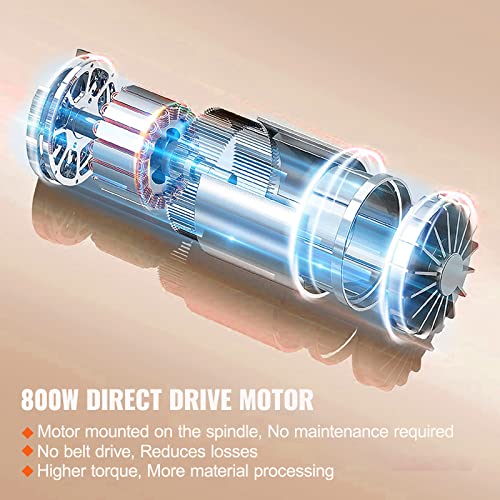
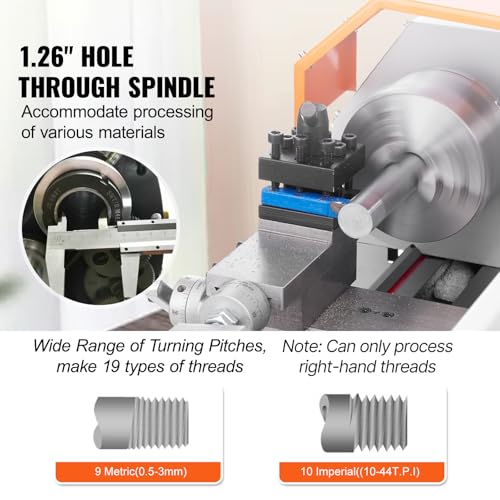
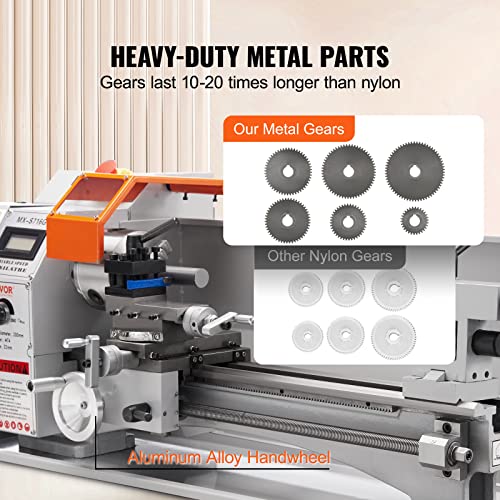
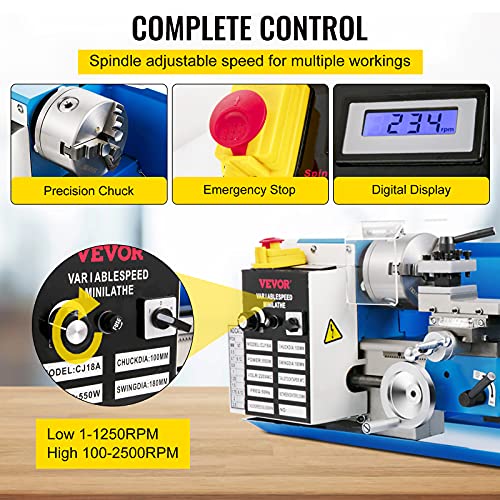
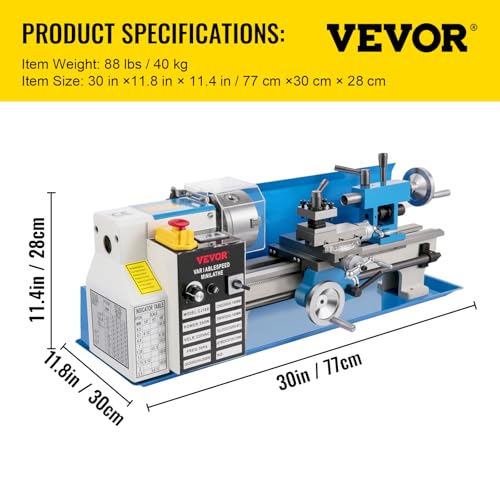
On paper, this is the strongest all-around contender in the VEVOR lineup. The 800W brushless motor stands out, no belts to slip or replace, and no brushes to wear out. That alone makes maintenance easier over time, which matters if you’re running multiple projects. The extended 16-inch bed gives more reach between centers, and the digital speed control is accurate and responsive.
It’s also one of the safer mini lathes, with multiple emergency cutoffs and overload protection. Reviewers note it runs cooler and smoother than comparable models. Against the AcmeFlare high-speed units, it trades peak RPM for real-world torque and stability.
Product photos
AcmeFlare 4-Axis All-Metal Micro Lathe
Strengths
- True 4-axis control
- All-metal build
- High indexing accuracy
Trade-offs
- Low torque
- Small swing diameter
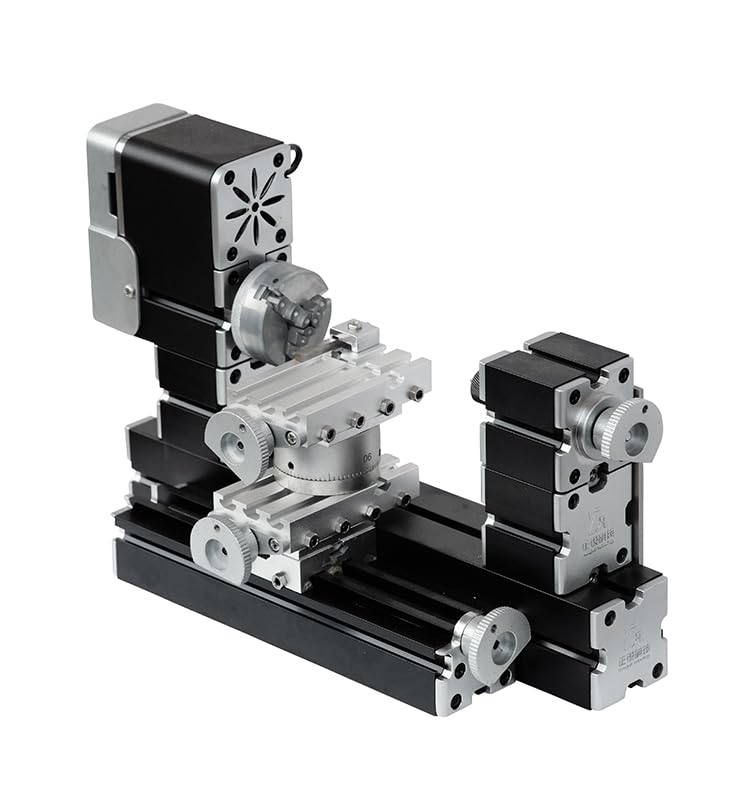
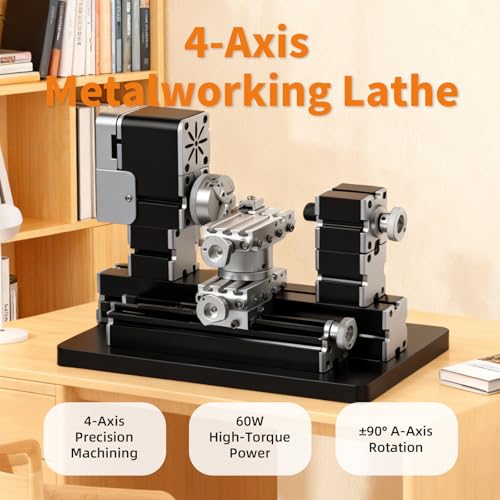
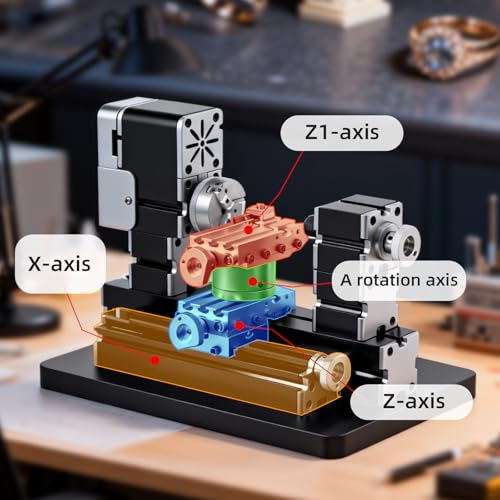
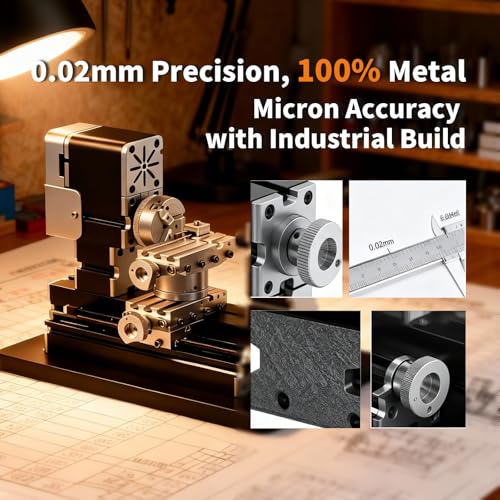
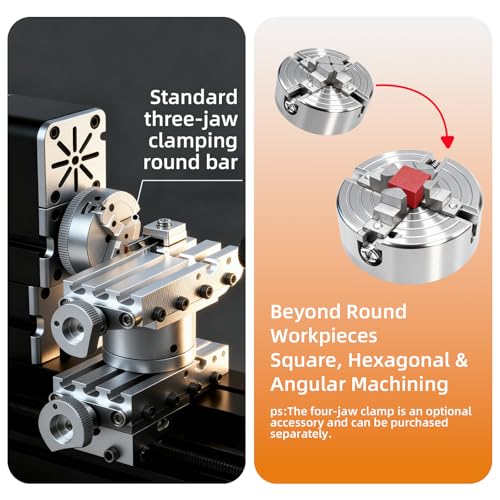
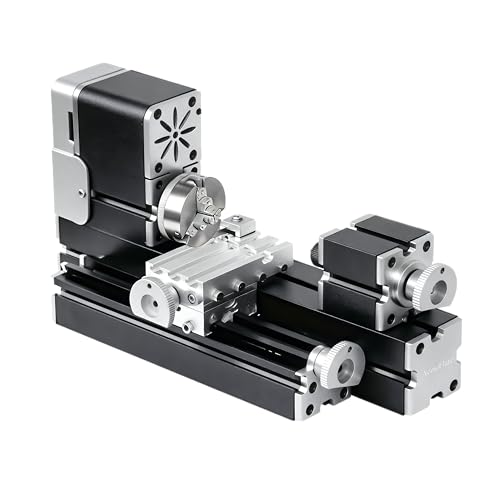
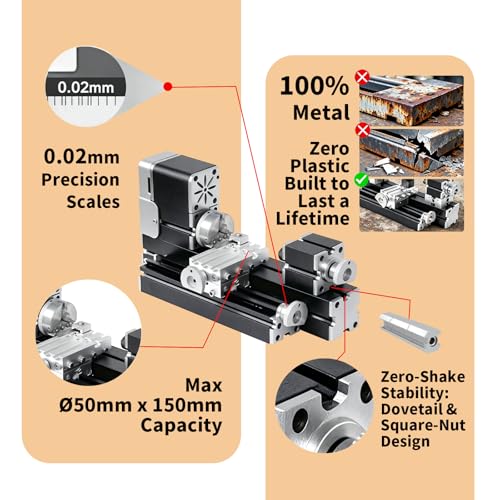
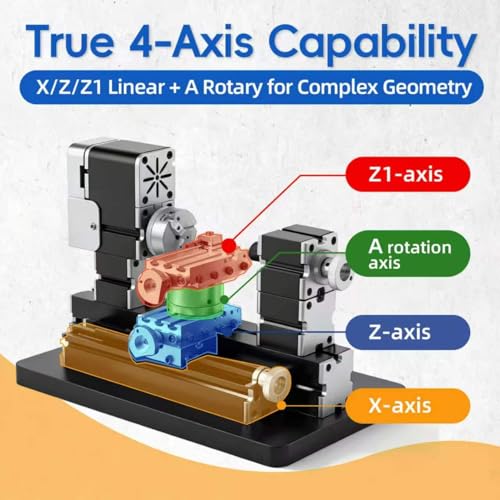
This isn’t your typical mini lathe, it’s a precision micro machine built for small, repeatable work. The 4-axis system with A-axis indexing is rare at this size and lets you machine multiple faces without re-chucking. Combined with 0.02mm handwheel scales, it’s ideal for intricate parts like clock gears or model engine components.
At 12,000 RPM and 60W, it’s not built for heavy cuts, but excels in fine detail. The all-metal T-slot construction minimizes play, and owners say it holds calibration well. Compared to the ZHRUI 4-axis model, it’s nearly identical, but lacks the quick indexer display.
Product photos

AcmeFlare 36W 20,000RPM Mini Lathe
Strengths
- Extremely high RPM
- Molded precision scales
- Wide voltage input
Trade-offs
- Low power output
- Not for large workpieces
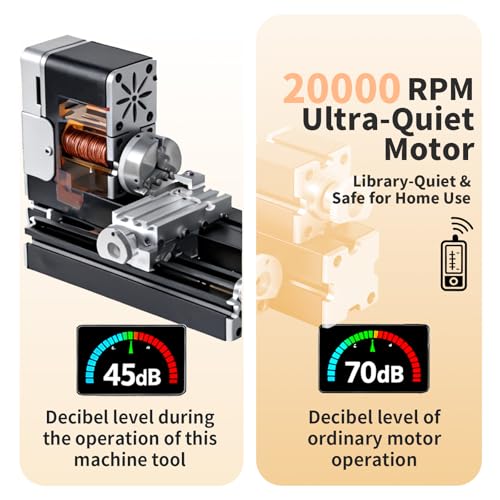
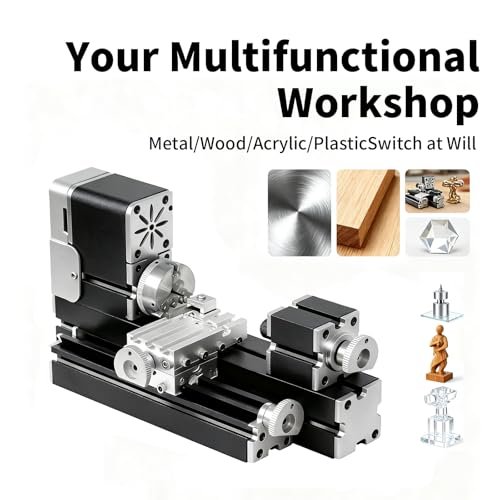
The 20,000 RPM motor immediately sets this lathe apart. For fine polishing, engraving, or turning soft metals like aluminum, that speed is a serious advantage. The 0.02mm molded scales are a standout feature, no sticker peeling here, and the all-metal construction from spindle to chuck gives it surprising rigidity for a 36W machine.
It’s not for heavy cuts, but for detail work on brass, copper, or acrylic, it’s hard to beat. Compared to the WEN wood lathe, it’s far more precise but lacks the swing and power for larger wooden blanks.
Product photos


UOKRR 10″ x 18″ Wood Lathe
Strengths
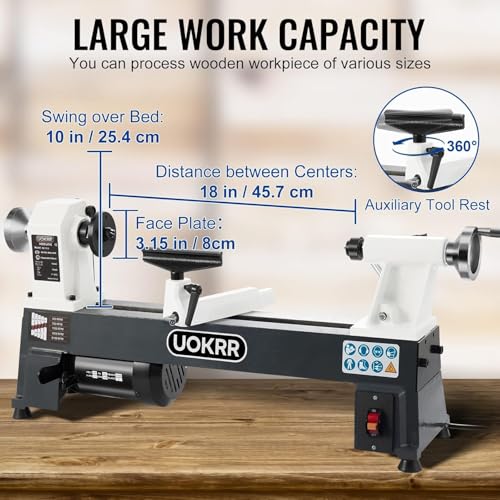
- Large work capacity
- Cast iron construction
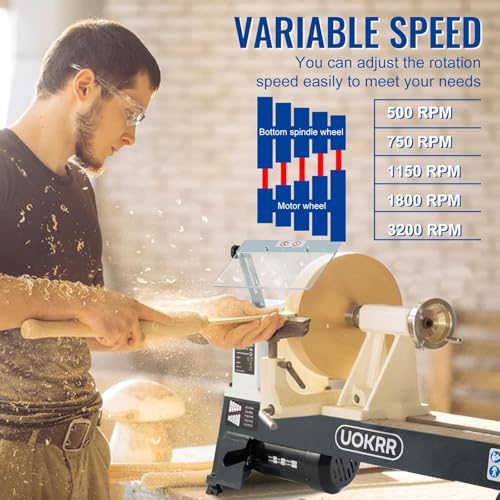
- 5 fixed speeds
Trade-offs
- No variable speed
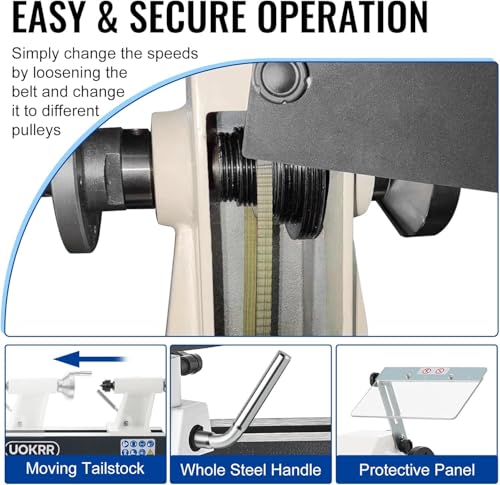
- Belt change required for speed shifts
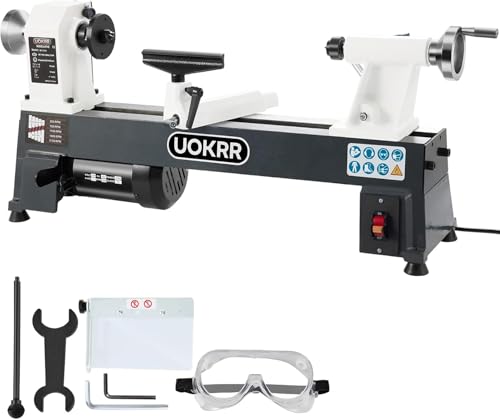
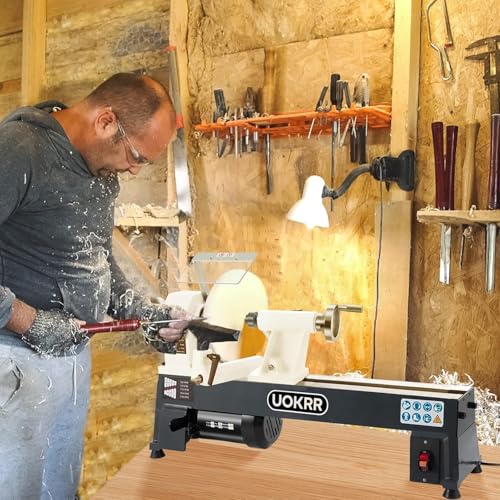
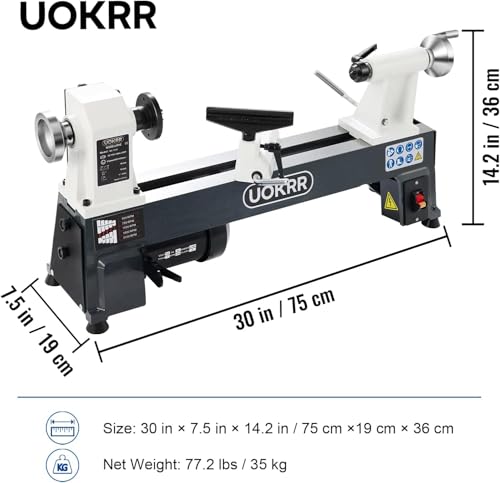
This is the machine to get when you’re ready to move beyond pen blanks and small spindles. The 10-inch swing and 18-inch bed open up serious woodturning possibilities, think large platters, tabletop legs, or hollow forms. The 1/2 HP pure copper motor delivers stable power, and the cast iron body keeps vibration low, even at 3200 RPM.
The 5-speed pulley system isn’t as smooth as variable speed, but it’s reliable and eliminates electronic complexity. Compared to the WEN lathe, it’s heavier and more industrial, but that mass translates to smoother cuts.
Product photos
WEN LA3421 Benchtop Wood Lathe
Strengths
- Affordable price
- Soft-start motor
- Two-year warranty
Trade-offs
- Plastic components
- No fine speed control
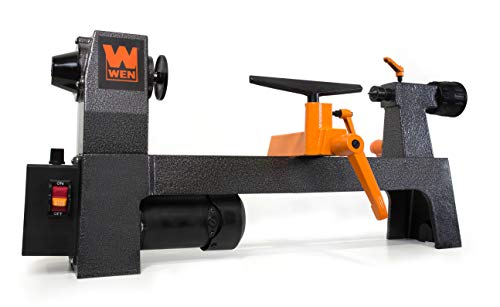
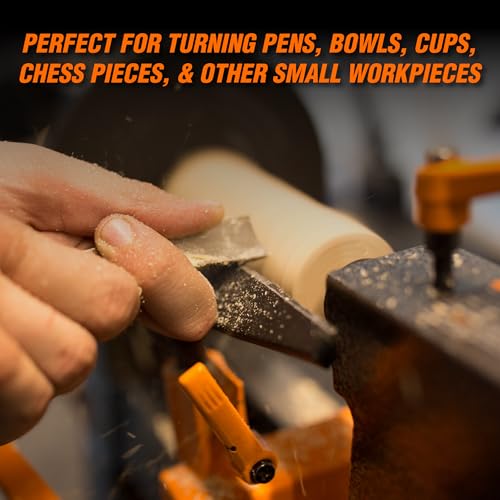
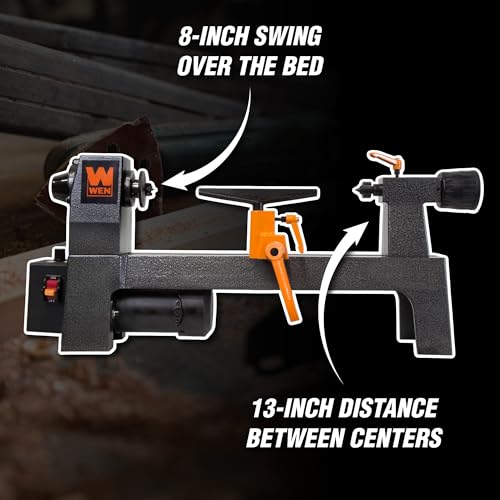
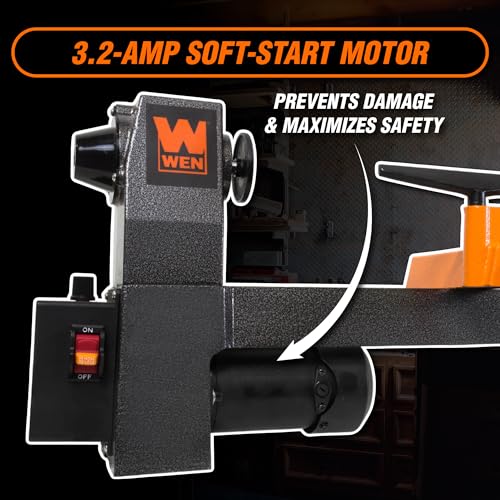
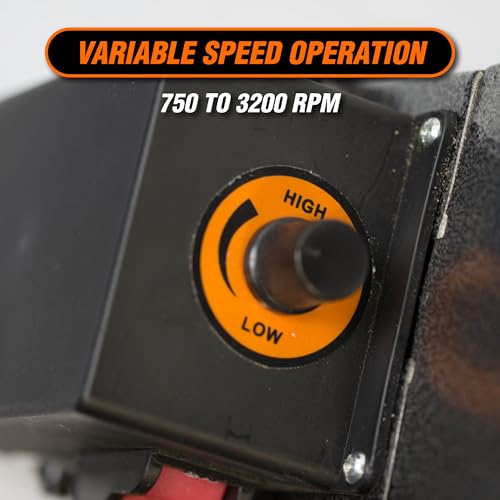
The WEN LA3421 is a no-frills, reliable starter lathe for woodworkers on a tight budget. It doesn’t have digital controls or cast iron mass, but the soft-start motor is a thoughtful touch that reduces strain on both the tool and workpiece. With a 3.2-amp motor and 8-inch swing, it handles pens, small bowls, and chess pieces without issue.
Owners consistently highlight its value, it’s often the cheapest lathe that still feels usable. Compared to the UOKRR 10×18, it’s less powerful and smaller, but also lighter and easier to store. For a beginner, that’s a fair trade.
Product photos

VEVOR 8″ x 14″ Mini Metal Lathe

Strengths
- Larger swing capacity
- Cast iron base
- Manual and auto feed options
Trade-offs
- No digital speed readout
- Plastic gear cover
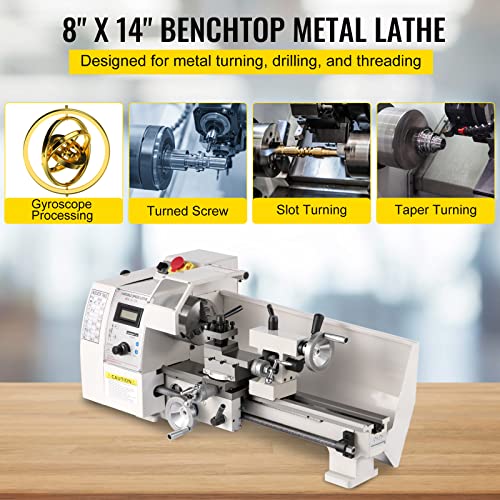
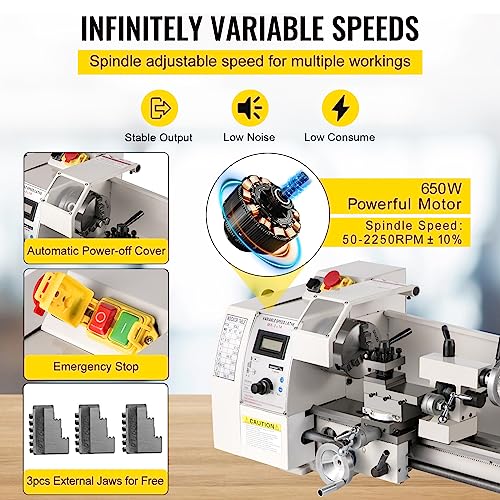
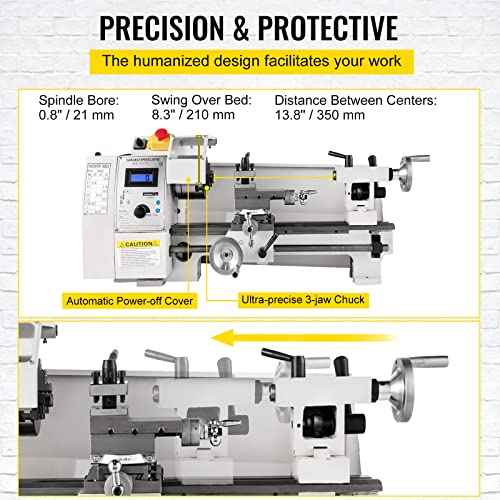
If you’re just getting into metal lathes, this 8×14 model is one of the more forgiving entry points. The extra swing over bed, 8.3 inches, gives you room to work on slightly larger parts than most mini lathes allow, which is a real plus when turning things like pulleys or flanges. It runs on a 650W motor with variable speed, and while it doesn’t have a digital display, the infinitely variable control lets you dial in the right RPM for aluminum or mild steel.
Owners praise its rigidity for the price, though some note minor backlash in the gears over time. Compared to the 7×14 VEVOR, it’s a better pick if you’re frequently working on bigger blanks.
Product photos

VEVOR 7″ x 14″ Digital Display Lathe

Strengths
- Digital RPM display
- Metal gears
- Good threading range
Trade-offs
- Limited swing capacity
- Noisy under load
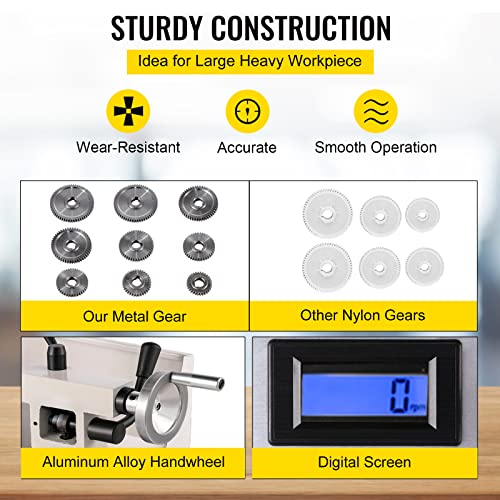
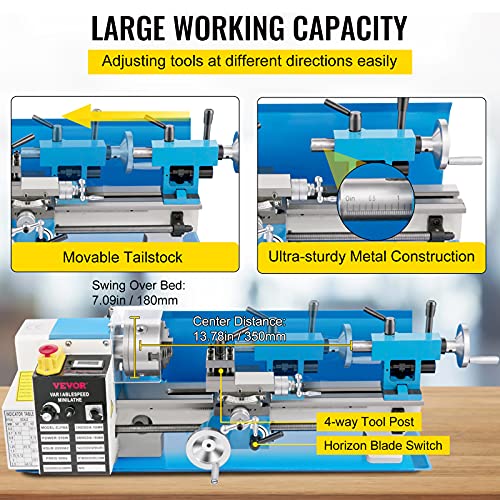
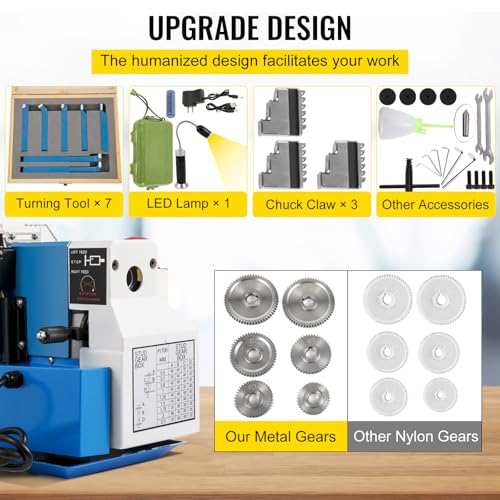
This 7×14 VEVOR lathe hits a sweet spot for hobbyists who want digital feedback without stepping into pro-tier pricing. The digital speed display is a real upgrade over analog dials, and owners consistently report it helps maintain consistent RPMs during delicate cuts. With a 550W motor and metal gears, it’s sturdier than budget nylon-gear models, though not quite as robust as cast iron builds.
It’s clearly designed for metal turning, with a solid 3-jaw chuck and threading capabilities, but I’d hesitate to push it hard on tougher alloys. Compared to the larger 8×14 VEVOR, it’s less forgiving on long stock, but more than capable for small shafts, bushings, or repair work.
Product photos

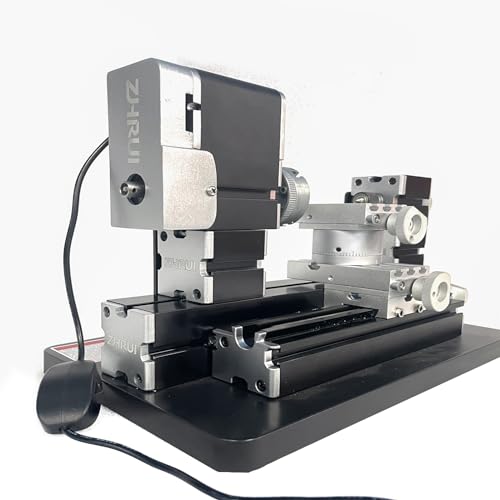
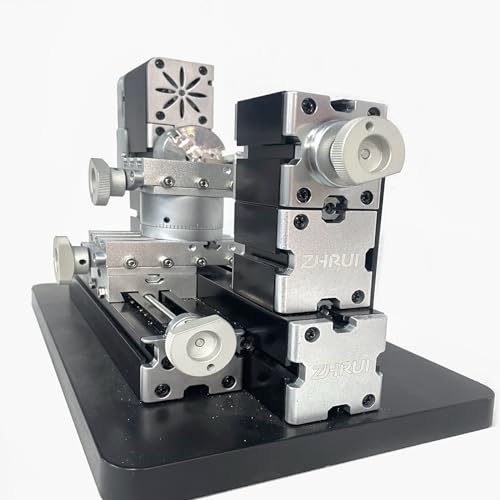
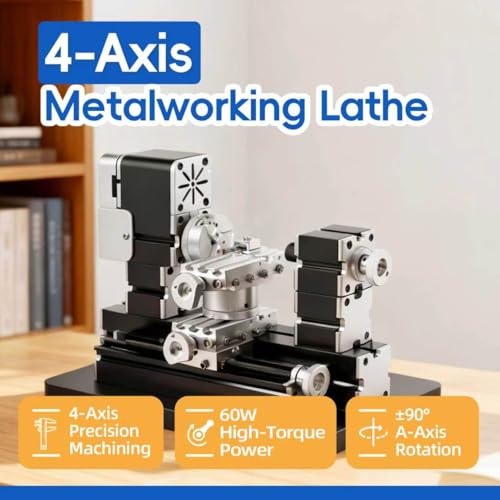
ZHRUI 60W 4-Axis Precision Micro Lathe
Strengths
- Full metal build
- Integrated crash guard
- Quick indexer with display
Trade-offs
- Limited power
- Small working diameter
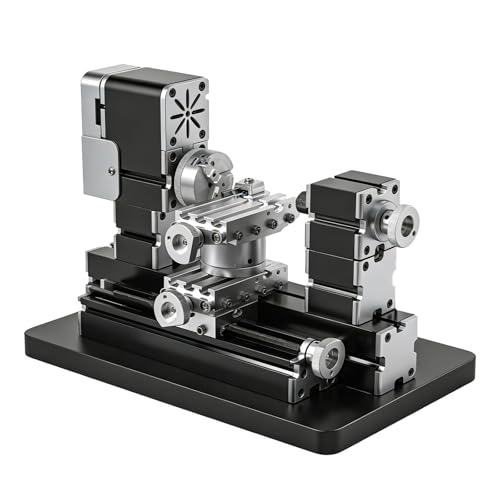
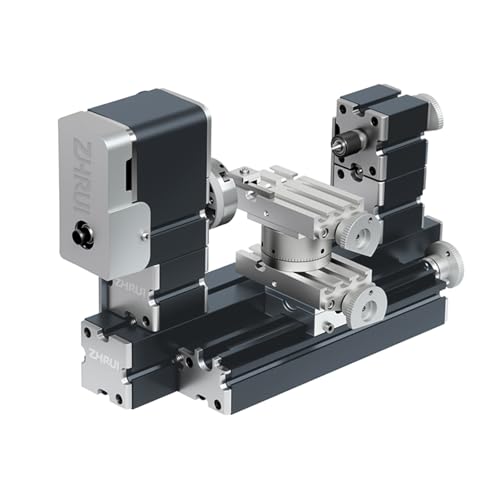
ZHRUI built this lathe with safety and longevity in mind. The all-metal construction, no plastic anywhere, is a big win, and the crash guard between tool and chuck is something more lathes should copy. With 0.02mm electroplated scales and anti-slip square nuts, it’s clearly engineered for repeatable, vibration-free cuts.
It shares DNA with the AcmeFlare 4-axis model, but the quick indexer with digital display gives it a slight edge in usability. At 12,000 RPM, it’s better for light milling and facing than heavy stock removal. Reviewers appreciate the low-voltage 12V design, especially in school settings.
Product photos
How We Evaluated mini lathes
As someone who’s spent years around workshops and power tools, I know a good lathe needs to balance power, precision, and build quality. Rather than a hands-on lab test, this research-led comparison focused on detailed specifications, owner reviews from multiple sources, and reputable expert assessments. I weighed each lathe against clear criteria – capacity, motor strength, accuracy, and available features – to build a ranking.
For mini lathes specifically, the most important factors are spindle speed control and build rigidity. Consistent speeds are crucial for clean cuts, especially with different materials. Equally important is a solid frame; vibration ruins precision work. I also prioritized safety features, as these machines can be unforgiving if not handled carefully. These three elements decided a lathe’s place on our list.
Specifications reliably reveal motor power, swing capacity, and speed ranges. However, I paid close attention to owner feedback regarding long-term durability and actual machining accuracy. Reputable sources like woodworking and metalworking forums helped gauge real-world performance and identify potential weaknesses. If you’re looking for more options, you can find a more detailed look at numerous models in our guide to mini metal lathes.
Choosing The Right mini lathes
Choosing the right mini lathe depends heavily on what you intend to make and your skill level. There’s a huge range available, from simple hobby models to surprisingly capable machines.
A good mini lathe balances rigidity, precision, and power for its size and price point. Look for a cast iron bed, smooth spindle operation with a sufficient speed range, and a chuck that securely holds your workpieces. Pay attention to available accessories and the overall build quality to ensure longevity and accuracy.
Power and Material Compatibility
One of the first things I consider when looking at mini lathes is the power of the motor and what materials it can realistically handle. A small 36W motor might be fine for softwoods or plastics, but if you’re planning on working with aluminum or brass, you’ll want something with more muscle – ideally 600W or higher. Don’t overestimate the capabilities of a smaller motor; it will struggle, overheat, and ultimately shorten the lathe’s lifespan. Remember, the type of material dictates the necessary speed, with harder materials generally requiring slower speeds.
Build Quality and Rigidity
Rigidity is absolutely critical for precision work. A wobbly lathe will produce inaccurate cuts and a frustrating experience. Look for models constructed with cast iron, as it dampens vibrations far better than aluminum or plastic. The AcmeFlare and VEVOR models, for example, emphasize all-metal construction, which is a very positive sign. Here’s what I look for in build quality:
- Robust base: A heavier lathe stays put during operation.
- Solid handwheels: Metal handwheels feel better and offer more precise control.
- Dovetail slides: These provide a more stable and accurate movement than simpler designs.
A good rule of thumb: if the base feels light or flimsy, the rest of the lathe probably isn’t much better.
Features and Usability
Beyond the core mechanics, consider features that will enhance your workflow. Digital speed controls, like those found on some VEVOR models, are exceptionally convenient. A quick-change tool post saves a lot of time during tool changes. If you’re interested in more complex projects, look at models with multiple axes, such as the AcmeFlare 4-Axis lathe. For those starting out, or looking for a budget-friendly option, you might find that simpler models, like those from WEN, offer a good entry point. If you’re leaning towards woodturning, exploring compact wood lathes will give you a focused selection.
Mini Lathes Compared
Here’s a comparison of key specifications for several mini lathes to help you choose the right one for your needs.
| Product Title | Swing Over Bed | Distance Between Centers | Motor Power | Max. RPM | Axes |
|---|---|---|---|---|---|
| VEVOR 7” x 16” | 7″ (178mm) | 16″ (406mm) | 800W | 2500 | N/A |
| AcmeFlare 4-Axis | 150mm (5.9″) | N/A | 60W | 12,000 | X, Z1, Z, A |
| AcmeFlare 36W | 50mm (2″) | 150mm (5.9″) | 36W | 20,000 | N/A |
| UOKRR 10″ x 18″ | 10″ (254mm) | 18″ (457mm) | 1/2 HP | 3200 | N/A |
| WEN LA3421 | 8″ (203mm) | 13″ (330mm) | 3.2A | 3200 | N/A |
| VEVOR 8″ x 14″ | 8.3″ (210mm) | 14″ (350mm) | 600W | 2250 | N/A |
| VEVOR 7″ x 14″ | 7.09″ (180mm) | 13.78″ (350mm) | 550W | 2500 | N/A |
| ZHRUI 60W 4-Axis | 150mm (5.9″) | 150mm (5.9″) | 60W | N/A | X, Z, Z1, A |
Frequently Asked Questions
What spindle speed is best for most mini lathe projects?
Generally, 1500-2000 RPM is a good starting point for many materials with a mini lathe. Lower speeds are needed for harder metals like steel, while softer materials like aluminum or plastics can handle higher speeds, but always prioritize controlled cutting over speed.
Are mini lathes accurate enough for precision work?
While not as accurate as larger industrial lathes, a well-built mini lathe can achieve surprisingly good precision. Look for features like dovetail slides and a sturdy, cast iron bed to minimize vibration and improve accuracy, especially if you are considering mini lathe metal models.
What’s the difference between a 2-axis and a 4-axis mini lathe?
A 2-axis lathe moves the cutting tool in two directions (X and Z), allowing for turning and facing operations. A 4-axis lathe adds two more axes (often A and sometimes another Z), enabling more complex cuts and shapes, like drilling angled holes or creating threads.
What power level is sufficient for working with aluminum?
For aluminum, I recommend a motor of at least 550W to avoid stalling or overheating. While you can machine aluminum with a smaller motor, it will require slower feed rates and lighter cuts, increasing machining time and potentially reducing the lathe’s lifespan.
How much space do I really need for a mini lathe?
Most mini lathes require a dedicated workbench space of at least 3ft x 4ft. Consider additional room for tool storage, material handling, and comfortable operation, and remember to account for the lathe’s weight when choosing a sturdy workbench.
The Bottom Line
Buying a mini lathe often comes down to balancing how much control you want with how much effort you’re willing to put into setup and operation. For most hobbyists and those new to machining, the VEVOR 7” x 16” strikes the best overall balance. It offers substantial power, a good swing capacity, and a reputation for solid construction without breaking the bank.
If you have very specific needs, there are other excellent options. For those on a tight budget, the WEN LA3421 provides a capable entry point, while the AcmeFlare 4-Axis is ideal for projects demanding multi-axis work. And for those seeking more compact benchtop lathes, our broader guide offers even more choices.
Ultimately, remember that specifications don’t tell the whole story. Prioritize a rigid build, smooth operation, and a motor that’s appropriately sized for the materials you plan to work with. Those fundamentals will deliver more satisfaction – and better results – than chasing the highest RPM or the lowest price.
