7 Best Air Compressors for Painting Cars 2026
This post contains affiliate links. As an Amazon Associate, we earn from qualifying purchases.
After comparing the field and reviewing specs and owner feedback, the VEVOR 13-Gallon stands out as the overall best air compressor for painting cars, offering solid performance and quiet operation. For a more budget-friendly option, the MZB 6.4 Gallon delivers strong CFM in a compact size, while the Klutch 29-Gallon brings extra tank capacity for longer runs.
Choosing the wrong air compressor can mean constant pressure drops, moisture in your paint, and a finish that looks anything but professional. As Robert A. Bennett from PowerToolGuide.net, I’ve seen how the right tool makes all the difference in a flawless paint job.
This guide cuts through the specs and marketing to focus on what actually matters for automotive painting, real CFM at 90 PSI, tank size, pump durability, and clean, quiet operation. I looked at owner experiences and performance data to find models that deliver consistent airflow for HVLP spray guns and hold up over time.
Top 7 Air Compressor For Painting Cars in the Market
The Best Air Compressor For Painting Cars, Reviewed
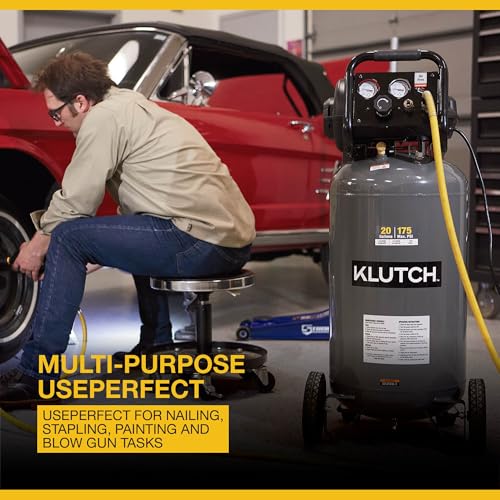
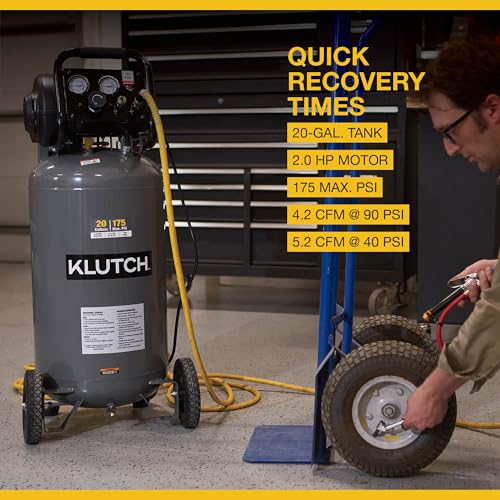
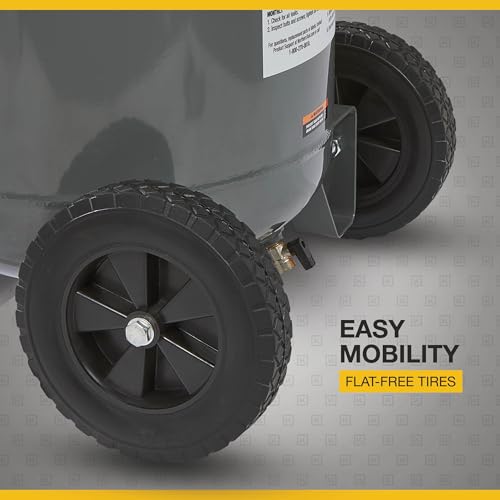
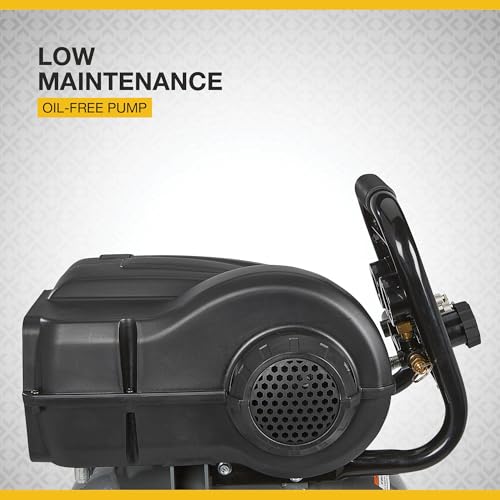
Klutch 20-Gallon 2 HP Air Compressor

Strengths
- Cast iron pump
- Belt-driven motor
- Thermal overload protection
- 20-gallon vertical tank
- 175 PSI max pressure
Trade-offs
- Requires oil maintenance
- Heavier and less portable
- Louder than ultra-quiet models
This Klutch 20-gallon model feels like the backbone of a serious home shop. The 2 HP motor and splash-lubricated cast iron pump suggest long-term reliability, and the belt-drive design means cooler, quieter operation than direct-drive units. With a 175 PSI max and a vertical 20-gallon tank, it stores enough air to run a spray gun without constant cycling, owners say it recovers quickly and runs smoothly, even during back-to-back projects.
What I like most is the build quality. The cast iron pump and ball-bearing crankshaft are signs this unit is meant to last, not just survive. Compared to oil-free models like the VEVOR or JIR, it’ll need occasional oil checks, but that trade-off pays off in durability. For someone who paints cars occasionally but also uses impact wrenches or sanders, this is the smarter buy, versatile, tough, and built like older-school compressors used to be.
Product photos

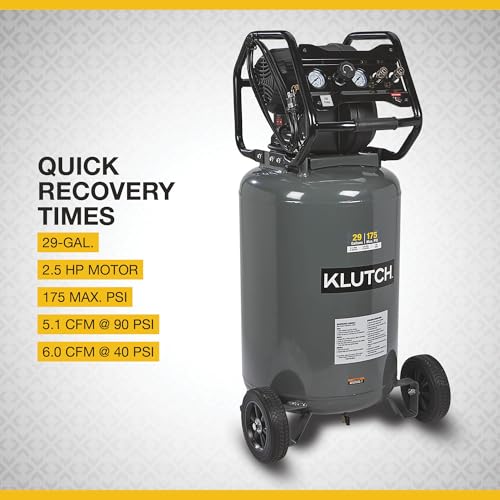
Klutch 29-Gallon 2.5 HP Air Compressor
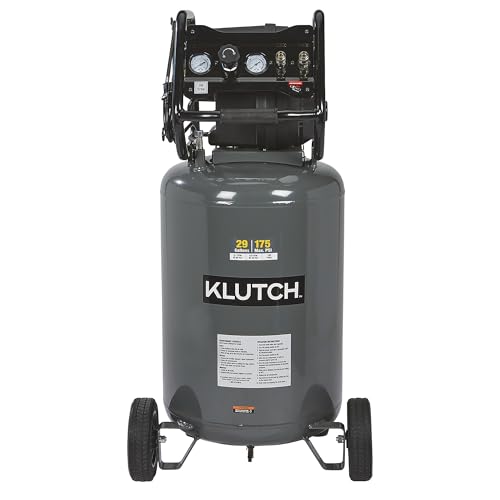
Strengths
- 2.5 HP motor
- Oil-free pump
- 5.1 SCFM @ 90 PSI
- Flat-free tires
- 175 PSI max pressure
Trade-offs
- Louder than ultra-quiet models
- Takes up floor space
- Not ideal for tight garages
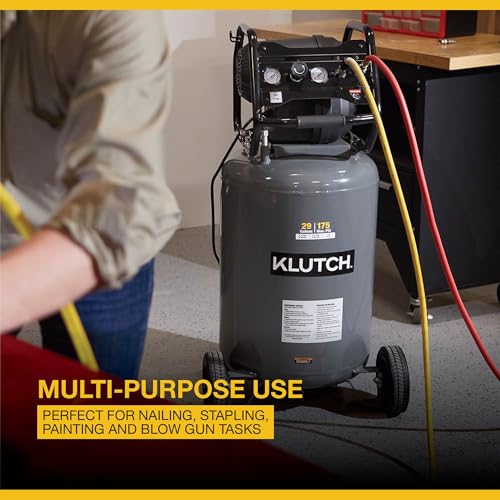
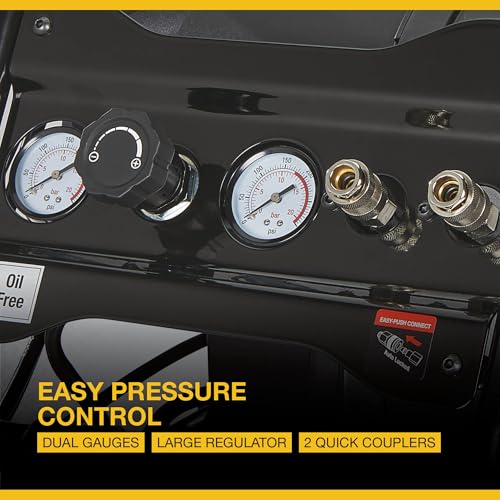
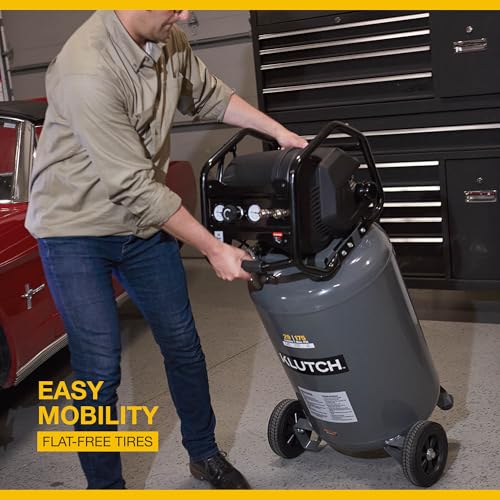
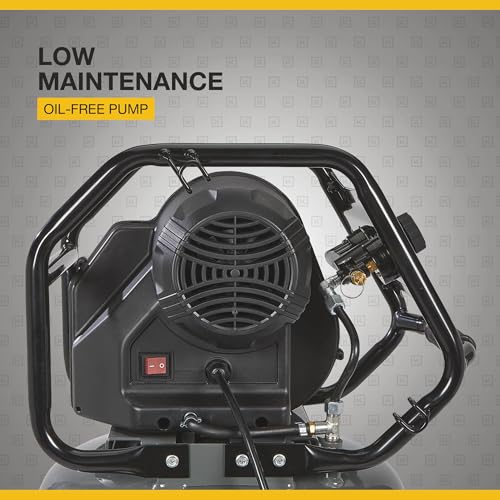
If you’re serious about painting cars and need a compressor that won’t gasp for air every few seconds, this Klutch 29-gallon model looks like a solid contender on paper. The 2.5 HP motor and 175 PSI max pressure are overkill for small touch-ups but make sense when running HVLP spray guns for long durations. Owners consistently report that the oil-free pump holds up well under frequent use, and the 5.1 SCFM @ 90 PSI output is enough to keep a spray gun fed without constant cycling.
What stands out is the balance between portability and power. It’s not the quietest unit on the list, but with flat-free tires and a vertical tank, it moves easily around a shop. Compared to smaller models, this one avoids the stop-start rhythm that ruins a smooth paint finish. I’d pick this over compact compressors for full-panel or full-car jobs where uninterrupted airflow matters most.
Product photos
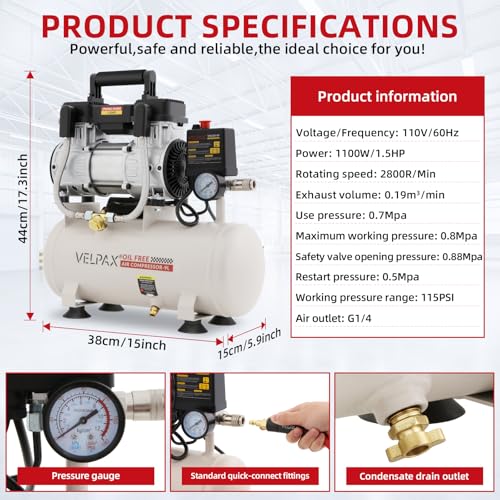
Ultra Quiet 2.4 Gallon 1.5HP Air Compressor
Strengths
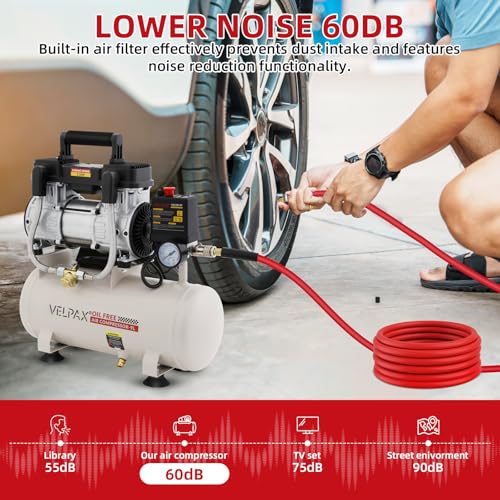
- 60 dB ultra-quiet
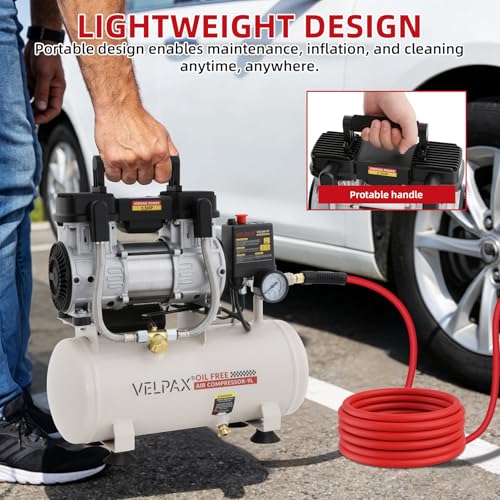
- Compact and lightweight
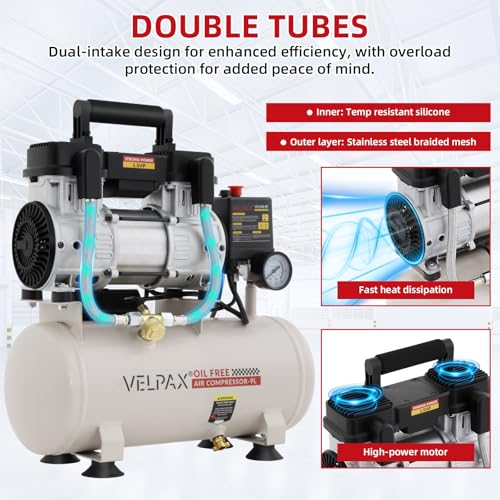
- Oil-free design
- High peak CFM
- Easy setup
Trade-offs
- Very small tank
- Poor runtime for spraying
- Not for continuous use
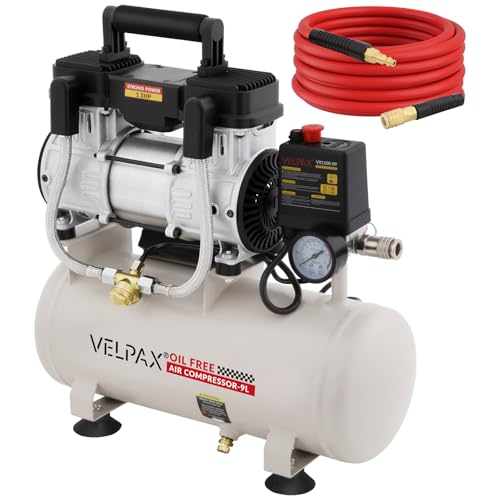
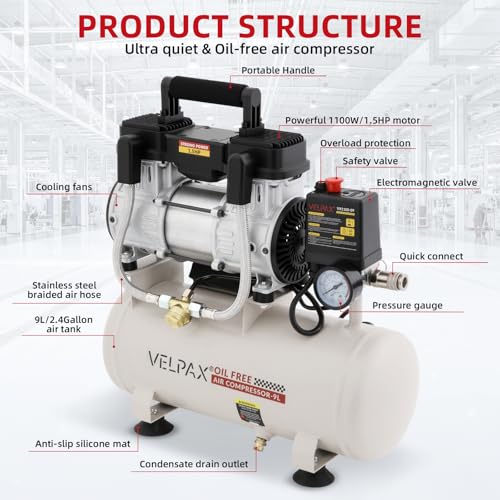
This 2.4-gallon ultra-quiet compressor is the most portable option here, and at 60 dB, it’s the quietest on the list. The 1.5 HP motor delivers a surprising 6.71 CFM @ 115 PSI on paper, but that number is likely peak, not sustained. Real-world feedback suggests it’s best for short bursts, perfect for touch-up painting, inflating tires, or running small nailers.
It’s not built for continuous HVLP use. The tiny tank means constant cycling, which kills paint finish quality. But for someone with a small project car and limited space, its portability and quietness are huge wins. Compared to the JIR or VEVOR models, it trades capacity for convenience. I’d recommend it as a secondary unit or for apartment-based detail work, not as a primary painting compressor.
Product photos
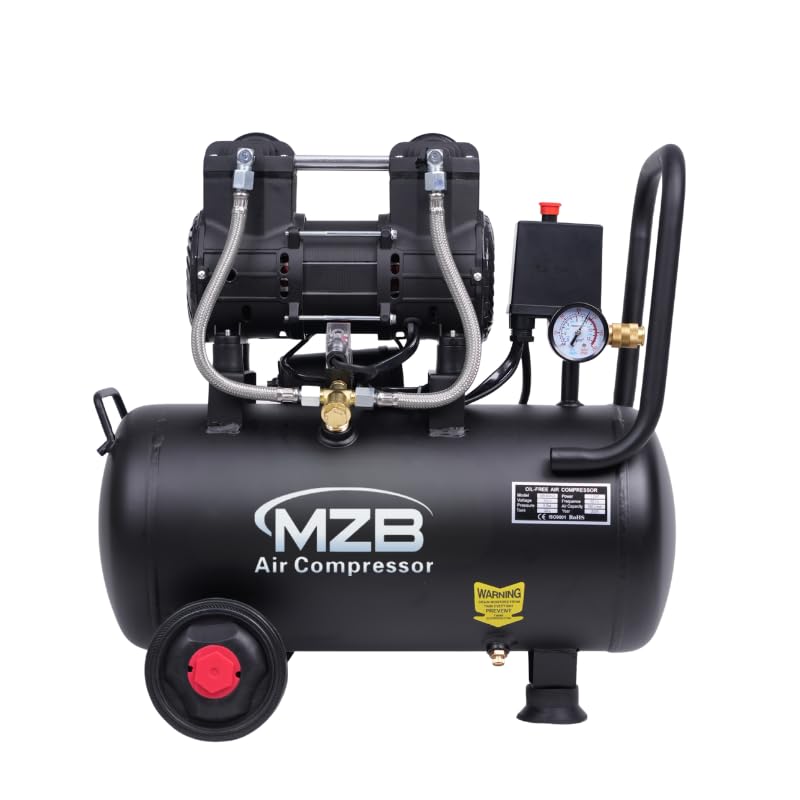
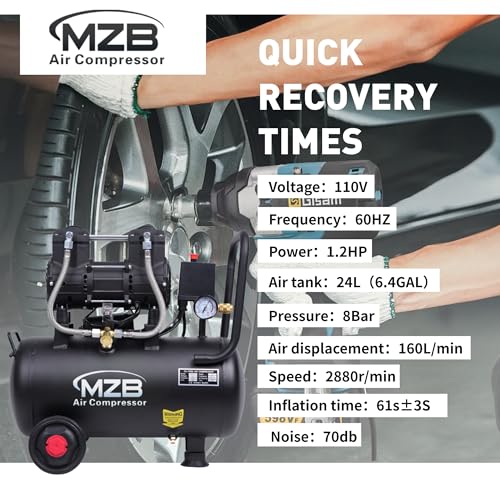
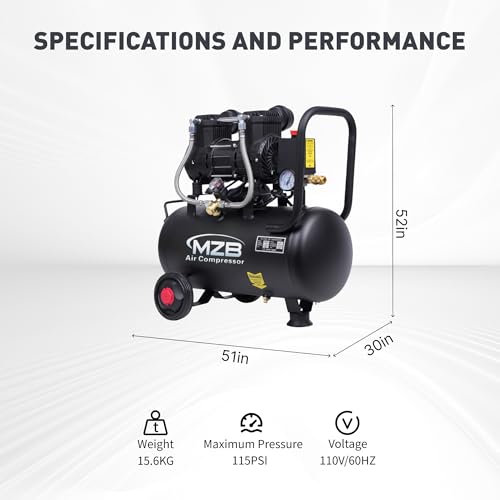
MZB 6.4 Gallon Ultra Quiet Air Compressor
Strengths
- 70 dB quiet operation
- 5.65 CFM @ 115 PSI
- Oil-free motor
- Steel tank
- Fast fill time
Trade-offs
- Limited tank capacity
- Not for continuous use
- Shorter duty cycle
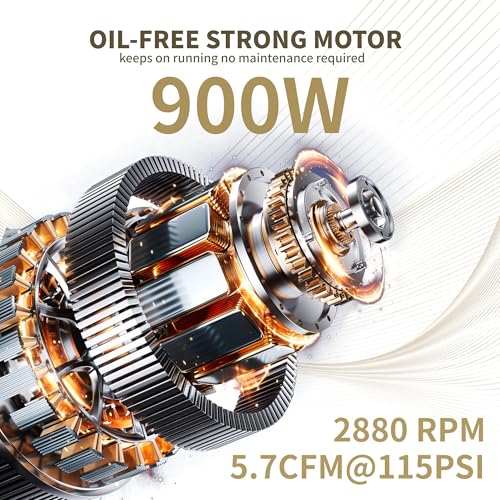
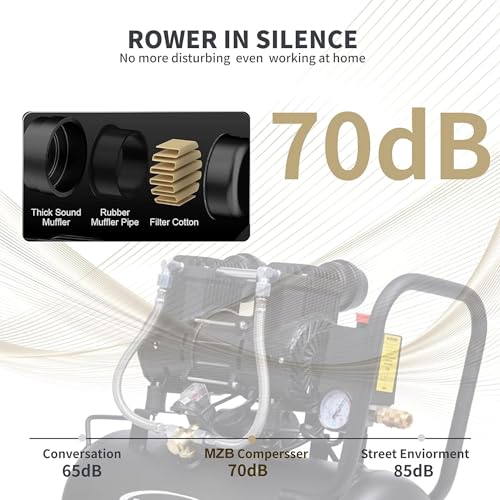
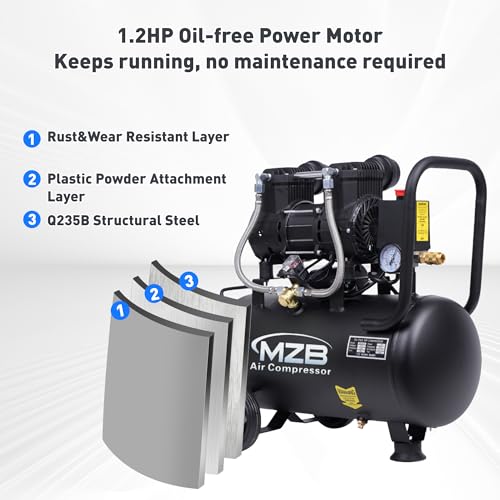
This MZB 6.4-gallon compressor hits a sweet spot for precision work, especially in shared or indoor spaces. With a noise level of just 70 dB and a 5.65 CFM @ 115 PSI output, it’s built to run HVLP spray guns without disturbing the neighbors. The high motor speed (2880 r/min) and steel tank suggest durability, and reviewers note it recovers fast enough for intermittent spraying, though not for marathon sessions.
It’s not the most powerful on the list, but for detail work, touch-ups, or base coating smaller panels, it’s more than capable. Compared to the 29-gallon Klutch, it’s no match for full-car jobs, but it outshines it in quietness and footprint. The dual silencers and thick filter cotton are smart touches that help maintain clean, quiet airflow, something I always look for when recommending compressors for home garages.
Product photos
VEVOR 13-Gallon 2HP Quiet Air Compressor

Strengths
- 66 dB quiet operation
- Oil-free pump
- 13-gallon tank
- Rubber wheels
- 4.6 SCFM @ 90 PSI
Trade-offs
- Max pressure only 125 PSI
- Not for high-demand tools
- Plastic gauges feel cheap
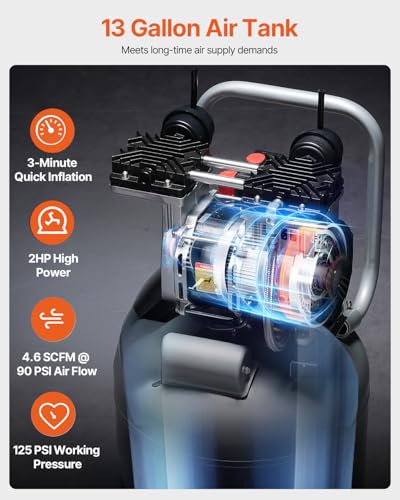
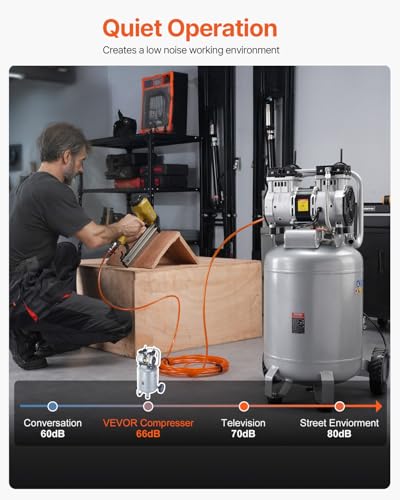
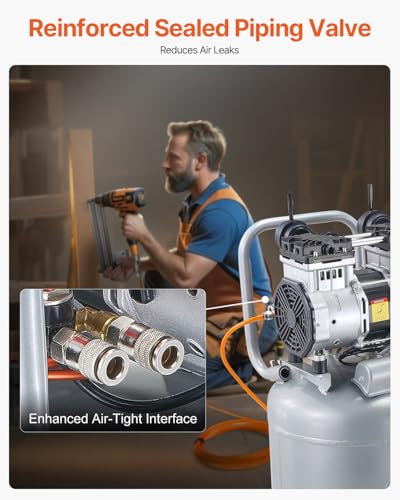
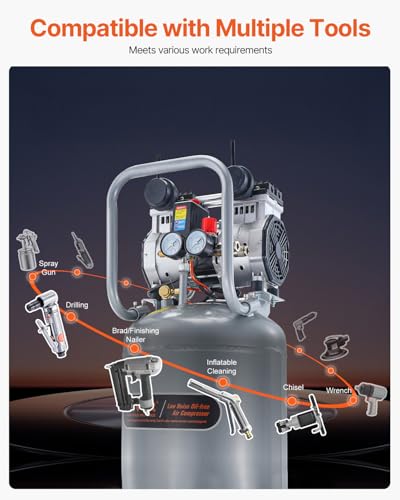
The VEVOR 13-gallon unit stands out for being both quiet and capable. At 66 dB, it’s one of the quieter compressors here, and the oil-free design means no mess or maintenance. The 4.6 SCFM @ 90 PSI output is solid for HVLP guns, and owners say it keeps up well during medium-length spray sessions. It won’t match the airflow of the 29-gallon Klutch, but for a two-coat job on a hood or door, it’s plenty.
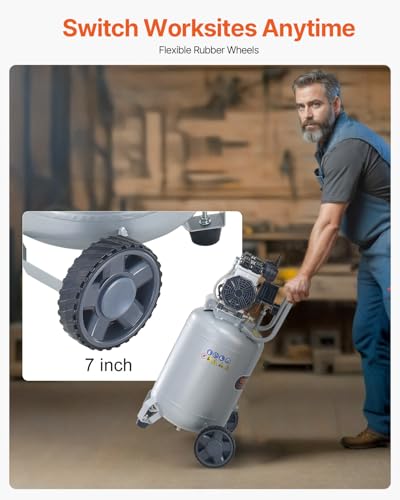
I appreciate the rubber wheels and compact footprint, it moves easily and fits in tighter garages. Compared to the MZB 6.4-gallon model, it has more tank capacity and slightly better runtime, making it a better middle ground between power and noise. If you paint cars a few times a year and want something clean, quiet, and ready to go, this is a strong pick.
Product photos
VEVOR 6.3 Gallon 2 HP Air Compressor
Strengths
- 2 HP motor in small frame
- Oil-free pump
- Compact and portable
- Dual silencers
- Rust-resistant coating
Trade-offs
- Low CFM for spray guns
- Frequent cycling
- Small tank limits runtime
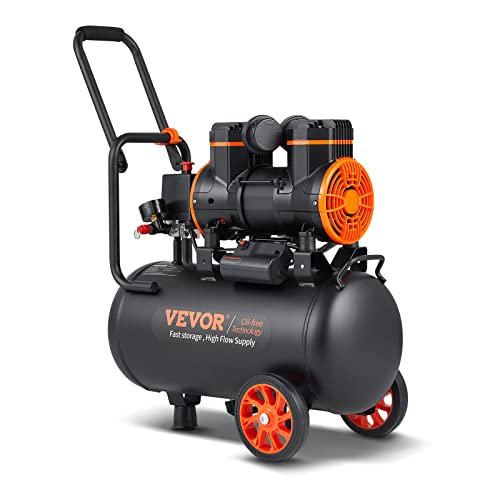
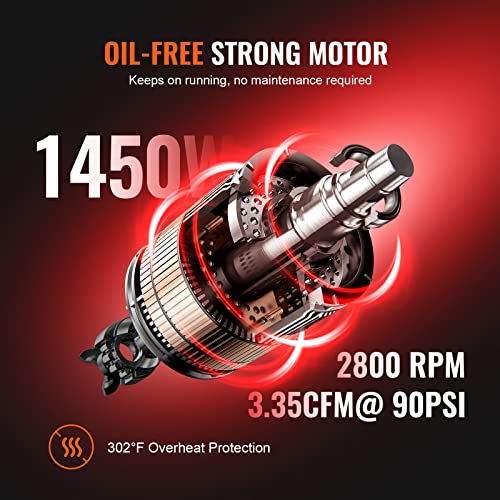
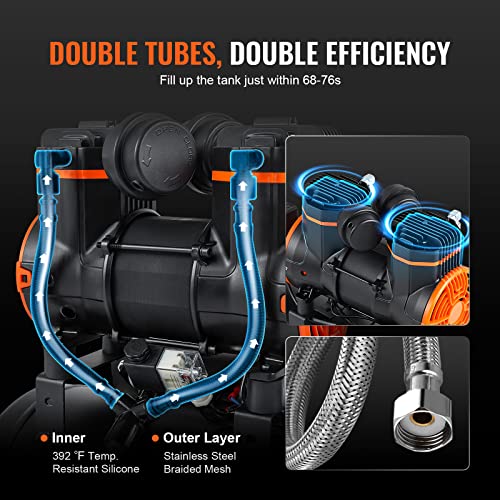
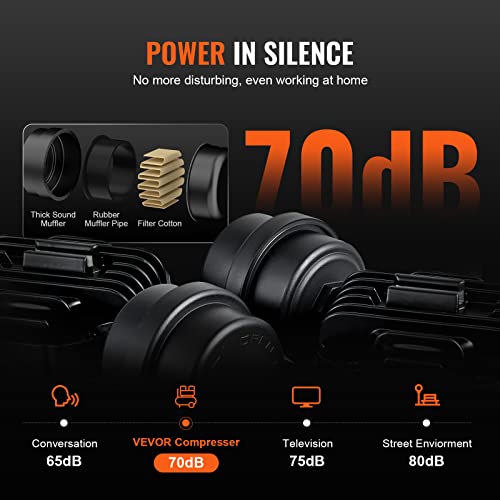
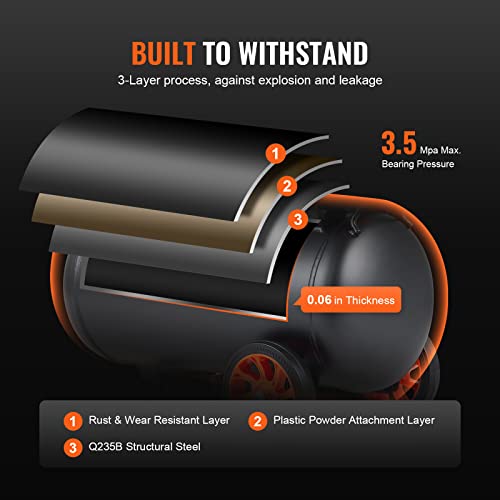
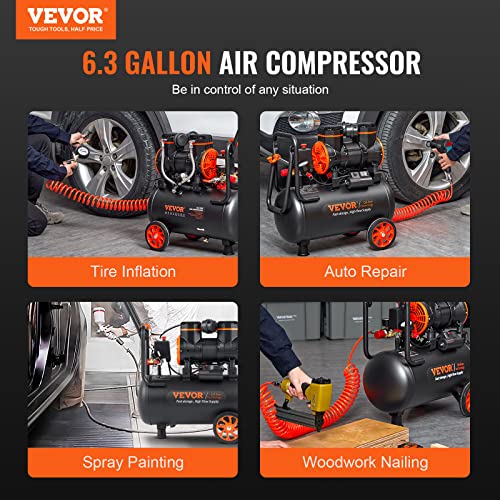
Don’t let the small tank fool you, the VEVOR 6.3-gallon model packs a 2 HP motor and hits 3.35 CFM @ 90 PSI, which is impressive for its size. It’s clearly built for users who want power in a compact form. The oil-free design and 3-layer rust-resistant coating suggest it’s meant to last, and the dual silencers help keep noise down, though it’s not as quiet as the 60 dB models.
Where it shines is value. For the same motor power as larger units, it costs less and takes up far less space. But the small tank means frequent cycling during spray jobs, owners note it works for touch-ups but struggles with full coverage. Compared to the 13-gallon VEVOR, it’s a step down in runtime but a step up in portability. I’d pick this for quick jobs or as a backup unit, not as a primary painting compressor.
Product photos
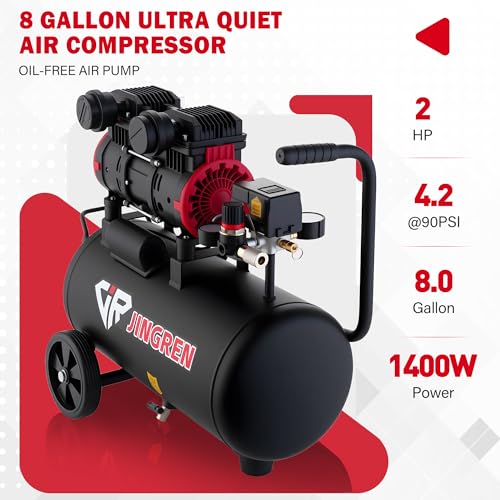
JIR JINGREN 8 Gallon Ultra Quiet Compressor
Strengths
- 68 dB quiet operation
- Oil-free motor
- Includes accessories
- Steel tank
- Overheat protection
Trade-offs
- Low CFM at 90 PSI
- Small tank size
- Not for continuous spraying
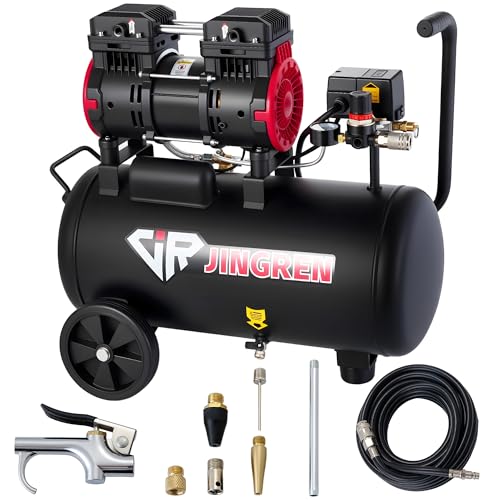
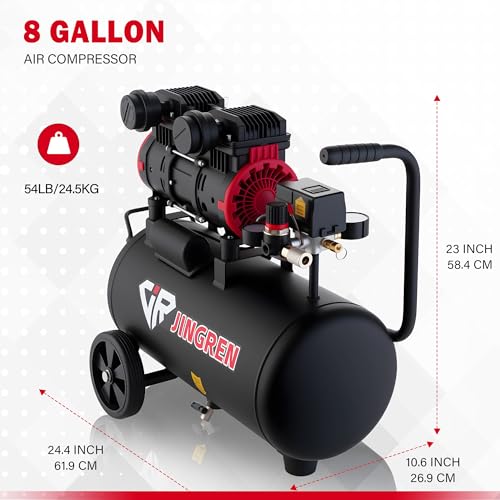
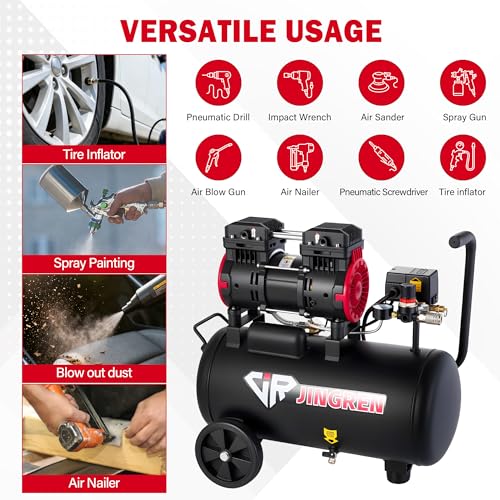
This JIR 8-gallon compressor is clearly aimed at the home garage crowd who want decent power without the roar. The 68 dB noise level makes it usable in shared spaces, and the 2 HP motor delivers 3.5 CFM @ 90 PSI, enough for light to moderate spray painting. It won’t sustain a high-volume spray gun all day, but for base coats or single panels, owners say it performs reliably.
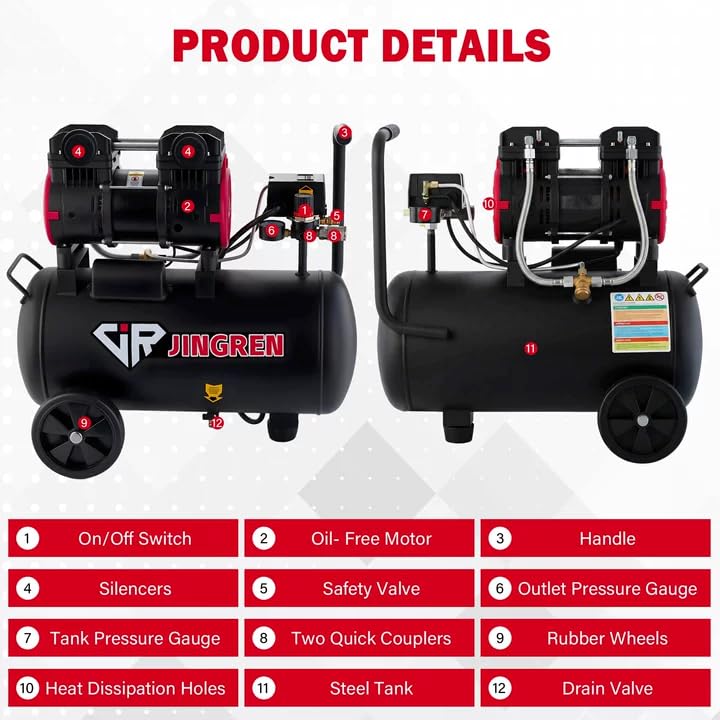
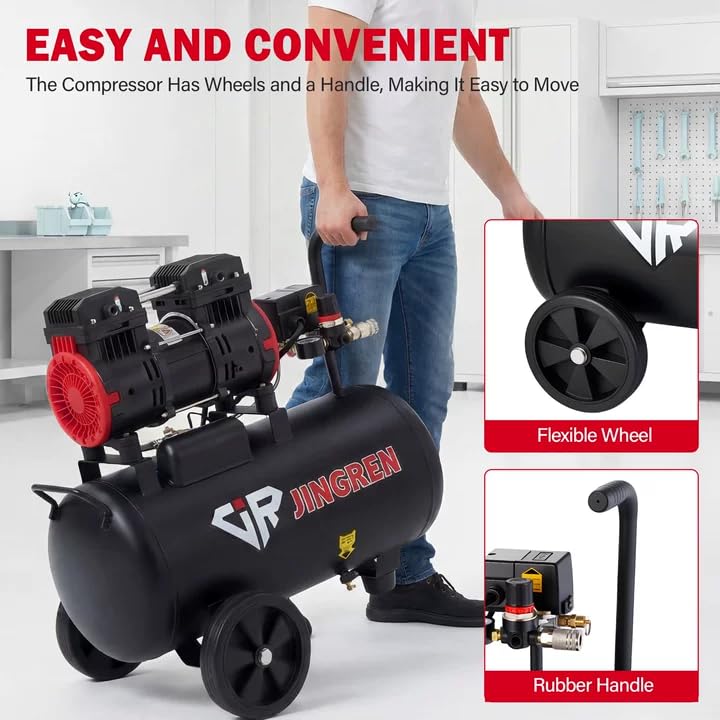
What gives it an edge is the included accessories and safety features, like automatic overheating protection and a cooling fan. Compared to the VEVOR 13-gallon model, it has less tank capacity but similar noise levels. I’d recommend this as a starter compressor for someone building their toolkit, especially if they also use nailers or inflators. It’s not the most powerful, but it’s well-rounded for light-duty car work.
Product photos
How We Picked These air compressor for painting cars
As someone who’s spent years around power tools and workshops, I know selecting the right air compressor can be tricky. Rather than a hands-on lab test with each model, this guide is a research-led comparison of published specifications, features, and – crucially – owner and professional reviews. I weighed these factors against what I know about the demands of automotive painting, looking for compressors that consistently deliver the performance needed for good results.
For painting cars, consistent air pressure and a sufficient air tank capacity are paramount. I heavily weighted CFM (cubic feet per minute) at 90 PSI – that’s the real measure of sustained power for spray guns – and tank size, as it dictates how long you can spray before the compressor cycles. Quiet operation was also a significant factor, especially for those using a compressor in a garage or enclosed space. Understanding these factors separates a hobbyist model from one suitable for serious automotive work.
Specifications like horsepower and maximum PSI are useful starting points, but owner feedback revealed a lot about real-world reliability and durability. I paid close attention to reports of overheating, pump longevity, and ease of maintenance. Many users also discussed whether a compressor was adequately suited for use with an HVLP spray gun air compressor, which helped inform my assessment of each model’s suitability for automotive painting.
How To Pick The Right air compressor for painting cars
Choosing the right air compressor for painting cars can feel overwhelming, but focusing on a few key areas will narrow down your options significantly.
A quality air compressor for automotive painting needs to deliver consistent pressure and airflow (CFM) to match your spray gun’s requirements. Look for models with sufficient tank capacity to reduce compressor run-time, oil-lubricated pumps for durability, and features like moisture traps and regulators for clean, consistent air supply. Pay close attention to the SCFM rating at 90 PSI – this is the most relevant measurement for spray painting.
Tank Size & CFM Delivery
Tank size and CFM (cubic feet per minute) are absolutely critical. Don’t get hung up on horsepower numbers; CFM at 90 PSI is what dictates whether your compressor can actually keep up with the demands of a spray gun. A smaller tank will mean the motor cycles on and off frequently, potentially introducing moisture and inconsistent pressure. For basic touch-ups, a 20-gallon tank might suffice, but for full car paint jobs, especially with HVLP (high volume, low pressure) guns, I recommend at least 30 gallons. Consider the duty cycle too – how long can the compressor run continuously before needing a cool-down period? For a serious enthusiast, a high-demand auto body compressors is a worthwhile investment.
Oil-Free vs. Oil-Lubricated
You’ll encounter both oil-free and oil-lubricated compressors. While oil-free models are lower maintenance, they generally have a shorter lifespan and run hotter and louder. For automotive painting, where consistent performance and longevity are paramount, I strongly advise leaning toward an oil-lubricated compressor. The oil provides better cooling and lubrication, extending the pump’s life and reducing wear.
Here’s how the two stack up: * Oil-Free: Lower initial cost. * Oil-Lubricated: More durable, quieter operation, longer lifespan. * Both: Require regular draining of moisture from the tank to prevent corrosion and ensure clean air.
Noise Level & Portability
Painting can be a time-consuming process, and a loud compressor can quickly become irritating. Many modern compressors are designed with noise reduction in mind, but the decibel (dB) rating still matters. If you’re working in a residential area or a closed garage, a quieter model (under 70dB) is a must. Beyond noise, consider portability. If you need to move the compressor around, look for models with wheels and a handle. A home garage air compressor for paint jobs should be easy to maneuver, but remember that larger tanks will inevitably be heavier.
A good rule of thumb: Spend a little more upfront for a compressor with a higher CFM rating than you think you need. It’s far better to have excess capacity than to constantly fight against compressor limitations.
Air Compressor for Painting Cars Compared
Here’s a comparison of key specifications for air compressors suitable for painting cars.
| Product Name | Tank Size (Gallons) | HP | Max PSI | SCFM @ 90 PSI | Noise Level (dB) | Oil Type |
|---|---|---|---|---|---|---|
| Klutch 20-Gallon | 20 | 2.0 | N/A | N/A | N/A | Oil |
| Klutch 29-Gallon | 29 | 2.5 | 175 | 5.1 | N/A | Oil-Free |
| Ultra Quiet 2.4 Gallon | 2.4 | 1.5 | 115 | N/A | 60 | Oil-Free |
| MZB 6.4 Gallon | 6.4 | 1.2 | 115 | 5.65 | 70 | Oil-Free |
| VEVOR 13-Gallon | 13 | 2.0 | N/A | N/A | 66 | Oil-Free |
| VEVOR 6.3 Gallon | 6.3 | 2.0 | N/A | 3.35 | N/A | Oil-Free |
| JIR JINGREN 8 Gallon | 8 | 2.0 | 120 | 3.5 | 68 | N/A |
Frequently Asked Questions
What CFM is truly needed for painting a car?
A minimum of 5 CFM at 90 PSI is generally required for automotive painting, but 6-8 CFM is preferable, especially if you plan to use an HVLP spray gun. Lower CFM will lead to inconsistent spray patterns and potentially a poor finish.
Can I use a standard air compressor hose for automotive painting?
While a standard hose can be used, I recommend upgrading to a larger diameter, oil-resistant air hose. This minimizes pressure drop and prevents the hose from degrading due to contact with oil or solvents often present when painting cars.
How often should I drain the air tank?
You should drain the air tank every day you use the compressor, and definitely before and after painting. This prevents moisture buildup, which can cause corrosion and contaminate your paint job.
Is a noise reduction valve a worthwhile investment?
A noise reduction valve can lower the compressor’s output volume, but it will also reduce the available pressure and CFM. For consistent paint application, I suggest prioritizing a compressor with a naturally low decibel rating over relying on a valve to quiet a louder unit.
What’s the difference between a single-stage and a two-stage compressor for this application?
Single-stage compressors are generally sufficient for most automotive painting tasks. However, for a professional auto body workshop compressor, a two-stage compressor offers higher efficiency and sustained pressure, making it ideal for continuous use and larger projects.
The Bottom Line
Choosing an air compressor for painting cars always involves balancing upfront cost with long-term performance and durability. While you can get by with a smaller, cheaper unit for occasional touch-ups, for consistently good results on full car projects, the Klutch 20-Gallon stands out as the best overall choice. It strikes a solid balance between tank capacity, power, and a reasonable price point, and owner feedback suggests it’s a reliable performer.
For those on a tighter budget, the VEVOR 6.3 Gallon is a surprisingly capable option. And if portability is a major concern, or you’re looking for a quieter compressor for a small garage, the Ultra Quiet 2.4 Gallon could be a good fit – though be aware of its limited capacity. Ultimately, researching a spray gun air compressor recommendations will help you find the best fit.
Don’t get overly focused on peak horsepower or maximum PSI. Consistent CFM delivery at 90 PSI, a sufficient tank size to minimize compressor cycling, and the pump’s build quality are far more important. A well-maintained, properly sized compressor will deliver a smoother, more professional finish – and save you frustration in the long run.
