
8 Best Hand Saws for Cutting Wood 2026
This post contains affiliate links. As an Amazon Associate, we earn from qualifying purchases.
The RUITOOL Japanese Pull Saw is the best overall for precision and clean cuts, thanks to its high-carbon SK5 steel and dual-edge design. For a budget-friendly, general-purpose option, the HAUTMEC 14 Inch Hand Saw delivers solid performance with its sturdy 65Mn blade and ergonomic grip. If you need something longer for coarse cuts, the JORGENSEN 20 Inch Pro Hand Saw offers reach and comfort.
Most people don’t realize how much difference a good hand saw makes until they’re fighting a dull, flimsy blade that wanders off track. A poor saw leads to ragged edges, wasted material, and frustration, especially on detailed work or tough hardwoods.
As Robert A. Bennett from PowerToolGuide.net, I’ve spent over 15 years evaluating tools based on real-world performance, specs, and user feedback. This guide cuts through the noise, focusing on steel quality, tooth design, and comfort to help you pick a saw that actually performs, whether you’re building, trimming, or tackling yard work.
Top 8 Hand Saw For Cutting Woods in the Market
The Best Hand Saw For Cutting Woods, Reviewed
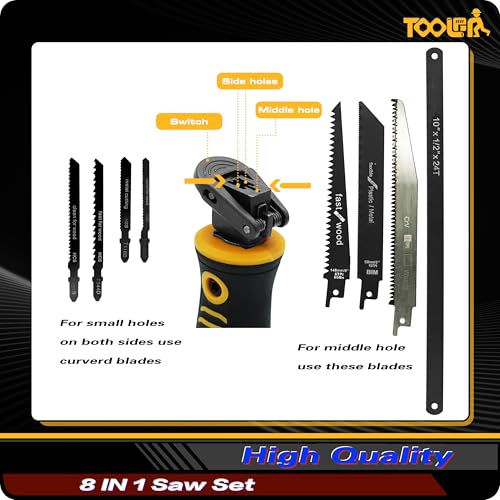
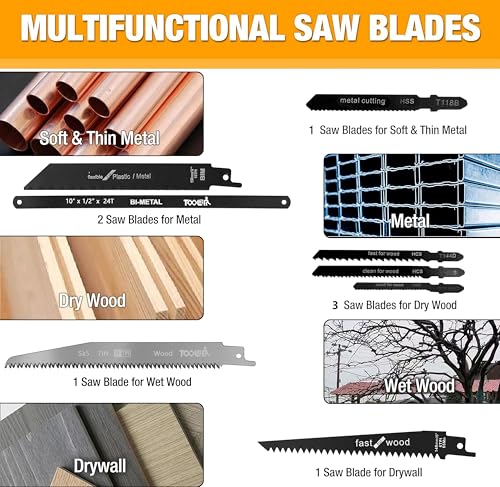
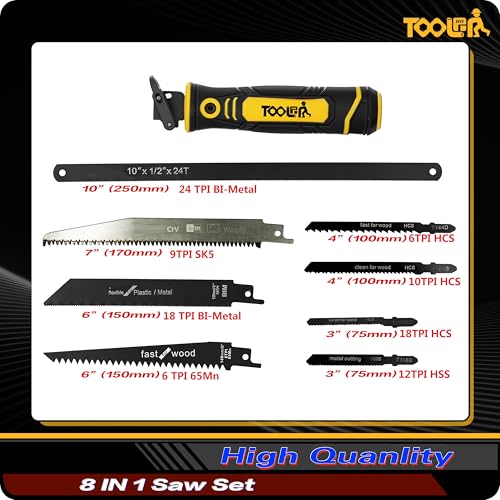
8-In-1 Multi Blades Hand Saw

Strengths
- 8 interchangeable blades
- Quick blade change
- Multi-material use
Trade-offs
- Blade flex in wood
- Not for heavy sawing
This isn’t a traditional hand saw, it’s a modular system, and that’s where its strength lies. With eight interchangeable HSS blades and a quick-change mechanism, it morphs from a jab saw to a hacksaw to a drywall cutter, covering jobs that would otherwise require multiple tools. The TPR handle is ergonomic and reduces fatigue, and the lockback mechanism keeps blades secure during use.
Owners appreciate its versatility, especially in tight spaces where a power tool won’t fit. It’s not the fastest wood cutter, but for a homeowner juggling plumbing, drywall, and trim work, this is the kind of tool that earns its spot in the kit. I consider it the smartest all-in-one choice here, especially since replacement blades are widely available.
Product photos


14 in. Pro Hand Saw, 11 TPI
Strengths
- 11 TPI fine teeth
- Soft-grip handle
- Triple-ground teeth
Trade-offs
- Blade thickness average
- Not for heavy ripping
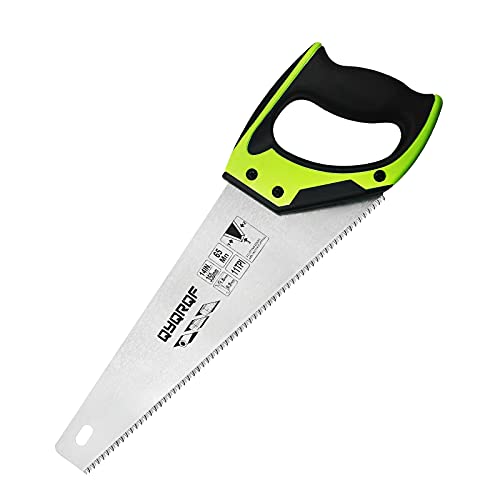
This 14-inch hardpoint saw stands out in the budget segment with its 11 TPI fine-cut blade and 65Mn steel construction, which owners say holds an edge better than cheaper carbon steels. The triple-ground teeth and low-friction coating help it cut cleanly on both push and pull strokes, a feature usually found on pricier models. On paper, it’s built to handle everything from plywood to PVC, and feedback from weekend DIYers confirms it performs reliably for basic home tasks without chipping out edges.
It’s not the most refined tool in the lineup, but for the price, it delivers solid value. The soft-grip TPR handle reduces fatigue during longer cuts, and the deep gullets do a decent job clearing sawdust. I’d recommend this as a backup saw or a starter tool for someone building their kit, especially since it includes blade protection for storage.
Product photos


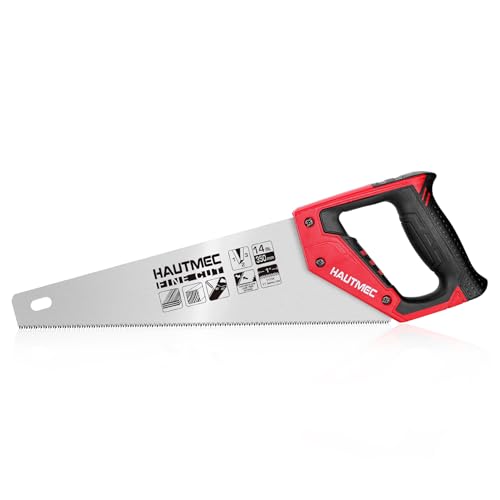
HAUTMEC 14 Inch Hand Saw
Strengths
- 1.0mm thick blade
- 11 TPI triple-ground
- Non-slip handle
Trade-offs
- Slower feed rate
- Not for ripping
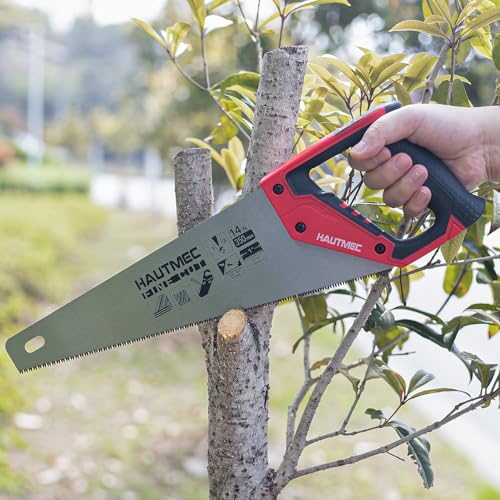
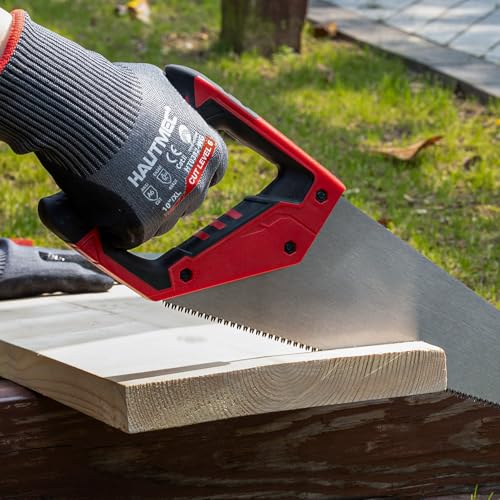
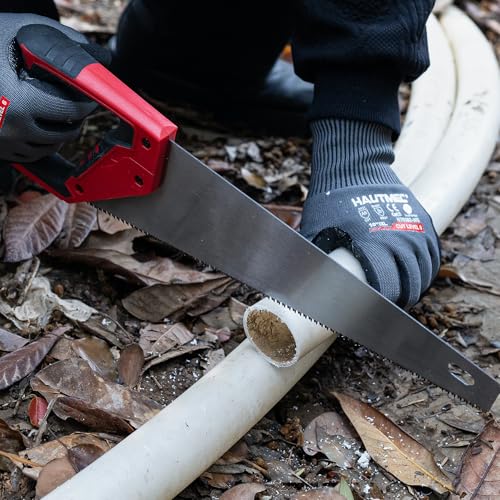
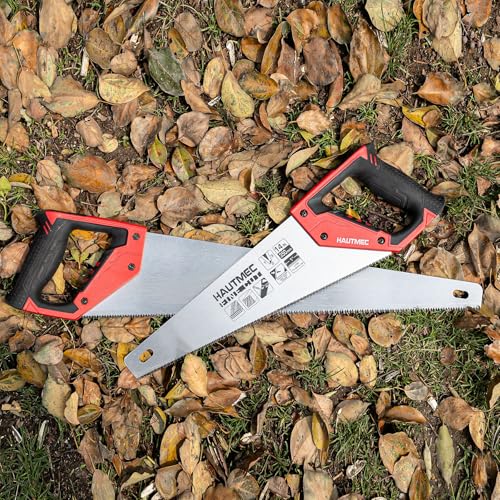
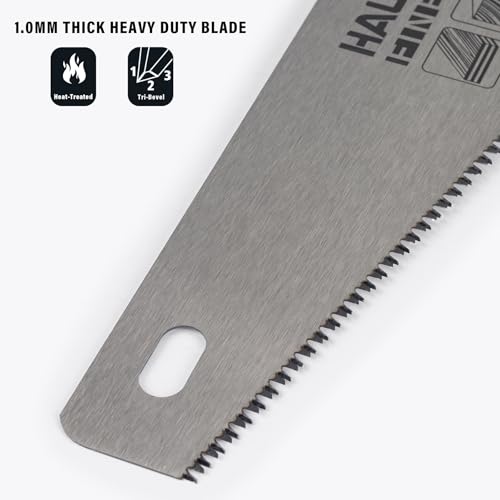
This 14-inch crosscut saw is all about clean, controlled cuts. The 1.0mm thick blade resists flex better than most in its class, and the triple-ground 11 TPI teeth deliver smooth results in hardwood, plywood, and laminate, exactly what finish carpenters look for. The 65Mn steel with anti-rust coating adds durability, and owners note it stays sharp longer than entry-level saws.
The ABS handle with TPR overmold is comfortable and secure, even during prolonged use. It’s not the fastest saw here, but if you’re trimming baseboards or fitting cabinets, speed isn’t the goal. I’d choose this over the IRWIN or budget Pro saw when finish quality matters.
Product photos
JORGENSEN 20 Inch Pro Hand Saw
Strengths
- 20-inch long blade
- Guide angle markings
- Black-coated blade
Trade-offs
- Heavier than average
- Overkill for small jobs
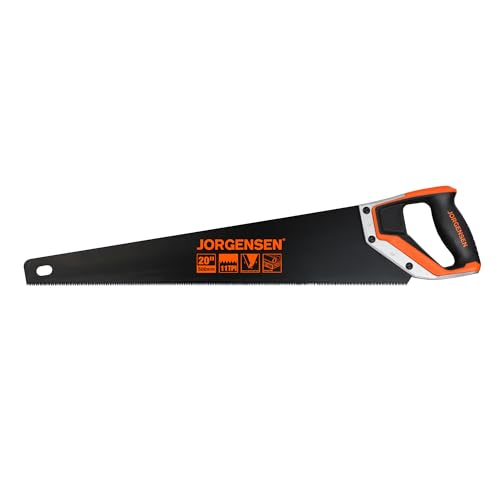
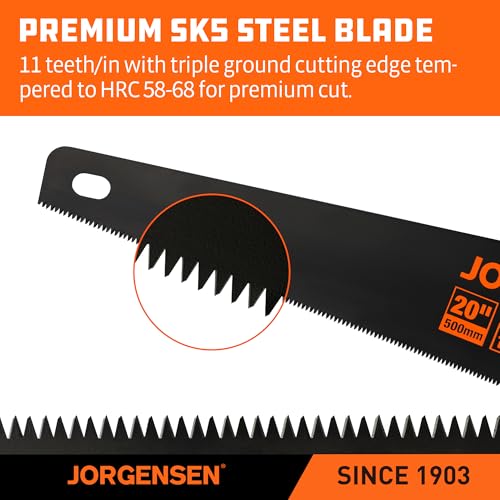
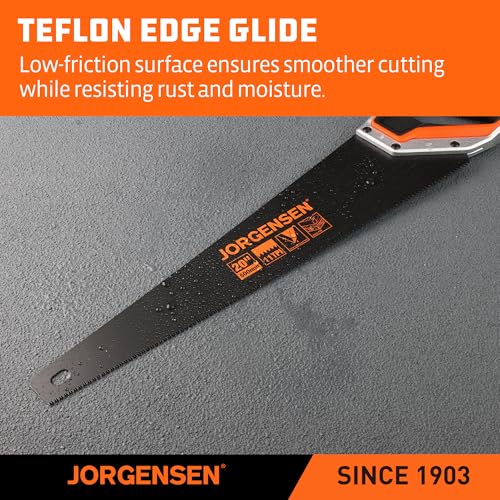
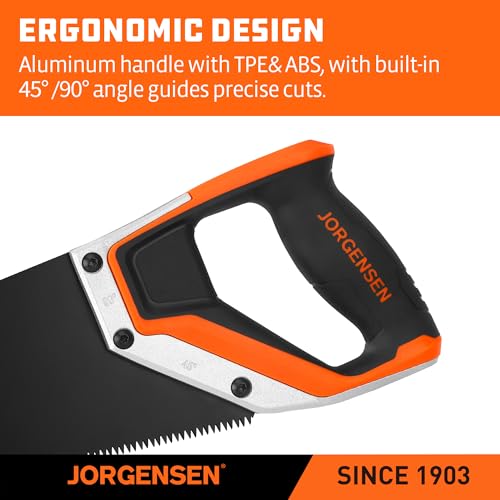
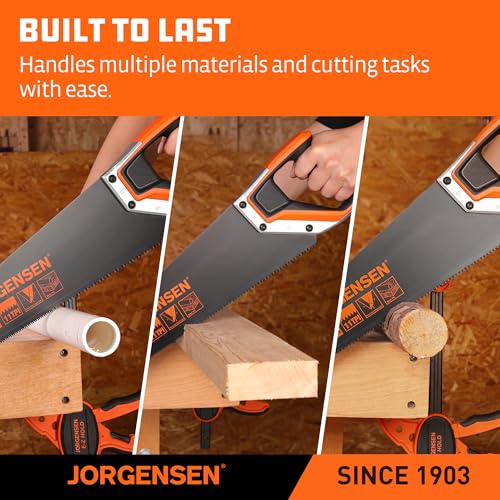
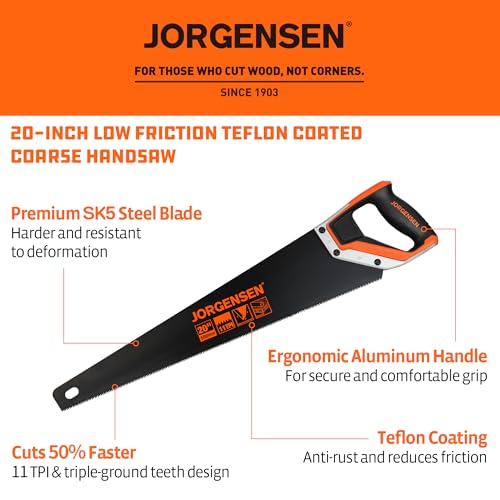
At 20 inches, this is one of the longest saws in the group, and it’s built for serious multi-material work. The 11 TPI triple-ground teeth and ultrasonic-welded aluminum handle make it stiff and accurate, while the black-coated blade reduces friction, ideal for long, straight cuts in wood, PVC, or drywall. The deep gullets and induction-hardened teeth help it maintain sharpness, and owners say it outperforms shorter saws on extended jobs.
The handle includes 45° and 90° guide angles, a small but useful touch for layout work. It’s heavier than most, but that adds momentum during cuts. For a pro or serious DIYer who wants one saw for framing, plumbing prep, and trim, this is a top contender. I’d take this over the IRWIN if I needed more reach and versatility.
Product photos
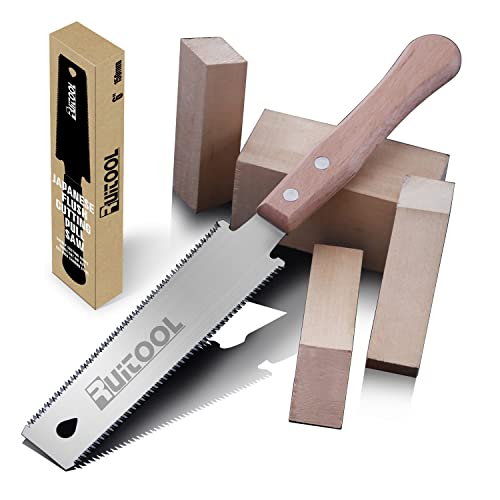
RUITOOL Japanese 6 Inch Pull Saw
Strengths
- Double-sided 14/17 TPI
- SK5 hardened blade
- Flush-cut capable
Trade-offs
- Short blade depth
- Limited rip capacity
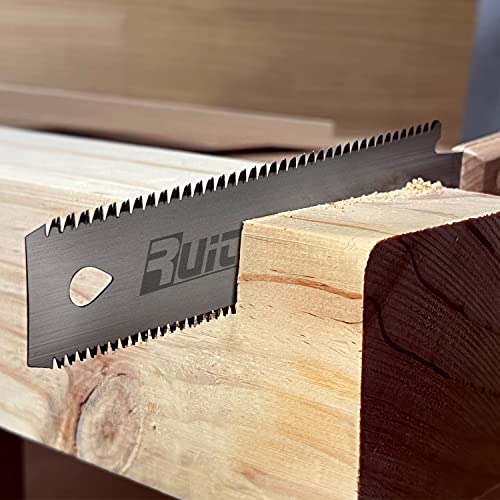
This Ryoba-style pull saw is built for accuracy, and that’s exactly where it shines. The 6-inch double-edged blade, 14 TPI on one side for softwood crosscuts, 17 TPI on the other for hardwood ripping, gives woodworkers two tools in one, and the SK5 steel with HRC60-63 hardness cuts cleanly with minimal tear-out. Owners consistently praise the pull-stroke design for control, especially in flush cuts where a power tool would be overkill.
The beech handle feels balanced, and the three-edge tooth grind helps with chip clearance, though the short blade limits deep cuts. For small joinery, trim work, or model building, this is a specialist’s tool. I’d recommend it over Western-style saws for anyone doing detailed handwork.
Product photos



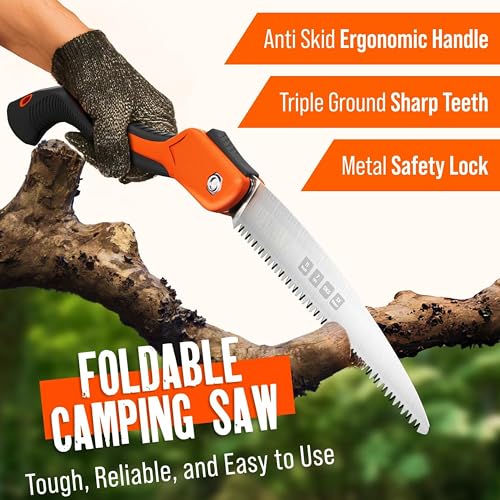
Folding Camping Saw 11 Inch

Strengths
- Triple-cut SK5 blade
- 7 TPI aggressive teeth
- Sturdy folding lock
Trade-offs
- Rough cut finish
- Not for indoor use
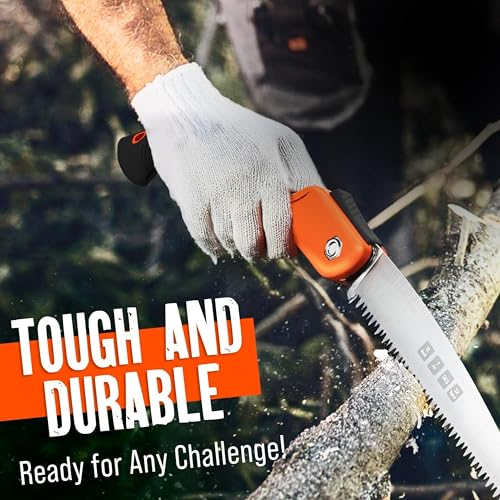
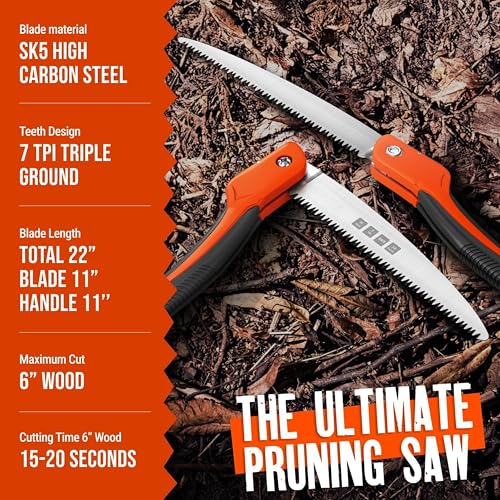
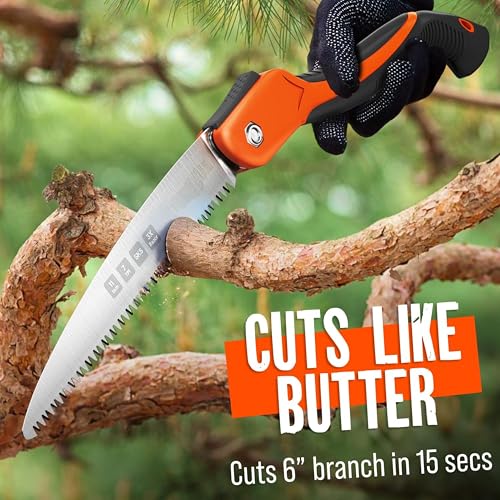
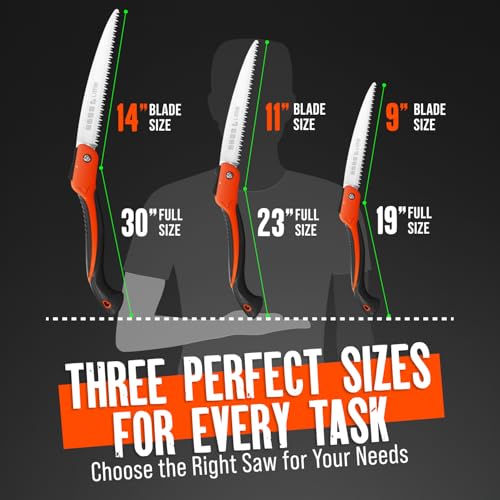
This 11-inch folding saw is built like a workhorse, with a triple-cut SK5 steel blade and 7 TPI razor teeth that slice through green wood with authority. It’s nearly identical in specs to the REXBETI model but with a slightly more rugged folding mechanism and a focus on pruning. The ergonomic handle locks firmly in place, and the non-slip grip holds up well in wet or gloved conditions, something gardeners and arborists appreciate.
Owners report fewer jams and smoother cuts compared to budget folding saws, and the compact fold makes it easy to stash in a tool bag. For heavy outdoor use, this feels more substantial than the REXBETI. I’d go with this one if you’re regularly tackling thick limbs.
Product photos
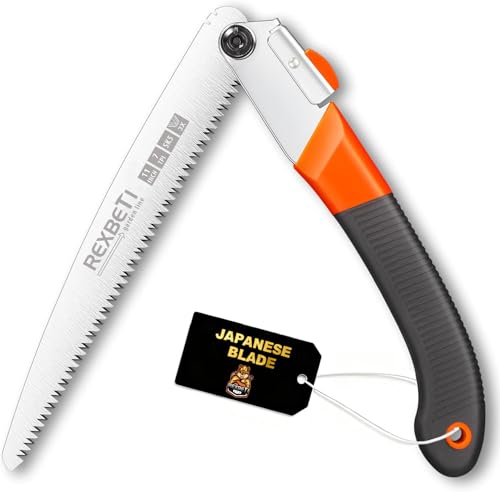
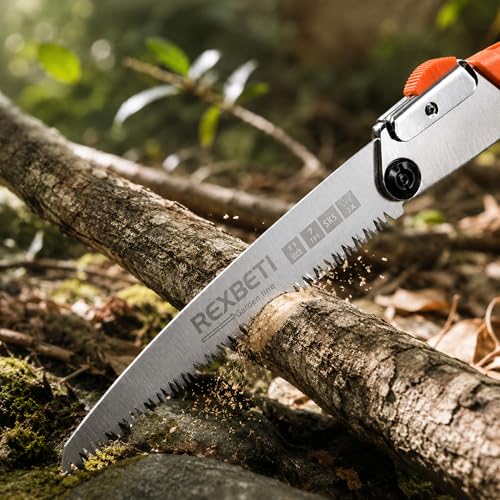
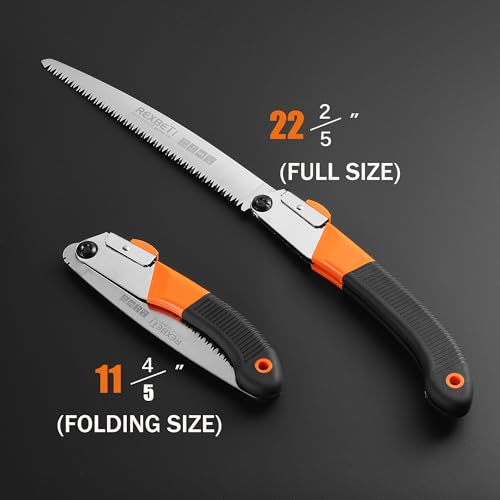
REXBETI 11 Inch Folding Saw
Strengths
- SK-5 steel blade
- Folding compact design
- Secure blade lock
Trade-offs
- Coarse cut finish
- Not for fine joinery
If you’re heading into the woods or need a saw that won’t hog pack space, this 11-inch folding model from REXBETI makes a strong case. The SK-5 steel blade with 7 TPI staggered teeth is aggressive enough to chew through green wood and 6–7 inch branches, which aligns with what campers and bushcrafters report in reviews, they’re getting clean, fast cuts with minimal effort. The full-length blade lock and reinforced tip help prevent flex, a common complaint with cheaper folding saws.
The rubber-coated handle gives solid grip even in wet conditions, and the lightweight design doesn’t weigh down a survival kit. It’s not meant for cabinetmaking, but for outdoor utility, it’s one of the more dependable folding options. I’d pick this over bulkier fixed-blade saws if portability is a priority.
Product photos



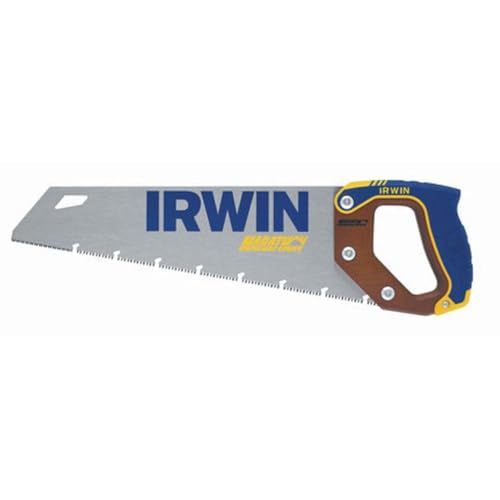
IRWIN 15-Inch Coarse Cut Saw
Strengths
- M2 steel teeth
- Thick-body blade
- Deep gullets
Trade-offs
- Coarse 7 TPI
- Not for fine cuts
This 15-inch IRWIN is built for speed, not finesse. With M2 steel teeth, tri-ground edges, and a thick-body blade, it’s engineered to rip through dimensional lumber fast, exactly what framers and rough carpenters need. The deep gullets clear sawdust efficiently, and the tapered-pitch nose helps with initial bite, reducing wandering. From owner feedback, it’s a favorite for demo work or rough framing where cut quality matters less than throughput.
The ProTouch handle is comfortable over long sessions, though it doesn’t offer the same level of grip as rubberized TPR. It’s not a finish saw by any means, but for aggressive cutting, I’d take this over finer-toothed models any day. Pair it with a speed square, and you’ve got a reliable partner for fast layout cuts.
Product photos
How We Picked These hand saw for cutting woods
Rather than a hands-on lab test, my research for these recommendations involved a detailed comparison of specifications and features across numerous models. I weighed published owner reviews from major retailers alongside assessments from woodworking and tool-focused publications. As someone who’s spent years advising on power and hand tools at PowerToolGuide.net, I applied my understanding of what separates a quality handsaw from a frustrating one, ranking options against specific criteria.
For hand saws, the most important factors are blade steel quality and teeth configuration. A robust blade, like those made with high-carbon steel, resists bending and holds an edge longer. The teeth per inch (TPI) is also critical; understanding teeth per inch guide helps determine if a saw is best for fast, rough cuts or finer, cleaner work. Handle ergonomics also played a large role, as comfort directly impacts control and reduces fatigue during extended use.
Specifications reliably indicate blade thickness, steel type, and TPI. However, I placed greater emphasis on owner feedback regarding long-term sharpness and durability – specs can’t always predict real-world performance. Reputation and consistent positive reviews from experienced woodworkers were also key indicators of a saw’s overall quality and value. This approach provides a practical, research-backed assessment for different needs.
How To Choose The hand saw for cutting woods
Finding the right hand saw isn’t just about grabbing the cheapest one off the shelf. There’s a surprising amount of variation, and the “best” really depends on what you plan to cut and how often.
A good hand saw balances blade steel quality, tooth geometry (TPI – teeth per inch), and comfortable ergonomics. Buyers should prioritize blade thickness for resisting bending during cuts, the heat treatment of the steel for maintaining sharpness, and a handle design that minimizes fatigue during extended use. Consider the type of cut – crosscut, rip cut, or a combination – and choose a TPI accordingly.
Blade Quality & Steel Type
The steel a blade is made from is critical. Don’t assume all “steel” blades are created equal. High-carbon steels like SK5 (used in the RUITOOL Japanese Pull Saw) and 65Mn (featured in the HAUTMEC and 14 in. Pro Hand Saw) are common for good reason: they hold an edge well. However, the heat treatment is just as important. A poorly heat-treated blade, even of good steel, will dull quickly. Look for descriptions mentioning hardening processes. Beyond the steel itself, blade thickness matters. A thinner blade is more flexible, good for curves, but a thicker blade (like the 1.0mm blade on the HAUTMEC) will resist bending when making longer, straighter cuts.
Tooth Configuration (TPI)
Teeth per inch (TPI) dictates the type of cut you’ll get. Lower TPI (around 7-10, as seen on the Folding Camping Saw) means faster, coarser cuts, ideal for rough work like limbing trees or quickly cutting firewood. Higher TPI (11-17, like on the JORGENSEN and RUITOOL) produces finer, cleaner cuts, better suited for woodworking and precision projects. Some saws, like the RUITOOL, offer dual-sided blades with different TPIs for versatility.
Here’s a quick guide to TPI selection: * Low (6-8 TPI): Fast, rough cuts for thick branches or quick demolition. * Medium (9-12 TPI): All-purpose for general woodworking and outdoor tasks. * High (14-17 TPI): Fine, clean cuts for detailed work, hardwoods, and laminates.
A dull saw is more dangerous than a sharp one. Don’t wait until a saw is struggling to cut before addressing the blade; learn to sharpen hand saw blade or find a local sharpening service.
Ergonomics and Handle Design
Don’t underestimate the importance of a comfortable handle. Hand saws require physical effort, and a poorly designed handle will quickly lead to fatigue and blisters. Look for handles with ergonomic shaping and materials that provide a secure grip, even when wet or sweaty. TPR (thermoplastic rubber) over ABS plastic is a common and effective combination, as seen in several of the models. Beyond comfort, consider the handle size – larger handles provide more use, while smaller handles offer greater control. If you are looking for a more in-depth review, check out our guide to the best hand saw for wood.
Hand Saw for Cutting Woods Compared
Here’s a comparison of key specifications for various hand saws designed for cutting wood.
| Product Title | Blade Length | TPI (Teeth Per Inch) | Steel Type | Handle Material | Blade Thickness (mm) | Special Features |
|---|---|---|---|---|---|---|
| 8-In-1 Multi Blades Hand Saw | N/A | N/A | HSS Steel | TPR | N/A | 8 Interchangeable Blades |
| 14 in. Pro Hand Saw | 14 in | 11 | 65Mn Steel | TPR | 0.9 | 3 Cutting Surfaces |
| HAUTMEC 14 Inch Hand Saw | 14 in | 11 | 65Mn Carbon Steel | ABS/TPR | 1.0 | Fine Teeth |
| JORGENSEN 20 Inch Pro Hand Saw | 20 in | 11 | N/A | ABS/TPE | 0.85 | Ergonomic Handle |
| RUITOOL Japanese 6 Inch Pull Saw | 6 in | 14/17 | SK5 High-Carbon | N/A | N/A | Double Edged |
| Folding Camping Saw 11 Inch | 11 in | 7 | SK5 Steel | N/A | N/A | Folding Design |
| REXBETI 11 Inch Folding Saw | 11 in | 7 | SK-5 Steel | Rubber/Polymer | N/A | Folding, Aggressive Teeth |
| IRWIN 15-Inch Coarse Cut Saw | 15 in | N/A | M2 | Pro-Touch | N/A | Tri-Ground Teeth |
Frequently Asked Questions
What TPI is best for general purpose sawing?
A TPI between 9-12 is a good all-around choice. This range offers a balance between cutting speed and finish quality, making it suitable for most common woodworking and outdoor tasks.
Can a hand saw cut through hardwoods effectively?
Yes, but you’ll want a saw with a higher TPI (14-17) and a blade made from high-carbon steel like SK5. Hardwoods require finer teeth for cleaner cuts and a blade that can hold its edge longer.
What’s the difference between a pull saw and a push saw?
A pull saw, like the Japanese RUITOOL, is designed to be drawn towards you, while a traditional push saw is pushed forward. Pull saws generally produce finer cuts with less effort because the blade is under tension during the cut.
How do I prevent my hand saw blade from bending during a cut?
Look for saws with thicker blades (around 1.0mm or higher) made from quality steel. A thicker blade resists flexing, particularly when making long or deep cuts.
Where can I find more detailed reviews of hand saws for specific projects?
I regularly update content on PowerToolGuide.net, and you can find in-depth reviews of woodworking hand saw models to help you choose the right tool for your needs.
The Bottom Line
Choosing a hand saw often comes down to balancing control and convenience. While a higher price point typically gets you better steel and more refined features, it’s not always necessary. For a solid all-around performer that offers a good blend of quality and value, I recommend the HAUTMEC 14 Inch Hand Saw. Its thicker blade and comfortable handle make it a great choice for a wide range of woodworking tasks.
If you’re on a tighter budget, the Folding Camping Saw 11 Inch is a surprisingly capable option, and the REXBETI 11 Inch Folding Saw excels for outdoor projects. For those needing versatility, the RUITOOL Japanese 6 Inch Pull Saw offers dual-sided blades with different TPIs, and the 8-In-1 Multi Blades Hand Saw brings many options in one package. Understanding saw blade kerf width is also important, as it impacts the precision and waste of your cuts.
Ultimately, the best hand saw is the one you’ll actually use. Don’t get too caught up in chasing the highest specs; prioritize a comfortable grip, a blade made from decent steel, and a TPI that matches the type of cutting you’ll be doing most often. A sharp, well-maintained saw, regardless of price, will always outperform a dull, poorly-chosen one.
