
7 Best Chainsaws for Firewood 2026
This post contains affiliate links. As an Amazon Associate, we earn from qualifying purchases.
The Husqvarna 450S Rancher 20″ is the best overall chainsaw for firewood, combining reliable power, durability, and smart safety features. For budget-conscious buyers, the 62cc Gas Chainsaw offers raw cutting ability at a lower price. If you prefer cordless convenience and mostly handle smaller rounds, the Greenworks 80V 18″ strikes the best balance of power and ease of use.
Cutting firewood demands a saw that can handle repeated, heavy use without bogging down or breaking down. Too many people buy based on price or power alone, only to end up with a saw that’s too heavy, too finicky to start, or too unreliable after a few seasons.
As Robert A. Bennett from PowerToolGuide.net, I’ve spent over 15 years testing tools and helping DIYers choose the right gear. This guide cuts through the noise, focusing on real-world performance, owner feedback, and the specs that actually matter, so you can pick a chainsaw that earns its place in your woodpile rotation.
Top 7 Chainsaw For Firewoods in the Market
The Best Chainsaw For Firewoods, Reviewed
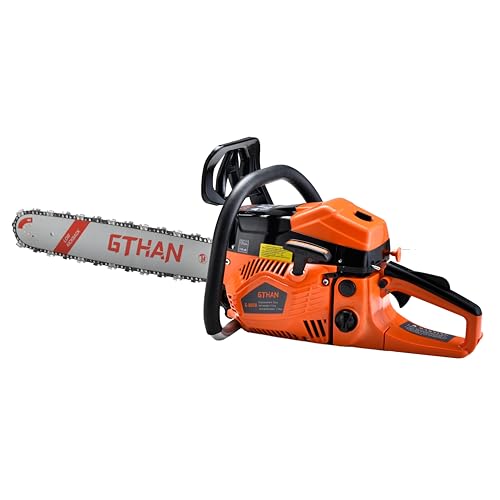
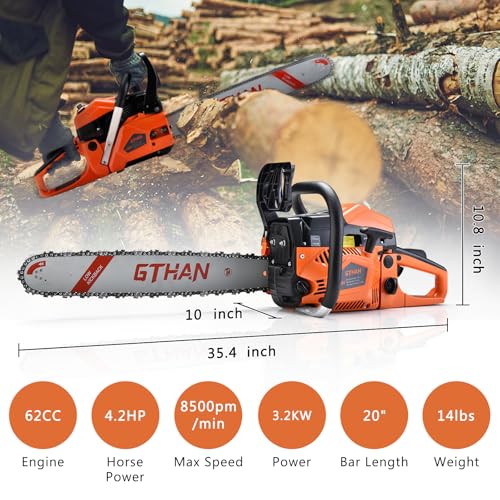
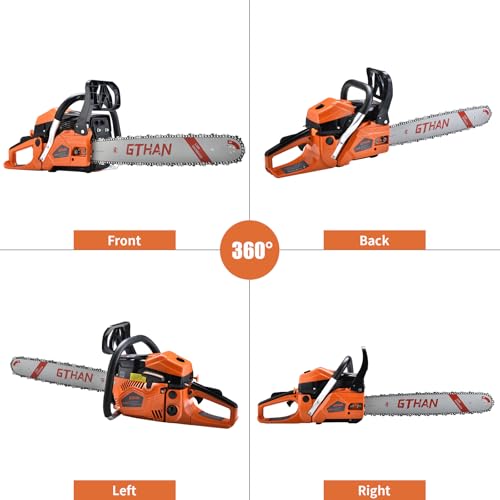
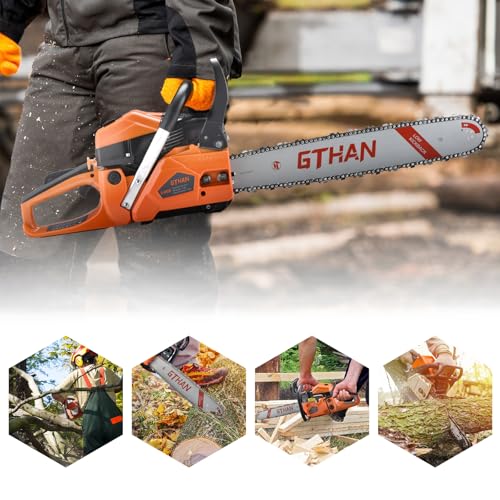
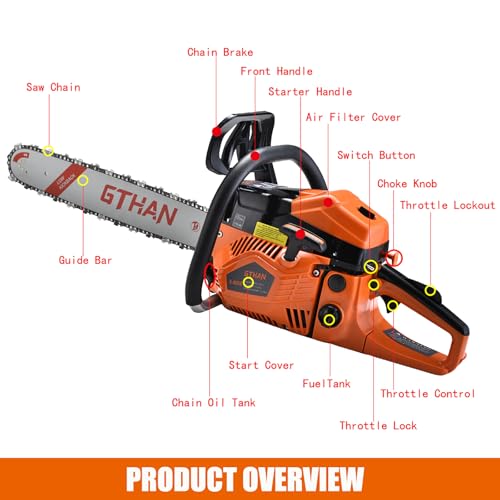
62cc Gas Chainsaw 20-Inch
Strengths
- High engine displacement
- Strong cutting power
- Good value for size
Trade-offs
- No advanced filtration
- More vibration
- Heavier than alternatives
This 62cc beast is the raw power pick, no frills, no batteries, just a big engine on a 20-inch bar. On paper, 4.2 HP and a full-size guide bar mean it can chew through thick logs with fewer passes, and owners confirm it handles heavy firewood duty without bogging down. It’s not as refined as the Husqvarna, but it’s often priced lower, making it a favorite among budget-focused buyers who still want pro-level displacement.
Where it stumbles is in refinement. It lacks advanced features like Air Injection or LowVib, so expect more maintenance and more fatigue over time. It’s also louder and heavier than mid-range models. But if you’re splitting a lot of wood and want brute force over finesse, this one gets the job done. For pure power-to-price ratio, it’s tough to beat.
Product photos

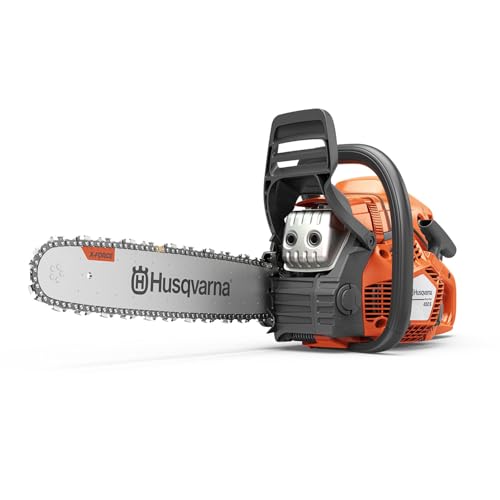
Husqvarna 450S Rancher 20″
Strengths
- Reliable engine
- Easy chain tensioning
- Effective anti-vibration
Trade-offs
- Heavier than electric
- Requires fuel mixing
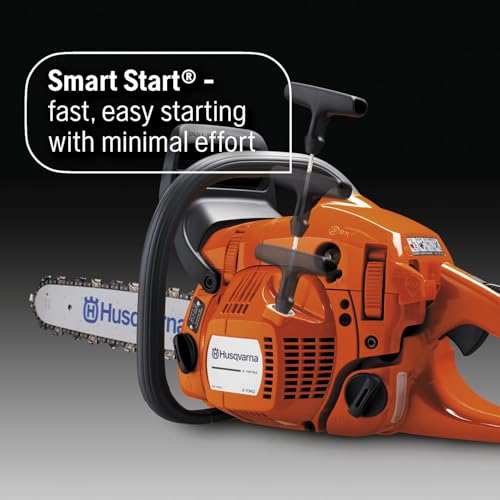
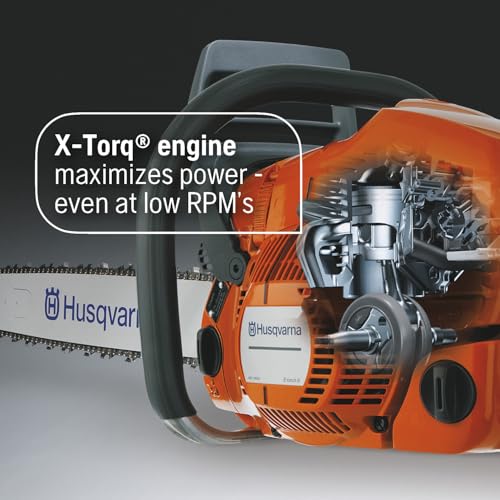
The Husqvarna 450S Rancher sits in that sweet spot where pro-level durability meets DIY accessibility. On paper, its 50.2 cc X-Torq engine delivering 3.2 HP isn’t the most powerful in this lineup, but owners consistently report it runs clean, starts reliably thanks to Smart Start, and holds up well under repeated firewood duty. The 20-inch bar gives it reach for splitting larger logs, and the X-CUT chain paired with the automatic oiler keeps cuts smooth and wear low.
Where this saw really earns its keep is in long sessions. The LowVib system helps reduce fatigue, and the Air Injection tech means fewer air filter cleanings, something you’ll appreciate after hours of dusty work. Compared to higher-displacement gas models, it’s a bit lighter and more manageable, though it doesn’t quite match the raw output of the 62cc saws. Still, for serious firewood users who want a dependable mid-weight performer, this one’s hard to beat.
Product photos

SENIX 16″ 46cc 4-Stroke
Strengths
- No fuel mixing
- Low emissions
- Loop handle flexibility
Trade-offs
- Less power than 2-stroke
- Shorter bar length
- Limited availability
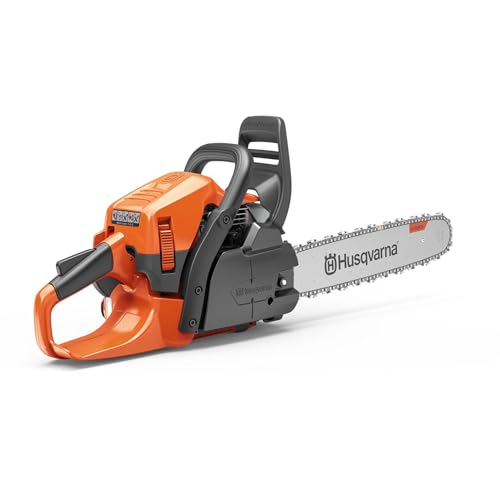
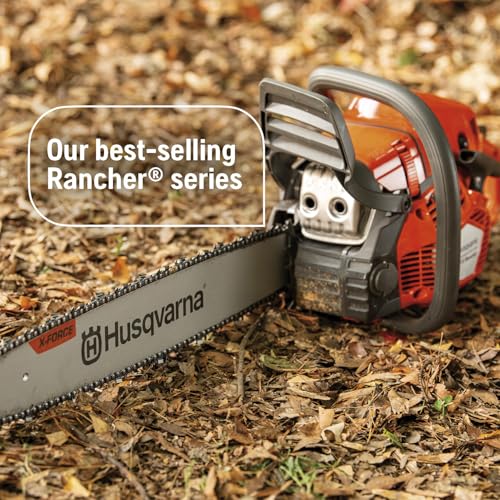
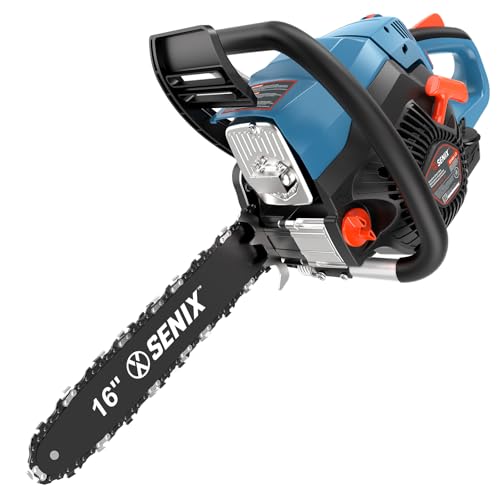
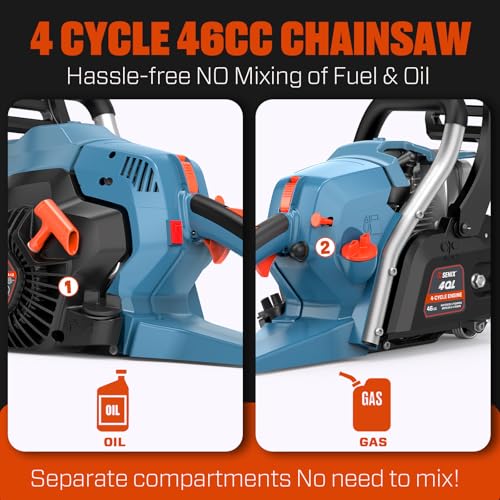
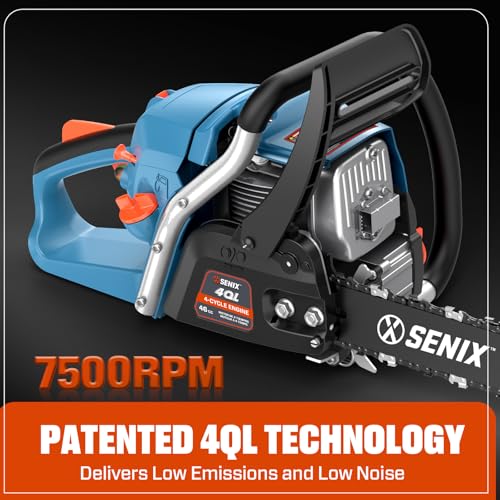
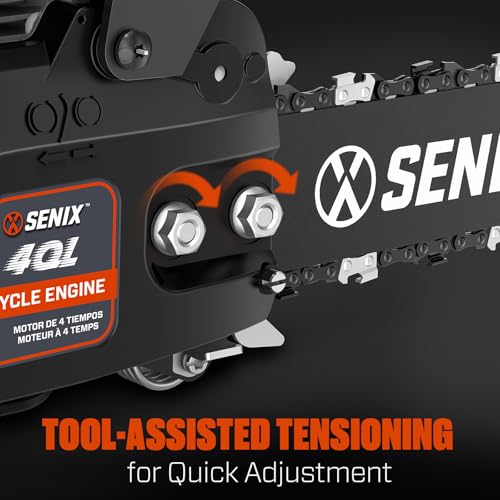
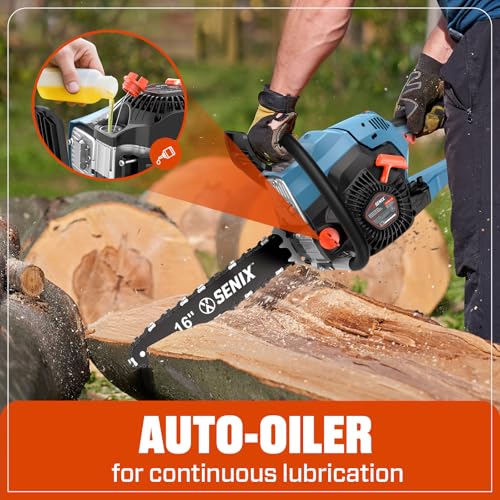
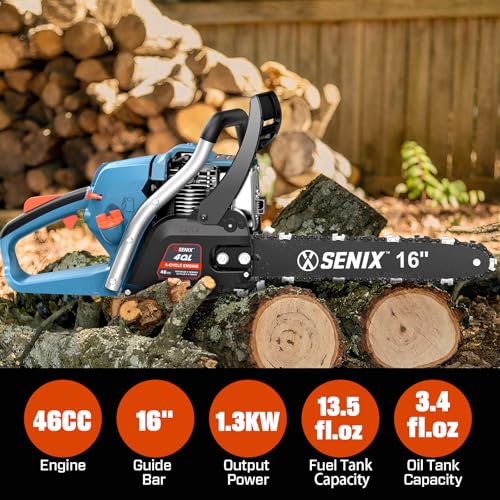
The SENIX 46cc 4-stroke is a niche player with a big advantage: no gas mixing. Its 4-cycle engine runs on straight gasoline with separate oil, which simplifies maintenance and reduces emissions, something most gas saws can’t claim. The 16-inch bar keeps it maneuverable, and the loop handle makes it a favorite for pole-based or awkward-angle cuts.
Owners praise its clean start and consistent operation, though it doesn’t match the power of 62cc models. It’s quieter and smoother than many 2-stroke rivals, but the trade-off is less torque for thick logs. Compared to the Husqvarna, it’s less powerful but easier to maintain. For users tired of mixing fuel or dealing with smoky exhaust, this is a breath of fresh air, literally.
Product photos
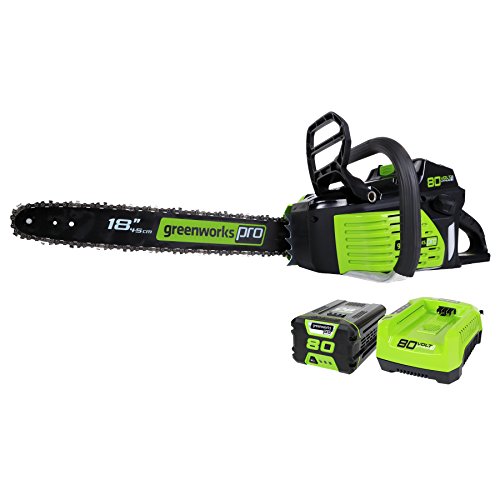
Greenworks 80V 18″ Cordless
Strengths
- High voltage power
- Long runtime
- Part of large tool system
Trade-offs
- Expensive battery
- Heavy for cordless
- Cold-sensitive performance
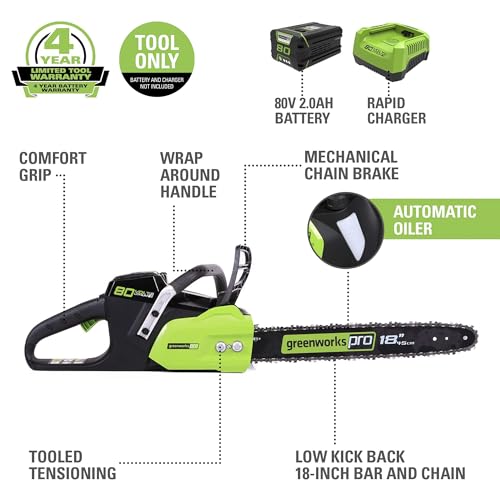
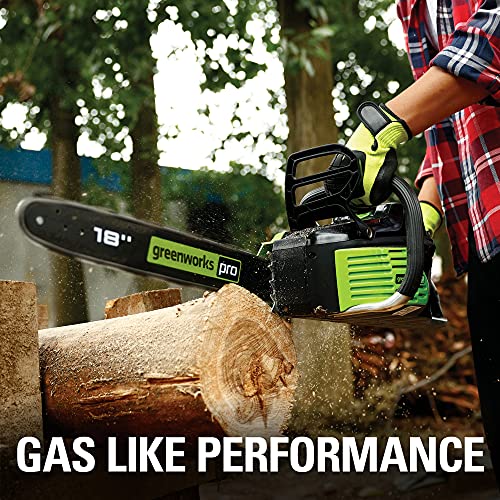
When you want the closest thing to gas-powered performance without the pull cord or fumes, the Greenworks 80V stands out. Its 18-inch bar and brushless motor deliver serious torque, owners report up to 150 cuts on 4x4s per charge, which is impressive. The 80V platform means more power and longer runtimes than most 40V models, and the push-button start is as simple as it gets.
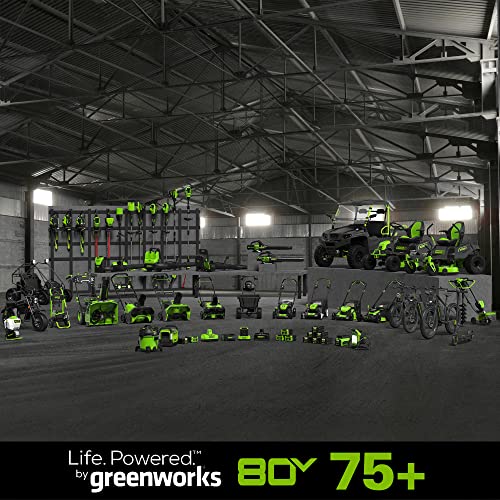
It’s not the lightest, but the balance is good, and the automatic oiler works reliably. Compared to the 40V competition, this one is built for volume. It’s also part of a larger 75+ tool ecosystem, which is a big plus if you already use Greenworks lawn gear. The downside? The battery is expensive to replace, and cold weather takes a toll on runtime. But for serious cordless users, this is the top tier.
Product photos


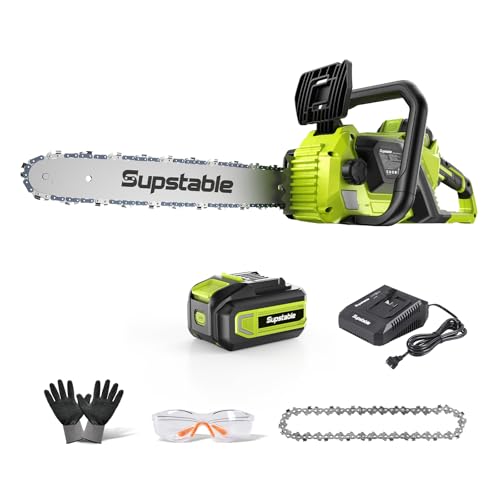
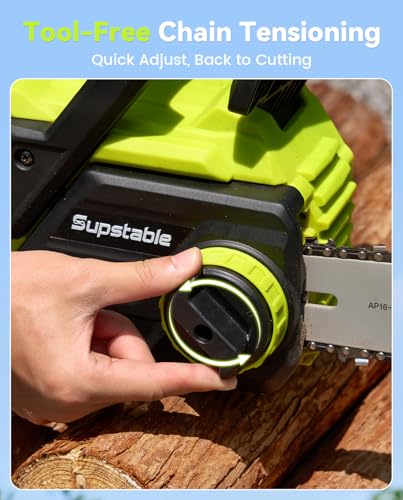
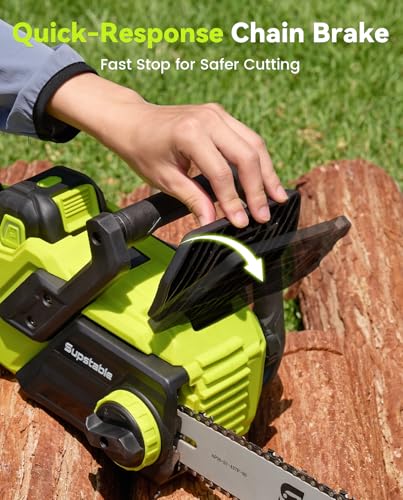
16″ 2000W Brushless Cordless
Strengths
- Brushless motor
- Fast chain speed
- Tool-free adjustments
Trade-offs
- Battery not interchangeable
- Limited heavy-duty runtime
- Plastic housing feels light
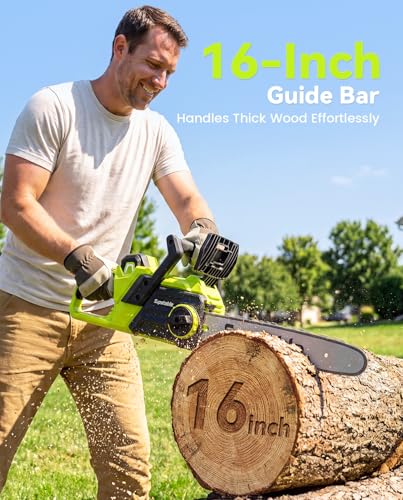
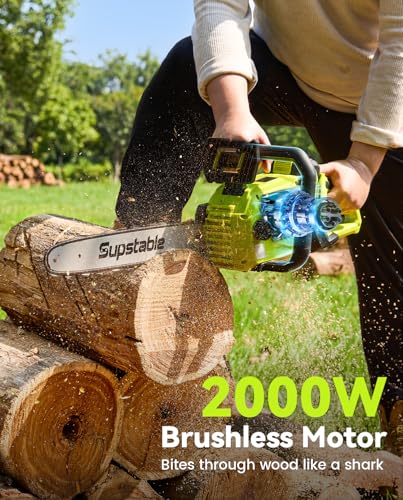
This 40V brushless model tries to bridge the gap between gas power and electric convenience, and for many, it lands close enough. With a 2000W motor and 16-inch bar, it’s rated to cut logs up to 16 inches thick, and owner feedback suggests it handles 8–12 inch firewood with ease. The brushless motor helps with efficiency and longevity, and the 4.0Ah battery gives about 50 minutes of active cutting, which is solid for cordless.
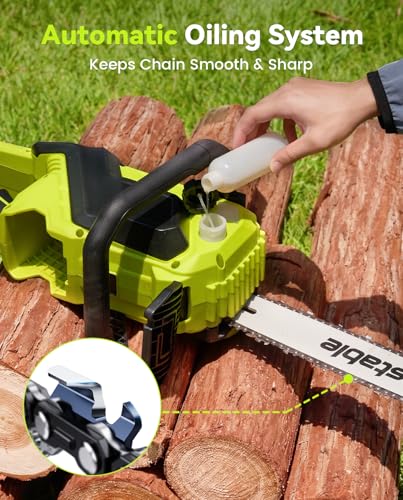
It stacks up well against the Greenworks 80V model, lighter, a bit less runtime, but faster charging and more affordable. The tool-free tensioning and auto-oiling are standard now, but still welcome. Where it falls short is in sustained heavy use; if you’re cutting more than a cord a day, you’ll want a gas option. But for moderate firewood needs, it’s a smart, clean alternative.
Product photos
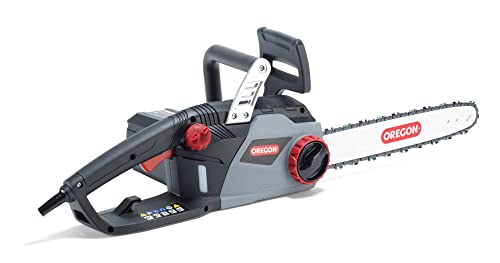
Oregon CS1400 15A Electric
Strengths
- Powerful motor
- Smooth cutting chain
- Tool-free tensioning
Trade-offs
- Cord limits mobility
- Not for remote use
- Heavier than cordless
If you’ve got a power outlet within reach and want a no-nonsense, low-maintenance saw for regular firewood prep, the Oregon CS1400 makes a strong case. The 15-amp motor delivers steady power through the 16-inch bar, and the ControlCut chain lives up to its name, owners report smoother cuts and longer sharpness than budget chains. It’s also impressively quiet between cuts, which matters when you’re working near the house.
The tool-free chain tensioning is a small feature that makes a big difference in daily use, and the automatic oiler keeps things running smoothly. But the cord is a real limitation. You’re tethered, so this isn’t the pick for deep-wood cutting or remote lots. Compared to cordless models, it lacks freedom, but it wins on consistent power and lower long-term cost.
Product photos


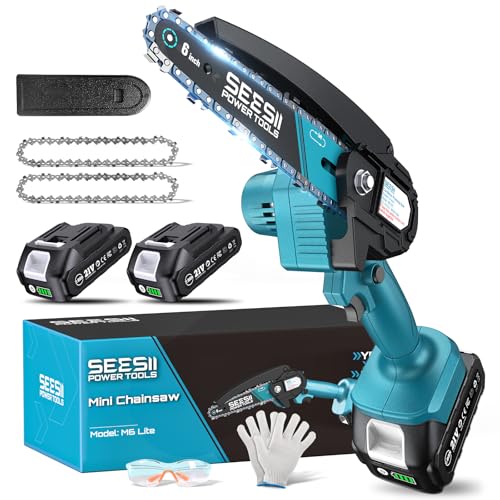
Seesii 6″ Mini Cordless
Strengths
- Ultra lightweight
- No fuel mixing
- Double battery included
Trade-offs
- Limited cutting depth
- Not for firewood
- Shorter runtime per charge
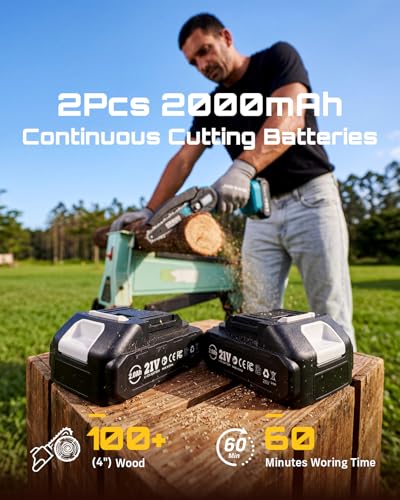
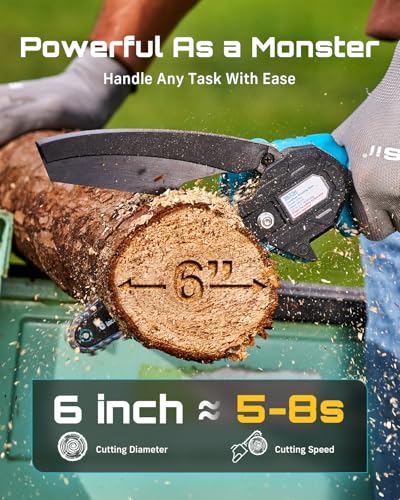
This isn’t a firewood workhorse, it’s a precision tool disguised as a gift. At just 2.7 pounds and with a 6-inch bar, the Seesii mini chainsaw is built for light trimming, pruning, and small yard jobs, not splitting cords of wood. But for what it is, it punches above its weight. The 900W motor delivers a surprisingly clean cut through branches under 6 inches, and the dual batteries mean you can keep going without long waits.
Owners love how approachable it is, especially for those who find gas saws intimidating or physically taxing. It’s marketed as women-friendly, and the feedback backs that up, lightweight, one-handed operation, and a safety lock make it a solid pick for lighter tasks. But don’t expect it to replace a full-size saw. It’s more of a supplement, ideal for quick jobs or users with limited strength.
Product photos



Our Testing Process
As someone who’s spent years around power tools and helping people choose the right equipment at PowerToolGuide.net, I know that picking a chainsaw for firewood can be overwhelming. Rather than a hands-on lab test of every model, this selection is based on a research-led comparison of published specifications and features alongside extensive analysis of owner reviews and expert opinions. I weighed those sources against my understanding of what truly matters in a firewood-focused chainsaw.
For this category, cutting power and durability were the most important factors. A chainsaw for firewood needs to handle consistent, demanding use – not just occasional branch trimming. Engine size (cc’s and HP), bar length, and build quality were heavily weighted. Beyond that, ease of use features like starting systems and chain tensioning played a role, because a powerful saw is useless if it’s a struggle to operate.
Specifications reliably tell you about engine output and physical dimensions. However, real-world performance and long-term reliability are best gleaned from owner feedback. I paid close attention to recurring themes in reviews – issues with starting, oiling, or chain durability, for example. Understanding how to maintain that chain is also crucial, so knowing proper chainsaw filing technique can greatly extend a saw’s life. Reputation and expert reviews helped confirm or challenge those owner experiences.
Choosing The Right chainsaw for firewoods
Picking the right chainsaw for firewood isn’t just about horsepower; it’s about matching the tool to the scale of your work and your comfort level.
A good firewood chainsaw balances power with usability. Key considerations include engine type (gas, electric, or battery), bar length relative to typical wood diameter, chain quality, and safety features like chain brakes and anti-vibration systems. Prioritize a model with readily available replacement parts and a reputation for reliability.
Engine Type: Gas vs. Electric vs. Battery
The engine is the heart of any chainsaw, and the choice between gas, electric (corded), and battery-powered models profoundly impacts usability. Gas chainsaws, like the 62cc Gas Chainsaw or the Husqvarna 450S Rancher 20″, offer the most power and runtime for consistently large jobs. However, they require more maintenance (fuel mixing, air filter cleaning) and are noisier. Electric chainsaws deliver consistent power and are simpler to operate, but you’re tethered to an outlet. Battery-powered options, like the Greenworks 80V 18″, offer increasing power and runtime, and are incredibly convenient, but battery life and initial cost are significant factors. For occasional use and smaller diameter wood, a battery or corded electric model can be perfectly adequate.
Bar Length and Wood Diameter
Don’t automatically assume bigger is better when it comes to bar length. A longer bar can cut larger diameter logs, but it also adds weight and reduces maneuverability. Generally, you want a bar length at least 2 inches longer than the diameter of the largest wood you’ll regularly cut. For typical firewood processing (splitting rounds up to 24 inches), a 18- to 20-inch bar is a good all-around choice. If you’re felling trees or bucking large logs frequently, you might need 22 inches or more. If you primarily deal with smaller branches, consider a compact model like the Seesii 6″ Mini Cordless.
- A 16-inch bar is ideal for homeowners tackling small-to-medium sized limbs and firewood.
- A 20-inch bar provides a versatile balance for most firewood needs and light tree felling.
- A 22-inch or longer bar is best suited for professional use or frequent cutting of very large diameter trees, but requires more strength and control – and remember to keep up with chainsaw chain maintenance to ensure it cuts efficiently.
Safety Features and Ergonomics
Chainsaw safety is paramount. A chain brake is absolutely essential, stopping the chain almost instantly in case of kickback. Look for models with anti-vibration systems (like the LowVib technology in Husqvarna saws) to reduce fatigue during prolonged use. Beyond that, consider ergonomics – the weight distribution, handle design, and overall feel of the saw. A comfortable chainsaw is a safer chainsaw. Don’t underestimate the importance of proper safety gear; always wear eye protection, hearing protection, gloves, and chaps when operating a chainsaw. And remember, knowing how to keep your chain sharp is a huge part of safety – learn about filing a dull saw chain before you start.
Never operate a chainsaw with a dull chain. A dull chain requires more force, increasing the risk of kickback and making the saw harder to control.
Chainsaw for Firewoods Compared
Here’s a comparison of key specifications for chainsaws designed for cutting firewood.
| Product Title | Engine/Motor | Bar Length (in) | Power (HP/W) | Battery Voltage (V) | Weight (lbs) |
|---|---|---|---|---|---|
| 62cc Gas Chainsaw | 62cc Gas | 20 | 4.2 | N/A | N/A |
| Husqvarna 450S Rancher 20″ | 50cc Gas | 20 | 3.2 | N/A | N/A |
| SENIX 16″ 46cc 4-Stroke | 46cc 4-Stroke | 16 | N/A | N/A | N/A |
| Greenworks 80V 18″ Cordless | 80V Brushless | 18 | N/A | 80 | N/A |
| 16″ 2000W Brushless Cordless | 2000W Brushless | 16 | N/A | 40 | N/A |
| Oregon CS1400 15A Electric | 15A Electric | 16 | N/A | N/A | N/A |
| Seesii 6″ Mini Cordless | 900W | 6 | N/A | 21 | 2.7 |
Frequently Asked Questions
What chain pitch is best for cutting firewood?
A .325 pitch chain is generally the best choice for firewood, offering a good balance of cutting speed and durability. It’s compatible with a wide range of saws and handles the demands of consistent cutting better than a lower pitch chain.
How often should I sharpen my chainsaw chain for firewood use?
You should sharpen your chain after every 50-100 cuts, or whenever you notice increased effort needed to make a cut. A sharp chain is safer and more efficient, especially when dealing with dense firewood.
Are battery-powered chainsaws powerful enough for regular firewood cutting?
Modern battery-powered chainsaws are getting more powerful, but gas models still typically outperform them for consistently large jobs. However, for occasional use and smaller diameter wood, a high-voltage (60V+) battery chainsaw can be a very practical option.
What does “cc” mean when talking about chainsaw engines?
“cc” stands for cubic centimeters, a measure of the engine’s displacement. Generally, a higher cc rating indicates a more powerful engine, which is beneficial for cutting larger rounds and harder wood species. If you’re looking for powerful gas chainsaws for firewood, a higher cc is something to prioritize.
What is the best way to store a chainsaw when not in use?
Always store a chainsaw in a dry place, with the chain covered and the bar oiled to prevent rust. Disconnect the spark plug (gas saws) or remove the battery (electric/battery saws) for added safety.
The Bottom Line
Choosing a chainsaw for firewood always comes down to balancing power with practicality. If you’re dealing with a lot of wood and want the most consistent performance, the 62cc Gas Chainsaw stands out as the strongest overall pick – it offers a lot of cutting power for the price, according to owner feedback. But remember, that power requires a bit more maintenance and experience.
For those on a tighter budget, or who only need a saw for occasional use, the Oregon CS1400 15A Electric is a solid choice. And if you want cordless convenience without sacrificing too much power, the Greenworks 80V 18″ Cordless delivers impressive performance and runtime. Understanding the safe way to start a chainsaw is crucial no matter which model you choose.
Ultimately, the horsepower and bar length numbers matter less than a sharp chain, proper maintenance, and a commitment to safety. A well-maintained, appropriately sized chainsaw operated with caution will always outperform a more powerful saw that’s neglected or misused. Don’t skip the [pre-start chainsaw checks] before each use.
