8 Best Rotary Hammer Drills of 2026
This post contains affiliate links. As an Amazon Associate, we earn from qualifying purchases.
After comparing the field and weighing specs against owner feedback, the ENEACRO 1-1/4 Inch SDS-Plus stands out as the most powerful corded option for heavy-duty work, while the DEWALT 20V MAX 1″ SDS Plus D-Handle is the best cordless pick for serious jobs. For budget-conscious buyers, the Deshuo 1-1/4″ SDS-Plus delivers solid performance at a lower price.
Most people don’t realize how quickly an underpowered or poorly balanced rotary hammer can turn a manageable job into a frustrating mess. Vibration, weight, and lack of impact energy can wreck your pace and your arms.
As Robert A. Bennett from PowerToolGuide.net, I researched these models based on impact energy, durability cues like motor type, real-world user feedback, and usability features. This guide cuts through the marketing to show you what actually matters when picking a rotary hammer that will last and perform.
Top 8 Rotary Hammer Drills in the Market
The Best Rotary Hammer Drills, Reviewed
ENEACRO 1-1/4 Inch SDS-Plus 13A Rotary Hammer

Strengths
- 7.4 Joules impact
- Four-function modes
- Double-layer anti-vibration
Trade-offs
- Heavy at 12.58 lbs
- Larger footprint
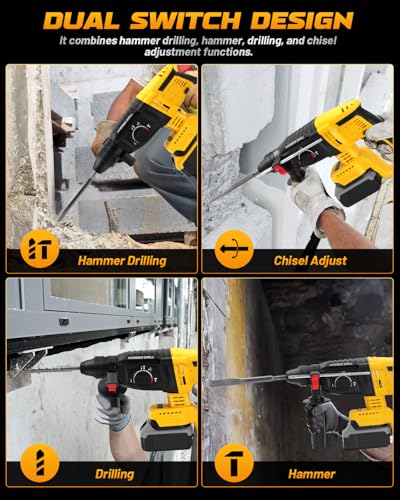
If you’re looking for the most complete corded SDS-Plus hammer under a premium price, the ENEACRO 13 Amp model stands out. At 7.4 Joules, it has the highest impact energy in this group, beating even some professional-grade tools, and owners confirm it powers through rebar-laced concrete with authority. The four-function mode (including dedicated chisel angle adjustment) gives it real versatility over models limited to three modes.
The double-layer anti-vibration system is a standout feature. Reviewers note noticeably less hand fatigue during extended chiseling, and the PU soft grip actually works in sweaty conditions. It’s heavier than average at 12.58 lbs, but the 360° handle and well-balanced design help. I’d pick this over the Deshuo for serious jobs, and even stack it up favorably against older Bosch models in this class.
Product photos


Deshuo 1-1/4″ SDS-Plus 12.5A Rotary Hammer

Strengths
- 12.5 Amp motor
- 5.5 Joules impact
- SDS-Plus system
Trade-offs
- Basic build quality
- No name-brand service support
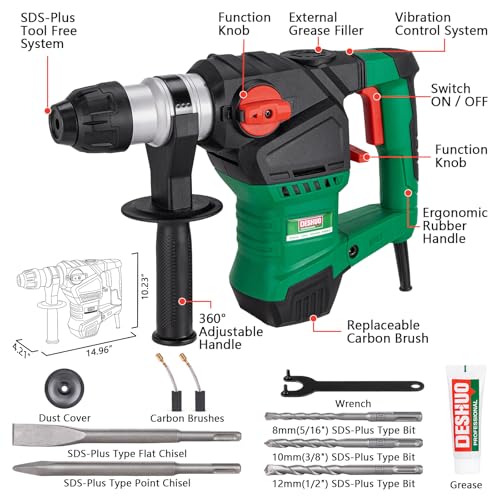
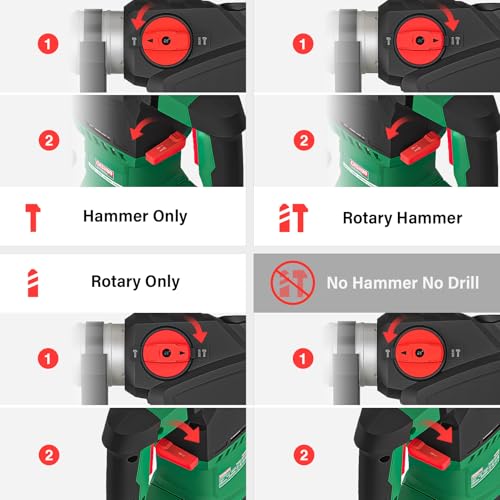
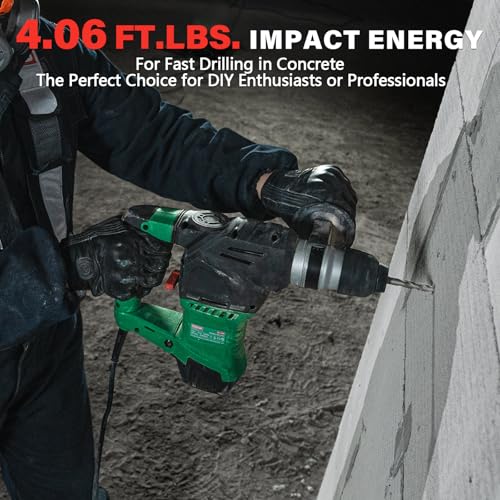
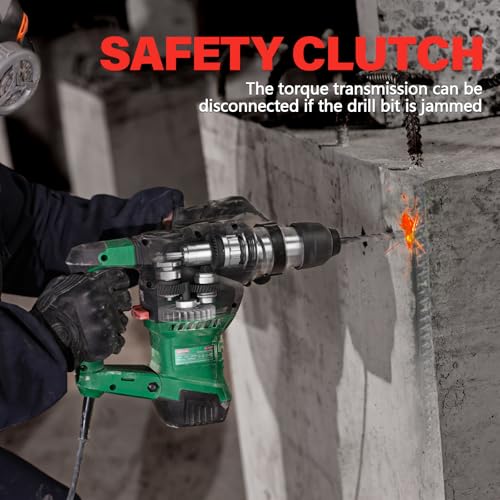
On paper, the Deshuo 12.5 Amp rotary hammer looks like a serious bargain for DIYers who need real concrete-punching power without the premium price. With 5.5 Joules of impact energy and SDS-Plus compatibility, it delivers specs that rival more expensive models. Owners consistently report it handles 3/4-inch holes in concrete without bogging down, and the dual-switch design for mode selection is a small but meaningful durability upgrade over single-lever systems.
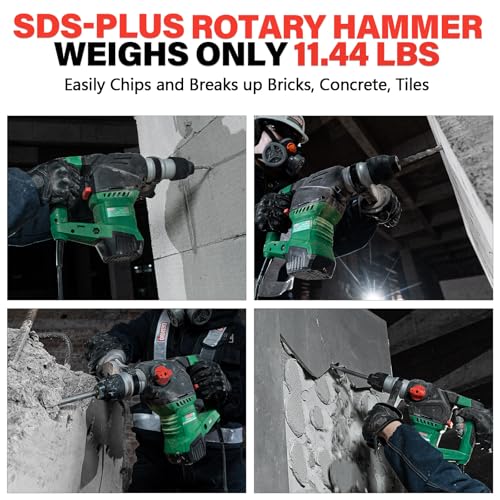
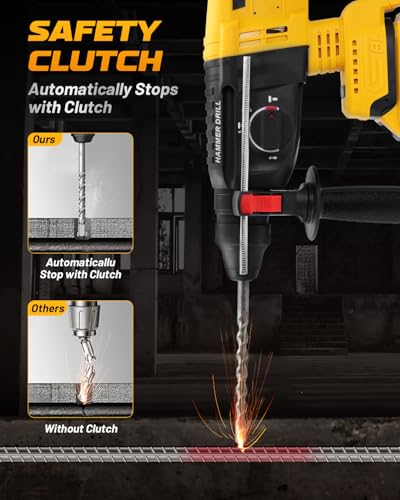
The safety clutch and vibration control help reduce fatigue during longer sessions, though some users note the 11.44 lb weight still makes overhead work tiring. Compared to pricier corded options, it lacks refined balance and brand-backed service networks, but for occasional demolition or anchor drilling, it’s a solid performer.
Product photos
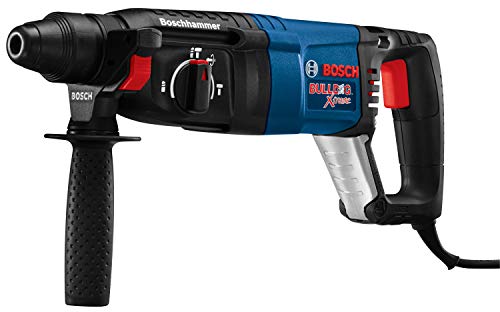
BOSCH 11255VSR Bulldog Xtreme SDS Rotary Hammer
Strengths
- Vario-Lock chisel positioning
- D-handle control
- Includes depth gauge
Trade-offs
- Lower impact energy
- Corded only
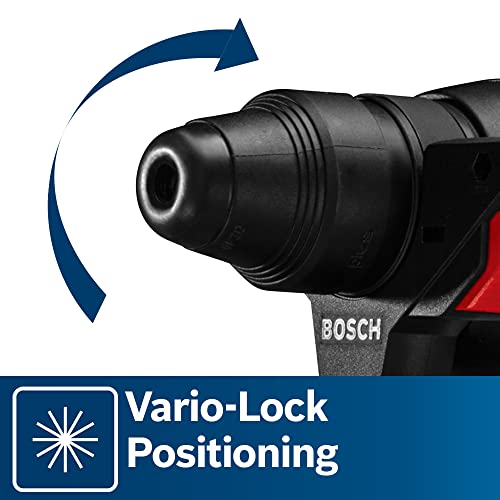
The Bosch 11255VSR has been a go-to for masons and demolition crews for years, and it’s easy to see why. The Vario-Lock chisel system with 36 positions is unmatched for precision chiseling, whether you’re cleaning grout lines or shaping openings. The variable speed trigger with reverse is rare in this class and gives real control when backing out stuck bits.
It only delivers 2.0 ft-lbs of impact, so it’s not the fastest drill, but the 5,800 BPM and D-handle design make it a chiseling beast. Owners love the depth gauge and auxiliary handle included in the kit. Compared to newer cordless models, it’s bulkier, but for shop or garage work where you’ve got outlet access, it’s still a top-tier chisel tool.
Product photos


DEWALT 20V MAX SDS Plus Compact Rotary Hammer

Strengths
- Ultra-lightweight
- SHOCKS vibration control
- OSHA Table 1 compliant
Trade-offs
- Limited to 5/8 in. max
- Lower impact energy
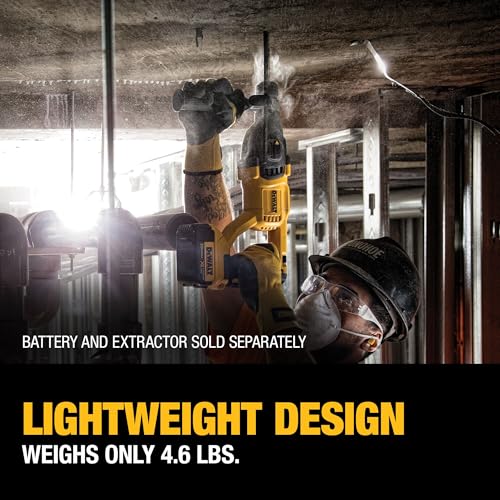
The DCH172B is DEWALT’s lightweight champion. At just under 5 lbs, it’s built for hours of rod hanging or strut mounting without wrecking your shoulder. The 1.4 Joules of impact is modest, but enough for 5/8-inch work in standard concrete. What stands out is the SHOCKS vibration control, owners say it feels noticeably smoother than older DEWALT hammers.
It’s not for 1-inch anchors or heavy chipping, but for electricians, HVAC techs, or plumbers running hundreds of small holes, this is the smarter buy. Compared to the DCH133B, it trades power for endurance and comfort. And yes, it’s OSHA Table 1 compliant with the right dust setup, making it a quiet win for indoor compliance.
Product photos


DEWALT 20V MAX 1″ SDS Plus D-Handle Rotary Hammer

Strengths
- 2.6 Joules impact
- D-handle stability
- German-engineered mechanism
Trade-offs
- Heavier than compact models
- Bare tool only
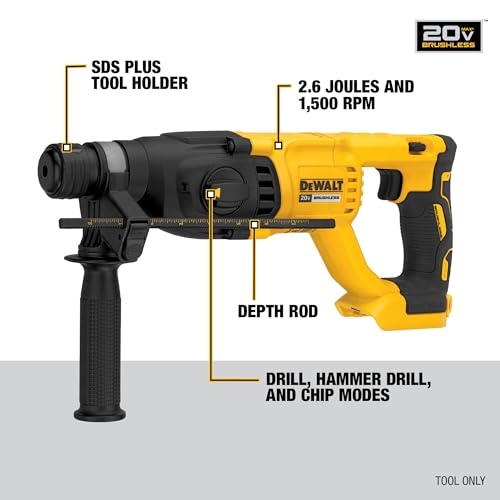
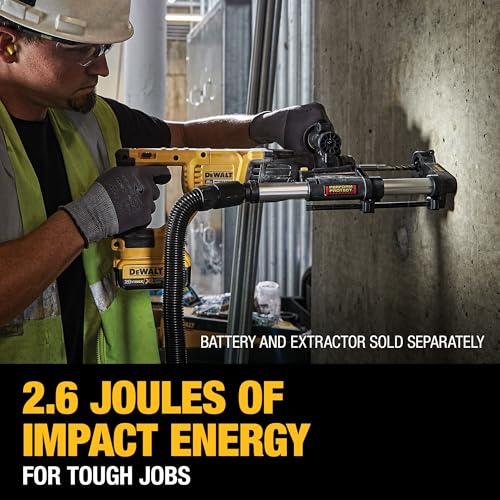
The DCH133B is DEWALT’s answer to heavy-duty cordless hammering. With 2.6 Joules of impact energy, it’s one of the most powerful cordless models here, capable of 1-inch holes in concrete, which few battery-powered hammers can claim. The D-handle gives it serious use for chipping or prying, and the German-engineered mechanism feels robust in owner hands-on reports.
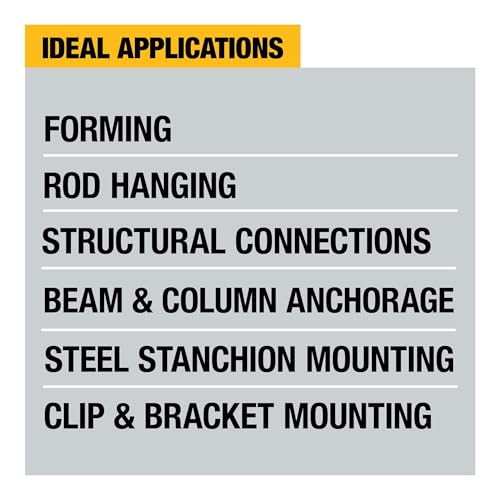
It’s not as light as the compact DEWALT DCH172B, but that extra heft comes with real drilling authority. The rotating mode dial is intuitive and stays locked under vibration. When stacked against the Milwaukee M18, it trades a bit of runtime for more brute force. For structural work like beam anchoring or stanchion mounting, this is the cordless hammer I’d reach for.
Product photos

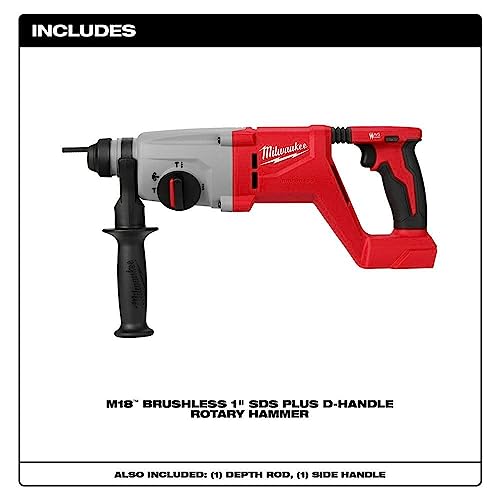
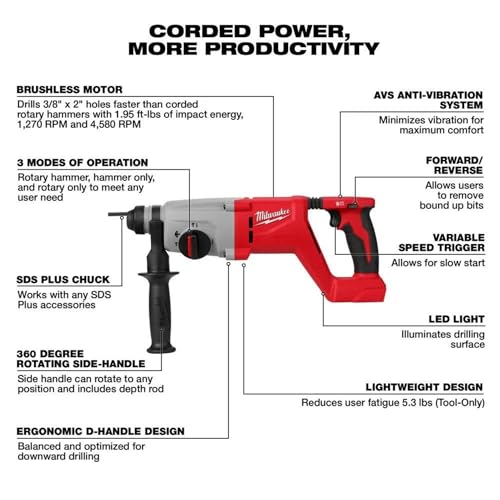
Milwaukee M18 Brushless SDS Plus D-Handle Rotary Hammer
Strengths
- 100+ holes per charge
- AVS anti-vibration
- D-handle control
Trade-offs
- Higher cost
- Bare tool only
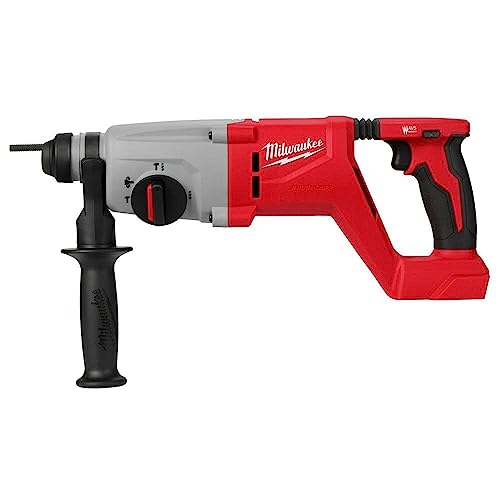
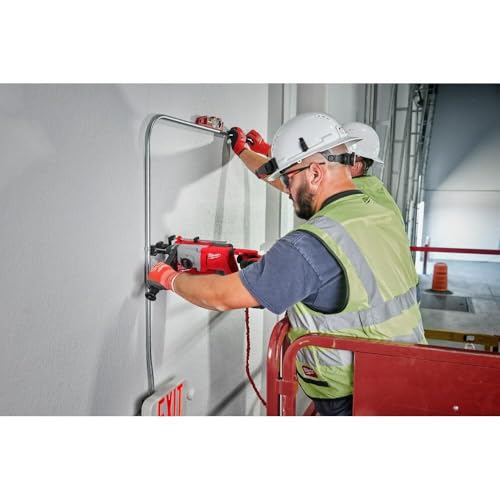
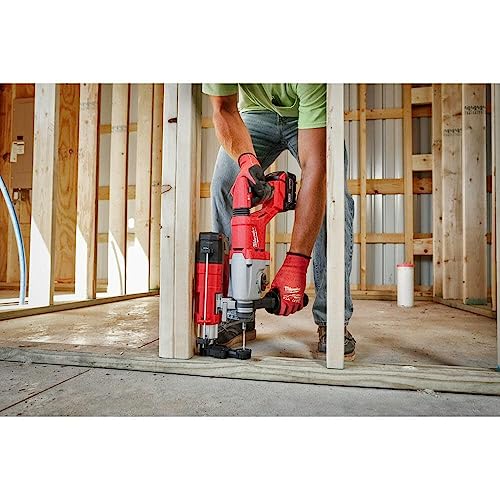
Milwaukee’s M18 D-handle hammer is engineered for efficiency. The claim of drilling 100 3/8-inch holes per charge with an XC5.0 battery lines up with owner feedback, this thing sips power. The brushless motor isn’t just about runtime, it’s about consistent torque delivery as the battery drains, which matters on long shifts.
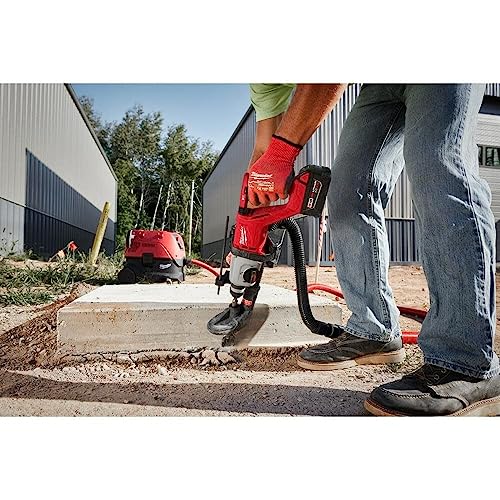
At 5.3 lbs, it’s only slightly heavier than the Bosch but feels more balanced in the D-grip configuration. The AVS anti-vibration system is effective, users doing anchor runs in slabs report less arm fatigue. Compared to DEWALT’s DCH133, it drills faster in tight sequences and holds up better under sustained load. If you’re running multiple battery platforms, this one earns its place just for efficiency alone.
Product photos
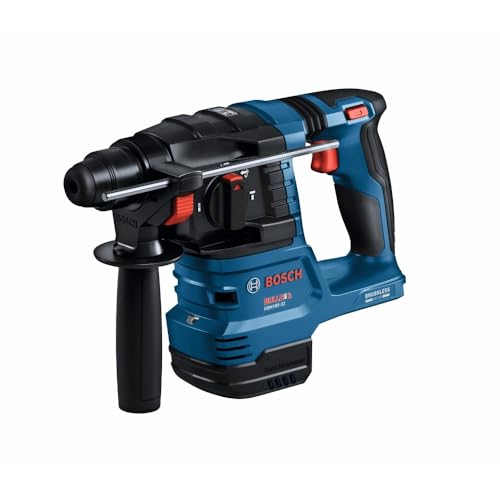
Bosch GBH18V-22N 18V Brushless SDS Rotary Hammer
Strengths
- Kickback Control
- OSHA dust-compliant ready
- 5.1 lbs lightweight
Trade-offs
- Lower impact at 1.4 ft-lbs
- Bare tool only
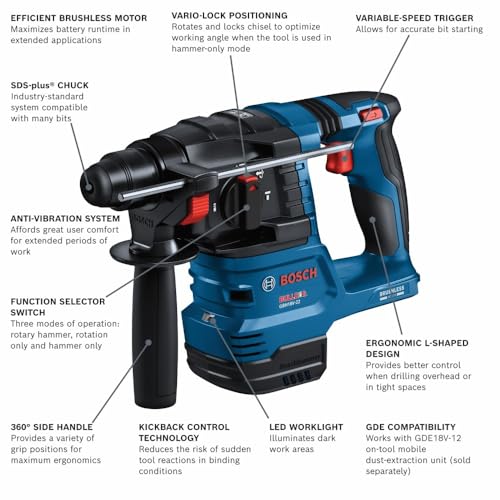
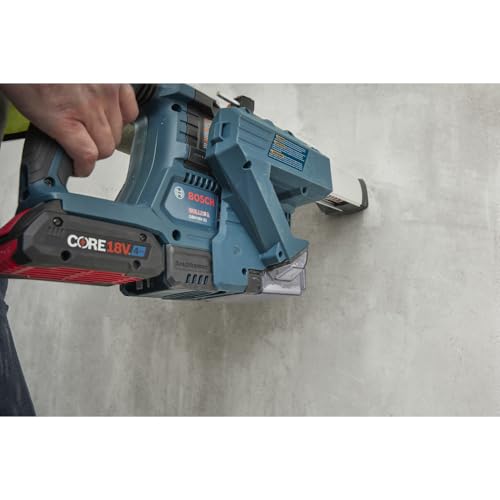
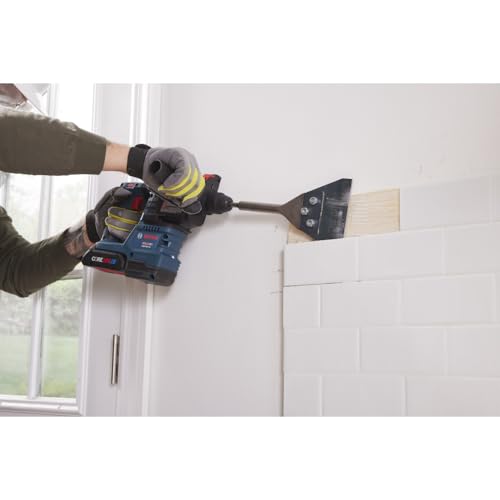
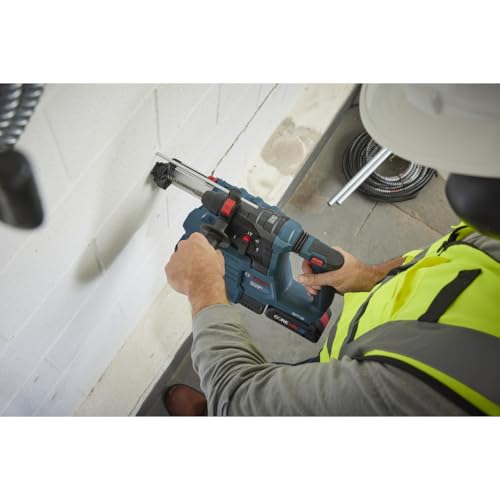
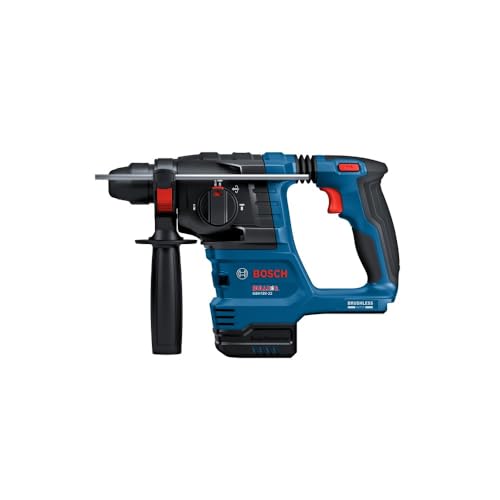
Bosch built the GBH18V-22N to solve a real problem: how to stay OSHA-compliant on dust without sacrificing power. It’s not the most powerful hammer here, but its Kickback Control and compatibility with Pro+Guard dust extraction make it a smart pick for indoor jobs where silica safety is essential. The brushless motor delivers solid runtime, and at 5.1 lbs, it’s one of the lightest full-featured SDS-Plus hammers available.
Owners praise its variable-speed trigger for precision starting in tile or finished walls. Compared to Milwaukee’s M18, it’s slightly less aggressive in raw drilling speed but more refined in control. The Vario-Lock chisel positioning is smooth and holds tight, something contractors doing overhead chiseling will appreciate. For remodelers or electricians in regulated environments, this is a no-brainer.
Product photos
Cordless SDS Hammer Drill for Dewalt 20V

Strengths
- 2.5 Joules impact
- 6,200 BPM
- Works with Dewalt 20V batteries
Trade-offs
- Unknown long-term reliability
- No brand service network
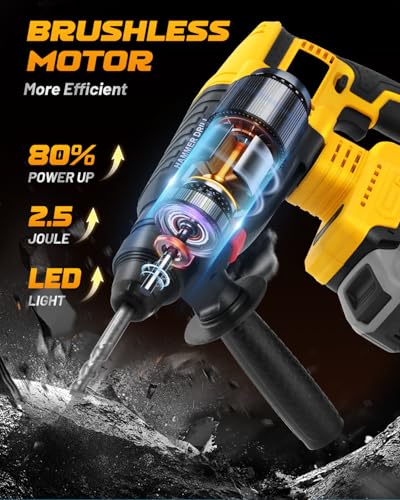
This no-name cordless hammer is a value play with surprising specs, 6,200 BPM and 2.5 Joules of impact puts it on par with DEWALT’s DCH133B. The brushless motor and 4-in-1 mode selector are legit upgrades over basic models, and owners say it handles 3/4-inch holes without issue. The safety clutch and thermal protection are thoughtful touches for a budget tool.
It’s not built like a Milwaukee or Bosch, and long-term durability questions remain, but for DIYers who already own DEWALT 20V batteries and need an occasional hammer, it’s hard to ignore. Compared to paying full price for a branded bare tool, this kit with 5 bits and a case is the smarter buy if you’re not running it 40 hours a week.
Product photos


How We Evaluated rotary hammer drills
As someone who’s spent years around power tools, I know that choosing a rotary hammer drill isn’t about flashy specs alone. My approach to recommending these tools involved a deep explore published specifications – impact energy, BPM, weight, and motor amperage – alongside careful consideration of owner reviews and insights from professional sources. Rather than a hands-on lab test, this is a research-led comparison of features and real-world feedback, helping me rank models against clear performance criteria.
For rotary hammer drills, I placed the most weight on impact energy and motor amperage. These directly translate to the tool’s ability to tackle tough concrete and masonry. Durability is also key; I looked for features like brushless motors and robust build quality that suggest a longer lifespan. Finally, weight and ergonomics matter significantly, especially for prolonged use, as user comfort impacts efficiency and accuracy.
Specifications reliably indicate a drill’s raw power and physical characteristics. However, I turned to owner feedback to gauge real-world performance, particularly concerning vibration control, bit changes, and overall build quality. Reputable expert reviews helped validate those claims and highlighted potential weaknesses. If you need something even more robust, you might consider looking at heavy-duty SDS Max hammers for larger projects.
What To Look For In rotary hammer drills
Picking the right rotary hammer can make a huge difference, especially if you’re tackling concrete or masonry projects regularly.
A good rotary hammer balances power (measured in Joules of impact energy), durability, and usability. Focus on the motor amperage for corded models, battery voltage and Amp-hours for cordless, and the chuck type (SDS-Plus is most common for homeowner tasks). Consider vibration control and weight, especially for extended use. Look for multiple modes – rotary only, hammer drill, and hammer only – for versatility.
Power and Impact Energy
The heart of any rotary hammer is its ability to deliver impact energy. Don’t get hung up on amperage alone (for corded models); Joules are what truly matter. More Joules mean faster drilling and easier demolition. For lighter tasks like hanging shelves or running small wires, a hammer with 1.5 to 2 Joules might suffice. But if you’re regularly working with thicker concrete, rebar, or doing serious demolition, you’ll want to look at models delivering 5 Joules or more. I often recommend stepping up to a heavier-duty model than you think you need; it’s better to have power in reserve.
Mode Versatility and Chuck Type
Most rotary hammers offer multiple modes, and having all three – rotary only, hammer drill, and hammer only – is vital. Rotary only is for wood or metal, hammer drill is for general concrete drilling, and hammer only is for demolition or chiseling. Beyond that, pay close attention to the chuck type. SDS-Plus is the most common for typical homeowner and DIY projects, offering a good balance of power and bit availability. SDS-Max is for heavier-duty professional work.
Here’s a breakdown of what to expect in terms of bit compatibility: * SDS-Plus bits are widely available and affordable. * SDS-Plus bits are suitable for concrete up to about 1 inch in diameter. * For larger diameter holes or more aggressive demolition, SDS-Max bits and hammers are a must, though they add significantly to the tool’s weight and cost.
Ergonomics and Features
A rotary hammer can be a tiring tool to use, so ergonomics matter. Vibration control is a huge factor here. Features like anti-vibration systems (AVS in Milwaukee tools, for example) can significantly reduce fatigue during extended use. A side handle is essential for control, and adjustable handles are even better.
A rotary hammer is only as good as its ability to stay comfortable in your hands. Don’t underestimate the value of a well-designed grip and vibration control.
If you’re already invested in a particular battery platform, exploring options like the DEWALT 20V MAX SDS Plus models or the Milwaukee M18 line can save you money and keep your shop consistent. For those looking for a range of options, checking out top cordless rotary hammers is a good starting point. For a broader overview of available models, read through our premium rotary hammer picks.
Rotary Hammer Drills Compared
Here’s a comparison of key specifications for several rotary hammer drills to help you make an informed decision.
| Product Name | Voltage | Impact Energy (Joules) | Max. RPM | Max. BPM | Chuck Type | Weight (lbs) |
|---|---|---|---|---|---|---|
| ENEACRO 1-1/4 Inch SDS-Plus | 120V | 7.4 | 820 | 4200 | SDS-Plus | 12.58 (bare) |
| Deshuo 1-1/4″ SDS-Plus | 120V | 5.5 | 940 | 4300 | SDS-Plus | 11.44 |
| BOSCH 11255VSR Bulldog Xtreme SDS | 120V | 2.0 | 1300 | 5800 | SDS-Plus | N/A |
| DEWALT 20V MAX SDS Plus Compact | 20V | 1.4 | N/A | N/A | SDS-Plus | 5.3 |
| DEWALT 20V MAX 1″ SDS Plus D-Handle | 20V | 2.6 | N/A | N/A | SDS-Plus | N/A |
| Milwaukee M18 Brushless SDS Plus D-Handle | 18V | N/A | N/A | N/A | SDS-Plus | 5.3 |
| Bosch GBH18V-22N 18V Brushless SDS | 18V | 1.4 | 1050 | 4675 | SDS-Plus | 5.1 (tool only) |
| Cordless SDS Hammer Drill for Dewalt 20V | 20V | 2.5 | 1200 | 6200 | SDS-Plus | N/A |
Frequently Asked Questions
What impact energy is sufficient for most homeowner projects?
Around 1.5 to 2 Joules of impact energy is generally enough for common tasks like hanging items or drilling small holes in concrete. However, if you anticipate more demanding work, stepping up to a model with 5 Joules or more is a wise investment.
Are cordless rotary hammers as powerful as corded ones?
Cordless rotary hammers have closed the performance gap considerably, but high-power corded models still generally deliver more consistent power for extended periods. Battery technology is improving quickly, though, and many 18V or 20V models are perfectly capable for most jobs.
What’s the difference between SDS-Plus and SDS-Max?
SDS-Plus is the standard chuck for most homeowner and light-duty professional applications, accommodating bits up to about 1 inch in diameter. SDS-Max is a larger, more robust system designed for larger holes and heavier demolition work, and requires a more powerful hammer.
Can a rotary hammer be used on wood or metal?
Yes, most rotary hammers have a mode for rotary-only drilling, which allows them to function like a standard drill for wood and metal. Just be sure to switch to the appropriate mode and use standard drill bits, not SDS-Plus or SDS-Max bits.
Where can I find more in-depth reviews of specific models?
You can find more detailed comparisons and reviews of specific rotary hammer drills, including some of the best rotary hammer models 2021, on PowerToolGuide.net and other reputable tool review websites.
The Bottom Line
Choosing a rotary hammer always comes down to balancing power with practicality. If you need a workhorse for serious concrete work, the ENEACRO 1-1/4 Inch SDS-Plus stands out with its high impact energy and robust build. However, for most homeowners and DIYers, that level of power isn’t necessary, and you’ll likely be happier with a lighter, more manageable option.
For those on a budget, the Deshuo 1-1/4″ SDS-Plus offers a solid combination of features and performance at a competitive price. If you’re already invested in the DEWALT 20V MAX platform, the DEWALT 20V MAX SDS Plus Compact provides convenient cordless operation and bit compatibility. And for those seeking a wide range of options with SDS chucks, exploring top SDS-compatible hammer drills is a great place to start.
Ultimately, the most important factors are choosing a drill that feels comfortable in your hands and has the features you’ll actually use. Don’t get lost in the numbers; focus on impact energy for the tasks you face, prioritize vibration control for extended use, and remember that a well-built tool with the right features will always outperform a spec sheet.
