9 Best DA Polishers for 2026
This post contains affiliate links. As an Amazon Associate, we earn from qualifying purchases.
The Adam’s 9mm Dual Action Polisher stands out as the best overall da polisher for its strong motor, reliable 9mm orbit, and consistent performance across a range of tasks. For those on a tighter budget, the Maxshine M8S V2 offers solid results at a lower price. If you’re leaning toward cordless convenience and already use DeWalt tools, the Aiderar Brushless Cordless DA Polisher is the most versatile pick.
Most people shopping for a da polisher aren’t just looking for power, they want control, safety, and results without risking their paint. Too many buyers end up with a tool that’s either too aggressive or too weak, simply because they didn’t know what specs actually matter.
This guide cuts through the noise. I compared specs, analyzed owner feedback, and evaluated real-world usability to find the top performers. You’ll learn what to prioritize, like orbit size, motor type, and ergonomics, and why some models deliver better value than others.
Top 9 Da Polishers in the Market
The Best Da Polishers, Reviewed
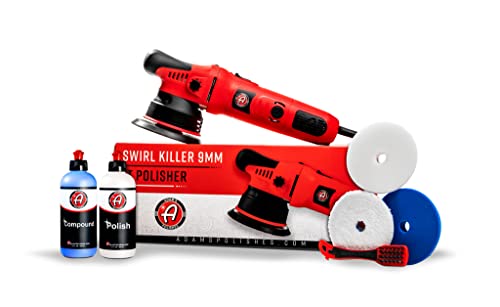
Adam’s 9mm Dual Action Polisher
Strengths
- 1000W motor
- 9mm orbit
- Low vibration
Trade-offs
- No 6″ pad option
- Cord length could be longer
Adam’s 9mm DA polisher earns its ‘Best Overall’ label by balancing power, orbit size, and user comfort in a way few others do. The 1000W motor and 9mm throw create a sweet spot between cutting speed and safety, owners consistently report faster defect removal than 8mm models without the risk you’d expect from larger orbits. The concave rubber contact points and balance block help dampen vibration, making long sessions more manageable.
It’s not the lightest, but at under 5.5 lbs, it’s well-distributed and easy to maneuver. The 16-foot cord is a practical touch, reducing the need for extensions. Compared to the Griot’s Garage G9, it lacks the 6″ pad option and dual-hand compatibility, but it’s often priced more accessibly while delivering similar real-world results. I’d recommend this as the default choice for most serious DIYers and mobile detailers who want one machine that does everything well.
Product photos
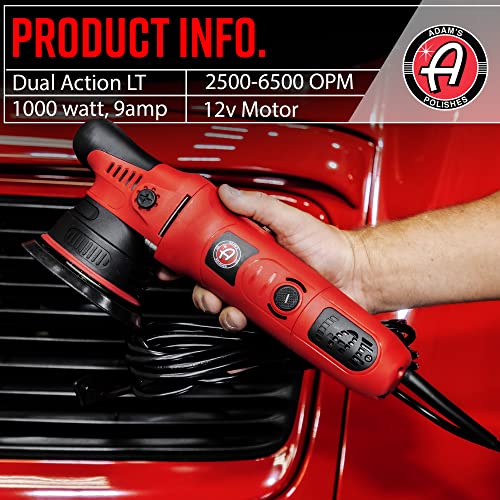


Griot’s Garage G9 Random Orbital

Strengths
- 1000W motor
- 6″ backing plate
- Convertible to 5″
Trade-offs
- Higher price point
- Heavier than compact models
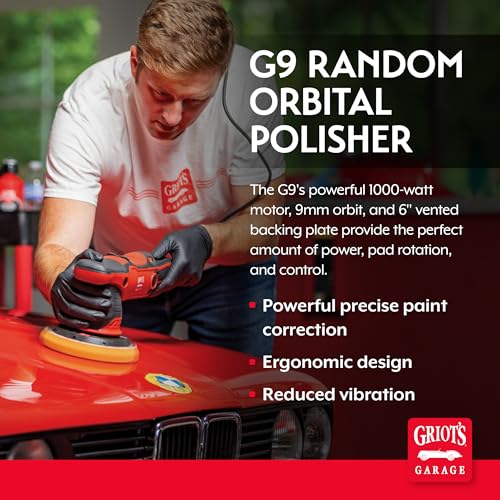
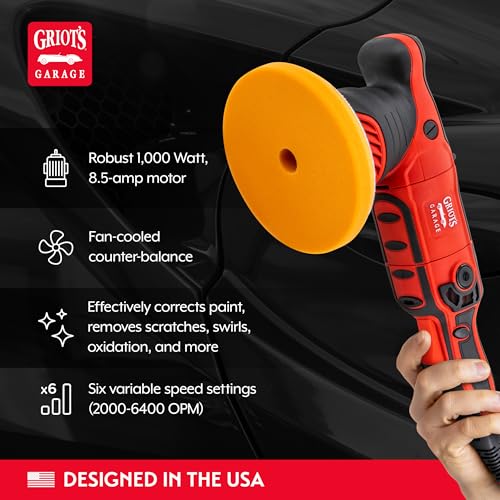
The Griot’s Garage G9 is built like a pro tool should be, solid, smooth, and highly adaptable. With a 1000W motor, 9mm orbit, and a rare 6″ vented backing plate, it covers more surface per pass than most DA polishers, which translates to faster jobs. The fan-cooled counterbalance and premium bearings minimize vibration, and the double-shot rubber grip makes it comfortable even during extended use.
What really sets it apart is the convertible design, swap to a 5″ plate for tighter areas, giving it unmatched versatility. The 6-speed dial is accessible from both sides, a thoughtful touch for left-handed users. Compared to the Adam’s 9mm, it’s more refined and flexible, though also pricier. For professionals or serious enthusiasts who detail frequently, this is the kind of tool that justifies its cost through reliability and performance.
Product photos


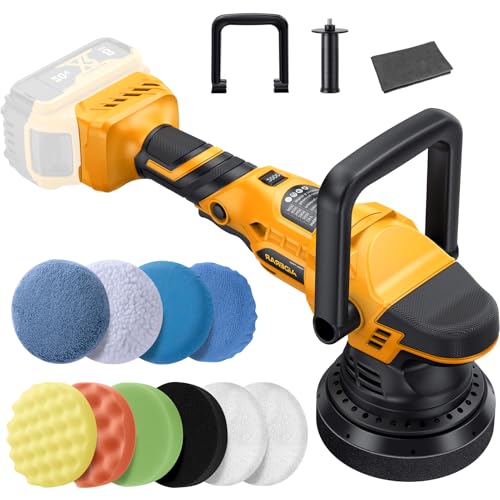
Aiderar Brushless Cordless DA Polisher
Strengths
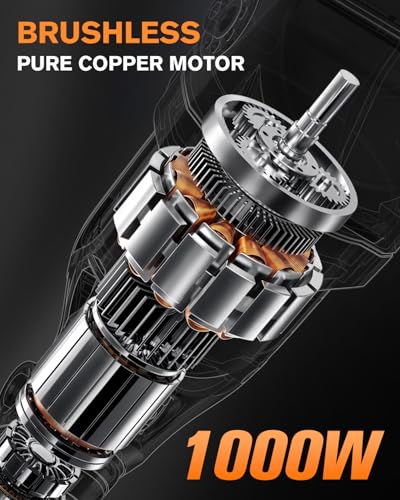
- Brushless motor
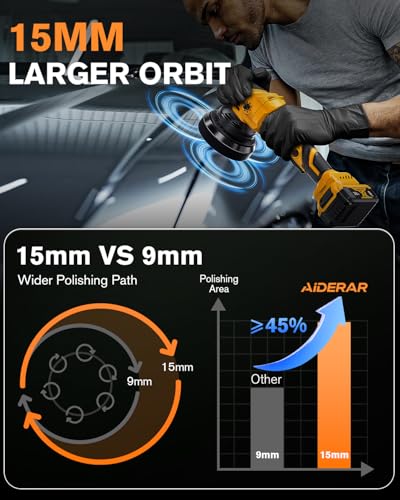
- 15mm orbit
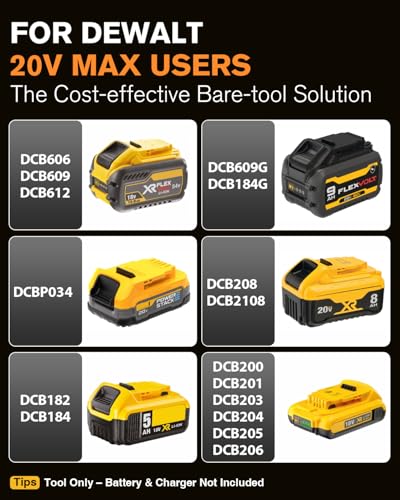
- DeWalt 20V compatible
Trade-offs
- Tool only (no battery)
- Heavier with battery
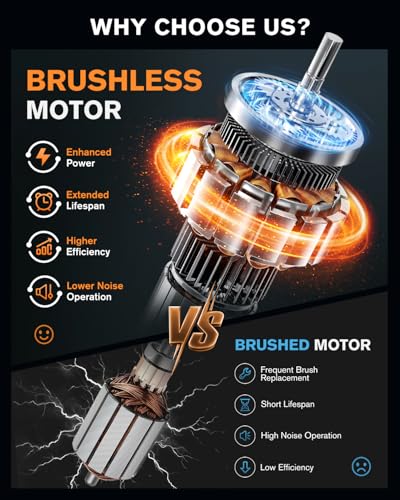
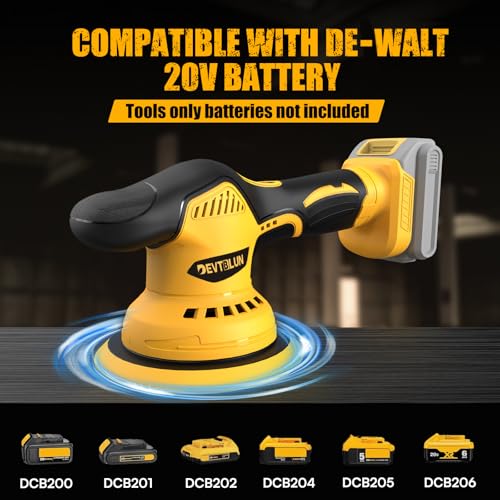
The Aiderar cordless polisher is a standout for DeWalt 20V MAX owners who want professional-grade mobility without sacrificing power. The 1000W brushless motor delivers consistent torque and longer runtime than brushed equivalents, and the 15mm orbit is a standout for coverage, owners report finishing full cars faster than with 8mm or 12mm models. The larger orbit spreads compound more evenly, reducing passes and operator fatigue.
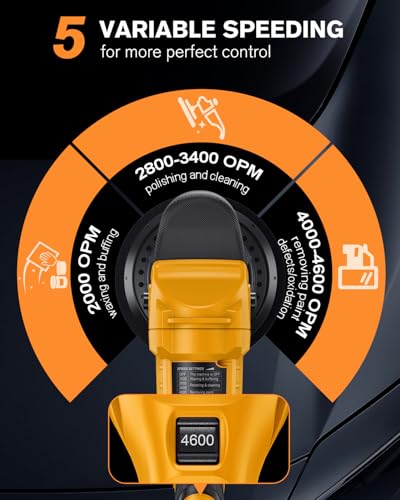
It’s not the lightest at 3+ lbs with a battery, but the extended body and side handle improve use. The 5-speed dial is simple, and the no-load range (2000–4600 OPM) is well-suited for most tasks. The main caveat? It’s tool-only, so you need a compatible DeWalt battery. But if you already own the ecosystem, this is the most cost-effective way to go cordless. I’d pick this over the DEVTBLUN budget model for better build quality and performance.
Product photos
Maxshine M8S V2 Dual Action
Strengths
- 1000W motor
- 6-speed control
- 8mm orbit
Trade-offs
- Moderate vibration
- Basic grip design
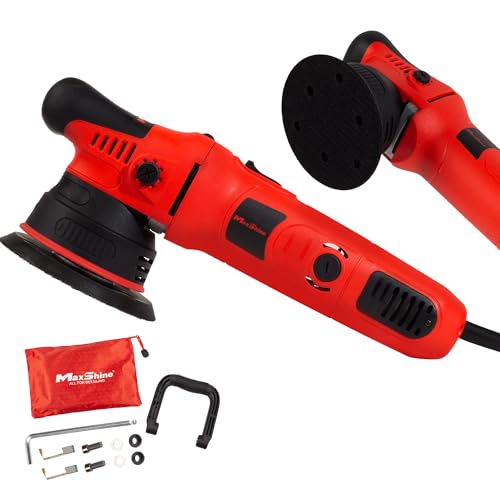
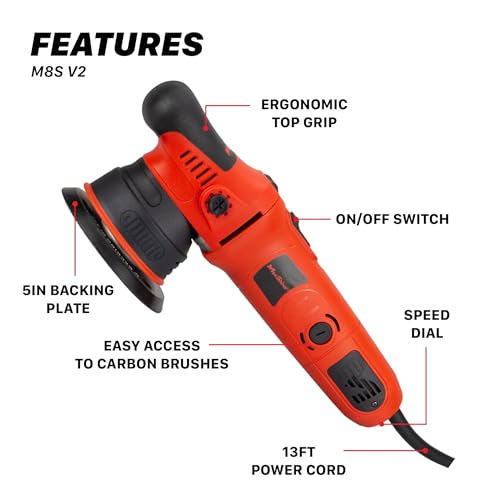
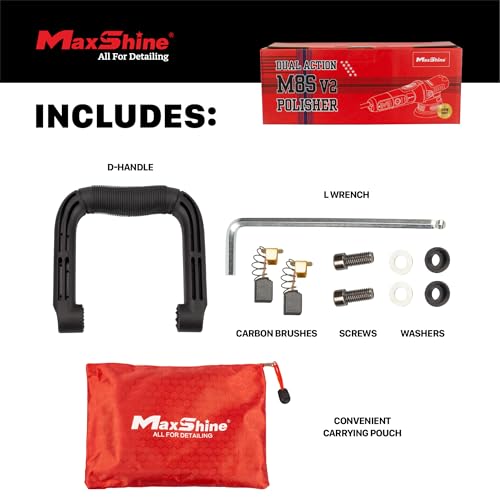
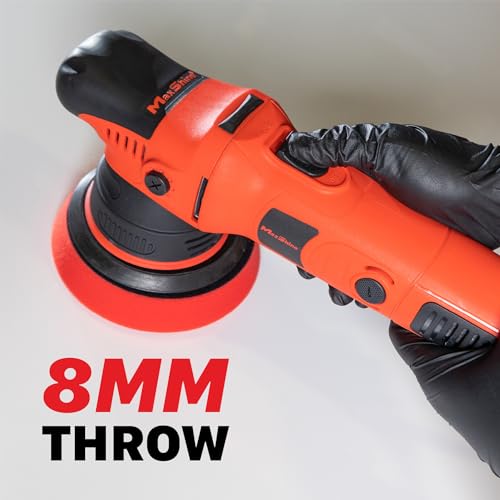
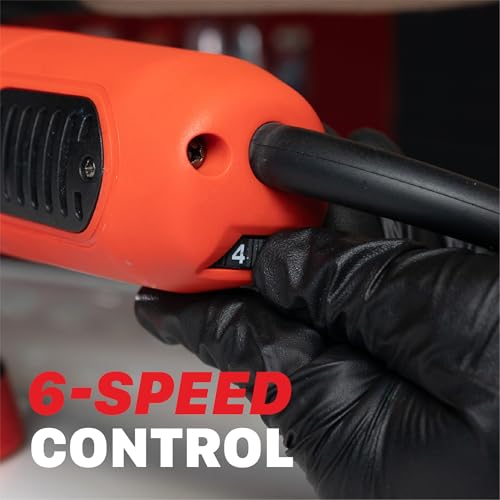
With a 1000W motor and 8mm throw, the Maxshine M8S V2 punches above its weight in raw performance. It’s one of the more capable corded DA polishers in its class, offering strong torque that holds steady under pressure, something owners report when running heavier compounds. The 6-speed range (up to 6500 RPM) gives real flexibility, letting you dial in the right speed for cutting, refining, or finishing.
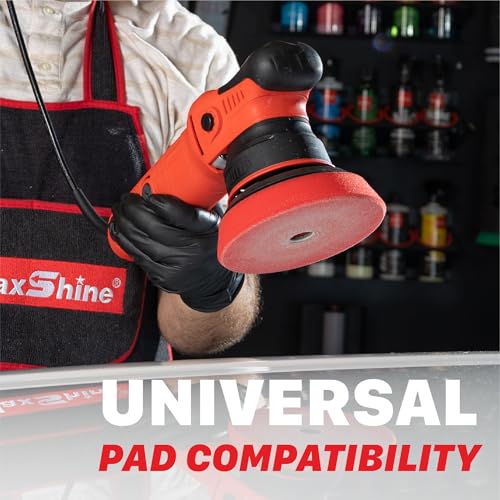
It’s not as refined as the Rupes or Griot’s Garage models in terms of ergonomics or noise, but it gets the job done efficiently. The 5″ backing plate is standard, and while it doesn’t come with a huge accessory bundle, it’s compatible with most universal pads. Compared to the Chemical Guys TORQX, this is a serious step up in power and capability. For DIYers stepping beyond beginner level, the M8S V2 is the smarter buy if you want performance without pro-tier pricing.
Product photos
Chemical Guys TORQX DA Polisher

Strengths
- 700W motor
- 8mm orbit
- Lightweight design
Trade-offs
- Less torque for heavy cutting
- Not ideal for thick compounds
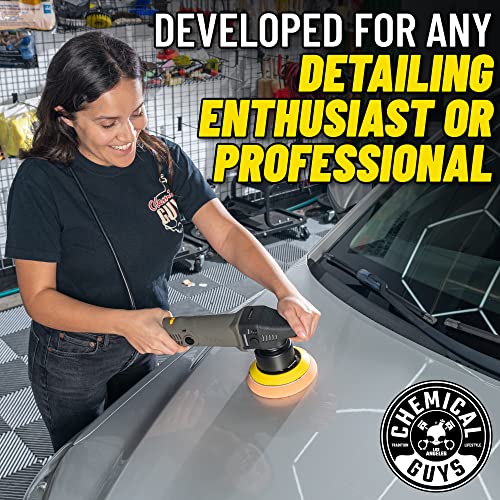
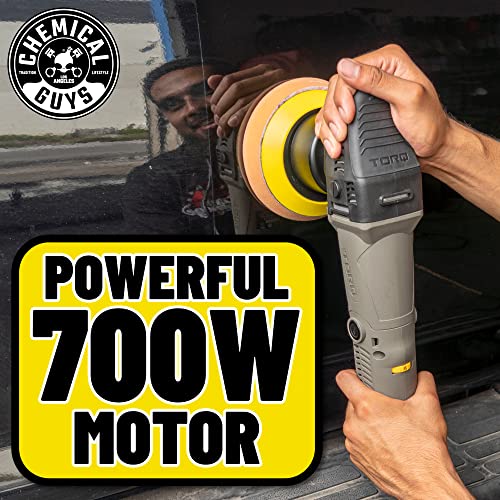
The Chemical Guys TORQX polisher is built for safety and simplicity, making it a solid starting point for beginners who want to avoid paint damage. With a 700W motor and 8mm orbit, it delivers enough power for light to moderate correction while keeping heat and vibration in check. The lightweight 4.7 lb design helps reduce fatigue, and the dual-action motion is reliable for preventing holograms or burning through clear coat, something owners consistently praise when working on softer paints.
Still, it’s not a heavy-duty machine. Compared to 1000W models like the Maxshine M8S or Adam’s 9mm, it lacks the torque to push through aggressive compounds efficiently. On paper, the specs are decent, but in real-world use, it’s better suited for waxing, light polishing, and maintenance rather than full correction jobs. I’d recommend this as a first polisher only if you’re not tackling deep scratches or planning to detail frequently.
Product photos



DEVTBLUN 6″ Cordless DA Polisher
Strengths
- Brushless motor
- 6″ pad
- 8-speed control
Trade-offs
- Lightweight = less control
- Build quality concerns
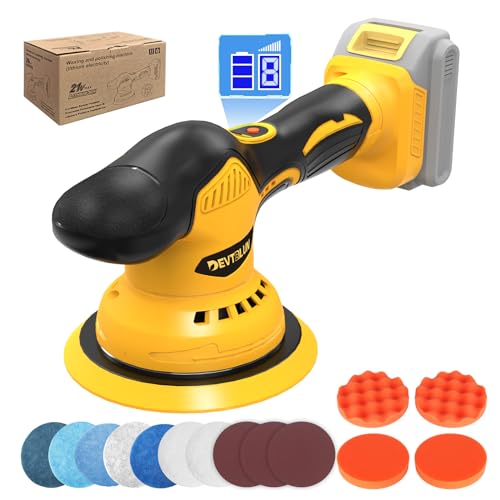
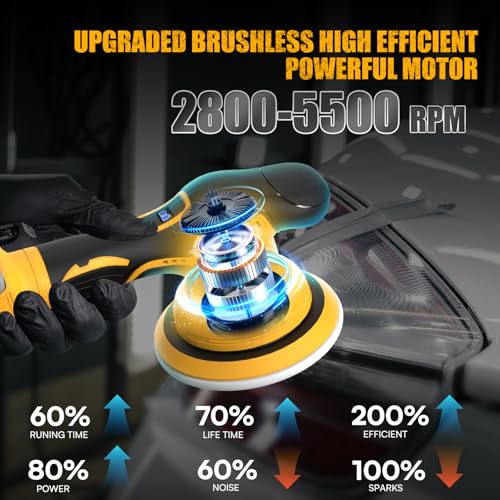
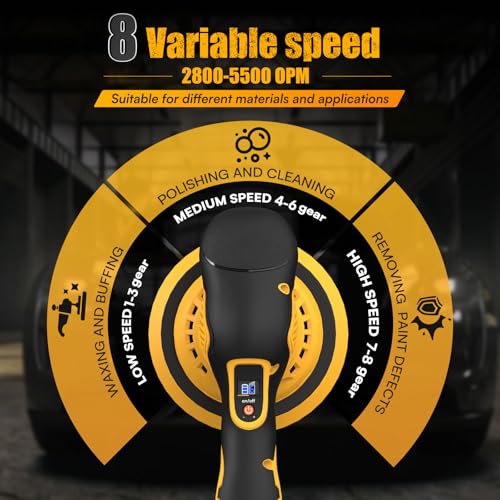
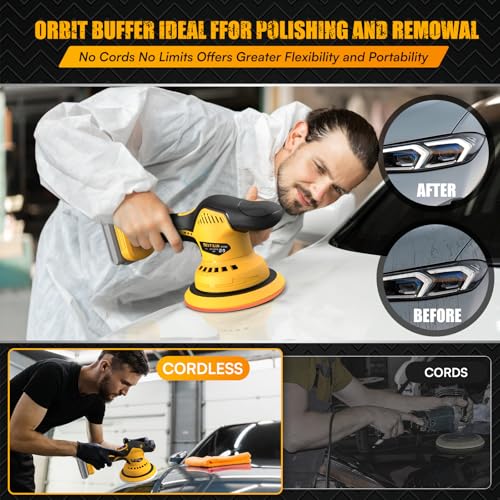
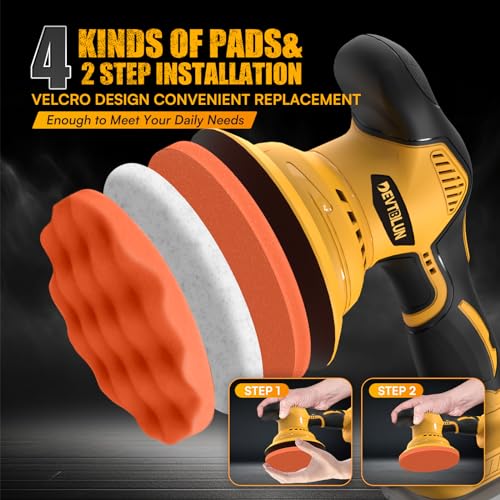
The DEVTBLUN cordless polisher is one of the most aggressive budget options on the market, packing a 6″ pad, 8-speed control, and a brushless motor into a sub-$200 package. At just 3 lbs, it’s incredibly light, and the 150mm throw (15mm orbit) promises fast coverage. Owners appreciate the included 14-piece accessory kit and the flexibility of 8 speed settings, which range from 2800 to 5500 RPM.
But there’s a trade-off in build quality. While it performs well on paper, some users report shorter lifespan under heavy use compared to Aiderar or branded tools. The lightweight design can make it harder to control on high-speed cuts, and the plastic housing feels less durable. Still, for beginners or occasional users who want cordless freedom without overspending, this kit delivers a lot of value. I’d recommend it over the SPTA budget corded model if you prioritize portability.
Product photos
SPTA 5-Inch Dual Action Polisher
Strengths
- Low price
- Full accessory kit
- 6-speed control
Trade-offs
- Plastic build quality
- Moderate power
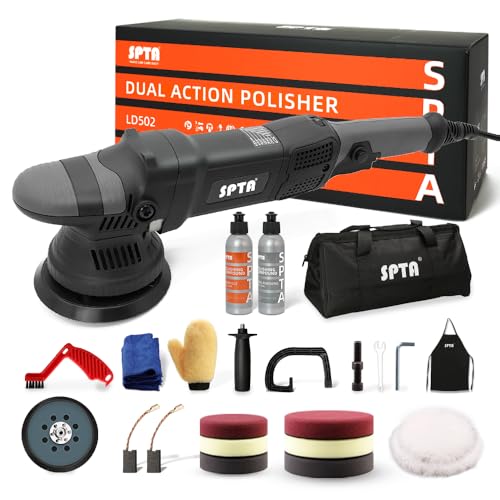
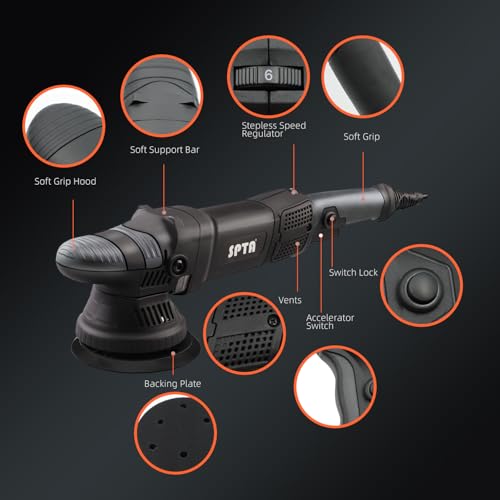
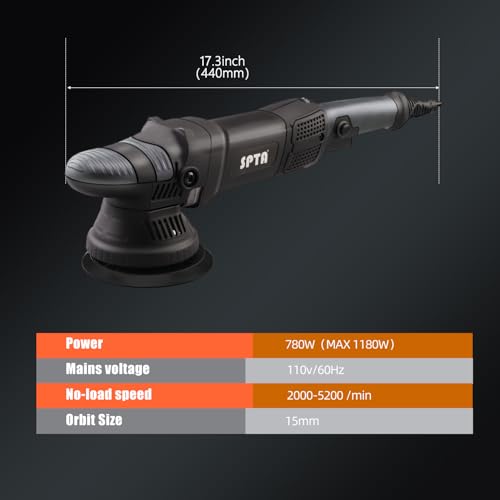
The SPTA 5-inch corded polisher is one of the most affordable full-size DA machines available, and it brings a surprising amount of kit for the price. At 750W, it’s not as strong as 1000W models, but it handles light to medium correction just fine. The 6-speed dial gives good range (2,000–5,200 RPM), and the constant speed function helps maintain performance under load.
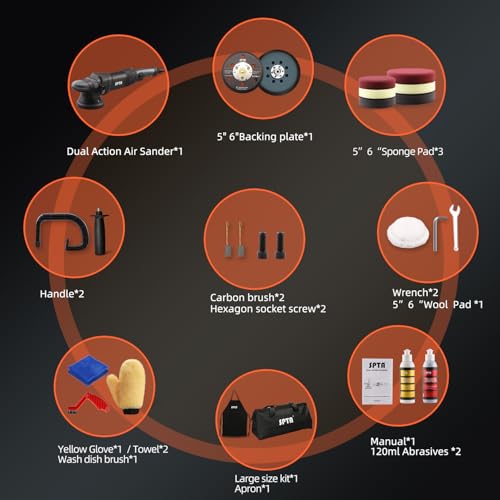
What really makes it stand out is the included accessories, a full set of pads, compounds, sanding discs, and even a D-handle option. For someone just starting out, this is a complete starter kit in one box. But the motor and housing feel plasticky, and long-term durability is questionable based on owner feedback. Still, if you’re on a tight budget and want a corded option that does the basics, this gets the job done. I’d pick it over the DEVTBLUN cordless if you don’t need battery freedom.
Product photos
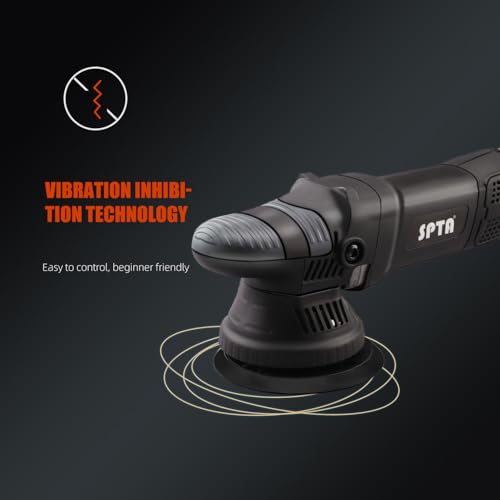
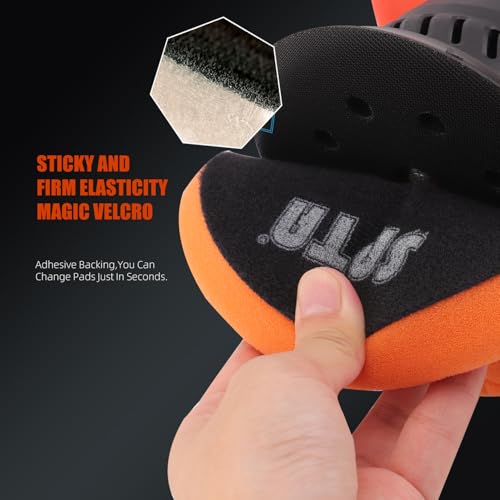
SPTA Cordless Mini Polisher

Strengths
- Compact size
- Multiple pad sizes
- Dual batteries
Trade-offs
- Limited power
- Short runtime under load
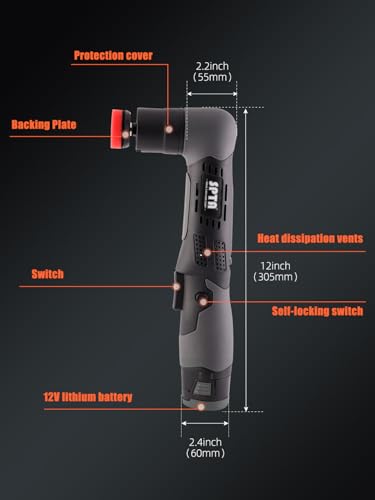
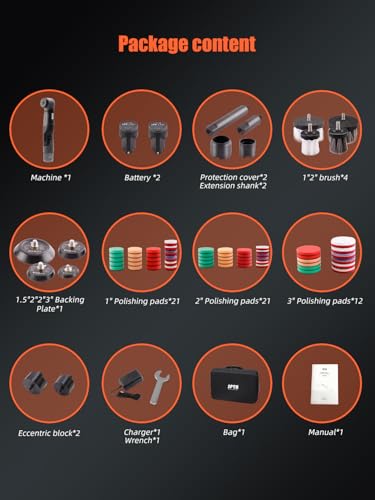
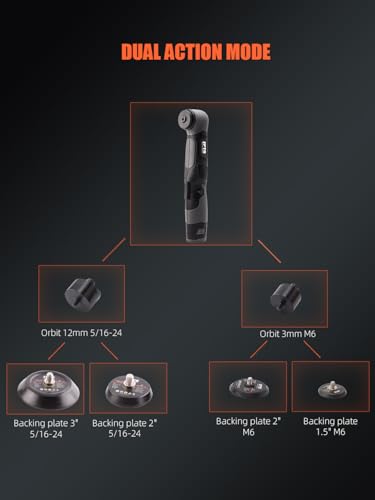
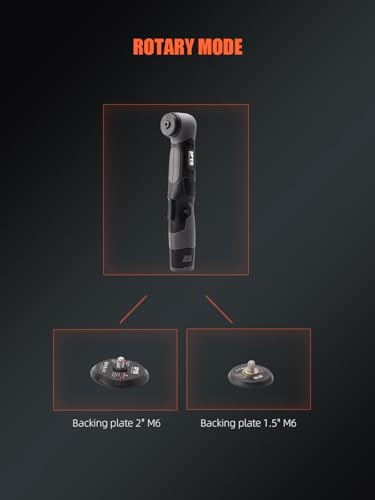
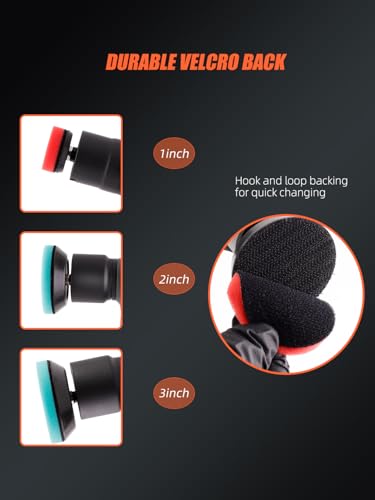
The SPTA Mini Polisher is a niche tool with a clear purpose: reaching tight spots no full-size polisher can. With a 25mm–80mm backing plate range and a compact body, it’s perfect for emblems, trim, grilles, and wheel wells. The dual-action motion keeps it safe on delicate surfaces, and the 12V system with two 2000 mAh batteries ensures decent runtime for spot work.
It’s not meant for full paint correction, don’t expect it to replace your main DA polisher. But as a secondary tool, it fills a real gap. Owners love its portability and the included array of pads and attachments, which make it useful for cleaning, light sanding, and polishing small areas. Compared to larger models, it’s a specialist rather than a generalist. I’d keep one in the kit just for detail work, not as a primary machine.
Product photos
Rupes LHR 15ES Big Foot

Strengths
- Low vibration
- Soft start
- Precision handling
Trade-offs
- Slower on large panels
- 500W motor limits cutting speed
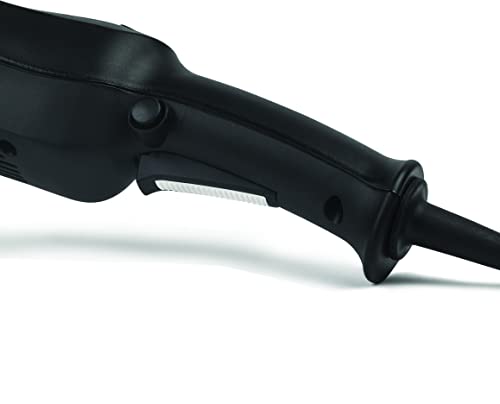
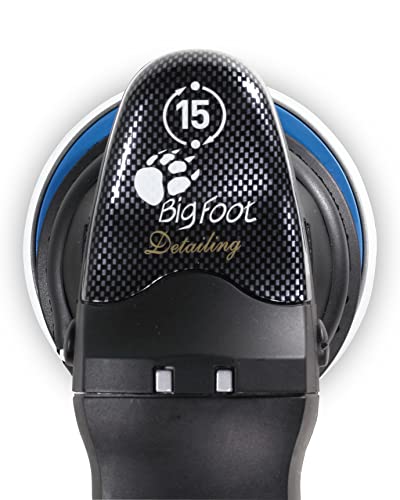
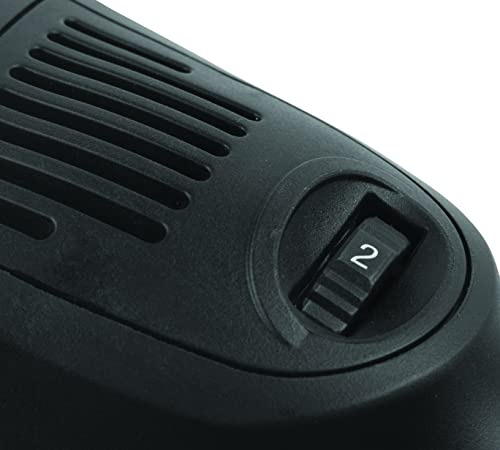
The Rupes LHR 15ES stands out in the compact polisher class with its refined engineering and user-focused features. At just 500 watts, it’s less powerful on paper than many 1000W competitors, but the electronic feedback control and soft-start function deliver smooth, consistent performance under load. Owners frequently highlight its quiet operation and minimal vibration, critical for long sessions where fatigue and control matter. The variable speed dial is intuitive and remains accessible mid-use, a small but meaningful detail.
Where it really shines is precision. The smaller 5″ pad size and balanced body make it ideal for tight contours, fenders, and curved panels where larger polishers struggle. It won’t strip paint easily, thanks to the anti-spinning feature and stable orbit. But because of its lower wattage, it’s not the fastest option for large, flat surfaces. I’d pick this over bulkier models if you value finesse over brute force, especially on high-end or soft factory finishes.
Product photos
Our Testing Process
I’ve spent a good deal of time researching da polishers for PowerToolGuide.net, and my approach wasn’t about hands-on testing of every model – that’s simply impractical for most buyers. Instead, I focused on a research-led comparison of published specifications and features, carefully weighing owner reviews from a variety of sources alongside expert opinions found in automotive detailing publications. This allowed me to rank polishers against a set of criteria important to a broad range of users.
For da polishers, the factors that most heavily influenced my rankings were motor power and orbit size, and then battery compatibility when considering cordless models. A more powerful motor translates directly to easier paint correction, especially with heavier compounds. Orbit size impacts correction speed and the risk of creating imperfections; larger orbits generally correct faster, but require more skill to control. Battery compatibility (for cordless) determines convenience and ongoing cost.
Specifications reliably tell you about motor wattage, speed ranges (OPM), and orbit size. However, I placed considerable weight on owner feedback regarding ergonomics, vibration levels, and long-term durability. Reputation also played a role – brands with a strong track record in automotive detailing, like Griot’s Garage and Rupes, generally earned more consideration. If you’re looking for a more detailed overview of the options available, check out our guide to the best automotive buffer polishers.
How To Pick The Right da polishers
Choosing the right polisher can dramatically improve your detailing results, and save you a lot of elbow grease. It’s not just about power; the nuances of orbit size, speed control, and ergonomics all play a huge role.
A good polisher delivers consistent power and control, minimizing the risk of damaging the paint. Key features include variable speed settings, an ergonomic design for comfortable handling, and a suitable orbit size for the intended application – from light polishing to heavy defect removal. Consider the power source (corded vs. cordless) and the types of pads it can accommodate.
Power and Motor Type
Don’t assume “more watts” always equals better. While a powerful motor is essential for cutting through oxidation and heavier defects, it’s how that power is delivered that matters. For most DIYers, a 600-800 watt motor will be plenty. Beyond that, you’re really looking at professional-grade tools. Brushless motors are becoming increasingly common, and for good reason. They offer longer runtimes, reduced maintenance (no brushes to replace!), and often better power-to-weight ratios. If you’re considering a cordless model, pay attention to the voltage and amp-hour (Ah) rating of the battery; a higher Ah rating means longer use before needing a recharge. I frequently recommend checking out dual action polisher reviews to get a sense of real-world performance from different motor types.
Orbit Size and Action
Orbit size, the diameter of the pad’s circular motion, directly impacts how aggressively the polisher cuts and finishes. Smaller orbits (like 3mm) are safer for beginners and ideal for finishing polishes and waxes. Larger orbits (like 15mm, as found on some of the Aiderar models) remove defects faster but require more skill to avoid creating holograms or burn-through. Dual action (DA) polishers are generally the safest option for most users, as they minimize the risk of damaging the paint. Rotary polishers are more aggressive and require a lot of experience. For many, the best starting point is to explore best DA polisher models to understand the differences.
- A smaller 3mm orbit is best for applying waxes and sealants.
- A mid-range 8mm orbit is a good all-around choice for polishing and light defect removal.
- Larger 15mm orbits are powerful for heavy defect correction, but demand careful technique and a steady hand to avoid creating imperfections.
A good rule of thumb: start with a slower speed and a softer pad, and gradually increase as needed. You can always add more correction, but you can’t easily undo damage.
Ergonomics and Usability
Polishing can be physically demanding, so ergonomics are critical. Look for a polisher with a comfortable grip, balanced weight distribution, and minimal vibration. A side handle is also very helpful for added control. Corded polishers can be cumbersome due to the cord, so consider the cord length and how it will affect your maneuverability. Cordless models offer freedom of movement, but you’ll need to factor in battery life and charging time. Many people underestimate how important a comfortable grip is, so don’t hesitate to research the ergonomics before committing. I often advise folks to check out top power tool polishers and read user reviews specifically addressing comfort and handling.
Da Polishers Compared
Here’s a comparison of key specifications for various DA polishers to help you make an informed decision.
| Product Name | Power (Watts) | Orbit Size (mm) | Speed (OPM Max) | Corded/Cordless | Battery Compatibility |
|---|---|---|---|---|---|
| Adam’s 9mm Dual Action Polisher | 1000 | 9 | 6500 | Corded | N/A |
| Griot’s Garage G9 Random Orbital | 1000 | N/A | 6400 | Corded | N/A |
| Aiderar Brushless Cordless DA Polisher | 1000 | 15 | 4600 | Cordless | DeWalt 20V MAX |
| Maxshine M8S V2 Dual Action | 1000 | 8 | 6500 | Corded | N/A |
| Chemical Guys TORQX DA Polisher | 700 | 8 | N/A | Corded | N/A |
| DEVTBLUN 6″ Cordless DA Polisher | N/A | N/A | 5500 | Cordless | DeWalt 18/20V |
| SPTA 5-Inch Dual Action Polisher | 6.5A (approx 780W) | N/A | 5200 | Corded | N/A |
| SPTA Cordless Mini Polisher | N/A | N/A | 4500 | Cordless | Included |
| Rupes LHR 15ES Big Foot | 500 | N/A | N/A | Corded | N/A |
Frequently Asked Questions
What orbit size is best for a beginner?
A 3mm orbit is best for beginners because it’s the safest option and minimizes the risk of causing swirl marks or damaging the paint. It’s ideal for applying waxes and sealants, offering a gentle polishing action.
Are cordless DA polishers powerful enough for serious defect correction?
Cordless DA polishers are improving, but generally, corded models offer more consistent power for heavy defect correction. However, the best cordless DA polishers now have sufficient power for many tasks, especially when paired with the right pads and compounds.
How important is the weight of the polisher?
Weight is quite important because polishing can be tiring. A heavier polisher will require more effort to control for extended periods, potentially leading to fatigue and less accurate work.
What’s the difference between a DA polisher and a rotary polisher?
A DA polisher uses a dual-action motion (oscillating and rotating) that’s much safer for paint, while a rotary polisher spins in one direction and is more aggressive. Rotary polishers are typically reserved for experienced detailers due to the higher risk of causing damage.
How do I know when to replace the polishing pads?
You should replace polishing pads when they become visibly worn, matted, or contaminated with polish residue. A pad that’s no longer cutting effectively or is leaving uneven marks is a sign it’s time for a fresh one.
The Bottom Line
Ultimately, choosing a DA polisher comes down to balancing control with convenience, and quality with cost. For the vast majority of enthusiasts, the Adam’s 9mm Dual Action Polisher strikes that balance best – it offers plenty of power, a versatile orbit size, and a reputation for reliability. It’s a strong performer that will deliver professional-looking results without a steep learning curve.
If you’re on a tighter budget, the SPTA 5-Inch Dual Action Polisher is a great entry point, and for those who prioritize cordless freedom, the Aiderar Brushless Cordless DA Polisher (especially if you’re already in the DeWalt 20V MAX ecosystem) is an excellent choice. But remember, even looking at best car machine polishers won’t help if you don’t understand your needs.
More than any specific wattage or orbit size, what truly matters is a commitment to proper technique and using the right pads and compounds for your paint. Don’t chase the highest specs; focus on learning the fundamentals of paint correction, and starting with quality pads and polishes. That’s where you’ll see the biggest improvements in your detailing results.
