8 Best Roofing Nailers of 2026
This post contains affiliate links. As an Amazon Associate, we earn from qualifying purchases.
The Metabo HPT 18V Cordless Coil Roofing Nailer stands out as the best overall pick for its reliable performance and freedom from a hose, while the AeroPro CN45N Pneumatic Roofing Nailer is a solid budget-friendly alternative that delivers consistent power for demanding jobs.
Roofing nailers aren’t tools you want failing mid-slope. A jam-prone or underpowered model can turn a one-day job into a two-day headache, especially when you’re working under the sun with limited access.
In this guide, I’ll walk you through the top performers based on specs, real-world owner feedback, and years of hands-on experience in tool selection. These picks focus on reliability, ease of use, and durability, because your time and effort deserve tools that keep up.
Top 8 Roofing Nailers in the Market
The Best Roofing Nailers, Reviewed
Metabo HPT 18V Cordless Coil Roofing Nailer

Strengths
- No hose or compressor
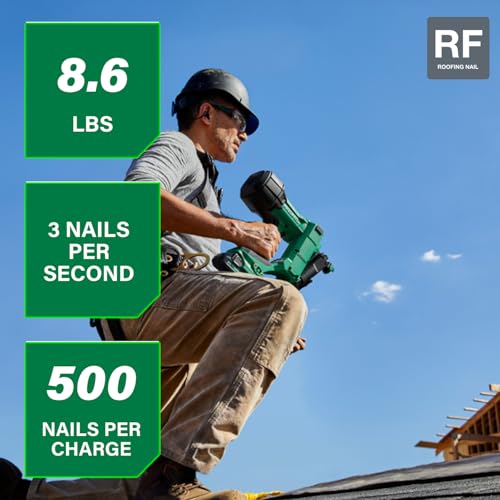
- 500 nails per charge
- Dust and tar resistant
- Lifetime tool warranty
Trade-offs
- Battery sold separately in some kits
- Higher upfront cost
- Magazine smaller than some coil models
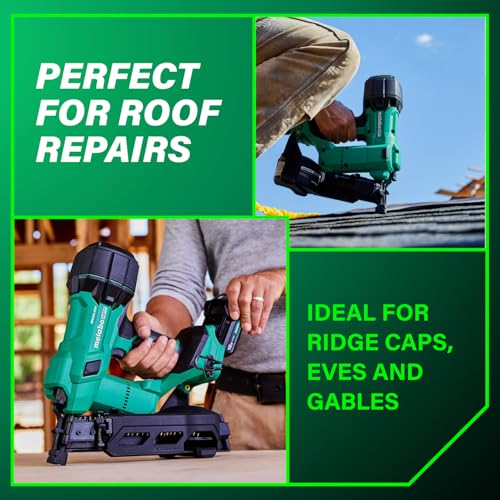
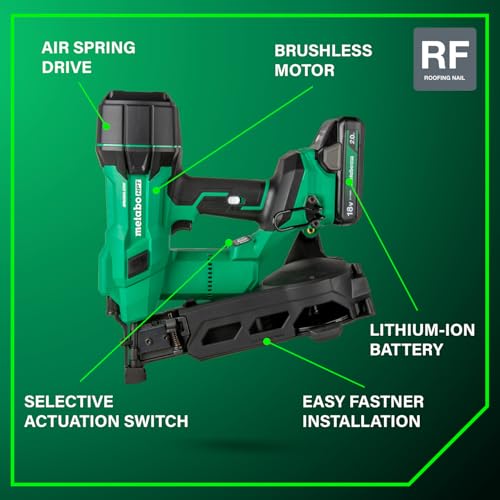
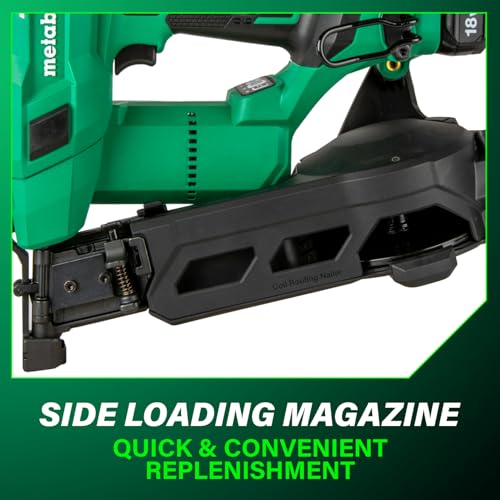
This cordless coil roofing nailer is a standout in the sense that it actually delivers pneumatic-like performance without the hose. The air spring drive system is the real reason it earns the ‘Best Overall’ label, owners report it drives 1-3/4″ nails flush in dense decking with ease, and the 500-nail runtime on a 2.0Ah battery is legit based on field feedback. The dust and tar resistant mechanism is a smart addition, critical on messy roof decks where gunk can kill a driver blade.
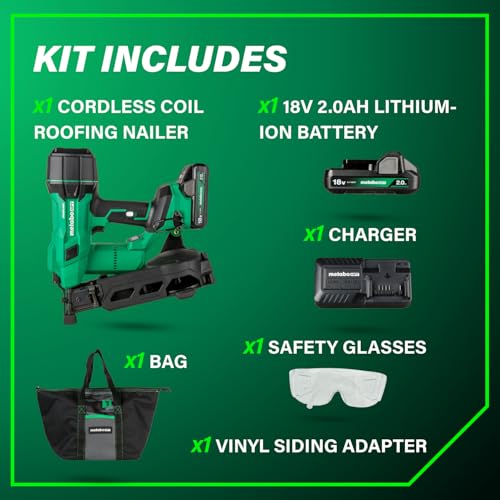
Compared to the DeWalt cordless model, this one feels more refined, better balance, smoother trigger response, and the side-load magazine is genuinely faster. The included vinyl siding adapter is a thoughtful bonus, and the lifetime tool warranty adds serious peace of mind. For anyone tired of dragging compressors up ladders, this is the smarter buy.
Product photos
AeroPro CN45N Pneumatic Roofing Nailer
Strengths
- Lightweight and balanced
- Reduced recoil
- All-metal body
- Includes spare parts
Trade-offs
- No bump firing mode
- Requires regular maintenance
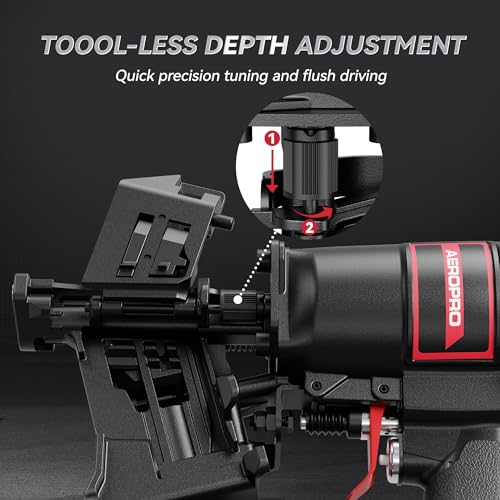
- No tool-free depth adjust wheel
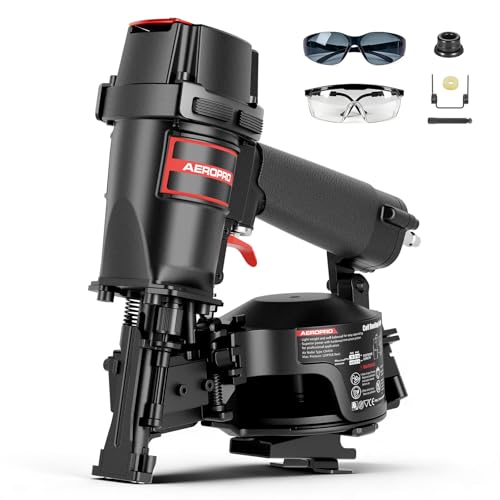
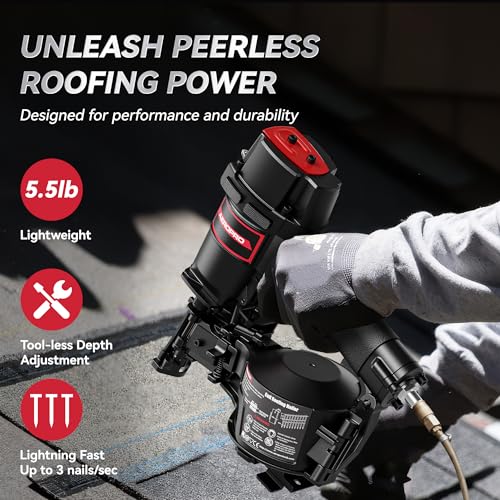
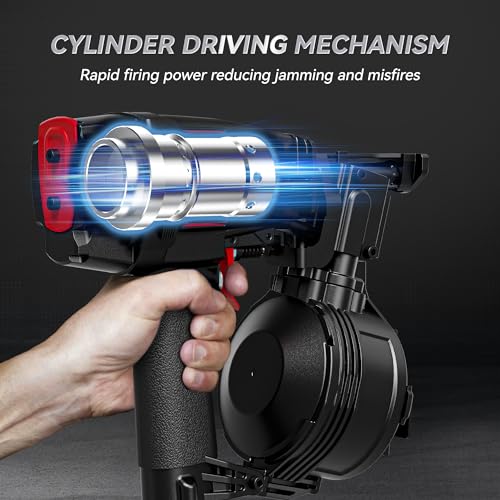
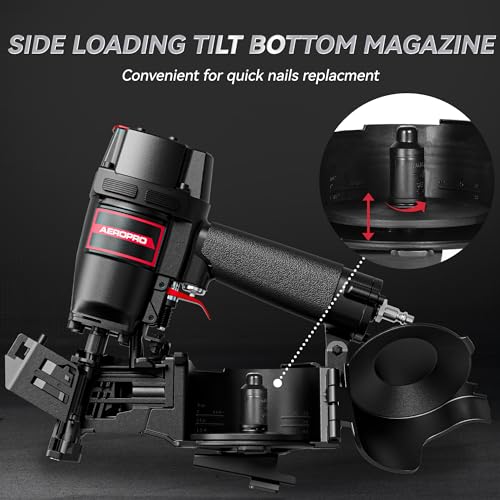
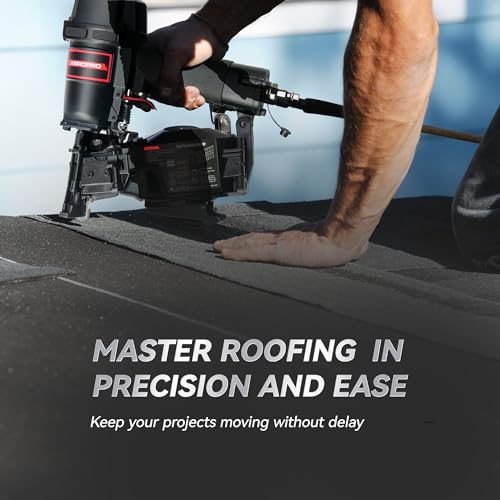
The AeroPro CN45N feels like a contractor-grade tool from the first grip. At just 5.5 lbs, it’s one of the lightest in class, and the balanced design makes it a joy to use all day. Owners consistently highlight the reduced recoil, this nailer doesn’t kick like some budget models, which improves accuracy and comfort. The high-capacity 120-nail magazine and side-loading design mean fewer reloads, and the all-metal body inspires confidence in harsh conditions.
It’s often compared to older Hitachi/Metabo pneumatic models, and that’s high praise. Compared to the Bostitch 15-degree, it’s lighter and smoother, though maybe not quite as serviceable long-term. But for pros who value control and consistency, this is a top-tier choice. The included spare parts are a nice bonus, something most brands charge extra for.
Product photos
DeWalt 20V MAX Brushless Cordless Roofing Nailer

Strengths
- Brushless motor
- Bump firing mode
- Tool-free nail tray
Trade-offs
- Slightly lower drive power
- Battery not included
- Shorter runtime than Metabo
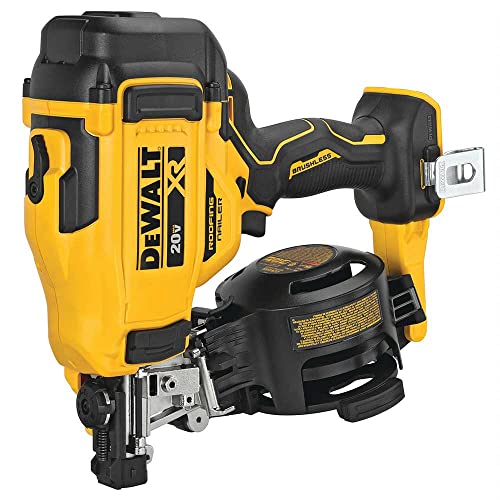
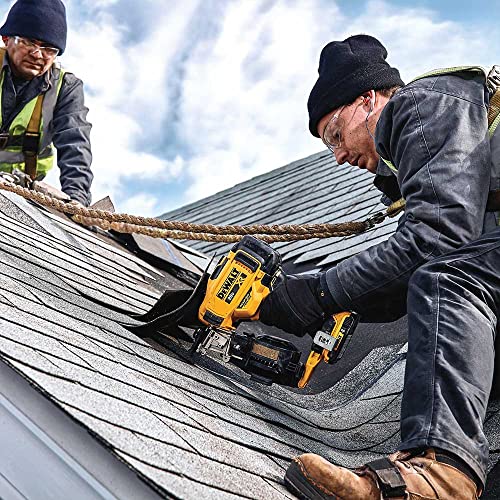
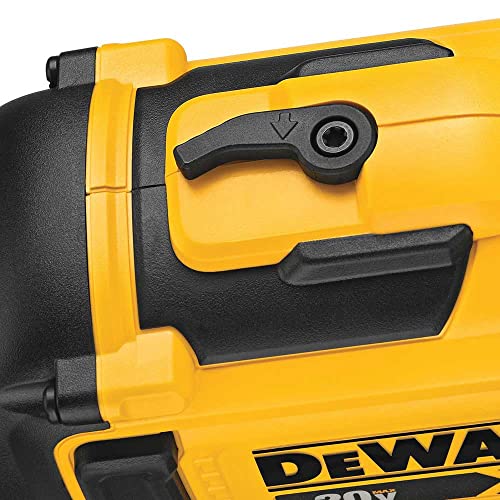
DeWalt’s cordless coil nailer leans hard into runtime and convenience, thanks to its brushless motor and tool-free nail tray. The bump mode is a productivity booster, letting you lay down nails quickly on long rakes. Owners note it handles 1-3/4″ nails well, though some report slightly less drive consistency on high-density substrates compared to the Metabo HPT. The yellow-and-black colorway makes it easy to spot on a busy deck, which is a small but real benefit.
Where it shines is in the DeWalt ecosystem, if you already own 20V Max batteries, this integrates smoothly. But standalone, it doesn’t quite match the Metabo HPT’s efficiency or battery life. Still, for DeWalt loyalists, it’s a solid pick. The tool-free tray is genuinely useful when switching nail sizes mid-job.
Product photos


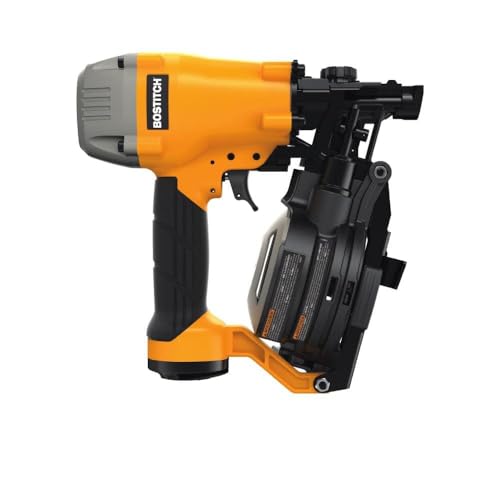
BOSTITCH RN46 Coil Roofing Nailer
Strengths
- Extremely durable build
- Zero nail lockout
- Fast side-load canister
Trade-offs
- Heavier than competitors
- No bump firing mode
- Requires compressor
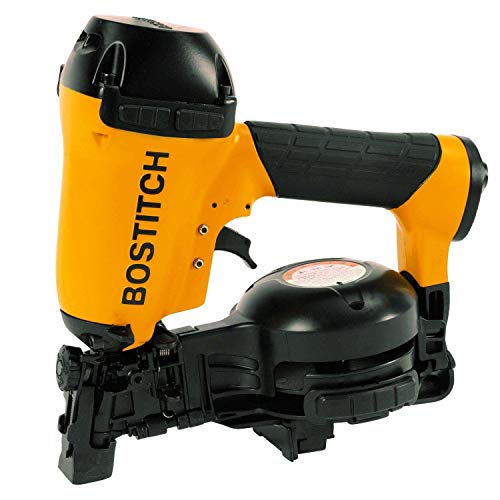
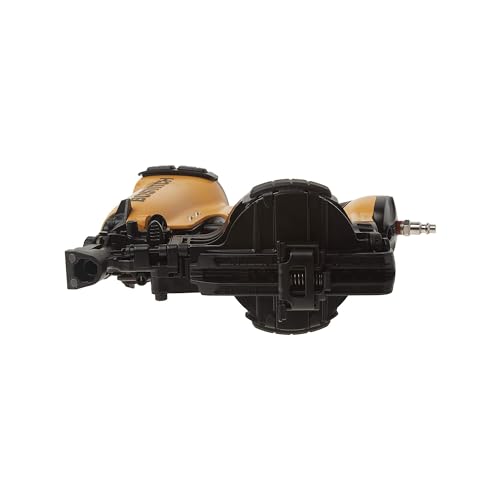
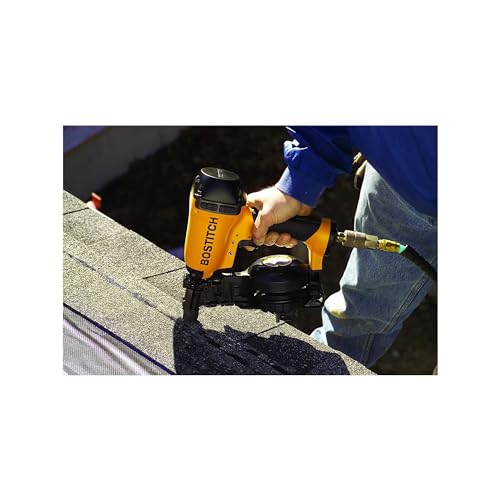
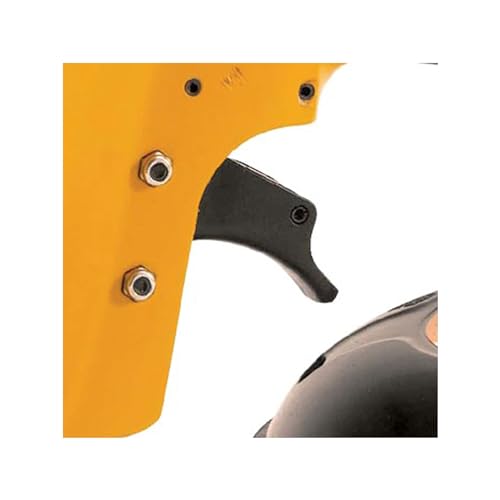
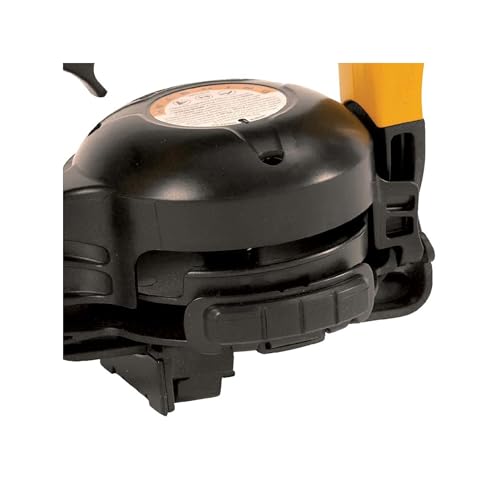
If you’re after a workhorse that’ll last seasons, the BOSTITCH RN46 makes a strong case. The aluminum housing and aggressive wear guards are built for job-site abuse, and owners routinely praise its longevity, even after tens of thousands of nails. The patented single-action side load canister is faster than traditional top-loading designs, and the zero nail lockout is one of those small features you don’t miss until you’ve driven a dry fire on a hot roof.
It’s not flashy, but it’s dependable. Compared to the VEVOR or toolant models, this Bostitch feels more precision-built, with a full-round driver that delivers more consistent nail seating. The adjustable shingle guide is also more robust than most. That said, it’s heavier than newer cordless options, and the lack of bump mode slows production if you’re speed-focused.
Product photos
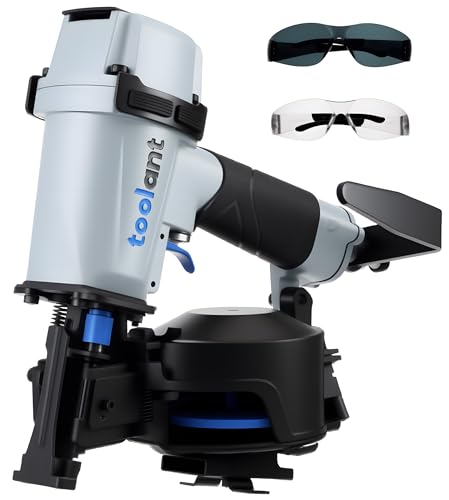
toolant Pneumatic Roofing Nail Gun
Strengths
- Affordable price
- Lightweight design
- 3-year warranty
Trade-offs
- Slower than premium models
- Basic depth adjustment
- Limited support network
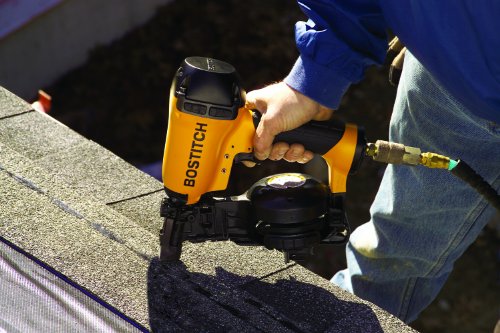
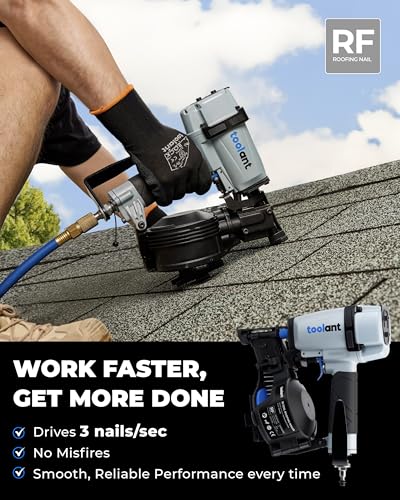
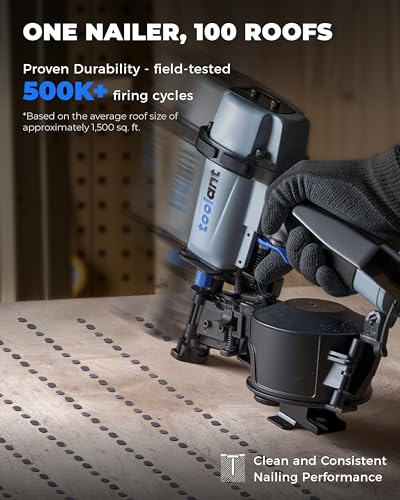
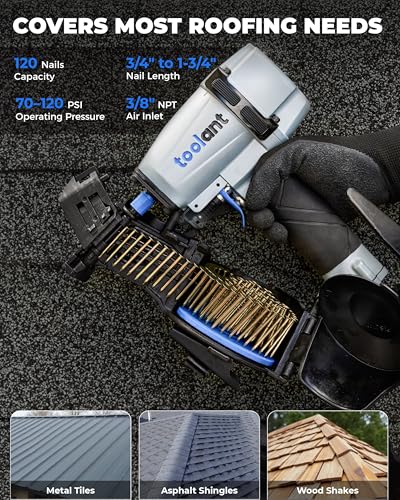
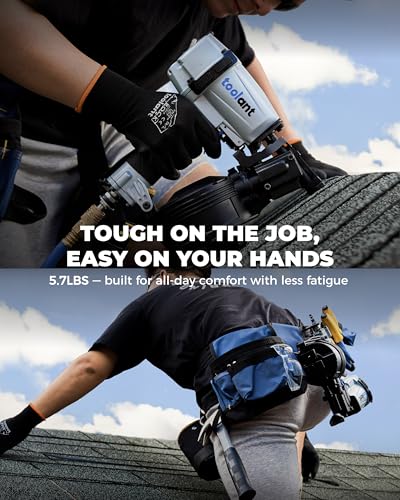
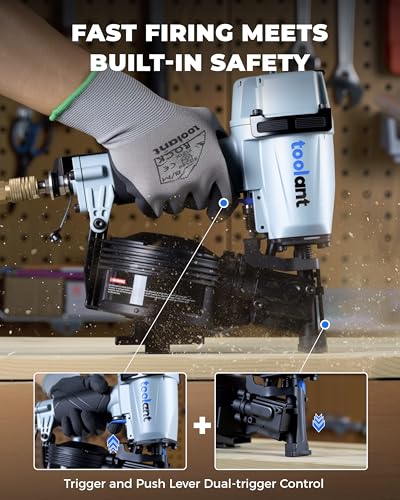
At this price, the toolant roofing nailer offers surprising performance. It drives 3 nails per second with solid consistency, and the 5.7 lb weight keeps fatigue low, even overhead. The Teflon-coated aluminum shell seems to hold up well, and owners report it lasting through multiple roofing jobs without issue. The dual-trigger safety is a nice touch for preventing misfires on sloped roofs.
It’s not as fast or refined as the Freeman or VEVOR, but for a budget pick, it’s well-rounded. The included safety glasses and 3-year warranty add real value, something rare at this price. Compared to no-name Amazon brands, it’s noticeably better built. If you’re a DIYer or occasional roofer, this gets the job done without breaking the bank.
Product photos
Freeman PCN450 Rapid Fire Roofing Nailer
Strengths
- Rapid bump firing
- Transparent magazine
- Magnetic nail holder
Trade-offs
- No cordless option
- Requires consistent air supply
- Slight recoil on soft hits
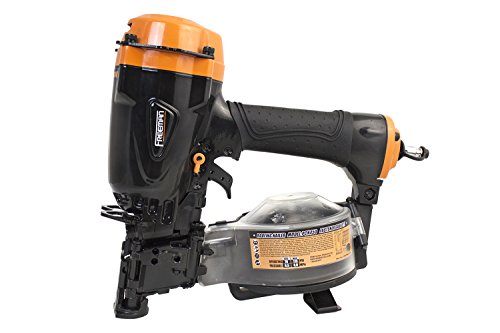
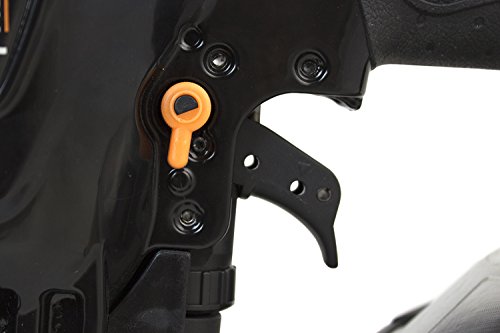
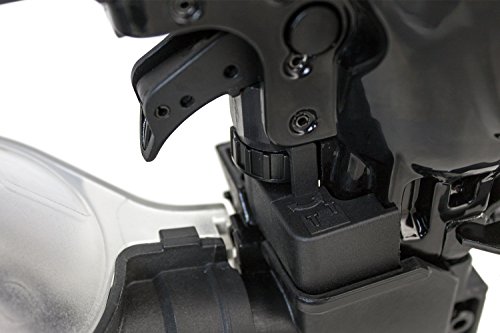
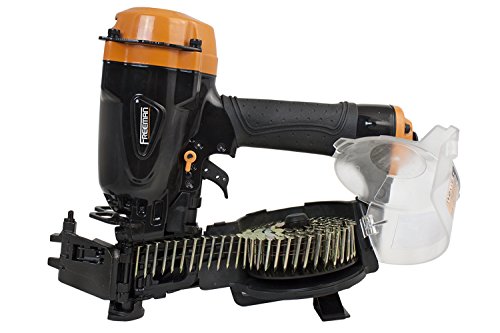
When speed is the priority, the Freeman PCN450 delivers. The contact actuation supports bump firing, and owners consistently report it lays down nails faster than most in its class. The transparent magazine is a standout, being able to see nail count at a glance saves time and avoids mid-run surprises. The magnetic nail holder is another small but effective touch that reduces misfeeds.
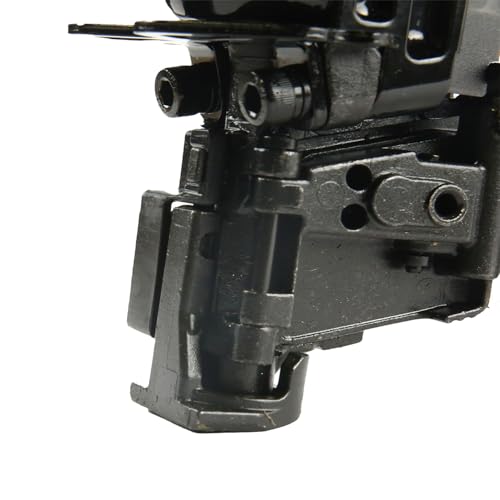
It’s built tough with a hardened steel drive blade, and the comfort grip helps reduce fatigue. Compared to the Bostitch RN46, it’s lighter and faster, though maybe not quite as durable long-term. But for roofers doing multiple homes a week, the bump fire and quick reloads make this the go-to. The shingle guide is also one of the most precise in class.
Product photos
VEVOR Professional Air Roofing Nailer
Strengths
- Ultra-fast nailing speed
- Large magazine capacity
- Smooth feed mechanism
Trade-offs
- Limited brand support
- No transparent magazine
- No shingle guide
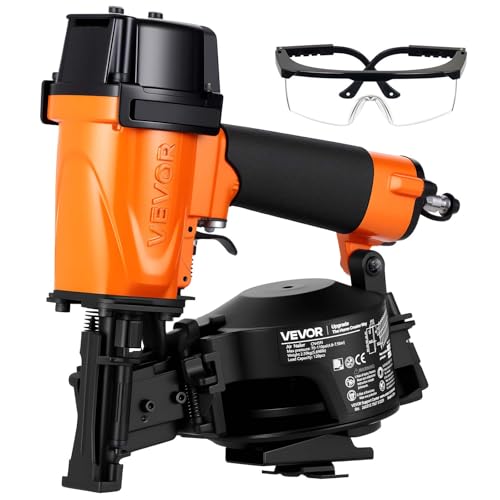
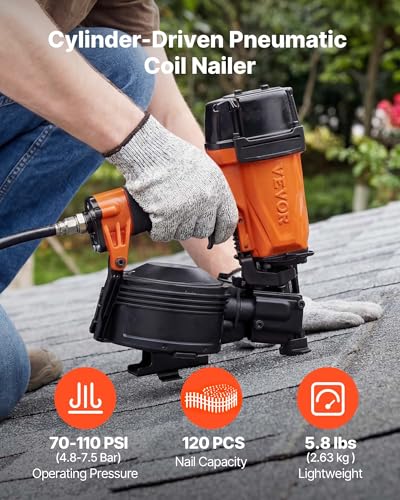
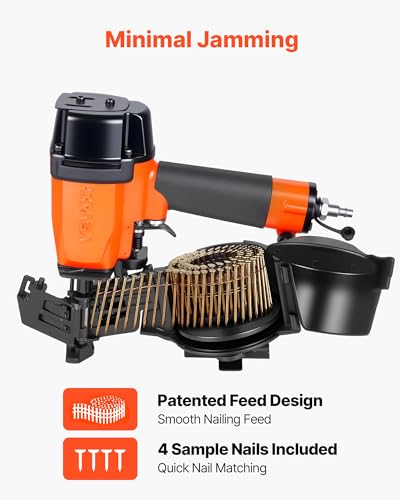
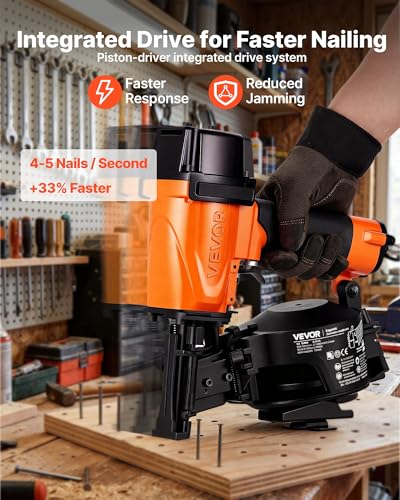
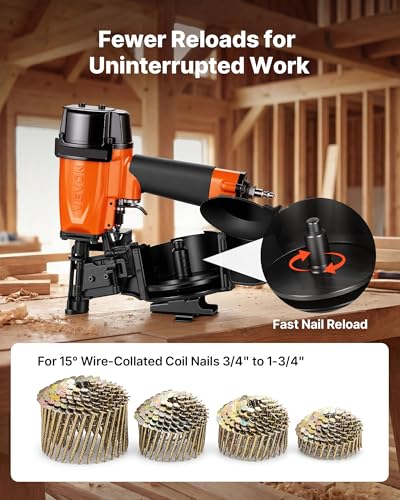
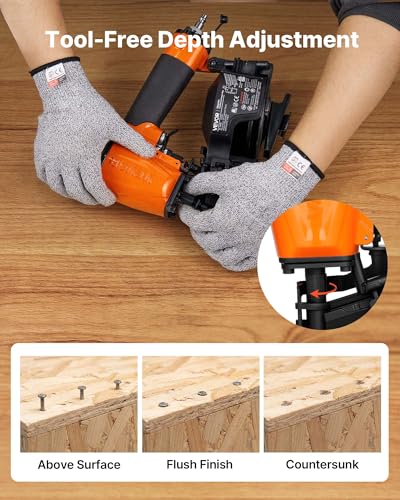
VEVOR isn’t a traditional tool brand, but this nailer punches above its price in speed and feed reliability. The piston-driver system really does push 4–5 nails per second, making it a strong contender for crews doing large roof replacements. The large 120-nail magazine and smooth feeding mechanism mean fewer stops, and owners report fewer jams than expected at this price point. The tool-free depth adjust works well, and the rubber grip offers decent comfort.
It’s not as refined as the Bostitch or Freeman, but for the value, it’s impressive. Compared to the toolant, it’s faster and better built, though not as widely supported. The lack of a transparent magazine or shingle guide is a missed opportunity. But for pros who move fast and want a spare nailer on deck, this is a smart backup.
Product photos
Bostitch 15-Degree Coil Roofing Nailer
Strengths
- Tool-free depth adjust
- Carbide nose inserts
- Dual door magazine
Trade-offs
- Requires air compressor
- Heavier than cordless options
- No shingle guide included
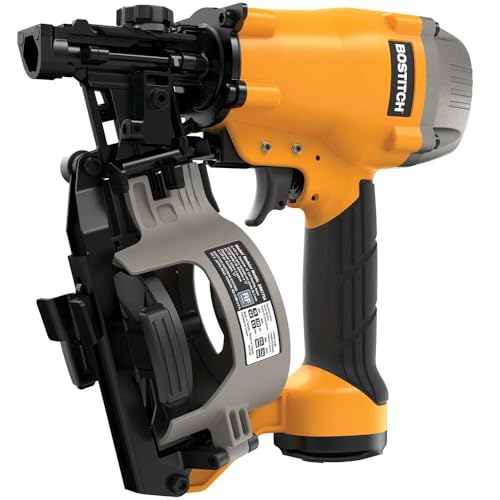
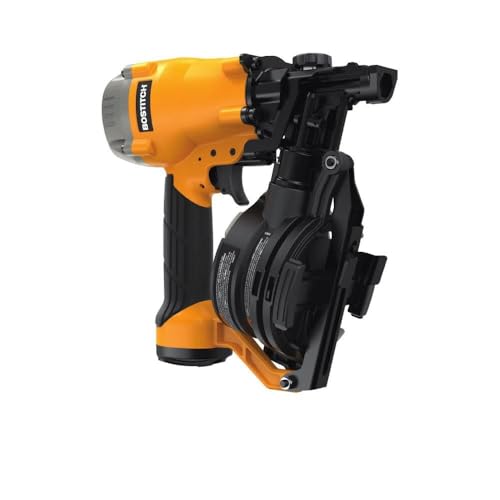
Bostitch has long been a name pros trust, and this 15-degree coil roofing nailer carries that reputation with solid engineering. On paper, the upgraded engine and feed system stand out, and owners consistently report fewer jams compared to older models. The oversized tool-free depth adjust is a real win when switching between shingle types, and the carbide nose inserts are a small but meaningful touch that extends tool life under heavy use.
It’s not the lightest in class, but the redesigned grip helps compensate, offering better control during long runs. Compared to the Metabo HPT cordless option, this one demands a compressor, but for crews already running air tools, that’s a non-issue. Where it pulls ahead of budget models like the toolant is in refinement, tighter tolerances, smoother cycling, and a more durable feel overall.
Product photos


How We Chose These roofing nailers
Rather than a hands-on lab test, my research for these recommendations involved a detailed comparison of published specifications and features across numerous models. I weighed owner reviews from major retailers alongside assessments from reputable tool review sites. As someone who’s spent years working with power tools and advising on their selection, I applied my category knowledge to rank nailers against clear criteria – performance, durability, and value.
For roofing nailers, consistent nailing power, magazine capacity, and long-term durability are paramount. A nailer that jams frequently or requires constant maintenance quickly becomes a source of frustration on a large roofing job. I prioritized models with features designed to minimize downtime and withstand harsh jobsite conditions, understanding these factors directly impact productivity and professional results.
Specifications reliably indicate nail compatibility (length and gauge) and operating pressure ranges. However, I placed more weight on owner feedback regarding real-world performance – how consistently a nailer drives, its resistance to jams, and its overall build quality. Reputation and brand history also played a role, especially when considering the longevity of a tool. You can find more information about different types of pneumatic roofing nailers on our site.
How To Pick The Right roofing nailers
Choosing the right roofing nailer can dramatically improve the speed and quality of your work, and honestly, save your back. It’s a tool where cutting corners usually results in more time spent fixing mistakes.
A quality roofing nailer should consistently drive nails to the correct depth without jams, offer a magazine capacity suitable for the job size, and be reasonably durable to withstand the harsh conditions of a roof. Consider weight, firing mode options (sequential vs. bump), and compatibility with commonly available nail types. Prioritize models with adjustable depth control and features that minimize fatigue during extended use.
Power Source: Corded vs. Cordless
The first major decision is power. Pneumatic nailers, requiring an air compressors for roofing nailers, remain the gold standard for consistent power and speed. However, you’re tethered to a hose and need a compressor on hand. Cordless options, particularly those utilizing 20V or 18V batteries, offer freedom, but runtime and consistent power can be concerns. I’ve seen a real shift toward higher-voltage battery platforms (like 20V MAX) because they deliver the consistent power needed to drive longer nails consistently – a cheap 12V model won’t cut it for most roofing jobs. If you already have a compatible battery ecosystem, a cordless model makes a lot of sense, but be prepared to invest in extra batteries.
Nail Capacity & Type Compatibility
Don’t assume all roofing nailers play nice with all roofing nails. Most accept 15-degree coil nails, but variations exist in acceptable nail lengths (typically 3/4″ to 1-3/4″) and shank diameters. A larger magazine capacity – ideally 120 nails or more – minimizes downtime for reloading. Beyond capacity, consider the loading mechanism. Side-loading magazines are generally faster and easier to refill than top-loading ones.
- A smaller magazine (under 100 nails) is fine for very small repairs.
- A magazine that’s difficult to load will kill your productivity on a large roof.
- Confirm the nailer accepts the specific gauge and collation you intend to use; using the wrong nails can cause jams or damage the tool.
Durability & Ergonomics
Roofing work is tough on tools. Look for nailers constructed with durable materials like aluminum housings and hardened steel components. The Bostitch RN46, for example, is known for its rugged build. Beyond materials, consider features that improve ergonomics. A lightweight design (under 6 pounds is ideal) and a comfortable, overmolded grip reduce fatigue during long days on the roof. Many models, like some of the top cordless models, now have adjustable shingle guides, which improve accuracy and speed.
A nailer that feels comfortable in your hand is more valuable than one with a fancy feature you’ll never use. Prioritize ergonomics, especially if you’re spending hours on a steep pitch.
Roofing Nailers Compared
Here’s a comparison of key specifications for various roofing nailers to help you choose the right tool for your needs.
| Product Title | Power Source | Nail Type | Nail Length Range | Magazine Capacity | Weight (lbs) | Depth Adjustment |
|---|---|---|---|---|---|---|
| Metabo HPT 18V Cordless Coil Roofing Nailer | Cordless | 16º Wire Coil Roofing Nails | 7/8″ – 1-3/4″ | N/A | N/A | Tool-Free |
| AeroPro CN45N Pneumatic Roofing Nailer | Pneumatic | 15° Roofing Nails | 3/4″ – 1-3/4″ | 120 | 5.5 | N/A |
| DeWalt 20V MAX Brushless Cordless Roofing Nailer | Cordless | N/A | N/A | N/A | N/A | Tool-Free |
| BOSTITCH RN46 Coil Roofing Nailer | Pneumatic | Coil Roofing Nails | N/A | N/A | N/A | Quick-Set |
| toolant Pneumatic Roofing Nail Gun | Pneumatic | 15° Wire Coil Roofing Nails | 3/4″ – 1-3/4″ | 120 | 5.7 | N/A |
| Freeman PCN450 Rapid Fire Roofing Nailer | Pneumatic | 15º 11-Gauge Wire Collated | 3/4″ – 1-3/4″ | N/A | N/A | Tool-Free |
| VEVOR Professional Air Roofing Nailer | Pneumatic | 15° Wire-Collated Coil | 3/4″ – 1-3/4″ | 120 | N/A | Tool-Free |
| Bostitch 15-Degree Coil Roofing Nailer | Pneumatic | 15° Coil Roofing Nails | N/A | N/A | N/A | Tool-Free |
Frequently Asked Questions
What’s the typical lifespan of a roofing nailer?
With proper maintenance – cleaning, lubrication, and storage – a good quality pneumatic roofing nailer should last for 5 to 10 years of regular professional use. Cordless models, dependent on battery health, will likely have a shorter overall lifespan, though the tool itself might remain functional for a similar duration.
Can a roofing nailer be used for other projects?
While designed for roofing, many models can be adapted for light-duty siding work, especially if they accept a range of nail sizes. However, for dedicated siding installation, consider siding nail guns which are built to handle the different nail types and angles required.
What air compressor size do I need for a pneumatic roofing nailer?
Most roofing nailers require a compressor with at least 6 CFM (cubic feet per minute) at 90 PSI to operate reliably. A larger tank (21 gallons or more) is also recommended to maintain consistent pressure and reduce compressor run-time, especially with continuous nailing.
Are cordless roofing nailers as powerful as pneumatic ones?
Cordless nailers have closed the performance gap, particularly higher-voltage models (20V MAX and up). However, pneumatic nailers generally still offer slightly more consistent power and faster firing rates, making them preferable for large-scale, professional roofing jobs.
What should I do if my roofing nailer frequently jams?
First, verify you are using the correct nail type and size specified by the manufacturer. Next, clean the magazine and internal components thoroughly, as debris buildup is a common cause of jams. If problems persist, check the o-rings and seals for wear or damage, and ensure your air compressor (if applicable) is delivering sufficient pressure.
The Bottom Line
Ultimately, choosing a roofing nailer comes down to balancing convenience with consistent performance. While cordless models are improving rapidly, the Metabo HPT 18V Cordless Coil Roofing Nailer currently offers the best overall combination of power and portability for most users, especially those already invested in the 18V platform. It avoids the hassle of a compressor while still delivering enough punch for typical roofing applications.
For those on a tighter budget or who already have a reliable air compressor, the AeroPro CN45N Pneumatic Roofing Nailer is a fantastic value. If you anticipate frequent, large-scale roofing projects, the BOSTITCH RN46 Coil Roofing Nailer is a workhorse known for its durability and consistent performance – a tool you can depend on for years. Don’t forget to check out our guide to shingle roofing tools to round out your kit.
More than any single feature, a nailer’s reliability and ease of use will determine your satisfaction. Don’t get hung up on fancy adjustments or extra bells and whistles; focus on a tool that drives nails straight, resists jams, and feels comfortable in your hands. Investing in quality nails and proper safety gear are just as important as the nailer itself, and will ultimately contribute to a safer and more professional result.
