9 Best Bike Torque Wrenches 2026
This post contains affiliate links. As an Amazon Associate, we earn from qualifying purchases.
The Feedback Sports Range Twist is our top pick for most riders, it’s compact, accurate, and built for real-world bike maintenance. For those on a budget, the YIYEIE 50Pcs Master Bike Torque Wrench Set offers solid performance and a huge bit selection. If you’re working with carbon parts regularly, the Park Tool ATD-1.2 delivers reliable precision in a lightweight package.
Choosing the wrong torque wrench can lead to stripped bolts, cracked carbon, or a mid-ride failure. I’ve seen it happen too many times, people assume any wrench will do, only to regret it when a seatpost fails or a stem loosens on a descent.
This guide cuts through the noise. We looked at specs, accuracy claims, and what actual owners say to find the best bike torque wrenches for different needs. Whether you’re building up a new bike or just want to maintain your daily rider, we’ll help you pick a tool you can trust.
Top 9 Bike Torque Wrenches in the Market
The Best Bike Torque Wrenches, Reviewed
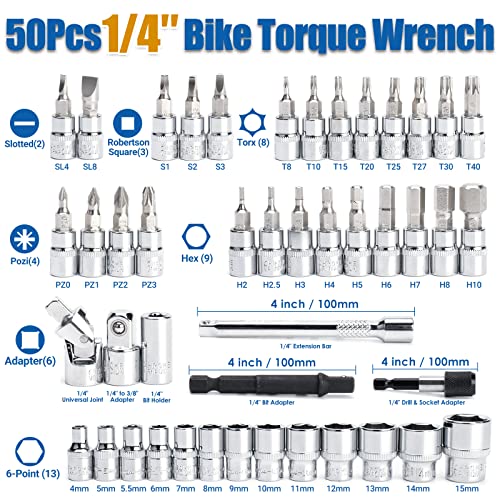
YIYEIE 50Pcs Master Bike Torque Wrench Set

Strengths
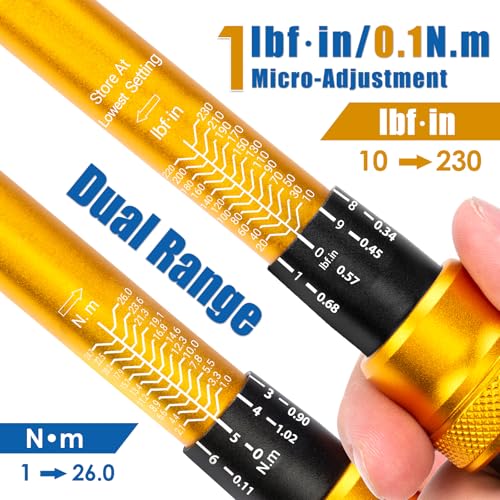
- 0.1Nm micro-adjustment
- 50-piece thorough kit
- Clear dual-scale readability
Trade-offs
- Click weak at low torque
- Build quality close but not above premium
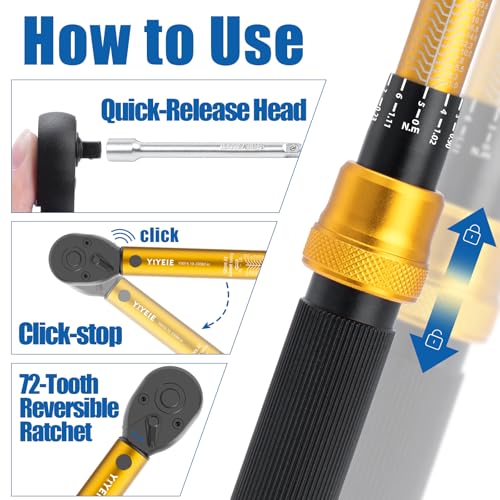
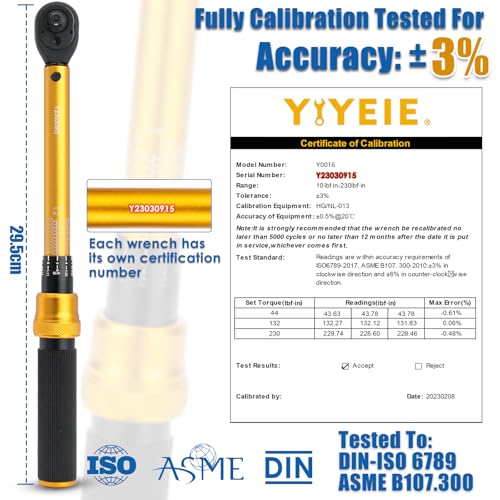
This 50-piece set checks nearly every box: 0.1Nm adjustment, ±3% accuracy, a full range of bits, and solid Cr-V steel construction. The dual-scale readability and quick-release ratchet make it efficient, and owners report it feels close to premium tools in daily use. It covers 1–26Nm, which handles everything from derailleur bolts to stem faceplates, and the included case keeps everything organized.
Compared to the LEXIVON or XEIMILE kits, it strikes the best balance of precision, kit size, and usability. The click mechanism is strong above 5Nm, though like others, it fades below that. For most riders, this is the one wrench that can truly do it all. It’s not as compact as the Feedback Sports, nor as heavy-duty as the Park TW-6.2, but as an all-around choice, it’s hard to beat. My recommendation for riders wanting one complete, reliable tool.
Product photos
XEIMILE 51Pcs Bike Torque Wrench Set

Strengths
- High 29.4Nm max torque
- 51-piece thorough kit
- Dual-direction ratchet
Trade-offs
- Bulky for bike-only use
- Faint click at low torque
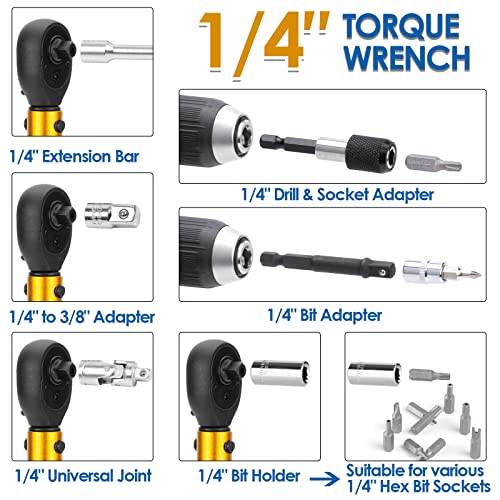
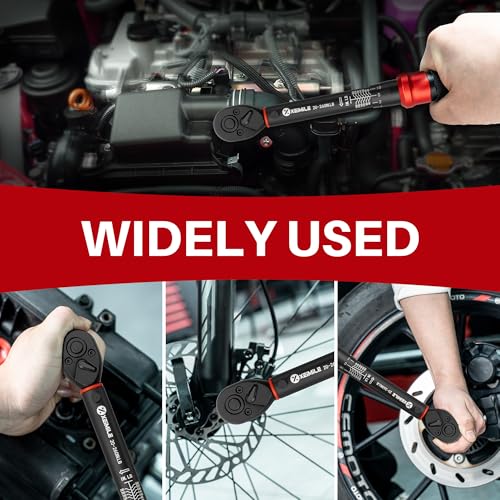
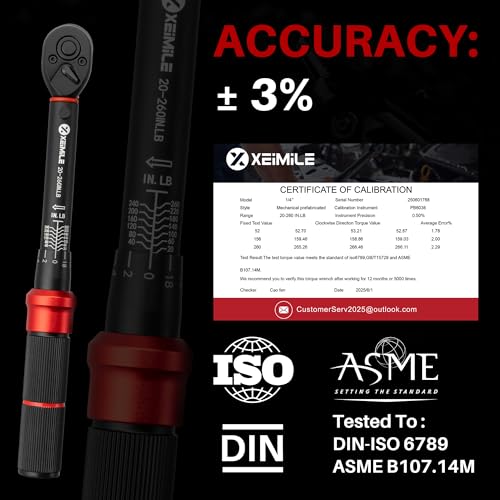
With a range stretching up to 29.4Nm and 51 pieces including 30 bits and 14 sockets, this set clearly aims at users who want one torque tool for bikes, e-bikes, and even small automotive jobs. The 72-tooth bidirectional ratchet and Cr-V steel build give it solid durability, and the traceable calibration certificate adds legitimacy. Owners report it holds up well in home workshops, especially for e-bike drivetrains and suspension parts that demand higher torque.
But that high range comes with trade-offs. The click is described as faint at lower settings, and the dual scale, while convenient, can be crowded. It out-torques most bike-specific tools like the Feedback Sports or Park ATD-1.2, but lacks their finesse. For someone maintaining a quiver of bikes including e-MTBs or doing occasional motorcycle work, this is a practical hub tool. Still, I’d keep a lighter, more precise wrench on hand for carbon cockpit parts.
Product photos
1/4 Inch Click Torque Wrench 27 PCS

Strengths
- Wide 1–25Nm range
- 0.1Nm micro-adjustment
- 27-piece kit with adapters
Trade-offs
- Click faint below 5Nm
- Build quality below premium tier
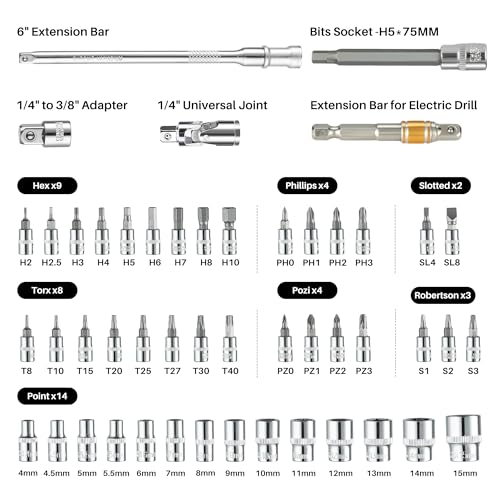
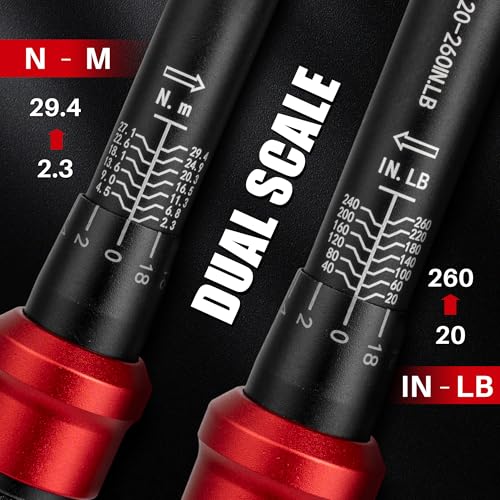
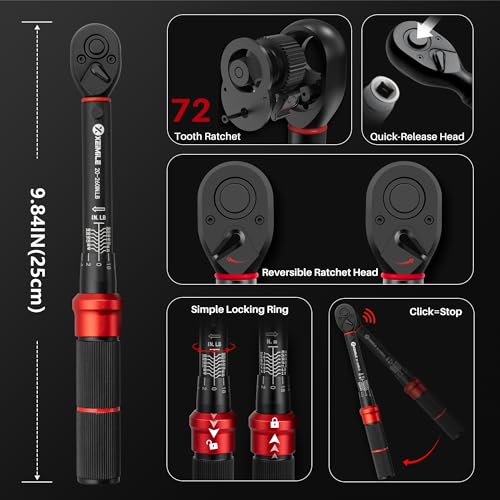
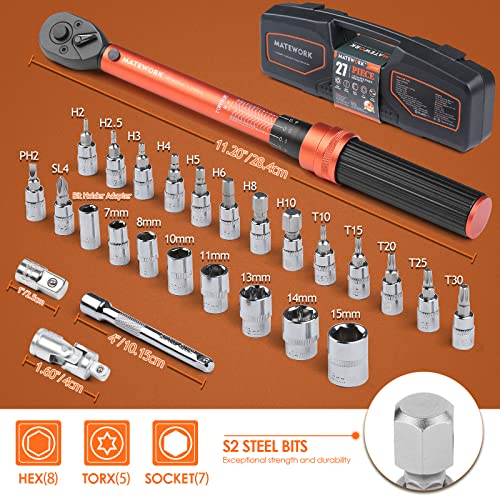
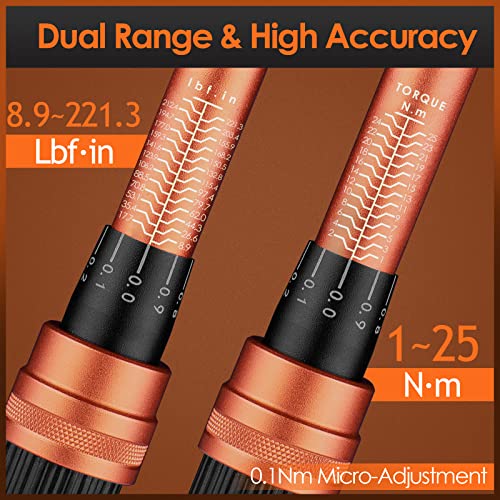
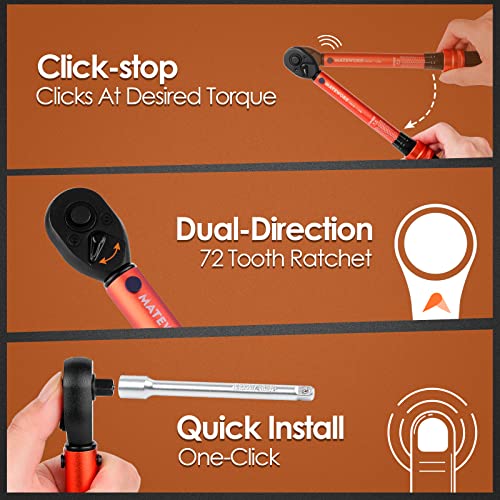
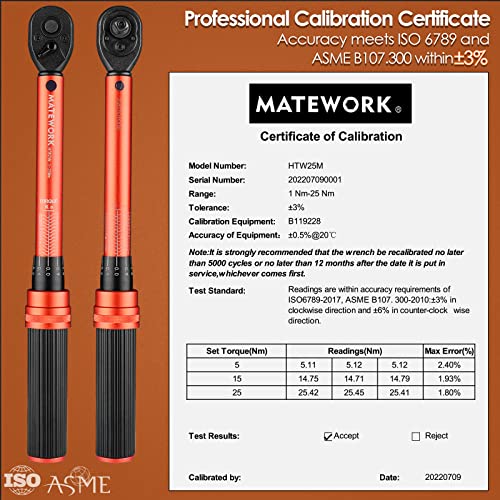
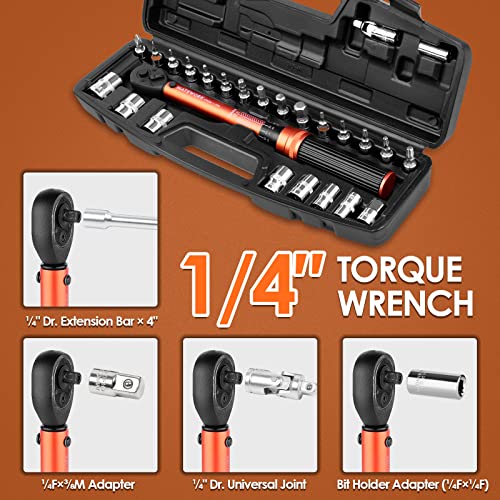
This 27-piece set stands out in the budget segment with a solid feature list and a wide 1–25Nm range that covers most bike components. The 0.1Nm micro-adjustment and dual scales make fine-tuning accessible, and owners consistently report the click mechanism works reliably above 5Nm. On paper, it’s a strong value, especially with the included adapters and bit sockets that reduce the need for additional tools.
Still, it’s a step below premium brands in feel and finish. While it meets ISO6789 standards and claims ±3% accuracy, some users note slight inconsistencies during repeated use, especially near the lower end of the torque range. For casual riders or DIYers who want one tool for seat posts, derailleurs, and stem bolts without overspending, this set delivers. I’d pick it over no-name mini wrenches any day, but not over a Park Tool or Feedback Sports for critical builds.
Product photos
LEXIVON Bike Torque Wrench 15-Piece Kit

Strengths
- Premium electro-black finish
- Reinforced 72-tooth ratchet
- Ergonomic non-slip handle
Trade-offs
- Fewer bits than competitors
- Higher price for similar specs
LEXIVON leans hard into build quality here, the electro-black Cr-Mo ratchet head, aerospace aluminum handle, and knurled grip give it a premium feel that stands out in photos and owner hands-on reports. The 72-tooth head is reinforced, and the slide-to-lock mechanism makes setting torque smoother than most in this class. It’s also one of the few with certified bidirectional accuracy (±4% CW, ±6% CCW), which matters if you’re loosening with torque control.
But for all its polish, it’s still a 1/4-inch wrench with a standard 2–26Nm range. The included bits are useful but not exceptional. Compared to the YIYEIE, it has fewer pieces; versus the Park ATD-1.2, it lacks the same reputation for long-term calibration. Still, if you value tool ergonomics and durability, this one stands out. I’d pick it for its feel and finish, especially if you hate hand fatigue.
Product photos


INGJER Mini 1/4 Torque Wrench
Strengths
- Dual Ft-Lb and Nm scales
- Strong audible and haptic click
- Corrosion-resistant Cr-V steel
Trade-offs
- No bit storage in handle
- Not as compact as mini tools
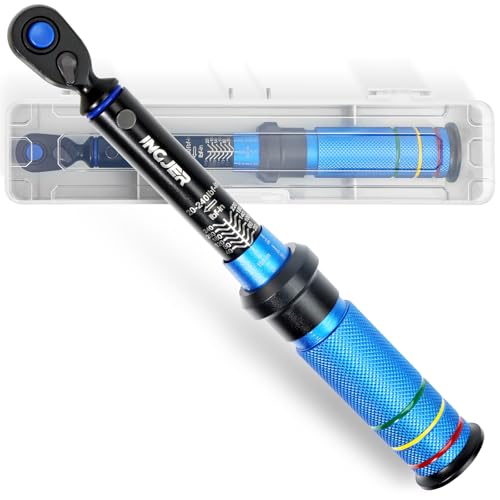
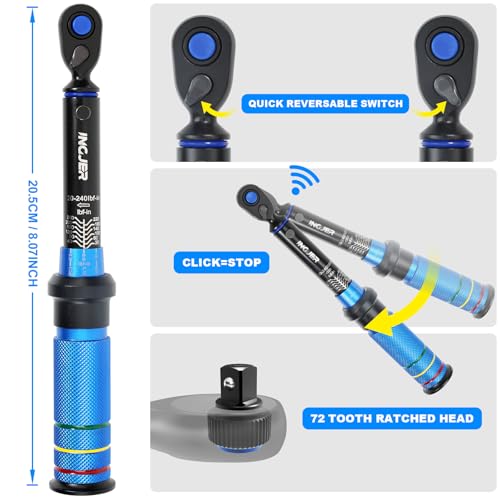
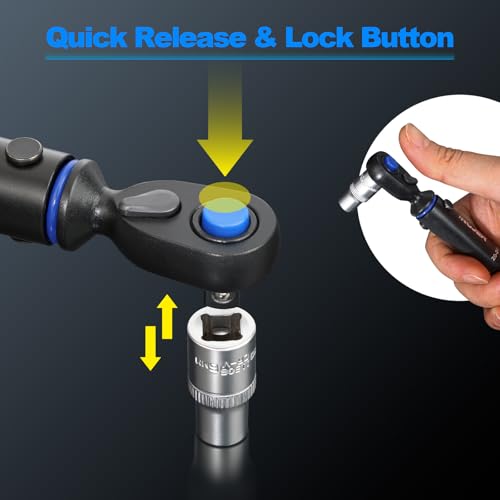
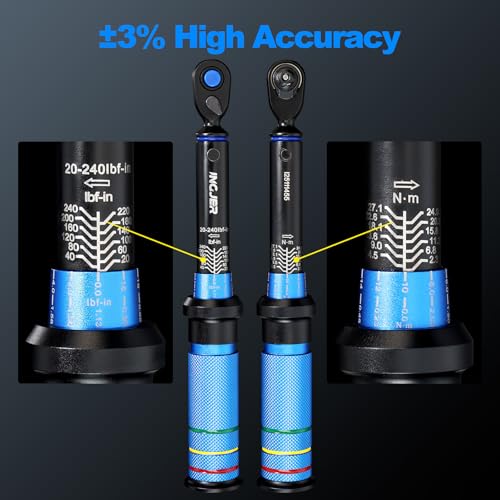
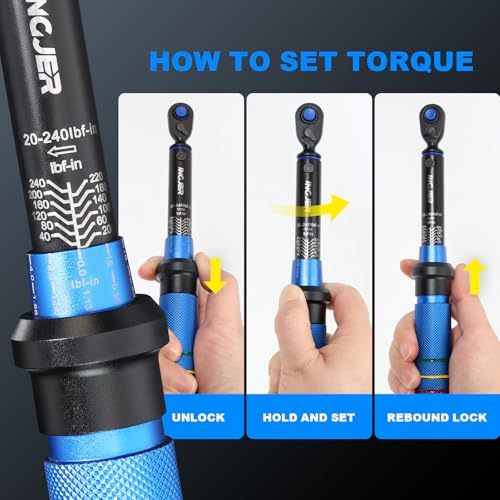
The INGJER stands out with its dual Ft-Lb and Nm scales, which eliminates mental conversions for users working across systems. The 72-tooth reversible ratchet is compact and smooth, and owners highlight the loud click and haptic feedback, even with gloves on, you feel and hear the stop. The chrome vanadium steel build resists corrosion well, and the knurled handle offers solid grip in greasy conditions.
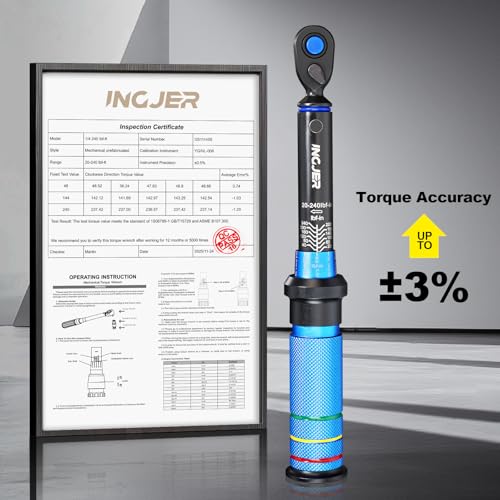
It’s not the most compact (unlike the Feedback Sports), nor the highest torque (like the XEIMILE), but it hits a sweet spot for usability. The 20–240 in-lb (2.3–27.1Nm) range covers most bike fasteners, and the dual-direction calibration adds reliability. For a rider who values clear feedback and tool longevity, this is a strong contender. I’d choose it over the basic 27-piece set for better ergonomics and confidence in the click.
Product photos
Feedback Sports Range Twist Torque Wrench
Strengths
- Compact folding design
- No preset needed
- Bits stored in handle
Trade-offs
- Limited to 2–8Nm range
- No ratchet mechanism
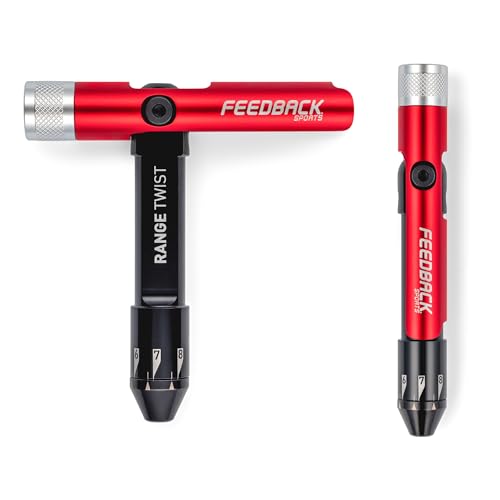
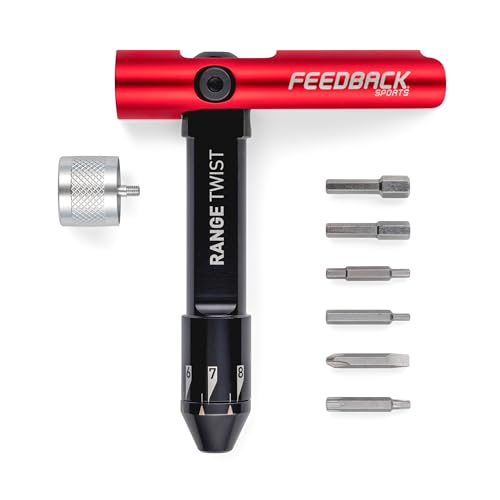
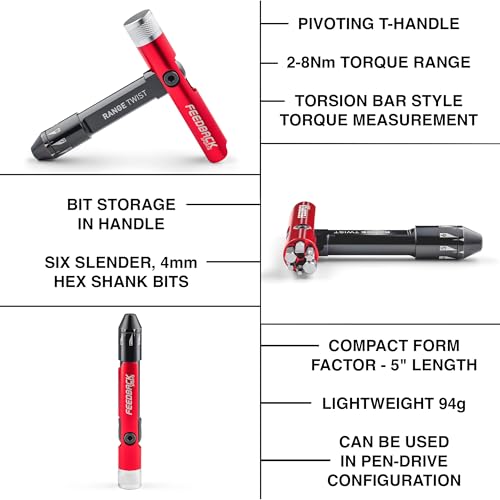
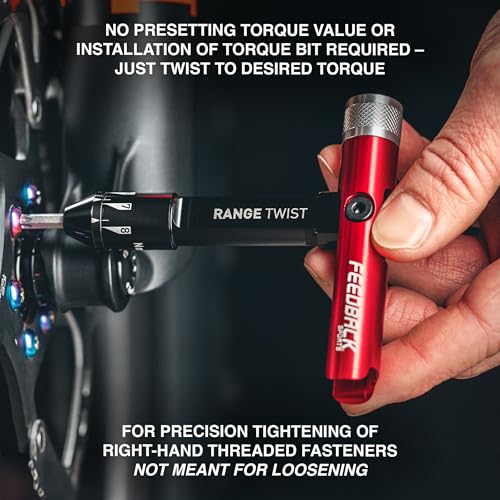
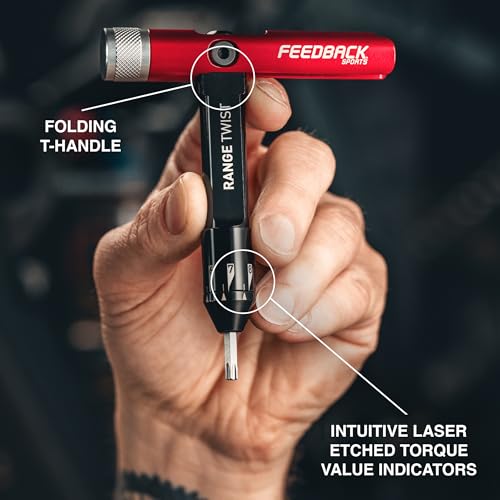
The Range Twist is built for riders who want precision without bulk. Its 2–8Nm range hits the sweet spot for carbon frames, seatposts, and lightweight components where overtorquing is a real risk. The torsion bar design means no presetting, just twist and go, which owners love for quick trailside fixes. The laser-etched markings are easy to read, and the folding T-handle turns it into a sleek, pocketable tool that beats fumbling with a ratcheting wrench in tight spots.
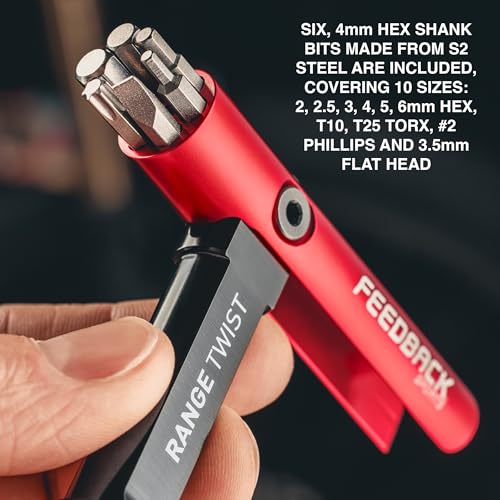
What really sets it apart is the smart integration: S2 steel bits store inside the CNC aluminum body, and the magnetic bit receiver makes swaps fast. It’s not for high-torque jobs, but that’s not the point. Compared to the YIYEIE or LEXIVON ratcheting models, it’s less versatile but more intuitive and travel-friendly. If you’re regularly on the move or building up bikes with carbon parts, this is the smarter pick over bulkier kits.
Product photos
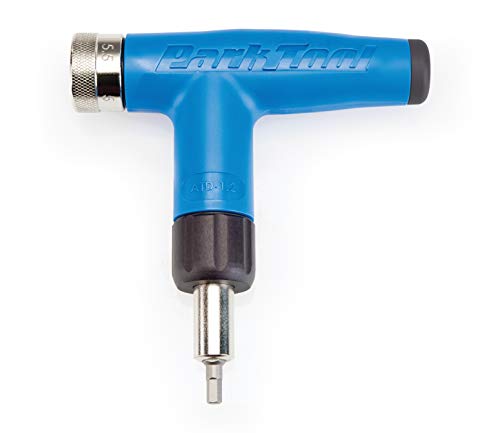
Park Tool ATD-1.2 Adjustable Torque Driver
Strengths
- Fixed 4–6Nm range
- All-metal construction
- Compact and reliable
Trade-offs
- No ratchet or bit system
- Limited torque range
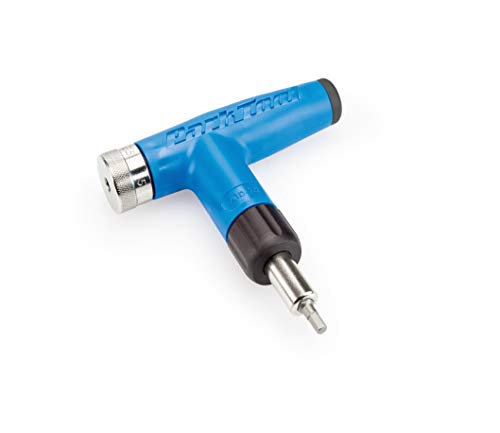
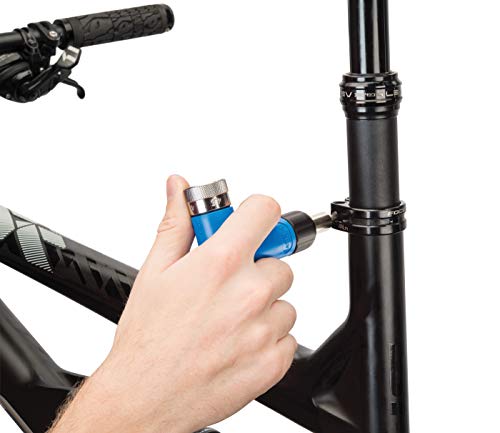
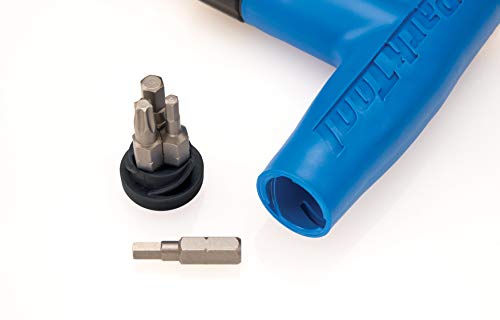
The ATD-1.2 is a minimalist’s dream: a compact, all-metal torque driver locked to 4–6Nm, the sweet spot for carbon seatposts, handlebars, and derailleur limit screws. It’s not adjustable beyond those five fixed settings, but that’s by design, fewer moving parts mean better long-term accuracy. The solid feel and shop-grade internals match Park Tool’s reputation, and owners consistently praise its reliability over years of use.
It’s the anti-ratchet: no sockets, no bits, just a direct driver tip. Compared to the Feedback Sports Range Twist, it’s less flexible but more durable and consistent. For a home mechanic who builds or adjusts bikes regularly, this is the kind of tool you reach for every time. I’d pair it with a ratcheting wrench for efficiency, but for precision light work, this is my top recommendation.
Product photos
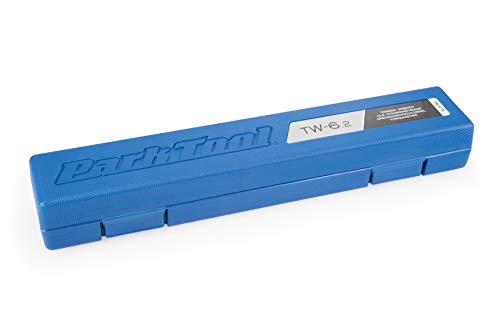
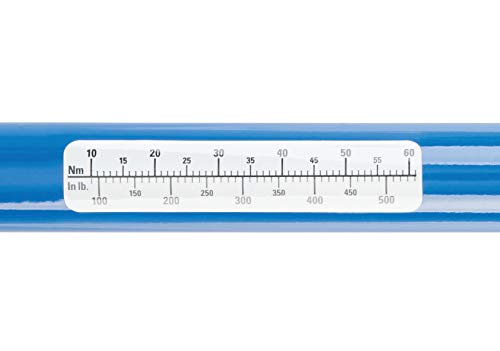
Park Tool TW-6.2 Ratcheting Torque Wrench

Strengths
- High 60Nm max torque
- 3/8-inch drive for heavy tasks
- Park Tool reliability
Trade-offs
- Too high for cockpit parts
- No low-range precision
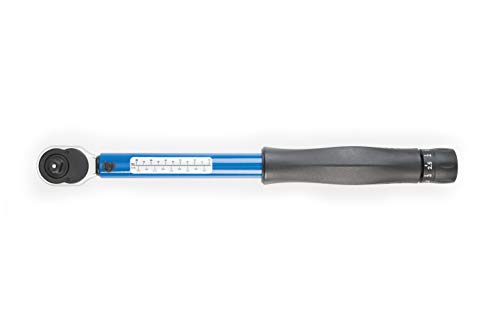
The TW-6.2 is built for heavy work, think e-bike cranks, bottom brackets, and thru-axles that demand torque above 40Nm. With a 3/8-inch drive and 10–60Nm range, it outmuscles nearly every other bike-specific wrench here. The dial-adjust click system is straightforward, and Park Tool’s reputation for consistent calibration holds up in owner feedback.
It’s clearly not for delicate work: the minimum 10Nm is too high for seatposts or stems. But for a shop or serious home mechanic handling modern e-bikes and aggressive MTBs, this is essential. Compared to the XEIMILE or YIYEIE models, it’s less versatile for low-torque tasks but far more reliable at the upper end. If you’re regularly tightening cranks or suspension hardware, this is the one to have.
Product photos
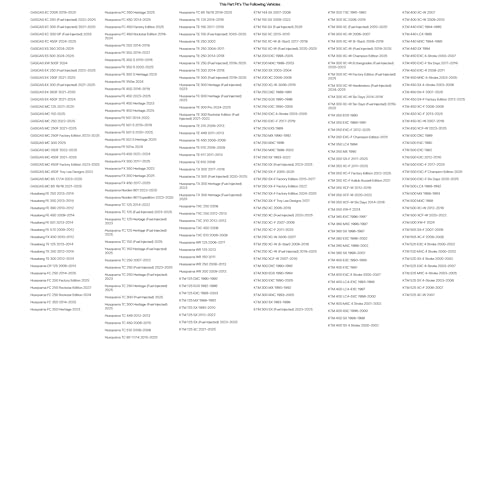
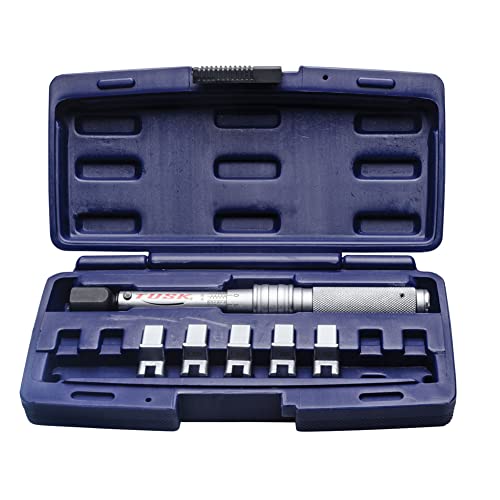
TUSK Spoke Torque Wrench Kit

Strengths
- ±2% calibration accuracy
- 5 spoke heads included
- Purpose-built for spoke tension
Trade-offs
- Niche use only
- No ratchet or bit storage
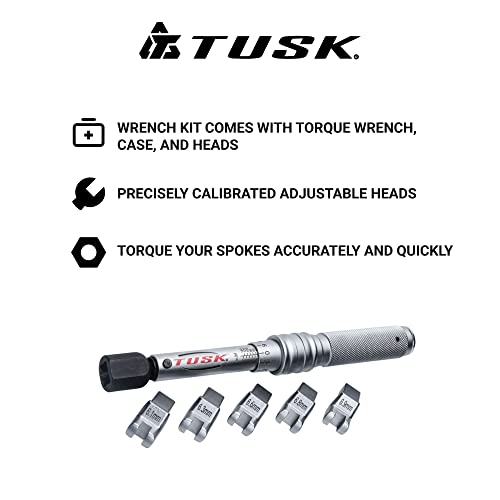
Spoke tension is one of the most overlooked yet critical aspects of wheel durability, and the TUSK kit is one of the few tools designed specifically for it. With a narrow 30–150 in-lb range and ±2% calibration, it’s more accurate than most general-purpose wrenches in this task. The five drop-forged heads cover common nipple sizes, and the compact case makes it easy to keep in a wheel-building tray.
Owners who build or true wheels regularly appreciate its consistency. Compared to using a standard torque wrench with a spoke adapter, this tool delivers better control and repeatability. It won’t replace a full-range wrench, but for wheel maintenance, especially on dirt bikes or high-tension MTB rims, it’s unmatched. I’d recommend it to anyone regularly truing wheels or building custom sets, even if they already own a Park Tool TW-6.2.
Product photos

How We Picked These bike torque wrenches
As someone who’s spent years around power tools and workshops, I know the importance of proper torque. For this guide, rather than a hands-on lab test with each wrench, we focused on a research-led comparison of published specifications and owner feedback. We compared torque ranges, accuracy claims (±% ratings), features like click mechanisms and bit compatibility, and build materials. We then weighed these against reviews from both everyday cyclists and professional mechanics, looking for patterns in reported reliability and usability.
The most important factors for bike torque wrenches are accuracy and the torque range. Getting the torque right is critical – too little and components loosen, too much and you risk damaging expensive parts. We prioritized wrenches with a ±3% or better accuracy rating, understanding that this is a reasonable expectation for home and shop use. The ideal torque range also depends on the type of work, but a versatile range covering common bicycle fasteners was key.
Specifications reliably tell you about a wrench’s potential for accuracy and its torque capacity. However, owner feedback and reputation are crucial for understanding real-world performance. We paid close attention to comments regarding the clarity of the click mechanism, the durability of the included bits, and the overall feel of the wrench. For those seeking more specialized tools, our guide to precision torque wrenches offers a deeper look at options for delicate work or applications demanding extreme accuracy.
Choosing The Right bike torque wrenches
Picking the right bike torque wrench can make the difference between a smooth ride and a costly repair.
A quality bike torque wrench delivers accurate and repeatable results, typically within ±3% of the set value. Look for wrenches with a clear scale – ideally dual scales in Newton-meters (Nm) and inch-pounds (in-lb) – and a positive, audible or tactile “click” to signal torque achievement. Consider the torque range needed for your common tasks and choose a wrench that covers that range without being excessively large.
Understanding Torque Range & Application
The first thing I tell anyone looking at bike torque wrenches is to think about what you’ll be tightening. A wrench designed for bottom bracket installation will be overkill for stem bolts. Most carbon fiber components require lower torque settings than steel or aluminum, so having a wrench that accurately measures down to 2-5 Nm is crucial. If you’re primarily working on older bikes or heavier components, you might get away with a wider range, but precision suffers as the range expands. A dedicated wheel-building wrench, like the TUSK Spoke Torque Wrench Kit, is specialized, while a versatile option will cover more general maintenance.
Recognizing Calibration & Accuracy
Accuracy is paramount. A wrench that’s off by even a small margin can damage delicate carbon fiber parts or leave critical bolts dangerously loose. Look for wrenches that are certified to ±3% accuracy, and ideally come with a calibration certificate. Some, like the LEXIVON, specifically mention being shipped pre-calibrated with a traceable serial number. Don’t assume all wrenches are created equal; cheaper models often lack the quality control to maintain that accuracy over time.
Here’s what to consider when looking at accuracy claims: * Certification: A stated ±X% accuracy is good, but look for proof (a calibration certificate). * Repeatability: Can the wrench consistently achieve the same torque setting when tested multiple times? (This is harder to verify without testing, but a good brand reputation helps.) * Material Quality: Cr-V steel is a common and reliable material, but aerospace aluminum is often used in higher-end wrenches for lightweight durability.
Balancing Features and Usability
While a wide range of bits and adapters can be tempting, remember that simplicity often wins. I generally recommend starting with a wrench that covers your most common torque needs and adding specialized bits later if necessary. A clear, easy-to-read scale is also critical, especially for those working in dimly lit garages. For portability and convenience, consider a compact design like the Feedback Sports Range Twist. If you’re looking for even more precision and might want to explore digital 1/4-inch wrenches, those can offer extremely accurate readings.
Don’t chase the highest torque range; focus on getting accurate and repeatable results within the range you actually need.
Ultimately, the best bike torque wrench is the one you’ll actually use. Whether you’re a weekend warrior or a seasoned mechanic, investing in a quality tool – and understanding how to use it properly – will save you time, money, and frustration in the long run. For a wider selection of options, check out our guide to the best torque wrenches for cycling.
Bike Torque Wrenches Compared
Here’s a comparison of specifications for various bike torque wrenches to help you choose the right one.
| Product Title | Torque Range (Nm) | Accuracy (%) | Drive Size | # of Bits/Sockets | Special Features |
|---|---|---|---|---|---|
| YIYEIE 50Pcs Master Bike Torque Wrench Set | 1-26.0 | ±3 | 1/4″ | 50 | Click Stop, 72-Tooth |
| XEIMILE 51Pcs Bike Torque Wrench Set | N/A | ±3 | 1/4″ | 51 | Micro-Adjustments |
| 1/4 Inch Click Torque Wrench 27 PCS | 1-25 | ±3 | 1/4″ | 27 | Click Stop, 72-Tooth |
| LEXIVON Bike Torque Wrench 15-Piece Kit | 2-26 | ±4/+6 | 1/4″ | 15 | 72-Tooth, Calibration Certificate |
| INGJER Mini 1/4 Torque Wrench | N/A | ±3 | 1/4″ | N/A | Click & Haptic Feedback |
| Feedback Sports Range Twist Torque Wrench | 2-8 | N/A | N/A | 6 | Folding Handle, Bit Storage |
| Park Tool ATD-1.2 Adjustable Torque Driver | 4-6 | N/A | N/A | N/A | Adjustable, Lightweight |
| Park Tool TW-6.2 Ratcheting Torque Wrench | N/A | N/A | 3/8″ | N/A | Dial-Adjust, Ratcheting |
| TUSK Spoke Torque Wrench Kit | N/A | ±2 | N/A | 5 | Spoke Specific, Click Stop |
Frequently Asked Questions
What torque range do I really need for a bike torque wrench?
Most cyclists will find a torque range of 2-26 Nm sufficient for general maintenance tasks(like stem, seatpost, and brake bolts). If you work on bottom brackets or suspension pivots, you might need a wrench going up to 40 Nm or higher.
Are more expensive bike torque wrenches always more accurate?
Not necessarily. While higher price often correlates with better build quality and tighter manufacturing tolerances, accuracy depends more on calibration and the stated ±% rating. A well-made wrench with a ±3% accuracy is preferable to a more expensive one with a ±6% rating.
Can I use a 1/4-inch torque wrench for all my bike repairs?
Yes, a 1/4-inch drive is suitable for the vast majority of bicycle components. However, some older or heavier bikes might require a 3/8-inch drive for larger bolts, like those found on cranksets or bottom brackets.
How often should I have my bike torque wrench calibrated?
Generally, annual calibration is recommended for professional mechanics or frequent users. For casual home use, calibration every 2-3 years is a good practice to maintain accuracy, especially if you notice inconsistent results. You can find calibration services online or through specialized tool repair shops.
Where can I find more information about high-precision bike torque wrenches?
If you need extremely precise torque control, especially for carbon fiber components, I recommend checking out our guide to high-precision bike torque wrenches for a deeper look at digital and specialized options.
The Bottom Line
Ultimately, choosing a bike torque wrench comes down to balancing precision with practicality. While top-end accuracy is vital for protecting expensive components, an overly complex or wide-ranging wrench isn’t helpful if you don’t use it correctly. For most cyclists, the YIYEIE 50Pcs Master Bike Torque Wrench Set offers the best overall combination of features, accuracy, and value – a solid starting point for maintaining almost any bicycle.
If your needs are more specific, there are excellent alternatives. For those focused on wheel building, the TUSK Spoke Torque Wrench Kit is the clear choice. And, if portability and ease of use are paramount, the Feedback Sports Range Twist Torque Wrench is a convenient and well-regarded option. For those tackling larger fasteners, or needing a broader range of capabilities, exploring mechanic torque wrenches could be worthwhile.
Don’t get lost in the details of calibration certificates or digital displays. The most important things are understanding your bike’s torque specifications, using a wrench within its accurate range, and developing a feel for proper tightness. A quality wrench is an investment, but proper technique and consistent maintenance will always yield the best results.
