7 Best Tire Inflators with Gauges 2026
This post contains affiliate links. As an Amazon Associate, we earn from qualifying purchases.
The AstroAI Digital Tire Inflator is our top pick for most drivers, delivering reliable accuracy and consistent performance. If you’re watching your budget, the AstroAI Analog Tire Inflator offers solid build and precision at a lower price. For demanding users who need maximum durability, the JACO FlowPro Digital Tire Inflator stands out with its steel-reinforced hose and professional-grade chuck.
I’ve seen too many drivers rely on gas station pumps with questionable readings or flimsy inflators that fail when needed most. A trustworthy tire inflator with a dependable gauge isn’t just convenient, it’s essential for safety, tire longevity, and fuel economy.
This guide cuts through the noise by focusing on real-world reliability, based on specs, owner feedback, and years of working with automotive tools. We evaluated accuracy, build quality, and key features so you can pick the right one for your needs.
Top 7 Tire Inflator With Gauges in the Market
The Best Tire Inflator With Gauges, Reviewed
AstroAI Digital Tire Inflator with Gauge

Strengths
- 250 PSI range
- Includes multiple adapters
- Dual NPT compatibility
Trade-offs
- Case not as durable
- No swivel display
- Battery life average
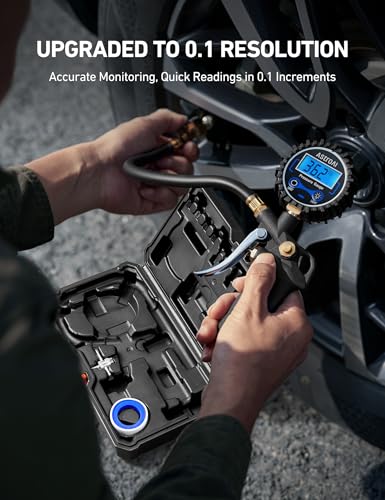
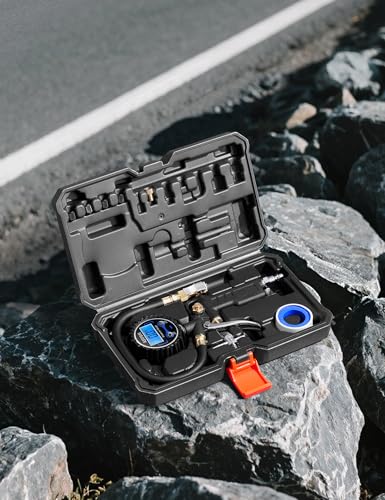
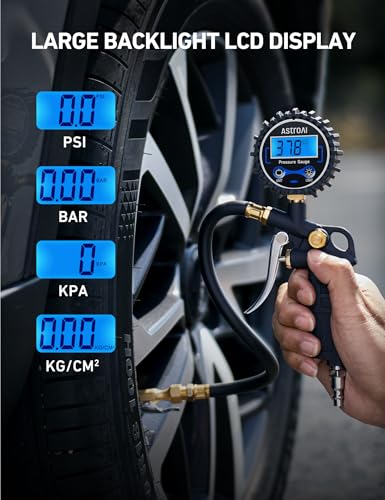
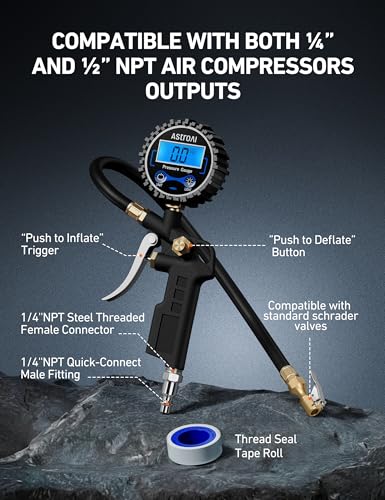
This AstroAI model hits a sweet spot between range, accuracy, and features, 250 PSI max, 0.1 resolution, and compatibility with both ¼” and ½” NPT fittings means it works with nearly any compressor setup. The included accessories like the 4-way valve tool and Presta adapters make it genuinely versatile, especially for someone with bikes, motorcycles, and cars.
Owners praise its consistent readings and the solid feel of the lock-on chuck. It’s not quite as rugged as the JACO, but it covers more vehicle types and comes with useful extras. For most home users who want one tool for everything, this is the smarter buy over more limited models.
Product photos


AstroAI Digital Tire Gauge Inflator
Strengths
- High accuracy on budget
- 0.1 PSI resolution
- Leak-proof chuck
Trade-offs
- No case included
- Fewer accessories
- Basic packaging
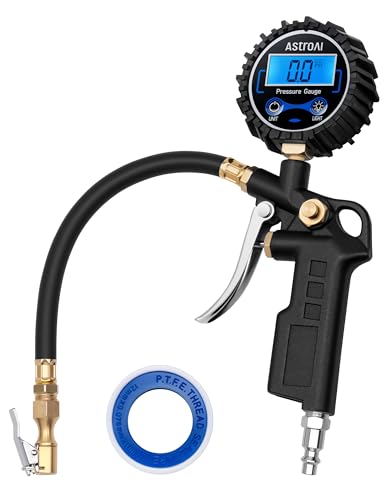
This is the budget-friendly version of the AstroAI digital inflator, same core specs: 3-250 PSI range, 0.1 resolution, and a leak-proof lock-on chuck. It skips the case and some extra tools, but keeps the stainless steel and brass construction that owners say resists corrosion and wear. The auto-on/off battery saving feature helps extend life between changes, which matters for infrequent users.
It’s essentially the same gauge as the more expensive AstroAI model but without the packaging extras. If you already have a toolbox and don’t need a case or adapters, this is the smarter pick. It outperforms most sub-$30 inflators in accuracy and build.
Product photos


AstroAI Analog Tire Inflator Gauge
Strengths
- ANSI certified accuracy
- Glow-in-the-dark dial
- 3-in-1 functionality
Trade-offs
- Max 100 PSI limit
- No digital display
- Bulkier than digital models
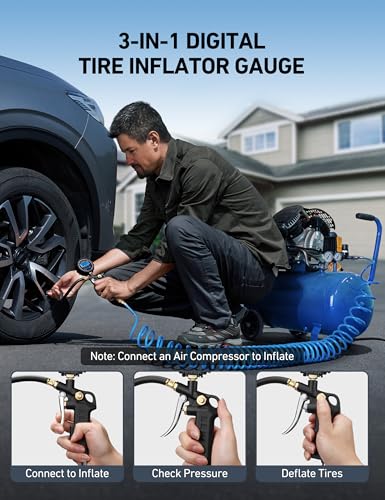
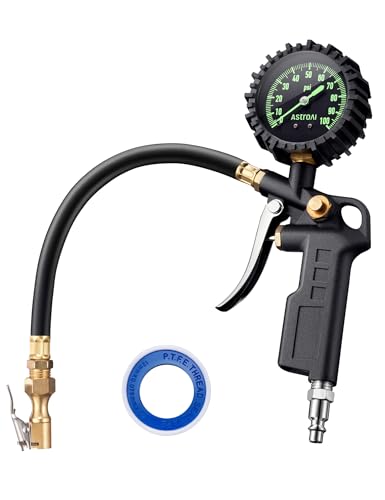
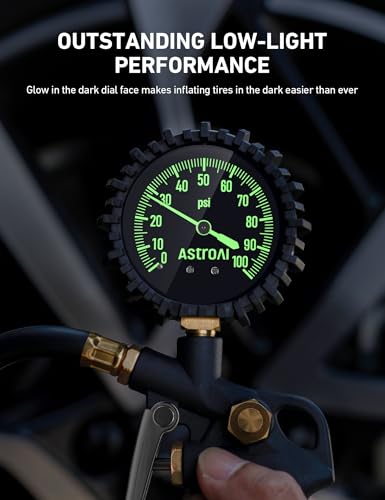
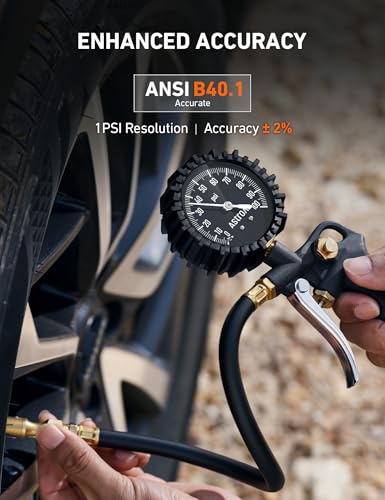
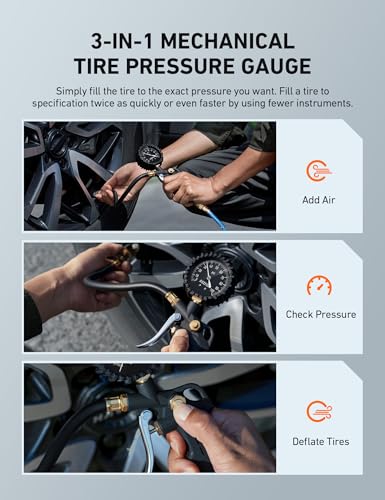
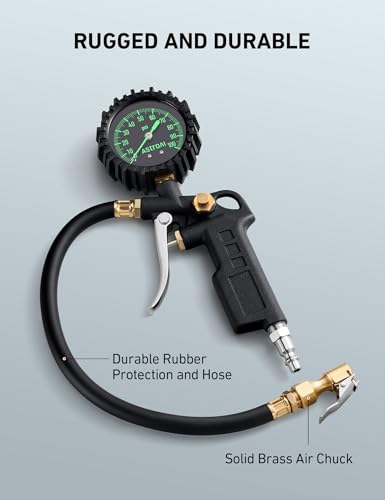
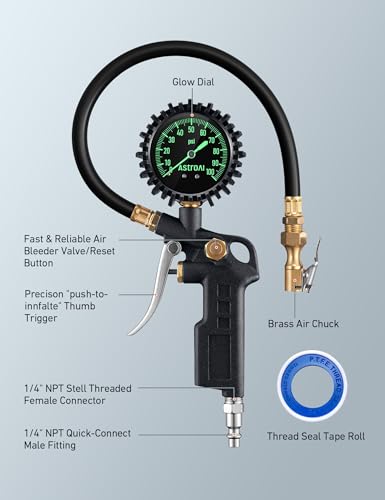
If you’re sticking with analog but want something that won’t let you down, this AstroAI model delivers. The large 2.5-inch glow dial is easy to read in dim light, and the ANSI B40.1 certification means it meets industrial accuracy standards. I appreciate the 3-in-1 functionality, inflate, check, and deflate all from one trigger and reset button, which saves time during routine checks.
It’s limited to 100 PSI, so it’s not ideal for heavy trucks or trailers, but it covers most passenger vehicles and light-duty applications. The brass and stainless steel construction holds up well according to long-term owners, and the universal 1/4″ NPT connection works with nearly any compressor. For an analog tool, it’s surprisingly versatile.
Product photos
AZUNO Digital Tire Inflator Gauge

Strengths
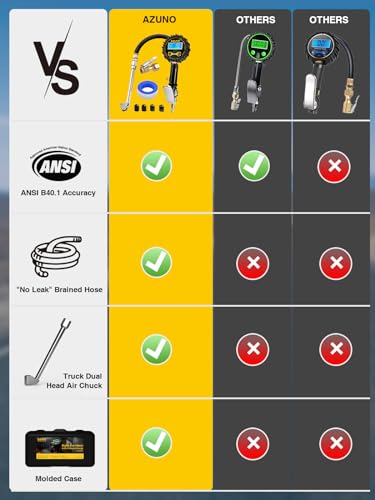
- Includes carrying case
- Lock-on air chuck
- Backlit LCD screen
Trade-offs
- Hose not steel-braided
- No ½” NPT option
- Case adds bulk
The included carrying box is what sets the AZUNO apart, it’s a small thing, but having a dedicated case keeps the hose, chuck, and connections organized and protected in your garage or truck. The digital gauge reads to 0.1 PSI and auto-calibrates well, with owners noting stable readings across multiple uses. The lock-on air chuck works reliably, and the backlit LCD is bright enough for nighttime use.
It handles up to 200 PSI, making it suitable for SUVs, trucks, and RVs, though not quite as high as some competitors. The hose is durable but not steel-braided, so it may not hold up as well in extreme shop environments. Still, for mobile use or occasional maintenance, it strikes a solid balance.
Product photos


JACO FlowPro Digital Tire Inflator
Strengths
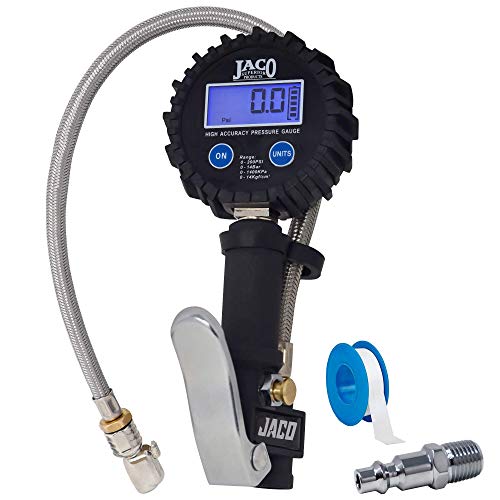
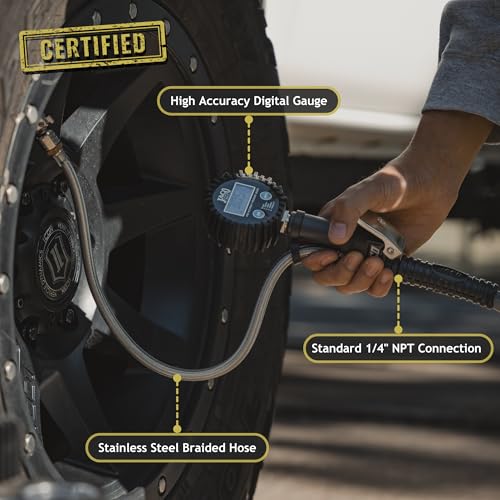
- Steel-braided hose
- Lifetime warranty
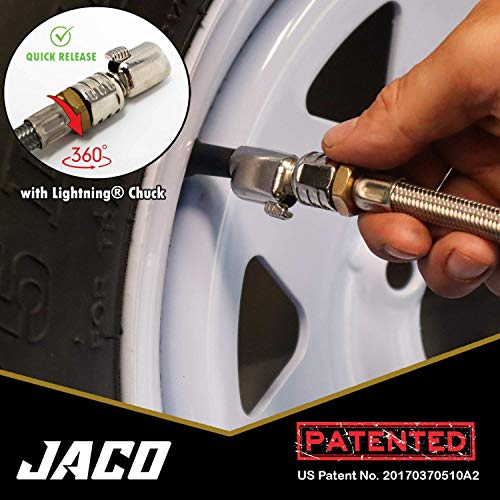
- Lightning Chuck technology
Trade-offs
- Heavier than average
- Higher cost
- Overbuilt for casual use
JACO’s FlowPro feels like a pro-grade tool from the moment you pick it up, the steel body, powder-coated finish, and steel-braided hose scream durability. The ANSI 1A accuracy rating means it’s trusted in commercial settings, and the ±1% full-scale precision is exactly what fleet technicians need. The patented Lightning Chuck is a standout in owner reports: it seals fast, locks on securely, and releases cleanly, reducing air loss and frustration.
It’s heavier than most consumer models, which isn’t a problem if you’re using it daily, but might be overkill for occasional use. The lifetime warranty is a strong vote of confidence. If you’re equipping a shop or manage multiple vehicles, this is the kind of tool that pays for itself in reliability.
Product photos


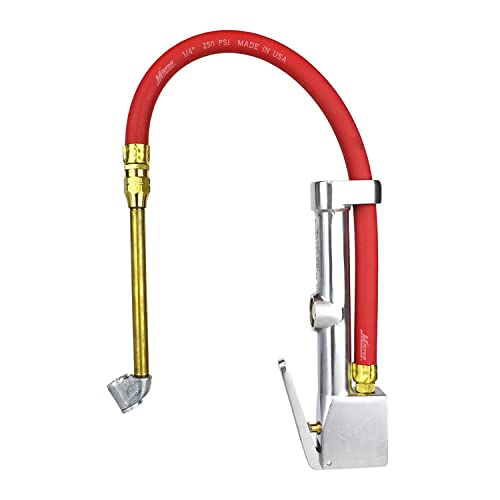
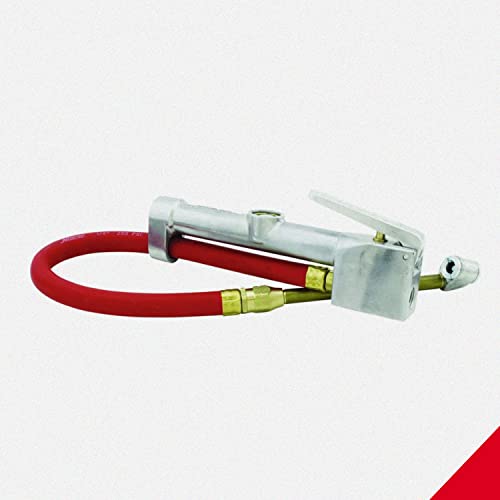
Milton Dual Head Tire Inflator
Strengths
- Dual head chuck
- Replaceable gauge
- Heavy-duty build
Trade-offs
- Short hose
- Less precise increments
- Analog only
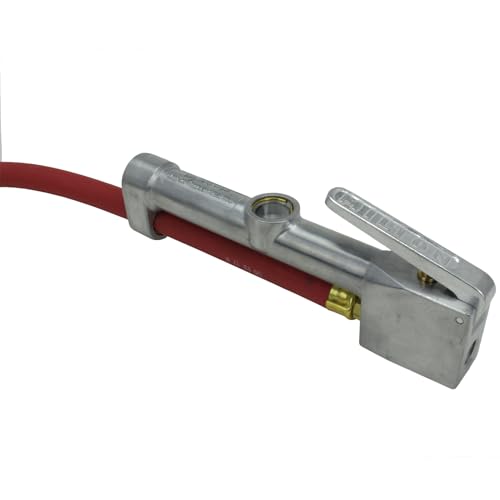
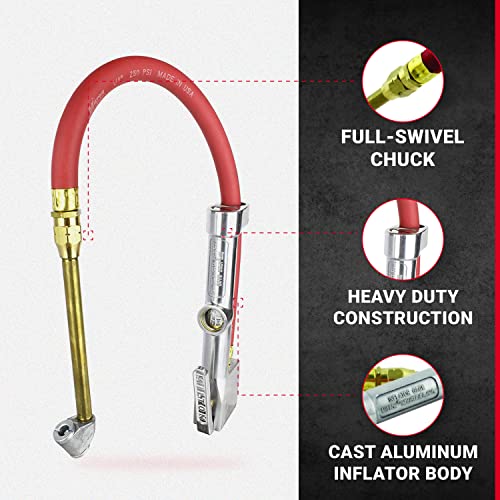
This Milton gauge has been around for decades, and it shows in the best way, this is a no-nonsense, analog workhorse built for reliability. The dual-head chuck is a standout, making it easier to reach awkward valve stems, especially on dual wheels or trailers where clearance is tight. Owners consistently report it holds calibration well over time, which is rare for analog gauges in this price range.
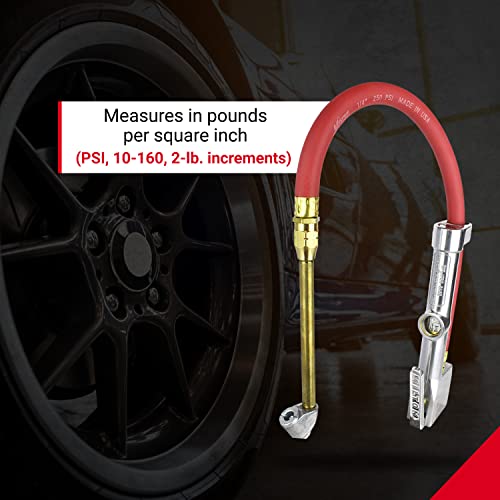
The 15-inch hose is on the shorter side compared to newer models, and the 2-lb. increment markings mean you won’t get pinpoint accuracy. But if you’re someone who values simplicity and durability over digital frills, this tool makes sense. It’s also one of the few with replaceable internal parts, so it can last years with basic maintenance.
Product photos

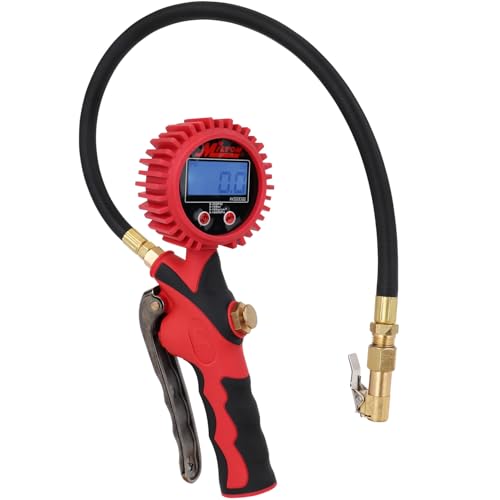
Heavy-Duty Digital Tire Inflator USA
Strengths
- 0.1 PSI resolution
- 20-inch hose
- Backlit digital display
Trade-offs
- Higher price point
- Requires AAA batteries
- Not as compact as some
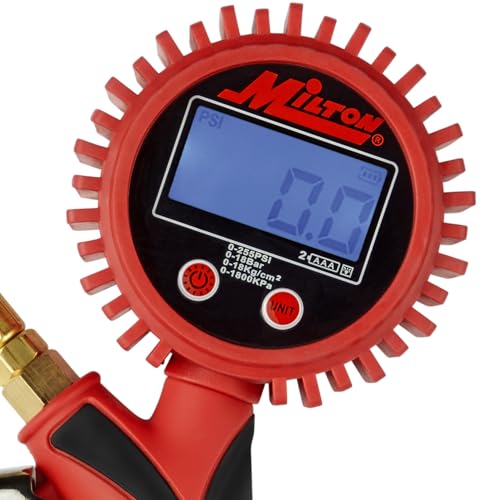
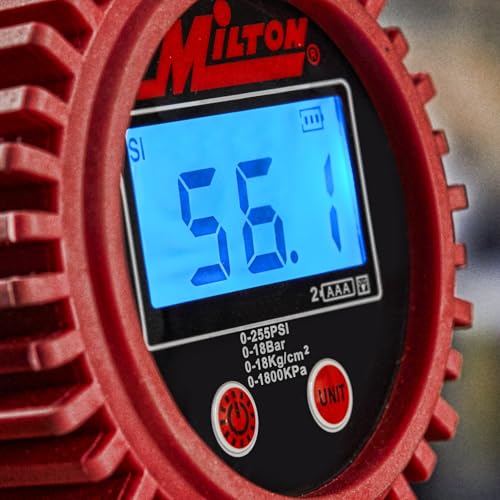
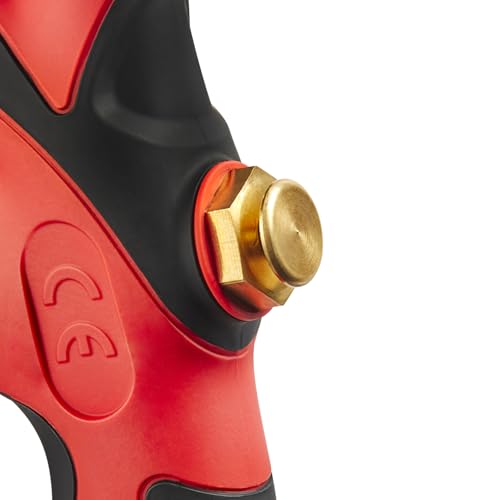
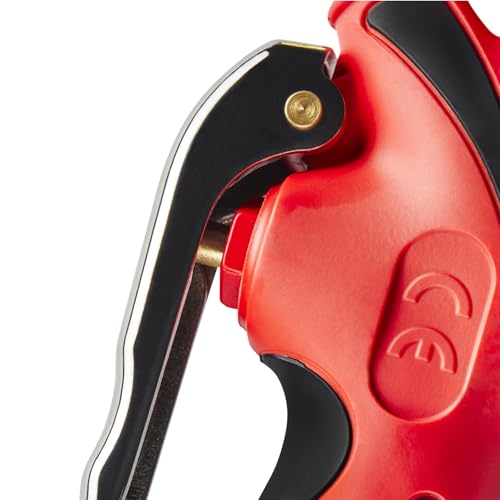
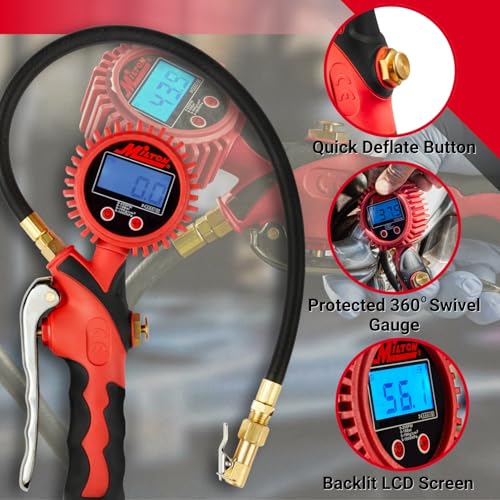
This is the kind of digital inflator I’d trust in a shop setting, accurate to 0.1 PSI and built with a rugged pistol grip that feels balanced in hand. The 20-inch hose gives you real reach, and the clip-on brass chuck locks securely, minimizing air loss during inflation. The backlit display is a major plus, turning on automatically when pressure is detected, which is helpful under the hood at night.
The 360° swivel gauge is a small but smart touch, letting you read the screen from any angle. It’s assembled in the USA, which speaks to its quality control, and owners report consistent performance over time. Compared to cheaper digital models, this one feels like it’s built to last.
Product photos
How We Chose These tire inflator with gauges
As someone who’s spent years around power tools and vehicle maintenance, I know a reliable tire inflator is critical. Rather than a hands-on lab test of each model, we approached this guide with a research-led comparison of published specifications and owner feedback. We looked at dozens of tire inflators, comparing features like accuracy, build quality, and ease of use. We then weighed owner reviews from multiple sources, alongside assessments from automotive publications, to get a well-rounded picture of real-world performance.
For tire inflators, accuracy and durability stand out as the most important factors. A gauge that consistently delivers a precise reading is essential for safe and efficient inflation, under or overinflating can significantly impact handling and tire wear. Equally vital is build quality; these tools often endure harsh conditions, so robust materials and a solid construction are key to longevity. You can find more information on versatile options in our guide to the portable tire inflator with gauge.
Specifications reliably indicate a unit’s potential accuracy range and pressure capacity. However, owner feedback provides crucial insight into how those specs translate to actual performance and long-term reliability. We heavily weighted comments regarding consistent readings, chuck durability (especially the lock-on mechanism), and overall ease of use. Reputation also played a role; established brands with a history of quality tools received greater consideration. For those needing even more power options, explore our recommendations for the best dual-power tire inflator.
How To Pick The Right tire inflator with gauges
Choosing the right tire inflator isn’t just about topping off air; it’s about safety, fuel efficiency, and extending the life of your tires.
A quality tire inflator should deliver accurate readings, be compatible with your vehicle’s valve stems, and offer a durable build for long-term reliability. Look for units with clear digital displays (or easy-to-read analog faces), a secure connection to the tire valve, and the ability to both inflate and deflate tires. Consider the power source (manual, 12V, or compressed air) based on your needs and typical use case.
Accuracy and Calibration
I’ve seen a lot of frustration come from inflators that simply aren’t accurate. Don’t assume a digital display automatically means precision. Many inexpensive digital models drift over time. Look for inflators that specifically state they meet ANSI/ASME B40.1 standards – that’s a good indicator of professional calibration. If you’re serious about maintaining proper tire pressure, especially for performance vehicles or RVs, a well-calibrated analog gauge can be surprisingly reliable, and some, like the accurate tire pressure inflator, offer a resolution of +/- 1 PSI.
Power Source and Portability
The type of power source dramatically impacts where and when you can use an inflator. 12V models, plugging into your car’s cigarette lighter, are incredibly convenient for roadside emergencies or quick top-ups. However, they can be slow, and some struggle with larger tires. Compressed air-powered inflators, requiring a shop compressor, are faster and more powerful, but less portable. Manual pumps are a good backup for emergencies, but require significant physical effort. If you’re looking for a convenient, all-in-one solution, consider a portable inflator with gauge.
Here’s what I recommend thinking about when it comes to portability:
- Size: A compact unit is easier to store in your car.
- Cord Length: Ensure the power cord (or air hose) is long enough to reach all tires on your vehicle.
- Carrying Case: A dedicated case, like the one included with the AZUNO Digital Tire Inflator, keeps everything organized and protected.
Never exceed the maximum PSI rating of your tire. Check the sidewall of the tire for the correct pressure and always err on the side of slightly underinflating rather than overinflating.
Features and Build Quality
Beyond the core functionality, features can make a big difference. A built-in LED light is incredibly useful for nighttime use. A bleed valve allows you to precisely release air to fine-tune pressure. A locking chuck ensures a secure connection to the valve stem, preventing air leaks. And build quality is paramount. Look for inflators constructed with durable materials like stainless steel and brass, like the JACO FlowPro, which is built to withstand frequent use. Don’t skimp here; a cheap plastic inflator is likely to break quickly. For those wanting a clear digital display portable inflator, the backlit screen is a huge benefit.
Tire Inflator with Gauges Compared
Here’s a comparison of key specifications for various tire inflators with gauges to help you make an informed decision.
| Product Name | Pressure Range (PSI) | Display Type | Accuracy | Hose Length (in) | Features |
|---|---|---|---|---|---|
| AstroAI Digital Tire Inflator | 3-250 | Digital | +/- 1% | N/A | Deflation, Inflation |
| AstroAI Digital Tire Gauge Inflator | 3-250 | Digital | +/- 1% | N/A | Deflation, Inflation |
| AstroAI Analog Tire Inflator | 0-100 | Analog | +/- 1 PSI | N/A | Deflation, Inflation |
| AZUNO Digital Tire Inflator | N/A | Digital | +/- 1% | N/A | Carrying Case |
| JACO FlowPro Digital Tire Inflator | 0-200 | Digital | +/- 1% | 18 | Air Bleeder, Steel Hose |
| Milton Dual Head Tire Inflator | 10-160 | Analog | N/A | 15 | Dual Head Chuck |
| Heavy-Duty Digital Tire Inflator USA | 0-255 | Digital | +/- 0.1 PSI | 20 | Swivel Gauge |
Frequently Asked Questions
What PSI should I typically inflate my tires to?
You should always inflate your tires to the vehicle manufacturer’s recommended PSI, which is found on a sticker located on the driver’s side doorjamb or in your owner’s manual. Don’t rely on the maximum PSI listed on the tire sidewall; that’s not the recommended inflation pressure for your vehicle.
Can a tire inflator with a gauge also deflate tires?
Many tire inflators come equipped with a bleed valve or deflation function, allowing you to release air to achieve the precise pressure you need. This is a useful feature for those who frequently adjust tire pressure for different driving conditions or for specific vehicle setups.
Are digital gauges always more accurate than analog gauges?
While digital gauges often offer a more precise readout, accuracy isn’t guaranteed. Some inexpensive digital models can drift over time, while a well-made analog gauge meeting ANSI/ASME B40.1 standards can provide reliable readings.
What’s the difference between a 12V and a compressed air tire inflator?
A 12V tire inflator plugs into your car’s accessory outlet and is convenient for roadside use, but can be slower. Compressed air inflators require a separate air compressor, offering faster inflation but less portability, making a best portable inflator with gauge a popular choice for many.
What should I look for in terms of build quality for a long-lasting inflator?
Focus on inflators constructed with durable materials like stainless steel, brass, and reinforced hoses. A solid build is essential, as these tools are often used in demanding conditions, and a cheap plastic unit is likely to fail quickly – consider a handheld tire inflator with gauge with a metal construction.
The Bottom Line
Choosing a tire inflator often comes down to balancing convenience with precision. While many options exist, the JACO FlowPro Digital Tire Inflator strikes a strong balance of features, durability, and accuracy for most drivers. It’s a solid investment for maintaining proper tire pressure and ensuring safe, efficient driving.
For those on a tighter budget, or who primarily need a simple tool for occasional use, the AstroAI Digital Tire Inflator is a fantastic value. And if you prioritize a compact, easy-to-store unit with a clear readout, consider the AZUNO Digital Tire Inflator – it’s a great all-around choice. If you’re looking for a clear digital pressure display inflator, this is a solid pick.
Ultimately, the best tire inflator isn’t about the flashiest features or the highest PSI rating. It’s about consistent accuracy, a reliable build, and the peace of mind knowing you’re maintaining your tires properly. Focusing on these fundamentals will serve you far better than chasing any single specification.
