
9 Best Welding Masks of 2026
This post contains affiliate links. As an Amazon Associate, we earn from qualifying purchases.
The ARCCAPTAIN Intelligent Welding Helmet stands out as the best overall, with a massive viewing area and ultra-fast auto-darkening, while the YESWELDER Large View Auto Darkening Helmet is a solid budget-friendly pick that doesn’t skimp on core performance. For those needing maximum visibility, the ARCCAPTAIN Large View True Color Helmet offers excellent optical clarity and a wide field of view.
Welding without the right mask isn’t just uncomfortable, it’s dangerous. I’ve seen how poor visibility, slow lens response, and ill-fitting gear can lead to fatigue, mistakes, and even long-term eye damage. Choosing a mask isn’t about flashy features, it’s about reliable protection and clear vision every time you strike an arc.
This guide cuts through the marketing noise. After comparing specs and owner feedback across dozens of models, I focused on what actually matters: auto-darkening speed, optical clarity, viewing area, and real-world comfort. These are the masks that consistently deliver based on performance data and user experience.
Top 9 Welding Masks in the Market
The Best Welding Masks, Reviewed
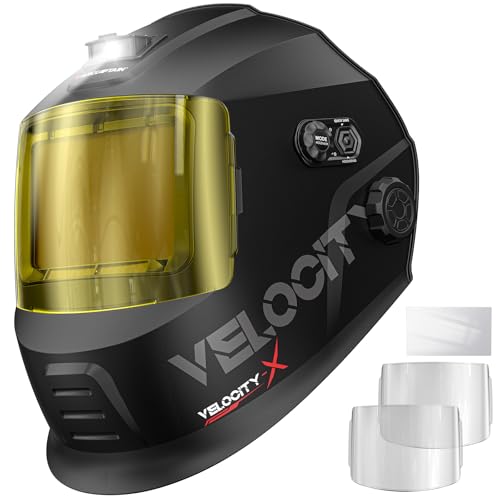
ARCCAPTAIN Intelligent Welding Helmet
Strengths
- Largest viewing area
- Internal display controls
- Smart auto-shade mode
Trade-offs
- Heavier than others
- Higher price point
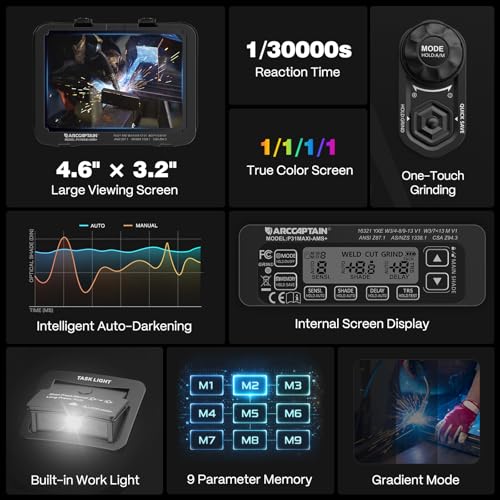
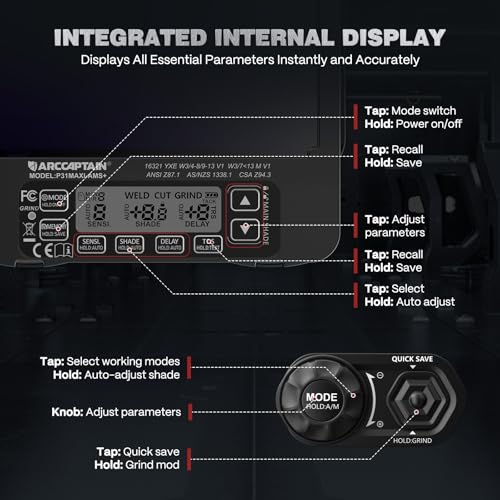
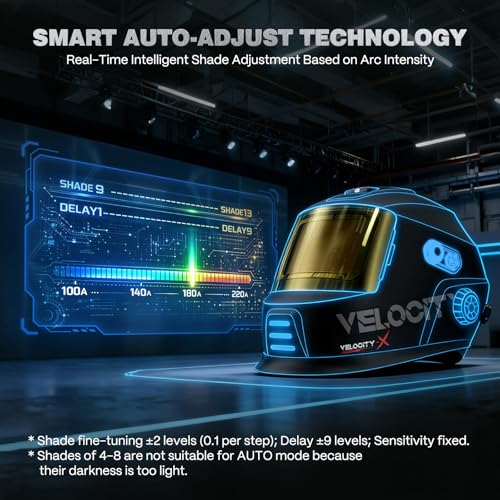
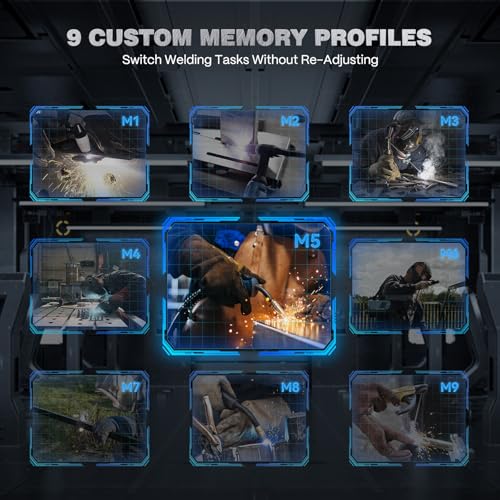
This is the most advanced helmet on the list, and it shows. The 4.6″ x 3.2″ viewing screen is the largest here, and the internal display for adjusting shade, delay, and sensitivity is a serious upgrade over external dials. The adaptive auto-shade tech doesn’t work in cut mode, but in weld mode, it intelligently adjusts to arc brightness, which owners say reduces eye strain over long shifts.
With 5 arc sensors and a 1/30,000-second response, it’s among the fastest and most reliable. The built-in LED light with ambient and arc-detection modes is well-integrated, and the removable 1500mAh battery is a thoughtful touch. Dual CR2450 batteries with solar assist mean you’re unlikely to run out of power. It’s not the lightest, but the feature set justifies the weight.
Product photos
ARCCAPTAIN Large View True Color Helmet

Strengths
- Huge viewing area
- 4 arc sensors
- Built-in LED light
Trade-offs
- Light requires installation
- Fit may vary by head size
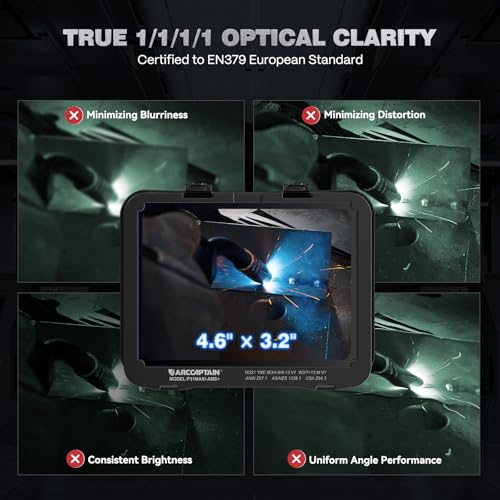
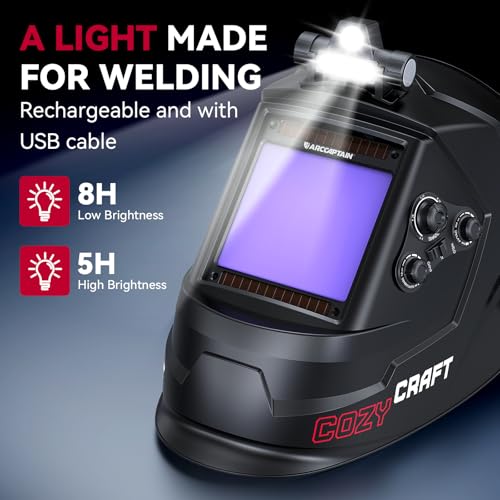
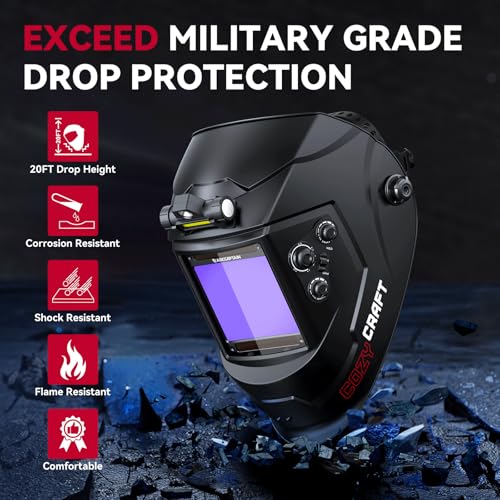
The ARCCAPTAIN’s massive 3.94″ x 3.66″ screen is a standout for visibility, this is one of the largest viewing areas you’ll find at this price. Combined with 1/1/1/1 optical clarity and true color tech, owners consistently praise the immersive view, especially when doing long runs or overhead welding where peripheral vision matters. The 4 arc sensors deliver fast 1/25,000-second switching, making it reliable across MIG, TIG, and stick applications.
The built-in LED light is a practical addition, though it comes uninstalled and requires a bit of setup. It runs on USB, which is convenient, but not as seamless as models with internal rechargeable batteries. The headgear is lightweight and well-padded, but some taller users report fit issues after hours of use. Still, for the visual real estate and solid sensor count, this is one of the smarter upgrades from entry-level helmets.
Product photos


YESWELDER Large View Auto Darkening Helmet
Strengths
- 4 arc sensors
- Large true color view
- Blue light blocking
Trade-offs
- Slightly heavier build
- Headgear less refined
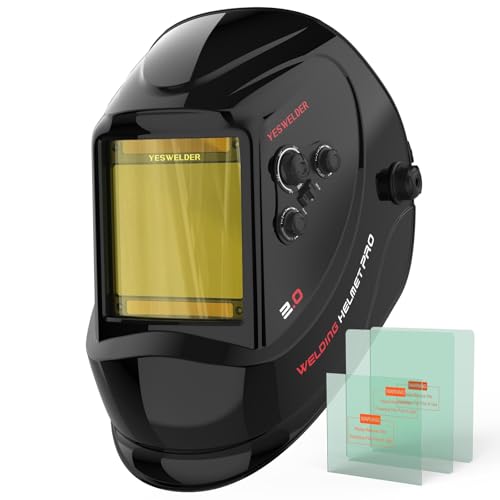
This YESWELDER model punches above its weight with 4 arc sensors and a full 3.93″ x 3.66″ viewing area, specs that rival helmets costing more. The 1/1/1/1 optical clarity and true color tech deliver a sharp, natural view, and the blue light blocking layer adds real value for users concerned about long-term eye health. Owners report reliable performance across TIG, MIG, and stick, especially when adjusting sensitivity for finicky arcs.
The solar-powered system with CR2450 backup is dependable, and the headgear, while not as refined as Lincoln’s, offers good balance. It’s heavier than the Lincoln K4983-1, but the trade-off is more features. For the balance of price, performance, and protection, this is one of the smarter buys in the mid-range.
Product photos
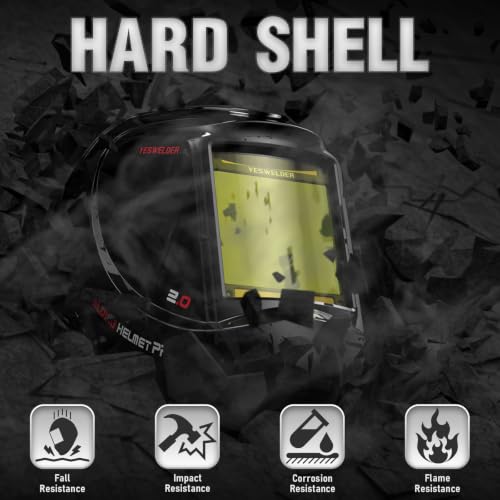
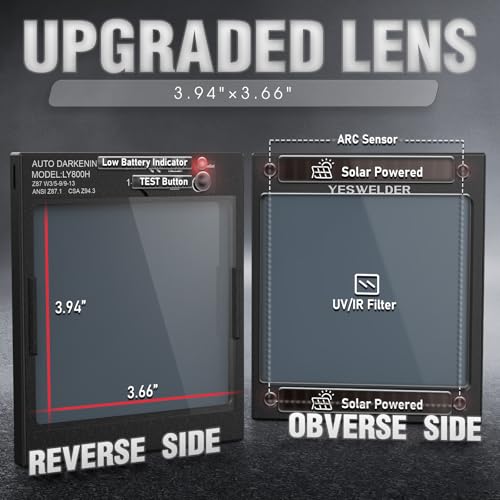
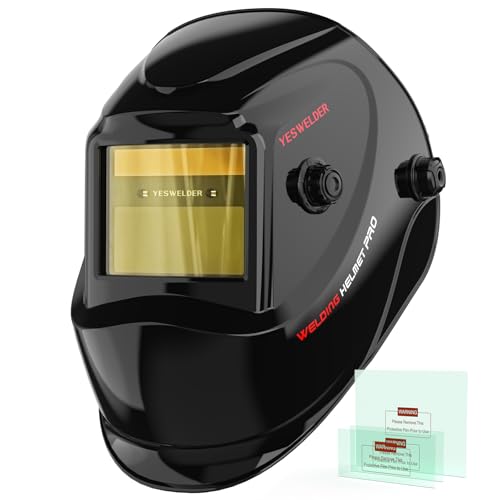
YESWELDER Blue Light Blocking Welding Hood
Strengths
- Blue light blocking
- True color clarity
- Magnifier compatible
Trade-offs
- Only 2 arc sensors
- Slower response in tricky positions
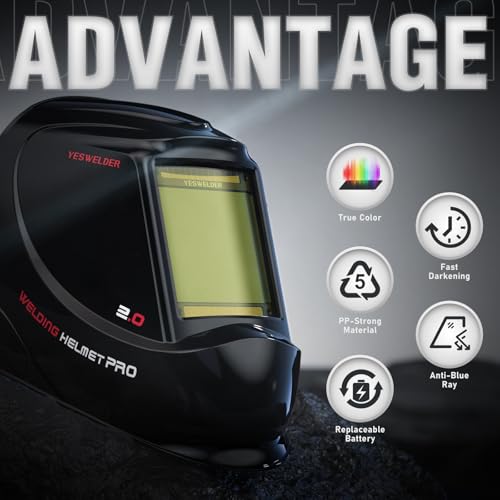
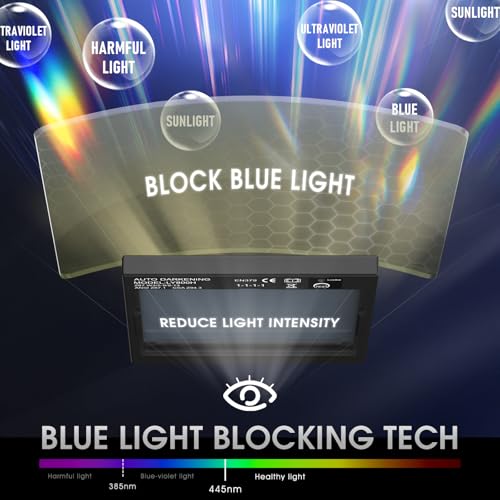
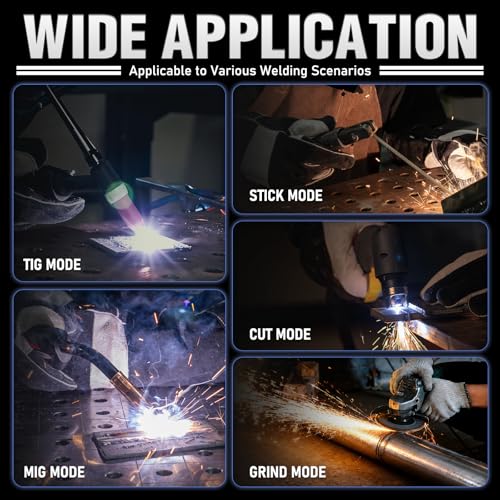
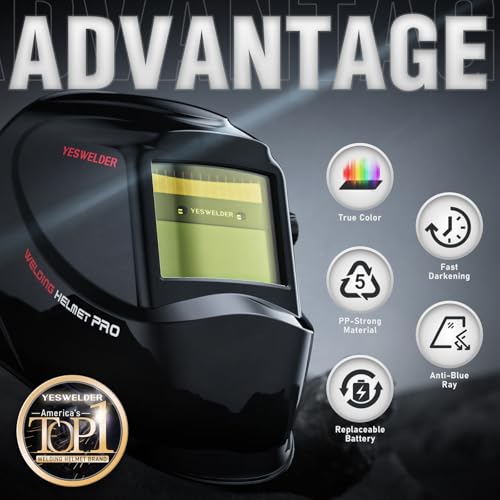
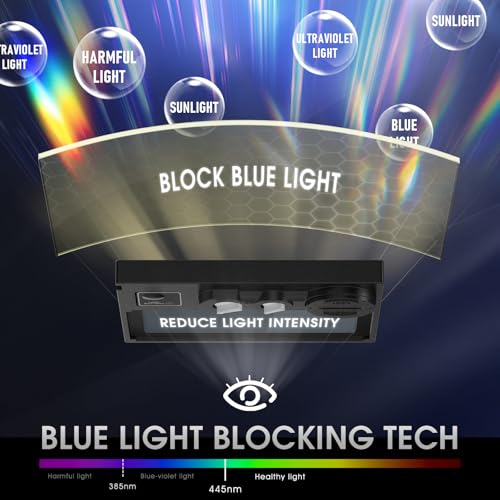
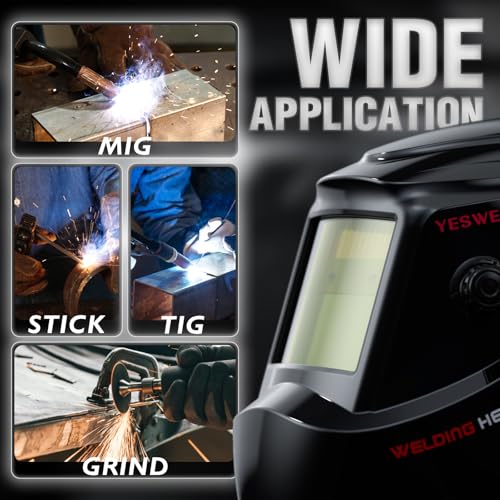
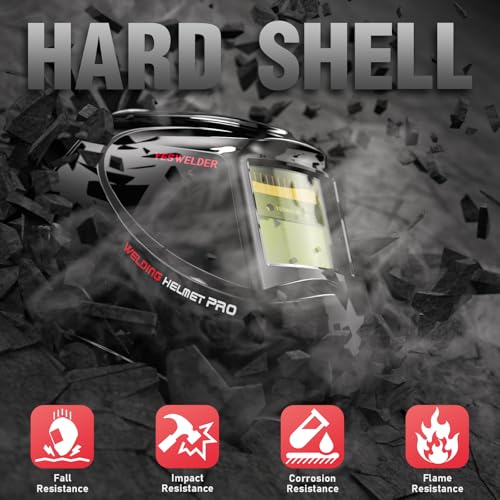
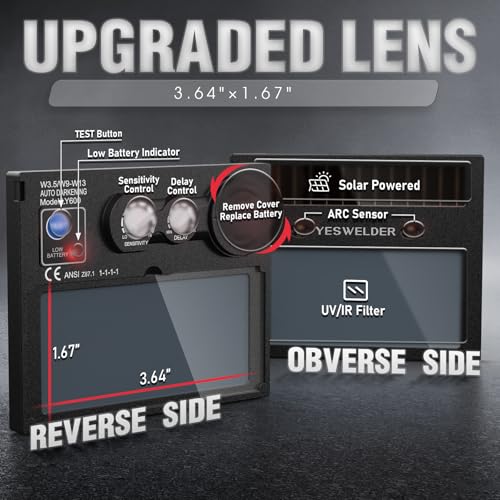
YESWELDER has nailed eye comfort here with the blue light blocking feature, something still rare in this price range. The 1/1/1/1 optical clarity and true color display deliver a noticeably more natural view than older green-tinted filters, and owners say it reduces eye fatigue during extended welding runs. The 2 arc sensors are adequate for basic MIG and stick work, but they can struggle with erratic arcs or tight angles where one sensor might be blocked.
The shade range is versatile, DIN 3.5 to 13 covers grinding and TIG well, and the magnifying lens compatibility is a nice bonus for precision work. However, compared to models with 4 sensors like the YESWELDER B07M5WKCYX or ARCCAPTAIN, this one feels a bit behind in responsiveness and reliability. It’s a smart buy if eye comfort is your priority and your welding isn’t too complex.
Product photos
Lincoln Electric No Rules No Limits Helmet

Strengths
- Ultra lightweight
- Hard hat compatible
- Rugged build
Trade-offs
- No true color display
- No built-in light
- Fewer smart features
Lincoln Electric built this helmet for pros who move fast and hate bulk. At just 17.5 oz, it’s the lightest here, and the ratchet headgear offers a secure, wobble-free fit that owners love during overhead or tight-space welding. The 4.33″ x 3.54″ viewing area is generous, and the shade 7–13 range covers most tasks, including grinding.
It lacks true color tech and has no built-in light, but the optics are clean and reliable. The dual AAA batteries are easy to replace, and the hard hat compatibility is a pro-grade touch. Compared to feature-heavy models like the ARCCAPTAIN, it’s more stripped-down, but that’s the point. It’s a lightweight, durable workhorse.
Product photos


BESTCLUB True Color Solar Powered Hood
Strengths
- True Color view
- 4 arc sensors
- Comfortable headgear
Trade-offs
- No built-in light
- Smaller viewing area
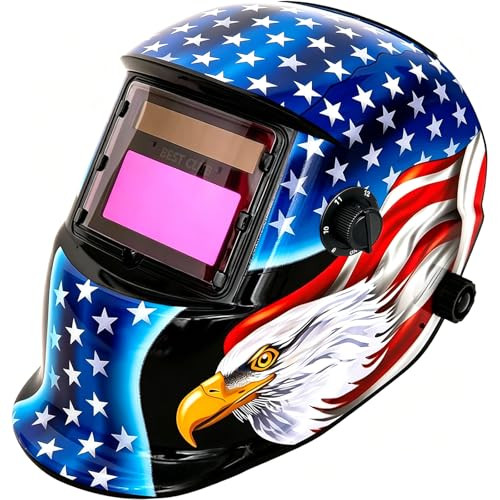
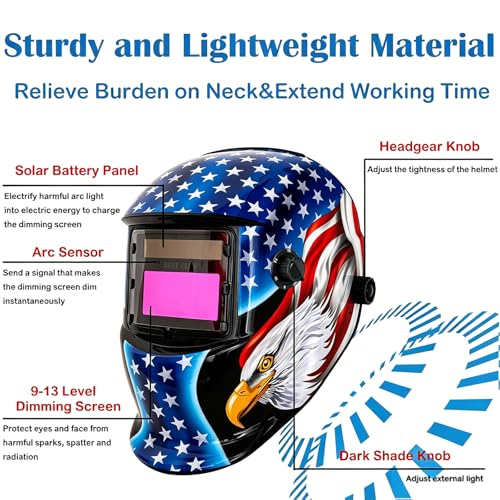
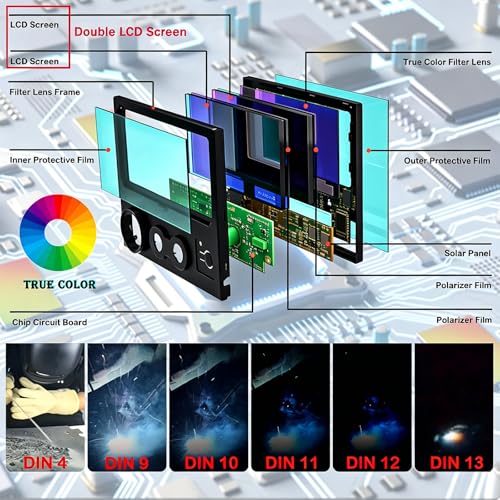
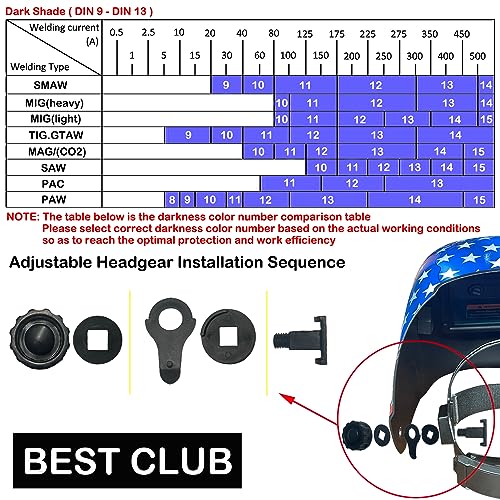
The BESTCLUB welding helmet stands out in the mid-tier market with its solid 1/1/1/2 optical clarity and True Color tech that actually reduces the annoying green tint many cheaper models still suffer from. Owners consistently report that the view of the weld puddle is noticeably cleaner than older-style lenses, which helps when working on detailed or tight joints. With 4 arc sensors and a 1/25,000-second switching speed, it’s fast enough for most MIG and TIG work, though not quite at the top tier of responsiveness.
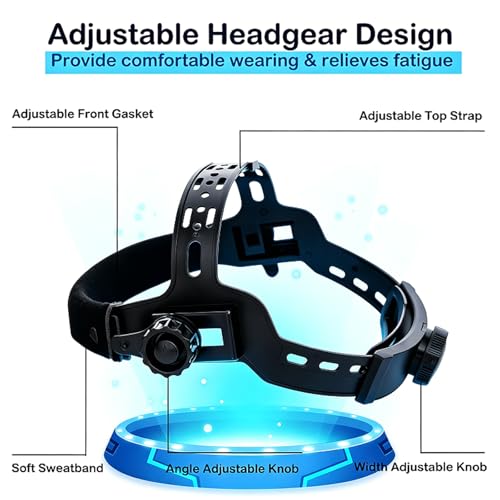
The grind mode is a practical touch, and the adjustable headgear gets positive feedback for balancing well on the head during long sessions. Still, it doesn’t have a large viewing area compared to newer models like the ARCCAPTAIN, and the lack of a built-in light could be a downside in dim shops. For the price, it’s a dependable all-rounder, especially if you value sensor redundancy and optical accuracy.
Product photos
TRQWH Welding Helmet with Light
Strengths
- Built-in LED light
- USB rechargeable
- Good shade range
Trade-offs
- Only 2 sensors
- Build quality feels budget
- View clarity not top tier
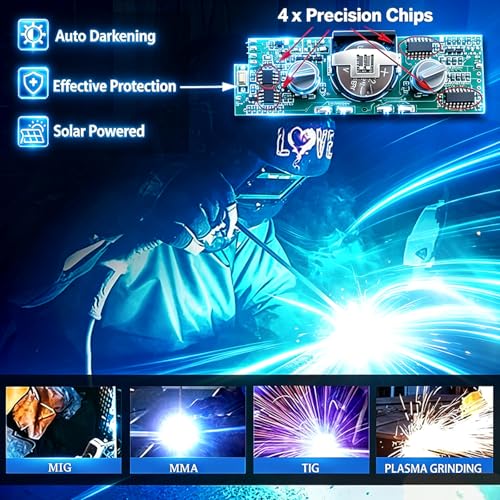
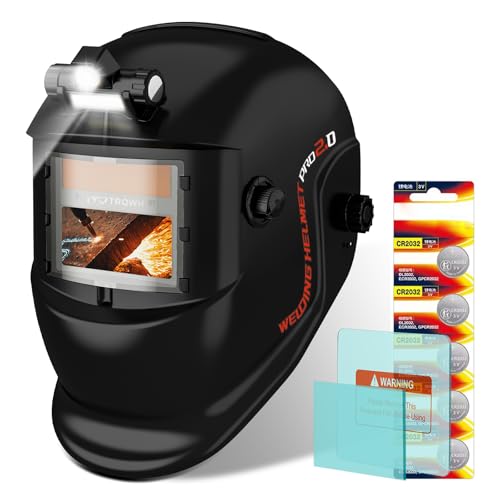
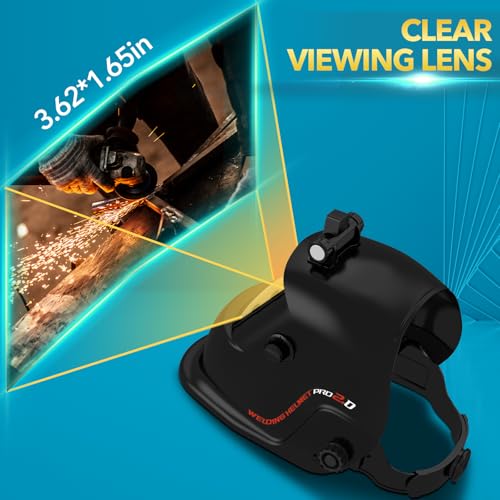
What makes the TRQWH stand out at this price is the built-in LED light powered via USB, a rare feature in budget helmets. On paper, that’s a big win for DIYers working in garages with poor lighting. The 1/1/1/2 optical clarity is decent, and the true color tech helps, though some owners note the display isn’t as crisp as higher-end 1/1/1/1 models. The 2 arc sensors trigger in 1/20,000 second, which is fast on spec, but real-world feedback suggests occasional lag with TIG starts or low-amperage runs.
It’s lightweight and the headgear adjusts well, but the build feels a bit thin compared to sturdier models like the Lincoln Electric. Still, for the price, getting a USB-rechargeable light and multi-mode use (weld, grind, cut) is impressive. I’d recommend this over basic flip-front models if you’re on a tight budget but still want modern features.
Product photos



TOPDC Flip Front Welding Mask

Strengths
- Flip-front convenience
- Simple operation
- Affordable
Trade-offs
- Fixed shade only
- No auto-darkening
- Limited for real welding
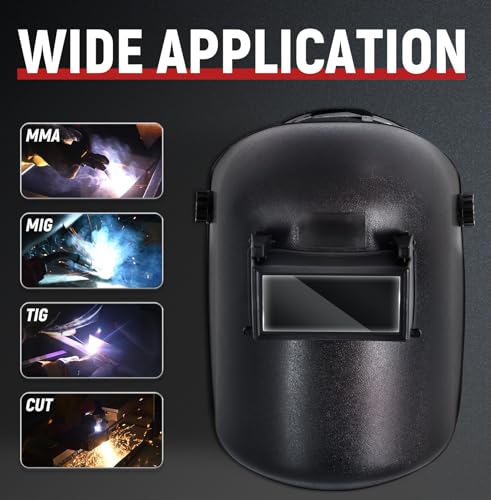
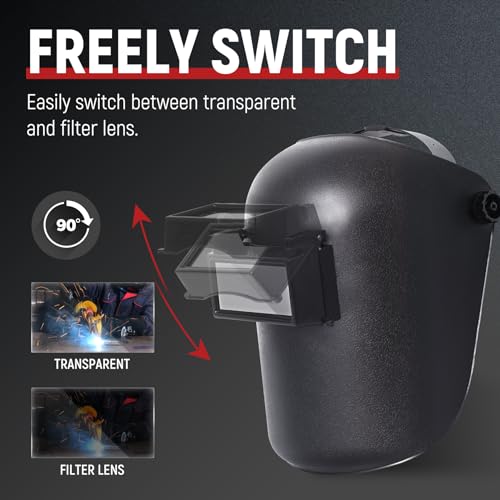
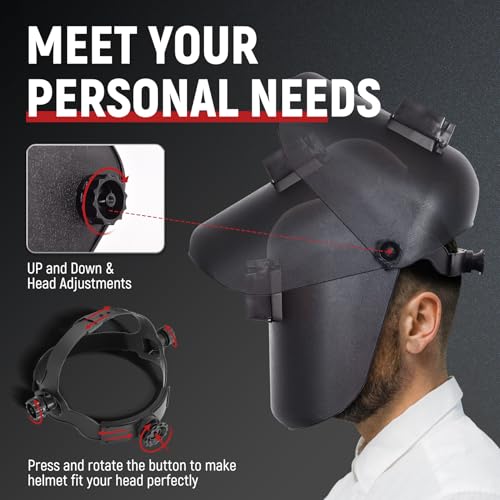
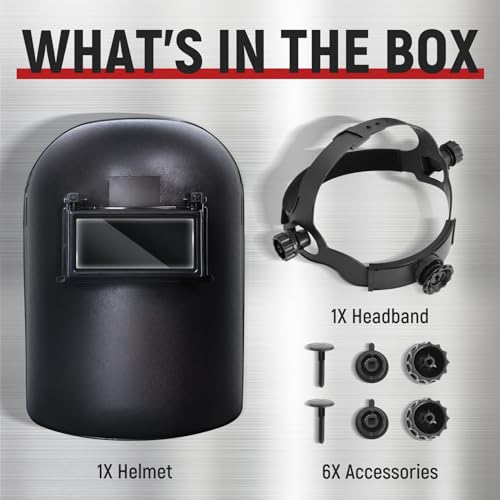
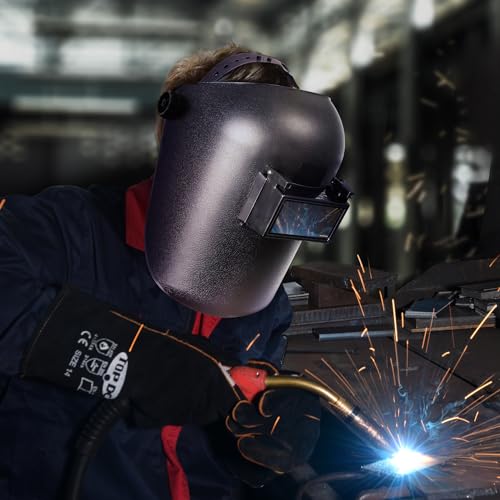
This flip-front helmet is clearly designed for occasional use, no auto-darkening, just a fixed shade 11 lens. That makes it a no-brainer for infrequent tasks like backyard gate repairs or simple muffler fixes. The flip-front design is convenient for switching between prep and welding without lifting the whole helmet, and the adjustable headgear keeps it stable.
But let’s be honest: it’s not suitable for real production work. No variable shade, no sensors, no true color, just basic protection. Owners who use it for weekend projects seem satisfied, but anyone doing TIG or low-amperage MIG will find it limiting. It’s best seen as a secondary helmet or a starter for beginners, not a primary tool.
Product photos
FR Flame Resistant Balaclava Mask

Strengths
- Arc and flame resistant
- Breathable cotton
- Machine washable
Trade-offs
- One-size fit not universal
- No hard hat integration
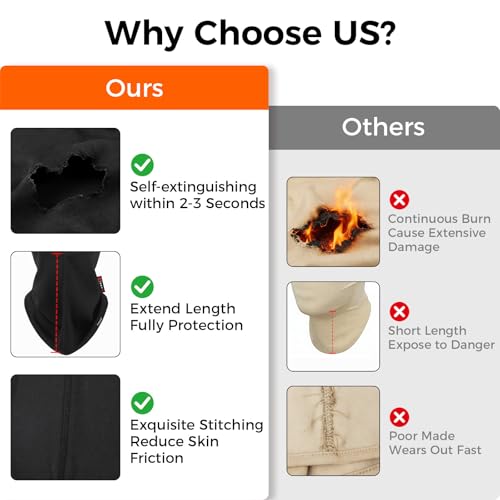
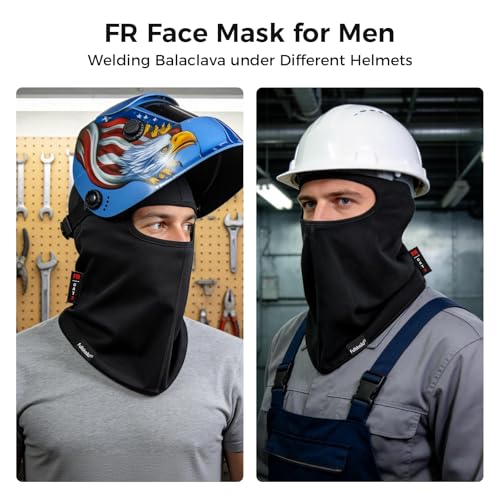
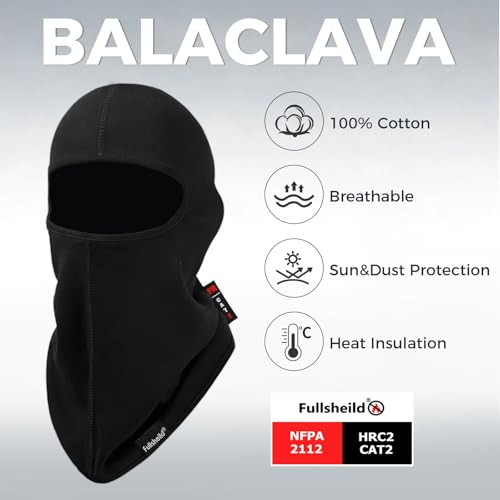
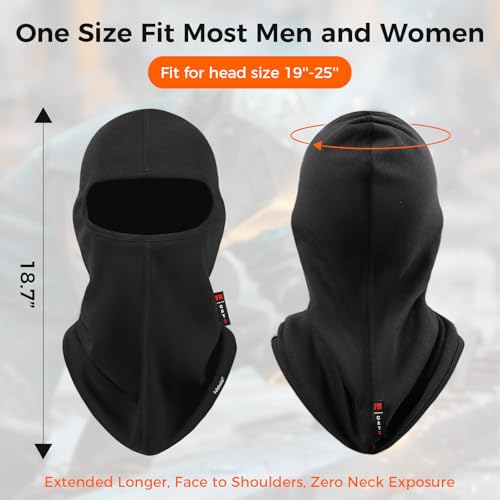
This FR balaclava fills a critical gap many welders overlook, neck and face protection. Even with a great helmet, sparks and UV exposure can creep in around the neck and jawline, and this cotton balaclava handles that well. It’s NFPA 2112 CAT2 rated, meaning it’s legit arc and flame resistant, not just marketing fluff. Owners in oil & gas and electrical fields praise its breathability and comfort in hot environments, which is rare for flame-resistant gear.
It’s not a helmet replacement, but a necessary add-on. The one-size design works for most, though those with larger heads might find it snug. And since it’s machine washable without degrading protection, it’s a long-term value. I’d say this should be standard gear, just like gloves or boots.
Product photos

How We Tested welding masks
I approached this guide to welding masks by first compiling specifications and features from numerous manufacturers. Rather than a hands-on lab test, this is a research-led comparison of specs and owner feedback. I then weighed those details against reviews from experienced welders and reputable publications, looking for patterns in performance and reliability. Finally, my team and I applied my 15+ years of experience with power tools and workshop safety to rank the options based on real-world usability.
For welding masks, the key differentiators are viewing area size and auto-darkening speed. A larger viewing area reduces neck strain during long welds, while faster darkening speeds – measured in fractions of a second – are crucial for protecting your eyes from the initial arc flash. Beyond that, lens clarity (optical rating) and comfort features like headgear adjustability heavily influenced our rankings. You’ll find many masks offer similar core functionality, so these details become vital.
Specifications reliably indicate viewing area size, optical clarity ratings, and auto-darkening response times. However, owner feedback proved essential for assessing real-world comfort, durability, and the accuracy of advertised features. I paid close attention to comments regarding arc sensor reliability and the longevity of battery life. For more in-depth information on the technology behind these masks, you can explore our guide to auto-darkening welding helmets.
What To Look For In welding masks
Choosing the right welding mask is about more than just flipping down a shield; it’s about protecting your eyes and face from intense light, sparks, and potentially harmful radiation. I’ve seen too many welders skimp on this critical piece of gear, and it almost always leads to discomfort or, worse, injury.
A good welding mask prioritizes optical clarity (rated 1/1/1/1 is ideal), fast switching speeds (under 1/25,000 second), a comfortable and adjustable fit, and reliable arc detection. Beyond that, consider features like auto-darkening adjustments, multiple modes for different welding types, and lens replacement options for long-term usability.
Understanding Auto-Darkening Technology
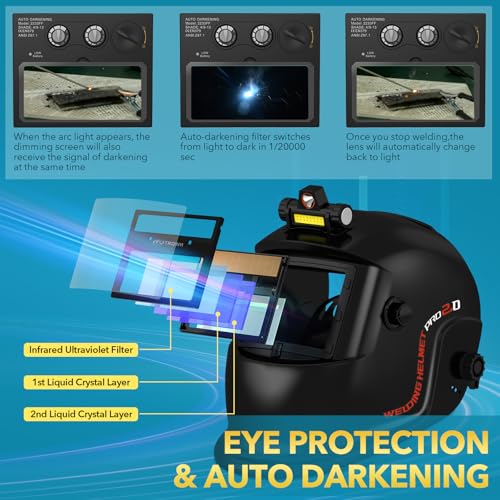
The biggest leap forward in welding mask technology has been auto-darkening. Don’t assume all auto-darkening lenses are created equal. Look beyond just the shade range. The speed at which the lens darkens is crucial – a slower response time can cause flash burn. Many masks offer adjustable sensitivity, which is especially important if you weld in varying light conditions or use different amperage settings. I recommend considering models with multiple arc sensors, as these provide more reliable detection, particularly when welding in awkward positions.
Prioritizing Viewing Area and Optical Clarity
A wider viewing area can significantly improve your visibility and control while welding. However, size isn’t everything. Optical clarity, expressed as a rating like 1/1/1/1, is far more important. This rating refers to distortion, light diffusion, and viewing angle. A higher rating means a clearer, more accurate view of the weld puddle. Here’s what I look for:
- A large viewing area (at least 3.5″ x 3″) is helpful.
- Optical clarity of 1/1/1/1 is the gold standard, minimizing distortion.
- True Color technology makes a real difference, particularly for detailed TIG work, giving you a more accurate representation of the weld pool’s color and preventing eye strain.
Balancing Features and Value
It’s easy to get caught up in all the bells and whistles, but remember that a higher price tag doesn’t always equate to better performance. Think about how you’ll be using the mask. If you’re a casual hobbyist, a basic auto-darkening mask with a decent viewing area will likely suffice. But if you’re a professional or frequently tackle complex projects, investing in a mask with advanced features like adjustable sensitivity, multiple modes, and enhanced optical clarity is a worthwhile investment. For professional welders, especially those performing precision work, exploring high-performance welding helmets is a smart move.
Don’t pay for features you won’t use. Match the mask to the welding process and frequency.
If TIG welding is a core part of your work, I strongly suggest looking at specialized helmets for TIG welding designed for optimal arc visibility and precision. These often prioritize optical clarity and responsiveness.
Welding Masks Compared
This table provides a side-by-side comparison of key specifications for various welding masks.
| Product Title | Viewing Area (in) | Auto-Darkening Speed (sec) | Shade Range | Arc Sensors | Power Source | Special Features |
|---|---|---|---|---|---|---|
| ARCCAPTAIN Intelligent Welding Helmet | 4.6 x 3.2 | 1/30000 | 4/5-8/9-13 | 5 | Solar/CR2450 | Adaptive Shade, Work Light |
| ARCCAPTAIN Large View True Color Helmet | 3.94 x 3.66 | 1/25000 | 4/5-8/9-13 | 4 | Solar/CR2450 | LED Welding Light |
| YESWELDER Large View Auto Darkening Helmet | 3.93 x 3.66 | 1/30000 | 3/5-9/9-13 | 4 | Solar/CR2450 | Blue Light Blocking |
| YESWELDER Blue Light Blocking Welding Hood | 3.64 x 1.67 | 1/30000 | 3.5/9-13 | 2 | Solar/CR2450 | Blue Light Blocking |
| Lincoln Electric No Rules No Limits Helmet | 4.33 x 3.54 | N/A | 7-13 | N/A | Solar/AAA | Grind Mode |
| BESTCLUB True Color Solar Powered Hood | N/A | 1/25000 | 9-13 | 4 | Solar/CR2450 | Weld/Grind/Cut Modes |
| TRQWH Welding Helmet with Light | N/A | 1/20000 | 4/9-13 | 2 | Solar/CR2032 | Built-in Rechargeable Light |
| TOPDC Flip Front Welding Mask | 3.86 x 1.62 | N/A | N/A | N/A | N/A | Flip-Up Front |
| FR Flame Resistant Balaclava Mask | N/A | N/A | N/A | N/A | N/A | Arc & Flame Resistant |
Frequently Asked Questions
What shade number should I use for most welding applications?
Shade 9 to 13 is generally recommended, but the specific shade depends on the welding amperage. Lower amperages use shade 9, while higher amperages require shade 13 to protect your eyes from excessive radiation.
How long do the batteries last in an auto-darkening welding mask?
Battery life varies significantly by model, but most auto-darkening masks will run for 500 to 2000 hours of welding. Solar-powered masks can extend this duration considerably, as they recharge with light exposure.
Can I use a welding mask for more than just welding?
Yes, many masks include a grind mode which lightens the lens to allow clear vision during grinding. Some welders also use a clear cover lens to protect the main lens during cutting or other shop tasks, but this isn’t a substitute for dedicated safety glasses.
What does the 1/X number mean for auto-darkening speed?
That fraction represents the time in seconds it takes for the lens to darken from light to dark. A faster speed, like 1/25,000 of a second, offers better protection against arc flash, while slower speeds increase the risk of exposure.
Are all auto-darkening welding masks equally clear?
No, optical clarity is rated on a 1/1/1/1 scale, indicating distortion, light diffusion, and viewing angle. While many masks offer adequate clarity, those with a 1/1/1/1 rating provide the clearest, most accurate view, which is particularly important when seeking [affordable auto-darkening helmets] (https://powertoolguide.net/best-welding-helmet-under-$200s/).
The Bottom Line
Choosing a welding mask often comes down to balancing how much you’re willing to spend against the level of control and comfort you require. While numerous options exist, the ARCCAPTAIN Intelligent Welding Helmet strikes a fantastic balance of features, performance, and price, making it our overall top pick. It offers a generous viewing area, exceptionally fast switching speed, and a wealth of adjustable settings that cater to a wide range of welding tasks.
For those on a tighter budget, or just starting out, the YESWELDER Large View Auto Darkening Helmet provides excellent value. If you’re primarily focused on TIG welding, I suggest looking into specialized options, but for general-purpose use, the YESWELDER offers reliable performance without breaking the bank. And for welders who want the convenience of a flip-up design, the TOPDC Flip Front Welding Mask is a solid choice, though it sacrifices some of the advanced features of auto-darkening models. You can also find excellent welding helmets for beginners to help you get started.
Ultimately, the specs on any mask are less important than a consistent, clear view and a comfortable, secure fit. Don’t get lost in chasing the fastest switching speeds or the largest viewing area if it comes at the expense of optical clarity or a mask that simply doesn’t fit your head well. Prioritize a quality lens rating and a comfortable headgear system above all else – those are the fundamentals that will make a real difference in your work and protect your eyes for years to come.
