
8 Best Chainsaw Sharpeners of 2026
This post contains affiliate links. As an Amazon Associate, we earn from qualifying purchases.
The PRETEC 54-Piece Chainsaw Sharpening Kit is the best overall choice, offering powerful, consistent performance with a full range of diamond bits and preset angles. For budget-conscious users, the Klampero Manual Chainsaw Sharpener delivers solid value and reliable results with proper technique. If you need portability and convenience, the Sharp Pebble Cordless Chainsaw Sharpener stands out with its battery power and adjustable angle guide.
A dull chainsaw chain is more than just inefficient, it’s dangerous. Most people don’t realize how much inconsistent filing can ruin a chain or how quickly improper angles lead to poor cuts and increased kickback risk. After comparing the field and analyzing specs, owner feedback, and real-world usability, I focused on tools that deliver accuracy, durability, and ease of use for both beginners and experienced users.
This guide covers the top performers across electric, cordless, and manual options, highlighting what to look for in power source, bit quality, and angle control, so you can keep your chainsaw running safely and efficiently.
Top 8 Chainsaw Sharpeners in the Market
The Best Chainsaw Sharpeners, Reviewed
PRETEC 54-Piece Chainsaw Sharpening Kit
Strengths
- Highly versatile
- 6-speed control
- Durable motor
Trade-offs
- Bulkier design
- Steeper learning curve
- Accessories vary in quality
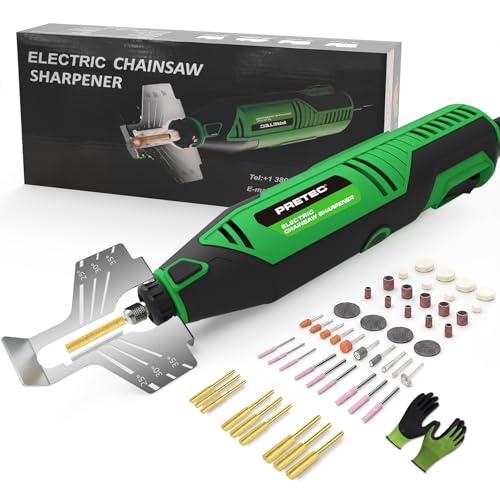
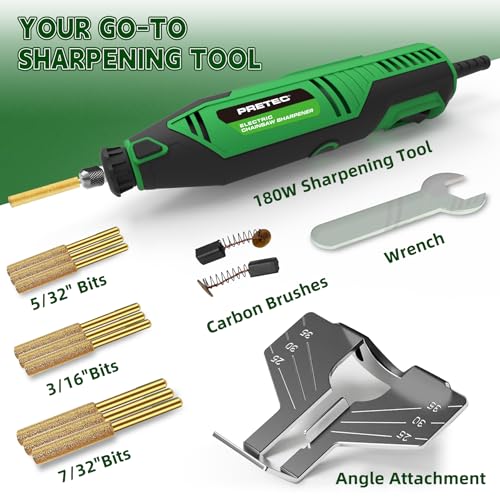
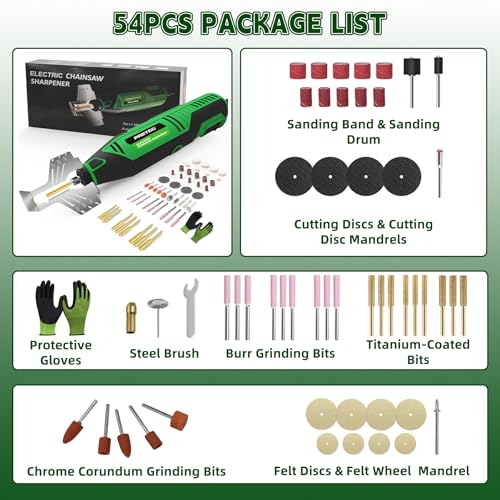
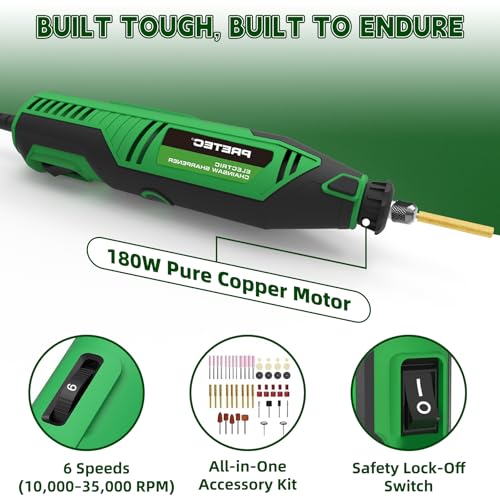
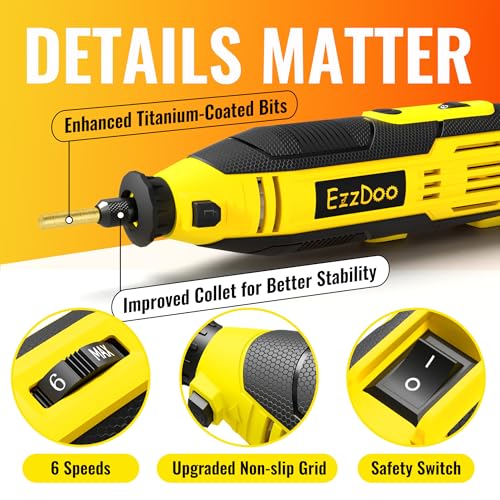
This PRETEC kit stands out by being more than just a chainsaw sharpener, it’s a full rotary tool system dressed for the job. With 54 accessories, including burr stones, cutting discs, and polishing wheels, it’s ideal if you also do wood carving, rust removal, or other workshop tasks. The 6-speed motor (1000–35,000 RPM) gives real control, and the copper motor runs cooler under load than most in this class.
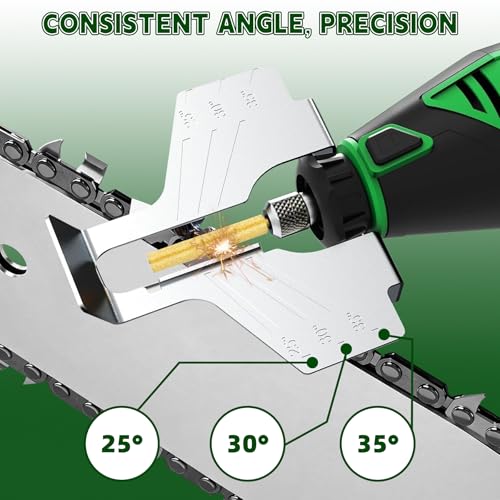
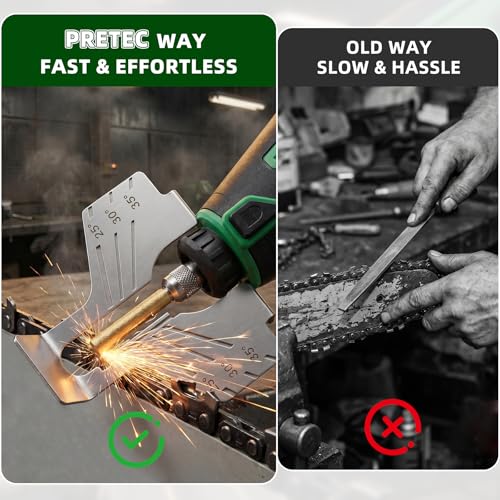
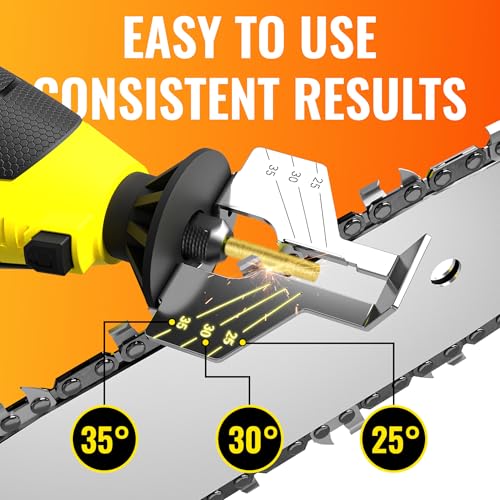
The angle attachment is solid, and the three included diamond bit sizes cover most chains. Owners appreciate the preset 25°, 30°, and 35° stops for repeatable results. While it’s bulkier than dedicated handheld sharpeners, the trade-off is versatility. If you already use a Dremel-type tool, this is a smarter buy than buying bits separately.
Product photos
EzzDoo Handheld Electric Chainsaw Sharpener
Strengths
- No chain removal
- Ergonomic grip
- Consistent angles
Trade-offs
- Requires charging
- Bits wear over time
- Not for heavy-duty shops
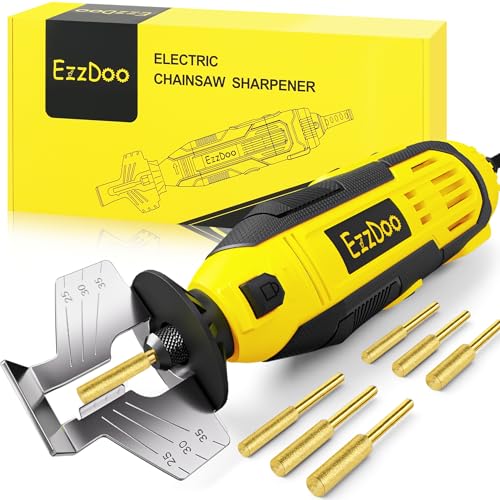
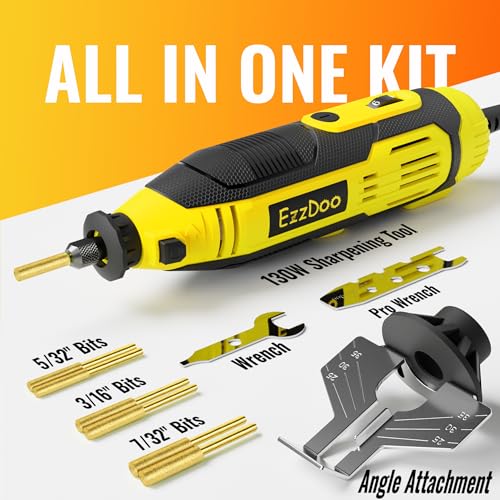
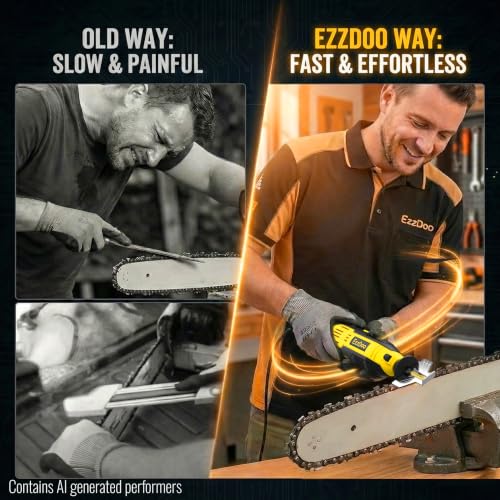
This is one of the more polished handheld electric sharpeners I’ve seen in the mid-tier market. The inclusion of six titanium-coated bits in three common sizes gives it broad compatibility, and owners praise the upgraded honeycomb grip and secure collet, wobble has been a common complaint in cheaper models, but this one seems to have addressed it. The ability to sharpen without removing the chain is a real time-saver, and the preset angle guide helps maintain consistency across teeth, which hand filing rarely achieves.
I’d pick this over basic file kits if you’re maintaining multiple chains or doing seasonal firewood prep. It won’t match a bench grinder for volume, but for field use or garage touch-ups, it delivers professional-level uniformity without the setup. The speed control helps, though some users note it’s best to stick to medium speeds to avoid overheating the tooth edge.
Product photos

Oregon Professional Compact Bench Grinder

Strengths
- Professional precision
- High compatibility
- Durable build
Trade-offs
- Requires workshop space
- Steeper learning curve
- Not portable
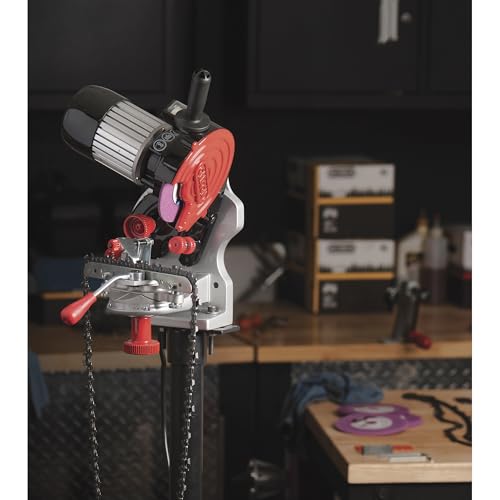
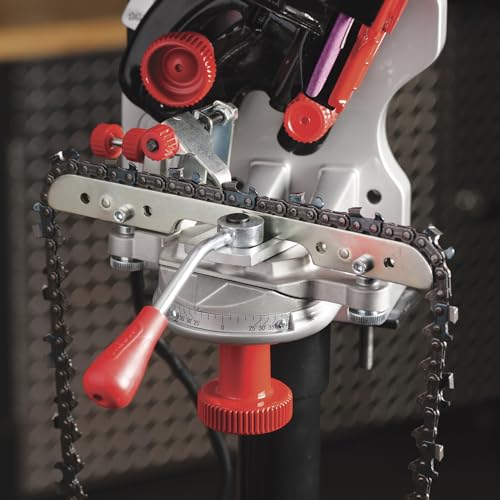
This is the serious user’s tool. Mount it in your garage or workshop, and you’ve got a dedicated station for rebuilding chains, not just touching them up. The one-way motor rotation improves safety, and the included profile guide and dressing brick help maintain wheel geometry over time. It handles up to .404” pitch, so it works with Stihl, Husqvarna, and Oregon chains alike.
Owners consistently report this grinder pays for itself in saved chain replacements. Once you master the technique, you can restore dull or damaged cutters with bench-level accuracy. The clamping vice keeps the chain stable, and the dual grinding wheels (3.2mm and 4.7mm) cover most needs. It’s not portable, but that’s the point, this is for those who sharpen weekly, not yearly.
Product photos
Oregon Universal 7pc Field Sharpening Kit
Strengths
- Trusted brand
- Complete manual kit
- Accurate filing guide
Trade-offs
- Slower than electric
- Requires skill
- Manual effort
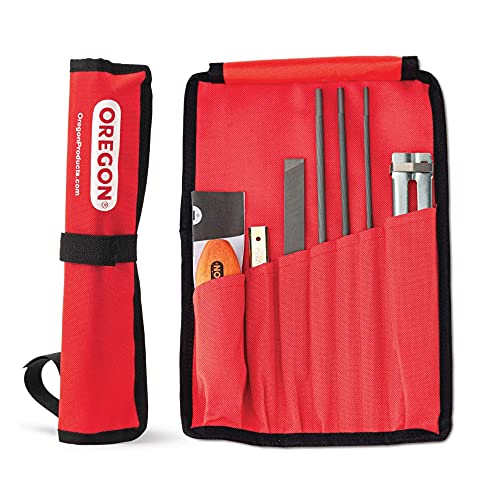
Oregon has been the gold standard in chainsaw components for decades, and this kit proves why. It’s dead simple: files, guide, handle, and pouch, all you need for manual sharpening. The file guide is accurate and durable, and the universal handle fits all round files snugly. Reviewers note the 6-inch flat file is especially useful for depth gauges, which many budget kits skimp on.
For pure value and reliability, this is hard to beat. Yes, it takes more effort than electric tools, but if you’re serious about chain longevity and control, hand filing teaches you how each tooth should look and feel. I recommend this to beginners who want to learn proper technique and veterans who appreciate precision over speed.
Product photos


Klampero Manual Chainsaw Sharpener with 7 Stones
Strengths
- Fast manual sharpening
- Consistent angle
- Compact and portable
Trade-offs
- Limited to 30° angle
- Stones wear over time
- Not for all chain types
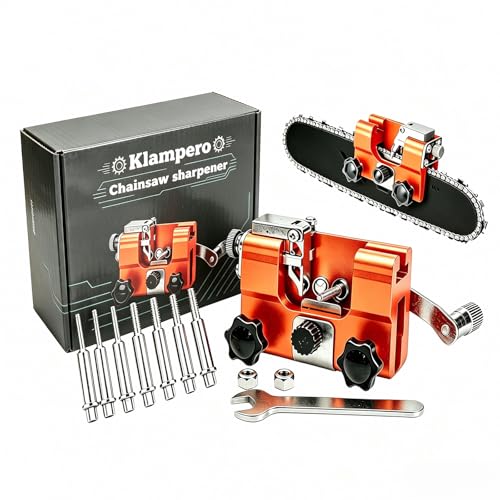
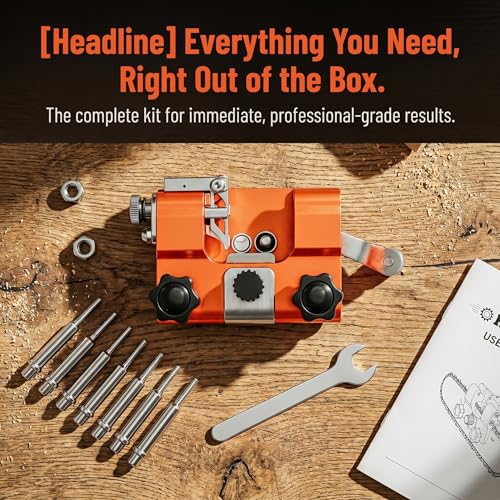
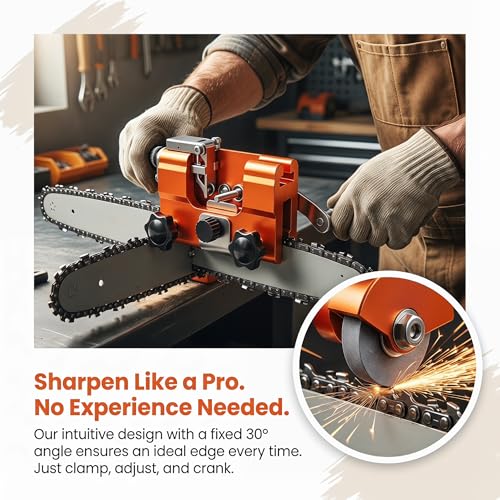
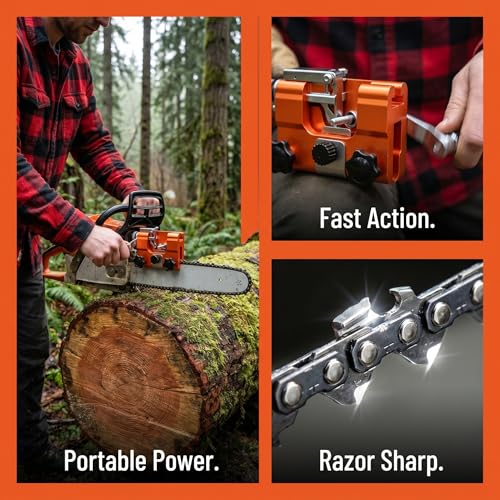
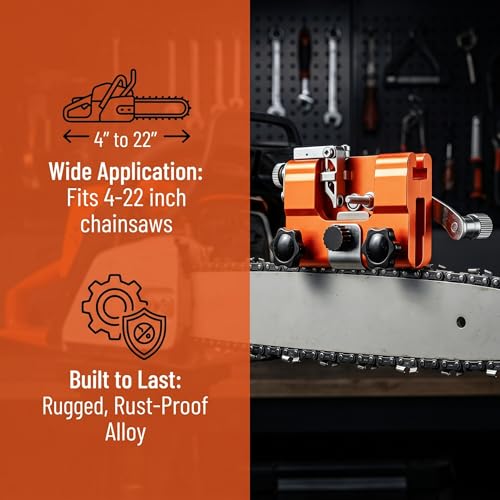
This manual tool is a clever middle ground between filing and power sharpening. Instead of filing by hand, you clamp the device onto the chain and turn a crank, the internal stone rotates and sharpens the tooth at a fixed 30° angle. Owners report it takes 3–5 seconds per tooth and delivers even results, even for beginners. The 7 included stones (4 x 5.5mm, 3 x 4mm) cover most standard pitches.
It’s not as fast as electric tools, but it’s far more consistent than freehand filing. The alloy body resists rust, and the compact size makes it easy to stash in a toolbox. I’d recommend this for users who want better results than hand files but aren’t ready to invest in electric gear. It’s also a great backup for camping or remote sites.
Product photos

Sharp Pebble Cordless Chainsaw Sharpener

Strengths
- True cordless freedom
- Lightweight design
- Beginner-friendly
Trade-offs
- Battery life limited
- Less power for tough jobs
- Replacement parts scarce
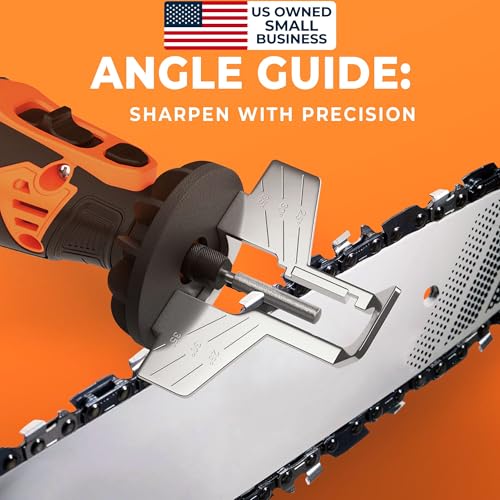
The cordless design here is the real advantage, freedom from cords means you can sharpen at the woodpile, in the yard, or during a job site break. The kit includes four sharpening wheels (including dual 7/32” bits), an angle guide, and a helpful eBook that walks beginners through the process. Owners find the ergonomic shape comfortable, and the angle guide works well for both left- and right-handed users.
It’s not the most powerful unit, but for occasional use, it’s plenty. The motor holds speed adequately on standard chains, though it can bog down on heavily damaged teeth. I’d recommend this over corded models if you value mobility and simplicity. It doesn’t match bench grinders for precision, but for on-the-go maintenance, it’s one of the cleanest cordless options.
Product photos




Hipa 12-Piece All-in-One Sharpening Kit

Strengths
- Extensive file range
- Quick-check gauge
- Durable pouch
Trade-offs
- Overkill for basic needs
- No electric option
- Bulkier to carry
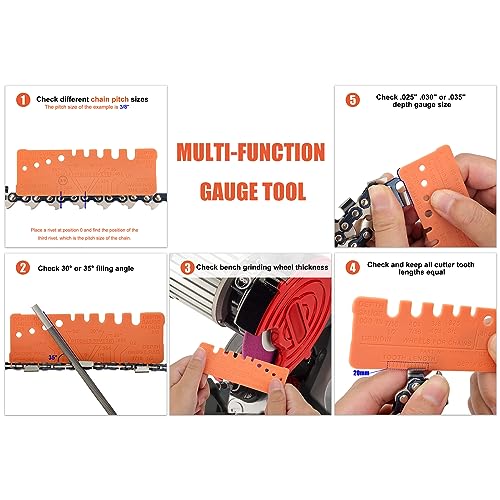
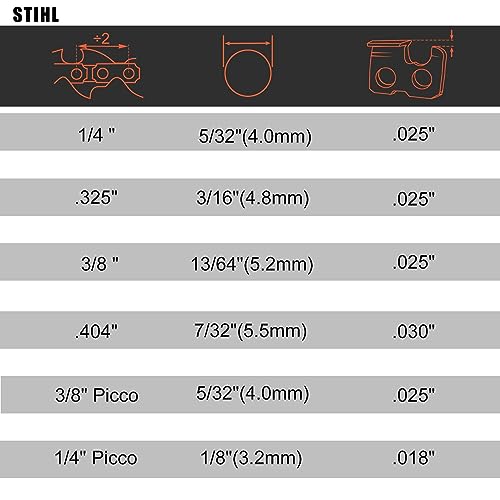
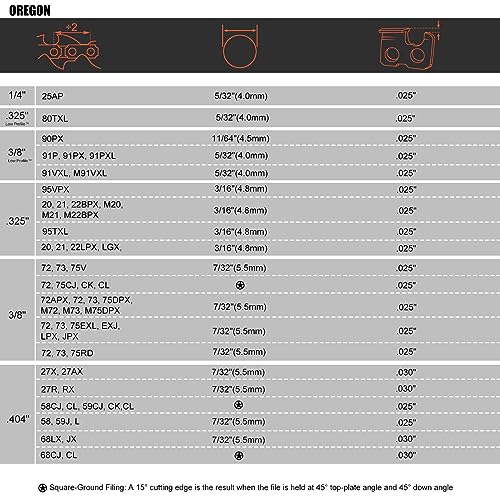
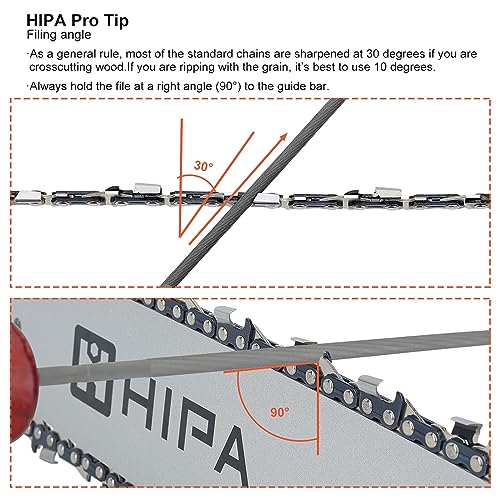
This is the most complete manual filing kit on the list, no question. Twelve files, including less common sizes like 1/8” and 13/64”, mean you’re covered for nearly any chain, including older or specialty models. The quick-check gauge is a standout: it lets you verify pitch, filing angle, and tooth length without guesswork, which beginners will appreciate.
The wooden handle feels solid and gives good torque control, and the bright orange pouch is both durable and easy to spot in a cluttered garage. While it’s more files than most people need, that’s exactly the point, it’s a lifetime kit. If you hate replacing lost or broken files, this one solves that.
Product photos
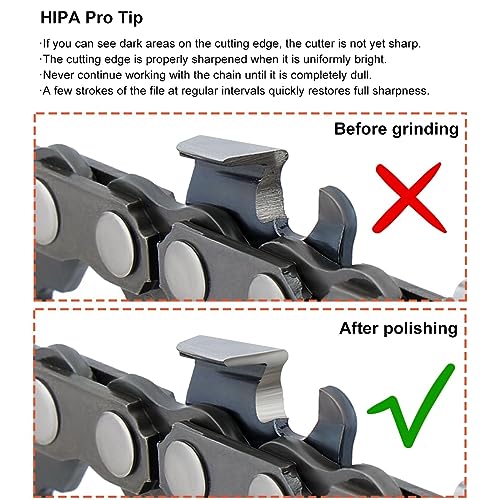
Chumia 30 Pcs Titanium Diamond Bits

Strengths
- High quantity
- Multiple sizes
- Rust resistant
Trade-offs
- No angle guide
- Not a full tool
- Inconsistent coating
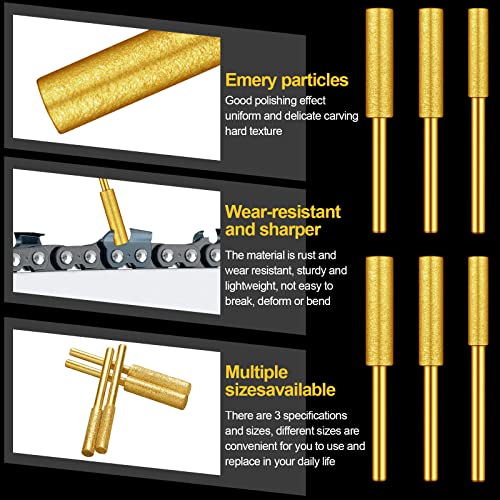
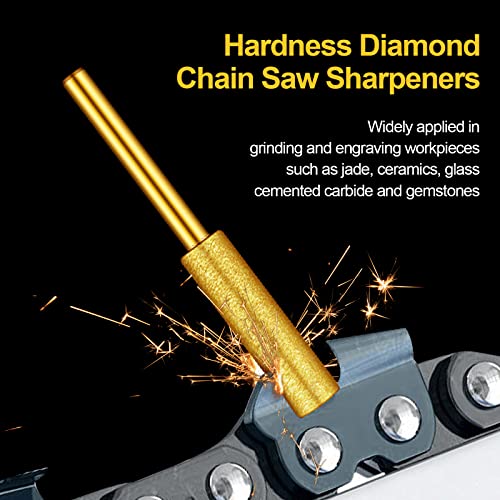
This is essentially a bulk pack of replacement grinding bits, not a full sharpening system. On paper, the 30-piece count and three standard sizes (5/32, 3/16, 7/32) make it a solid value if you’re already using a compatible rotary tool or electric sharpener. Owners consistently report the titanium coating holds up reasonably well on softer chains, though aggressive use on hardened steel tends to wear them faster than premium diamond bits.
The real strength here is convenience and replacement volume. If you’re running a lot of chains through a rotary tool setup and go through bits quickly, this kit keeps you stocked. Just don’t expect precision angle control or a complete system, this is strictly a consumable upgrade or backup supply.
Product photos


How We Chose These chainsaw sharpeners
As someone who’s spent years around power tools, I know a sharp chain is critical for safe and efficient work. Rather than a hands-on lab test of each sharpener, this selection is a research-led comparison of published specifications, features, and – crucially – owner and expert reviews. I looked at a wide range of options, from simple manual files to cordless electric kits and bench grinders, ranking them against criteria like ease of use, versatility, durability, and value.
For chainsaw sharpeners, the speed and consistency of the sharpening process, and the ability to maintain a correct cutting angle, were the most important factors. A dull chain is dangerous, and inconsistent sharpening leads to poor performance. Beyond that, portability and the types of chains a sharpener can accommodate heavily influenced the rankings. We prioritized kits and tools that could handle a variety of chain pitches and sizes.
Specifications tell you about motor power, included bits, and build materials, but owner feedback reveals how well those translate to real-world performance. I paid close attention to reports about bit durability, ease of angle adjustment, and long-term reliability. Reputation matters too; brands known for quality cutting tools generally offer better sharpening solutions. If you’re looking for more in-depth instruction, our chainsaw sharpening guide provides a solid foundation for understanding the process.
How To Choose The chainsaw sharpeners
Choosing the right chainsaw sharpener can dramatically improve your cutting efficiency and safety.
A quality chainsaw sharpener maintains consistent tooth geometry, uses durable abrasive materials, and offers a stable platform for accurate sharpening. Look for models with adjustable angle guides, reliable power sources (corded or cordless), and a range of bit/file sizes to accommodate different chain types and levels of damage. Prioritize safety features like blade guards and secure clamping mechanisms.
Power Source & Portability
I’ve seen a lot of folks struggle with dull chains, and the first decision is often about power. Corded electric sharpeners, like the PRETEC kit, deliver consistent power for heavier jobs, but you’re tethered to an outlet. Cordless models, such as the Sharp Pebble, offer fantastic portability, letting you sharpen on-site, but battery life and power can be limitations. Manual sharpeners, like those from Klampero, are the most portable, but require more skill and physical effort to get consistently sharp results. Think about where you’ll be doing most of your sharpening and how much convenience you require.
Abrasive Material & Bit Compatibility
The material used for sharpening matters a lot. Diamond-coated bits, frequently found in kits like the Chumia offering, are extremely durable and effective on a wide range of chain materials. Burr stones and abrasive wheels are also common, but wear down faster. Crucially, ensure the sharpener can accept bits compatible with your chain’s pitch and gauge. Here’s what to consider:
- Bit size: Having a variety of sizes (5/32”, 3/16”, 7/32”) is essential for different chains.
- Bit material: Diamond is usually best for longevity and performance.
- Compatibility: Some sharpeners are limited to specific bit types or manufacturers.
Angle Control & Ease of Use
Maintaining the correct sharpening angle is critical. If you’re consistently filing at the wrong angle, you’ll ruin your chain. Many sharpeners, like the EzzDoo handheld electric model, include preset angle attachments (30°, 35°) which is a huge benefit for beginners. Bench grinders, such as the Oregon Professional model, require a bit more practice to achieve consistent results, but offer precision when mastered. Don’t underestimate the importance of a stable base and clear markings; even a slight wobble can throw off your sharpening. If you’re new to sharpening, consider starting with a model offering robust angle guides; you can always refine your technique later. As a starting point, remember this:
A consistent sharpening angle is more important than trying to achieve the absolute “perfect” angle. Focus on repeatability, and you’ll be well on your way to a sharper, more efficient chain.
For those looking to refine their skills beyond powered options, exploring manual saw blade sharpening techniques can also be valuable. And if you’re considering different sharpening solutions, check out our guide to the best chain sharpening tools for a look at a variety of chainsaw chain sharpener models.
Chainsaw Sharpeners Compared
This table provides a reference of specifications for various chainsaw sharpeners to aid in product comparison.
| Product Title | Power Source | Corded/Cordless | Bit/File Sizes | Angle Adjustment | Included Accessories |
|---|---|---|---|---|---|
| PRETEC 54-Piece Chainsaw Sharpening Kit | Electric | Corded | Multiple (diamond bits, burr stones, discs) | 35/30/25 degrees | Extensive kit |
| EzzDoo Handheld Electric Chainsaw Sharpener | Electric | Corded | 5/32″, 3/16″, 7/32″ | Preset | 6 Diamond Bits |
| Oregon Professional Compact Bench Grinder | Electric | Corded | 3.2mm, 4.7mm grinding wheels, 6.0mm disc | N/A | Dressing brick, guide |
| Oregon Universal 7pc Field Sharpening Kit | Manual | N/A | 5/32″, 3/16″, 7/32″ files | N/A | File guide, pouch |
| Klampero Manual Chainsaw Sharpener | Manual | N/A | 5.5mm x4, 4mm x3 stones | 30 degrees | Wrench, user manual |
| Sharp Pebble Cordless Chainsaw Sharpener | Battery | Cordless | 5/32”, 3/16”, 7/32”, 7/32” | Adjustable | Angle guide, wrench |
| Hipa 12-Piece All-in-One Sharpening Kit | Manual | N/A | Multiple round & flat files | N/A | Depth gauge, pouch |
| Chumia 30 Pcs Titanium Diamond Bits | N/A | N/A | 5/32″, 3/16″, 7/32″ | N/A | 30 Diamond Bits |
Frequently Asked Questions
What chain pitches can most of these sharpeners handle?
Most sharpeners in this class accommodate a wide range of chain pitches(3/8”.325”, and .404”), but it’s crucial to verify compatibility with your specific chain before purchasing. Kits with multiple bit sizes, like the PRETEC, offer the greatest versatility.
Are diamond sharpening stones really better than traditional files?
Diamond stones are significantly more durable and maintain their shape longer than traditional files, leading to more consistent sharpening over time. While files are cheaper upfront, the cost of replacing them frequently can add up.
What’s the learning curve for using a bench grinder sharpener?
Bench grinders have a steeper learning curve than handheld electric or manual sharpeners; achieving consistent angles requires practice and a steady hand. However, once mastered, they provide a high degree of control and precision for experienced users.
How often should I sharpen my chainsaw chain?
Sharpening frequency depends on usage and the type of wood you’re cutting, but a good rule of thumb is after every 50-100 cuts or when you notice increased effort required to make cuts. Regular, light sharpening is preferable to infrequent, heavy sharpening.
Where can I find more information on choosing an electric chainsaw sharpener reviews?
You can find more detailed information, including comparisons and in-depth reviews of various models, in our guide to the electric chainsaw sharpener reviews. It will help you select the best option for your needs.
The Bottom Line
Choosing a chainsaw sharpener often comes down to balancing convenience with control. If you want a consistently sharp chain with minimal effort, the PRETEC 54-Piece Chainsaw Sharpening Kit offers the most complete package and a range of options for various chain types and sharpening needs. It’s a bit of an investment, but the included accessories and versatility make it a solid choice for most homeowners and serious DIYers.
For those on a tighter budget, or who prioritize portability, the Sharp Pebble Cordless Chainsaw Sharpener is a standout. Similarly, if you’re frequently working in remote locations, the Oregon Universal 7pc Field Sharpening Kit provides a reliable, manual solution for quick touch-ups. But remember, a manual system requires more skill to master proper chainsaw chain maintenance.
Ultimately, the best sharpener isn’t about fancy features or high price tags. It’s about understanding your needs and consistently maintaining a sharp, properly filed chain. Paying attention to the details – keeping your chain clean, using the correct angle, and regularly inspecting for damage – will always yield better results than relying on any single tool. Learning how to perform correct chain filing is the foundation of safe and efficient chainsaw operation.
