
Car Air Compressor Uses: A Guide to Its 3 Primary Functions
This post contains affiliate links. As an Amazon Associate, we earn from qualifying purchases.
A car’s air compressor is used to pressurize air or refrigerant for three critical systems: the air conditioning (A/C), the air brakes (on trucks and buses), and for inflating tires via a portable unit. The A/C compressor circulates refrigerant to cool the cabin, the air brake compressor stores energy for braking, and a portable 12V compressor is a common emergency tool for tire inflation.
That split. A/C, brakes, tires, is where most owner’s manuals stop. They don’t tell you that the failure modes and maintenance for each are completely different animals, governed by separate sets of regulations and physical limits.
What follows is a breakdown of the two built-in types (A/C and air brake), the portable third type, and the specific, sourced numbers that dictate when they work, when they fail, and what you can actually do about it.
Key Takeaways
- A/C compressors fail from contamination, not just wear. Using the wrong oil or leak-stop additives means a full system replacement, not a flush.
- Air brake compressors have a non-negotiable pressure range. Cut-out must not exceed 1000 kPa (145 psi) and cut-in must not fall below 552 kPa (80 psi) per the Ontario Ministry of Transportation.
- Portable compressors are for tires only. Never use a 12V tire inflator to try and add refrigerant to your A/C system, the fittings and pressures are incompatible and dangerous.
- Winter kills idle A/C compressors. Running the A/C for 10 minutes monthly in cold months prevents seal drying and internal corrosion.
- The governor is the brain of the air brake system. If it fails, the safety valve vents at 1035 kPa (150 psi) to prevent a tank rupture.
The Two Main Types of Car Compressors
Forget the single answer. Under the hood, you’re dealing with one of two dedicated machines, or you’ve added a third portable one to your trunk. Their jobs don’t overlap.
The A/C compressor is a refrigerant pump, driven by the serpentine belt. The air brake compressor is an air pump, often gear-driven directly from the engine. A portable tire inflator is a small, electric air pump that plugs into your 12V outlet. Confusing them leads to broken parts and failed systems.
The A/C compressor’s sole purpose is to move heat. It takes low-pressure, gaseous refrigerant, squeezes it into a high-pressure, high-temperature state, and sends it on a loop through the condenser, dryer, expansion valve, and evaporator. The cold air blowing from your vents is the final step of that heat-removal process. It’s a closed, sealed system.
The air brake compressor’s job is to store energy. It draws in atmospheric air, compresses it, and forces it into storage tanks. That stored pressure is then released to actuate the brake chambers at each wheel. It’s an open system, constantly replenishing air that gets used every time you brake.
| Compressor Type | Primary Function | Power Source | System Type |
|---|---|---|---|
| A/C Compressor | Circulate refrigerant for cooling | Serpentine belt | Closed, sealed |
| Air Brake Compressor | Supply compressed air for braking | Engine gear or direct drive | Open, replenishing |
| Portable Tire Inflator | Inflate tires | 12V DC electric | Stand-alone |
A portable compressor, like the kind you keep for emergencies, is a third category. It’s an air compressor for tires and nothing else. It doesn’t connect to your car’s built-in systems.
How an A/C Compressor Works (And How It Fails)
You press the A/C button. A magnetic clutch on the compressor pulley engages, connecting it to the spinning serpentine belt. The compressor starts pumping refrigerant.
The gas gets hot under pressure. It flows to the condenser (in front of the radiator), where it loses that heat and condenses into a liquid. After passing through a dryer to remove moisture, the liquid hits the expansion valve, which rapidly drops its pressure and temperature. Finally, it enters the evaporator inside your dashboard, where a blower fan pushes cabin air across its cold fins. The refrigerant absorbs heat from the air, cooling it, before returning to the compressor as a low-pressure gas to start the cycle again.
Where this goes sideways: The system is lubricated with a specific oil carried by the refrigerant. If that oil gets contaminated, by the wrong type, by universal oil, or by leak-stop additives, the compressor’s internals grind themselves to dust.
The DENSO installation manual is blunt: if the system is contaminated by “leak stop, imitation refrigerants or severe contamination,” flushing is no longer sufficient. The complete system must be replaced. This isn’t a scare tactic. It’s the outcome of metallic debris circulating at several hundred PSI.
Common mistake: Adding refrigerant with a stop-leak additive to a slow-leaking A/C system. The additive gums up the compressor’s internal valves and the expansion valve orifice, causing a total failure that requires replacing every major component, at a cost several times that of a proper leak repair.
The compressor itself can also fail mechanically. A seized bearing will shear the serpentine belt. A failing clutch will cause intermittent cooling. You’ll usually hear the complaint before you feel it, a loud whining, grinding, or clicking from the front of the engine when the A/C is on.
How an Air Brake Compressor Works
This compressor runs whenever the engine runs. It’s designed to produce more air than the system needs, ensuring the tanks stay full. The governor controls the cycle.
When air pressure in the tanks reaches the predetermined cut-out pressure (max 1000 kPa / 145 psi), the governor unloads the compressor. It stops pumping air but continues to spin. When pressure drops to the cut-in pressure (min 552 kPa / 80 psi), the governor loads the compressor again, and it starts pumping. This normal range is typically between 690-828 kPa (100-120 psi).
The compressed air, hot from compression, goes first to the supply tank (or “wet” tank). Here, most of the moisture and oil from the intake air condenses and settles. This tank must be drained daily. If that sludge gets into the brake valves, they stick.
The air drawn into the compressor contains moisture. As the air is compressed and passed into the tanks, the moisture condenses and settles to the bottom of the tank. Oil from compressor lubrication can also mix with the air and settle. This mixture must be drained regularly to prevent valve failure and freeze-ups.
After the supply tank, air passes through a one-way check valve and splits into primary and secondary service tanks (“dry” tanks). This dual-circuit design is a critical safety feature. If one circuit fails, the other retains enough air pressure to bring the vehicle to a stop.
Sourced Specifications and Safety Limits
This isn’t general advice. These numbers come from official manuals and technical bulletins. They are the lines you don’t cross.
Air Brake System Pressure Ranges (Ontario Ministry of Transportation)
The Official Air Brake Handbook sets the absolute limits. These aren’t targets; they are the outer fence of a safe operating envelope.
| Parameter | Minimum | Maximum | Normal Operating Range |
|---|---|---|---|
| Cut-In Pressure | 552 kPa (80 psi) | Not specified | ~552-827 kPa (80-120 psi) |
| Cut-Out Pressure | Not specified | 1000 kPa (145 psi) | ~690-1000 kPa (100-145 psi) |
| Safety Valve Activation | 1035 kPa (150 psi) | – | – |
The cut-out pressure must never be higher than 1000 kPa (145 psi). A governor failing above this limit risks a catastrophic tank rupture. The safety valve is the last resort, opening at 1035 kPa (150 psi) to vent excess pressure with a violent blast of air and moisture.
The cut-in pressure must never be less than 552 kPa (80 psi). If the system drops below this before the compressor kicks in, you’re depleting the reserve needed for safe braking. The low-air warning device, a light and often a buzzer, must activate before pressure falls to 380 kPa (55 psi).
A/C Compressor Replacement Mandates (Volkswagen Technical Bulletin)
For modern vehicles, replacing the compressor isn’t a simple swap. A 2020 Volkswagen Technical Bulletin (87-18-10ss3) for 2009-2021 models mandates a specific procedure. It’s a glimpse into the complexity of modern, sealed systems.
The bulletin requires a diagnostic ODIS GFF cooling performance test plan before and after. It requires documenting the recovered refrigerant volume with a RobinAir or Mahle printout. Most critically, it requires a printout of the flush procedure before installing the new compressor. This creates a verifiable paper trail for warranty claims and ensures contamination is addressed.
This turns a “parts replacement” into a documented service procedure. It highlights that for many modern cars, a compressor failure is a system-level event, not an isolated part failure.
Maintenance, Failure Signs, and Owner-Level Fixes
 You can’t fix a seized A/C compressor or a failed air brake governor at home. But you can spot the problems early and maintain the systems to prevent them.
A/C Compressor Maintenance
The best maintenance is regular use. Run the A/C for at least 10 minutes every month, year-round. This circulates oil to lubricate the compressor seals and prevents them from drying out and cracking. It’s cheap insurance.
Signs of Failure:
- Reduced or no cooling: Could be low refrigerant, a failing compressor, or a clogged orifice tube.
- Loud noises when A/C is on: Grinding, squealing, or clattering from the compressor clutch area.
- Visible clutch damage: The center of the compressor pulley should engage and spin with the belt when the A/C is on. If it doesn’t, the clutch is bad.
- Refrigerant oil leaks: A shiny, oily residue around the compressor fittings or seals.
Owner-Level Action: For noise or no cooling, the only safe move is to stop using the A/C and have a shop diagnose it. Adding refrigerant from a can without knowing the charge level and the type of oil in the system can cause overpressure and compressor damage.
Air Brake System Maintenance (For Operators)
This is daily, hands-on work. The consequences of skipping it are brake failure.
- Drain the air tanks daily. Open the drain valve on the supply tank first, then the service tanks, and let the moisture and oil blow out until the air runs clear.
- Listen for air leaks. With the engine off and the system pressurized, a constant hissing indicates a leak that will drain your tanks.
- Watch the pressure gauges. Note the normal cut-in and cut-out points for your vehicle. Any significant change is a red flag.
- Know the low-air warning. Ensure the warning light and buzzer activate during your pre-trip inspection by fanning down the system.
Easy to miss: Draining the supply tank last. If you drain a service tank first, you can push accumulated sludge from the supply tank back into the dry service lines, contaminating valves downstream. Always drain the wet tank first.
Portable Tire Compressor Use
This is the one compressor you can fully control. A portable car compressor like a Viair or a Slime unit is straightforward.
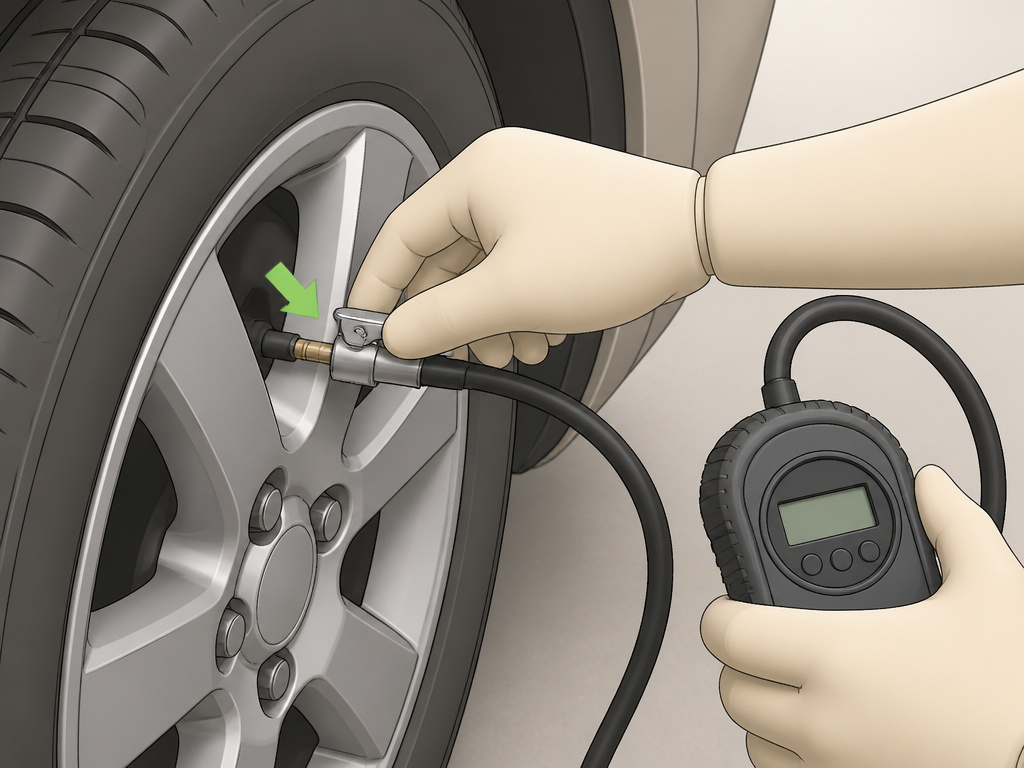
The process: Remove the valve cap, push the connector onto the valve stem, and lock it. Plug the unit into your 12V accessory socket. Turn it on and monitor the built-in gauge. Stop when you reach the recommended tire pressure (found on the driver’s door jamb sticker). Unplug, unlock, and disconnect.
The limitation: These are low-volume pumps. Inflating a completely flat tire from 0 to 35 PSI can take 5-7 minutes and will heat up the motor. Let it cool between uses. Never use it for tasks that require continuous airflow, like powering an air tools compressor.
Frequently Asked Questions
Can I use a portable air compressor to recharge my car’s A/C?
No. The portable unit is an air compressor for tires. Car A/C systems use refrigerant (R-134a or R-1234yf) at much higher pressures, and they require oil injection and a vacuum pump to remove moisture. The fittings are completely different. Attempting this will damage both the A/C system and the inflator.
How long should a car A/C compressor last?
With proper maintenance and no contamination, a compressor can last the life of the vehicle, 10-15 years or more. The average lifespan is often cut short by neglect (never using it in winter) or contamination from incorrect service procedures. The DENSO manual states its compressors’ long life is only guaranteed with the correct amount of DENSO recommended oil.
Why does my truck’s air compressor run constantly?
On an air brake system, a compressor that won’t cut out is usually a sign of a major air leak or a failed governor. The compressor is trying to keep up with the lost pressure. This is a critical failure. Driving it will overheat the compressor and drain the engine’s power. Stop safely and investigate.
What’s the difference between an A/C compressor and an air compressor for tools?
They are fundamentally different machines. An A/C compressor is a sealed, oil-lubricated refrigerant pump designed for a specific pressure range and continuous duty cycling. An air compressor for tools is an open-air pump designed to deliver high cubic feet per minute (CFM) at a set PSI to run impact wrenches, sanders, and spray guns. You cannot interchange them.
Is it worth fixing a car A/C compressor?
It depends on the cause of failure. If the compressor seized due to internal wear and the system is clean, a replacement might be worthwhile. If the failure was caused by contamination (black debris in the lines), the cost of replacing the compressor, condenser, dryer, and flushing the lines often exceeds the value of an older car. Get a full system diagnosis and quote first.
The Bottom Line
Your car might have one, two, or even three different air compressors, each serving a distinct purpose with its own rules. The A/C compressor is a precision refrigerant pump that hates contamination. The air brake compressor is a robust air pump governed by strict pressure limits. The portable tire inflator is a simple electric tool for one job.
Knowing which one you’re dealing with, and respecting their specific maintenance and failure modes, is the difference between a cool, safe drive and an expensive, dusty repair bill sitting on the side of the road. Treat the A/C system with clean, correct refrigerant. Drain the air brake tanks every single day. And keep that portable compressor in the trunk for the flats, and nothing else.
