8 Best Tools for Kids of 2026
This post contains affiliate links. As an Amazon Associate, we earn from qualifying purchases.
The overall best kids’ tool set is the 132 PCS Kids Tool Bench with Drill, offering the most complete pretend-play experience. For younger toddlers, the VTech Drill and Learn Toolbox stands out as a smart, educational pick. And if you’re looking for real skill-building, the 26-Piece Real Kids Tool Set gives older children a safe introduction to actual tools.
Most parents want a tool set that keeps their child engaged while feeling safe and well-made. Too many options are flimsy, overly flashy, or just don’t match a child’s real abilities. After comparing the field and weighing safety, durability, and learning potential, these are the sets that consistently rise to the top. This guide breaks down what truly matters, age fit, materials, and how well each set supports play that’s both fun and meaningful.
Top 8 Tools For Kids in the Market
The Best Tools For Kids, Reviewed
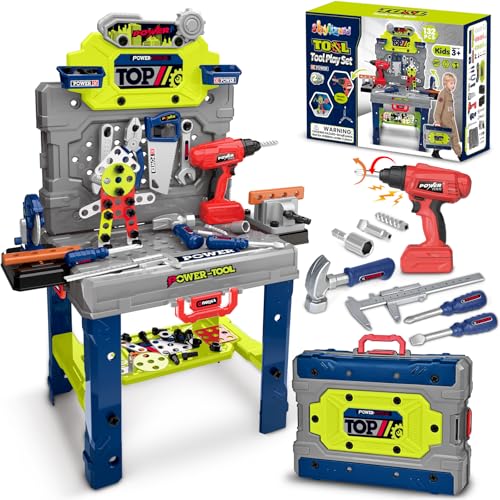
132 PCS Kids Tool Bench with Drill
Strengths
- Huge 132-piece count
- Converts to workbench
- Realistic drill with sounds
Trade-offs
- Assembly required
- Batteries not included
- Bulkier for storage
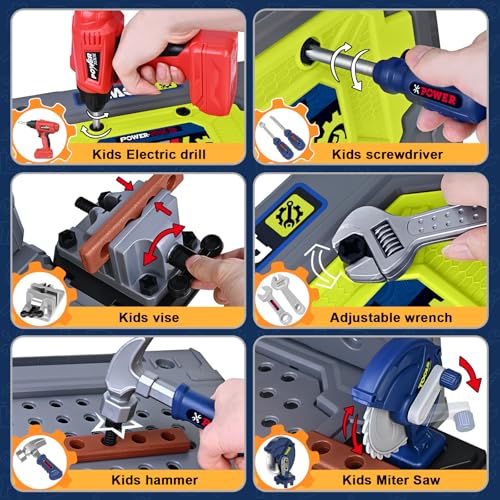
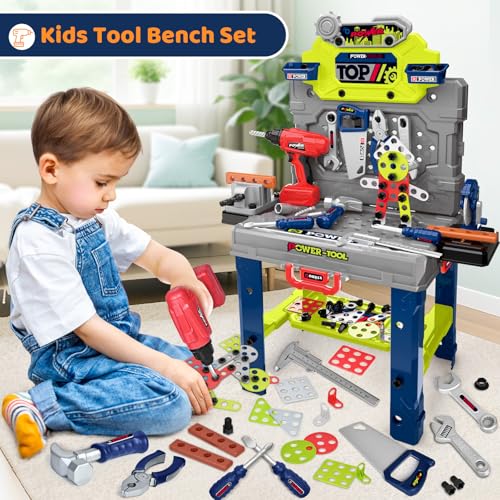
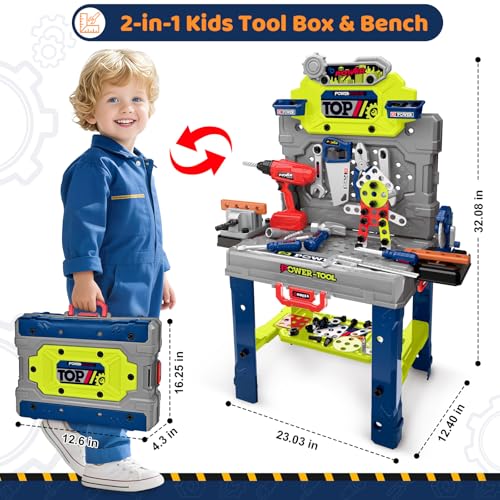
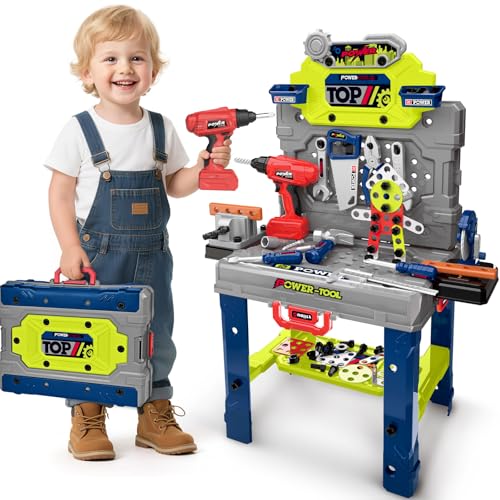
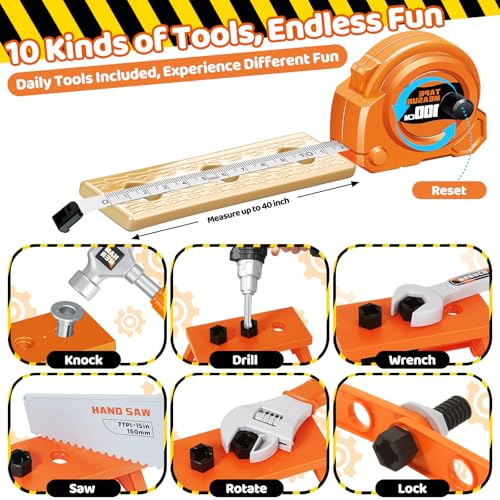
If you’re after the most complete pretend play setup, this 132-piece kit is hard to beat. The 2-in-1 design, functioning as both a workbench and a portable toolbox, adds real utility, and the sheer volume of accessories fuels extended play. The drill feels more refined than most, with four bits and solid sound effects that make kids feel like they’re actually building something.
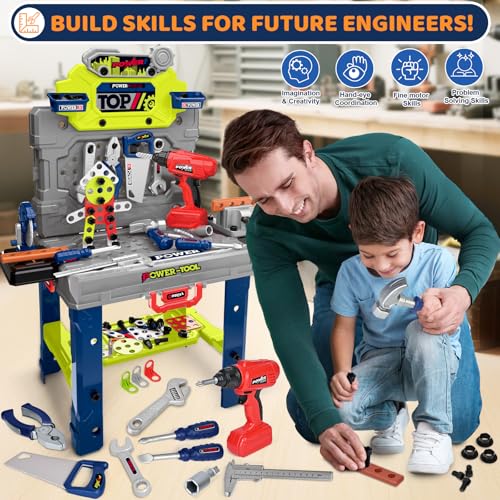
Reviewers note their kids spend more time engaged with this set than any other, thanks to the DIY component pieces that let them build shapes. The ABS plastic is tough, and the work surface gives a stable base for hammering and screwing. I’d pick this over the basic sets for families wanting one upgrade-proof gift that lasts through multiple birthdays.
Product photos
46 PCS Kids Tool Set with Drill
Strengths
- Realistic electric drill
- Large 46-piece count
- Safe rounded plastic edges
Trade-offs
- Plastic feels lightweight
- Drill requires batteries
- Limited storage organization
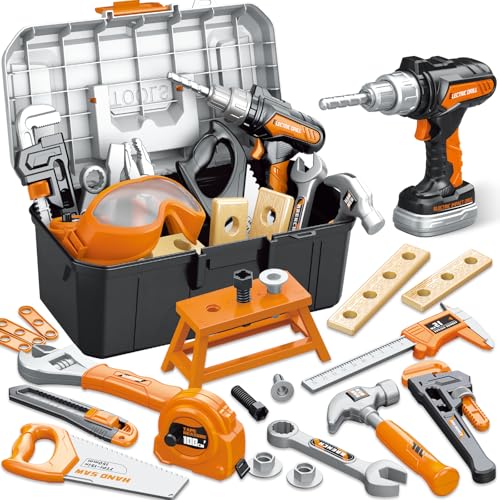
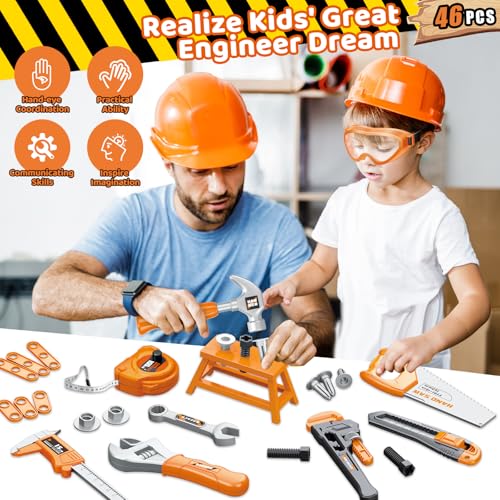
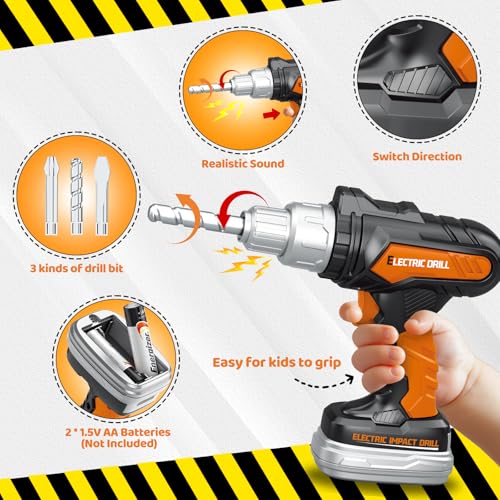
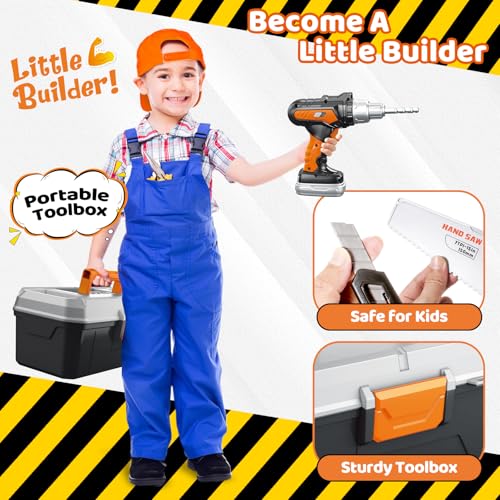
This 46-piece set hits the sweet spot for parents wanting a realistic yet affordable pretend play experience for younger kids. The inclusion of a working electric drill with sound and reversible rotation stands out at this price, giving kids that satisfying feedback that mimics real tools. On paper, it’s clearly designed to mirror what dads use in the garage, which is a big win for role-play engagement.
Owners consistently report their 3- to 5-year-olds love the drill most, and the plastic tools hold up well to drops and rough play. The toolbox keeps things organized, though it’s not as durable as some higher-end models. For the cost, it delivers solid value.
Product photos

3-in-1 Kids Power Garden Tools
Strengths
- 3 tools in one
- Lights and sounds
- Encourages outdoor play
Trade-offs
- Batteries not included
- Attachments can be fiddly
- Not for indoor quiet spaces
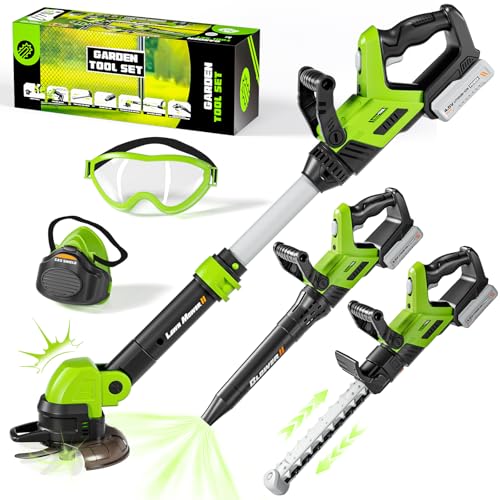
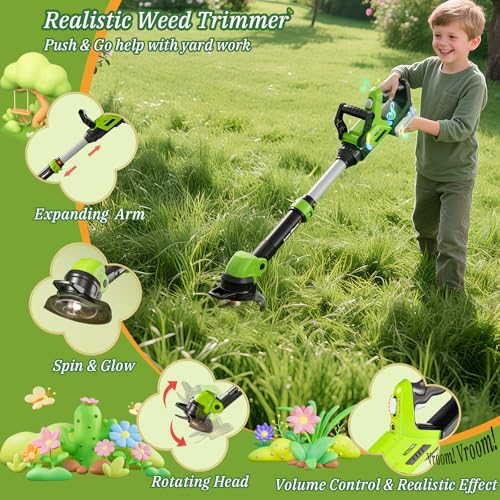
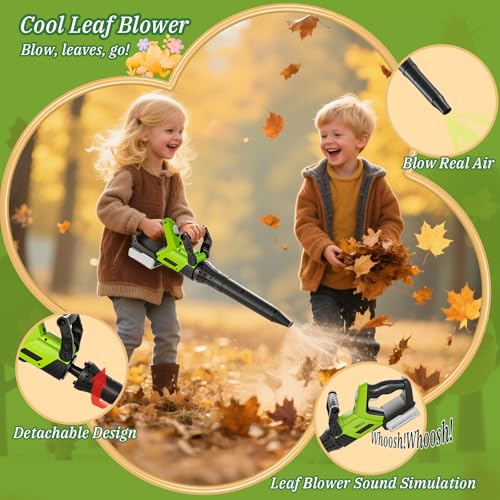
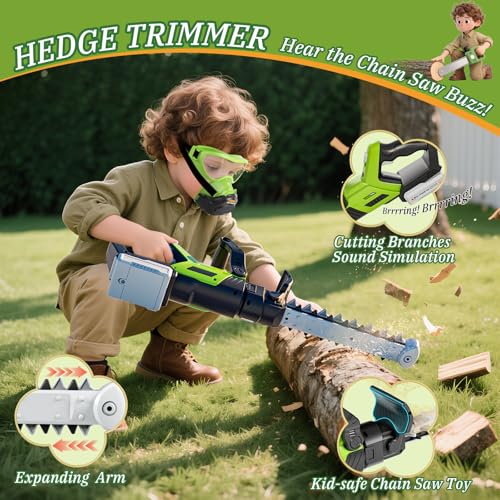
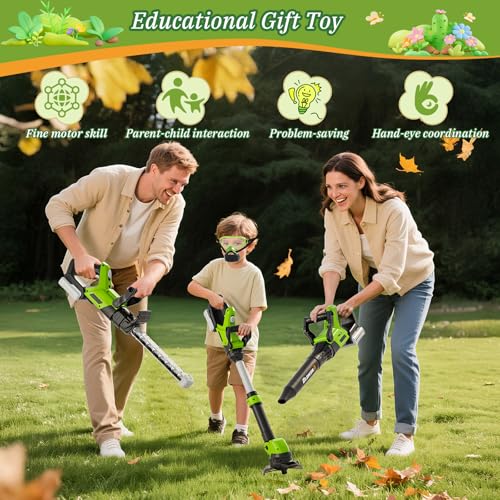
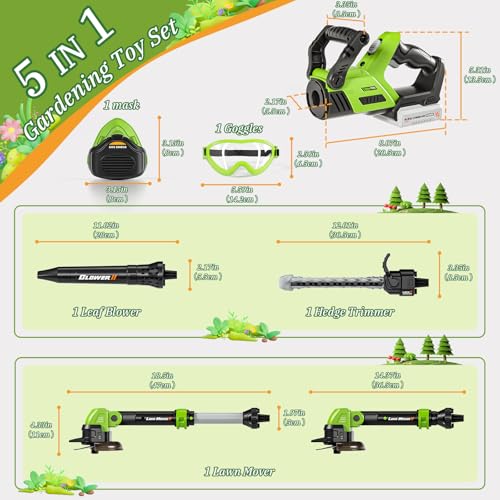
This 3-in-1 garden set, mower, blower, and trimmer, is a standout for outdoor-focused play. The lights and sounds are loud enough to feel real but have volume control, which parents appreciate. It’s not just noise and flash; the attachment system teaches kids how tools can adapt to different jobs, which subtly builds problem-solving skills.
I’ve seen consistent feedback that kids mimic full yard routines, making it more than just a toy. The durable ABS plastic survives drops and even wet grass. While it doesn’t involve real construction, it’s one of the few sets that gets kids outside and moving. For families with a yard or garden, this fills a niche no other set does.
Product photos
44 Pcs Wooden STEM Tool Kit

Strengths
- Made of solid wood
- Non-toxic finish
- Teaches organization
Trade-offs
- Drill less realistic
- Fewer moving parts
- Not as durable for rough play
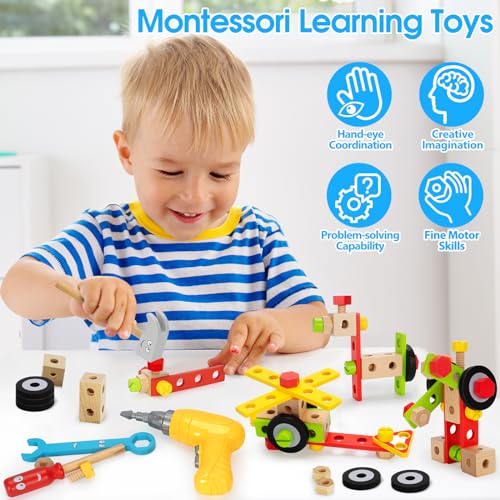
This wooden tool set stands out for its Montessori-inspired design and eco-friendly materials. Made from solid wood with water-based paint, it feels more like a learning aid than a plastic toy. The pieces are chunky, easy to grip, and designed to teach color, shape, and counting alongside tool recognition.
The drill is battery-powered but less flashy than plastic versions, quieter and simpler. Owners say it’s calmer for sensory-sensitive kids and better for focused play. The wooden box is excellent for teaching cleanup habits. While it lacks the sensory punch of electronic sets, it’s my top pick if you want a quieter, more educational experience.
Product photos



ChompSaw Kid-Safe Power Tool

Strengths
- Cuts real cardboard
- No exposed blades
- Teaches real building skills
Trade-offs
- Needs power outlet
- Noise may bother some
- Only cuts soft materials
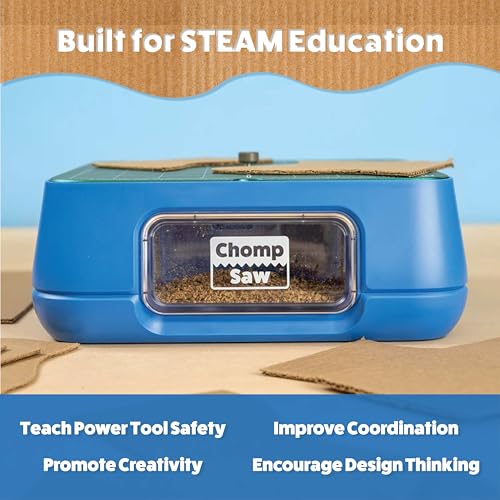
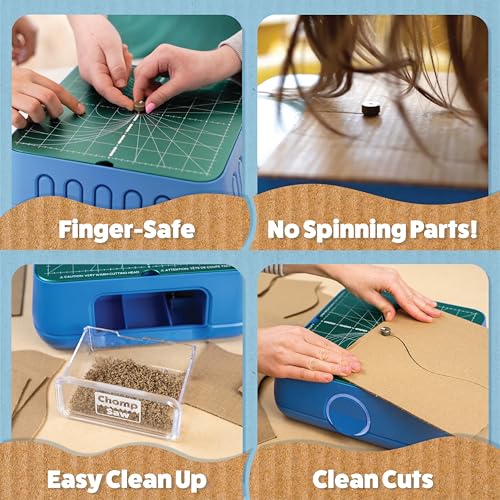
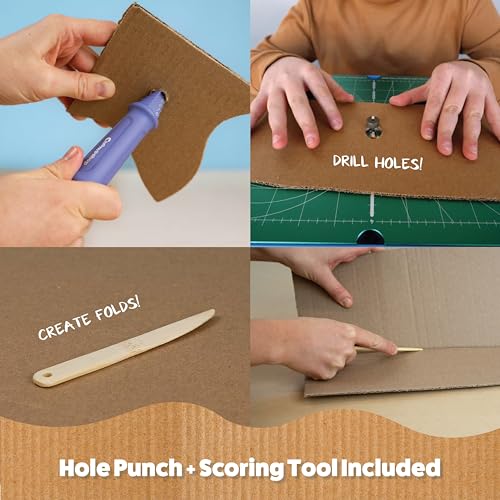
The ChompSaw is in a category of its own, this isn’t pretend play, it’s real building. It lets kids safely cut cardboard with a motorized guillotine-style blade that’s enclosed, so fingers stay clear. At 70–75 decibels, it’s loud enough to feel like a real power tool, which kids love.
This is the only product here that enables actual construction projects. Teachers and STEAM educators praise it for teaching engineering thinking and tool safety. The 3mm limit keeps it safe, but still lets kids build forts, robots, or vehicles. If you want your child to move beyond imitation and start creating, this is the tool to make it happen.
Product photos

26-Piece Real Kids Tool Set
Strengths
- Real metal tools
- Safety gear included
- Durable tool bag
Trade-offs
- Requires adult supervision
- Not for under 6
- Higher price point
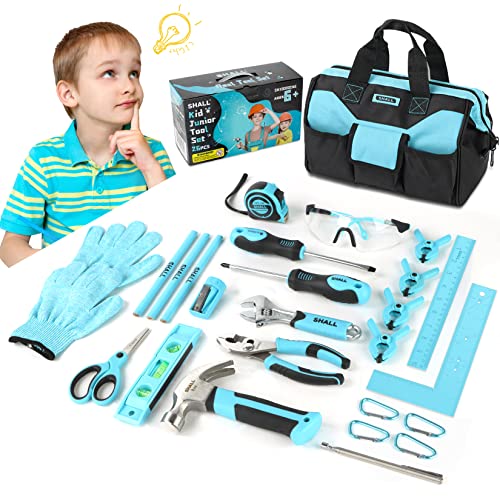
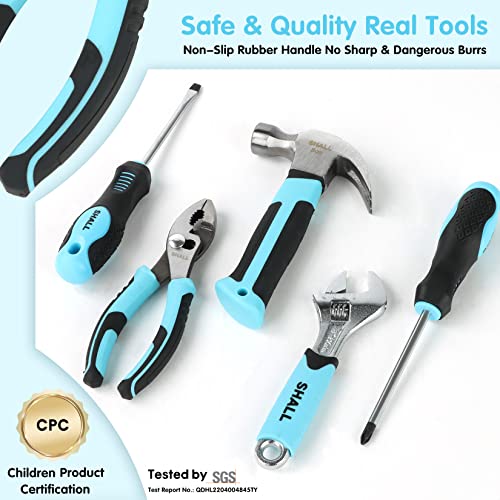
This set bridges the gap between toy and real tools. These are actual metal hand tools, hammer, wrench, pliers, level, just scaled down for small hands. The inclusion of safety gloves, goggles, and a durable 600D tool bag shows this is built for real use, not just play.
Owners use this for actual woodworking with kids, from building birdhouses to simple repairs. It’s CPC-certified, so safety is taken seriously. Compared to plastic sets, this one grows with the child. I’d recommend it for families doing real projects together, not just role-play. It’s the only set here that can transition into a lifelong workshop staple.
Product photos


49 PCS Tool Set with Belt
Strengths
- Adjustable tool belt
- Shoulder-carry bag
- Good mix of tools and props
Trade-offs
- Fabric less durable than plastic
- Drill not as sturdy
- Batteries not included
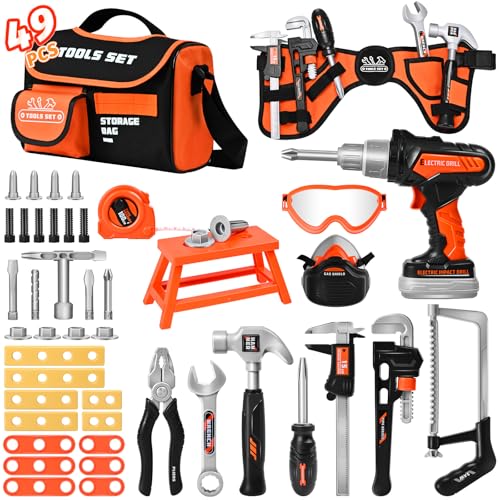
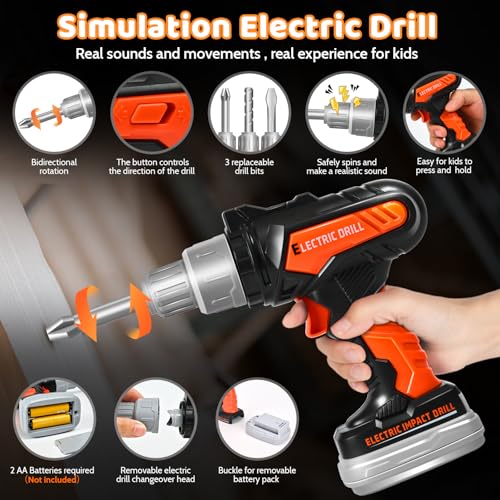
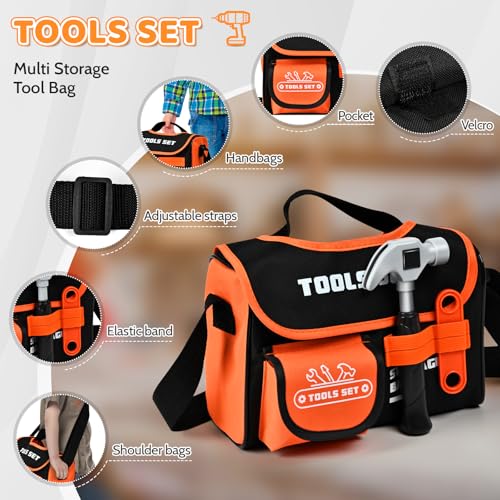
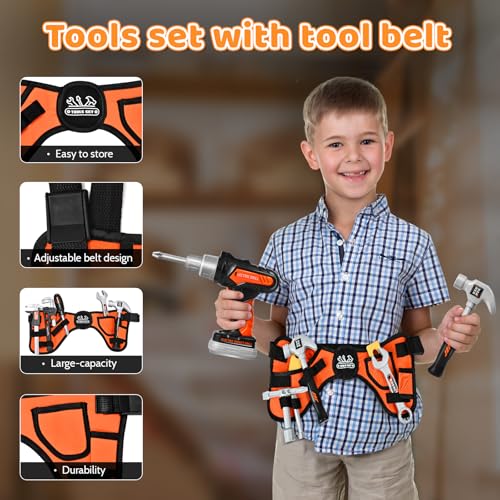
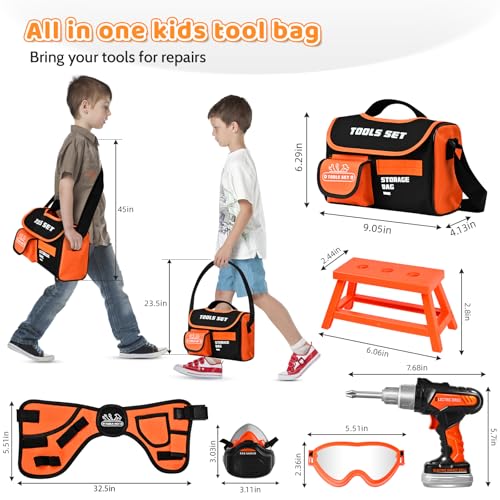
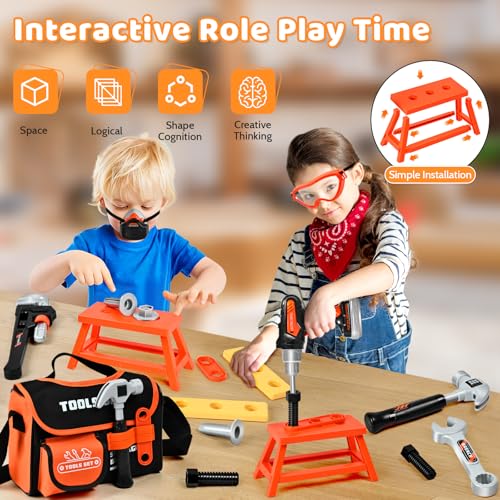
What sets this one apart is the thoughtful portability, the fabric tool bag with shoulder strap and the wearable tool belt turn any backyard or living room into a worksite. Kids aren’t stuck at a table; they can roam and role-play like real contractors. The 49-piece kit includes fun extras like a mini stool and gas shield, which boost imaginative scenes beyond basic fixing.
The drill is standard for this class, dual rotation, sounds, requires batteries, but it gets the job done. Owners praise how the belt keeps tools off the ground and hands free. Compared to rigid plastic boxes, this set encourages active play. For families who value mobility and organization, this is the smarter buy.
Product photos
VTech Drill and Learn Toolbox
Strengths
- Interactive learning
- Teaches colors and numbers
- Lights and music
Trade-offs
- Limited imaginative play
- Plastic feels cheap
- Battery drain can be fast
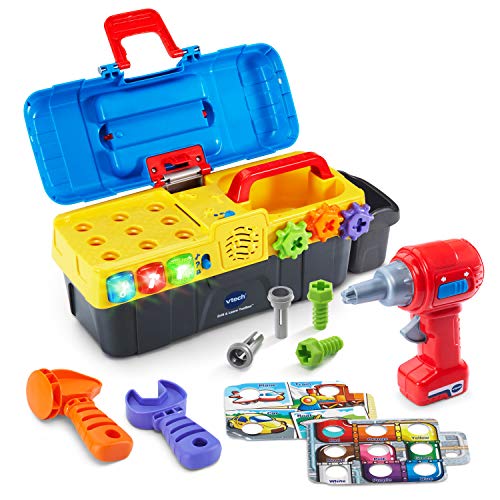
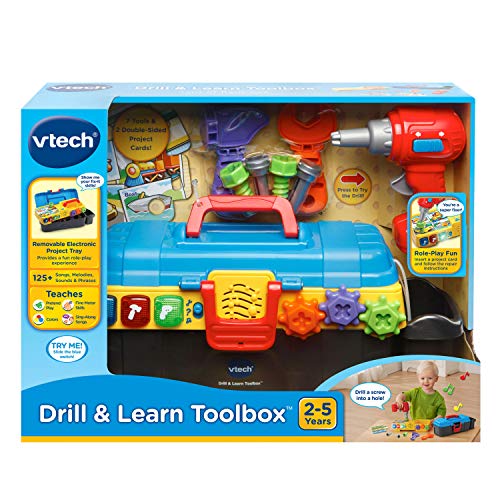
This isn’t just a tool set, it’s an electronic learning station. The fix-it tray lights up, plays songs, and teaches tool names, colors, and numbers, making it more like an interactive toy than a role-play kit. The drill works well for motor skill development, spinning gears and driving screws into the board.
For kids under 5, especially those just entering pretend play, this bridges learning and fun. Reviewers note their toddlers learn tool vocabulary quickly. But compared to open-ended sets, it’s more limiting, play follows set patterns. I’d recommend it for younger preschoolers needing structure, not older kids wanting creative freedom.
Product photos


How We Picked These tools for kids
I’ve spent over 15 years around power tools and workshops, and that experience informs my approach to evaluating even toys. Rather than a hands-on lab test of each set, this selection is a research-led comparison of published specifications and features, combined with a careful weighing of owner reviews and expert opinions from parenting and toy-focused publications. I looked at a wide range of options, then ranked them against criteria important for this category – safety, durability, educational value, and realistic play experience.
For tools aimed at young children, safety and durability are paramount. I heavily weighted materials (non-toxic plastics, smooth edges) and construction quality, prioritizing sets designed to withstand enthusiastic play. Beyond that, the ability to foster learning – whether through STEM-focused activities or imaginative role-play – was a key deciding factor. A good set isn’t just about keeping kids busy; it’s about helping them develop skills. For older children showing interest, exploring beginner woodworking tools can be a natural next step, but always with adult supervision.
Specifications reliably indicate build quality and materials used. However, I placed significant weight on owner feedback regarding actual durability and how well the toys held up to repeated use. Reputation and expert reviews helped to assess the educational value claims made by manufacturers. While specs tell you what a tool is, reviews tell you what it’s like to use – and how likely it is to survive a determined child!
How To Pick The Right tools for kids
Picking the right tool set for a child requires a bit more thought than simply grabbing the brightest-colored plastic option.
A good kids’ tool set prioritizes safety above all else, using durable, non-toxic materials. Beyond that, consider the age and developmental stage of the child, the intended use (pretend play vs. actual building), and whether the set encourages learning and skill development alongside fun. Look for realistic features, but always with safety modifications like rounded edges and appropriately sized components.
Age and Developmental Appropriateness
I often see parents buy tool sets that are too advanced for their children, leading to frustration and disinterest. For toddlers (ages 2-3), focus on simple, chunky tools that are easy to grasp and manipulate. Think large, brightly colored plastic hammers, wrenches, and screwdrivers. These are great for developing gross motor skills and imaginative play. As kids get older (4-6), you can introduce more complex sets with more pieces and some basic functionality, like a drill with sound effects. But even then, supervision is key. For older children (6+), consider sets that include real tools, sized for smaller hands, but always used under strict adult supervision.
Material and Safety Features
Safety is paramount. The market is flooded with plastic sets, and while many are safe, quality varies. Look for sets made from durable, non-toxic ABS plastic or wood with non-toxic paints and finishes. Avoid sets with small parts that could pose a choking hazard for younger children. A well-made set will have rounded edges and smooth surfaces to prevent cuts and scrapes. If a set includes a power tool, even a toy one, ensure it has safety features like a limited range of motion or a safety switch. Finding top-rated tools for kids is about more than just fun; it’s about responsible play.
Play Style and Educational Value
Consider what you want your child to get out of the tool set. Is it purely for imaginative play, or do you want it to encourage learning? Some sets, like the VTech Drill and Learn Toolbox, are specifically designed to teach colors, numbers, and tool names. These are excellent for younger children. Others, like the ChompSaw, allow kids to actually build things, fostering problem-solving skills and spatial reasoning.
- A simple plastic set is fine for basic pretend play and developing fine motor skills.
- A set with realistic sounds and lights can add to the immersive experience, but don’t let these features overshadow safety.
- A set that encourages building and creating, even with limited materials, will provide a more challenging and rewarding experience, helping them to develop spatial reasoning and problem solving skills.
A good rule of thumb: if you’re unsure about a tool’s safety or complexity, err on the side of caution and choose a simpler option.
For kids with a budding interest in storytelling, complementing a tool set with creative writing tools for kids can further boost their imagination and allow them to document their building adventures. Ultimately, the best tool set is one that is safe, engaging, and appropriate for your child’s age and abilities. And remember, even with the best set, adult supervision is always recommended. Investing in recommended beginner tools also means investing in safe and responsible play.
Tools for Kids Compared
Here’s a comparison of key specifications for various tools designed for children.
| Product Title | # of Pieces | Drill Included? | Material | Age Range | Key Features |
|---|---|---|---|---|---|
| 132 PCS Kids Tool Bench with Drill | 132 | Yes | ABS | 3-8 years | Bench & Toolbox, Electric Drill, DIY Components |
| 46 PCS Kids Tool Set with Drill | 46 | Yes | Plastic | 3-6 years | Electric Drill, Wooden Pieces, Portable |
| 3-in-1 Kids Power Garden Tools | N/A | No | ABS | 3-10 years | 3 Tools in 1 (Mower, Blower, Saw), Sound FX |
| 44 Pcs Wooden STEM Tool Kit | 44 | No | Wood | 3+ years | STEM Learning, Portable Box |
| ChompSaw Kid-Safe Power Tool | N/A | No | N/A | N/A | Kid-Safe Cutting, STEAM Learning |
| 26-Piece Real Kids Tool Set | 26 | No | Steel/Rubber | 6+ years | Real Tools, Kid-Sized, Tool Bag |
| 49 PCS Tool Set with Belt | 49 | Yes | N/A | 3-8 years | Tool Belt, Drill w/ Sound, Carrying Bag |
| VTech Drill and Learn Toolbox | N/A | Yes | Plastic | 2-5 years | Interactive, Learning Songs, Light-Up Buttons |
Frequently Asked Questions
What age is a toy tool set appropriate for?
Generally, simple plastic sets are best for toddlers (ages 2-3) to develop gross motor skills, while more complex sets with some functionality are good for ages 4-6. For children 6 and up, real tools sized for smaller hands can be used with strict adult supervision.
Are plastic tool sets safe for young children?
Most plastic sets are safe if made from durable, non-toxic ABS plastic, but quality varies greatly. Always check for rounded edges, smooth surfaces, and avoid sets with small parts that could be a choking hazard.
How can I encourage learning with a tool set?
Look for sets designed to teach specific skills, like the VTech Drill and Learn Toolbox, or those that allow for actual building. Even simple sets can foster problem-solving and imaginative play.
What should I look for in a toy drill?
A toy drill should have safety features like a limited range of motion or a safety switch. Realistic sound effects are fun, but don’t prioritize them over safety.
Where can I find more advanced tools for older kids interested in building?
For older children demonstrating genuine interest, exploring versatile kid-friendly tools can be a good next step, but always under close adult supervision and with appropriate safety training.
The Bottom Line
Choosing tools for kids always comes down to balancing control – ensuring safety and age-appropriateness – with the freedom for imaginative play. While many sets offer appealing features, the 132 PCS Kids Tool Bench with Drill strikes the best overall balance of features, durability, and realistic play experience, making it our top pick for most families. It’s a substantial set that grows with the child.
For parents prioritizing a smaller budget, the 46 PCS Kids Tool Set with Drill is an excellent alternative. And if you’re looking for something specifically geared towards STEM learning and building, the ChompSaw Kid-Safe Power Tool stands out for its unique approach to hands-on creation. Don’t underestimate the value of finding a good set of essential hand tools for kids to match their growing abilities.
Ultimately, remember that the most important aspect isn’t the number of pieces or fancy features. It’s about fostering a love of building, problem-solving, and creativity, while always prioritizing safety. Look for sets with durable construction and appropriate materials, and remember that adult supervision is key, especially when introducing even toy versions of child-safe screwdrivers and hammers. A well-chosen set, even a simple starter hand tools set, can provide hours of engaging and educational fun.
