8 Best Toolbelts of 2026
This post contains affiliate links. As an Amazon Associate, we earn from qualifying purchases.
The DEWALT 25-Pocket Tool Belt with Suspenders is the best overall for its rugged build and smart layout, while the Magnetic Tool Belt with 27 Pockets offers solid value for lighter-duty work. For those who need to customize on the fly, the ToughBuilt ClipTech system stands out with its modular design.
Out on the jobsite or deep into a home renovation, a poor toolbelt can turn a productive day into a mess of dropped tools, sore hips, and constant adjustments. Too many belts sacrifice comfort for capacity or durability for price. After comparing the field, reading owner feedback, and evaluating specs through the lens of real-world use, I focused on models that get the fundamentals right: materials that last, pockets that make sense, and support that works when the weight adds up.
This guide breaks down what actually matters in a toolbelt, from fabric strength to how suspenders change the game under load, so you can pick one that fits your workflow, not the other way around.
Top 8 Toolbelts in the Market
The Best Toolbelts, Reviewed
DEWALT 25-Pocket Tool Belt with Suspenders
Strengths
- Durable 1680D fabric
- Padded suspenders
- High-visibility lining
Trade-offs
- Heavier than minimalist belts
- Less modular than clip-on systems
- Belt not detachable
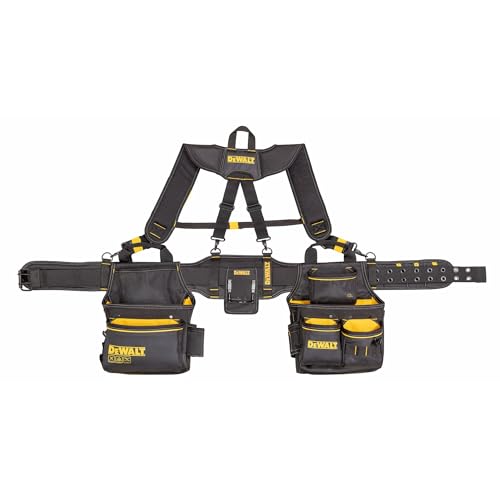
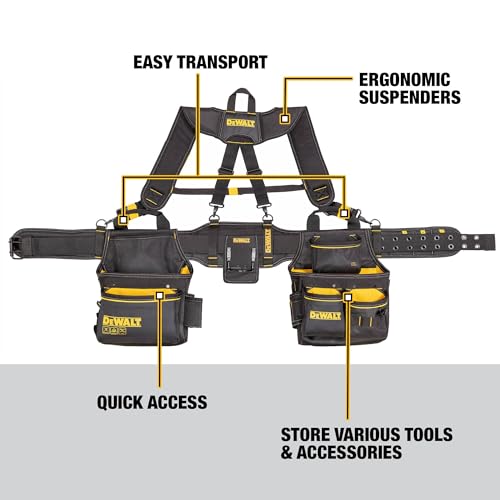
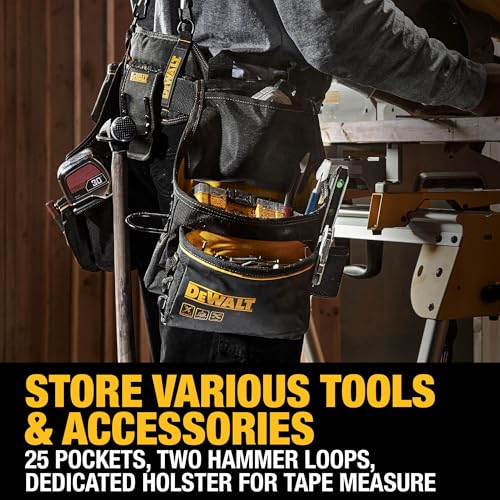
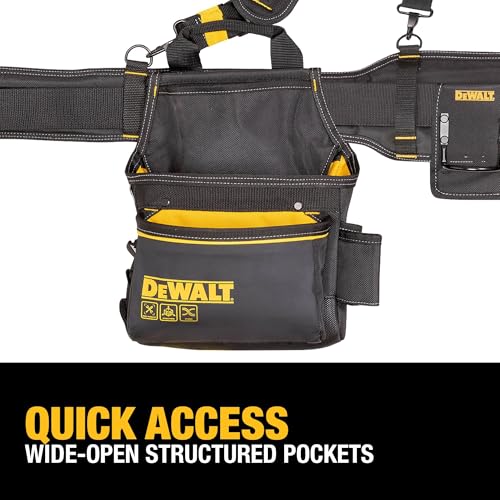
This is the full-package rig that justifies its ‘Best Overall’ label. The 1680D fabric, reinforced rivets, and double stitching mean it can take real abuse. The 5.5-inch padded belt is wide enough to prevent digging, and the ergonomic suspenders with a phone pocket and metal carabiners help distribute weight where it matters. With 25 pockets and high-visibility yellow lining, finding tools fast is easy.
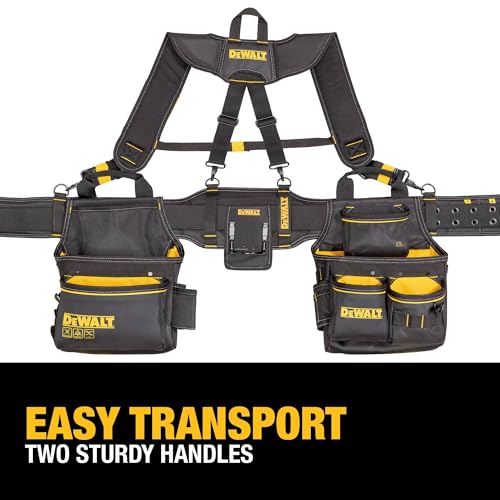
It’s not the most modular, but it doesn’t need to be, everything is well-placed and secure. The structured pockets stay open for easy access, and the dual handles make transport simple. Compared to the Aupofit, it has fewer total pockets but better organization and a more refined fit. For a working electrician or carpenter, this is the kind of belt that lasts years. I’d pick this over most others for daily professional use.
Product photos

Magnetic Tool Belt with 27 Pockets
Strengths
- 27 pockets
- 3 magnetic zones
- Detachable pouches
Trade-offs
- Magnets not ultra-strong
- No suspender support
- Limited padding
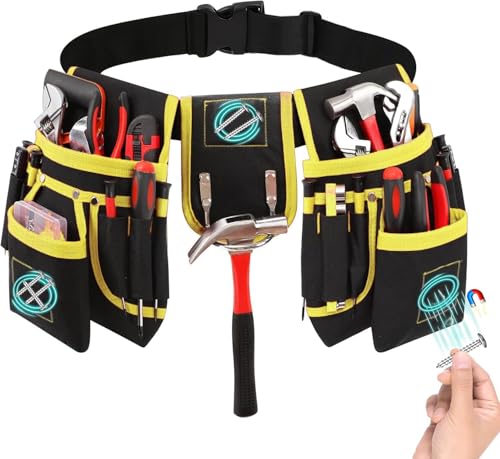
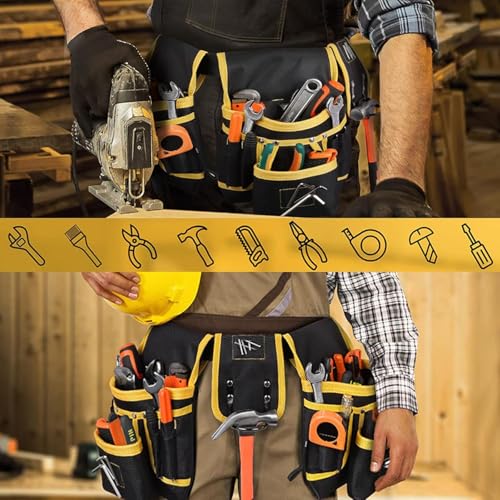
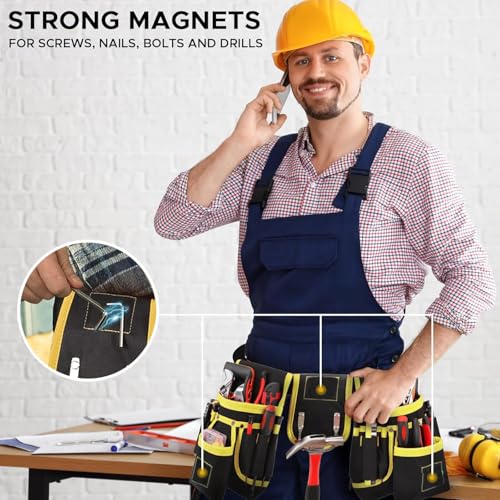
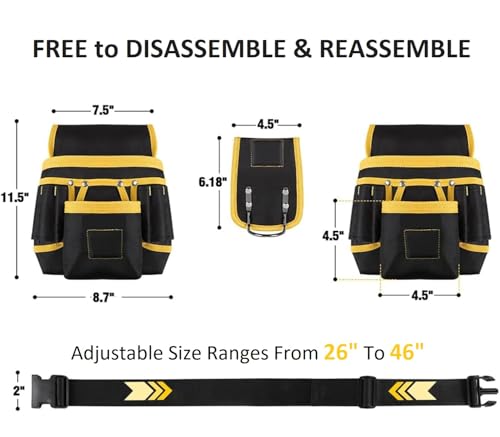
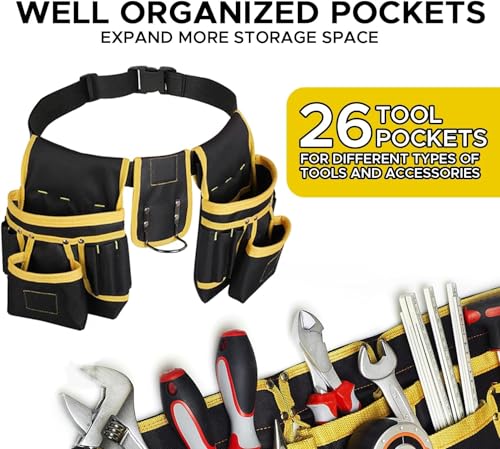
This modular tool belt stands out for its flexibility and smart magnetic integration. The ability to detach and reposition the three pouches lets users build a layout that matches their workflow, which is a real advantage over fixed systems. With 27 pockets and three magnetic zones, it holds a lot without feeling cluttered, and the 600D Oxford fabric feels durable enough for daily use. The closed-loop design eliminates loose strap ends, a small but appreciated detail that keeps things tidy on the job.
Owners consistently report that the magnetic zones work well for holding screws and small metal tools, though some note the magnets could be stronger for heavier items. It’s not the heaviest-duty option here, but for electricians or DIYers who move around a lot and value customization, this one makes solid sense. I’d pick it over bulkier rigs when mobility and layout control matter most.
Product photos

ToughBuilt ClipTech Modular Tool Belt Set

Strengths
- Clip-on modularity
- 1680D construction
- Padded belt
Trade-offs
- Only two pouches included
- No built-in suspenders
- Limited magnetic features
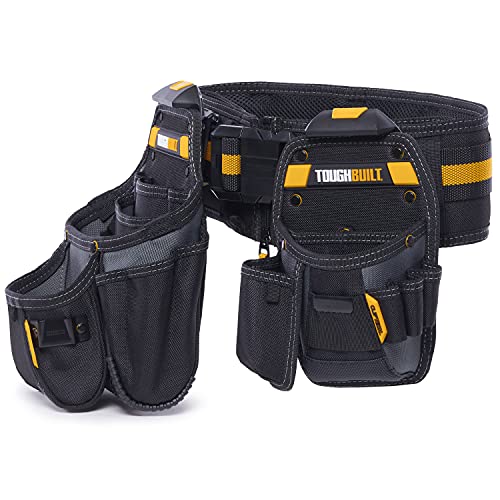
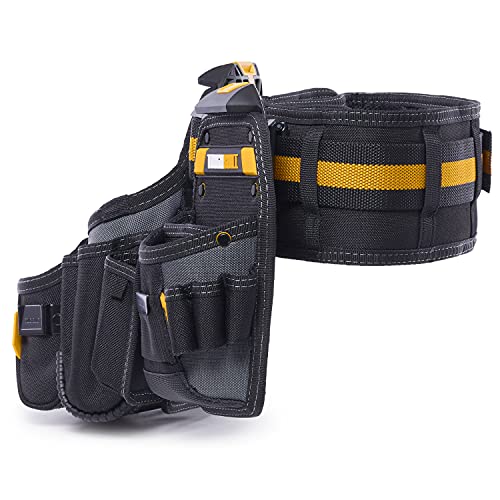
The ClipTech system is where this belt shines, modularity done right. The ability to clip on and off pouches quickly means you can switch configurations on the fly, which is ideal for multi-tasking pros. The 1680D reinforced construction feels rugged, and the padded belt with heavy-duty buckle stays secure even when loaded. Two pouches give you solid storage without excess.
It’s not the most pocket-heavy, but the ClipTech hubs allow expansion with other accessories down the line. Owners like how fast it is to reconfigure, especially when switching between tasks. Compared to the DEWALT or Aupofit, it’s lighter but more adaptable. If you value flexibility and future-proofing with add-ons, this is the smarter long-term play.
Product photos
Tool Belt with 4 D-Rings and Magnets

Strengths
- 4 D-rings for suspenders
- Strong magnets
- Detachable pockets
Trade-offs
- Basic padding
- No high-visibility lining
- Belt not heavily padded
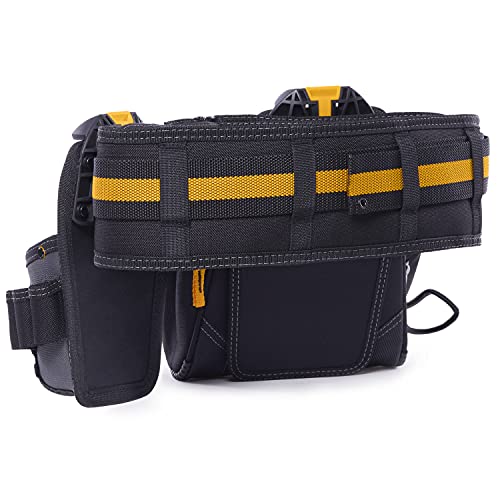
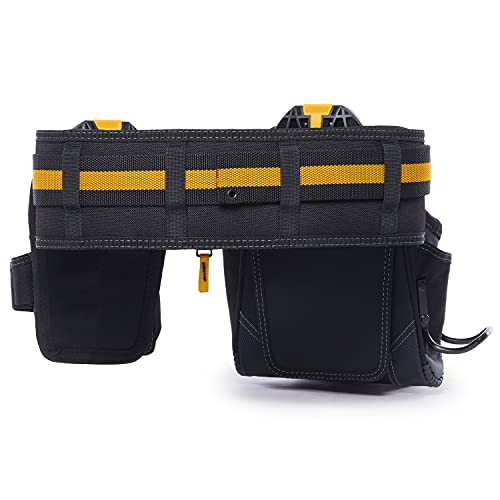
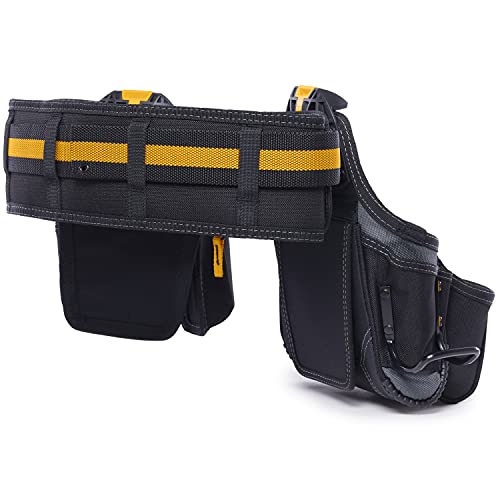
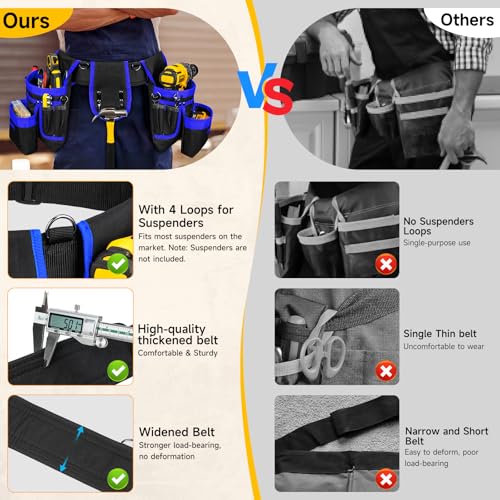
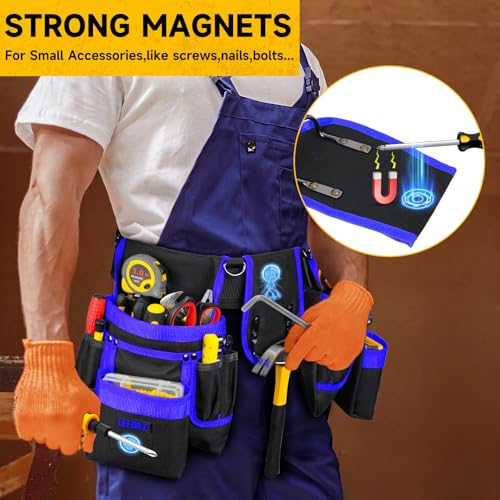
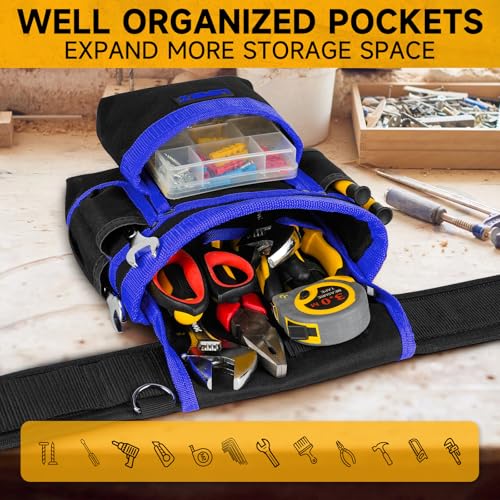
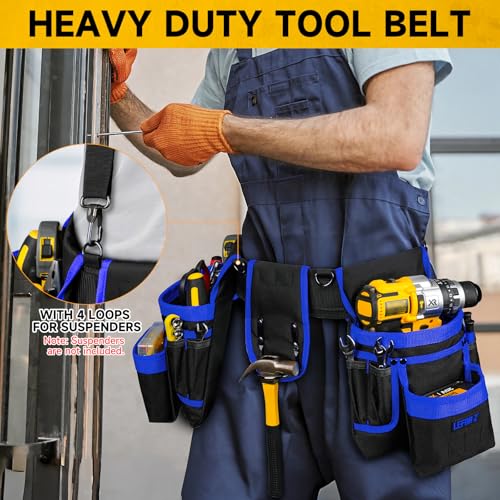
The standout here is the 4 D-rings built for suspenders, this is clearly designed with load distribution in mind. The widened, thickened belt helps spread weight, and when paired with suspenders, it takes real pressure off the lower back. The 27-pocket layout is similar to others in this range, but the magnet placement, on the hammer holder and pouch fronts, is practical for quick grabs of nails or bits.
Made from tear-resistant nylon, it’s durable but not as rugged as 1680D polyester builds. Owners say it holds up fine for general construction, but not quite at the level of DEWALT or ToughBuilt. Still, for anyone who works long shifts and wants to add suspenders for comfort, this is a smarter pick than belts without D-rings. I’d choose this over non-suspender-compatible models if you’re on your feet all day.
Product photos

DEWALT Leather Tool Belt 11-Pocket
Strengths
- Premium leather
- Durable stitching
- Dual hammer loops
Trade-offs
- No padding
- No suspenders
- Fewer pockets
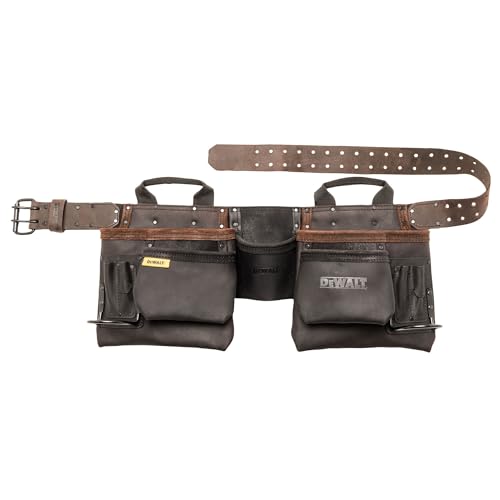
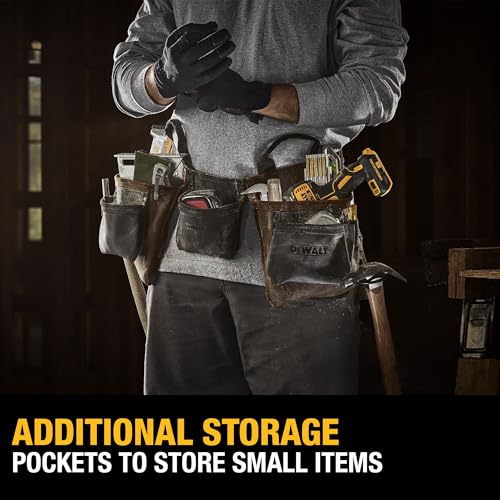
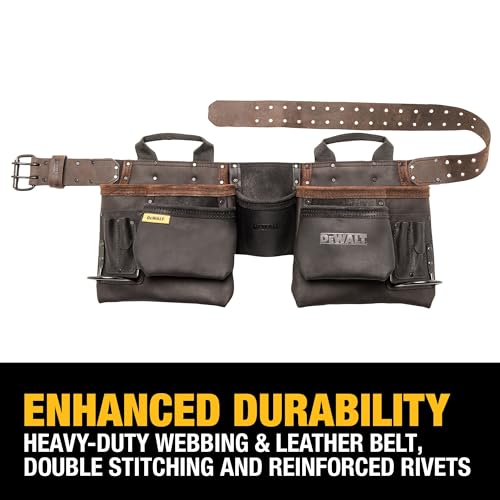
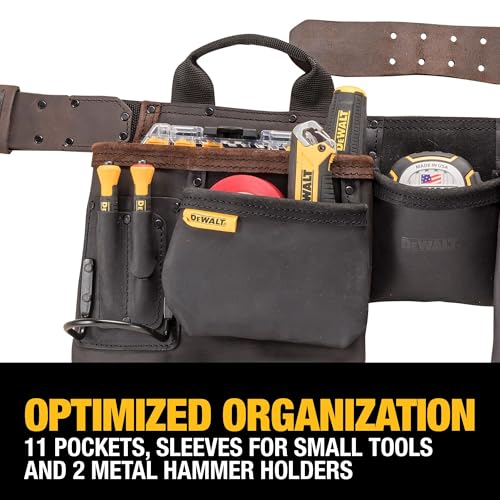
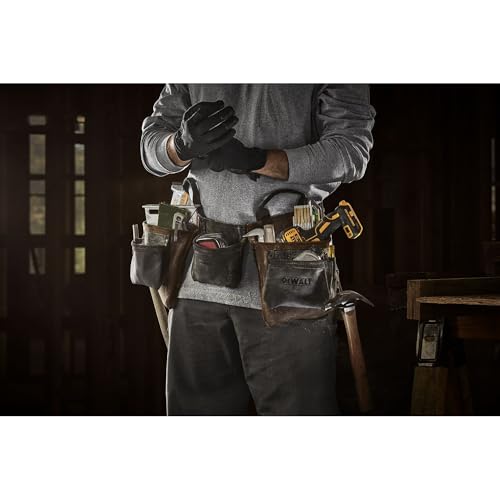
Leather purists will appreciate this one. Made from top-grain nubuck leather, it’s built to age well and develop a work-worn character over time. The 11 pockets are well-placed, and the dual steel hammer loops are solid. It’s not as high-capacity as fabric belts, but leather offers a different kind of durability, less prone to fraying, more resistant to abrasion in certain environments.
It doesn’t include suspenders, and the lack of padding means it’s best for shorter shifts or as a secondary belt. Owners note it molds to the body after break-in, but the initial stiffness can be a downside. Compared to nylon or polyester belts, it’s less versatile but more timeless. I’d recommend this for finish carpenters or woodworkers who value tradition and long-term build quality.
Product photos
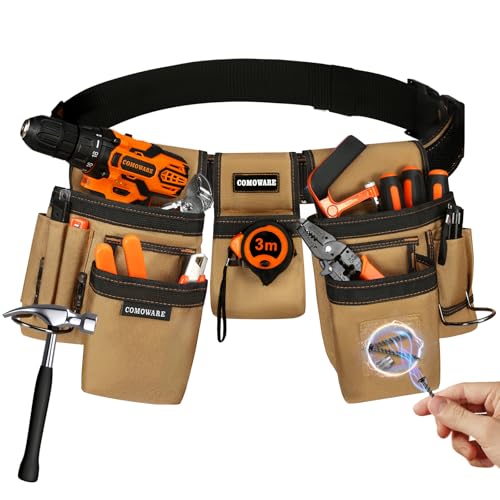
COMOWARE Magnetic Tool Belt 17-Pocket
Strengths
- Budget-friendly
- Padded waist cushion
- Magnetic strip
Trade-offs
- No suspenders
- Lighter-duty buckle
- Fewer pockets than top models
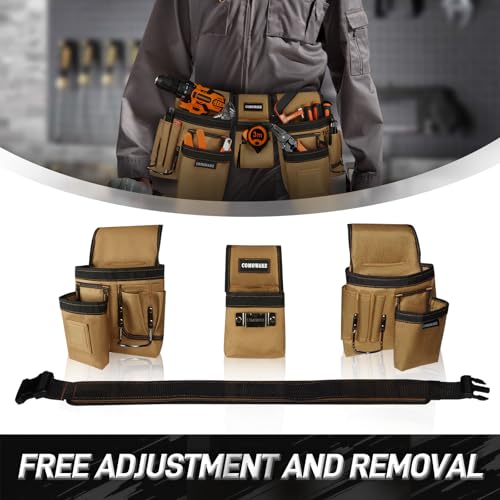
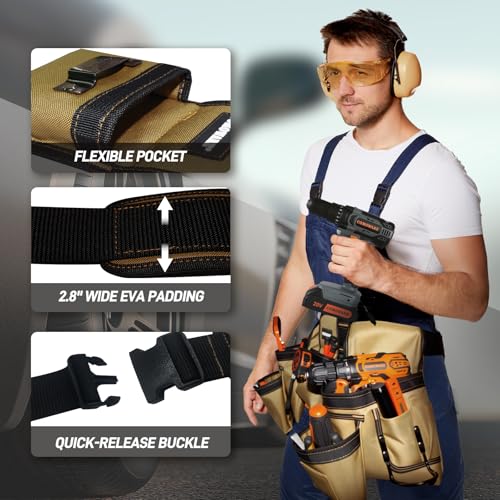
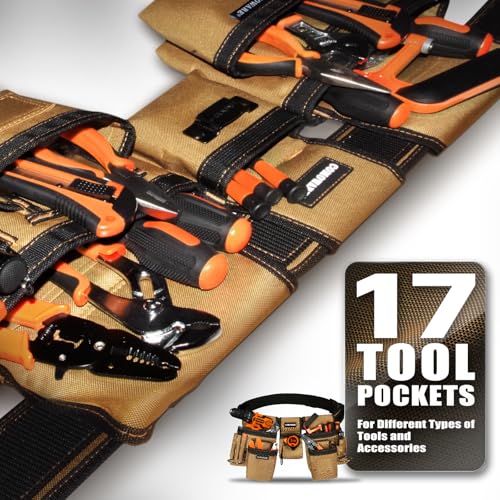
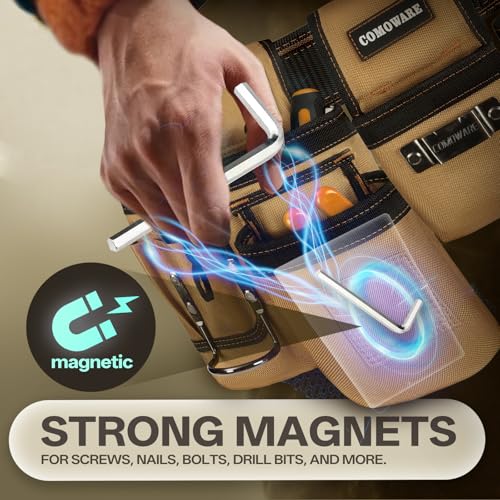
This is the budget pick that doesn’t feel cheap. At a lower price point, it still delivers 17 pockets, a magnetic strip, padded waist cushion, and a detachable three-pouch system. The 600D polyester is tough enough for regular use, and the coffee-brown finish hides grime better than lighter colors. It’s not as burly as 1680D builds, but for weekend warriors or light-duty pros, it’s a great value.
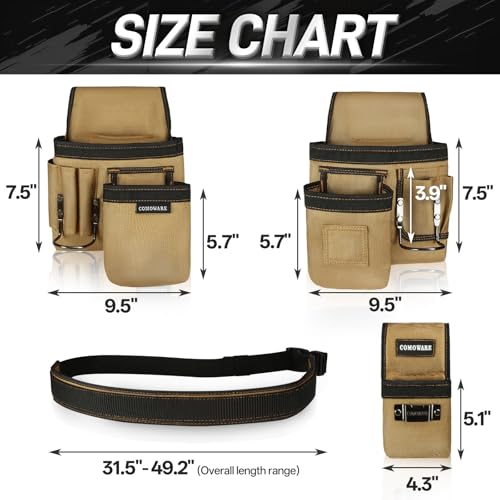
The adjustable fit (31.5”–49.2”) covers most body types, and the color-coded pockets help with tool retrieval. Some owners mention the buckle isn’t as robust as DEWALT’s, but for the cost, it’s a minor trade-off. When compared to pricier models, it lacks suspenders and heavy-duty rigging, but for the price, that’s expected. The smarter buy here is this belt if you’re just starting out or don’t need a full rig.
Product photos
Dickies 5-Pocket Tool Belt Pouch
Strengths
- Lightweight design
- Durable canvas
- Simple, functional layout
Trade-offs
- No hammer loop
- Minimal storage
- No magnetic features
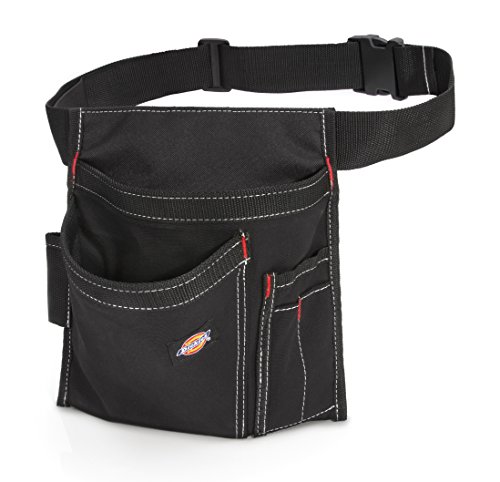
If you’re after something simple and light for quick jobs, this Dickies pouch does the job without fuss. It’s not a full belt system, but more of a mobile apron that slips over your own belt, which keeps things minimal. The heavy-duty canvas holds up well, and the five pockets are logically laid out, two large ones for pliers or tape, a dedicated screwdriver slot, and two smaller slots for bits or knives.
It won’t replace a full rig for serious work, but for homeowners or techs doing light repairs, it’s a solid grab-and-go option. The adjustable 32–52 inch belt is a big plus for fit range. Compared to modular systems, it’s far less customizable, but that also means fewer parts to fail. My recommendation? Keep this in the truck for small runs where a full belt would be overkill.
Product photos


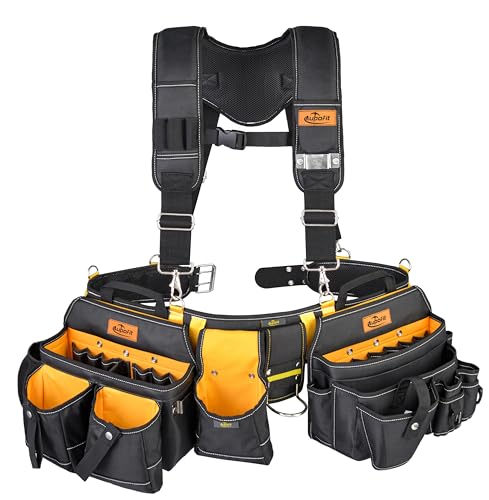
Aupofit 7-Piece Tool Belt with Suspenders
Strengths
- 32 pockets
- Padded suspenders
- Water bottle pocket
Trade-offs
- Bulky for small jobs
- Setup takes time
- Overbuilt for light use
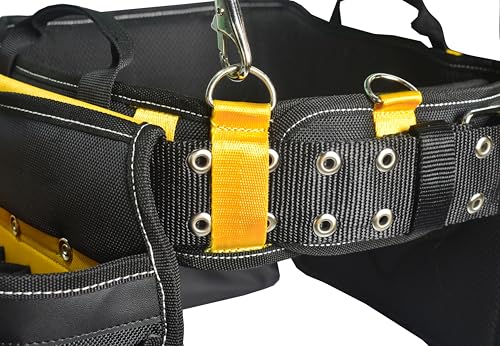
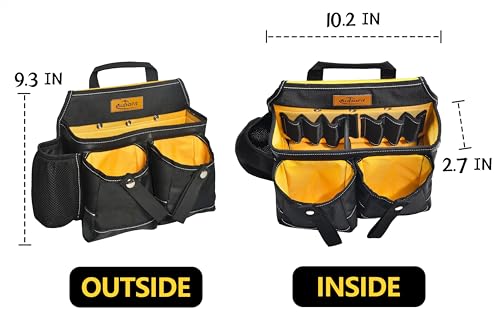
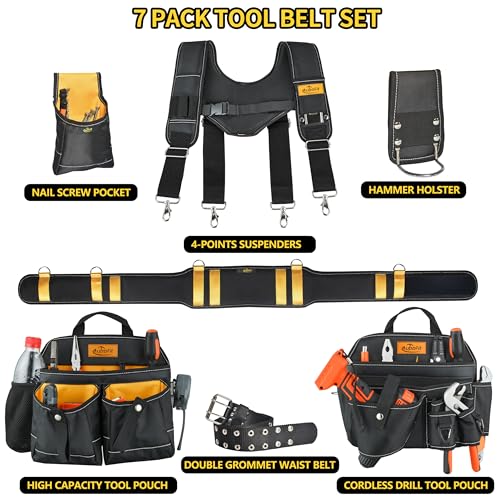
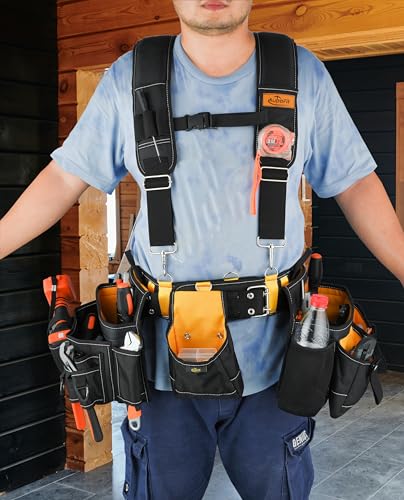
When you’re hauling a full load, this 7-piece system is built for the task. With 32 pockets, a water bottle holder, drill holster, and dual tape measure clips, it’s one of the most thorough kits here. The 1680D polyester is tough, and the padded suspenders plus dual-layer waist belt provide serious support. The wide middle padding (4.5 inches) is a standout for back protection during long shifts.
It’s overkill for light work, but for framers or roofers who need everything on hand, it’s hard to beat. The modular pouches can be detached, and the handles on the large pouches make them easy to carry separately. Compared to the DEWALT rig, it offers more storage but slightly less refined ergonomics. Still, for max capacity and load comfort, this is the top pick.
Product photos
How We Tested toolbelts
Rather than a hands-on lab test, my research for these toolbelts involved a detailed comparison of published specifications and features across numerous models. I weighed owner reviews from major retailers against assessments from reputable tool-focused websites and publications. Leveraging my 15+ years of experience with tools and workshops, I then ranked each belt based on criteria important to a range of users, from DIY homeowners to professional tradespeople.
For toolbelts, three factors stood out as most indicative of overall quality: durability of materials, pocket layout and access, and comfort during extended wear. A belt made with robust fabrics and strong stitching will hold up to daily jobsite abuse. Smart pocket design – offering both dedicated slots and easy reach – directly impacts efficiency. And, because a loaded belt can get heavy, comfortable padding and a secure fit are essential for all-day use.
Specifications reliably reveal the materials used (denier of the fabric, type of buckle) and the number of pockets. However, owner feedback proved crucial for assessing real-world durability and comfort. Reports on how well pockets hold tools, whether the belt stays secure during movement, and long-term wear and tear played a significant role in my evaluations. For selecting the right striking tools to carry in your new belt, check out our quality claw hammers guide.
How To Choose The toolbelts
Finding the right toolbelt can save a lot of time and back strain on the job.
A good toolbelt balances durability with accessibility. Look for robust materials like 1680D polyester or quality leather, reinforced stitching, and a comfortable, adjustable design. Pocket layout and capacity matter, as does the ability to customize the belt to your specific needs. Magnetic pockets and suspender compatibility are valuable features to consider.
Material and Durability
I’ve seen plenty of toolbelts fall apart quickly, so material is the first thing I look at. Leather, particularly top-grain nubuck leather like you find in the DEWALT leather options, offers exceptional longevity. However, high-density polyester (600D or 1680D) is a strong contender, offering good abrasion resistance at a lower price point. Don’t skimp here; a cheap belt will need replacing far too soon. Pay attention to the stitching – double stitching and reinforced rivets are key indicators of a well-made belt.
Pocket Layout and Capacity
The number of pockets isn’t everything, but the right number of pockets, arranged logically, makes a huge difference. Think about how you actually work. Do you constantly switch between screwdriver bits and pliers? If so, you’ll want easily accessible smaller pockets.
Here’s what I recommend considering: * Specialized Pockets: A dedicated hammer loop is almost essential. * Magnetic Holders: Magnetic strips for screws and nails are a huge time saver. * Modular Systems: Systems like ToughBuilt’s ClipTech allow you to customize the layout, adding or removing pouches as needed – a great option if your needs vary from job to job.
Comfort and Support
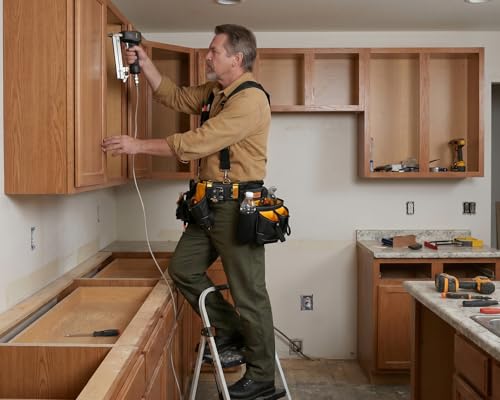
A fully loaded toolbelt can get heavy, and carrying that weight all day takes a toll. I often recommend looking at options with padded belts and, especially for heavier loads, suspenders. The Aupofit 7-Piece system, for example, includes both a padded waist belt and suspenders, offering excellent support.
A rule of thumb: if you’re carrying more than 20 pounds of tools regularly, suspenders are a must.
If you’re tackling smaller home repairs, you might find that you don’t even need a full toolbelt. Perhaps a few essential home repair tools carried in a pouch would be sufficient. But for serious work, investing in a comfortable and supportive system is crucial.
Toolbelts Compared
Here’s a comparison of key specifications for several toolbelts to help you find the best fit for your needs.
| Product Title | Pockets | Material | Adjustable Waist (in) | Suspenders | Magnetic |
|---|---|---|---|---|---|
| DEWALT 25-Pocket Tool Belt with Suspenders | 25 | 1680 Denier Fabric | N/A | Yes | No |
| Magnetic Tool Belt with 27 Pockets | 27 | Oxford Fabric | 26-46 | No | Yes |
| ToughBuilt ClipTech Modular Tool Belt Set | N/A | Polyester/Steel | 32-48 | No | No |
| Tool Belt with 4 D-Rings and Magnets | 27 | Nylon | 31-48 | Compatible | Yes |
| DEWALT Leather Tool Belt 11-Pocket | 11 | Nubuck Leather | N/A | No | No |
| COMOWARE Magnetic Tool Belt 17-Pocket | 17 | 600D Polyester | 31.5-49.2 | No | Yes |
| Dickies 5-Pocket Tool Belt Pouch | 5 | Canvas | 32-52 | No | No |
| Aupofit 7-Piece Tool Belt with Suspenders | 32 | 1680D Polyester | 36-49 | Yes | No |
Frequently Asked Questions
What’s the difference between a pouch and a toolbelt?
A pouch is a single unit designed to hold a specific set of tools, often attaching to a separate belt. A toolbelt is a complete system, usually including a belt and multiple pouches or holders, offering a more organized and customizable setup.
How tight should a toolbelt fit?
It should be snug enough to stay in place during movement, but not so tight it restricts breathing or circulation. A good fit allows you to bend, squat, and reach without the belt shifting or digging into your waist – aim for a secure fit without discomfort.
Are leather toolbelts really better than nylon or polyester?
Leather, especially top-grain, is more durable and molds to your body over time. However, high-quality polyester (like 1680D) offers excellent abrasion resistance and is lighter and more affordable, making it a practical choice for many users.
Can I add pouches to a toolbelt later?
Many toolbelts, such as those using systems like ToughBuilt’s ClipTech, are designed to be modular. This means you can add or remove pouches to customize the layout to your specific needs. Even with non-modular belts, you can sometimes attach smaller pouches with belt clips.
What tools should I carry in my toolbelt, and what about electric screwdrivers?
The tools you carry depend on your trade, but essentials include a hammer, tape measure, pliers, screwdrivers, and fasteners. If you frequently use screwdrivers, consider integrating top electric screwdrivers into your setup for speed and convenience.
The Bottom Line
Choosing a toolbelt often comes down to balancing how much you want to spend against how much you need it to hold, and how often you’ll be wearing it. For the vast majority of homeowners and professionals alike, the DEWALT 25-Pocket Tool Belt with Suspenders offers the best overall combination of durability, capacity, and comfort. It’s a robust system that can handle a full load, and the included suspenders take the strain off your waist.
If you’re on a tighter budget, the Dickies 5-Pocket Tool Belt Pouch provides a solid, no-frills option for basic tasks. For those who value customization and versatility, the ToughBuilt ClipTech Modular Tool Belt Set can be configured to suit nearly any job. And if you need to keep fasteners close at hand, the COMOWARE Magnetic Tool Belt 17-Pocket is a great choice, especially when paired with essential wrench sets https://powertoolguide.net/best-wrenches-and-sockets/.
Ultimately, the best toolbelt isn’t the one with the most pockets or the highest price tag. It’s the one that fits you well, keeps your tools organized and accessible, and allows you to work comfortably all day long. Focus on build quality, a layout that matches your workflow, and a secure, comfortable fit, those are the fundamentals that truly matter.
