
9 Best Portable Tire Inflators 2026
This post contains affiliate links. As an Amazon Associate, we earn from qualifying purchases.
The Ipflin 9600mAh Tire Inflator stands out as the best overall pick for its strong airflow, high capacity battery, and dual power options. For those on a budget, the Airmoto Cordless Tire Inflator offers solid performance in a compact form. If you need maximum versatility, the DEWALT 20V MAX Tire Inflator works with multiple power sources, including standard outlets and car batteries.
Most drivers don’t think about tire pressure until a warning light comes on or a tire looks flat. By then, you’re often stuck roadside, hoping your inflator can handle the job without quitting or giving a false reading. A bad unit can leave you stranded or worse, overinflate a tire to the point of damage.
This guide cuts through the noise. I looked at specs, owner feedback, and real-world reliability across a range of portable air compressors. These picks balance power, accuracy, and convenience, so you can refill a tire quickly, safely, and get back on the road.
Top 9 Tire Inflator Portable Air Compressors in the Market
The Best Tire Inflator Portable Air Compressors, Reviewed
Ipflin 9600mAh Tire Inflator

Strengths
- Largest dual-mode battery
- Corded and cordless options
- Excellent safety features
Trade-offs
- Slightly heavier
- Premium price
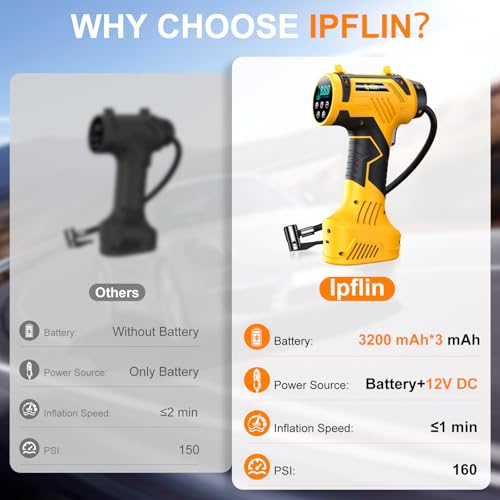
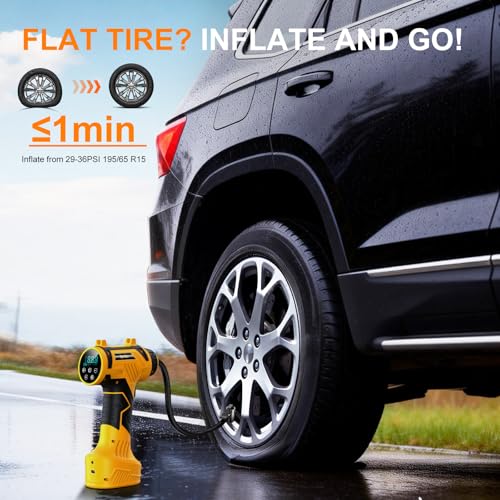
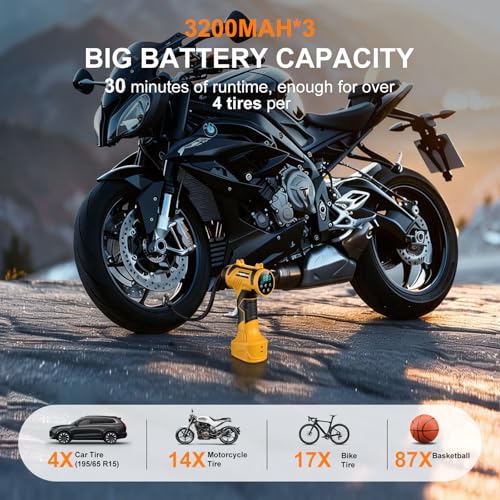
This is the most well-rounded unit on the list, and it earns the ‘Best Overall’ label for good reason. The 9600mAh battery is the largest among dual-mode inflators, and it delivers, over 30 minutes of runtime means you can handle multiple vehicles or repeated use without anxiety. The 30L/min airflow gets tires pressurized in about a minute, which is fast enough for emergencies.
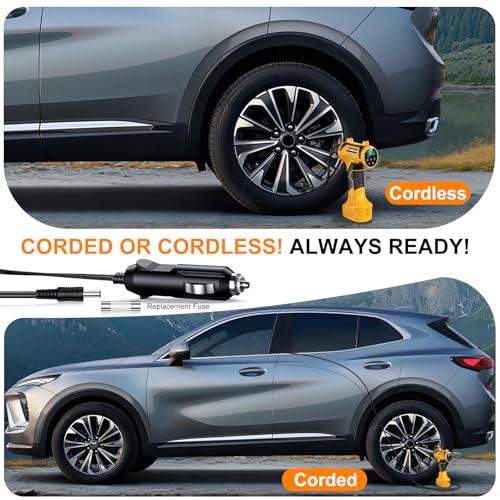
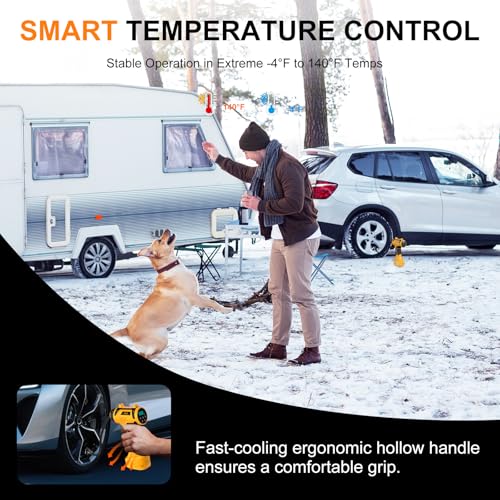
The corded/cordless flexibility is a standout. Run on battery when you want to move freely, plug in when the battery runs low, no stranded moments. The smart temperature control and 8 safety protections add peace of mind, and owners love the responsive customer service. Compared to others, this one balances speed, power, and reliability better than any other model here.
Product photos
OlarHike Dual Power Tire Inflator
Strengths
- Lightning-fast inflation
- Dual power options
- Long battery life
Trade-offs
- Bulkier than ultra-compact models
- Battery requires careful charging
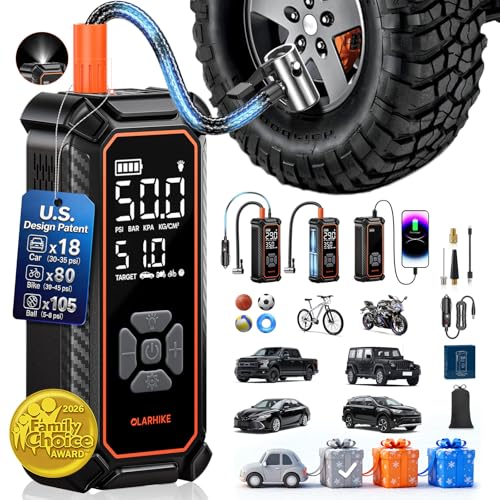
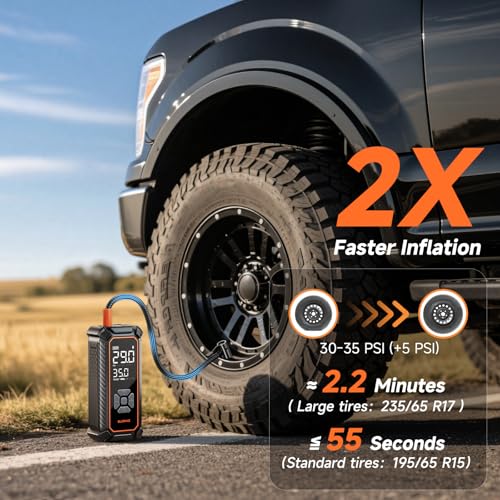
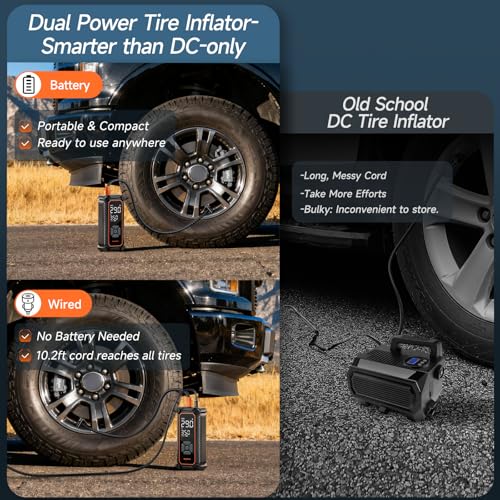
When speed matters, the OlarHike delivers. At 55 seconds to inflate a standard car tire by 5 PSI, it’s one of the quickest cordless models available. The high-performance motor makes a noticeable difference, and owners consistently praise how little time it takes to bring tires up to pressure. That’s a big win for anyone dealing with multiple tires or frequent top-offs.
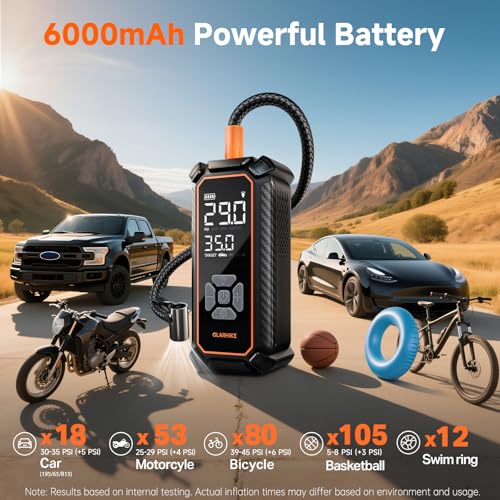
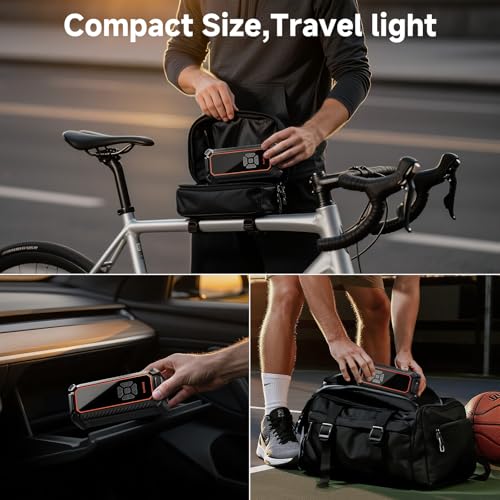
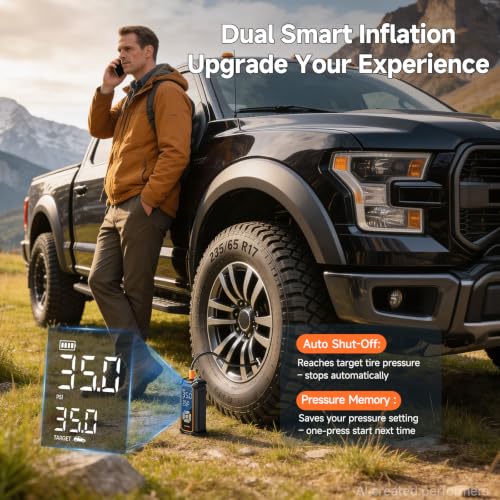
The dual power mode, battery or 12V DC, is a major plus, and the 6000mAh battery supports up to 18 car tires on a single charge. The large dual display is easy to read, and the memory function saves your last setting, which cuts down on setup time. It’s not the smallest unit, but at 1.2 pounds, it’s still easy to stow. For road trippers and performance drivers, this is the smarter buy over slower models.
Product photos
AstroAI L7 Cordless Tire Inflator
Strengths
- High sensor accuracy
- USB-C power bank
- Lightweight and compact
Trade-offs
- Limited for large tires
- Average battery capacity
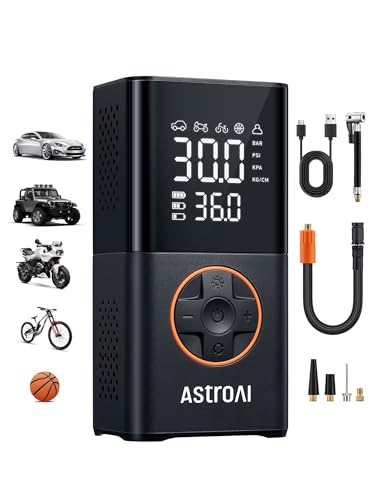
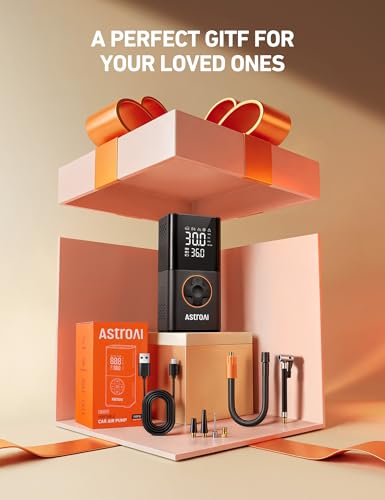
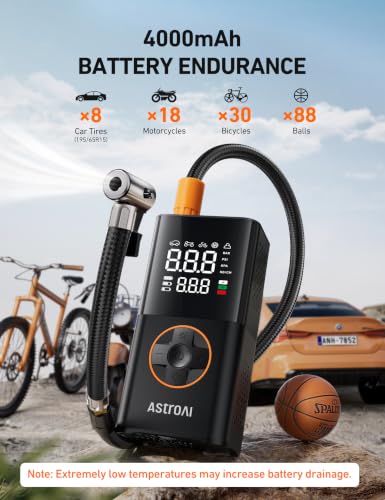
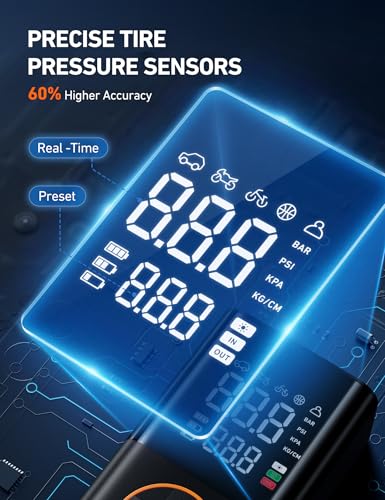
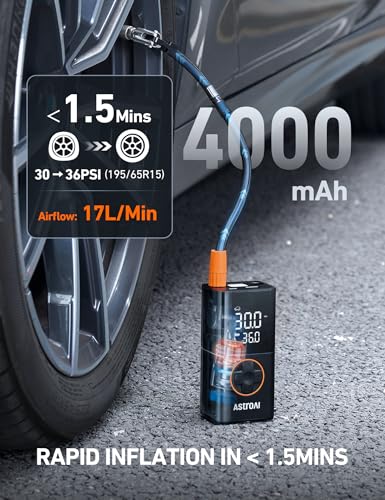
The AstroAI L7 stands out in the budget segment not just for its price, but for how well it performs relative to more expensive models. The TrueGauge sensor tech, reporting 200 data points per second, is a real differentiator, and owners confirm the pressure readings feel more stable and responsive than on many similarly priced units. It’s not the fastest or most powerful, but for topping off tires or handling a roadside low-pressure warning, it gets the job done efficiently.
Where it really shines is usability. The 4+N smart modes make setup intuitive, and the inclusion of USB-C I/O is a thoughtful perk, this doubles as a phone power bank in a pinch. It won’t handle heavy-duty tires, and runtime is modest, but for most passenger cars and bikes, it’s more than capable. I’d pick this over pricier models if you want solid core performance without overspending.
Product photos

Airmoto Cordless Tire Inflator
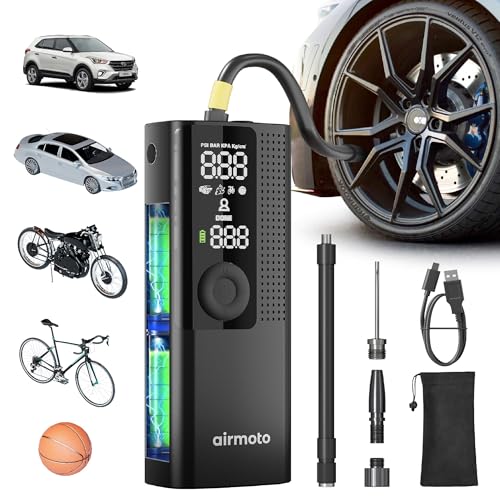
Strengths
- Ultra-compact design
- Includes Presta adapter
- Deflate function
Trade-offs
- Small battery capacity
- Limited for large tires
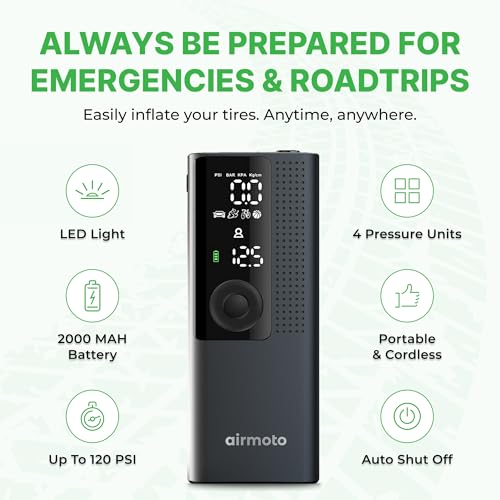
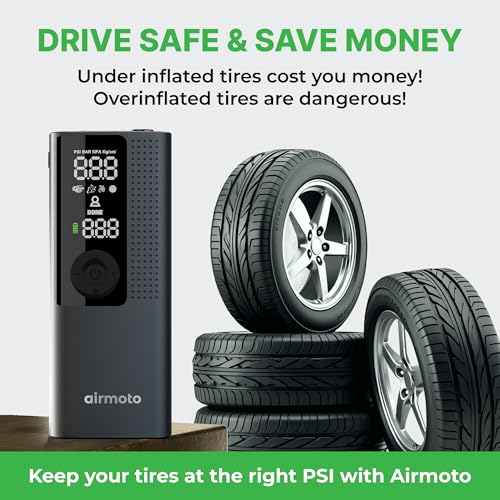
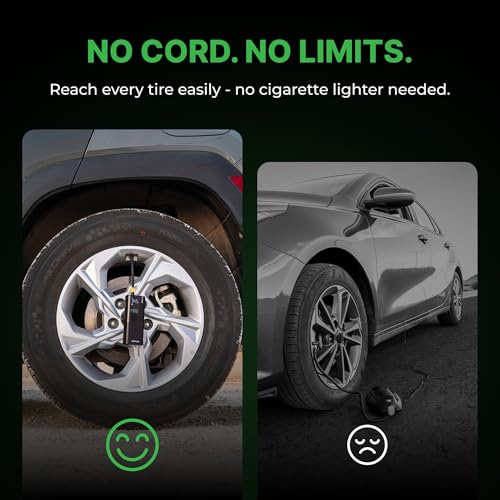
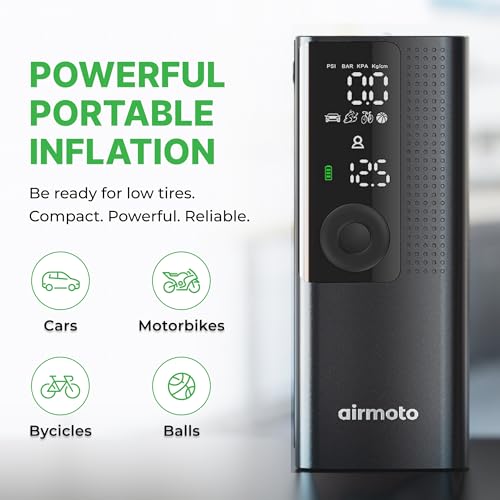
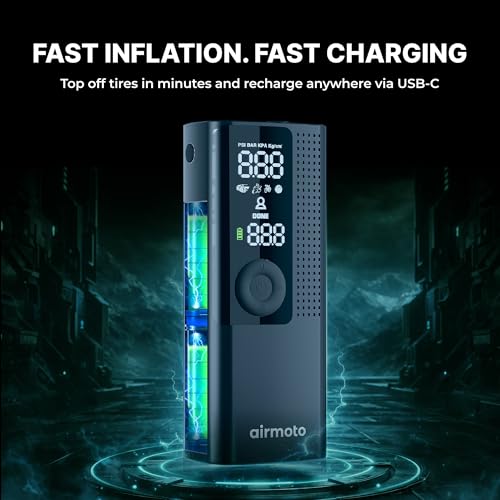
If space is at a premium, the Airmoto is hard to beat. It’s one of the smallest units here, easily slipping into a glove box or center console, yet it still delivers solid performance for standard passenger vehicles. The 2000mAh battery isn’t huge, but it’s enough for one or two tire top-offs, which is typical for most users. The auto-shutoff works well, and the large LCD is easy to read, even in direct sun.
Owners appreciate the included Presta valve adapter, great for cyclists, and the deflate button is a small but useful feature for fine-tuning pressure. It’s not built for SUVs or repeated use, and the battery drains quickly on larger tires. But for a quick fix or routine check, it’s perfectly capable. For most city drivers, this is the easy pick.
Product photos
DEWALT 20V MAX Tire Inflator
Strengths
- Triple power sources
- Robust build quality
- Onboard accessory storage
Trade-offs
- Bulky design
- No built-in battery
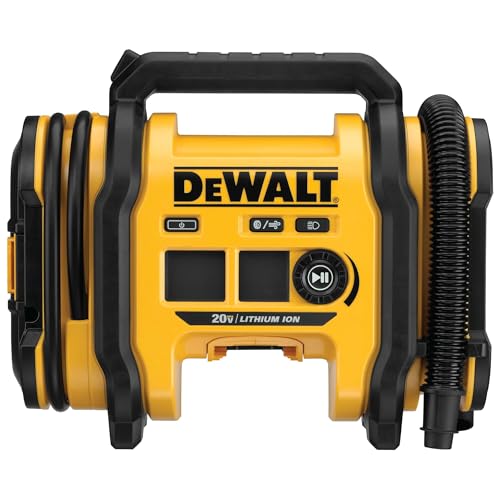
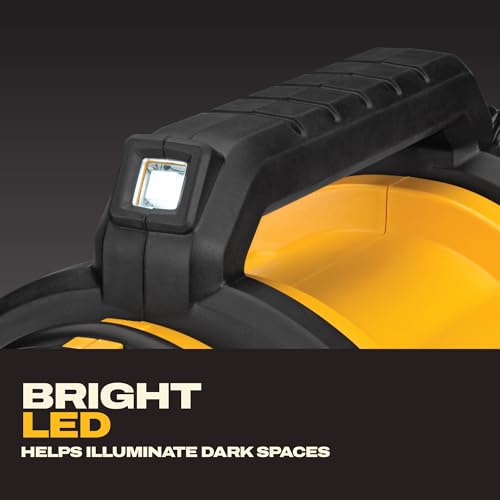
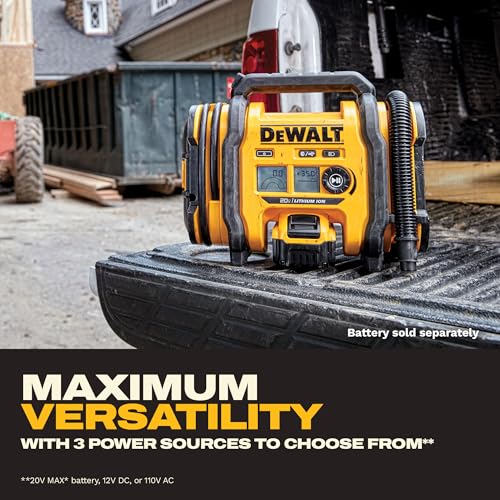
If you already run a DEWALT 20V MAX system in your garage, this inflator makes a smart, plug-and-play addition. The ability to run off a 20V battery, 12V DC, or 110V AC gives it unmatched flexibility across job sites, garages, and roadside emergencies. That triple power option is rare, and for someone like me who values tool ecosystem compatibility, it’s a real advantage. The automatic shutoff works as intended, and owners consistently report solid accuracy with the digital gauge.
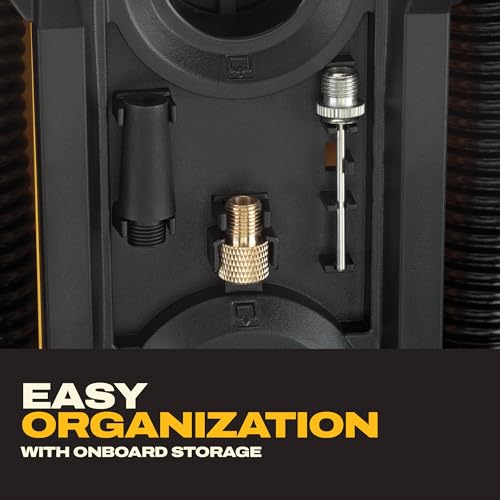
It’s heavier and bulkier than most cordless units, so it’s not ideal if you’re tight on space or want something you can toss in a backpack. But that heft comes with durability, this unit feels built to last, and the onboard storage for accessories is a thoughtful touch. Compared to slim single-battery models, this is more of a workshop or truck-bed companion than a glove-box stowaway.
Product photos


CARSUN AC/DC Tire Inflator

Strengths
- AC and DC power support
- Metal motor for durability
- Good for inflatables
Trade-offs
- No battery for portability
- Slow for emergencies
This is the only model here that supports both AC (wall outlet) and DC (car) power, making it uniquely suited for home garages and stationary use. If you’re the type who likes to keep an inflator plugged in and ready in the garage, this is the one. The metal motor delivers steady performance, and it can hit 150 PSI with consistent airflow, though it’s slower, five minutes per tire from zero.
It’s not portable in the traditional sense, the cords are long, but the unit itself isn’t battery-powered, so you’re tethered to a power source. But for home use, that’s a non-issue. Owners like the memory function and bright display, and it handles inflatables like air mattresses well. Compared to cordless models, it’s less flexible on the road but more powerful at home.
Product photos


ROCGORLD R8 12V Air Compressor
Strengths
- Extremely fast inflation
- Dual digital display
- Optimized for EVs
Trade-offs
- No built-in battery
- DC power only
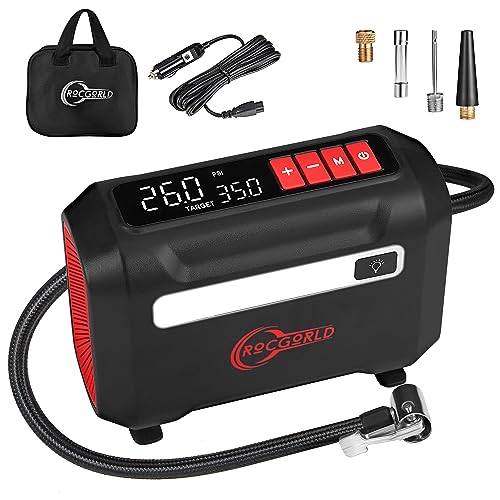
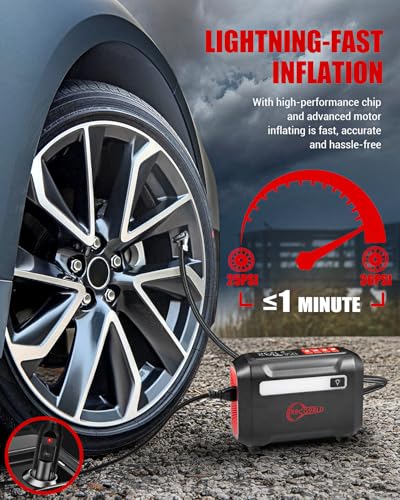
The R8 is built with EV and Tesla owners in mind, and it shows. With a 40L/min airflow, it inflates a Tesla tire in just 1.5 minutes, faster than most dedicated shop compressors. The dual digital display is a standout, showing both target and real-time pressure clearly, and the memory function saves your last setting, which is handy for repeat use.
It runs only on 12V DC, so no battery or AC option, but the 10-foot power cord helps. The build quality is solid, and the cooling system keeps it running longer than cheaper units. It’s not the most portable, but for EV drivers who need fast, reliable inflation without hauling a bulky compressor, this is the best match. I’d recommend it over general-purpose models for Tesla and high-pressure EV tire owners.
Product photos


150 PSI Cordless Tire Inflator
Strengths
- Largest battery capacity
- Quiet operation
- Quick-connect hose
Trade-offs
- No 12V DC option
- Slower inflation speed
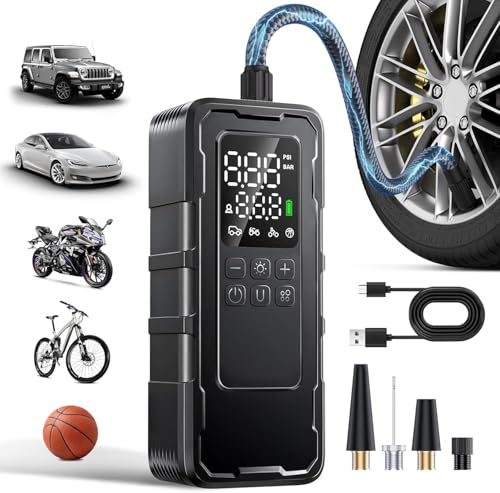
With a 7800mAh battery, this unit has the highest capacity in the lineup, and real-world feedback confirms it. Owners report being able to inflate four or more car tires on a single charge, even in cooler conditions. That kind of endurance makes it a standout for long trips or emergency preparedness kits. The inflation speed is decent, nothing record-breaking, but it’s quiet, which is a nice change from the usual loud whine of mini compressors.
The quick-connect hose is a usability win, and the large digital display makes monitoring pressure effortless. It lacks dual power options, so once the battery’s dead, you’re waiting to recharge. But for someone who wants set-it-and-forget-it reliability with maximum uptime, this is the go-to. Compared to the OlarHike, it trades speed for stamina.
Product photos

CRAFTSMAN 6000mAh Tire Inflator

Strengths
- Durable build
- 6000mAh battery
- Long DC power cord
Trade-offs
- Slightly heavier
- Slower than top performers
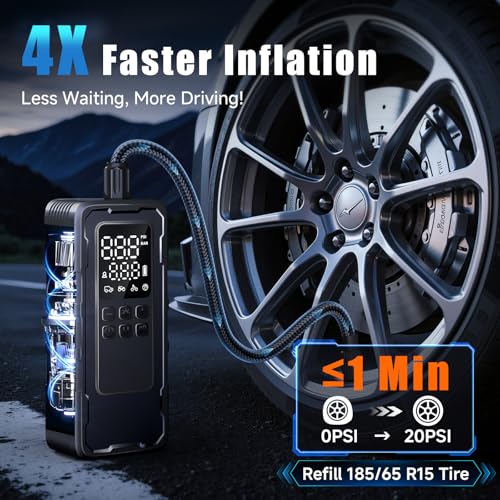
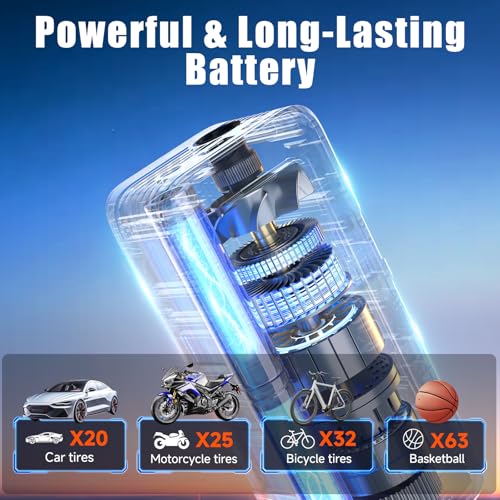
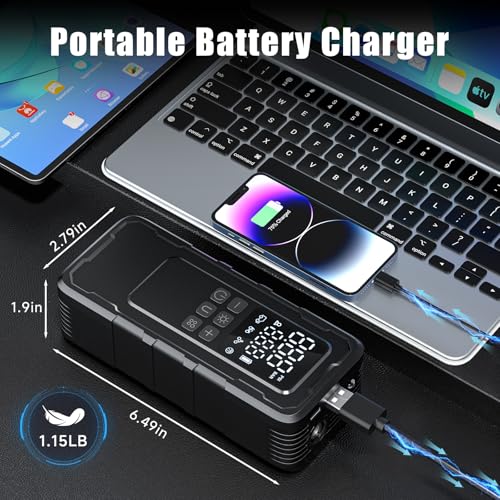
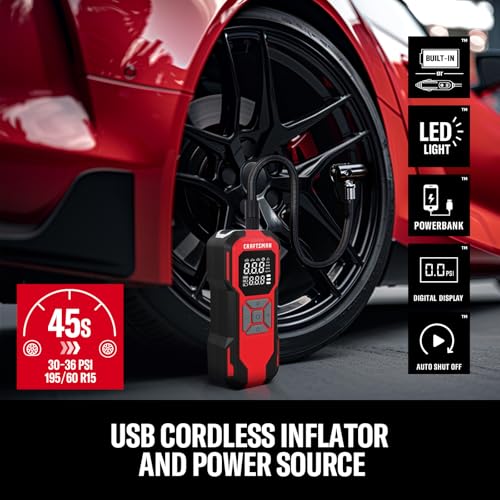
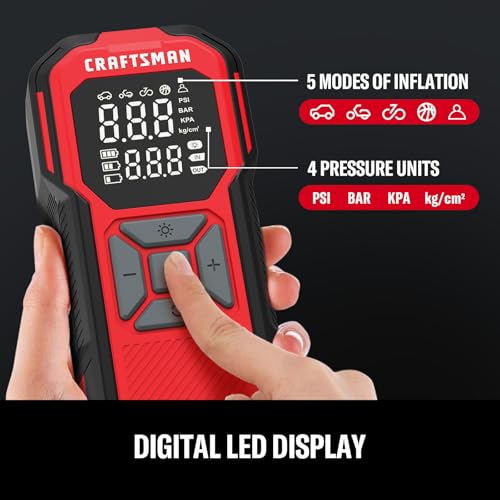
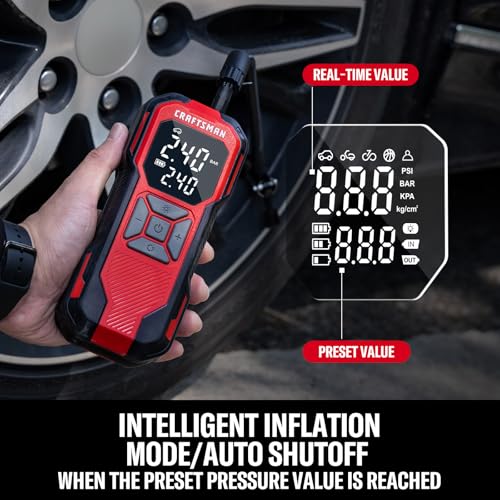
CRAFTSMAN’s reputation for durability holds up here. This unit packs a 6000mAh battery, solid for the class, and owners report consistent performance over time, even after repeated roadside use. It inflates a standard car tire in under a minute, which is respectable, and the five preset modes add versatility for bikes, balls, and motorcycles. The digital display is clear, and the auto-shutoff works reliably, preventing over-inflation.
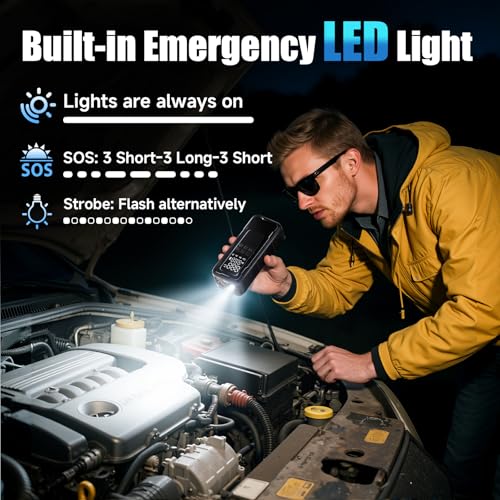
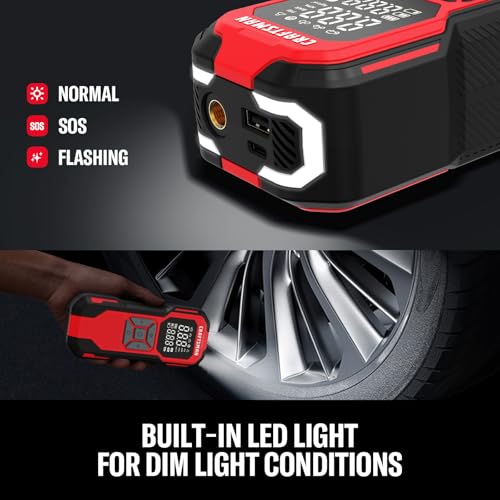
It’s not the fastest or flashiest, but it’s dependable. The LED light has three modes, and the inclusion of a 10-foot DC cord is a practical touch for hard-to-reach valves. Compared to the AstroAI L7, it trades some portability for longer battery life and sturdier construction. If you want a no-nonsense, well-built inflator that won’t quit when you need it, this is a strong contender.
Product photos

How We Picked These tire inflator portable air compressors
To recommend the best tire inflators, we didn’t rely on long-term, hands-on use of every model. Instead, we performed a research-led comparison of published specifications and features across numerous brands and models. This included carefully weighing owner reviews from major retailers against expert opinions found in automotive and tool publications. My background in power tools and workshop equipment informed a critical evaluation of build quality, power, and intended use cases.
For portable tire inflators, consistent runtime and inflation speed are paramount, along with safety features. These factors heavily influenced our rankings. A unit’s ability to quickly and reliably restore tire pressure – especially in emergency situations – is critical. Equally important is the convenience of features like automatic shut-off and preset inflation modes, which reduce the risk of overinflation and simplify operation for a broad range of users. You can find a more detailed inflator buying guide on our site.
Published specifications reliably indicate maximum PSI and airflow (CFM/LPM), which give a baseline for potential inflation speed. However, real-world performance and durability are best judged by reading owner feedback. We prioritized models with consistently positive reviews regarding battery life (for cordless models), build quality, and ease of use. Examining owner reports helped us identify potential issues like overheating or inaccurate pressure readings that specs alone wouldn’t reveal, and led us to focus on truly top-rated car tire inflators.
What To Look For In tire inflator portable air compressors
Finding the right tire inflator can save you from roadside delays and ensure your vehicle, and other gear, stays properly inflated. It’s a surprisingly nuanced purchase, though.
A quality tire inflator balances portability, power, accuracy, and safety features. Look for a unit with a clear digital display, automatic shut-off, and sufficient battery capacity (or a reliable 12V connection). Consider the types of tires you’ll inflate most often and ensure the unit can reach the required PSI. Prioritize models with built-in safety protections against over-inflation and overheating.
Power Source & Inflation Speed
The core of any tire inflator is how it delivers air, and that starts with the power source. Corded models, plugging into your car’s 12V outlet, offer unlimited runtime but limit your range. Cordless units provide freedom, but their runtime depends heavily on battery capacity. Don’t assume bigger mAh numbers always equal longer runtimes; airflow (measured in LPM – liters per minute) is equally crucial. A unit with a high LPM rating will inflate tires faster, reducing strain on the battery. If you frequently inflate larger tires, like those on SUVs or trucks, you’ll want to prioritize airflow over solely battery size.
Digital Accuracy & Safety Features
Don’t underestimate the importance of a precise digital gauge. Inaccurate readings can lead to under- or over-inflated tires, both of which impact handling and fuel efficiency. Look for models boasting a high refresh rate for their pressure readings, like the AstroAI L7, which claims a significantly improved data rate over average models. Beyond accuracy, automatic shut-off is a must-have. This prevents over-inflation and potential tire damage, and it’s particularly helpful if you’re new to using a tire inflator.
- A basic digital gauge is essential.
- Automatic shut-off is a crucial safety feature, especially for beginners.
- Consider a unit with multiple pressure units (PSI, BAR, KPA) for versatility – it’s useful when traveling or inflating different types of equipment.
A good rule of thumb: never rely solely on the inflator’s gauge. Double-check the pressure with a dedicated, calibrated tire pressure gauge for the most accurate reading.
Portability & Versatility
Size and weight matter, especially if you plan to keep the inflator in your car or carry it on a motorcycle or bike. Compact models, like the Airmoto, are ideal for limited storage space. Beyond tires, consider whether you might need to inflate sports equipment, air mattresses, or other items. Many inflators come with various nozzle attachments, making them multi-purpose tools. If you’re an EV owner, or have a Tesla, you’ll want to check if the unit can handle the higher tire pressures common in those vehicles – you’ll find dedicated options available, and some models like the ROCGORLD R8 specifically mention compatibility. For more detailed information on a variety of models, check out our portable air compressor reviews. If you’re also looking for something specifically for your bike, you may want to explore portable compressors for motorcycles.
Tire Inflators Compared
Here’s a comparison of key specifications for several portable tire inflators to help you make an informed decision.
| Product Title | Max PSI | Battery Capacity | Airflow (L/min) | Power Source(s) | Auto Shut-Off |
|---|---|---|---|---|---|
| Ipflin 9600mAh Tire Inflator | 160 | 9600mAh | 30 | Battery, 12V DC | Yes |
| OlarHike Dual Power Tire Inflator | 150 | 6000mAh | N/A | Battery, 12V DC | Yes |
| AstroAI L7 Cordless Tire Inflator | 150 | 4000mAh | N/A | Battery | Yes |
| Airmoto Cordless Tire Inflator | 120 | 2000mAh | N/A | Battery | Yes |
| DEWALT 20V MAX Tire Inflator | N/A | 20V MAX | N/A | Battery, 12V DC, 110V AC | Yes |
| CARSUN AC/DC Tire Inflator | 150 | N/A | N/A | AC, 12V DC | Yes |
| ROCGORLD R8 12V Air Compressor | 150 | N/A | 40 | 12V DC | Yes |
| 150 PSI Cordless Tire Inflator | 150 | 7800mAh | N/A | Battery | Yes |
| CRAFTSMAN 6000mAh Tire Inflator | N/A | 6000mAh | N/A | Battery, 12V DC | Yes |
Frequently Asked Questions
What PSI should I inflate my tires to?
The correct PSI depends on your vehicle and tire type; you’ll find this information on a sticker in your driver’s side doorjamb or in your owner’s manual. Don’t exceed the maximum PSI listed on the tire sidewall, as this can lead to a blowout.
Can a tire inflator also deflate tires?
Some models offer both inflation and deflation capabilities, often with a bleed valve. This is particularly useful for quickly adjusting tire pressure for off-road driving or specific performance needs, and you can find more information on rugged tire inflators.
Are cordless tire inflators really powerful enough for larger vehicles?
Cordless models can inflate larger tires, but airflow (LPM) is more important than battery capacity. Look for a unit with a high LPM rating, ideally over 30, to avoid excessive runtime and potential overheating when inflating SUV or truck tires.
What’s the difference between PSI and BAR?
PSI (pounds per square inch) and BAR are different units of pressure measurement. One BAR is roughly equal to 14.5 PSI, so many inflators allow you to switch between units for convenience when traveling internationally or working with different equipment.
How often should I check my tire pressure?
I recommend checking your tire pressure at least once a month and before any long trips. Temperature fluctuations significantly impact tire pressure, so checking frequently helps maintain optimal handling, fuel efficiency, and tire life.
The Bottom Line
Choosing a tire inflator often comes down to balancing convenience with capability. While a compact, cordless model is great for emergencies, the AstroAI L7 strikes an excellent balance for most drivers, offering a good combination of portability, speed, and features without breaking the bank. It’s a solid all-around performer that will handle typical inflation tasks reliably.
For those with specific needs, our research points to a few clear winners. If you regularly run portable inflators for truck tires, the ROCGORLD R8’s higher airflow is a significant advantage. And for users who want maximum versatility and aren’t concerned about size, the DEWALT 20V MAX is a powerful option that can run from multiple power sources.
Ultimately, the best tire inflator isn’t about chasing the highest PSI or largest battery. It’s about finding a unit that’s easy to use, accurate, and suits your typical inflation needs. Prioritize models with automatic shut-off and a clear digital display, and always double-check the pressure with a reliable gauge – those fundamentals matter more than any headline specification.
