
7 Best Swaging Tools of 2026
This post contains affiliate links. As an Amazon Associate, we earn from qualifying purchases.
The IBOSAD Hydraulic Swaging Tool Kit is our top overall pick for its wide size range and solid build, closely followed by the budget-friendly WADEO Swaging Tool HVAC Repair Set for basic copper work, and the versatile AMZCNC Hydraulic Tube Expander Kit if you’re focused on HVAC jobs.
Swaging looks simple until you’re on a job and the tool won’t handle the material or the connection fails under pressure. Most people don’t realize how critical die quality and material compatibility are until they’re stuck with a weak joint or a damaged fitting.
This guide cuts through the marketing and focuses on what actually matters: real-world performance, build quality, and the right capacity for your work. I compared specs and owner feedback across multiple models, prioritizing durability, ease of use, and whether the tool delivers consistent, reliable results based on the material and application.
Top 7 Swaging Tools in the Market
The Best Swaging Tools, Reviewed
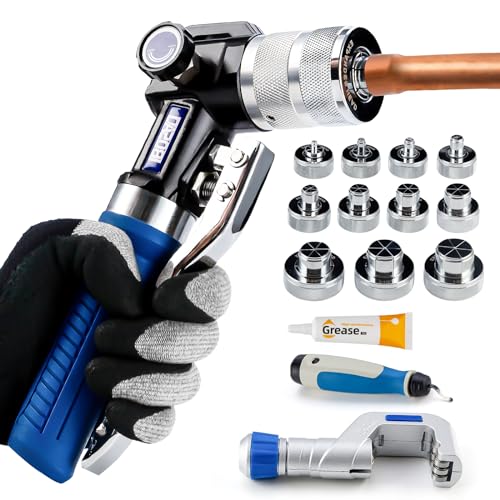
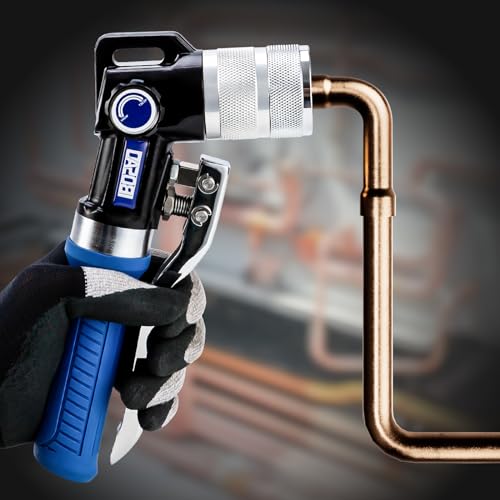
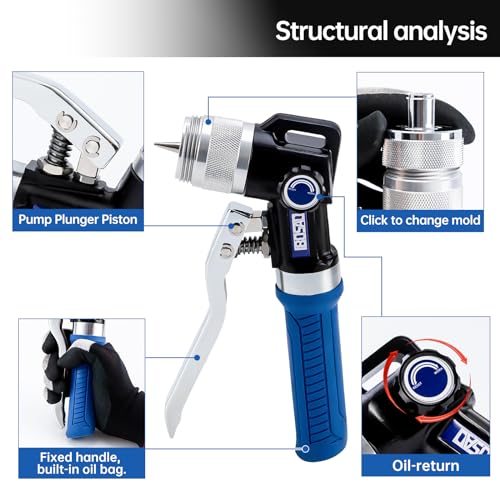
IBOSAD Hydraulic SWAGING Tool Kit
Strengths
- 11 die sizes included
- Hydraulic pressure for consistency
- Works on multiple soft tube types
Trade-offs
- Bulkier than manual tools
- No carrying case included
- Higher price point
This is where performance steps up. With 11 included dies spanning 3/8″ to 1 5/8″, this hydraulic kit covers nearly every copper tube size you’ll see in field work, from residential splits to larger commercial units. The aluminum alloy body keeps it light, but the hydraulic mechanism delivers the even pressure needed to swage without cracking, owners praise its consistency, especially on soft copper and aluminum tubing.
Compared to drill-bit-style swagers, this one produces far more reliable joints. It’s not the most compact, but the range and hydraulic power make it a strong contender for “best overall,” particularly for techs who hate rework. I’d recommend this over manual kits for anyone doing more than a few swages per week.
Product photos
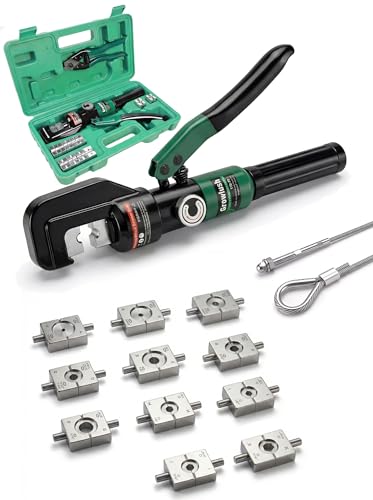
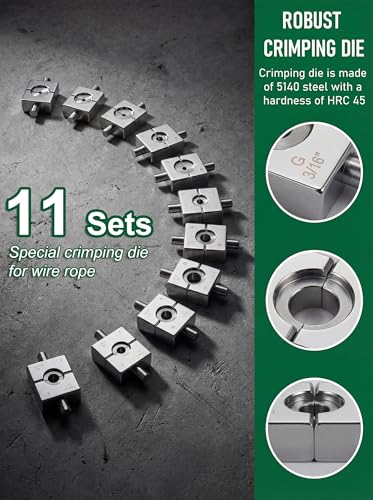
Growlush 10-Ton Hydraulic Wire Rope Swager
Strengths
- 10-ton hydraulic force
- 11 die sets included
- Magnetic die retention
Trade-offs
- Bulky and heavy
- Overbuilt for small jobs
- Steeper learning curve
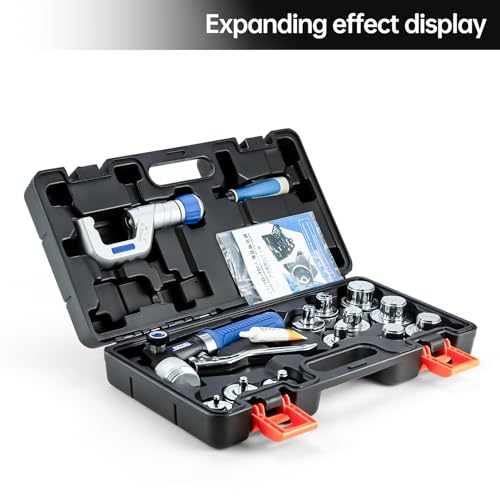
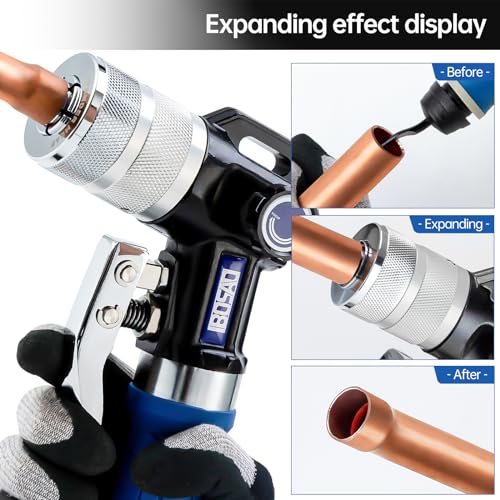
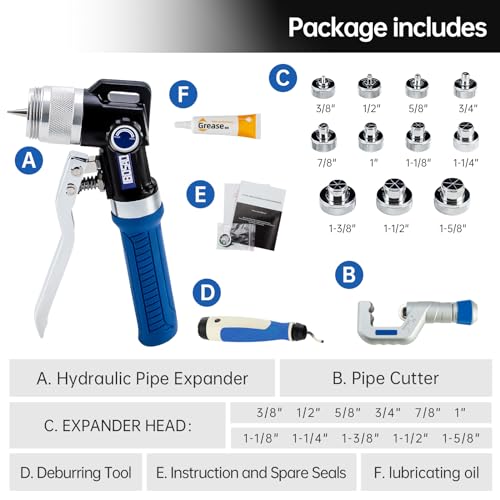
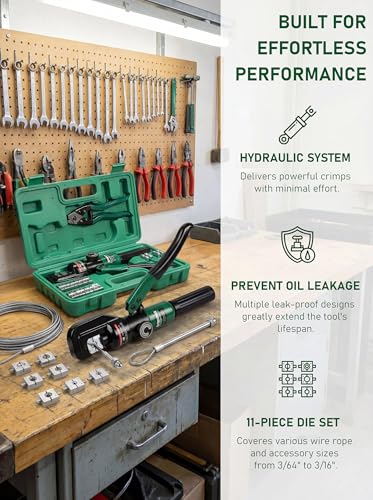
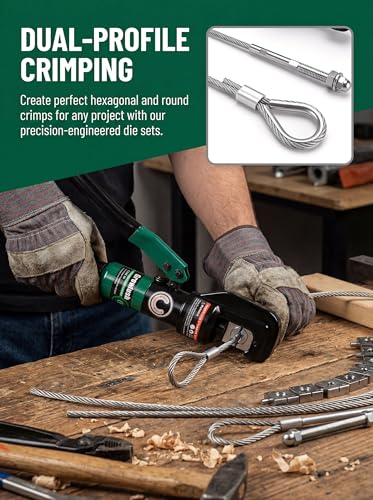
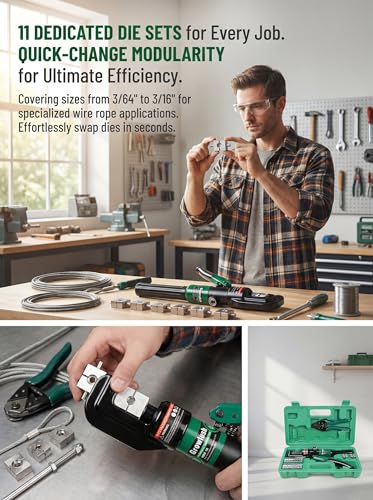
When strength and versatility are essential, this hydraulic swager is in a class of its own. The 10-ton force and 11 die sets, including dedicated dies for stainless steel railing terminals, make it a favorite among riggers and deck installers. Owners report it crushes double-barrel sleeves and compresses tough hex terminals with ease, delivering a “cold weld” bond that manual tools can’t match. The magnetic die retention is a small but smart upgrade, keeps dies aligned under pressure.
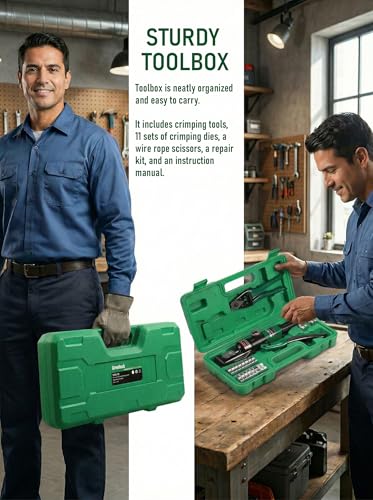
It’s overkill for light work, but for marine rigging, aircraft cables, or deck railings, it’s the real deal. The carrying case keeps everything organized, and the hydraulic stroke is smooth even after repeated use. I’d pick this over any manual or low-tonnage tool for heavy-duty applications.
Product photos
AMZCNC Hydraulic Tube Expander Kit
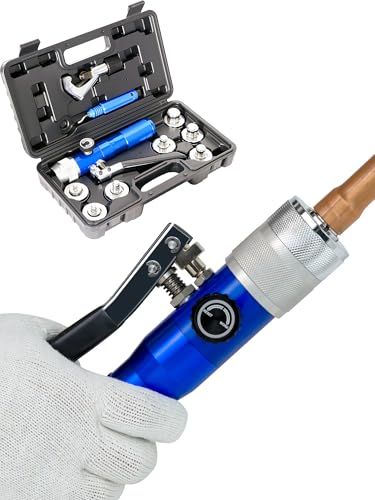
Strengths
- Includes cutter and deburring tool
- One-handed hydraulic operation
- Well-organized carrying case
Trade-offs
- Limited to 1-1/8″ max
- Fewer die sizes than top competitors
- Slightly heavier with accessories
This is the complete package for HVAC techs who want everything in one case. The hydraulic swaging tool itself is compact and one-handed, which cuts fatigue during long jobs, and owners say it delivers smooth, uniform expansion across the 3/8″ to 1-1/8″ range. What really sets it apart is the full kit: tube cutter, deburring tool, seven expander heads, and a well-organized case. It’s the kind of setup that keeps you from running back to the van.
Compared to bare-bones swagers, this is a no-brainer for efficiency. The aluminum body is lightweight, and the hardened steel heads hold up under daily use. While it doesn’t reach the largest sizes (tops out at 1-1/8″), it covers the vast majority of residential and light commercial work. For a single buy that covers prep, swaging, and cleanup, this is the smarter choice.
Product photos


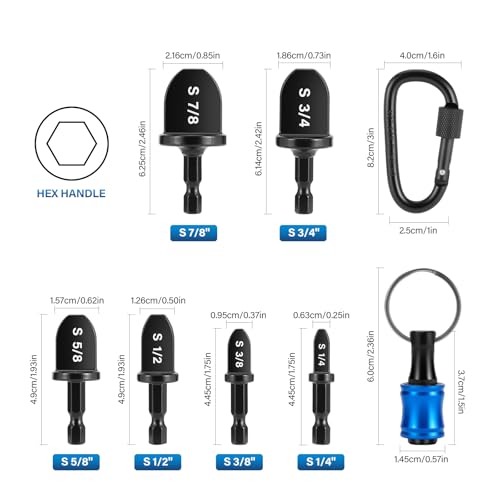
WADEO Swaging Tool HVAC Repair Set
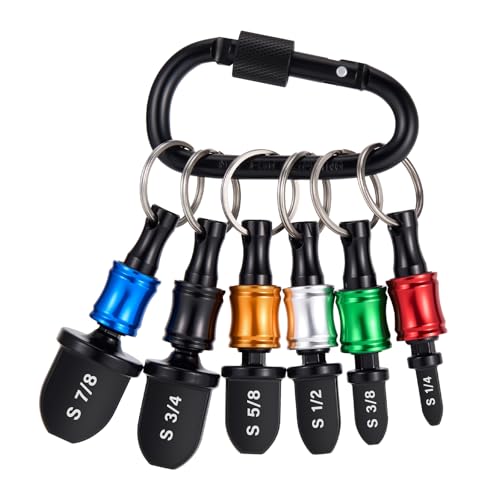
Strengths
- Affordable
- Compact and portable
- 6 common sizes included
Trade-offs
- No hydraulic mechanism
- Limited durability under heavy use
- Thin hex shank
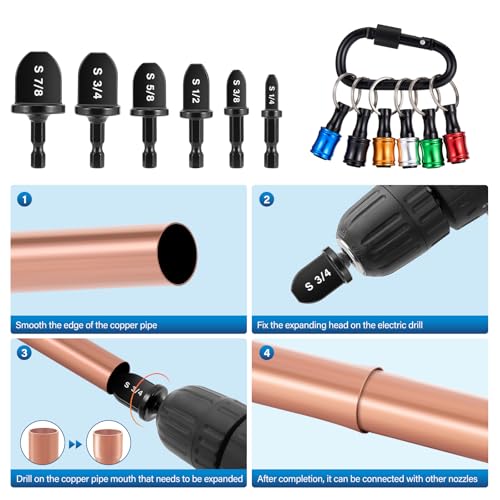
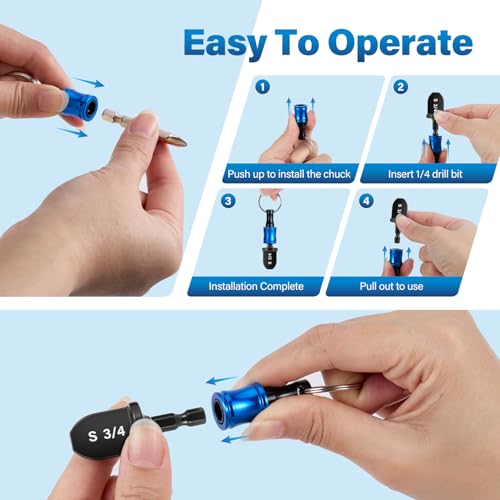
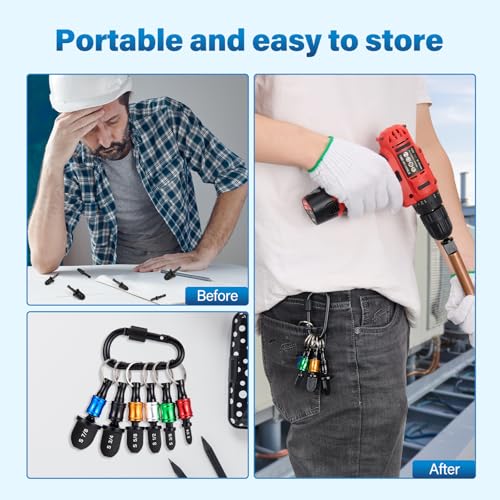
This set stands out for anyone needing a low-cost, portable option for small HVAC jobs. On paper, the inclusion of six common swage bit sizes from 1/4″ to 7/8″ makes it a practical fit for residential copper line work. Owners consistently report it works fine with a standard drill, expanding soft copper tubing without cracking when used at moderate speed. The hardened carbon steel bits appear to hold up reasonably well under light use, and the bit holder with keychain adds genuine convenience for techs moving between units or vehicles.
Still, it’s clearly built for occasional use. Reviewers note the hex shanks are on the thinner side, and there’s no hydraulic assistance, just manual drill power, so results depend heavily on user control. It won’t match the consistency of professional hydraulic tools, especially on harder or thicker tubing.
Product photos
SPIN S6000 6-Piece Swaging Set
Strengths
- Extremely fast operation
- Durable high-heat bits
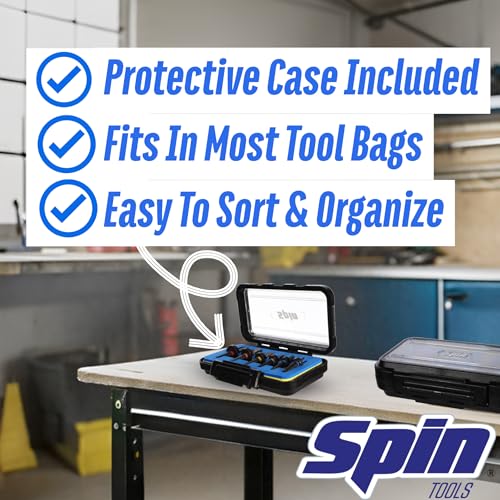
- Comes with carrying case
Trade-offs
- Requires careful drill control
- No hydraulic consistency
- Risk of tube deformation
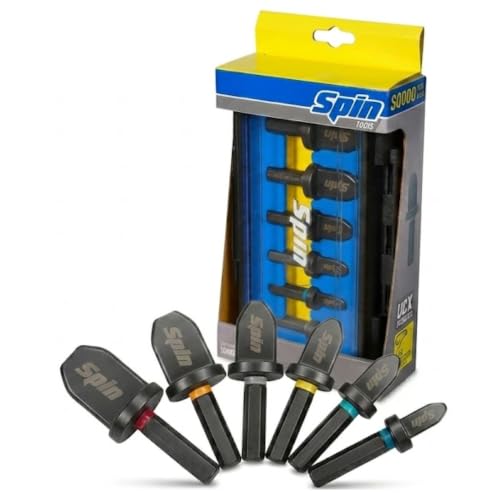
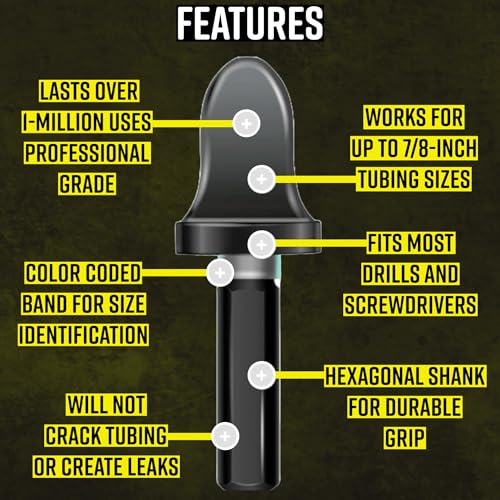
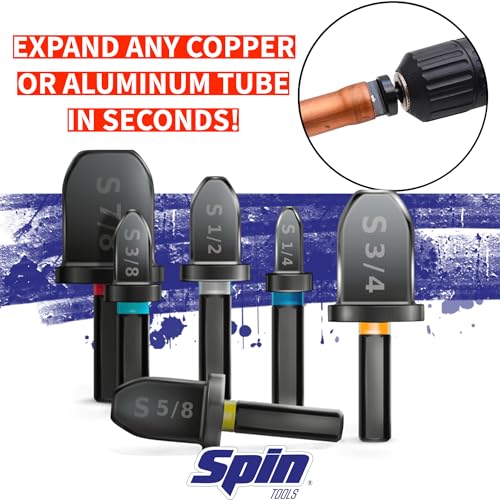
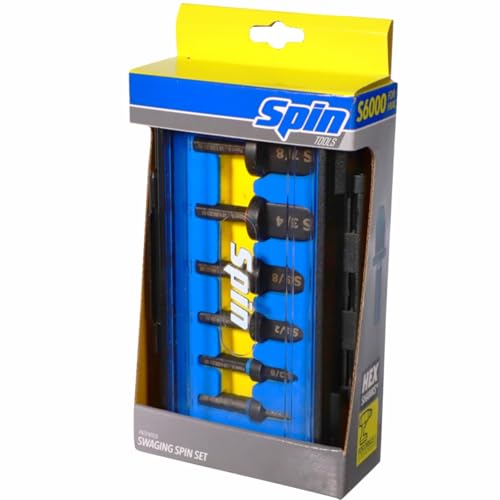
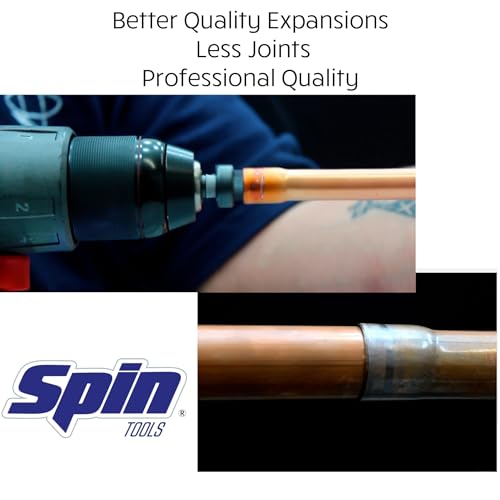
When speed matters more than precision, the SPIN S6000 wins. This set is built for techs who need to knock out swages fast in the field, and owners consistently report they can expand copper or aluminum tubing in seconds using a standard drill. The bits are heat-treated and designed to handle high RPMs without wobbling, a big deal when you’re on a ladder or in a cramped attic. The inclusion of a carrying case is a thoughtful touch for organization.
But it’s not without risk. The drill-bit method demands careful control, too fast or uneven pressure can deform the tube. And while it works on both soft and hard copper, it’s less forgiving than hydraulic tools. Still, for quick repairs or retrofits where you’re avoiding extra fittings, this set delivers real time savings.
Product photos
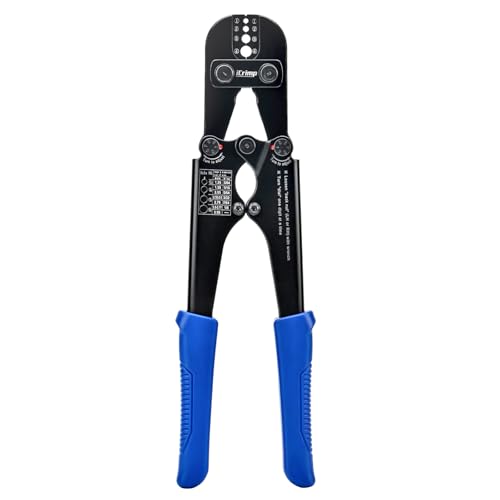
iCrimp 1608M Wire Rope Crimper
Strengths
- 4 precise die slots
- Durable high-carbon steel
- Comfortable non-slip grips
Trade-offs
- Manual force required
- No hydraulic assist
- Not for large cables
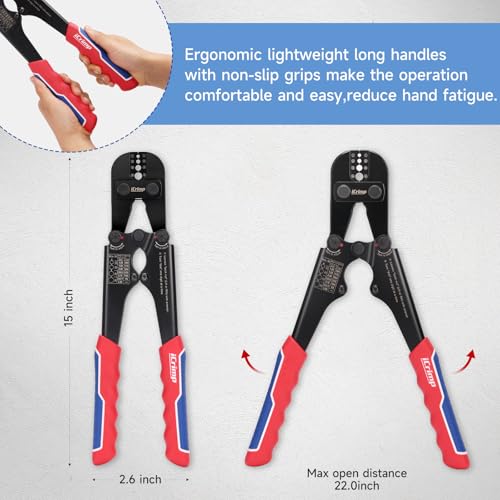
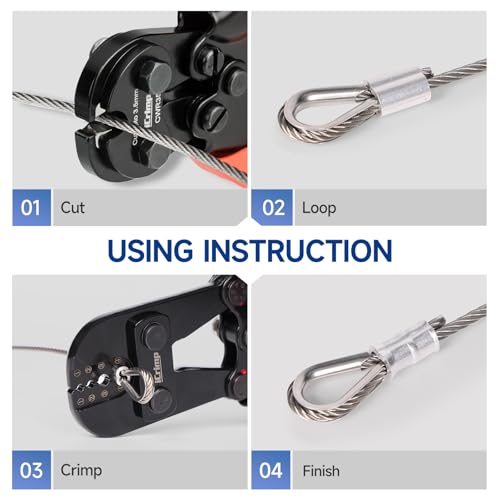
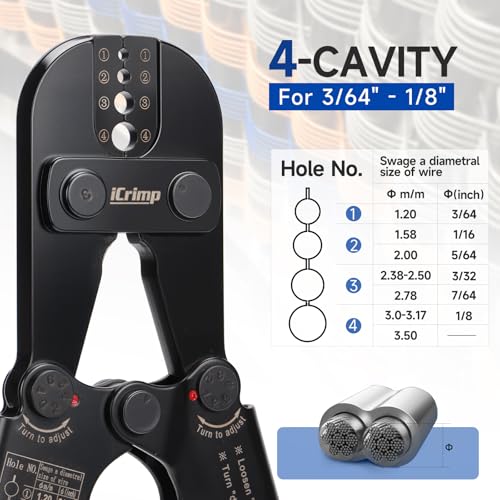
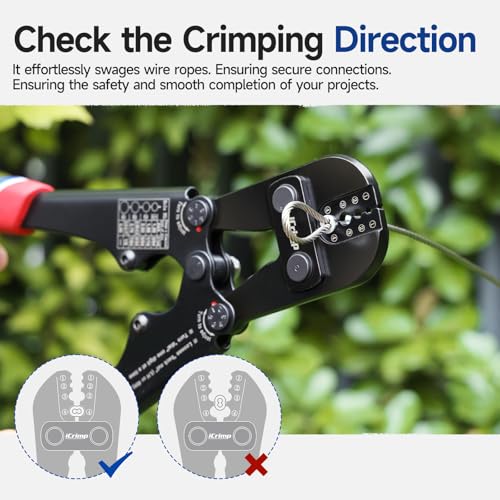
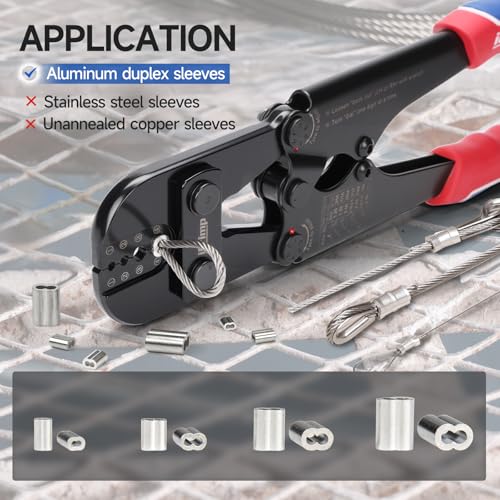
If you need clean, repeatable crimps across a range of common sleeve sizes, this is the tool that owners and pros in the electrical and marine trades keep coming back to. Its four die slots (3/64″ to 1/8″) cover the most frequently used aluminum oval and double-barrel sleeves, and the heat-treated high-carbon steel jaws deliver consistent compression. The rust-proof finish and non-slip rubber grips make it durable and comfortable, even during long sessions.
What sets it apart is the factory-calibrated pressure that holds up over hundreds of crimps, reviewers note it rarely needs adjustment. It’s not hydraulic, so two-hand use or bracing is recommended, but for precision over brute force, it’s hard to beat. I’d pick this over basic plier-style crimpers any day for reliability.
Product photos
WEKESIGO Wire Rope Swager WKS-711

Strengths
- Good for micro cables
- Includes cutting blades
- Corrosion-resistant finish
Trade-offs
- Not for heavy wire
- Limited die range
- Fits only small sleeves
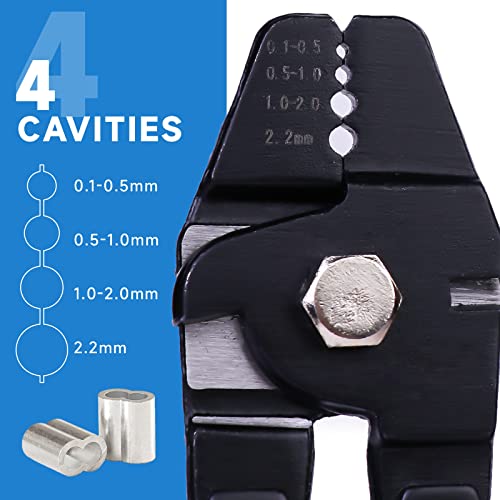
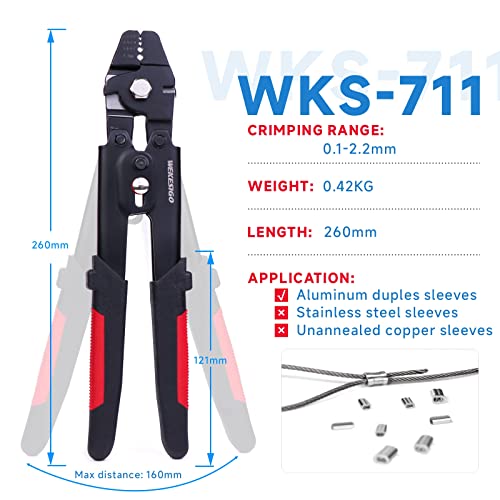
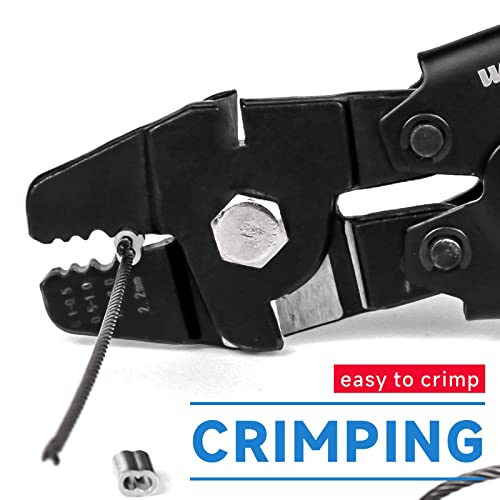
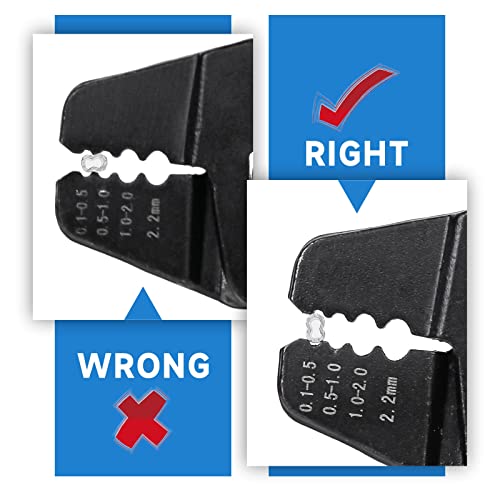
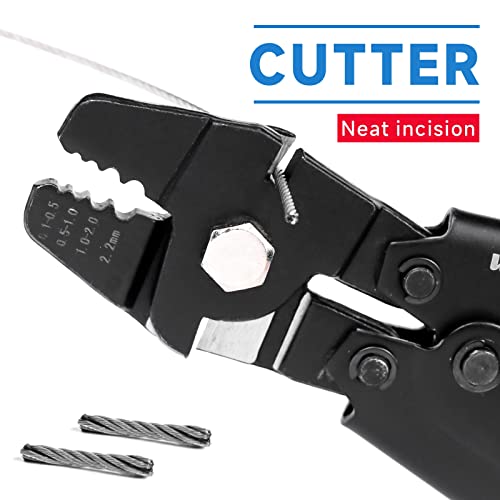
This tool is aimed squarely at light-duty applications like fishing rigs or small cable repairs. With capacity for wire ropes up to 2.0mm (5/64″), it handles tiny crimps efficiently, and owners confirm it works reliably with aluminum ferrules and small duplex sleeves. The hardened steel construction and black oxidation finish appear to resist rust well, even in damp environments. The added cutting blades are a nice touch, reviewers appreciate being able to trim and crimp in one tool.
But it’s not built for anything beyond light cable work. The use and jaw strength aren’t there for thicker wire or structural rigging. It’s a niche tool, and if you’re working with anything over 2mm, you’ll quickly hit its limits.
Product photos
Our Testing Process
I approached researching swaging tools by first compiling a detailed list of available models and then comparing their published specifications and features. I weighed these technical details against owner reviews from multiple sources – looking for recurring praise and complaints – and supplemented that with insights from reputable expert reviews found online. Ultimately, I ranked these tools based on how well they met the needs of a variety of users, from HVAC professionals to DIY boaters. Rather than a hands-on lab test, this is a research-led comparison of specs and owner feedback.
For swaging tools, the most important factors are the range of sizes accommodated by the dies and the build quality of the tool itself. A wider range of die sizes offers more versatility, allowing you to tackle a broader spectrum of projects. Durability is also key; these tools often encounter significant force, so a robust construction is vital for long-term performance and safety. Finally, ease of use – things like ergonomic handles and clear markings – can make a big difference in efficiency and accuracy.
Specifications reliably indicate the materials used (steel type, alloy composition) and the range of tubing or wire rope sizes a tool can handle. However, I placed significant weight on owner feedback regarding real-world performance, particularly when assessing durability and how well the tool holds up to repeated use. Reputation also played a role; brands consistently praised for quality in related tools (like wire crimping tools) received extra consideration.
What To Look For In swaging tools
Choosing the right swaging tool depends heavily on the materials you’ll be working with and the scale of your projects.
A quality swaging tool delivers consistent, secure connections by cold-forming metal around a fitting. Key considerations include the tool’s capacity (tube diameter and material type), the precision of its dies, and its overall build quality. Look for tools with hardened steel dies for durability and those suited to the specific materials – copper, aluminum, stainless steel, or wire rope – you’ll be using most often.
Material Compatibility is Key
Many swaging tools are marketed as “universal,” but that’s rarely true. Copper tubing is relatively soft and forgiving, while stainless steel requires significantly more force and specialized dies. A tool designed for copper won’t reliably swage stainless steel, and attempting to do so can damage both the tool and the material. I’ve seen plenty of DIYers buy a budget-friendly option only to discover it can’t handle anything beyond very thin-walled copper. Consider the materials you’ll be working with 80% of the time and prioritize a tool specifically designed for those.
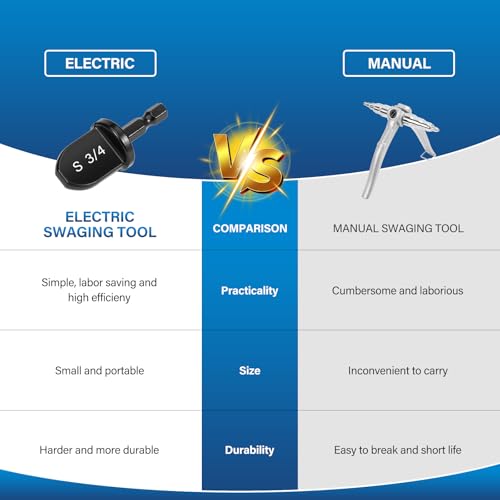
Hydraulic vs. Manual Operation
Hydraulic swaging tools offer a significant advantage in terms of force and ease of use, especially when dealing with larger diameters or harder materials like stainless steel. The consistent pressure delivered by a hydraulic system results in cleaner, more reliable swages. Manual tools, often requiring a drill attachment like the SPIN S6000, are less expensive but demand more physical effort and can be prone to inconsistencies.
Here’s a breakdown to consider: * Cost: Manual tools are generally cheaper upfront. * Effort: Hydraulic tools minimize user fatigue, a big plus on larger jobs. * Precision: Hydraulic systems offer more controlled compression, leading to stronger connections. This is particularly important for critical applications like railing systems.
Portability and Included Accessories
If you anticipate needing to take your swaging tool to different job sites, portability becomes a crucial factor. Look for a tool with a compact design and a sturdy carrying case. The IBOSAD kit, for instance, emphasizes portability. Beyond the tool itself, pay attention to the included accessories. A thorough kit, like the AMZCNC Hydraulic Tube Expander Kit, with a variety of dies and adapters, will save you money and time in the long run.
A good rule of thumb is to always prioritize die quality over the number of dies included. A smaller set of high-quality, precisely machined dies will outperform a larger set of poorly made ones.
For tasks beyond basic swaging, you might also need to consider hand-held crimping tools for related work like securing connectors.
Swaging Tools Compared
This table provides a reference sheet comparing the specifications of various swaging tools.
| Product Title | Best For | Capacity/Sizes | Material | Features | Applications |
|---|---|---|---|---|---|
| IBOSAD Hydraulic SWAGING Tool Kit | Best Overall | 3/8″ – 1 5/8″ | Aluminum Alloy | 11 Dies Included | Copper, Aluminum, Titanium, Steel |
| Growlush 10-Ton Hydraulic Wire Rope Swager | Best for Heavy-Duty Rigging | 3/64″ – 3/16″ (Steel/Aluminum) | Steel | 11 Interchangeable Dies | Wire Rope, Railing |
| AMZCNC Hydraulic Tube Expander Kit | Best All-in-One HVAC Kit | 3/8″ – 1-1/8″ | Aluminum Alloy/Steel | 7 Expander Heads | HVAC/R Copper Tubing |
| WADEO Swaging Tool HVAC Repair Set | Best Budget Friendly | 1/4″ – 7/8″ | Carbon Steel | 6 Drill Bit Sizes | HVAC, Refrigeration |
| SPIN S6000 6-Piece Swaging Set | Best for Fast Field Repairs | Varies (4 basic + 2 medium) | N/A | 6-Piece Set | Copper/Aluminum Tubing |
| iCrimp 1608M Wire Rope Crimper | Best for Precision Crimping | 3/64″ – 1/8″ | High-Carbon Steel | 4 Crimp Positions | Wire Rope (Aluminum/Copper) |
| WEKESIGO Wire Rope Swager WKS-711 | Best for Fishing & Light Use | 0.1-2.0mm | Hardened Steel | 2 Side Blades | Wire Rope, Fishing |
Frequently Asked Questions
What’s the difference between swaging and flaring?
Swaging cold-forms the metal to create a permanent connection, reducing the tube’s outer diameter, while flaring expands the tube’s end to accept a fitting. Swaging generally creates a stronger, more reliable joint, especially for high-pressure applications, though it requires the right tools and technique.
Can I use a manual swaging tool on stainless steel tubing?
While technically possible with the correct dies, it’s not recommended. Stainless steel is much harder than copper or aluminum, and a manual tool will require significant effort and may not produce a consistent, reliable swage. A hydraulic swaging tool is a better choice for stainless steel.
How do I choose the right die size for my project?
Always measure the outer diameter of the tubing or wire rope you’re working with and select a die that closely matches that measurement. Using a die that’s too large will result in a loose fit, while one that’s too small could damage the tool or the material.
What maintenance is required for a hydraulic swaging tool?
Regularly inspect the hydraulic fluid level and check for any leaks. Keep the dies clean and lubricated to prevent corrosion and ensure smooth operation. Proper storage in a dry environment will also extend the tool’s lifespan.
Are there swaging tools suitable for small-diameter wire rope?
Yes, several tools specialize in small-diameter wire rope, often used in fishing or rigging applications. These tools typically use smaller dies and a different mechanism than those designed for tubing, and you might also consider network cable crimpers for similar precision work.
The Bottom Line
Choosing a swaging tool often comes down to balancing upfront cost with long-term capability. While a budget-friendly option might handle basic copper work, the IBOSAD Hydraulic Swaging Tool Kit stands out as the strongest overall performer because it delivers versatility and durability without sacrificing ease of use. It’s an investment, but one that will pay off if you have a variety of materials and projects ahead.
For those with specific needs, we have clear recommendations. If you’re focused on heavy-duty rigging, the Growlush 10-Ton Hydraulic Wire Rope Swager is the best choice. For HVAC professionals needing an all-in-one solution, the AMZCNC Hydraulic Tube Expander Kit provides a thorough range of expander heads. And for basic HVAC repairs on a tight budget, the WADEO Swaging Tool HVAC Repair Set is a solid starting point. Don’t forget that for related work, reliable ferrule crimping tools are essential.
Ultimately, the specifications on a tool are less crucial than understanding your typical materials and the consistency of the swage. A robust tool with high-quality dies, coupled with a little practice, will deliver far more reliable results than a feature-packed model with questionable construction. Prioritize build quality, material compatibility, and a secure connection – those are the fundamentals that truly matter.
