
4 Best STIHL Saws for Homeowners 2026
This post contains affiliate links. As an Amazon Associate, we earn from qualifying purchases.
The Stihl MS 194 T is our top pick for most homeowners, offering the right mix of power and maneuverability, with the Stihl MS 162 standing out as a solid budget-friendly option and the Stihl MSA60.0 C-B delivering strong performance for those who prefer cordless.
Most homeowners don’t need a pro-grade saw, but they still want something reliable that starts easily and won’t leave their arms shaking after 10 minutes of use. The real challenge is cutting through overgrown limbs, storm debris, or medium-sized logs without wrestling a heavy, finicky tool.
As someone who’s spent years evaluating how tools perform outside the showroom, I focused on models that balance Stihl’s reputation for durability with real usability. These picks are based on specs, owner experiences, and the kind of work typical homeowners actually do.
Top 4 Stihl Saw For Homeowners in the Market
The Best Stihl Saw For Homeowners, Reviewed
Stihl MS 194 T Chainsaw

Strengths
- Strong 2-Mix engine
- Low vibration
- Excellent build quality
Trade-offs
- Requires fuel mix
- Heavier than cordless
This is the one I’d pick if I were outfitting a typical homeowner’s shed. The MS 194 T strikes a near-perfect balance between power, weight, and ease of use. With a 30 cm (12 inch) bar and Stihl’s 2-Mix engine, it delivers strong performance on branches up to 10 inches, enough for most storm cleanup, tree trimming, and firewood prep. The ‘T’ in the model means it’s designed for frequent homeowner use, not just occasional runs.
Owners consistently praise its smooth operation and reduced vibration, which makes it less tiring during longer sessions. It starts easier than the MS 162 and has better chain lubrication, meaning less downtime for adjustments. Compared to the cordless MSA60, it’s louder and requires fuel mixing, but it’s significantly more capable. For most homeowners, this is the sweet spot: professional-grade reliability without pro-level complexity.
Product photos
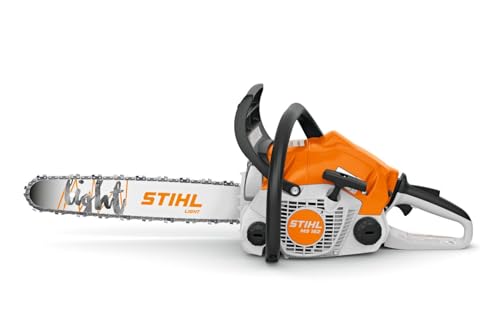
Stihl MS 162 Chainsaw 16″
Strengths
- Affordable entry to Stihl
- Reliable cold starts
- Durable construction
Trade-offs
- Underpowered for thick logs
- Basic anti-vibration
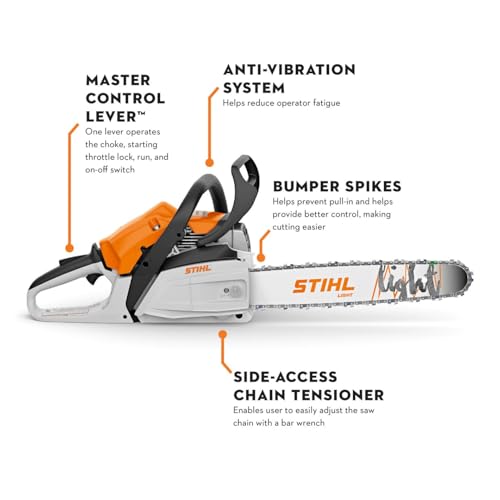
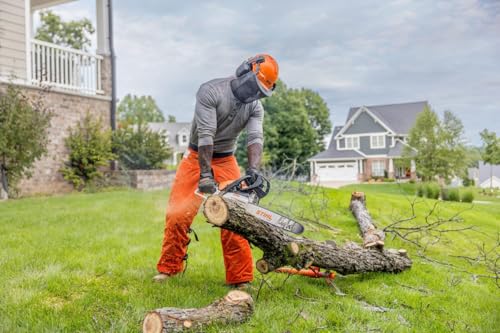
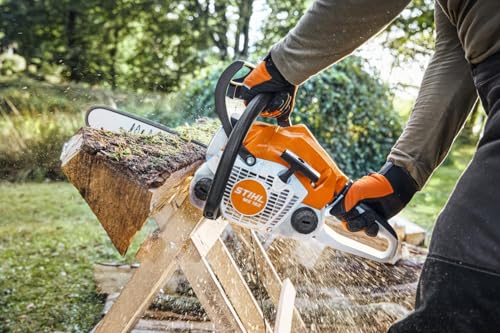
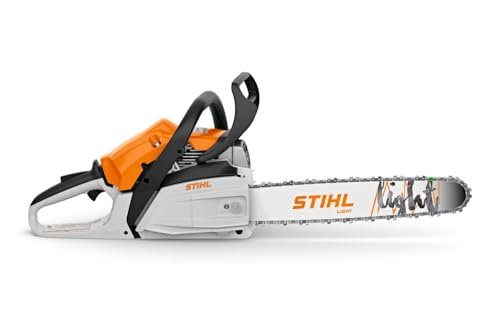
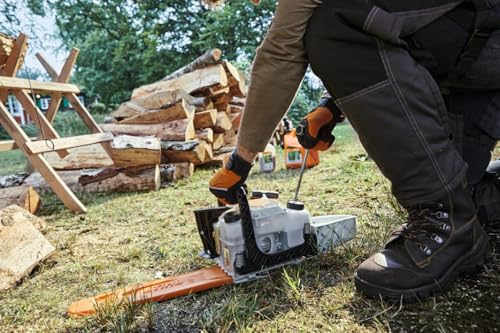
The MS 162 is positioned as Stihl’s entry-level gas chainsaw, and on paper, it delivers solid specs for homeowners on a budget. With a 30 cm (about 12 inch) bar, it’s sized right for limbing, small felling, and cutting up storm debris. The engine is modest but adequate for occasional use, and Stihl’s build quality means it should last longer than cheaper off-brand models.
Owners report it starts reliably and runs cleanly once tuned, though some note it takes a few pulls when cold. It lacks the power of larger models, so don’t expect it to chew through 12-inch oaks. But for light to moderate yard work, say, cutting down a medium maple or processing delivery wood, it’s capable. Compared to the MS 194 T, it’s less refined and a bit heavier in feel, but it comes in at a noticeably lower price point.
Product photos
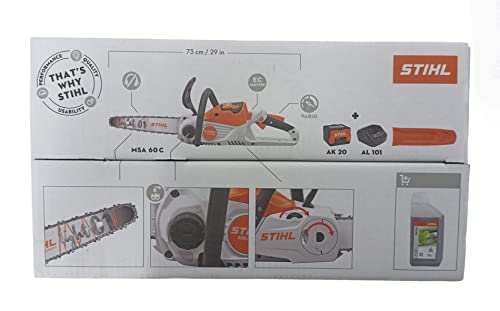
Stihl MSA60.0 C-B Cordless Chainsaw

Strengths
- Lightweight and quiet
- Easy one-button start
- Low maintenance
Trade-offs
- Limited battery runtime
- Lower cutting power
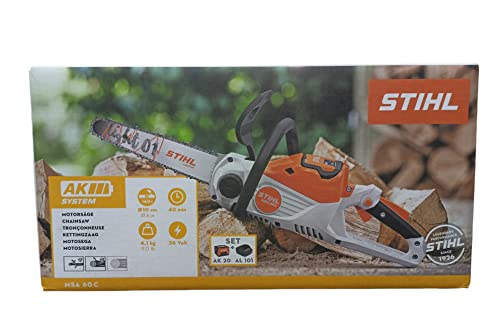
If you hate mixing fuel and pulling cords, this cordless model makes a strong case for going battery-powered. The MSA60.0 C-B is built for light, infrequent jobs, think trimming small trees, cutting up fallen branches after a storm, or prepping kindling. It’s noticeably lighter than gas models, and the balance is good, making it comfortable to handle even with one hand.
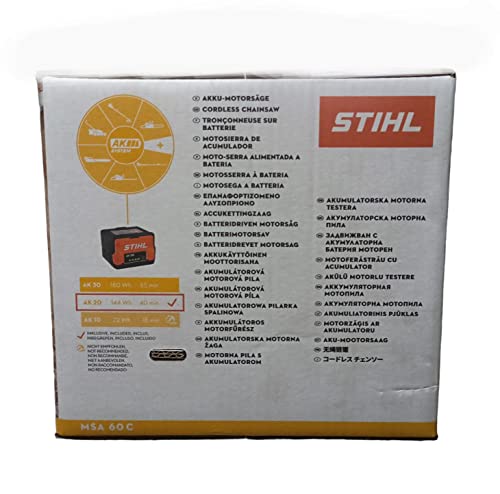
Battery life is the trade-off. Owners using it with the recommended Stihl AK 20 or AK 30 report enough runtime for 10–15 minutes of active cutting, which is fine for a few branches but not a full day’s work. It’s slower than gas saws and struggles in dense wood, but it starts instantly and runs quietly. Versus the MS 162, it’s easier to maintain and cleaner to store, a real plus if you keep tools in a garage attached to your home.
Product photos


Stihl PR 16 Folding Saw

Strengths
- Ultra lightweight
- Compact folding design
- Clean cutting teeth
Trade-offs
- Limited to small branches
- Not for heavy use
This folding saw is a niche tool, but it nails its role. At just 160g, it’s featherlight and easy to stash in a garden bag or even a deep pocket. The 16 cm blade with 3-sided Japanese teeth cuts smoothly through green wood, and owners consistently report clean, snag-free performance on branches up to 50 mm, that’s solid for a tool this size. It’s not going to replace any chainsaw, but for light pruning, trail clearing, or quick cuts during yard work, it’s surprisingly effective.
Where it really stands out is durability. The corrosion-resistant blade holds up well in damp conditions, and the folding mechanism feels robust, not flimsy. For homeowners who hate lugging out a full-size saw for small jobs, this is a smart backup. I’d keep one in the glove compartment of my truck, it’s the kind of tool you didn’t know you needed until you’re trimming a stray limb and realize you don’t want to walk back to the garage.
Product photos
How We Evaluated stihl saw for homeowners
Rather than a hands-on lab test, this selection is a research-led comparison of specifications, owner reviews, and my experience with similar saws over the years. I looked at models commonly available to homeowners, prioritizing those with a reputation for reliability and ease of use. We weighed published specs against what owners are actually saying about performance and durability, focusing on real-world applications.
For Stihl saws, power-to-weight ratio and ease of maintenance were the biggest factors. Homeowners typically need a saw for occasional use, so a lightweight design is crucial. Equally important is how easily the saw can be serviced – things like chain tensioning, bar oil filling, and air filter access directly impact long-term ownership satisfaction.
Specifications give a clear picture of engine displacement and bar length, but owner feedback tells you how a saw handles after extended use. I paid close attention to comments regarding vibration levels and starting difficulty. Knowing starting a chainsaw safely is essential, and consistent reports of trouble in that area are a red flag.
How To Choose The stihl saw for homeowners
Selecting a chainsaw isn’t just about horsepower; it’s about matching the tool to the work.
A good chainsaw balances power, weight, and ease of use. Key specifications include engine displacement (cc), bar length (inches), chain pitch (inches), and weight (lbs). Homeowners should prioritize models with anti-vibration systems, quick-start technology, and features that enhance safety, like chain brakes. Regular maintenance, including sharpening a saw chain, is also critical for performance and longevity.
Engine Size and Bar Length
Don’t automatically assume bigger is better. For most homeowners, a chainsaw with an engine displacement between 30cc and 40cc is ample. Larger engines are really for professional use or felling very large trees. More important than raw power is matching the bar length to the typical tasks. A 16-inch or 18-inch bar is versatile enough for limbing, pruning, and smaller bucking jobs. If you are looking for the best Stihl homeowner chainsaw, focusing on a manageable size will make it easier to handle and safer to operate.
Features That Enhance Usability
Stihl has a reputation for engineering thoughtful features, and these can make a big difference in how enjoyable a chainsaw is to use. Look for models with tool-less chain tensioning – it simplifies adjustments in the field. A quick-start system is invaluable, especially in colder weather. Anti-vibration technology is crucial, as prolonged exposure to vibration can lead to fatigue and even long-term health issues. Finally, consider the weight; a lighter chainsaw is easier to maneuver, particularly when working at awkward angles.
Budget and Long-Term Costs
It’s easy to get caught up in comparing prices, but remember to factor in the ongoing costs of ownership. Cordless models, like the Stihl MSA 60.0 C-B, require battery and charger investment, and batteries have a limited lifespan. Gas-powered chainsaws require fuel, oil, and regular maintenance. Here’s what to keep in mind when budgeting: * Chain replacement: Chains wear out and need replacing. * Bar wear: Bars also wear, especially if you frequently cut dirty wood. * Maintenance: Oil, fuel (for gas models), and occasional repairs will add up. A good plan is to review top Stihl saws for property maintenance and then budget for the upkeep.
A well-maintained chainsaw is a safe chainsaw. Always wear appropriate personal protective equipment (PPE) – including safety glasses, hearing protection, gloves, and chaps – and familiarize yourself with the manufacturer’s safety instructions before operating any chainsaw.
Stihl Saw for Homeowners Compared
Here’s a comparison of key specifications for Stihl saws geared towards homeowners to help you find the right tool.
| Product Name | Bar Length | Power Source | Weight | Blade Type | Best For |
|---|---|---|---|---|---|
| Stihl MS 194 T Chainsaw | 30cm | Gas | N/A | Standard | Best Overall |
| Stihl MS 162 Chainsaw 16″ | 30 cm | Gas | N/A | Standard | Best Budget Friendly |
| Stihl MSA60.0 C-B Cordless Chainsaw | N/A | Battery | N/A | Standard | Best Cordless Option |
| Stihl PR 16 Folding Saw | 16 cm | Manual | 160g | Japanese | Best for Light Cutting |
Frequently Asked Questions
What Stihl saw is best for occasional use around the yard?
The Stihl MS 162 Chainsaw is a good choice for occasional yard work, offering a solid balance of power and affordability. It’s lightweight and designed for tasks like limbing and small tree felling, making it manageable for most homeowners.
How much maintenance will a Stihl chainsaw typically require?
Regular maintenance includes chain sharpening, bar oiling, and air filter cleaning. Expect to spend roughly 30-60 minutes per season on maintenance, but more frequent use will require more attention to detail.
Are battery-powered Stihl chainsaws powerful enough for most homeowners?
Yes, models like the Stihl MSA 60.0 C-B offer sufficient power for typical homeowner tasks, such as pruning and cutting firewood. However, gas-powered saws generally provide more raw power for larger jobs and sustained use.
What bar length should I choose for a homeowner chainsaw?
A 16-inch to 18-inch bar is a versatile choice for most homeowners. It allows for handling a variety of cutting tasks without being overly cumbersome, and is often the standard length on many popular models.
Where can I learn more about choosing the best Stihl pole saw models for reaching high branches?
You can find a detailed comparison of best Stihl pole saw models on our site, including options for different branch diameters and cutting heights. These saws can be very useful for trimming without a ladder.
The Bottom Line
Choosing a Stihl chainsaw often comes down to balancing initial cost with long-term convenience. While cordless options are appealing, the Stihl MS 194 T Chainsaw strikes the best overall balance of power, weight, and features for most homeowners tackling typical yard work. It’s a capable saw that won’t leave you wishing for more performance.
For those on a tighter budget, the Stihl MS 162 Chainsaw 16″ delivers a lot of Stihl quality at a more accessible price point. If you specifically need cordless freedom, the Stihl MSA60.0 C-B Cordless Chainsaw is a solid choice, but remember to factor in the ongoing cost of batteries.
Ultimately, the most important factors aren’t engine displacement or bar length, but safe operation and consistent maintenance. Learning a proper chainsaw blade filing technique and always using appropriate safety gear will extend the life of your saw – and more importantly, keep you safe while you work.
