
2 Best Socket Wrenches for Tight Spaces 2026
This post contains affiliate links. As an Amazon Associate, we earn from qualifying purchases.
The DURATECH 1/4-Inch Stubby Ratchet Wrench is the best overall for tight spaces, thanks to its ultra-short 3.5-inch length and 72-tooth ratchet. For extra use in confined areas, the DURATECH L-Type Pipe Perforation Elbow Wrench is a solid specialty pick, though not a direct replacement for a ratcheting design.
Working in cramped engine bays, behind appliances, or inside cabinetry means you often can’t swing a standard ratchet more than a few degrees. A bulky head or long handle only adds frustration, and the wrong tool can strip fasteners or slip without warning. I’ve seen it happen too many times.
This guide cuts through the clutter by focusing on what actually matters: real-world access, reliable ratcheting mechanics, and build quality that holds up under pressure. After comparing specs and owner feedback across dozens of models, I’ve identified the tools that deliver where it counts.
Top 2 Socket Wrench For Tight Spaces in the Market
The Best Socket Wrench For Tight Spaces, Reviewed
DURATECH 1/4-Inch Stubby Ratchet Wrench

Strengths
- Ultra-compact body
- 72-tooth precision
- Bit driver compatibility
- Knurled grip
- Reversible switch
Trade-offs
- Not for heavy torque
- 1/4-inch only
- Limited reach
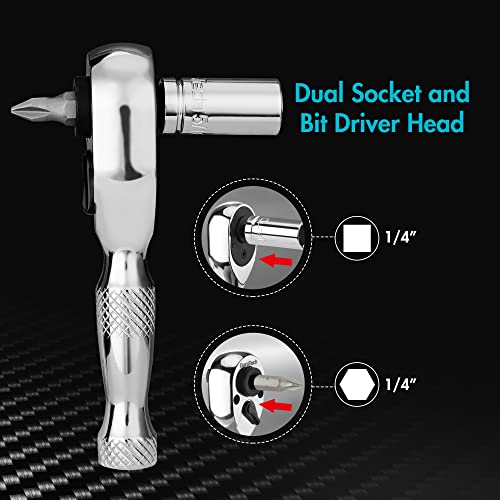
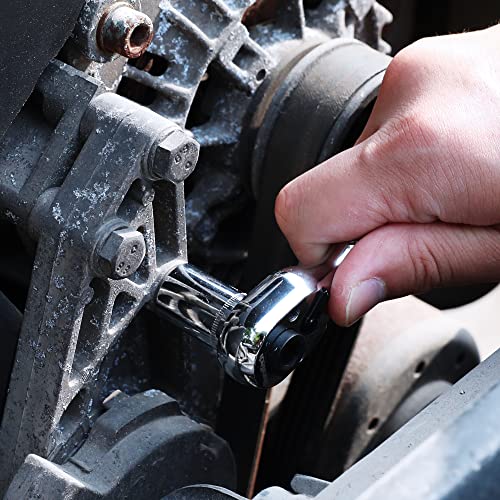
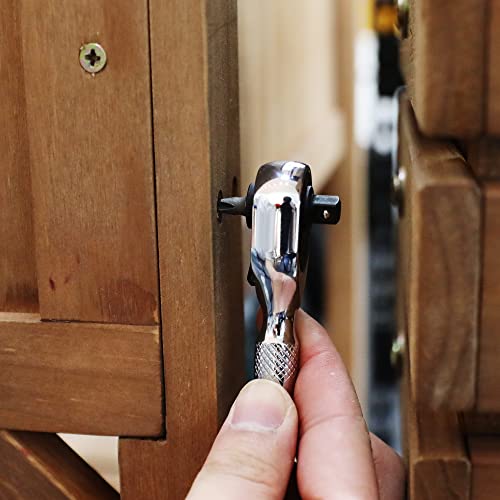
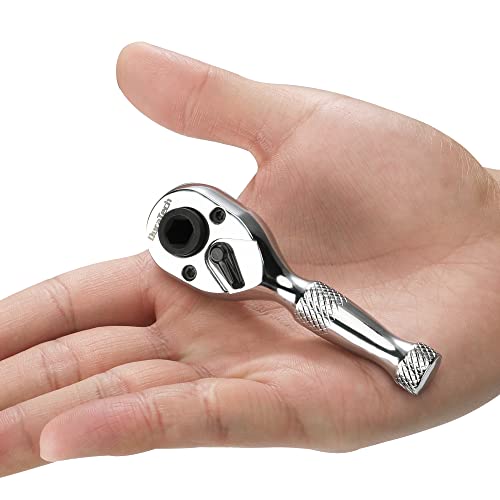
If you’re working deep inside dashboards, plumbing junctions, or tight engine compartments, this stubby ratchet is built for those moments when every millimeter counts. At just 3.5 inches long, it slips into gaps where even small tools won’t rotate, and the 72-tooth gear means you only need 5 degrees of swing to keep turning, that’s best-in-class for compact ratchets. The dual function head also accepts bits, which adds versatility for mixed fastener types.
Owners praise its smooth action and the knurled handle for grip, though it’s clear this tool isn’t meant for breaking loose rusted bolts or high-torque jobs. It’s a finesse tool, ideal for electronics, cabinetry, or light automotive trim work. Compared to the L-wrench set, this one trades raw use for speed and access. For most general tight-space jobs, I’d pick this as the smarter buy.
Product photos

DURATECH L-Type Pipe Perforation Elbow Wrench

Strengths
- 6-point grip
- High torque use
- Chrome alloy steel
- Rolling pouch included
- Perforated handle design
Trade-offs
- No ratcheting
- Fixed sizes only
- Bulkier than stubby ratchets
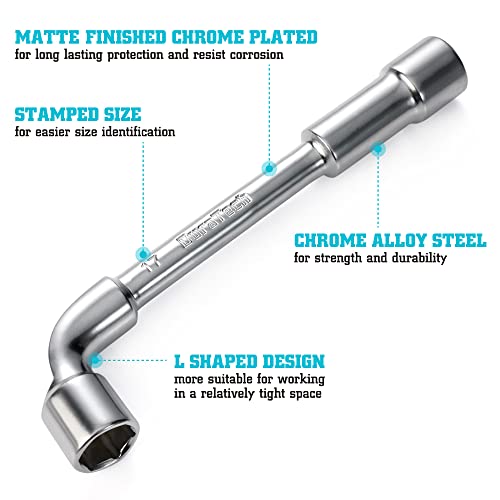
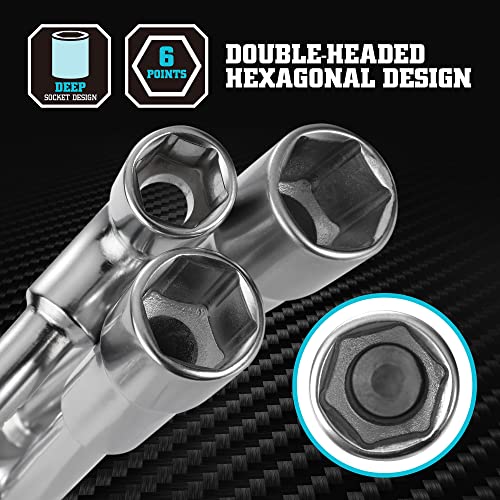
This L-shaped wrench set stands out for situations where you need serious use in cramped areas. The 6-point hex design grips fasteners fully, reducing the chance of rounding corners under high torque, a real win when wrestling with stubborn bolts on motorcycles or inside engine bays. Owners consistently report these hold up well over time, thanks to the chrome alloy steel and corrosion-resistant finish.
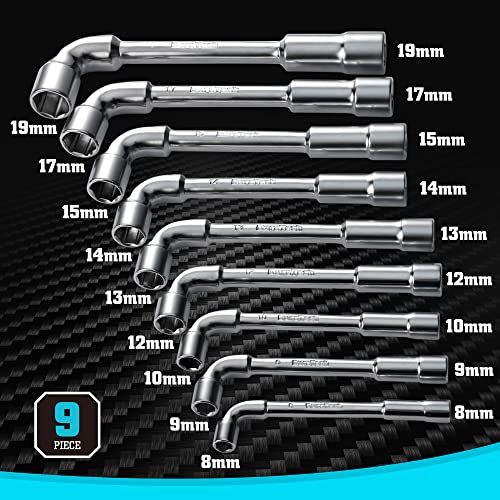
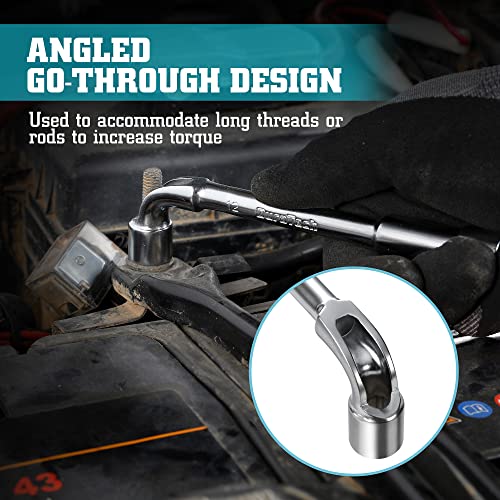
The perforated elbow handle is the standout feature, letting you slide a rod or extension through for added rotational force. That’s not something you see on standard box wrenches, and it makes a noticeable difference when your hand can’t get full clearance. The sizes included cover most common metric fasteners, and having them clearly stamped on the handle speeds up selection in dim lighting.
Product photos

How We Chose These socket wrench for tight spaces
Rather than a hands-on lab test, my research for these socket wrenches focused on comparing published specifications and features. I weighed owner reviews from multiple sources alongside assessments from reputable tool reviewers. As someone who’s spent years working with tools, I applied my experience to identify which features genuinely matter for accessing confined areas and delivering usable torque. The goal was a research-led comparison to pinpoint the best options.
For socket wrenches intended for tight spaces, access and usable torque are paramount. I heavily favored wrenches with short profiles and designs specifically addressing limited swing room. Durability is also key, as these tools often see more stress due to use constraints. A comfortable grip and clear size markings also significantly impacted my rankings because ease-of-use matters when you’re contorting to reach a fastener.
Specifications reliably indicate wrench drive size and tooth count (which affects swing arc). However, I relied on owner feedback to gauge real-world usability in cramped conditions and the long-term durability of materials. You’ll find more versatile options by considering maneuverable ratchet wrench designs if you need additional articulation beyond a stubby profile.
Choosing The Right socket wrench for tight spaces
Finding the right socket wrench for cramped quarters demands a bit more thought than just grabbing the smallest one you can find.
A truly useful socket wrench for tight spaces balances head size, drive size, and access angle. Look for models with a low profile, a flexible head, or specialized designs like stubby ratchets or offset wrenches. Pay attention to the tooth count – higher tooth counts mean smaller swing arcs, crucial when room is limited. Material quality and grip are also paramount for applying torque safely and effectively.
Drive Size and Socket Selection
I often see folks assume smaller is always better, but that’s not necessarily true. While a 1/4-inch drive is excellent for delicate work and very confined spaces, it won’t give you much use on stubborn fasteners. Consider the size of the nuts and bolts you’ll typically be working with. If you frequently deal with larger hardware, a 3/8-inch drive might be a better starting point, even if you supplement it with a smaller set for truly tight spots. It’s about finding a balance between accessibility and usable power.
Ratchet Head Design
The head is where these wrenches really differentiate themselves. Stubby ratchets, like the DURATECH 1/4-Inch Stubby Ratchet Wrench, excel where nothing else fits, but they sacrifice some use. Flexible-head ratchets allow you to reach bolts at odd angles, and offset wrenches provide clearance around obstructions. Consider what kind of access problems you face most often.
Here’s a quick rundown of what to prioritize:
- Tooth Count: More teeth (72 or higher) mean a smaller swing arc.
- Head Angle: Flexible heads are useful, but ensure the flex point is robust.
- Head Profile: Low-profile heads are essential for exceptionally tight spaces, especially when dealing with recessed fasteners. A thicker head can sometimes be more durable, though.
Torque and Ergonomics
Don’t underestimate the importance of a comfortable grip, even on a small wrench. Knurling on the handle provides a secure hold, and an ergonomic design reduces hand fatigue during prolonged use. Remember, even though you’re working in a tight space, you still need to apply sufficient torque. The L-type wrenches, like the DURATECH L-Type Pipe Perforation Elbow Wrench, offer increased use, but can be less versatile.
A good rule of thumb is to avoid using any socket wrench – even a specialized one – for tasks exceeding its intended torque capacity. You’ll risk damaging the wrench and potentially rounding off the fastener.
Socket Wrench for Tight Spaces Compared
Here’s a side-by-side comparison of the specifications for each wrench, helping you find the right tool for your needs.
| Product Title | Drive Size | Tooth Count | Length (in) | Material | Special Features |
|---|---|---|---|---|---|
| DURATECH 1/4-Inch Stubby Ratchet Wrench | 1/4 in | 72 | 3.5 | Chrome Alloy | Reversible, Mini Size |
| DURATECH L-Type Pipe Perforation Elbow Wrench | N/A | N/A | N/A | Steel | 6-Point, Perforated |
Frequently Asked Questions
What drive size is best for working on cars?
A 3/8-inch drive is generally the sweet spot for automotive work; it offers a good balance between accessibility and the torque needed for most fasteners, though you’ll likely also want a 1/4-inch drive for extremely tight areas. Consider investing in professional wrench sets for mechanics to cover a wide range of automotive tasks.
Are stubby socket wrenches strong enough for serious repairs?
While stubby wrenches sacrifice some use, many are constructed from strong alloy steels and can handle significant torque. However, avoid exceeding the wrench’s rated capacity to prevent damage, and supplement with longer wrenches when possible for stubborn fasteners.
Can a flexible-head ratchet really improve access?
Yes, a flexible-head ratchet allows you to reach bolts at awkward angles that a standard wrench can’t. Just be sure the flexing mechanism feels robust, as this is a common point of failure in cheaper models.
What’s the difference between a socket wrench and a ratchet wrench?
A socket wrench is the general term, while a ratchet wrench is a specific type that uses a ratcheting mechanism to allow continuous turning without repositioning. All ratchets are socket wrenches, but not all socket wrenches are ratchets (some are simply handles for sockets).
Where can I find durable wrench sets for tight spaces?
Look for wrenches made from chrome vanadium steel or alloy steel; these materials offer a good combination of strength and durability. You can also find durable wrench sets for tight spaces that include a variety of specialized tools for accessing confined areas.
The Bottom Line
Choosing a socket wrench for tight spaces often comes down to balancing access with usability. You can prioritize getting into the most confined areas, but that might mean sacrificing some use. For most homeowners and DIYers, the [DURATECH 1/4-Inch Stubby Ratchet Wrench] strikes the best overall balance – its compact size and high tooth count make it incredibly versatile for a wide range of tasks, and it’s a solid starting point for building a specialized toolkit.
If you’re on a tighter budget, or need something for specific plumbing work, the [DURATECH L-Type Pipe Perforation Elbow Wrench] is a great value. And for those who need even more articulation and might also benefit from complete socket wrench sets, exploring flexible-head ratchet wrenches is a worthwhile investment.
Ultimately, the best socket wrench is the one that fits your needs and the types of fasteners you encounter most often. Don’t get too caught up in chasing the highest tooth count or the smallest profile. Prioritize quality materials, a comfortable grip, and knowing your own limitations – a well-made, properly used wrench will always outperform a cheap one, no matter how cleverly designed.
