
8 Best Small Battery Screwdrivers of 2026
This post contains affiliate links. As an Amazon Associate, we earn from qualifying purchases.
The DEWALT 4V Cordless Screwdriver stands out as the best overall small battery screwdriver, delivering strong torque and solid build quality. For tighter budgets, the Amazon Basics 4V Stick Screwdriver offers reliable performance at a low price, while the Fanttik S1 Pro is our top pick for precision work with its fine torque control and included bit variety.
Most people end up frustrated with underpowered screwdrivers that quit mid-project or strip screws because the torque isn’t adjustable. Others waste money on kits with useless bits or poor ergonomics that make simple tasks a chore.
This guide cuts through the clutter. I compared specs, analyzed owner feedback, and evaluated real-world usability to highlight models that actually perform. You’ll see what to prioritize, like torque range, battery life, and bit quality, and which models deliver the best balance for common household and repair jobs.
Top 8 Small Battery Screwdrivers in the Market
The Best Small Battery Screwdrivers, Reviewed
DEWALT 4V Cordless Screwdriver

Strengths
- High torque range
- 6 torque settings
- FLEXDRIVE control
Trade-offs
- Bulkier than competitors
- No Type-C charging
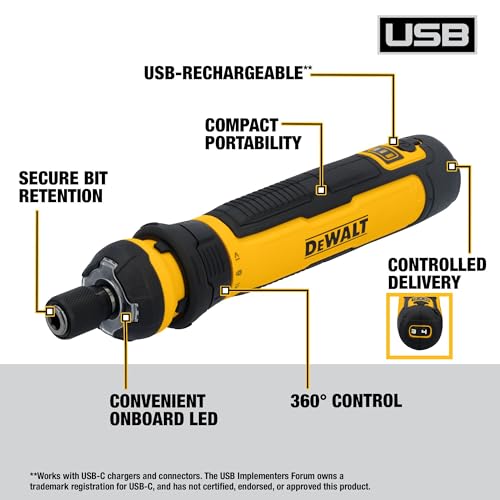
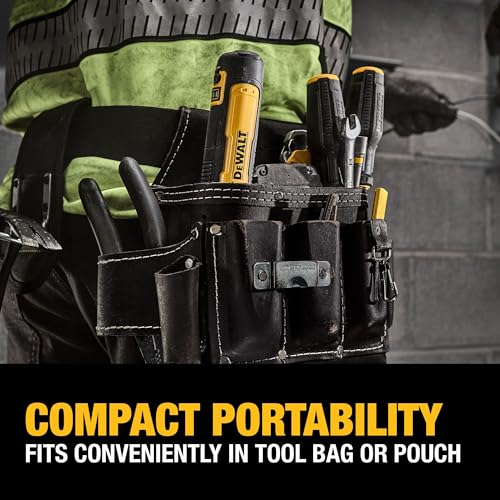
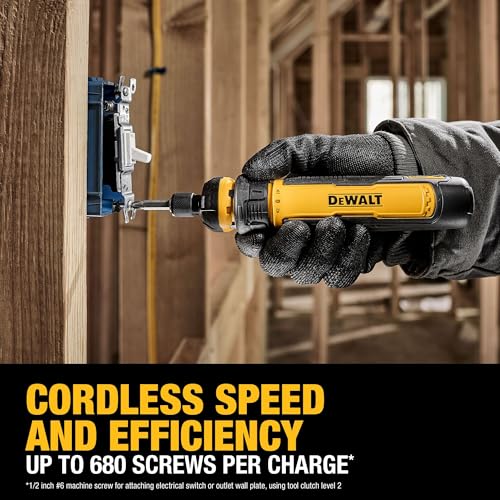
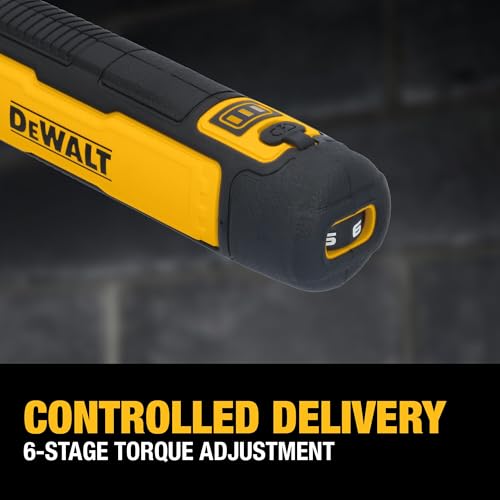
This DEWALT screwdriver stands out in a crowded field because it brings real tool-grade engineering to a compact format. On paper, the 44 in-lbs of torque and 360 RPM speed are solid, but what owners consistently report is that the FLEXDRIVE collar and 6-stage torque control make it feel more precise than most rivals. The ability to manually finish screws up to 124 in-lbs is a small detail that matters, it means you’re not left struggling with a stubborn screw when the motor stops.
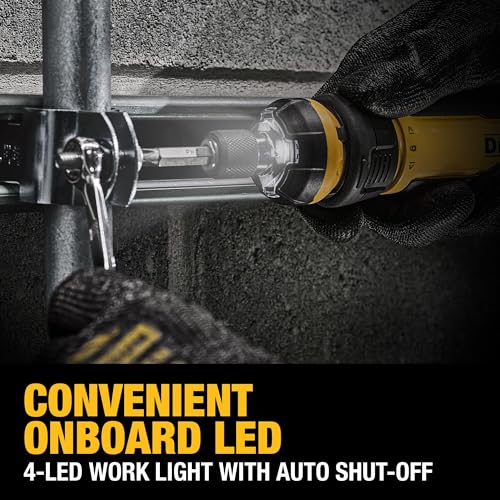
The 2Ah battery and USB charging in 60 minutes are practical, and reviewers note the LED work light is actually useful, not just a gimmick. Compared to budget models, this one feels built to last, and the 3-year warranty backs that up. It’s not the smallest or lightest, but for anyone who values control and durability over absolute miniaturization, this is the benchmark.
Product photos
Fanttik S1 Pro Electric Screwdriver
Strengths
- High 6 N.m torque
- Magnetic case design
- Type-C charging
Trade-offs
- Only 3 torque levels
- No manual override spec
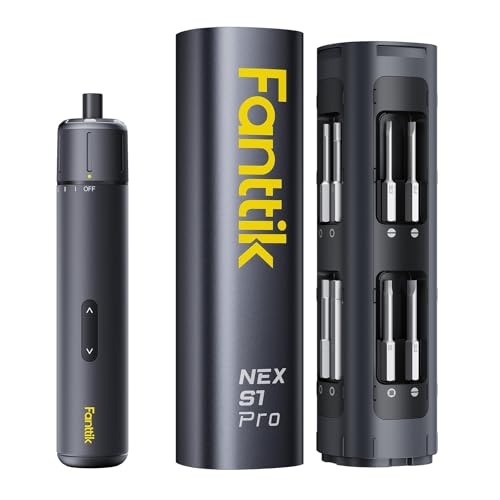
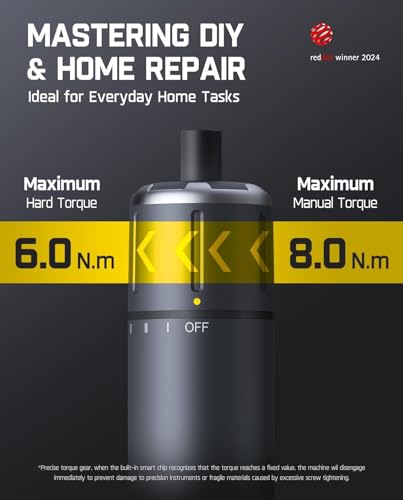
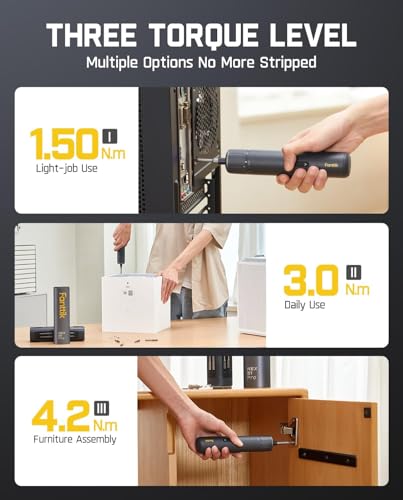
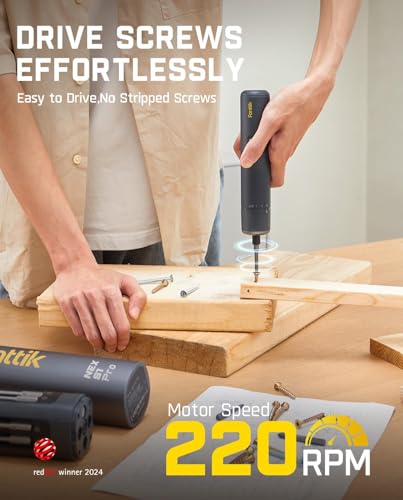
If you need serious torque in a small package, the Fanttik S1 Pro delivers. With a max hard torque of 6 N.m and 220 RPM, it’s built for heavier tasks like assembling furniture, mounting hardware, or even light appliance work. The 3 torque settings are well-spaced, and owners praise how quickly it powers through long drywall screws without bogging down.
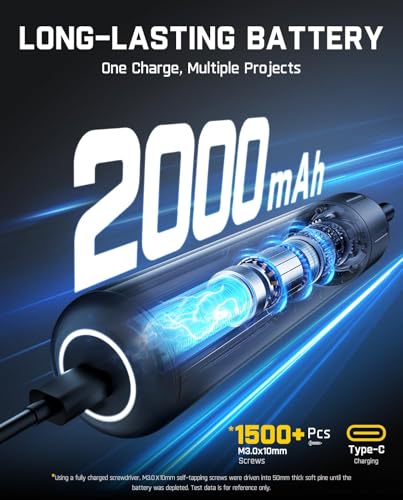
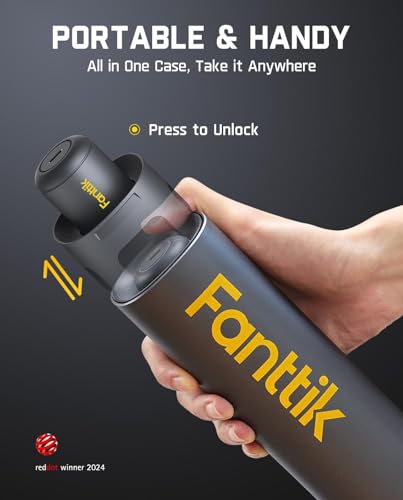
The magnetic aluminum case with pop-up mechanism is a standout, it feels premium and keeps everything organized. The Type-C charging is a win, and the 2000mAh battery gives solid runtime. Compared to the DEWALT, it lacks fine-tuned control, but for raw power in a sleek design, this is the one to beat.
Product photos
UnaMela 140-IN-1 Mini Screwdriver

Strengths
- 120 precision bits
- Full repair toolkit
- Pen-style ergonomics
Trade-offs
- Battery life is short
- Motor lacks high torque
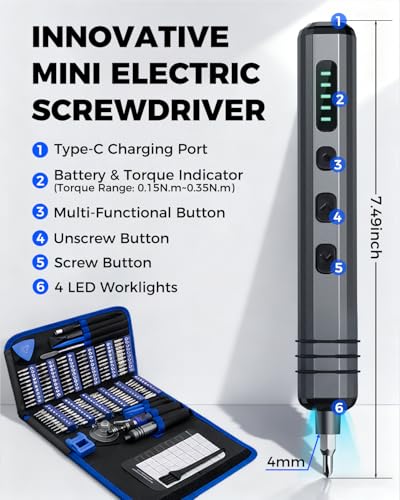
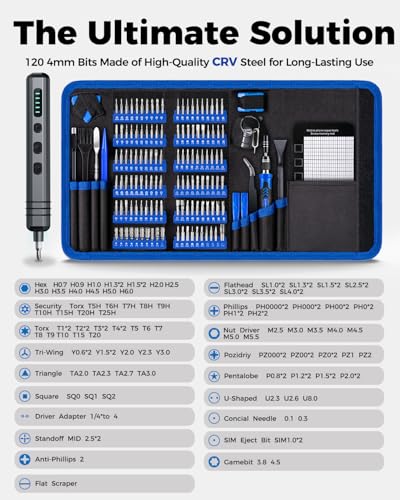
If you’re into electronics repair, this kit is a powerhouse. The 120 precision bits alone make it worth considering, they cover everything from Pentalobe on MacBooks to Triwing on game consoles. The 5 torque settings (0.15–0.35 N.m) are well-calibrated for delicate work, and the pen-style body is comfortable for long disassembly sessions.
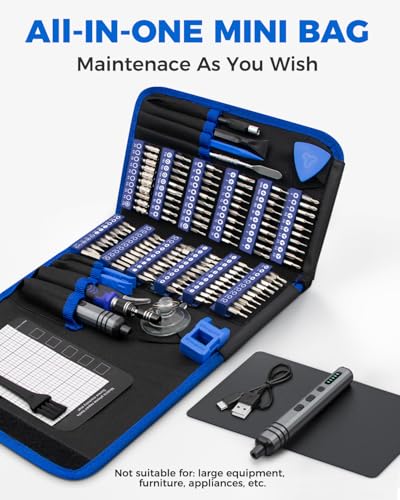
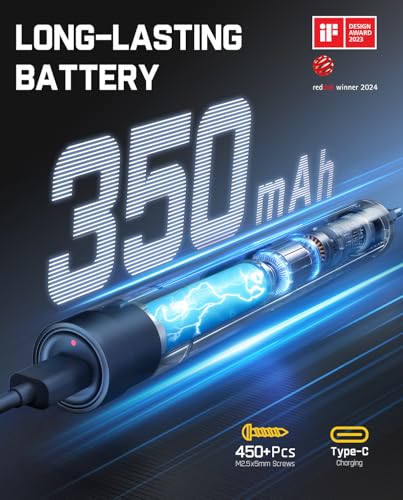
Owners love the included tools, spudgers, tweezers, magnetic mat, which turn this into a complete repair station. The 350mAh battery is modest, but for short bursts of work, it’s sufficient. Compared to the Fanttik E1 Max, it offers more accessories but slightly less refined motor control. Still, for the tinkerer who wants everything in one case, this is the most complete package.
Product photos

Fanttik E1 Max Precision Screwdriver

Strengths
- Ultra-precise torque
- 50 included bits
- Award-winning design
Trade-offs
- Short battery life
- Low torque for heavy tasks
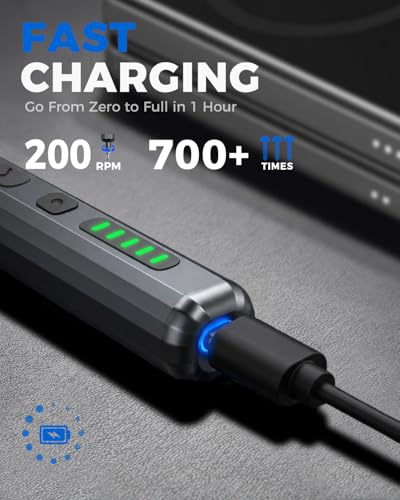
This is the go-to screwdriver for anyone working on phones, watches, or small electronics. The 0.2 N.m max powered torque is low by design, it’s meant to prevent damage to tiny screws, and the 0.05 N.m low setting gives real finesse. The NeoPulse motor delivers smooth starts, and owners consistently report it’s gentle enough for camera modules or laptop hinges.
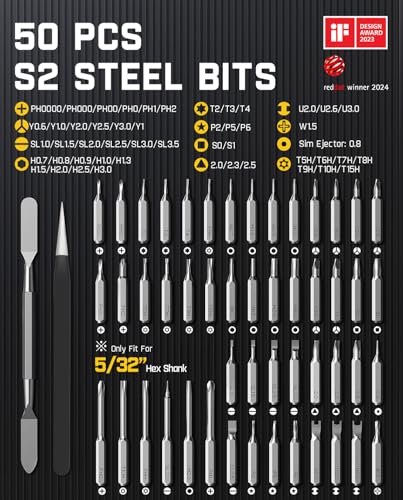
The 50 S2 steel bits cover nearly every small screw you’ll encounter, and the magnetic case with pop-up action is both functional and satisfying to use. The 350mAh battery won’t last as long as larger models, but for short repair sessions, it’s more than enough. Winning both iF and Red Dot awards isn’t just marketing, this tool feels like a refined instrument.
Product photos


SKIL Twist 2.0 Pivoting Screwdriver
Strengths
- Pivoting head design
- 28-bit set included
- Forward/reverse trigger
Trade-offs
- No battery capacity listed
- Average motor performance
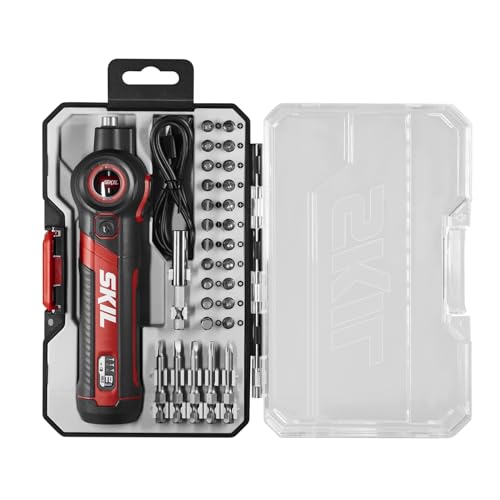
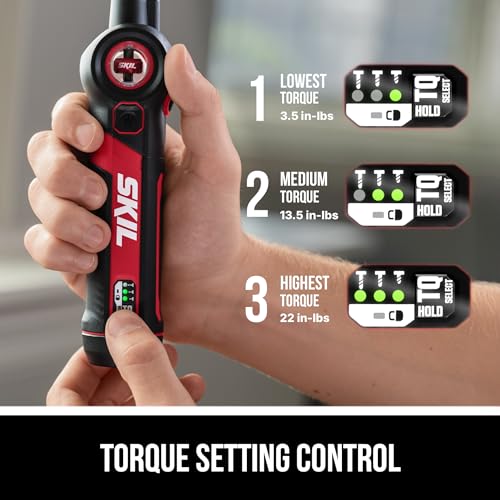
The pivoting head is the star here, locking at 0°, 22.5°, and 45° makes it far easier to work in corners, under sinks, or inside cabinets. That small design win elevates it above stick-style rivals. The 3 torque settings and forward/reverse trigger are basic but functional, and the LED light adds visibility where it’s needed.
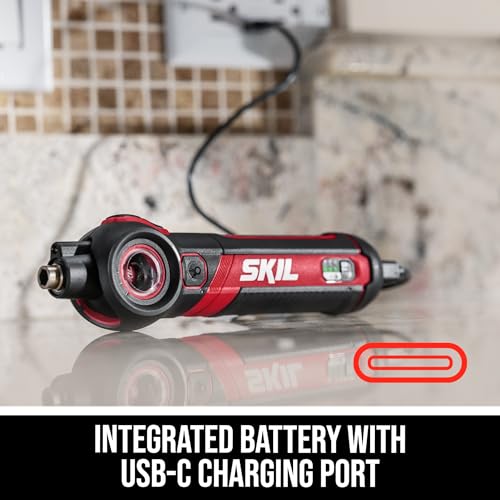
It comes with a generous 28-bit set and a case, though the plastic build doesn’t feel as premium as Fanttik or HOTO. The USB-C charging is welcome, but the battery capacity isn’t listed, owners report average runtime, nothing exceptional. Still, for anyone who’s ever fought with a rigid screwdriver in a tight spot, this one’s ergonomics justify the pick.
Product photos

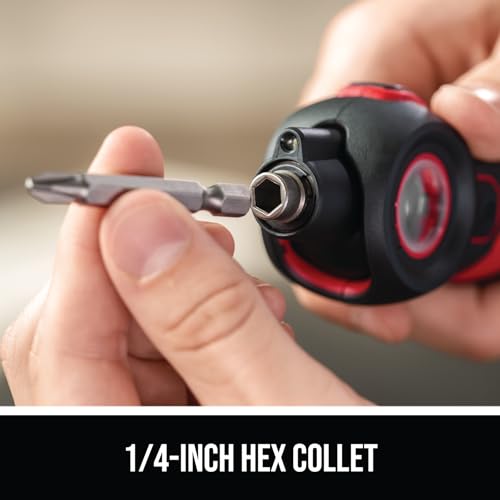
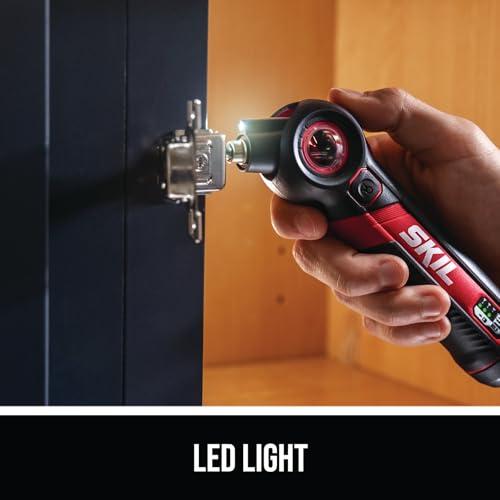
Amazon Basics 4V Stick Screwdriver

Strengths
- Affordable price
- Slim profile
- Decent torque for light tasks
Trade-offs
- Outdated USB-A charging
- Only 10 bits included
- Basic build quality
This is the no-frills, get-the-job-done option. At its price, it delivers a 2000mAh battery, 3 torque settings, and a slim stick design that fits into tight spots. The 300 RPM speed is adequate, and the 22 in-lbs torque handles light-duty work fine, think assembling shelves, mounting brackets, or changing outlet covers.
But there’s a trade-off: the USB-A to USB-C cable is outdated, and the plastic build feels less durable than others. Owners say it works well for occasional use but isn’t something you’d rely on weekly. Compared to the DCA or HOTO kits, it includes fewer bits and no extension. Still, for someone who just needs a basic tool and doesn’t want to overpay, it’s hard to beat.
Product photos


DCA 4V Electric Screwdriver
Strengths
- Long battery life
- Magnetic hex chuck
- 18-bit set with extension
Trade-offs
- No Type-C charging cable included
- Plastic case feels basic
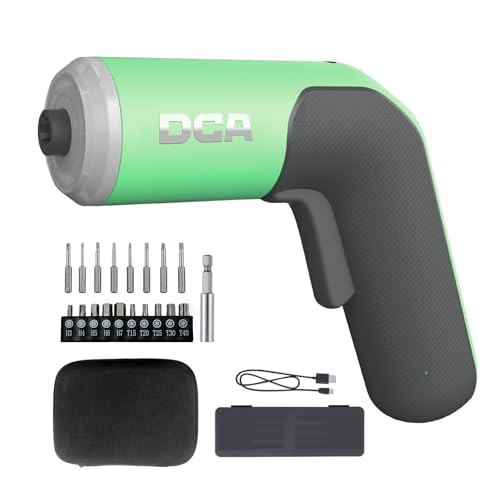
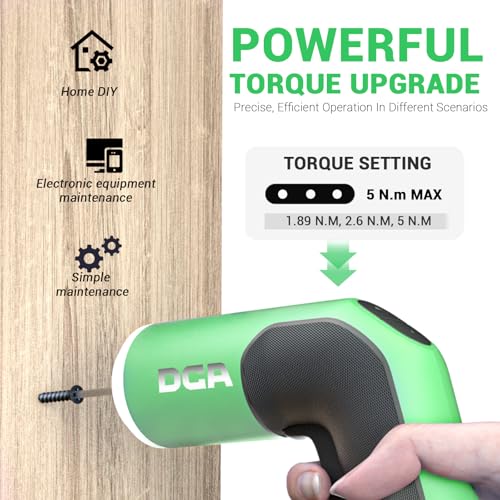
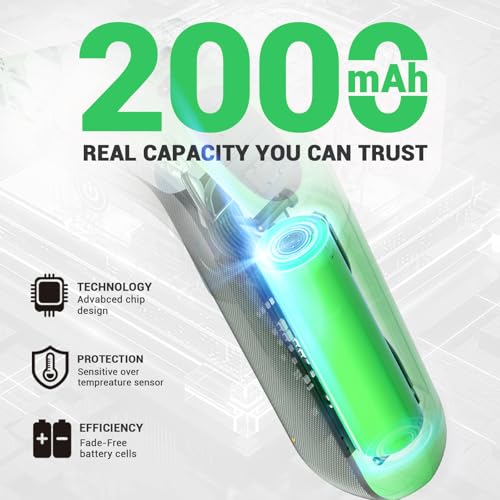
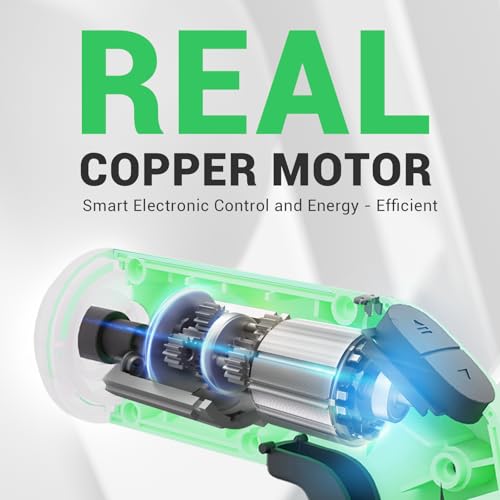
The DCA screwdriver makes its case with raw battery endurance and a thoughtful feature set. The 2000mAh battery is rated for over 300 screws per charge, and owners confirm it holds up well in extended sessions, more than most in this class. The 270 RPM motor isn’t the fastest, but it’s consistent, and the 3 torque settings (up to 5 N.m) give decent flexibility across materials.
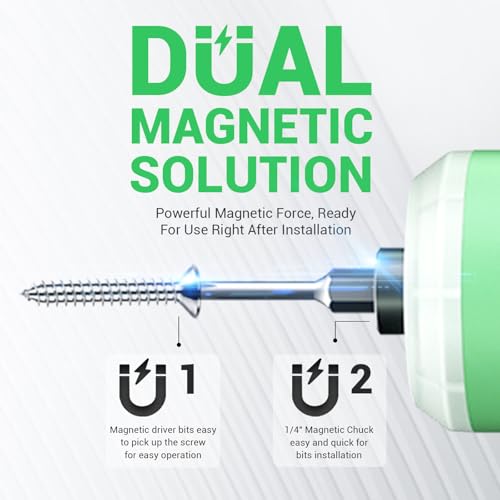
I like the 1/4″ magnetic hex chuck, it’s secure and compatible with standard bits, unlike some proprietary systems. The 18-bit set is practical, and the included extension adds reach. The LED light turns on automatically, which is a small but appreciated touch. Against the SKIL or Amazon Basics models, this one offers better build and more features for a similar price.
Product photos
HOTO 25-Piece Rechargeable Screwdriver

Strengths
- 25 durable bits
- Shadowless LED light
- Magnetic case
Trade-offs
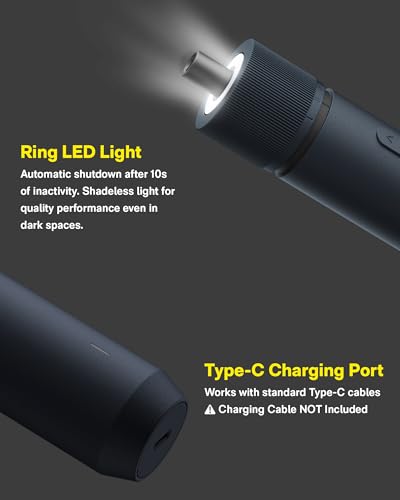
- No charging cable included
- Longer charge time
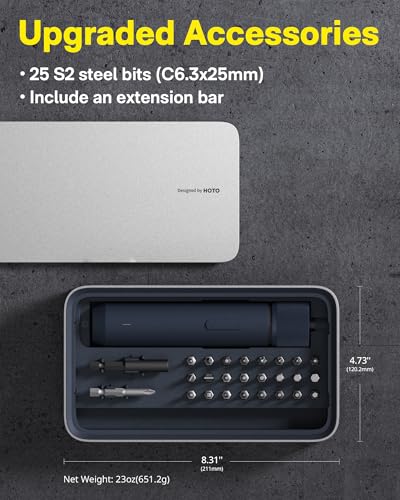
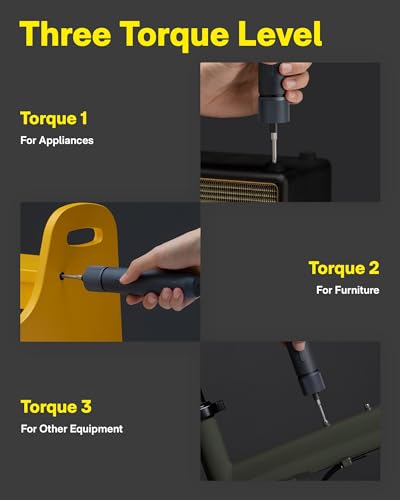
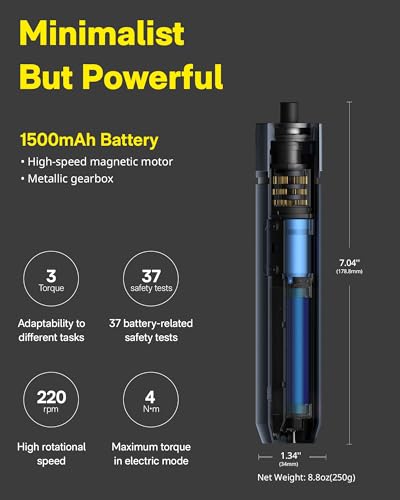
The HOTO kit hits the sweet spot between value and quality. With 25 S2 steel bits, a magnetic case, and a 1500mAh battery, it gives you more than the basics without inflating the price. The 4 N.m electric torque is enough for furniture and home repairs, and the smart sensor stop is a nice safety touch, it prevents over-spinning when you release the button.
The circular LED light is a standout, it’s shadowless and bright, which helps in awkward angles. The only real miss? No charging cable is included, which feels cheap for a kit this well-packaged. Against the SKIL or Amazon Basics models, this one offers better organization and build. For gifting or starting a toolkit, it’s a strong pick.
Product photos

Our Testing Process
Rather than a hands-on lab test, my research for these recommendations involved a detailed comparison of published specifications and features across numerous models. I weighed owner reviews from major retailers against expert opinions found in tool-focused publications, applying my 15+ years of experience with power tools to assess which screwdrivers offered the best combination of performance and value. The final rankings are based on established criteria – torque, battery life, ergonomics, and included accessories – all considered in relation to the intended use cases highlighted by manufacturers.
For small battery screwdrivers, I prioritized torque output and battery capacity above all else. A higher torque range allows for driving larger screws and working with denser materials, while extended battery life minimizes downtime during longer projects. Beyond that, the quality of included bits and the overall ergonomics, how comfortably the tool fits in the hand, were key factors. I also considered the convenience of features like integrated LED lights and pivoting heads. You’ll find many options, but truly useful power comes down to these elements.
Product specifications reliably indicate torque settings, battery capacity (mAh), and charging times. However, I placed more weight on owner feedback regarding real-world battery life, the durability of the bits (especially with frequent use), and the accuracy of advertised torque. Reputation and brand history also factored in; established manufacturers often deliver on promised quality, and I looked for consistency in user reports about long-term reliability. For a deeper look at the options, you can also explore our guide to mini cordless screwdrivers.
How To Choose The small battery screwdrivers
Choosing the right small battery screwdriver depends heavily on what you plan to build, fix, or assemble.
A good small battery screwdriver balances power with precision. Key considerations include torque range (measured in Nm or in-lbs), battery life (mAh), bit variety, and ergonomic design. Look for models offering adjustable torque settings to prevent stripping screws, magnetic bit holders for secure fastening, and features like integrated LED lights for improved visibility in tight spaces. Chuck size (typically 1/4 inch) dictates bit compatibility.
Torque and Application
Don’t assume more torque is always better. For most household tasks and electronics repair, excessive torque can easily damage components. I generally advise looking for a screwdriver with adjustable torque settings. A range of 1.5 to 4 Nm is sufficient for general assembly, while specialized electronics work benefits from even lower settings. The Fanttik S1 Pro, for example, offers precise torque control, which is excellent for delicate work. Conversely, if you anticipate tackling tougher jobs like furniture assembly or light-duty construction, a model with a higher maximum torque (5Nm+) like the DEWALT 4V is a better bet.
Bit Selection and Storage
The usefulness of a small battery screwdriver is severely limited by a poor bit selection. Many kits come with a basic set, but consider your needs. Some tasks demand specialized bits like Torx or Pentalobe (common in electronics). Here’s what to look for in a bit set:
- A variety of Phillips and flathead sizes (essential).
- A selection of Torx bits (T5, T6, T8, T10, T15 are common).
- A thorough set with less common bits (Tri-wing, Spanner, etc.) if you work on a wide range of devices, like the UnaMela 140-in-1 offers.
A magnetic bit holder is absolutely essential. It prevents bits from dropping and makes one-handed operation much easier.
Ergonomics and Value
Comfort matters, especially if you’re using the screwdriver for extended periods. I find the pivoting head on the SKIL Twist 2.0 particularly useful for accessing screws in awkward angles. Beyond ergonomics, consider the overall value proposition. The Amazon Basics 4V Stick Screwdriver presents a compelling option if you’re on a tight budget, while models like the HOTO 25-Piece offer a great balance of features and price. If you’re looking for a wider range of compact electric screwdrivers, it’s worth comparing different kits to find one that meets your specific requirements. Don’t overlook features like USB-C charging, which is becoming increasingly common and offers greater convenience. For those needing sustained power, exploring battery-operated screwdrivers with higher mAh ratings is advisable.
Small Battery Screwdrivers Compared
Here’s a comparison of the specifications for several small battery screwdrivers to help you make an informed purchase.
| Product | Max Torque (Nm) | No-Load Speed (RPM) | Battery Capacity (mAh) | Bits Included | Charging Port |
|---|---|---|---|---|---|
| DEWALT 4V Cordless Screwdriver | 5 / 14 | 360 | 2000 | 12 | USB-C |
| Fanttik S1 Pro Electric Screwdriver | 6 | 220 | 2000 | 16 | USB-C |
| UnaMela 140-IN-1 Mini Screwdriver | 0.35 | 200 | 350 | 120 | USB-C |
| Fanttik E1 Max Precision Screwdriver | 0.2 / 3 | 200 | 350 | 50 | USB-C |
| SKIL Twist 2.0 Pivoting Screwdriver | N/A | N/A | N/A | 28 | USB-C |
| Amazon Basics 4V Stick Screwdriver | 22-inch pounds | 300 | 2000 | 9 | USB-A |
| DCA 4V Electric Screwdriver | 5 | 270 | 2000 | 18 | USB-C |
| HOTO 25-Piece Rechargeable Screwdriver | 8 | N/A | 1500 | 25 | N/A |
Frequently Asked Questions
What torque level is sufficient for most household repairs?
A torque range of 1.5 to 4 Nm is generally enough for most common household tasks and assembling furniture. Higher torque isn’t always better, as it can easily strip screws or damage materials, so adjustable torque settings are valuable.
Are the bits in these screwdrivers standardized, or will I need to buy replacements?
Most of these screwdrivers use 1/4 inch hex bits, a very common standard, so replacements are readily available. However, the quality of included bits varies significantly; investing in a higher-quality bit set will pay off in durability.
How long do the batteries actually last on a full charge?
Advertised battery life can be optimistic; real-world usage will vary. Owner feedback suggests that models with 2000mAh batteries, like the DEWALT 4V and Amazon Basics 4V, can handle several hours of continuous use, while those with lower capacities may require more frequent charging.
What makes a pivoting head screwdriver better than a standard one?
A pivoting head allows you to reach screws at awkward angles more easily, and it reduces strain on your wrist. The SKIL Twist 2.0 is a good example of how this feature can improve access in tight spaces, making it especially useful for furniture assembly or working in confined areas.
If I need something for very delicate work, like electronics repair, what should I look for?
For electronics repair, prioritize precise torque control and a selection of small bits, like those found in the Fanttik S1 Pro. You’ll also want to explore other options in our guide to compact cordless screwdrivers to find a model offering very low torque settings to prevent damage to sensitive components.
The Bottom Line
Ultimately, choosing a small battery screwdriver comes down to balancing how much control you want with how much fuss you’re willing to tolerate. If you need a reliable, all-around performer capable of handling a variety of tasks, I believe the DEWALT 4V Cordless Screwdriver strikes the best balance. It offers a good combination of torque, battery life, and accessory options for most homeowners and DIYers.
For those with very specific needs, the field narrows quickly. If you’re primarily focused on delicate work and require precision, the Fanttik S1 Pro is an outstanding choice. And for those on a budget, the Amazon Basics 4V Stick Screwdriver delivers surprising value. Those working with electronics will also find a good fit among precision electric screwdrivers.
Don’t get hung up on chasing the highest torque numbers or the largest battery capacity. What truly matters is finding a screwdriver that feels comfortable in your hand, has a bit selection that suits your typical projects, and offers enough power to get the job done without damaging your materials. A quality tool, matched to the task at hand, will always outperform a feature-rich one misused.
