6 Best Saw for Firewood 2026
This post contains affiliate links. As an Amazon Associate, we earn from qualifying purchases.
The 11-Inch Triple-Cut SK5 Folding Saw is the best overall pick for firewood, delivering aggressive cutting power and solid build quality for most users. If you’re on a budget, the GreatNeck 21-Inch Bow Saw offers reliable performance for larger logs at a low price. For precision and ease of use on smaller wood, the Fiskars 10-Inch Power Tooth Saw stands out.
Cutting firewood by hand shouldn’t mean wrestling with a tool that binds, flexes, or wears you out in minutes. Too many saws fail when faced with dense hardwood or repeated use, turning a manageable chore into a frustrating slog.
I focused on models that balance blade strength, tooth design, and ergonomics, using specs, owner feedback, and years of experience with woodcutting tools to identify the ones that actually perform when you need them most.
Top 6 Saw For Firewoods in the Market
The Best Saw For Firewoods, Reviewed
11-Inch Triple-Cut SK5 Folding Saw

Strengths
- Aggressive 7 TPI blade
- SK5 high-carbon steel
- Compact and portable
Trade-offs
- Handle can feel stiff
- Blade harder to clean
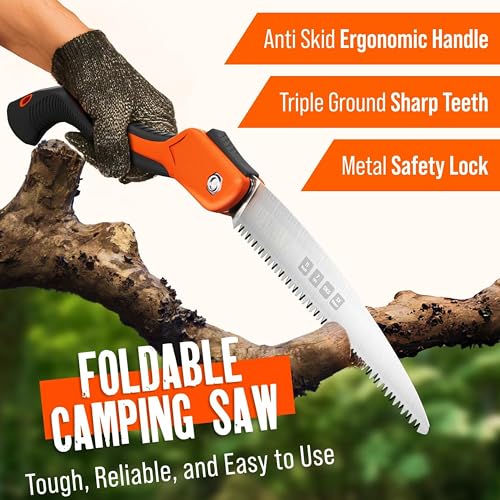
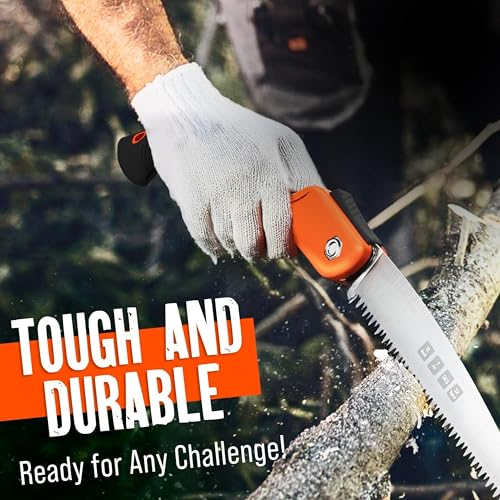
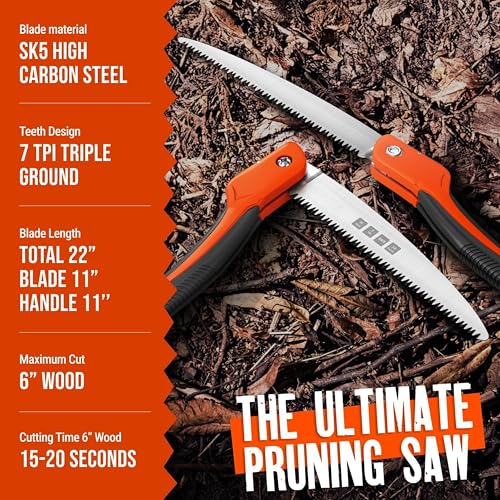
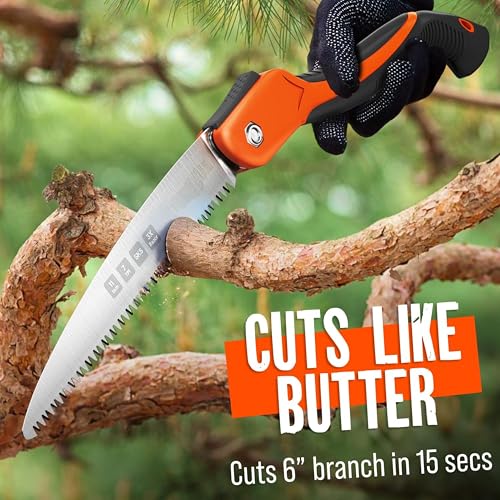
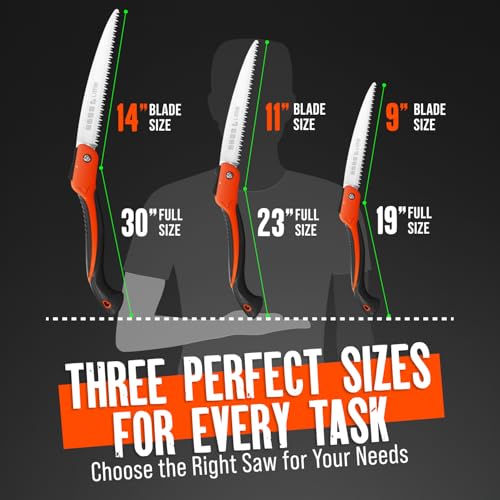
This folding saw punches above its size when it comes to raw cutting speed. The 7 TPI triple-cut SK5 blade is the real reason it stands out, it tears through green wood with noticeably less effort than standard pruning teeth, and owners consistently report it powers through 6-inch limbs without bogging down. On paper, it’s built like a tool meant for bushcrafters who demand efficiency, not just portability.
It’s not the most refined in hand, but it doesn’t need to be. The grip is secure, even with gloves, and the folding mechanism locks solidly. Compared to the Fiskars, it’s less about finesse and more about aggressive, fast cutting, a real workhorse in a compact form.
Product photos
REXBETI 11-Inch Folding Saw
Strengths
- Extra-long SK-5 blade
- Reinforced blade design
- Ergonomic rubber grip
Trade-offs
- Heavier than rivals
- Clunky folding lock
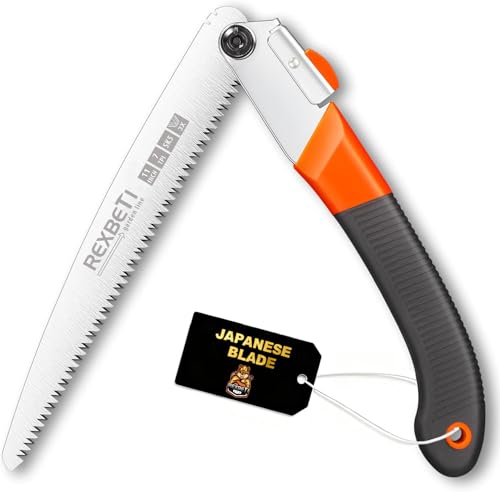
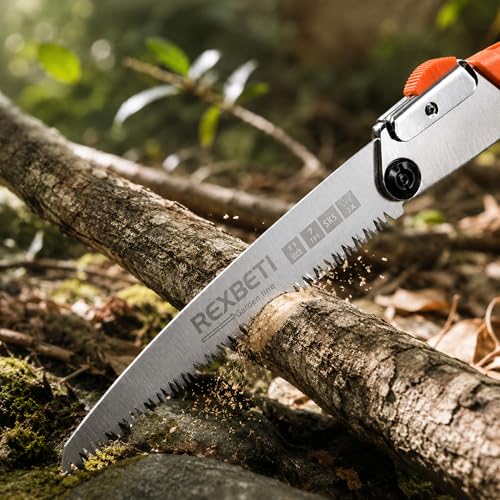
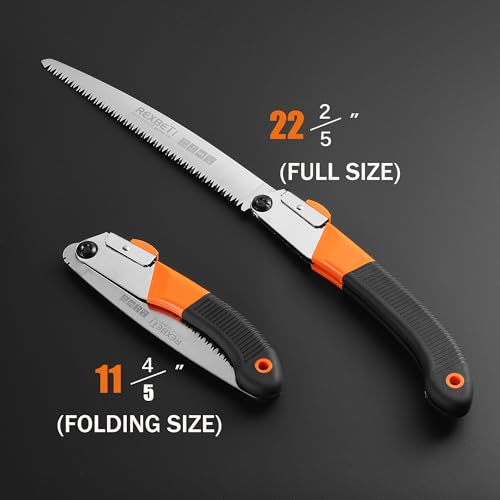
The REXBETI is a rugged, no-compromise folding saw built for users who want maximum cutting power in a portable package. Its 11-inch SK-5 steel blade with staggered 7 TPI teeth is nearly identical in design to the top-rated camping saws, and owners report it handles 6–7 inch branches with ease, rare for a folding tool. The reinforced blade and rubberized ergonomic handle make it feel more substantial than most in this class.
It holds up well under repeated use, and the grip stays comfortable even during extended sessions. While the Fiskars is more refined, the REXBETI is the one I’d take into the backcountry if I expected to cut a lot of wood. It’s heavier than the Gerber, but you’re trading ounces for real durability.
Product photos



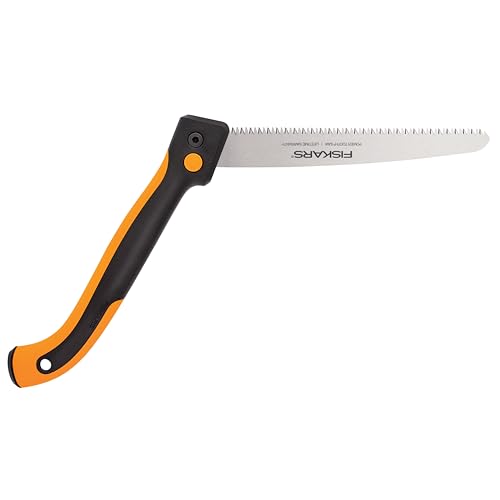
Fiskars 10-Inch Power Tooth Saw

Strengths
- Dual blade lock positions
- Smooth cutting action
- Lifetime warranty
Trade-offs
- Shorter blade reach
- Less aggressive teeth
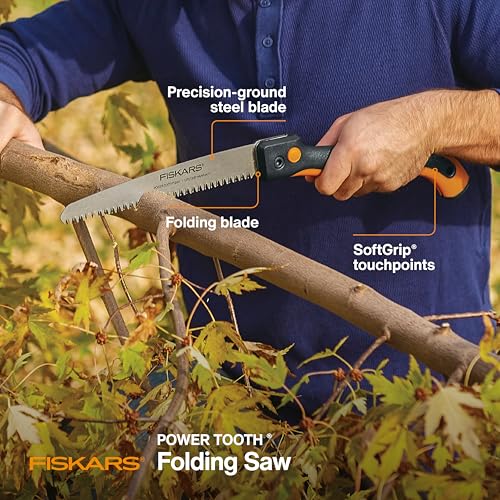
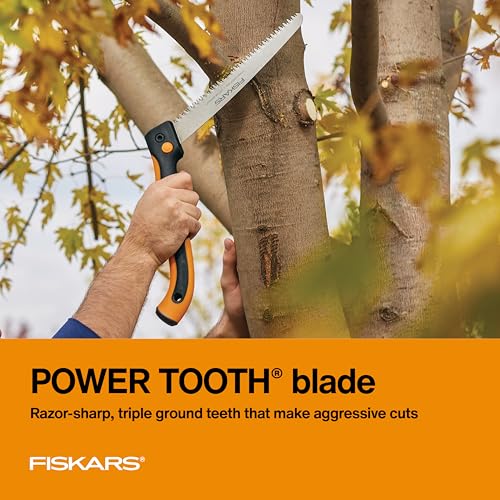
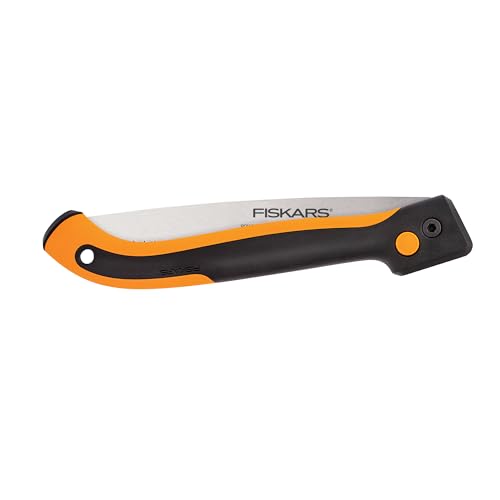
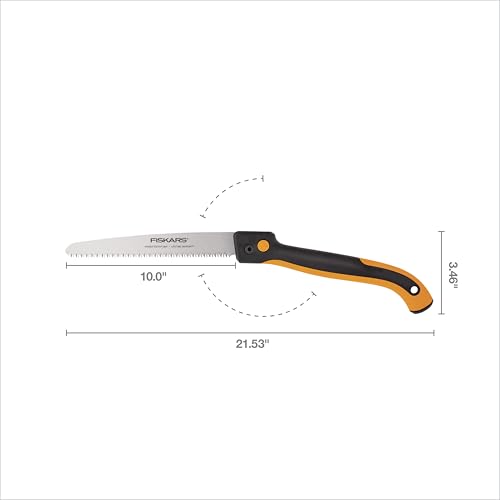
If precision and control matter more than brute force, the Fiskars folding saw is the pick. Its triple-ground Power Tooth blade delivers clean, fast cuts with less vibration, and the dual-position locking mechanism is a small but meaningful upgrade, letting you optimize the angle for overhead or underhand cuts. That kind of flexibility makes it a favorite among users doing detailed pruning or tight-space bushcraft work.
It’s not the fastest saw for splitting logs, but it excels where accuracy counts. Compared to the REXBETI, it feels more refined and balanced, though it doesn’t quite match the aggression of SK5 steel with staggered teeth. Owners praise its reliability and the fact it’s backed by a lifetime warranty.
Product photos
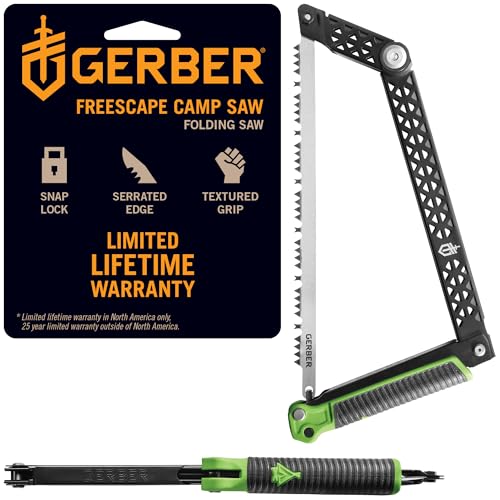
Gerber Freescape 12-Inch Folding Saw
Strengths
- Folds flat, stays assembled
- Bright color for visibility
- Secure rubber grip
Trade-offs
- Slower cutting action
- Blade less durable over time
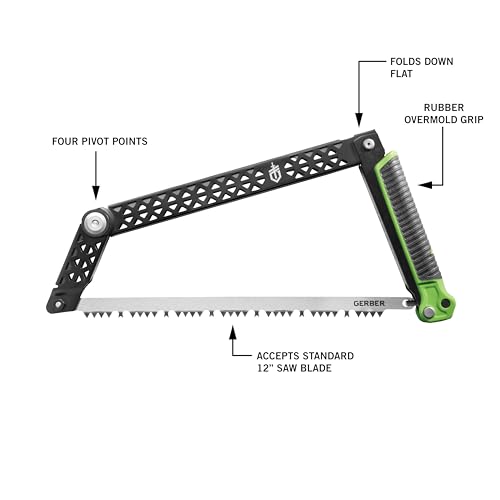
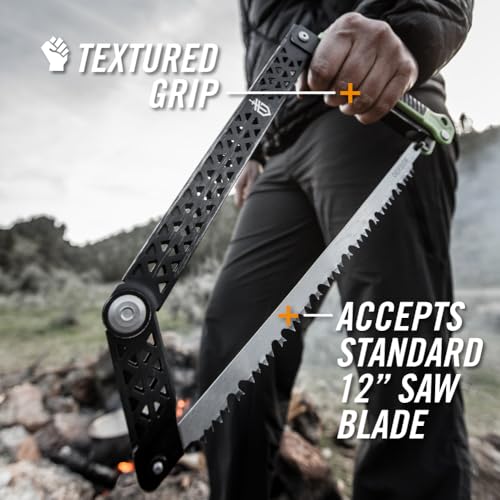
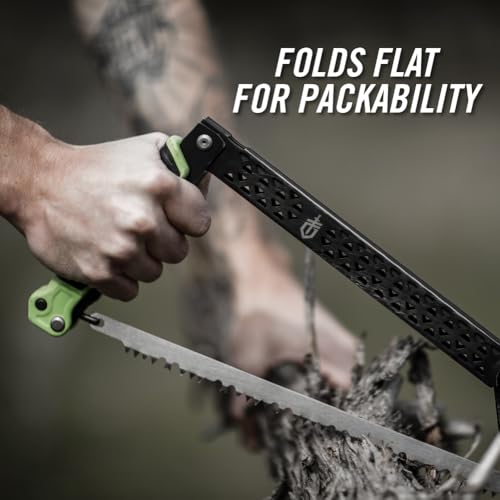
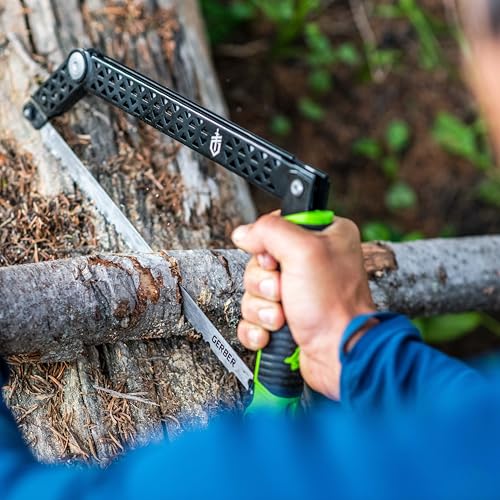
The Gerber Freescape is one of the most packable full-length folding saws on the market. Its four-pivot design lets you use the full 12-inch blade in a compact, flat fold, a smart solution for backpackers who need serious cutting power without the bulk. The bright green handle is a nice touch, making it easy to spot in a pile of gear, and the rubberized grip stays secure even in wet conditions.
It’s not the fastest saw here, and the blade steel isn’t as aggressive as SK5, but it strikes a solid balance between portability and function. For weekend hikers who might need to clear a trail or cut firewood at camp, it’s hard to beat. It’s more convenient than the REXBETI, though not quite as rugged.
Product photos

GreatNeck 21-Inch Bow Saw
Strengths
- Durable chrome alloy blade
- Quick blade release
- Sturdy steel frame
Trade-offs
- Heavier than folding options
- Less effective on green wood
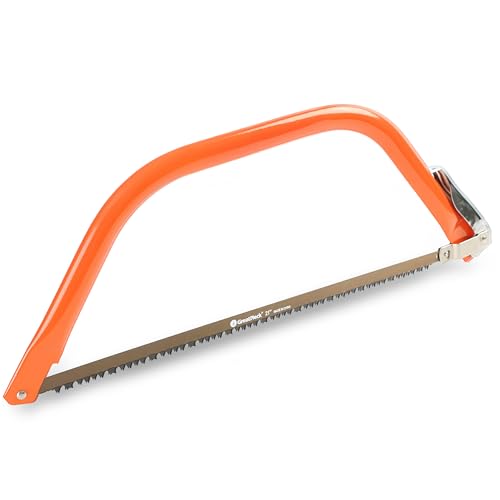
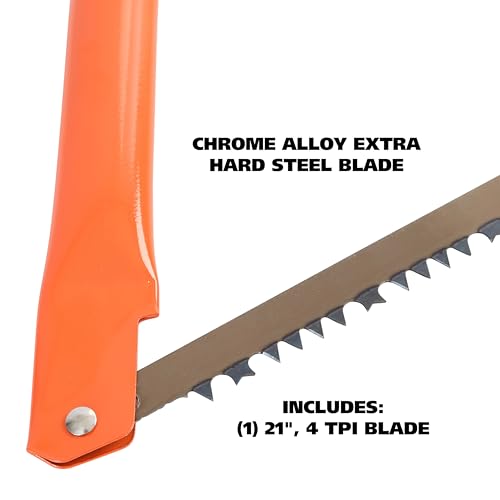
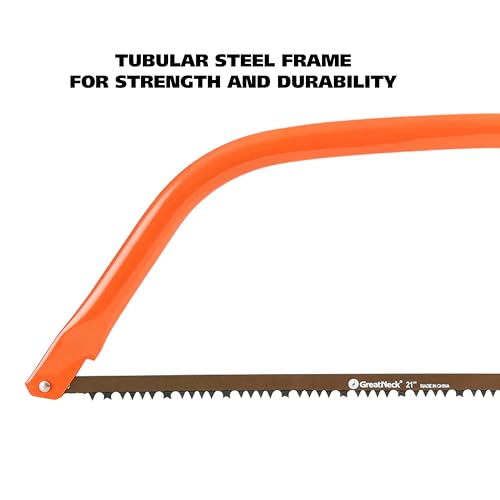
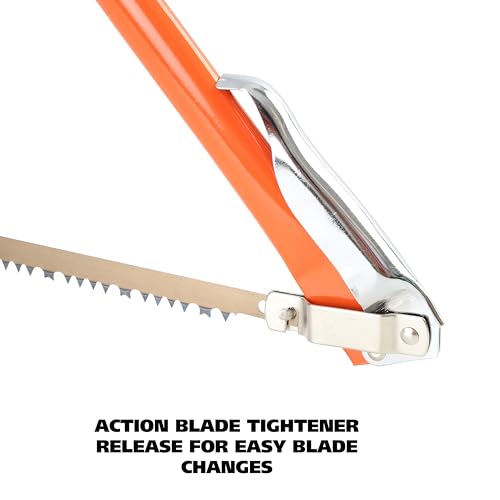
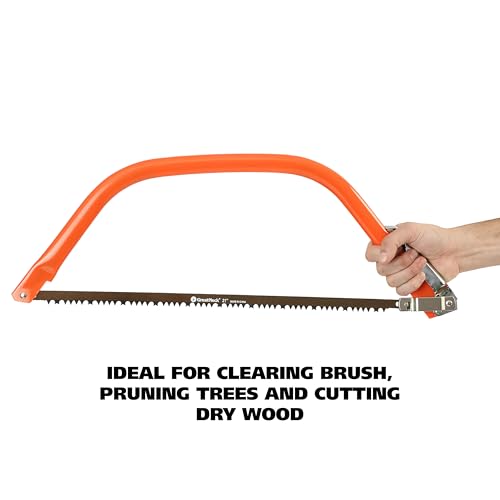
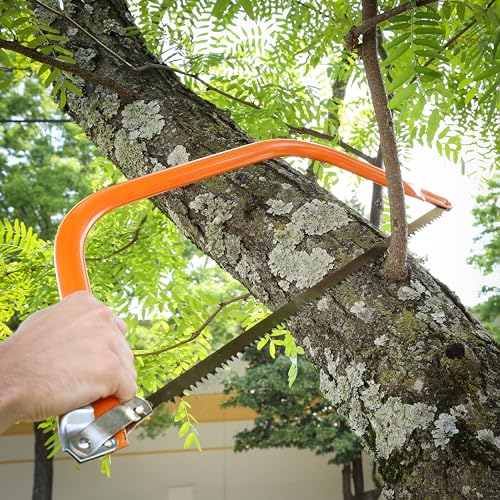
The GreatNeck BB21 is the no-frills workhorse of the group, simple, durable, and effective. With a 21-inch chrome alloy blade stretched over a rigid tubular steel frame, it’s built to slice through dry, seasoned firewood and thick brush. The quick-release blade tensioner is a standout feature, letting you swap or tighten the blade in seconds, which reviewers say makes maintenance a breeze after heavy use.
It’s not the lightest or easiest to pack, but for backyard firewood duty or clearing overgrown lots, it delivers reliable performance at a fraction of the cost of pricier models. When compared to the Bahco, it lacks the refined tension system, but holds up well under regular abuse.
Product photos
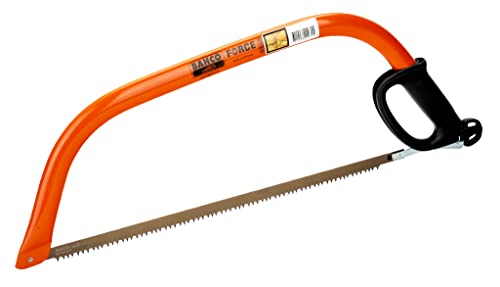
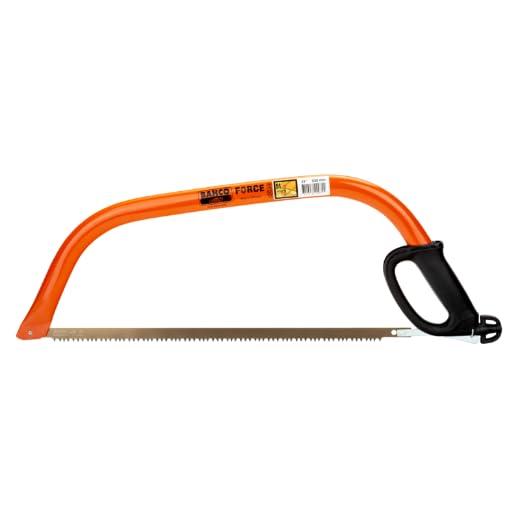
Bahco 30-Inch Ergo Bow Saw
Strengths
- High blade tension
- Lightweight steel frame
- Excellent for dry wood
Trade-offs
- Bulky for transport
- Higher price point
The Bahco 30-inch Ergo bow saw is built like a pro’s tool, and priced like one. Its 30-inch frame and innovative tensioning system deliver a blade so taut it cuts straight and true, even through tough, dry hardwoods. This is the kind of saw that makes firewood processing feel less like a chore, thanks to its lightweight steel tubing and efficient geometry.
Reviewers note it outlasts cheaper bowsaws by years, especially when used weekly. Compared to the GreatNeck, it’s noticeably better balanced and easier on the arms over long sessions. But it’s bulky, this isn’t something you’re tossing in a daypack. It’s a backyard or jobsite specialist.
Product photos
How We Picked These saw for firewoods
Rather than a hands-on lab test, my research for these recommendations focused on a detailed comparison of published specifications and features across numerous models. I weighed owner reviews from multiple sources, considered expert opinions from sites dedicated to outdoor tools, and applied my experience with woodcutting and tool performance to rank each saw. The goal was to identify models offering the best combination of cutting power, durability, and usability for firewood processing.
For saws designed for firewood, blade material and tooth geometry were the most important factors. A high-quality steel blade (like SK5) holds an edge longer and makes cleaner cuts. Aggressive tooth patterns – the number of teeth per inch (TPI) and their shape – determine how quickly and efficiently the saw cuts through different wood types. Ergonomics also played a significant role; a comfortable, secure grip improves control and reduces fatigue during extended use.
Specifications reliably indicate blade length, steel grade, and TPI. However, I relied heavily on owner feedback to gauge real-world durability and cutting performance. Reviews often reveal issues like blade flex, handle comfort, and how well a saw holds an edge after repeated use. Understanding how to perform safe chainsaw starting steps is also crucial for overall wood-processing safety, even when using hand tools. Reputation and brand reliability factored into my assessment as well.
Choosing The Right saw for firewoods
Picking the right saw for firewood isn’t just about cutting wood; it’s about making the work manageable, safe, and even enjoyable.
A good firewood saw balances blade length, tooth geometry, and build quality to efficiently cut through various wood types and diameters. Key considerations include the type of wood commonly processed, the volume needed, and the user’s physical capabilities. Prioritize saws with robust blade tensioning and comfortable grips for prolonged use, and always factor in portability if the saw will be moved frequently.
Blade Design and Tooth Count
The blade is where the work happens, and its design dramatically impacts performance. Generally, a higher tooth count (TPI – teeth per inch) is better for hardwoods and smaller branches, providing a cleaner cut but slowing you down. Lower TPI counts excel at quickly bucking through softwoods and larger diameter pieces. Look for blades made from SK5 high-carbon steel (like in the REXBETI and 11-Inch Triple-Cut SK5 Folding Saw) because it holds an edge well and resists bending. Don’t assume more aggressive teeth are always better; a saw designed for precision (like the Fiskars 10-Inch Power Tooth Saw) can be preferable if you’re dealing with a lot of smaller diameter, consistently sized wood.
Handle Ergonomics and Safety Features
A comfortable, secure grip isn’t a luxury; it’s essential for both efficiency and safety. You’ll be making repeated motions, so hand fatigue is a real concern. Rubberized or textured handles (like on the REXBETI) are best, especially when working in damp conditions. Beyond the grip itself, consider the overall handle design. Folding saws, especially those intended for backpacking (like the Gerber Freescape), prioritize compactness, but a larger handle often provides more use.
Here’s what to look for in handle design: * A basic, molded plastic grip is okay for light work. * A textured rubber overmold significantly improves grip and comfort. * A full, ergonomic handle with finger grooves and palm swell maximizes control and minimizes fatigue during extended use.
Don’t underestimate the importance of a locking mechanism on folding saws. A secure lock prevents accidental closure during cutting, a serious safety hazard.
Size, Portability, and Value
The “best” size saw depends heavily on the scale of your firewood needs. A compact folding saw is fantastic for occasional use or backpacking, but it won’t be efficient for processing a full woodlot. If you need to tackle larger logs and process substantial quantities, a bow saw (like the GreatNeck 21-Inch Bow Saw or Bahco 30-Inch Ergo Bow Saw) offers more use and cutting power. If you are cutting large amounts of wood, you may want to consider a best chainsaw for firewood to make the process faster and easier. Remember to factor in blade replacement costs and the time investment required for proper saw chain maintenance to keep your saw cutting efficiently.
A saw is only as good as its sharpness. Invest in a blade sharpening kit and learn how to maintain a keen edge, or budget for professional sharpening services.
Saw for Firewoods Compared
Here’s a comparison of key specifications for various saws designed for cutting firewood.
| Product Name | Blade Length (in) | Blade Material | Tooth Count | Folding? | Max Branch Diameter (in) | Frame Material |
|---|---|---|---|---|---|---|
| 11-Inch Triple-Cut SK5 | 11 | SK5 Steel | 7 | Yes | N/A | N/A |
| REXBETI 11-Inch Folding | 11 | SK-5 Steel | 7 | Yes | 6-7 | N/A |
| Fiskars 10-Inch Power Tooth | 10 | Steel | N/A | Yes | N/A | N/A |
| Gerber Freescape 12-Inch | 12 | N/A | N/A | Yes | N/A | N/A |
| GreatNeck 21-Inch Bow | 21 | Chrome Alloy | N/A | No | N/A | Steel |
| Bahco 30-Inch Ergo | 30 | N/A | N/A | No | N/A | Steel |
Frequently Asked Questions
What blade material is best for a firewood saw?
SK5 high-carbon steel is generally considered the best blade material. It offers an excellent balance of hardness, flexibility, and edge retention, meaning it stays sharper longer and is less prone to breaking during use.
How often should I sharpen my firewood saw blade?
Blade sharpening frequency depends on wood type and usage, but generally, sharpen after every 2-4 hours of active cutting. Dull blades require more force, increasing fatigue and posing a safety risk.
Can a folding saw handle large diameter logs?
While folding saws are versatile, they aren’t ideal for consistently cutting logs over 8 inches in diameter. Larger diameter cuts require more use and a longer blade, which a bow saw or even a tree-cutting electric saw can provide more effectively.
What’s the difference between TPI and why does it matter?
TPI, or teeth per inch, dictates cutting speed and finish. Lower TPI cuts faster through thick wood, while higher TPI creates a cleaner cut in hardwoods and smaller branches. Matching TPI to the wood type improves efficiency.
How do I safely store a firewood saw to prevent rust and damage?
After each use, clean the blade with a dry cloth and apply a light coat of oil to prevent rust. Store the saw in a dry location, ideally with the blade sheathed or covered, to protect it from moisture and accidental damage.
The Bottom Line
Ultimately, choosing a firewood saw comes down to balancing how much effort you want to put in against how much you want to spend. For most homeowners needing to process a modest amount of wood, the REXBETI 11-Inch Folding Saw strikes the best overall balance of price, performance, and portability. It delivers solid cutting power with a reliable SK-5 blade and a comfortable grip, making it a great all-around choice.
If you’re on a tighter budget, the 11-Inch Triple-Cut SK5 Folding Saw is a fantastic value. For those who need to tackle larger logs and process significant quantities, the GreatNeck 21-Inch Bow Saw provides the use and cutting capacity required for serious firewood work. And for backpackers or those wanting an incredibly compact option, the Gerber Freescape 12-Inch is a smart pick.
Don’t get too hung up on specifications like TPI or blade steel alone. A sharp blade and a comfortable grip are far more important than any single feature. Regular sharpening chainsaw blades is essential, and a saw that feels good in your hands will always be more efficient and safer than one that doesn’t.
