
9 Best Rotary Tools of 2026
This post contains affiliate links. As an Amazon Associate, we earn from qualifying purchases.
The Dremel 4300-5/40 stands out as the best overall rotary tool for its reliable motor, broad speed range, and solid build. If you’re on a budget, the Fanttik F2 PRO offers strong performance and good runtime in a cordless design. For maximum versatility and accessory variety, the Dremel 4300-9/64 is hard to beat.
Rotary tools are one of those “do-it-all” gadgets that can end up collecting dust if they’re underpowered, awkward to use, or limited in what they can accept. Too many people buy based on kit size alone, only to find the motor can’t handle basic tasks or the collet system doesn’t fit the bits they actually need.
This guide cuts through the noise by focusing on real usability, motor performance, speed control, collet compatibility, and whether corded or cordless makes sense for your projects. Our picks are based on specs, owner feedback, and years of seeing what holds up and what doesn’t.
Top 9 Rotary Tools in the Market
The Best Rotary Tools, Reviewed
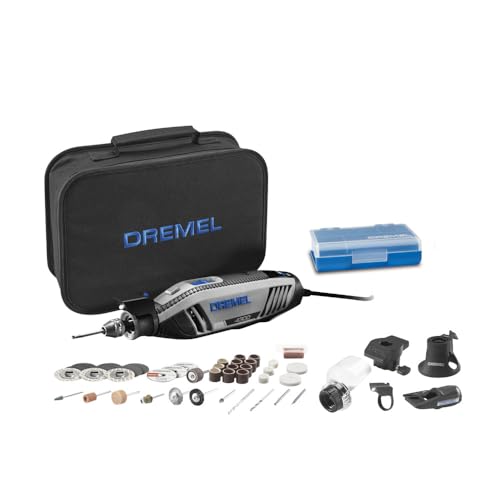
Dremel 4300-5/40 Rotary Tool Kit
Strengths
- Reliable high-power motor
- Replaceable brushes
- Excellent speed control
- Large accessory compatibility
Trade-offs
- No flex shaft included
- Corded only
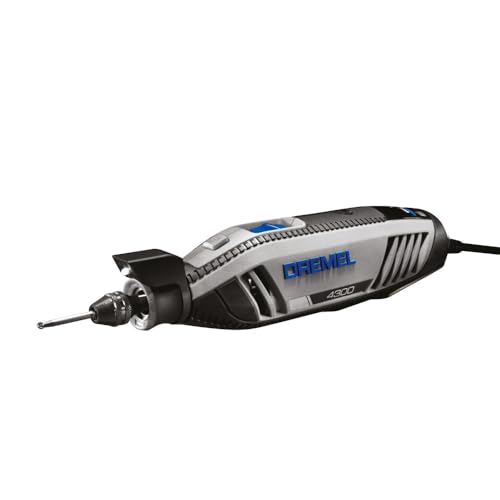
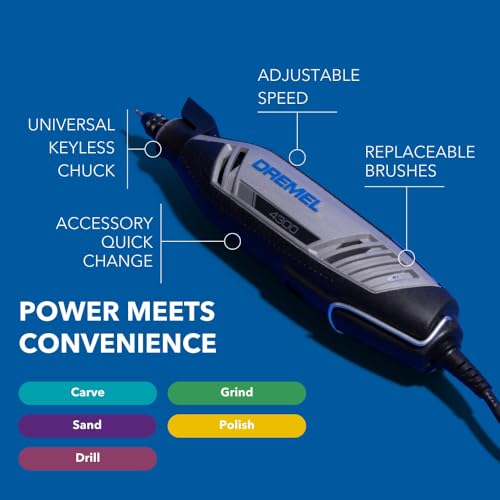
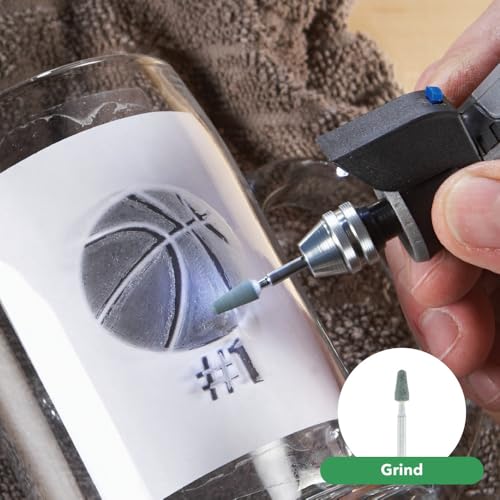
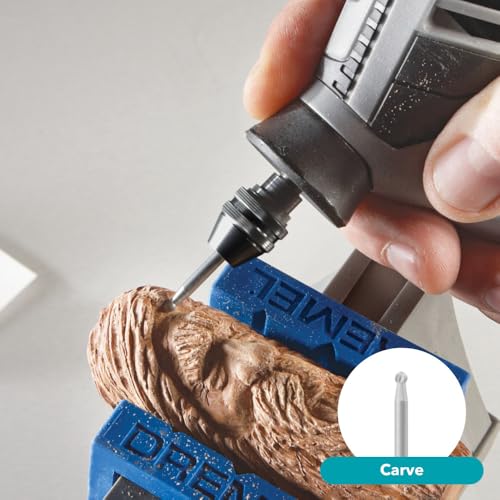
This is the model I’d recommend to most people as the best all-around Dremel. It strikes a near-perfect balance between power, control, and value. The high-performance motor delivers consistent RPM under load, and the electronic feedback system keeps speed steady, something you notice when polishing or sanding delicate edges. The 5 attachments and 40 accessories cover most common tasks, and the replaceable motor brushes mean it can last years with maintenance.
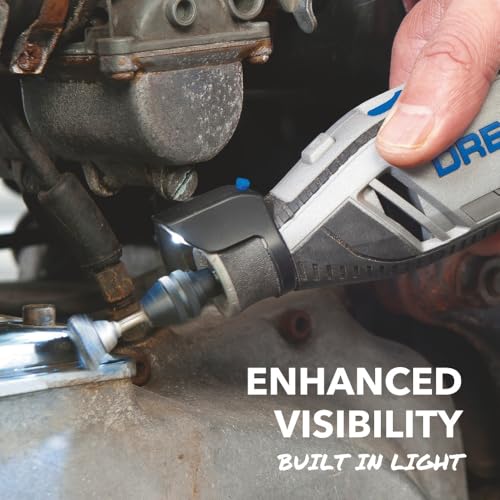
It doesn’t include the flex shaft like the 4300-9/64, but the pivot light and universal 3-jaw chuck are still present, and the dial-and-switch separation makes operation smoother. Compared to the cordless 8240, this one wins on sustained power and precision. For users who want one reliable tool that does everything decently, this is the smarter buy.
Product photos
Dremel 4300-9/64 with Flex Shaft
Strengths
- Most powerful Dremel motor
- 64 high-quality accessories
- Flex shaft included
- Excellent speed control
Trade-offs
- Cord limits mobility
- Higher price for bundle
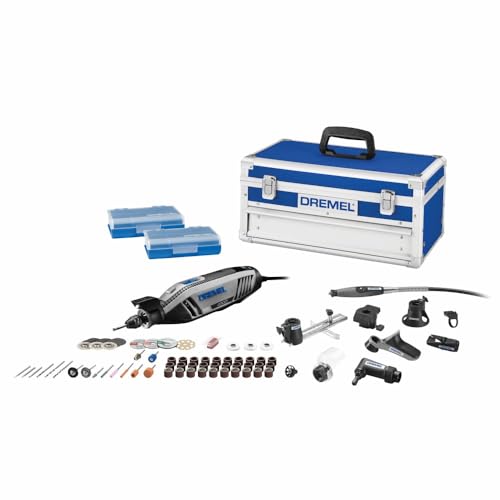
If precision and versatility are your top priorities, the Dremel 4300-9/64 is hard to beat. It packs the most powerful motor in Dremel’s consumer line, and reviewers consistently praise its ability to plow through tough tasks like metal grinding and deep wood carving without bogging down. The inclusion of 64 genuine Dremel accessories and 9 attachments, including the pivot light, makes this a near-complete starter ecosystem.
The flex shaft attachment is a standout for detail work, giving you pen-like control while keeping the motor body stable. Compared to the 4300-5/40, this version offers more out-of-the-box capability, though both share the same excellent variable speed and universal keyless chuck. The corded design ensures uninterrupted power, which matters when you’re mid-engraving or polishing delicate surfaces.
Product photos
Dremel 8240-5 Cordless Rotary Tool
Strengths
- Cordless freedom
- Long battery life
- Comfortable grip
- Quick accessory changes
Trade-offs
- Less torque than corded models
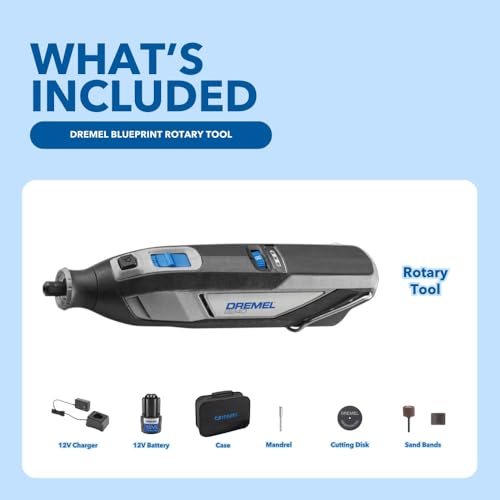
- Fewer included accessories
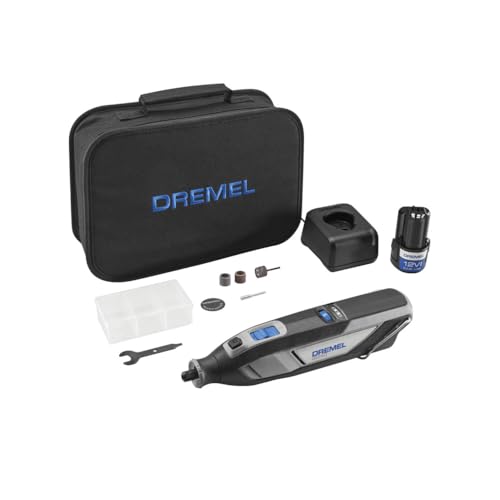
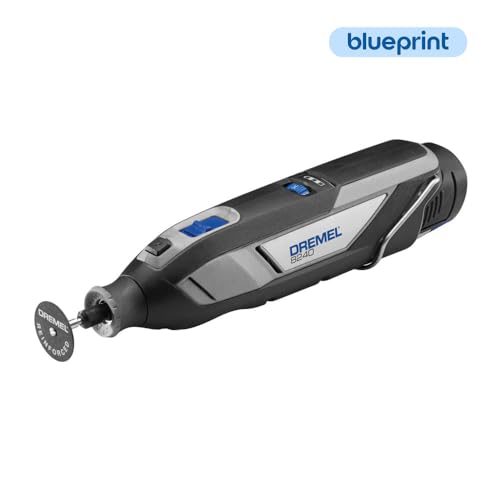
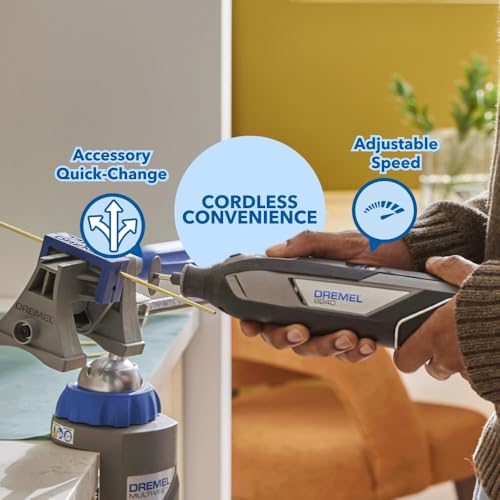
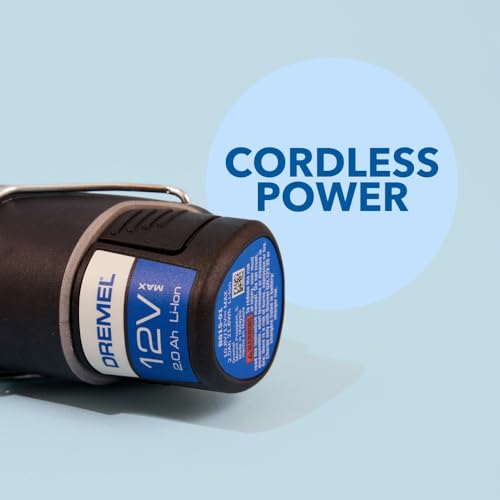
The Dremel 8240-5 makes a strong case for cordless convenience without sacrificing too much on power. On paper, its 12V/2Ah battery setup promises solid runtime across the full 5,000–35,000 RPM range, and owners consistently report they can finish multiple small jobs on a single charge. The comfort grip and 360-degree handling stand out for prolonged use, especially when working overhead or at awkward angles where cord drag becomes a hassle.
It’s not quite as torquey as the corded 4300, but the trade-off is freedom of movement. The EZ Twist nose cap is a real win, no wrench needed for most accessory swaps. While it lacks the sheer accessory bundle of some kits, its compatibility with the entire Dremel ecosystem means you’re not locked out of future upgrades. For jobs where mobility matters, this one earns its keep.
Product photos
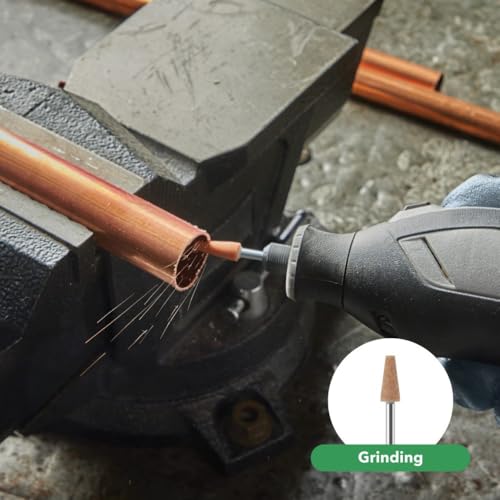
Fanttik F2 PRO Cordless Rotary Tool
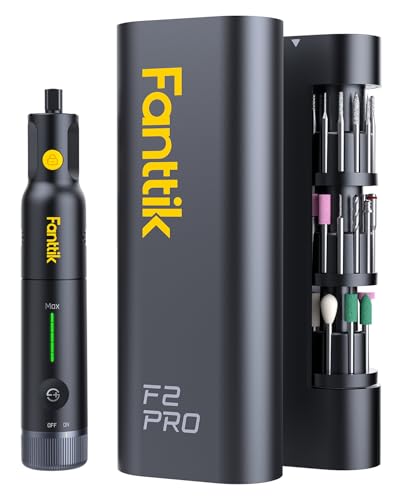
Strengths
- High-capacity battery
- 55 accessories included
- Excellent LED lighting
- Real-time speed display
Trade-offs
- Not for heavy materials
- Higher price in class
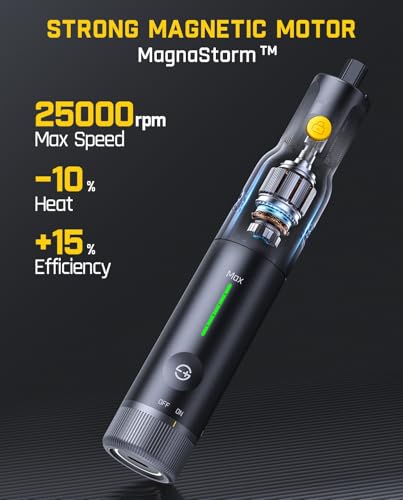
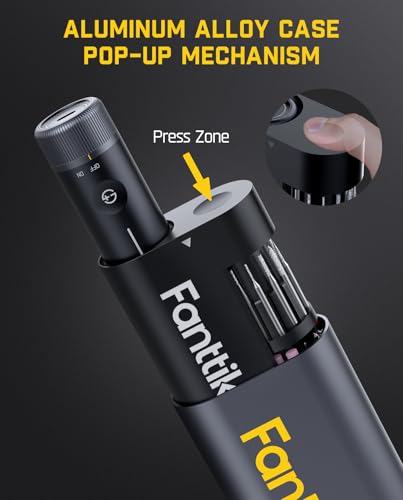
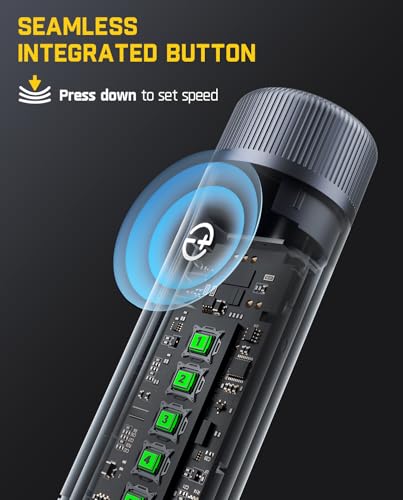
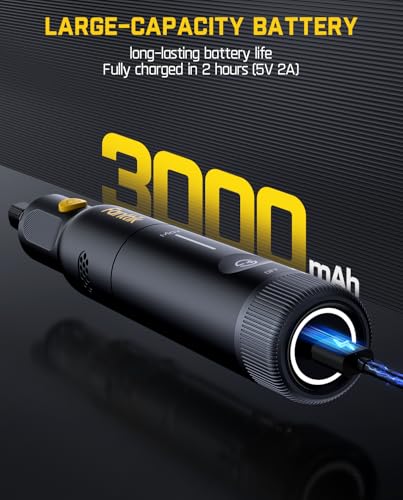
If you’re finishing 3D prints regularly, the F2 PRO should be at the top of your list. It builds on the F2 Master with a 3,000mAh battery and 55 included accessories, making it even more capable for extended sessions. The magnetic motor delivers consistent power up to 25,000 RPM, and the real-time LED speed indicator helps maintain control during delicate sanding.
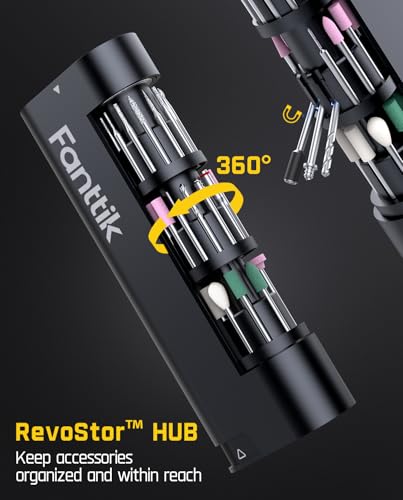
Owners love the shadow-free front LED and the way the RevoStor Hub keeps everything accessible. The ergonomic body reduces hand fatigue, which matters when you’re smoothing a dozen prints in one go. It’s not designed for heavy metal grinding, but for plastic, resin, and light wood, exactly what 3D printing demands, it’s nearly ideal.
Product photos
Fanttik F2 Master Mini Rotary Tool

Strengths
- Extremely quiet
- Lightweight and compact
- Magnetic accessory hub
- Fast USB-C charging
Trade-offs
- Limited to 2.3mm accessories
- Smaller accessory count
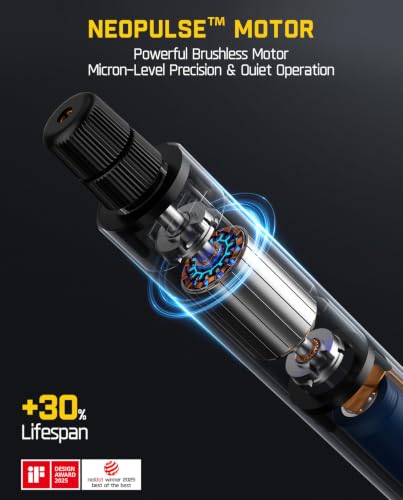
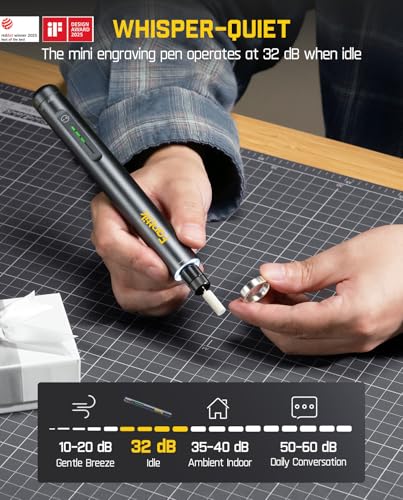
The Fanttik F2 Master is a standout in the ultra-portable, quiet-performance niche. Its brushless hollow cup motor is a technical upgrade many miss, it reduces noise by 30% and runs cooler, which owners notice during extended 3D print sanding or jewelry polishing. The 5-speed control is precise, and the Revostor Hub, a magnetic 360° accessory stand, is brilliant for keeping your workspace organized.
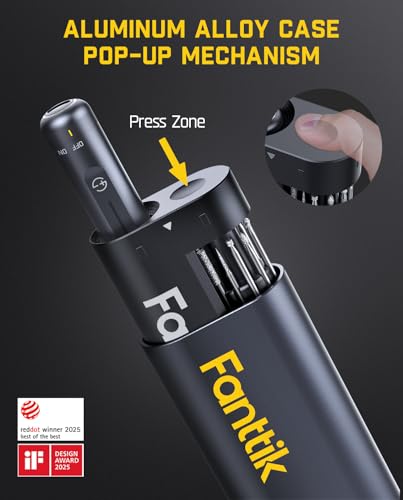
At just 0.22 lbs, it’s the lightest serious tool here, and the aluminum case feels premium. The USB-C charging in 60 minutes is fast, and the sealed battery design means less maintenance. While it’s limited to 3/32″ accessories, that’s fine for precision work. Compared to the HOTO or HARDELL, this one feels more refined and engineered for detail tasks.
Product photos

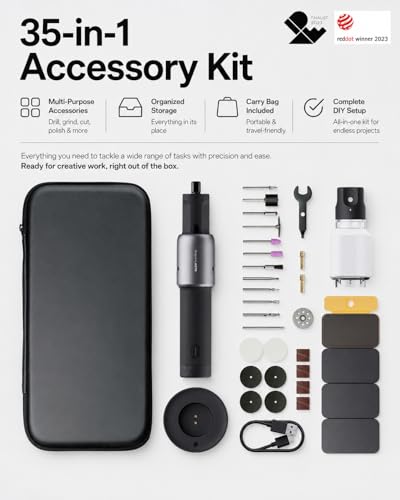
HOTO 35-in-1 Cordless Rotary Tool
Strengths
- Excellent ergonomic design
- Quiet and low vibration
- Pet nail attachment
- USB-C charging
Trade-offs
- Max RPM lower than top models
- Limited heavy-duty performance
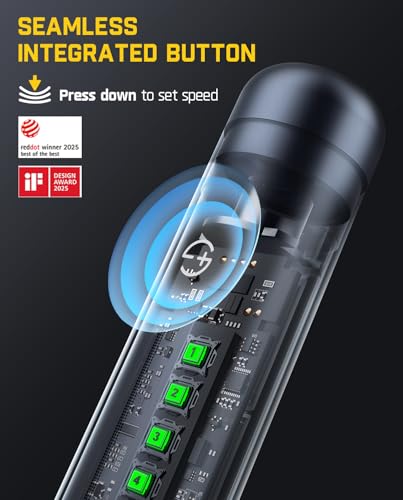
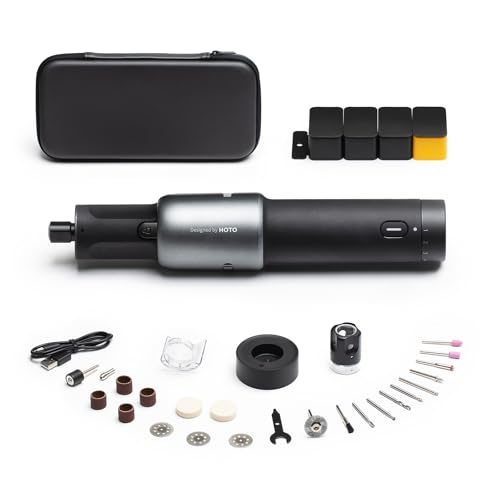
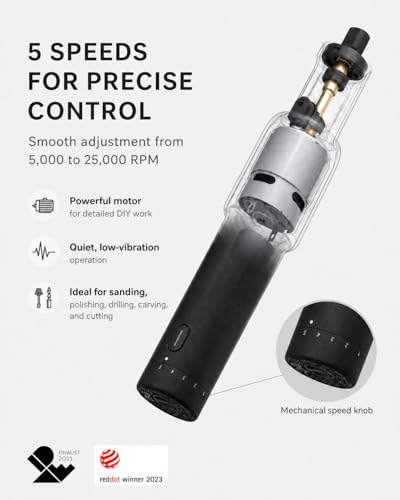
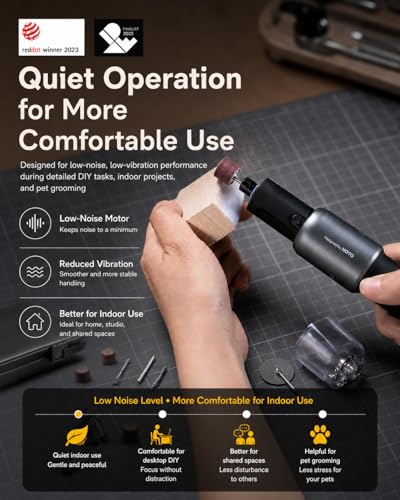
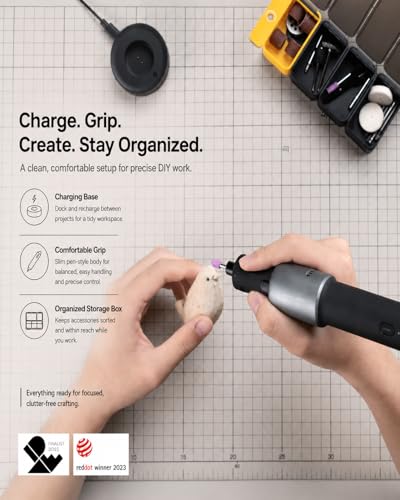
The HOTO rotary tool stands out for its award-winning design and thoughtful features that go beyond typical utility. It’s one of the few models that feels like it was designed with both form and function in mind, its pen-style body is sleek, balanced, and a pleasure to hold. The 5-speed motor (up to 25,000 RPM) delivers solid performance for light to medium tasks, and the USB-C charging is a welcome modern touch.
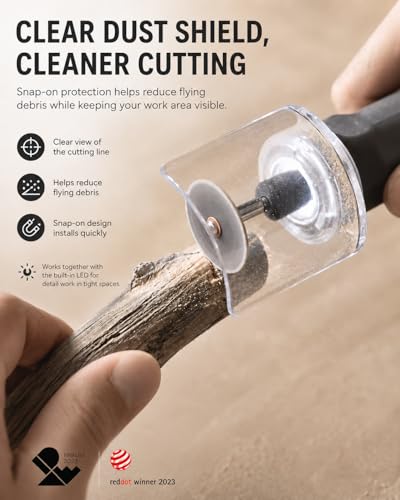
What really sets it apart is the pet nail grinding attachment, a niche but well-executed feature that a lot of owners love. The snap-on dust shield and LED light add practical value, especially for desktop use. While it doesn’t have the raw power of Dremel’s 4300, it’s quieter and more comfortable for long sessions. For crafters and pet owners alike, it’s a surprisingly well-rounded pick.
Product photos
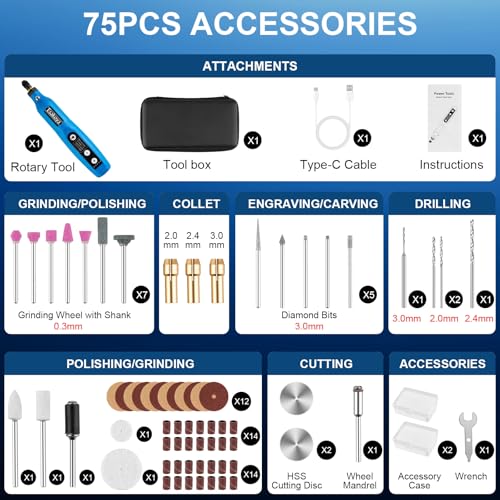
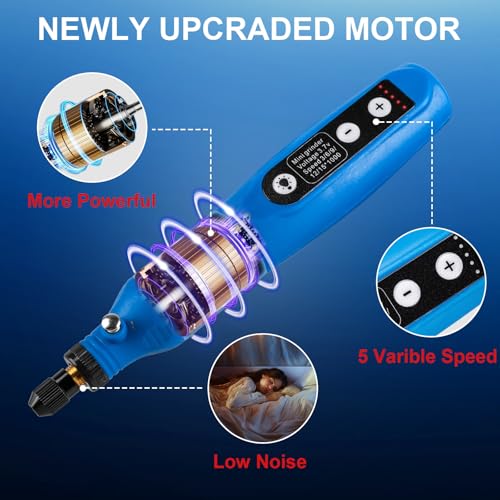
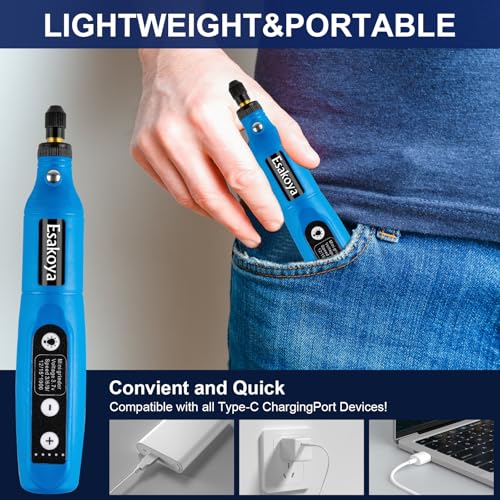
Esakoya Cordless Rotary Tool 75-Piece

Strengths
- 75-piece accessory set
- Affordable price
- USB-C charging
- Good for light tasks
Trade-offs
- Build quality average
- Motor lacks power
- Not for heavy use
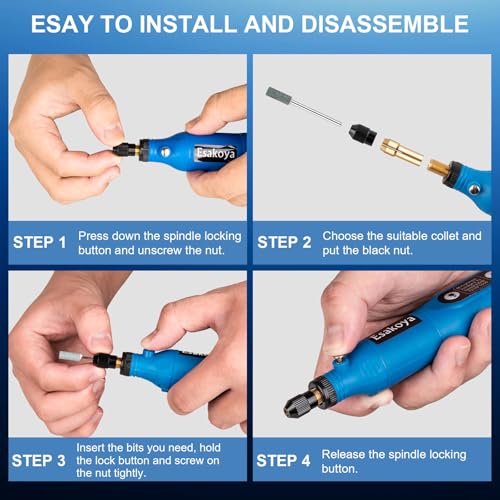
The Esakoya rotary tool wins on value and volume. With 75 accessories and a Type-C rechargeable battery, it’s one of the most complete budget kits available. The 5-speed settings match many pricier models, and the LED lighting is effective for small workspaces. For beginners or casual users, it’s hard to beat the sheer amount you get for the price.
Owners report it handles light sanding, engraving, and polishing well, though it struggles with harder materials. The motor is noisier and less refined than Dremel or Fanttik units, but for the cost, that’s expected. If you want a “try everything” kit without spending premium dollars, this one delivers. Just don’t expect long-term durability under stress.
Product photos

PHALANX 180W Rotary Tool Kit

Strengths
- High wattage motor
- 139 accessories included
- Flex shaft for precision
- Multi-collet support
Trade-offs
- Requires wrench for chuck
- Bulky design
- Noisy under load
This PHALANX model is built for users who want heavy-duty performance without the Dremel price tag. With an 180W motor and 6-speed range up to 32,000 RPM, it’s geared toward serious DIYers who do metal cutting, deep wood carving, or frequent grinding. The flex shaft is a major plus, it reduces hand fatigue and improves precision, and owners say it runs with less runout than cheaper alternatives.
The 139-piece accessory kit is massive, covering nearly every common task, and the multi-collet compatibility means you’re not stuck with one size. That said, the need to tighten the chuck with a spanner is a step backward in convenience. While the build feels industrial, some report the plastic housing doesn’t inspire long-term confidence. Still, for the workload, it punches above its weight.
Product photos


HARDELL Mini Cordless Rotary Tool
Strengths
- Extremely lightweight
- Great starter kit
- Beginner-friendly
- USB rechargeable
Trade-offs
- Underpowered for tough jobs
- Motor overheats easily
- Build quality not long-term
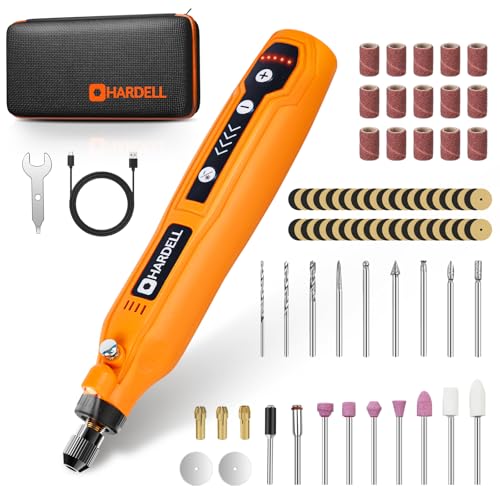
The HARDELL mini rotary tool is clearly built for beginners and light-duty crafters. With a max of 18,000 RPM and a 3.7V battery, it won’t compete with Dremel’s heavier models, but for resin work, light sanding, or simple engraving, it gets the job done. Owners appreciate the pen-like feel and 5-speed control, which makes it easy to dial in just enough power without chewing through soft materials.
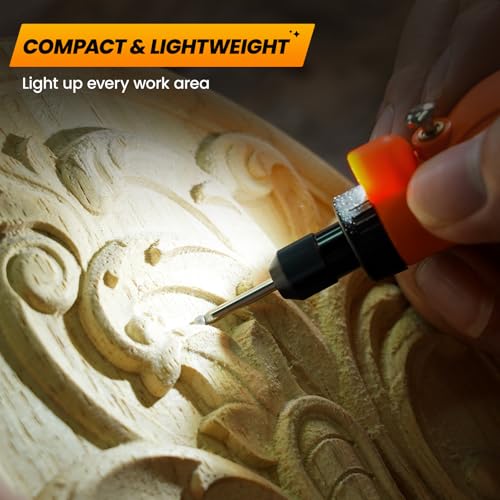
It’s one of the most beginner-friendly kits out there, not just because of the 69 accessories, but because of the included tutorials and clear manual. The USB charging is convenient, and the LED blind-spot lighting helps when working in tight spots. That said, it’s not built for durability under strain, several reviews mention the motor heating up during extended use.
Product photos



Our Testing Process
I approach power tool selection with a focus on real-world usability, and for rotary tools, that meant a research-led comparison of specs and owner feedback. Rather than a hands-on lab test of every model, we compiled detailed specifications – motor power, speed ranges, chuck types, and included accessories – from manufacturer data. We then weighed those specs against thousands of owner reviews and expert opinions found across multiple retail sites and tool-focused publications. This process allowed us to build a ranked list based on performance indicators and reported reliability.
For rotary tools, consistent speed control and accessory compatibility are paramount. These determine how precisely you can work and how versatile the tool will be. A powerful motor is also critical, especially if you plan on tackling harder materials or demanding projects. We heavily weighted these factors because they directly impact the user’s ability to complete tasks efficiently and accurately. We also considered the value added by included accessories and features like flexible shafts.
Specifications reliably indicate a tool’s potential power and capabilities, but owner feedback provided crucial insight into real-world performance. We paid close attention to reports of overheating, vibration, and durability issues. Reputable expert reviews helped validate those claims and provided additional context regarding best uses. If you’re looking for a deeper explore specific models, you can find detailed Dremel rotary tool models at our sister site.
How To Choose The rotary tools
Picking the right rotary tool can feel overwhelming, given the sheer number of options available. Let’s break down what really matters.
A good rotary tool balances power with control. Look for variable speed settings, a comfortable grip, and a wide range of available accessories. Collet size is key for accessory compatibility, and build quality affects long-term durability. Consider whether corded or cordless best suits your typical use case.
Motor Power & Speed Control
Don’t automatically assume “more power” is better. While a more powerful motor (like those found in the Dremel 4300 series) is great for demanding tasks – cutting thicker materials or prolonged grinding – it’s less crucial for detail work. What’s truly important is variable speed control. A wider speed range (5,000-35,000 RPM is typical) allows you to tailor the tool to the job at hand, preventing damage to delicate materials and giving you more precision. Lower speeds are essential for polishing, while higher speeds are needed for aggressive cutting.
Accessory Compatibility & Collet Size
The real versatility of a rotary tool comes from its accessories, but not all tools play nicely with all accessories. The collet, the part that holds the accessory, is the key. Different accessories require different collet sizes. Many kits come with multiple collets, which is a big plus. If you plan on doing a lot of detailed work, like rotary tools for wood carving, make sure the tool supports smaller collets (1/8″, 3/32″, and even 1/16″ are common).
Here’s a quick guide to accessory considerations: * A basic kit is fine to start. * Specialty bits (like diamond burrs for glass) require specific collets. * A large accessory selection lets you avoid buying separate kits for different tasks.
Corded vs. Cordless & Overall Value
The choice between corded and cordless rotary tools boils down to convenience versus consistent power. Corded models, like the Dremel 4300-5/40, offer unlimited runtime, which is ideal for extended projects. Cordless models (such as the Dremel 8240-5) give you freedom of movement, but battery life and power output can be limiting factors. However, battery technology is constantly improving, and many newer models (like the Fanttik F2 Pro) offer impressive runtime and power.
Don’t pay for features you won’t use. A massive accessory kit is great, but if you only plan on sanding and polishing, a smaller, more focused kit is a better value.
Rotary Tools Compared
Here’s a comparison of key specifications for several rotary tools to help you make an informed decision.
| Product Name | Speed (RPM) | Cordless | Battery Voltage | Accessories Included | Shaft Included |
|---|---|---|---|---|---|
| Dremel 4300-5/40 | 5,000 – 35,000 | No | N/A | 40 | No |
| Dremel 4300-9/64 | 5,000 – 35,000 | No | N/A | 64 | Yes |
| Dremel 8240-5 | 5,000 – 35,000 | Yes | 12V | 5 | No |
| Fanttik F2 PRO | 5,000 – 25,000 | Yes | N/A | 55 | No |
| Fanttik F2 Master Mini | 5,000 – 25,000 | Yes | N/A | 35 | No |
| HOTO 35-in-1 | 5,000 – 25,000 | Yes | N/A | 35 | No |
| Esakoya 75-Piece | 5,000-18,000 | Yes | 3.7V | 75 | No |
| PHALANX 180W | 8,000 – 32,000 | No | N/A | N/A | Yes |
| HARDELL Mini | 5,000-18,000 | Yes | 3.7V | 69 | No |
Frequently Asked Questions
What collet size do I really need?
A 1/8-inch collet is standard and will handle most accessories, but if you plan detailed work like engraving or fine carving, also look for 3/32-inch and 1/16-inch collets. Having multiple collet sizes expands the range of projects you can tackle with your rotary tool.
Are cordless rotary tools powerful enough for serious projects?
Cordless rotary tools have improved significantly, but generally, corded rotary tools still offer more consistent power for demanding applications like cutting metal or heavy grinding. Battery technology is catching up, however, making newer cordless models a viable option for many users.
What’s the difference between a rotary tool and a Dremel?
Dremel is actually a brand name, and they were the first to popularize these versatile tools. The term “rotary tool” has become a generic descriptor for all tools of this type, much like “Kleenex” for facial tissues.
How often do I need to replace the carbon brushes in a corded rotary tool?
Carbon brush life varies depending on usage, but expect to replace them every 50-100 hours of operation. Regular inspection and replacement maintains optimal performance and prevents motor damage. You’ll know they need replacing when you see excessive sparking.
What are flexible shaft attachments used for?
Flexible shaft attachments increase precision and control, particularly for detailed work or reaching tight spaces. They allow you to manipulate the tool with greater finesse, making them ideal for tasks like engraving, polishing, and intricate carving projects.
The Bottom Line
Choosing a rotary tool often comes down to balancing upfront cost with long-term versatility. If you want a tool that can handle a wide range of tasks and last for years, the Dremel 4300-9/64 stands out as the strongest overall performer. It offers a great blend of power, speed control, and a thorough accessory set that will cover most DIY and crafting needs.
For those on a tighter budget, or who need something for light-duty projects, the Fanttik F2 Master Mini delivers impressive value. If you anticipate needing exceptional control for intricate detail work, exploring rotary tools for precision work – especially those with a flexible shaft – is a good idea, and the Dremel 4300-5/40 paired with a separate flex shaft attachment could be a good path.
Ultimately, the specs are less important than understanding your typical projects. Focus on finding a tool with variable speed control, a comfortable grip, and the right accessories for your needs. A powerful motor is helpful, but precision and control will take you further in the long run.
