8 Best MIG Welders of 2026
This post contains affiliate links. As an Amazon Associate, we earn from qualifying purchases.
The Millermatic 211 PRO stands out as the best overall MIG welder for its consistent arc performance and rugged build, while the ARCCAPTAIN MIG205MP is a strong budget-friendly pick that adds TIG and Stick capability without breaking the bank. For those who want maximum versatility across welding types, the YESWELDER MCT-520 also earns a spot near the top.
Most people don’t realize how much their welding needs vary, from patching up a trailer to building frames from scratch. Picking the wrong machine can mean frustration, weak welds, or overspending on power you’ll never use.
This guide cuts through the noise by focusing on real-world specs and owner feedback to find models that deliver where it matters: duty cycle, amperage range, ease of setup, and long-term reliability. We looked at what DIYers and pros actually say about performance, not just what the brochure claims.
Top 8 Mig Welders in the Market
The Best Mig Welders, Reviewed
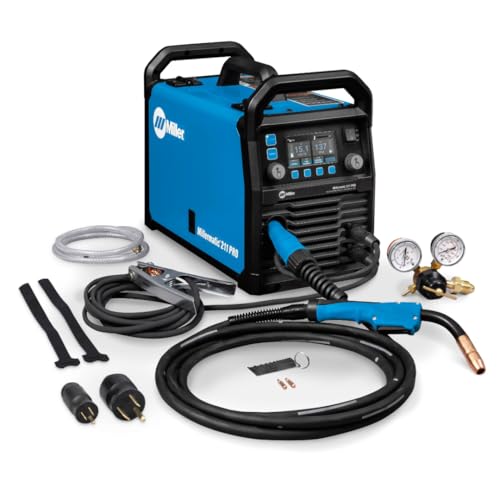
Millermatic 211 PRO MIG Welder
Strengths
- Dyna-Pulse technology
- Auto-Set & memory
- Dual voltage
Trade-offs
- High price
- Spool gun sold separately
- Heavy for portability
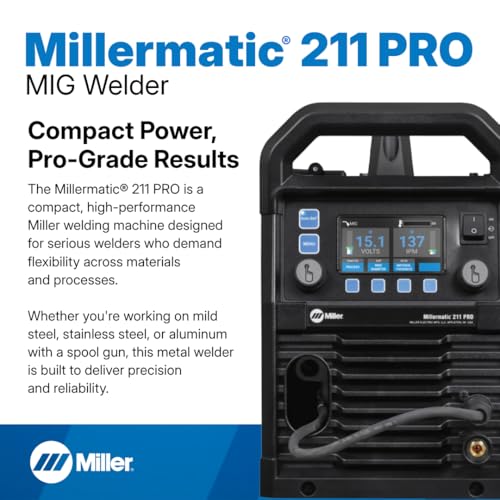
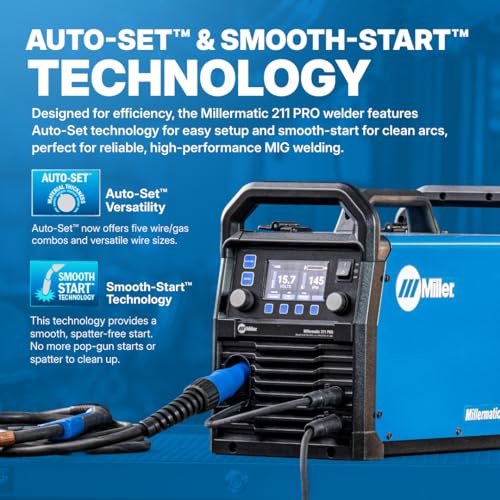
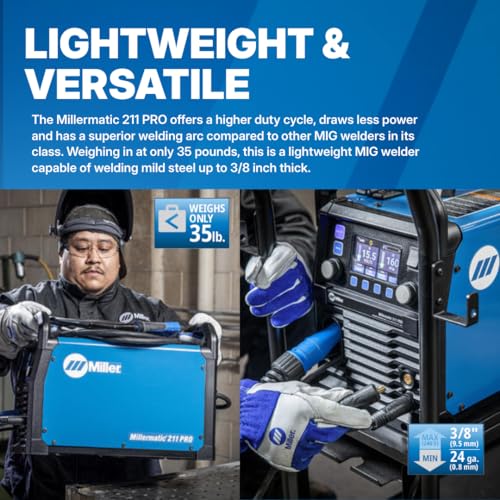
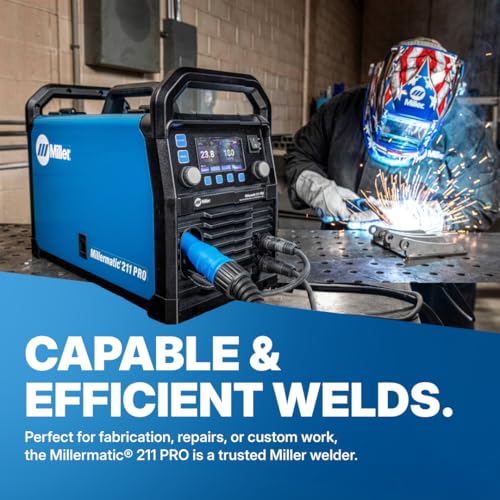
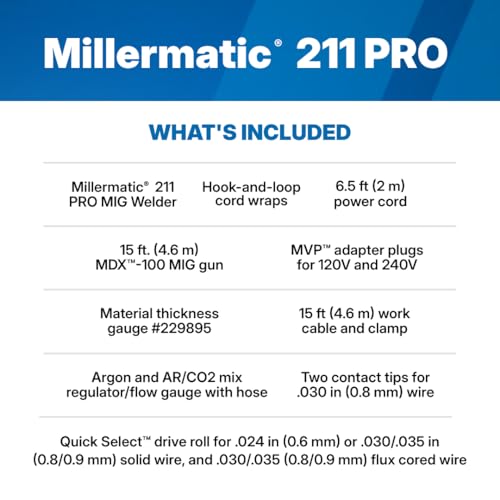
The Millermatic 211 PRO is the gold standard in this list, not just because of the Miller name, but because of how well it balances power, intelligence, and ease of use. The Dyna-Pulse MIG tech delivers cleaner beads on thin steel and aluminum, and Auto-Set takes the guesswork out of setup. The program memory is a pro touch: save your favorite settings and recall them instantly. With dual voltage and a tool-free MVP plug, switching between 120V and 240V is effortless, making it equally at home in a garage or on a job site.
It’s also built to last, with a heavy-duty drive system and spool gun auto-detection. Owners consistently report reliable aluminum welding and strong performance on stainless. The higher duty cycle means longer runs without overheating. Yes, it’s the most expensive option here, but it’s also the one you’ll keep for a decade. My recommendation? If you’re serious about welding, this is the smarter buy.
Product photos
ARCCAPTAIN MIG205MP 9-in-1 Welder

Strengths
- 9-in-1 versatility
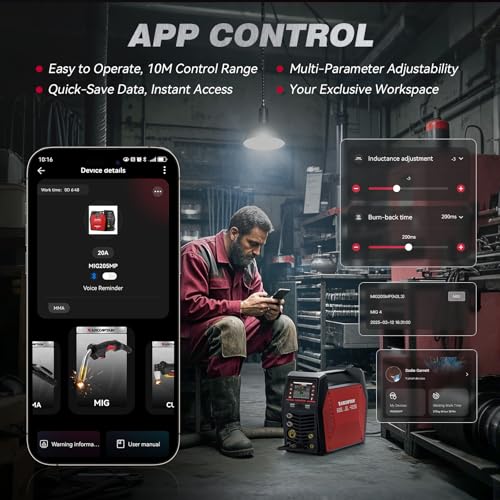
- App control
- Dual voltage
Trade-offs
- Steep learning curve
- Spool gun sold separately
- Bulky for portability
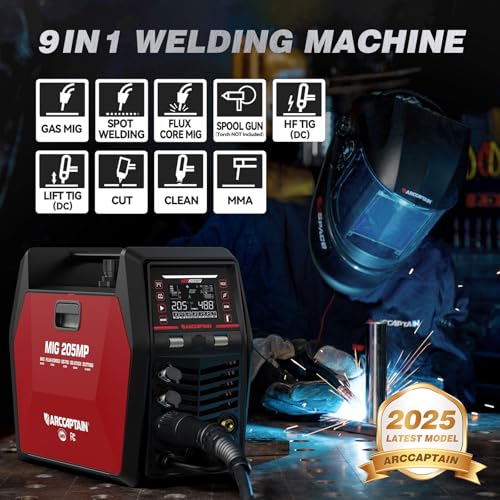
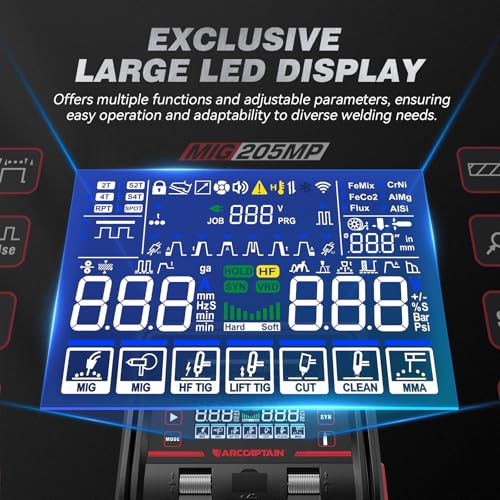
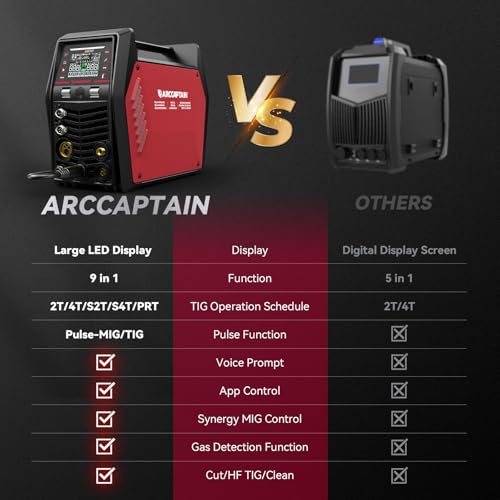
The ARCCAPTAIN MIG205MP is the most feature-packed unit here, with nine welding modes including DC HF TIG, plasma cutting, and spool gun-ready aluminum welding. The dual-voltage design means you can run it on 120V at home or switch to 240V for deeper penetration on thicker jobs. The app control isn’t just a gimmick, owners say it’s actually useful for saving custom profiles and troubleshooting issues on the fly. The LED display is large and readable, and the smart parameter matching makes setup quick even for less experienced users.
Still, all these features come with complexity. If you’re not comfortable navigating menus or don’t need TIG or plasma, this might be overkill. And while the 60% duty cycle is decent, it’s not class-leading. But for a pro or serious enthusiast who wants one machine to do nearly everything, this is a compelling all-in-one solution, especially with VRD safety and dual cooling fans built in.
Product photos

YESWELDER MCT-520 Combo & Cutter
Strengths
- Plasma cutter included
- Glove-friendly controls
- High amperage
Trade-offs
- Large footprint
- Foot pedal sold separately
- Not for light portability
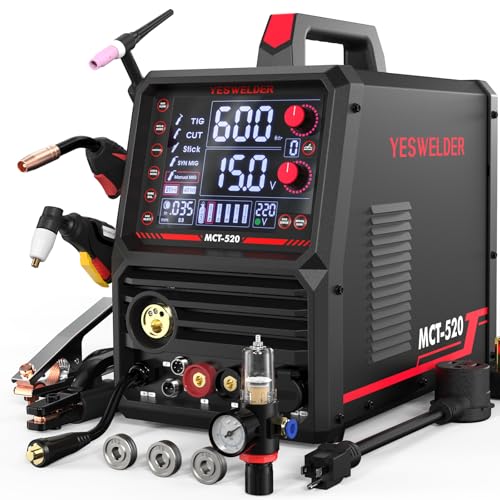
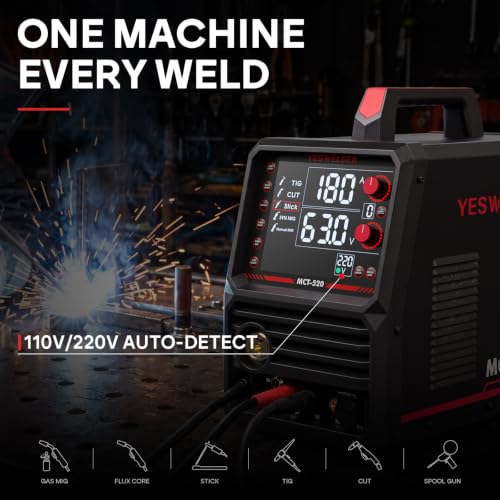
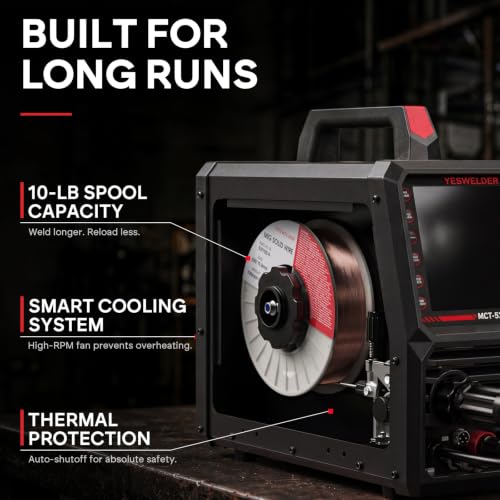
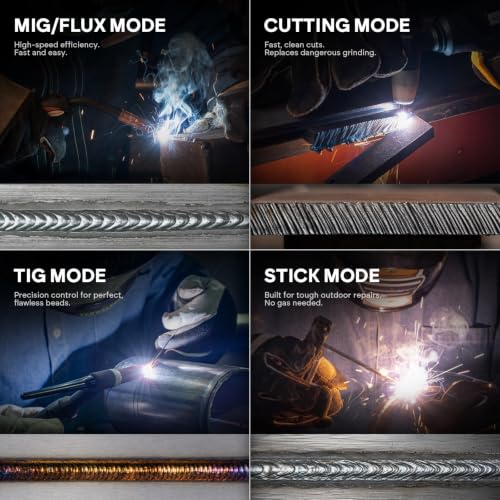
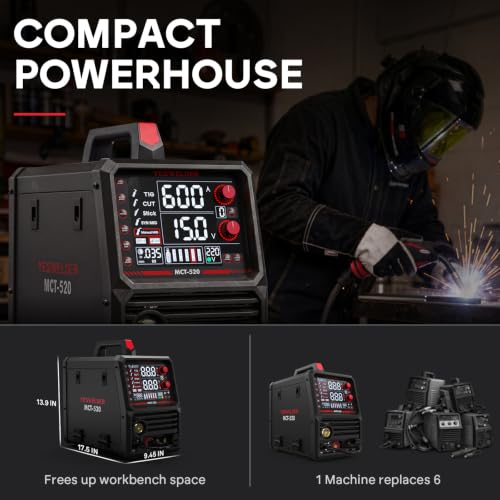
The YESWELDER MCT-520 is the ultimate shop-saver, a 6-in-1 machine that includes plasma cutting, so you can cut and weld with one unit. The 200A output handles thick steel with ease, and the 50A plasma cutter slices through 1/2 inch metal cleanly. The 7-inch glove-friendly LED screen is a standout, no touchscreens, just physical dials you can turn with work gloves on. Owners love the real-world usability, and the step-by-step video guides make setup surprisingly fast.
It’s not the most portable, but for a fixed shop or garage, it replaces multiple tools. The TIG and stick modes are solid, and the spool gun compatibility opens the door to aluminum. With 24/7 USA support and a 2-year warranty, it’s backed like a pro machine. If you want one unit to do it all and don’t mind a learning curve, this is the most capable option here.
Product photos

YESWELDER 160A Dual Voltage MIG
Strengths
- Dual voltage
- 4-in-1 modes
- Strong output
Trade-offs
- TIG torch not included
- Wire feeder quirks
- Heavier than entry models
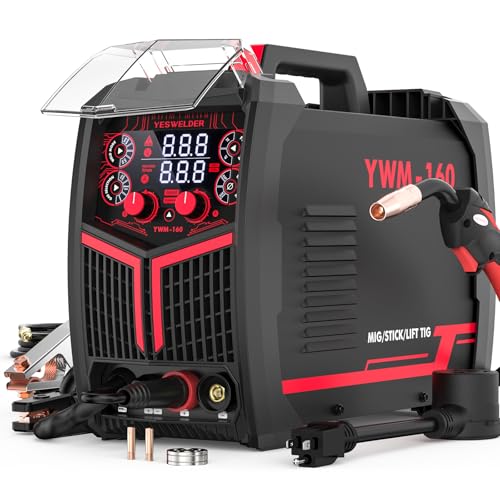
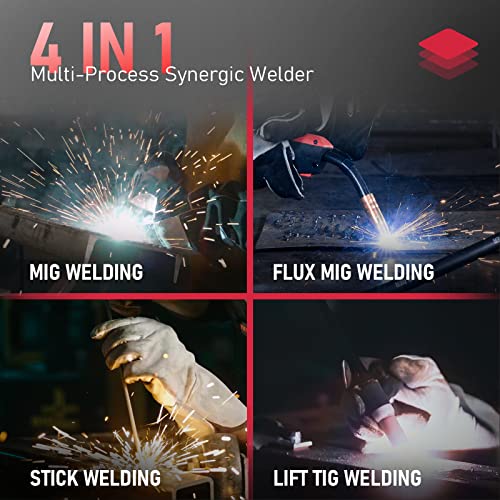
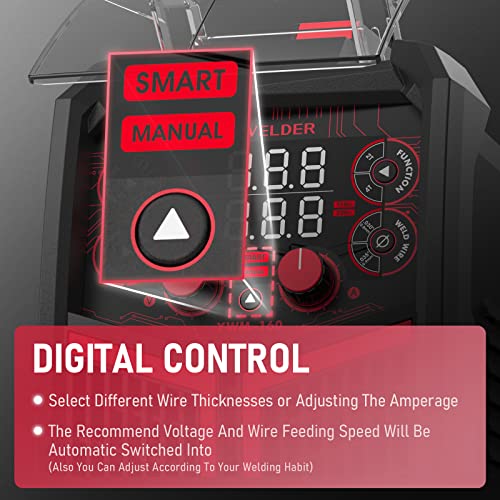
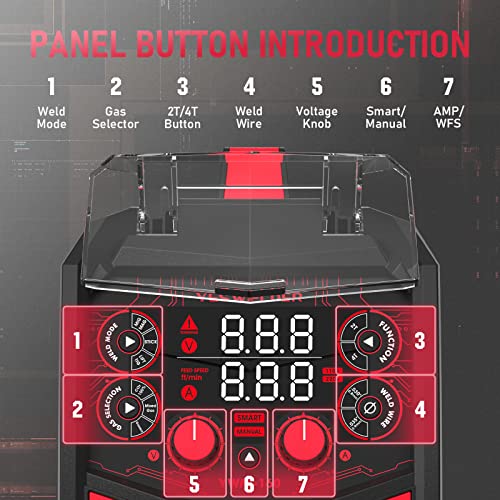
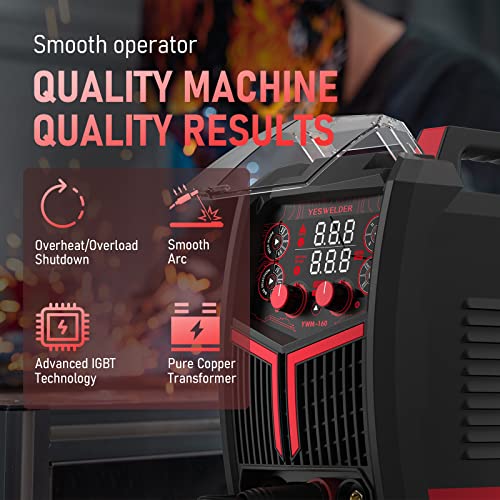
The YESWELDER 160A hits a sweet spot between capability and cost, making it my pick for best value. With 160 amps and dual voltage, it can handle thicker material than most 110V units, and the 4-in-1 functionality (MIG, flux-core, stick, lift TIG) gives real flexibility. The LED display is clear and easy to read, and the smart synergic control helps beginners avoid bad settings. Manual mode gives pros full control, and the dual-voltage option means you can scale up when needed.
It’s not perfect, the TIG torch is sold separately, and some owners note the wire feeder can be finicky with thicker wires. But for the price, the feature set is impressive. Compared to the Lincoln 90i or FEMEROL, this one grows with you. If you’re planning more than just occasional fixes, this is the machine that won’t leave you wanting soon.
Product photos
ARCCAPTAIN 200A 6-in-1 MIG Welder
Strengths
- Aluminum optimized
- Burn-back adjustment
- Preset memory
Trade-offs
- Torch and spool gun not included
- Complex for beginners
- Fan can be noisy
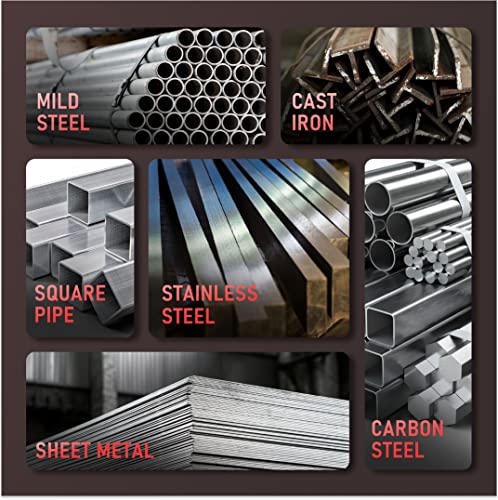
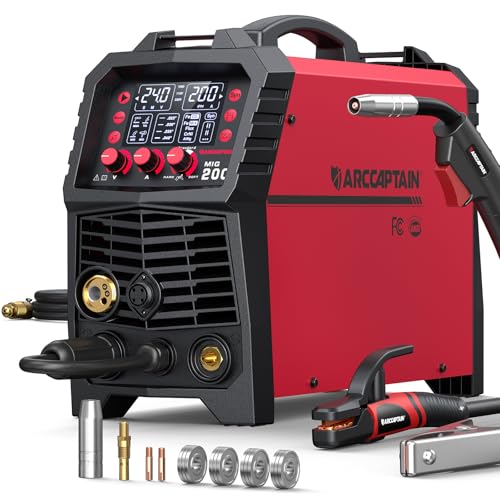
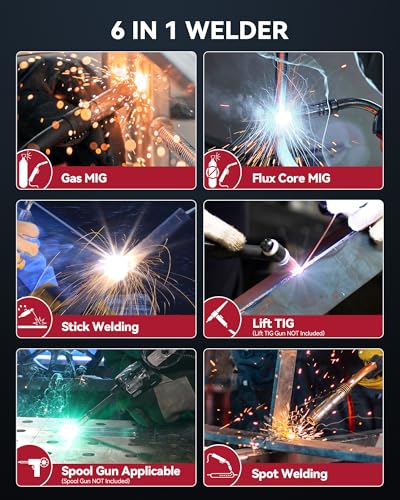
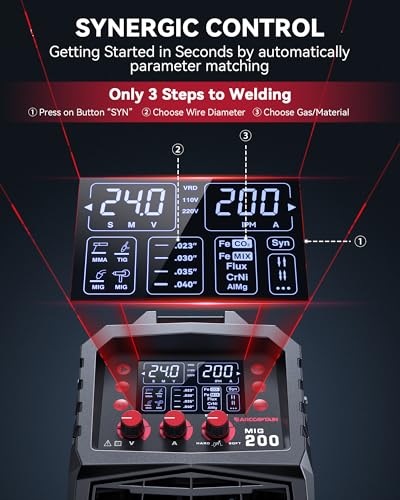
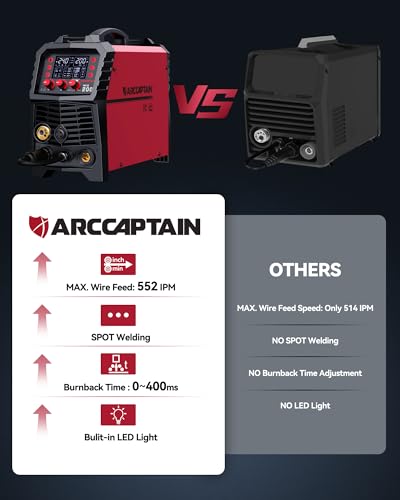
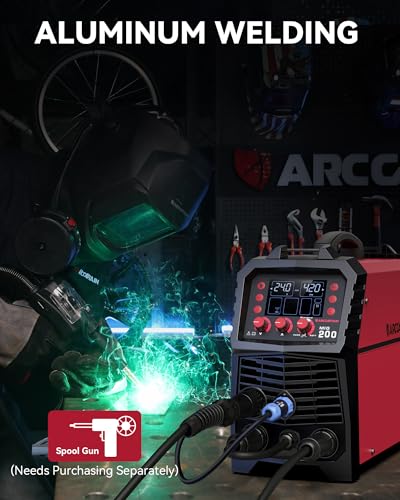
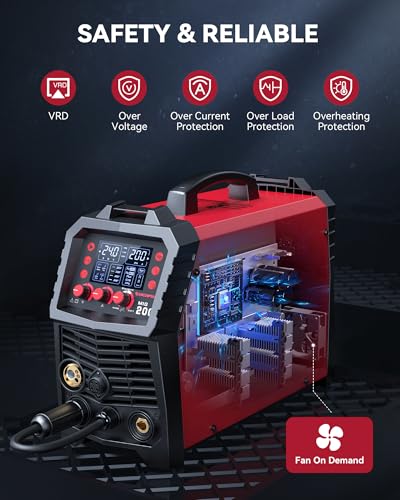
If aluminum welding is your priority, the ARCCAPTAIN 200A stands out with its spool gun-ready design and support for .040 aluminum wire, a rare spec at this level. The 6-in-1 functionality covers all common processes, and the synergy control makes gas or flux-core MIG easy to dial in. The large LED screen is a big plus, especially when wearing a helmet, and the 10 preset memories save time on repeat jobs. Dual voltage adds flexibility, and the adaptive crater and burn-back features help reduce defects on thin materials.
But like other ARCCAPTAIN models, it’s feature-rich to a fault. Beginners might feel overwhelmed, and the lack of included TIG or spool guns adds hidden cost. Still, for someone focused on aluminum, whether for trailers, bike frames, or custom fabrication, this machine delivers targeted capability that few in this range can match.
Product photos
YESWELDER 135A Flux Core MIG
Strengths
- 3-in-1 capability
- Digital display
- Bonus wire included
Trade-offs
- TIG torch not included
- Limited for thick steel
- Fan noise at high load
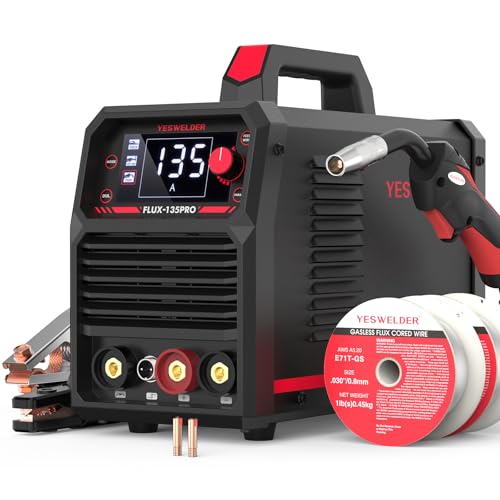
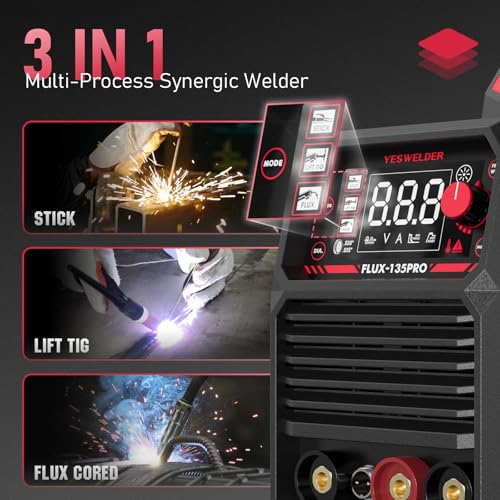
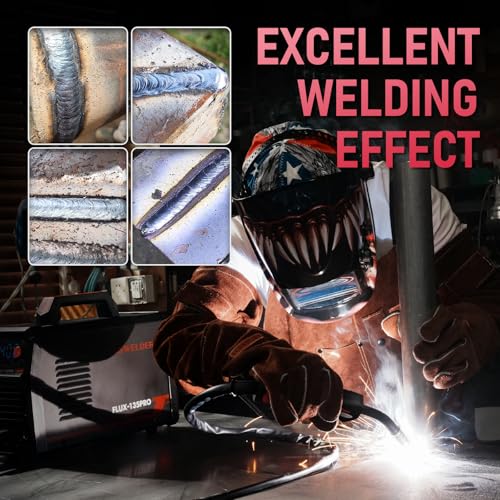
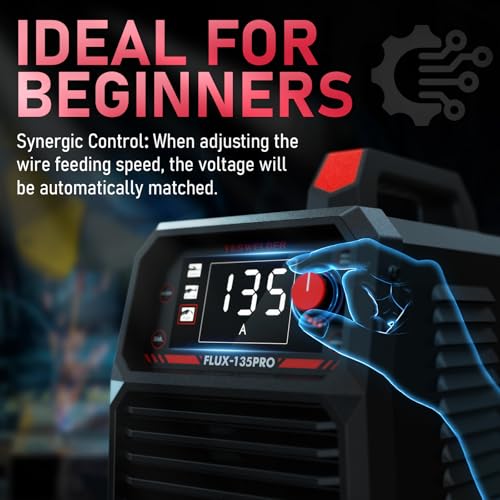
If you’re on a tight budget but still want flexibility, the YESWELDER 135A is hard to beat. It’s a 3-in-1 machine with flux-core MIG, stick, and lift TIG modes, and the digital display gives you real-time current feedback, a rare plus in this range. The synergy control works well for beginners, automatically matching voltage to wire speed, and the included 2LB flux-core wire means no gas tank to buy. At 11.4 pounds, it’s easy to carry, and the overload protection gives peace of mind during long sessions.
However, the TIG function requires an additional torch, and the 135-amp ceiling limits thick-metal work. Some owners note the fan can be loud under load, and the duty cycle drops fast at higher settings. Still, for the price, it offers surprising versatility and build quality. I’d pick this over basic single-process welders any day if you want room to grow.
Product photos


Lincoln Electric 90i MIG Welder

Strengths
- Rugged metal case
- True portability
- Simple controls
Trade-offs
- Low power output
- No digital display
- No TIG or stick mode
Lincoln Electric has a reputation for reliability, and the 90i keeps that promise with a clean, no-frills design focused on portability and ease of use. At 15 pounds with a shoulder strap, it’s built for welders who move around, think farm repairs, fence fixes, or job-site touch-ups. The two-knob control (voltage and wire speed) is simple and effective, and the inverter-based power source delivers smoother arcs than older transformer models.
It’s limited to 1/4 inch with flux-core wire, so don’t expect deep welds, but for small jobs, trailer hitches, gate latches, broken brackets, it’s more than enough. Owners praise its build quality and the included metal case, which adds real protection in rough conditions. It won’t weld aluminum without a spool gun, and it lacks digital displays or presets, but that also means fewer things to go wrong.
Product photos


FEMEROL 130A Gasless MIG Welder

Strengths
- Lightweight
- Synergy control
- Complete kit
Trade-offs
- Limited thickness
- No gas MIG mode
- Low duty cycle
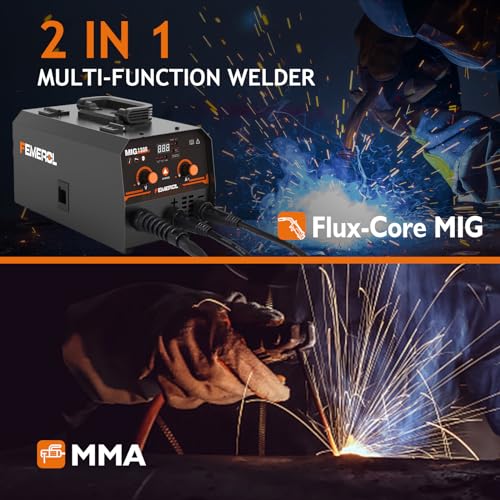
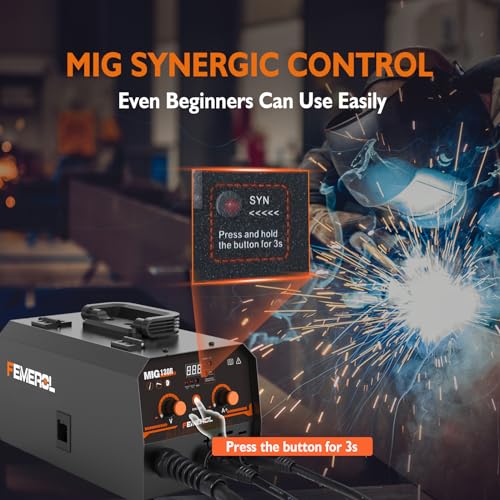
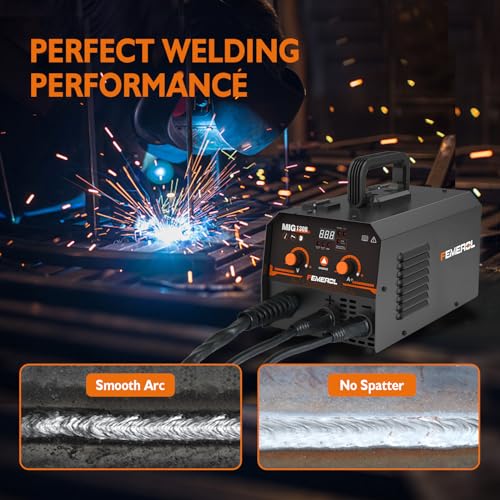
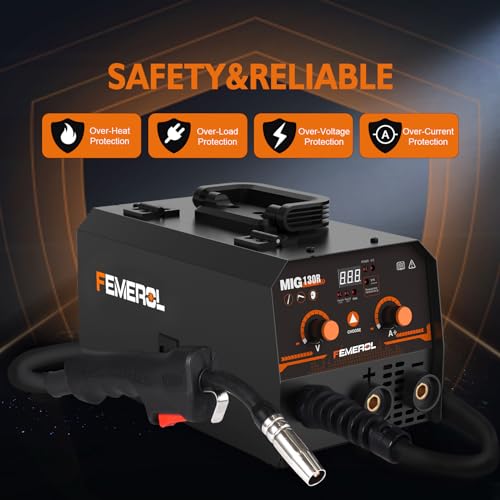
At just 9 pounds, the FEMEROL 130A welder is one of the lightest in its class, and that makes it a standout for anyone hauling gear to job sites or working in tight spaces. The synergy control is a real win for beginners, it automatically matches voltage and wire speed, so you’re not guessing settings when starting out. Owners consistently report clean starts on thin steel, especially with the included flux-core wire, and the fact that it runs on 110V means you can plug it into a standard outlet.
That said, 130 amps limits you to about 1/8 inch mild steel, so it’s not built for heavy fabrication. But for patching trailers, fixing farm tools, or weekend DIYs, it’s more than capable. The included accessories, mask, gloves, wire, and tips, mean you can start welding right away, which is rare at this price point. It’s not going to replace a 220V beast, but for its niche, it delivers solid value.
Product photos

How We Evaluated mig welders
My team and I approached this guide by compiling detailed specifications and feature lists for a wide range of MIG welders currently available. We then layered that technical data with extensive analysis of owner reviews from major retailers and expert opinions published by respected welding resources. This wasn’t about hands-on testing in my shop; rather, it was a research-led comparison designed to identify the models consistently praised for performance, reliability, and value.
For MIG welders, the most important factors are duty cycle, amperage output, and the versatility of welding processes supported. A higher duty cycle means you can weld for longer periods before the machine overheats – critical for larger projects. Amperage dictates the thickness of metal you can effectively join, and supporting multiple processes (like MIG, Stick, and TIG) increases the machine’s overall usefulness. We also heavily considered ease of use, especially for beginners, and the availability of helpful features like synergic control. If you need even more power, you might also consider looking at our guide to professional 220V welders.
Specifications reliably tell you about a welder’s raw power and capabilities – amperage, voltage, duty cycle, and material compatibility. However, owner feedback provided crucial insights into real-world usability, build quality, and long-term reliability. We paid close attention to comments about arc stability, ease of setup, and the effectiveness of included accessories. Reputation and brand history also factored in; established manufacturers often offer better support and more consistent performance than lesser-known brands.
What To Look For In mig welders
Picking the right MIG welder can feel overwhelming, but focusing on your needs will narrow down the choices considerably.
A good MIG welder balances amperage output with duty cycle, ease of use, and portability. Look for models with synergic control for simpler operation, especially if you’re new to welding. Consider the types of materials you’ll be working with (steel, aluminum, etc.) and ensure the welder supports them, either natively or with optional accessories. Finally, prioritize safety features like overload protection and a robust build quality.
Amperage and Material Thickness
The amperage output of a MIG welder dictates the thickness of metal it can effectively weld. For thin sheet metal – auto body work, for example – a lower amperage machine (130-150 amps) might suffice. However, if you anticipate tackling thicker steel, like on a trailer or farm equipment, you’ll want to step up to 200 amps or higher. Don’t overestimate your needs, though; a higher amperage machine isn’t necessarily better if you’ll rarely use its full capacity. Many buyers are surprised to learn how capable even entry-level 110V machines can be for home projects.
Features and Ease of Use
Synergic control is a huge benefit, especially for beginners. These systems automatically adjust voltage and wire feed speed based on your material thickness and wire type, simplifying the setup process. Some welders, like the ARCCAPTAIN models, now even offer app control and preset memory for saving frequently used settings. Beyond that, look for intuitive controls, a clear display, and readily available resources (manuals, videos) to help you troubleshoot any issues. Don’t fall for overly complex digital interfaces; often, simple physical dials are more reliable and easier to use with gloves on.
Here’s a quick breakdown of what to look for in features: * A clear display. (Essential for monitoring settings.) * Synergic control. (Speeds up setup and improves weld consistency.) * Adjustable settings. (Allows experienced welders to fine-tune parameters for specific applications.)
A welder with a robust set of adjustable parameters gives you more control over the welding process, but it isn’t always necessary.
Portability and Value
Consider where you’ll be welding most often. If you need to move the welder around a shop or take it to job sites, portability is key. Look for a lightweight design (under 20 pounds is ideal) and a sturdy carrying handle. Dual-voltage capability (110V/220V) adds flexibility, allowing you to plug into different power sources. Finding the sweet spot between features, performance, and price is where many buyers focus. There are plenty of affordable welding machines available that deliver excellent value for the money, and you don’t necessarily need to spend top dollar to get a reliable and capable welder. Many people also find excellent best value welders in this price range.
MIG Welders Compared
Here’s a comparison of key specifications for several MIG welders to help you make an informed decision.
| Product Name | Voltage (V) | Amperage (A) | Processes | Duty Cycle (%) | Portability |
|---|---|---|---|---|---|
| Millermatic 211 PRO | 120/240 | 211 | MIG, Flux-Cored | N/A | Moderate |
| ARCCAPTAIN MIG205MP | 120/240 | 205 | MIG, TIG, Stick, Cut | 60 | Moderate |
| YESWELDER MCT-520 | 120/240 | 200 | MIG, TIG, Stick, Cut | N/A | Moderate |
| YESWELDER 160A | 110/220 | 160 | MIG, Stick, TIG | N/A | Moderate |
| ARCCAPTAIN 200A | 110/220 | 200 | MIG, TIG, Stick | N/A | Moderate |
| YESWELDER 135A | 120 | 135 | MIG, Stick, TIG | N/A | Lightweight |
| Lincoln Electric 90i | 120 | 90 | MIG, Flux-Cored | N/A | Lightweight |
| FEMEROL 130A | 120 | 130 | MIG, Stick | N/A | Lightweight |
Frequently Asked Questions
What duty cycle should I really be looking for?
A 60% duty cycle at the welder’s rated amperage is generally sufficient for most home and hobbyist use. However, if you plan on doing a lot of continuous welding, or working on thicker materials, look for a machine with a higher duty cycle – ideally 80% or more – to prevent overheating and downtime.
Can I weld aluminum with any MIG welder?
While many MIG welders can weld aluminum, it typically requires a spool gun or a specific aluminum wire feed system. Standard steel wire feeders aren’t designed to handle the soft aluminum wire, leading to inconsistent feeding and poor weld quality.
What’s the difference between flux-cored and MIG welding?
MIG welding uses a shielding gas to protect the weld pool from contamination, while flux-cored welding uses a flux-filled wire that creates its own shielding. Flux-cored is often preferred for outdoor applications or when shielding gas isn’t readily available, but it produces more spatter and requires more cleanup.
Are the multi-process welders (MIG, TIG, Stick) a good option for beginners?
They can be, but don’t expect to master all processes immediately. Multi-process welders offer versatility, letting you learn different techniques over time, but often trade off some performance in each individual process compared to dedicated machines. If you’re focused solely on MIG, a dedicated MIG welder might be a better starting point.
What are the best options for someone needing industrial-grade MIG welders for a professional shop?
For professional use, prioritize a high duty cycle, robust build quality, and consistent performance under heavy use. Look for models offering advanced features like synergic control, pulse welding, and precise parameter adjustments, and be prepared to invest in a machine from a reputable brand known for reliability and support.
The Bottom Line
Choosing a MIG welder always comes down to balancing how much control you want with how much fuss you’re willing to deal with. If you simply want a reliable machine that works well, consistently, right out of the box, I recommend the Millermatic 211 PRO. It consistently receives high marks for arc stability and ease of use, making it a great all-around choice.
However, for those wanting more versatility – or a lower price point – there are excellent alternatives. The ARCCAPTAIN MIG205MP offers a compelling package of MIG, TIG, Stick, and cutting capabilities, while the YESWELDER 160A provides a solid entry point for beginners on a tighter budget. If portability is a top concern, look at lightweight welding systems such as the Lincoln Electric 90i or FEMEROL 130A.
Ultimately, specs and features only tell part of the story. Focus on finding a machine that fits your skill level and the types of projects you’ll be tackling. A higher amperage or more processes won’t matter if the welder is difficult to set up or produces inconsistent welds. Prioritize a smooth arc, reliable performance, and a design that inspires confidence – those are the fundamentals that will make all the difference in your work.
