
7 Best Impact Drivers for Home Use 2026
This post contains affiliate links. As an Amazon Associate, we earn from qualifying purchases.
The DEWALT 20V MAX Impact Driver Kit is the best overall pick for home use, combining strong torque, a brushless motor, and a battery included in the package. For budget-conscious buyers, the CRAFTSMAN 20V MAX Impact Driver Kit offers solid performance at a lower price, while the DEWALT 20V MAX XR stands out if you already own DEWALT batteries and want a high-performance bare tool.
Most homeowners don’t need a pro-level impact driver, but that doesn’t mean you should settle for underpowered or poorly built tools. The real challenge is cutting through marketing hype to find a driver that’s reliable, comfortable to use, and capable of handling everything from deck screws to stubborn bolts without breaking the bank.
In this guide, I’ll walk you through the key factors that matter most for home use, like torque, battery compatibility, and motor type, based on specs, owner feedback, and years of experience evaluating tools. These picks are focused on value, durability, and real-world performance, not just big numbers on a spec sheet.
Top 7 Impact Driver For Home Uses in the Market
The Best Impact Driver For Home Uses, Reviewed
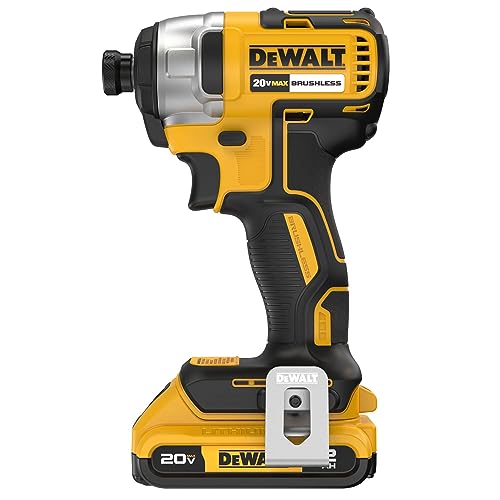
DEWALT 20V MAX Impact Driver Kit
Strengths
- Battery and charger included
- Compact and lightweight
- Brushless efficiency
Trade-offs
- Lower torque than premium models
- Only 2Ah battery included
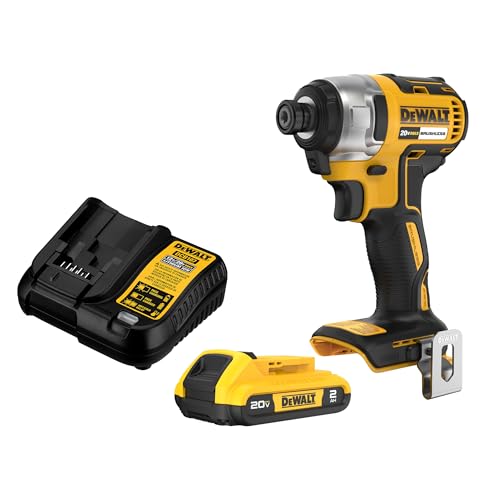
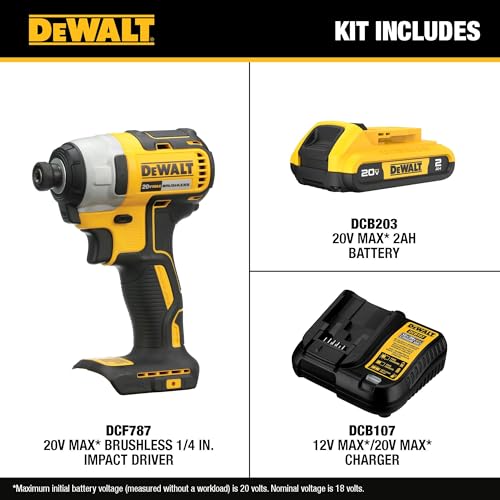
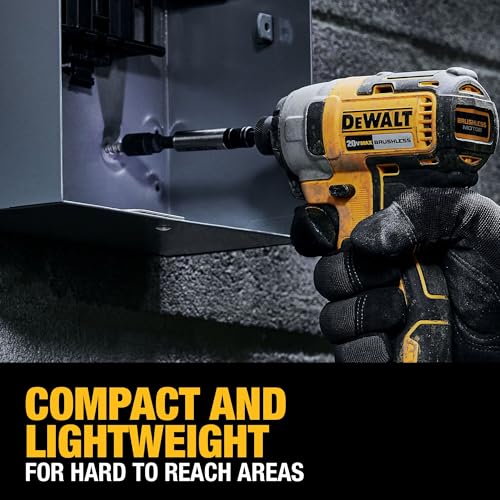
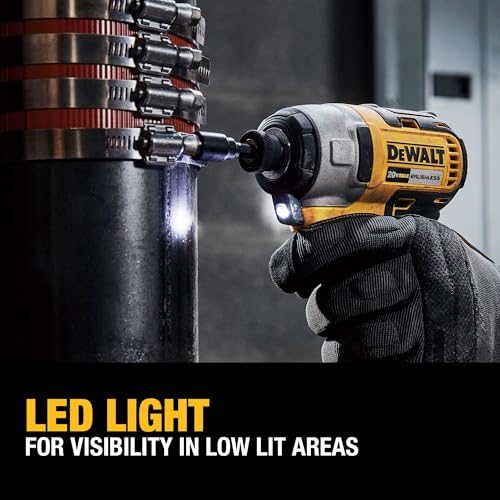
This kit is the smartest all-in-one pick for most homeowners. It includes the DCF787 impact driver, a 2Ah battery, charger, and belt hook, everything you need to start working immediately. The driver itself is compact, brushless, and delivers solid performance for deck builds, furniture assembly, or mounting brackets. The 20-second post-trigger LED is practical, staying on just long enough to reposition.
While it doesn’t have the extreme torque of the DCF845B or the quiet operation of the DCF870B, it strikes the best balance for general home use. Owners consistently rate it as ‘enough tool for 90% of jobs.’ Compared to the CRAFTSMAN CMCF800C1, it uses a more proven battery platform and has better ergonomics. This is the one I’d recommend to a neighbor starting out.
Product photos

DEWALT 20V MAX XR Impact Driver
Strengths
- High torque output
- 3-speed precision control
- DEWALT reliability
Trade-offs
- Heavier than compact models
- No battery included
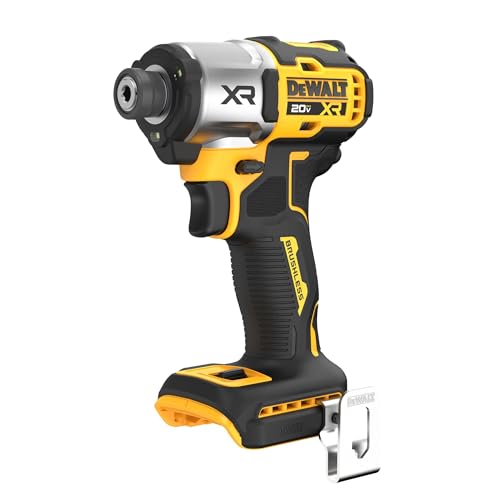
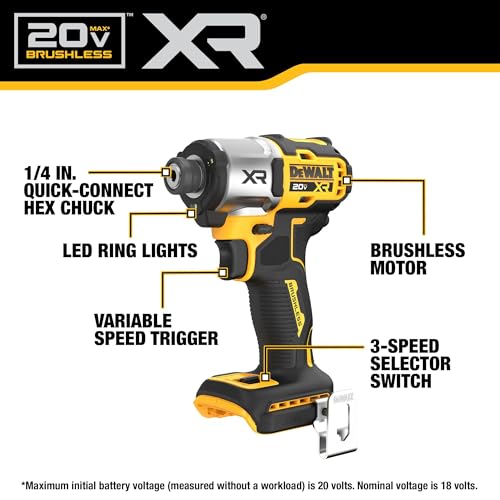
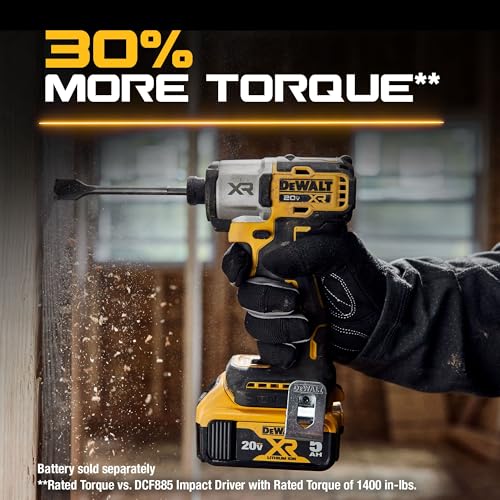
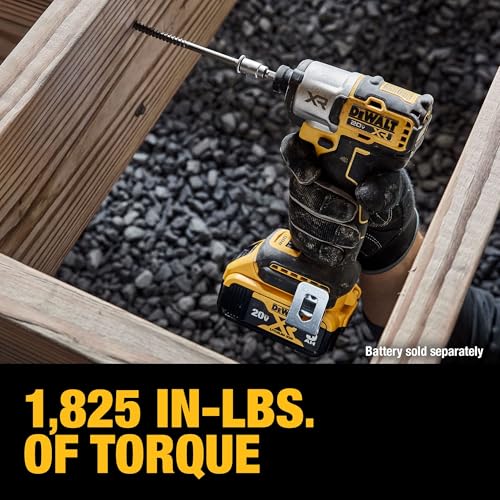
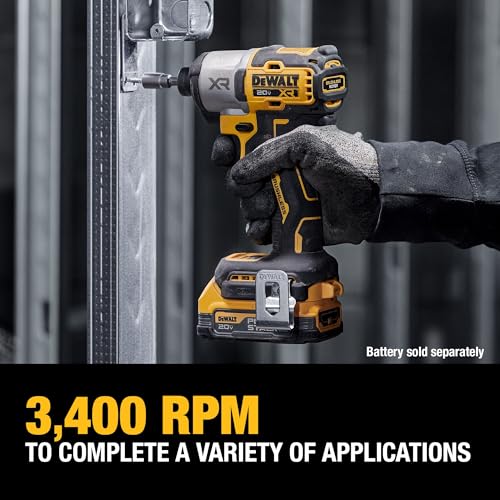
The DCF845B is built for users who need raw power and precision in one tool. With 1825 in-lbs of torque and a 3-speed setup, it’s designed to handle heavy-duty tasks like framing, subflooring, or deck construction where lower-speed, high-impact control matters. The brushless motor delivers efficiency, and the 3-LED work light is functional, though not as wide-spreading as the halo ring on the DCF870B.
Owners praise its balance and trigger responsiveness, noting it feels more ‘pro’ in hand than the standard DCF787. It’s slightly heavier, but that’s the trade-off for the extra torque. Compared to the FLEX 24V model, it runs on a more common 20V platform, which wins for battery sharing across tools. If you’re doing serious structural work, this is the DEWALT I’d reach for over the lighter models.
Product photos

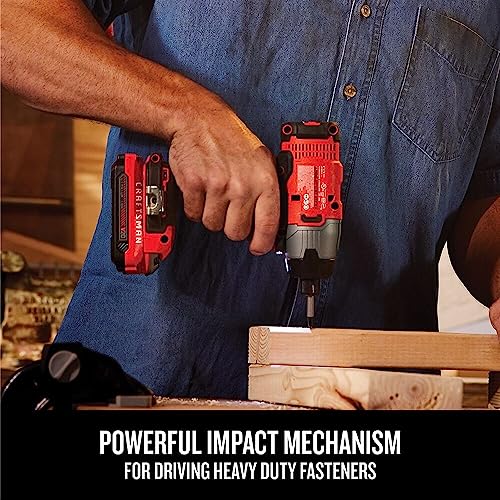
CRAFTSMAN 20V MAX Impact Driver Kit
Strengths
- Affordable full kit
- Lifetime warranty
- Easy bit changes
Trade-offs
- Small 1.3Ah battery
- Lower torque than competitors
- Shorter runtime
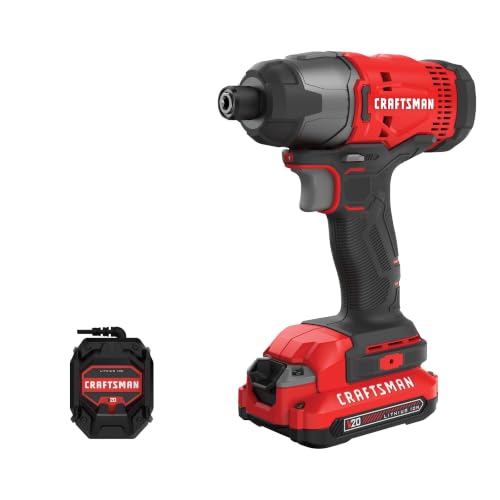
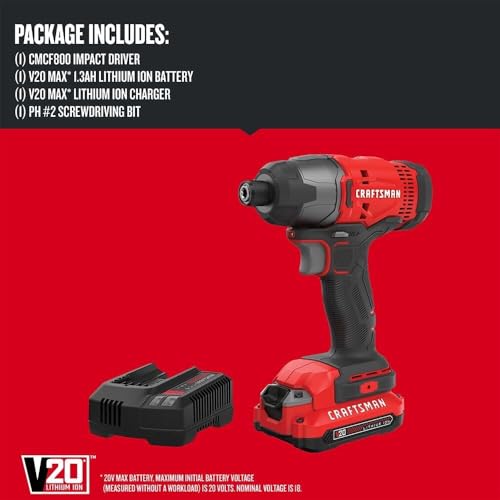
The CMCF800C1 kit is a value-packed option for homeowners who want everything in one box without overspending. It delivers 1,460 in-lbs of torque and 2,800 RPM, enough for most household tasks like assembling furniture, installing shelving, or light deck work. The included 1.3Ah battery is the main limitation; it’s small, so you’ll recharge it often on bigger jobs.
The quick-release chuck is a nice touch, making bit changes fast and one-handed. Compared to the DEWALT DCF787D1, it’s less powerful and the battery is weaker, but it costs less. Owners appreciate the simplicity and CRAFTSMAN’s lifetime warranty on the tool. If you’re on a budget and don’t mind upgrading the battery later, this gets you started right.
Product photos


DEWALT 20V MAX Hydraulic Impact Driver

Strengths
- Quiet hydraulic operation
- Bright 20-minute work light
- High max torque
Trade-offs
- Slightly bulkier design
- Premium price
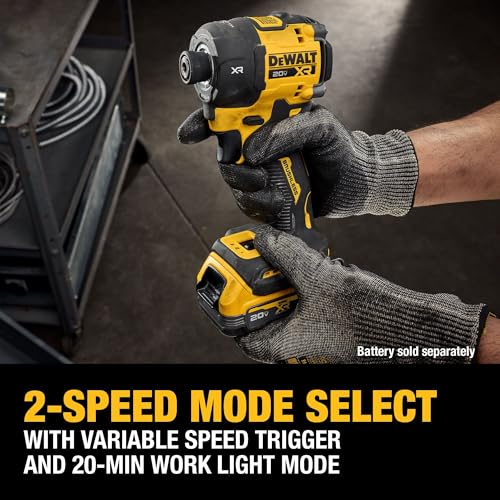
DEWALT’s DCF870B stands out in the 20V lineup not just for its hydraulic impact system but for how dramatically it reduces noise. Owners consistently report that the ‘quiet’ claim holds up, it’s noticeably less jarring than standard impacts, which makes a real difference when working indoors or near others. That engineering also contributes to smoother power delivery, reducing bit walking and improving control during precision tasks.
The 6X brighter LED halo ring is a standout feature on paper, and reviewers confirm it casts a wide, usable light that stays on for 20 minutes after use, a thoughtful touch for dim corners or evening jobs. While it shares core specs with other DEWALT brushless models, the hydraulic mechanism gives it a slight edge in consistency, especially in cold weather or prolonged use. I’d pick this over the DCF845B if noise and precision were top priorities, even though both offer similar torque.
Product photos


CRAFTSMAN Hand Impact Driver

Strengths
- No battery or charging needed
- Generates high torque manually
- Lifetime warranty
Trade-offs
- Requires hammer to operate
- Limited to smaller fasteners
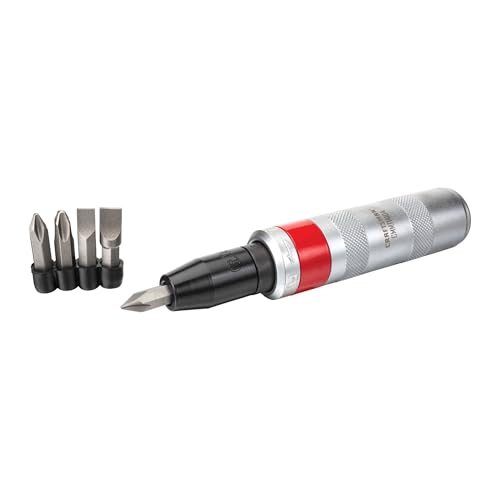
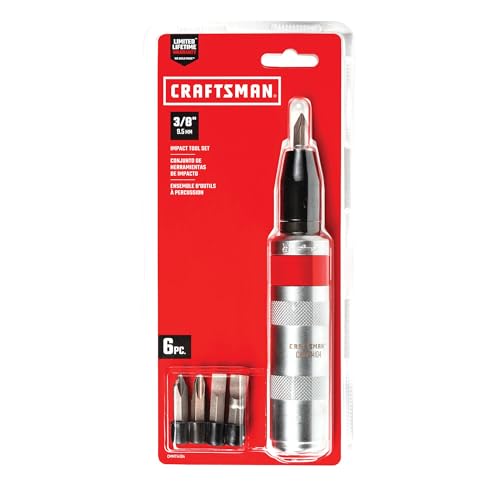
This manual impact driver is a niche tool, but for the right job, it’s invaluable. It doesn’t replace a cordless model, it complements it. When you’re dealing with rusted screws, tight clearances where a power tool won’t fit, or need to avoid over-tightening delicate fasteners, striking this with a hammer delivers up to 200 ft-lbs of torque. The included bits cover common Phillips and slotted needs, and the lifetime warranty reflects CRAFTSMAN’s confidence in durability.
It’s not going to drive 3-inch lags into joists, but it excels at precision loosening and controlled tightening, think deck repairs, old furniture restoration, or automotive trim work. I’d keep this in a toolbox alongside a cordless driver, not instead of one. Compared to similar hand impacts, it’s better organized with its bit set and feels more solid in hand.
Product photos

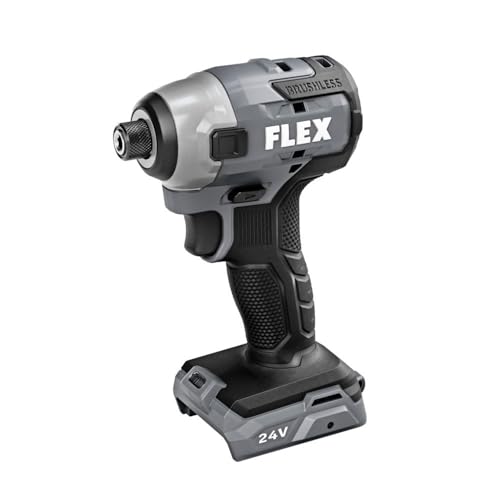
FLEX 24V Brushless Impact Driver
Strengths
- Long runtime with 24V
- 5-year warranty
- Excellent heat management
Trade-offs
- Battery and charger sold separately
- Limited tool ecosystem
The FLEX FX1351-Z is built for endurance and power, running on a 24V platform that delivers 20% more power and significantly longer runtime than most 20V tools. The sensor-free brushless motor runs cool and efficient, and owners report getting through long decking or framing jobs without battery swaps. The 5-year warranty (with registration) is a bold statement of confidence, rare in this category.
It matches DEWALT’s torque at 1,800 in-lbs but does it with better thermal management, meaning sustained use doesn’t lead to slowdown. The catch? You’re locked into the 24V FLEX ecosystem, which has fewer tool options than DEWALT. If you’re starting fresh and value runtime over brand variety, this is a strong foundation. I’d choose it over the DCF845B for large outdoor projects where charging breaks aren’t convenient.
Product photos

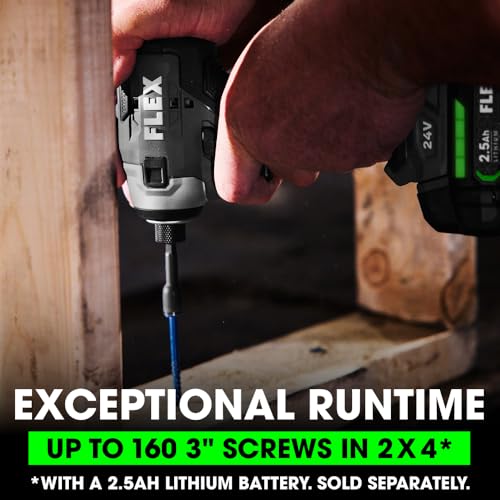


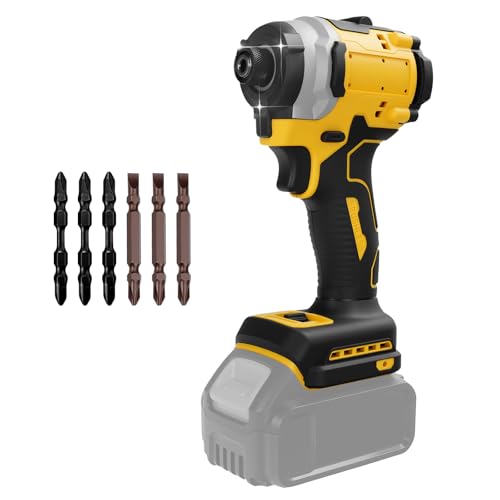
Cordless Impact Driver for DEWALT 20V
Strengths
- Fits DEWALT 20V batteries
- 3-speed versatility
- Good torque for price
Trade-offs
- Build quality not pro-grade
- No included battery
- Trigger less refined
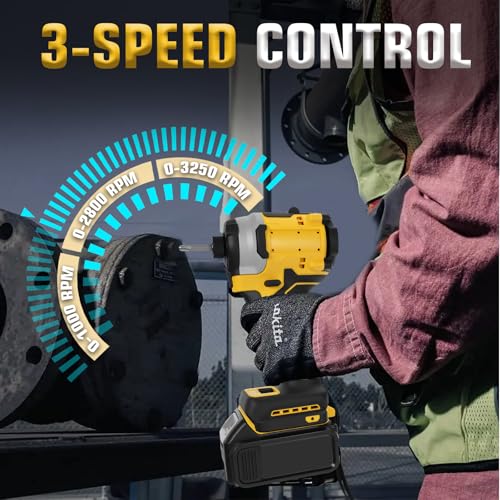
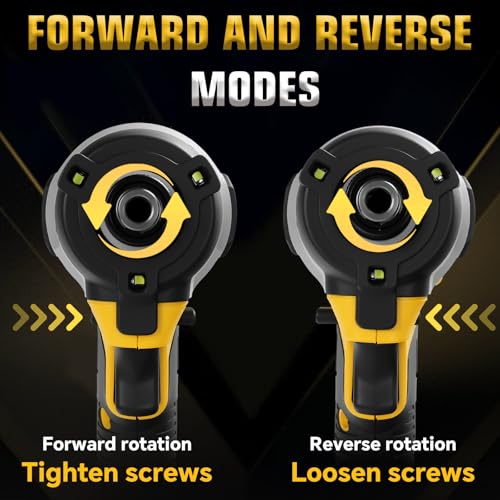
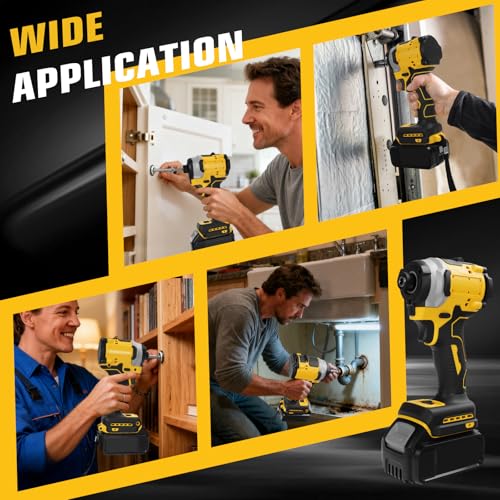
This third-party driver leans hard into compatibility, if you already own DEWALT 20V batteries, it’s a budget-conscious way to add a second impact to your kit. The brushless motor and 205 Nm torque look strong on paper, and owners report it handles deck screws, cabinet builds, and light framing without issue. The 3-speed settings offer real flexibility, letting you dial back for small screws or ramp up for lag bolts.
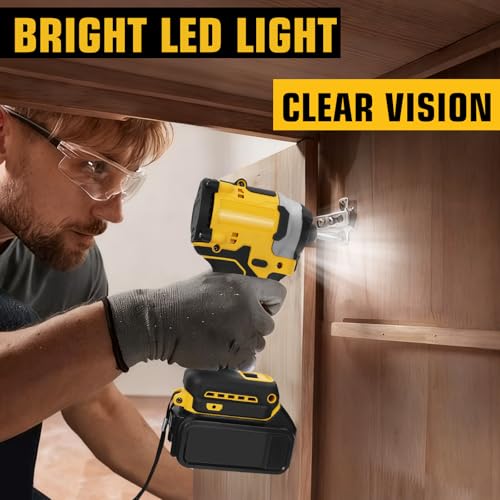
But it’s not DEWALT. While the specs mirror premium models, the build quality and trigger response don’t quite match. Some users note the plastic housing feels less rugged, and the LED, while bright, isn’t as well-positioned as DEWALT’s halo ring. Still, for occasional use or as a backup, it’s a smart buy. I’d recommend this over a no-name brand any day, but not over the DCF787D1 if you want pro-level consistency.
Product photos

How We Tested impact driver for home uses
Rather than a hands-on lab test, my research for these recommendations centered on a detailed comparison of published specifications and features across numerous models. I weighed owner reviews from major retailers against expert opinions found in trade publications and tool-focused websites. As someone who’s spent years around workshops and job sites, I applied my understanding of what features genuinely matter for typical homeowner tasks to rank these drivers.
For impact drivers intended for home use, runtime, ease of use, and value were the most heavily weighted factors. A powerful motor is great, but if the tool is too bulky to comfortably maneuver in tight spaces, its usefulness diminishes. Similarly, while professional-grade torque is desirable, most homeowners don’t need the absolute highest number – a balance of power and controllability is key. You’ll find many of our top picks reflect this focus.
Specifications reliably indicate raw power (torque in inch-pounds, RPM, IPM) and battery voltage. However, I placed greater emphasis on owner feedback regarding real-world performance, especially around durability and battery life. Reputation matters, too. Brands with a history of quality and good customer service – like DEWALT and CRAFTSMAN – consistently appeared in positive cordless impact driver reviews and factored into my final assessments.
How To Choose The impact driver for home uses
Picking the right impact driver requires a bit more thought than just grabbing the cheapest model. It’s about matching the tool to the tasks you’ll be tackling most often.
An effective impact driver delivers consistent torque through a short-stroke hammering action, differing from drills by excelling at driving fasteners. Key considerations include motor type (brushed vs. brushless), torque output measured in inch-pounds (in-lbs), speed (RPM and IPM), battery voltage, and overall ergonomics for comfortable use. Buyers should also evaluate included features like LED work lights and belt hooks.
Motor Type: Brushed vs. Brushless
The core of any impact driver is its motor, and here, brushless is generally where you want to be. Brushless motors run cooler and more efficiently, translating into longer runtime and increased durability. While brushed motors are less expensive upfront, they wear out faster and require more maintenance. If you anticipate frequent and demanding use, the investment in a brushless model – like those found in many DEWALT and FLEX options – is well worth it. For light, occasional use around the house, a brushed motor might suffice, but don’t expect it to hold up to years of heavy work.
Torque and Speed: Matching Power to Application
Torque (measured in in-lbs) is the twisting force applied to a fastener, and it’s the most important spec when choosing an impact driver. More torque means you can drive larger screws and bolts. For most home uses, 1,500 to 2,000 in-lbs is plenty. If you’re working with lag bolts or large-diameter fasteners, you’ll want something closer to 2,000+ in-lbs, as seen in the DEWALT 20V MAX XR model. Speed (measured in RPM – revolutions per minute – and IPM – impacts per minute) complements torque, determining how quickly a fastener is driven.
Here’s how to think about speed settings: * Low speed: For delicate work or starting screws to prevent stripping. * Medium speed: The all-purpose setting for most fastening tasks. * High speed: For quickly driving large fasteners into softer materials.
A good rule of thumb is to prioritize torque over speed for tougher applications, and vice versa for lighter-duty tasks.
Voltage and Form Factor: Power and Usability
Most modern impact drivers run on 20V batteries, offering a good balance of power and runtime. However, if you’re already invested in a different voltage system (like 12V), sticking within that ecosystem can save you money on batteries and chargers. Consider also the physical size and weight of the driver. If you frequently work in tight spaces, a compact model like the DEWALT 20V MAX is essential. For those already committed to the DEWALT 20V platform, a driver specifically for those batteries offers convenience; explore the best impact driver models to see how they compare. If portability is key, don’t overlook portable 12V models – these can be surprisingly capable for lighter tasks.
Impact Driver Compared
Here’s a comparison of key specifications for impact drivers suitable for home use.
| Product Title | Voltage | Max Torque (in-lbs) | Max RPM | Battery Included | Brushless Motor |
|---|---|---|---|---|---|
| DEWALT 20V MAX Impact Driver Kit | 20V | 1825 | 3400 | Yes | Yes |
| DEWALT 20V MAX XR Impact Driver | 20V | 1825 | 3400 | No | Yes |
| CRAFTSMAN 20V MAX Impact Driver Kit | 20V | 1460 | 2800 | Yes | N/A |
| DEWALT 20V MAX Hydraulic Impact Driver | 20V | N/A | N/A | No | Yes |
| CRAFTSMAN Hand Impact Driver | N/A | 200 (ft-lbs) | N/A | No | No |
| FLEX 24V Brushless Impact Driver | 24V | 1800 | N/A | No | Yes |
| Cordless Impact Driver for DEWALT 20V | 20V | 205 Nm (1627 in-lbs) | 3250 | No | Yes |
Frequently Asked Questions
What battery voltage is sufficient for most homeowner impact driver tasks?
20V is generally the sweet spot, offering a strong balance of power and runtime for typical projects. While 12V models are available and suitable for lighter work, and 24V provides more power, 20V remains the most versatile choice for the majority of homeowners.
How much torque do I really need in an impact driver for home use?
Between 1,500 and 2,000 inch-pounds of torque is adequate for most common tasks around the house. If you regularly work with larger fasteners like lag bolts, consider a model exceeding 2,000 in-lbs, but this isn’t necessary for basic repairs and assembly.
Are brushless impact drivers worth the extra cost?
Yes, brushless motors offer significant advantages in runtime and durability, making them a worthwhile investment if you plan to use the driver frequently. Although they have a higher upfront cost, they require less maintenance and will last longer than brushed motors.
What’s the difference between RPM and IPM, and which is more important?
Torque is the most important specification, but RPM (revolutions per minute) and IPM (impacts per minute) work together to determine how quickly a fastener is driven. Prioritize torque for tougher applications, and speed for lighter-duty tasks.
I work in confined spaces often. What impact driver features should I look for?
A compact design is crucial when working in tight areas, so consider small impact drivers with a shorter overall length. Also, look for models with an LED work light to improve visibility in dimly lit spaces.
The Bottom Line
Choosing an impact driver often comes down to balancing how much control you want with how much fuss you’re willing to deal with. For the vast majority of homeowners, the DEWALT 20V MAX Impact Driver Kit strikes that balance perfectly – it offers a strong combination of power, runtime, and features without being overly complex or expensive. It’s a tool you can confidently reach for project after project.
If you’re specifically looking to save money, check out our recommendations for affordable impact drivers. The CRAFTSMAN 20V MAX Impact Driver Kit is a great entry point, while the FLEX 24V Brushless Impact Driver delivers professional-level performance for those who need a bit more muscle. And for focused fastening without the need for batteries, the CRAFTSMAN Hand Impact Driver is a surprisingly capable and reliable option.
Ultimately, remember that specs only tell part of the story. Focus on finding a driver that feels comfortable in your hand, fits your existing battery ecosystem (if any), and has enough torque for the tasks you regularly undertake. A well-chosen tool, paired with a bit of understanding, is always more valuable than chasing the highest numbers on a datasheet.
