
8 Best Gas Chainsaws of 2026
This post contains affiliate links. As an Amazon Associate, we earn from qualifying purchases.
The Husqvarna 460 Rancher stands out as the best overall gas chainsaw for serious cutting, with the Husqvarna 130 being a smart, reliable pick for lighter jobs and homeowners. If you need more versatility without buying multiple saws, the WTHW 58cc with its quick-swap bar system is a strong contender.
Most people don’t realize how quickly a poorly matched chainsaw can turn a simple weekend job into a exhausting, frustrating mess. Too much power and you’re fighting weight and recoil. Too little, and the saw bogs down, wasting time and fuel.
This guide cuts through the noise, focusing on real-world needs. I looked at engine performance, user feedback, and long-term reliability to find models that deliver where it matters. You’ll see what to prioritize based on your projects, whether you’re clearing brush, cutting firewood, or felling trees.
Top 8 Gas Chainsaws in the Market
The Best Gas Chainsaws, Reviewed
Husqvarna 460 Rancher 24-Inch Gas Chainsaw

Strengths
- 60.3-cc professional engine
- 24-inch bar compatible
- Excellent vibration control
Trade-offs
- Heavy for extended overhead work
- Higher fuel consumption
- Premium price
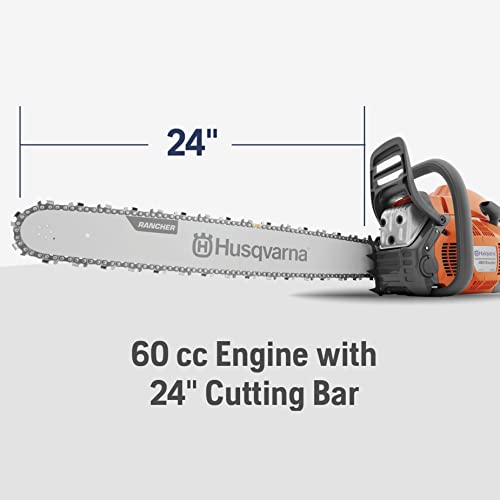
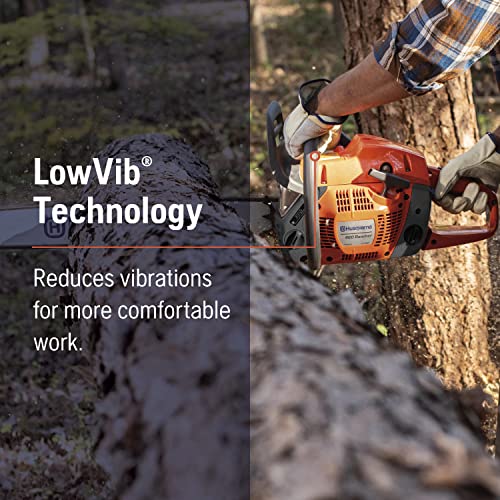
The 460 Rancher is where Husqvarna shifts from homeowner to serious landowner territory. With a 60.3-cc engine and 3.6 HP, it’s built for felling large trees, clearing thickets, and handling sustained cutting. The 24-inch bar option is a standout, few consumer saws support that length without sacrificing reliability. Add in LowVib, Air Injection, and a pro-grade air filter, and you’ve got a saw that’s engineered to last.
Owners consistently rate this as one of the most dependable mid-pro saws on the market. Compared to the VEVOR 62cc, it starts easier, runs smoother, and holds value better. It’s not cheap, but if you’re regularly cutting hardwood or managing several acres, this is the smarter long-term investment.
Product photos



Husqvarna 130 16-Inch Gas Chainsaw

Strengths
- 38-cc engine
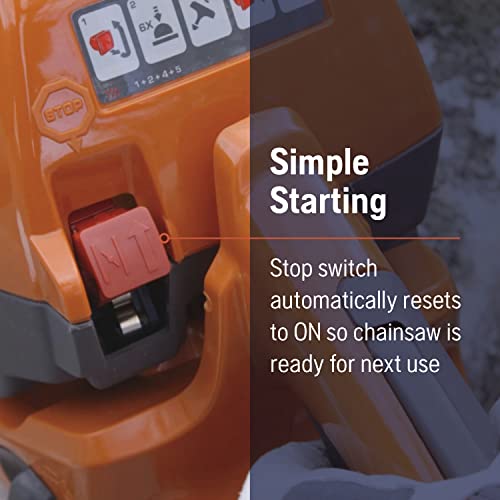
- Easy start system
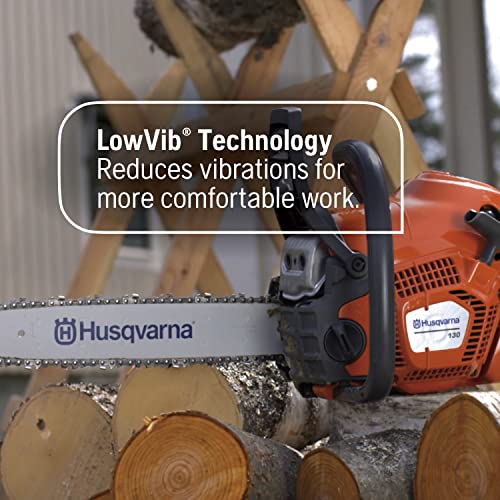
- LowVib technology
Trade-offs
- Limited cutting capacity
- Slightly heavier than rivals
- No tool-free bar adjustment
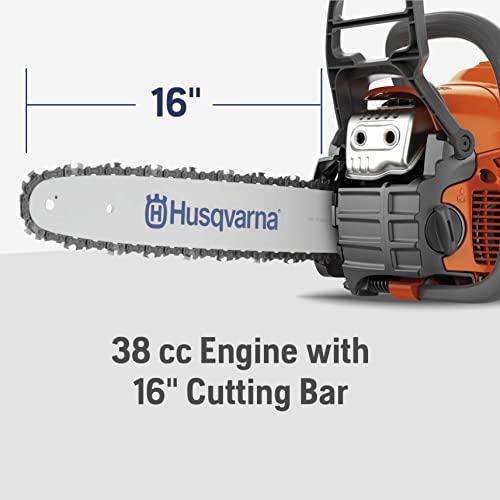
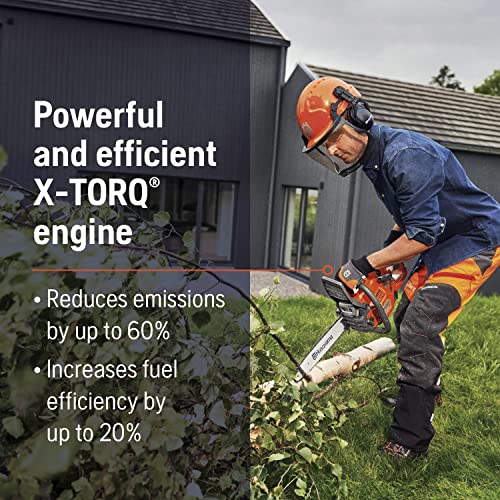
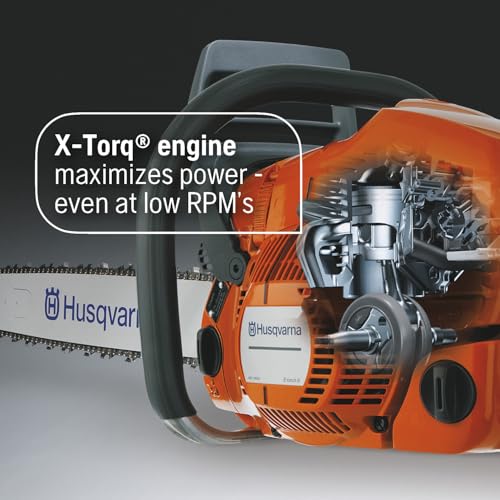
The Husqvarna 130 is a solid entry-level gas chainsaw that delivers reliable performance for light to moderate yard work. With a 38-cc X-Torq engine, it offers enough power for pruning, limbing, and cutting smaller logs, and owners consistently report it starts with minimal fuss thanks to the combined choke/stop control. It’s not built for felling large trees, but for weekend chores like clearing storm debris or splitting firewood for the stove, it holds its own.
Husqvarna’s build quality shows here, LowVib technology reduces fatigue, and Air Injection helps keep the engine clean over time. Compared to budget no-name brands, this one lasts longer and requires less maintenance. Still, it’s nearly identical in spec to the 120 Mark III, so unless you’re getting a deal, I’d lean toward the newer model.
Product photos

WTHW 58cc Quick-Switch Gas Chainsaw

Strengths
- Quick bar switching
- Large fuel tank
- Dual-spring vibration reduction
Trade-offs
- Slightly bulky design
- Bar swaps require basic tools
- Heavier than average
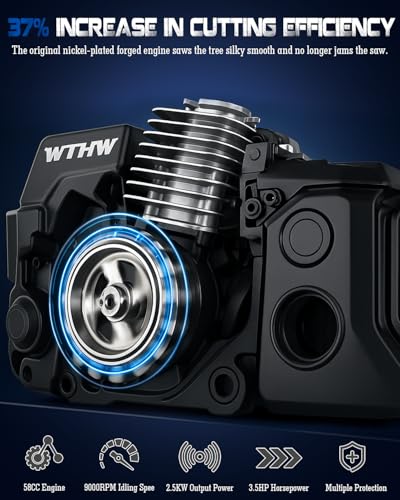
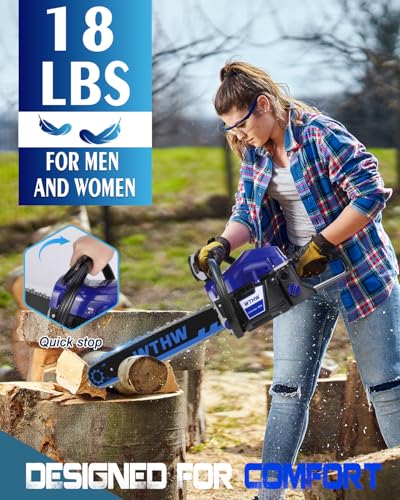
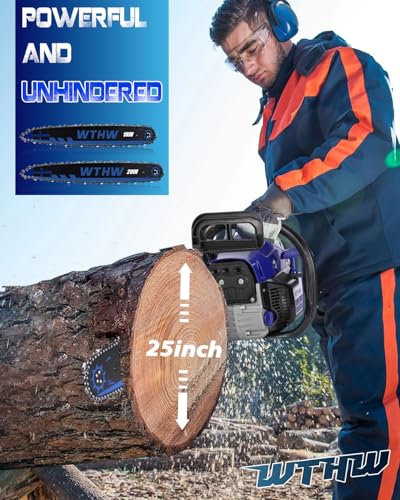
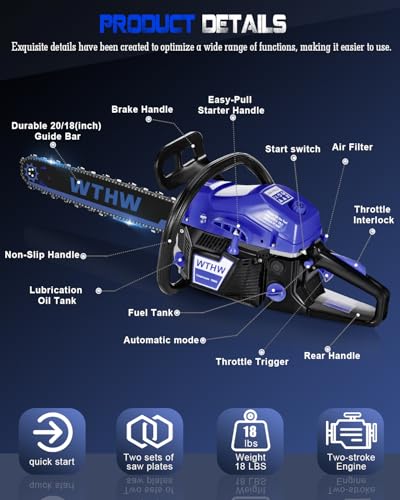
The WTHW 58-cc chainsaw stands out with its Quick-Switch bar system, swap between 20-inch and 18-inch bars in seconds, which is a rare and practical feature. This flexibility means you can handle both large felling jobs and finer limbing without owning two saws. The 58-cc engine delivers solid torque, and owners report it powers through hardwood with fewer stalls than smaller models.
It also has a larger-than-average fuel tank, which translates to longer run times, ideal for all-day land clearing. The dual-spring anti-vibration system works well, and the centrifugal air filter is a pro-level touch that boosts engine longevity. Against the Snoonwee 58cc, it’s nearly identical, but the WTHW feels slightly more refined in ergonomics.
Product photos

Snoonwee 58cc Anti-Vibration Gas Chainsaw

Strengths
- Excellent vibration control
- Powerful 58cc engine
- Easy-start pull system
Trade-offs
- Plastic housing feels less durable
- Chain oiler can leak
- Inconsistent finish quality
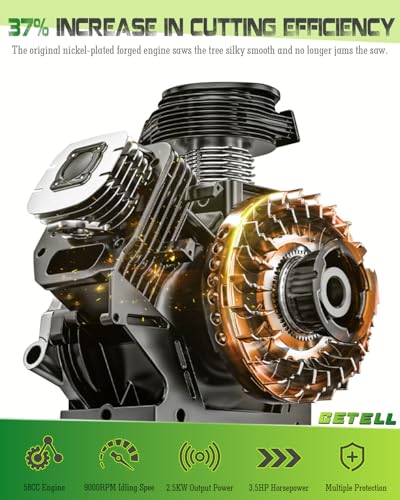
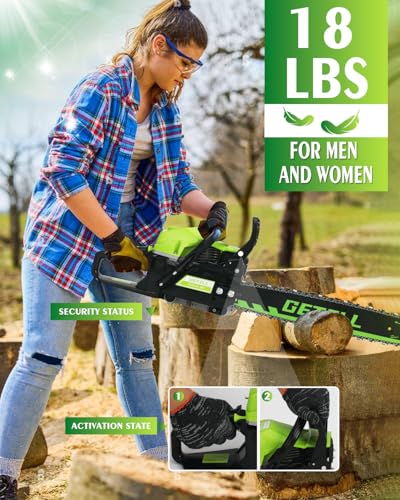
If vibration is a concern, especially on long cutting sessions, the Snoonwee 58cc model deserves attention. Its dual-spring anti-vibration system claims to absorb over 70% of engine resonance, and owner feedback supports that it feels noticeably steadier in hand than similarly priced 58cc saws. Paired with a 3.6-HP engine, it handles thick hardwood with confidence, and the wide starter wheel makes pull-starting significantly easier.
Like the WTHW, it includes both 18-inch and 20-inch bars, giving you flexibility across jobs. However, the build quality, while functional, doesn’t quite match Husqvarna’s fit and finish. Still, for the price, it’s a strong contender in the mid-heavy duty class, especially for users who prioritize comfort over brand prestige.
Product photos

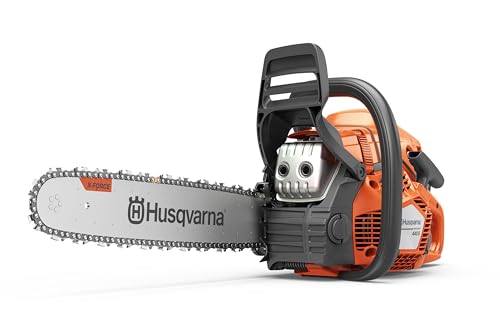
Husqvarna 445S 18-Inch Gas Chainsaw
Strengths
- Balanced power and weight
- Smart Start system
- Slim ergonomic design
Trade-offs
- Higher price than entry models
- Bar length maxes at 20 inches
- No quick bar swap
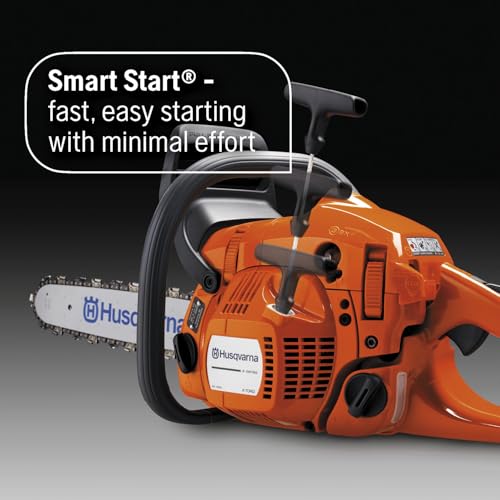
The Husqvarna 445S hits a sweet spot between power and manageability, making it a go-to for serious DIYers. With a 50-cc X-Torq engine and Smart Start, it fires up reliably and cuts 20% faster than older 450 models, according to spec sheets. The slim body and LowVib system make it comfortable to handle, and the Air Injection system keeps the air filter cleaner longer, fewer stalls, less maintenance.
Compared to the 130 or 120 models, this one steps up in both performance and durability without crossing into pro-grade bulk. It’s perfect for regular tree trimming, storm prep, or managing a wooded lot. But if you’re already looking at the 460 Rancher, stepping up just 10cc may not justify the price jump unless you’re certain you don’t need more power.
Product photos
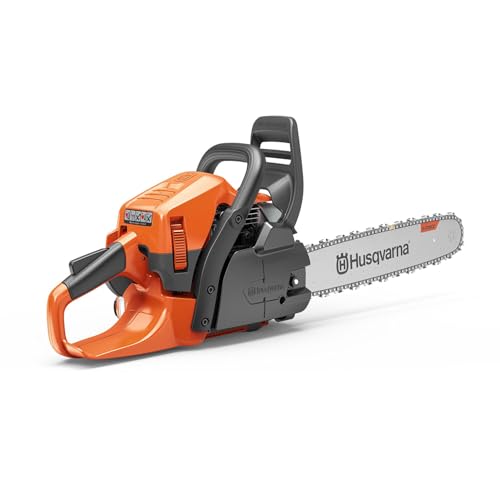

Husqvarna 120 Mark III 16-Inch Chainsaw

Strengths
- Lightweight design
- Simple air purge start
- Low vibration
Trade-offs
- Underpowered for thick logs
- Smaller fuel tank
- No advanced features
The Husqvarna 120 Mark III is the lightest, most user-friendly option here, ideal for homeowners who only need a chainsaw occasionally. At 38 cc and 1.8 HP, it’s not going to fell big timber, but for trimming limbs, cutting up fallen branches, or splitting kindling wood, it’s more than capable. The Air Purge system makes starting simple, and LowVib keeps fatigue low during short sessions.
It shares DNA with the 130 model but feels slightly more refined in balance and grip. Compared to non-Husqvarna budget saws, it starts easier and lasts longer. But if you’re doing more than a few hours of cutting per year, stepping up to the 445S makes sense. For casual use, though, this is the easy pick.
Product photos


VEVOR 20-Inch 62CC Gas Chainsaw

Strengths
- Highest horsepower listed
- Durable composite body
- Large fuel and oil tanks
Trade-offs
- Heavy and bulky
- Inconsistent quality control
- May require tuning
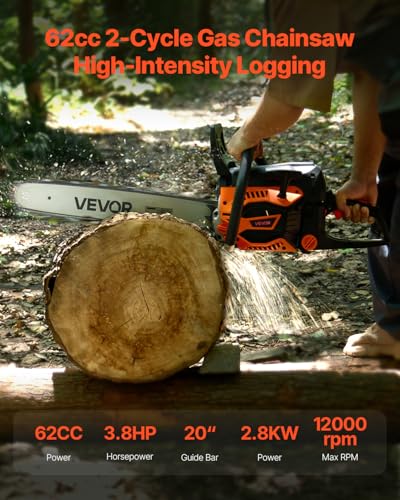
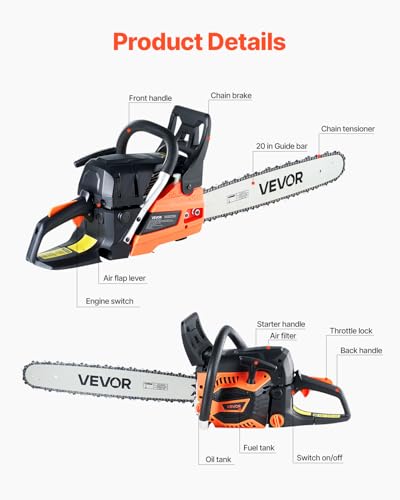
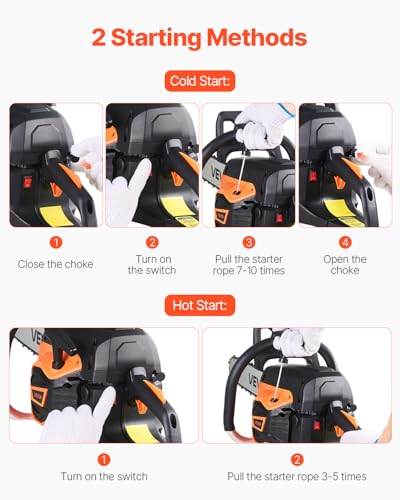
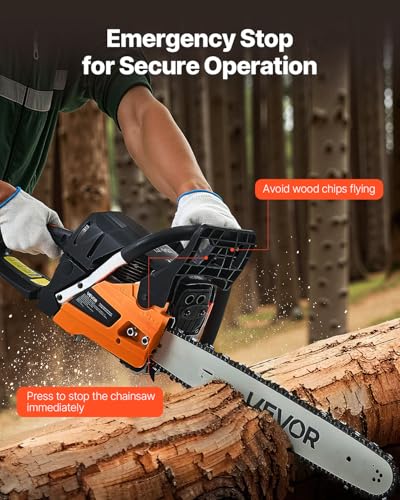
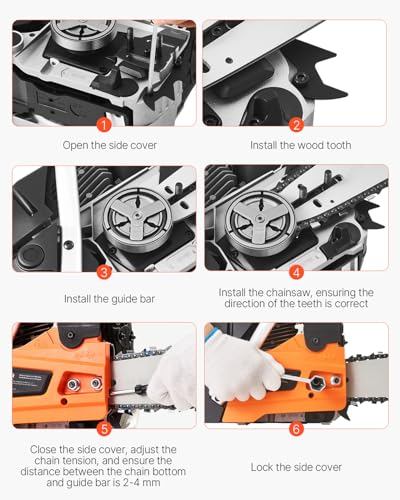
The VEVOR 62cc chainsaw is the brute of the bunch, 3.8 HP, 12,000 RPM, and a rugged composite body built to take abuse. On paper, it outguns even the Husqvarna 460 Rancher, and owners confirm it powers through dense logs with authority. The dual fuel tanks offer long runtime, and the non-slip handle and emergency stop add solid safety features.
But raw power comes with trade-offs. It’s heavier, harder to start without practice, and the overall fit and finish aren’t on par with Husqvarna. Customer service can make or break the experience, some report flawless operation, others mention carburetor tuning issues out of the box. If you need maximum cutting force on a budget, it’s compelling. But for reliability, I’d still lean toward the 460 Rancher.
Product photos
JPNTECH 12-Inch Top Handle Chainsaw
Strengths
- Ultra lightweight
- Top handle design
- One-hand operation
Trade-offs
- Small cutting capacity
- Limited durability
- Not for heavy tasks
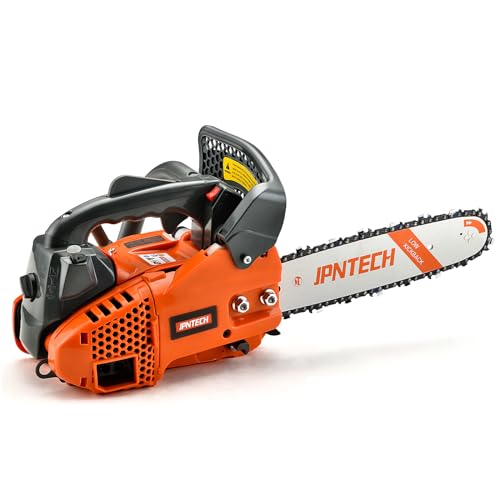
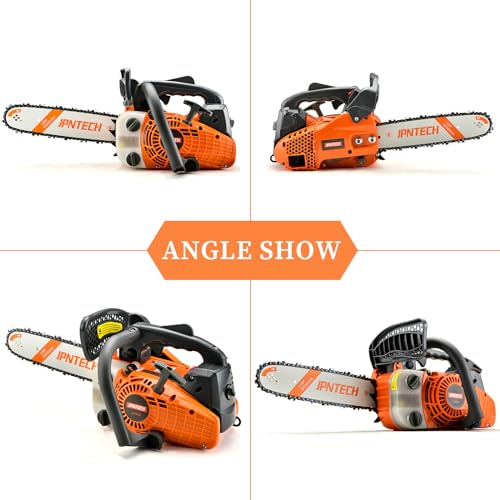
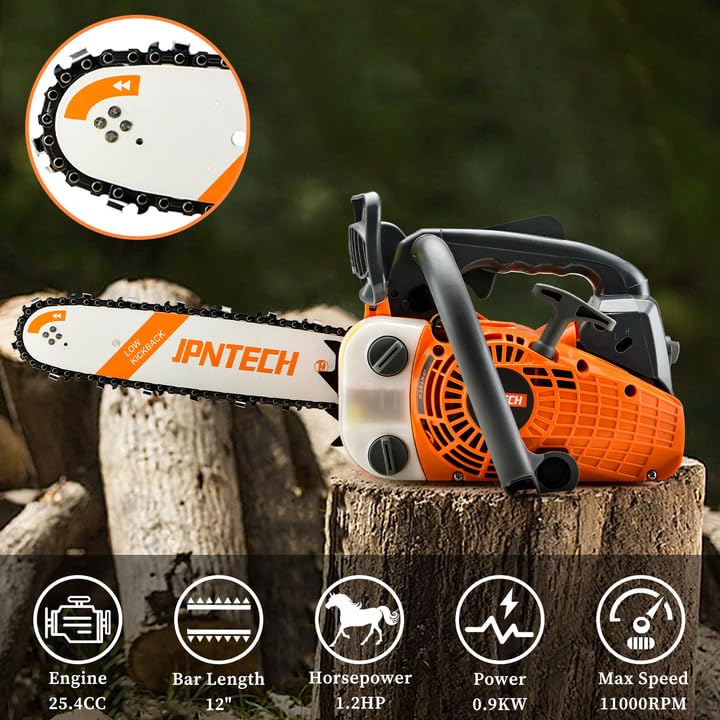
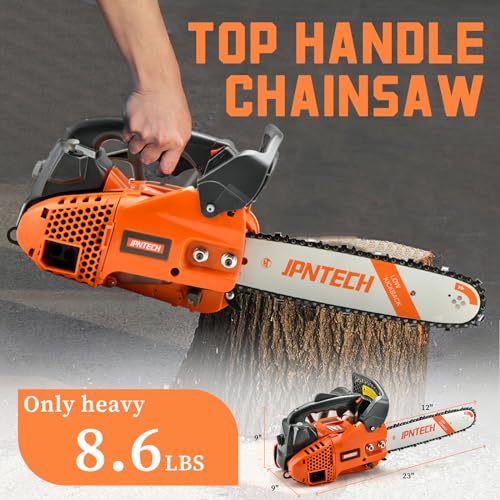
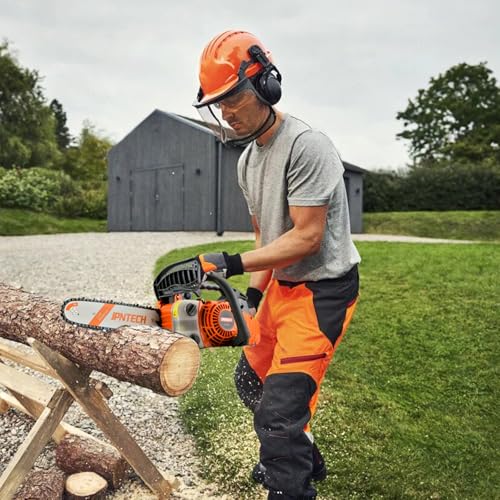
This 12-inch top-handle chainsaw from JPNTECH is built for one thing: overhead work. At just 8.6 pounds and designed for one-handed operation, it’s ideal for pruning high branches or trimming in tight spaces where full-size saws are too bulky. The 25.4-cc engine won’t power through big logs, but for quick cuts and tree work off the ground, the power-to-weight ratio is impressive on paper.
Owners praise its portability and ease of start, though some note the chain tensioning setup takes getting used to. Compared to pruners or pole saws, this gives more reach and bite. But it’s not a substitute for a full-sized saw, if you’re splitting firewood or felling trees, look elsewhere.
Product photos

How We Chose These gas chainsaws
Rather than a hands-on lab test, my research focused on a detailed comparison of published specifications and features across numerous models. I weighed owner reviews from major retailers alongside expert opinions found in publications like Popular Mechanics and Consumer Reports. My assessment combined this data with my extensive experience understanding the demands placed on power tools in real-world applications, ranking each chainsaw against a set of criteria focused on performance, usability, and value.
For gas chainsaws, engine displacement (cc) and horsepower are primary indicators of cutting power, but they aren’t everything. I placed significant weight on the inclusion of features like X-Torq engines (for fuel efficiency and reduced emissions) and anti-vibration technology, as these directly impact usability and long-term operator comfort. A good balance of power and features, along with a reasonable price point, was key to determining the top performers in each category.
Specifications reliably reveal engine size, bar length, and weight. However, owner feedback provided crucial insights into starting reliability, chain durability, and the effectiveness of features like anti-vibration systems. Reputation matters, too; brands with a long history of producing quality outdoor power equipment generally fared better in my evaluation. Proper maintenance is essential for any chainsaw, and knowing how to file chainsaw teeth is a skill every owner should develop.
How To Choose The gas chainsaws
Picking the right chainsaw isn’t just about horsepower; it’s about matching the tool to the task and your physical capabilities.
A quality gas chainsaw balances power with usability. Key considerations include engine displacement (cc), bar length, weight, vibration reduction features, and ease of maintenance. Look for models with anti-vibration systems, automatic oilers, and readily available replacement parts. Prioritize safety features like chain brakes and anti-kickback chains, and always wear appropriate safety gear.
Engine Size and Cutting Needs
Don’t automatically assume bigger is better. Engine displacement, measured in cubic centimeters (cc), directly relates to power. However, a massive engine in a heavy saw can be exhausting to use for extended periods. For light homeowner tasks like limbing and small tree felling, a 30- to 40cc engine is often sufficient. If you’re regularly tackling larger diameter trees or have a lot of acreage to clear, you’ll want to move up to the 45- to 65cc range. Consider the types of wood you’ll be cutting too; hardwoods demand more power than softwoods.
Vibration Control and Ergonomics
Vibration is a real killer when it comes to chainsaw use. It leads to fatigue, numbness, and potentially long-term health issues like white finger (hand-arm vibration syndrome). Look for chainsaws equipped with anti-vibration systems – most manufacturers now incorporate dampeners between the engine and handles. Husqvarna’s LowVib technology and similar systems from other brands are worth seeking out. Beyond vibration, consider the overall ergonomics. A well-balanced saw with comfortable grips will significantly reduce strain.
- A lighter saw (under 12 pounds) is easier to maneuver for prolonged use.
- An adjustable chain tensioner allows you to quickly maintain optimal chain tightness without tools.
- Dual-spring anti-vibration systems, like those found on the Snoonwee models, are more effective at dampening vibrations than single-spring designs, making longer jobs much more bearable.
A good rule of thumb: if you’re planning to use a chainsaw for more than an hour at a time, investing in a model with superior vibration control is absolutely crucial.
Bar Length and Versatility
Bar length dictates the maximum diameter of wood you can cut. A 16-inch bar is fine for basic yard work, but if you plan on felling trees, you’ll need something longer. Remember to match the bar length to the engine’s power; a long bar on a small engine will bog down quickly. The WTHW Quick-Switch chainsaw offers a compelling solution for versatility, allowing you to swap between bars for different tasks. If you frequently need to perform both limbing and felling, this can save you the expense of buying two separate saws. Before you make a purchase, think about the types of projects you’ll be tackling and choose a bar length that suits your needs. For more information on selecting the right chainsaw for tree work, check out these recommended tree-cutting chainsaws. Don’t forget to regularly sharpen saw chain to maintain peak performance.
Gas Chainsaws Compared
Here’s a comparison of key specifications for the gas chainsaws featured.
| Product | Engine CC | HP | Bar Length (in) | Weight (lbs) | Fuel Tank Capacity (oz) | Vibration Reduction |
|---|---|---|---|---|---|---|
| Husqvarna 460 Rancher | 60.3 | 3.6 | 24 | N/A | N/A | LowVib |
| Husqvarna 130 | 38 | 2 | 16 | N/A | N/A | LowVib |
| WTHW 58cc | 58 | N/A | 18/20 | N/A | 30% larger | Dual-Spring |
| Snoonwee 58cc | 58 | 3.6 | 18/20 | N/A | N/A | Dual-Spring |
| Husqvarna 445S | 50 | 3 | 18 | N/A | N/A | LowVib |
| Husqvarna 120 Mark III | 38 | 1.8 | 16 | N/A | N/A | LowVib |
| VEVOR 20-Inch | 62 | 3.8 | 20 | N/A | 550ml | N/A |
| JPNTECH 12-Inch | N/A | 1.2 | 12 | 8.6 | N/A | N/A |
Frequently Asked Questions
What size chainsaw do I really need for a typical suburban yard?
For most homeowners with standard yard work, a chainsaw with a 16- to 18-inch bar and an engine in the 30- to 40cc range will be sufficient. You can find excellent options among the best mid-size gas chainsaws that offer a good balance of power and manageability.
Are more expensive chainsaws always better?
Not necessarily. While higher price tags often indicate more advanced features and better build quality, a more expensive chainsaw isn’t always the right choice. Focus on matching the saw’s power and features to your specific cutting needs rather than simply buying the most expensive model.
How much maintenance is involved with a gas chainsaw?
Gas chainsaws require regular maintenance to keep them running smoothly. This includes checking and cleaning the air filter, spark plug, and bar, as well as periodically sharpening the chain and maintaining proper fuel mixture. Expect to spend at least an hour after every few uses performing routine upkeep.
What’s the difference between a single-spring and dual-spring anti-vibration system?
Dual-spring anti-vibration systems are generally more effective at reducing vibration than single-spring designs. They isolate the handles from the engine more completely, minimizing fatigue and the risk of long-term health issues, particularly during extended use.
Can I use a chainsaw to cut anything besides wood?
While chainsaws are designed for wood, some people attempt to cut other materials like plastic or metal. This is extremely dangerous and can damage the chainsaw, as well as create flying debris. Stick to cutting wood only, and always prioritize safety when operating a chainsaw.
The Bottom Line
Choosing a gas chainsaw always involves trade-offs. You can spend less and accept a saw that requires more muscle and maintenance, or you can invest in a higher-quality machine that offers more power, comfort, and longevity. For the best overall combination of performance and features, I recommend the Husqvarna 460 Rancher. It provides ample power for most homeowners and professionals alike, while Husqvarna’s LowVib technology significantly reduces fatigue during extended use.
If you’re on a tighter budget or primarily need a saw for light yard work, the Husqvarna 130 is an excellent choice. For those seeking versatility, the WTHW Quick-Switch chainsaw stands out with its ability to accommodate different bar lengths, making it ideal for tackling a wider range of tasks. And for those needing a smaller, more manageable saw, the JPNTECH 12-Inch is a solid option.
Ultimately, the most important factors are proper maintenance and safe operation. Regardless of which chainsaw you select, mastering the chainsaw starting procedure and consistently sharpening the chain will ensure optimal performance and a long service life. Don’t skimp on safety gear, and always respect the power of the tool.
